Chapter 9: Canaries – Wilde Tiere Frei Haus (Wild Animals/Free Delivery)
Translated by Alex Haro
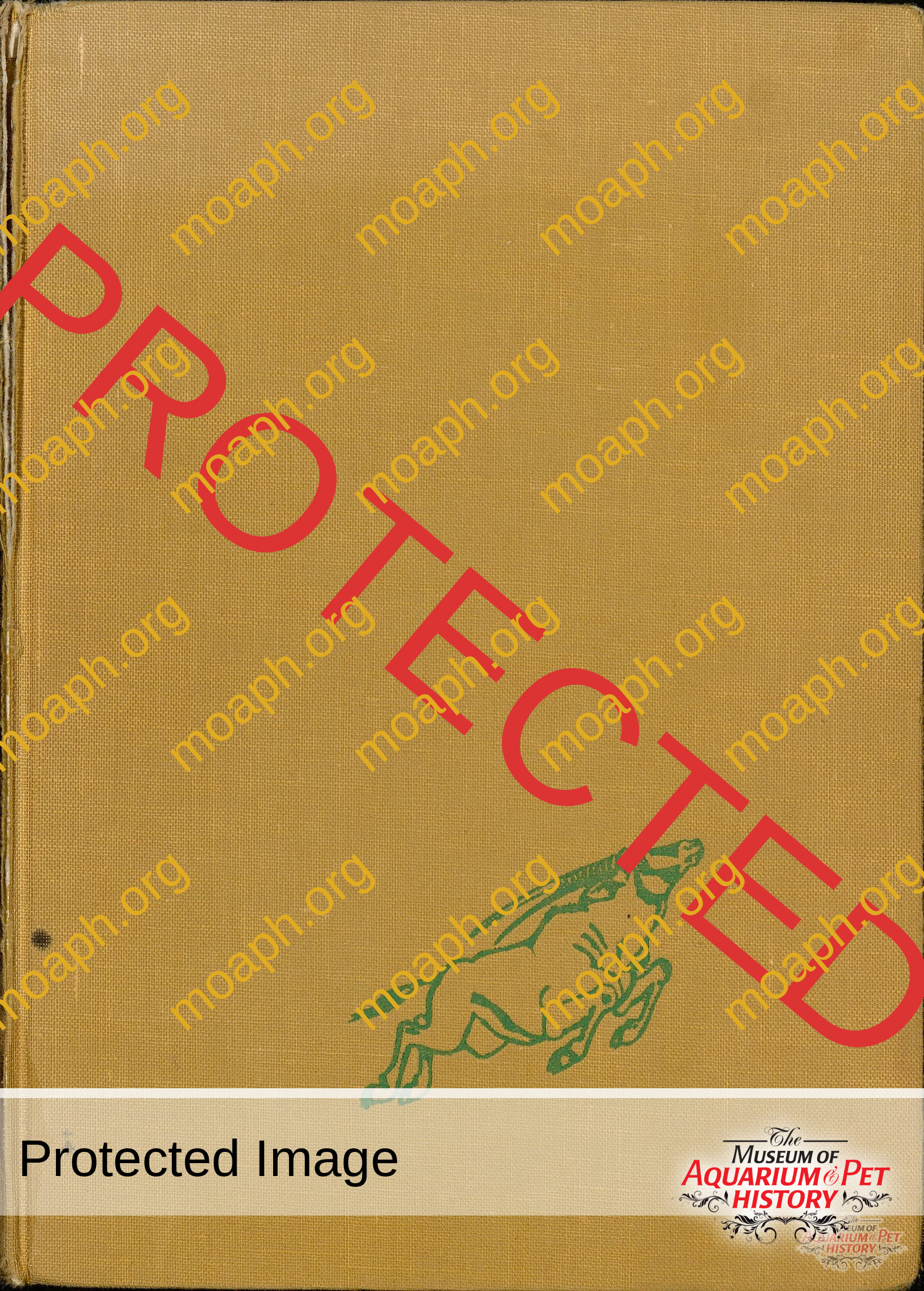
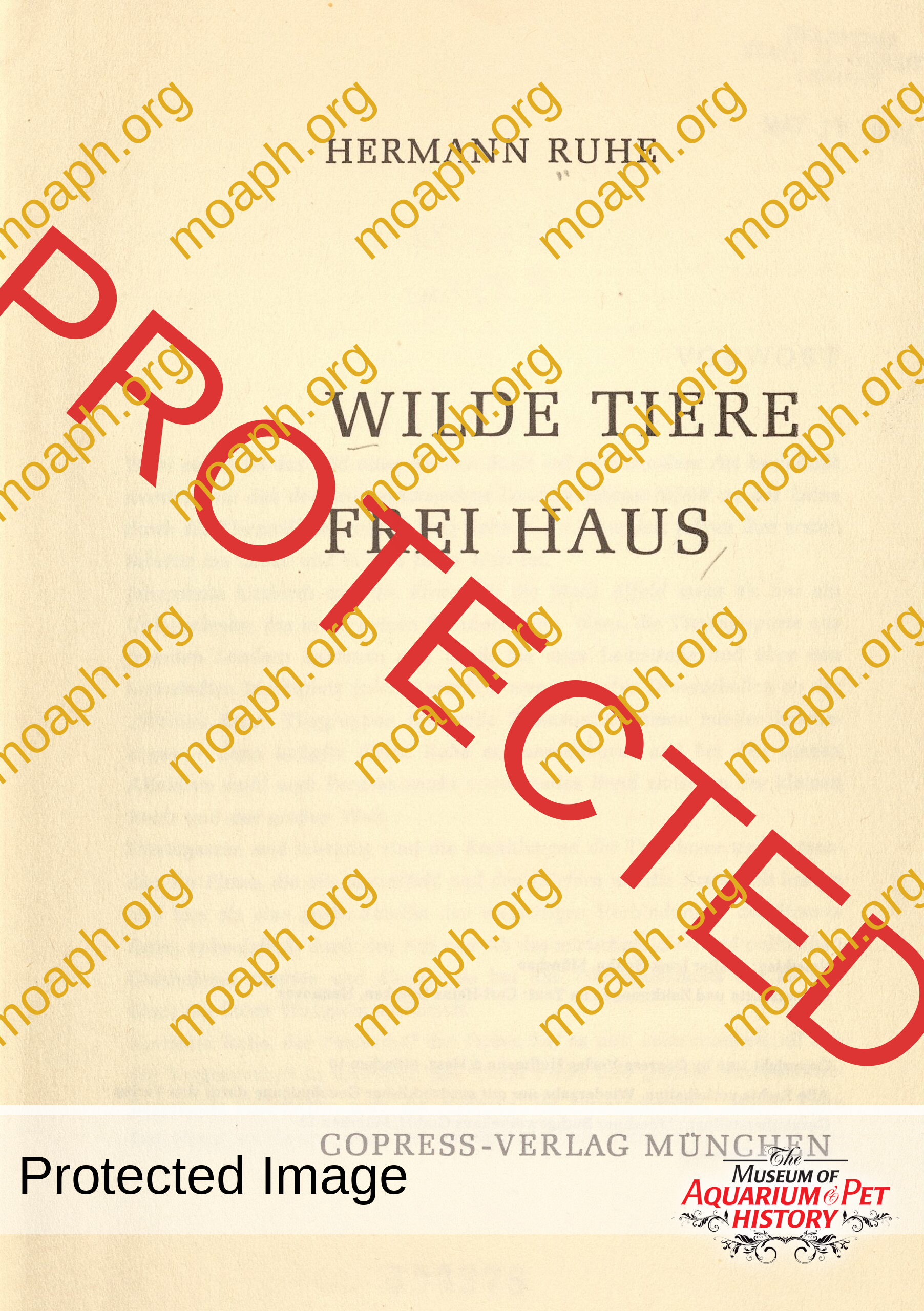
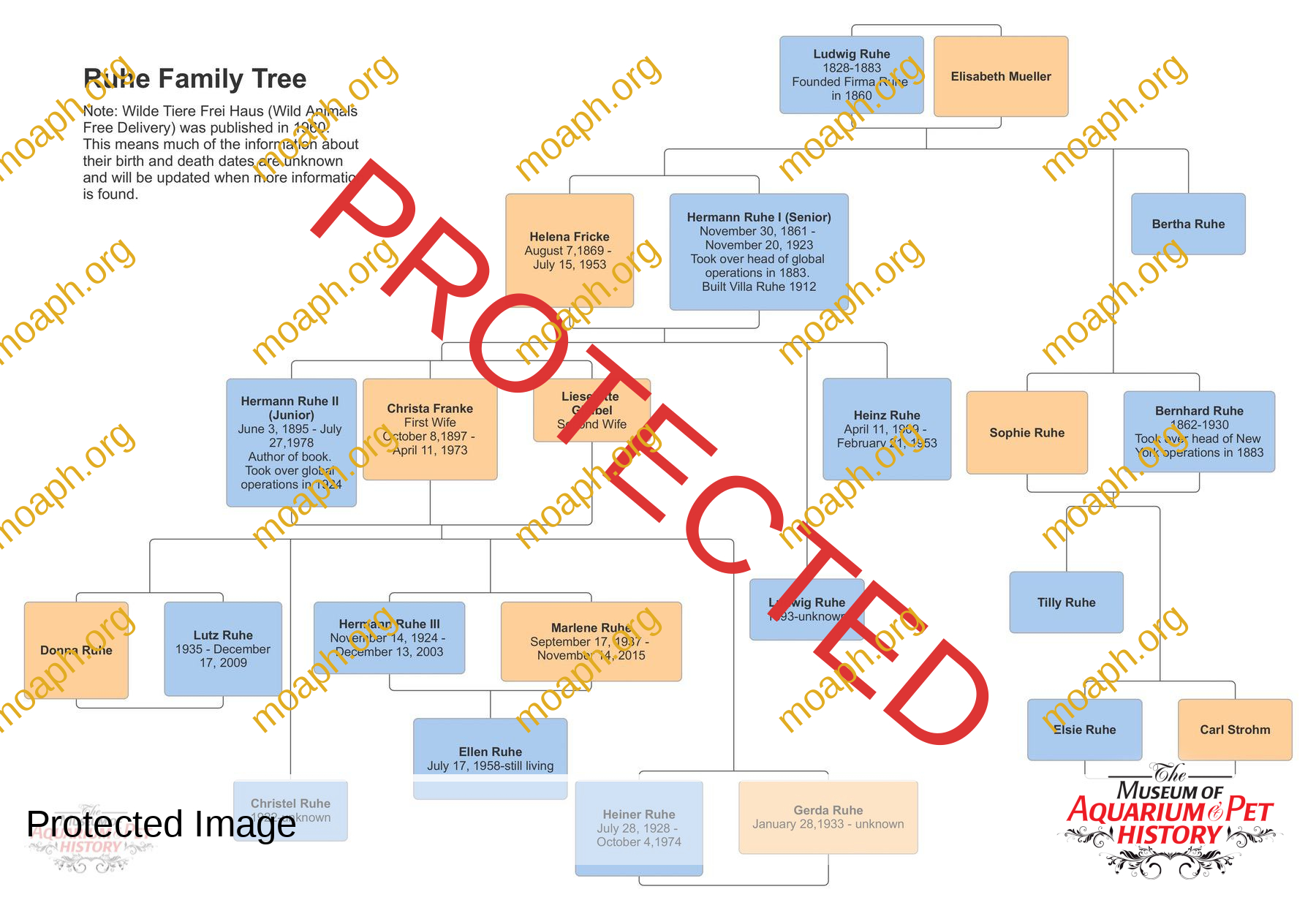
Starting in September 2024, the Museum of Aquarium and Pet History (MOAPH) will be releasing a chapter a month on the translated autobiography Wilde Tiere Frei Haus (Wild Animals Free Delivery) by Hermann Ruhe.
Firma Ruhe (the Ruhe Company) was the name of an animal trading company based in Alfeld, Germany from 1860 until its official closure in 1993. During this time, they were world renowned for their importation and exportation of exotic animals and birds from all across the globe, even supplying many zoos as well as circuses. Having survived both world wars, Firma Ruhe continued to dominate the world of animal trading until the mid-20th century and is a testament to true determination and leadership.
Wilde Tiere Frei Haus (Wild Animals Free Delivery) also documents the plethora of adventures, failures and successes endured by all those a part of Firma Ruhe. Through Hermann Ruhe’s great storytelling, we are able to visualize and understand the world from the perspective of animal collectors navigating through some of the most difficult situations, often not knowing whether or not they would ever return home. His recollections provide a vivid portrayal of the challenges and triumphs faced by the company, and give readers a glimpse into the world of animal trading.
Amid all the effort and hustle surrounding the animals, what had always been our biggest business was by no means neglected: the export of canaries.
The transports were almost exclusively carried out by ships of the Hapag- Lloyd1firm to the USA. Earlier, on the older ships, the birds were temporarily housed in washrooms and similar spaces. The modern ‘Ballin steamers2’ even had a so-called bird deck, on which the canary breeder could stack the birds properly and care for them.
MOAPH1: Hapag-lloyd is a German based international shipping company.
MOAPH2: The steamships of the Hamburg-America Line (HAPAG) managed by Albert Ballin.
Even back then, each of the agents had to care for 10 crates with 210 birds each (2100 birds total) and had to feed and water them daily. They also had to clean their cages twice a week. During a season, six, eight, ten, or more agents were often on a single ship to bring transports of 15,000 to 25,000 canaries to New York. My agents crossed the ocean several times per season!
The purchasing method had changed somewhat. Many birds were still brought to Alfeld and sold here, although Mr. Darnedde senior was now assisted by his son, a worthy successor as an expert. My agents also went out into the villages where the breeders’ associations had a seat. Previously, a message was sent: “Our buyer is coming on the Soundsovielten3… Please have the breeders order!”
MOAPH3: A German expression indicating an unknown date, a sort of filler word.
Most of the buyers set up their headquarters in an inn, where the breeders waited, made their deals, and sent the birds in boxes of 25 pieces by express train to Alfeld.
A particularly feared buyer was Mr. Mätje. Like Darnedde senior, he managed to determine the sex of the canaries at a glance and it often happened that a breeder would say, “My dear friend, this bird lays eggs! You’ll take it back home.”
“But no, Mr. Mätje, he sings wonderfully! That must be a rooster4!”
MOAPH4: the term ‘Rooster’ is used to describe a male canary
“No, you take it back home,” Mätje would say, “and you’ll see, she’ll lay eggs!”
It happened that such a returned female was offered again two days later at a different location. It may sound unbelievable to say that Matje managed to recognize this female immediately—but that was indeed the case.
This sometimes led to solid arguments—not only with the first breeder who had tried, but now also with the second who had again been taken in by the trick—usually a friend of the first one—it was understandable.
I was very happy to have such good experts as the Darneddes and Mätje, because nowhere can you be more easily taken advantage of than in the canary trade when you don’t know anything about it. Our export figures for canaries rose from season to season and were soon expected to reach a record level.
After the bell had rung several times and one of our housemaids had opened the door, one morning I was called out of bed around six o’clock: “Mr. Carl Hagenbeck urgently wants to speak with you!”
Carl Hagenbeck? Something must have happened, because for him to come to Alfeld at this time of day was very unusual! I dressed and went into the living room where Willy Hagenbeck’s brother was waiting for me.
“What has happened, Mr. Hagenbeck?” I asked him.
“I’m sorry to drag you out so early, Mr. Ruhe,” he said. “But the situation in which my circus finds itself is more than unpleasant, and I really don’t know what to do at the moment.”
Carl Hagenbeck, who had taken over his father Wilhelm Hagenbeck’s circus, began to explain what had happened. I believe the situation was that his company was the first German circus that, after the First World War, could undertake a tour to Belgium. Hagenbeck showed in his program, among other things, a predator act performed by a tamer who had served in the military during the war. In one of the boxes during the first afternoon show was the widow of a pharmacist, whose husband had been shot as a hostage during the war—by the same tamer, who had been assigned to the executive command.
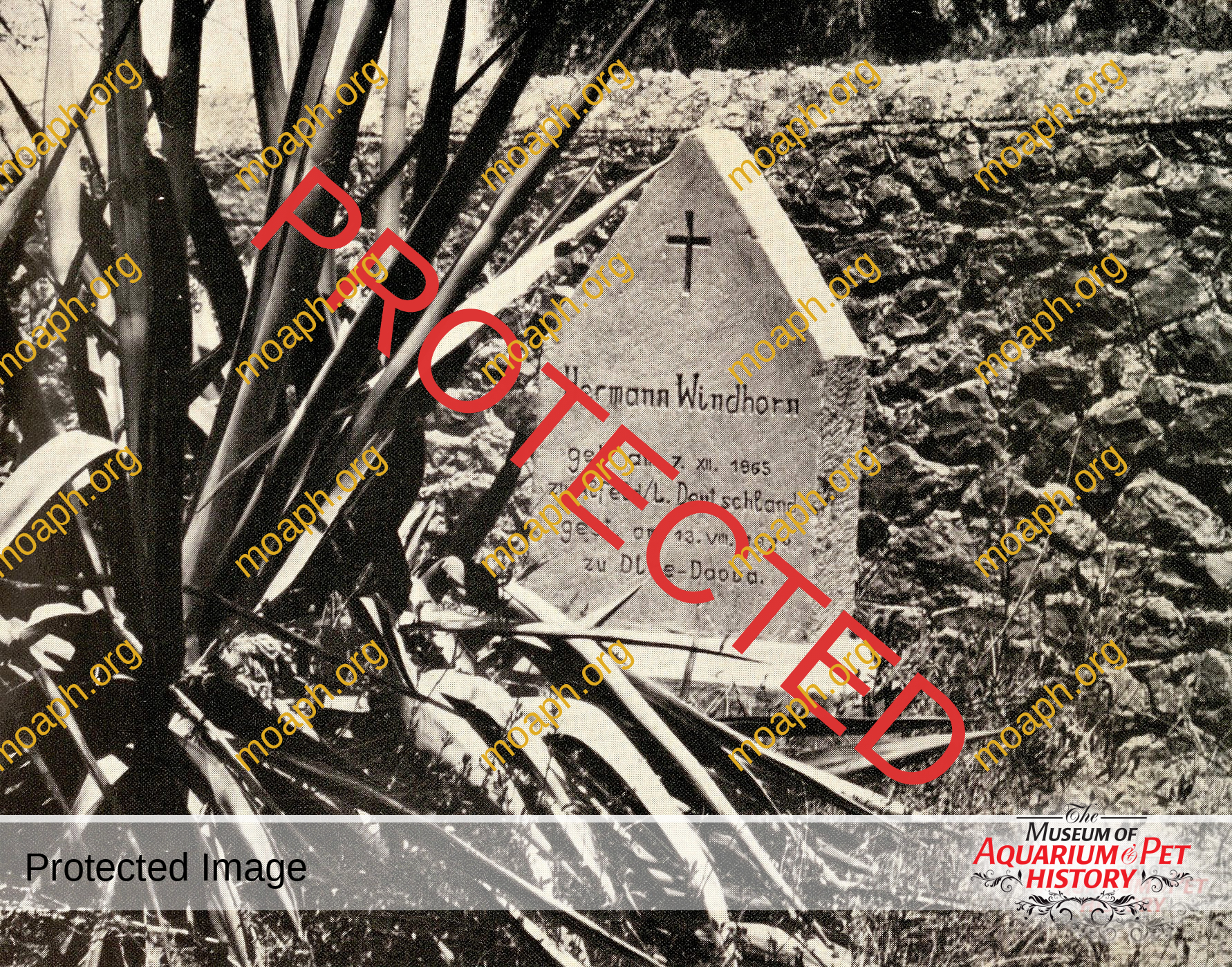
The grave of the animal collector Hermann Windhorn, who died of typhus in Dire Daoda in August 1924 and was buried here.
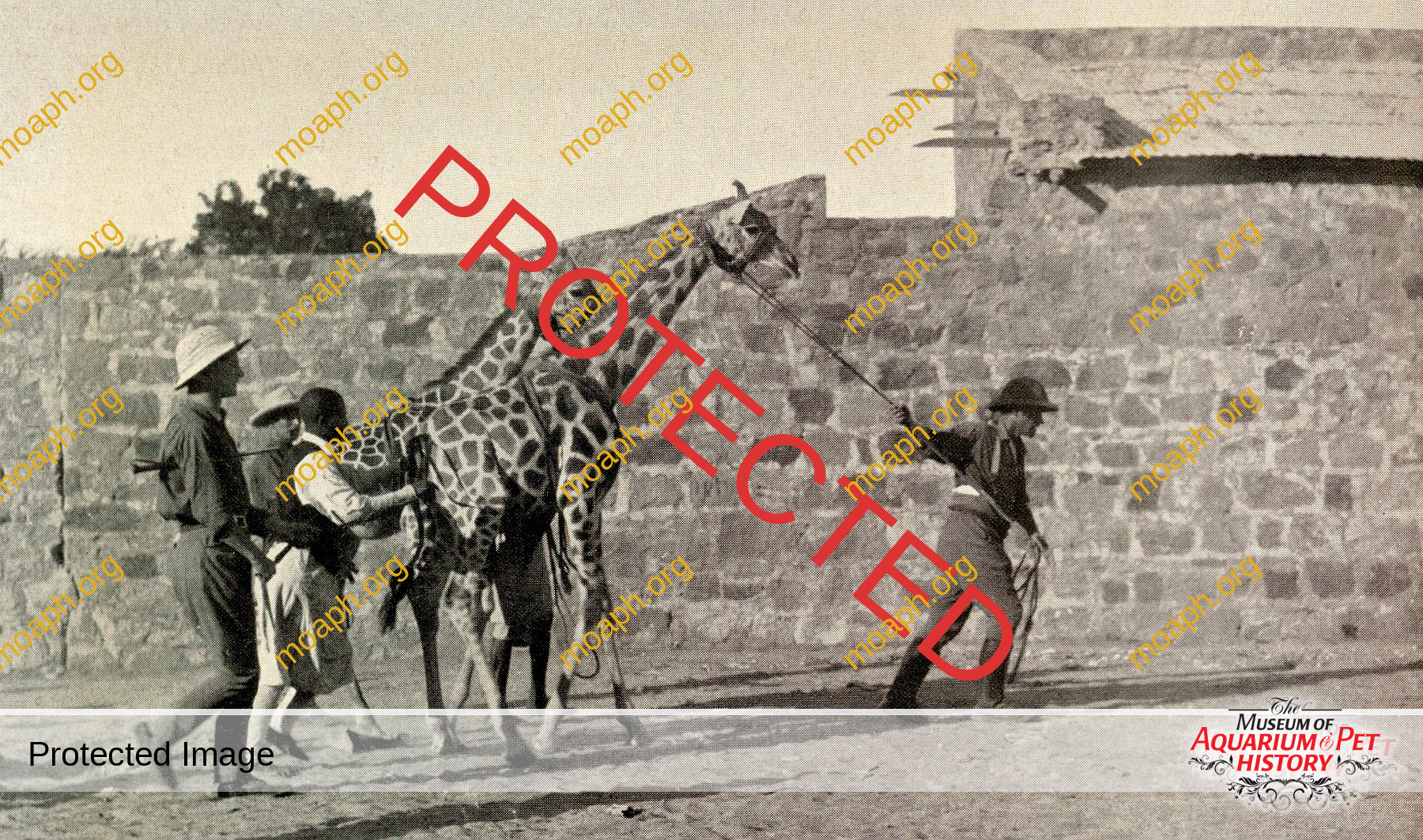
The animal collectors Steininger (wearing a light tropical helmet), Ohneiser (behind him), and Karl Kreth (on the right) drove freshly captured giraffes through Dire Daoda to the Alfeldia Camp.
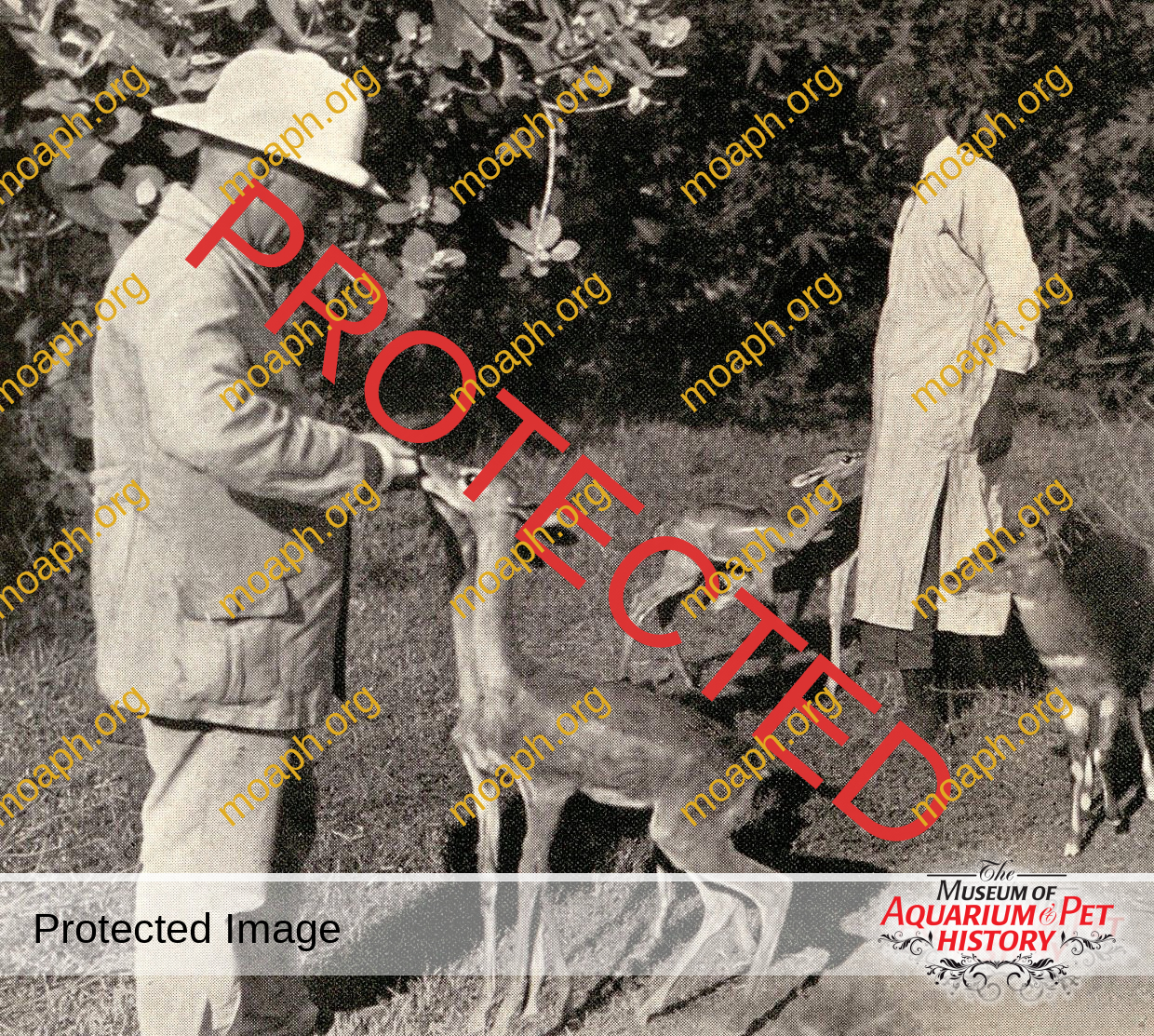
Fritz Risch at the “Alfeldia Camp” in Dire Daoda, feeding two young giraffe gazelles. To the right of the native animal keeper, there is a bushbuck ( A medium sized antelope native to sub-saharan Africa).
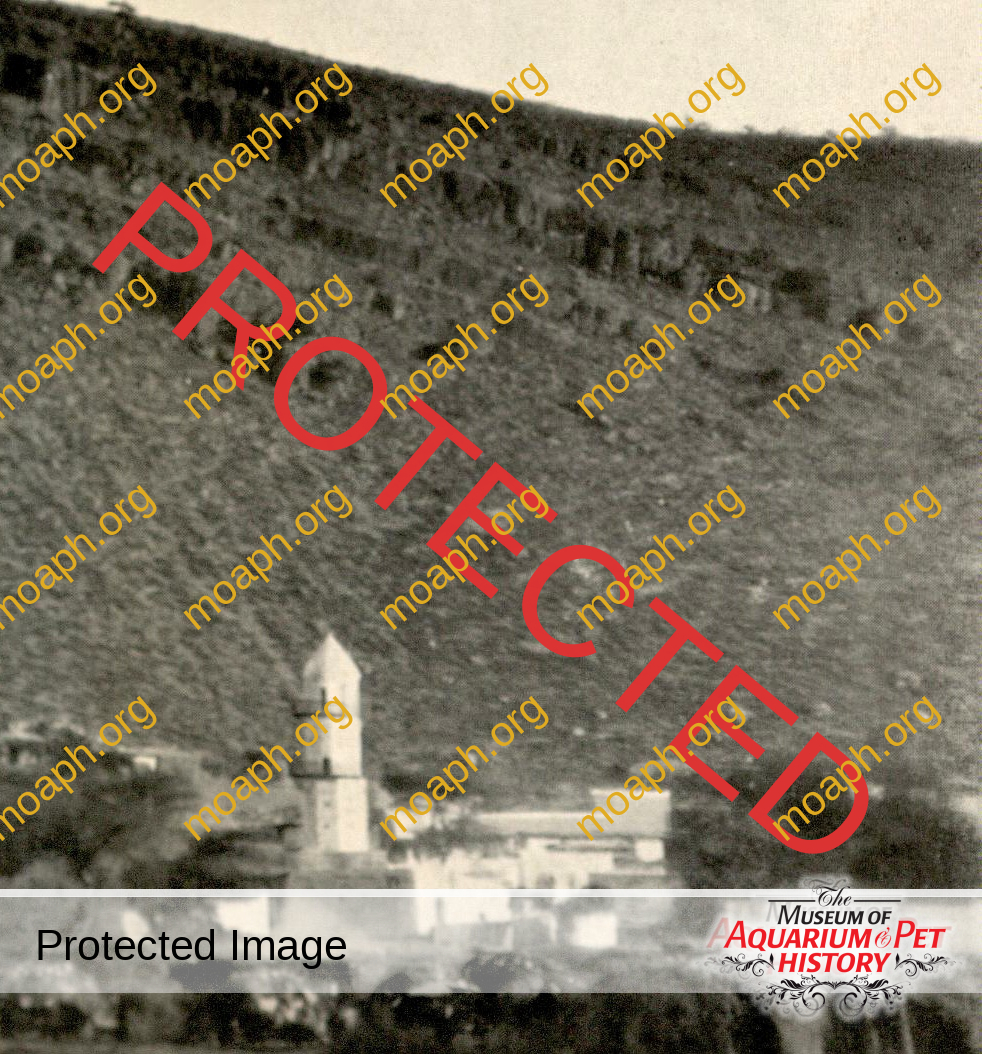
The Abyssinian city of Dire Daoda, near which the Alfeld Camp was located.
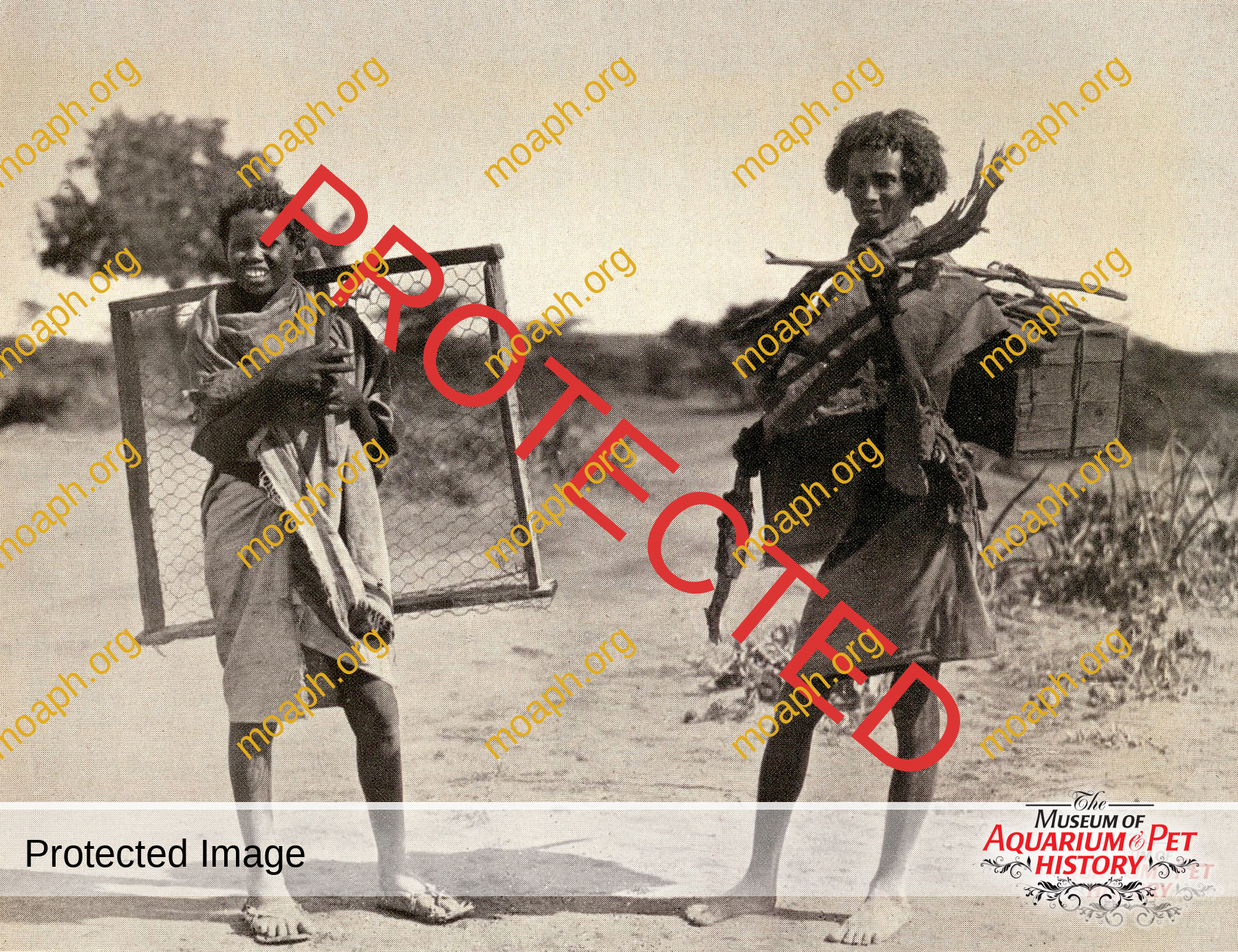
Native suppliers of the Ruhe company: Two Abyssinian bird catchers with a wire net intended for trapping and a transport box for the birds.
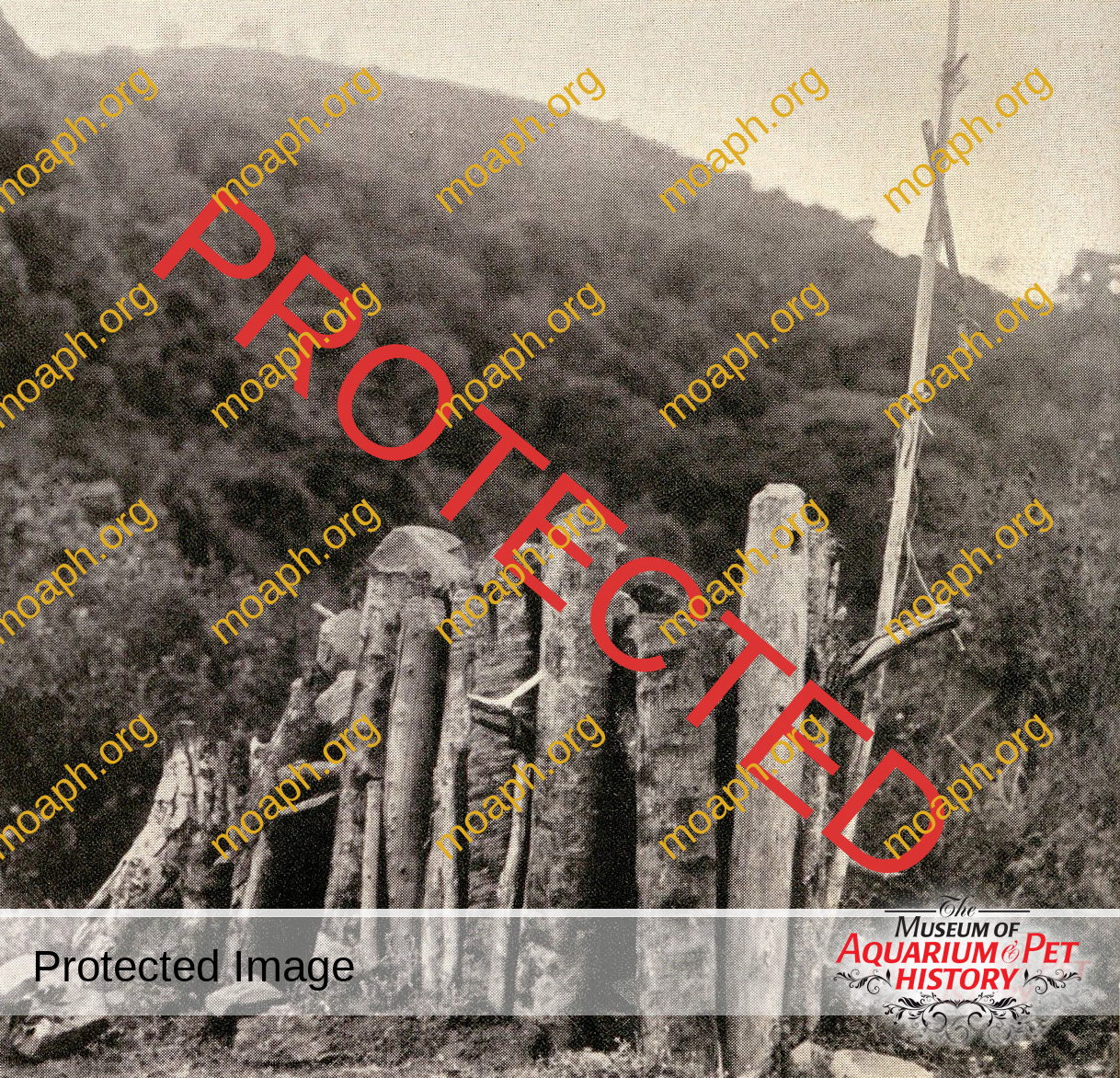
A genuine leopard skin from Somalis, photographed by Dr. Havestadt during an expedition in Abyssinia.
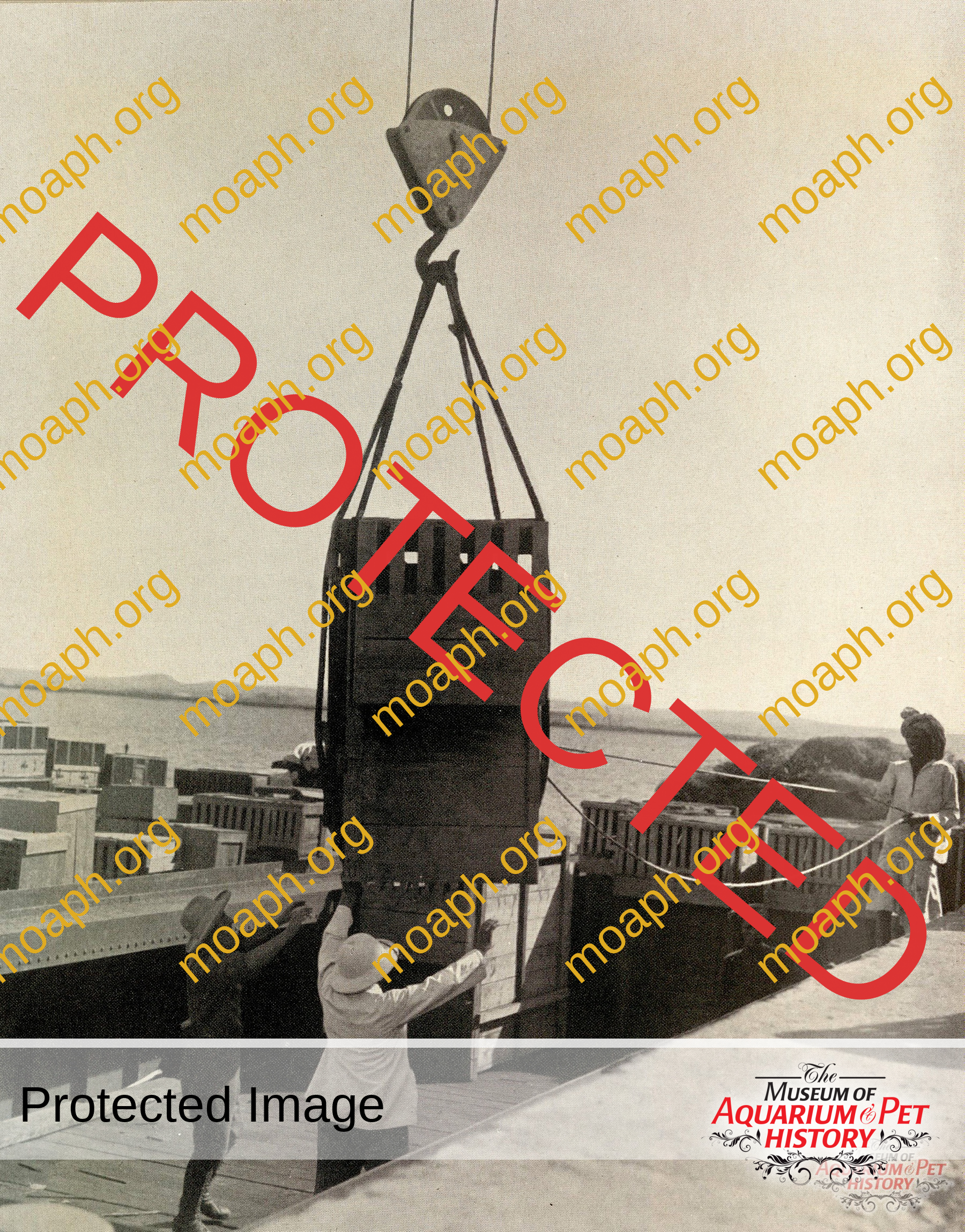
A large animal shipment collected at the Alfeld Camp is being loaded at the port of Djibouti. On the left is Carl Steininger.
How the lady managed, despite the makeup and costume, to recognize the man now, years later, remains a mystery to Carl Hagenbeck. He was not sure whether it was due to denunciation by foreign circus staff, which had to be additionally employed, as is necessary in every foreign country. A scandal had ensued—and the result was that Hagenbeck, with his circus, had to leave Belgium within 48 hours.
The company, however, did not have the financial reserves that a circus needs in an urgent case—in fact, practically without any funds—they had to break down their tents and be able to leave again with the whole apparatus. He needed a loan for that.
“Can you help me, Mr. Ruhe?” he asked.
He looked very tired, especially since he had immediately, after the official confrontations, which had taken place in the evening, got into his car and sped off.
I looked at the clock: It was half past six. “We must wait until the bank opens,” I said. “Now we will have breakfast first, and then we will sort this out.”
Around ten o’clock Carl Hagenbeck was already on his way back to Belgium, and he managed to get his circus across the border within the given 48-hour deadline set by the Belgian authorities. He then set up his tents in a new location in Germany. Just as Director Krone had once paid my father, so Carl Hagenbeck repaid the loan promptly and in full, and remained a good customer of mine.
When I reviewed the sales figures for 1925, I could once again be satisfied with the revenue: For the first time, two giraffes were among the animals sold, along with 28 elephants, 20 lions, 14 tigers, 16 leopards, 5 cheetahs, 7 pumas, 44 polar bears, 57 brown bears, 32 other bears, 9 hyenas, 17 dromedaries, 32 camels, 26 llamas and guanacos, 52 antelopes, and much more.
We even managed to acquire and sell some river horses5, as well as a male orangutan—a remarkable rarity at that time. This orangutan made zoo history! Later, we called him the Probe Orang (Test Orangutan).
MOAPH5: River Horse is a term to describe a Hippopotamus
A Dutchman named van Goehns had offered him to me through the animal catching firm Perin based in Amsterdam. Van Goehns also claimed that he could catch additional orangutans and transport them to Europe. This seemed to me like a breathtaking theory, the realization of which was more like a fairy tale! Perhaps only experts can remember how sensational this claim was back then.
As soon as I reported the arrival of the orangutans, Professor Brandes, the director of the Dresden Zoo, appeared in Alfeld.
“I won’t let this one be taken from me!” He immediately said after I had just greeted him. “Where is he?”
And sure enough, Professor Brandes did not allow himself to be swayed. He dipped into the budget of his zoo and paid, though grumbling, 20,000 Marks6!
MOAPH6: Around $84,000 today.
In the Dresden Nile Horse House7, whose temperature and humidity were suitable for the orangutan, he had a large cage built, the construction of which soon became a model for others.
MOAPH7: A ‘Nile Horse’ is another term for a hippopotamus. The Dresden Nile Horse House was where these animals were housed and showed off to the public.
It was square and enclosed with heavy bars. Professor Brandes had strong hanging bars installed for the animal. The floor of the cage, about 1 meter above the ground, was made of thick, peeled tree trunks, laid with about 10 to 20 cm spacing. Underneath was a conveniently cleanable hollow space. Anthropoid apes have the bad habit of eating their own feces, which Professor Brandes wanted to prevent by creating this excellent floor, through which everything could fall through.
When the cage was finished, I drove to Dresden by myself and looked closely at Goliath, the name Professor Brandes had given his orangutan, the pride of the Dresden Zoo. The animal seemed to feel very comfortable in the new cage.
In the meantime, I had ordered more orangutans from Perin in Amsterdam and was now awaiting the outcome. I had no limits to the number of animals that van Goehns was supposed to catch; that might have been too optimistic.
During my visit to Dresden, I wanted to surprise Professor Brandes:
“You might want to give your Goliath a female soon, Professor. I am to receive a shipment of orangutans.”
“A shipment?” Brandes said doubtfully. “All the better, Mr. Ruhe! But you don’t think I make money out of thin air, do you? You must give me a female after you’ve already charged me so much money and after all the advertising I’ve done for you!”
“Expensive advertising,” I said with a laugh. “But you should really be rewarded, Professor. You have the first hand in the selection”
“…take the best female—perhaps even with a young one—that comes with the transport.”
“I take you at your word,” he said. “And in the meantime, we will send some prayers up to heaven, that indeed a few orangutans do arrive!”
“Certainly,” I said confidently. “As soon as I learn more, I will also have cages built in Alfeld—according to your model, if you allow.”
The professor was happy to permit this.
I returned to Alfeld. In the meantime, it was a matter of waiting to see if van Goehns could deliver on his bold claims—and that would take some time.
During a visit to the Zoo in Halle on the Saale, I met an artist named Dubbick through Director Dr. Kniesche. Dr. Kniesche warmly recommended the young man to me; Dubbick had spent a long time as a painter in the Lapland8.
MOAPH8: The Lapland is a region encompassing northern parts of Scandinavia. The area is largely inhabited by the indigenous Sami people.
During conversations about his stay in these northern zones, I came up with the idea of putting together a “Laplander Show.” I quickly decided to send the artist Dubbick back to the Lapland to gather a group with which we could arrange an ethnological show. Since Dubbick mastered the Lappish9 language, he took on this task with great enthusiasm and set off on his way.
MOAPH9: Lappish is spoken by the Sami and is a part of the Uralic language family most closely resembling modern day Hungarian and Estonian.
Almost simultaneously, I arranged a journey by the Hanoverian zoo director Otto Müller to Abyssinia10, to put together a “Somali Show” with John Hagenbeck.
MOAPH10: Abyssinia is the Latinization of the Ethiopian empire which encompassed modern day Ethiopia and Eritrea. It lasted from 1270-1974.
Both ventures succeeded; the groups arrived in Germany in 1926 and 1927—and became great successes. Dubbick stayed on as a companion to the Lapland families.
The performances mostly took place in zoos, with which we signed monthly contracts. The zoo took care of the site procurement and the cash register, as well as the fencing and housing of the exhibition villages at their expense. Apart from the zoo entrance fee, additional fees were charged for the ethnological shows, which were generally well advertised and had excellent visitor numbers.
The entrance fees were shared between the zoo and my company, depending on the scale of the events. For years, “Ruhe’s Lapland Show” and the “L. Ruhe—John Hagenbeck Somali Village from Abyssina” were popular attractions for the public in many zoos.
Another major success was a first-class India show, which had come to Colombo with John Hagenbeck. After initially traveling alone, we had in the last few years worked together. It was a curious sight when the large working elephants of the show, during their winter stay on the grounds of an Alfeld shoe factory, effortlessly moved huge tree trunks back and forth!
Together with my friend Gabriel, a well-known showman, we brought the show to Munich’s Oktoberfest in its final year of existence.
Meanwhile, the expeditions for capturing and purchasing large animals continued unabated. The Dire-Daoua camp was heavily used.
Mr. Kreth, supported by a young employee, Dr. J. Havestadt, undertook an expedition in Abyssinia that lasted about a year! The main distribution area of the Abyssinian big game lay in the south of the country, about one hundred kilometers from the capital Addis Ababa and the nearest train station. The road conditions in this catching area and on the way there were extremely challenging. The route led through mountains and rivers, through jungles and steppes. During the rainy season, these trails were only passable for mules with great difficulty.
The gentlemen found that the Abyssinian wildlife was mostly found at high altitudes, about 400 to 500 meters above sea level, with high daytime temperatures.
Naturally, the unbearable heat in the catching areas was a factor that made it difficult for people and animals to complete their day’s work. In this region, which extends on both sides of the border between Abyssinia and Kenya and far into Sudan, live elephants, rhinos, buffaloes, giraffes, zebras, various types of antelopes and gazelles, lions, leopards, as well as smaller predators, such as hyenas, African wild dogs, and jackals.
Our main interest at that time, however, was in catching the giraffes, which were still relatively rare in zoos. The equipment, which was gathered in Addis Ababa for transportation, was enormous. Mules, horses, tents, inflatable boats, canned goods, kitchenware, lamps, candles, soap, medicines, some bottles of wine and cognac, tools, field flasks, binoculars, and weapons with ammunition.
For this one-year expedition, 45 mules and 20 horses were purchased at the market in Addis Ababa and in the surrounding areas of the city. The food supplies brought along were limited to canned goods, dried vegetables, potato flakes, and similar items. In addition, the expedition had to rely on feeding themselves with what the region could provide, as they intended to travel through it.
The funds that Kreth and Dr. Havestadt had taken along for the trip were exchanged into Maria Theresa Thalers11, as this was the principal currency in Abyssinia. However, they could only make a limited impression with these coins among the native people of southern provinces. It later proved to be a wise precaution when they distributed the money pouches containing the thalers into various crates, making sure the money wouldn’t rattle.
MOAPH11: A coin based in Austria, but commonly found and used in the Levant (an area encompassing parts of Lebanon, Syria and Turkey) during that time.
A lot of people had to be hired: mule drivers, caravan leaders, boys, interpreters, and a cook; in total, 40 natives. At the end of the rainy season, in early October, the caravan set off from Addis Ababa. Their destination was the steppes north of Lake Rudolf12. On Kreth and Dr. Havestadt’s journey, a few more Europeans joined the group.
MOAPH12: Lake Rudolf or known today as Lake Turkana is located in Northern Kenya.
To maintain the marching order, the Europeans had to be distributed along the way. Two rode at the head of the train, two in the middle, and two at the end. The average daily distance covered was no more than 30 kilometers. Crossing the swollen rivers after the rainy season caused considerable delays since the valuable baggage had to be transported across the water on a raft, while the pack animals had to swim through the water, often drifting far away and having to be retrieved.
From the early morning until late in the afternoon, the caravan moved from province to province through often charming and fertile landscapes. On the way, it turned out that some of the hired natives were unusable. They were sent back without delay after 14 days to avoid further difficulties for the expedition in time. The others received only small advances for provisions at first. It was agreed that they would receive their wages only at the end of the journey; a precaution to prevent them from running away if they suddenly got the idea to do so.
There was even an open mutiny at one point. The reason was poor provisions, as they were passing through an area where food supplies were not easily available. The boys had to be armed; the Europeans themselves kept watch over the luggage and animals during rest breaks to guard everything.
After another mutiny, a few natives drove all the horses and mules of the expedition out into the steppe13 during the night. The animals would have been easy prey for lions and other predators. At daybreak, when my staff discovered this, it was critical that we find them! It was only at noon that the horses and mules, which had been kept together in a closed herd, were found about 5 kilometers away in the open steppe. Amazingly, the animals were completely unharmed!
MOAPH13: A ‘Steppe’ is characterized by grassland plains without forests
The camp was put on high alert. Occasionally, the Europeans fired warning shots into the air, and in the evening, as it began to get dark, the mutinous group voluntarily returned to the camp from the dangerous steppe. Only the ringleader had disappeared. Nevertheless, discipline was restored and maintained until the end of the expedition.
On the way, the caravan was subjected to another robbery attack, which led to a serious exchange of gunfire. Ironically, the mule carrying the crates with all the kitchen utensils was stolen. The attack was carried out by a gang of the predatory Tishana tribe at a remote point on the route.
After endless hardships and exertions, the expedition reached the area where much wildlife was expected to be found. Indeed, the abundance of game was astonishingly large. There were entire herds of giraffes and many rhinoceroses.
Initially, they focused on capturing giraffes, which at that time were still hunted on horseback.
The selected giraffe herd—after the birthing season, one mostly sees smaller family groups—was approached at high speed from both flanks if possible. The trick here was to prevent the giraffes from dodging into the nearest dense bush and to cut off their escape route.
Horse and rider were significantly hindered in their movements by the rough terrain, where they had to stay fluid and fast. Additionally, the unusually scorching climate, with midday temperatures sometimes reaching 45 degrees Celsius (113 Fahrenheit) in the shade, presented a challenge! Success in this type of giraffe capture is promised only through a surprise attack, which, to avoid over-exerting the animals, had to be completed within 2 kilometers at the most, so as not to overstrain them, and to prevent the severe heart failures that often could only be detected after weeks and led to the death of the animals.
Havestadt developed a special method. He observed the giraffes in the open steppe at night and in the early morning, blocked their return to the edge of the forest. The hunt, which started at dawn, was mostly successful.
Even during the day, the giraffes sought the savanna, which provided them with a good view. During midday, they often stood in groups in the shade of scattered acacia trees or camped in the steppe grass—while a ‘sentinel’, usually an old, darkly marked bull, kept watch.
The eyesight of giraffes is excellent, and they can detect unusual appearances or movements in the landscape from a great distance. Then, the ‘sentry’ immediately gives the alarm.
The catchers were amazed at how many giraffes seemed to rise from the ground at once after such an ‘alarm’, and it was hopeless to try to follow the fleeing animals; their head start was far too great. Eventually, they changed tactics, approaching from good cover and trying to surprise the herd.
Then, the selected young animal was driven away from the herd or its mother. The younger the giraffe calf, the more successful the effort. Often, during the chase, the swift running pace of the older animals left the calf behind, confused and unable to follow.
The noose was then slipped over its neck, and the animal was held until the chest halter was secured, which allowed for faster restraint of the rushing animal.
However, the difficulties were not over yet, as now came the transport to the day camp. Extreme caution and patience were needed to calm and soothe the freshly caught, agitated animal, and to refresh it with water-diluted milk, which was carried in a field flask hanging from the saddle horn on all capture rides.
Only when this was successful could the march on foot begin, with the animal being led by the head and held at the chest halter by two men. It was necessary to take many breaks, especially in the early stages, as the boys brought along after the catch often behaved rather clumsily.
For example, it once happened that the boys caused the sudden pressing of the neck of a freshly caught giraffe on the march to camp, breaking its neck. Kreth made a huge fuss—but it was no longer of any use; the poor animal was already dead.
Such undertakings in the midday heat were equally exhausting and stressful. Added to this were unforeseen falls when the horses had stepped into aardvark or porcupine burrows.
They waited patiently until the men had recovered from their fall and could mount again. The mules were completely useless, as is often the case in such situations—disobedient and quickly ran far away—back to camp.
Kreth and Dr. Havestadt had given me the main task of hunting giraffes, but we were also supposed to try capturing other large animals. With rhinos, however, the prospect of a successful capture seemed completely hopeless. Who could have thought to throw a noose around the head of an attacking or charging rhino to stop it—whether by force or not? So, I did things differently.
In arduous work, after constructing a thorn fence about two meters high with overhanging ends, we began a days-long encirclement, in which the animals were driven further each night by large fires and had to be herded into the pen. Along the way, we succeeded in driving not only Eland cows14 Korrigum antelopes, and Grant’s gazelles into the enclosure, but also some zebras, and finally, a hundred pieces of giraffe prey into the fenced area! This endless and fortunate catch was suddenly interrupted when the simultaneously driven-in rhinos broke through in certain spots, destroying the strong thorn fences and preparing the way for the other enclosed animals to escape. Thus, all the work was in vain, and the rhino hunt had to be restarted from the beginning!
MOAPH14: Female of the Eland species of Antelope which are the largest in the world.
Finally, in the dry season, there was a lack of water in the area, which drove the animals out of the hunting zone. Then, in another area, all work was prohibited by the Abyssinian governor because the papers of the expedition members had apparently not been examined.
To make matters worse, Kreth became severely ill! He lay in a critical condition for weeks. Even an Askari native fell ill and could not be saved despite all care. The cause of Kreth’s illness, which could not be determined, was taken with him to the grave.
Dr. Havestadt took over the leadership of the expedition in Kreth’s place. Finally, despite everything, the captured animal stock of the expedition had grown so much that the return journey could be undertaken.
In the meantime, the captured young animals had been introduced to food, meaning they were familiarized with the nourishment that awaited them on the return journey. In addition to the milk portion given to them twice daily, they received food consisting of barley meal mixed with chopped carrots and onions. From the day of their capture, they were also given ample quantities of fresh acacia and mimosa leaves.
After catching the first young giraffes, a dairy cow was brought along to meet the milk needs of the young animals. The cow’s milk yield was not particularly large due to the poor feeding conditions and the prevailing drought. Furthermore, the cow always had to be milked when the calf was sucking.
Until the giraffes were adequately prepared for transport, the main concern and care of the expedition members were equally focused on the health condition of the animals as well as the transport animals, whose health for the return journey was of great importance. Especially the horses, which came from the highlands, suffered under the oppressive climate.
To prevent the “horse plague”, which is transmitted by the tsetse fly, Dr. Havestadt used the remedy “Bayer 205,” which was newly available at that time. A horse that already showed the first signs of “Nagana”—as the disease was then called—swellings on the neck, head, and genitals—was cured relatively quickly after the properly dosed injections of the substance into the neck vein.
The most delicate matter on the return journey was crossing the not-very-deep but about
100-meter-wide Omo Bottego River. Only after the numerous hippopotamuses and crocodiles had been driven away from the ford was it possible to lead the giraffes through the water.
On the subsequent march, which lasted about three weeks, signs of foot disease began to appear in the giraffes due to the wear and tear of their hooves. They became lame, and the daily distances had to be correspondingly shortened until Addis Ababa was finally reached.
The arrival of the giraffes in the Abyssinian capital was an event. One of the first visitors to the local animal collection camp was the British envoy. There was no lack of appreciative words for the expedition’s sporting achievements.
Unfortunately, the animals had to be led through the city to reach the rather distant railway station in Addis Ababa. This path became a torment for both humans and animals. Street boys engaged in all kinds of mischief and had to be vigorously driven away repeatedly.
The giraffes remained at the Dire Daoua camp, which we had named the “Alfeldia Camp”, for four weeks before they were to begin their sea journey to Hamburg.
The Alfeldia collection camp was not only intended to house the animals captured by our expeditions and prepare them for transport to Europe. It also served as a purchasing camp, as it had long been known among the natives that they could sell animals to us.
Their methods of capture were often anything but professional, so that the animals they brought were sometimes missing an ear or had only three whole and one-half foot—and so on; injuries that resulted from careless or improper capture. The natives soon realized that they could not make any profit with such poor creatures and began to proceed more cautiously in the future.
Unfortunately, some of these animals also had hidden health issues, so that after proving unfit for transport, they had to be released again, even though they had already been firmly purchased.
My camp staff, especially Fritz Risch and Carl Steininger, soon caught on to all the tricks. They would no longer buy any animal from a native without thoroughly inspecting it, sometimes even observing it for several days to detect any health deficiencies.
Frequently, the animals offered to us had suffered severe internal injuries from being overheated, and this could not be immediately detected at first glance.
The animals that Mr. Kreth, who was slowly recovering, and Dr. Havestadt, who had been purchased in the meantime, brought into the camp were kept until they were transportable and then taken to Djibouti and loaded there.
It was a beautiful and particularly noteworthy transport for one special reason: Among the animals were two magnificent specimens of the three-horned Giraffa camelopardalis which were introduced to Germany for the first time. They became famous as “Hans and Anneliese” at the Zoo in Berlin and were beloved in their own right. They had offspring several times and lived until near the end of World War II, when, unfortunately, they fell victim to a bombing raid.
Kreth was supposed to fully recover his health before returning to work; Dr. Havestadt, who had remained in Abyssinia, was immediately given a new task by me.
He had informed me that there were two Grevy’s zebras in Addis Ababa, which would certainly be worth acquiring.
I found someone interested in buying the animals and assigned him the task. He then requested and was granted a meeting with Regent Ras15 Tafari Makonnen, now Emperor Haile Selassie.
Since Ras, being an early riser, used to start the daily receptions at the Gibi, the imperial palace, in the early morning hours to get everything done.
After the greeting, a lively conversation began. Dr. Havestadt, who was already known to the Ras, explained that the animal trading company Ruhe in Germany was very interested in Grevy’s zebras. As was customary, all captured large animals were first delivered to the imperial court according to an old tradition—and so the aforementioned Grevy’s zebras had also ended up with the Ras.
MOAPH15: ‘Ras’ is an Amharic word meaning ‘Chief’ used in Ethiopia and Eritrea.
The Ras’s response to Havestadt’s presentation was a friendly but noncommittal smile. Without warning, he changed the subject and finally ended the audience with the question of whether Havestadt wanted to do him a favor.
Naturally, Havestadt said, it would be an honor to be of assistance to his Imperial Highness. What was the matter?
“You will hear that from your envoy,” was the reply.
The later emperor’s reaction to the great interest in the Grevy’s zebras from a German trading house came as a complete surprise. He decided to give the two zebras as a gift from the Regent to the then President of the Reich, von Hindenburg!
There was nothing to be done about it, and I accepted the situation after receiving the relevant communication from Havestadt.
The two young animals, which Dr. Havestadt had to take over, were about six months old and were in poor condition.
The weeks-long march—they had come from the southeastern part of the country—had taken quite a toll on them. Their nutritional condition was unimpressive, their coat rough and dull-colored; not an encouraging sign! Dr. Havestadt wrote to me that they probably also had worms—a common occurrence in free-ranging animals in the tropics—as well as lice and ticks.
With this, Havestadt, and therefore my company, which he represented, had been given a special responsibility. Naturally, we had to make every effort to successfully bring this gift from the Regent to the President of the Reich and have them in its best condition!
First, the animals were transported from the cool mountain climate of Addis Ababa down to our camp near the much hotter Dire Daoda.
The next of the twice-weekly trains soon departed. In the short time available, Havestadt had to secure a wagon and have zebra transport crates made, which he managed to do.
At the Modjo station, Fritz Ehm, who had ended up on a farm in Abyssinia after the war, was waiting and handed Havestadt an additional nine crates of Gelada baboons and a collection of birds. Thus, the wagon was not only ‘honorable’ but also profitably filled for my company.
Fritz Risch was ready in Dire Daoda. I had sent him a telegram instructing him to help ensure that the animals destined for the President of the Reich would end up in good hands.
The zebras remained in the Dire Daoda camp for about three months until they had the necessary stability. The warm climate and the very spacious enclosures contributed to this.
To combat the worms, the zebras were given a carrot treatment. Lice and ticks were soon removed through thorough treatment with tobacco lye.
Along with a larger shipment, the zebras were finally loaded onto a ship headed to Germany, and arrived safely in Alfeld. I personally ensured that the zebras were transported flawlessly to Berlin and made a quick trip there.
In return, President Hindenburg sent the then King a complete telephone system of the most modern construction for the imperial palace in Addis Ababa.
The zebras, therefore, did not go to my original interested party. As a gift from President Hindenburg, they ended up quite unexpectedly in the possession of the Berlin Zoo.
Not only the Abyssinian animals caused a lot of work and concern before they finally arrived in Alfeld at the Weiße Erde (White Earth). Carl Eiffert, later chief inspector at the zoo in Hannover, also had to overcome many difficulties during a journey to the Limpopo River on the border between Southern Rhodesia16and Transvaal17. He succeeded in catching a fully-grown 4.10-meter-tall giraffe.
MOAPH16: Southern Rhodesia is now known as Zimbabwe
MOAPH17: Transvaal is now part of Southern Africa
When Eiffert returned to Alfeld with this giraffe and other animals, I asked him, “How did you manage to catch this fully-grown animal?”
“I bought the giraffe from a farmer,” he said.
“Oh,” I said, “then it was relatively easy.”
He laughed grimly. “Not quite that easy! The animal moved freely ”on the farm, which was the size of a small province.
However, the capture itself was not even the most difficult part: the real challenge came afterward—a task that would have even scared the zoo in Pretoria—and that was to transport the giraffe from the capture site to Pretoria, which was about 200 miles away.
“I didn’t understand what he was getting at. Better tell me the whole story, Mr. Eiffert”, I said. “Otherwise, I won’t get through this.”
“The entire farm was surrounded by a double wire fence,” he explained. I had to section offa corner of this area and built a very large crate there, with the front wall folded up high as usual. The main food of the local giraffes, umbrella thorn acacia leaves and hawthorn, was cut down and filled into the crate in the corner of the enclosed area. I had about 120 natives drive the animal across the entire farm into the enclosed corner. It took a long time, but eventually, the giraffe was driven into the corner and then lured into the crate. After the crate was shielded from the sun, the animal was left to stand there and get used to the crate and the food provided.
Gradually, it began to eat. —There stood the crate, with Käthe, as I had named her, peeking out, and the nearest railway line was about 100 kilometers away. —That was the nut that needed to be cracked, Mr. Ruhe!”
Now I began to understand his concerns.
“There wasn’t a wagon to be found for miles around,” Eiffert continued. “So it was a matter that could only be done with patience. A line of boys took over two weeks to roll carefully smoothed logs under the crate, and the railway tracks were always laid in front as needed. Finally, a few days later, I got hold of a locomotive, a crane platform for the giraffe crate, and even a passenger car.
On the way, Käthe, who had meanwhile become quite trusting after watching all our efforts with interest, was loaded with her crate onto an open stretch. In the open steppe, she once again enjoyed trimmed thorn and umbrella thorn branches; sweet potatoes, onions, broken corn, and alfalfa hay were added. The train journey to Pretoria went quite well. Käthe then stayed with you, as I will show you now, in the zoo in Pretoria before we started our journey back. We only had one more scare: when we came to a tunnel on the railway line to Durban after several kilometers. Käthe’s crate just barely fit through; it couldn’t have been an inch higher!”
How well Käthe had endured everything was proven by Käthe herself. In her enclosure at Weiße Erde (White Earth), she moved around with liveliness and interest in her new surroundings and caused the caretakers no additional worries.
Carl Eiffert, by the way, had his own thoughts on giraffe hunting. He took the standpoint that giraffes are generally very shy and possess particularly sharp eyesight. Their size, Eiffert believed, might mean that their sense of smell was somewhat developed, but ultimately rather useless. For this reason, the giraffes are often associated with herds of elephants or antelopes who have keen senses of smell and whose scent perceptions reach all the way down to the ground. However, giraffes actually rely on warm heat waves rising from the ground, and are, therefore, left with a minimal sense of smell.
Eiffert usually captured the animals with a lasso like a cowboy, developing incredible skill in the process. The best catch he ever made was 13 young giraffes, which he fed well and later brought to Alfeld. At Weiße Erde (White Earth), it looked amusing as all the long necks curiously stretched out of the enclosures.
That year, a young man appeared in Alfeld whom I recognized. He introduced himself: “Alfred Glenewinkel.”
“Right,” I said. “Now I remember you!” Glenewinkel had previously, when head animal keeper August Milte was still working with us, frequently watched how the animals were fed and cared for. At that time, Glenewinkel was still a young boy.
Glenewinkel asked me for a job. It was his greatest wish to work with animals.
I had reservations based on the fact that Glenewinkel had been working for years as an employee in a branch of Deutsche Bank at a desk, so he presumably had no idea about animal care. In my opinion, a man who had practiced such a distant profession for years could not be useful for the practical care of animals.
However, Glenewinkel pleasantly surprised me: Without complaining, he took the pitchfork in hand, undertook cleaning tasks, and then initially took care of the rhesus monkey house, whose normal daily routine was accompanied by deafening noise.
I asked head keeper Albert Siegfried how Glenewinkel was doing.
“I can’t complain, Mr. Ruhe,” said Siegfried. “The young man is doing quite well. He could become something.”
And Glenewinkel did. Soon, he was ready to be sent on an expedition to the West African coastal region with Albert Meems to the West African collection camp my company had for animals and birds located in Dakar. Meems had set it up some time ago, and we kept it going. It was a gathering place for animals that came from various colonies, such as bright chimpanzees from Gambia; from Portuguese Guinea, magnificent crowned cranes, marsh and bush antelopes, and other animals; from French Guinea, chimpanzees, colorful monkeys, and other animals, particularly from the large fruit farm of a friend of our company, the Frenchman Lablanche.
From the British colony of Sierra Leone, colorful monkeys and birds were brought to the camp in Dakar, while in Liberia, hippos, crocodiles, snakes, antelopes, and—alongside other monkeys—also great apes were captured. After the World War, the first pangolins were once again brought to Europe from there; animals that, though armored, look like fearful monsters in miniature, but are harmless creatures that feed almost exclusively on ant-like insects. The natives simply call them “Termite eaters”.
From the Ivory Coast, Cameroon, and Belgian Congo, pygmy hippos, gorillas, and chimpanzees—typical representatives of their homeland—arrived in Dakar.
The animals were brought to the Dakar collection point and acclimatized there. During this time, the construction of transport crates for the sea journey began. Glenewinkel quickly settled into his new tasks. Meems even sent me a letter of praise about the young man, who, within a short period, had met some very useful people and earned their trust. They were three Frenchmen named Leboude, Viran, and Vingboul.
“They are real friends,” Glenewinkel told me, “who sometimes make the impossible possible. I’m glad about that because there’s no shortage of difficulties of all kinds here, not a day!”
The Frenchmen were also involved in capturing typical representatives of the long-legged steppes, small-spotted cheetahs, rare aardvarks, beautiful red-necked ostriches, large and medium-sized wading birds, Senegal parrots, spotted big cats, hordes of guenons, giant snakes, and giraffes.
The first transport that Glenewinkel brought back to Germany could be seen in the diversity and number of specimens. It was shipped aboard a cargo steamer belonging to a company based in Le Havre18.
MOAPH18: Port city in Northern France
It was a rather old ship that now served as a Noah’s Ark for a few weeks. The accommodation for the animals was good and practical. To feed the predators, Glenewinkel had to bring along several goats, which were slaughtered as needed to serve as food. The steamer had no refrigeration on board; it would have been impossible to keep fresh meat for the duration of the journey from Dakar to Hamburg in the required quantity.
While en route, offthe Portuguese coast, the ship encountered a so-called “cow storm,” forcing the steamer, which was originally destined for Hamburg, to divert to Bordeaux to seek shelter. Even afterward, it did not continue as originally planned to Hamburg but was directed to Le Havre, where it was soon discovered that the ship had suffered various damages.
Glenewinkel quickly learned the hardships of such a sea transport. In Le Havre, the entire transport had to be transferred to another ship, which was supposed to stop in Antwerp before finally reaching Hamburg.
However, in Antwerp, a dockworkers’ strike had just broken out. Since this new ship had cargo on board that needed to be unloaded there, it had to remain waiting in Le Havre. Glenewinkel could not wait that long with our animals. Therefore, he had them sent by train for the third time.
Glenewinkel handled his first transport so well that Meems could return to his actual work area in India and Sumatra. Glenewinkel had proven that he could now manage the Dakar collection camp on his own. His example showed that a man from behind a desk could indeed completely transition to a life of busy animal trade practice—something I had originally doubted when he entered my service several months earlier with his impeccably manicured hands.
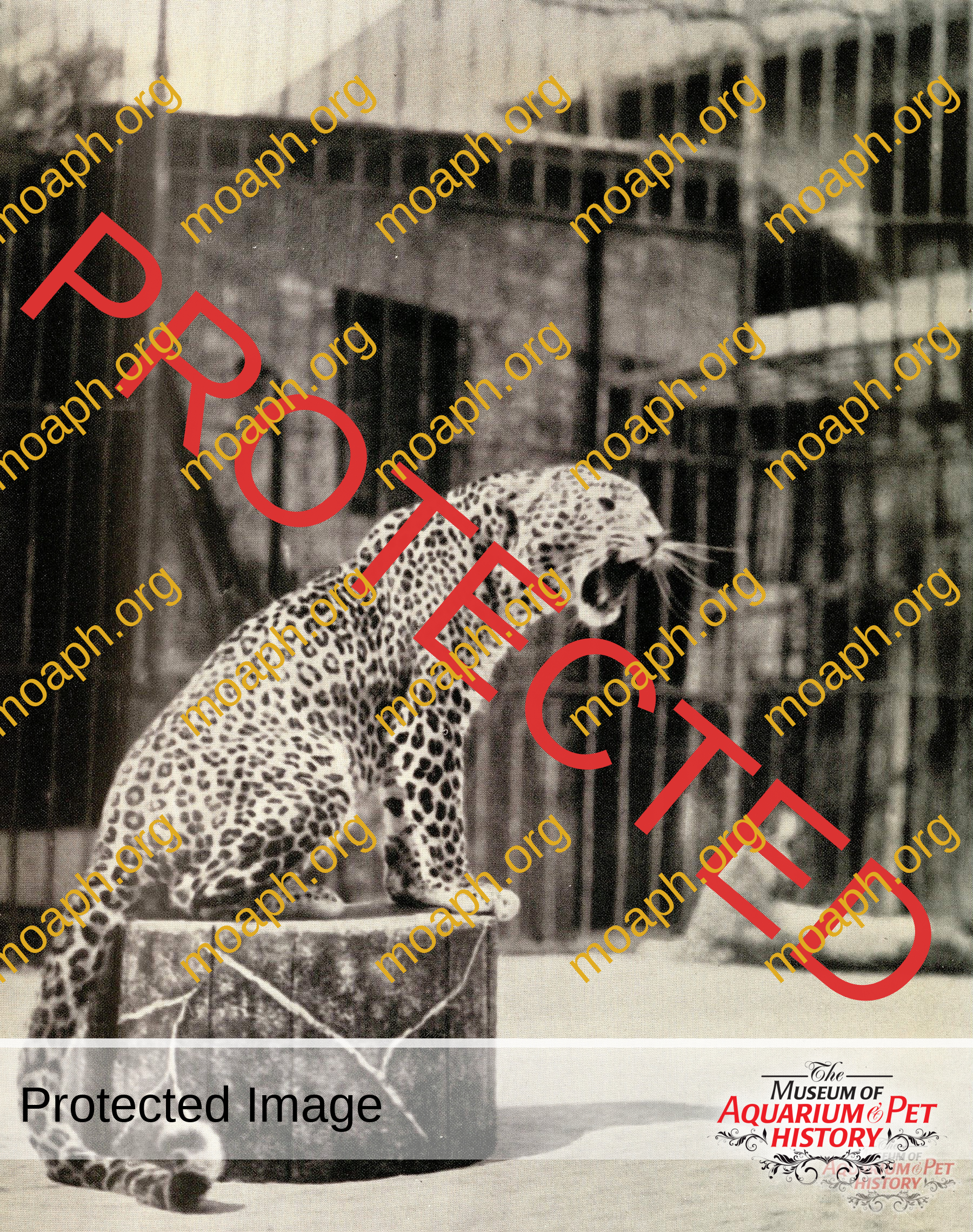
Sometimes the space at the Weiße Erde (White Earth) was not sufficient for all the animal groups being worked on. An additional training cage was set up in the courtyard, where a mixed predator act was also created. On the pedestal is an African leopard, and in the background, a lioness.
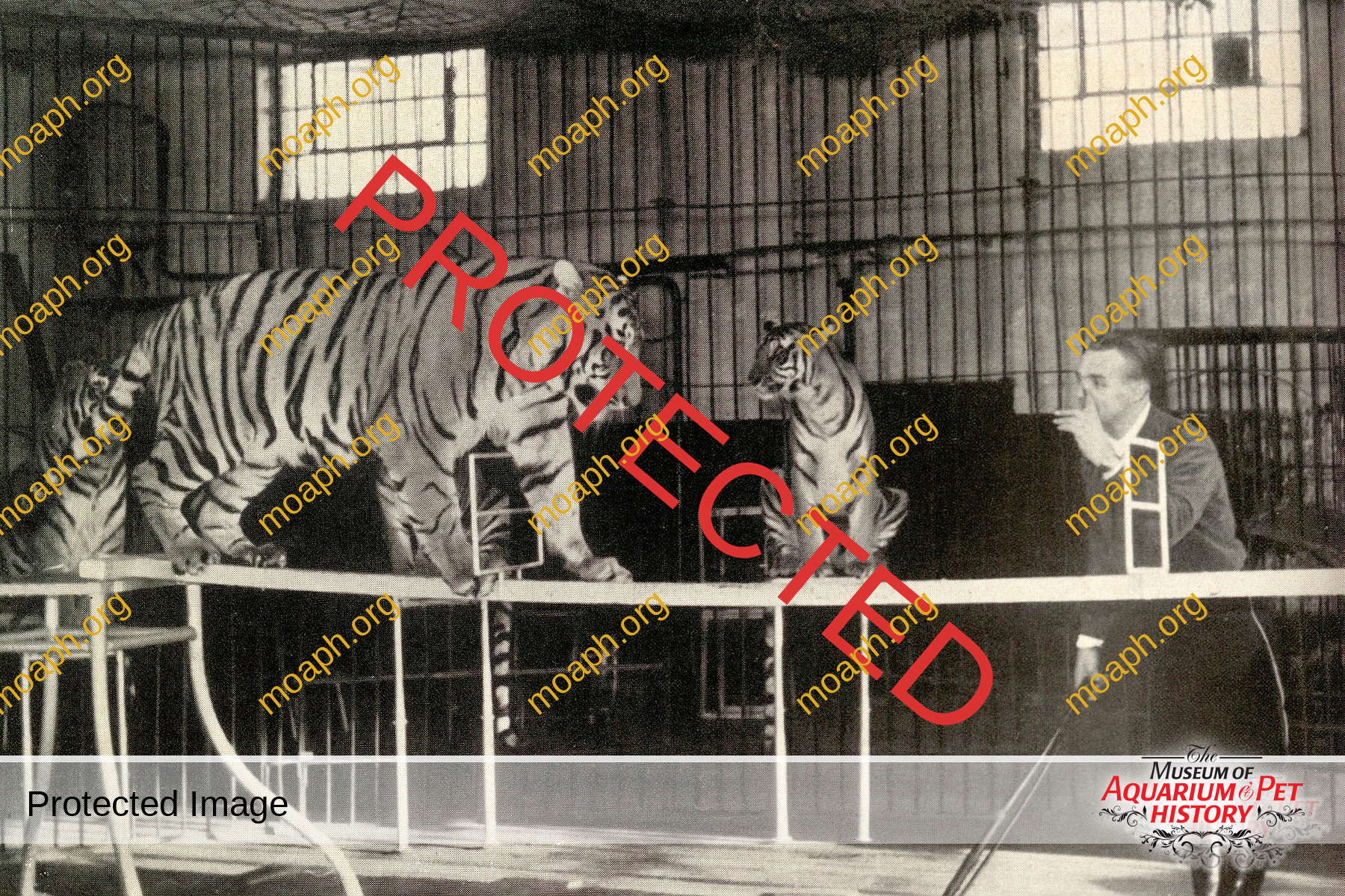
Animal trainer Franz Kraml in Alfeld working with a group of Bengal tigers in the large training hall. The tiger in the foreground is still balancing with divided attention on the balance beam.
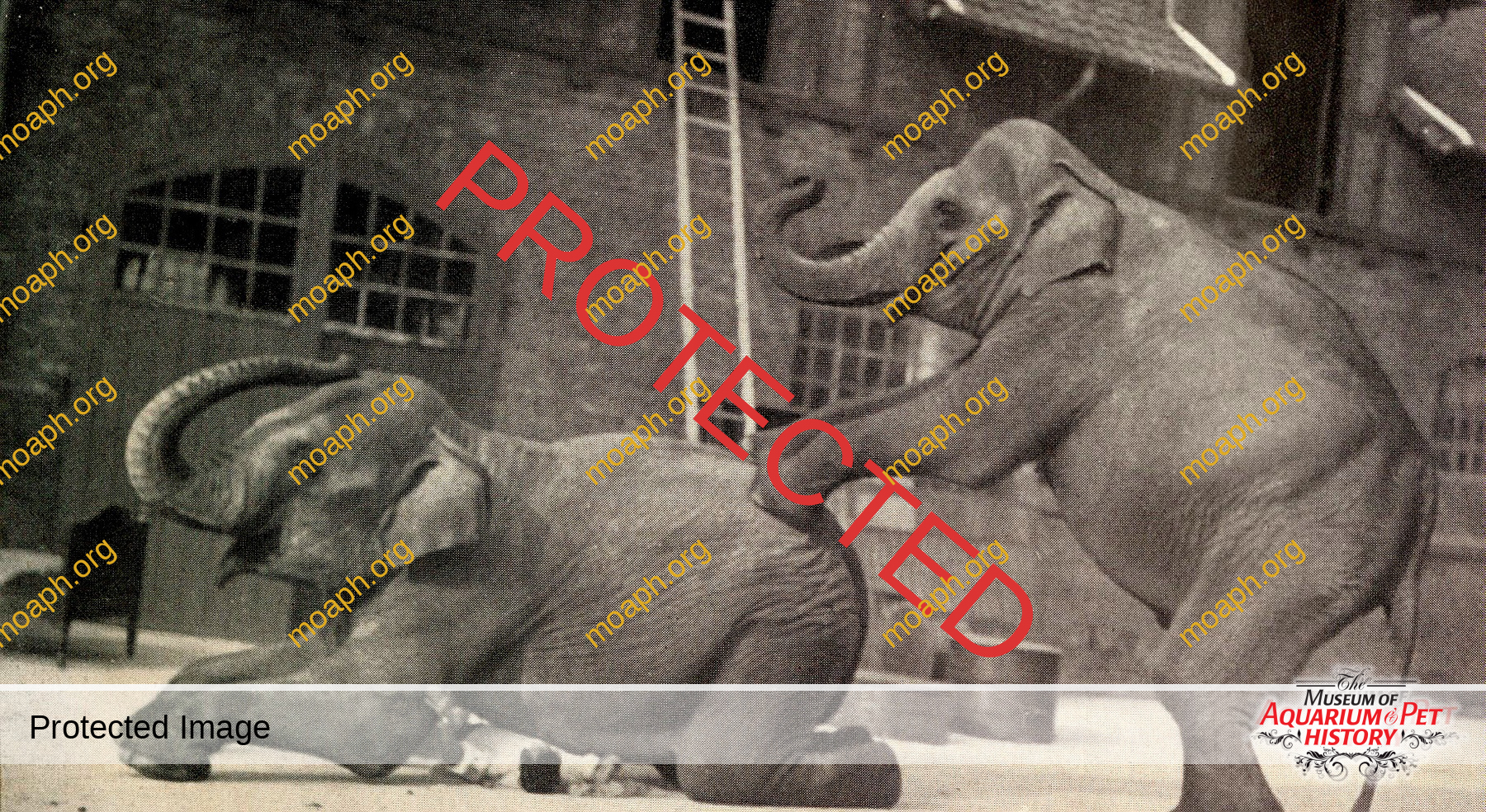
The elephant caretakers working in Alfeld also sometimes participate in the training. This Indian caretaker knows his charges so well that he dares to lie under the body of the left elephant.
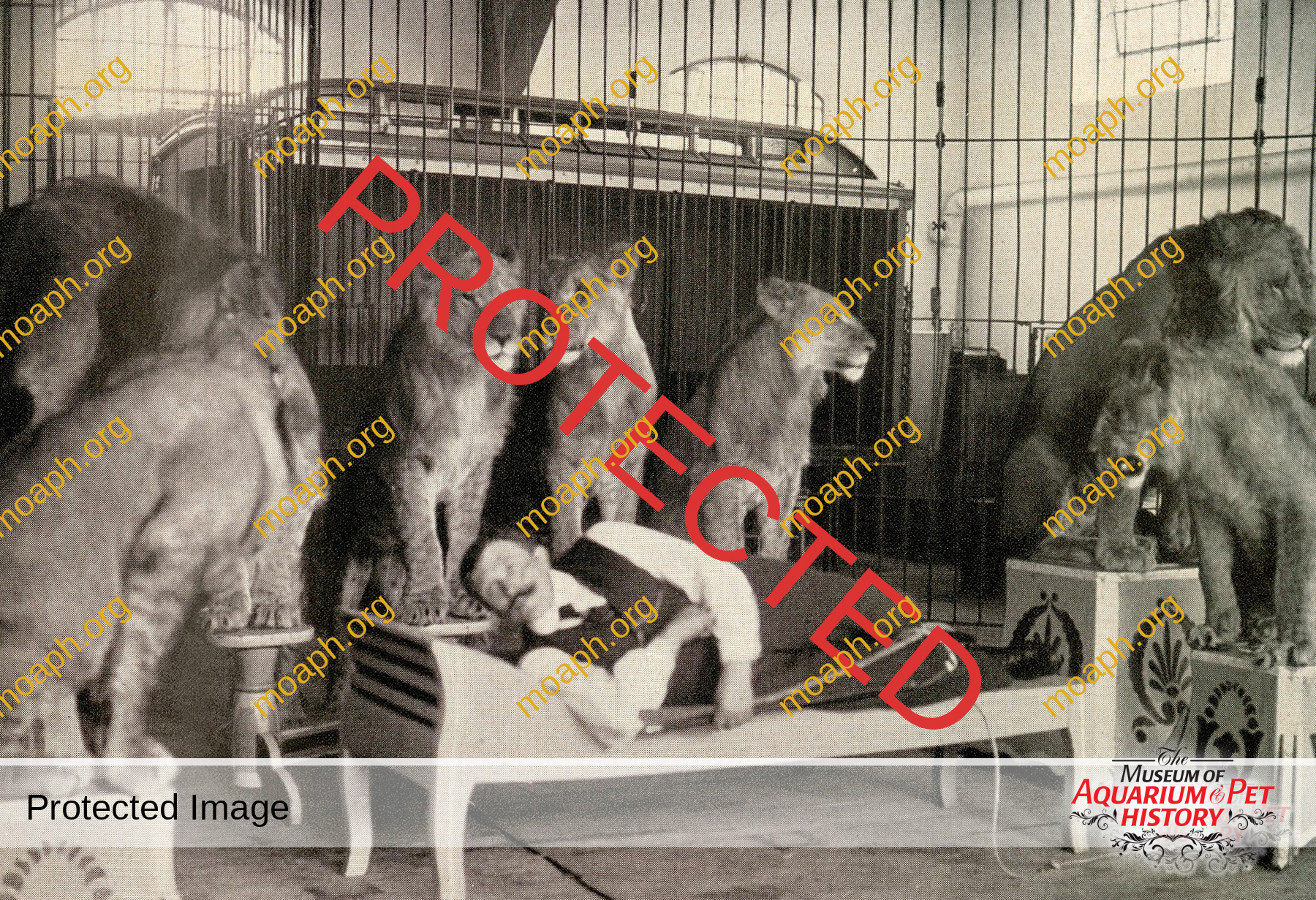
The world-famous animal trainer August Molker during training with still young lions in Alfeld. The four-legged students are gradually getting used to their teacher lying on a sofa between them—without jumping on him.
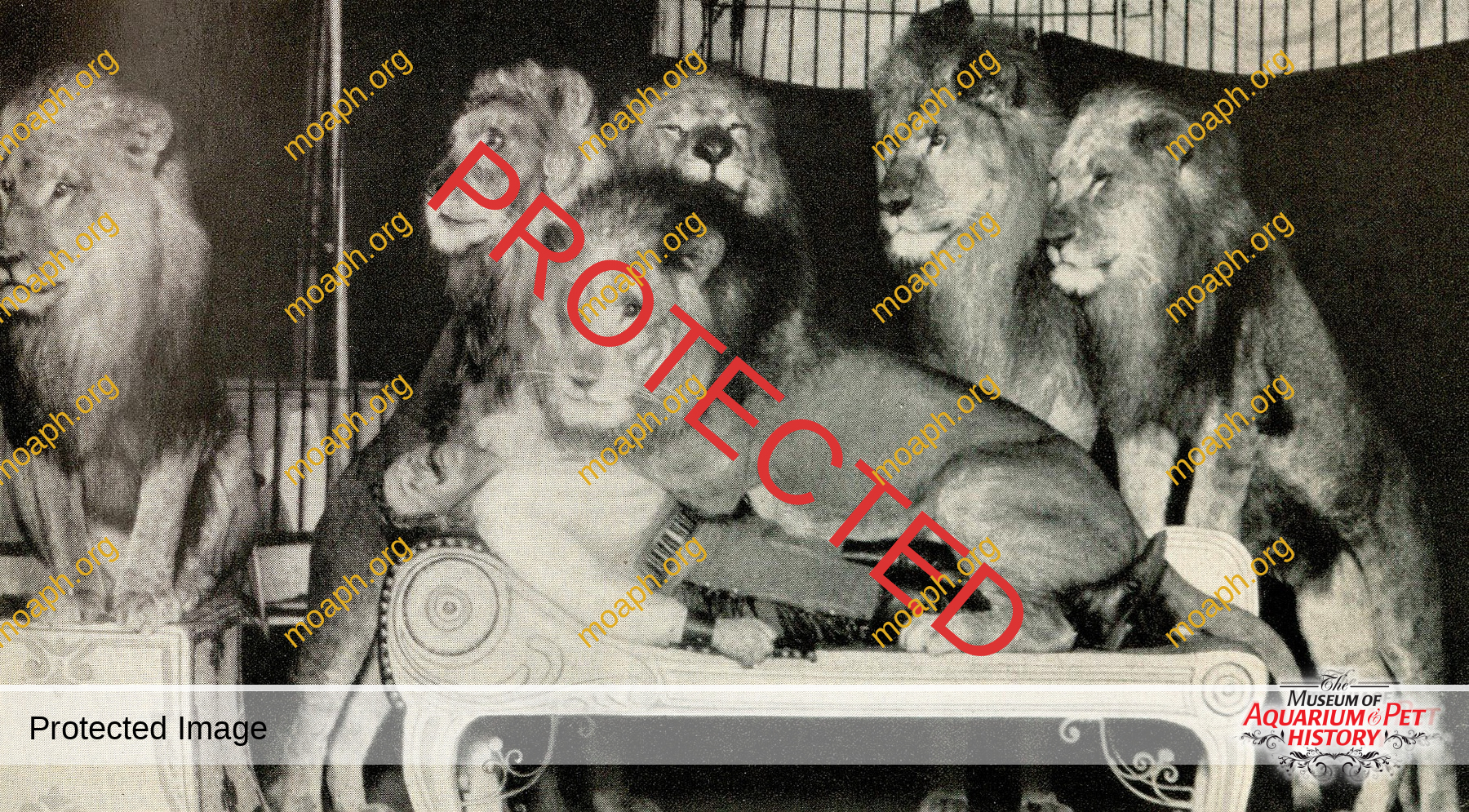
August Molker during the final rehearsal with a completed lion group after four months of work. No animal trainer after Molker has ever managed to bury themselves so calmly and unarmed under a pyramid of predators.
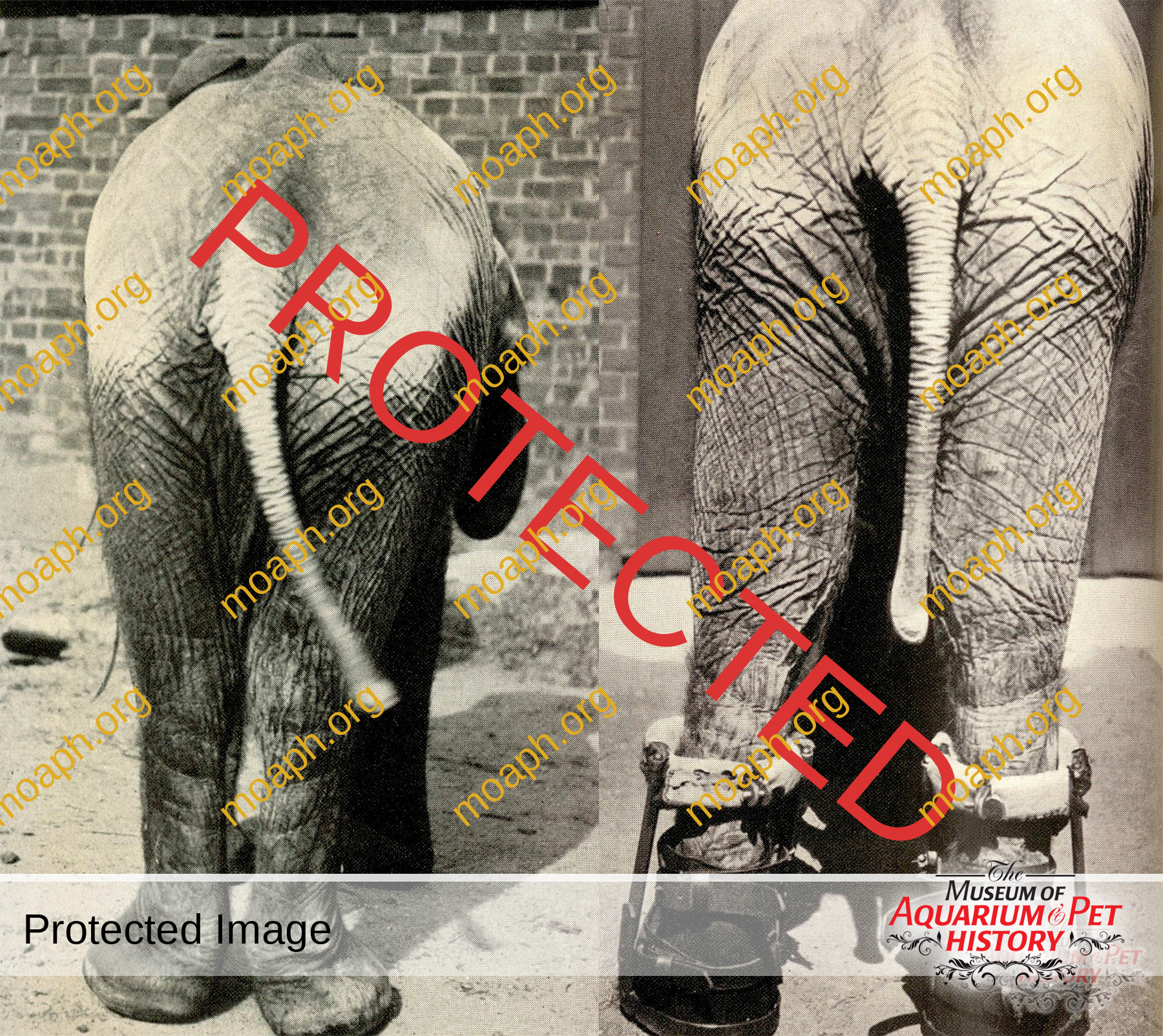
A young rickety elephant has arrived from Africa (left). The bow legs were not overlooked but corrected. After a long period during which the animal has grown, the splinted legs are gradually beginning to straighten (right).
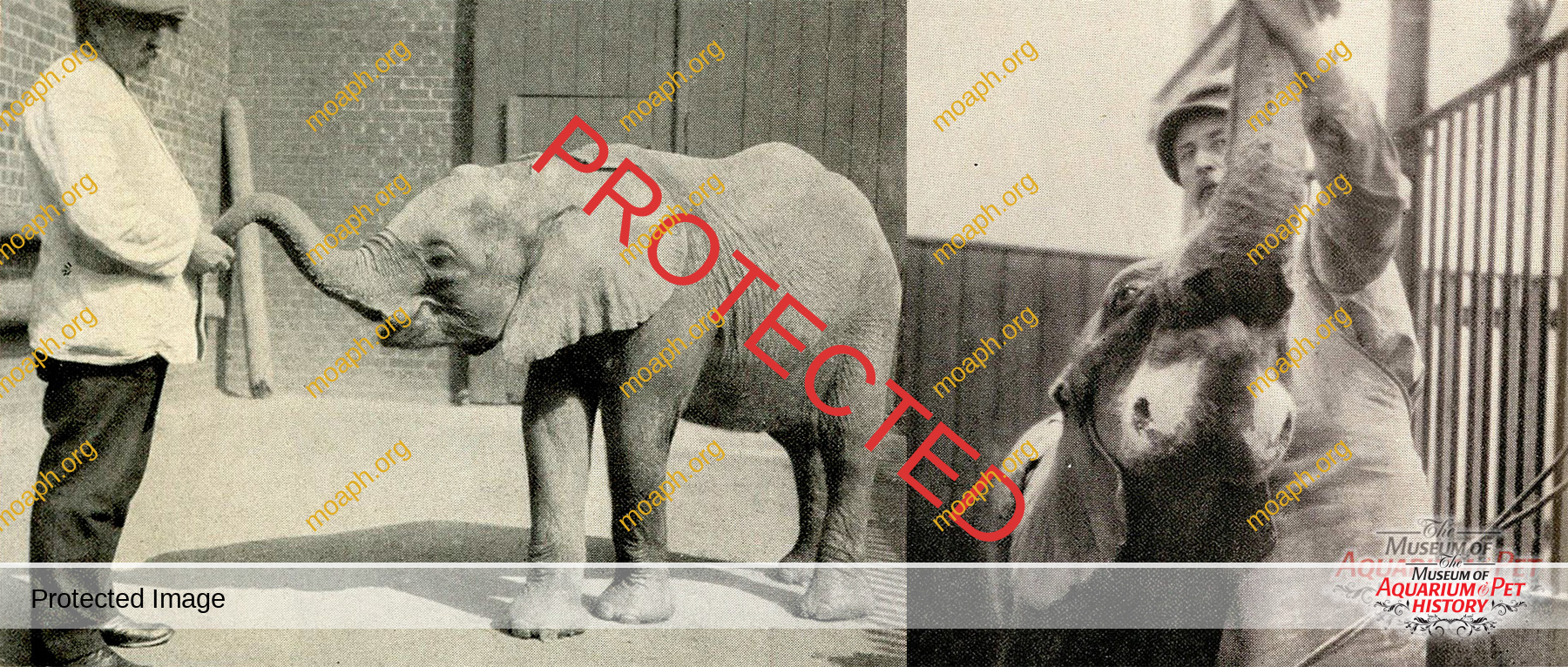
This young East African elephant suffered from a toothache caused by its tusks. During the operation, the small tusks were removed (right). The wounds healed perfectly.