Reptile Dealers and Their Price Lists
by James Murphy and Ken McCloud
If one tracks the development of herpetoculture by using reptile dealer price lists as a source, major trends are apparent. Due to loss of biodiversity and the public perceptions about animal protection, one will never again see the array of wild-caught amphibians and reptiles offered for sale 50 years ago—a statement as to how the world has changed. Changes are the result of shrinkage of wild populations due to habitat destruction, arrival of invasive species, chemical contaminants, infectious diseases, over-collecting, human consumption, reptile skin trade, and better captive husbandry and increased sophistication of the customers. We will examine the types of dealers (large-scale importers, biological supply houses, mass breeders, smaller private breeders, zoos and aquariums) from the perspective of animal availability, types of animals, quantities, and price. “Dealer” can mean collector (in the wild), exporter, trader, importer, and breeder. These persons were (or are) the sources of animals; their clientele were (and are) pet shops, pet owners, hobbyists, private breeders, schools and universities, traders, other dealers, zoos, museums, aquariums, and roadside attractions. There is a broad spectrum encompassed by suppliers and customers.
Also there have been changes in technology, starting from lists published in early books and magazines, on to mass mailings of mimeographed lists and evolving through facsimile distribution to Internet sites and e-mail. It is almost certain that the bulk of commerce now occurs through the Internet (Trooper Walsh, pers. comm.).
This is not an exhaustive compilation or examination of all price lists but rather a selection relevant to the history of captive herp keeping and reflective of changes in the natural world and in animal commerce. We do not in this paper propose to be the definitive source of information about the world of herpetology and herpetoculture. While we recognize that economic incentives have led to smuggling and other illegal activities, we have chosen not to focus on the perpetrators; this aspect of the animal trade has been extensively covered in other publications, for example Animal Underworld by Alan Green.
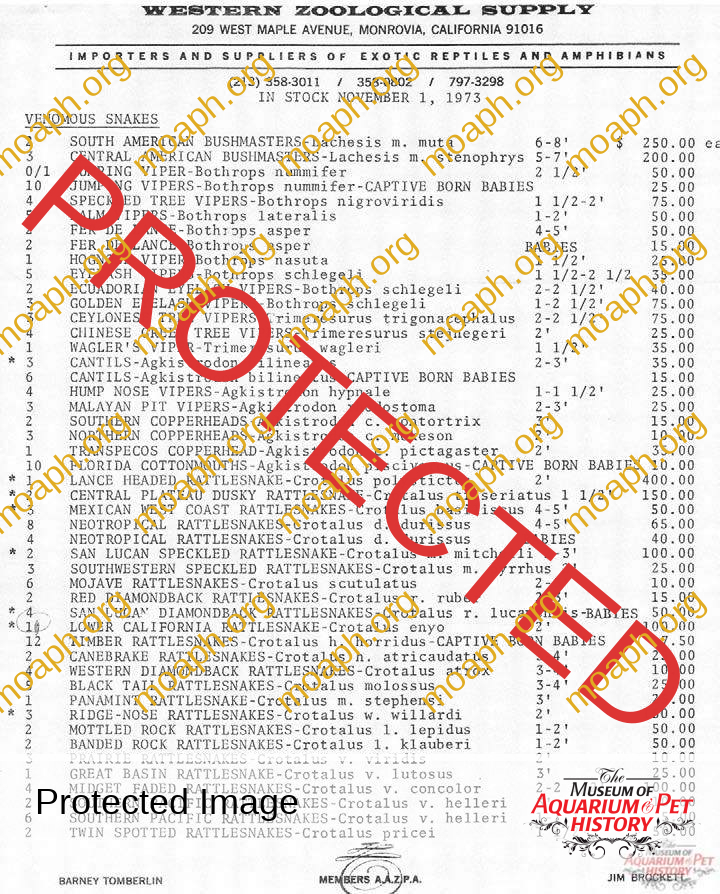
Western Zoological Supply in Monrovia, California, was one of the largest operations on the west coast of the US during the mid-1970s. Since the weather was generally pleasant, lizards, tortoises, and other reptiles could be kept in large outdoor enclosures throughout the year, such as a number of chameleon species.
What We Have Experienced
Those who care for the study of Amphibia and Reptiles—the Herpetologists, to give them their scientific title—have never been numerous; but most of them have been serious students. One reason for the fact that this branch of Natural History is not very popular, is a prejudice against creatures some of which are clammy and cold to the touch, and some of which may be poisonous. People who delight in keeping Newts or Frogs, Tortoises, or Snakes, are, as a rule, considered eccentric.
—Hans Gadow, 1901
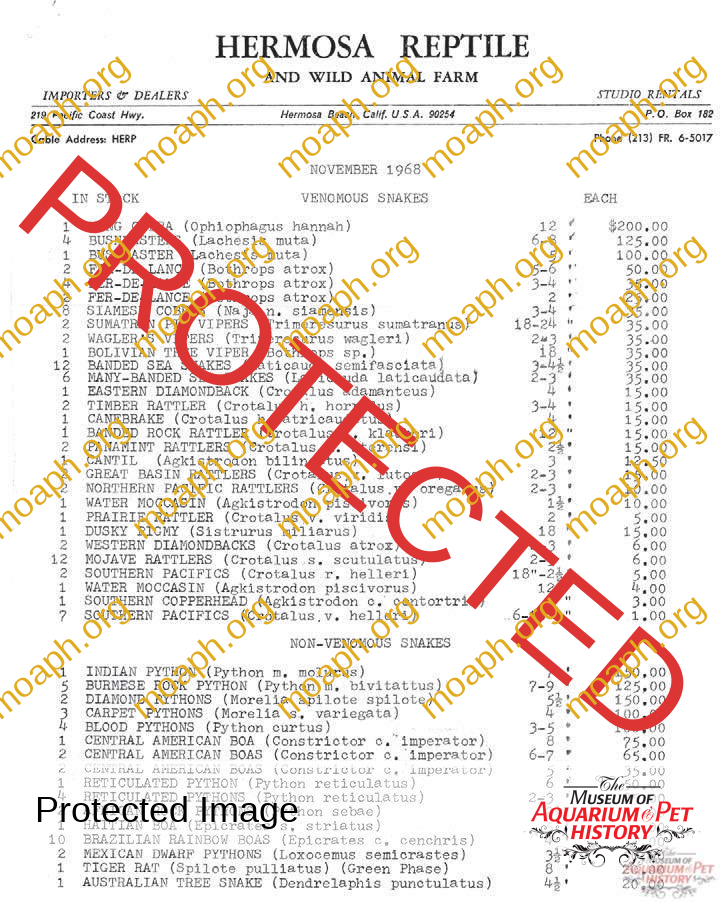
Hermosa Reptile and Wild Animal Farm was located in Hermosa Beach, California and was owned by Ray Folsom and his wife Gini. This was one of the largest operations in the US. His lists were sent monthly to customers for US $1.00 to cover mailing costs annually. This list shown here included 26 types of venomous snakes, 11 of rear-fanged snakes, 28 of non-venomous snakes, 22 of lizards, 26 of chelonians, 2 of crocodilians, and 22 of amphibians including Chinese Giant Salamanders (Andrias davidianus) for $100.00 each. In another list, 52 species of amphibians were for sale, mostly from the United States. Mammals and birds were also available, including douc langurs, tapirs and black bears.
Folsom possessed one of the largest personal collections of rattlesnakes ever assembled, which were kept at his home. Virtually all of the US forms were represented and a considerable number from Latin America as well.
Credit: Courtesy of Trooper Walsh.
One of us (JBM) was curator of herpetology at the Dallas Zoo in Texas for 30 years. JBM is currently Smithsonian Research Associate and interim Curator at the National Zoological Park in Washington DC. The other (KM) worked for the US Fish & Wildlife Service for over 31 years in the Office of Law Enforcement, as “Office’s national herpetology expert” specializing in herp smuggling and poaching investigations, writing herpetology books and identification papers, and provided training to state and federal conservation agencies. KM now works as a Major Crimes Investigator, Peninsula Humane Society and Society for the Prevention of Cruelty to Animals in San Mateo, California. Both of us are retired from full-time work. Having been interested in the keeping of herps from an early age, we have watched the major changes relative to the business of selling living amphibians and reptiles for approximately 50 years.
Many of the amphibians and reptiles we kept as children were acquired from variety stores (often called five and dime stores) in the US: baby turtles, some with decals and painted shells; horned lizards; Green Treefrogs; American Anoles (also known as Green Anoles); Redspotted Newts, and occasionally baby American Alligators or Spectacled Caimans. In the variety stores, most animals were kept in deplorable conditions and carcasses often littered the enclosures. As our interests broadened, we graduated to the next level: checking the local pet shops where there were often more interesting amphibians and reptiles for sale. As our interests became our obsessions, we obtained price lists from animal dealers in far-away places, ordered some of our favorites which arrived through the mail or by railroad express, and we personally visited many of the establishments during school holidays. When KM was 15 years old, he amassed a crocodilian collection which lived in a large child’s plastic wading pool in his bedroom and included False Gavials, Salt Water, American, and Nile Crocodiles, and Spectacled and Yacare Caimans.
Key pieces of legislation were enacted and this legislation impacted the trade. The United States Lacey Act, passed in 1900, controlled the trade in wild birds and game and subsequently was extended to cover most animal and many plant species. The Act prohibited the importation, exportation, transportation, sale, receipt, acquisition, or purchase of any animal or plant that was obtained or transported in violation of any other wildlife conservation law or regulation. The United States Endangered Species Act (1973) and the Convention on International Trade in Endangered Species of Wild Fauna and Flora (CITES) were also legislative tools to control importation of species at risk. In 2002, legal wildlife trade to the US alone included more than 2 million reptiles and 49 million amphibians, according to Sharon Guynup in 2006.
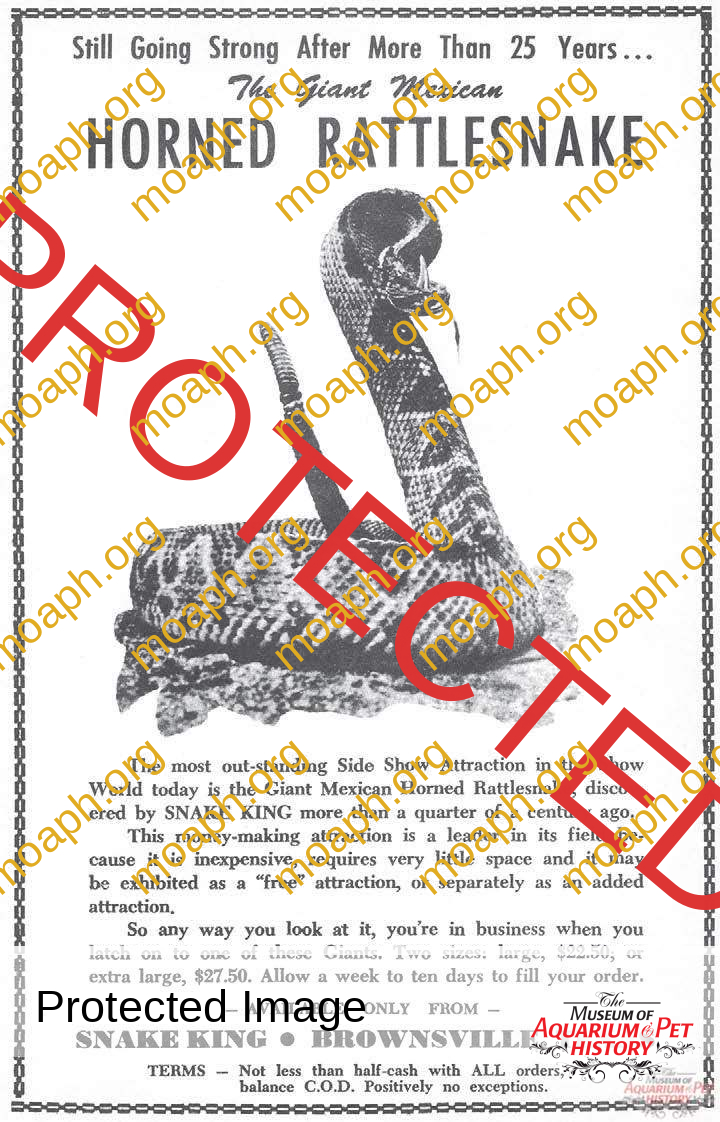
Reptile and animal dealer William Abraham King was called “Snake King” and his business was known as “Snakeville.” The compound, established in 1907, was in Brownsville, Texas and many of his snakes were sent to carnivals and traveling circuses. This ad features a Neotropical Rattlesnake (Crotalus durissus) in a defensive pose. The “horn” appears to be a cock spur. His autobiography was published in 1964 and titled Rattling Yours—Snake King. Credit: Courtesy of Patrick Burchfield, Director, Gladys Porter Zoo, Brownsville, who acquired King’s snake hook, protective leggings, and other memorabilia.
We will show a number of price lists, mostly from KM’s collection, which graphically demonstrate changes in the animal trade—both the types of animals for sale and prices. As an example of what was available, there was a 1962 publication connected to Ross Allen by Dick Bothwell called The Great Outdoors Book of Alligators. It has a chapter (pp. 61–64) entitled “Crocodilian As a Pet,” in which the author refers to G. L. Thompson of Lane Wilson Company in Monroe, Louisiana claiming to ship 500 caimans a week to pet shops in the US. The numbers and varieties of venomous and potentially dangerous wild-caught species offered for sale during the mid-20th Century were amazing and prices were very low. Price lists 50 years ago from Jonathan Leakey and C. J. P. Ionides offered all sorts of wild-caught African vipers, mambas, cobras, and so on. KM ordered a shipment of baby Puff Adders and Rhinoceros Vipers from Leakey when he was 15 years old and enjoyed watching the snakes crawl around his back yard, much to the horror of his mother. Since he did not own a snake hook, he fashioned a surrogate out of a wire coat hanger.
In addition to the herps available, some of the lists being circulated offered primates, baby elephants, large cats such as jaguars, tigers, and lions, capybaras, tapirs, rare parrots, etc. We visited some wholesale tropical fish outlets where massive numbers of herps were stockpiled, sometimes in horrendous conditions. Conversely, we visited specialty shops catering to the serious collector where the animals were kept singly or in small groups in excellent conditions. We have seen the appearance and rise of commercial breeders and expanded interest in conservation issues. Commercial reptile breeders do take pressures off of wild populations but it is only fair to show that there may be downsides to the acquisition of breeding stock as well. And for those of us who have kept herps since childhood and later made a living, albeit modest, working with them, we would hate to see the day where a budding enthusiast would not have a chance to keep some as we did but we also stress that it must be done with good care and conservation in mind.
The Case of the Ball Python
The way things are moving in Africa, the time will soon be past when even a good fight can save anything more than scraps.
—Archie Carr, Ulendo, 1964
In general, we feel that it is difficult to justify the trade in wild-caught ball pythons, particularly if one considers the availability of captive-bred and captive-hatched animals. Of course, with few exceptions, it is wild-caught snakes with anomalous appearances that have founded most of the lineages of the morphs that are being captive-bred today.
—David G. Barker and Tracy M. Barker, Ball Pythons, 2006
In this section, we deal with the challenges facing future conservation initiatives: basic needs of the collectors and exporters living in range countries, the justification for exporting large numbers of living amphibians and reptiles, the fate of these imported fauna, and the importance of captive breeding. These are not new ideas because conservationists have grappled with these issues for decades. For our model, we use the African Ball or Royal Python (Python regius). It is one of the mainstays of the exotic reptile trade due to its smallish size, calm temperament, long life span, and multitude of spectacular color morphs.
To begin our analysis, we feature a comprehensive book by David G. Barker and Tracy M. Barker: Ball Pythons: The History, Natural History, Care and Breeding (2006). In their book, the authors make several important points:
- More Ball Pythons are purchased annually than all other pythons combined.
- The number of Ball Python color morphs is astonishing and many are pictured beautifully in the Barker book. More than two hundred pictures show wild and designer morphs, listed with colorful names affixed to them by the breeders like pewter, piebald, paradox-albino, super phantom, and killer-bee.
- The coastal areas of Ghana and Togo are the source of many imported Ball Pythons.
- Although exact numbers remain elusive, estimates of up to one adult snake per acre might be accurate, according to a study by Gorzula and associates in 1998.
- Native local collectors are extremely proficient at collecting Ball Pythons.
- Ball Pythons are either collected from the wild, captive-hatched from eggs retrieved from wild gravid females, or bred in captivity.
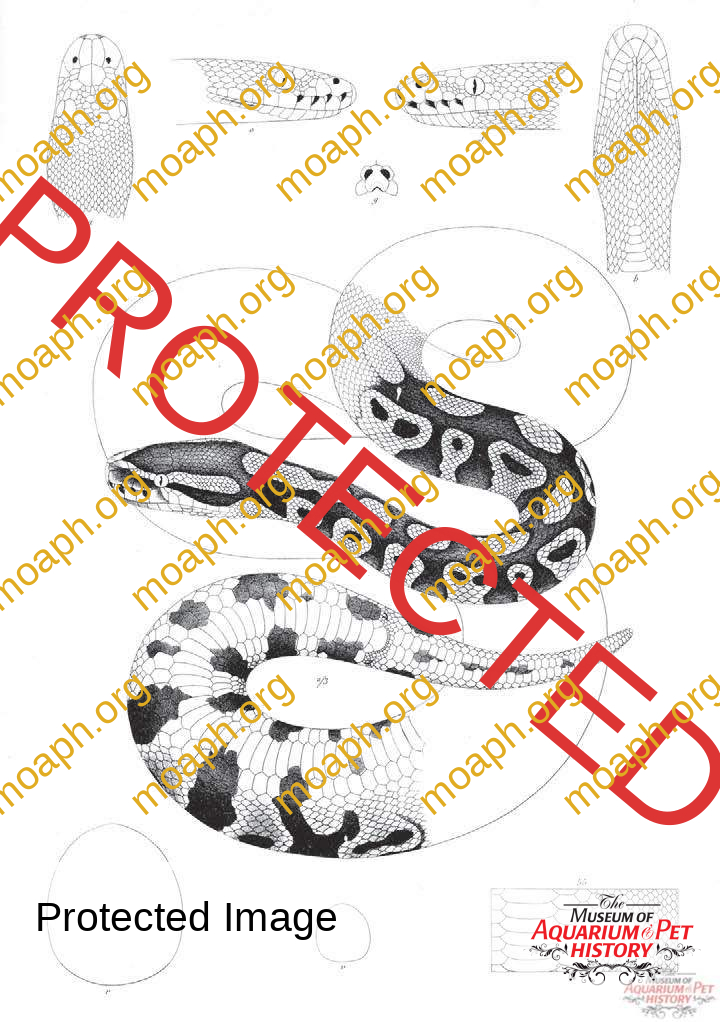
Ball Pythons (Python regius) are imported in large numbers for the exotic reptile trade. Illustration from Iconographie générale des ophidiens / par M. le professor Jan . . .[en collaboration avec Mr. F. Sordelli.] …
Imprint: Milan: chez l’auteur, [etc., etc.], 1860–1881.
“The captive breeding of original morphs is both accidental and inevitable, and only intentional when crossing morphs; the resultant progeny are usually then referred to as ‘designer’ morphs, even with single species hobby enthusiasts. Consider enthusiasts of roses, hamsters, or pigeons, as single species hobby examples (Charles Darwin chose pigeons in particular to practically illustrate the enormous diversity of genetic potential). Pigeon fanciers are not generally interested in obtaining new species of bird.” (Jon Coote, pers. comm.).
The Ball Python market is illustrative of a core conservation dilemma: human needs balanced against Ball Python sustainability. In The World Factbook, average annual income per capita [GDP-Gross Domestic Product] converted to the US dollar was ranked for 229 countries throughout the world: Ghana ranked 200 with income of $1400 and Togo ranked 215 with income of $900. In African countries beset with political strife, declining infrastructure, and few resources, it is completely understandable that locals collect Ball Pythons, especially those snakes with unusual colors and patterns, in order to make a living.
In Ghana, trappers support an average of 10 family members and have few alternatives for employment other than snake collecting; a harvest of 7000 wild adults and 3500 gravid females represents an annual income of $925 US for a trapper (Gorzula et al. 1998). Traders want to satisfy customers but may not be sure precisely what the buyers want so all of the snakes are likely shipped.
If an aberrant snake such as an albino is collected, it is a valuable find: one was able to fetch US $7500 in the US in 1998. About six years ago, the most ever paid for a mutant ball python in the United States was US $130,000 for a wild caught adult female leucistic morph. Two other snakes were purchased for $90,000 and $100,000 respectively, of the same morph (Trooper Walsh, pers. comm.). Dave Barker (pers. comm.) said that a wild-caught leucistic male sold for $175,000, bought by a consortium of breeders. All of the money went into African pockets and not a cent went to a middleman; the snake sired one clutch and died.
Technology has entered the Ball Python business. Some of the big US breeders got together and purchased a laptop computer, digital camera, and a satellite phone, and gave them to the largest West African exporter who now looks specifically for gravid females and any unusual morphs. If a promising new morph is found in the field, a photograph is taken and immediately e-mailed to these big US breeders so that within an hour or so of discovery the snake is on its way to the USA (Trooper Walsh, pers. comm.). This arrangement may curtail the importation of unwanted snakes but the specialty breeder market is separate from the general pet market which is considerably larger.

The Shed in Miami, Florida was one of the premier dealerships in the southeastern United States during the mid-1970s. One of the owners, Louis Porras, has written many herpetological papers and coauthored a book on invasive amphibians and reptiles in Florida. Porras took JBM on collecting trips around Miami to show the extent of the many foreign introductions: Knight, Jamaican, Puerto Rican Crested, and Bark Anoles, Green and Spiny-Tailed Iguanas, Brown Basilisks, Tokay and Yellow-Headed Geckos, and Cuban Treefrogs. The search for Spectacled Caimans along the canals was unsuccessful. One striking feature was the number of exotic fishes released into the Everglades which seemed to outnumber the native species in biomass: Oscars, several species of Tilapia, Plecostomus, several Latin American cichlids, and some killifish.
Herpetocultural historian Jon Coote (pers. comm.) identified an economic factor in the Ball Python story which is rarely considered: “Regarding the Ball Python phenomena I would suggest that it is important to understand the reasons for the very high prices paid for unusual morphs. The pyramid market that evolved for them was fueled by the rapid inflation of assets that occurred due to the unsustainable, as we now know, cheap and widely available credit. Consider the fact also that private investors got into this market in considerable numbers who had no interest in the snakes other than their ability to generate wealth. It may well be useful to contrast this recent pyramid market with the similar market for tulips in Holland in the 1630s. Today most Ball Python morphs are available for about $100 each with even the most valuable fetching not much more than $500 each. Many of those who borrowed huge sums to set up their breeding programs are now facing financial ruin. Only those who got into the market early have actually made significant sums of money. The Ball Python market would never have evolved as it did to such dizzily high values without the unsustainable credit that fueled it, as the credit crisis that has killed it so aptly now proves. As proof look at the similar market, that preceded the Ball Pythons, for Leopard Geckos. At the height of this market the most expensive Leopard Geckos rarely fetched much more than $1000 each. An interesting point is that only reptile species that make good pets, e.g., Leopard Geckos, Corn Snakes, and Ball Pythons, have ever really established pyramid markets. The current efforts to establish a similar market in Blood Python morphs, for example, is perhaps predictably not catching on!”
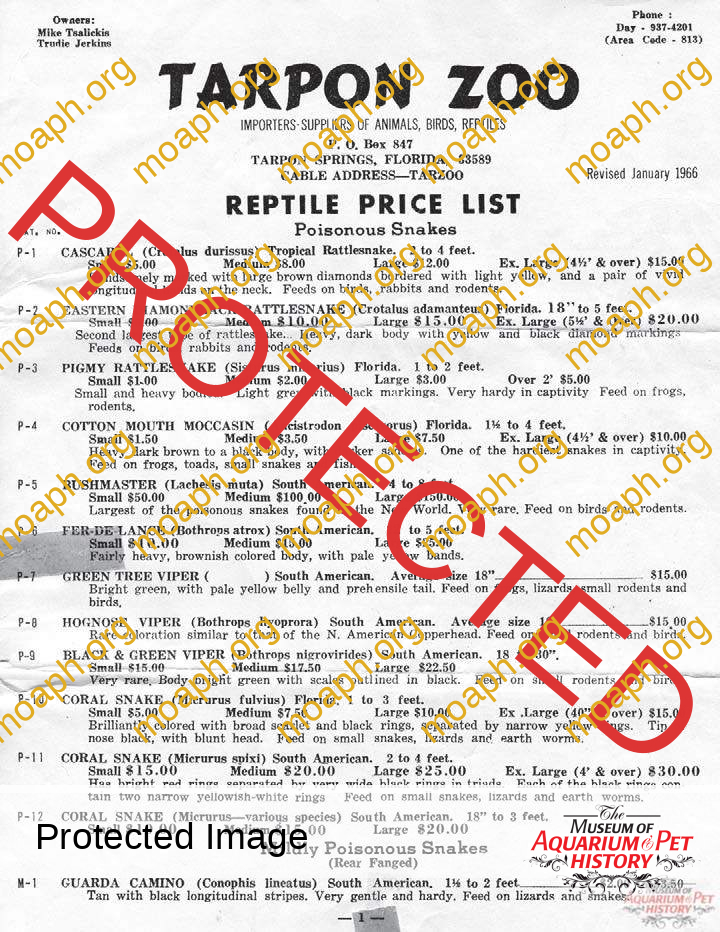
Tarpon Zoo was located in Tarpon Springs, Florida and was owned by Trudy Jerkins and Mike Tsalickas. Tsalickas set up an export facility in South America to supply Tarpon Zoo, resulting in the importation of many species rarely seen in the US. The animals were listed by region: 13 species of venomous snakes, 9 of rearfanged snakes, 17 non-venomous snakes from Florida, 22 non-venomous snakes from South America, 11 of lizards from South America, 22 types of Florida and South American chelonians, and 4 of crocodilians. Cages, plants, live foods, and insects were also offered for sale. Most of the herps were kept in large outdoor enclosures.
Credit: Courtesy of Trooper Walsh.
In 1997, a field team led by Stefan Gorzula surveyed Ball Pythons in the whole of Ghana for CITES. In Gorzula et al. (1998) they estimated density of pythons at slightly less than one snake per acre. Based on this estimate, the projected countrywide totals in “domesticated land” [pasture] would be 18,000,000 snakes and a lower figure of 6,400,000 snakes in “crop land.” In their paper, the authors presented a plan for the sustainable use of Ball Pythons which addresses the economic needs of those persons living in Ghana. CITES General Export figures for 2008 (data from CITES website) were Ghana (wild—7,000; live, ranched—50,000; live, captive-bred— 200); Togo (wild—1,500; live, ranched—62,500); Benin (wild—1000; ranched—60,000); Niger (live—500) for a grand total of 182,200 snakes.
However, the question of welfare of captive individuals of a species, and weighing that against the well being of a species in the wild, is worthy of further consideration. Are there unintended consequences once a species becomes so commonly bred and sold that it may be so easily discarded as a surplus novelty? Again, we asked Jon Coote for his perspective: “This is unlikely as the costs to produce such captive bred animals generally limit how cheap they can commercially be sold. There are ‘bedroom’ breeders of such things as Bearded Dragons and Corn Snakes who may well sell progeny for far less than their cost of production, and we should therefore be encouraging the pet industry to buy from reputable commercial breeders rather than from these other casual sources. The cost of production is less for many wild caught specimens, Green Anoles for example, whose cost of capture can be much less than their cost of captive reproduction, can lead to them being insufficiently valued to provide them with the captive resources that they need. It was also probably true of Green Iguanas ranched in Central America, but this trade and activity is to all extents and purposes history. In my experience here in the United Kingdom, pet reptiles are better cared for than any other category of pet based on the comparison between the numbers kept and the numbers placed in pet rescue centers. The worst pet keepers, here in the United Kingdom, based on the same criteria are keepers of first dogs, then cats and then rabbits.”
In order to gain another perspective, we asked Ken White, President of the Peninsula Humane Society & Society for the Prevention of Cruelty to Animals (SPCA) in the USA, to comment on his experiences: “It is obvious, at least for the 30 years I have been in the field, that reptiles are victimized through neglect and abuse much in the same ways we see with dogs, cats and other pet animals, and that exotic pets also enter animal shelters in need of great help. But while the past brought us a large number of a few species—mostly Iguanas, Red-eared Sliders and Snapping Turtles, caimans, and the more common large constrictors— the exotic pet industry’s growth has expanded the number of species showing up at humane societies and SPCA’s [facilities] around the country. Today, in addition to what we have always seen, shelters are working to care for increasing numbers of Bearded Dragons, Leopard Geckos, Phelsuma species, Mediterranean and African tortoises, and amazing numbers of Ball Pythons. In those animal shelters near larger cities, it is not uncommon to find Australian herps (from Carpet Pythons to Blue Tongue Skinks) added to the mix as well, along with other even more exotic species.
“And while some may laud the captive breeding of exotics as a way of decreasing the demand on wild animals by substituting with a captive bred supply of the so-called designer morphs, shelters see the other side of this coin. That is, ever increasing numbers of captive bred animals being deprived of basic husbandry and veterinary requirements, sold by an innately exploitive industry to families jazzed about adding ‘something different’ to the family.”
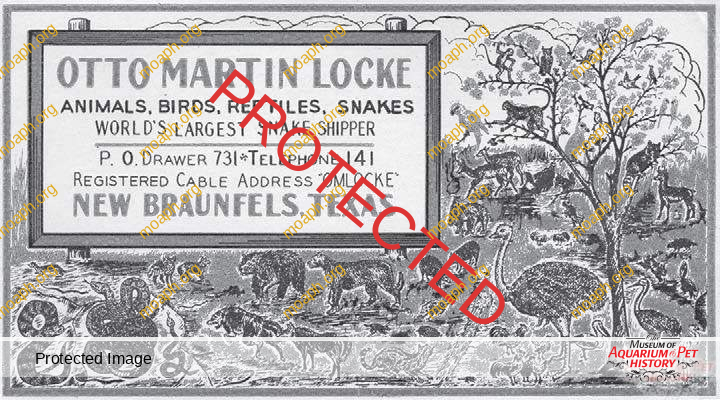
Otto Martin Locke Nursery in New Braunfels, Texas specialized in selling the fauna from the southwestern United States and Mexico. Although not well known to reptile keepers outside of Texas, the nursery was established in 1882.
Credit: Courtesy of Trooper Walsh.
Is Captive Breeding a Conservation Tool?
Are captive breeding and re-introduction viable options for conservation? Members of the Species Survival Commission (SSC) within the International Union for Conservation of Nature and Natural Resources (IUCN), the largest conservation organization in the world, certainly think so as there is a Conservation Breeding Specialist Group and Re-Introduction Specialist Group within the organization. Five Specialist Groups and Task Forces represent herps: amphibians, crocodilians, iguanas, marine turtles, and turtles. The organization views its role this way on its website: “Our vision is a just world that values and conserves nature. Our mission is to influence, encourage and assist societies throughout the world to conserve the integrity and diversity of nature and to ensure that any use of natural resources is equitable and ecologically sustainable.” IUCN provides a variety of training sessions and tools to accomplish this goal, from the mechanics of small animal population management to creating and evaluating genetic models for breedings. Commercial animal breeders have proven that huge numbers of animals can be produced, from parakeets to ball pythons, and we believe that these operations could be a considerable positive force in future conservation programs if they could embrace the mission of the IUCN and other conservation organizations to assist in developing protocols, techniques, and networks for captive breeding for possible re-introduction. However, the possibility of re-introduction should be mentioned only with a large caveat. There are many questions concerning genetics, community structure, introduction of disease, preparing captive-bred animals for a life in the wild, assessing competence to survive and reproduce over generations, and other factors that have not yet been resolved. There are cases of successful re-introductions and translocations of amphibians and reptiles into the wild but examples of failures as well (see Dodd and Seigel 1991; Germano and Bishop 2009). Large iguanine lizards are good candidates for headstart and release (Jamaican Iguana and Anegada Iguana release) and for captive breeding and release (Grand Cayman Iguana) and they respond well to that conservation strategy (Alberts et al. 2004; Hudson 2006; R. Hudson, pers. comm.)
As an example of using the IUCN approach toward partnerships, this is already being done through the SSC Turtle Survival Alliance (TSA), a cooperative arrangement of private breeders and zoological institutions. “The mission of the TSA is to develop and maintain an inclusive, broadbased global network of collections of living tortoises and freshwater turtles with the primary goal of maintaining chelonian species over the long term to provide maximum future options for the recovery of wild populations” (Lawson 2004).
In any program using animals removed from the wild, the captive manager would be well-served to remember the cautionary words of the late Henry Fitch written in 1980: “Thus, captivity will result in intensive selection, molding the animal in a manner quite different from that followed in its natural environment. The final product will be an animal much better adapted to live in close association with humans, in the home or laboratory, but less well adapted for life under natural conditions.”
Original traits of a species will tend to be altered in captivity: generation time is shortened; captives are less exacting in their requirements for mating; fertility is increased; and intervals between clutches or litters are shortened. These are trends well known in domestic animals (Darwin 1868). There is no doubt that we are seeing these trends now in our captive herps. In fact, The Herpetologists’ League (HL) views the production of designer herps as an ethical issue and takes a strong stand against it: “Because the practice does little to advance society’s understanding of amphibian and reptile biology, HL hopes that its members will avoid the capture/purchase and captive breeding of herpetofauna with the express purpose of producing anomalies in body form, coloration or pattern” (<http://www.herpetologistsleague.org/en/ethics.php>).
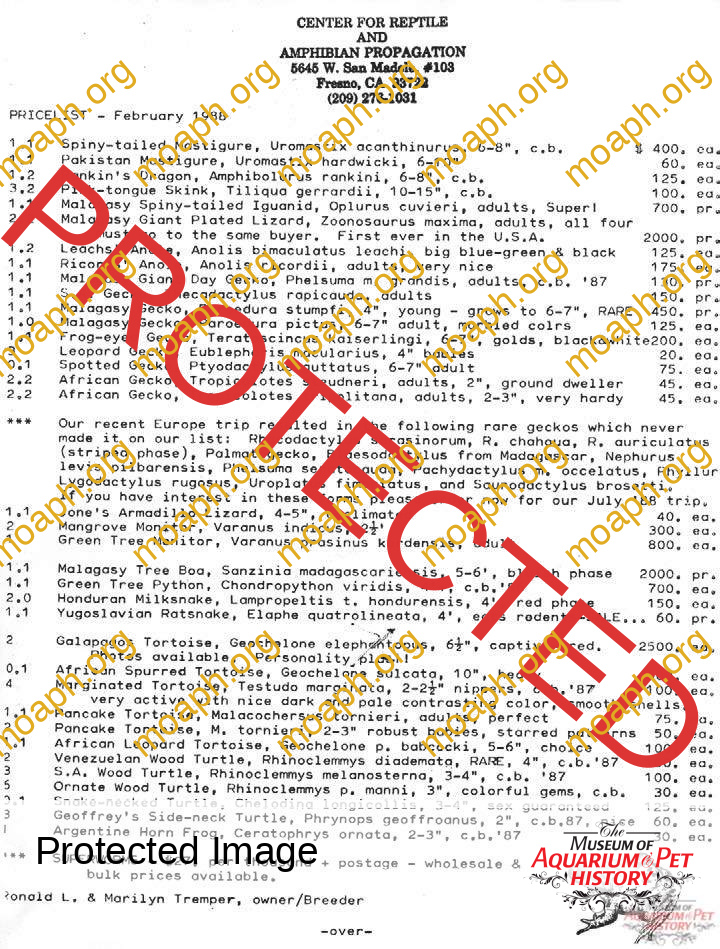
The Center for Reptile and Amphibian Propagation in Fresno, California specialized in propagating rare lizards, such as many of the Madagascan chameleons and geckos, and the New Caledonian Giant Geckos. Owner Ron Tremper was formerly herpetological curator at Fresno Zoo in California. The operation is now located in Boerne, Texas.
Reptile and Amphibian Availability over Time
Interest in reptiles and amphibians is growing rapidly. Pet shops abound with scaly forms, reptile clubs are on the increase, and a small army of snake and lizard hunters roams the countryside. Along some of our desert roads collectors may outnumber the snakes, and in some of our large municipal parks hillsides may be dotted with small boys searching for lizards on a Sunday afternoon.
—Robert C. Stebbins, A Field Guide to the Western Reptiles and Amphibians, 1966
—What We Saw in the United States—
From the east to west coast of the United States, amphibians and reptiles were highlighted by two of our most prominent herpetologists: Archie Carr and Robert Stebbins. Unfortunately, their concerns are now applicable throughout the world, and when we see such issues as a potential extinction event affecting amphibians that could result in the loss of an entire vertebrate class, the future is uncertain (see Wake and Vredenburg 2008; Collins and Crum 2009). We quote them here as they eloquently describe the loss of biodiversity in regions that are familiar to us.
The late Archie Carr had a love affair with Florida but worried about the state’s future. In his book Guide to the Reptiles, Amphibians, and Fresh-Water Fishes of Florida (with Coleman Goin, 1959), he predicted disturbing trends: “We may not be able to hold on to the asset forever. Some way to do this may be worked out but so far the way has not been found. With people flocking in so fast, the day is not far off when the frog ponds will be dry and still, and the bass fishing will be all in managed water, and the only alligators will be under fence. But for the time being at least, we have a wonderful remnant of unfenced nature to color the Florida scene and we ought to enjoy it.” When this book was published in 1959, Florida was indeed a different place. As a youngster, JBM traveled with his parents on annual vacations and remembers mile after mile of unbroken wilderness in the early days but depletion over time.
Part of the allure of Florida for JBM in those early days was to visit the various reptile dealers and so the pilgrimage included stops at Ross Allen’s Reptile Institute, Tarpon Zoo, Ray Singleton, Charles “Bill” Chase, Thompson Wild Animal Farm, Wild Cargo, and the Miami Serpentarium. Many of these dealers employed locals to collect herps from the area and some of these collectors were very proficient and had keen eyesight. In one instance, JBM was traveling with one to learn the techniques for snake hunting. While traveling by car going 60 mph, the hunter slammed on the brakes, hopped out and grabbed a Yellow Ratsnake crawling on a barbed-wire fence. Most dealers used outside pits to house local snakes together: numerous species, venomous and non-venomous, with well-fed Florida Kingsnakes and Eastern Indigo Snakes.
Some Florida suppliers such as Bill Chase from Miami and Tarpon Zoo in Tarpon Springs also imported large numbers of exotics, mostly from Latin America. Tarpon Zoo had large fenced areas with sizeable ponds filled with aquatic turtles, tortoises, boas, anacondas, iguanas, and crocodilians. In the middle of the lobby was a pool with enormous tame electric eels; children were petting them but apparently no shocks or electrocutions occurred.
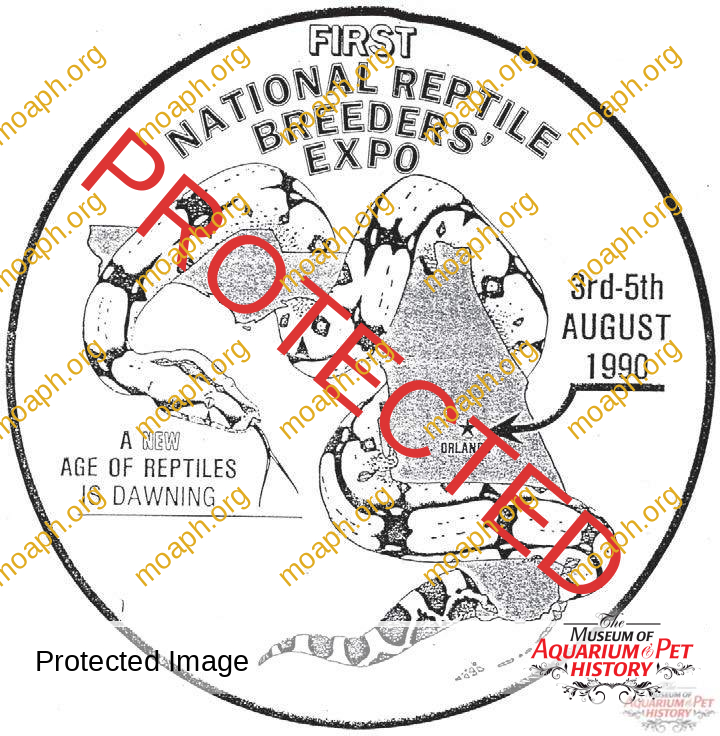
The First National Reptile Breeders’ Expo was held in Orlando, Florida in 1990. Wayne Hill was the organizer and continues in this capacity to this day. When Hill visited JBM in Dallas in the late 1980s and explained his vision for an annual reptile show, the latter insisted that the idea was too far-fetched and would never work; he was wrong.
While traveling, JBM saw that herps were rarely kept singly or in small groups at dealer compounds. Since massive shipments regularly entered the USA through Miami and local collectors worked to supply the market as well, there simply was not enough space to separate them. One could see thousands of other animals during a tour of these facilities: tarantulas, primates, psitticines, dozens of passerine birds, small mammals such as tamanduas, ocelots, and margays, and an occasional jaguar or chimp.
As Carr felt about Florida, Robert Stebbins was equally concerned about the future of herps in the western United States. In his 1966 Field Guide he said, “Growth of the human population brings great and rapid changes. Marshes are drained, streams are placed in concrete troughs, canyons are dammed and inundated, the ground is cleared for subdivisions and highways, agriculture spreads into marginal lands and, spurred on by water developments, reaches out even into deserts, the stronghold of reptiles. Air, water, and soil are contaminated. Although a few species may be temporarily benefited by some of these changes, most are not and the list of creatures rendered extinct in historic times can be expected to grow. The trend is toward an ordered, domesticated world, reduced in organic variety and crowded with people and their possessions. Interest in wildlife preservation cannot be separated from concern with efforts to limit human population growth and prevent careless exploitation of remaining natural areas.”
There were several large dealerships in California during this time: Hermosa Reptile and Wild Animal Farm in Hermosa Beach, Western Zoological Supply in Monrovia, and East Bay Vivarium in Oakland which still exists today, making it the oldest continuous specialist reptile store in the USA. We occasionally visited these places and were impressed with the wide range of species available for sale. In fact, one of us (KM) worked at two of these places when he was young. As a 14-year-old adolescent already obsessed with herps, he was the first (or one of the first) of owner Ronald Cauble’s original employees at East Bay Vivarium when this retail reptile store first opened in Oakland. KM would travel by bus and/or train for three hours each way for the opportunity to work each Saturday cleaning cages. For reimbursement, he received a meager pittance: costs of the travel fares (buses and train) and a cheeseburger and fries at lunch time. Later, KM was employed at Western Zoological Supply where he learned to work with huge assortment of herps, including many venomous reptiles.
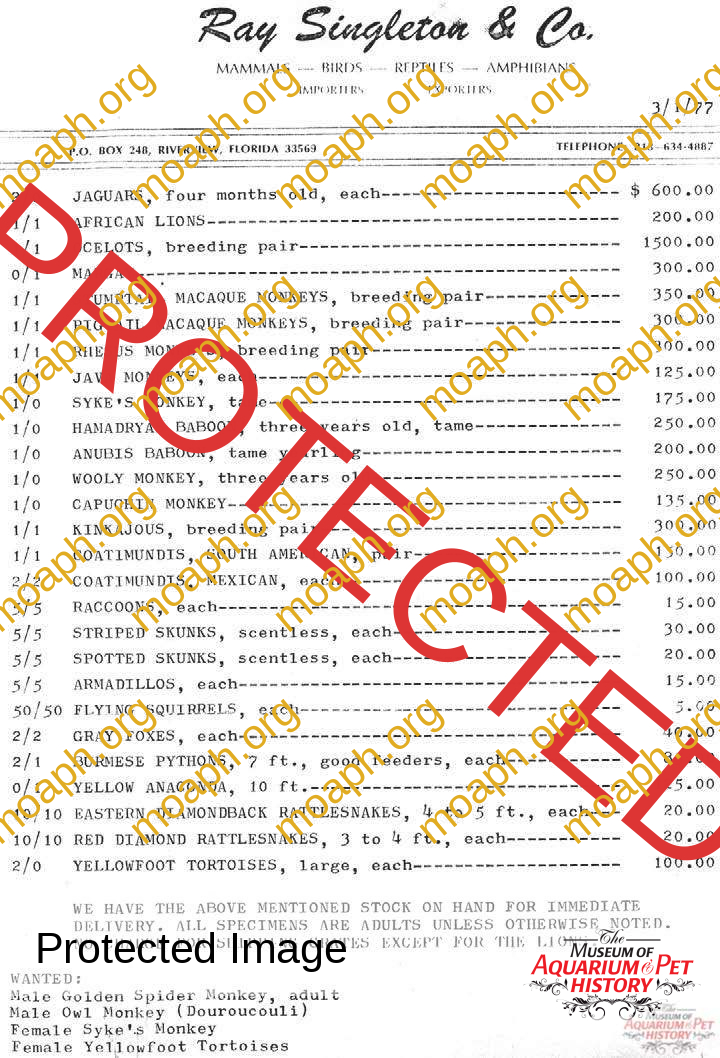
In Florida during the late 1950s, dealer Ray Singleton obtained many local snakes from persons whose income was solely derived from collecting amphibians and reptiles. Some of these collectors were remarkably skilled at finding snakes and would bring in dozens for sale on a regular basis.
—The Trade Between 1940 and 1970—
“Easy to keep” is a quality which must be differentiated sharply from the conceptions “hardy” or “resistant.” By keeping a living thing in the scientific sense we understand the attempt to let its whole life cycle be performed before our eyes within the narrower or wider confines of captivity. Nevertheless, those animals are usually deceptively termed easy to keep which, in reality, are merely resistant and, to put it crudely, take a long time to die. The classic type of this type of animal is the Greek tortoise. Even under the inadequate treatment of the average ignorant owner, this poor beast takes three, four or even five years until it is really, thoroughly and irrevocably dead, but, strictly speaking, it starts on the downward path from the first day of its captivity. To keep tortoises so that they grow, thrive and multiply, they must be offered conditions of life which, in a town flat, cannot be achieved, In our own climate, nobody, to my knowledge, has truly succeeded in breeding these animals.
—Konrad Z. Lorenz, King Solomon’s Ring, 1952
When in grade school in the 1940s, JBM ordered a “hatchling aquatic turtle den” from a dealer’s price list. The transaction was to include a dozen individuals of at least six species. The shipment was packed in a large, very heavy, reinforced wooden crate and was shipped via railway express. The shipping fee was staggering and upon opening the box, a dozen adult box turtles peered out of the container. A steady stream of complaints from the recipient to the supplier ensued but none was answered; U. S. Postal Service mail fraud charges were initiated. Several years passed but justice prevailed and the proper animals were eventually received. JBM accosted the dealer—an unkempt person with beer in hand, unshaven, un-bathed, and sloppily dressed with shoes untied— at his compound. When asked why he never responded, he said that he had just been released from jail. Since the supplier was anxious to avoid additional legal difficulties, JBM left with far more herps given as “gifts” than had been initially ordered. This dealer’s snakes were kept in a ramshackle tin/wooden shed in long wooden boxes filled with sawdust. Two of the largest cottonmouth moccasins imaginable were held in an oil drum half-filled with water; the ophidians swam without stopping. The dealer was afraid that the snakes would crawl over the side of the container and escape if they could brace themselves on the bottom.
Virtually anyone at least a half-century in age can remember pithing and dissecting a live frog in high school biology lab. There were several suppliers in the US who specialized in providing a variety of amphibians and reptiles for the classroom: William A. Lemberger Co. in Oshkosh, Wisconsin; Quivira Specialties, operated by herpetologist Dr. Charles Burt in Topeka, Kansas; Ward’s Natural Science near Rochester, New York; and herpetologist Ottys Sanders’ Biological Supply Co. outside Dallas, Texas. The species usually offered were common at the time: Leopard Frogs, various Treefrogs, Bullfrogs, Garter Snakes, American Anoles, Red-spotted Newts, Spotted and Tiger Salamanders, Red-eared Sliders, and Box Turtles.
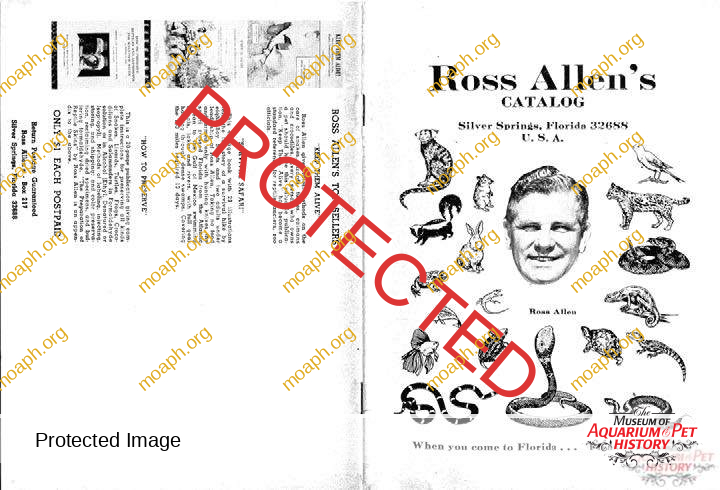
Ross Allen’s Reptile Institute was located in Silver Springs, Florida and featured one of the largest crocodilian collections ever assembled. His Institute offered three publications for sale: “Special Publications,” “Publications of the Research Division,” and “Bulletins.” The “Bulletins” covered topics ranging from snake biology and husbandry to disease treatment for captive specimens. Allen also created the Research Division in 1949 and hired Wilfred T. Neill (1922– 2001) as director. Allen and Neill published a large number of short papers in Herpetologica and Copeia. This catalogue was published around 1960. Allen offered many supplies for the snake hunter: manuals, snakebite kits, hooks, tongs, snake-proof boots, transport boxes, and cloth bags.
Credit: Courtesy of Dave Barker.
In the early 1950s, tropical fish wholesalers in the United States began to expand stock by including amphibians and reptiles. Most of these entrepreneurs had little experience with herps so most were kept in large numbers in crowded conditions, just like ornamental fishes. As an example in Chicago, piles of tortoises were stacked three or four deep: Greek, Hermann (Testudo spp.), Red-Footed, and Yellow Footed (Geochelone spp.). Amphibians such as Red-Bellied Newts (Cynops pyrrhogaster), Red-Spotted Newts (Notophthalmus viridescens), Roughskin Newts (Taricha granulosa), aquatic Caecilians (Typhlonectes compressicauda), Oriental Toads (Bombina orientalis), African Clawed Frogs (Xenopus laevis), and African Dwarf Frogs (Hymenochirus boettgeri) were available but there was often no live invertebrate prey for food. Hundreds of poison dart frogs (Dendrobates spp. sensu lato) were held in an aquarium with piles of tropical fish flake food scattered throughout the enclosure. The owner expressed surprise when JBM told him that frogs did not eat flake food.
One enterprising wholesaler offered “Green Snake Dens” to several retail pet outlets in Chicago but later learned, to his horror, that the assemblage included Bamboo Vipers (Trimeresurus sp.) and Asian Vine Snakes (Ahaetulla sp.). Large shipments of Boa Constrictors (Boa constrictor), Brazilian and Colombian Rainbow Boas (Epicrates cenchria ssp.), and Green Anacondas (Eunectes murinus) regularly arrived in Chicago. Lizards included Anoles (Anolis), Ameivas (Ameiva), Whiptail Lizards (Cnemidophorus), Green Iguanas (Iguana iguana), and several types of Spiny-Tailed Iguanas (Ctenosaura). Spectacled Caimans (Caiman crocodilus) were available in large numbers.
When JBM began college in 1957 as a callow seventeen-year old youth and his parents were no longer nearby to control his impulses, he began amassing a collection of snakes, some venomous and others potentially dangerous like large constrictors. Soon the dorm room was filled with Rhinoceros Vipers, Gaboon Vipers, Indian Cobras, Gila Monsters, Bamboo Vipers, Timber and other Rattlesnakes, Copperheads, and a spectacular black Asian Spitting Cobra with a perfect white “human skull” pattern on its hood. Most of the specimens were obtained from animal dealers; no proof of age was ever requested although most lists had statements like “no venomous snakes intentionally sold to minors.” In retrospect, what was most troubling was that JBM had no real experience at handling venomous snakes and no antivenin was available in case of a bite; fortunately, there were no catastrophic incidents.
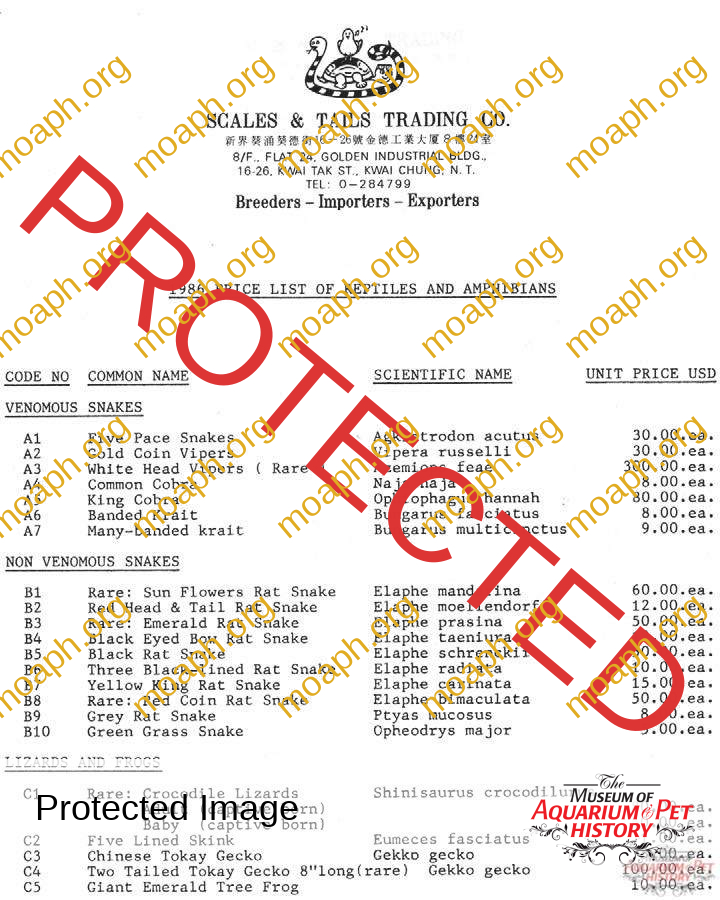
Scales & Tails Trading Company in Hong Kong offered five very rare reptiles in 1986: White Head Vipers (Azemiops feae), Crocodile Lizards (Shinisaurus crocodilurus), and three species of ratsnakes (Elaphe sensu lato).
One dealer offered Gila Monsters and Beaded Lizards (Heloderma) which appeared to be well-fed but died a month or so later. Upon necropsy, stomachs were found to be stuffed with sphagnum moss. Several species of Oriental ratsnakes (Elaphe sensu lato and Spalerosophis) were imported to the US in the mid-1970s and all died after a few weeks. Upon close examination by the Dallas Zoo veterinarian, it was discovered that gall bladders had been skillfully removed for human medicinal purposes. Prior to export, a small incision had been made but scales were never cut, only the interstitial skin, and the tiniest sutures used to complete the surgery.
One source of venomous snakes from Latin America and Southeast Asia was venom extraction laboratories but the snakes sometimes arrived clearly stressed and in poor condition due to rough handling during milking. Several other problems occurred with venomous snake importation: misidentification, especially with mimics such as False Coral Snakes (Pliocercus, Erythrolamprus) and models like Coral Snakes (Micrurus spp.); inaccurate counts, especially when snakes gave birth during shipments; cloth shipping bags unlabeled (especially unnerving if a spitting cobra happened to be inside); and snakes shipped either loose in the crate or having escaped from cloth bags.
Snakes were sold by the foot or by weight by a few dealers during the 1950s in the United States. Like the average layman when estimating the size of a serpent, lengths were often dramatically overestimated by these dealers. Also, purchasing a ‘mixed snake den’ from a dealer’s advertisement could be a risky business, for instead of the beautiful Cornsnake, Yellow Ratsnake, Chain (Eastern) Kingsnake, and Eastern Indigo Snake promised, the crate might be filled with nasty, striking watersnakes exuding foul-smelling musk. These “snake dens” were a marketing term used by a few dealers to sell a grab bag or assortment of snakes packaged in a single box. Shipments of snakes had to be examined carefully as the Snake Mite (Ophionyssus natricis) or ticks sometimes accompanied the consignment, at no extra charge. If the fancier wanted to reproduce herps, it was almost futile to ask for specific sexes; rather it was necessary to purchase a minimum of six individuals to increase chances of at least a pair.
Snakes and other reptiles could occasionally be purchased from dealers who also had traveling exhibitions; the advantage for the buyer was that specimens could be examined closely at the site and the best ones purchased. The late Arthur Jones, before inventing the Nautilus exercise equipment, owned a roadside public exhibit and import-export business for wild animals in Slidell, Louisiana. Jones was a pilot who flew the animals himself in old B-25 bombers. In the 1960s, he hosted a television show called “Wild Cargo.” One program showed Jones capturing gigantic Nile Crocodiles and airlifting them out of the wild by a helicopter for eventual sale in the United States. In the early 1960s, Jones brought his “Wild Cargo” show to Cincinnati, Ohio (and other cities) where he constructed large wooden pits and filled them with reptiles of all sorts: Gopher Tortoises, boas, cobras, rattlesnakes and other venomous snakes, American Alligators, several types of caimans, and a variety of mostly South American reptiles. JBM was stunned and delighted to see a dozen Emerald Tree Boas in one of the pits and purchased some of them. After the show, Jones did not want to transport the animals back to Louisiana so herp lovers from the region walked out of the auditorium with dozens of bags filled with new acquisitions, some venomous, sold at reasonable prices.

Europe has always had a strong tradition in herpetoculture. Shown here is a detailed list from Interrep Holland offering a variety of seldom available lizards, especially Dumeril’s Yellow Gecko (Ailuronyx trachygaster) from Madagascar. Note that only technical names are used which suggests an international clientele.
—The Rise of Herpetoculture—
There is a difference between herpetoculture and herpetology. Some facets may be similar but the objective is different. The word “herpetoculture” was first coined by the late Thomas A. Huff, Director of the now defunct Reptile Breeding Foundation in Picton, Ontario, Canada, to reflect the activities of those persons, now commonly called “herpetoculturists,” working with captive reptiles and amphibians. Herpetoculturists are skilled at maintaining and breeding a large variety of amphibians and reptiles for the market but these animals have essentially no niche outside of captivity. Conversely, herpetology is a division of biological sciences, and deals with systematics, measurements of selective pressures and responses of organisms to them, physiology, ethology, and natural history.
As the availability of amphibians and reptiles increased, the knowledge of how to care for them in captivity also increased; but the latter lagged rather behind the former for many years. The accretion of herpetocultural knowledge was dramatic. As an example in the history of zoos and herpetoculture, the role of temperature was properly appreciated beginning in the early 1980s. Also of importance were diets, light cycles, humidity, and treatment of diseases (see Murphy 2007 and Petzold 2007 for examples). In the late 1970s, breeding of various species became reliable but others are still reproducing unreliably, and this demonstrates how much we still have to learn.
In German-speaking areas, a number of periodicals were available to the herpetoculturist over many years: Blätter für Aquarien- und Terrarienkunde 1890–1901; Wochenschrift für Aquarien- und Terrarienkunde 1904–1950; Lacerta 1908–1929; Aquarien, Terrarien 1954–1990; Aqua-Terra 1964 1973; Das Aquarium mit Aqua-Terra 1967–1978; Aquarien-Magazin 1967–1978; Die Aquarien- und Terrarienzeitschrift (DATZ) since 1948; Salamandra since 1965 and herpetofauna since 1979.
As interest in the proper keeping of live herps broadened, the First Annual Symposium on Captive Propagation and Husbandry of Reptiles and Amphibians was convened by Richard Hahn in July 1976, at Hood College in Frederick, Maryland. The International Herpetological Symposium (IHS) evolved from this meeting and is still in existence. IHS provides a forum for amateurs and professionals interested in natural history, conservation biology, and the captive management and propagation of amphibians and reptiles by holding an annual meeting and publishing the papers given at the symposium.
The Northern California Herpetological Society produced a series of special publications on the captive propagation and husbandry of reptiles and amphibians in the late 1980s. Philippe de Vosjoli founded the first nationally distributed reptile and amphibian magazine, The Vivarium, and an excellent line of reptile and amphibian care books published through Advanced Vivarium Systems. There are over 30 titles in this series. He popularized the terms herpetoculture and vivarium.
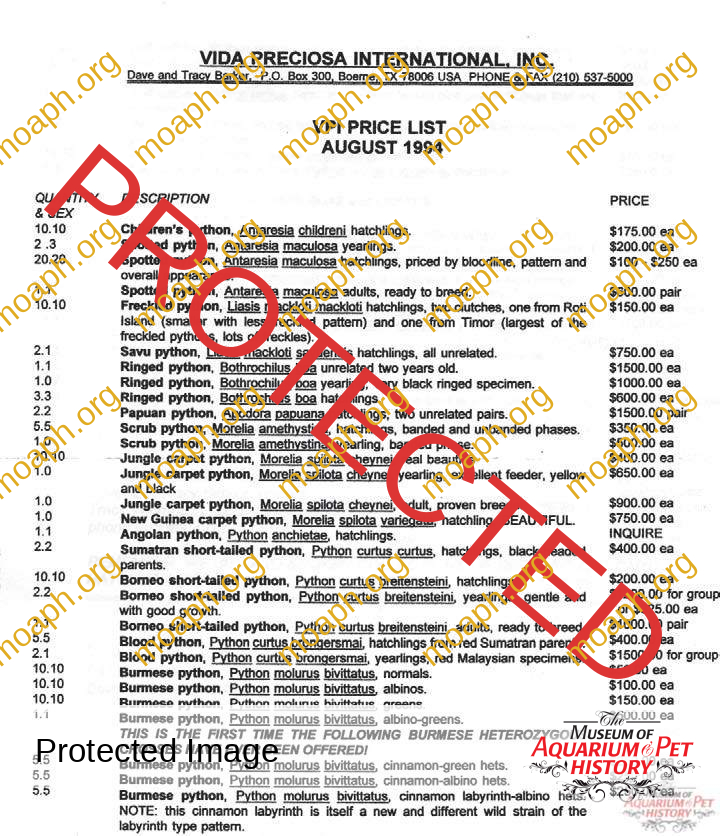
Dave and Tracy Barker, owners of Vida Preciosa International (VPI) in Boerne, Texas, have amassed the largest captive collection of living pythons ever assembled. In addition, they have published many herpetological papers and two books on pythons. Note that the snakes on this list are sexed. The late Joe Laszlo from the nearby San Antonio Zoo published an important paper on the use of probes for sex recognition in snakes in 1975.
Mere pet owners may evolve into enthusiasts. It is certainly true that a large number of persons appreciate herps today and want to keep and study them. Many of the amphibians and reptiles available to them are bred in captivity. To prove this point, one only has to go to the Internet (http://www.kingsnake.com/) or to some of the many pet shops and reptile shows (expos) in the US and Europe and explore the number and varieties of captive-bred herps available for sale and look at the large number of books and pamphlets published on their care; it is staggering! Reptile show organizers have contributed to this change by mostly allowing only animals bred in captivity at reptile shows during the past few decades. Now price lists are filled with a myriad of captive kingsnakes, ratsnakes, and other colubrids named for breeders’ lineages. Years ago, a kingsnake breeder told JBM that given enough time, he could produce a snake having a dorsal pattern with the name “James Murphy;” he was only partially joking! At an expo, one can see hundreds of deli cups filled with baby herps with weird colors and patterns, designated with descriptive unusual names. What is striking is that the overall condition of the amphibians and reptiles for sale appears to be excellent. JBM went to the annual Mid-Atlantic Herpetological Society Expo and International Amphibian Days Expo in Maryland for several years and did not see a single unhealthy animal, at least not visibly ill to the naked eye. In fact, some organizers have arranged for outside experts to check on the well-being of the herps. It might be noted here that proceeds from some of these shows are donated to acquire protected land and support other conservation initiatives. At these reptile shows, the percentage of amphibians and reptiles bred in captivity is increasing and the number of wild-caught imported specimens is shrinking. So many are bred, in fact, that the number of new species never kept in captivity and available to the fancier is becoming limited and commercial breeders have had to create “designer morphs” to remain financially viable.
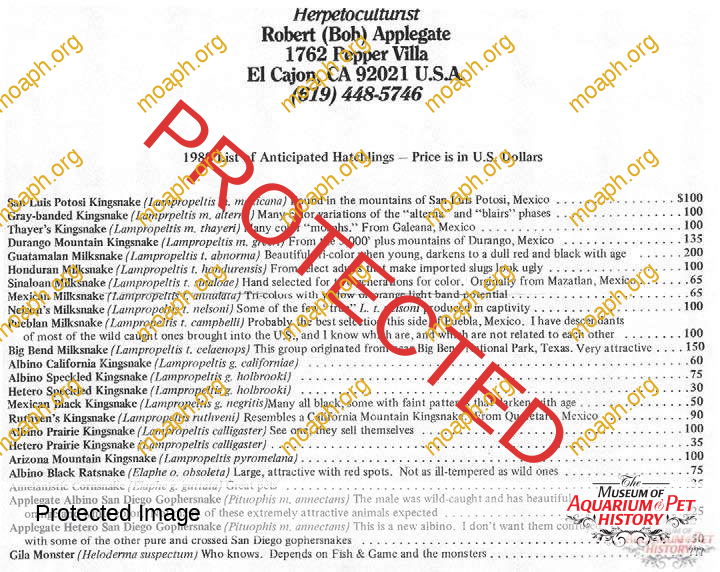
Robert (Bob) Applegate has been raising reptiles for sale for many years but he occupies an unusual historical place as he is the only person to advertise for a wife in his price lists. Although his attempt was unsuccessful, he did meet his current wife Marilee through mutual friends.
A variation of the cooperative approach by the members of the Laboratoire d’Erpetologie in Montpellier, France in the nineteenth century is currently being tried on a smaller scale in the US. In 1976, Trooper Walsh was the first private person to breed Green Tree Pythons (Chondropython, now Morelia viridis) and he has produced 10 generations of these snakes. Walsh keeps elaborate records on shedding cycles, feeding intervals, medical management, and pedigrees. Customers receive copies of these data whenever a snake is purchased. To disseminate information about these pythons, Walsh and other breeders started “Chondro Coalition” to accumulate and share knowledge regarding reptilian biology, captive husbandry, and conservation. The mission statement reads as follows: “We are a group of dedicated Chondro breeders who, while maintaining our unique identities and individual businesses, have joined together with our collective experience, resources, and energy to promote the captive breeding and long-term value of Green Tree Pythons.” Unlike many other captive-bred reptiles offered for sale during the past several decades, Green Tree Pythons have not diminished in value, likely due in part to the fact that customers know precisely what the complete history is of the snake they are buying.
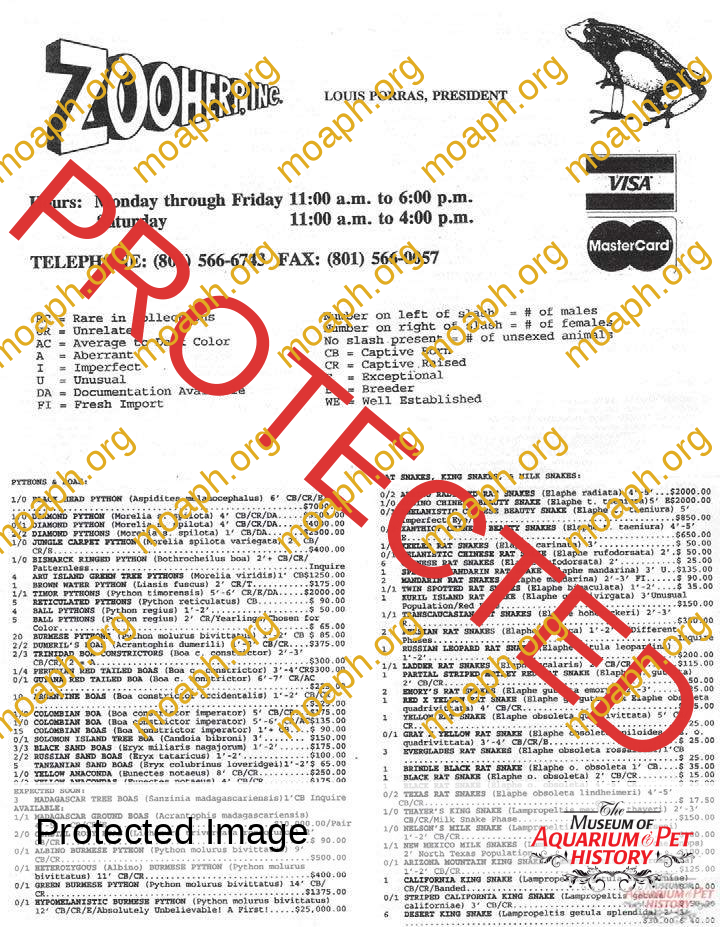
Zooherp in Sandy, Utah, occupied a specialized niche by mostly providing amphibians and reptiles for zoos and aquariums. Note the codes describing the specimens.
Concluding Remarks
The study of reptiles “at home”—of their nature, habits, peculiarities, mode of life, of everything, In fact, beyond their mere anatomical characteristics—seems to have been deferred until the entire animal creation, exclusive of the unpopular Class, should have received the attention of practical naturalists.
—“On the Treatment of Snakes in Captivity” in the journal Zoologist by Arthur Straddling, 1882
Are we in the midst of another “Fad” similar to those fern and aquaria crazes seen during the mid-Victorian era? “Out of the thousands of small mammal species that exist only a few have proven to make suitable pets. It is likely that the same thing is true of reptiles and we probably will not find that many more than we currently have. There are two parts to the reptile industry—the one for pets and the one for enthusiasts.” (J. Coote, pers. comm.). There will always be that responsible group who keep living herps for personal enjoyment, contentment, and increase of knowledge, but perhaps the total number of casual pet keepers will begin to wane.
We stress here that without access to living amphibians and reptiles when we were youngsters learning about the natural world, our lives would have likely taken very different and perhaps less fulfilling trajectories. The excitement and wonder of working with these animals guided our entire professional careers and we feel fortunate to have had this wonderful opportunity. It would be tragic if this chance were to be lost to future generations. We are concerned about the increasing number of laws and local ordinances restricting the keeping of herps, based on emotion, lack of biological awareness, and ophiophobia rather than careful scientific appraisals. Our final thought—we think that careful captive breeding produces quality stock and is a reasonable approach to ensure that living herps are available to all conscientious persons.
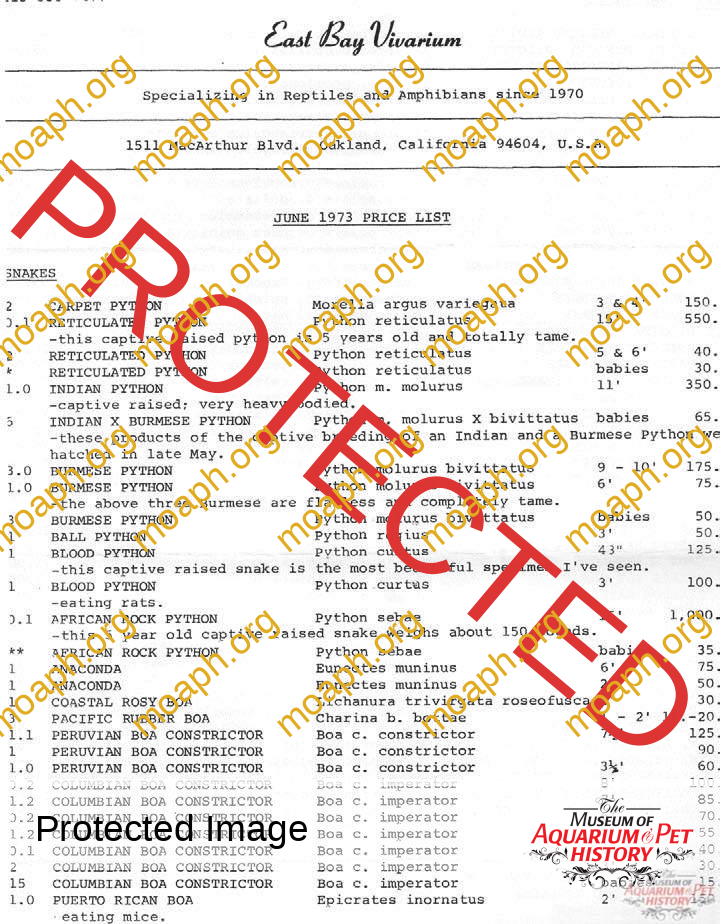
The East Bay Vivarium originally located in Oakland and now in Emeryville, California is the oldest continuous specialist reptile store in the USA, opening in 1970 by the original owner, Ronald L. Cauble.
Acknowledgments
This contribution is dedicated to our wives Judith Block and Rose McCloud who lived betwixt and between legions of living lower vertebrates, ranging from Komodo Dragons to African Naked Catfish. They should be pelted with trophies for holding their complaints about our obsessive behavior to a minimum for years.
We thank David Barker, Judith Block, David Chiszar, Jon Coote, Gary Ferguson, Rick Hudson, John Moriarty, Louis Porras, John Simmons, and Trooper Walsh for reviewing early drafts and suggesting improvements. Smithsonian Librarians Polly Lasker, Leslie Overstreet, and Daria Wingreen allowed us to examine publications under their care and arranged loans of obscure books and papers. Mary Markey provided the opportunity for us to search through the Smithsonian Institution Archives for pertinent materials. Smithsonian National Zoological Park Registrars Laura Morse and Mandy Murphy helped by locating additional price lists. Ken White detailed information on herpetofauna released to humane societies and animal shelters. For various courtesies, we thank David Blody, Patrick Burchfield, Falk Dathe, Philippe de Vosjoli, and Bill Love.
The opinions expressed in this article are those of the authors and do not necessarily represent the opinions of any organization.
A copy of the front page of each list has been deposited in the library of the Division of Amphibians and Reptiles, United States Museum of Natural History, Smithsonian Institution, in Washington, D.C.
References
Publications embedded in text plus suggestions for additional readings are listed below:
Alberts, A. C., et al. (editors). 2004. Iguanas. Biology and Conservation. University California Press, Berkeley, Los Angeles, London.
Barker, D. G., and T. M. Barker. 2006. Ball Pythons: The History, Natural History, Care and Breeding. VPI Library, Boerne Texas.
Bechtel, H. B. 1995. Reptile and Amphibian Variants: Colors, Patterns, and Scales. Krieger Publ. Co., Malabar, Florida.
Behler, J. 2000. Madagascar Tortoise Crisis. Letter to CITES Animal Committee and Concerned Parties, 9 January 2002. Turtle and Tortoise Newsletter 2000, 5:18–19. [“In closing, I want to reiterate that all Madagascar tortoises face a very serious set of problems. There is no internal effort to monitor the trade and only the most blatant and exposed smuggling episodes are prosecuted. Confiscated tortoises are quickly given to dealers. The tortoise trade in Madagascar has been facilitated by the highest government officials in the country. I implore CITES to be very thorough in its review of the Madagascar reptile and amphibian trade in 2002.”]
Bertolero, A., D. Oro, and A. Besnard. 2007. Assessing the efficacy of reintroduction programmes by modelling adult survival: the example of Hermann’s tortoise. Anim. Conserv. 10:360–368.
Bothwell, D. 1962. The Great Outdoors Book of Alligators. Great Outdoors Publishing Co., St. Petersburg, Florida.
Carr, A. F. 1940. A Contribution to the Herpetology of Florida. University of Florida, Gainesville, Florida.
–––––. 1964. Ulendo; Travels of a Naturalist In and Out of Africa. Knopf, New York.
–––––. 1994. A Naturalist in Florida: A Celebration of Eden / / Archie Carr; edited by Marjorie Harris Carr; foreword by Edward O. Wilson. Yale University Press, New Haven, Connecticut.
–––––, and C. J. Goin. 1959. Guide to the Reptiles, Amphibians, and Fresh-Water Fishes of Florida. University of Florida Press, Gainesville, Florida.
–––––, and the editors of Time-Life Books. 1973. The Everglades. New York, Time-Life Books.
Chiszar, D., J. B. Murphy, and H. M. Smith. 1993. In search of zoo-academic collaborations: a research agenda for the 1990’s. Herpetologica 49:488–500.
Christy, B. 2008.The Lizard King: The True Crimes and Passions of the World’s Greatest Reptile Smugglers. Twelve, New York.
Collins, J. P., and M. L. Crump. 2009. Extinction in Our Times. Global Amphibian Decline. Oxford University Press.
Conant, R. 1993. The oldest snake. Bull. Chicago Herpetol. Soc. 28(4):77‑78. [A male ball python was acquired at the Philadelphia Zoo on 26 April 1945 and died on 7 October 1992, thus reaching the approximate age of forty-seven and one-half years.]
Coote, J. G. 2001. A history of western herpetoculture before the 20th century, p. 19-47. In Becker, W. E. (editor). 25th International Herpetological Symposium on Captive Propagation and Husbandry. International Herpetological Symposium, Detroit, Michigan.
Darwin, C. 1868. The Variation of Animals and Plants under Domestication. / By Charles Darwin … Orange Judd & Company, New York.
de Vosjoli, P. 1994a. Herpetoculture in a changing world, Part I. The Vivarium 6(3):10–11, 36–37. –––––. 1994b. Herpetoculture in a changing world, Part II. The Vivarium 6(4):10–11, 42–43.
Dodd, C. K. Jr., and R. A. Seigel. 1991. Relocation, repatriation and translocation of amphibians and reptiles: Are they conservation strategies that work? Herpetologica 47:336–350.
Ehmann, H. 1994. Amateur herpetology in Australia: Its history, roles, status, problems and future. Herpetofauna 24(1):6–12.
Fitch, H. S. 1980. Reproductive strategies in reptiles, p. 25–31. In Murphy, J. B. and J. T. Collins (editors). Reproductive Biology and Diseases of Captive Reptiles. Society for the Study of Amphibians and Reptiles Contributions to Herpetology, volume 1. Lawrence, Kansas.
Gadow, H. 1901. Amphibia and Reptiles. Macmillan & Co., England. [Reprinted in 1968 by Wheldon & Wesley, Ltd., Codicote UK].
Germano, J. M., and P. J. Bishop. 2009. Suitability of amphibians and reptiles for translocation. Conserv. Biol. 23:7–15.
Gorzula, S. 1998. A ball python survey in Ghana. Reptile Hobbyist 3(6):43–50. –––––, W. O. Nsiah, and W. Oduro. 1997. Survey of the status and management of the royal python (Python regius) in Ghana. Report to the Secretariat of the Convention on International Trade in Endangered Species of Wild Flora and Fauna (CITES). Geneva, Switzerland.
Green, A., and the Center for Public Integrity. 1999. Animal Underworld: Inside America’s Black Market for Rare and Exotic Species. Public Affairs, New York.
Greer, G. C. 1994. Nest sites of royal pythons in West Africa. Reptile & Amphibian Magazine (July/August):44–55.
Grier, K. C. 2006. Pets in America. University of North Carolina Press, Chapel Hill, North Carolina.
Griffiths, R. A., and L. Pavajeau. 2008. Captive breeding, reintroduction, and the conservation of amphibians. Conserv. Biol. 22:852–861.
Guynup, S. 2006. By the Numbers, In State of the Wild, 2006: A Global Portrait of Wildlife, Wildlands, and Oceans. Island Press, Washington DC.
Honegger, R. E. 1974. The reptile trade. Inter. Zoo Yearb. 14:47–52.
–––––. 1979. Marking amphibians and reptiles for future identification. Inter. Zoo Yearb. 19:14–22.
–––––. 1992. Undesirable trends in captive management and conservation of reptiles. Bull. Chicago Herpetol. Soc. 27(19):207–210. [article reprinted in Inter. Zoo News 40(5):11–17 (1993). A German version was published the next year: “Albinos und Hybriden oder die Gier nach dem Abartigen” in Naturmuseum 124(8):258–270.].
Hudson, R. 2006. The International Iguana Foundation: Providing critical support to endangered iguanas. Herpetol. Rev. 37:402–403.
IUCN 2008. 2008 IUCN Red List of Threatened Species. <www. iucnredlist.org>. [1385 reptiles and 6260 amphibians listed].
Hylander, C. J. 1951. Adventures with Reptiles; The Story of Ross Allen. Messner, New York.
King, W. A., Jr. 1964. Rattling Yours—Snake King. Privately published in Brownsville, Texas [reptile and animal dealer, established in 1907, called William Abraham King, or Snake King as he preferred; the business was named “Snakeville”.].
Kölpin, T. 2004. Python regius: der Königspython. Münster, Natur und Tier.
Kursh, H. 1965. Cobras in His Garden. Harvey House, Irvington-on- Hudson, New York. [biography of William “Bill” Haast].
Langerwerf, B., and R. Gurley. 2009. Lizard Man. The Life and Adventures of Bert Langerwerf. Living Art Publishing, Ada, Oklahoma.
Laszlo, J. 1975. Probing as a practical method of sex recognition in snakes. Inter. Zoo Yearb. 15:178– 179.
Lawson, D. P. 2004. Partners in saving turtles: The Turtle Survival Alliance. Herpetol. Rev. 35:110.
Lorenz, K. Z. 1952. King Solomon’s Ring. New Light on Animal Ways. Thomas Y. Crowell Co., New York.
Love, W. B. 1994. Domestication or preservation. Two directions for future herpetocultural efforts. The Vivarium 6(2:52–54.
Murphy, J. B. 2007. Herpetological History of the Zoo and Aquarium World. Krieger Publishing Co., Malabar, Florida.
–––––, J. T. Collins, and K. Adler. 1997. Herpetology versus herpetoculture. Cooperation or competition. Reptiles 5(3):72–79.
Neill, W. T. 1950? Ross Allen’s Reptile Institute, Silver Springs, Florida. Ross Allen’s Reptile Institute, Silver Springs, Florida.
Petzold, H.‑G. 1984. Aufgaben und Probleme bei der Erforschung der Lebensäusserungen der Niederen Amnioten (Reptilien) (Tasks and Problems Connected with Research into the Life Expressions of the Lower Amniotic Animals (Reptiles)). This book (Nr. 38) is in the series “Berliner Tierpark‑Buch,” published by Bina in Berlin [Note: Nachdruck aus Milu, Bd. 5, Heft 4/5:485–786 (1982). Translated English version: Petzold, H.-G. 2008. Petzold’s The Lives of Captive Reptiles / / Hans-Günter Petzold; translated by Lucian Heichler and edited by James B. Murphy. Society for the Study of Amphibians and Reptiles, in association with National Zoological Park, Smithsonian Institution. SSAR, Salt Lake City, Utah].
Porras, L. 1987. Some comments on the reptile business. In M. J. Rosenberg (ed.), Proceedings of the 11th International Herpetological Symposium on Captive Propagation and Husbandry, pp. 17–23. Chicago, Illinois.
Schlaepfer, M. A., et al. 2005. Challenges in evaluating the impact of the trade in amphibians and reptiles on wild populations. BioScience (March 2005) 55(No. 3). [excellent bibliography].
Smith, K. K., et al. 2009. Reducing the risks of the wildlife trade. Science 324:594–595.
Sprackland, R. G., and S. McKeown. 1994. The path to a career in herpetology. The Vivarium 6(1):22– 23, 41–42.
Stebbins, R. C. 1966. A Field Guide to Western Reptiles and Amphibians; Field Marks of All Species in Western North America. Houghton Mifflin, Boston, Massachusetts.
Wake, D. B., and V. T. Vredenburg. 2008. Are we in the midst of the sixth mass extinction? A view from the world of amphibians. PNAS 105 (suppl.1):11466–11473. (doi: 10.1073 pnas.0801921105).
Wilson, L. D., and L. Porras. 1983. The Ecological Impact of Man on the South Florida Herpetofauna. Univ. Kansas Mus. Nat. Hist. Spec. Publ. No. 9, Lawrence, Kansas.
Wood, L. N. 1944. Raymond L. Ditmars, His Exciting Career with Reptiles, Animals and Insects. J. Messner, New York.
Wykes, A. 1961. Snake Man. The Story of C. J. P. Ionides. Simon and Schuster, New York.