The Evolution of Keeping Captive Amphibians and Reptiles
Nature Encased in Glass
In 1688, the French produced polished plate glass in large sizes by casting and hand polishing. Over 45 years later in the United Kingdom, Robert Lucas Chance introduced improved cylinder sheet glass using a German process to produce finer quality and larger panes. “A better system of making sheet glass, from blown cylinders, was introduced into England in 1832 by Chance Brothers and Bontemps. Although the new method, already established in Germany and France, required five types of skilled workers, it was cheaper, produced bigger sheets, and was free from the blemish in the centre… But after only seven years Chance Brothers devised a process by which the sheets could be ground and polished like plate glass… The manufacture of plate glass was introduced into England from Northern France in 1773…” (Derry and Williams 1961:594–595). This glass was used to create the first Crystal Palace in London in 1851. The process was used extensively until early in the 20th Century to make window glass. From this period onwards machines were developed to automate the production of window glass.
There is no question but that the availability of inexpensive window glass was one of the main factors for the rise of fern cases, aquaria, terraria, and vivaria in Europe. Fanciers interested in the behavior and biology of fishes, tadpoles, and newts were now able to look closely at them in an aquarium rather than peering into a pond or small bottle to catch a fleeting glimpse.
In 1829, Nathaniel Bagshaw Ward discovered that two seedlings, a grass and a fern, had accidentally sprouted in a closed glass bottle, containing a layer of damp soil he was using to pupate a sphinx moth chrysalis. He experimented with other closed glass containers and found that he could keep a number of ferns successfully. Glass was expensive as it was subject to a heavy excise tax (to pay for the Napoleonic wars) until 1845. After the tax was repealed, glass was affordable so Ward’s “Closely Glazed Cases” were available widely and his invention reached its full potential. Wardian Fern Cases became the rage and virtually every wealthy Victorian lady’s drawing room had fern-growing cases. Shirley Hibberd (1856) loved ferns: “Plumy emerald green pets glistening with health and beadings of warm dew.” Pteridomania, the craze for ferns, was fueled by books such as The Ferns of Great Britain by Anne Pratt in 1855, Hardy Ferns: How I Collected and Cultivated Them by Nona Bellairs in 1865, and even as late as 1905 with George Schneider’s work called Choice Ferns for Amateurs: Their Culture and Management in the Open and Under Glass. Well-dressed Victorian women often collected wild plants and animals for their enclosures, as seen in the picture “Gathering Ferns” from London Illustrated News in 1871. The picture is by William Kay Blacklock and is available on the web at http://goldenagepaintings.blogspot.com/2009/02/william-kay-blacklock-gathering-ferns.html. Orchids and other tropical plants were kept in fern-cases as well.
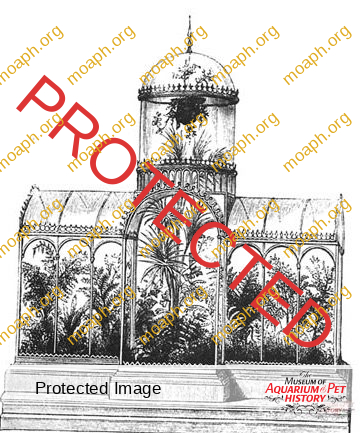
Fig. 2. Wardian Fern Cases could be very elaborate. This terrarium was modeled after the Crystal Palace of London’s Great Exhibition in 1851.
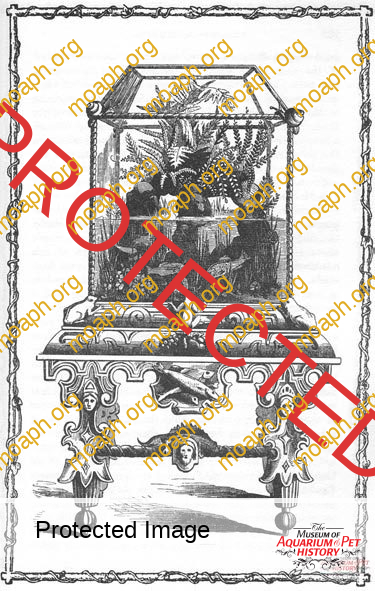
Fig. 3. In 1856, Shirley Hibberd published Rustic Adornments for Homes of Taste. Pictured here is Aquarium combined with Fernery. Note frogs at base.
By the mid-1800s, the drawing rooms of the wealthy were often filled with a myriad of glass containers, large and small, housing plants and animals. All of these items were sometimes advertised in natural history books available during this time. One of the curious facts is that fern and aquarium crazes were almost always feminine interests during the Victorian era. “But the role of women as encouragers of natural history must not be underrated. It is unlikely that so many natural history societies, museums, zoological and botanical gardens and public aquaria would have been founded if they could not have relied on regular female support.” (Barber 1980). Charles Kingsley described the Victorian lady naturalist at home in Glaucus in 1855: “I have seen the young London beauty, amid all the excitement and temptation of luxury and flattery, with her heart pure and her mind occupied in a boudoir full of shells and fossils, flowers and sea-weeds, and keeping herself unspotted from the world, by considering the lilies of the field, how they grow.” Why were so many natural history books and periodicals published during this period? Victorians believed that it was slightly common to obtain animals and plants for parlors and drawing rooms simply for amusement; if flora and fauna were to be shown, there had to be an educational component attached to their passion for collecting. George Brettingham Sowerby the Second in Popular History of the Aquarium put it this way in 1857: “Nor is it only for amusement that such parlour oceans and lakes are prepared and stocked; they are invaluable as a means of instruction.”
In 1856, the pioneer naturalist Shirley Hibberd published Rustic Adornments for Homes of Taste and Recreations for Town Folk in the Study and Imitation of Nature . This is the most complete book published during the Victorian era covering fern cases, marine and freshwater aquaria, aviaries, apiaries, and outdoor gardens and it is one of the most beautiful with elaborate drawings and colored floral borders on each page. Hibberd wrote in the Preface, “Whatever serves to heighten the enjoyments of home, and add fresh graces to the domestic hearth, must be worthy of encouragement and culture.”
But there was a downside to the fern craze: “The poor Ferns, like the wolves in olden times, have a price set upon their heads, and they in like manner will soon disappear. We must have ‘Fern laws,’ and preserve them like game” (Bellairs 1865). Another problem which surfaced was that ferns quickly died in the polluted London air. As interest in ferns began to wane in England, the development of aquaria filled the void. “When every drawing-room contained a fern case, they began to seem a little dull, or even—horrid thought!—a little vulgar.” (Barber 1980.).
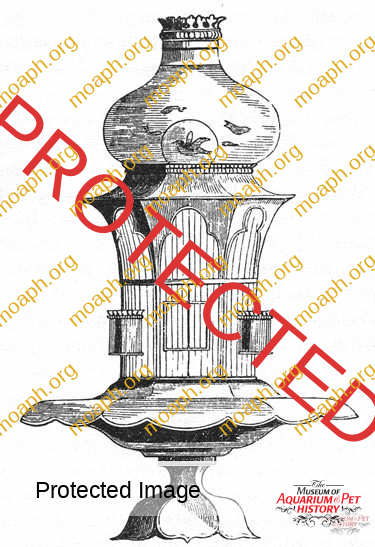
Fig. 4. Combination aquarium and bird cage from Rustic Adornments for Homes of Taste. At top of enclosure are two bowls. Birds had access (from lower wire cage) to smaller bowl within the larger one where they were juxtaposed to fishes swimming around them. This was a popular Victorian design feature.
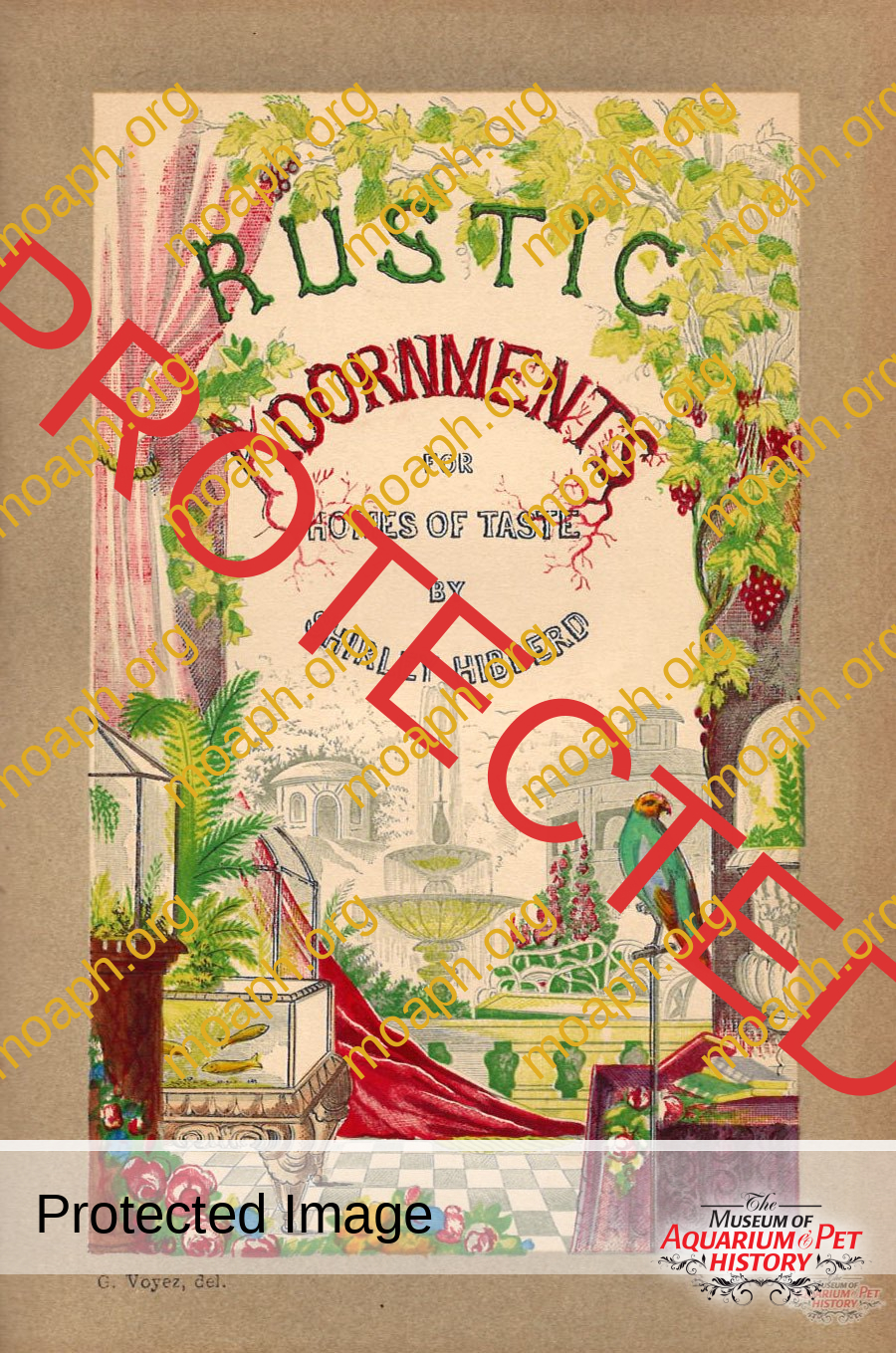
Fig. 5. Cover from Rustic Adornments for Homes of Taste.
SEVERAL OF THE LADIES IN SOUTHPORT HAVE PURCHASED PETS AMONG THEM, AND IT MAY BE THAT NO SOUTHPORT LADY WILL CONSIDER HER ESTABLISHMENT PERFECT WITHOUT A BABY ALLIGATOR TO BASK ON THE HEARTH RUG, AND GO OUT ON A WALK ON THE PROMENADE WITH HER. WHEN THE PET DEFUNCTS, HE CAN BE STUFFED, GILT, AND PUT IN THE HAT FOR AN ORNAMENT, DON’T YOU KNOW?
—Frank Buckland in Notes and Jottings from Animal Life in 1882
From Land to Water
The keeping of goldfish substantially predates the aquarium craze, dating back to at least 1000 AD in China. The Chinese exported goldfish breeding to Japan and Korea around 1500 AD. Goldfish reached Europe around the beginning of the 17th Century and the US in 1876. These fishes were bred to be seen from above in shallow porcelain bowls.
In 1850, Robert Warington kept two small goldfish and a Valisneria spiralis plant in a twelve-gallon tank for almost a year without changing the water. He is credited with discovering the “Balanced Aquarium.” During the same period, Philip Henry Gosse was independently pursuing the same experiments. Gosse published A Naturalist’s Rambles on the Devonshire Coast which described his somewhat unsuccessful adventures at aquarium-keeping. In 1853, he said “Let the word AQUARIUM then be the one selected to indicate these interesting collections of aquatic animals and plants.”
Warington and Gosse were important figures in contributing to the new aquarium craze in Victorian England. In 1856, Gosse wrote the first book on the marine aquarium entitled A Handbook to the Marine Aquarium . . . and it contained an advertisement by W. Alford Lloyd: For Sale—15,000 specimens comprising over 200 genera in 50 large glass aquaria. Other authors published books on aquarium keeping: Ocean Gardens: The History of the Marine Aquarium, and the Best Methods Now Adopted for its Establishment and Preservation by H. Noel Humphreys in 1857; The Marine Aquarium: Directions for its Preparation and Management by R. M. Stark in 1857; Common Objects of the Sea-Shore by Reverend John G. Wood in 1857; The Family Aquarium; or, Aqua Vivarium … Being a Familiar and Complete Instructor upon the Subject of the Construction, Fitting-up, Stocking, and Maintenance of the Fluvial and Marine Aquaria by Henry D. Butler in 1858; Cassell’s Household Guide in 1869?–1871?; The Student’s Aquarium (Marine and Fresh Water): How to Make and Manage by S. Jacob in 1886; The Amateur Aquarist by Mark Samuel in 1894; and Das süsswasser-aquarium. Geschichte, flora und fauna des süsswasser-aquariums, seine anlage und pflege by Ernst Bade in 1898. Some of these books offered instructions for collecting animals and plants at the seashore and early pictures again show Victorian women with billowing dresses, buckets, and long-handled dip nets searching the tide-pools (see Bedell 2009).
Public interest in aquatic organisms gave rise to three public aquariums in Europe: Natura Artis Magistra in Amsterdam in 1838, London Zoo in 1858, and Jardin d’Acclimatation in France in 1873.
But then interest in aquaria began to slow down as well. “Some years ago, a complete aquarium mania ran through the country. . . The fashionable lady had magnificent glass-plated aquaria in her drawing room, and the schoolboy managed to keep an aquarium of lesser pretensions in his study. . . So, in due course of time, nine out of every ten aquaria were abandoned; many of the shops were given up, because there was no longer any custom; and to all appearance the aquarium fever had run its course, never again to appear, like hundreds of similar epidemics.” (Wood 1859).
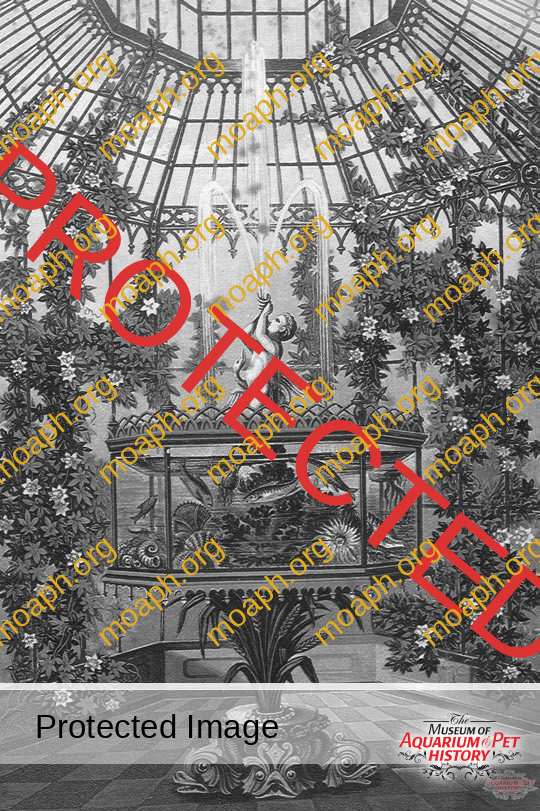
Fig. 6. Some aquarium presentations were stunning. Illustration from Cassell’s Household Guide in 1869?–1871?.
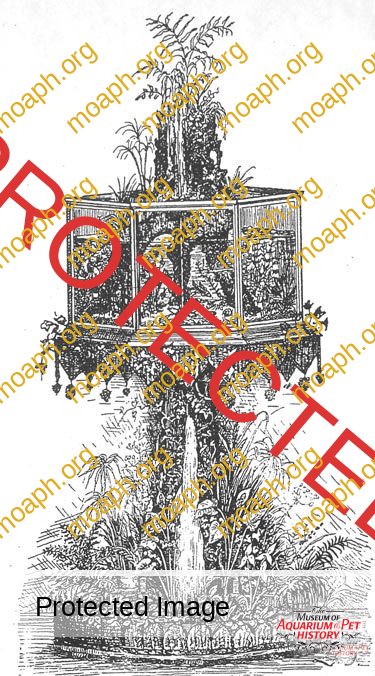
Fig. 7. Beautiful aquarium from Das süsswasser-aquarium. Geschichte, flora und fauna des süsswasser-aquariums, seine anlage und pflege by Ernst Bade in 1898.
Reptiles and Amphibians Are Added to the Mix
Johann Matthaeus Bechstein wrote the first book on captive care of domestic animals and pets in 1797. This intriguing volume was called Naturgeschichte; oder, Anleitung zur Kenntniss und Wartung der Säugethiere, Amphibien, Fische, Insecten und Würmer, welche man in der Stube halten kann (Natural History; or, Guide to the Knowledge and Care of Mammals, Amphibians, Fish, Insects and Worms Which Can Be Kept in the Home). His book dealt with five herp species: European Pond Turtle (Testudo orbicularis, now Emys orbicularis), Common Treefrog (Rana arborea, now Hyla arborea), sand lizard (Lacerta agilis), Great Crested Newt (Lacerta palustris and lacustris, now Triturus cristatus) and European Grass Snake (Coluber Natrix, now Natrix natrix). The terms aquarium, terrarium, or vivarium had not yet arrived and plate glass was not widely available, so Bechstein used descriptors like little boxes, buckets, sugar glasses, containers made of porcelain, stoneware and so on (Heichler and Murphy 2004).
Nathaniel Ward discovered a robin trapped in his fern-house—it lived and thrived for six months until escaping. This episode gave him the idea of developing the vivarium. He described this idea in an article called “On vivaria” in the Garden Chronicle in 1855.
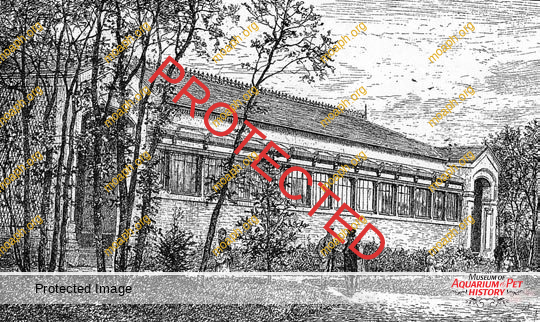
Fig. 8. Illustration of public aquarium in Jardin Zoologique d’Acclimatation in Paris from Le Jardin d’acclimatation illustré: Animaux et plantes / par Pierre-Amédée Pichot … Avec une préface par M. Albert Geoffroy-Saint-Hilaire . . .
Imprint: Paris, Hachette et cie [etc.] 1873. Credit: Courtesy of Polly Lasker, Smithsonian National Zoological Park.
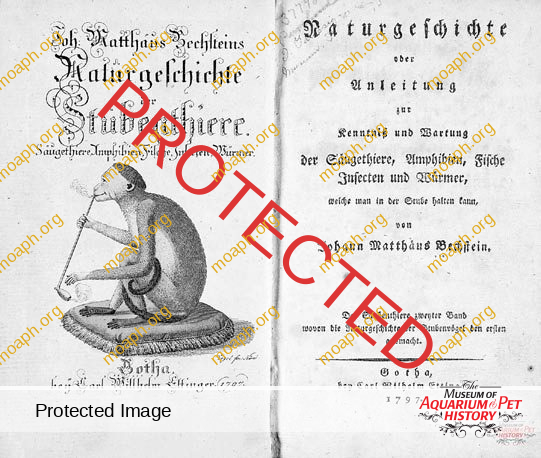
Fig. 9. Engraved title page and printed title page of Naturgeschichte; oder, Anleitung zur Kenntniss und Wartung der Säugethiere, Amphibien, Fische, Insecten und Würmer, welche man in der Stube halten kann by Johann Matthaeus Bechstein in 1797. Published in color in Herpetological Review 2004, 35(1):8–13.
When the reptile building opened at the London Zoo in 1849 and the collection needed to be expanded, zoo employees exchanged herps with private fanciers to fill in the gaps (Keeling 1992). One such example was C. R. Walker at the establishment called “The Vivarium” who sent twenty-five assorted skinks, geckos (possibly Naultinus?) from New Zealand, and treefrogs. In addition to the exchanges, many private parties generously donated rare and unusual amphibians and reptiles to the Zoo, such as Long-Nosed Crocodiles, Radiated Tortoises, and a variety of cobras, African Rock Pythons, Emerald Tree Boas, and a multitude of European taxa.
The Exeter Exchange in London was a famous menagerie, beginning in the 1770s and lasting until 1829, which specialized in the sale of exotic reptiles. In 1810, the menagerie was acquired by Edward Cross, who renamed the operation the “Royal Grand National Menagerie” and developed a thriving commercial supply company with customers in Europe and the US. Another well-known dealer in London was a Mr. Kendrick who assured his clients that every reptile for sale came from “Brazil,” including Red-eared Sliders, Painted Turtles, and Chameleons (Coote 2001).
In 1884, Johann von Fischer from Vienna, known by many as the founder of modern herpetoculure, published Das Terrarium, seine Bepflanzung und Bevölkerung, with recommendations for aquaria and terraria design, plants suitable for the terrarium, food and feeding, and detailed descriptions of the husbandry requirements for a wide array of reptiles; his book is accompanied by many drawings. In addition to his book, Johann von Fischer published detailed descriptions on the maintenance and behavior of other captive herpetofauna, many of which were published in the journal Der zoologische Garten (see Murphy, 2005 for list). In his book (1884), Johann von Fischer listed his recommendations for amphibian and reptile combinations in various mixed-species terrariums. His lists were long and varied, and filled with rare taxa. What seems true is that there were many sources throughout the world for obtaining herps to be sold in Europe. One example should suffice: taxa which can be kept in the “Chamaeleonshaus” with the Common Chameleon (Chamaeleo chamaeleon): Platydactylus, Hemidactylus, Ptyodactylus, Phyllodactylus, Spaeriodactylus, Gymnodactylus, Stenodactylus, various Phrynosoma, Ecphymotes torquatas, Stellio vulgaris, S. cyanogaster, Tropidosaura algira, Psammosaurus Edwardsii, young Scuicus officinalis and Gongylus ocellatus, Seps chalcides, Heteromeles mauritanicus, Ophiomorus miliaris, and Typlops vermicularis (nomenclature follows J. v. Fischer).
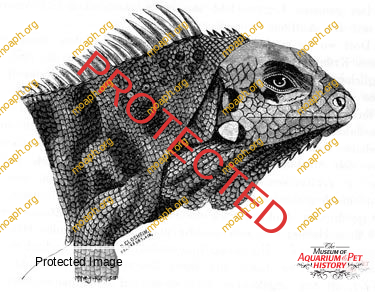
Fig. 11. In 1884 Johann von Fischer published Das Terrarium, seine Bepflanzung und Bevölkerung. Shown here is Tuberculated Iguana (Iguana tuberculata, now Iguana iguana).
The first book on herpetoculture in English was the Reverend Gregory Climenson Bateman’s The Vivarium, published in 1897. There were many advertisements for animals, plants, and supplies in his book. According to Bateman, a broad range of live reptiles and amphibians were obtainable in London in 1897. In addition to the common European species, a number of rarer exotic types were offered for sale: Small Monitor Lizards, Common and Red Tegus, Bearded Dragons, young American Alligators and Crocodiles, Diamond Pythons, African Rock Pythons approximately 4 feet long, Ball Pythons, Anacondas, Horned Frogs, Giant Salamanders, and Olms. Remarkably, Tuataras were accessible, described by Bateman: “Some time ago, I was looking at the various animals in a very large dealer’s establishment, when I made a remark about a fine pair of Tuateras which I saw in a big cage. The assistant who was with me immediately opened the door of the den and seized one of the reptiles by the tail, and I shall not readily forget the ominous sound made by the animal’s closing jaws as he just missed the man’s fingers, at which he had just snapped. I at once mentally resolved never to catch a Tuatera by the tail. As I congratulated the man upon his escape, he said, ‘I am a bit lucky this time, for I have just come out of the ‘orspital, where I have been laid up with blood-poisoning through the bite of one of them pythons.’”
Bateman also published on aquarium construction, captive husbandry of plants, weeds, fishes, mollusks, insects, etc, and management of fresh-water and marine aquaria. Murphy (2007) provided a list of amphibians and reptiles with prices which were available in London during the time.
Carl Hagenbeck Senior is a name known by virtually every zoo and aquarium professional for in 1907 he developed one of the finest zoos in the world in Hamburg, Germany: Carl Hagenbeck’s Tierpark at Stellingen. He built the first exhibits without bars for zoos and served as a design consultant for zoos throughout the world. From 1841 until 1863, he ran a small pet shop featuring exotic animals, including reptiles such as boas and pythons. Later in 1866, his son Carl Junior took over the reins and built the operation into a major animal supplier, sending reptiles to dealers and zoos throughout the world (Coote 2001).
Oskar Boettger described a unique herpetological cooperative arrangement in his paper Bericht über die Leistungen in 1890: “Regarding the purpose and setup of the Laboratoire d’Erpetologie in Montpellier [France], a trading and buying organization, one finds information in Humboldt (Dammer), Volume 8, pages 34–35.” [translated from German in Archiv für Naturgeschichte on p. 160.]. This paper in Humboldt is here loosely translated with some comments in parentheses to clarify how the text was interpreted: “The Laboratoire d’Erpetologie in Montpellier is an organization that exchanges and sells under the direction of our worthy colleague, the well-known herpetologist Dr. J. v. Fischer. The Laboratoire, in which salesmen (researchers would be a better word) can offer living wares, encompasses 147 members throughout Europe and 203 in other parts of the world. The purpose of the organization is to offer reptiles and amphibians of all sorts to members at cost and to make the study of these animals easier. The excess (surplus animals) are released and the profits are divided among members. Donated animals are not sold. Each member is obligated annually to publish two articles in a domestic or foreign publication. The honorarium for each publication is given to the organization and at the end of the fiscal year is allotted equally. In addition, these colleagues take charge of distributing the excess animals and disposing of dead animals and retain 50% of the profit. The Laboratoire has a fund donated by members to encourage young people to go to unexplored provinces or regions of the world to collect and learn. In addition, for the best collectors there are prizes, which include a microscope from Zeiss in Jena, books, or further travel. Anyone can become a member as long as he demonstrates that he works in this field. Members must prove that they give any uncommon animals to appropriate institutions at no cost if they (the institution) promise to publish accounts of the animals. They keep the honorarium. Eventually a society journal will appear. Each violation—so far there have been none—will result in ejection from the society. The personal word of honor is the only guarantee other than the signature of the member. No hearing will be held, but his name will be circulated as ‘manquant a sa parole’ (a breaker of his word). The institute up to this point makes a profit of about 1000–1200 francs. The director holds sole responsibility for leadership and is only assisted by a book keeper.”
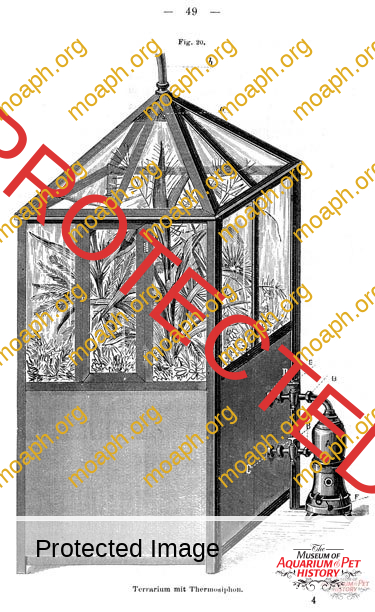
Fig. 12. Illustration of Terrarium with “Thermosiphon” for temperature control from Das Terrarium, seine Bepflanzung und Bevölkerung.
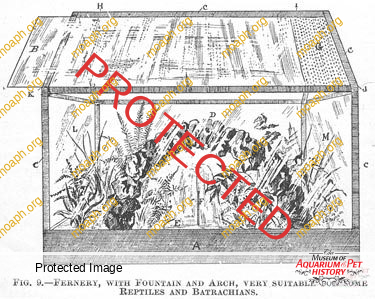
Fig. 13.
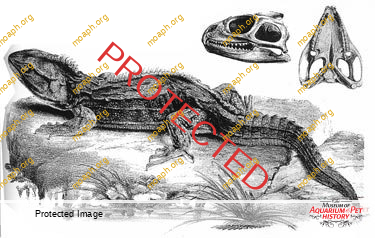
Fig. 14. At the end of the 19th Century, Tuataras were offered for sale by London animal dealers. Reverend Bateman purchased a pair from the London Zoo for £2.00 ($3.00 US). John Edward Gray had described the “Tuatera” from New Zealand in his The Zoological Miscellany in 1842, naming it Hatteria punctata and placing the taxon in the lizard family Agamidae. Today it is called Tuatara (Sphenodon punctatus) and placed in the Suborder Rhynchocephalia. This lovely plate (#20) is from The Lizards of Australia and New Zealand in the Collection of the British Museum by Gray, 1867.
Strolling on the promenade in 19th Century Paris with a live turtle was all the rage, as described by Walter Benjamin in his essay: “Around 1840, it was briefly fashionable to take turtles for a walk in the arcades. The flâneurs [idlers] like to have the turtles set the pace for them. If they had had their way, progress would have been obliged to accommodate itself to this pace . . . this attitude did not prevail.”
A number of books and articles on herpetoculture began to appear after the Bateman volume. Hugo Kukhoff’s Das Terrarium und seine Bewohner: ein kurzer illustrierter Ratgeber für Terrarienfreunde was written around 1903. Five years later, Paul Krefft wrote a seminal guide to terrarium science called Das Terrarium. Dr. Ernst Bade published Praxis der Terrarienkunde, a slim volume filled with pictures of terraria and suitable inhabitants for the enclosures. The Freshwater Aquarium and its Inhabitants; A Guide for the Amateur Aquarist with Many Illustrations from Nature by Otto Eggeling and Frederick Ehrenberg, written in 1908, had many references to captive herps.
There were books that combined the amateur literature on herp keeping with professional literature, such as Robert Snedigar’s Our Small Native Animals: Their Habits and Care (1939) and Vinson Brown’s How to Make a Miniature Zoo (1956). Raymond L. Ditmars of the Bronx Zoo popularized captive herps in his many books during the early part of the 20th Century although he did not write a specific guide to herp keeping.
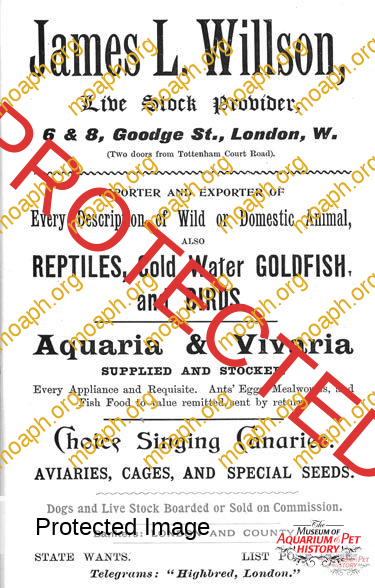
Fig. 15.
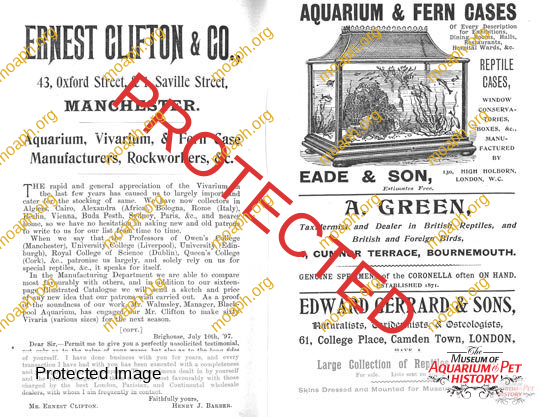
Fig. 16.
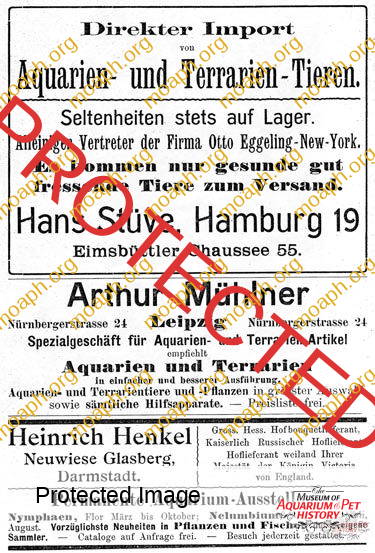
Fig. 17. Advertisement from Hugo Kukhoff’s Das Terrarium und seine Bewohner: ein kurzer illustrierter Ratgeber für Terrarienfreunde around 1903.
During the second half of the 20th Century, books and papers on captive amphibians and reptiles exploded on to the scene. In 1955, Wilhelm Klingelhöffer, a German medical doctor, compiled an extraordinary treatment of reptiles and amphibians in captivity called Terrarienkunde. This four volume work was the “bible” for European zoo workers and herpetoculturists. Six years later, Alfred Leutscher, founder and secretary of the British Herpetological Society wrote Vivarium Life. A Manual on Amphibians, Reptiles and Cold-Water Fish.
Around 1952 in Great Britain, there were three main suppliers: Palmers of Camden Town; South-Western Aquarists of Glenburnie Road, Balham, owned by George Boyce; and Robert Jackson from Altrincham, Cheshire. Most of the stock was from Europe: Grass Snake, Tessellated Water Snake, Aesculapian Snake, Four-lined Ratsnake, Wall Lizard, Jewelled or Eyed Lizard, Berber Skink, European Pond Turtle, Spur-Thighed and Hermann’s Tortoises, and Spanish Terrapin (Keeling, 1992).
Germany was and continues to be one of the strongest centers for herpetoculture. For example, a recent catalogue by the antiquarian book dealer Chimaira in Frankfurt/Main, lists hundreds of titles in German and English dealing with captive amphibians and reptiles. In the book Die Geschichte der Herpetologie und Terrarienkunde im deutschsprachigen Raum (edited by Rieck, W., et al., 2001; p. 263), a contribution by Gerhard Hallman is titled as “A selection of traders that offer animals for terrariums, or terrarium technology to the society and its members through ads or price lists.” Hallman wrote, “The number of specialty traders that handle reptiles is large. . .The following list, with no aspiration to being complete, attempts to demonstrate this.” Then, the chapter shows names of dozens of dealers between 1950 and 2001 in a variety of countries and includes some lists of the herps available as well as their prices. People today might believe that reptile shows or expos are a recent phenomenon but in chapters written by Werner Rieck, there are three fascinating photographs of enormous shows held in Germany in the years 1896 [p. 47], 1908 [p. 50], and 1924 [p. 71].
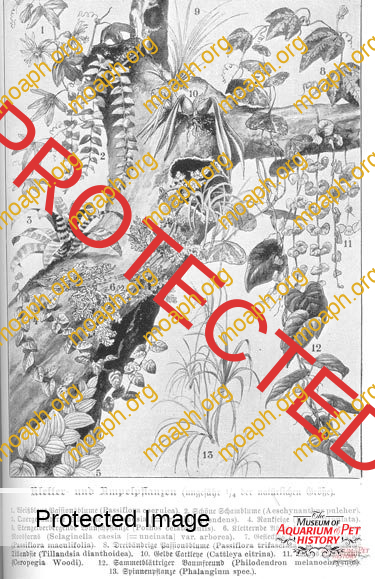
Figs. 18a, 18b. Paul Krefft wrote a major guide to terrarium science in 1908 called Das Terrarium with many illustrations of aquaria and terraria. Pictured here are living plants suitable for the terrarium.

In the UK from the mid-1960s onwards, the most important resource for the herpetoculturist was the book by Zdenĕk Vogel entitled Reptiles and Amphibians. Their Care and Behaviour (J. Coote, pers. comm.). In 1969 and 1972, Günther Nietzke summarized much of what was known about terrarium animals in two volumes: (1) Construction, Technical Equipment, and Planning of Terraria; (2) Care and Feeding of Terrarium Animals. The set was called Die terrarientiere: Bau, technische Einrichtung und Bepflanzung der Terrarien: Haltung, Fütterung und Pflege der Terrientiere in zwei Bänden.
As ideas, protocols and technologies improved for keeping herps in zoos, two of the most important persons disseminating this vital information were Carl F. Kauffeld at the Staten Island Zoo, and Hans-Günter Petzold at Tierpark Berlin-Friedrichsfelde. Kauffeld deserves special mention, for in addition to his classic Snakes: The Keeper and the Kept, he wrote many papers on captive management. Petzold’s book (1982), translated from German and published by SSAR in 2008, is the most thorough overview of captive management currently available: Petzold’s The Lives of Captive Reptiles (see HR 2009, 40:471–472 for review). Later, other zoo workers published books on terrarium keeping: Eugène Bruins (1999) from Natura Artis Magistra in Amsterdam, and Sergei Kudryavtsev and associates (1991) from the Moscow Zoo.
With numbers of captive herps increasing, there was a need to address medical management. H.-H. Reichenbach-Klinke published the first book on the topic called Krankheiten der Amphibien in 1961 and Krankheiten der Reptilien two years later. An English version was available in 1965 by Reichenbach-Klinke and E. Elkan: The Principal Diseases of Lower Vertebrates. For a complete list of titles, consult Murphy (2007; Table 2.1).
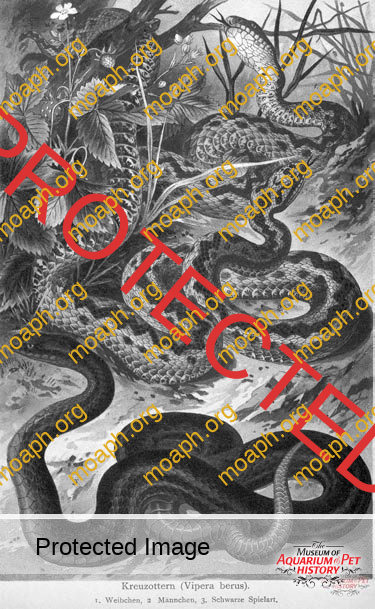
Figs. 19, 19a, 19b. Some books on keeping amphibians and reptiles in captivity had beautiful artwork. These original colored drawings are from Ernst Bade’s Praxis der Terrarienkunde in 1907. Also shown is a terrarium from the period.

The SSAR published two other books on captive and medical management: Reproductive Biology and Diseases of Captive Reptiles (Murphy and Collins, 1980) and Captive Management and Conservation of Amphibians and Reptiles in 1994 (Murphy et al.). It is beyond the scope of this contribution to list all of the books, serials and papers that have been valuable to our understanding of captive animals but many references have been published in the four-part series called “Updating the Bookshelves” in Herpetological Review during 2008–9.
The herpetoculturist of today owes much to his or her predecessors who developed the beautiful and ornate planted terrariums filled with exotic foliage, the heavily planted aquaria, the spectacular semi-aquatic vivaria placed on pedestals in the drawing room with fishes and herps, and the arresting terrestrial terraria filled with mesic or xeric plants, truly a showcase in the home. It is not surprising that there are dealers specializing in antique aquaria and terraria to this day for these are often lovely works of art. Animal collectors and dealers filled a void: they provided specimens from exotic locales that were out of reach to the average fancier.
Acknowledgments.—This paper is dedicated to the late Carl Kauffeld and Harry W. Greene. When one of us (KM) wrote letters full of questions about herpetology, each took his valuable time and responded in writing to the inquiries of a fourteen-year old boy. We thank David Barker, Judith Block, David Chiszar, Jon Coote, Gary Ferguson, Rick Hudson, John Moriarty, Louis Porras, John Simmons, and Trooper Walsh for reviewing early drafts and suggesting improvements. Smithsonian Librarians Polly Lasker, Leslie Overstreet, and Daria Wingreen allowed us to examine publications under their care and arranged loans of obscure books and papers. Margie Gibson and Lucian Heichler assisted with translations. We are grateful to Emily Becker, Dana Fisher, and James Hanken from the Museum of Comparative Zoology, Harvard University for providing illustrations.
The opinions expressed in this article are those of the authors and do not necessarily represent the opinions of any organization.
References
Publications embedded in text plus suggestions for additional readings are listed below:
ALLEN, D. E. 1976. The Naturalist in Britain: A Social History. A. Lane, London.
BADE, E. 1898. Das süsswasser-aquarium. Geschichte, flora und fauna des süsswasser-aquariums, seine anlage und pflege, / von dr. E. Bade … Pfenningstorff, Berlin.
________. 1907. Praxis der Terrarienkunde. Creutz’sche Verlagsbuchhandlung, Magdeburg,
BARBER, L. 1980. The Heyday of Natural History 1820–1870. Doubleday, Garden City New York.
BATEMAN, G. C. 1897. The Vivarium, Being a Practical Guide to the Construction, Arrangement, and Management of Vivaria, Containing Full Information as to all Reptiles Suitable as Pets, How and Where to Obtain Them, and How to Keep Them in Health. L. Upcott Gill, London.
________. 1904. Fresh-Water Aquaria: Their Construction, Arrangement, and Management, with Full Information as to the Best Water-Plants and Live Stock to be Kept, How and Where to Obtain Them, and How to Keep Them in Health. L. Upcott Gill, London; Scribner, New York.
________, AND R. A. R. BENNETT. 1902. The Book of Aquaria: Being a Practical Guide to the Construction, Arrangement, and Management of Fresh-Water and Marine Aquaria, Containing Full Information as to the Plants, Weeds, Fishes, Molluscs, Insects, etc. Part I.–Fresh-Water Aquaria. Part II.—Marine Aquaria. L.Upcott Gill, London; C. Scribner’s Sons, New York.
BECHSTEIN, J. M. 1797. Naturgeschichte; oder, Anleitung zur Kenntniss und Wartung der Säugethiere, Amphibien, Fische, Insecten und Würmer, welche in der Stube halten kann, / von Johann Matthäus Bechstein (Natural History, or, Guide to the Knowledge and Care of Mammals, Amphibians, Fish, Insects and Worms Which Can Be Kept in the Home) . . . C.W. Ettinger, Gotha.
BEDELL, R. 2009. The History of the Earth: Darwin, Geology and Landscape Art. Pp. 49–79 In Donald, D., and J. Munro (editors). Endless Forms. Charles Darwin, Natural Science and the Visual Arts. Yale University Press. [A painting of a family’s interest in natural history was included in a book about Darwin. The painting is “Pegwell Bay, Kent—A Recollection of October 5th, 1858” by William Dyce. It is Figure 66. The author’s description of the painting in part says “Pegwell Bay recalls the artist’s autumn holiday at this beach resort on the east coast of Kent. Members of Dyce’s family are arranged in a frieze across the foreground…They and the rocks, shells, seaweed, and skate egg cases at their feet are rendered with a hyperclarity of detail that seems to contradict the recollective nature of the painting. The boy’s shovel and the women’s filled baskets suggest that they are passing their vacation in the study of seaside natural history…” p. 63].
BELLAIRS, N. 1865. Hardy Ferns: How I Collected and Cultivated Them. Smith, Elder, London.
BENJAMIN, W. 1969. On some motifs in Baudelaire, p. 197. In H. Arendt (ed.), Illuminations, trans. Harry Zorn. Schocken, New York.
BROWN, V. 1956. How to Make a Miniature Zoo. Little, Brown, Boston, Massachusetts.
BRUINS, E. 1999. Encyclopedia of Terrarium. Rebo International b. v., The Netherlands. [extensive coverage of insects, arachnids, amphibians and reptiles. This is one of the most valuable and comprehensive treatments available on invertebrate care. Topics include legislative issues, captive management, and feeding. There are many color photographs.].
BUCKLAND, F. T. 1882. Notes and Jottings from Animal Life. Smith, Elder, London.
BUTLER, H. D. 1858. The Family Aquarium; or, Aqua Vivarium . . . Being a Familiar and Complete Instructor upon the Subject of the Construction, Fitting-up, Stocking, and Maintenance of the Fluvial and Marine Aquaria … Dick & Fitzgerald, New York.
Cassell’s Household Guide: Being a Complete Encyclopædia of Domestic and Social Economy, and Forming a Guide to Every Department of Practical Life. Cassell, Petter, and Galpin, London; New York : [1869?–1871?]
COOTE, J. G. 2001. A history of western herpetoculture before the 20th century. In W. E. Becker (ed.), 25th International Herpetological Symposium on Captive Propagation and Husbandry, pp. 19–47. International Herpetological Symposium, Detroit, Michigan.
DARWIN, C. 1868. The Variation of Animals and Plants under Domestication. / By Charles Darwin … Orange Judd & Company, New York.
DASZKIEWICZ, P. 2001. “Moult of the Serpens [sic], Their Laying, Their Dissection”. An interesting document for the history of European herpetology by Georg Segerus, physician to the Polish kings. Herpetol. Bull. 78:3–6. [The first published observations on captive snakes were recorded by Georg Seger (= Segerus in Latin) in Germany in 1663. Seger kept snakes for scientific purposes and recorded shedding and egg-laying in “Aesculapian snakes.” He removed their tongues initially as this organ was thought to inflict mortal wounds but snakes were less vigorous after this primitive surgery. Seger assisted one of his snakes during oviposition and shed another by hand.].
DERRY, T. K., AND T. I. WILLIAMS. 1961. A Short History of Technology from the Earliest Times to A.D. 1900. [Reprinted by Dover Books in 1993].
EGGELING, O., AND F. EHRENBERG. 1908. The Freshwater Aquarium and its Inhabitants; A Guide for the Amateur Aquarist, // by Otto Eggeling and Frederick Ehrenberg, with many Illustrations from Nature. H. Holt and Company, New York.
FISCHER, J. V. 1884. Das Terrarium, seine Bepflanzung und Bevölkerung (The Terrarium, Its Plantings and Population). Frankfurt am Main, Mahlau & Waldschmidt. [reprint of this work published in 1989 by BINA Verlag für Biologie und Natur, Berlin (BINA Publisher for Biology and Nature, Berlin.)].
GOSSE, P. H. 1853. A Naturalist’s Rambles on the Devonshire Coast. J. Van Voorst, London.
________. 1856. A Handbook to the Marine Aquarium: Containing Practical Instructions for Constructing, Stocking, and Maintaining a Tank, and for Collecting Plants and Animals. J. Van Voorst, London.
HEICHLER, L., AND J. B. MURPHY. 2004. Johann Matthäus Bechstein: The father of herpetoculture. Herpetol. Rev. 35:8–13.
HIBBERD, S. 1856. Rustic Adornments for Homes of Taste, and Recreations for Town Folk, in the Study and Imitation of Nature. Groombridge and Sons . . . , London. [2nd edition, 1857].
HINTERWALDNER, J. M. 1889. Wegweiser für Naturaliensammler. Vienna.
HUMPHREYS, H. N. 1857. Ocean Gardens: The History of the Marine Aquarium, and the Best Methods Now Adopted for its Establishment and Preservation. Sampson Low …, London.
JACOB, S. 1886. The Student’s Aquarium (Marine and Fresh Water): How to Make and Manage / / by S. Jacob, naturalist, late of Great New York Aquarium, &c., &c.. . . F.W. Marshall, printer, Newport, Rhode Island.
KAUFFELD, C. 1969. Snakes: The Keeper and the Kept. Doubleday, Garden City, New York.
KAWATA, K. 2003. New York’s Biggest Little Zoo. A History of the Staten Island Zoo. Kendall/Hunt Publishing Co., Dubuque, Iowa [biography of Carl Kauffeld].
KEELING, C. H. 1992. A Short History of British Reptile Keeping. Clam Publications, Guilford UK.
KETE, K. 1994. The Beast in the Boudoir: Petkeeping in Nineteenth-Century Paris. Univ. California Press, Berkeley, California.
KLEE, A. 2003. The Toy Fish: A History of the Aquarium Hobby in America: The First One-Hundred Years. Finley Aquatic Books, Pascoag, Rhode Island.
KLINGELHÖFFER, W. 1955–1959. Terrarienkunde (Terrarium Science). Alfred Kernen Verlag, Stuttgart.
KREFFT, P. 1908. Das Terrarium (The Terrarium). Fritz Pfenningstorff, Berlin.
KUDRYAVTSEV, S. V., V. E. FROLOV, AND A. V. KOROLEV. 1991. The Terrarium and Its Inhabitants (A List of Species and Their Maintenance in Captivity, A Handbook.). Lesnaya
KUKHOFF, H. 1903? Terrarium und seine Bewohner: ein kurzer illustrierter Ratgeber für Terrarienfreunde. F. Pfenningstorff, Berlin.
LEUTSCHER, A. 1961. Vivarium Life. A Manual on Amphibians, Reptiles and Cold-Water Fish. Cleaver-Hume Press Ltd, London.
MURPHY, J. B. 2005. Chameleons: Johann von Fischer and other perspectives. SSAR Herpetol. Circ. 33.
________. 2007. Herpetological History of the Zoo and Aquarium World. Krieger Publishing Co., Malabar, Florida.
________, K. ADLER, AND J. T. COLLINS (eds.). 1994. Captive Management and Conservation of Amphibians and Reptiles. SSAR Contrib. Herpetol. 11.
________, AND J. T. COLLINS (eds.). 1980. Reproductive Biology and Diseases of Captive Reptiles. SSAR Contrib. Herpetol. 1.
NIETZKE, G. 1969, 1972. Die terrarientiere: Bau, technische Einrichtung und Bepflanzung der Terrarien: Haltung, Fütterung und Pflege der Terrientiere in zwei Bänden (Terrarium Animals: Construction, Technical Equipment, and Planning of Terraria: Care and Feeding of Terrarium Animals in Two Volumes). Eugen Ulmer, Stuttgart.
PETZOLD, H.-G. 1984. Aufgaben und Probleme bei der Erforschung der Lebensäusserungen der Niederen Amnioten (Reptilien) (Tasks and Problems Connected with Research into the Life Expressions of the Lower Amniotic Animals (Reptiles)). This book (Nr. 38) is in the series “Berliner Tierpark-Buch,” published by Bina in Berlin [Note: Nachdruck aus Milu, Bd. 5, Heft 4/5:485–786 (1982). Translated English version: Petzold, H.-G. 2008. Petzold’s The Lives of Captive Reptiles / / Hans-Günter Petzold; translated by Lucian Heichler and edited by James B. Murphy. Society for the Study of Amphibians and Reptiles, in association with National Zoological Park, Smithsonian Institution. Salt Lake City UT.].
PRATT, A. 1855. The Ferns of Great Britain and their Allies the Club-Mosses, Pepperworts, and Horsetails. Frederick Warne and Co., London.
REICHENBACH-KLINKE, H.-H. 1961. Krankheiten der Amphibien (Diseases of Amphibians). Gustav Fischer Verlag, Stuttgart.
________. 1963. Krankheiten der Reptilien (Diseases of Reptiles). Gustav Fischer Verlag, Stuttgart/Jena.
________. 1965. The Principal Diseases of Lower Vertebrates // H. Reichenbach-Klinke and E. Elkan. Academic Press, London, New York.
RIECK, W., G. T. HALLMANN, AND W. BISCHOFF (EDITORS). 2001. Die Geschichte der Herpetologie und Terrarienkunde im deutschsprachigen Raum (History of Herpetology and Terrarium Science in German-Speaking Areas) – Mertensiella 12. Deutschen Gesellschaft für Herpetologie und Terrarienkunde e.V. (DGHT). [This book deserves a place on the fancier’s library shelf. There are chapters on pioneers in herpetology and herpetoculture, and lists of significant literature, including serials on terrarium science, in Europe. Some of the most spectacular vintage aquaria and terraria are pictured.].
SAMUEL, M. 1894. The Amateur Aquarist. How to Equip and Maintain a Self-Sustaining Aquarium. Baker & Taylor Co., New York.
SCHNEIDER, G. 1905. Choice Ferns for Amateurs: Their Culture and Management in the Open and under Glass. Abridged from the “Book of Choice Ferns” / by George Schneider. L. Upcott Gill, London; Charles Scribners Sons, New York.
SCHÖPF, J. D. 1792 [–1801]. Ioannis Davidis Schoepff Historia testudinum iconibus illustrata. Sumtibus Ioannis Iacobi Palm, Erlangae [Erlangen]. German edition Naturgeschichte der Schildkröten (Erlangen, J. J. Palm, 1792 [–1801]).
SNEDIGAR, R. 1939. Our Small Native Animals; Their Habits and Care. Random House, New York.
SOWERBY, G. B. 1857. Popular History of the Aquarium of Marine and Fresh-Water Animals and Plants. Lovell Reeve, London.
STARK, R. M. 1857. The Marine Aquarium: Directions for its Preparation and Management. Edmonston and Douglas, Edinburgh.
THWAITE, A. 2002. Glimpses of the Wonderful: The Life of Philip Henry Gosse, 1810–1888. Faber, London.
VASSILIEV, D. B. 1999. Turtles: Husbandry, Diseases and Treatment in Captivity. Аkvarium, Моscow.
________, AND A. SOKOLOV. 1999. Turtles, Lizards, Snakes: Husbandry, Care and Treatment in Captivity. Аkvarium, Моscow.
VOGEL, Z. 1964. Reptiles and Amphibians, Their Care and Behaviour. // Translated and revised by Gwynne Vevers. Studio Vista, London. [1964, The Viking Press, New York.].
VOSS, J. 2009. Monkeys, apes and evolutionary theory: from human descent to King Kong. In D. Donald and J. Munro (eds.), Endless Forms: Charles Darwin, Natural Science and the Visual Arts, pp. 215–234. Yale University Press, New Haven, Connecticut [“In the background of Darwin’s studies was a development that gripped all of England in the nineteenth century. Never before could so many animals have been found in bourgeois living rooms, ensconced on their sofas, easy chairs, side-tables and carpets. Within a few decades, the middle class had populated their homes with parakeets in cages, and dogs and cats in baskets. In response to the displacement, industrialisation, and urbanisation that had banished them to life in separate worlds, some groups of humans and animals drew closer together than they ever had been before: the bourgeois and their pets and zoo animals. In a historical sense, these animals thus came to be seen in a new light: they served not just as a kind of ersatz nature or exotic showpieces for the Victorian bourgeoisie, but also as a means to understand the proximity of humans and animals to one another.” (p. 217). The statement on the flyleaf states that “This publication accompanies the exhibition “Endless Forms: Charles Darwin, Natural Science and the Visual Arts,” which is currently at the Yale Center for British Art.].
WARD, N. B. 1852. On the Growth of Plants in Closely Glazed Cases. John Van Voorst, London.
WARWICK, C., F. L. FRYE, AND J. B. MURPHY (eds.). 1995. Health and Welfare of Captive Reptiles. Chapman-Hall Publ., New York.
WOOD, J. G. 1859. Common Objects of the Sea Shore: Including Hints for an Aquarium / / by the Rev. J.G. Wood . . . ; With Coloured Illustrations. Routledge, Warnes & Routledge . . . London.