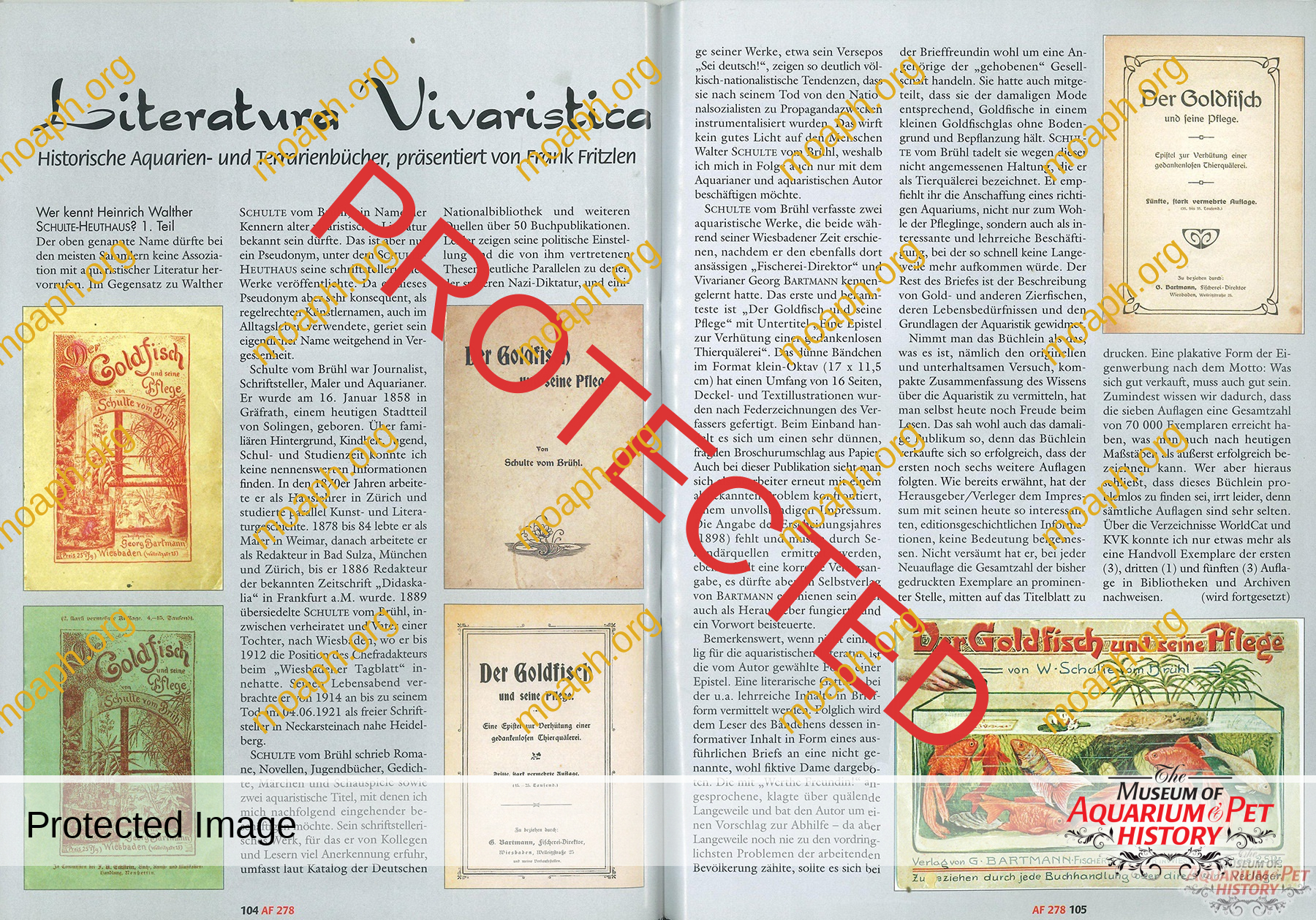
Historical Aquarium and Terrarium Books
Translated from German and reprinted courtesy of Aquaristik Fachmagazin.
Who knows Heinrich Walther Schulte-Heuthaus? 1st chapter
Most collectors should not associate the above name with aquarium literature. In contrast to Walther Schulte vom Brühl, a name well known to connoisseurs of old vivaristic literature. But that is just a pseudonym under which Schulteheuthaus published his literary works. Since he used this pseudonym very consistently, as a real artist name, also in everyday life, his actual name was largely forgotten.
Schulte vom Brühl was a journalist, writer, painter and aquarist. He was born on January 16, 1858, in Grafrath, a current district of Solingen. I could not find any information worth mentioning about family background, childhood, youth, school, or study time. In the 1870s, he worked as a private tutor in Zurich and studied art and literary history at the same time. From 1878 to 1884, he lived as a painter in Wimar, after which he worked as an editor in Bad Sulza, Munich, and Zurich until he became editor of the well-known magazine “Didaskalia” in Frankfurt aM in 1886. In 1889 Schulte moved from Bruhl, now married and father of a daughter, to Wiesbaden, where he held the position of chief wheel actor at the “Wiesbadener Tagblatt” until 1912. He spent his twilight years from 1914 until his death on June 4th, 1921, as a freelance writer in Neckarsteinach near Heidelberg.
Schulte vom Brühl wrote novels, short stories, books for young people, poems, fairy tales, plays, and two aquarium titles, which I would like to deal with in more detail below. According to the German National Library catalog and other sources, his literary work, for which he has received much recognition from colleagues and readers, comprises over 50 book publications. Unfortunately, his political attitude and the theses he advocated show clear parallels to those of the later Nazi dictatorship, and some of his works, such as his verse epic “Be German!”, show so clearly nationalist tendencies that the National Socialists used them after his death were instrumentalized for propaganda purposes, which does not throw a good light on the person Walter Schulte vom Brühl, which is why I would only like to deal with the aquarist and aquatic author in the following.
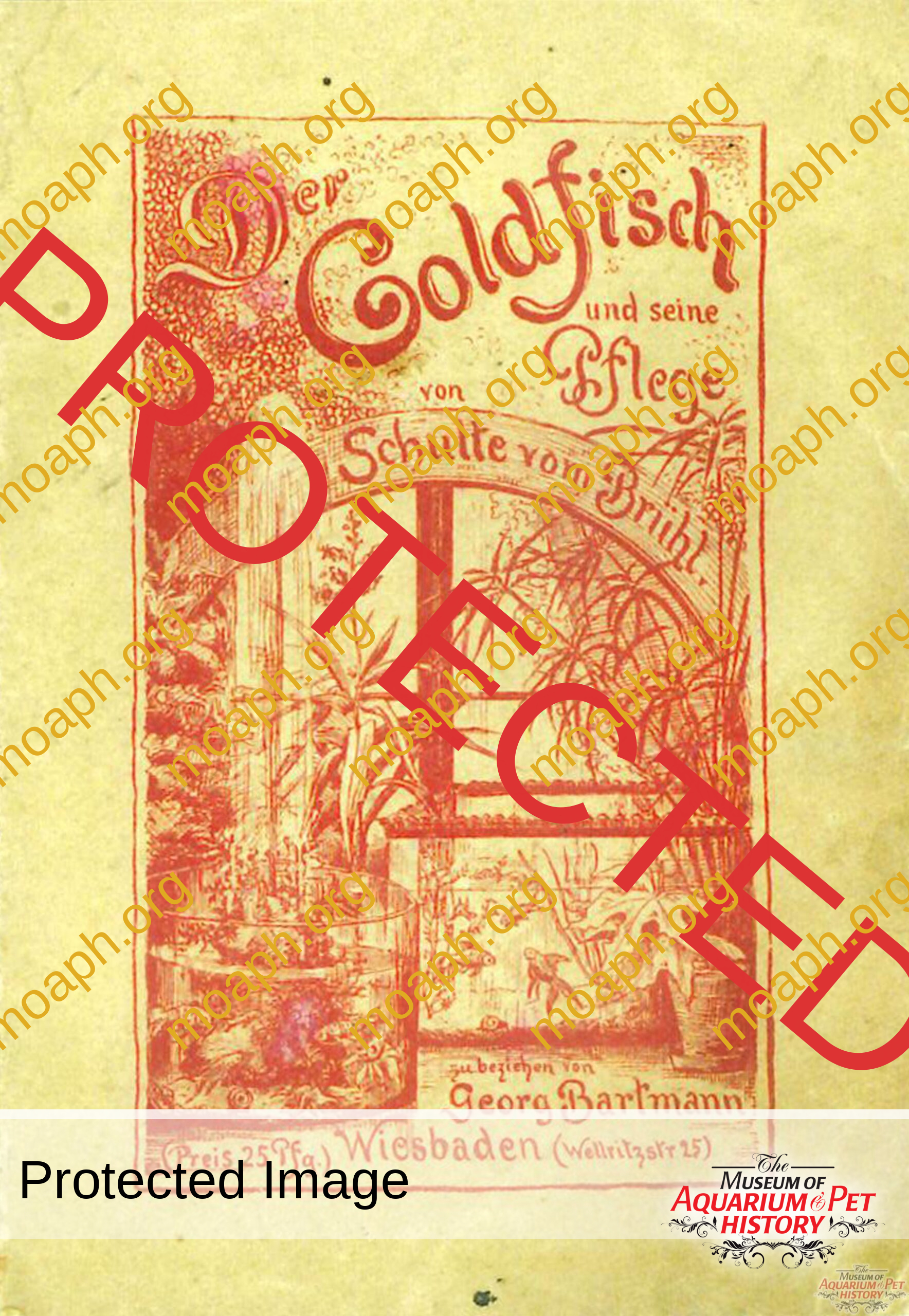
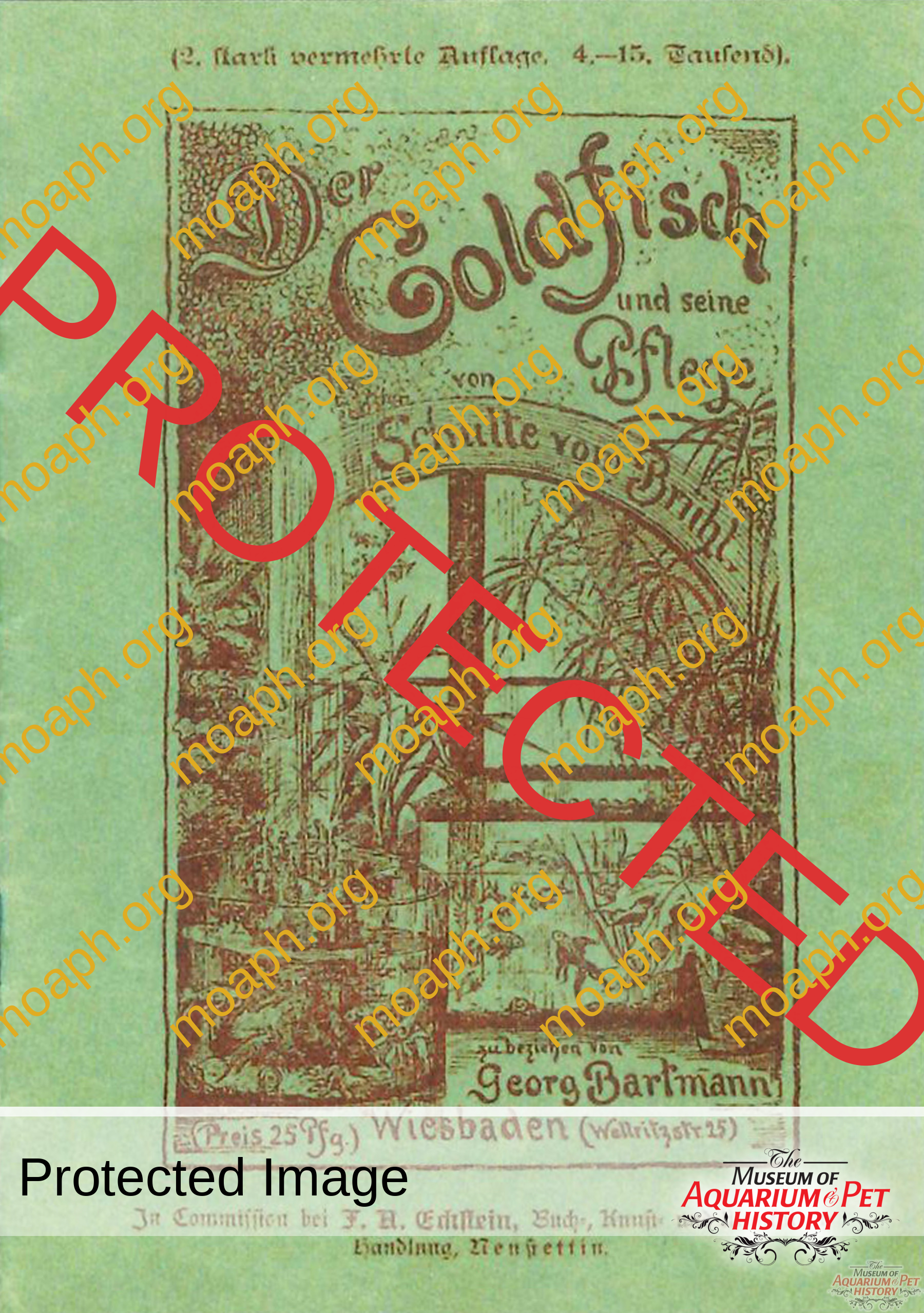
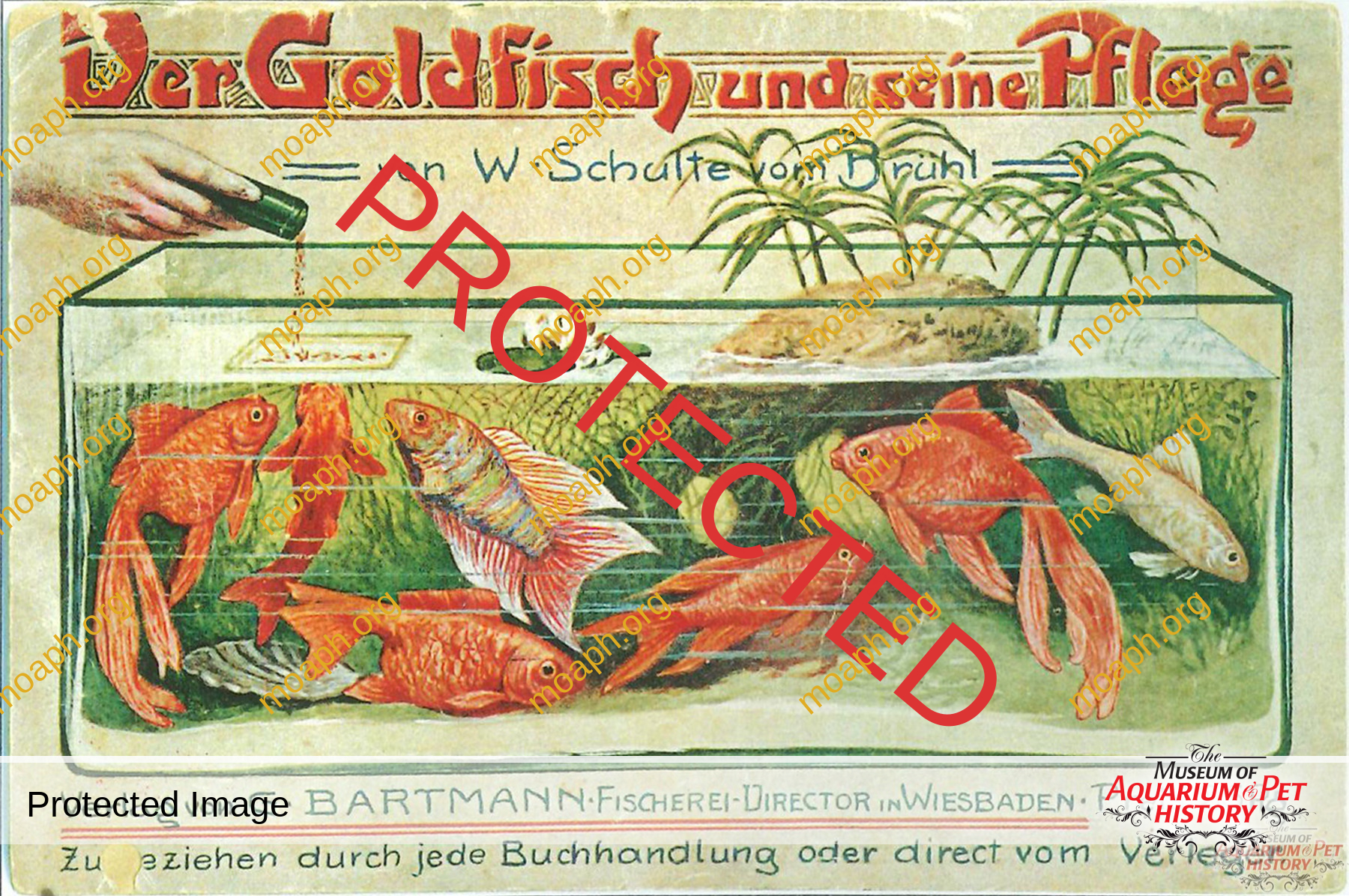
Schulte vom Brühl wrote two aquaristic works, both appearing during his time in Wiesbaden after he had met Georg Bartmann, the fishery director and a vivarian who was also based there. The first and best-known is “The Goldfish and its Care” with the subtitle “One Epistle for the Prevention of Thoughtless Cruelty to Animals.” The thin ribbon in the small-octave format (17×11.5 cm or 6.5×4.5 inches) has a volume of 16 pages, and the cover and text illustrations were made from pen drawings by the author. The cover is a very good thin, fragile brochure made of paper. With this publication, the editor is again confronted with a well-known problem, an incomplete imprint. The indication of the year of publication (1898) is missing and had to be determined from secondary sources but be published by Bartmann, who also acted as editor and contributed a foreword.
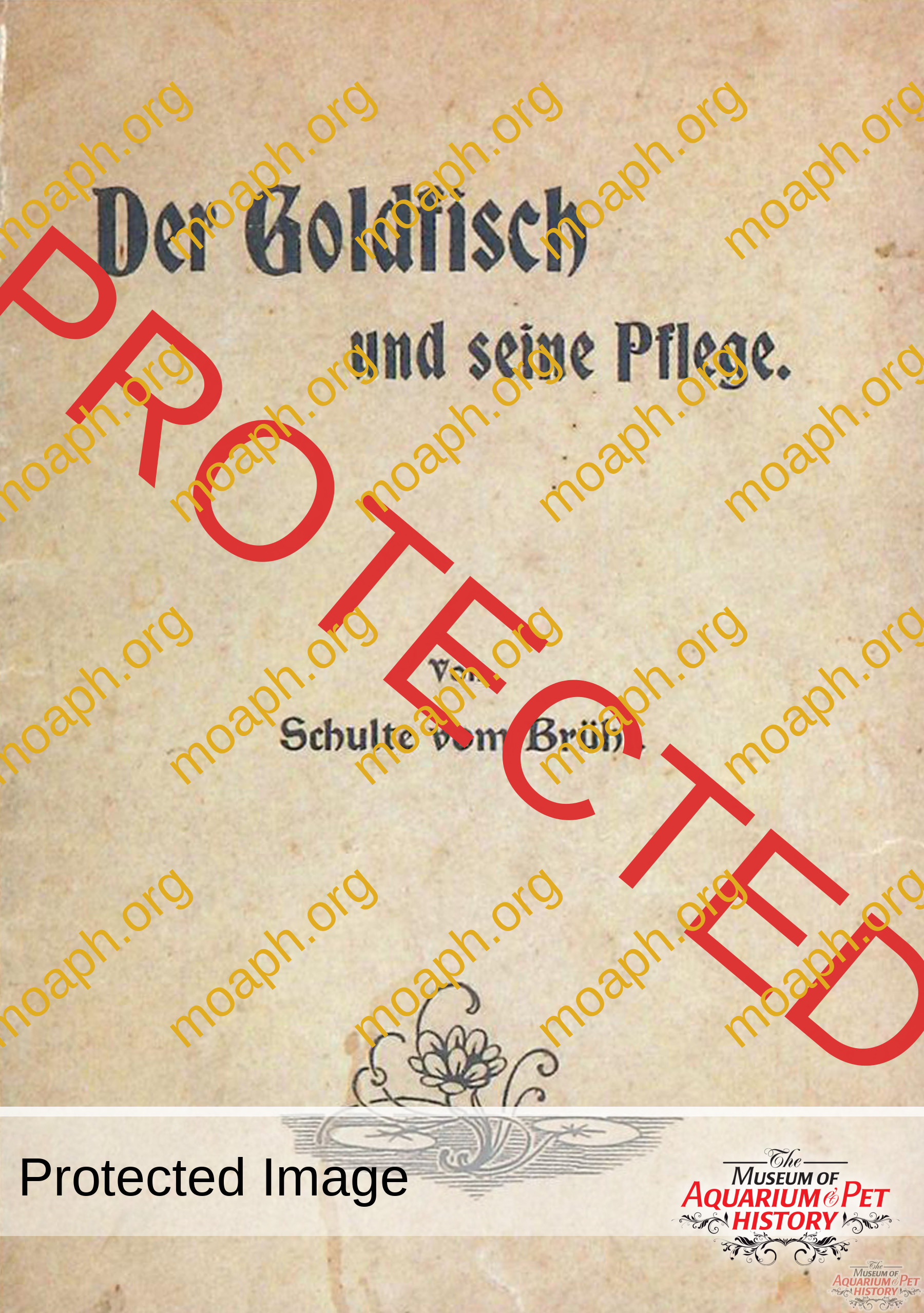
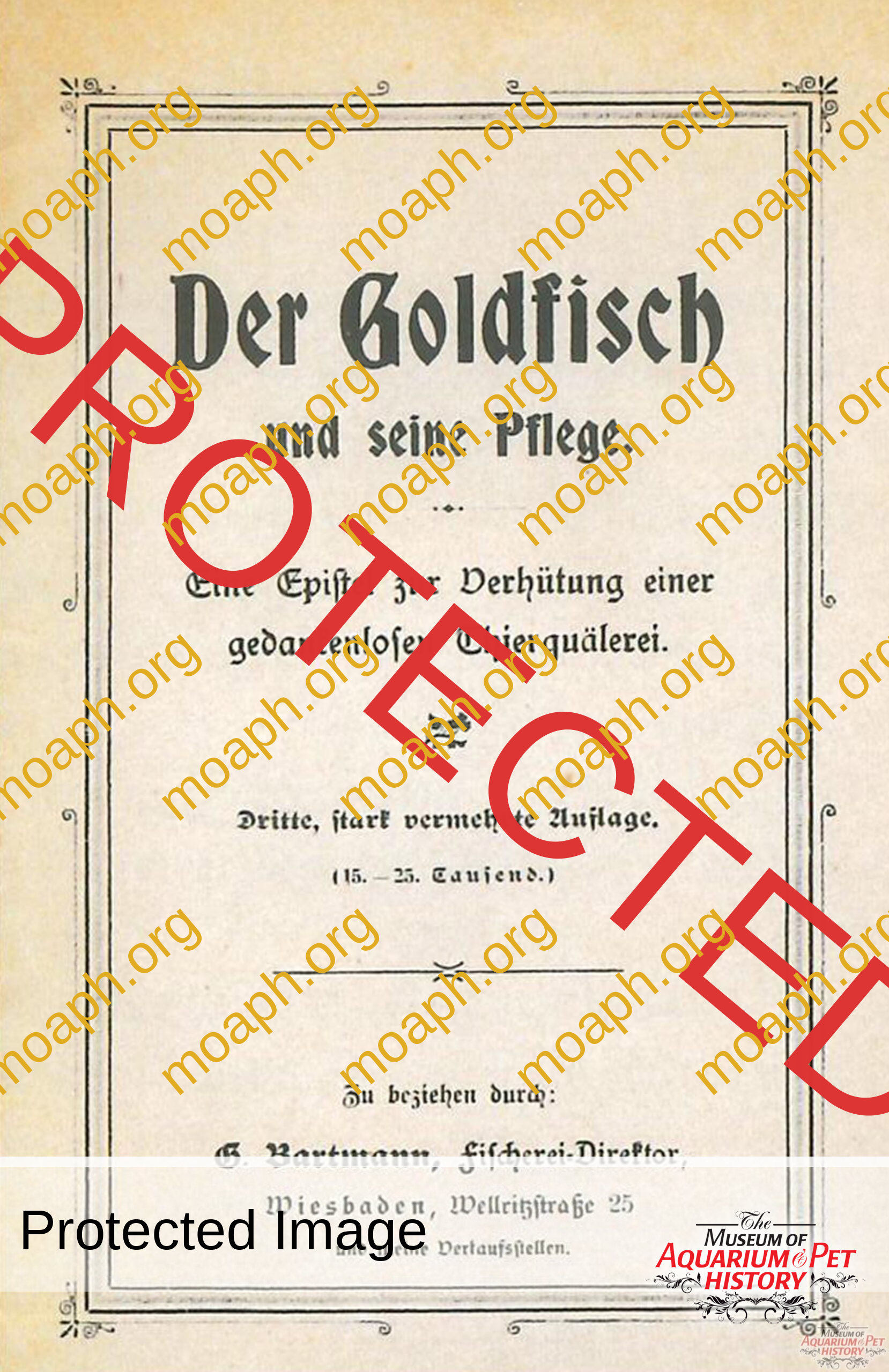
The form of an epistle chosen by the author is remarkable, if not unique, for aquarium literature. A literary genre in which, among other things, instructive content is conveyed in the form of letters. As a result, the reader of the volume is presented with its informative content in the form of a detailed letter to an unnamed, probably fictional lady. The one addressed as “Dar friend!” complained of excruciating boredom and asked the author to suggest a remedy – but since boredom has never been one of the most pressing problems of the working population, the pen pal should be a member of the “upper class.” Society act. She had also announced that, in keeping with the fashion of the time, she kept goldfish in a small fishbowl without any substrate or vegetation. Schulyte vom Brühl rebukes them for this inappropriate attitude, which he describes as animal cruelty. He recommends the purchase of a real aquarium, not only for the well-being of the fosterlings but also as an interesting and educational activity that would quickly prevent boredom. The remainder of the letter describes goldfish and other ornamental fish, their living needs, and the basics of aquaristics.
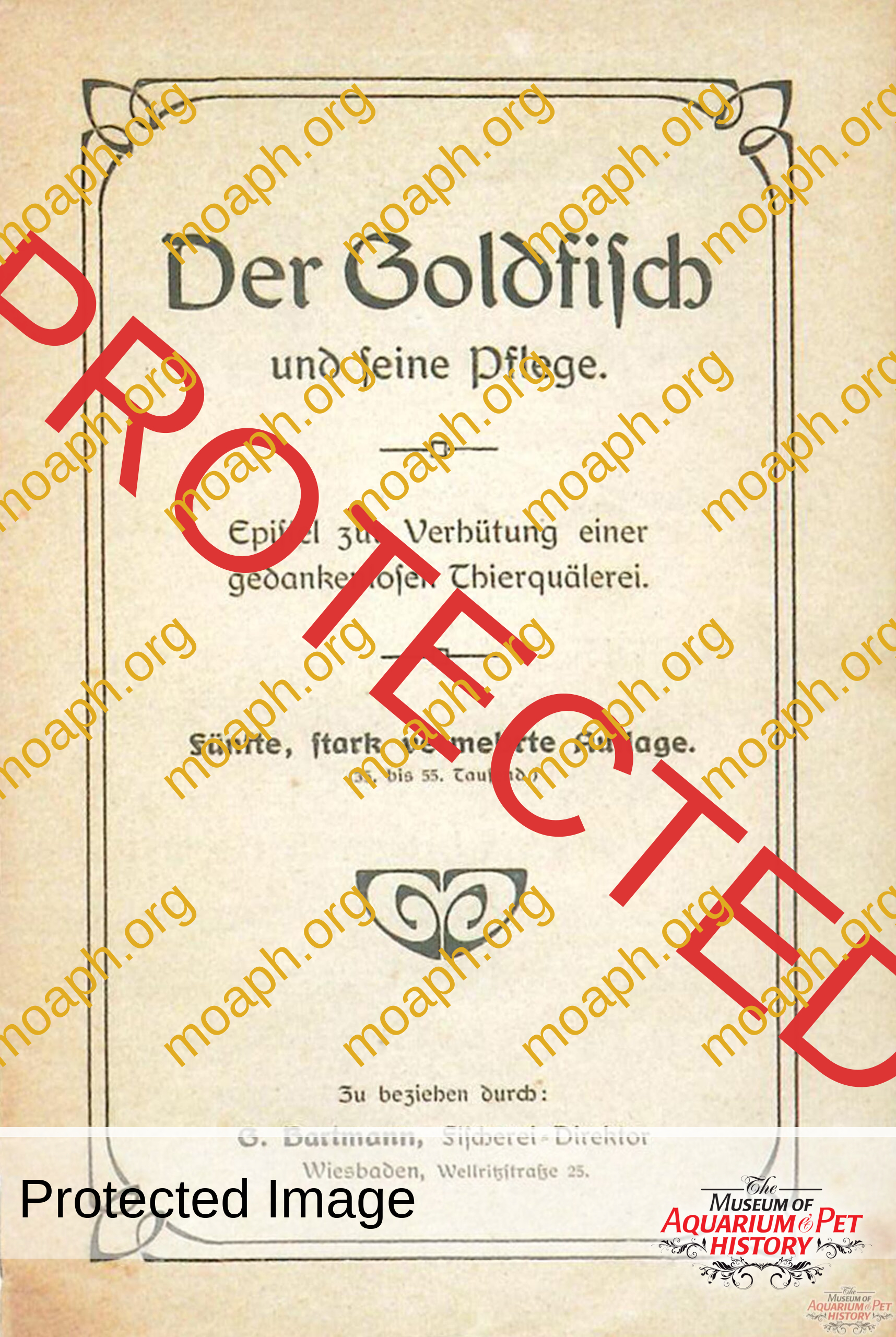
If you take the booklet for what it is, namely the original and entertaining attempt to convey a compact summary of knowledge about aquaristics, you can still read it today. The audience at the time probably saw it that way, too, because the booklet sold so successfully that the first six editions followed. As already mentioned, the editor/publisher did not attach any importance to the imprint, which is so interesting today about the history of the editions. He succeeded in placing the total number of copies printed so far in a prominent position in the middle of the title page for each new edition to the press.
A form of self-promotion based on the motto: what sells well must also be good. At least we know from this that the seven editions have reached a total of 70,000 copies, which can be described as extremely successful even by today’s standards. But anyone who concludes that this booklet can be found without any problems is unfortunately mistaken because all the editions are very rare. Using the WorldCat and KVK directories, I was only able to find a handful of copies of the first (3), third (1), and fifth (3) editions in libraries and archives. (to be continued)