The Forgotten Aquariums of Venice – Part 2
by Emiliano Spada and Luca Mizzan*
* Director of the Natural History Museum of Venice.
If you missed part 1 of this article, read it at the link below.
Our research on the forgotten aquariums of Venice led us to investigate the history of two other public aquariums, both located in a rather strategic location: Lido.
Part of the municipality of Venice, Lido, is a 7.5-mile narrow island located between the Venice Lagoon and the Adriatic Sea. Until the mid-19th century, it was mainly rural land, sparsely inhabited, and visited by a few tourists seeking tranquility. One of these was the writer Goethe, who chose Venice and Lido as stops on his Grand Tour, the long journey that the offspring of Europe’s aristocracy undertook to refine their cultural education.
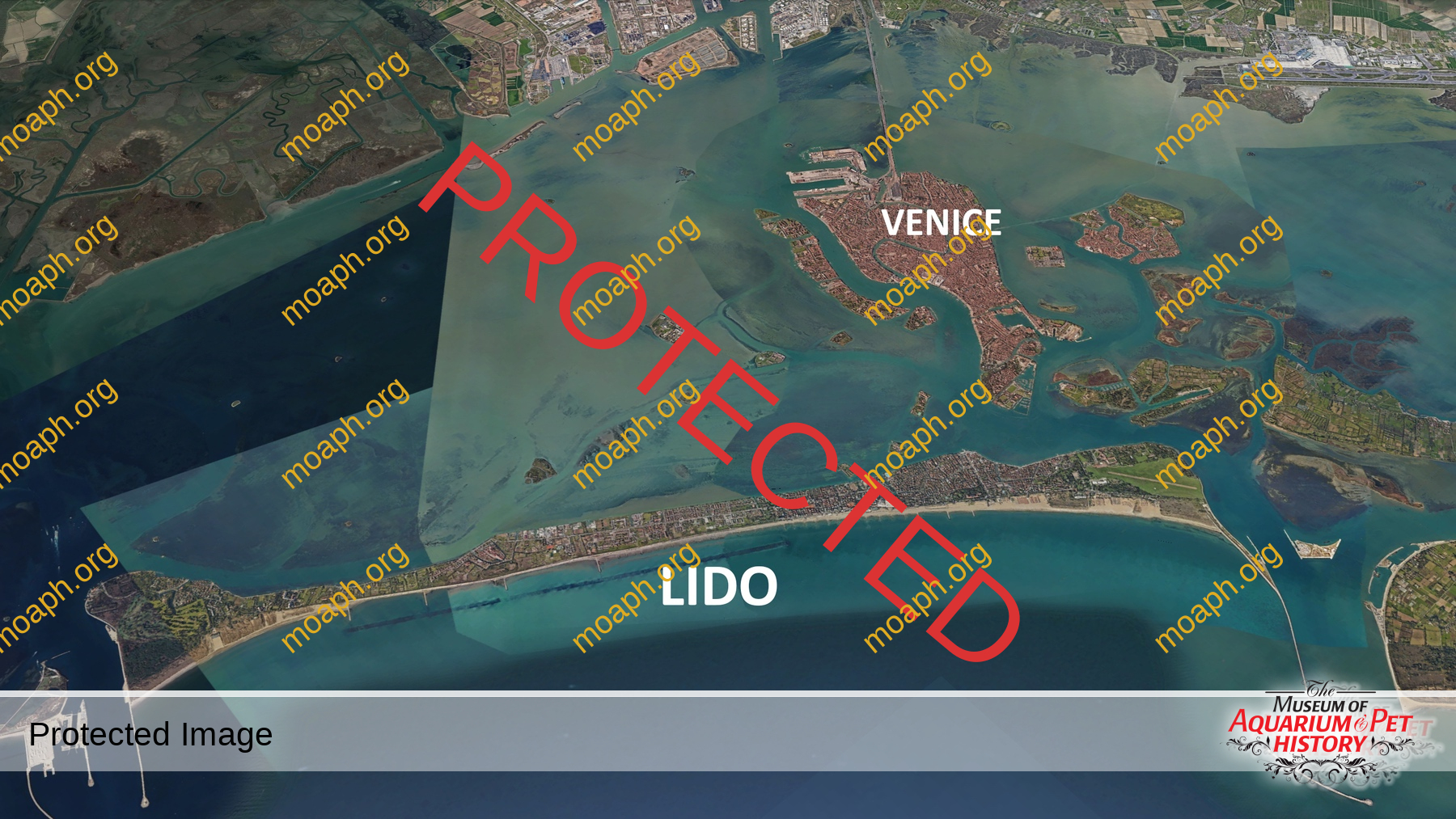
By the second half of the 19th century, Lido began a transformation process that in a few decades turned it into one of Europe’s most famous seaside destinations. Thanks to the facilities built by brilliant entrepreneurs like Busetto and Spada (no relation to the author), it became very popular among royals, aristocrats and affluent people in general, for whom Swiss-style chalets, elegant Art Nouveau villas, and grand hotels were constructed. Visitors could reach the “Golden Island” from Venice by steamboat, then proceed to the entrance of the Great Bathing Establishment (Lido’s first bathing establishment) along the Vial Grande (the main avenue), by carriages on tracks pulled by horses (electric trams arrived in 1907).
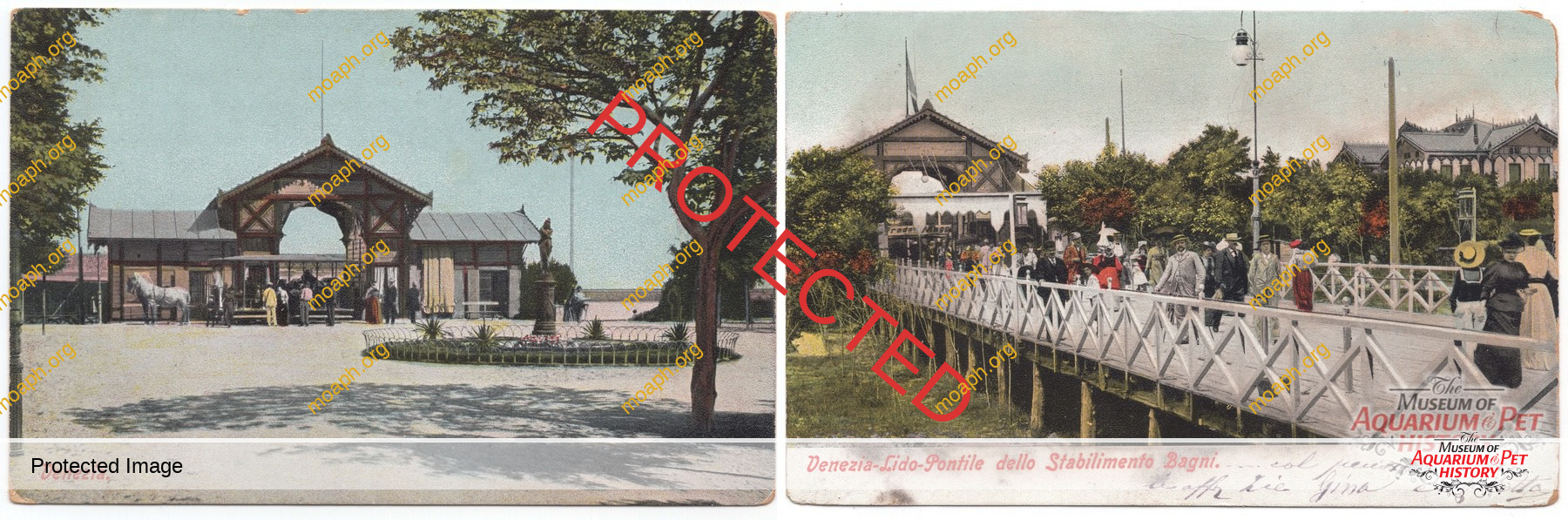
Front and back view of the entrance of the Great Bathing Establishment, early 1900s.
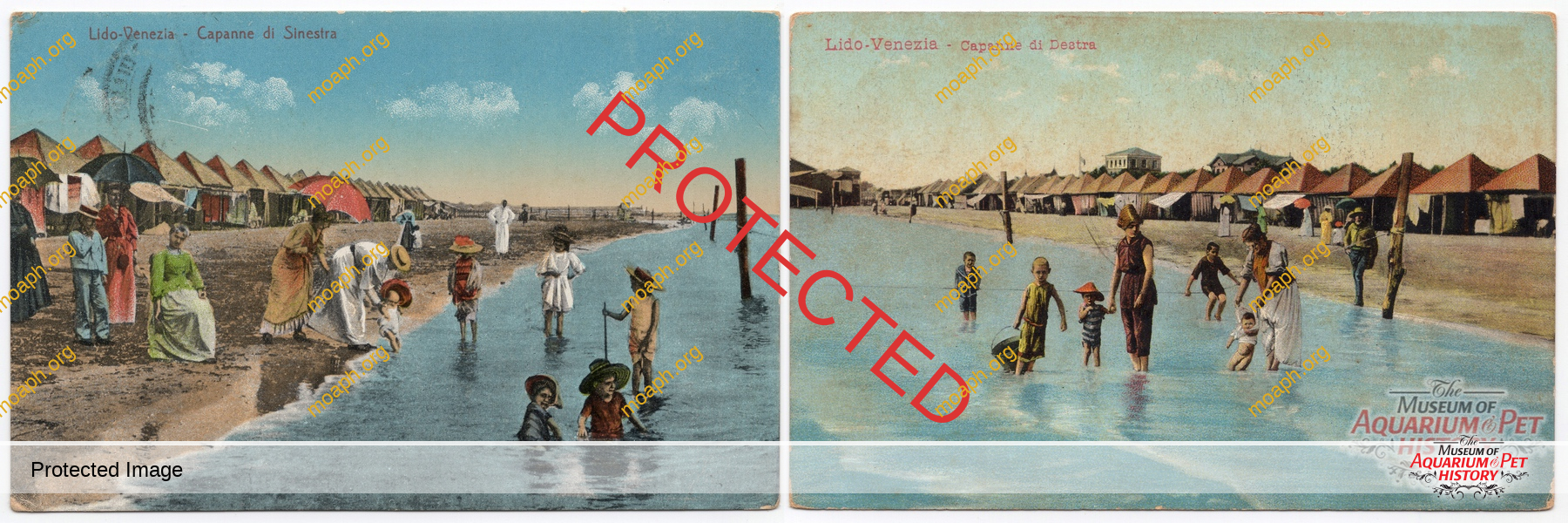
Postcards showing on the background the late-1800s iconic beach huts built to the right and to the left of the Great Bathing Establishment’s entrance.
An Aquarium: icing on the cake
In the early 1900s, the island embraced the Belle Époque* in its highest expression, offering multiple sports facilities and all sorts of entertainment to its wealthy vacationers: water sports, target and pigeon shooting, golf, tennis, skating, horseback riding, hot air balloon rides, theater, cinema, an amusement park, firework displays, ballets, concerts, boat excursions, food and wine fairs, and much more.
*Note from MOAPH: Belle Époque is French for “Beautiful Era” and was a period of European history from 1871-1914 characteristed by enlightenment, prosperity, and technological, scientific, and cultural innovations.
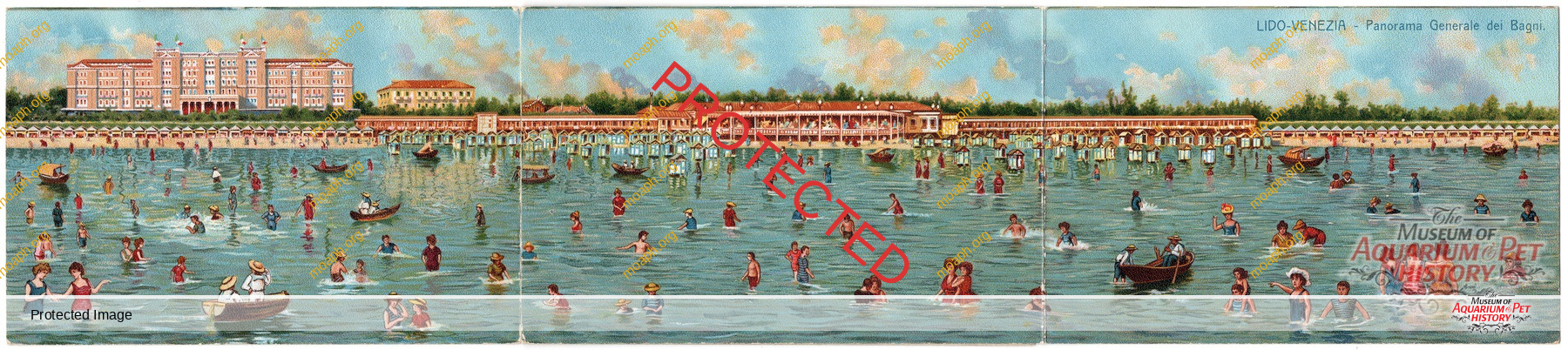
Enjoying the seaside at Lido.
This phenomenal entertainment complex could not be without an Aquarium. Lido’s first public aquarium was inaugurated at the beginning of the 20th century, originally within a single-story wooden pavilion that closely resembled the Swiss-chalet-style entrance of the nearby Great Bathing Establishment. The driving force behind it was the entrepreneur Alberto Amadori, an ichthyology enthusiast who strongly believed in this project, although he was occasionally opposed by the Venetian zoning commission for not having the necessary academic qualifications. Always on Amadori’s initiative, the facility was modernized around 1905, becoming a masonry building which also featured shops accessible from its facade.
The Viennese naturalist Paul Kammerer, who in 1905 and 1908 published reports of his trips to Venice in the German magazine Blätter für Aquarien- und Terrarien-Kunde (“Journal for aquarium and terrarium lovers”), left us some interesting details about this old Aquarium.
In the 1905 article, which refers to a trip made in the same year, Kammerer explains that he first saw the Lido Aquarium in 1902, confirming that the facility back then was still a wooden pavilion. His approach to the topic soon appears quite critical, starting from the price of the ticket, set at 1 lira (the standard unit of money in Italy before the euro), a figure which frankly was in line with the trends of the time.
Visiting the facility
Here is an excerpt from his article, translated into English: “…one enters a dark, rectangular corridor from which the tanks, illuminated from above, can be seen. The Lido Aquarium, while making great progress on the outside [in his 1905 visit Kammerer found a masonry building], has taken steps backward inside. During my first visit, in 1902, in addition to several marine fish and other marine animals, I also had seen plenty of well-kept reptiles and amphibians, including huge sea turtles and chameleons […] the Aquarium now houses only sea and river fish, the latter excessive in number – there are several tanks filled with common carp, barbels, and tench, and it’s not particularly interesting to read that these fish are caught in the Po [Italy’s largest and longest river] – along with multiple lobsters, crayfish, shore crabs, and sea anemones, the latter in depressing condition. Many marine fish are beautiful, especially the magnificent rainbow and peacock fish (Coris julis L. and Crenilabrus pavo Cuv. Val.), the tub gurnard (Trigla hirundo Bl.), the banded sea breams (Sargus vulgaris Geoffr.) and the golden ones, the gilt-head breams (Chrysophrys aurata Cuv. Val.), the thornback rays (Raja clavata L.) and the marbled electric rays (Torpedo marmorata Risso). Fish names above the tanks are written in Italian, while the scientific names are rarely added, usually incorrectly.”
In the 1908 article, which also refers to a trip made in the same year, Kammerer opens with a sentence he read on a four language, illustrated advertising flyer distributed by groups of children at Lido’s main mooring for steamboats: “It is recommended to visit the Lido Aquarium, where one can admire fish, mollusks, crustaceans, and live plants from the Adriatic Sea, all alive.”
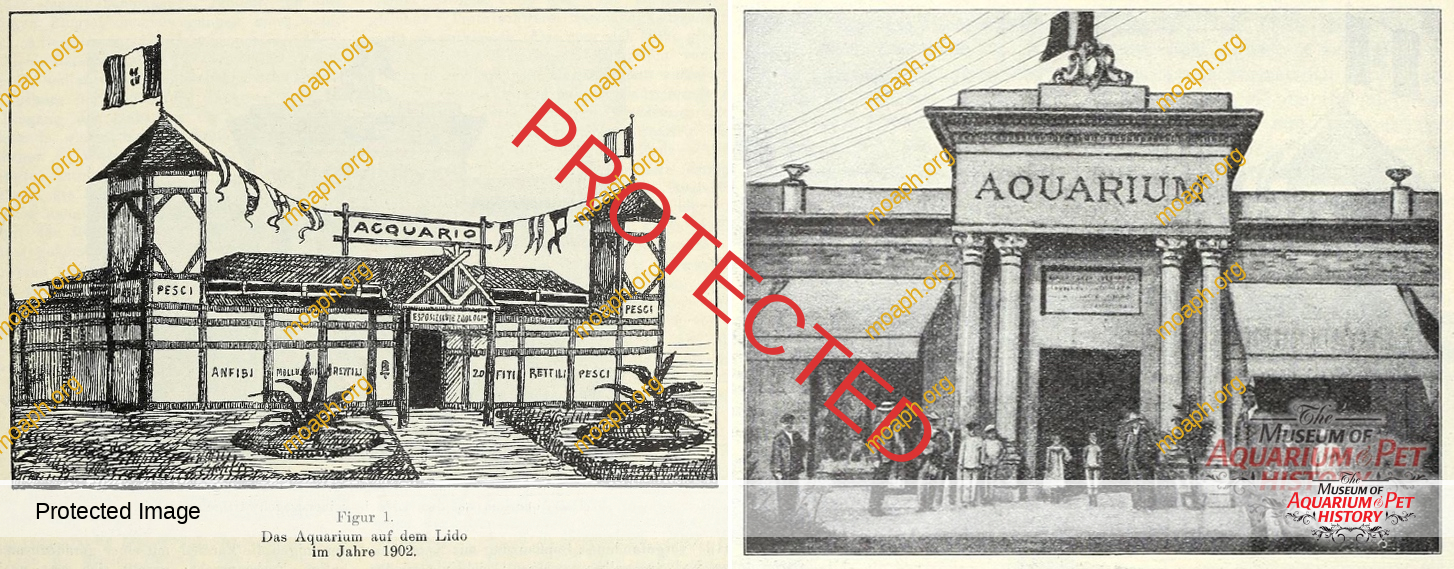
Two illustrations of the Lido Aquarium from Kammerer’s 1908 article. The right image was printed on the Aquarium advertising flyer. Kammerer was a corresponding member of the Berlin club Triton, and worked for the Biologische Versuchsanstalt (“Biology Research Institute”) in Vienna, also known as the Vivarium. He had a special aptness for breeding and keeping amphibians, but he always kept close contact with the aquarium movement, acting as editor for the magazine Blätter from 1908 until 1909.
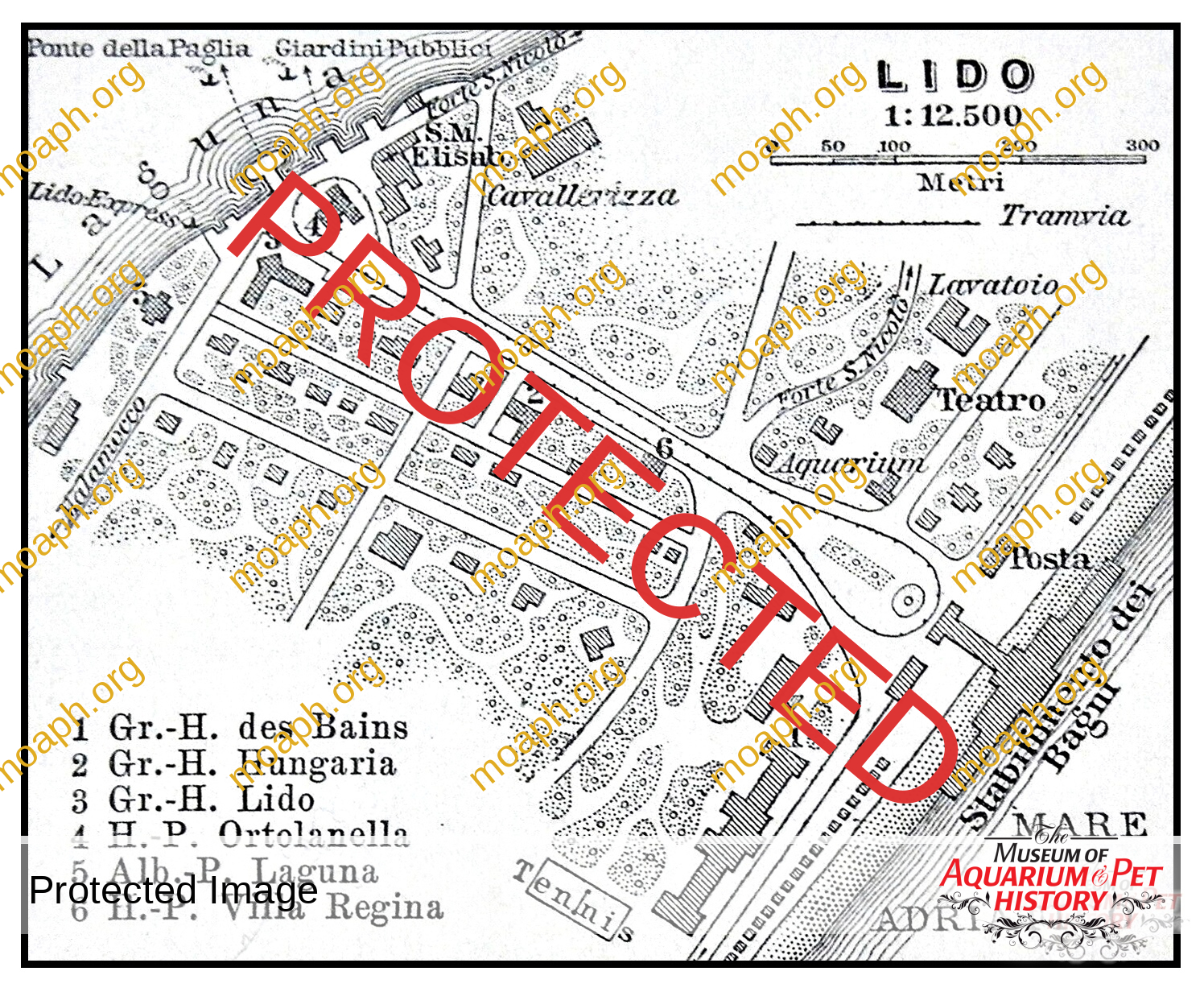
Map of Lido from the 1909 edition of the Baedeker, the most prestigious tourist guide of the time.
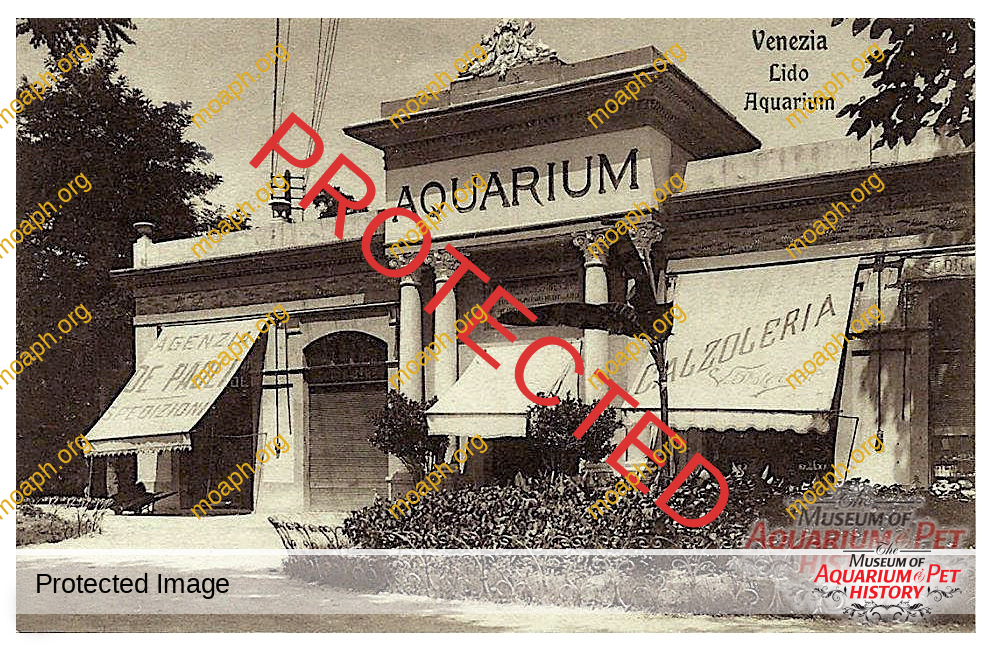
Amadori’s Aquarium also housed a few shops, like the shipping agency (left) and the shoe store (right) which can be seen in this photo. The facility gave free admission to school children.
Criticisms and negative comments are not slow in coming even in this piece: “…Some tanks are undecorated, thus the animals laid down on the bare concrete bottom, to which they are often able to wonderfully adapt their appearance. Others are ‘decoratedʼ, but in this case it would be better if they were bare. […] Speaking of the ‘live plants from the Adriatic Sea, all aliveʼ mentioned in the advertising flyer, there is none of them to see […] As for the animals […] blennies (Blennius), with their sheep, rabbit, goat, wolf, and rooster faces, tub gurnard (Trigla), seahorses, thornback rays (Raja clavata L.), and angel sharks (Rhina squatina Dum.) surpass anything imaginable with the strangeness of their enigmatic appearance. […] All these animals are not to be considered well-acclimated guests truly capable of living long at the Lido Aquarium. They are placed in tanks with no aeration and equipped – only partially – with a water circulation system, where they can survive for a few weeks at best, before being replaced by new freshly caught specimens. […] Two small sea turtles (Thalassochelys caretta) could have offered another image of underwater swimming similar to a flight [this was the impression Kammerer had while watching the swimming of a large eagle ray, Myliobatis aquila], instead I found them suffering in front of the building entrance, while serving as an attraction for the public in a washbasin […] When I visited the Aquarium, they were just changing the water in that tank, so the turtles were temporarily moved, at the request of curious visitors, and placed on their back, a completely useless measure given the animals’ depleted condition: they were motionless, with closed eyes and limp dangling limbs […] On the other hand, Greek turtles (Testudo graeca) and a striped land turtle (T. marginata) were inside an indoor concrete tank, which was wet (not completely emptied of water) and not illuminated by the sun. I bought the latter for 12 lire to rescue it from its sad fate of dying from enteritis. […] The technical setup of the Lido Aquarium is extremely simple. An open courtyard […] houses a water cistern used according to the Gärtner system. The water pumped directly from the sea into the first chamber of this cistern, the filter compartment, is very dirty. Once it passes through layers of gravel and sand within the filter compartment, however, it becomes quite clean in the second chamber, the actual cistern. From there, the seawater is moved by a small pump into a large wooden barrel placed in a raised position, and finally flows into the tanks whose pipes can be closed through metal taps (it should be considered that it is seawater!!). […] Labels above the tanks are written in Italian, and rarely show the scientific names. When these are available, they are often incorrect. Any transfers and other changes in the tanks seem not to be taken into account in the labeling process. Is it a progress or a regression the one I should note comparing the impressions of my visits in 1905 and 1908? Despite serious sins of negligence, it cannot be denied that efforts are being made or intended. Consulting with expert Aquarium curators might perhaps lead to better results. It is also evident that even an exhibition of aquariums considered poor […] might achieve its ideal goal, which is to arouse the interest of visitors in marine fauna and to introduce them to some popular representatives of it through direct observation.”
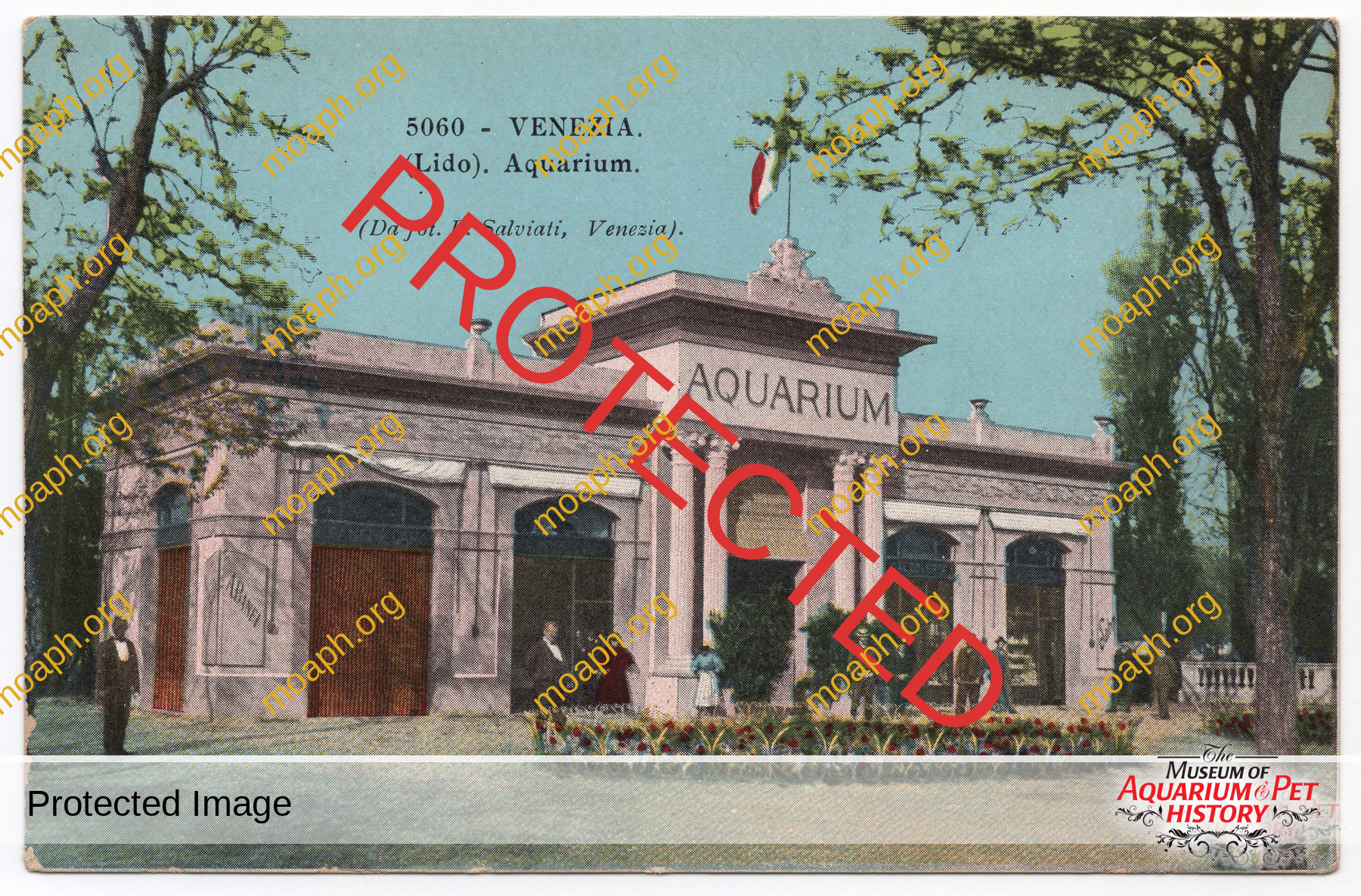
This color postcard is a copy of a black and white photo where the mysterious silhouette of a man appeared near the base of the Italian flag.
Inside an empty tank, Kammerer found an unexpected guest, a Javanese monkey known as “Ciccio, the African macaque”, describing it as follows: “…it is often provoked because, being ‘nervosoʼ [Italian term which means “bad-tempered”], it throws itself against the thick glass and, not succeeding, furiously bites its hand – this new tenant of the Lido Aquarium is certainly to be attributed to the account of regression.”
Another report of a visit to this Aquarium was published in 1905 by Wolfgang F. Ewald in the German magazine Nerthus. Businessman remembered in our hobby for having been the president of the Berlin short-lived aquarium club “Schüler – Verein ‘Phorkysʼ, Verein für Aquarien- und Terrarienkunde zu Berlin” (1901-1905), Ewald like Kammerer does not hold back from criticism. Here and there he becomes even sarcastic and offensive, as when he describes himself “…surprised by such an effort, which seemed doubly marvelous in Italy, where generally the only thing one wants to know about an animal is if it is worth eating …” Always ready to draw comparisons with the Berlin Aquarium, he reports about thirty concrete fish tanks, most of which were 3.3 feet long. Furthermore, he talks about an excessive number of dead fish [in a 1909 article, the Italian ichthyologist Emilio Ninni talked about dead fish as well, but explaining that they were feeder fish for large aquarium inhabitants such as sharks], technical issues, cuttings of terrestrial plants used instead of actual aquatic ones, and crabs (mainly Carcinus maenas) as main source of food for the marine species. Among the largest guests of the Aquarium, Ewald recalls a few sea turtles, the John Dory (Zeus faber), and the smooth-hound (genus Mustelus). He also reports about a large backyard that allowed the fish tanks to receive sunlight.
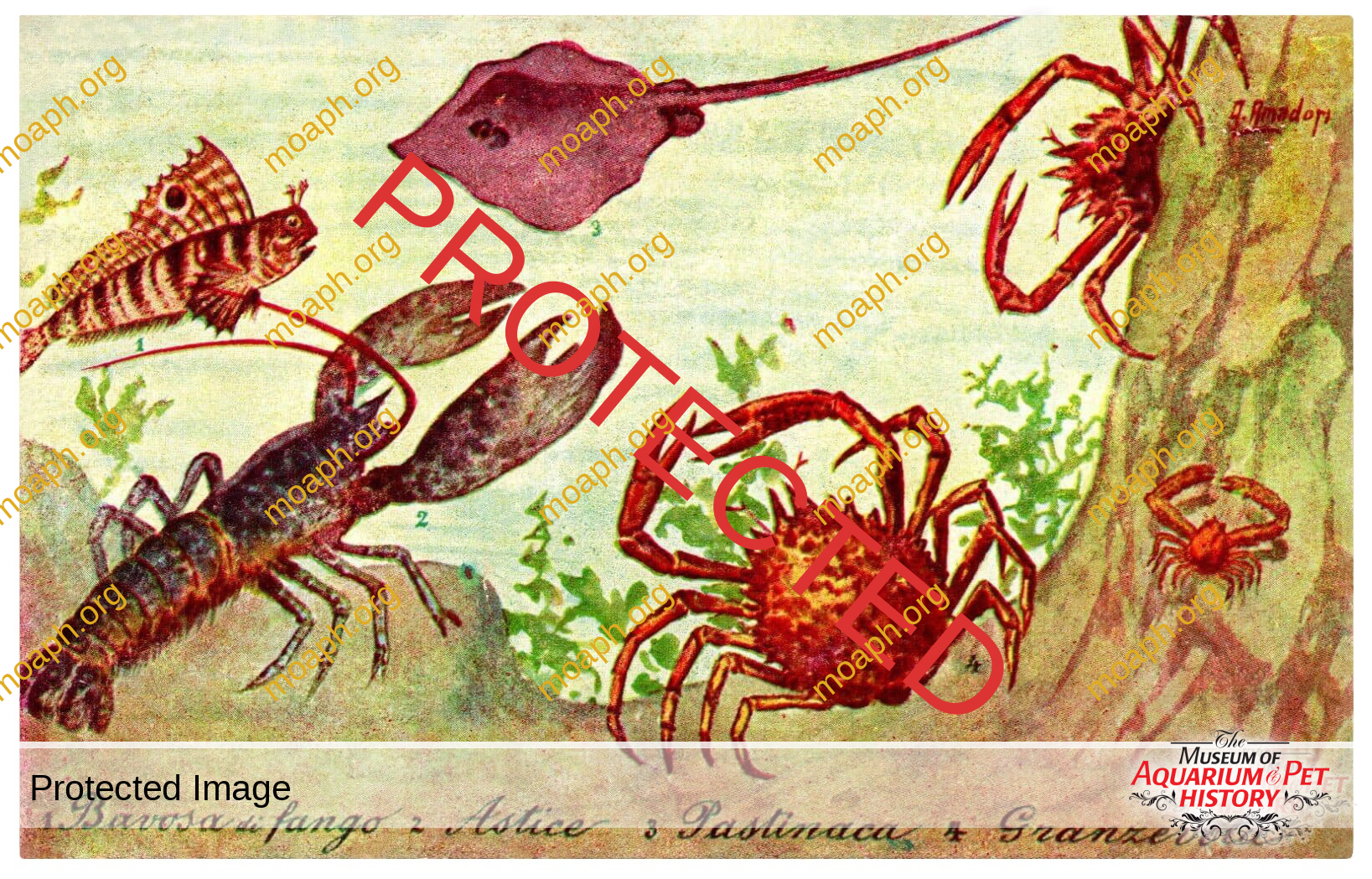
Old postcard depicting some of the species housed at the first Lido Aquarium. The drawing is by Amadori himself, as confirmed by his signature on the upper right.
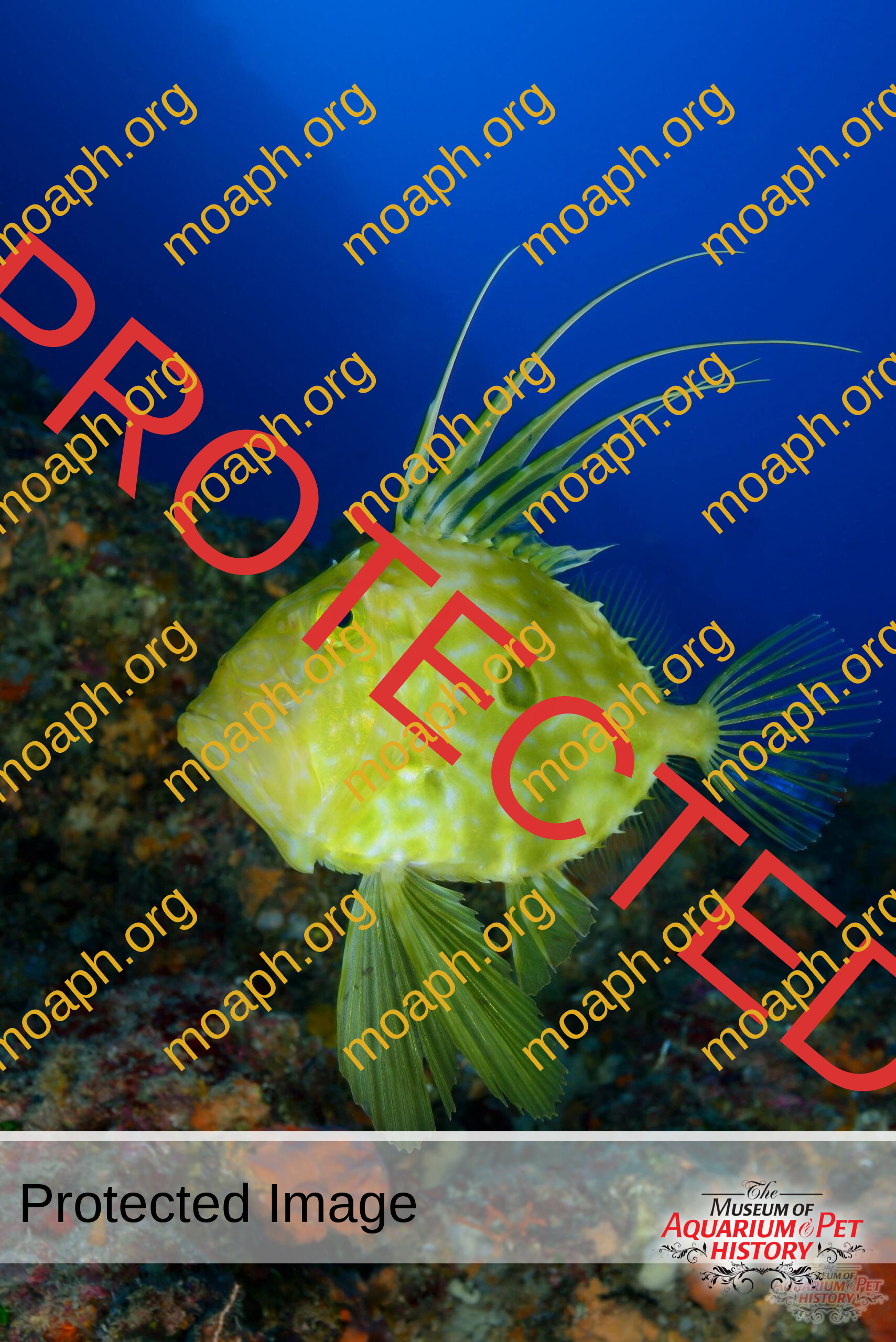
Zeus faber, one of the star animals at the Lido Aquarium.
Towards WWI
Probably the Lido Aquarium, which always had Amadori both as owner and director, managed to overcome the tough period when tourist flows were seriously reduced by fears of the 1911 cholera epidemic (the writer Thomas Mann mentioned it in his Death in Venice). It is also plausible that it remained open until the outbreak of the First World War (1914-1918), which for Lido meant bombings, construction of military emplacements for defense and attack, and large hotels requisitioned to be transformed into shelters for Italian and allied troops.
In 1919, shortly after the end of the conflict, the Aquarium was demolished. The land where it stood was purchased by the owner of the nearby theater, and in 1925 a hotel – later converted into an apartment building – took its place.
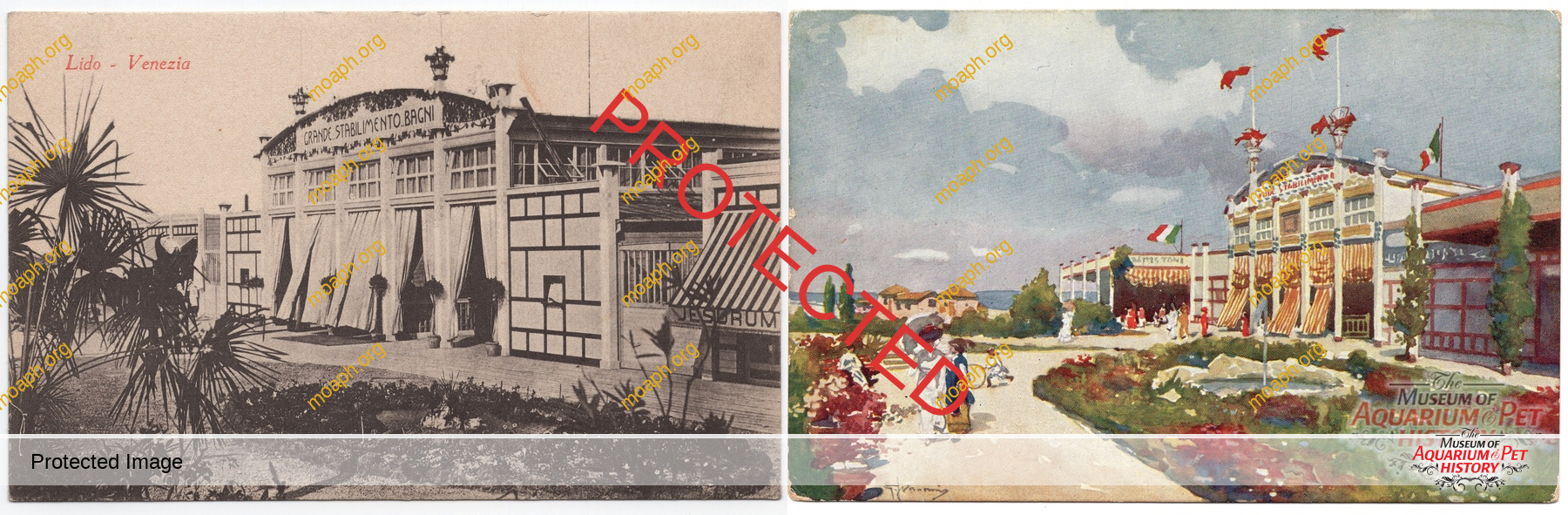
The new Great Bathing Establishment built in 1908, and destroyed by a fire in 1928.
In post-war years the recovery was fast, and Lido soon returned to be a coveted and renowned seaside destination, to the point that in Italy and other European countries the word “lido” (from the Latin litus which means “shore of the sea”) became synonymous with “stretch of coast dedicated to bathing”. By the late 1920s, moreover, the military airport already existing on the island started to be used as a base for civilian flights, making Lido accessible in a new and more exclusive way.
A new, huge Aquarium at Lido
Before new winds of war began to blow, multiple entrepreneurial initiatives flourished, including the project for a new Aquarium. Located on the ground floor of the left wing of the Great Bathing Establishment, which in the meantime underwent a few renovations and enlargements, this huge Aquarium was designed to also encompass a department for the study of fishing, a hydrobiology center, and office spaces. Built thanks to private and municipal funds, it was inaugurated with great pomp on May 14, 1938, in the presence of the Duke and Duchess of Genoa, patrons of this initiative, as well as a long list of important personalities of the time. At the end of the opening ceremony, which was broadcasted via radio and included a solemn speech by Benito Mussolini, the well-known Alberto Amadori welcomed the visitors as the Aquarium’s director.
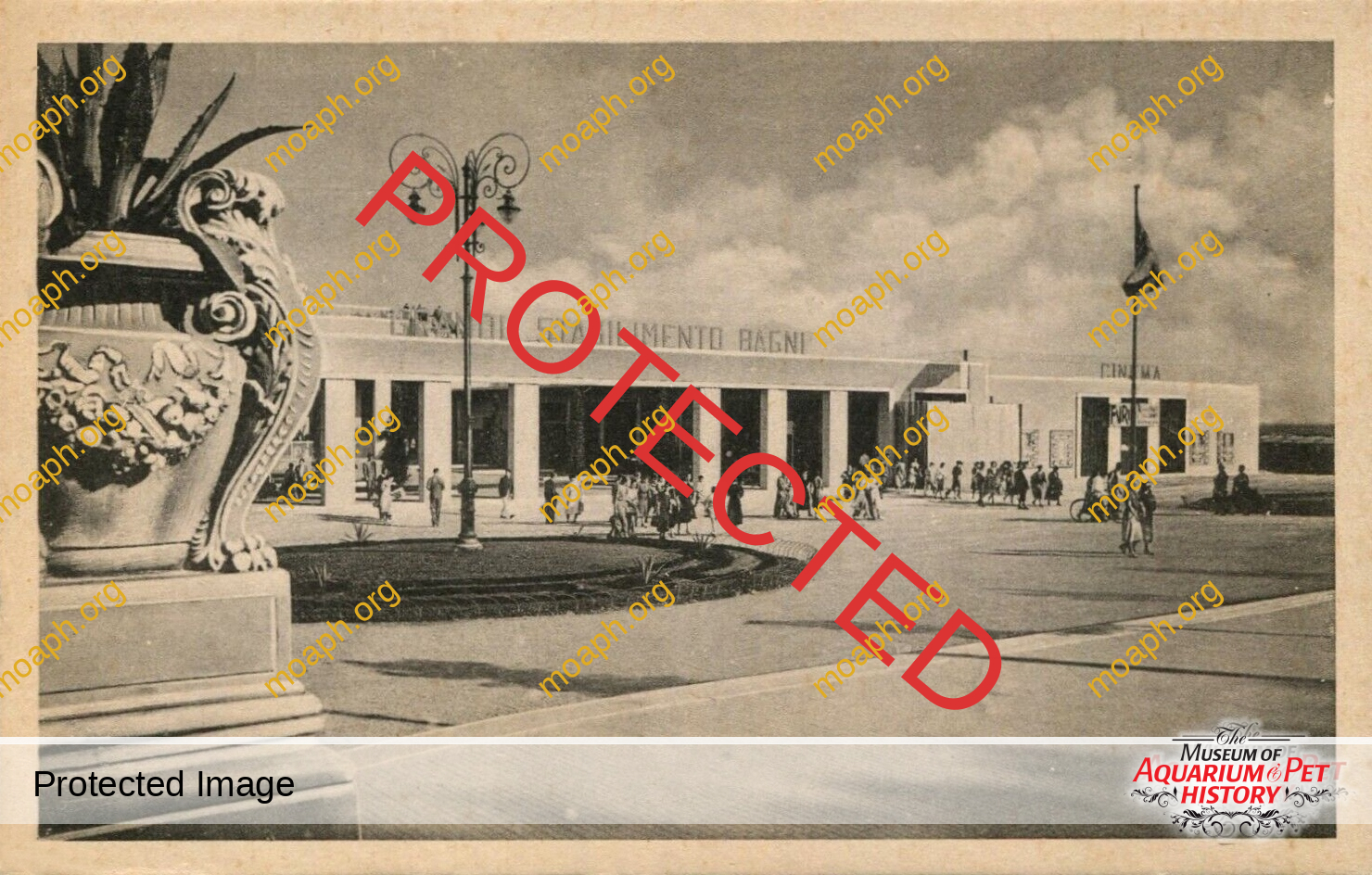
The Great Bathing Establishment in 1938.
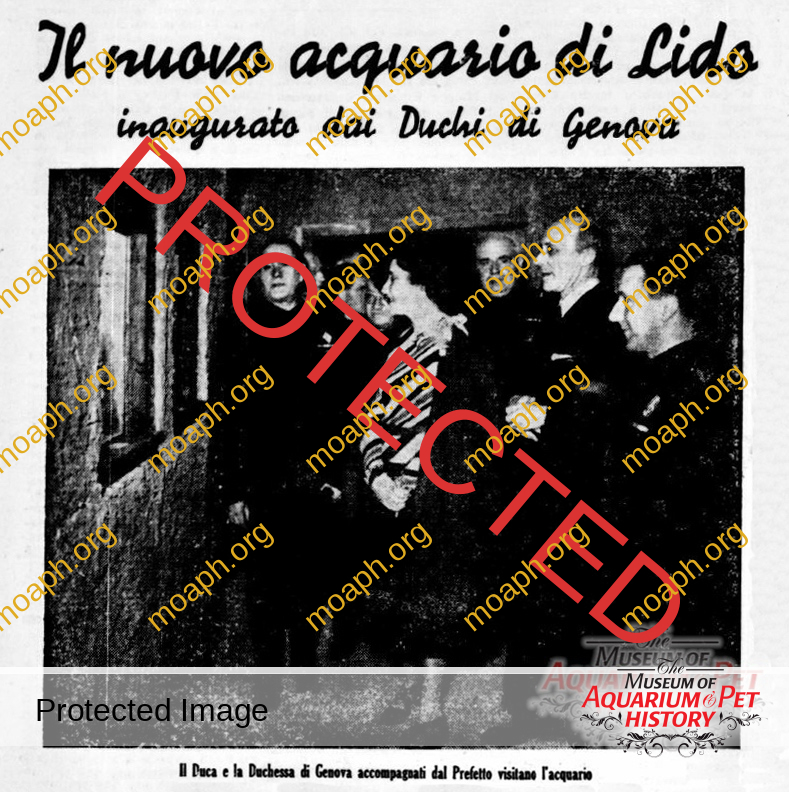
The Duke and the Duchess of Genoa visiting the new Lido Aquarium. Image source: Gazzetta di Venezia, May 15, 1938.
Newspapers of those days reported of a grotto-like entrance with tanks embedded in the walls, and of a large hall with one hundred display tanks containing a total of about 265,000 gallons! It must have been an amazing exhibition, with approximately 300 marine and freshwater species on display in set-ups with sand on the bottom, and rocks as background.
Despite its great potential, the new Lido Aquarium, sadly, had a rather short life due to the Second World War (1939-1945), which in 1944 led the Germans to demolish the Great Bathing Establishment for strategic reasons.
After WWII, other public aquariums opened in the municipality of Venice. None of them, however, survived to the present day. That’s why, in conclusion, we wish that this magnificent city visited by millions of tourists every year should soon have a new Aquarium, possibly located in a historic setting like the Venetian Arsenal, and associated with a marine biology research center.
ACKNOWLEDGEMENTS
Thanks very much to the following parties for their assistance with this article: Natural History Museum of Venice, Joseph Ferdenzi, and Patrizia Pecorai (editor of the magazine Lido di oggi, Lido di allora).
REFERENCES
Ewald, Wolfgang F. “Venedig, vom Standpunkte des Aquarienfreundes. Da Aquarium auf dem Lido.” Nerthus: Illustrierte Wochenschrift für Tierund Pflanzenfreunde, Organ für Sammler und Freunde aller naturwissenschaftlichen Zweige 7, no. 9 (March 25, 1905): 143-146.
“Il nuovo acquario di Lido inaugurato dai Duchi di Genova.” Gazzetta di Venezia, May 15, 1938.
Kammerer, Paul. “Das Aquarium auf dem Lido.” Blätter für Aquarien- und Terrarien-Kunde 19, no. 43 (1908): 617-619.
Kammerer, Paul. “Mein Pfingstausflug 1905.” Blätter für Aquarien- und Terrarien-Kunde 16, no. 30 (July 27, 1905): 297-299.
Lando, Pietro. I primi tumultuosi anni del Lido di Venezia, da Fisola a Spada 1857-1908. Venezia: Casa Editrice el squero, 2018.
“La solenne inaugurazione del nuovo acquario del Lido di Venezia alla presenza delle LL. AA. RR. i Duchi di Genova.” Bollettino di Pesca, di Piscicoltura e di Idrobiologia XIV, No. 3 (May-June, 1938): 322-324.
Ninni, Emilio. “L’Aquarium di Lido.” Gazzetta di Venezia, June 10, 1909.
Pecorai, Giorgio and Pecorai Patrizia. Lido di Venezia, oggi e nella storia. Lido (Venice): Edizioni Atiesse, 2007.
Pecorai, Patrizia. “Aquarium.” Lido di oggi, Lido di allora 39 (2023).
Rieck, Werner and Mau Klaus-Georg. Eine Vereinschronik 1888-2008. 120 Jahre “Triton” Gesellschaft für Vivarienkunde 1888 e.V. -zu Berlin- Verein für allgemeine Naturkunde, Aquarien-, Terrarien-, Insektarienkunde und Naturschutz. Berlin: Eigenverlag, 2008.
“Un nuovo istituto per lo studio e la propaganda della pesca. Il nuovo acquario che verrà oggi inaugurato al Lido dai Duchi di Genova.” Gazzetta di Venezia, May 14, 1938.