
Chapter 5: Two Dozen Oysters – Wilde Tiere Frei Haus (Wild Animals Free Delivery)


Starting in September 2024, the Museum of Aquarium and Pet History (MOAPH) will be releasing a chapter a month on the translated autobiography Wilde Tiere Frei Haus (Wild Animals Free Delivery) by Hermann Ruhe.
Firma Ruhe (the Ruhe Company) was the name of an animal trading company based in Alfeld, Germany from 1860 until its official closure in 1993. During this time, they were world renowned for their importation and exportation of exotic animals and birds from all across the globe, even supplying many zoos as well as circuses. Having survived both world wars, Firma Ruhe continued to dominate the world of animal trading until the mid-20th century and is a testament to true determination and leadership.
Wilde Tiere Frei Haus (Wild Animals Free Delivery) also documents the plethora of adventures, failures and successes endured by all those a part of Firma Ruhe. Through Hermann Ruhe’s great storytelling, we are able to visualize and understand the world from the perspective of animal collectors navigating through some of the most difficult situations, often not knowing whether or not they would ever return home. His recollections provide a vivid portrayal of the challenges and triumphs faced by the company, and give readers a glimpse into the world of animal trading.
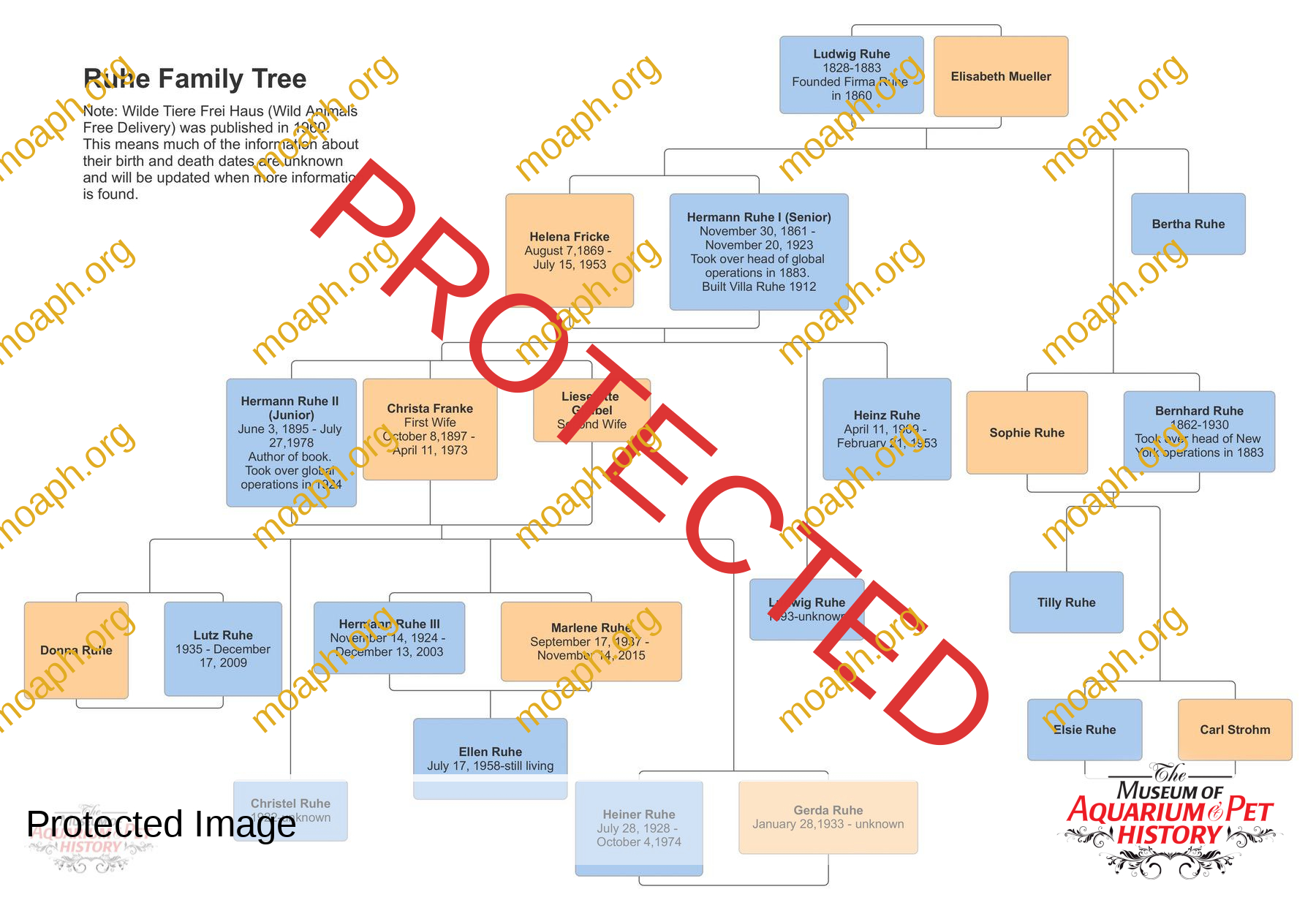
The devaluation of the currency in Germany seemed to have begun reaching an increasingly dangerous level. It was high time to look for ways out of the dilemma. During this time, I noticed that Uncle Bernhard had his eyes set on only one thing: the canary birds. The fact that the animal cages on the ‘farm’ were empty, even though there should have been unlimited opportunities for the animal trade now after the war, seemed to escape his notice. Most of the time, he sat in the Bowery1 in front of long rows of canaries—and listened to them!
MOAPH1: ‘Bowery’, a neighborhood in New York City. In this case it is likely Uncle Bernhard visited a canary shop in this area frequently.
“Uncle Bernhard, they’re all Choppers now, why do you bother? No one listens to Rollers here2!”
MOAPH2: ‘Choppers’ open their beaks to produce a louder, sharper sound. The different sounds they make can be identified easier as they are less continuous. ‘Rollers’ however, create their sound through a closed beak therefore allowing for a more continuous, smooth sound. It is said that their singing is most comparable to a flute as there are fewer breaks in between notes.
“That’s bad,” Uncle Bernhard used to say. Nothing more.
I did what I could and corresponded with my father to suggest different possibilities. In the meantime, the days passed without any result, and I began to take a little vacation myself. Uncle Bernhard couldn’t discuss anything but canaries, and in fact, he understood an incredible amount about them! But now, there was only a small percentage of true Rollers left, which had almost completely ceased to exist. The much larger percentage consisted of Choppers; birds that didn’t sing, whose “Chirp-chirp-chirp” in high, stuck notes had once earned them the label “third-class”. But tastes had changed—as had the audience that bought the birds.
During the war, many Germans had been interned, many had returned to their homeland—others, after losing their fortunes, were no longer afforded luxuries like a Harz Roller. Instead, countless Italian immigrants found joy in canaries in the USA. They didn’t know any better; for them, a Chopper was the same delicacy as a Roller was for the old customers. Sometimes, I paid a visit to Mr. Kämpfer on 5th Avenue, an old bird dealer who had come to America at the age of 14 and had opened a shop shortly afterward. His business was more or less exclusive.
“A Chopper will not cross my threshold!” he once told me. “Oh, Hermann, if you knew how big the difference is from before.”
“I do believe that,” I said. “But time has a habit of never standing still, Mr. Kämpfer!”
“Look,” he said. “Back there stands a trained bullfinch. Now that’s a bird! I believe I’ve only ever had one other that could sing as excellently as this one. This one is from your company, and the former one was as well.”
“Do you really remember every single bird, Mr. Kämpfer? That is almost impossible.”
“Not every single one,” he said, “But back then… I always kept the shop open until midnight, and often gentlemen and ladies would come by after the theater closed to take bird food home with them.”
“I had a lady come in late at night, and I met with gentlemen and ladies after the theater to take bird food home. One time, a famous woman came, a true lady. It was Geraldine Farrar, the opera star of the Metropolitan. She wore a gorgeous gown. She wanted to buy food for her canary. Suddenly, she heard my Dompfaff—he could even whistle songs.”
“You had to give it to her, of course?” I asked.
“Yes,” said Mr. Kämpfer, and she got it too. The gentleman drew out the checkbook and, with a blink of an eye, wrote out the ninety dollars I asked for. And then the birdcage was handed over to her as if it were an orchid.”
“Oh, Mr. Kämpfer,” I said, “you made a good deal there!”
He nodded. “I tell you yes: Those were the good times! Back then, the men still had something left for the ladies.”
I had to laugh. But in reality, I had seen it wrongly: One used to have an eye for quality, and the concept of quality was, unfortunately, quickly fading away after the war.
In 1922, I temporarily returned to Germany.
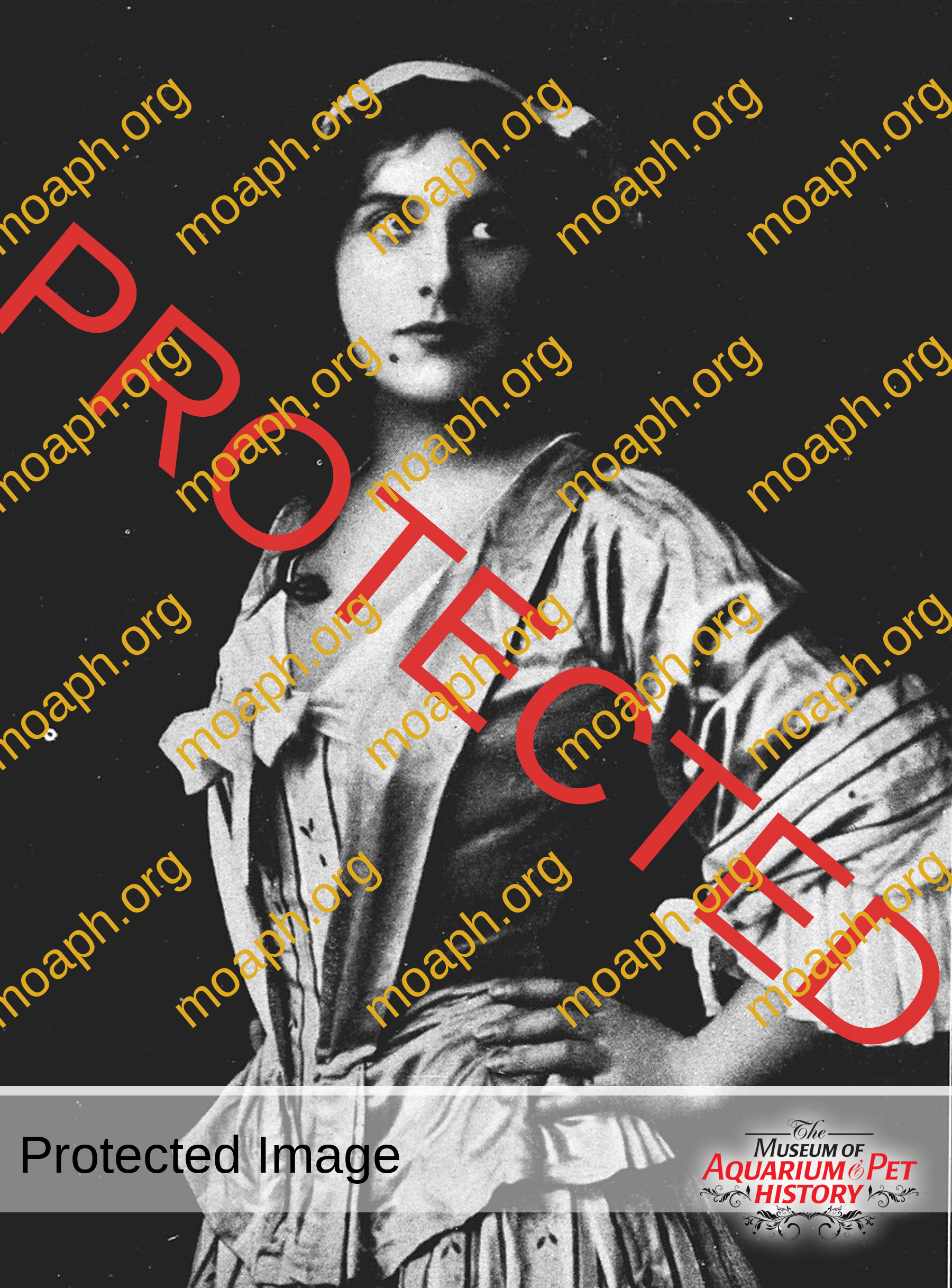
Geraldine Farrar (1882-1967) was an American Opera singer and film actress.
As soon as it was possible for us to get married, nothing had changed. After several years had passed, my father no longer opposed my request for his consent: Christa and I got married. Together with my young wife, I returned to New York in June 1922.
A few weeks later, the business scene finally livened up. I received news from my father that he had managed to secure a good animal transport from Ethiopia, and Mr. Windhorn was already on his way to New York with the animals from Germany!
Almost at the same time as the belated news arrived, Windhorn was set to arrive with the animals—a $33,0003 assortment consisting of a collection of Hamadryas baboons, particularly beautiful specimens, among which were female monkeys with young clinging to their chests. In addition, Windhorn brought the first shipment of about forty Gelada baboons.
MOAPH3: Estimated to be around $595,000 today
When Uncle Bernhard received this news, he turned pale. “A madness from your father..” he muttered.
“What is it, Uncle Bernhard? What’s the matter?”
He handed me the letter. “Wonderful!” I said. “Finally, things are starting up again—be happy, Uncle Bernhard”
“Happy?” he said grimly. “I’ve had enough of this disaster in the war. Wasn’t it bad enough that we were completely finished? I’m glad we’re slowly getting back on our feet with canaries—and then your father comes up with an idea like this?”
I couldn’t really understand my uncle, especially since he was not willing to give any further comment and got up to return to his canaries. The letter lay on the table.
When the transport arrived, I was at the port to look at it immediately. They were wonderful animals. Our New York attorney, Maier, was of the same opinion as I was: a blessing for the company! Together, we searched for my uncle to discuss what we would do next.
“A splendid transport, Uncle Bernhard!” I beamed at him. “I was just at the port!”
“Such a madness from your father,” he growled.
“Well, calm down first, Mr. Ruhe! The transport will go quickly; that would be a joke,” said Maier.
Uncle Bernhard straightened up. “Yes, Mr. Maier, I’m asking you! See to it that the animals are gone as quickly as possible. And even if we only get 30,0004 or just 28,000 dollars5, we’ll lose money on this no matter what!”
MOAPH4: $542,908 USD today
MOAPH5: $506,156 USD today
Now I began to think slowly, “Why did you actually buy the farm if you don’t want to do such a business, Uncle Bernhard?” I asked him. “First, you were almost broke here because you had nothing left, and Father had to save the whole operation by sending you Kreth’s large Sumatra shipment to New York right after the war—with our money so that you could get back on your feet.”
“Don’t get cheeky!” he interrupted me.
“But it’s true!” I said angrily.
At that moment, energetic steps came up the stairs, the door opened, and a thundering voice shouted: “Morning, gentlemen!”
I turned around. I knew that voice: It was “Fat Joseph”.
Ellis Joseph, a New York animal dealer, was a man who made me seem like a dwarf despite my height of 1.86m. Josef, a native Australian, had gone to the USA and had begun to deal with animals, and accordingly wide and thick, carried a shoe size that was no longer available to buy in any store. He looked like a duck and liked to drink alcohol—for that reason, he sat down to a three-liter glass of water and began to drink.
“Morning,” Uncle Bernhard replied briefly, but Joseph didn’t take notice of him. “I just came off the ship,” he said in his rough manner. “Mr. Ruhe—it’s a wonderful shipment! I’ll buy the whole thing!” God knows where Josef learned about the transport. He listened to people who heard the grass growing.
“So?” Uncle Bernhard said and raised his eyebrows. “Well—then make the deal with my nephew; he knows better about it than I do.”
“Alright,” Josef said, satisfied.
Uncle Bernhard gave him a sharp look and disappeared, and I seated Joseph in a chair first to gain some time. I apologized: “Just for a moment!”
I searched for Uncle Bernhard and found him promptly in front of a row of canaries—making notes: “He sang…that one didn’t sing..”
“What should I charge now?” I asked.
“That was a joke from you with the $28,0006! It has to be a reasonable price!” he said quickly.
MOAPH6: $506,156 USD today
“Alright,” I said and went over to Prokurist7 Maier.
MOAPH7: Refers to a person who holds a ‘Prokura’, which grants them legal authorization in the same way an attorney would. In this case, Prokurist Maier has the authority to act on the behalf of the company in legal and business matters.
“We should get at least 50,0008 dollars for the transport. Don’t you think so?”
The transport was indeed magnificent, full of rare, valuable, and healthy animals that had survived the crossing in the best condition.
Josef shone a flashlight into all the crates.
He took his time examining them, and I wasn’t in a hurry, although I must have looked at him with mistrust.
“So,” he finally grunted, “I would give 50,0009 for everything. You know, Mr. Ruhe, the risk.”
“Sorry,” I said, “then I’ll go and sell them myself. That would be my journey, which may cost school fees again, but…”
“No—boy! We work together, come on!”
I watched him, outwardly calm but inwardly trembling with excitement. I now knew: It all depended on this!
“55,00010 dollars,” I said, “but that’s my last word, Josef!”
He grinned. “I’ll make you a deal. Do you like oysters?” Heaven knows—at that moment, I wasn’t expecting it at all. Astonished, I said: “And how!”
“Alright. If you eat two dozen oysters and still feel well—two dozen oysters!—from the big kind—with no difficulties and in good health—then I’ll pay you 53,00011 . If you can’t manage it, I’ll take the entire transport for 50,000 dollars. Okay, Mr. Ruhe?”
MOAPH11: Today that is around $958,081
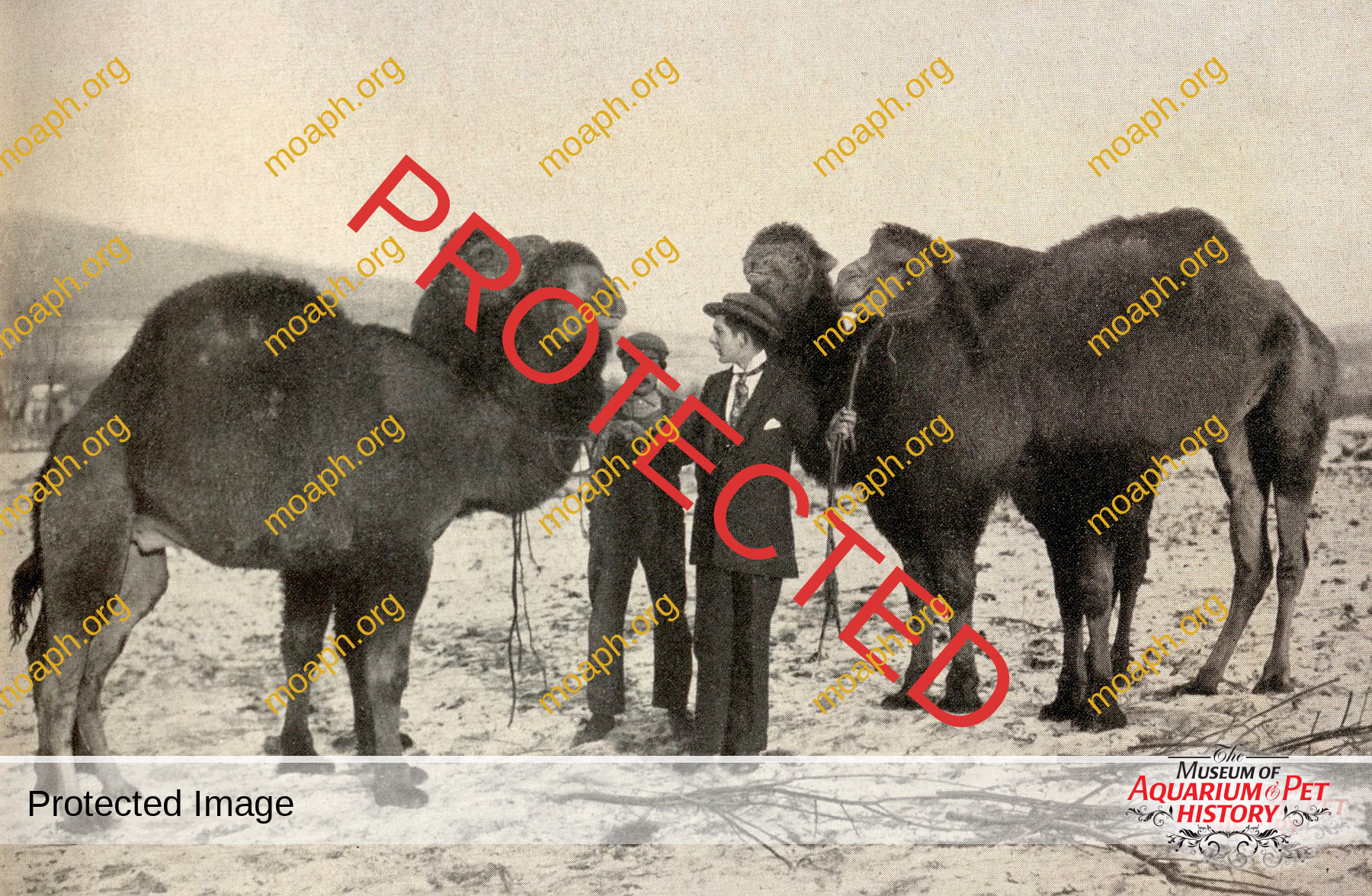
Hermann Ruhe with Siberian dromedaries, who are to be trained to be ‘leash-trained’, in the open field near the Weiße Erde. Behind him is the animal caretaker, Karl Bartels.
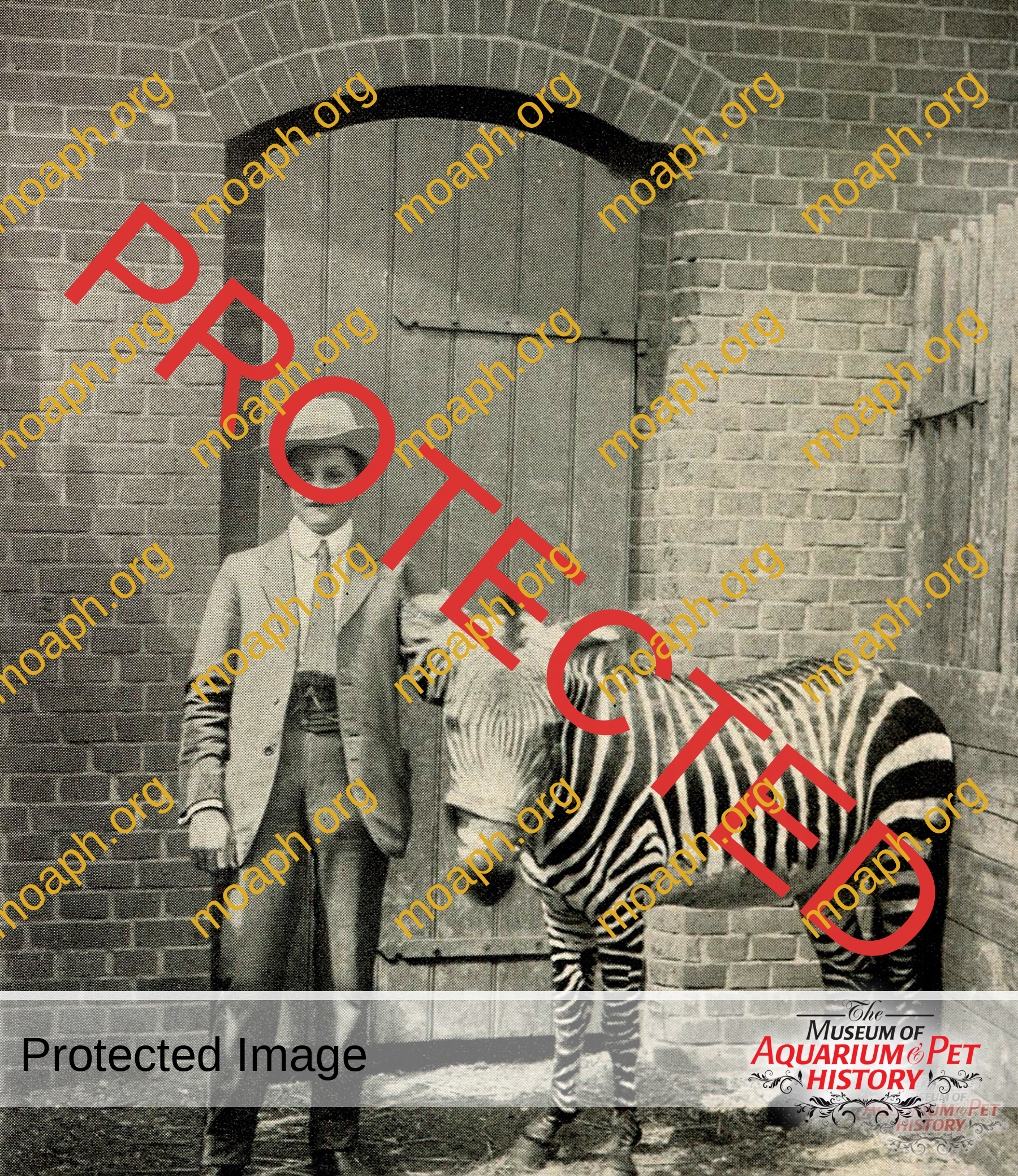
Ludwig Ruhe, the brother of the author, who went to New York in 1914, with a mountain zebra in one of the outdoor enclosures on the property at Weiße Erde (White Earth).
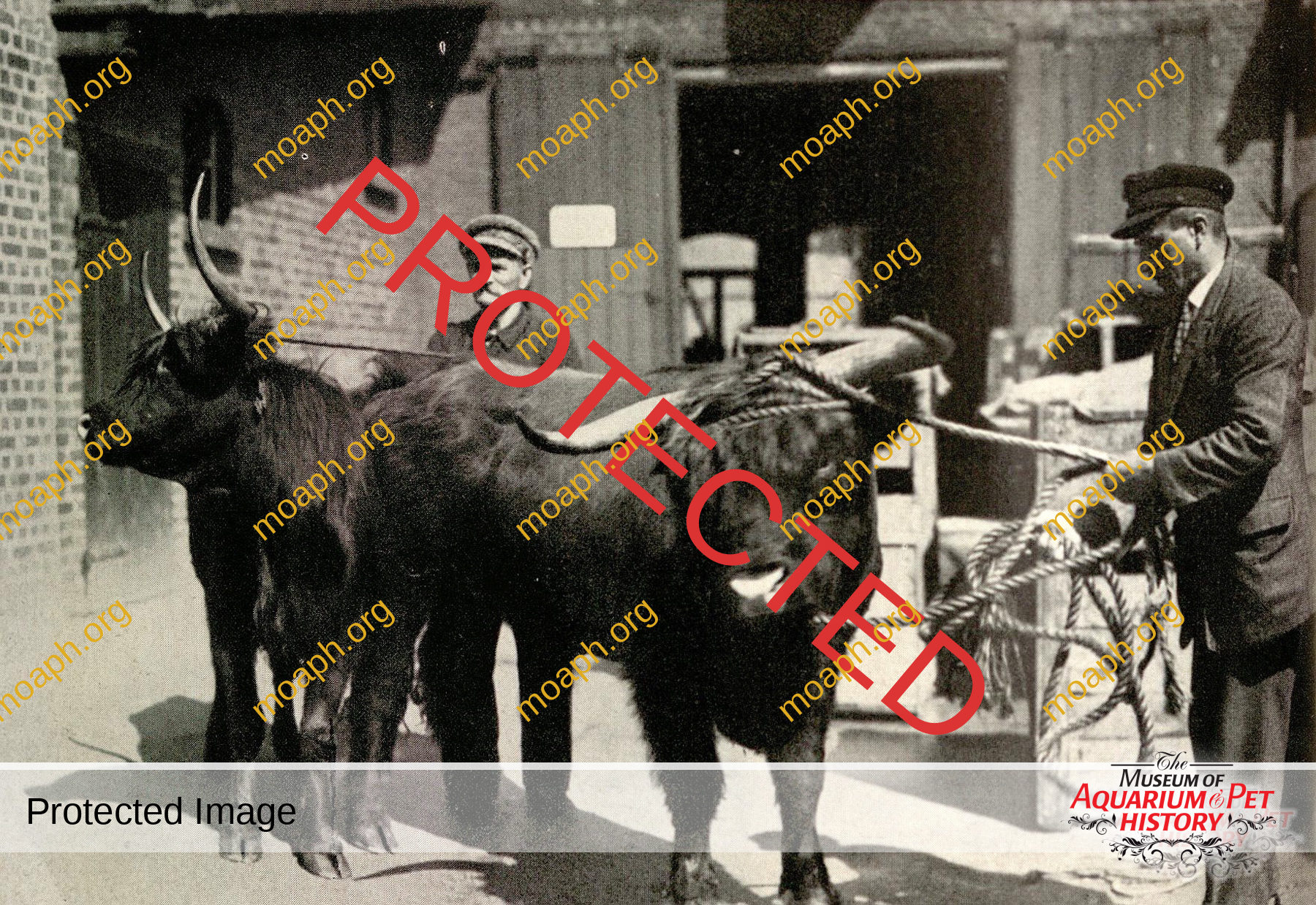
Animal caretaker Butmy (right) and Heinrich Schmidt with Scottish Highland cattle, which are to be loaded onto a circus.
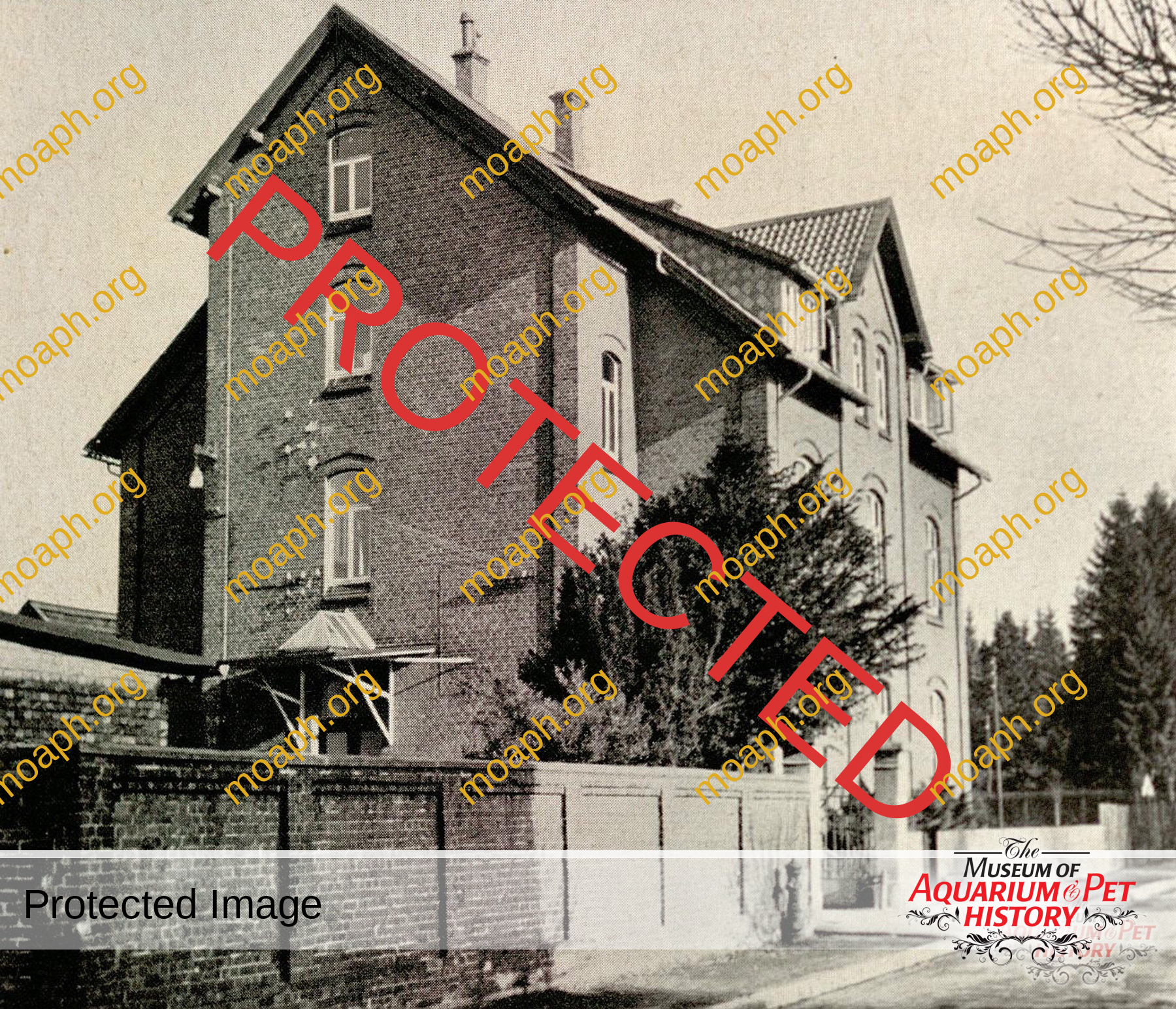
The new Alfeld ‘birdhouse,’ where a large portion of the canaries destined for export were stored.
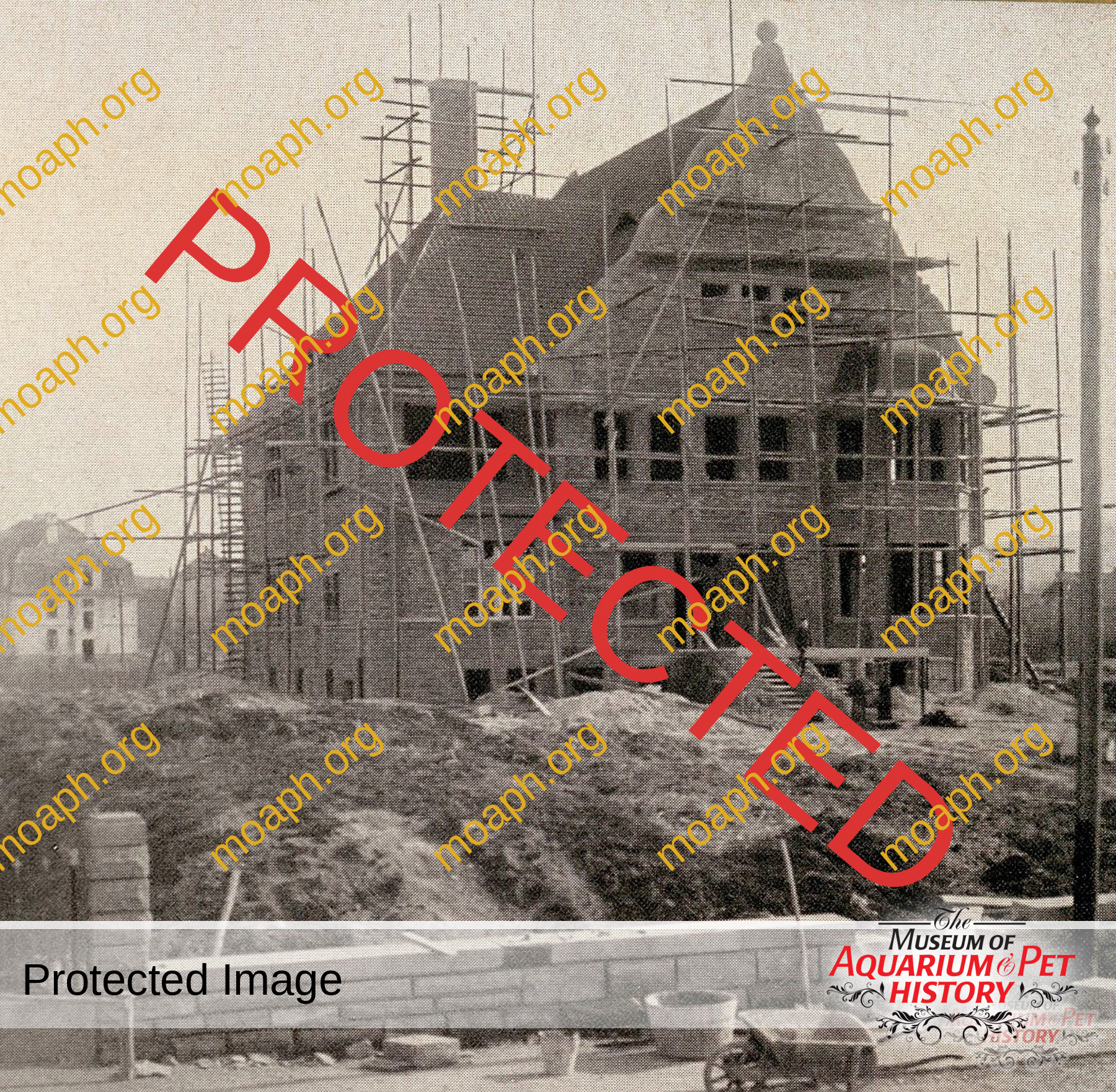
The villa, the new large residential house located diagonally across from the birdhouse on Kalandstraße, under construction.
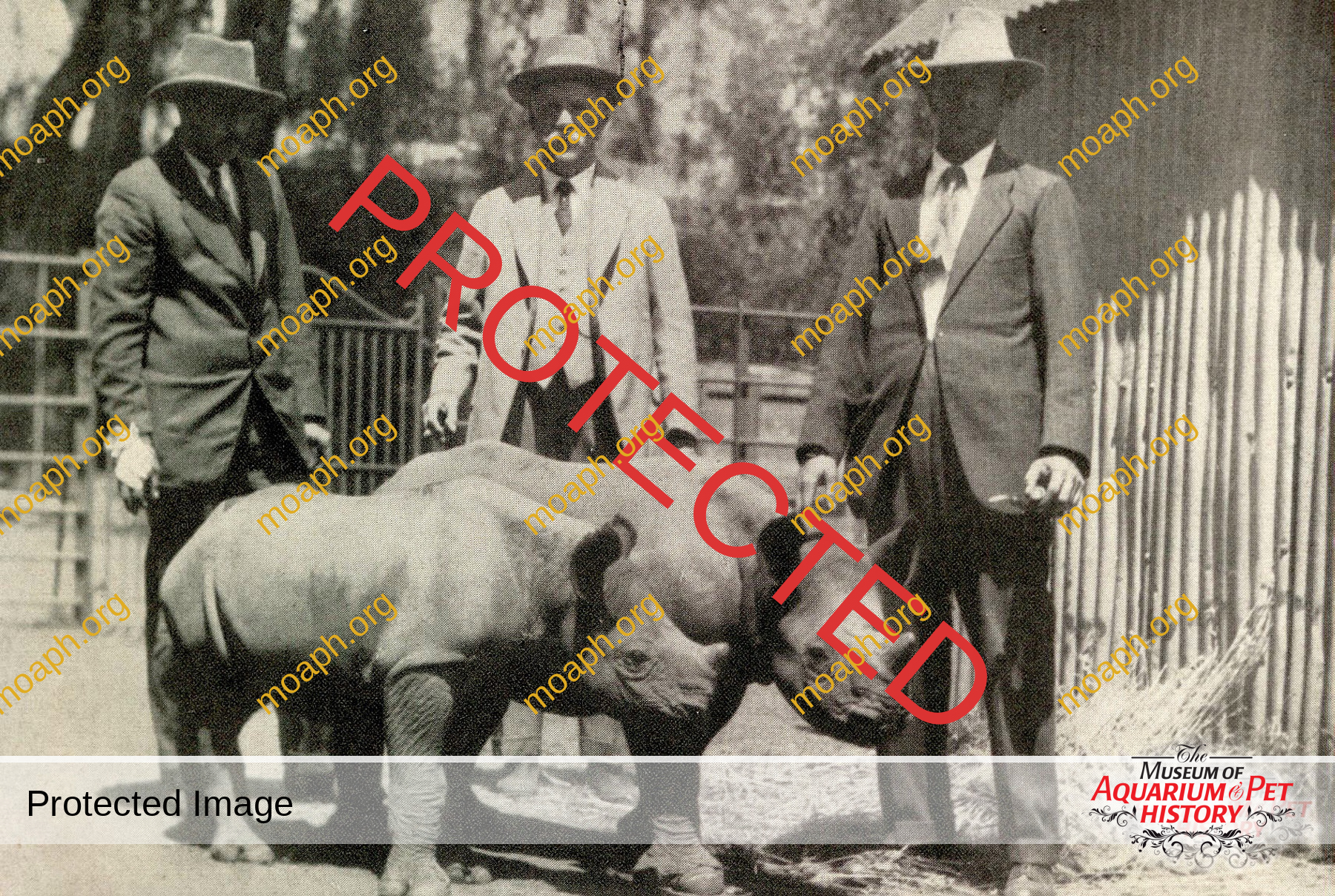
Franz Katzenstein (center) in the collection camp at Port Elizabeth in South Africa with two young rhinoceroses.
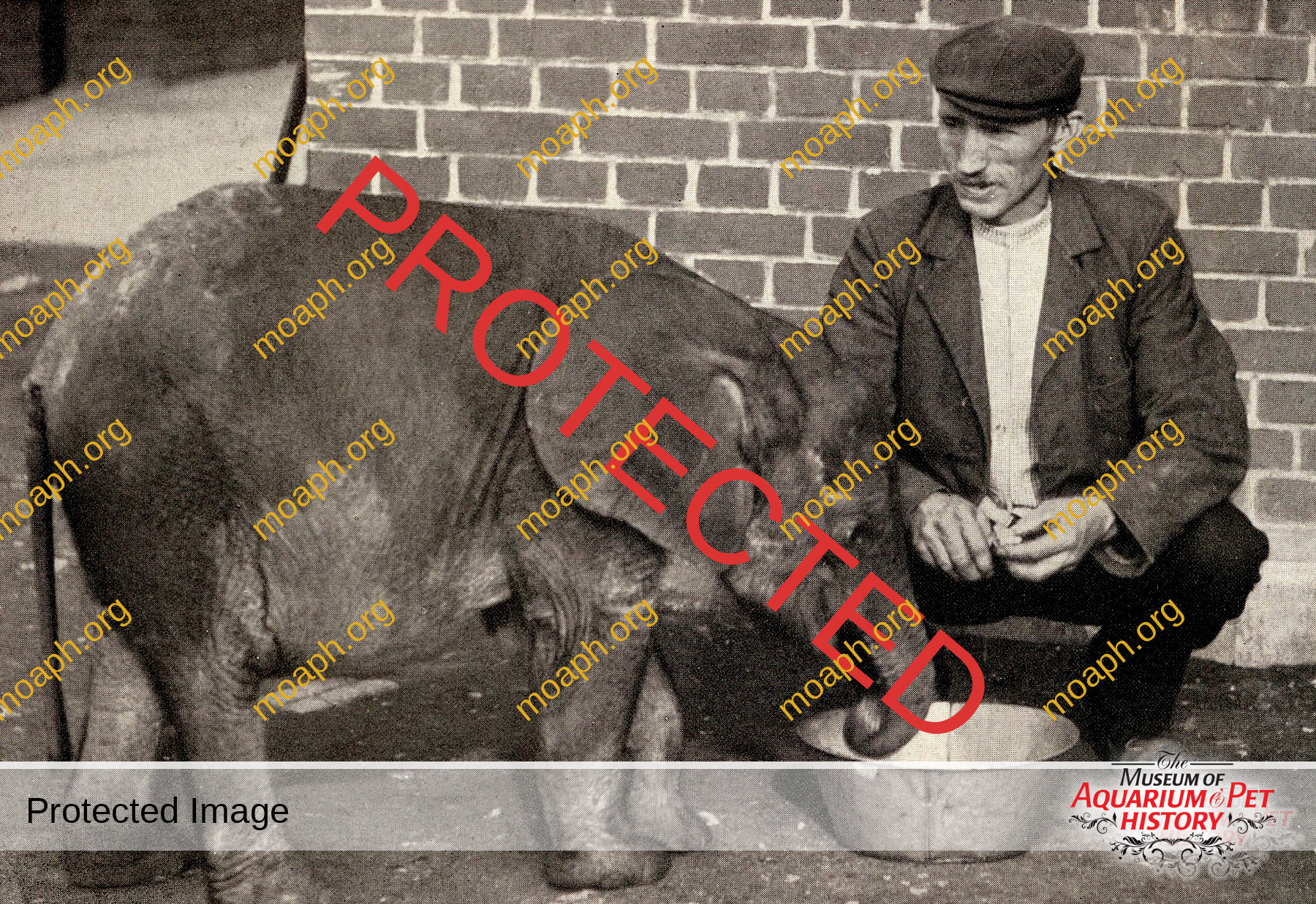
Young West African forest elephant, shortly thereafter sold to the ‘Daily Mirror’ as an advertising animal, with animal caretaker Heinrich Meyer.
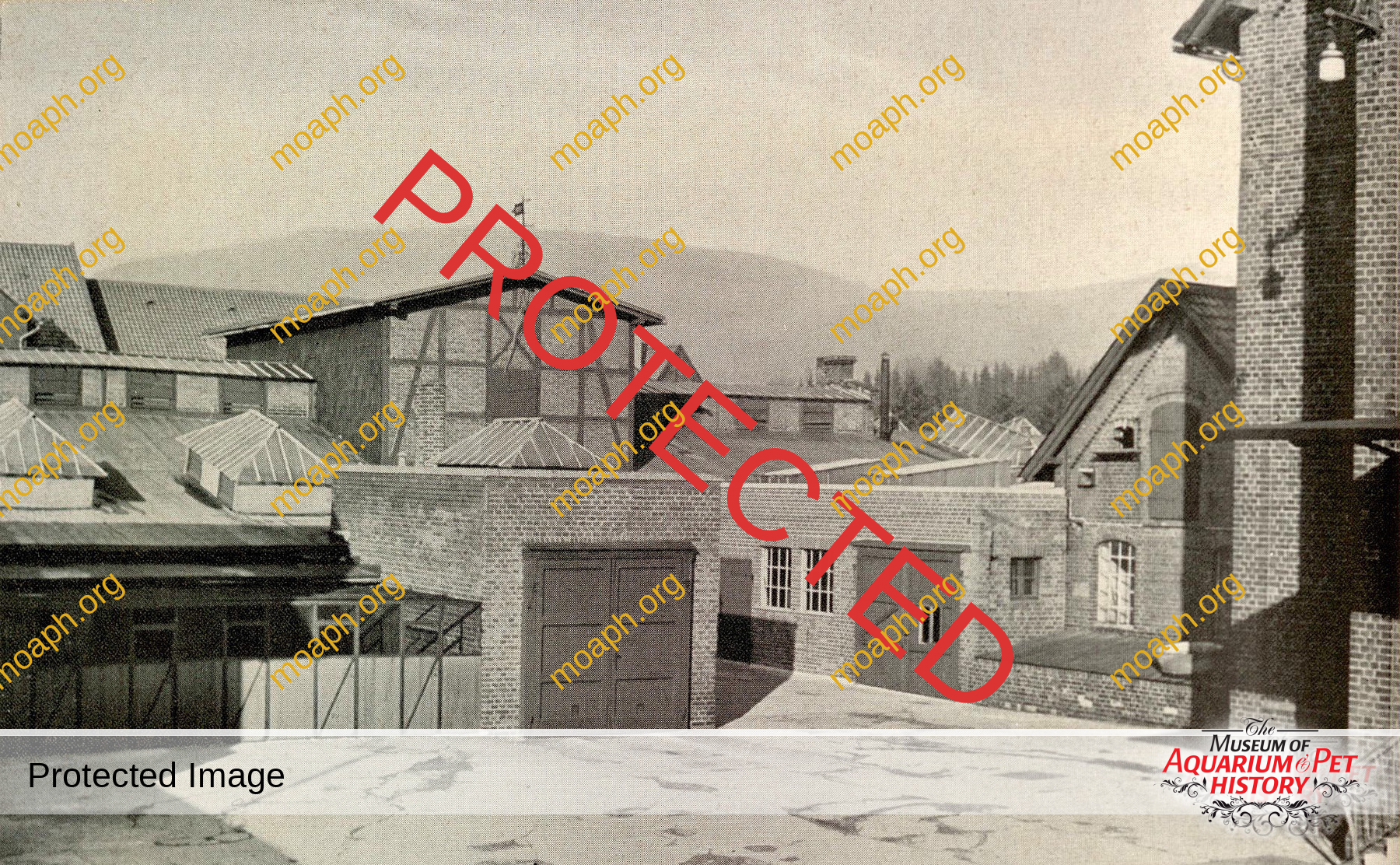
The front courtyard at Weiße Erde. On the right is the birdhouse, on the left are aviaries, and in between is the passage to the second courtyard, where on the left is the snake and predator house and on the right are the crocodile and hippopotamus pools. Behind, in the transverse building, are the two predator training arenas on the ground floor, and above them, 16 canary rooms.
“Alright!” I calmly replied although I wasn’t entirely comfortable with it. Just then, the animal shipper Windhorn arrived. He had heard the last words of our friend Josef as he waved me over before we parted ways and put his arm around me.
“Be careful, be quiet,” said Windhorn. “The deal has a catch”.
“But what should I do?” I asked.
“I wouldn’t let the animals go for less than 53,00012,” said Windhorn. “It’s a shame that you can’t sell them directly. They would certainly fetch even more. But that can’t be helped.” Windhorn noticed that Josef was waving. “You need to go back over to him,” he continued. “Be careful, Junior! A dozen of these Blue Points is something else. Let alone two dozen.”
“Keep your fingers crossed for me,” I said. Then I turned back to the waiting Joseph.
In peaceful harmony, we drove from the harbor to the Oyster Bar at Grand Central Station. Behind the counter of the large restaurant stood a nice, semi-blond barkeeper — a German who had become an American. His name was Fritz, and he had once been a steward on a passenger steamer before moving to New York. He greeted Josef like an old acquaintance. I examined him with a quick, attentive look. I was a stranger here, because of the few dollars I had in my pockets I would never have considered spending them on oysters.
“Fritz,” said Josef, “get us a couple of dozen oysters, the best ones. The biggest you’ve got.”
Fritz gave me another attentive look, then said, “Alright,” and began to clean and prepare the oysters.
“These are the best oysters from New York, Hermann,” Josef’s voice boomed across the room.
I tried one: lemon on top — down it went. “Excellent!” I confirmed. To emphasize, I immediately slurped down the second oyster and patted my stomach.
Josef grinned broadly. “Hey — Friiiitz — not these oysters, these are from the Cumberlands. Over there — the big ones for Mr. Ruhe!”
“Alright,” Fritz replied briefly and continued brushing.
By the time I had eaten the first ten oysters, the first twelve, I just swallowed them down. Without lemon — and without thinking.
Fritz excused himself for a moment and disappeared behind a door to the adjacent room. A minute later, he stuck his head through the door and called, “Is there a Mr. Ruhe? Telephone call!”
I climbed off the stool and went to the door, where Fritz was waiting for me: “Quick, Mr. Ruhe — over there. Fingers in your throat and out with it.”
So, as if nothing had happened, I returned and chatted with Josef for a while.
I followed his advice and quickly felt better. Fritz washed his face with cold water, straightened his collar, and returned to the bar.
“Sorry,” I said and sat back down next to Josef.
“Who was it?” Josef boomed.
“Uncle Bernhard,” I replied, thinking fast. “He reminded me not to sell to you!”
“But I’m not asking you about that. Here — the last oysters.”
I gulped down the next dozen oysters with full disgust. How I managed to swallow them down, I don’t know anymore. I haven’t been able to look at oysters for ten years.
But I managed to swallow all 24 of those devilish things!
Josef shook the last one into his mouth, swallowed, grabbed his wallet, and pulled out a check: 53,00013 dollars ! I thanked god that Josef hadn’t thought about how Uncle Bernhard could have known about our presence in the oyster bar.
MOAPH13: Today that is around $958,081
“Good evening, Uncle Bernhard,” I said as I entered his office, where Mr. Maier was just closing the cabinets and getting ready to go home. Uncle Bernhard stood, hands behind his back, at the window, looking out.
He turned around. “Well, my clever nephew? Did you get the 28,00014?”
MOAPH14: $506,156 USD today
A few months after my 53,000-dollar deal, a new transport arrived for Joseph from Sumatra via Kreth to Germany and then back to New York. It was two elephants, some giant snakes, two tigers, several monkeys, and magnificent, rare birds.
Uncle Bernhard was still the same. He ranted about the “madness” of my father, who sent one transport after another ‘to his neck,’ as he expressed it.
“Uncle Bernhard, stop,” I said. “We don’t want to start over from the beginning.”
“But it’s far too much all at once!” my uncle responded impatiently.
“If we can’t just sell everything at once, and then the animals here on the farm will eat us out of our profit.”
“Then sell them back to Joseph,” I said. And I was very sure of my position.
“Joseph — Joseph!” he exclaimed dismissively. “Even Joseph can’t need that many animals; it’s ridiculous how you imagine all of this.”
I turned away and decided to push the matter forward on my own. But that turned out to be completely unnecessary because Joseph was already at our house.
“We’ll meet right in the middle of the stairs,” he greeted me, turned around and walked back up with me.
“Morning!” beamed Josef and patted Uncle Bernhard surprisingly gently on the shoulder. “You know, Mr. Ruhe — this young man here — he’s already a damned fellow!”
“I’ve learned that from you,” I countered. “Always when we were together.”
We bantered back and forth.
“When I realized that Uncle Bernhard was making no effort to offer the transport to Joseph, I took it upon myself to invite him to inspect the newly arrived animals.”
“I’ve already seen them,” growled Josef. “But taking a second look won’t hurt.”
“Alright,” I said, “go ahead.”
The scene on the ship was almost identical to the one a few weeks earlier. Josef didn’t drive things forward at all. He calmly went about inspecting the animals in cages with his round and polished belly.
“How much?” he asked as if he were ready.
I had already figured it out. The bill was set at 18,00015dollars.
MOAPH15: About $325,386 USD today
“30,00016, Josef,” I said, “and no haggling! Take the animals as they are. I haven’t even seen everything myself and can’t go back on our deal. We must have 30,000. If you take them, our risk is eliminated — so you’ll get them for 30,000.”
MOAPH16: $542,310 USD today
Josef pushed the hat off his forehead and said, “Hmm,” then he went again and looked into all the crates.
“This time only oysters!” I called after him.
“As I watched the giant walk past the cages, as I noticed how carefully he inspected the animals, examining every foot and every eye, I suddenly found him even more likable than before. I began to feel my conscience.”
“Joseph,” I said, “come, we need to sit down and talk. I have a bad conscience”.
“Why?” he asked, came closer, and stayed standing in front of me.
“I’ll give you this transport for 27,00017 dollars.”
MOAPH17: Today that is roughly $488,079
“What?” Josef asked, astonished. “Why?”
“Because I tricked you last time. It wasn’t fair. I threw up the first twelve oysters.”
At first, he looked at me with his mouth open—then a booming: “Boooy!” And then he slapped me on the back with his huge paws so hard that I nearly fell off my crate.
“What a wonderful boy,” he then said very solemnly. “Such a typical German. Honest! And now I’ll pay you 33,000 dollars18—because you were so honest!”
And indeed, Josef wrote out the check for that amount. Uncle Bernhard had to sit down when he saw the figure.
MOAPH18: Today that is roughly $596,541.