Portrait of a Herpetologist as a Young Man – Part 2
Facial hair
“One useful function of a stage beard was its indication of masculinity and manliness. In The Merry Wives of Windsor, for example, when the townsfolk are gossiping about Master Slender, they suggest that he has a ‘great round beard, like a glover’s paring-knife.’ The shape, its density and suggested health of this beard set up a theater audience for a man in the prime of his manliness. Imagine the disappointment and hilarity for these people when they learn that in reality he has ‘a little wee face, with a little yellow beard’. Of course, the adjectives ‘wee’ and ‘little’ are derogative on various levels.”1
When one who was always cleanshaven like a newborn’s derriere decides to sport a beard, this new look engenders a myriad of reactions. When I returned home from college for summer break, my longsuffering mother gaped at her hirsute firstborn and tears began to form on her cheeks. My explanation that a beard expresses manliness fell on deaf ears. A herper friend was stimulated to compose a poem: There lives in the City of Hills; A creature of wretched design; Whose face is covered with quills; Which stretches the mind to define.
1 The Importance of Beards in Shakespeare. <https://www.shakespeare.org.uk/explore-shakespeare/blogs/glovers-paring-knife-beards-and-manly-professions/>
When one who was always cleanshaven like a newborn’s derriere decides to sport a beard, this new look engenders a myriad of reactions. When I returned home from college for summer break, my longsuffering mother gaped at her hirsute firstborn and tears began to form on her cheeks. My explanation that a beard expresses manliness fell on deaf ears. A herper friend was stimulated to compose a poem: There lives in the City of Hills; A creature of wretched design; Whose face is covered with quills; Which stretches the mind to define.
Xavier University, where I went to college, is located in Cincinnati, directly across the Ohio River from Newport, Kentucky. The latter was hailed as the “City of Sin.” I will not enumerate what that moniker encompasses — just use your imagination! One night, I traveled with colleagues to hear a friend play jazz piano at a popular saloon. A behemoth of impressive size blocked the entrance, stared directly at me and barked, “We don’t serve beards here!” I replied forcefully, “I don’t want a beard, I want a drink,” whereupon he pinned me against the plate glass window and called the cops. I was thrown into a cell overnight for being disrespectful to authority. Next morning, I was told to get the hell out of Newport and never return.
When I went to a college mixer at a nearby women college, I met a pleasant, attractive young lass and we commenced chatting about myriad subjects, including my beard that she thought was very sexy. Ahah, progress! Her lifelong plan was to become a veterinarian. She was excited about her large group of parakeets in her dorm room, stressing that she loved animals and wanted to teach these birds to talk but progress was slow. I suggested that they needed a strong stimulus so I would take one and place it next to my boa constrictor enclosure and teach it to say, “Help, please help. This snake is about to eat me!” Our interlude ended in a nanosecond.
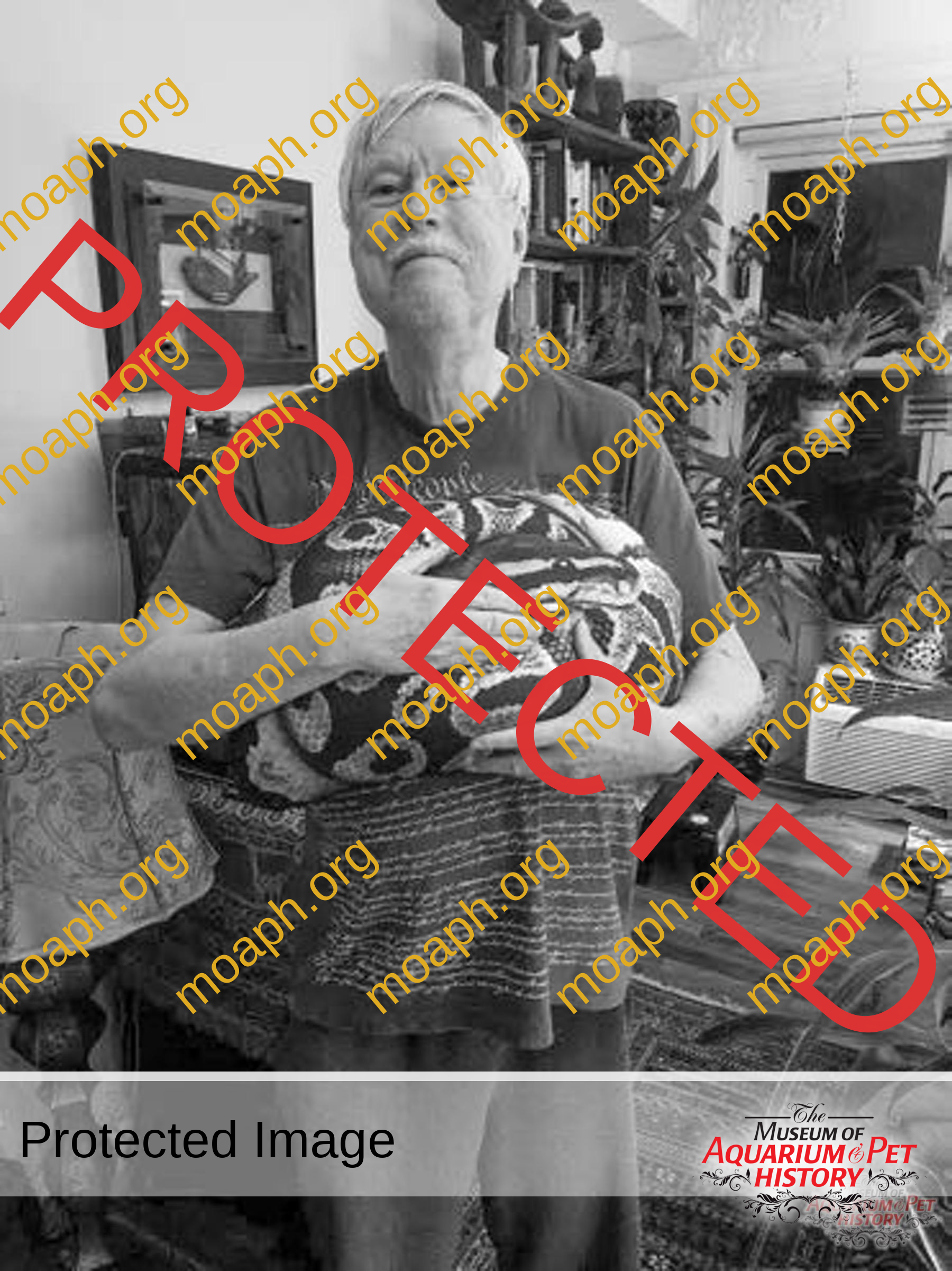
Figure 1. Jim Murphy holding a large ball python pillow.
While in graduate school at the University of Florida in Gainesville, I planned to drive in my Volkswagen “bug” to visit friends in Cincinnati. One herper, afraid to ship an adult ball python because it was winter there, asked if I could deliver it. (Figure 1 shows me later in life with a very different sort of ball python.) I agreed, but at the time my car was filled with food wrappers, beer cans, newspapers, decorative wood and rocks and so on, demonstrating a lack of cleanliness and sense of order. I noticed a gas station sign offering a free thorough vehicle cleaning if a full tank of gas was purchased. When the young attendant peered through the window, he was stunned. Gaping in amazement, he pulled all the heavy stuff out, threw out trash, vacuumed the floor — all the while with his mouth showing a bit of anger. Although I offered a tip that was accepted, he began taking down the sign as I drove away.
Upon reaching Polk County, Tennessee, a long line of traffic was moving slowly, so slowly in fact that I looked for a slime trail on the road. I began passing cars, weaving with alacrity through the throng. When I reached the front, a white car with a light on top turned sideways across the road, stopping the line. An overly obese, short officer [southern sheriff morphotype] wiggled out of the car. The following interaction took place:
“Where are you going so damn fast, boy?”
“I was under the speed limit, driving carefully!”
“This is a funeral line. You can’t pass cars.”
“How was I supposed to know — nothing was marked.”
“What are you . . . a damn hippie wearing those dirty clothes, long greasy hair, and a twisted beard that looks like a Brillo pad?”
“You can’t talk to me like that, you perfumed bootlick!”
Handcuffs appeared, I was pushed into the back seat, and his partner drove my car to the courthouse.
This courthouse was a combination courtroom/jail and was filled with persons awaiting their day in court. I was brought before the judge who asked if I had any questions before sentencing. I said that a live snake was in my car and that it needed to be brought inside or it would perish in the snow. Highly skeptical, he insisted that the snake be shown. I pulled the ophidian out from its cloth bag for all to see. The audience turned heads toward me, remindful of the head-turning mating behavior in flamingos, then bolted upright toward exits. Truly a magnificent example of collective ophiophobia. I was soon left by myself as the judge ran into his chambers and I briefly considered just leaving the premises, but realized that justice would treat me harshly. Eventually they peeked in and nervously returned to their seats.
I was put into a cell with a dipsomaniac who had not been sober for several days — all efforts to sober him back to normal had failed. Their last idea was to put the snake and me in the cell. He emitted a thunderous primal scream straight out of Hades. Next stop was a larger holding enclosure with a bunch of disreputable thugs, including a young arsonist who had ignited the family home, killing both parents. It was time to insist on separate quarters; the next morning I was released and told to drive as fast as possible to leave Tennessee.
Some years later, I was working at the Dallas Zoo. We often traveled to west Texas to collect critters. When we would stop to eat or have a drink, the locals would all be clean-shaven. This was before the now-popular trend for facial hair. When we entered these establishments, conversation ceased as all stared at us. Did not their parents teach them that staring is rude? It was like a scene from the movie Easy Rider.
Pierre Fontaine was director of Dallas Zoo and I had been told that he always met new employees. He stared at me in amazement from behind his desk with his mouth wide open and completely silent, refusing to shake my hand. Later I learned that his response was due to the uncomfortable fact that I was the first person ever employed by the City of Dallas who was hirsute — I had a mustache. The next day, he ordered me to shave; I refused and said that it was illegal to discriminate on the basis of appearance. He checked with the city attorney and discovered that my position was correct and he risked a lawsuit should he try to terminate me for insubordination. After some time, he got used to having a hairy employee, and gradually I became his surrogate son, confidante, and perhaps his favorite worker.
Social Interactions
Joe Smith, a friend who was a part-time student at Ohio State University (OSU) and a professional racing car/motorcycle driver, invited me to the annual homecoming weekend in Columbus, Ohio, featuring a football game between OSU and Purdue University. Since I was worried about injuries from both types of vehicle, Joe plied me with alcohol all Thursday, insisting during the day that he would take me late that night for a ride to assuage my nervousness. I reluctantly agreed, hopped on the bike, and began to become exhilarated. This feeling changed to completely terrified as I watched the speedometer steadily climb above 100 mph. The car ride was equally unsettling.
Festivities began Friday, again beginning with copious amounts of alcohol. Being of Irish descent, it was obvious and inevitable that I would succumb to such temptations. Joe had arranged a blind date at a sorority to attend the pep rally, followed by a giant fraternity soiree at a local air force base. It didn’t go well; my inebriated state stimulated me to greet our dates by darting around on the furniture and concluding by demonstrating “tone clusters,” using forearms and elbows to violently bang on piano keys in the style of famous composer John Cage.
As the evening continued, my primitive social skills became nonexistent, culminating with my date’s rancor, disgust, and refusal to dance with or speak to me. It finished when she went to another table and I went to a small bar adjacent to the dance floor. On arriving, I noticed an attractive dark long-haired woman on the stool weeping quietly. Ever the model of chivalry, I asked what was so saddening. She said that her pilot husband was dismissive, vulgar, abusive and treated her with lack of respect. In an effort to pacify her, I told her to stretch her legs across my lap and began stroking them with tenderness. She soon stopped crying and became quiet.
A short time later, husband arrived from a flight, caught sight of us, whisked her off stool by her hair, and dragged her screaming into the rainy night. Feeling responsible for this debacle, I followed them quickly through the exit and crashed into a vertical pole holding up the awning, landing into a water-filled ditch. Some of the frat boys came to my rescue and for no apparent reason, stretched me out on the hood of a car. Naturally I froze onto it and was later peeled off in my few remaining decent clothes.
I convinced Joe to bring me back to our domicile, a duplex with a group of college girls in the adjoining unit. Since I was so inebriated, I sat on the front steps to recover. Eventually, I felt better, so started to take a stroll. Along the streets in front of fraternity and sorority houses, were large chicken-wire and crepe-paper models decorating the front of these buildings. One — ten feet in height — caught my attention: a group of hollow bowling pins with sign: “BOWL OVER PURDUE” affixed to it. Inspired, I put it over my head and started walking down the street. Shortly thereafter, a large group of frat boys started rushing down the fire escape, shouting “There’s the bastard now!” Promptly losing ground with my burden, I tossed it aside and ran full-speed back to our duplex.
The next morning, I awoke to find an unknown woman sleeping next to me in a large double bed. Since I assumed that some friends stashed me there, I fell back to sleep, later to overhear one of the indignant girls demanding from Joe who that unknown guy was in their duplex. I had to tell the ladies that I had made a wrong turn last night — they eventually were mollified and a few were even amused.
Early Collecting Adventures
George McDuffie was a high school teacher in Cincinnati who regretted every moment of his interaction with his disinterested students. Equally distasteful were the required parentteacher open nighttime meetings to discuss the progress of students. In many cases, there was no progress, but parents were combative and made George’s life miserable with their demands to elevate grades. When one father was particularly insistent for an explanation as to why his issuance received an F+, George said that his charming daughter fell asleep, snoring during the test with her head on the desk and drool pouring from her mouth. As mentioned earlier (Murphy, 2021), George allowed free range of his collection in the classroom, so gators, rhino and green iguanas, large alligator snapping turtles, a water monitor and several Burmese pythons cruised around the students’ feet. The kids were so accustomed to the reptiles that they simply raised their limbs to allow passage beneath.
In desperation to no longer deal with adolescents, he enrolled in a doctoral program at University of Cincinnati studying copperheads (McDuffie, 1960, 1963). His study site was Shawnee State Forest and we accompanied him on many field trips. Lunches were primitive — dried white bread and endless soft drinks. He owned an old jalopy with the floor rusted out and totally open to the road. We would drive the vehicle over a herp and pick it up through the opening. George’s plan was never to leave the car to collect but rather see how many taxa/individuals he could accumulate by this method.
There was a family living there that had collected three adult ratsnakes that I bought for $1.00, and George bought a stunning, bright orange hog-nosed snake for the same — typically low — backwoods price.
George’s behavior requires expanded coverage. During visitor hours at Cincinnati Museum of Natural History, George surreptitiously sidled up to the water fountain, filled his cheek pouches and spit the liquid on the director who was passing. The director took up the challenge and gave chase. After the first volley, they chased each other in the public space, spraying water on one another, and to my amazement other staff and patrons joined in the melee. As far as I know, the visitors did not complain but rather joined in the game.
His wife Patti was a charming genteel woman who tolerated his shenanigans. As an example, when a group of women regularly attended a sewing party, several noticed two-pint jars with unknown materials within. George, ever the teacher, explained that he collected several bi-products of his body, namely earwax, spittle, and nasal exudate.
Charlie Radcliffe from Indiana University and George were inveterate traders. One interaction was particularly noteworthy as Charlie coveted a large ornate horned frog (Ceratophrys ornata) owned by George to be used for additional studies on pedal luring in other members of the genus (Figure 2). Earlier, I had recorded luring in C. calcata (Murphy, 1976), and so Dave Chiszar, Charlie, and I planned studies on congeners (Radcliffe et al., 1986). Charlie drove to Cincinnati from Bloomington to pick up this valuable frog. When Charlie arrived, he watched its feet go down the gullet of a stunning orange hog-nosed snake (Heterodon nasicus). Charlie exploded, “You %$&%@*^. You know I wanted that frog for a paper.” George’s response, “I ran out of food toads and I like this snake more than the frog. You should have been here. They struggled back-and-forth for nearly an hour — rear tooth against odontoid process. A real spectacle.” Charlie left in an immense volcanic rage. Not was not all lost as we found more ornate horned frogs later.
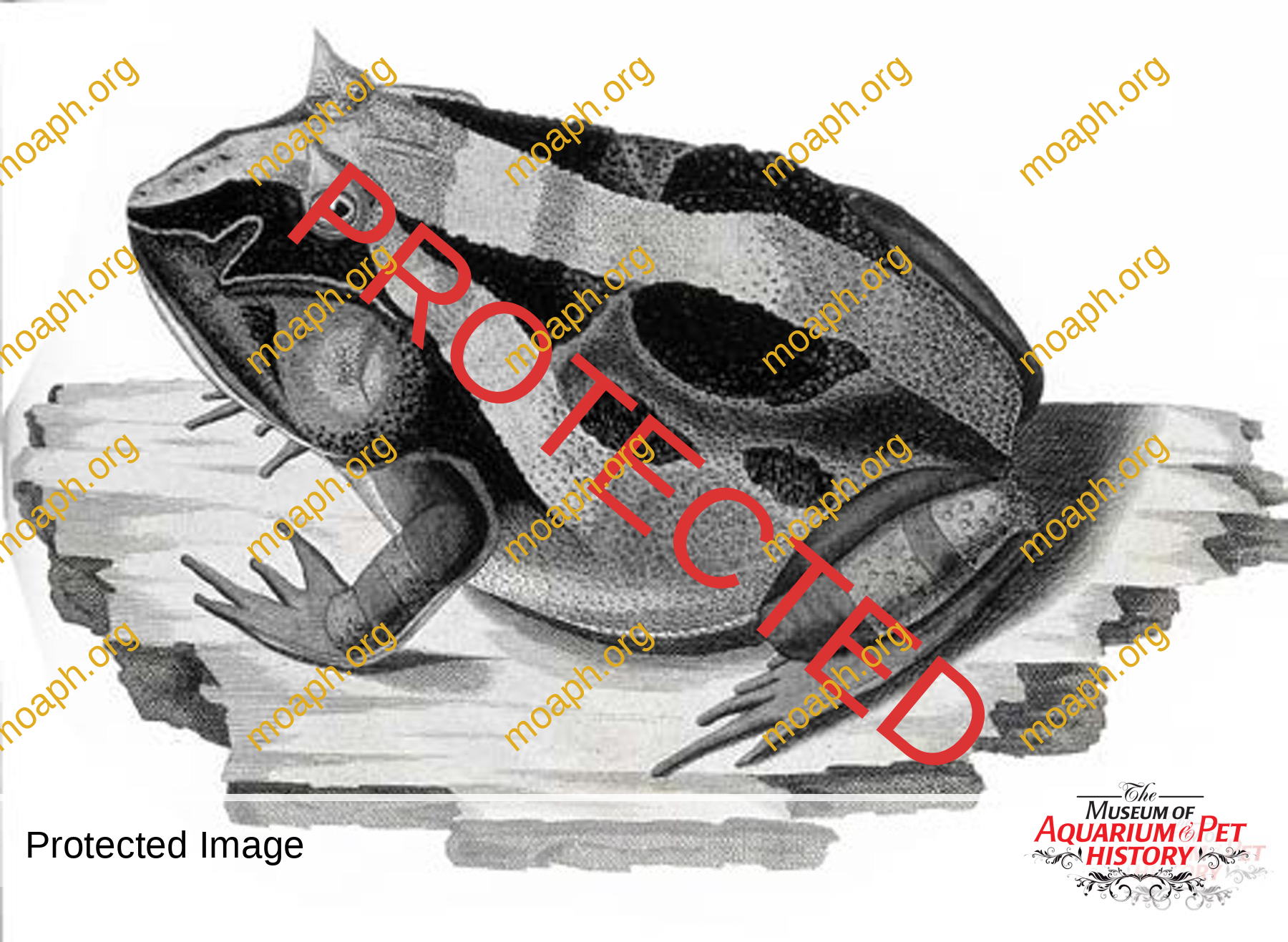
Figure 2. Horned frog (Ceratophrys aurita). Illustration from Abbildungen zur naturge-schichte Brasiliens by A. P. M. Wied- Neuwied, 1822–1831. Horned frogs use pedal movements to lure prey.
During college, we often traveled to the Appalachian region as J. T. Collins and others were assembling a collection from the area. One day we arrived at a creek where a general store and café were located on the bank. We stopped for a bite to eat and ordered soup. The soup contained a number of large grub eyes peering up at us; a sign on the wall alerted us that all food was caught in the creek. Using the field guide, we asked if any of the critters pictured had ever been seen. A surprising number had been but “only on the right side of the road.” That did not make sense, but since they were watching us we chose that direction. Of course we crossed back on the road when out of sight — what did they want us not to see?
Thirty minutes later, we discovered about a dozen 55-gallon drums with fermenting spirits, a dead squirrel, bird droppings, rotting leaves, and a couple of pickled tree frogs. Clearly they had tried to lead us astray. It was lucky we weren’t caught.
Payne’s Prairie near Gainesville, Florida, was an area that was always incredibly productive. The road before the interstate was built was packed with herps: deafening anuran choruses so dense that one had to creep by car to avoiding squashing them; dozens of water snakes, black swamp snakes, garter snakes, and ribbon snakes. Less common were mud snakes, hognose snakes, and rainbow snakes. In the spring, kingsnakes and indigo snakes emerged from brumation and were covered with dermal lesions. We collected them for treatment, but the lesions were sloughed after first ecdysis so they were released.
One of the graduate students had bought a heavy-duty Harley motorcycle and wanted to use it to pull a large floating wooden box called the “Goin dredge,” a device named for Professor Coleman Goin. This box was to be used to gather water hyacinths, capturing the herps in the plants. The idea was to drive at high speed on the road next to the Prairie along the water’s edge, towing the box by a long rope.
On the maiden voyage, a large group of us was excited to see the rope towing the box in the water become taut, pulling the bike and rider down the steep slope. Unfortunately they went quite high in the air and landed pretty far into the lake. It was remarkable, and so we clapped heartily when we saw he was uninjured. This was truly the stuff of legends.
My friend Elliott Jacobson, a highly respected veterinary pathologist from University of Florida in Gainesville, was program chair for a Florida Herpetological Society annual meeting some years ago. He asked me to give a presentation on captive management and he and colleagues would cover medical issues. Elliott invited me to stay in his home. Always the consummate host, Jacobson hosted a soiree at his abode. However, he is also known as a notorious practical joker. As I was preoccupied chatting with colleagues, he brought a tray of hors d’oeuvres. Without paying attention, I took a dead pink mouse impaled on a toothpick and put it in my mouth and nearly swallowed it. Everyone laughing clued me in that he was up to no good, so I spit it out on his clean rug.
Touring Experiences: Arthur Jones
After the above-mentioned meeting, Elliott and I traveled around Florida, stopping first in Ocala at the estate of Arthur Jones ((November 22, 1926 – August 28, 2007), inventor of Nautilus exercise equipment. Jones’s life was so bizarre that it deserves telling.
I first met Arthur Jones when he was an animal dealer who owned a roadside exhibit in Slidell, Louisiana, and I was in high school. He was an accomplished pilot, which was especially useful for the animal import-export businesses that he ran prior to the founding of Sports Medical Industry. Arthur was married and divorced five times, including marrying a 18-year old model when he was 55. He often prided himself on being a generalist, something that he described as a move away from the stubbornness and short-sightedness of “specialists.” He attributed this in part to his upbringing in a family of physicians, telling us several times that the competent man is one who, “should be able to put food on the table, build a house, tan a hide and deliver a baby.”
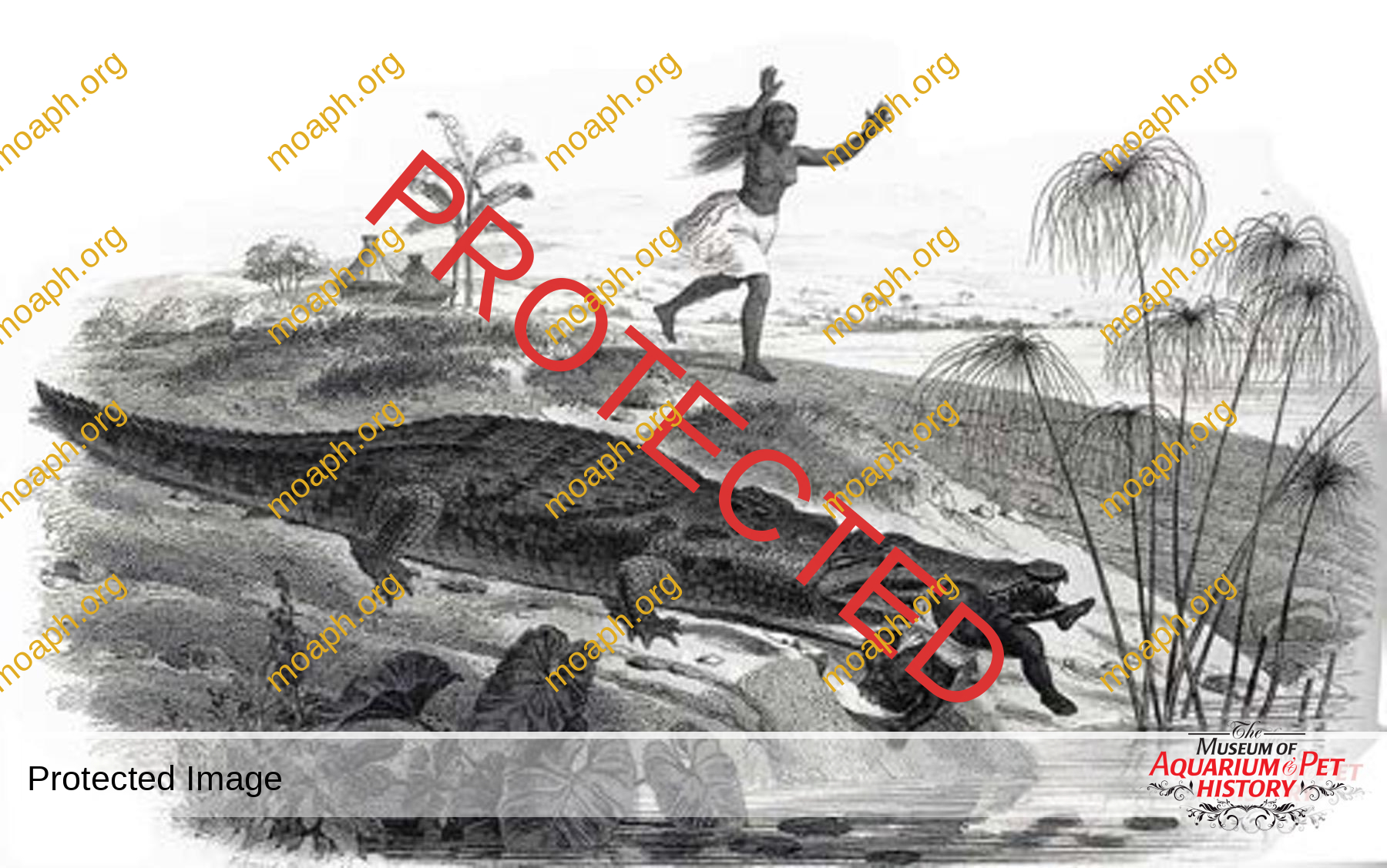
Figure 3. Nile crocodile (Crocodylus niloticus). Illustration from Histoire naturelle de Lacepéde, 1788. This species was extirpated from the Comoro Islands in the beginning of the 19th century and recently has disappeared from Israel.
Jones traveled widely with friend and fellow adventurer Roy Pinney (cameraman for his syndicated TV series, Wild Cargo, that I religiously watched), setting up camp for two years or so at a time in different places including Rhodesia and Mexico City. One segment showed him capturing ca. 16-foot Nile crocodiles, airlifting them by helicopter to his airplane, flying back to the US and selling them to several reptile dealers and exhibits (Figure 3).
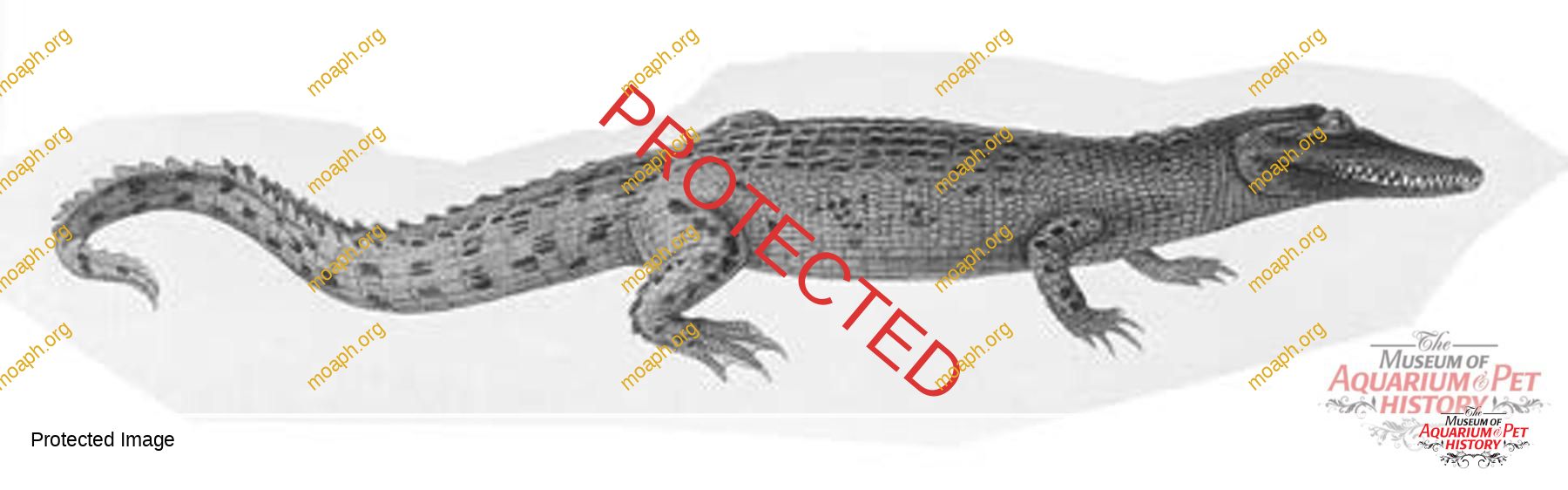
Figure 4. Salt-water crocodile (Crocodylus porosus). Illustration from The Zoological Miscellany: Being Descriptions of New, or Interesting Animals by William Elford Leach, 1814. “Human beings have a great dread of this voracious reptile. Many instances are known where men have been surprised near the water’s edge or captured when they have fallen into the river. There is, it is said, only one way of escape from the jaws of the Crocodile, and that is to turn boldly upon the scaly foe and press the thumbs into his eyes, so as to force him to relax his hold or relinquish the pursuit.” — J. G. Wood (1885), Popular Natural History.
He started his tour for Elliott and me by showing off his wife, Terri Jones, doing Nautilus commercials. He also shared several new projects. He was planning to write a book entitled Younger Women, Faster Airplanes, and Bigger Crocodiles. Jones’s Lake Helen, Florida, Nautilus building was the home of Gomek, an 18-foot salt-water crocodile that Jones was trying to grow to world record size (Figure 4).
As an aside, I saw another croc this size, called Cassius, at the Marineland Crocodile Farm on Green Island near Cairns, Australia. It was captured in 1984 in the Finis River, Northern Territory, Australia. Three years later, George Craig trucked the reptile over 3000 kilometers to Cairns, and then used a ferry to haul the monster to Green Island. I knew that Jones had purchased a similar-sized croc named Gomek from the Farm earlier. He flew back with it to Ocala where he had built a landing strip large enough to accommodate his jets, using one of his several planes that he was piloting. I asked a keeper if he knew how much Jones had paid for the animal and he said that all employees were sworn to secrecy. They were warned that Arthur always carried a 44mm Ruger pistol and threatened to use it if aggravated.
He was also an aficionado of venomous spiders and reptiles, a large collection of which was also housed in the Nautilus building. He ran a business that involved the importation of a variety of wild animals, ranging from tropical fish to snakes, parrots and monkeys. Jones’s household included a jaguar named “Gaylord” that had free run of the house. He once retrofitted several of his jumbo jets in order to transport 63 baby elephants that had been orphaned in Africa to his Jumbo Lair compound in Florida. Jones filmed the entire operation for television and entitled it Operation Elephant.
As Elliott was an expert on mycotic diseases, Arthur had needed his help to deal with unexplained deaths in a large and varied group of venomous snakes that he was holding to produce world-record lengths. To record these lengths accurately and safely, a large camera was hung from the ceiling, capable of taking life-size photos of the snakes. Hundreds of six-footsquare, heavy cardboard sheets were printed with 6-inch squares. The cardboard was placed directly under the camera and a snake placed on it. After the shot was taken, the snake was hooked back into its enclosure, string was used to measure the snake’s total length by following the vertebral column on the sheet and thus a permanent record was available.
When we visited the estate in Ocala, Kenny was our tour guide. His crocodilians remembered and responded to vocal commands, coming to the fences for feeding. Kenny wanted me to have the distinct pleasure of hand-feeding Gomek, the giant salt-water croc. Kenny walked into the shallow water, tapped the critter on its snout, stimulating it to open its gigantic mouth, and handed me a dead chicken for its lunchtime, giving me a rush seldom felt. I am grateful to Kenny for that experience.
Kenny brought us to the mansion to see Arthur and have a drink. As we approached the house, I noticed two large bushes trimmed into the shapes of A and T. The first thing I said to him was how thoughtful it was to display their marital union in such a dramatic manner. He told me I got it all wrong — the letters represented a woman’s anatomical parts!
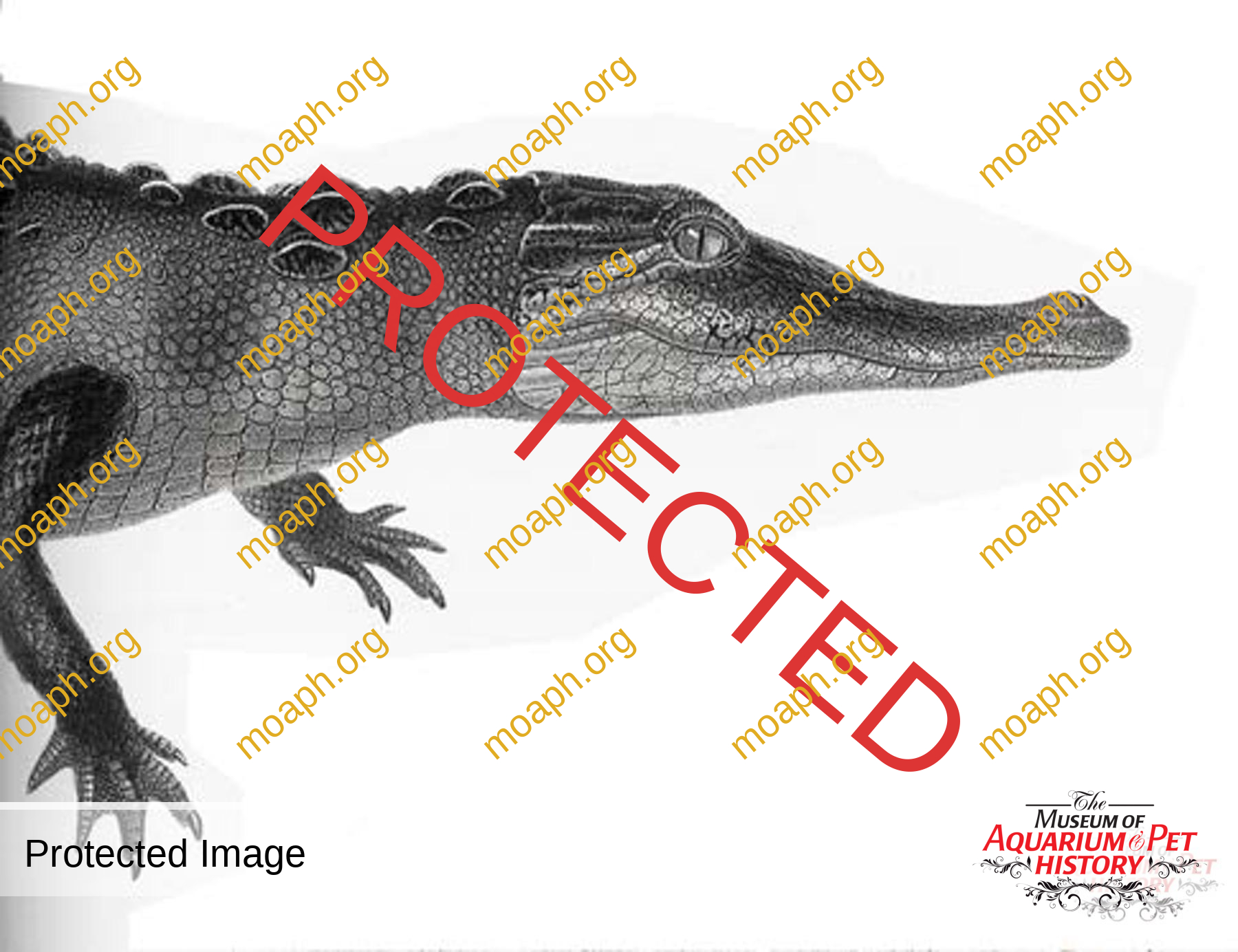
Figure 5. American Crocodile (Crocodylus acutus). Illustration from Historia Fisica, Politica y Natural de la Isla de Cuba, Tomo VIII. Atlas de Zoologica by Ramón de la Sagra, 1855.
Later we went to his office building where we walked into separate enclosures housing two 16-foot salt-water crocs and several dozen American crocs (Figure 5). These latter animals were ones that stuntman Ross Kananga had suggested for use in a James Bond movie, Live and Let Die, starring Roger Moore. Kananga’s idea was to have Bond jumping on crocodiles and he was enlisted by the producers to perform it. The scene took five takes to be completed, including one in which the last crocodile snapped at Kananga’s heel, tearing his trousers.
Jones had bought the whole group specifically to be used in a new office building. He showed us the blueprints: a huge circular aquarium with the office inside so employees could watch crocs swimming through large viewing windows. Then he took us to the temporary holding area where we walked through masses of these American crocodiles without incident.
Touring Experiences: Miami Serpentarium
The Miami Serpentarium, owned by Bill Haast, opened at the end of 1947, even though it was not yet completed (Kursh, 1965). By 1965 the Serpentarium housed more than 500 snakes in 400 cages and three pits in the courtyard. Haast extracted venom 70 to 100 times a day from some 60 species of venomous snakes, usually in front of an audience of paying customers. He would free the snakes on a table in front of him, pin and then catch the snakes bare-handed, and force them to eject their venom into glass vials with a rubber membrane stretched across the top. During one of these demonstrations we watched a banded krait flip off the table into the seated crowd; Bill deftly caught it with bare hands and returned it to its cage.
We, along with other visitors, noticed a wooden box had arrived from Africa and was opened in one of the large pits. A dozen green and black mambas exploded from the box, not one in a cloth bag. Bill used a small (3-foot) hook, and one snake was caught as it flew over his shoulder, while others crawled up small trees and bushes. All were caught without incident.
Soon after opening the Serpentarium, Haast began experimenting with building up an acquired immunity to the venom of king, Indian and Cape cobras by injecting himself with gradually increasing quantities of venom he had extracted from his snakes, a practice called mithridatism. He received his first cobra bite less than a year after he started his immunization program. During the 1950s, he was bitten by cobras about 20 times. In 1954 Haast was bitten by a common, or blue, krait. At first he believed his immunization to cobra venom would protect him from the krait venom, and continued with his regular activities for several hours. However, the venom eventually did affect him, and he was taken to a hospital where it took him several days to recover. A krait antivenom was shipped from India, but when it arrived after a 48-hour flight, he refused to accept it. His first king cobra bite was in 1962. Haast was also bitten by a green mamba. Many times Haast donated his blood to be used in treating snakebite victims when a suitable antivenom was not available. More than 20 of those individuals recovered.
When the Dallas Zoo reptile building opened in 1965, the director, Pierre Fontaine, saw Bill on the tube and insisted that we hire him for the grand opening. The VIP table was set up in front of the entrance doors and dining tables filled the rest of the room. I asked Bill if this arrangement was safe as he would do his demo there and he assured me it was fine since his show would be between the VIP table and the other ones. He also casually mentioned that he had been bitten by an Australian death adder two days earlier and still was suffering mild effects. Based on that added information, I stationed keepers surreptitiously with hooks and brooms. When he pulled out a large king cobra (Figure 6), this was another example of chaotic ophiophobia — terrified VIPs rushing for the exits, tables and chairs overturned, dishes and wine glasses shattered on floor — truly a memorable experience, surely the topic of conversation at Dallas cocktail parties for many weeks.
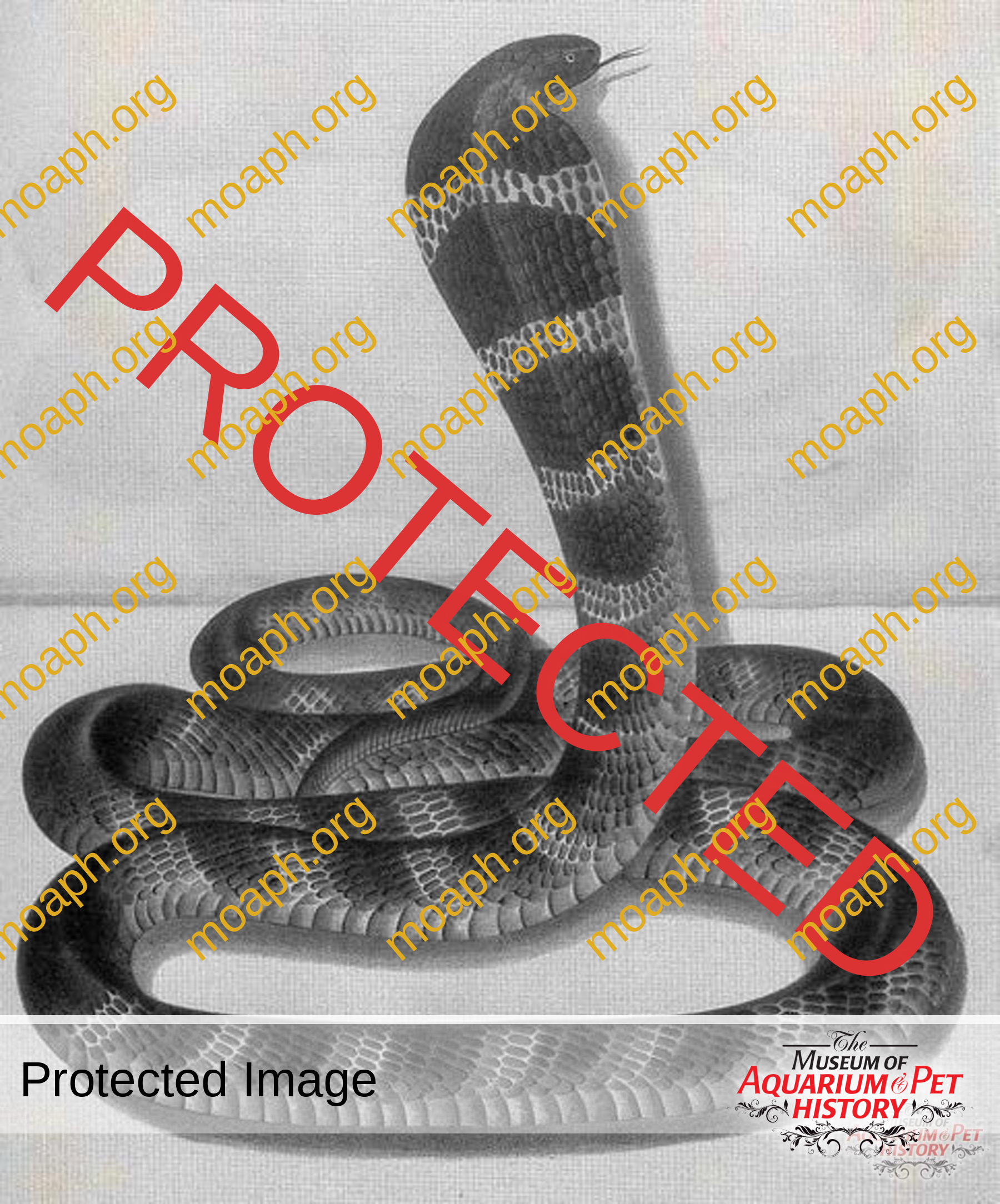
Figure 6. King cobra (Ophiophagus hannah). Illustration from The Thanatophidia of India by Joseph Fayrer, 1872. Found in Southeast Asia, king cobras are a major draw for zoo visitors. Scott Pfaff (pers. comm.) sent this interesting note: “I have an old, 1940s vintage, specimen record for a 4-meter Ophiophagus at the National Zoo that apparently ate 450 feet of indigo snakes over a 4-year period.”
On September 3, 1977, a 6-year-old boy sitting atop the wall surrounding the Serpentarium’s crocodile pit fell into the pit, and a 12-foot Nile crocodile lunged ten feet and grabbed the boy. The boy’s father and another man, Nicolas Caulineau, jumped into the pit and straddled the crocodile. Despite their efforts, the boy, who was battered and submerged, was killed.
The incident left Bill Haast badly shaken. He shot the 1,800- pound crocodile nine times with a Luger pistol, yet it was still an hour before it died. Before this, the crocodile had lived for 20 years in the pit without incident. Haast’s mental trauma over the boy’s death eventually led to the closure of the Serpentarium on South Dixie Highway. Although the boy’s father did not blame Haast for his son’s death, Haast told reporters he wanted nothing else to do with the Serpentarium and, in any event, would never again house crocodiles there. The incident did not end Haast’s interest in venom research. [from Wikipedia].
We can add to this account. When we went to his office, we noticed a series of Polaroid pictures of this croc pulling itself over the low gunnite fence and strolling around the public walkway each morning before the park opened, then sliding back into the enclosure. Bill said it was a daily behavior. He also said that this croc had leaped from the pool and snatched a poodle from a woman’s hands.
Haast closed the Serpentarium in 1984 (Figure 7), and moved to Utah for a few years. In 1990 he moved to Punta Gorda, Florida, with his snakes, where he established the Miami Serpentarium Laboratories. Haast’s hands suffered venomcaused tissue damage, culminating in the loss of a finger following a bite from a Malayan pit viper in 2003. As a result of the damage, Haast gave up handling venomous snakes, and no longer kept any at his facility. As of 2008 he continued to have his wife inject him with small amounts of snake venom. In an August 2008 Florida Trend interview, he stated, “Aging is hard. Sometimes, you feel useless. But I always felt I would live this long. It was intuitive. I always told people I’d live past 100, and I still feel I will. Is it the venom? I don’t know.” He did! Haast turned 100 in December 2010 and died on June 15, 2011.
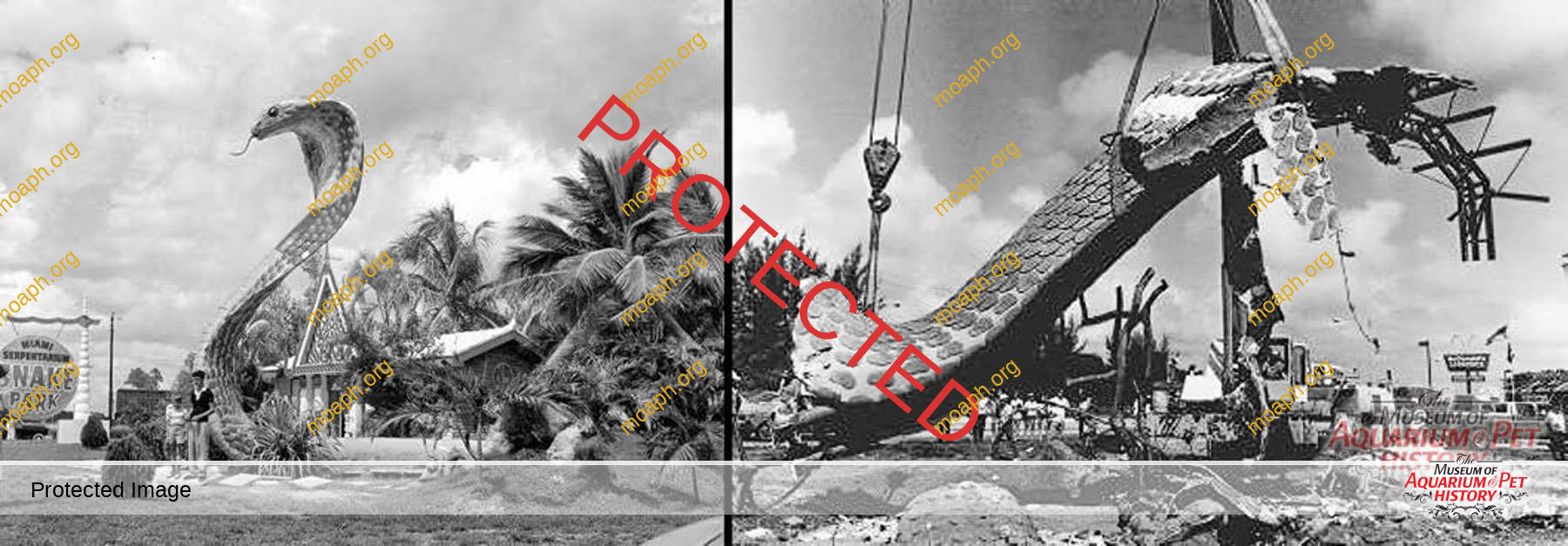
Figure 7. Death of the famous cobra at the entrance to the Miami Serpentarium after the 1984 closing.
Touring Experiences: Reptile World Serpentarium
George Van Horn was six years old when he met Bill Haast, who became his mentor. The first snake he ever picked up was a rattlesnake which struck at him but hit his fingernail without penetrating the skin. He started milking a cottonmouth in his grandmother’s basement and began filling a handmade vial of venom from it. He opened up the Reptile World Serpentarium in St. Cloud, Florida, in 1972. The most prominent feature is its daily venom-milking show. These shows involve George and Rosa Van Horn milking venomous snakes such as rattlesnakes, cottonmouths, and cobras for their venom while a crowd watches (separated by a glass window). Van Horn said in 2011 that he had been bitten at least 12 times by venomous snakes, causing significant damage. He received hospital treatment for king cobra bites in 1977 and again in 1995, and said he brings his own vial of venom to the hospital in such instances. He told us that he survived a king cobra bite by using epinephrine immediately thereafter and said it saved his life. I recommended that his account be published in the AZA Antivenin Index.
Touring Experiences: St. Augustine Alligator Farm
The St. Augustine Alligator Farm Zoological Park is one of Florida’s oldest continuously running attractions, having opened on May 20, 1893. It has 24 species of crocodilians, and also a variety of other reptiles, mammals and birds, as well as exhibits, animal performances and educational demonstrations.
Growing in popularity, the park moved to its current location in the early 1920s. The park changed owners in the 1930s, and, after a devastating fire, they started reconstruction and expansion of the facilities. In 1993, for their 100-year anniversary, the park became the first place in the world to display every species of crocodilian.
As of 2012, this was the only place where one can see every species of alligator, crocodile, caiman and gharial. Over the years, the zoo has expanded to include exotic monkeys, birds, and other reptiles. The bird collection alone boasts some species not often seen in other zoos, including hornbills, cassowary, marabou, Cape griffon vultures and Pesquet’s parrots. In 2008, the zoo opened a new Komodo dragon facility that also exhibits lizards and snakes found within the range of the salt-water crocodile.
Gomek, the large salt-water crocodile that I first saw at Arthur Jones’s facility, was sold to the St. Augustine Alligator Farm in 1990. For eight years he wowed spectators with his amazing tolerance of people. Employee Greg Lapera took me back into the enclosure to revisit Gomek. Visitors were able get as close as 1 meter from the large animal (a normally suicidal proximity) without any fear of attack. While feeders still used long tongs to feed Gomek, I tapped the croc on the snout and pleased him with a nutria afternoon snack as he was generally considered to be a “tame” crocodile — favorite of the Alligator Farm and people around the nation. After many years, Gomek died of heart disease on March 6, 1997. By then, he was a very old crocodile, and one of the largest and tamest captive crocodiles in existence. When he died, he was 5.42 m (17 ft, 9 in) long, and weighed 860 kilograms (1,896 lb) — as confirmed by St. Augustine Alligator Farm— and perhaps 70 years old. There is a tribute to Gomek near his enclosure, which now houses his successor Maximo and his mate Sydney and many art objects from New Guinea [from Wikipedia].
Literature Cited
Kursh, H. 1965. Cobras in his garden. New York: Harvey House.
McDuffie, G. T. 1960. Studies on the ecology and life history of the copperhead, Agkistrodon contortrix mokeson (Daudin), in Ohio. Ph.D. dissertation, University of Cincinnati.
——. 1963. Studies on the size, pattern and coloration of the Northern Copperhead (Agkistrodon contortrix mokeson Daudin) in Ohio. Journal of the Ohio Herpetological Society 4(1-2):15-22.
Murphy, J. B. 1976. Pedal luring in the leptodactylid frog, Ceratophrys calcarata Boulenger. Herpetologica 32(3):339-341.
——. 2021. Portrait of a herpetologist as a young man. Bulletin of the Chicago Herpetological Society 56(6):85-87.
Radcliffe, C. W., D. Chiszar, K. Estep, J. B. Murphy and H. M. Smith. 1986. Observations on pedal luring and pedal movements in leptodactylid frogs. Journal of Herpetology 20(3):300-306.
From the Bulletin of the Chicago Herpetological Society
Some of the vignettes in this article have been published elsewhere, but are included again here to produce continuity.