Cats as Literary Muses
A number of famous authors have expressed a deep love for cats and have been inspired to write about the cats that they themselves kept. Samuel Longhorn Clemens (1835-1910), better known as Mark Twain, was recognized as a great ailurophile. As far as his own cats were concerned, he tended to choose very elaborate names for them. These ranged across the full spectrum of the alphabet, from Apollinaris to Zoroaster.
When asked why this was the case, he admitted to choosing such names as a way of encouraging his children to learn how to pronounce unfamiliar words! The evidence suggests, however, that the cats themselves may have had difficulty in learning their names. Cats are known to respond better to short words, which incorporate long vowel sounds. Twain ultimately relented to some extent, though, naming two others with more straightforward names: Buffalo Bill and Sour Mash.
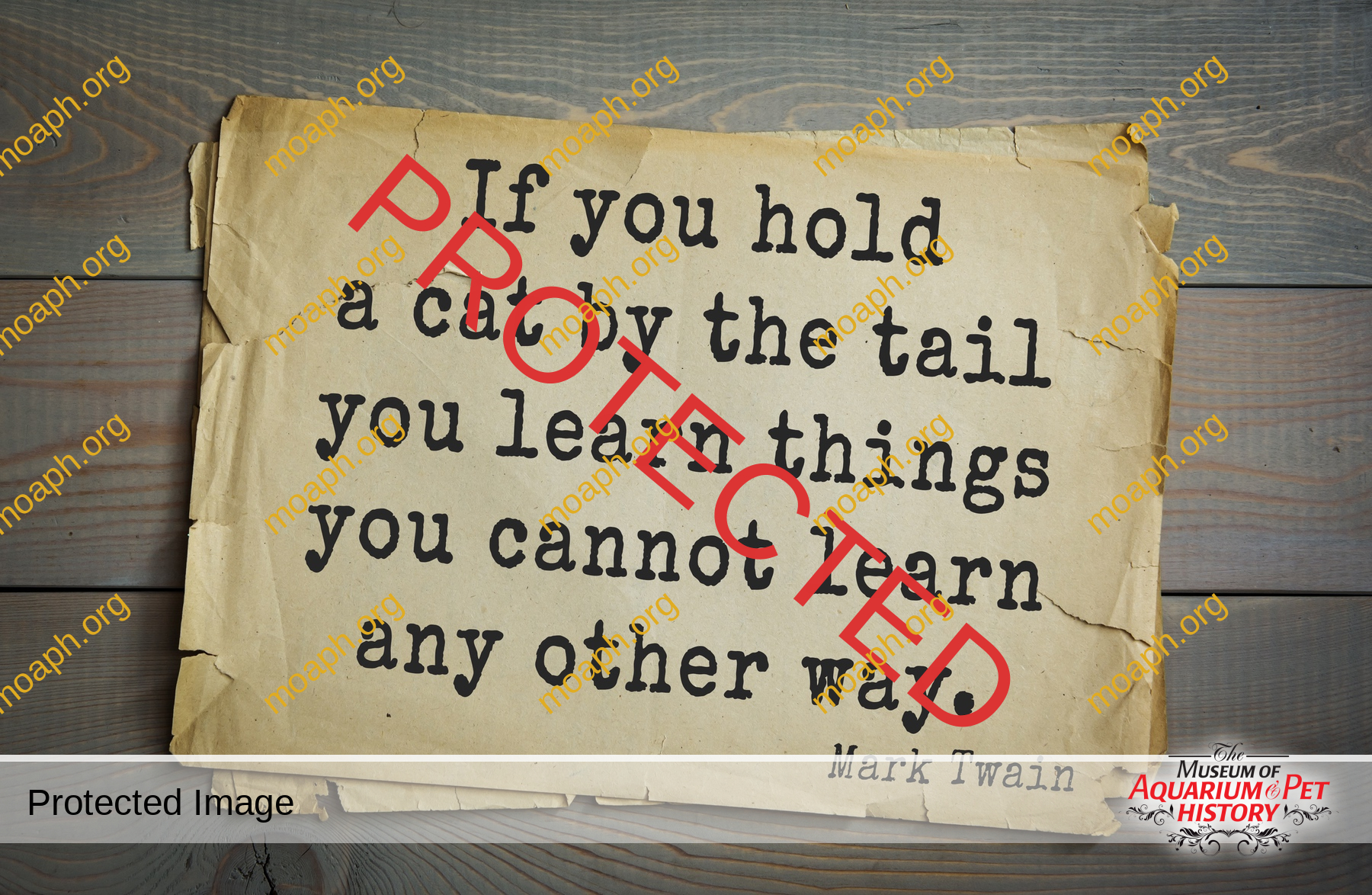
One of Twain’s best-known aphorisms about cats. Photo courtesy of Oleg Golovnev/shutterstock.com.
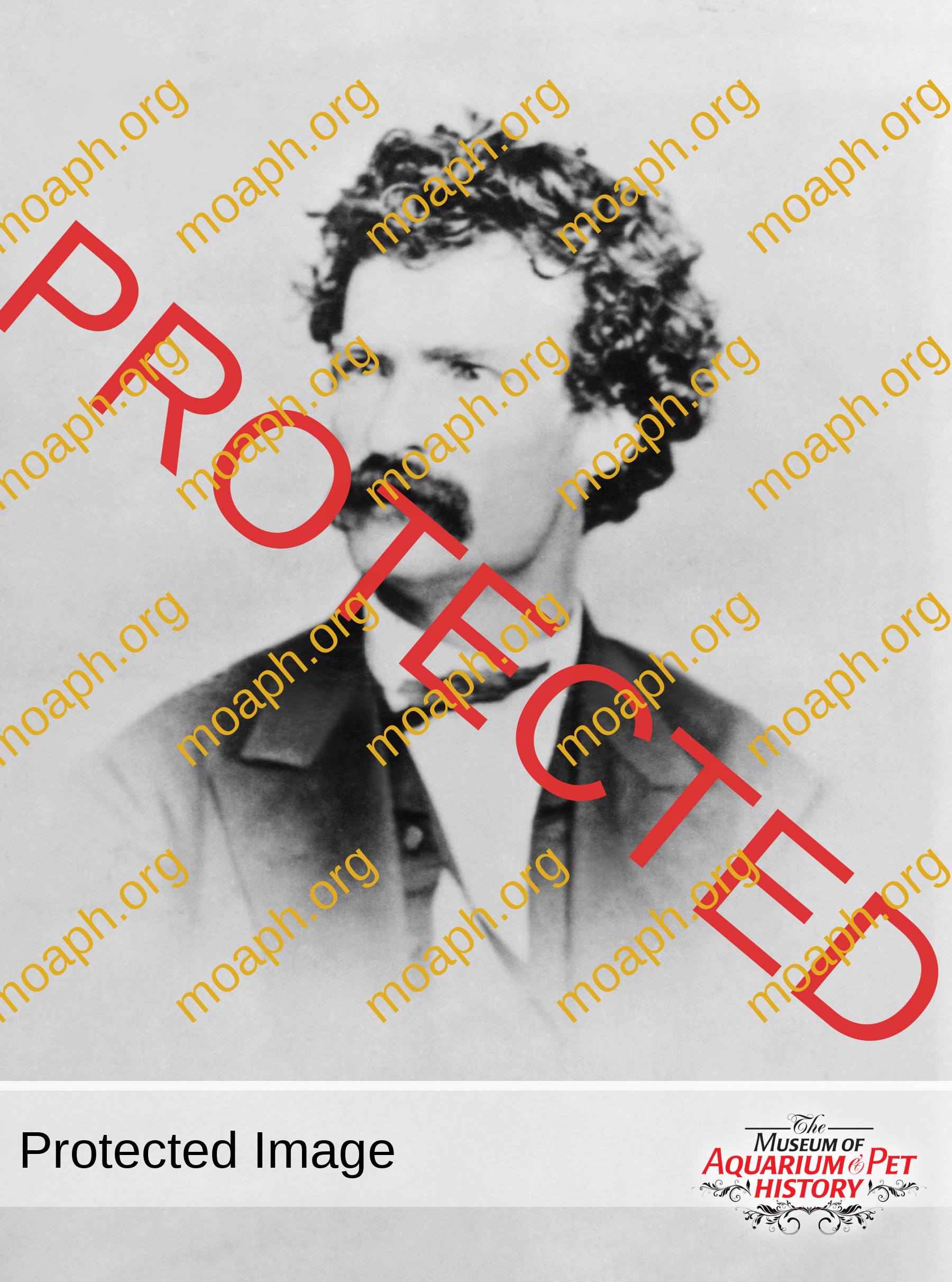
Mark Twain as a young man. He was about 29 when this photo was taken. Photo courtesty of Everett Collection/shutterstock.com.
Colette’s menagerie
The French novelist Colette (1873-1954), who is best known today for her novel Gigi, was a highly controversial figure, with her various affairs causing considerable scandal, but there is no doubt that cats played a central role throughout her life. They also featured quite prominently in her writing. There was Sept Dialogues de Bêtes, which was first published in 1913, and described the relationship between her Turkish Angora cat, called Kiki-la-Doucette and Toby, a French Bulldog.
She wrote about the Chartreux too, which is a bluish-grey breed native to France and rarely seen elsewhere, even today. It was developed at the monastery of La Grande Chartreuse which lies to the north of Grenoble, in the south-east of the country. Colette’s novel, entitled La Chatte, tells the story of Saha, a Chartreux who was badly mistreated by her owner’s new wife, ultimately leading the couple to split up. An English version of this story was published in 1936.
Nor was Colette’s involvement with cats confined to domestic individuals. She even had an African wild cat for a period, whom she christened Ba-tou and featured in her work La Maison de Claudine which appeared in 1922. She described Ba-tou as being less secretive than domestic cats. In fact, his obvious predatory instincts meant that he finally had to be sent to a zoo, rather than remaining as a pet alongside the rest of Colette’s menagerie.
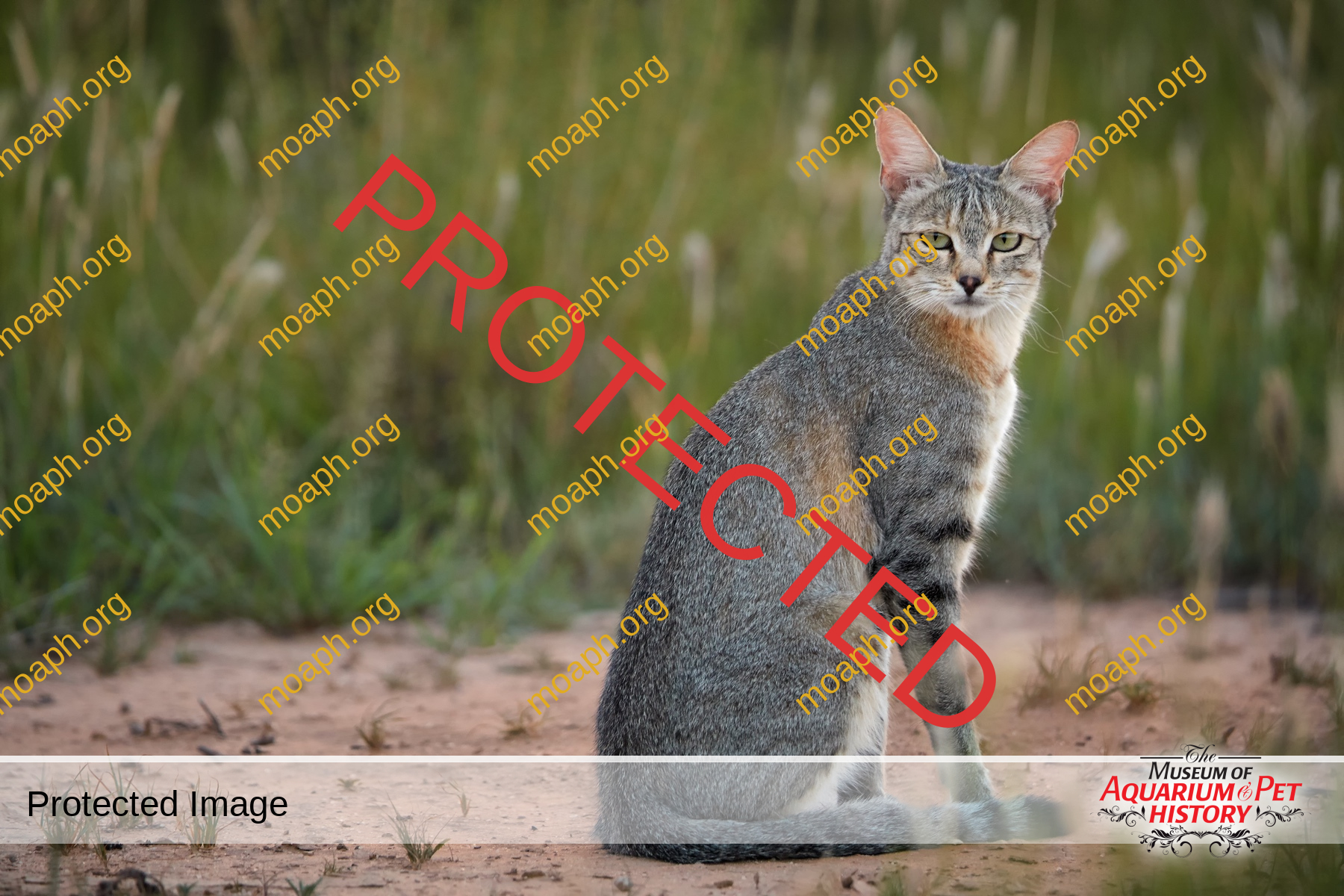
An African wildcat. Photo courtesy of Martin Mecnarowski/shutterstock.com.
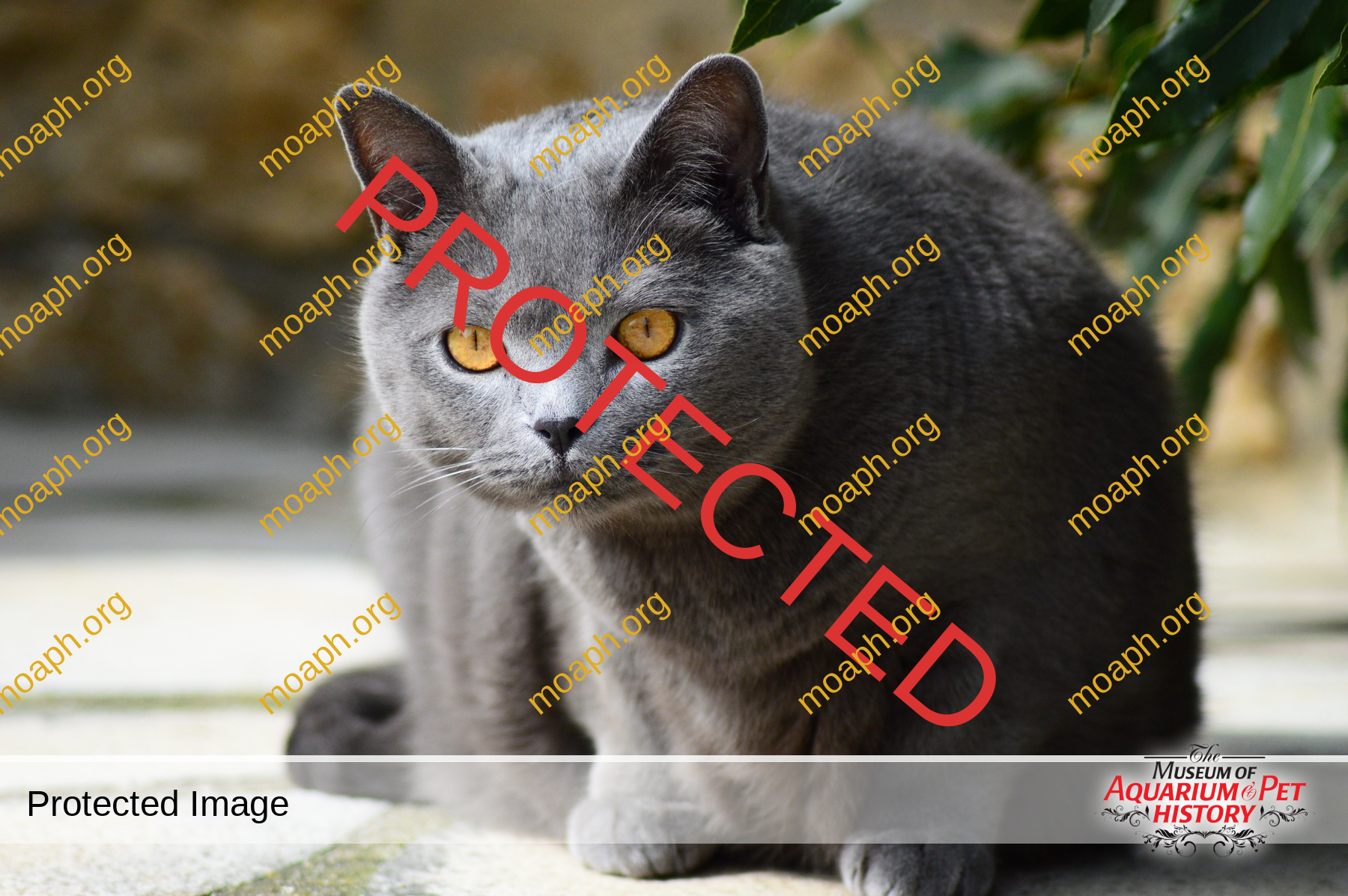
The exceedingly rare Chartreux breed. Photo courtesy of Sophie Bortoluzzi/shutterstock.com.
Beatrix Potter’s animals
Beatrix Potter (1866-1943) had a keen interest in animals from early childhood, and trained herself to draw them, taking her early inspiration from her pet rabbits. While today, she is best known for her character Peter Rabbit, a number of cats featured in her stories as well. The earliest was Simpkin, who appeared in The Tailor of Gloucester, which was originally published in October 1903. It soon became a tradition for this story to be read to children on Christmas Eve, as the events described take place over Christmas.
The tailor is very poor, living over his shop with his cat Simpkin and some mice. Simpkin is asked to buy some fine silk, so the tailor can complete a fine wedding coat for the mayor, but is angry to find that his master has released the mice in his absence, so he hides the silk. The mice, however, work through the night and complete the coat for the tailor, all except for one buttonhole because they run out of thread.
A more sympathetic portrayal of cats followed four years later, in The Tale of Tom Kitten. This introduced not just Tom, but also his littermates, Mittens and Moppet. They were always involved in mischief, much to the consternation of their mother, Tabitha Twitchit. She sends them out, imploring them to keep their new clothes clean, but then they end up in trouble, and lose a number of their clothes to some ducks. Full of shame, Tabitha then has to hide her offspring away upstairs when visitors call, using the excuse they have measles to explain their absence.

Hill Top House near Sawrey in England’s Lake District was Beatrix Potter’s home, and provided the setting where Tom Kitten and his family lived. Photo courtesy of Charlesy/shutterstock.com.
Popular characters
A number of Beatrix Potter’s characters feature in more than one book, as in the case of Tom Kitten. In 1908, he was fighting for his life in The Roly-Poly Pudding, having been caught by Mr. Samuel Whiskers and his wife Anna Maria, who, as rats, decide to make the young kitten into a pudding. This story ultimately became better known as The Tale of Samuel Whiskers when it was republished in 1926.
His sister Moppet featured in her own tale entitled The Story of Miss Moppet. It describes how she tries to catch a mouse, but fails to do so. Moppet then wraps a duster around her head, and the mouse, intrigued by this behaviour, emerges from his hiding place and sneaks back to have a closer look, not realising that she can see him through a hole in the duster. This enables her to pounce, and this time, she catches him and wraps him up in the duster. But just as she could see the mouse, so it in turn manages to escape through the hole in the duster.
In the following year, The Tale of Ginger and Pickles was published. This featured Ginger, who was a tomcat, and his business partner, a terrier called Pickles, who tried unsuccessfully to run a shop, but allowed their customers to have too much credit. Once again, Tabitha Twitchit featured in the story, but this time, she ran a rival shop, increasing her prices once the other shop had gone out of business, although in the end, it was reopened by a hen called Henny Penny.
Feline characters in Beatrix Potter’s stories
- Ginger – The Tale of Ginger and Pickles
- Mittens – The Tale of Tom Kitten
- Moppet – The Tale of Tom Kitten / The Story of Miss Moppet
- Simpkin – The Tailor of Gloucester
- Tabitha Twitchit – The Tale of Tom Kitten / The Tale of Ginger and Pickles
- Tom – The Tale of Tom Kitten / The Roly-Poly Pudding / The Tale of Samuel Whiskers
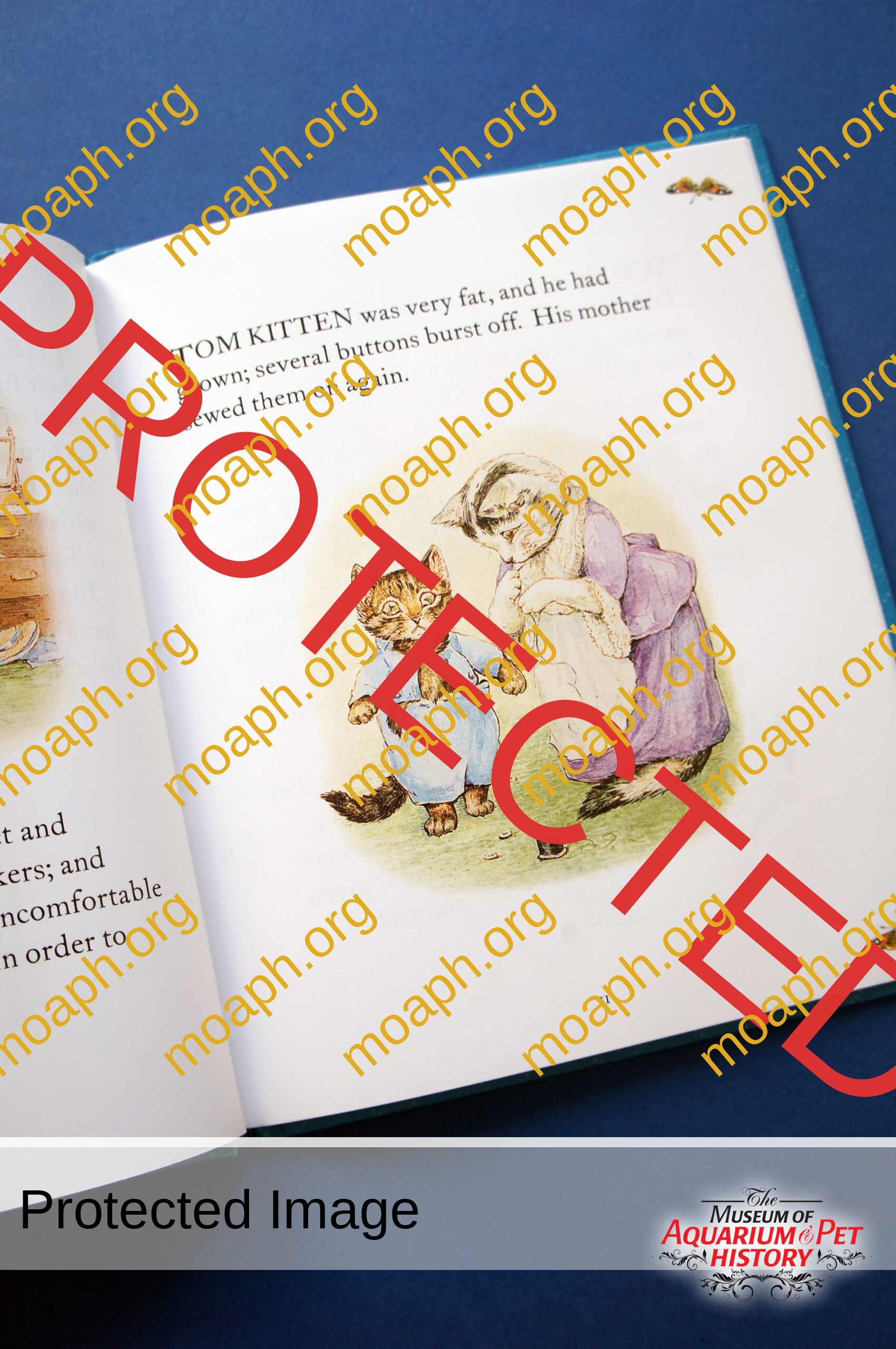
Tom Kitten with his mother. Photo courtesy of marhus/shutterstock.com.
The cat called Thomasina
The American writer Paul Gallico (1897-1976) wrote four quite different books about cats and their lives. This began with Jennie (better-known under the title of The Abandoned in the U.S.) which was first published during 1950, followed by Thomasina : The Cat Who Thought She Was God, seven years later. Thomasina is a red tabby, who is the treasured pet of Mary Ruadh, the daughter of a veterinarian. Believing Thomasina to be dying, the vet puts her to sleep, but fails to administer a lethal dose of anesthetic for this purpose.
As a result, Thomasina ultimately wakes up, being saved by a woman called Lori. She is delusional however, believing herself to be the reincarnation of an Egyptian cat goddess. Meanwhile, her owner, overcome by grief, becomes suicidal. Luckily, Thomasina manages to find her way back home and recover from her experience.
This story was adapted by Walt Disney, to create the film The Three Lives of Thomasina which premiered in 1964, starring the English actress Susan Hampshire as her owner. The story then became so popular in the former USSR that it was remade, under the title Bezumyana Lori in the 1990s.
Even more popular with cat-owners was Gallico’s book The Silent Miaow, published in 1964, which was subtitled “A manual for kittens, strays and homeless cats”. Gallico claimed he translated the text from cat talk, creating a guidebook to give information about how cats can engage with and train a family.
It was an illustrated work, with photographs taken by Suzanne Szasz. His final work about cats, Honorable Cat, then appeared in 1972, four years before his death. This was a book of poems about cats, with an extensive introduction about them and featured over 70 striking colour photographs.