A Different Type of Training

Photo courtesy of Ferbies/www.shutterstock.com
It is no coincidence that dogs have become our closest animal companions. From the earliest days of their domestication, they have adapted to working alongside us in a wide variety of roles. Nevertheless, the tasks undertaken by dogs have altered significantly, often in the face of technological progress down through the centuries. The emergence of the world’s first national train network in Britain led to a new role for our canine companions, although today, their efforts there have been largely forgotten, as David Alderton reports.
Being employed on the railways used to be a lot more dangerous than it is today. In the U.K. alone, many thousands of workers were killed and injured, both during the construction of the network and on the trains themselves, notably during the steam era. Concern for the families of railway staff who had lost their lives at work led a guard called John Climpson, who was employed by the then London, Brighton & South Coast Railway, to set up a unique scheme to assist them.
Initial inspiration
During the 1880s, he owned a collie appropriately called Help, who was enlisted to provide support. Help became the first of a wide assortment of what became known as collection dogs, helping to raise funds to assist the widows and orphans of railway workers. He travelled widely around Britain, and even crossed the English Channel on the boat trains to France.
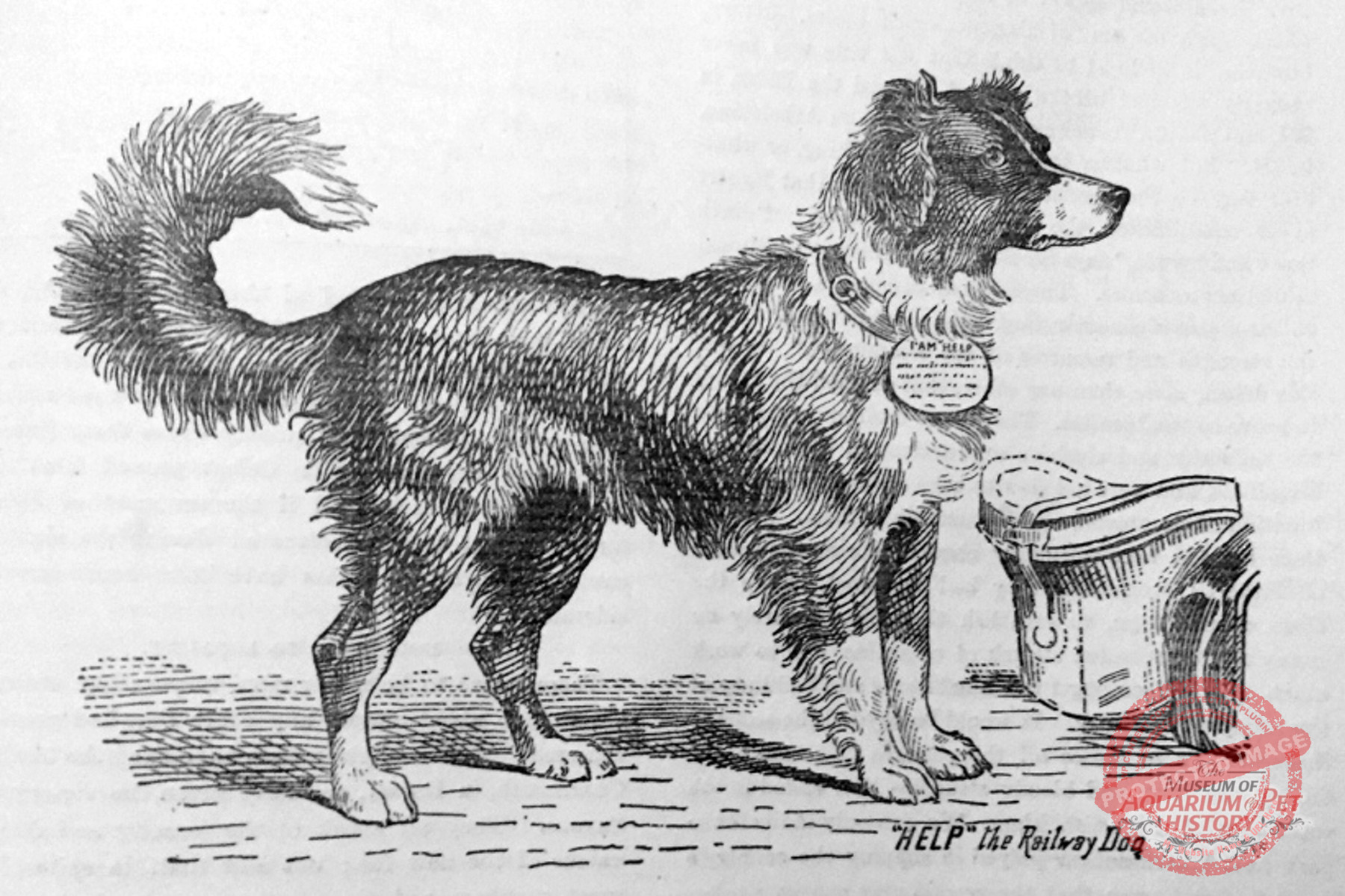
An illustration of Help, the pioneering collection dog, showing his special medallion and collection box, drawn from life in 1889 by Wilson Hepple. Source PD.
Help wore a special silver medallion, by way of introduction, engraved with the words “I am Help the Railway Dog of England and travelling agent for the orphans of railwaymen who are killed on duty”, along with the address to which donations could be sent.
After Help died in December 1891, his body was given to a local taxidermist. It was then mounted on display for a period at Brighton Station, with a nearby collecting box for donations. He had started a trend that captured the public’s heart. Help’s initial efforts were ultimately to lead to countless tens of thousands of pounds being raised from sympathetic passengers over the course of the next 75 years or so, as the scheme spread around the country.
Royal approval
One of the most famous of all the country’s railway collecting dogs was an Irish Terrier christened Tim, who began work in 1892, just after Help’s death. He was based at London’s Paddington Station, and soon became well-known to the passengers there. On several occasions, Tim even met Queen Victoria (who was herself a great dog-lover) and delighted her by bowing graciously when she placed a golden sovereign in his box.
During his lifetime, Tim collected more than £800/$1075 for the Great Western Railway’s Widows and Orphans Fund. On his death in 1902, his obituary appeared in more than 20 newspapers, and his body was preserved and remained on display at Paddington Station until the 1950s, although his present whereabouts are unknown.
A contemporary of Tim was London Jack, whose beat in the capital was Waterloo Station. Here he raised over £500/$675, which was ten times more than the annual average wage at that time. Unfortunately, he was dog-napped at the age of eight years old by a gang of thieves.
Although later found, London Jack was apparently badly affected by this experience. In spite of being sent to the Isle of Wight for a period of convalescence, he sadly died soon afterwards.
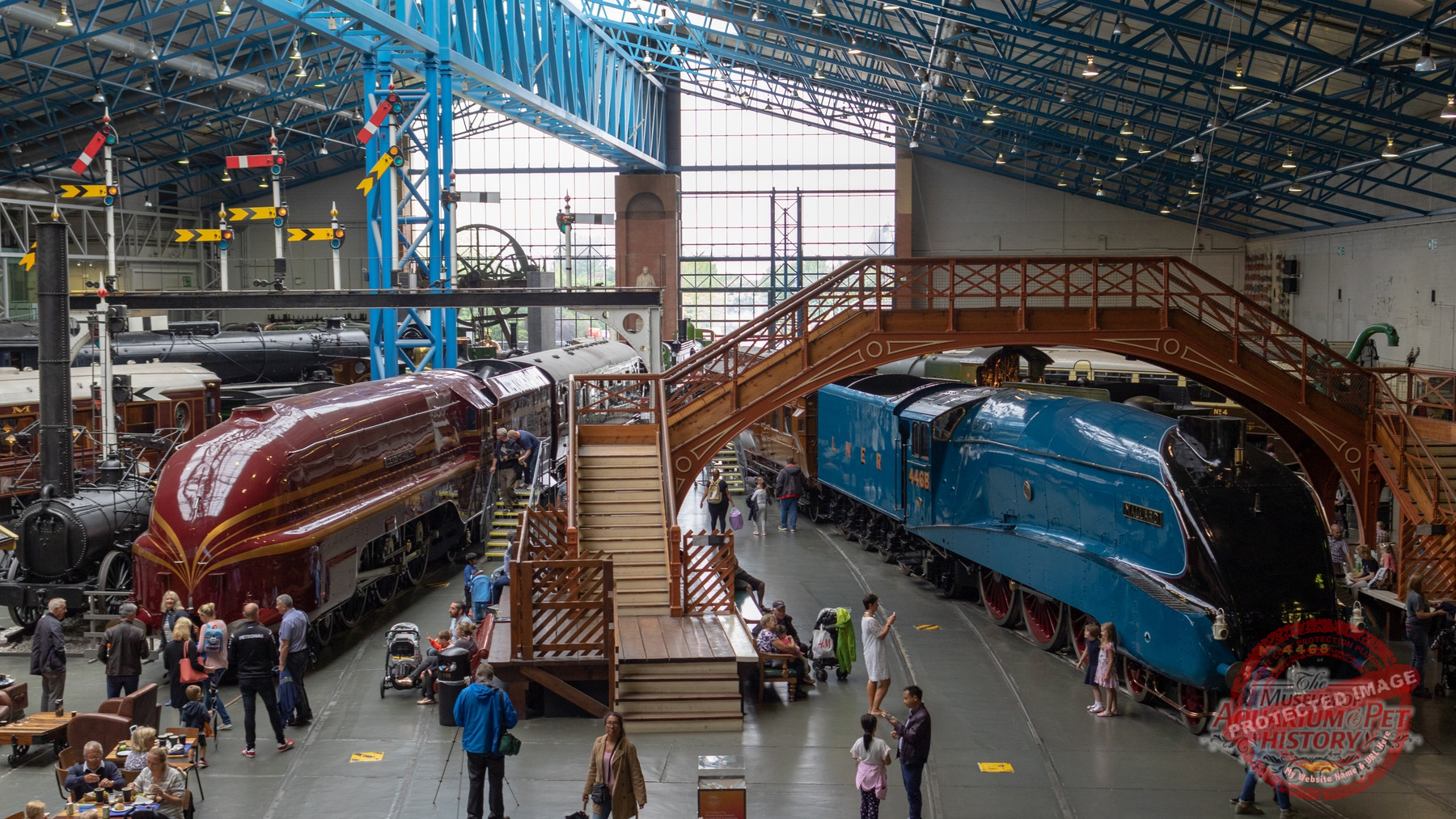
The National Railway Museum in York, in northern England, has become home to some of the country’s railway collecting dogs that were passed to taxidermists after their demise. Photo courtesy Kaca Skokanova/www.shutterstock.com
Many of these railway collecting dogs were owned by station staff, although some were lent by their owners for this purpose. This group included Prince who worked at Reading Station for four years, beginning in 1908. The railway authorities allowed him and his carer, Ticket Inspector Wood, to walk around the station and even to travel on trains outside the rush hour, seeking donations from passengers.
People responded generously to the friendly nature of such dogs. Station Jim lived at Slough Station, after arriving there as a puppy in 1894. The staff taught him how to bow, and he would bark by way of thanks whenever anyone made a donation.
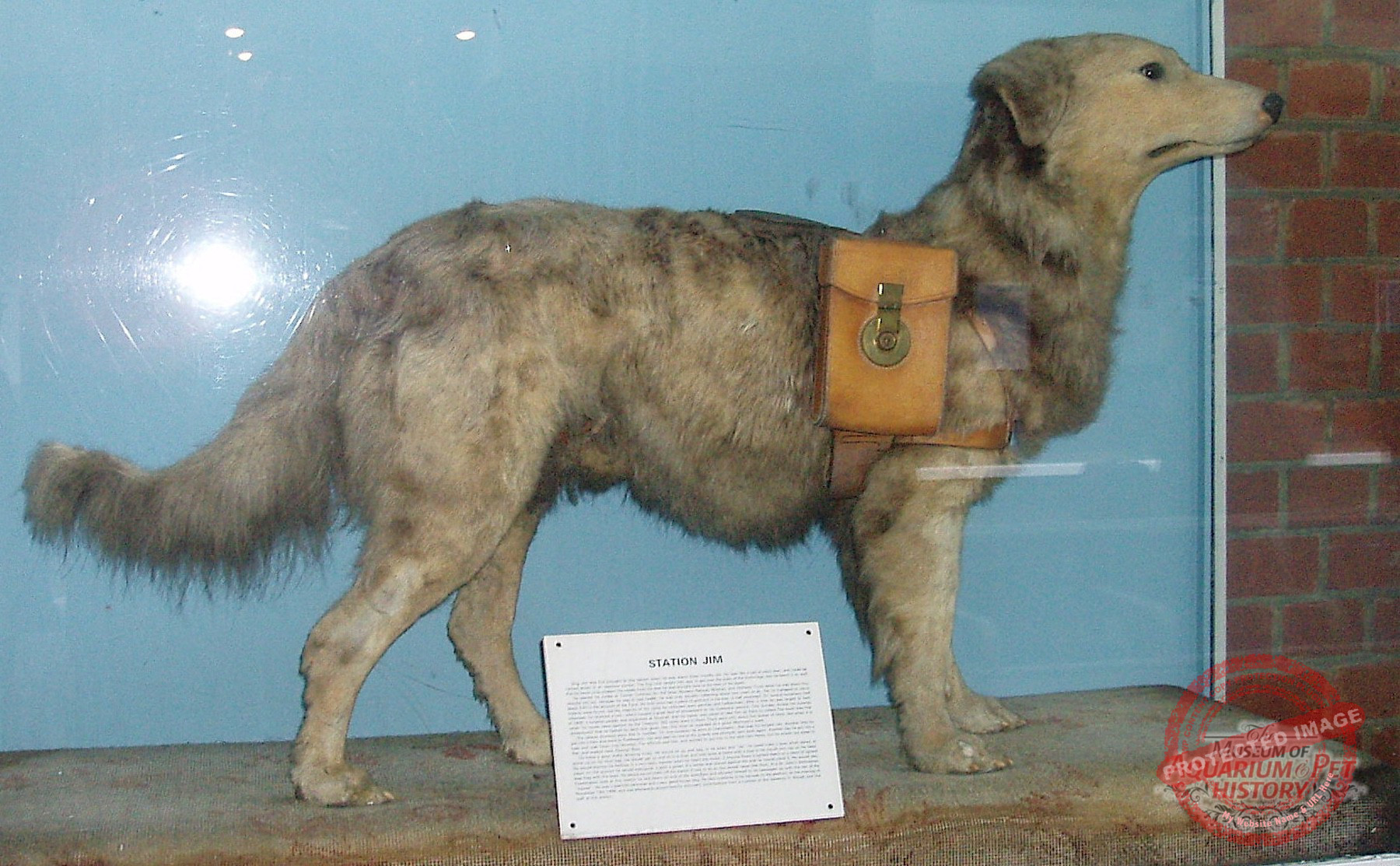
Station Jim is one of the very few railway collecting dogs still to be seen at the station where he worked. He is now located close to platform 5, at Slough railway station in Berkshire. Photo courtesy Carcharoth/Wikipedia/ CC BY-SA 3.0.
Station Jim was also ready to travel further afield on his own initiative, in search of funds. He was not adverse to catching the train to Leamington Spa for example, a journey which took just over an hour, and he would then be sent home again to Slough.
A disappointment!
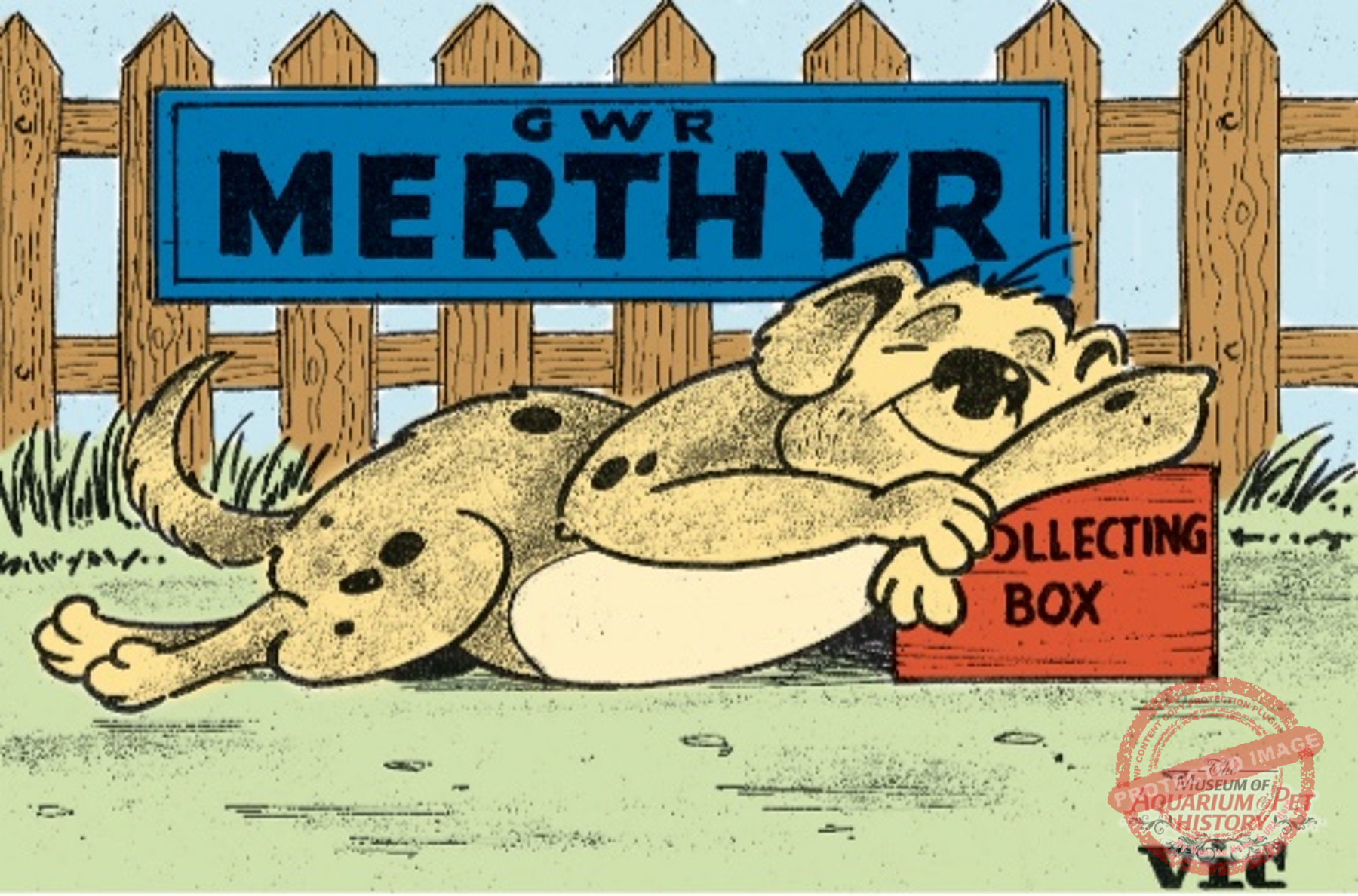
Not all dogs were suited to the task of being collecting dogs, as in the case of Twister who was based at a station in Wales. Artwork courtesy of the author.
Some dogs proved to be far less adept at fund-raising however, notably Twister who was kept at Merthyr Station in Wales on the Great Western Railway network. He had the unique distinction of not even collecting sufficient in donations to cover the annual cost of his dog license!
Twister did make it difficult for would-be donors though, clearly lacking the dedication of other dogs employed in this role. He simply preferred lying down on his collecting box, and even in his best year, his earnings totalled only £9/$12!
The end of an era
The tradition of collecting dogs at British stations continued up until after the end of the Second World War. Amongst the famous individuals of this later era was Sandy, a popular Labrador retriever. He managed to raise £9000/$12,100 from travellers passing through Exeter Central Station between 1944 and 1952.
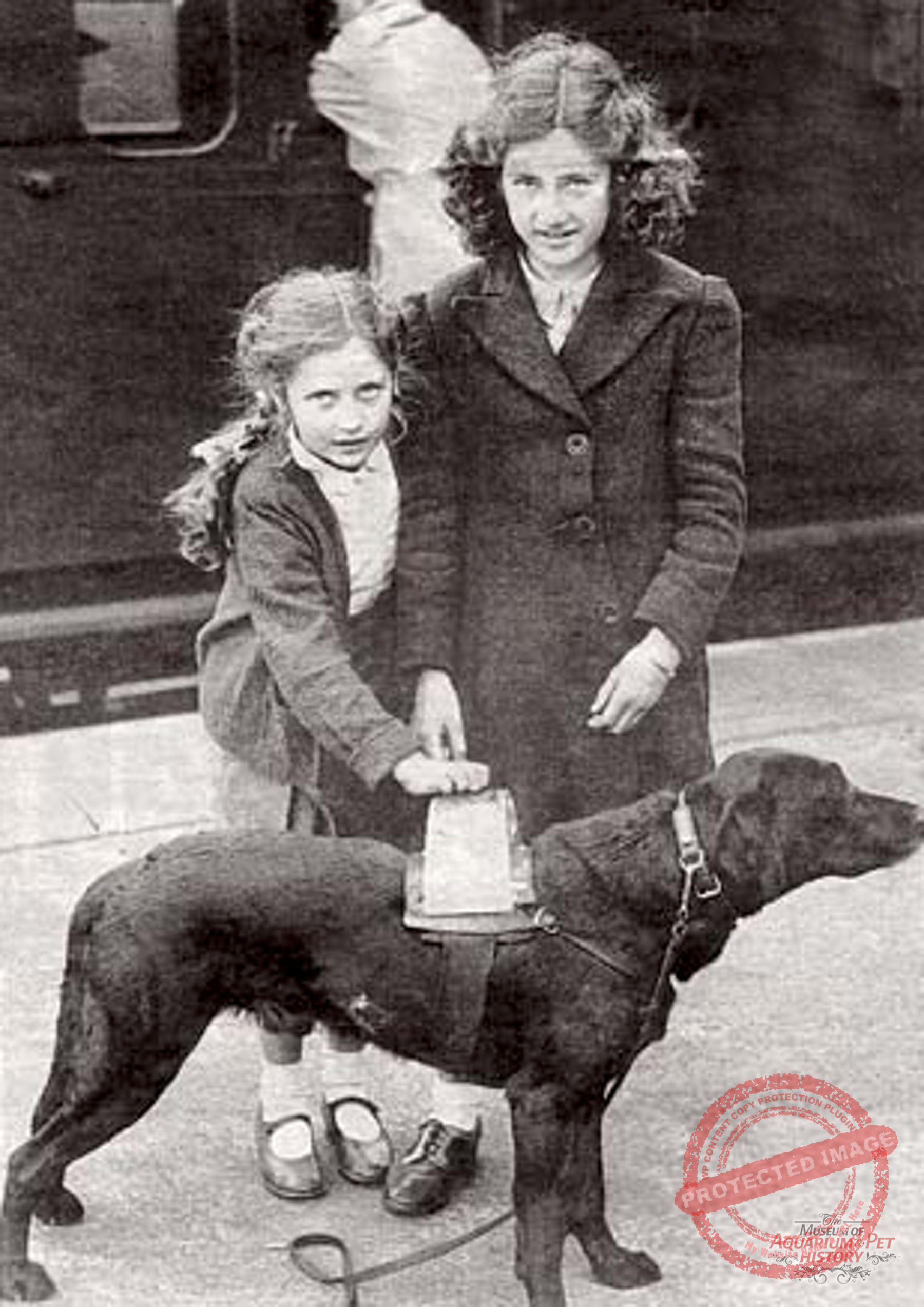
People – young and old – liked to see the dogs, and gave generously. This is Sandy, the most successful of three collecting dogs based at Exeter’s Central Station. Photo courtesy Exeter Memories.
Then there was another London Jack – a name that had become very popular amongst the capital’s railway collecting dogs by this stage. He collected a total of £400/$540 during his working lifetime, in a box that he carried on his back, and also had an impressive array of silver and gold medals awarded to him for his fund-raising activities. This particular London Jack was finally transferred to a display case in the museum of the famous volunteer-run historic Bluebell Railway at Sheffield Park, in East Sussex, after his demise.
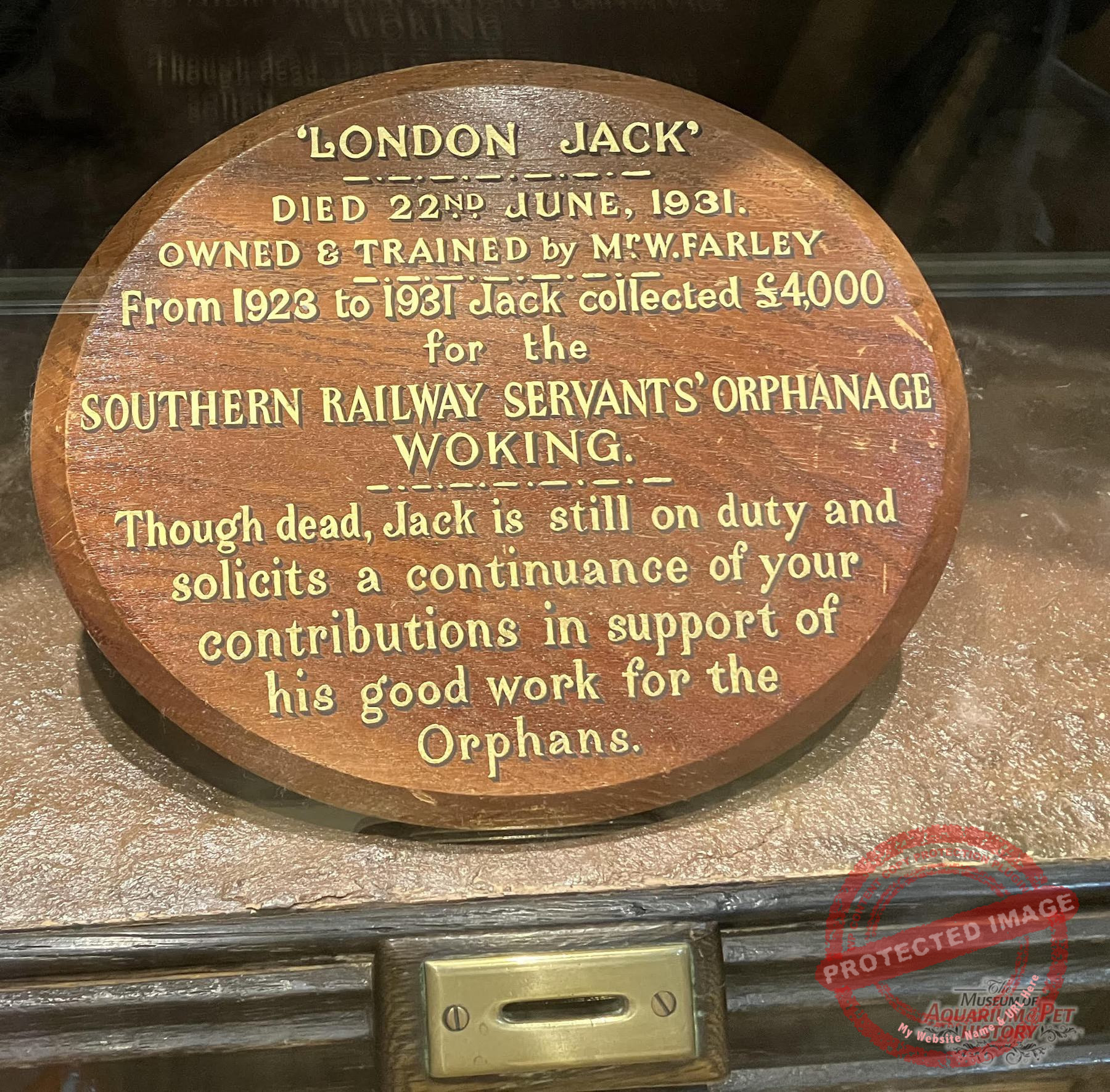
The plaque that can still be seen alongside London Jack, in the display case at the Bluebell Railway today. Photo courtesy Lucinda Alderton-Sell.
Times were changing though, as were public attitudes, and this ultimately led to such dogs being banned from collecting money. There were complaints that it was degrading for them. Equally however, railway managers did not see them as being compatible with a network that was undergoing dramatic change, as steam locomotives were replaced by diesel and electric engines.
Collecting dogs served as an uncomfortable reminder of the past.
Unsurprisingly, it was not long before the majority of the stuffed dogs disappeared too, being replaced by technological exhibits regarded as being more in keeping with the modern age. Some found new homes though, notably at the National Railway Museum in York, although a few passed into private collections.
Today, the era of the railway collecting dogs has become just a distant memory for the declining band of older travellers who encountered them, along with many of the lines and stations where they could be seen. Yet undoubtedly, during the period that these dogs were working, their contributions made a real difference to people’s lives and they enlivened the journeys of many passengers who met them.