Robert Compton’s Stoneware Aquariums: Interview with the Artist
Like other collectors in my field, I am particularly drawn to aquariums and fishbowls with unusual designs, especially those crafted from alternative materials that make them appear more like sculptures than standard containers for ornamental fish.
I’ve already explored this topic in an article about Jacob C. Cassel’s faux bois aquariums, which was published on this website in March 2024. On the whole, I have always found it fascinating to see what happens when artists with a different background decide to make aquariums “in their own way”, allowing creativity and talent to flow freely. In the early 1970s, for instance, an artist from Bristol (Addison County, Vermont, U.S.) began crafting a line of stoneware aquariums and fishbowls that nowadays still capture the curiosity of collectors. His name is Robert Compton, and we would like to thank him for taking the time to give us this insightful interview.
How did the idea of creating aquariums come about?
The evolution of my making stoneware aquariums grew from making clay storage jars. Lots of potters were making covered jars for sugar, flour, and other kitchen-related ingredients, and writing words on the outside of the container to indicate the contents. I thought it would be a good idea to put a small glass port into the side of the pot to visually see the contents. When I was choosing the adhesive to seal the glass to the clay pot, I realized the container could hold liquids as well as dry goods, and what better liquid was there than water, and fish became the obvious next step. That was the beginning of a twenty-year exploration of stoneware aquariums.
Before launching your aquarium line, were you already into fishkeeping?
We had a 10-gallon aquarium in our home as a kid, but I had never kept fish as a hobby after graduation from school.
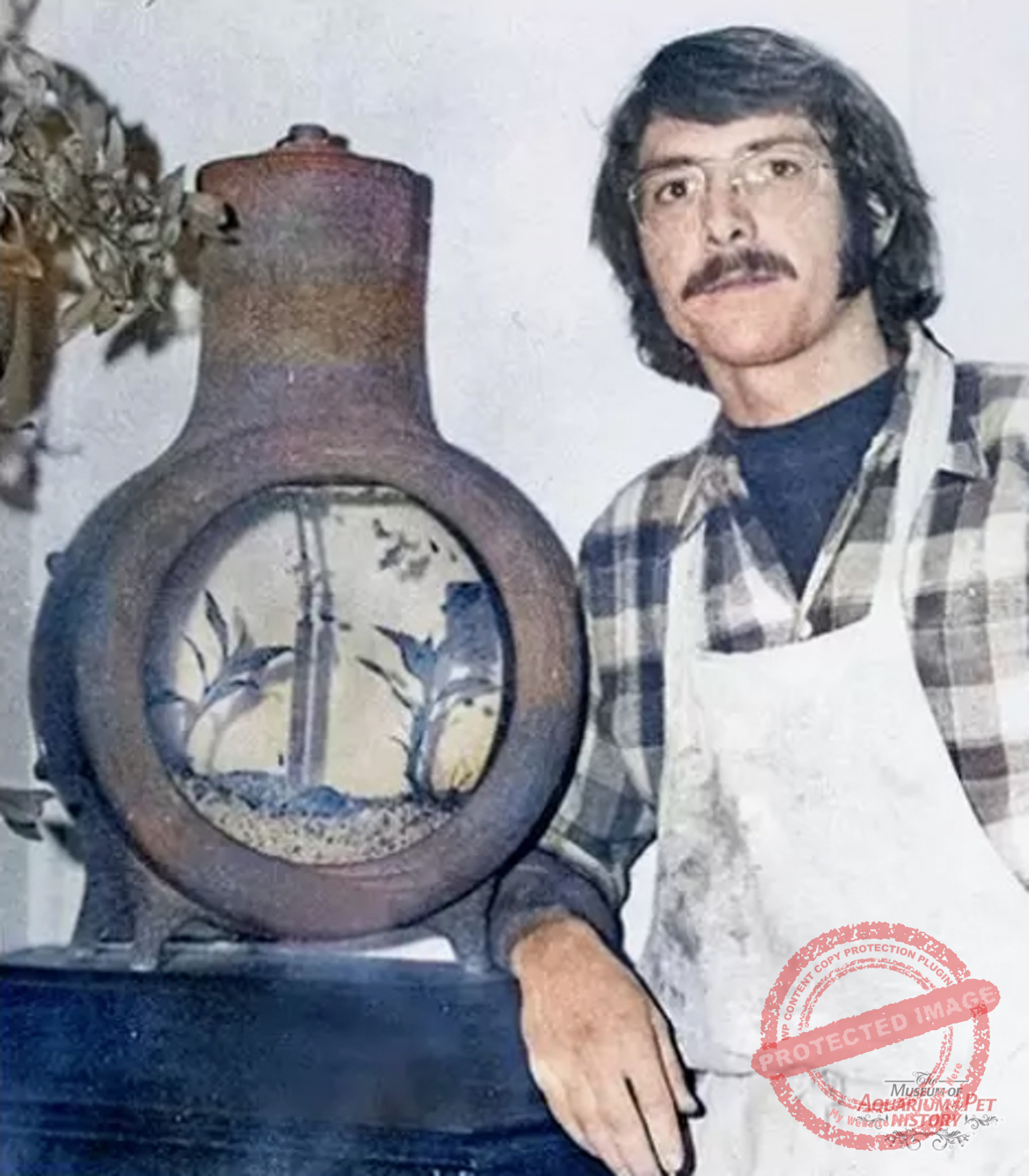
Robert Compton near an early version of his standing aquarium (3-gallon size), 1974. Photo courtesy of Robert Compton.
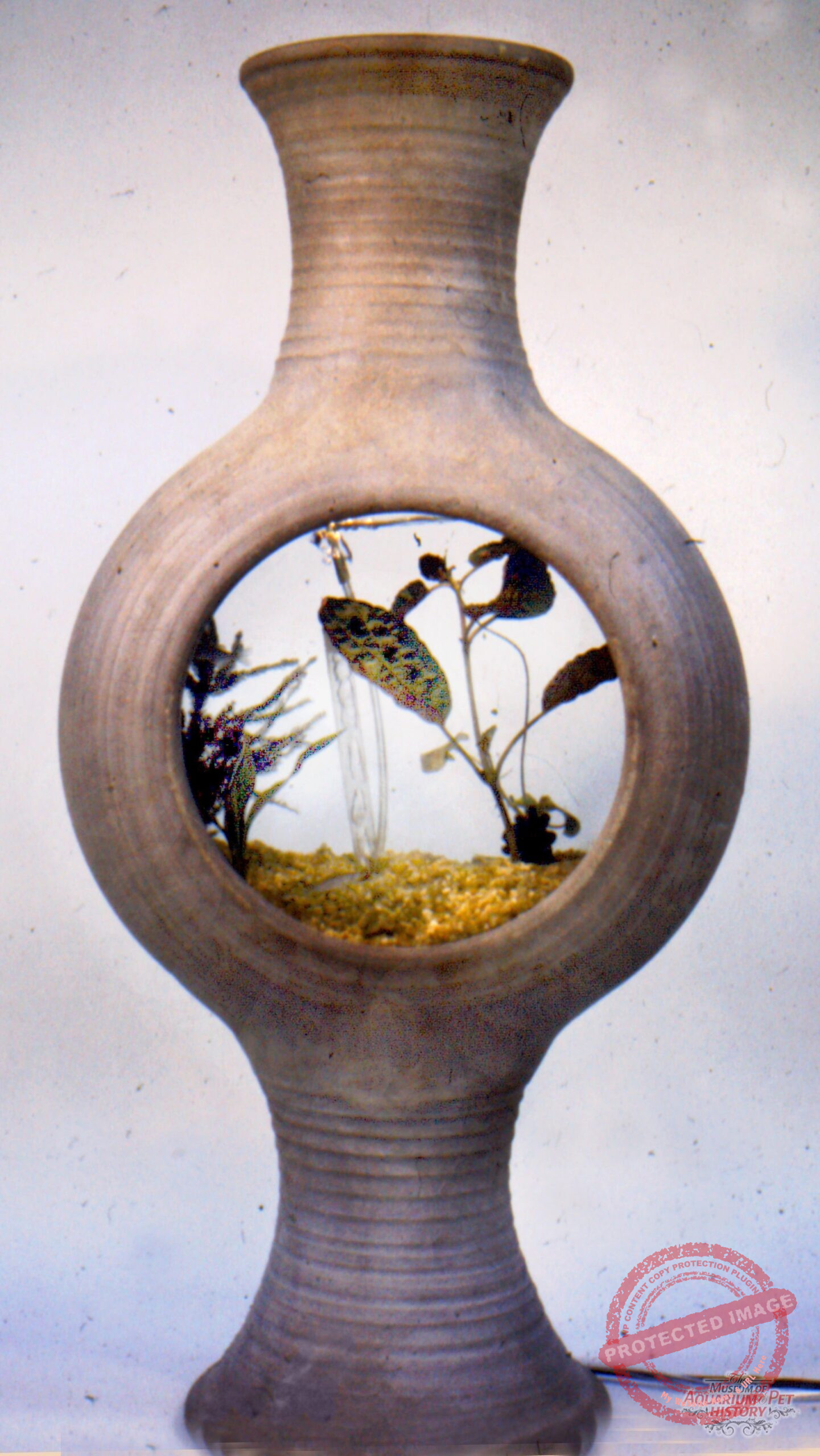
Another early standing aquarium design, 1974. Photo courtesy of Robert Compton.

Ten-gallon Hanging Aquarium, 1986. Robert’s stoneware aquariums have a textured natural clay exterior and a smooth glazed “creamy white” interior. Photo courtesy of Robert Compton.
What accessories did you choose back in the day to make your aquariums fully functional?
When taking into account the need for a filter for the water, and keeping the process as simple as possible, I found that under-gravel Dirt Magnet filters were invisible and only needed an air supply to function. I built into the neck of the aquarium a clay channel to allow the airline hose to enter the tank, and the clay channel kept it from melting the plastic hose, as I had a light bulb in the neck to illuminate the aquarium. Back in the 1970’s I was using a refrigerator light, which was moisture resistant, but it also put out a lot of heat. Today we use LED lights which are cool.
Who appreciated your aquariums the most?
The vast majority of individuals who purchased my aquariums were not aquarium hobbyists; they were people who liked that idea of a sculpture that had light and motion. The best-known individuals who purchased my aquariums were Barron Hilton and musician George Harrison.
What was the most successful model?
By far the most popular style of aquarium was the Hanging Aquarium, again because of the unique position in which they were placed.

American business magnate William Barron Hilton (1927–2019), the second son and successor of hotelier Conrad Hilton.
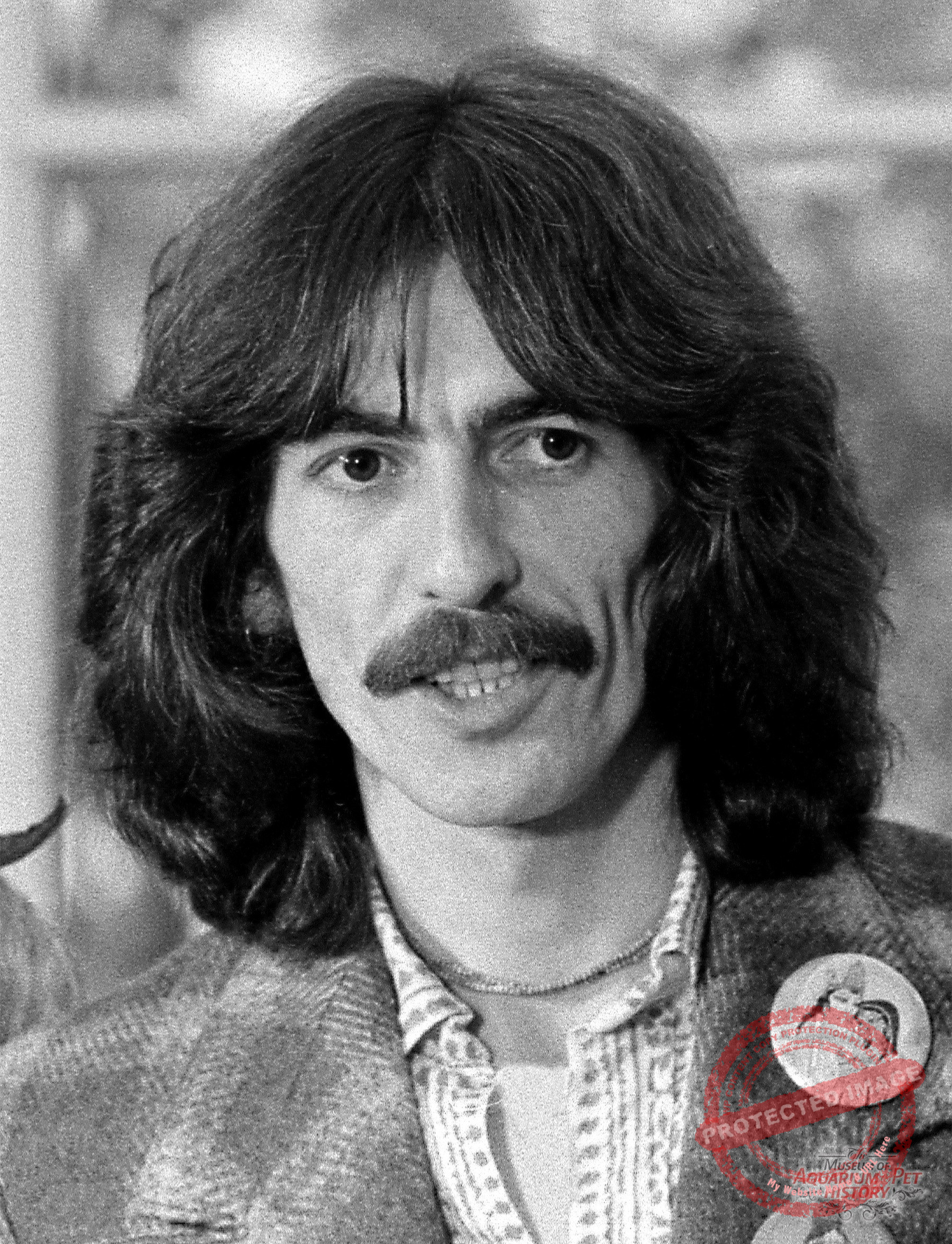
Between 1986 and 1988, George Harrison (1943–2001), the Beatles’ lead guitarist, bought two of Robert’s water sculptures (a fountain and an aquarium) for his home in Hawaii.
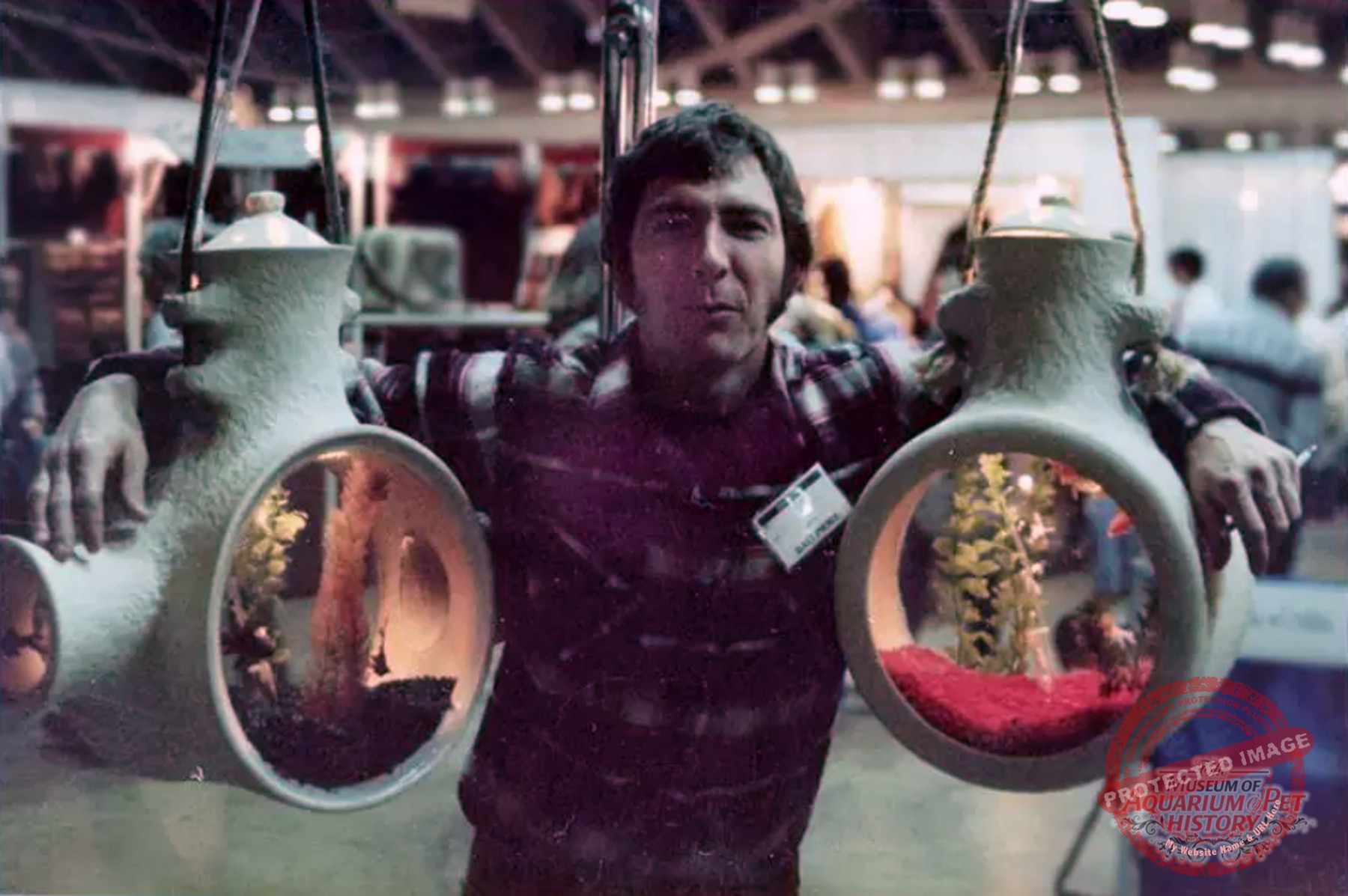
Robert at the 1985 Baltimore Craft Show. Photo courtesy of Robert Compton.
How many pieces did you make?
I guess I made about 600 aquariums over the 35 years that I sold them. Today, you can always find one of my aquariums in the secondary market, such as eBay or marketplaces. Most of the original individuals I sold the pieces to have passed on, and their kids or estates put them on the internet to sell.
Among our readers, there are several collectors who will certainly want to know what models can be considered rarer than others.
I explored several ideas to make the pieces more unique. Some of the Hanging Aquariums I used a mirror as the rear glass in the tank, and even tried (but it did not work well) having a one-way mirror in the front panel and a regular mirror in the back panel, to attempt to create a never-ending reflection of the fish. It turned out that for a one-way mirror to work, there has to be total (or nearly total) darkness outside the aquarium, and a very intense light on the inside of the tank to get the proper effect. This is not a normal situation in most household locations.
I made a few double tanks, in which the fish could swim between chambers via a clay tube. The design varied a bit, but my design, which had only one neck, looked somewhat like a pair of spectacles. Two of these were purchased by eye doctors for their offices. I also made an aquarium with three chambers. It was interesting as a visual object, but nearly impossible to reach the bottom chamber to clean.
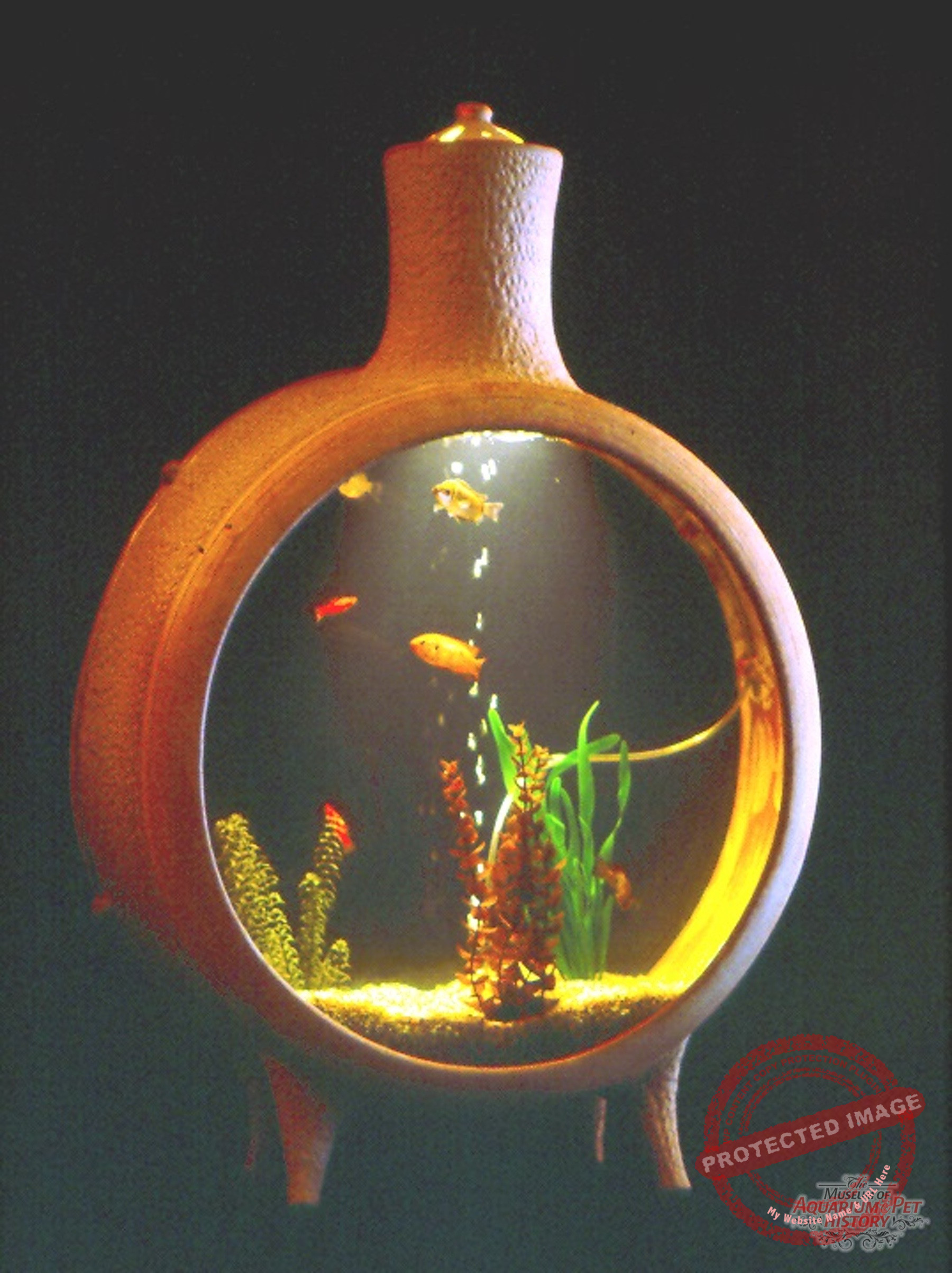
Fifteen-gallon standing aquarium, 1981. Photo courtesy of Robert Compton.
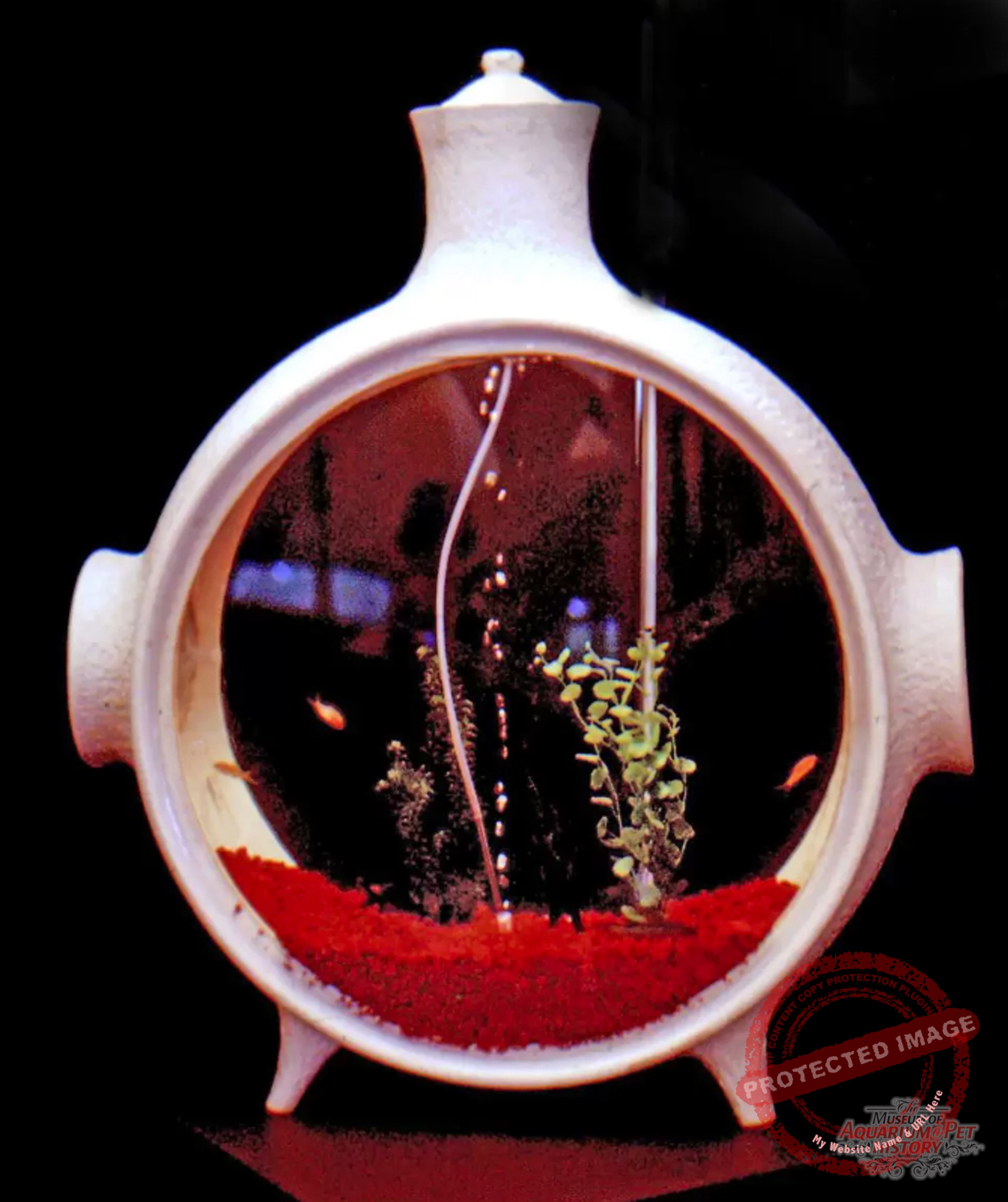
Four-port standing aquarium, 1989. Photo courtesy of Robert Compton.
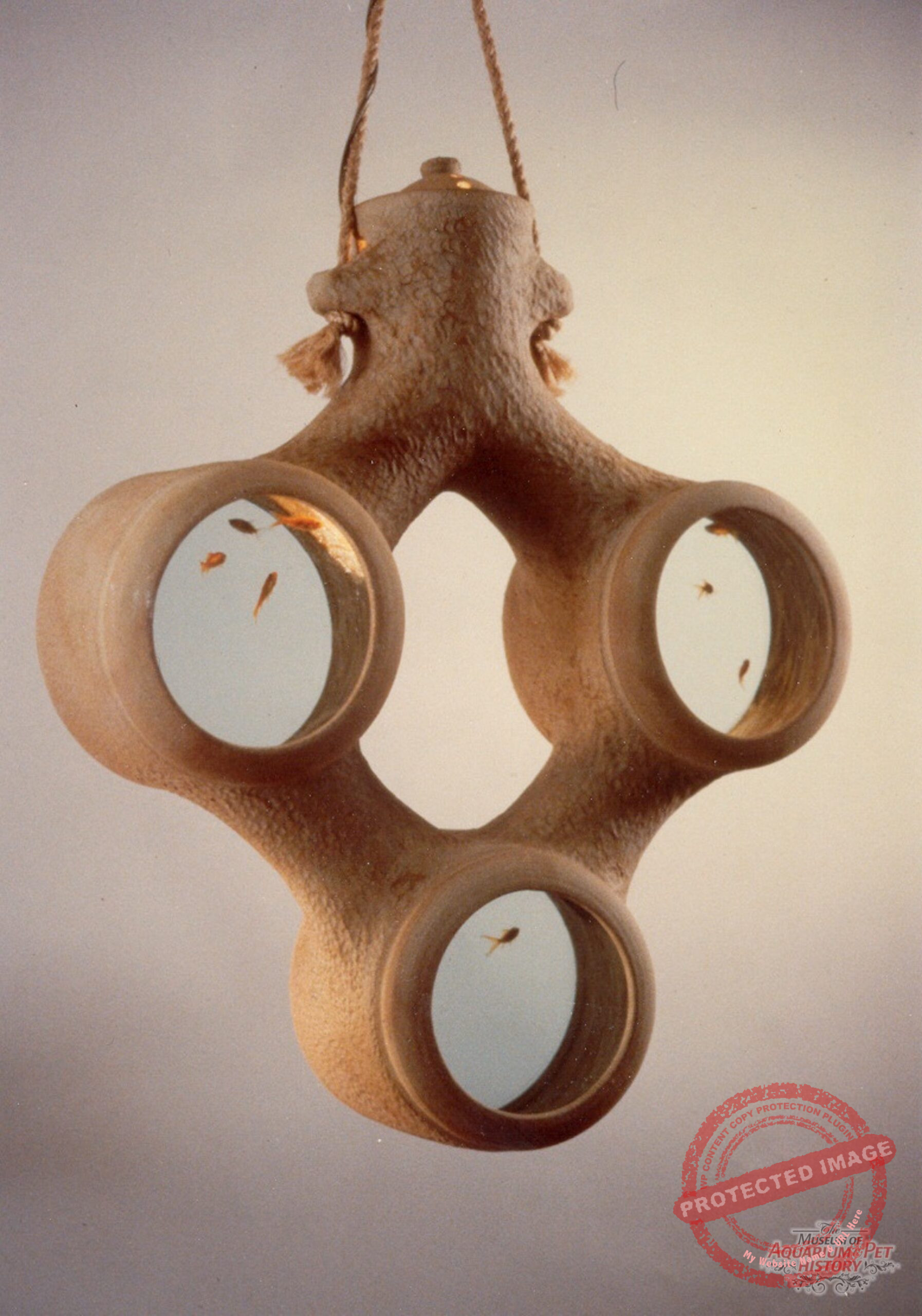
Tri-tank Hanging Aquarium, 1986. Photo courtesy of Robert Compton.
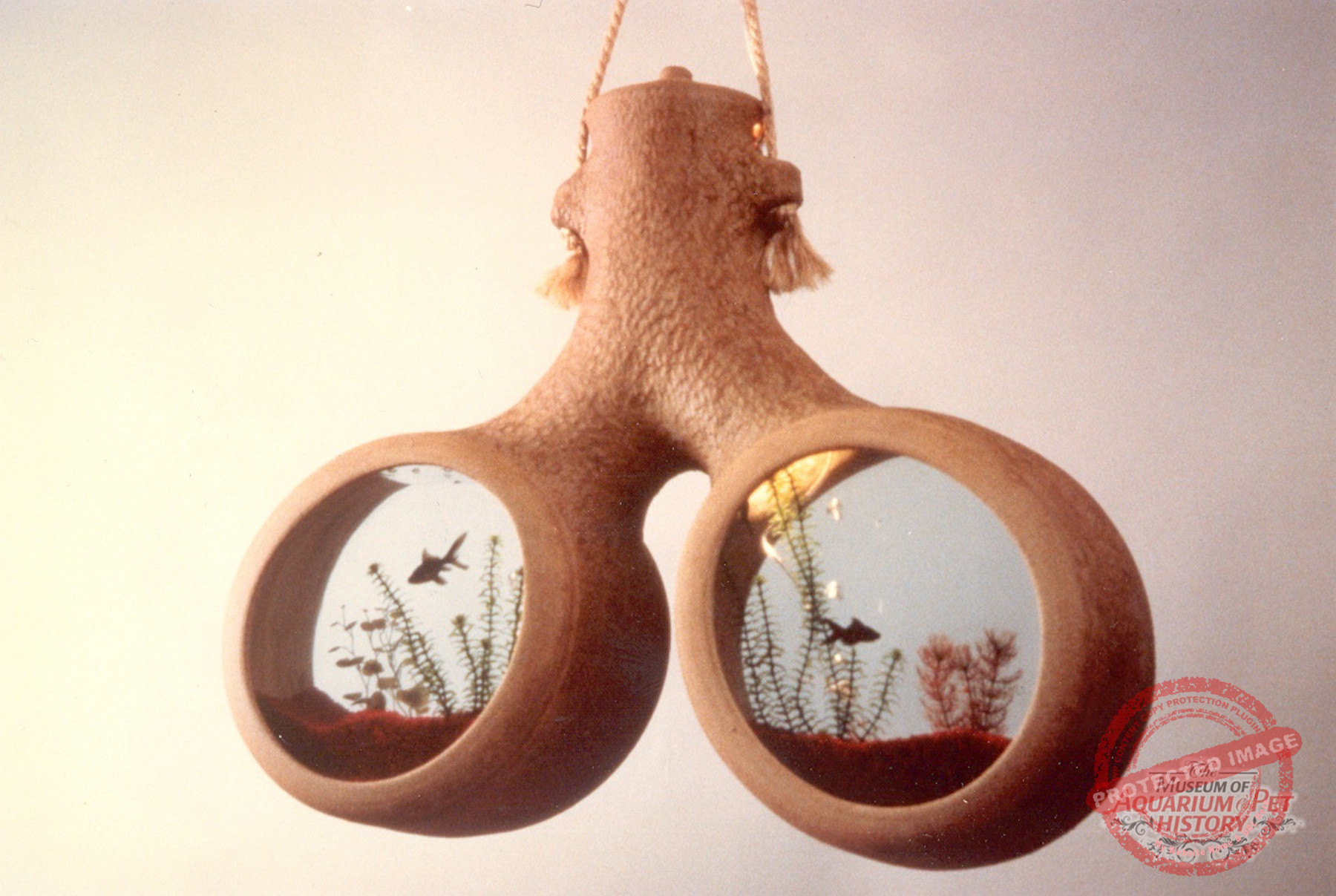
Double Hanging Aquarium, 1986. Photo courtesy of Robert Compton.
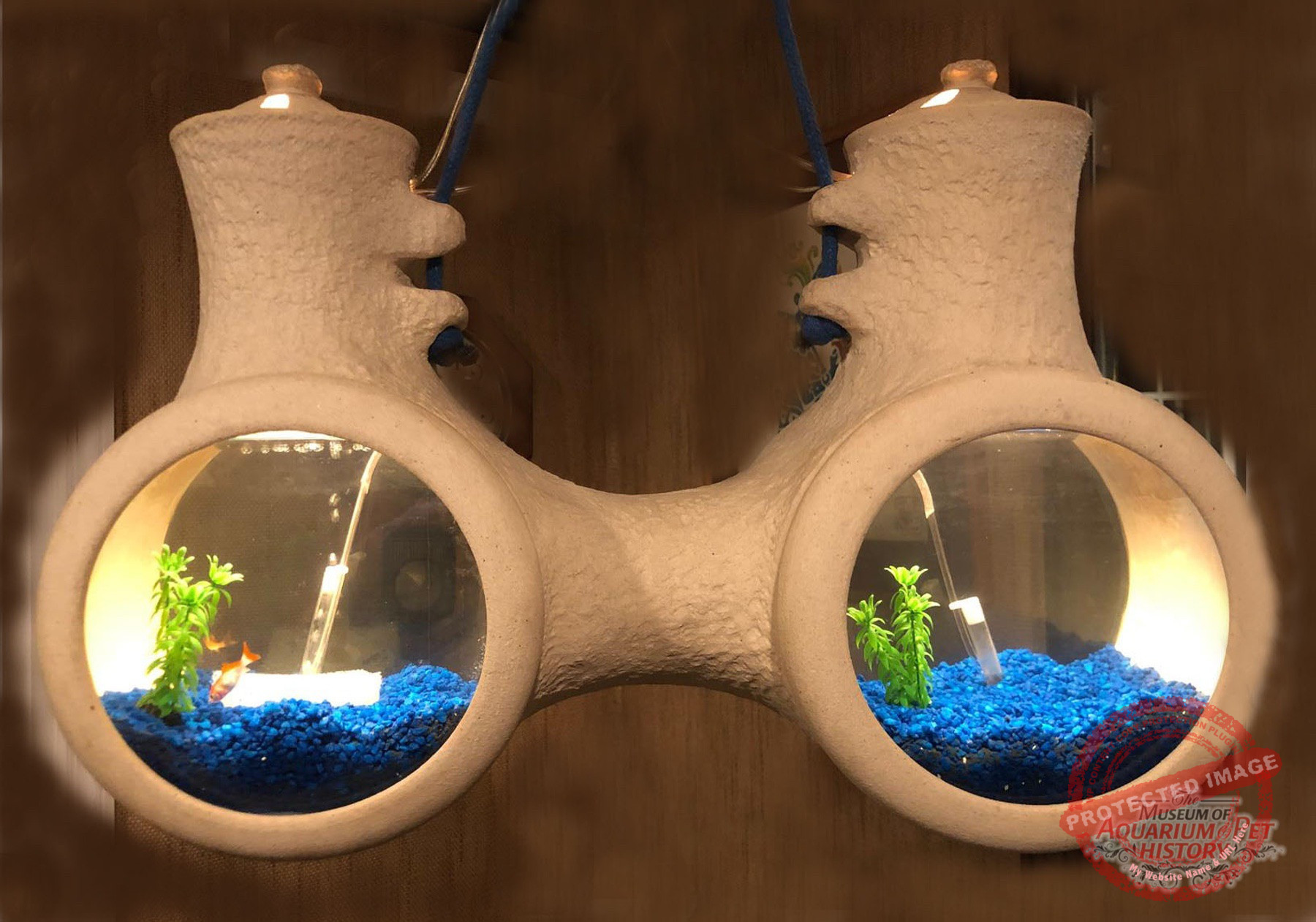
Double Hanging Aquarium, 1983. Photo courtesy of Robert Compton.
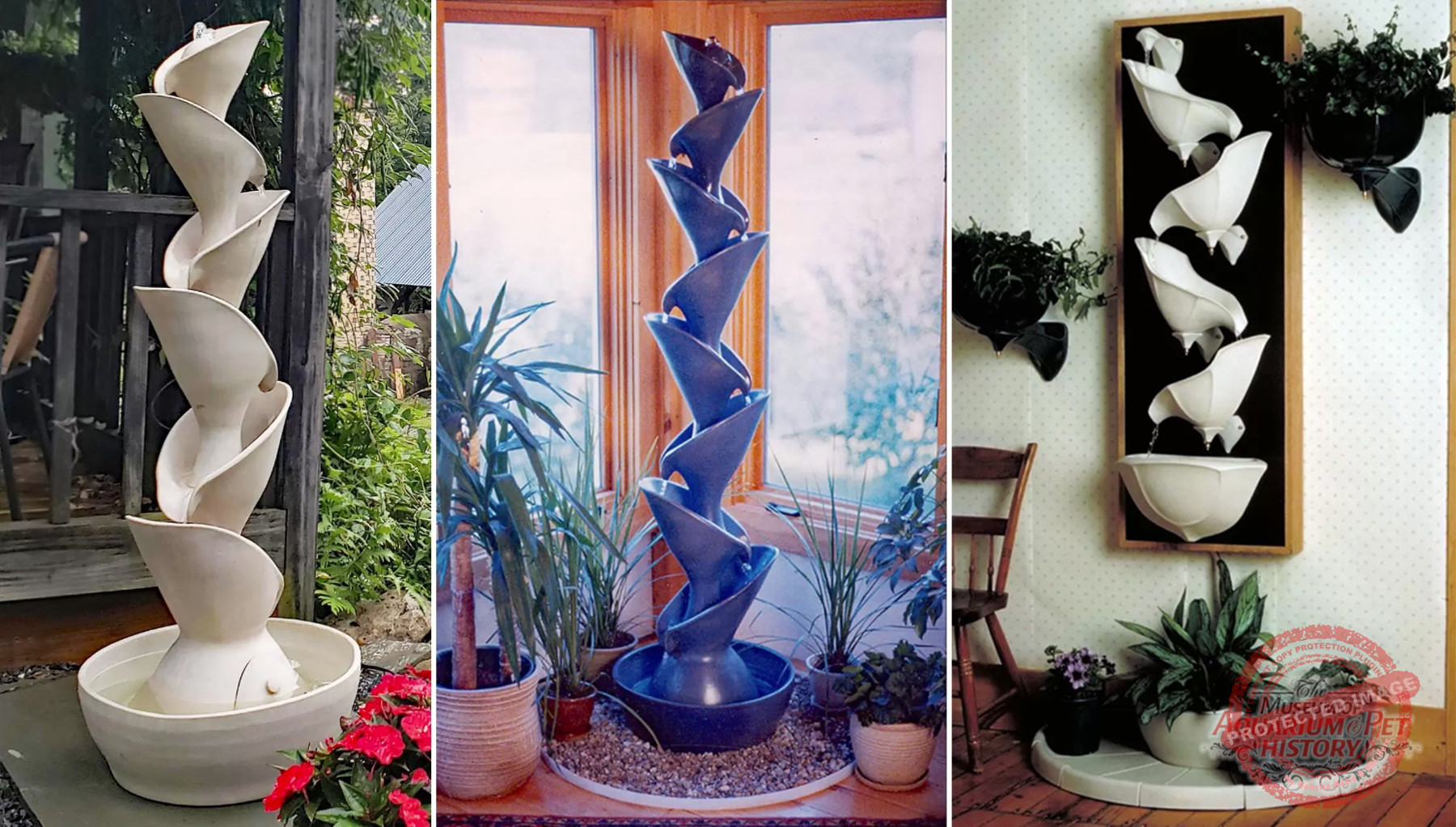
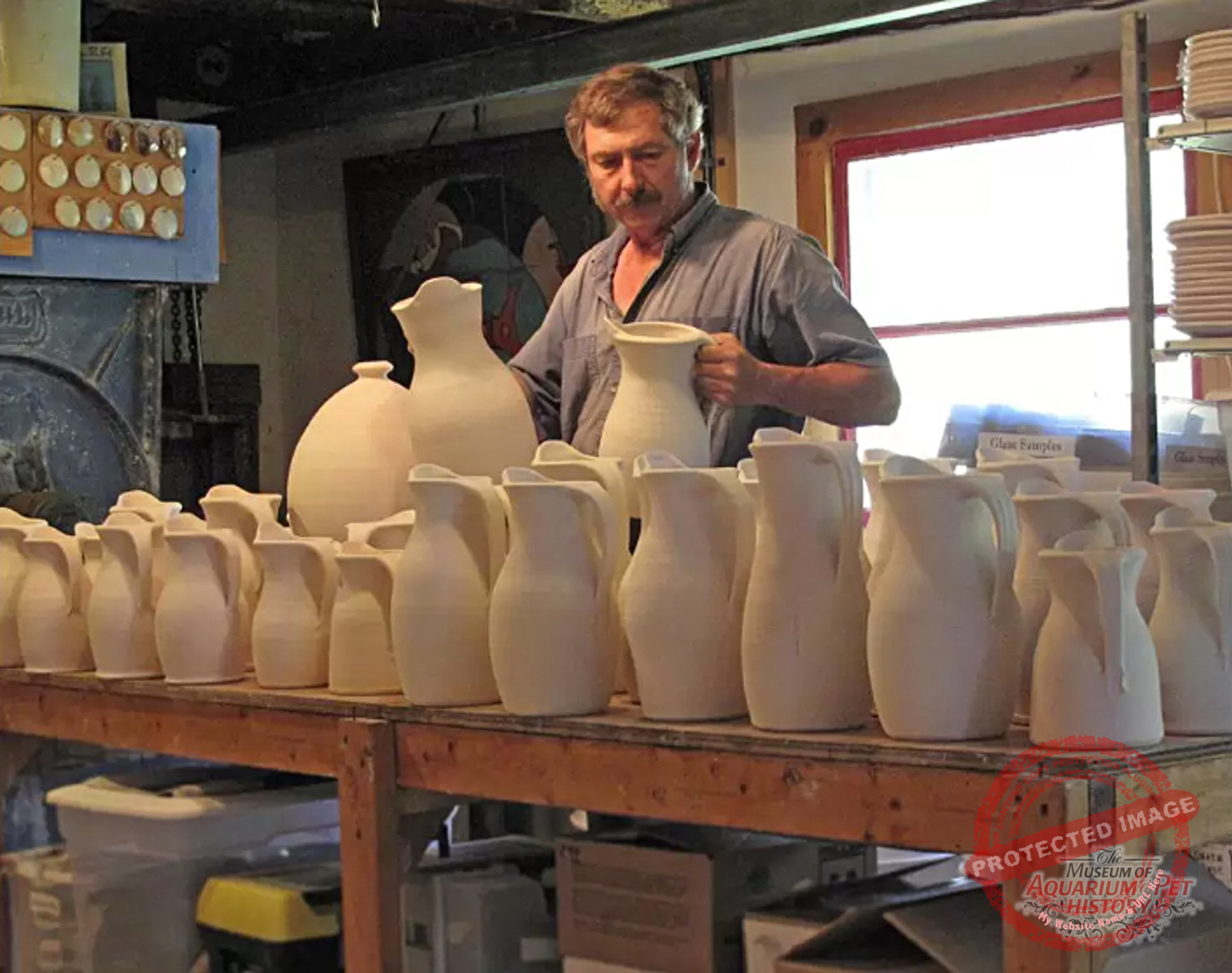
Robert started work as a full-time potter in 1972. During the first 20 years, his work consisted of sculptural pieces such as aquariums and fountains. Photo courtesy of Robert Compton.
Did you sell your aquariums along with a user guide including tips on fish species best suited for them?
Since the majority of buyers of my aquariums were not fish people, we included a 6-page guide on how to keep fish. We did not include heaters, so we suggested choosing cold-water tolerant fish such as goldfish.
What kind of feedback on the maintenance of your aquariums did you get from customers?
Our tanks were harder to keep clean than square or any tank with a large surface area on top. While you can get your hand into and reach the bottom of the hanging aquariums, they certainly require more effort to maintain.
Did the aquarium magazines of the time ever feature your artworks?
Our connection with the public was not via aquarium dealers or magazines, our client base was related to the visual arts, and in the 1970’s the majority were sold at craft fairs and via craft shops.
Did you have competitors making similar aquariums?
I always wondered why other potters did not copy my design. Going to craft fairs all over the country, I exposed my design to hundreds of other potters and expected to see copies of my design showing up at shows, but it never happened. In hindsight, I realize that it is very hard to make these pieces. Most potters did not want to deal with cutting ¼ plate glass and sealing it onto the clay. The glass in each and every aquarium varied in size due to the nature of clay shrinking and distorting a bit when fired, therefore each piece of glass had to be cut to fit a specific shape.
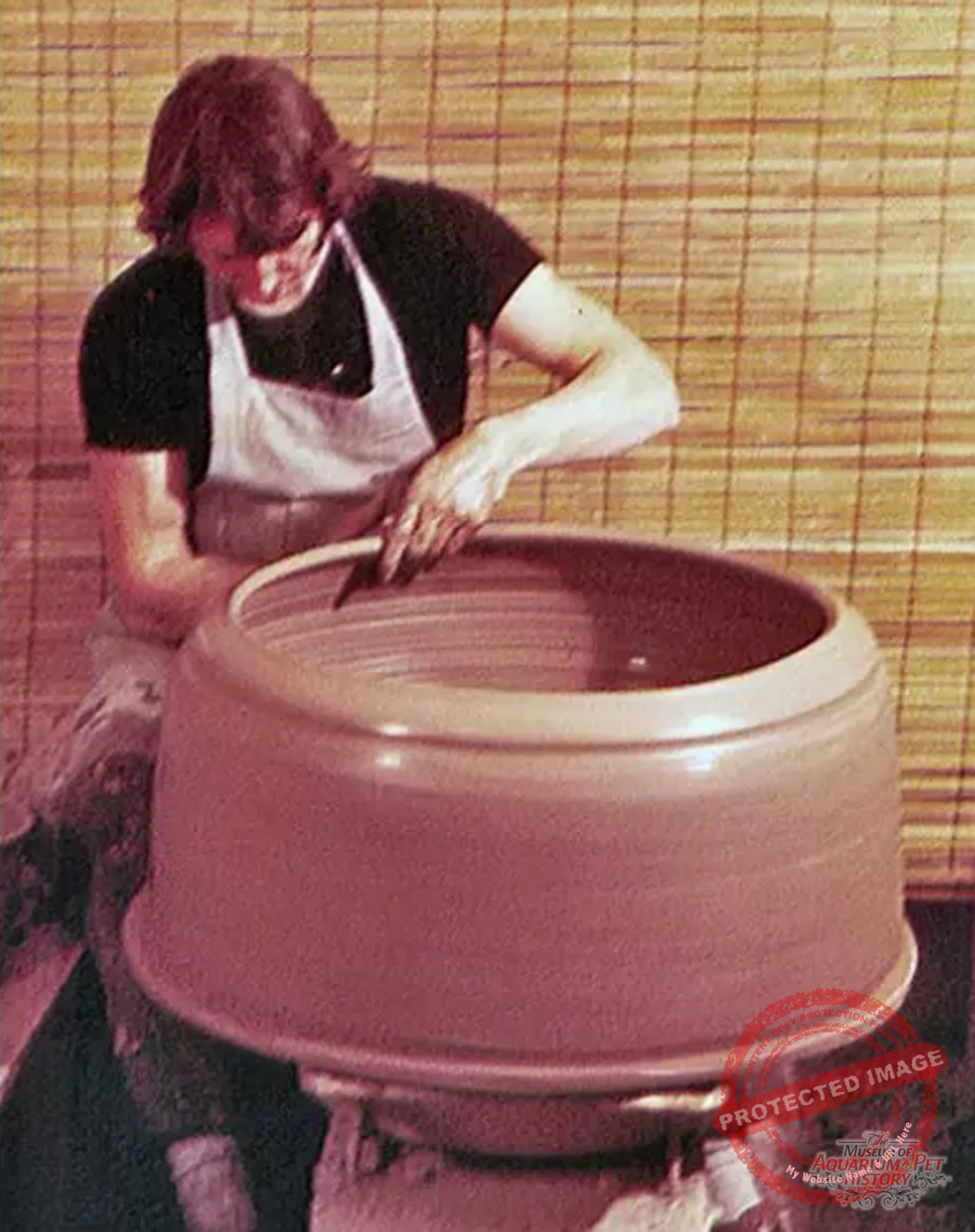
Making the front rim. The front viewing port on the aquarium is turned back on itself to create a flat receiver, where the glass will be attached. Photo courtesy of Robert Compton.
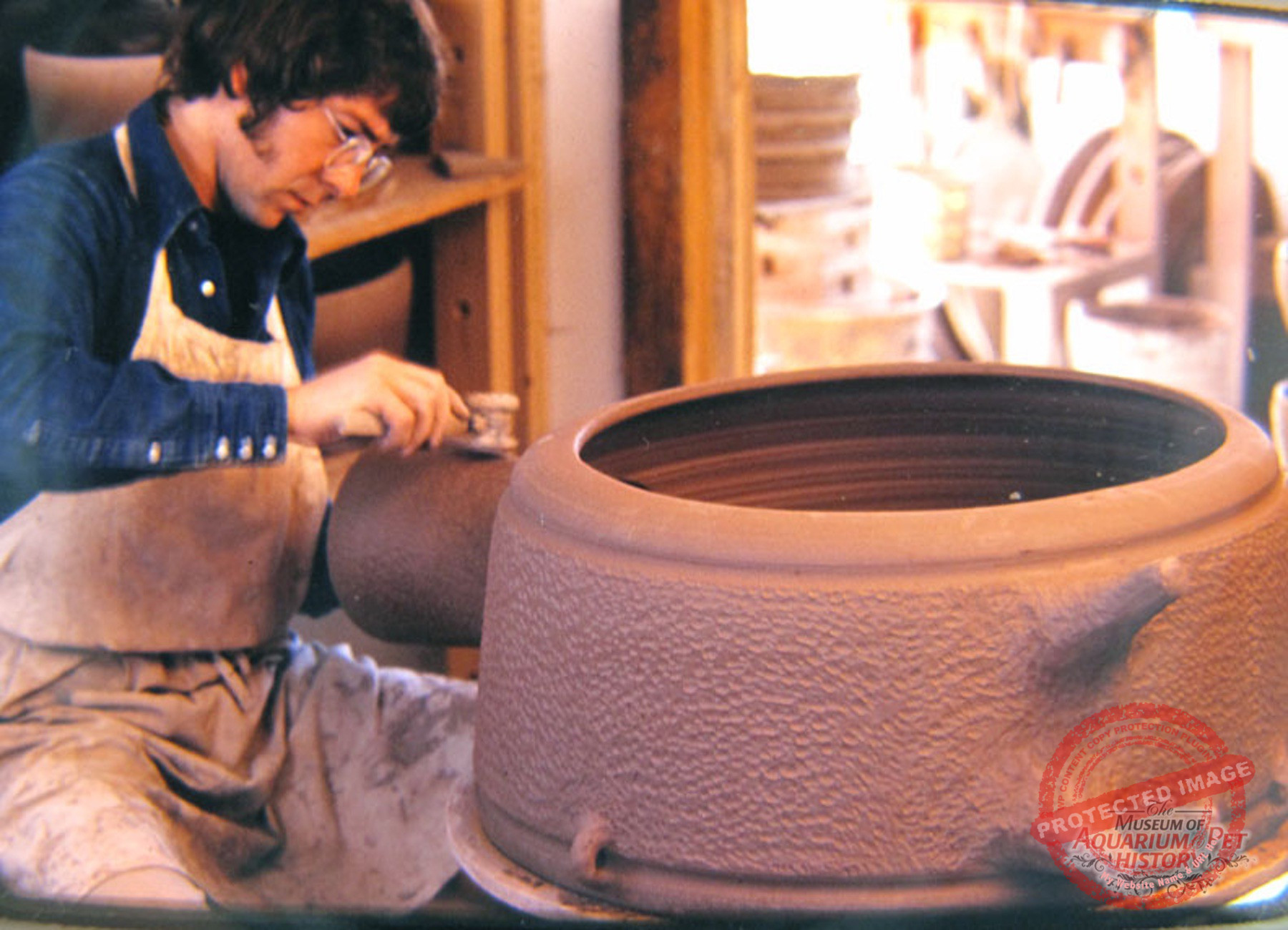
Robert at work in 1981. Photo courtesy of Robert Compton.
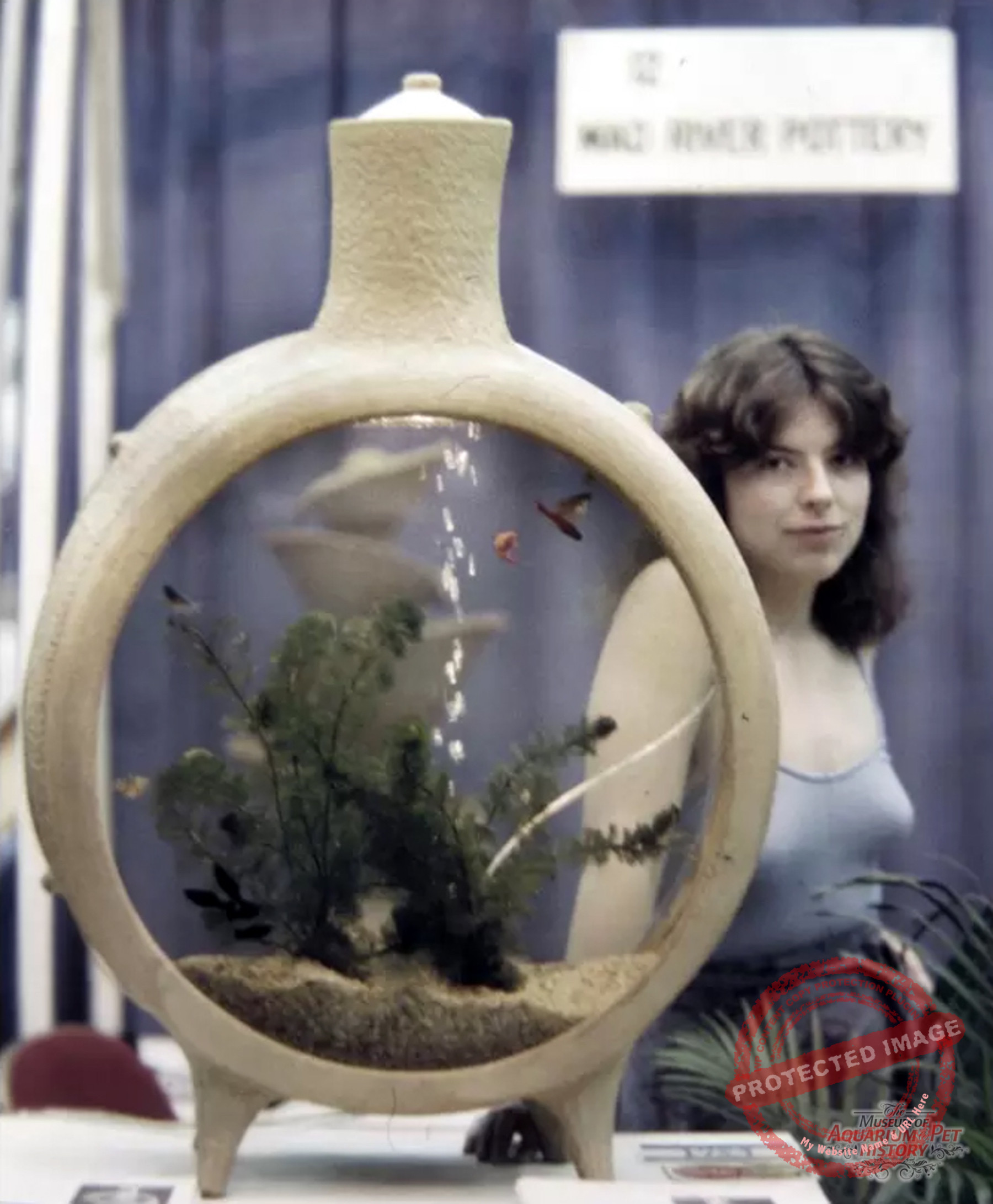
Fifteen-gallon standing aquarium on display at the 1978 Miami Tropical Fish Show. Photo courtesy of Robert Compton.
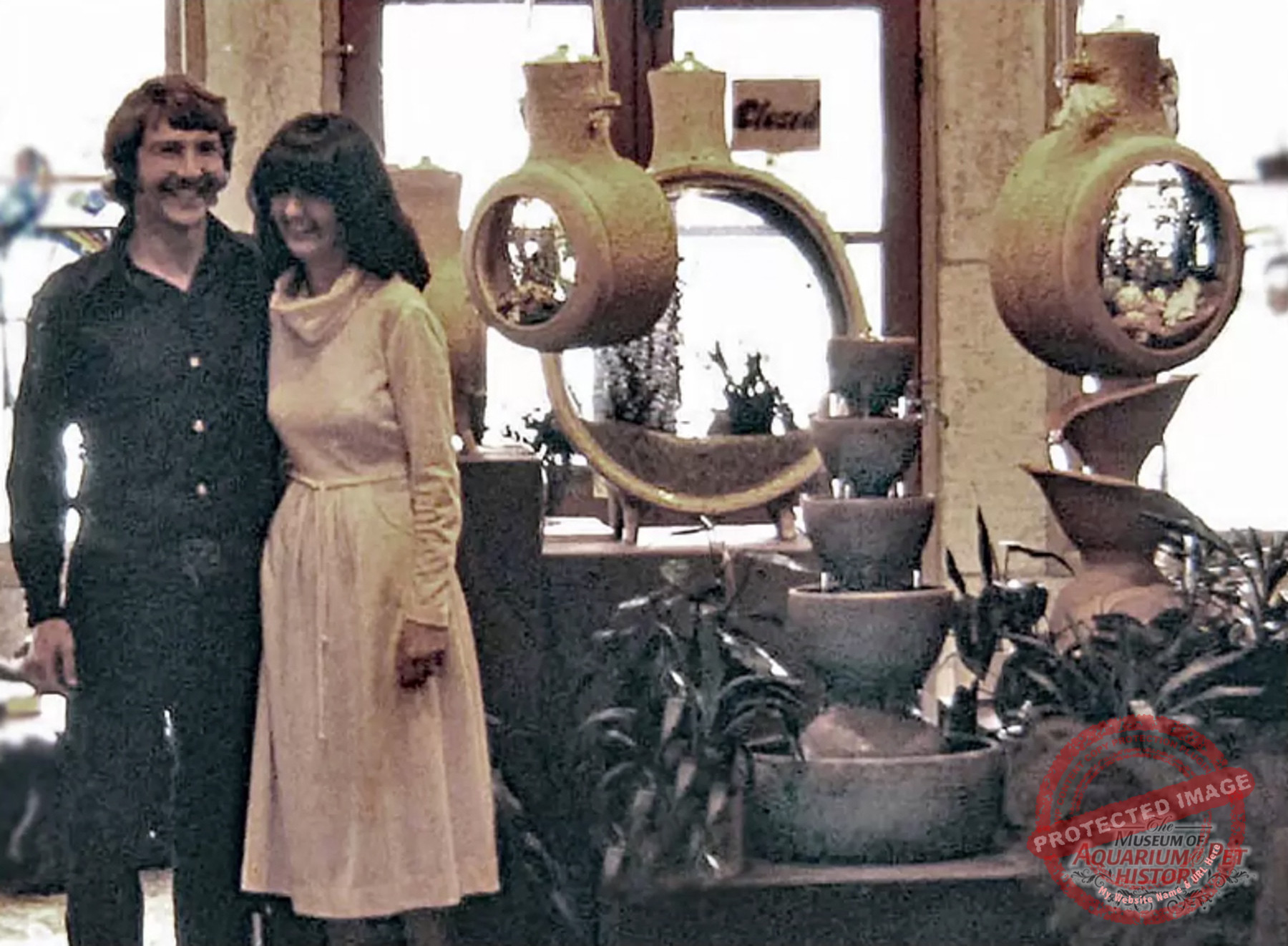
One-person show at Burlwood Gallery, Texas, 1979. Photo courtesy of Robert Compton.
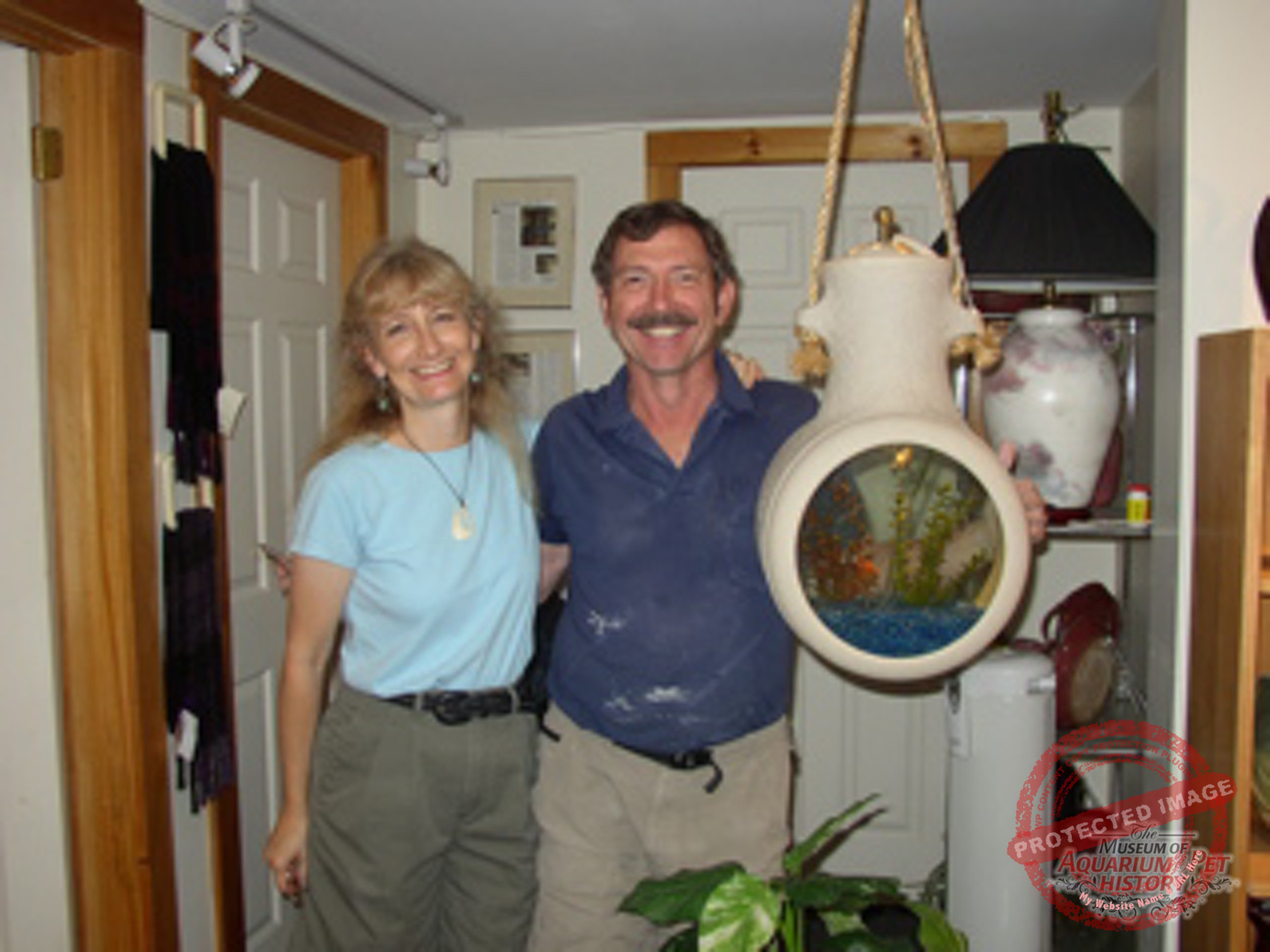
Robert in 2006. Photo courtesy of Robert Compton.
There was one artist back in the late 1970’s who copied the idea. He was making figurative sculptures, such as a cat with big eyes, and incorporated portholes as the cat’s eyes.
An aspect of making aquariums out of clay is how to make it watertight. The clay must be totally vitrified or glazed to make it watertight. The artist I mentioned was using a very porous clay, so he smeared silicon all over the inside of his pieces. It worked. He was interested in making sculptures and less concerned with how they functioned.
We’ve come to the end of this brief interview. Would you like to share any final thoughts or comments, Robert?
You need to understand that I came to making clay aquariums as a means of making a living. It was different from making bowls and mugs and gave me an edge in marketing. The hanging aquarium was a viable product and led to my expansion into other water-related projects, namely the fountains that were a mainstay of my business for nearly 15 years. I have not made an aquarium in over 25 years, but I receive the occasional phone call from someone who acquired my pieces in the secondary market or at a yard sale. Robert Compton and Bristol, Vermont, is carved into each piece, and I have lived in the same home and studio for 53 years, so anyone who has one of my works can easily locate me, especially via the internet. I have purchased several of my early aquariums from estate sales for my personal collection.
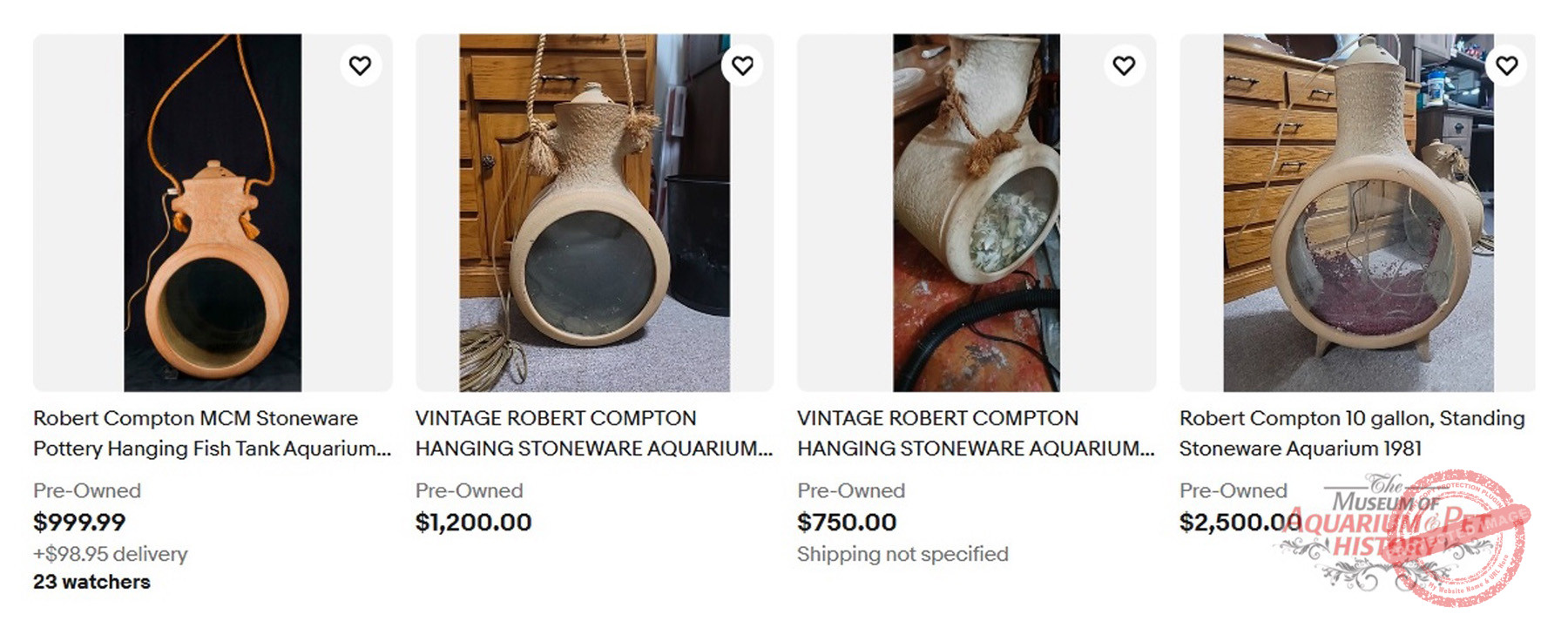
Stoneware aquariums currently for sale on eBay.
I was recently contacted by a person who bought one of my works from an individual who was selling my older pieces via eBay. The seller did not pack it well, and it broke during shipping. They contacted me asking if it could be repaired, but it was too damaged.
An aspect of shipping my aquariums to places as distant as Japan, we never had one break during shipping. We packed exceedingly well. In fact, we built a three-story tower at our studio to store packing materials that could flow down to the custom boxes made for the aquariums.
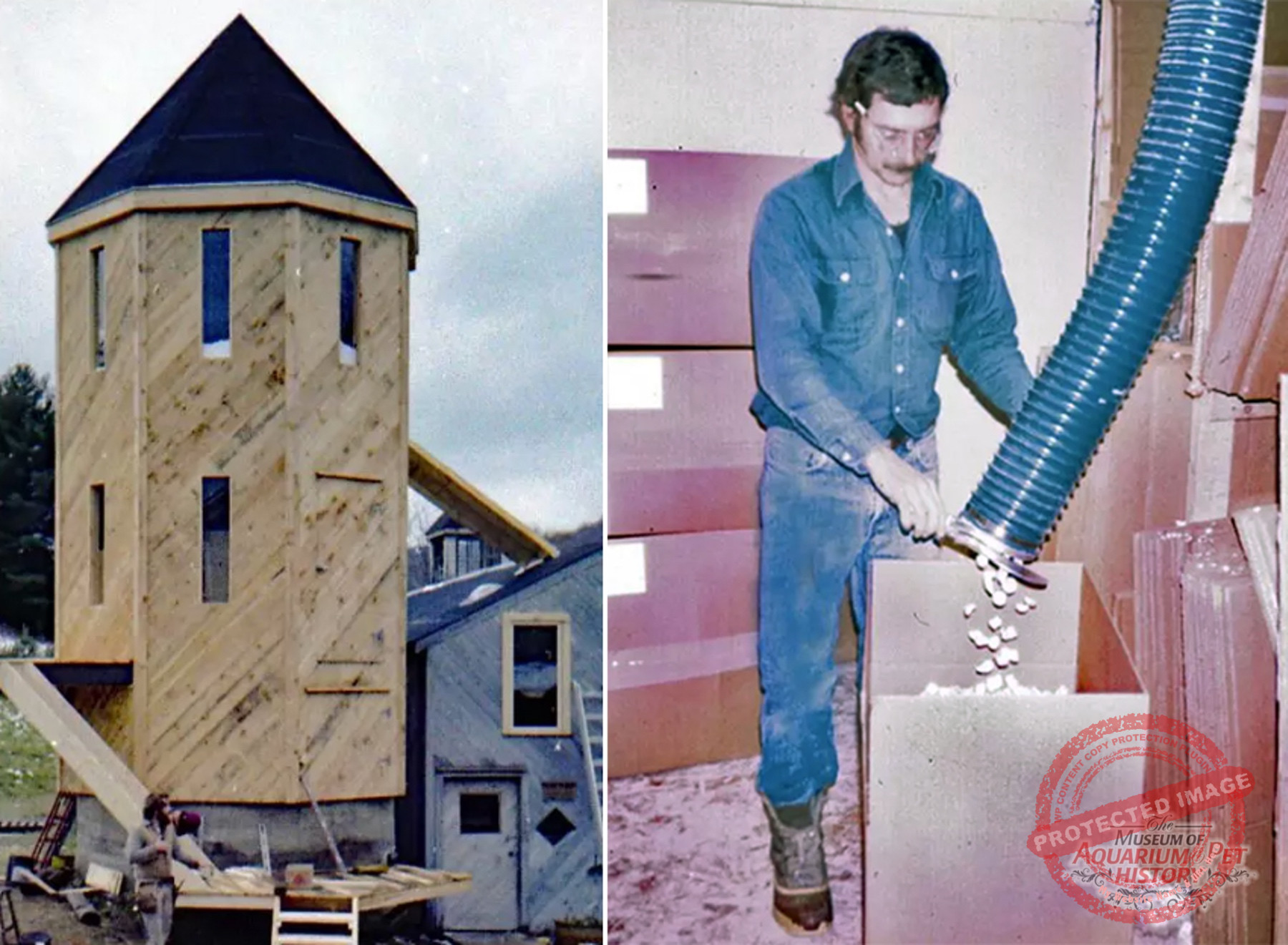
Studio tower. Photo courtesy of Robert Compton.