
Two Rare Steampunk Devices
Recently, I was lucky enough to purchase on eBay two pretty rare devices that, until then, I had only ever seen in my old catalogs as black-and-white illustrations. These are a water pump and a piston air pump, both of which required mechanical power supplied by a drive motor to operate.
The design of the water pump can be traced back to the late 1800s-early 1900s, but it’s hard to place my particular example precisely on the timeline. The air pump, on the other hand, bears a manufacturer’s nameplate suggesting a production date after the mid-1920s, a time when residential electricity was beginning to spread across major cities.
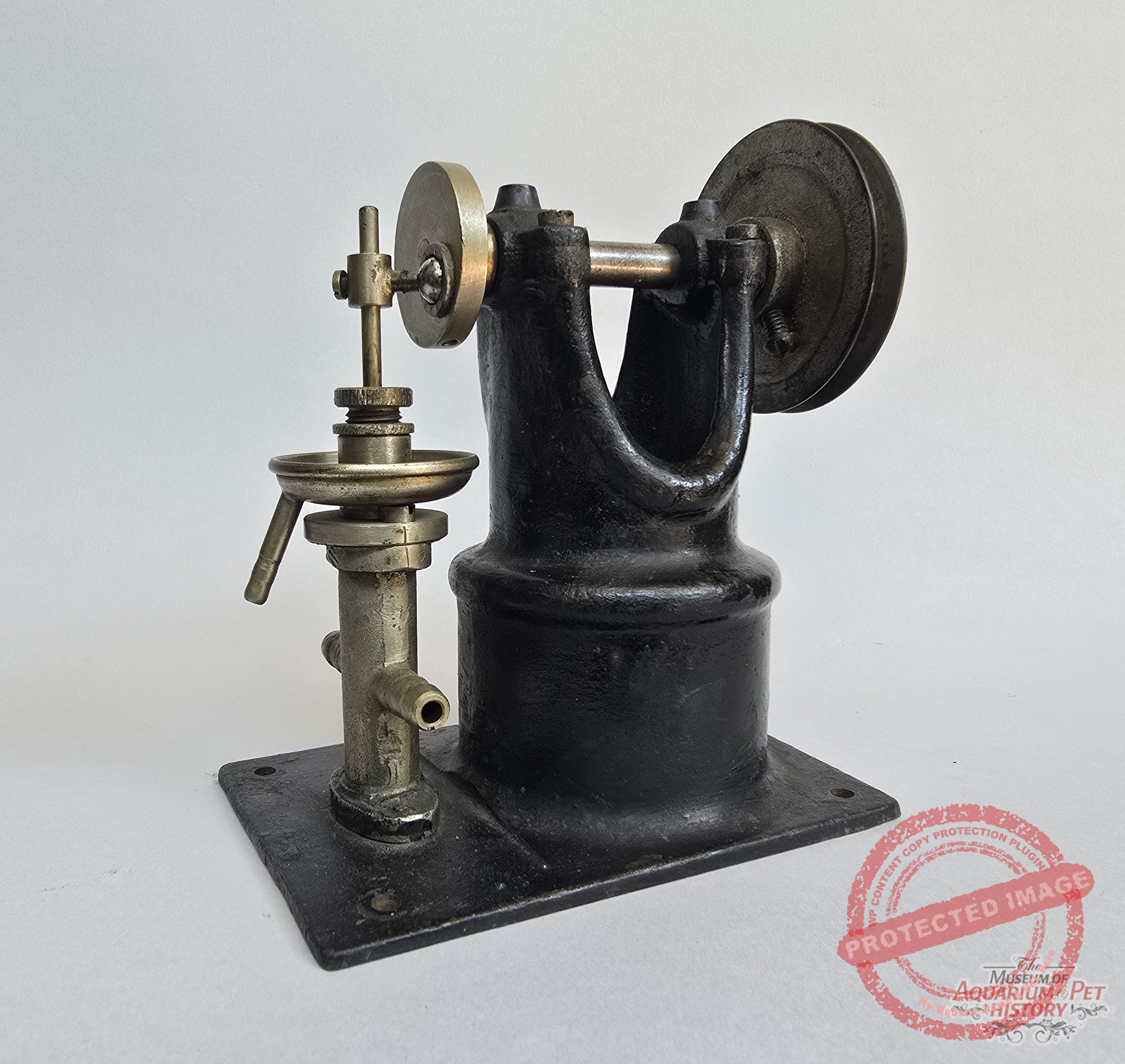
Front view of the water pump.
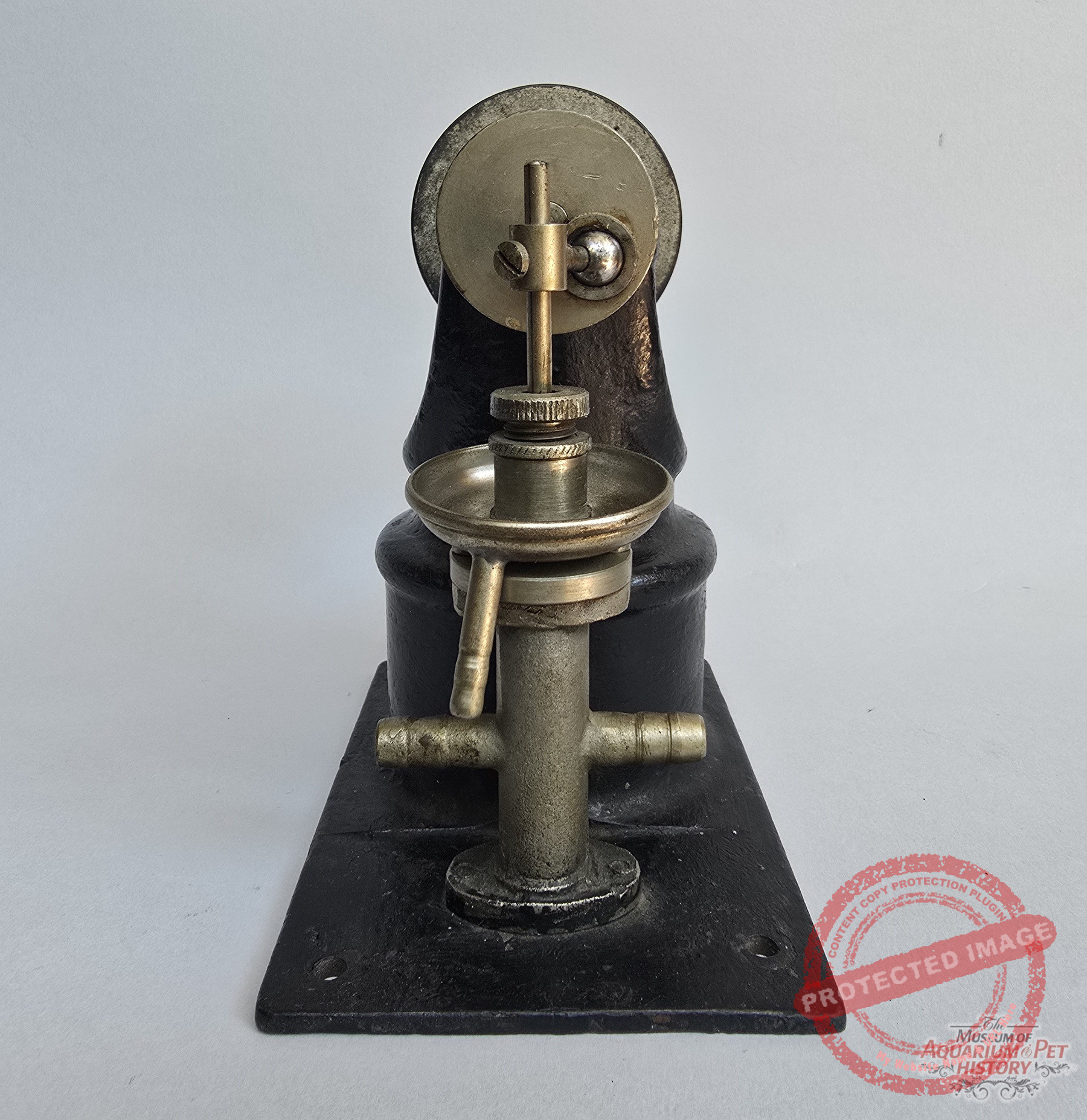
Side view of the water pump.
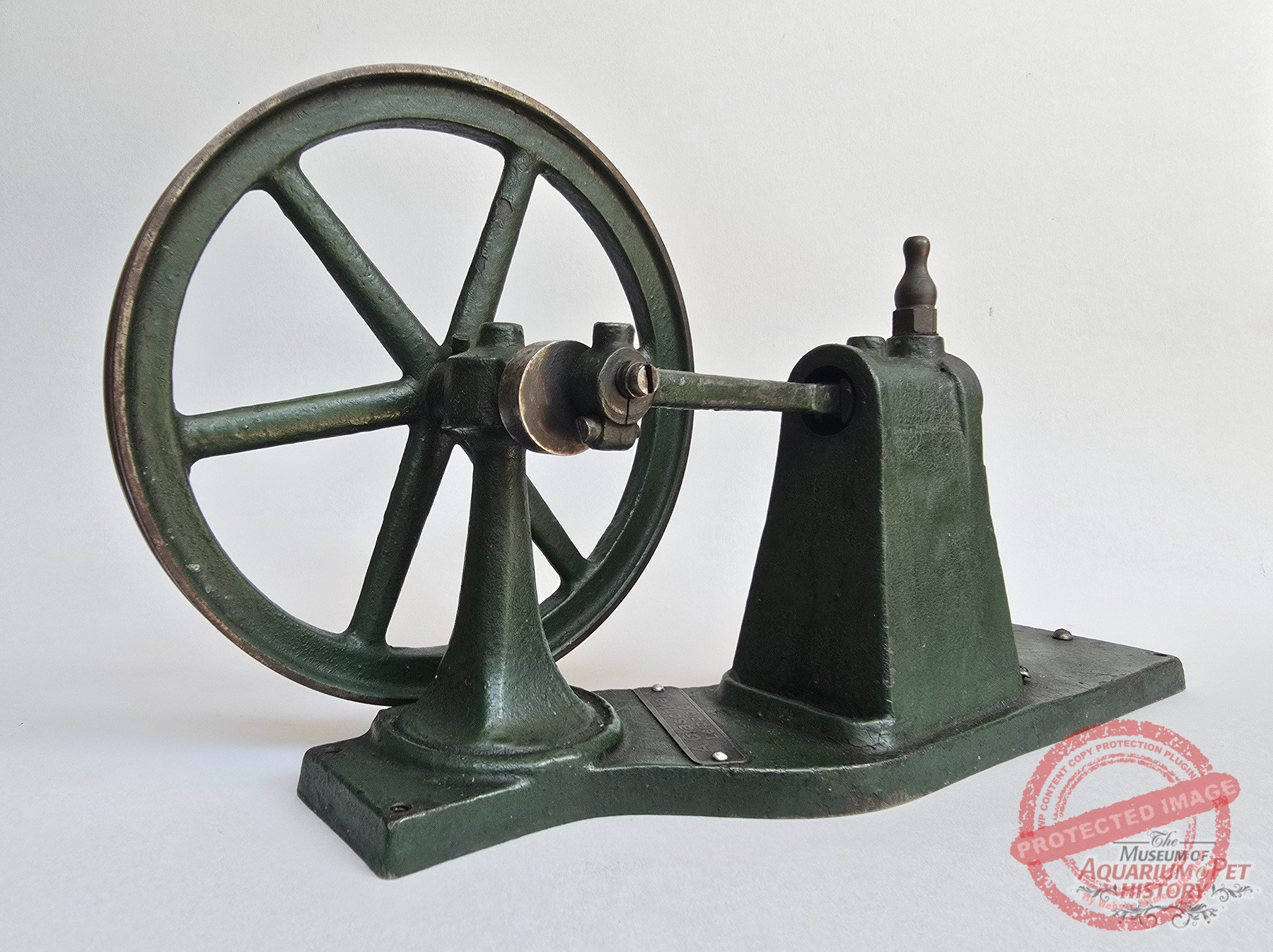
The air pump in all its majesty.
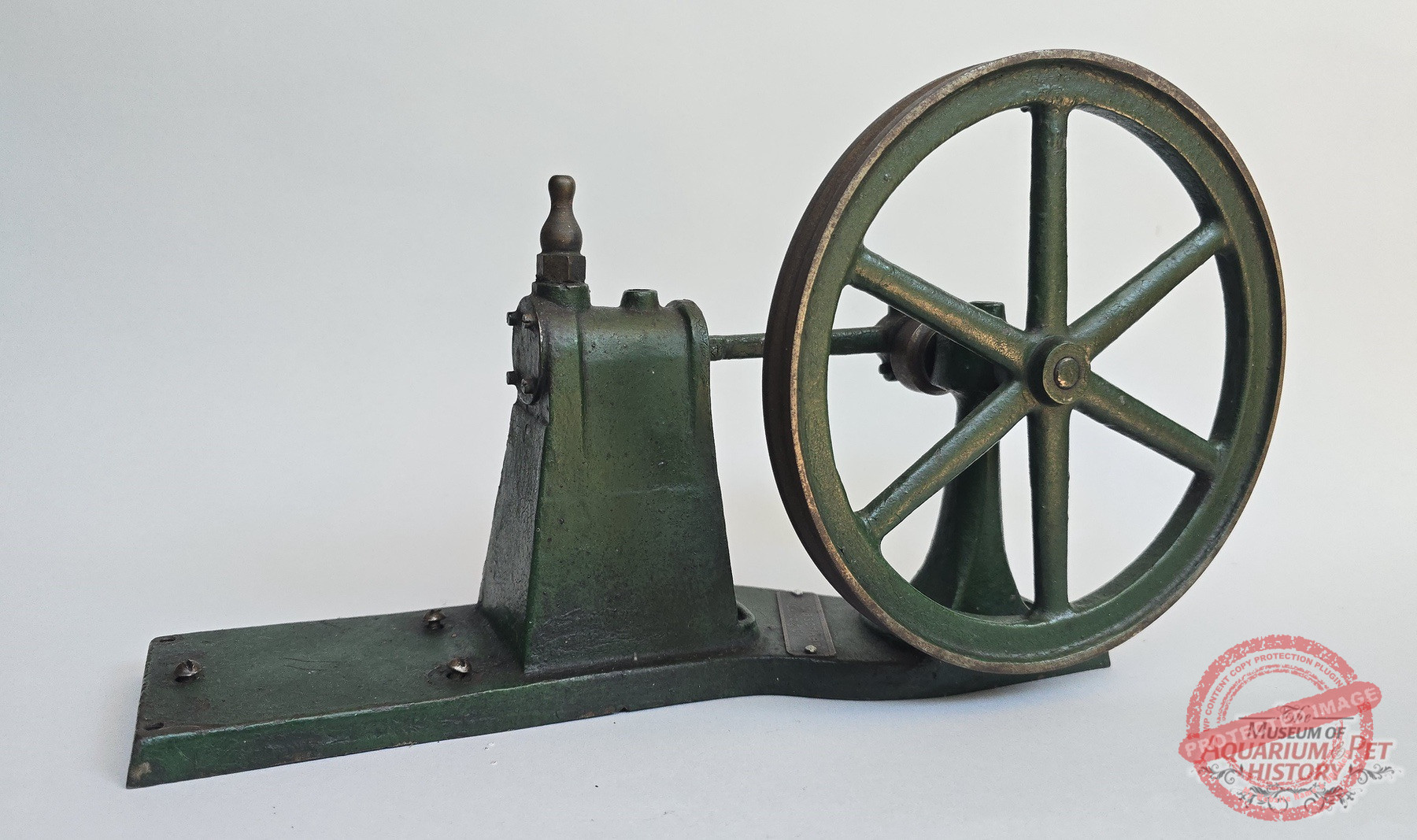
Both of these antique treasures, as mentioned, could only function if powered by a drive motor. At the time, for domestic use, a good way to ensure a steady, long-running power source was a hot air engine. Starting in the 1880s, the leading European manufacturers of hot air engines, as well as the beautiful parlor fountains I covered in detail in one of my early articles for the MOAPH, were Louis Heinrici of Zwickau, Saxony, and Hubertus Raab of Zeitz, Saxony.
A proven water pump design
Since the late 1870s-early 1880s, both of these brilliant masters of precision engineering were already able to equip their hot air engines with a valveless ball-joint water pump. It became the key device for operating their parlor fountains, and more broadly an important link to dealers of aquarium products.
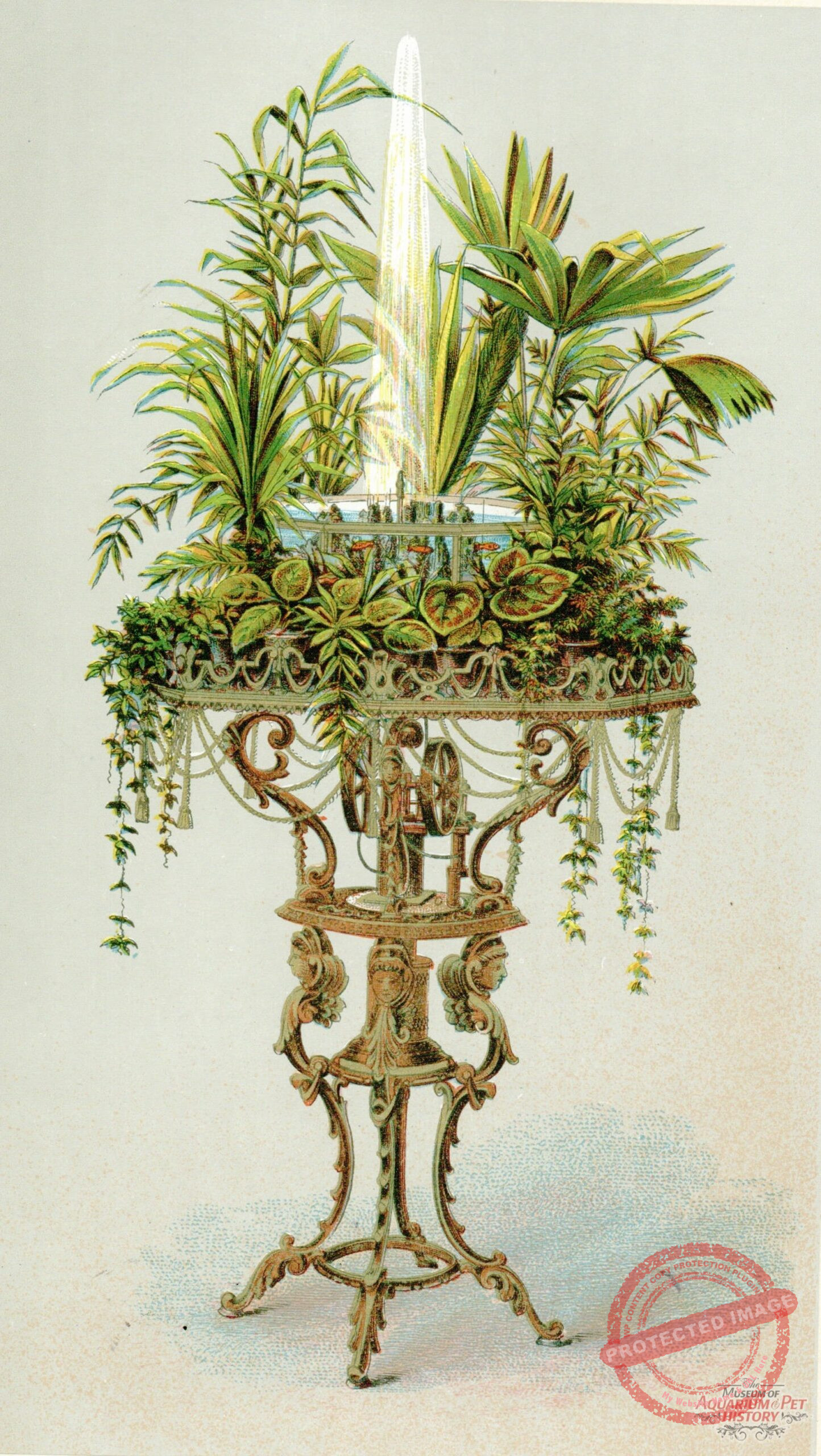
Gorgeous parlor fountain by Louis Heinrici.
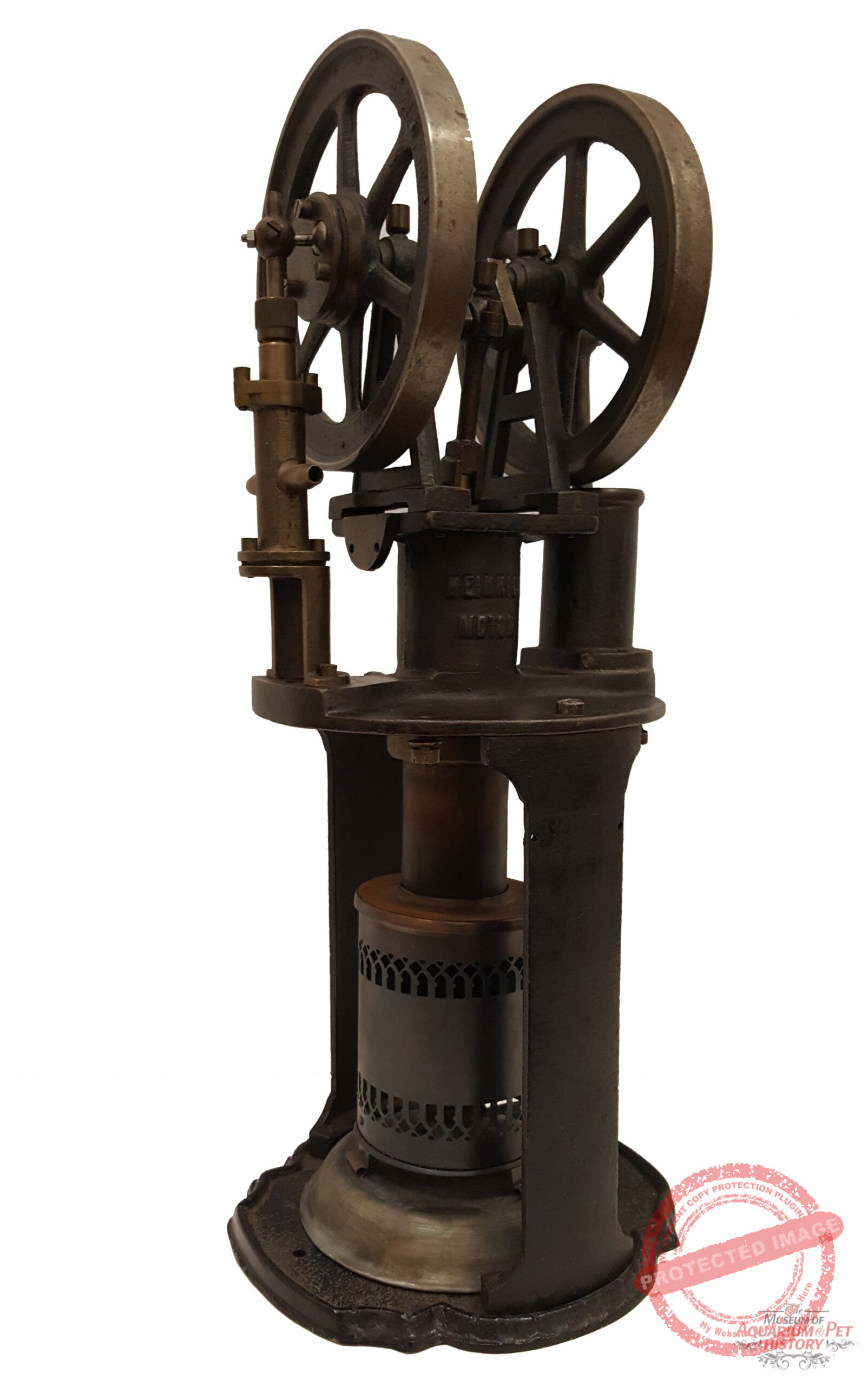
Double cylinder pumping engine by Louis Heinrici.
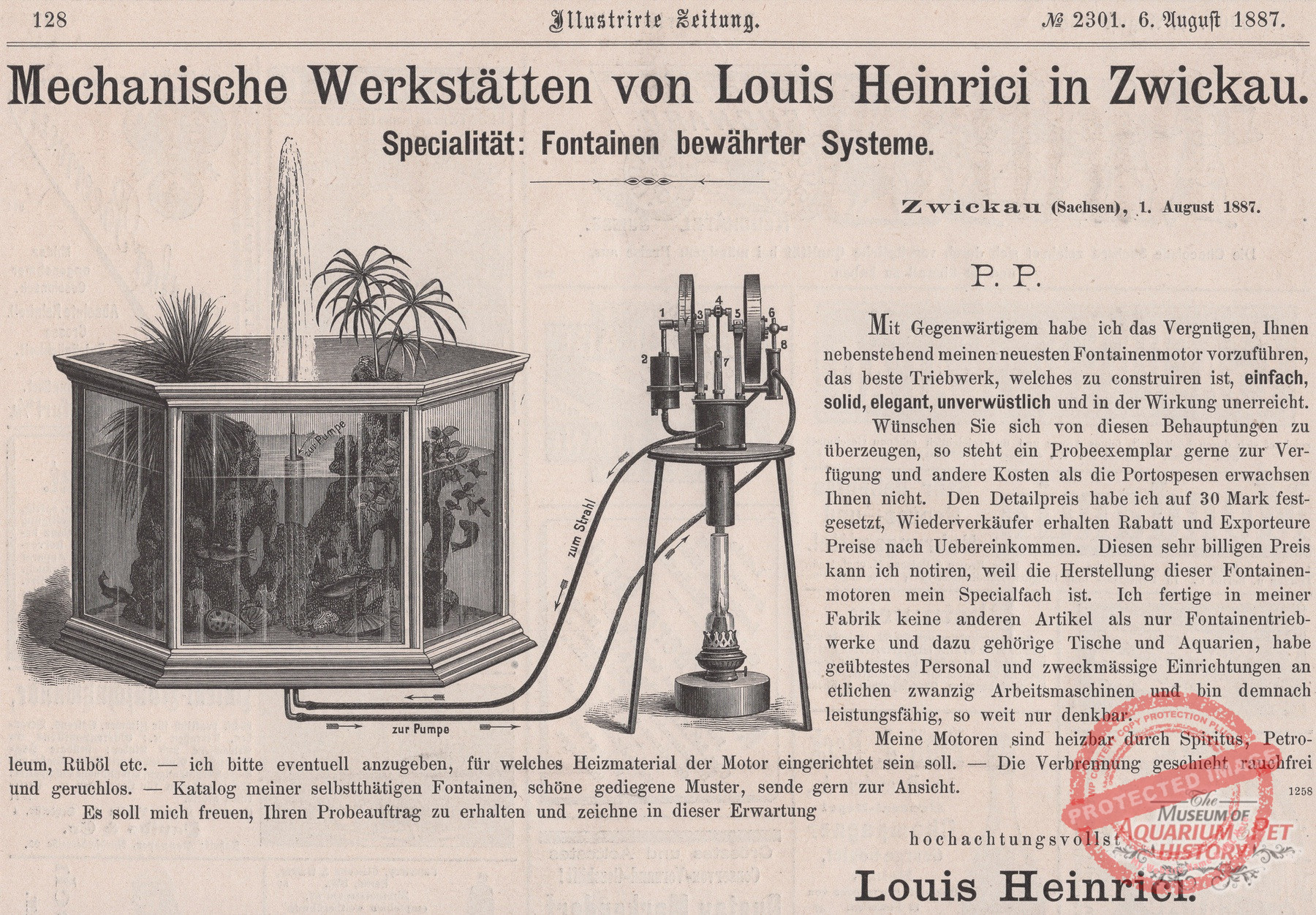
Heinrici’s ad from 1887.
The operating principle of this water pump was simple and reliable:
- a ball made of iron or brass, drilled through with a small hole, turned in a casing which was centered on the flywheel of the hot air engine
- a follower pin connected pump rod and drillhole
- when the engine was running, the pump piston was driven up and down in a spiral motion
- specially milled channels in the piston ensured that water flowed in only one direction.
Both Raab and Heinrici supplied the major aquarium dealers of the time. It is clear from the catalogs of yesteryear that Raab, in particular, established a strong commercial partnership with A. Glaschker, a huge company founded in Leipzig in 1875.
Pioneering devices
For A. Glaschker, Raab also produced hot air engines fitted with a built-in single-cylinder air pump. Besides, thanks to the e-books written by Gerd Maier, one of the world’s leading experts on hot air engines, we know that Raab likewise designed water and air pumps with a driven pulley which were sold separately. These latter devices were an ideal solution for aquarists who already owned a hot air engine with a drive pulley attached to one of the two flywheels. At that point, it was simply a matter of connecting the engine to the driven pulley of the pump with a drive belt in order to generate water circulation, a fountain effect, or air bubbles in the aquarium.
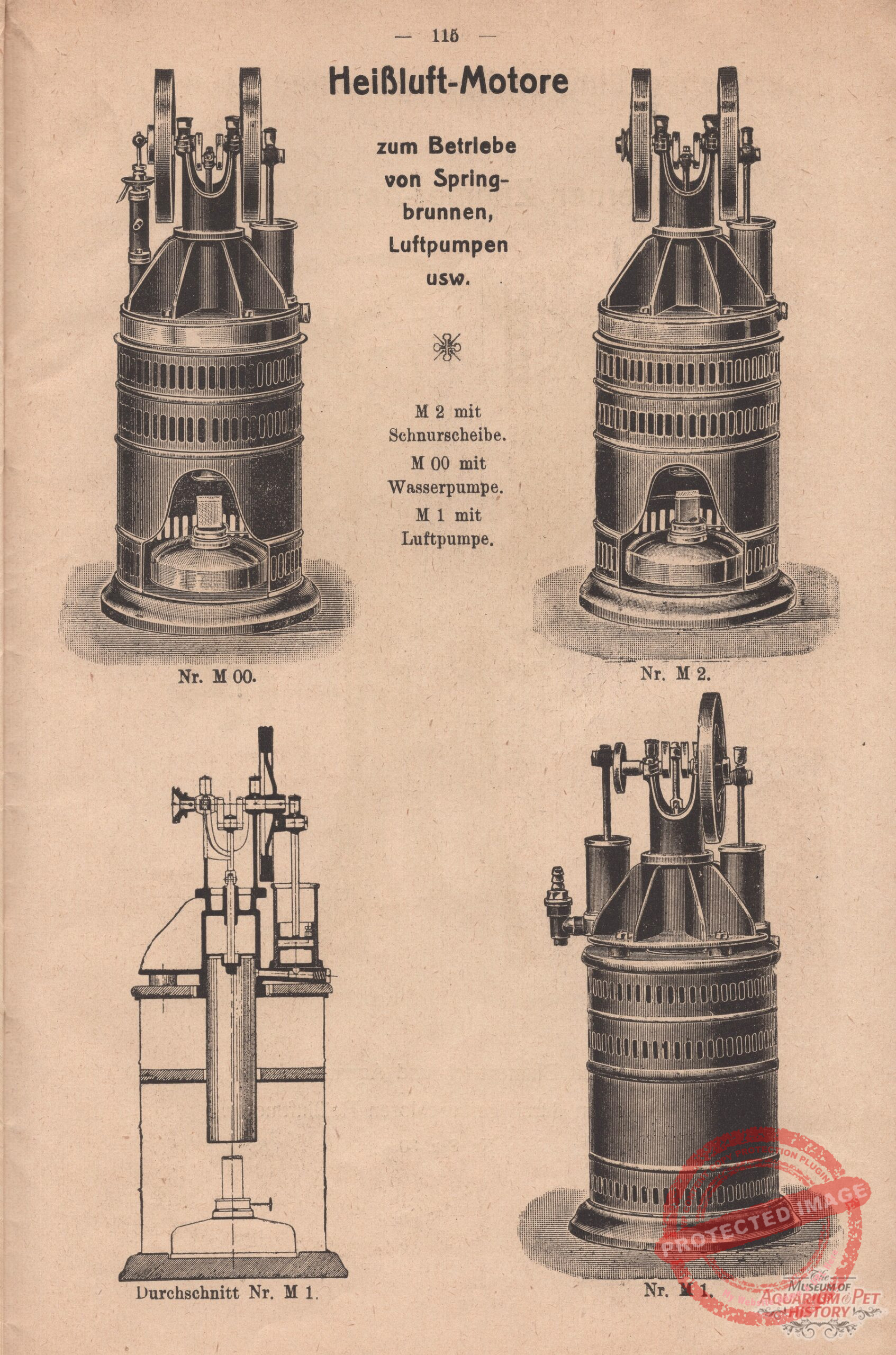
Nearly all the hot air engines sold by A. Glaschker were manufactured by the Hubertus Raab company.
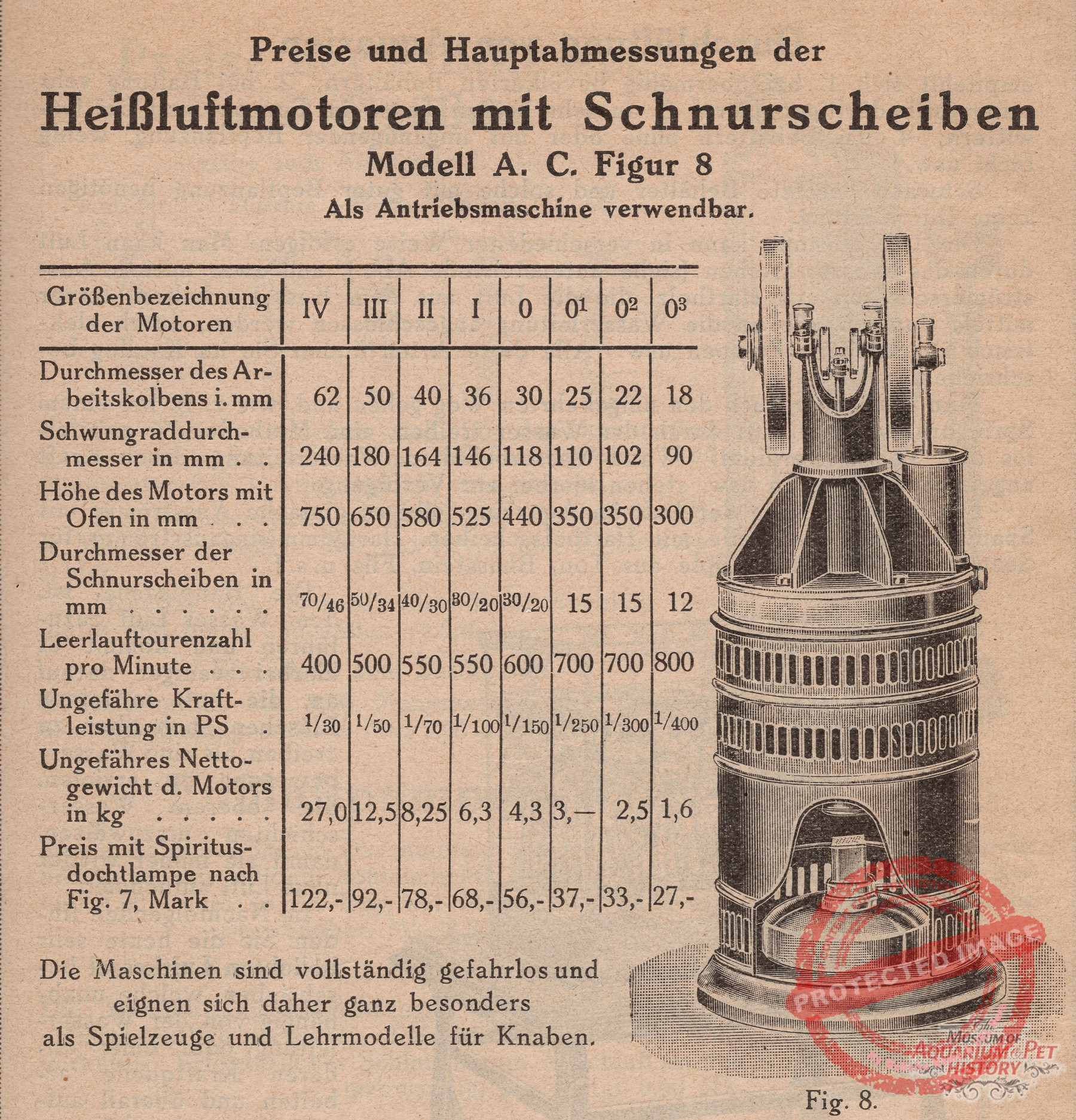
Raab hot air engine with drive pulley. A. Glaschker catalog, 1925.
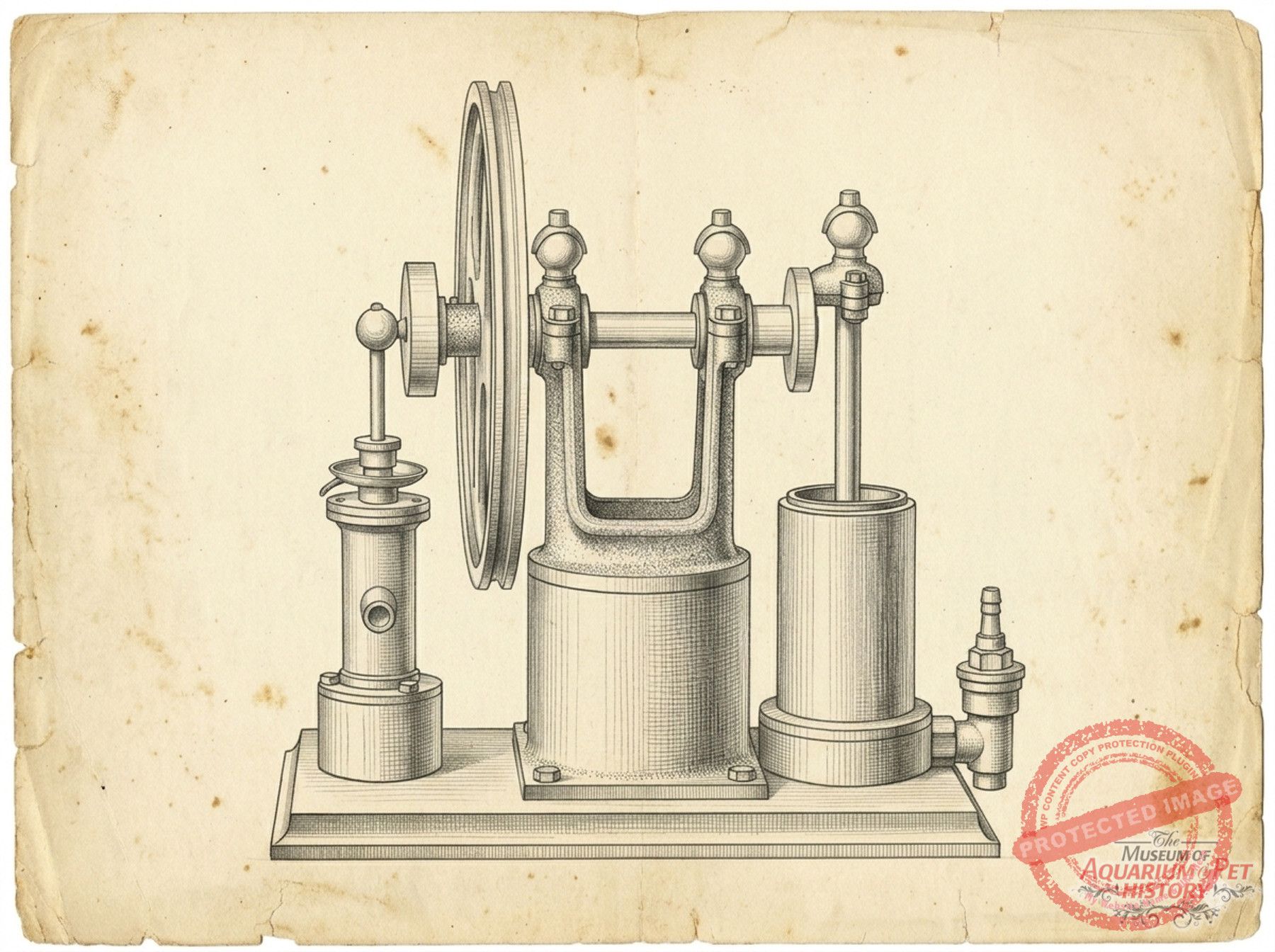
Drawing based on a rare photograph of a Raab combined water pump and air pump. Both pumps were simultaneosly driven by a big side-mounted pulley. Image generated with Gemini AI.
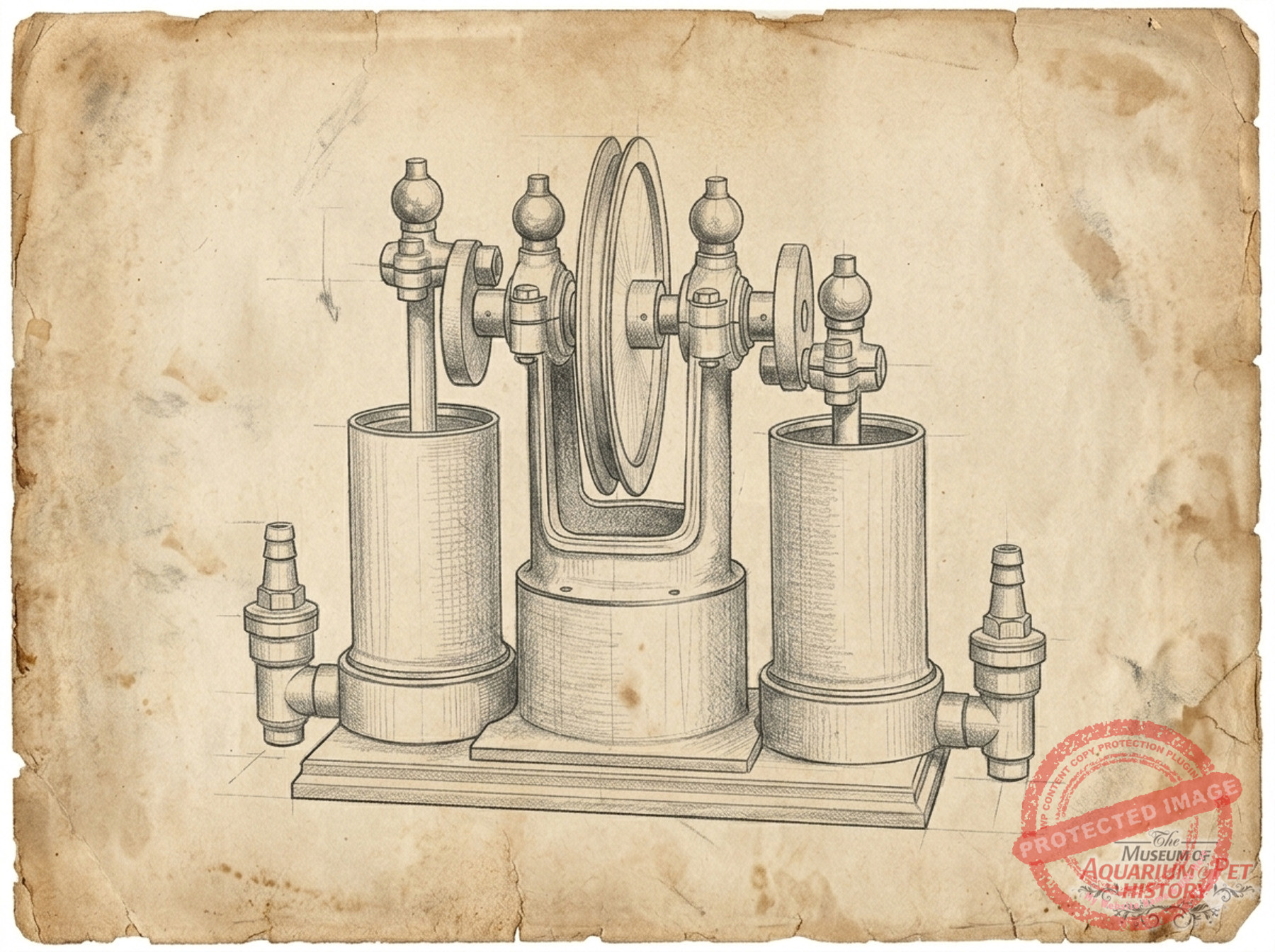
Drawing based on a rare photograph of a Raab double piston air pump. Image generated with Gemini AI.

Optician and precision mechanic Hubertus Raab (1853–1922). Image generated with Gemini AI.
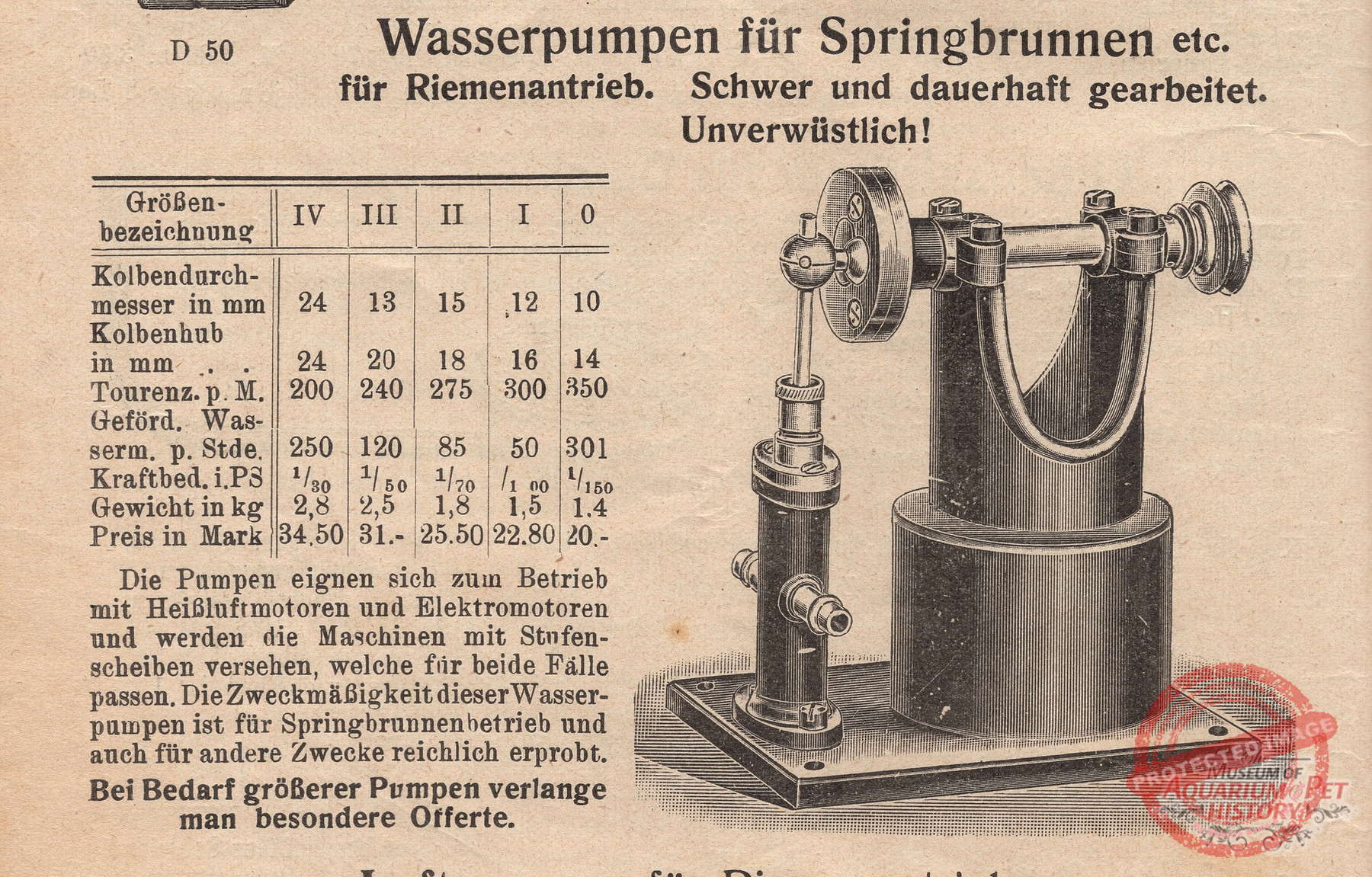
Water pump with driven pulley. Notice how an electric motor (“Elektromotor” in German) is also indicated as a possible power source for this device. A. Glaschker catalog, 1925.
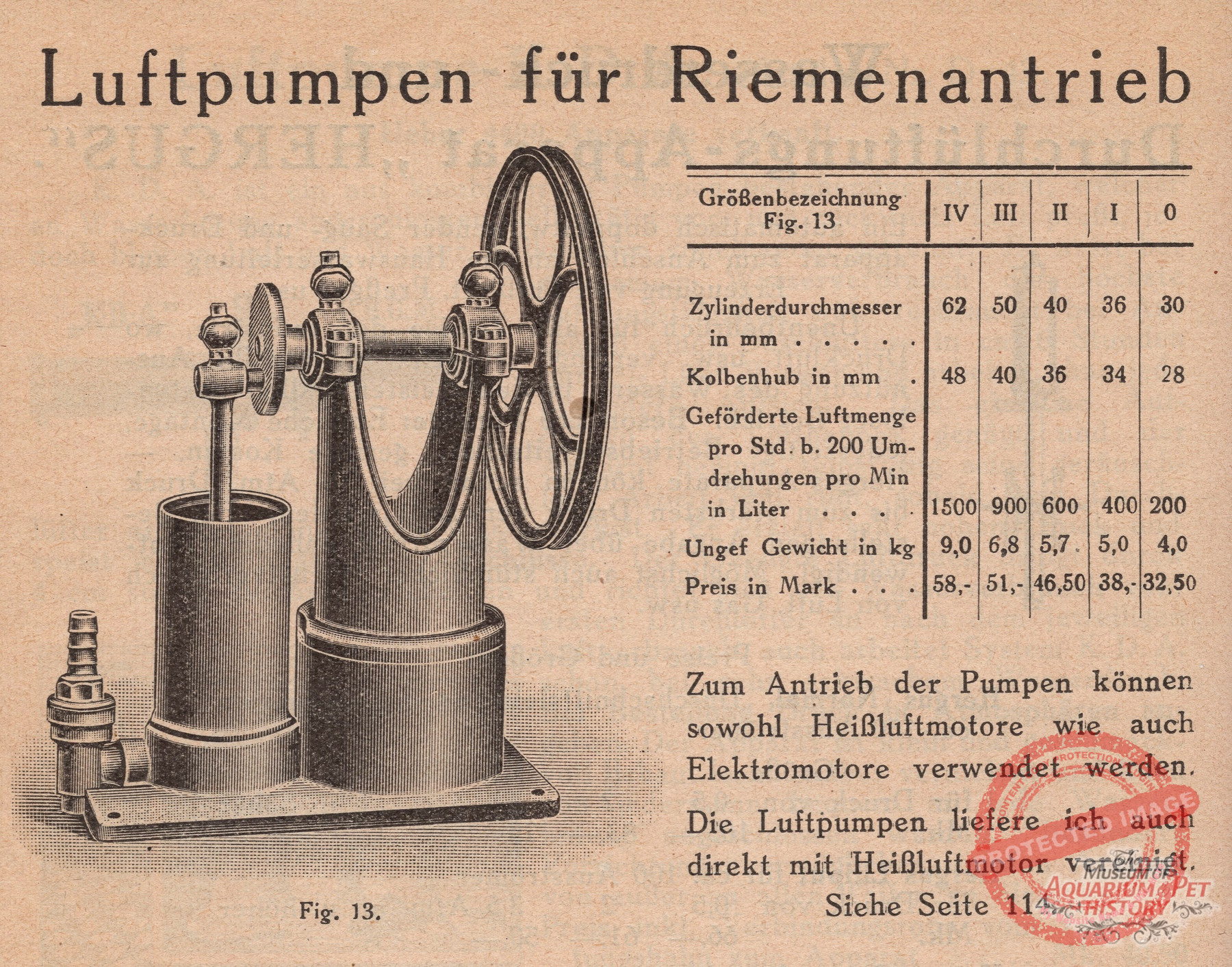
Air pump with driven pulley. Here too, an electric motor is indicated as a possible power source for this device. A. Glaschker catalog, 1925.
Although it doesn’t bear his signature, it is likely that the water pump I lately purchased is the work of Hubertus Raab’s ingenuity, or at least a device based on designs previously developed by his company. By contrast, I have no evidence linking the air pump to Raab.
What I really like about the air pump is its “primitive” look. This artifact weighs 2.7 kg (about 6 pounds) and has considerable dimensions, starting with the impressive 17.8 cm diameter (7 inches) of its driven pulley. Surprisingly, however, such gargantuan proportions are not reflected in the cylinder housing the piston.
At the four corners of its long base, there are screw holes that allowed the pump to be mounted onto a larger base, usually made of wood. Besides, three additional screw holes can be seen on the side opposite the one where the large driven pulley is mounted. I have often wondered what function these three screw-fitted holes might have served, and one of the plausible explanations is that they were used to secure an electric motor equipped with a drive pulley. This subject undoubtedly requires further investigation.
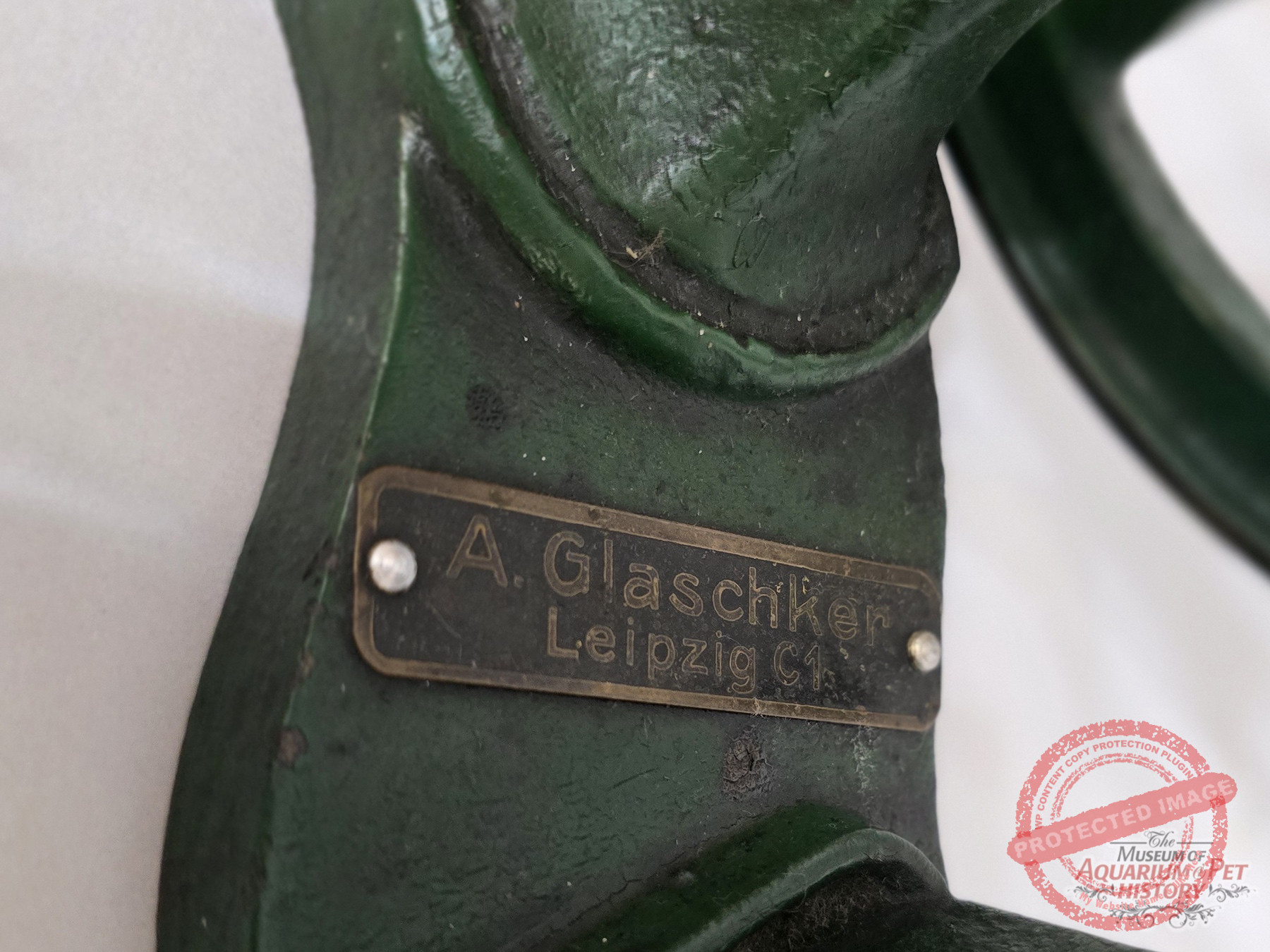
But let’s get back to its nameplate. It reads “A. Glaschker Leipzig C1”. The alpha-numeric code identified a specific district in Leipzig at the time. The company started to use it on the trade literature, as part of its address, after 1925. If the nameplate is period-correct, we can therefore conclude as noted at the outset that A. Glaschker began selling this air pump in the second half of the 1920s. I would also add that this was almost certainly a very limited production run.
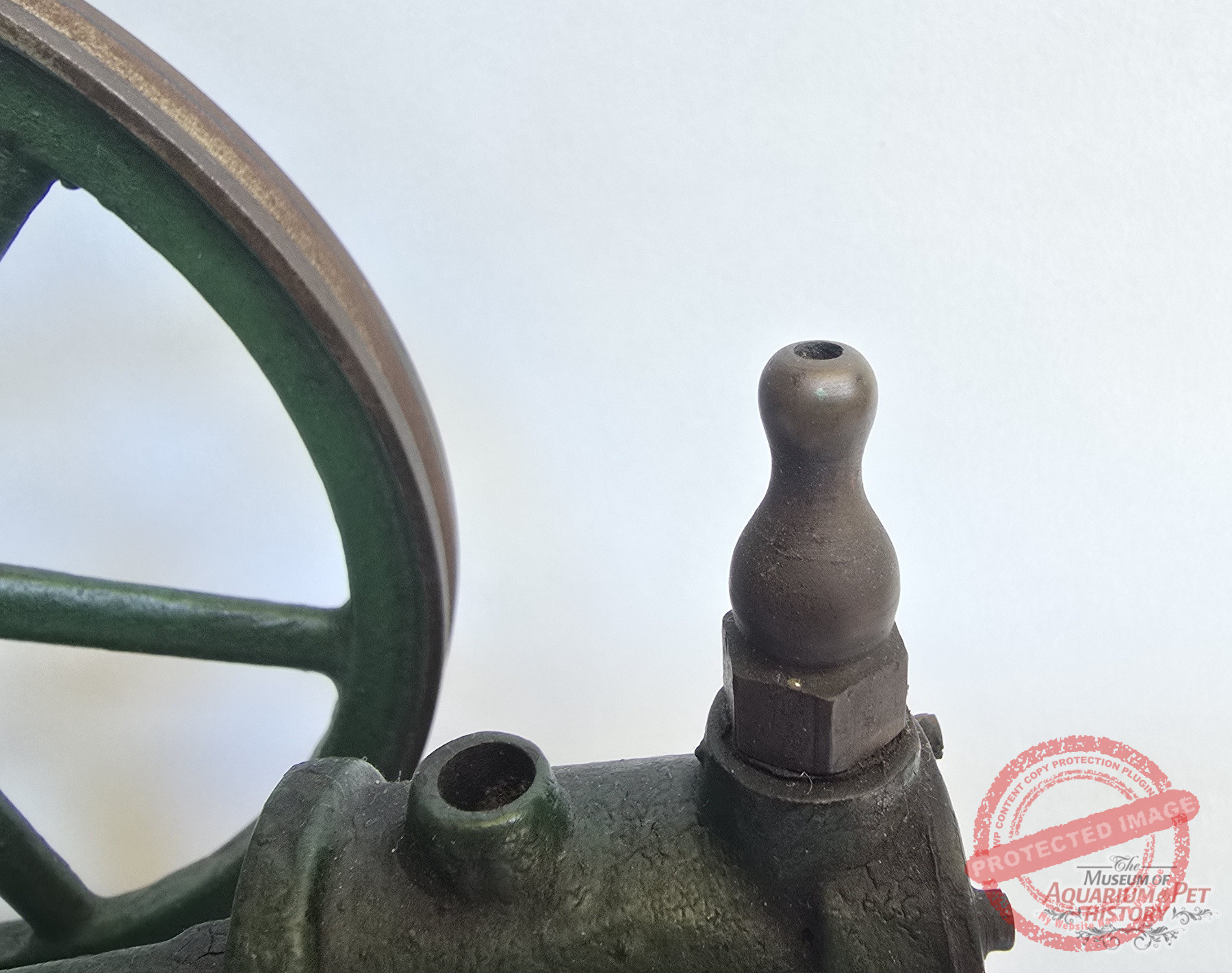
Close-up of the brass air outlet barb.
In motion once again!
Unlike the air pump, the water pump was certainly used in other fields as well. A device with a very similar design can be found, for example, in the 1907 catalog of Ferdinand Gross, a specialist in toys and model engineering.
Equipped with a fairly large driven pulley (the larger the driven pulley, the lower the pump’s operating speed), it features the iconic brass valveless ball-joint water pump described earlier. I consider myself lucky to have found this particular example complete with its iconic drip tray with outlet pipe. It was a key accessory for preventing dribbling, as it collected the water that often passed through the bushing of the pump stem.
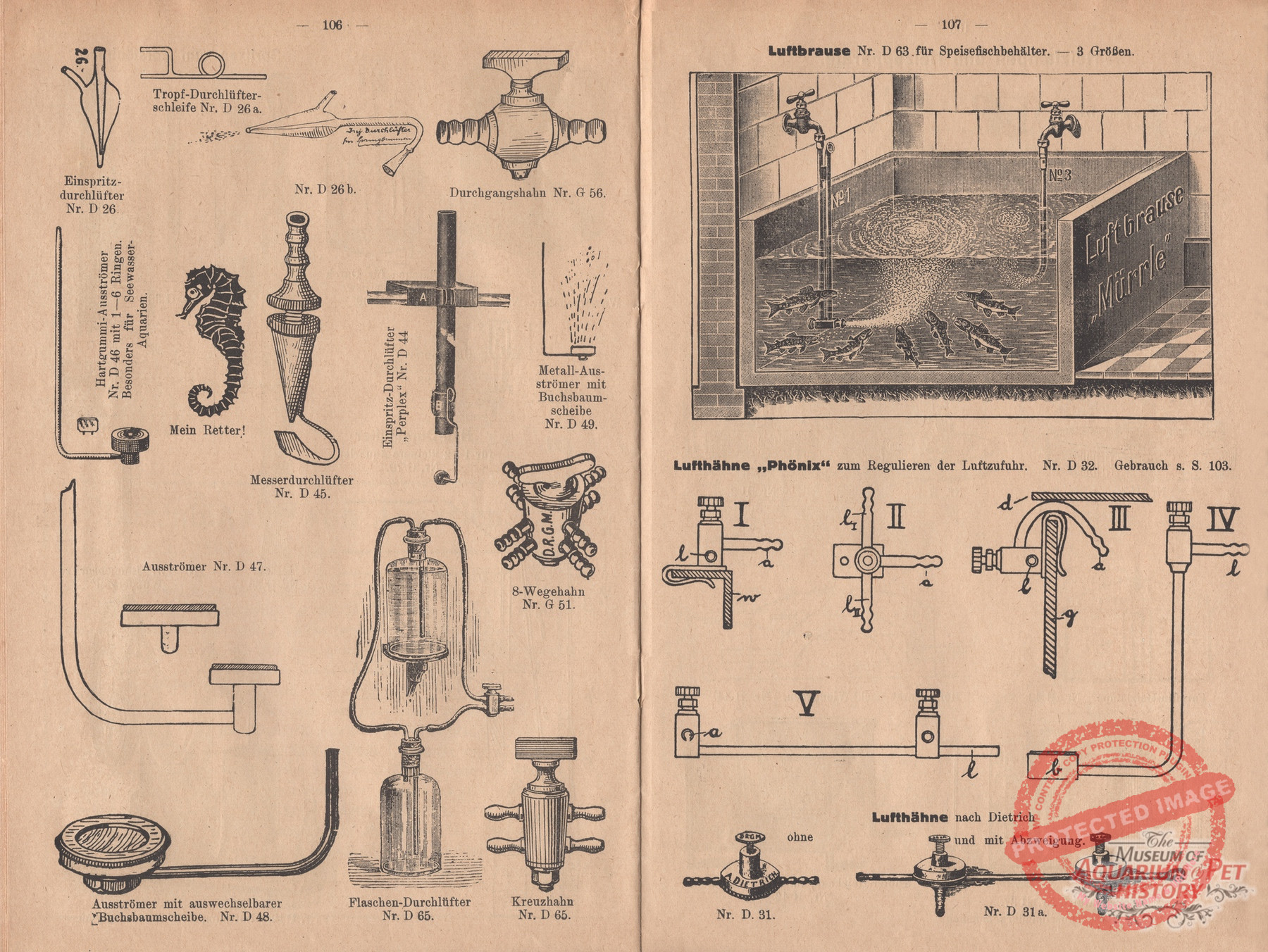
A selection of air stones featured in the 1925 A. Glaschker catalog.
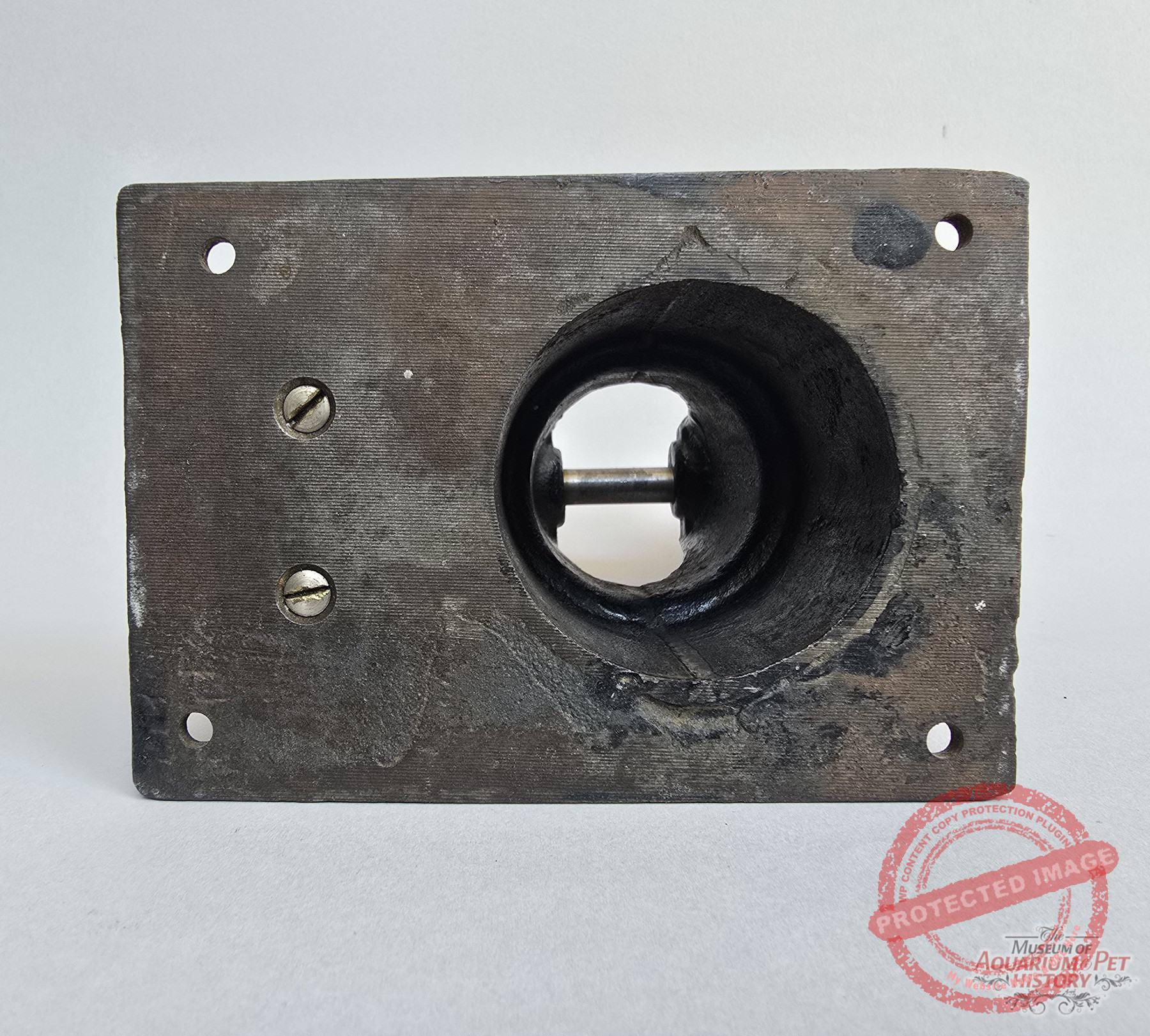
Bottom view of the water pump.
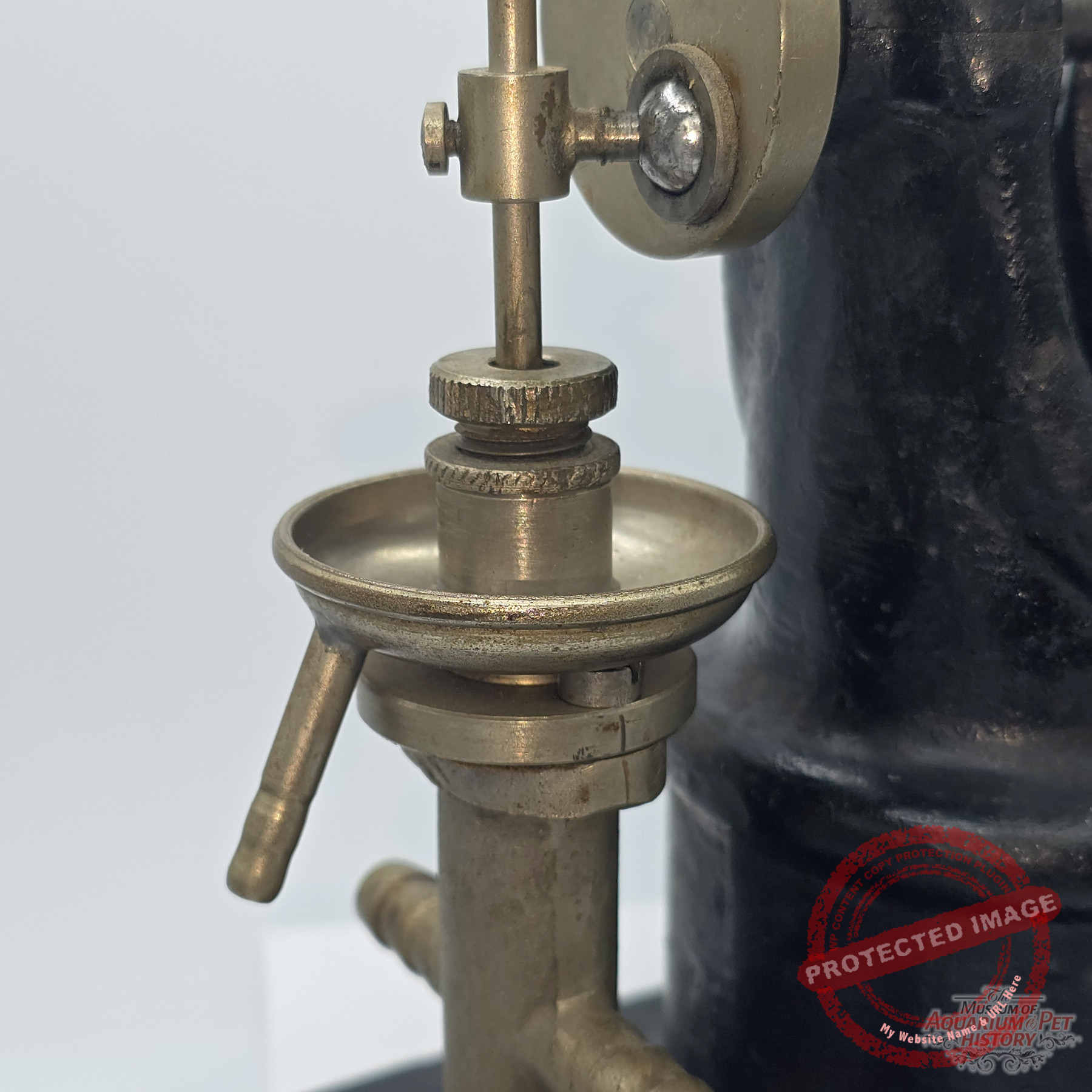
The brass drop-catcher mounted below the bushing.
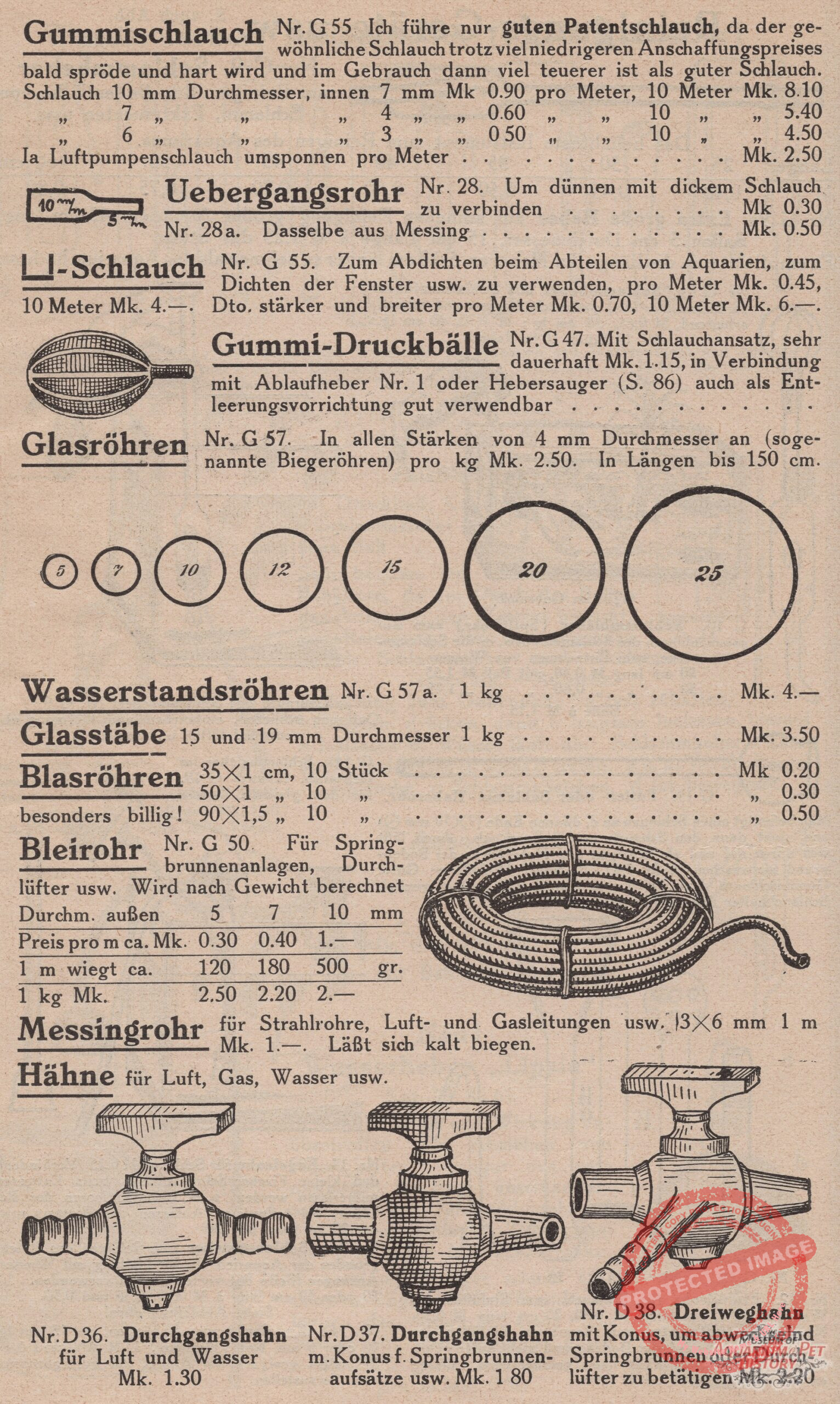
Tubing marketed by A. Glaschker at the time.
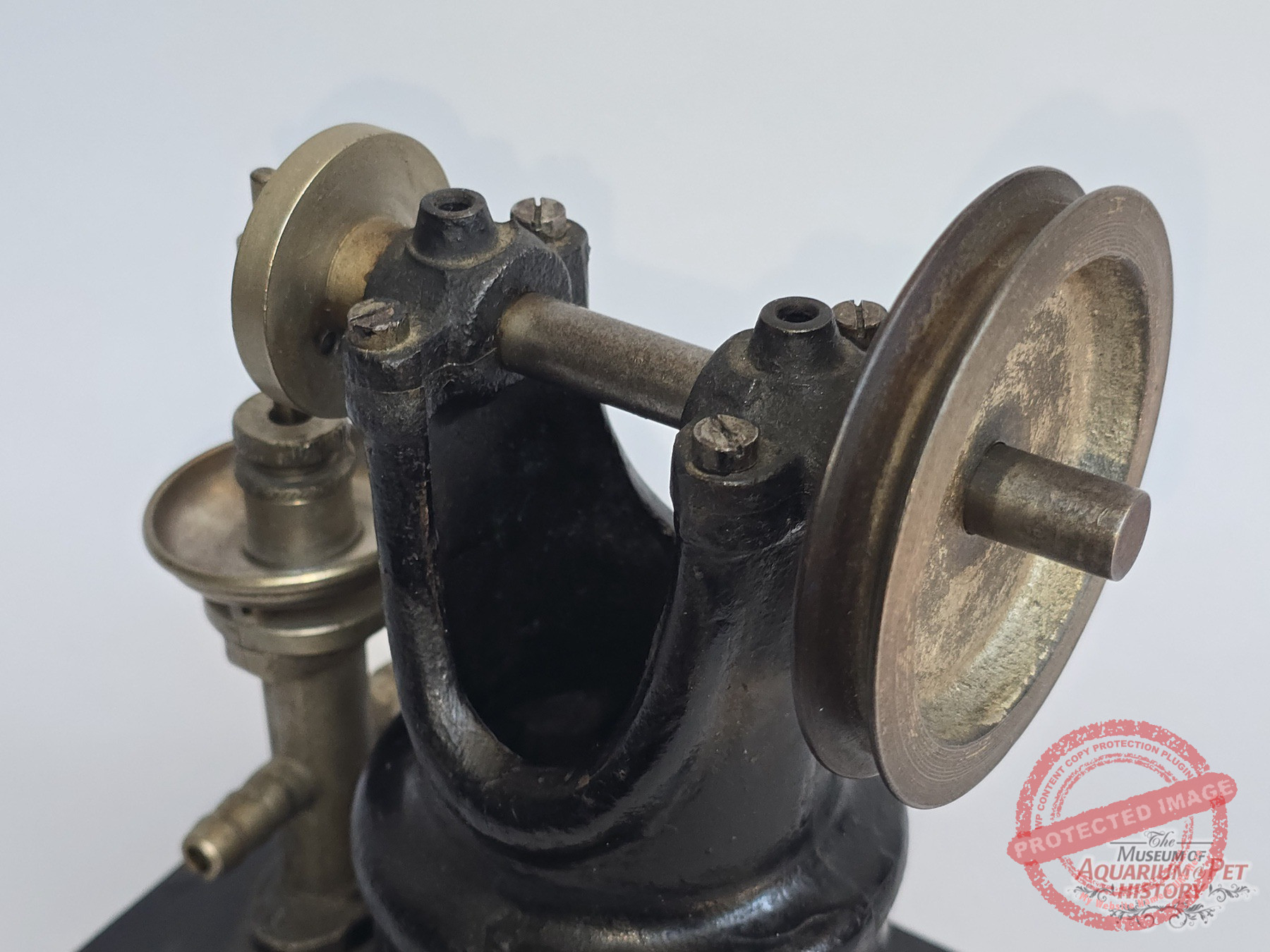
Detail of the top of the water pump.
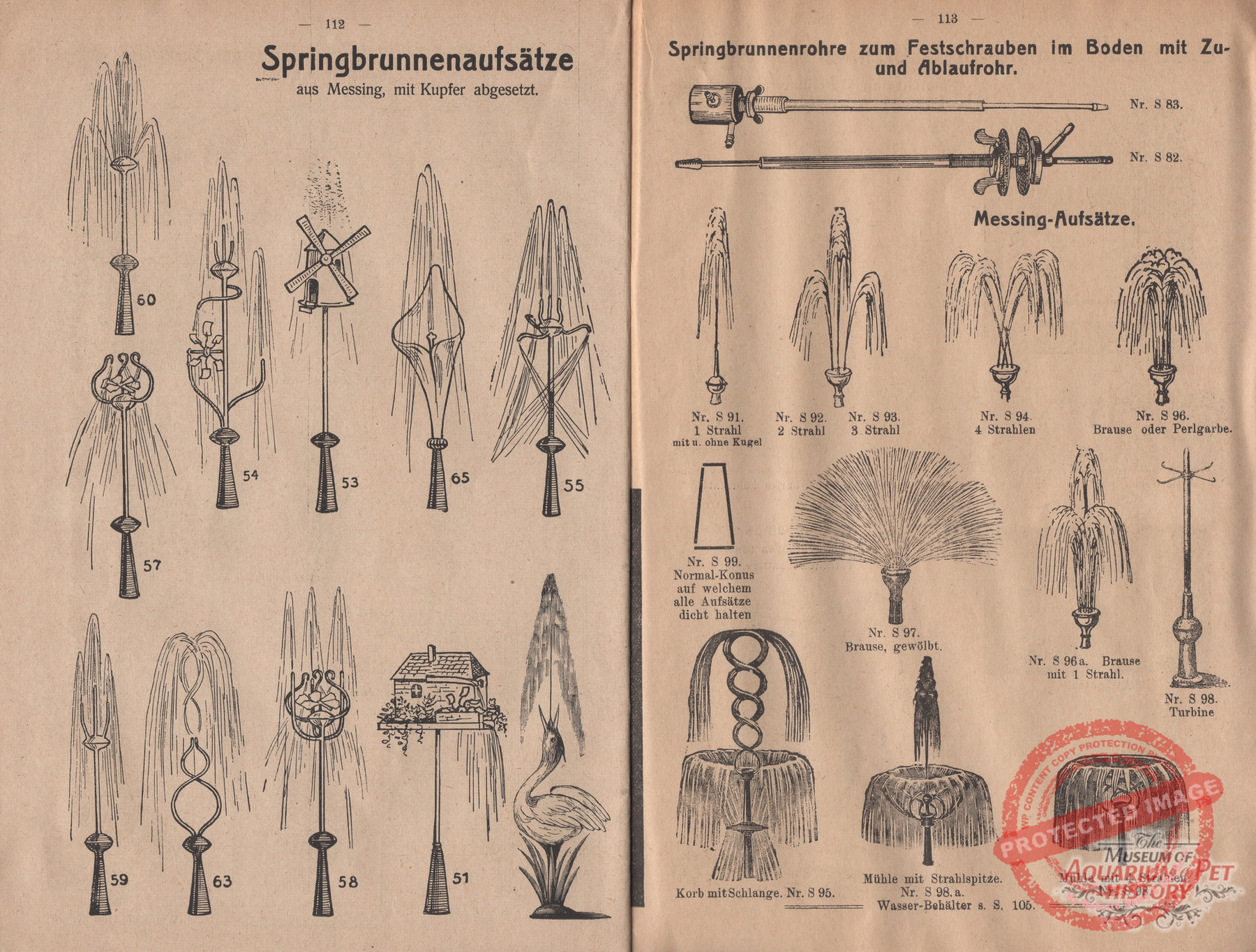
An array of regular and fancy water jets for the parlor aquariums of the time. A. Glaschker catalog, 1925.
As electricity became a standard feature in households, a wide range of new devices for the average hobbyist quickly proliferated, gradually pushing their predecessors into obsolescence. Thankfully, there are still people like Gary Bagnall, the founder of MOAPH, who offer collectors like me an online platform to share the beauty of artifacts from the early days of the hobby. And since Gary always asks me whether the devices I come across still work, I decided to test the stars of this article after around a century of dormancy.
Needless to say, the mechanical strain, the noise, and the movements they produce once set in motion are simply romantic in nature. They still work, though with some difficulty and limited efficiency, yet they continue to work!