Antique and Vintage Catalogs: Time Portals to a Magnificent Past
What distinguishes a methodical, serious collector from impulse buyers and simple hoarders? I’m quite sure that this question can be answered with a single word, knowledge.
The key to success in building an organized, enviable collection, whether small or large, is always an in-depth knowledge of the items to be collected: history, rarity, current market value, main features, etc. Of course, money is important as well, but comes after.
According to my experience in collecting aquarium antiques, the right sources of this kind of information are the senior collectors, all the books and articles on the aquarium history published to date, and particularly the trade literature of yesteryear.
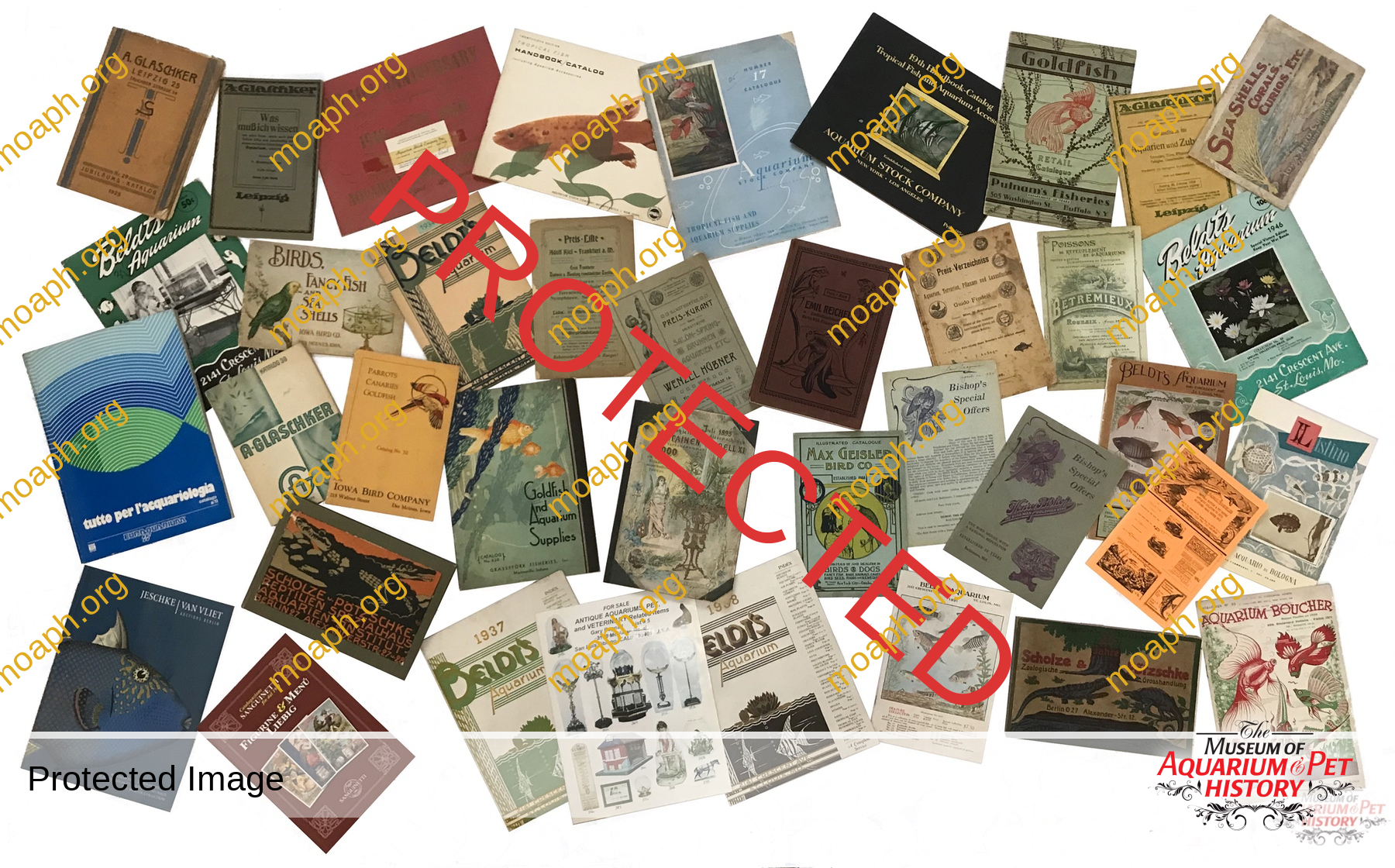
Old catalogs offer collectors an insight into the aquarium industry of yesteryear.
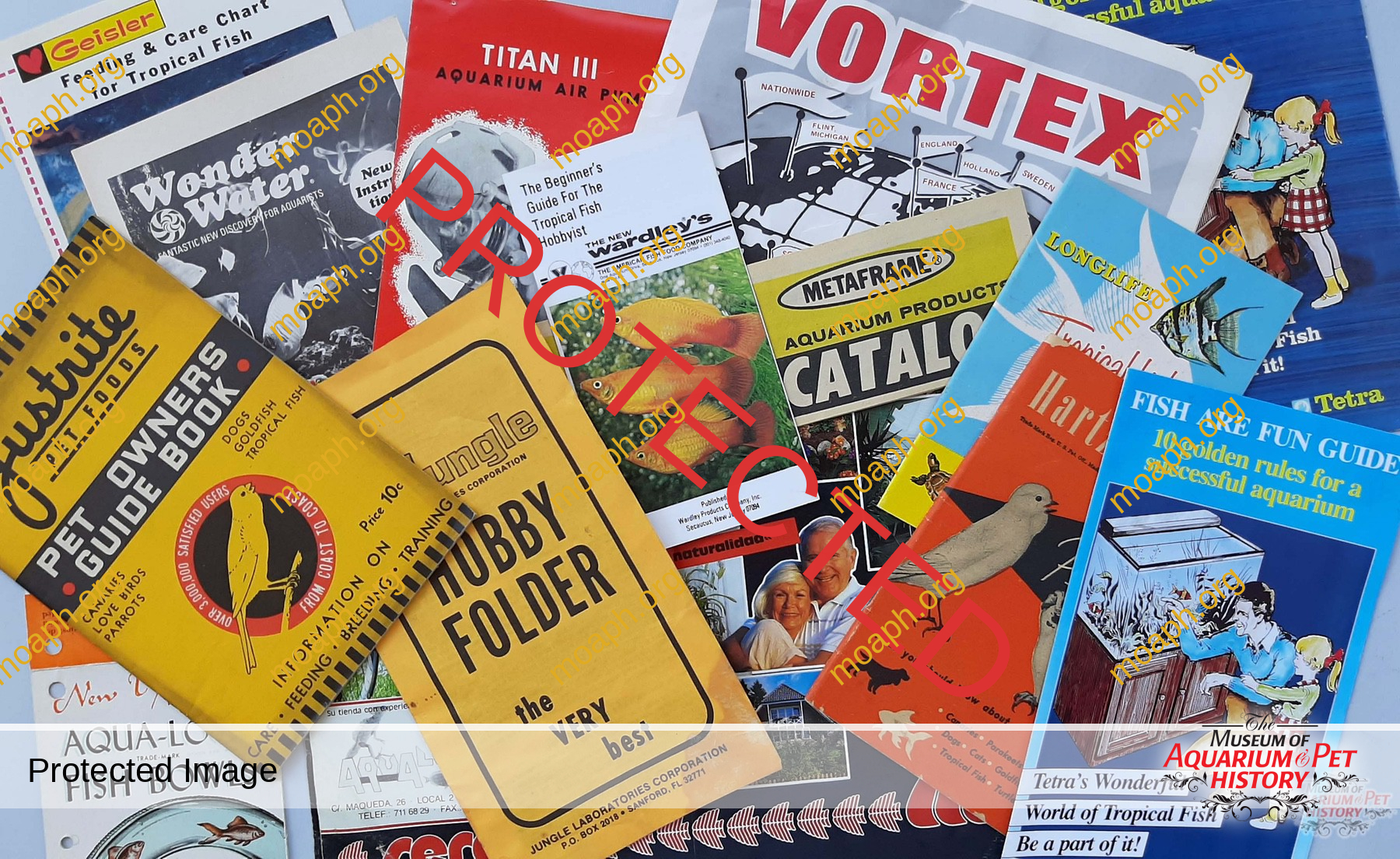
A few examples of vintage trade literature.
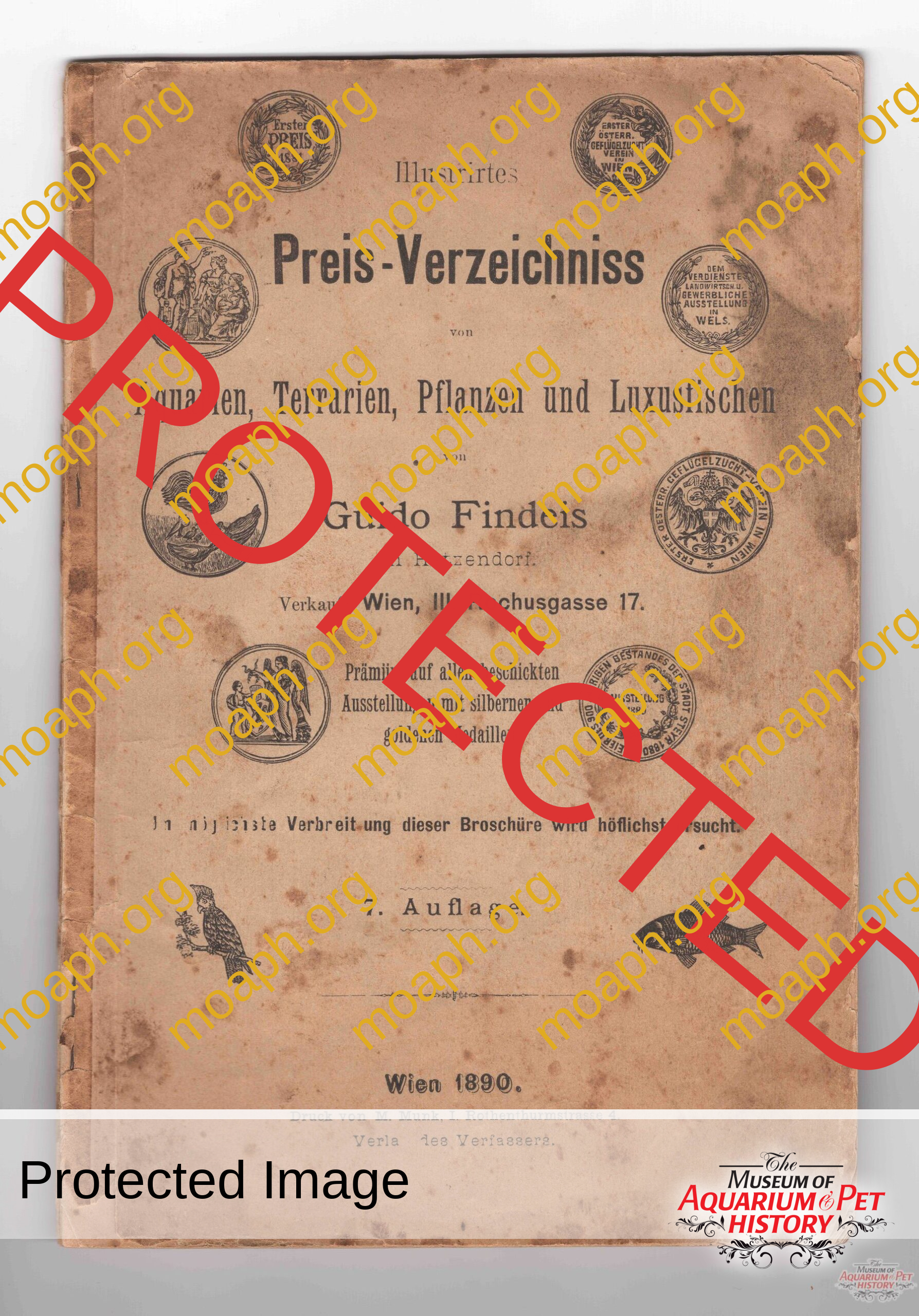
Guido Findeis catalog, Wien, 1890. When you find rare, antique pieces like this do not care about the condition and grab it!
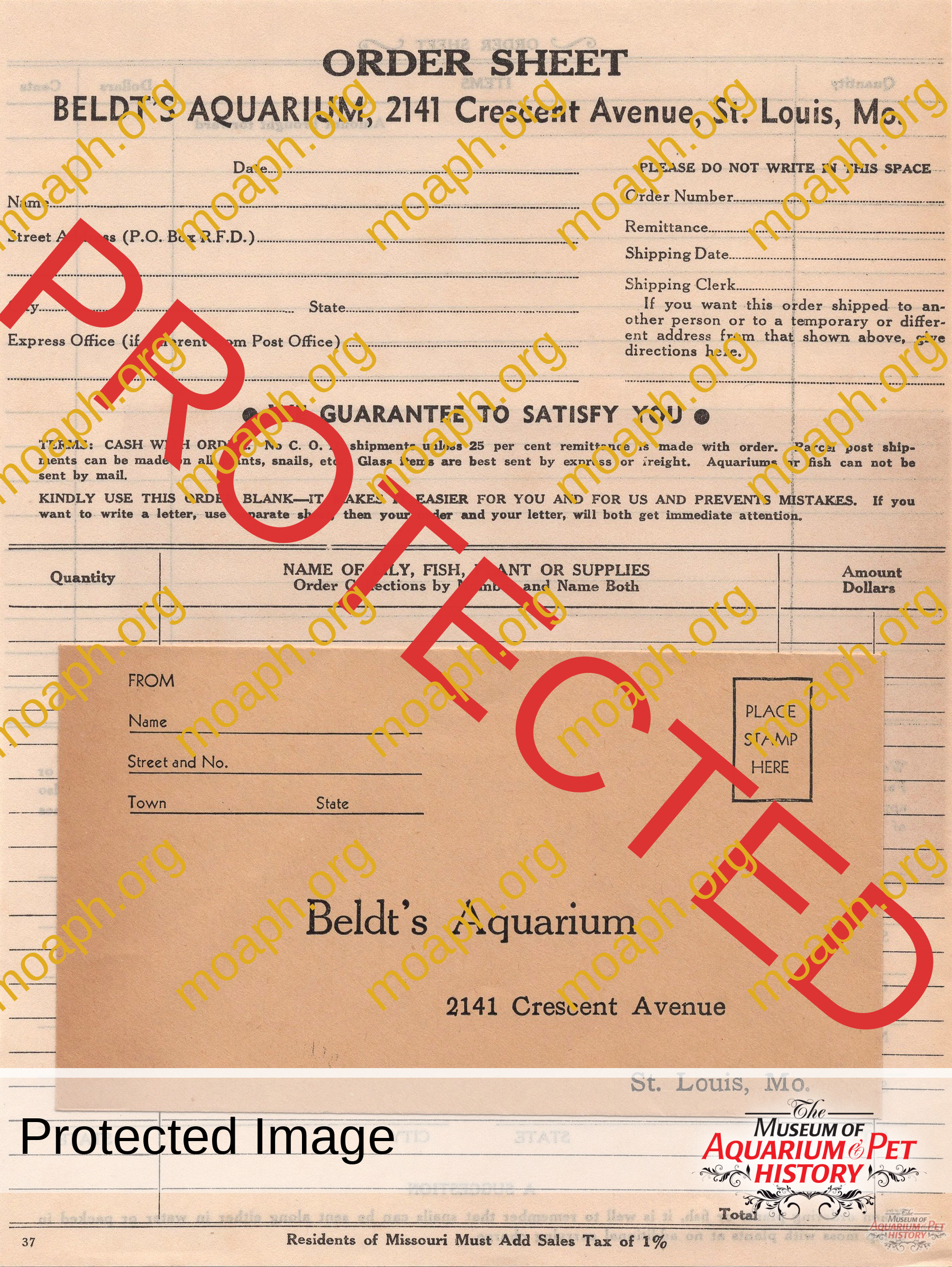
Beldt’s Aquarium order form, 1937. Like other mail order catalogs of that era, vintage aquarium catalogs usually contained one or more purchase order sheets.
“Trade literature” is a general term including advertising, technical communications, trade journals, leaflets, price lists, and catalogs (or “catalogues” in British spelling) issued by manufacturing, wholesaling, and retailing firms. In other words, a goldmine of information about the development of the business in the aquarium industry in terms of:
• history of the companies
• technology
• design
• marketing
• consumer trends
• supply evolution
• prices
• purchasing, payment, and shipping methods
• other general conditions of sale.
I search for the trade literature as often as I can, focusing my attention especially on old catalogs.
Search tools and collectibles
About these “compasses” to navigate the mare magnum of the aquarium history, we have to keep in mind that they were, like today’s printed catalogs, transitory and cheap creations not meant to be preserved, but intended on the contrary to be periodically replaced by new editions (some of the oldest usually had a longer lifespan also thanks to supplements released by firms from time to time).
Basically, they were objects more closely related to ephemera than to books, and that’s one of the reasons why many of them disappeared forever, or survived until today in a very limited number of copies.
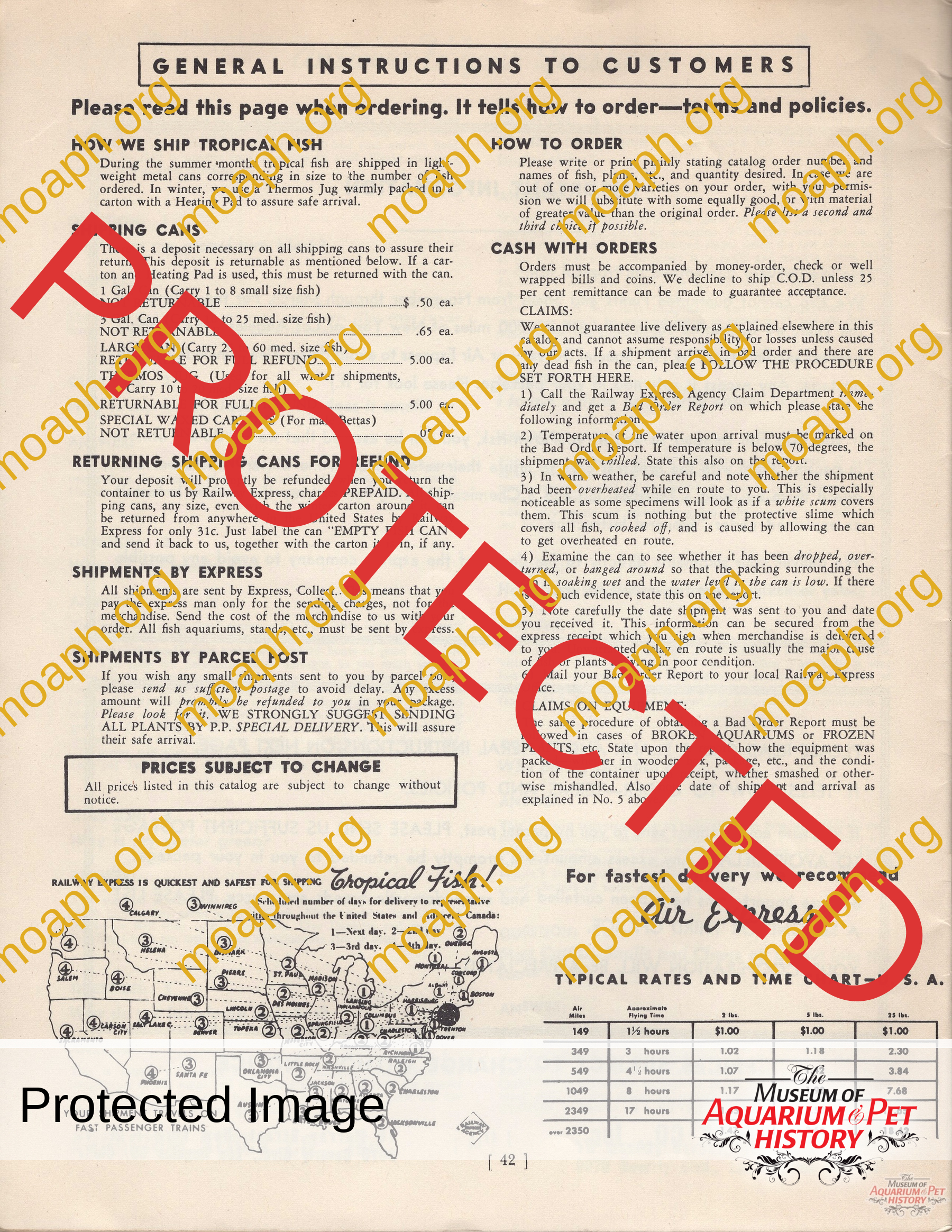
1948 Aquarium Stock Company catalog, general instructions to customers
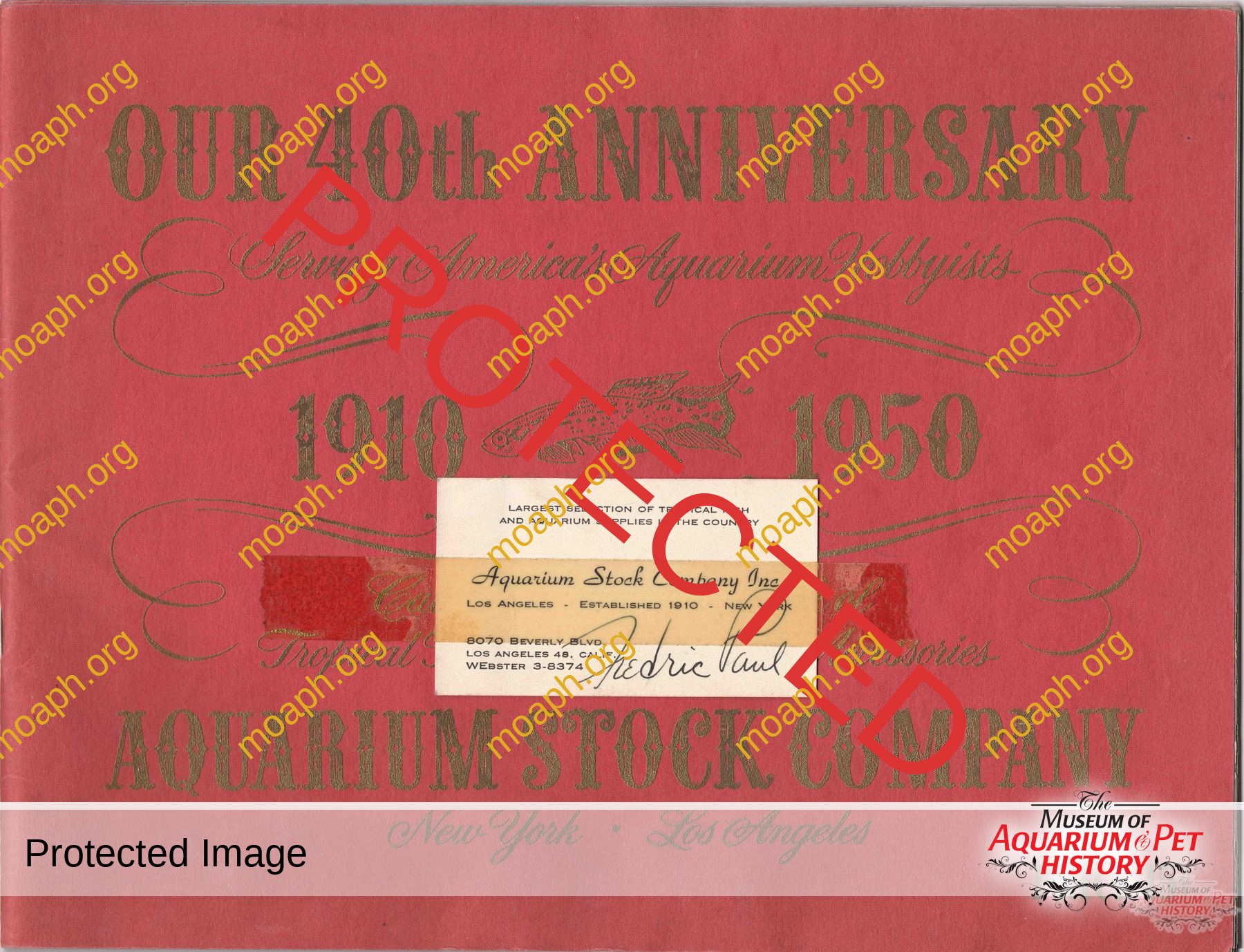
Aquarium Stock Company “40th Anniversary” catalog, 1950.
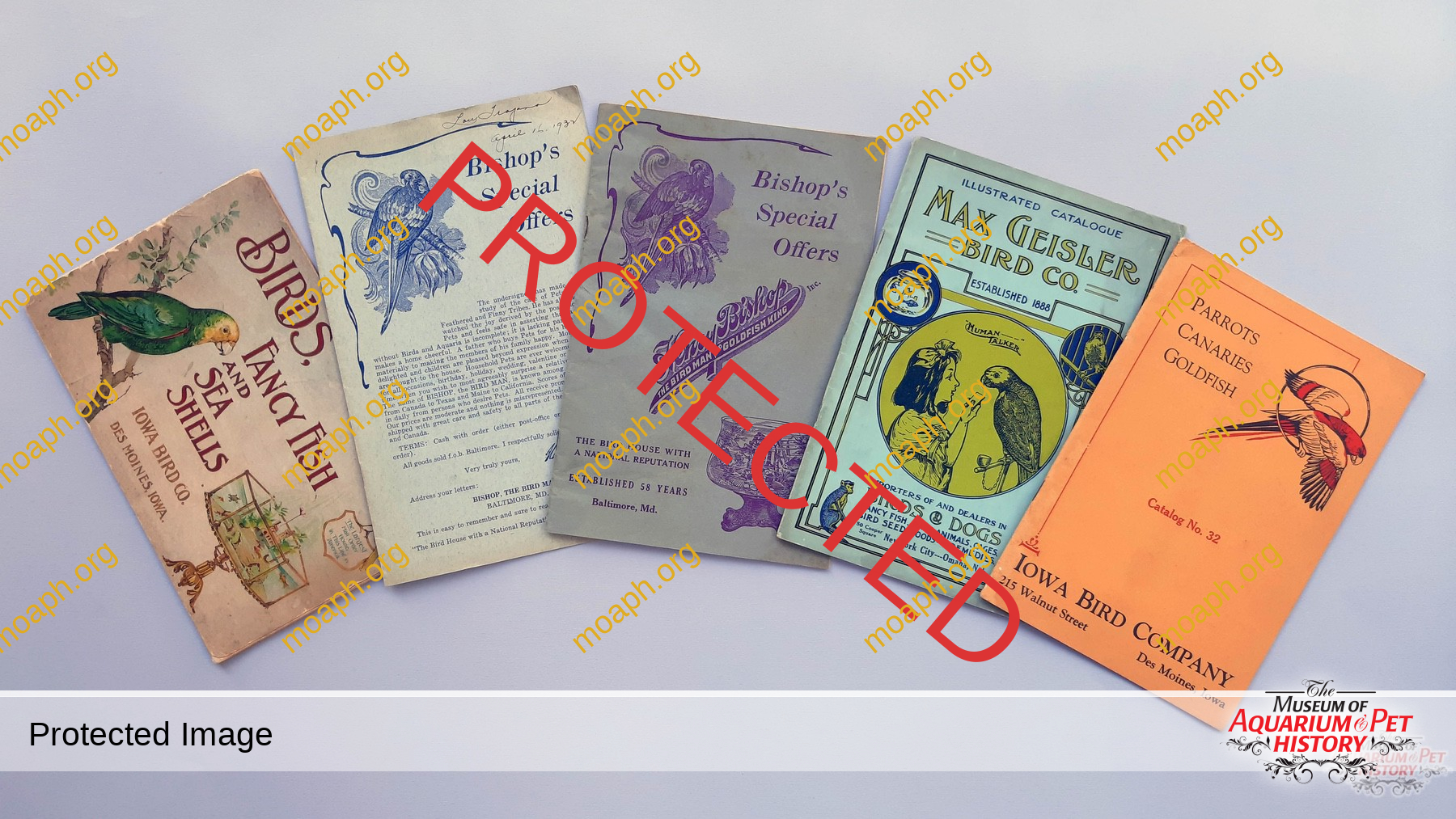
Multiple subject catalogs from United States (1904-1932).
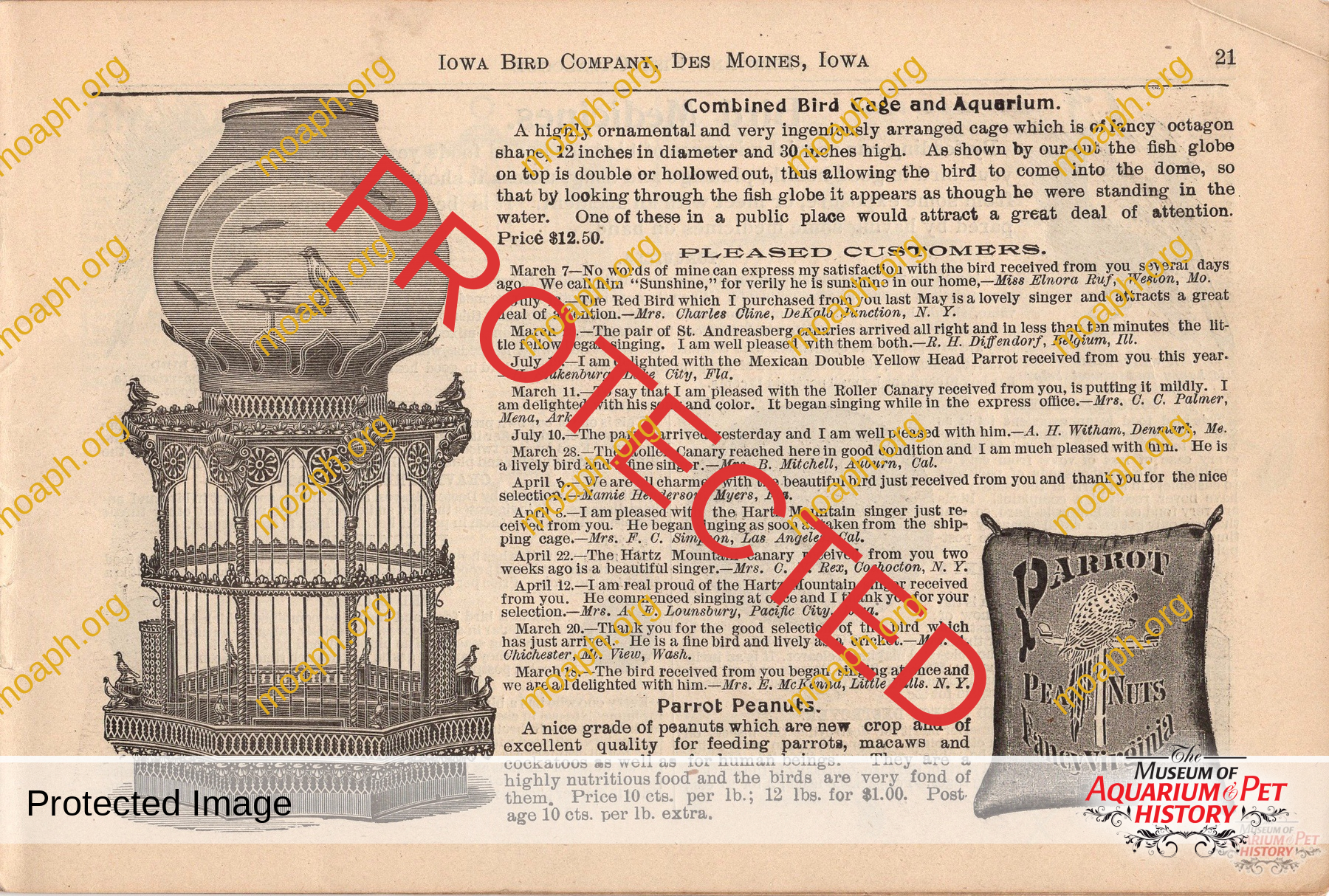
Iowa Bird Company catalog, 1904.
Nowadays old catalogs have become much sought-after items. They are search tools for collectors, as explained earlier, and collectibles at the same time. Typically, they are not that expensive. An interesting Aquarium Stock Company product catalog from the 1950s, for example, usually goes for $30-60 on eBay. However, if your goal is to buy antique pieces issued in limited quantities when our hobby still wasn’t at its peak, you probably will need more money and, even before that, will have to be lucky and skillful enough to find them!
A special feeling
It’s not only a matter of limited run and rarity with the older catalogs. It’s also a question of wider demand. Early catalogs, in fact, usually were not monothematic and promoted a combination of products for different pets: fish, birds, reptiles, amphibians, dogs, etc. The classic American combo was birds and fish. The typical German mix, instead, was fish, reptiles, and amphibians. As a result, when you are hunting for this kind of multiple subject catalog, you are probably competing with more collectors than you would expect, and this is never a favorable situation during auctions!
Reading old catalogs, I sometimes come across illustrations of objects that I have never seen in person or in a web picture. Basically, they are ghosts. Seeing them in a catalog, however, gives me the awareness that they really existed, unless they were items produced only under commission and, therefore, possibly never manufactured. This awareness charges me with adrenaline, and pushes me to hunt for them, sometimes for years, until the moment I find them and can finally do something I tremendously love, that is comparing the real object to its image in the catalog and saying, “Welcome back to reality, buddy!” What a special feeling…
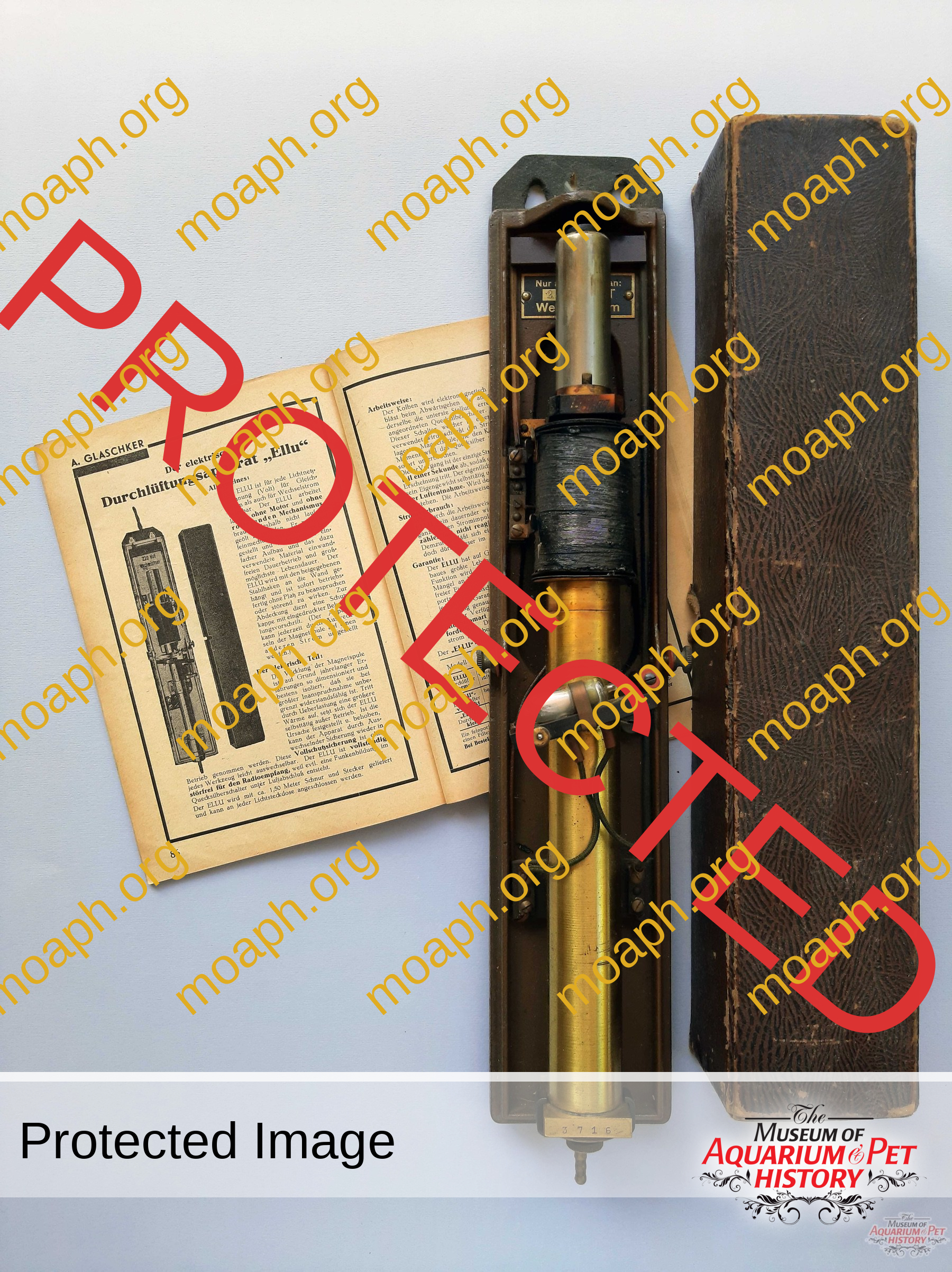
Welcome back to reality, buddy!
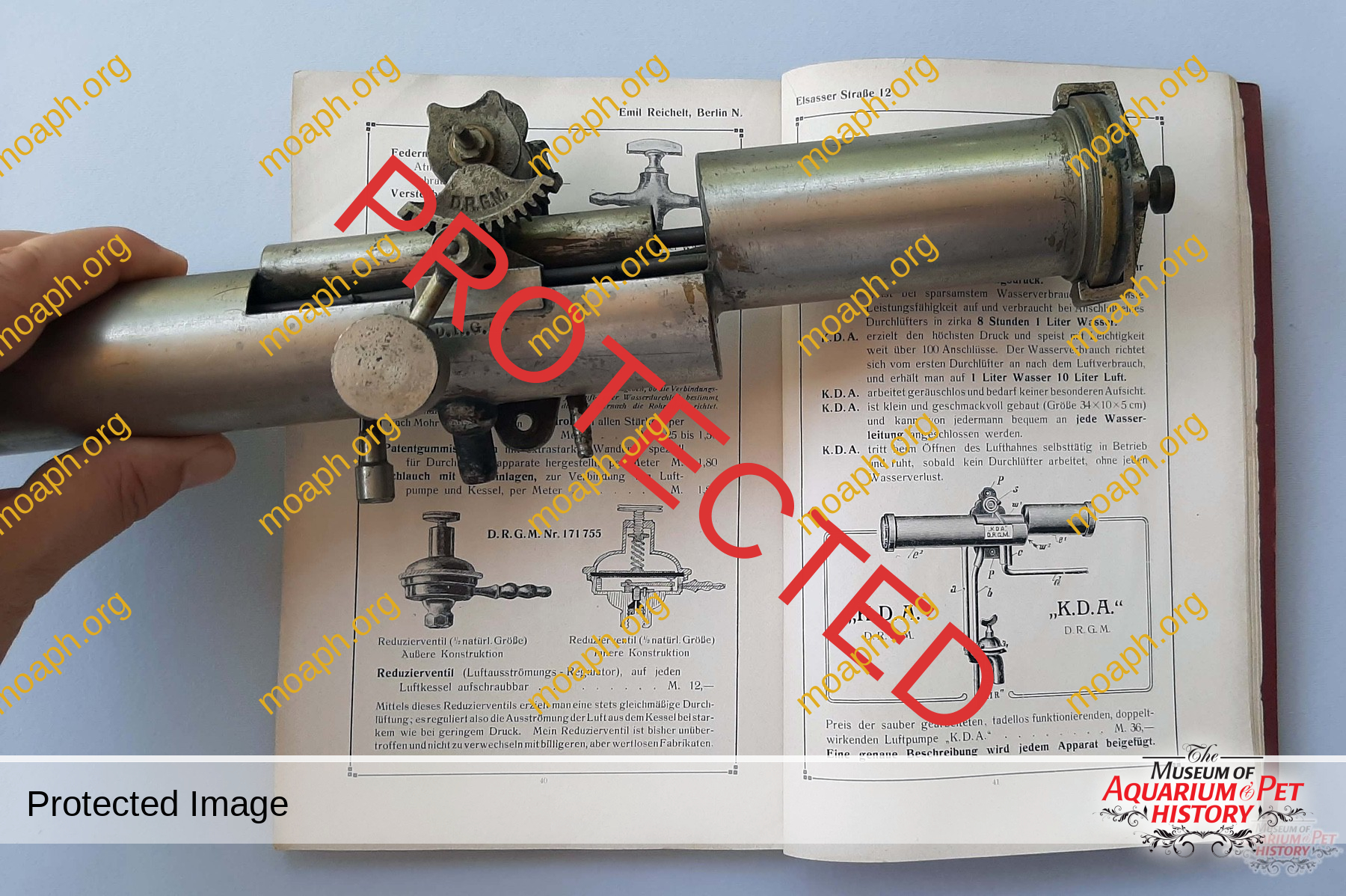
Comparing the real object to its image in the catalog is always a special moment for the author.
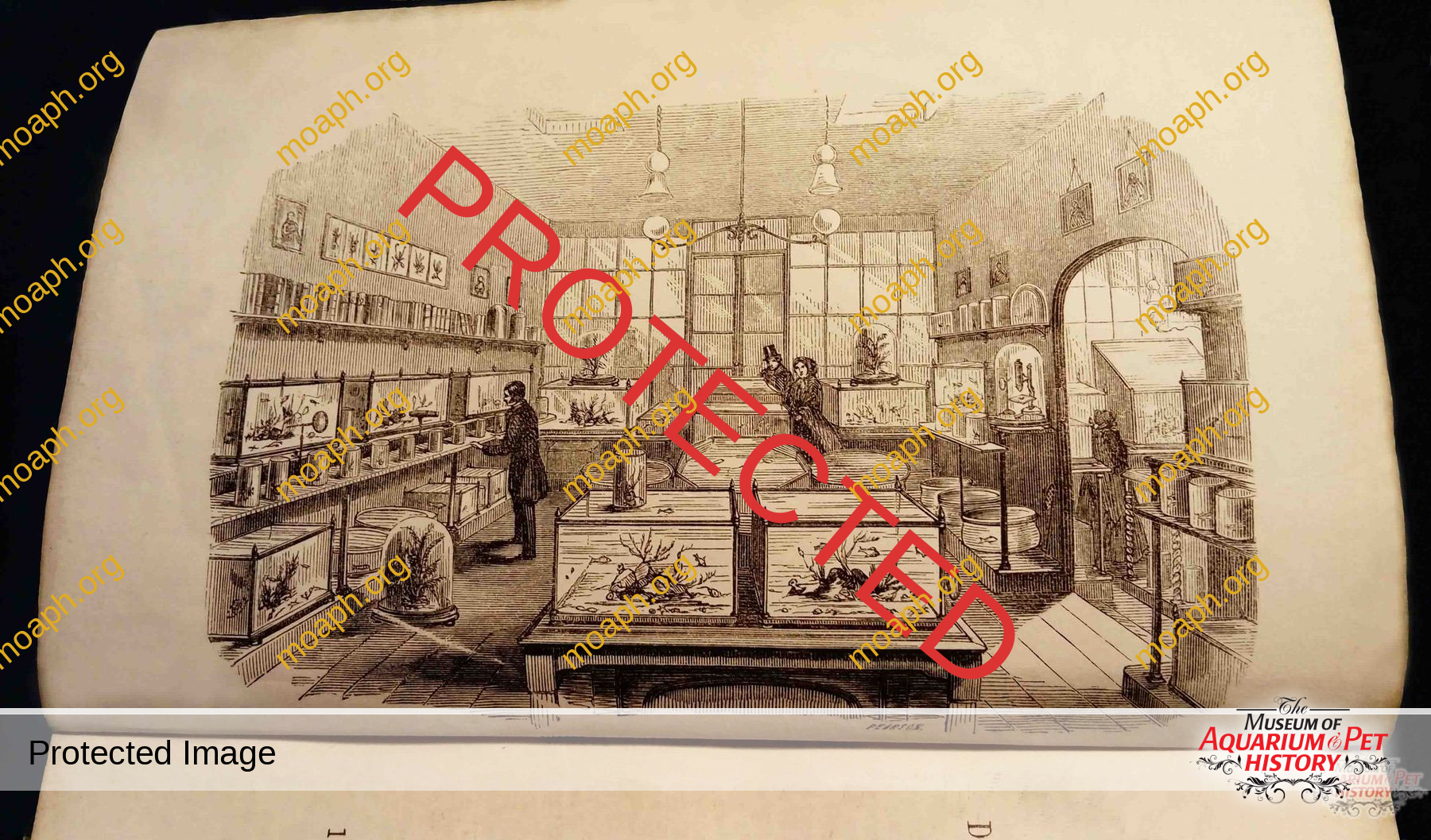
Lloyd’s catalog, 1858. The woodcut depicts the Aquarium Warehouse, the first aquarium shop in history.
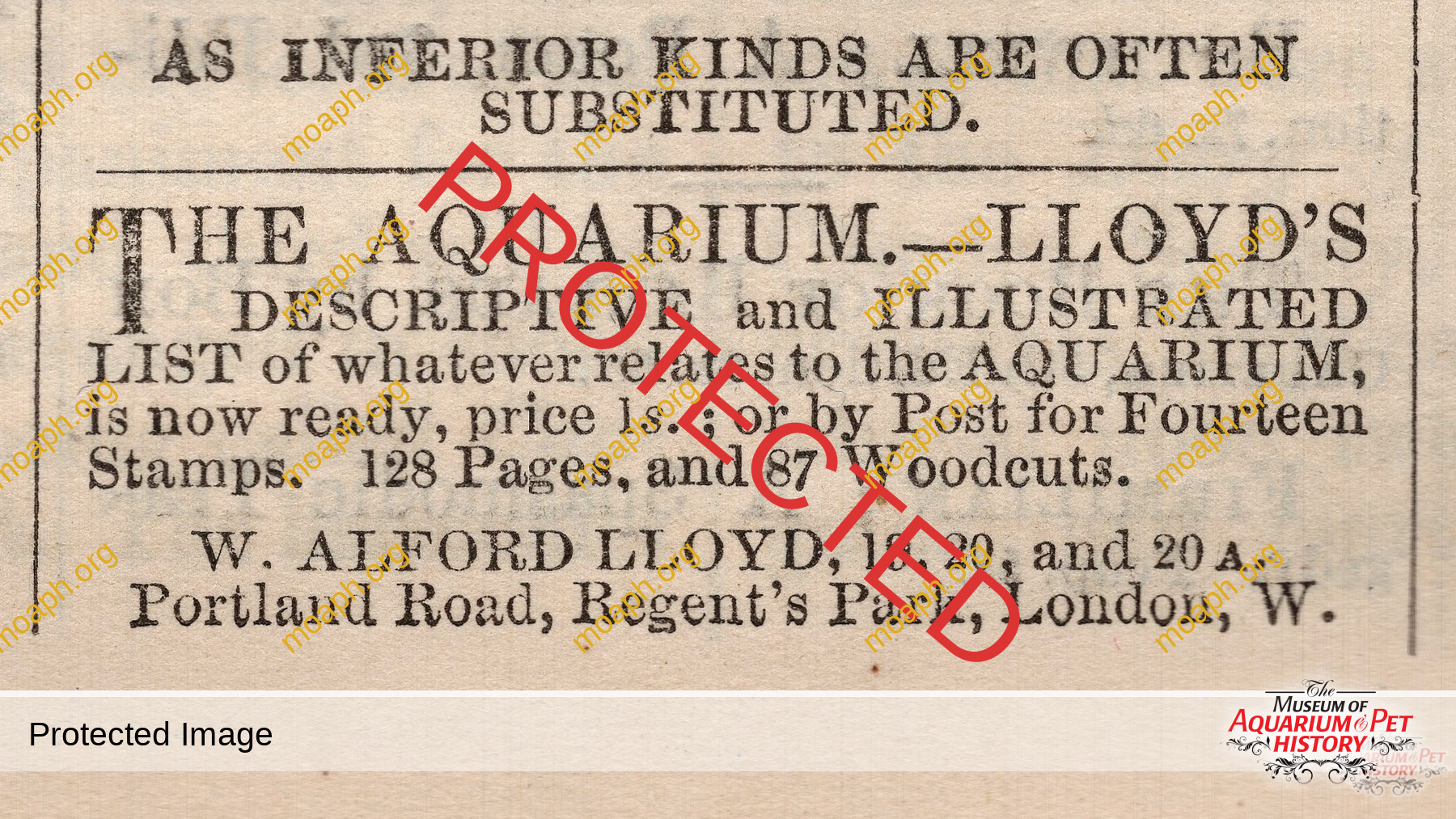
On November 13th, 1858, Lloyd advertised his List in the weekly periodical Notes and Queries (page 404).
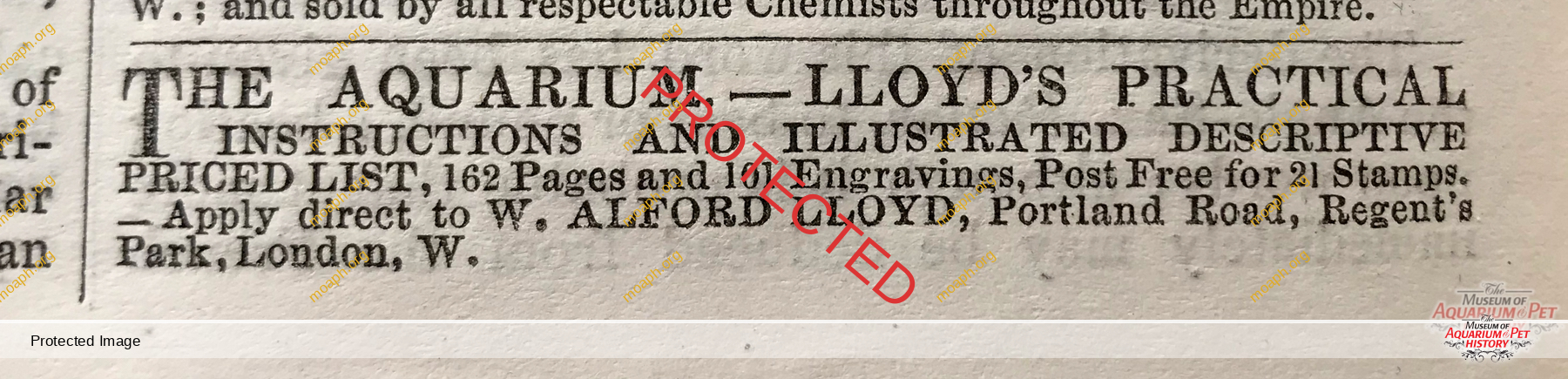
Notes and Queries ad, October 13th, 1860 (page 300).
The “Holy Grail”
Without a doubt, the Holy Grail of old aquarium catalogs is the “List” by William Alford Lloyd, the first professional aquarist and owner of the very first aquarium shop in history. Lloyd’s business started in 1855, at 164 St. John Street, London. In 1856, the shop moved to Portland Road, was named “Aquarium Warehouse” and had its own logo (a starfish).
In order to increase sales and reputation, in 1856 Lloyd assembled a basic price list for his customers, followed by a second list a year later. The true masterpiece arrived though in August 1858, “A List, with Descriptions, Illustrations, and Prices, of whatever relates to Aquaria”, the father of all aquarium catalogs and price lists.
Lloyd, who loved books and previously worked as an apprentice in the business of bookbinding and in a second-hand bookshop, advertised his labor of love of 128 pages and 87 illustrations in the famous weekly magazine Notes and Queries (1858, Nov. 13th). The sale price was 1 shilling, or fourteen stamps by post.
The List had been conceived to be both a detailed description with prices of the Aquarium Warehouse stock (live animals, plants, paraphernalia, fish tanks, stands, books, magnifying glasses, microscopes, fishing nets, and containers), and a guide of quick tips and practical instructions – coming from Lloyd’s direct experience – on the maintenance of the aquarium and the care of its inhabitants. Something definitely very different from the early aquarium books which were available in those years, full of romantic but useless Victorian suggestions.
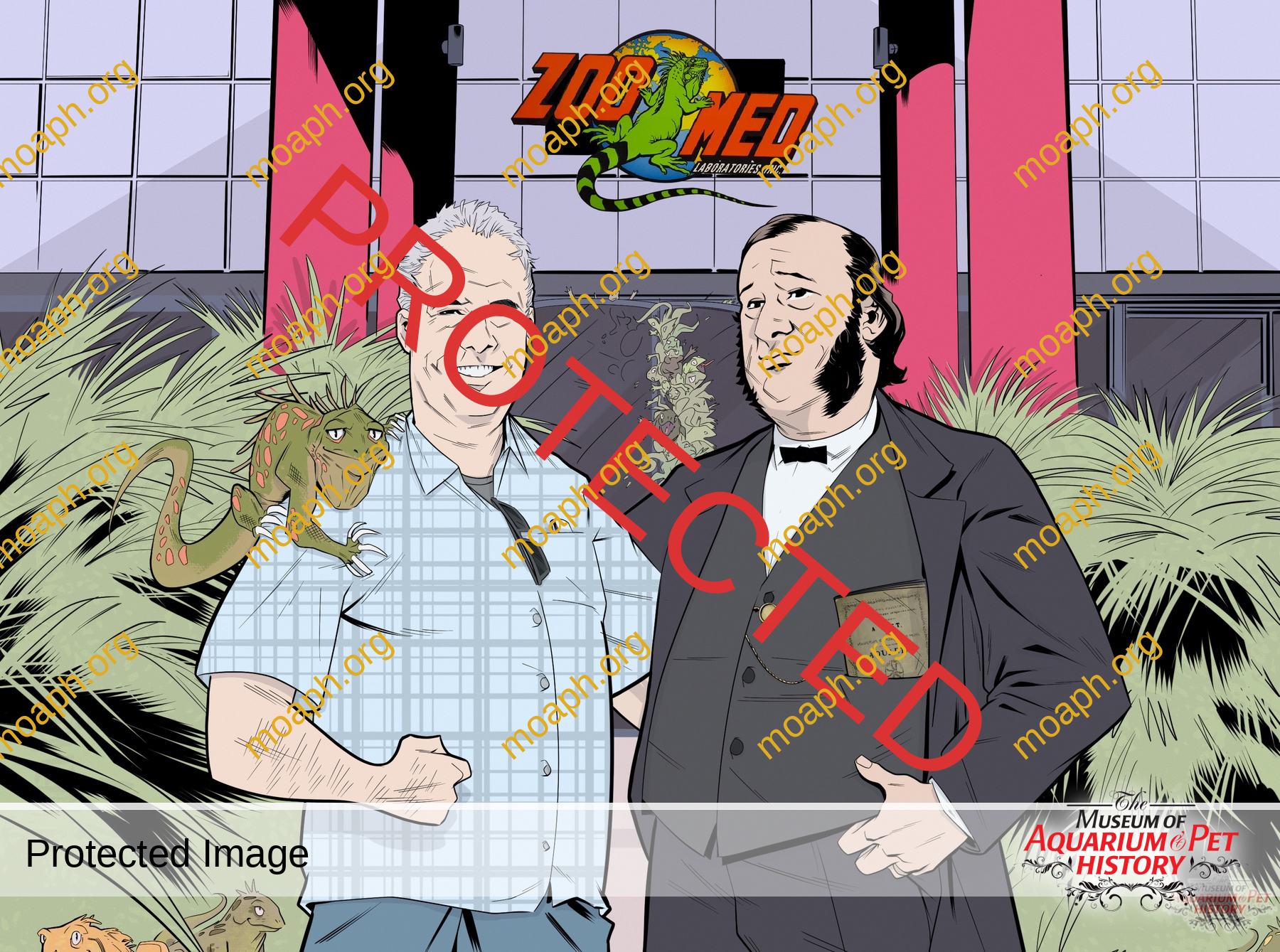
Gary Bagnall and William Alford Lloyd with the List in his pocket!
A Supplement with an extremely long title!
In 1860, he expanded his List with “A Supplement to A List with Descriptions, Illustrations, and Prices of Whatever relates to Aquaria containing Practical Instructions for their Management and a Description of a Series of Tanks in which Cheapness of Cost and Efficiency of Action are combined to an Extent hitherto unattained”. This consisted of 34 very interesting pages plus 13 illustrations at the sale price of 6 pence. Two years later, William Alford Lloyd declared bankruptcy and started to work as an errand boy, later finding employment in a few public aquariums until his death in 1880.
During his career, he believed that the parlor aquarium was not a frivolous ornament but a serious educational tool by which success could only be achieved by the understanding and application of basic scientific principles, a modern vision unfortunately not shared by his fickle Victorian public.
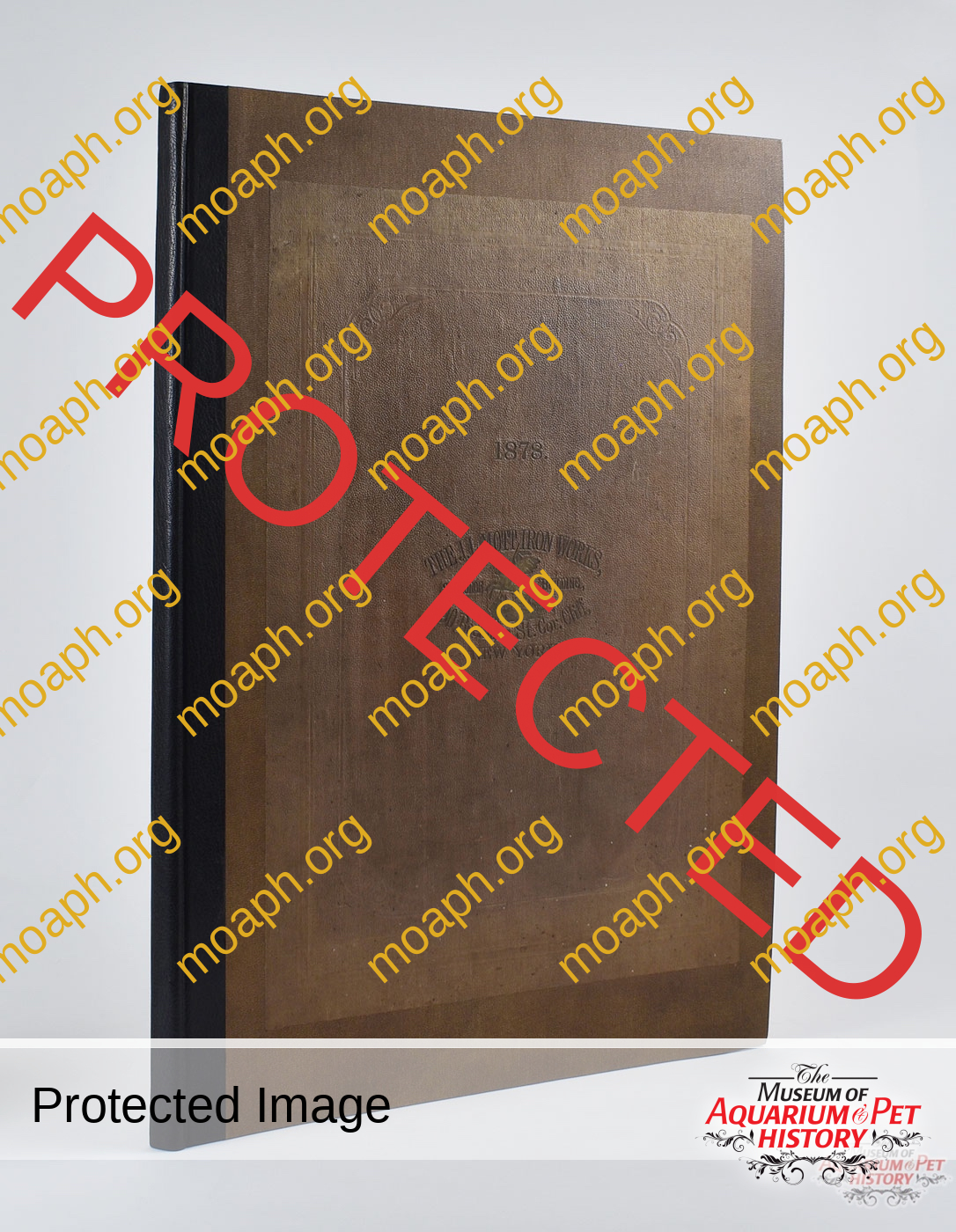
The oversized catalog by the J.L. Mott Iron Works.
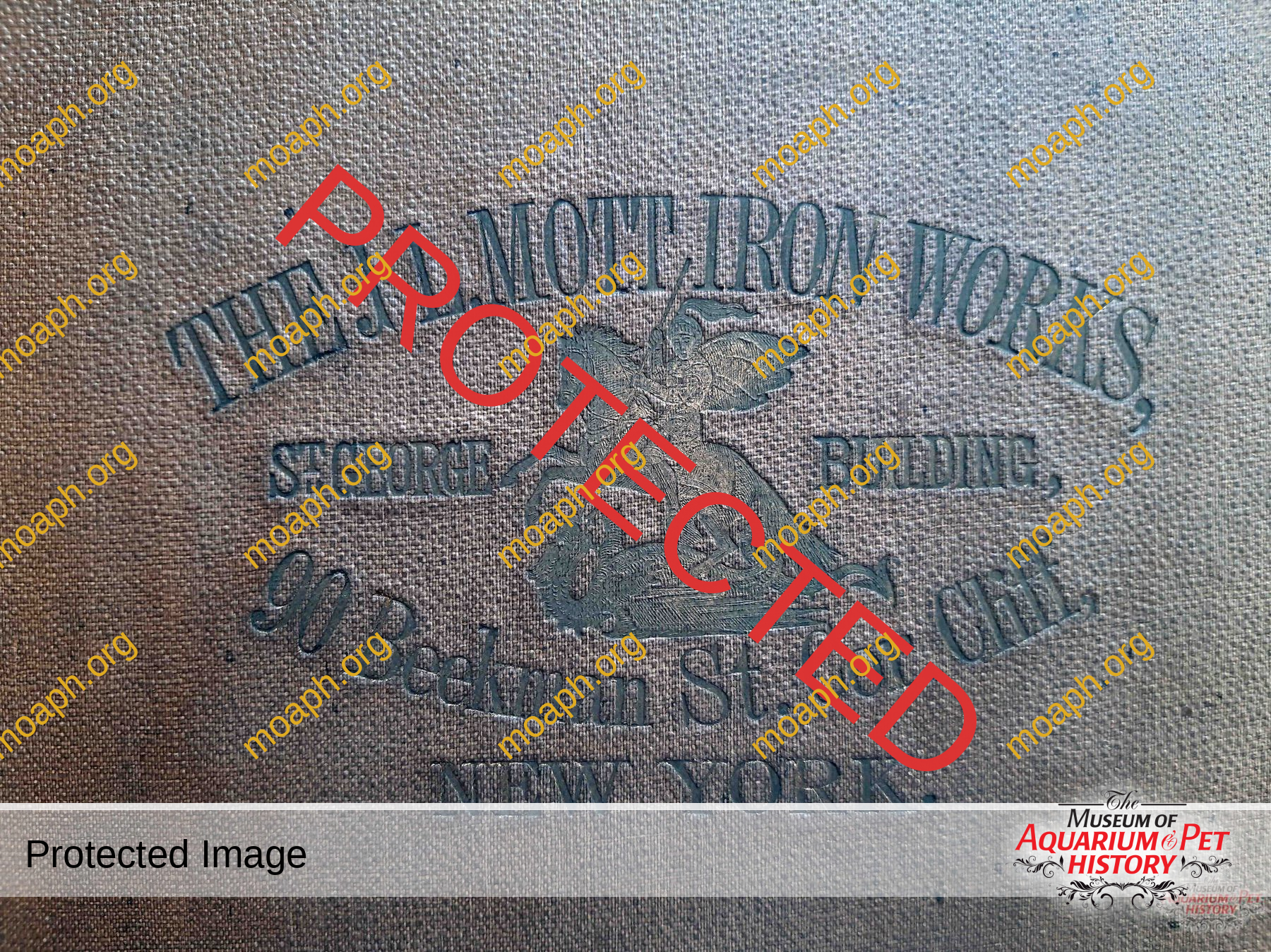
Cover closeup. The J.L. Mott Iron Works was Fiske’s primary competitor during the 19th and early 20th centuries. It was a huge company and, unlike Fiske, owned its own foundry.
A crazy oversized catalog!
Among the most important catalogs from the late years of the Victorian era, we cannot fail to mention the ones issued by the two premium companies which made aquariums (actually a small part of their huge business) in the United States, the J. W. Fiske Company and the J.L. Mott Iron Works. The early editions contain stunning illustrations of fountain aquariums, parlor aquariums, rectangular fish tanks and stands making these catalogs highly desirable works of art.
The “Illustrated Catalog of Statuary, Vases, Settees, etc. for Parks, Gardens and Conservatories manufactured by the J. L. Mott Iron Works” that was issued beginning in 1875 is my favorite. Considered by experts as one of the more impressive American trade catalogs of the 19th century, it enthralls collectors with its lavish engravings and its astonishing page-size of 21”x15”.
In the past, I came across a single sheet of this valuable catalog on sale for $250, and 2 genuine copies which totally lacked illustrations of aquariums. During more than 140 years a lot of things can happen to a catalog with no page numbers, therefore collectors, before the purchase, should always ask the seller how many illustrations of aquariums there are in the catalog.
My copy of 176 pages contains 19 engravings depicting 3 rectangular fish tanks and 16 fountain aquariums, plus some of the supplemental sheets which the J.L. Mott Iron Works sent when anything new was added to their stock. I have never seen a copy with more aquarium illustrations to date.
The fountain aquariums manufactured by the J.W. Fiske Company were equally spectacular and, in those days, were also available in the catalog “Fair-Hill Terra Cotta Works” issued by the Jacob C. Cassel Company of Philadelphia in 1877.
Cassel, who was primarily a florist and garden supplier, had an aquarium department and manufactured its own aquariums, stands and ornaments as well. The rustic style, so popular at the time, was the main source for their designs. The “Mulertt Aquarium” and the “Stump Aquarium” are two crazy examples of the many artifacts you can find in this funny and exceedingly rare catalog.
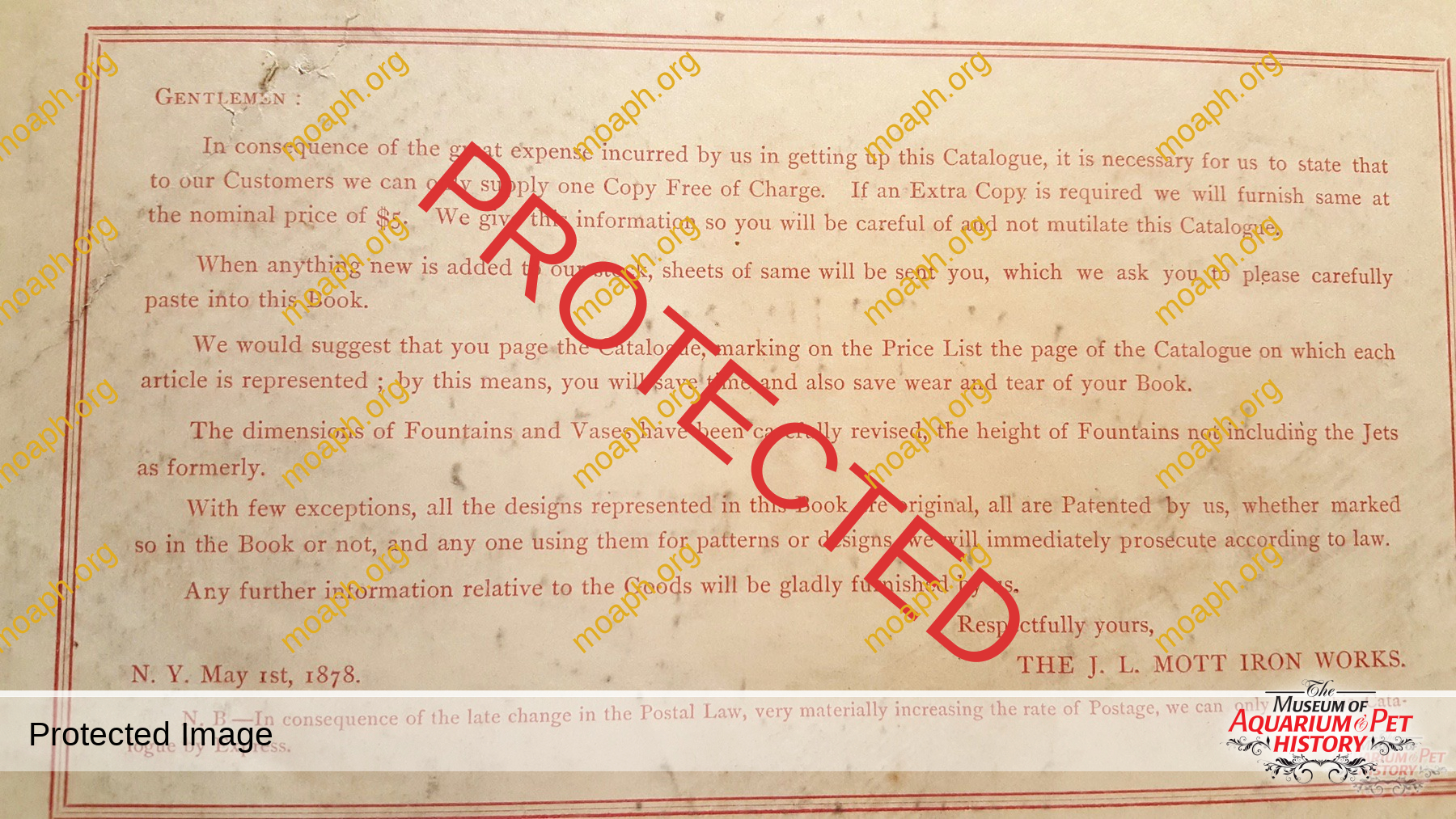
A plus for collectors, this paper insert found by the author in his copy of the J.L. Mott catalog is historically important for its content.
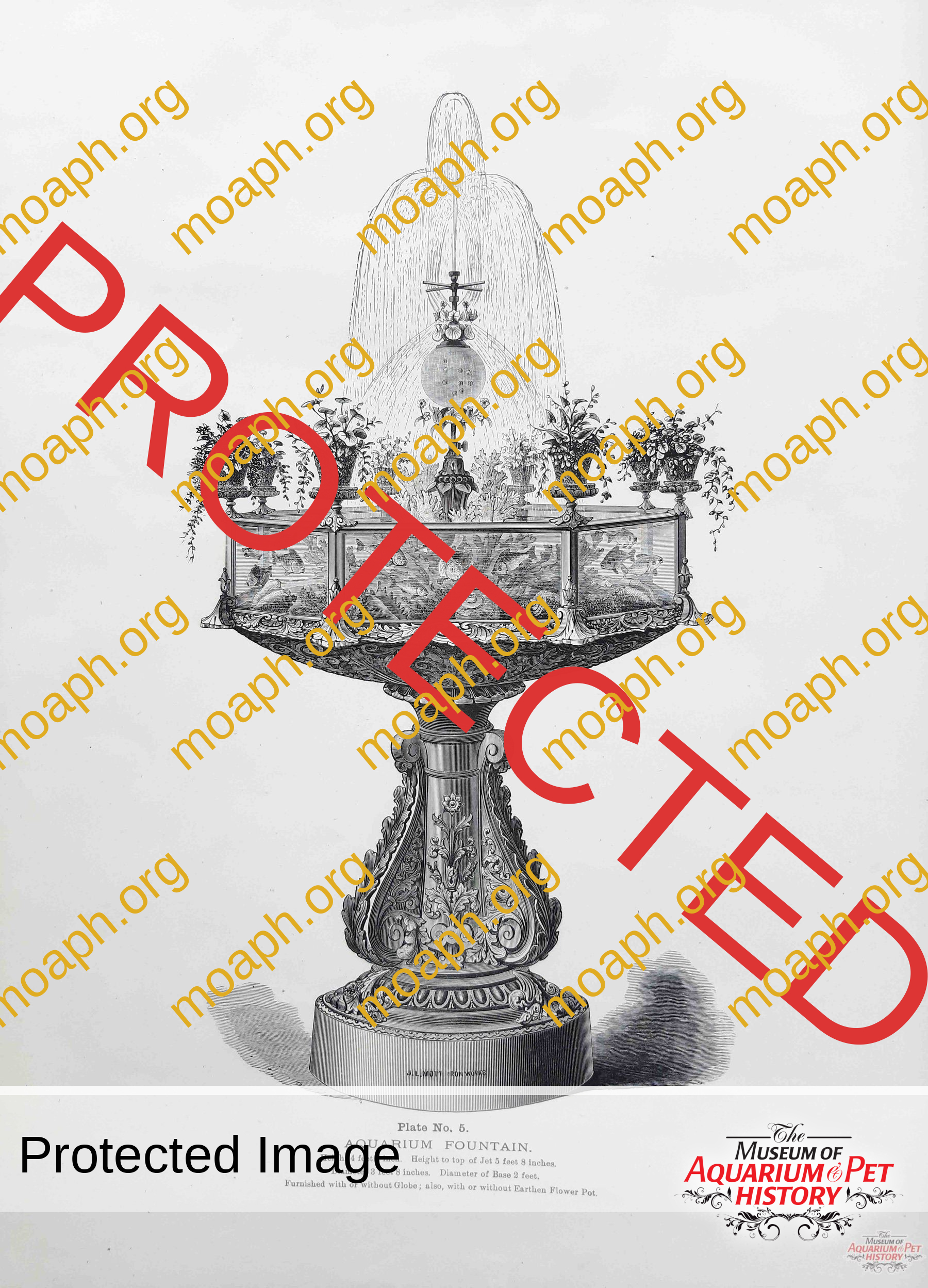
One of the largest fountain aquariums pictured in the J.L. Mott catalog.
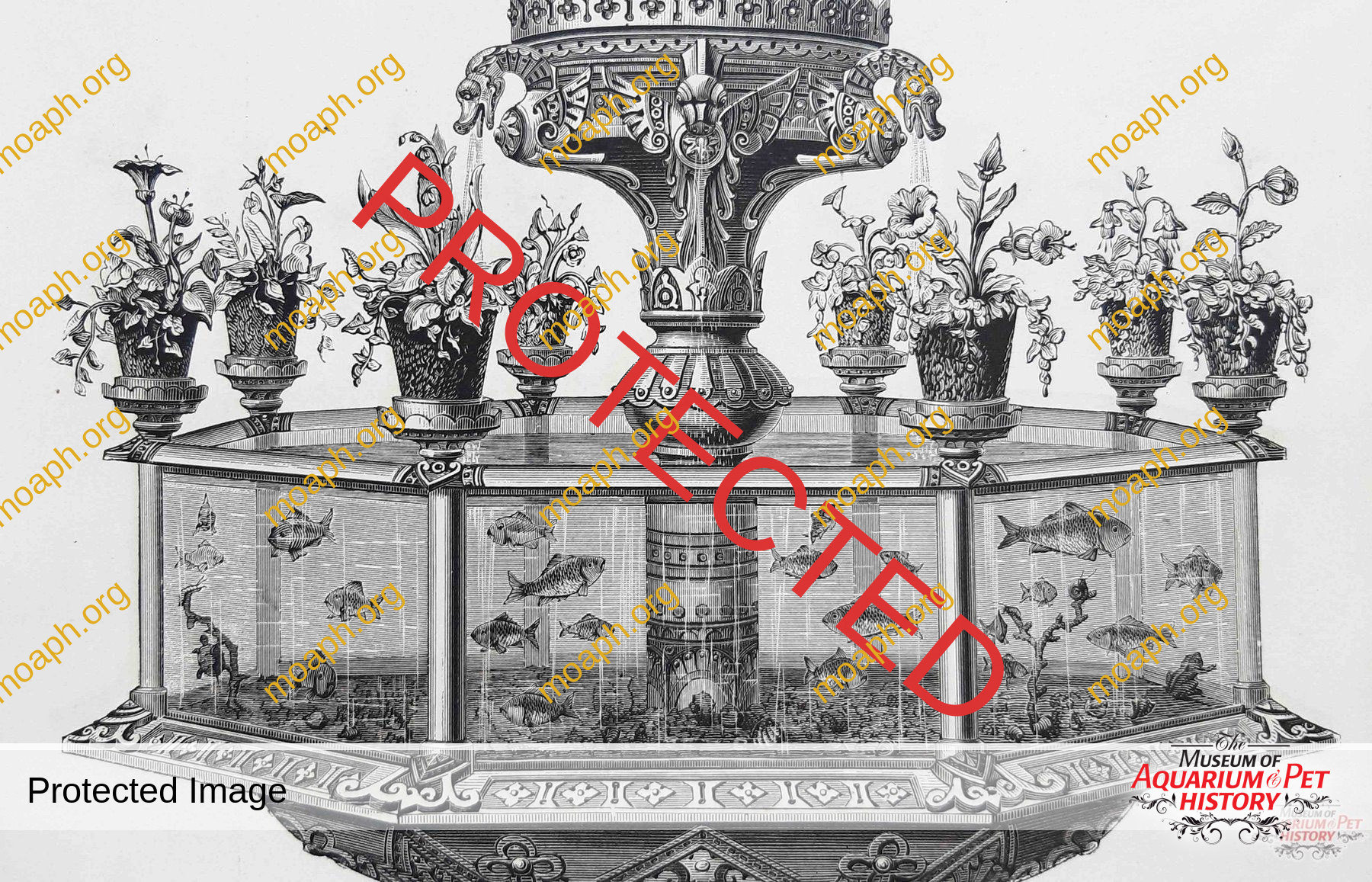
Every single page of the Mott fountains catalog is lavishly illustrated.
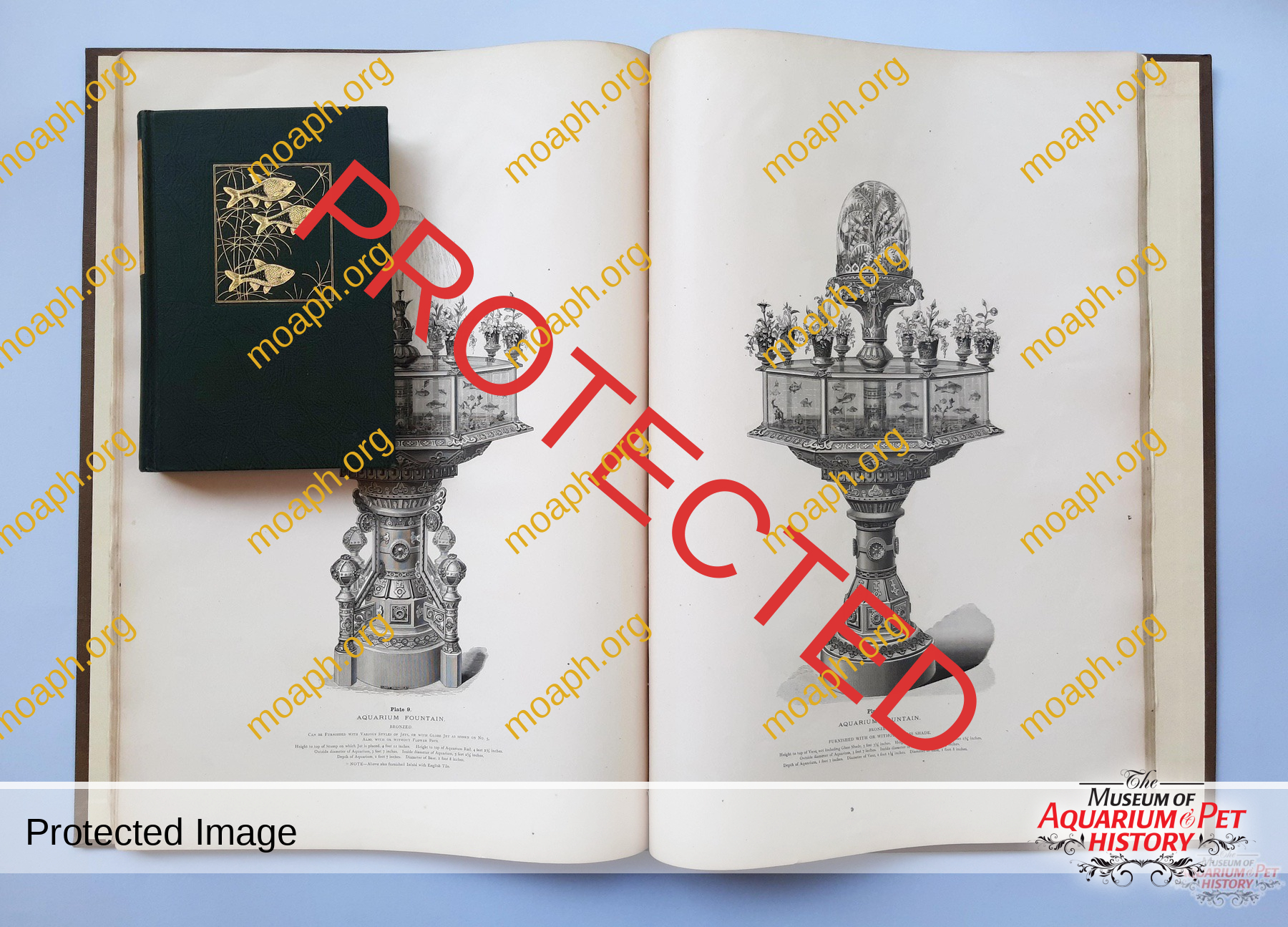
Innes’ book looks very small if compared to this giant catalog!
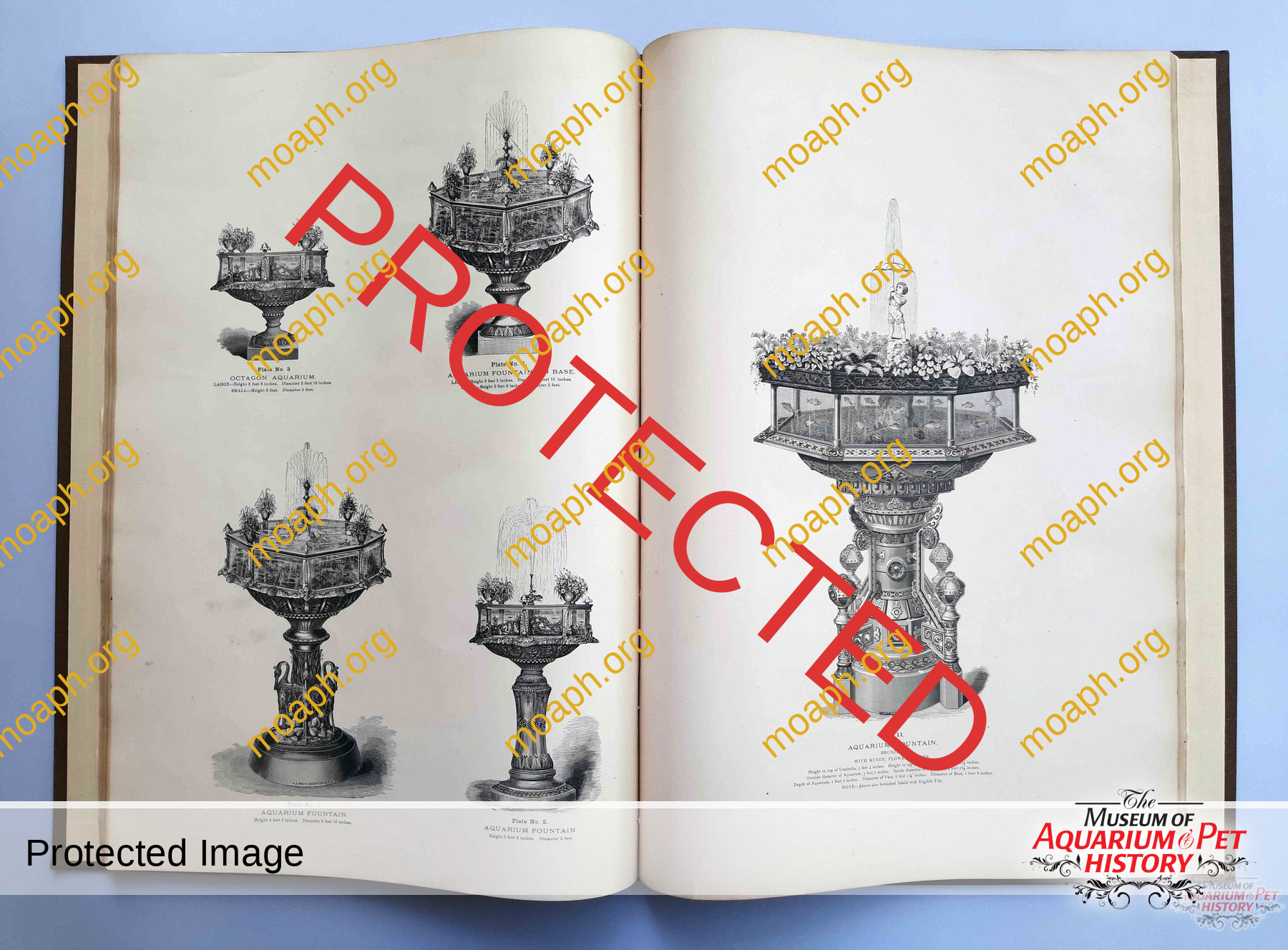
Other spectacular J.L. Mott fountain aquariums.
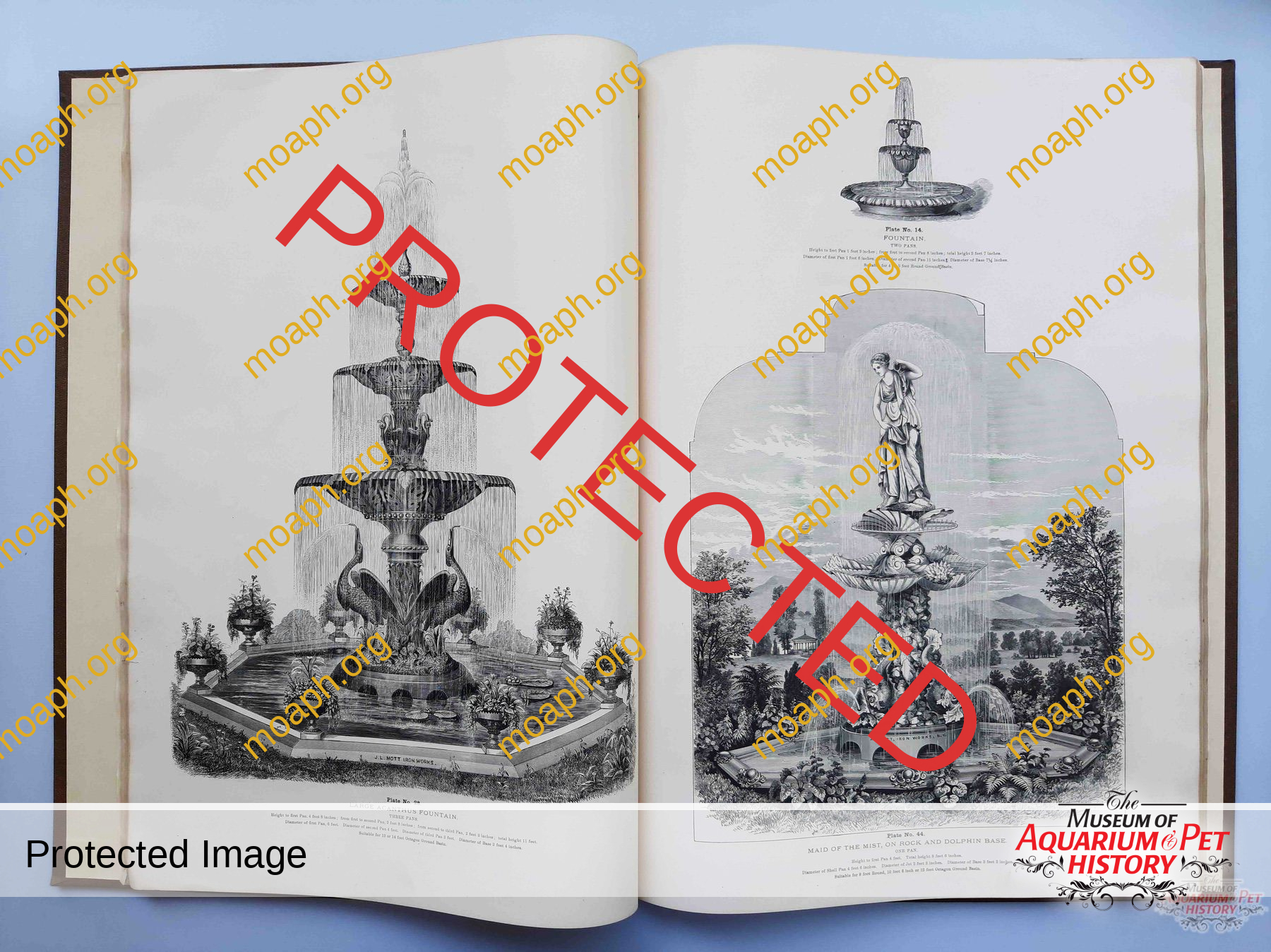
The J.L. Mott catalog pictures many other “outdoor toys” for wealthy people.
Hunting in Germany
Starting from the late 1800s, German manufacturers, wholesalers, and retailers of aquariums and aquarium related paraphernalia played a key role in the development of our hobby thanks to their technical, scientific, and pragmatic approach. Their product catalogs were usually full of technical illustrations and curiosities for catalog nerds! In my humble opinion, the maximum expression of the German aquarium industry during the pre-electricity years were the parlor aquariums manufactured by Louis Heinrici and Hubertus Raab.
Heinrici’s “parlor fountains catalogs” from the early 1900s are spectacular and became tremendously rare as they are also considered collectible by hot air engine and steam engine enthusiasts. After years of unsuccessful searching, two months ago I finally had my Heinrici catalog thanks to a well-known antiquarian bookseller from Germany. Honestly, if this gentleman had asked me to pay with one of my kidneys instead of cash, I probably would have answered “OK, we have a deal” without hesitation! The same bookseller gave me the opportunity to buy other pretty rare catalogs issued by early players in the German and Austrian aquarium industry like Wenzhel Hübner, Adolf Kiel (Heiko Bleher’s grandfather), and Guido Findeis.
Besides the above-mentioned classics, I consider equally important for every respectable collection some super rare catalogs like the Julius Reichelt from 1898, the Otto Preusse from 1902, and the Wilhelm Sander from 1912. Other famous German firms which issued interesting illustrated catalogs were A. Glaschker, Emil Reichelt, and Scholze & Pötzschke with its trilogy consisting of the “crocodiles catalog” (1908), the “frogs catalog” (1913), and the “25th anniversary catalog” (1930).

Louis Heinrici parlor fountains catalog, early 1900s.
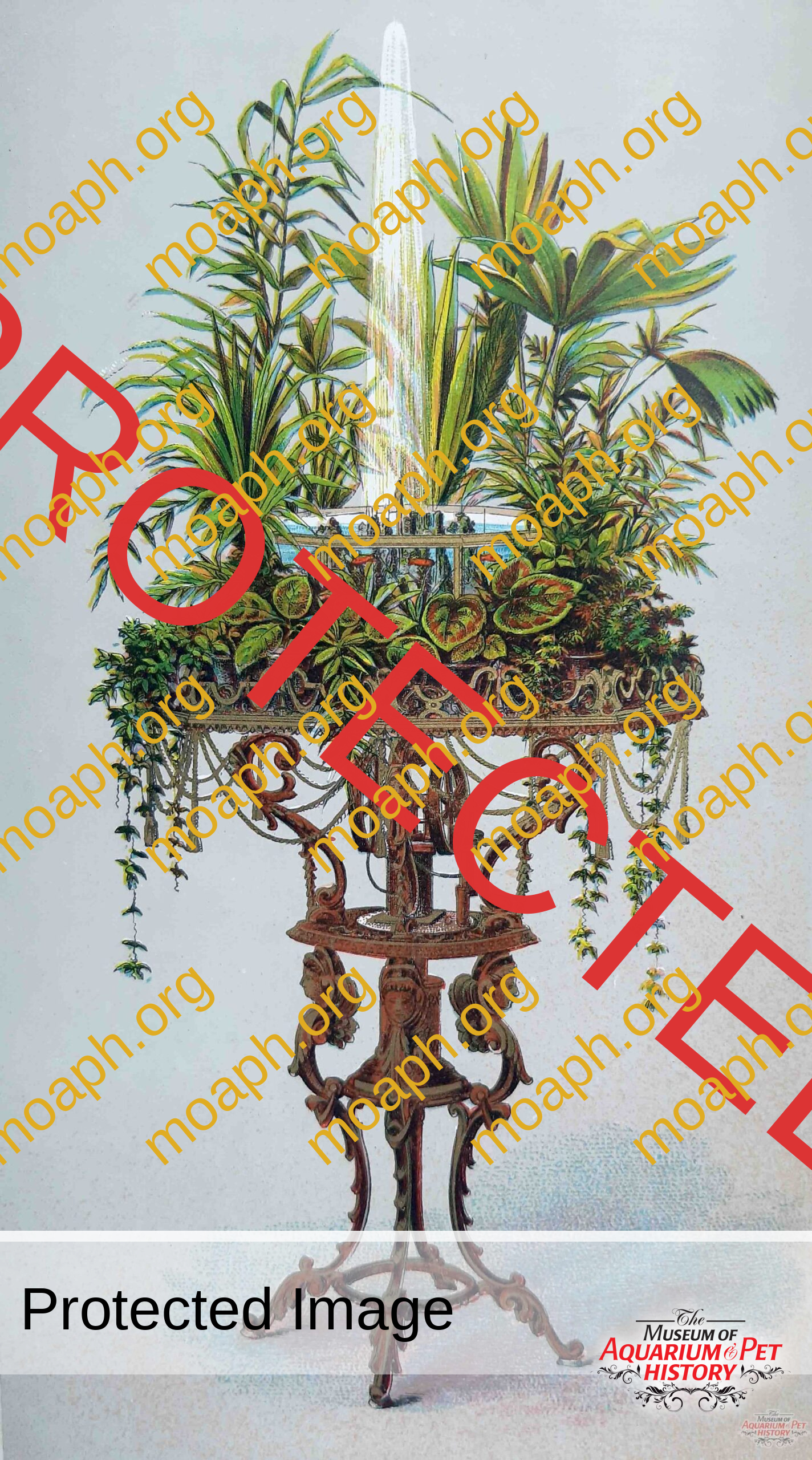
Color plates make the antique catalogs by Louis Heinrici much sought-after targets for collectors.
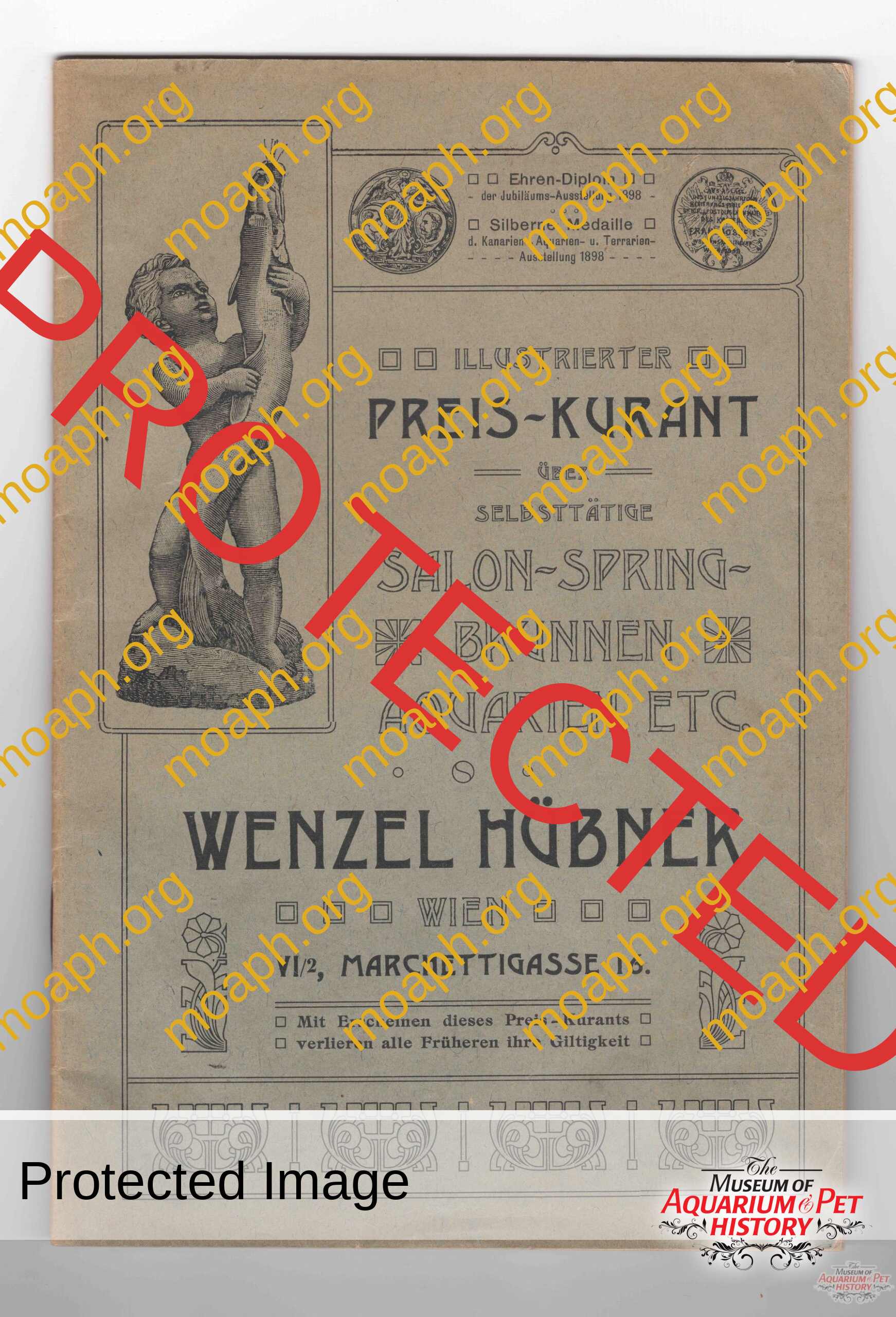
Wenzel Hübner catalog, early 1900s
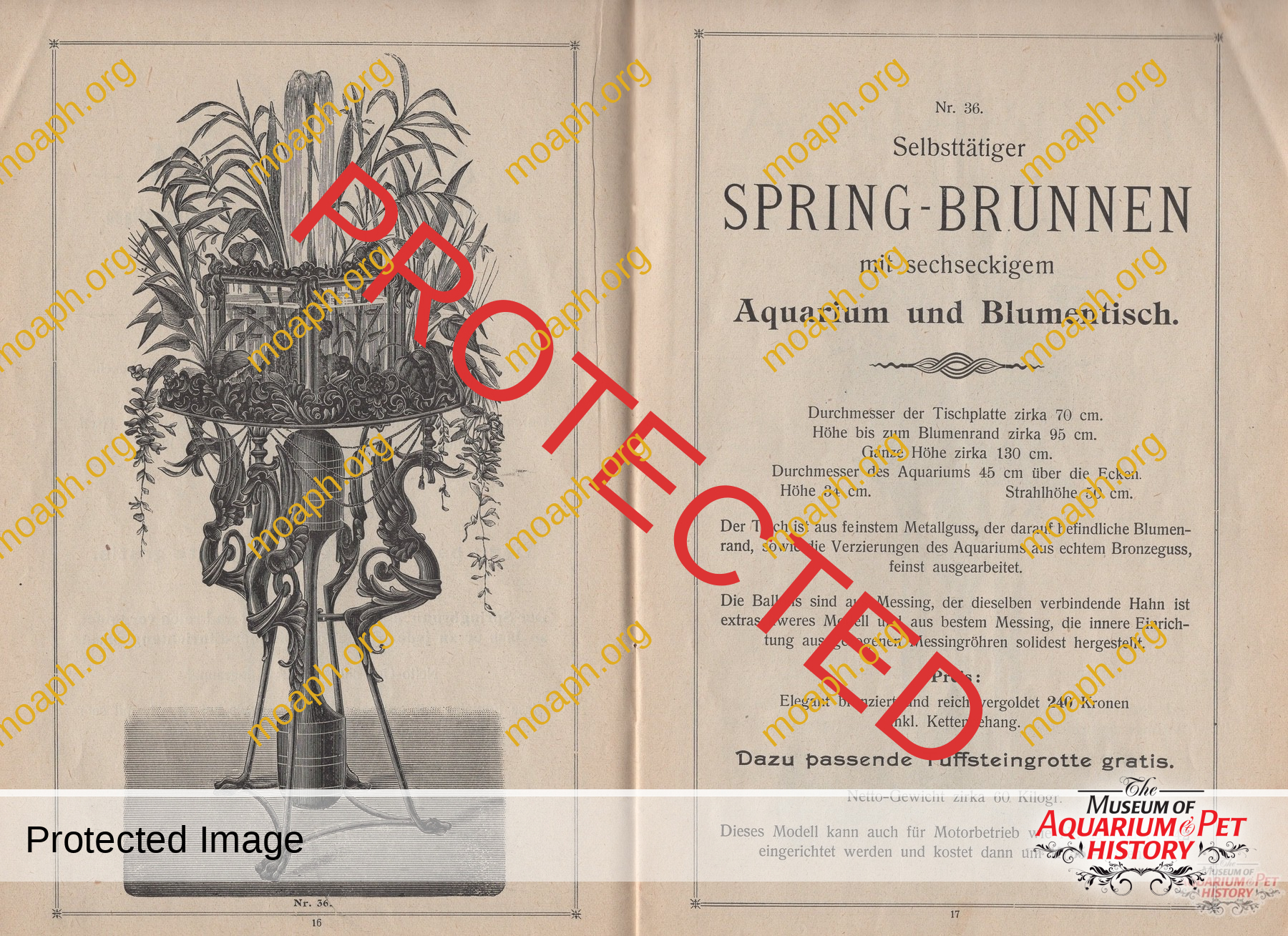
The “air pressure fountains” equipped with Heron’s hydraulic device pictured in the Wenzel Hübner catalog are spectacular.
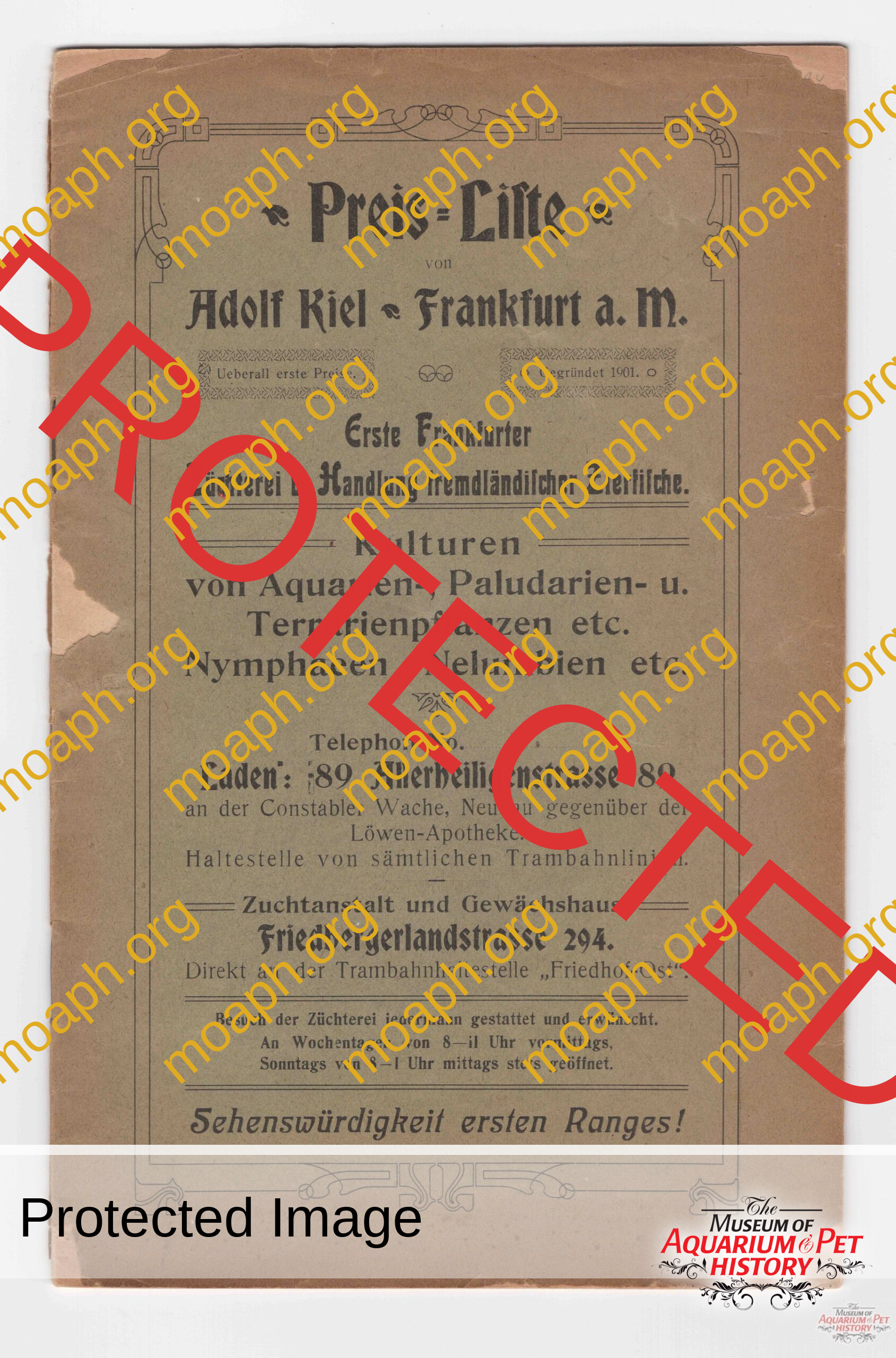
Adolf Kiel catalog. Back in 1901, Kiel founded one of the largest aquatic plant nursery in the world.
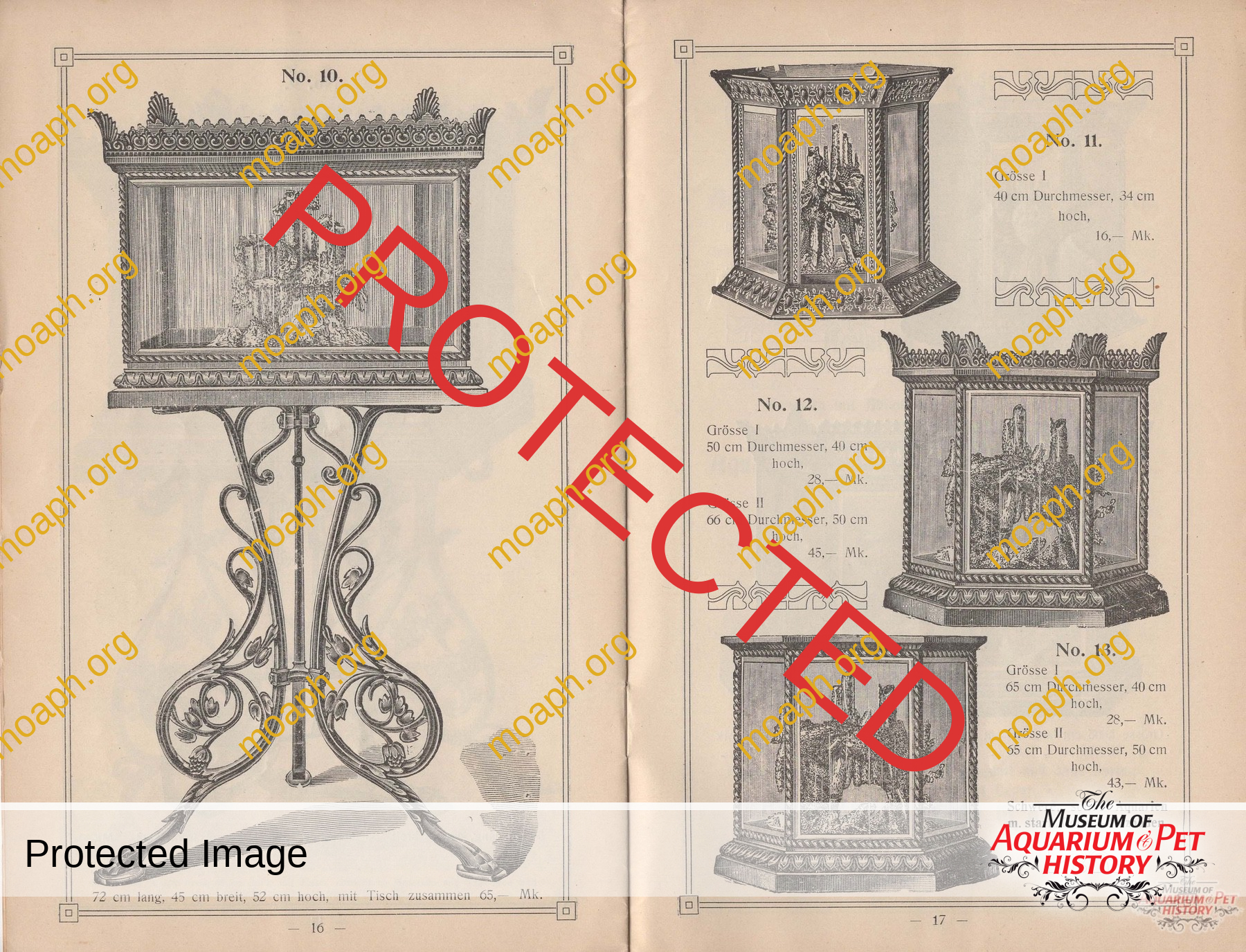
Some of the aquariums pictured in Adolf Kiel’s catalog.
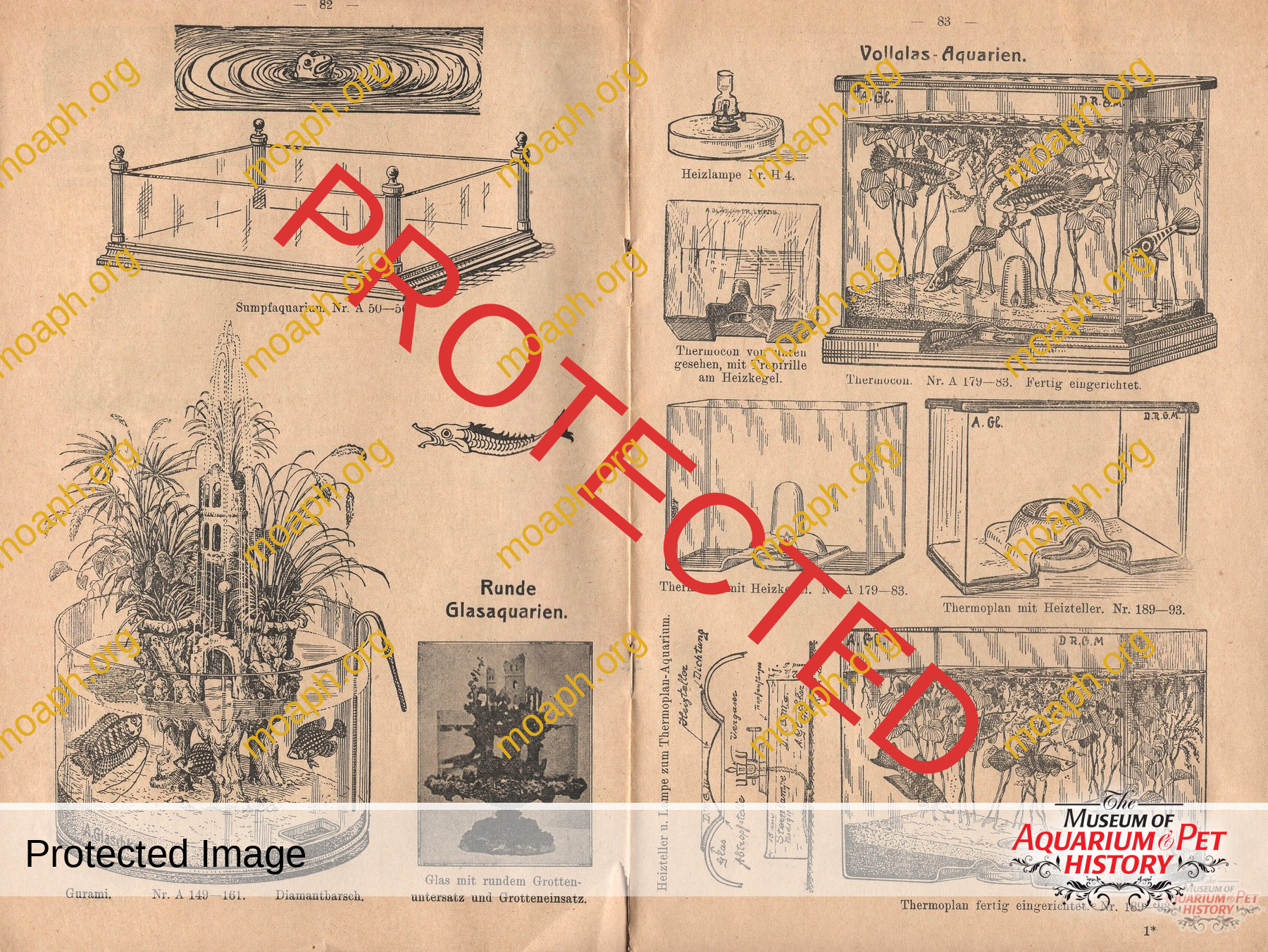
A few fish tanks and pre-electricity heating systems promoted by A. Glaschker.

Scholze & Pötzschke “25th Anniversary” catalog, 1930.
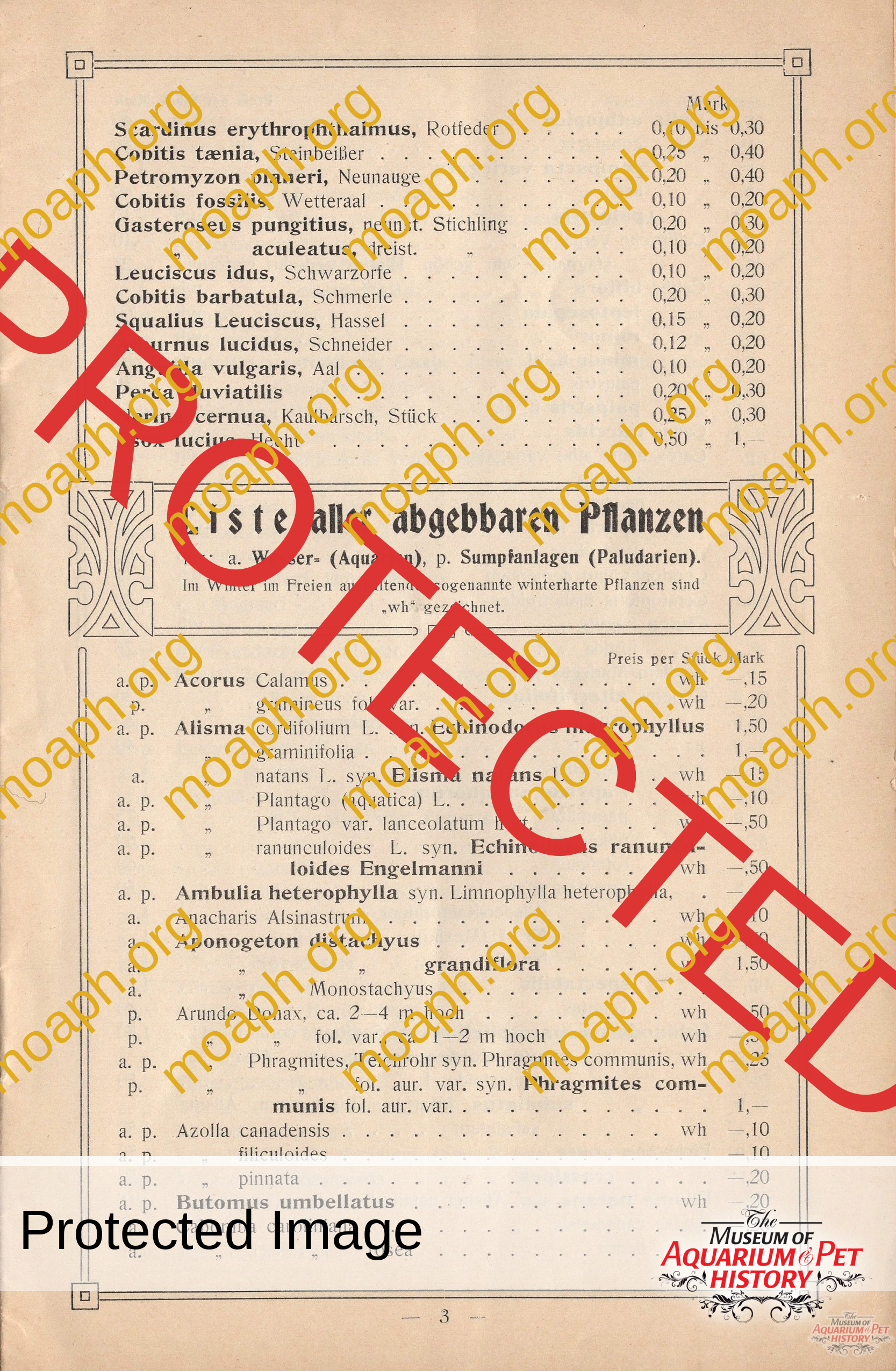
Kiel’s stock included aquatic plants, fish, reptiles, amphibians, crustaceans, aquariums, and terrariums.
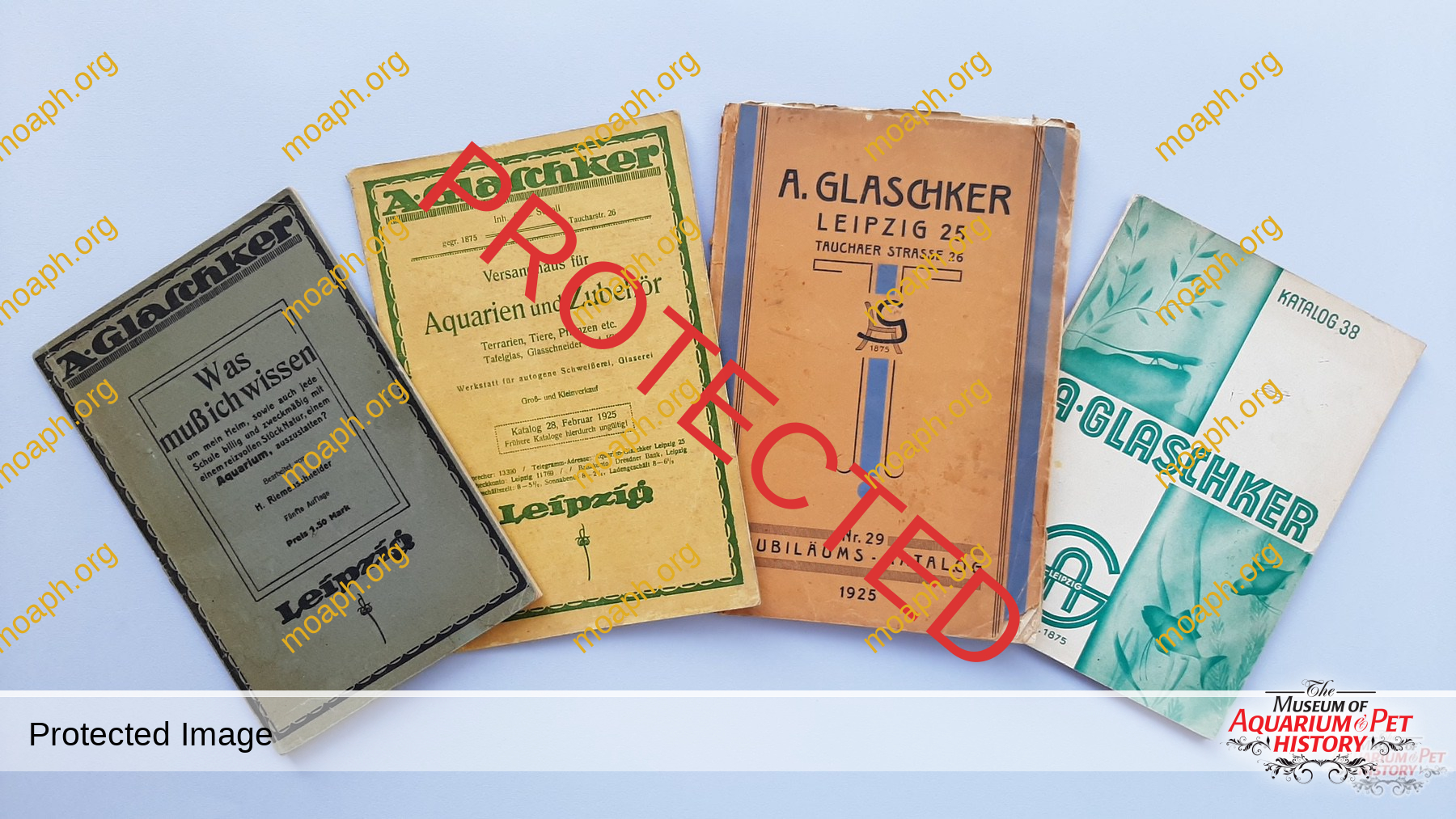
A. Glaschker catalogs are among the most interesting technical aquarium catalogs of the first half of 20th century.
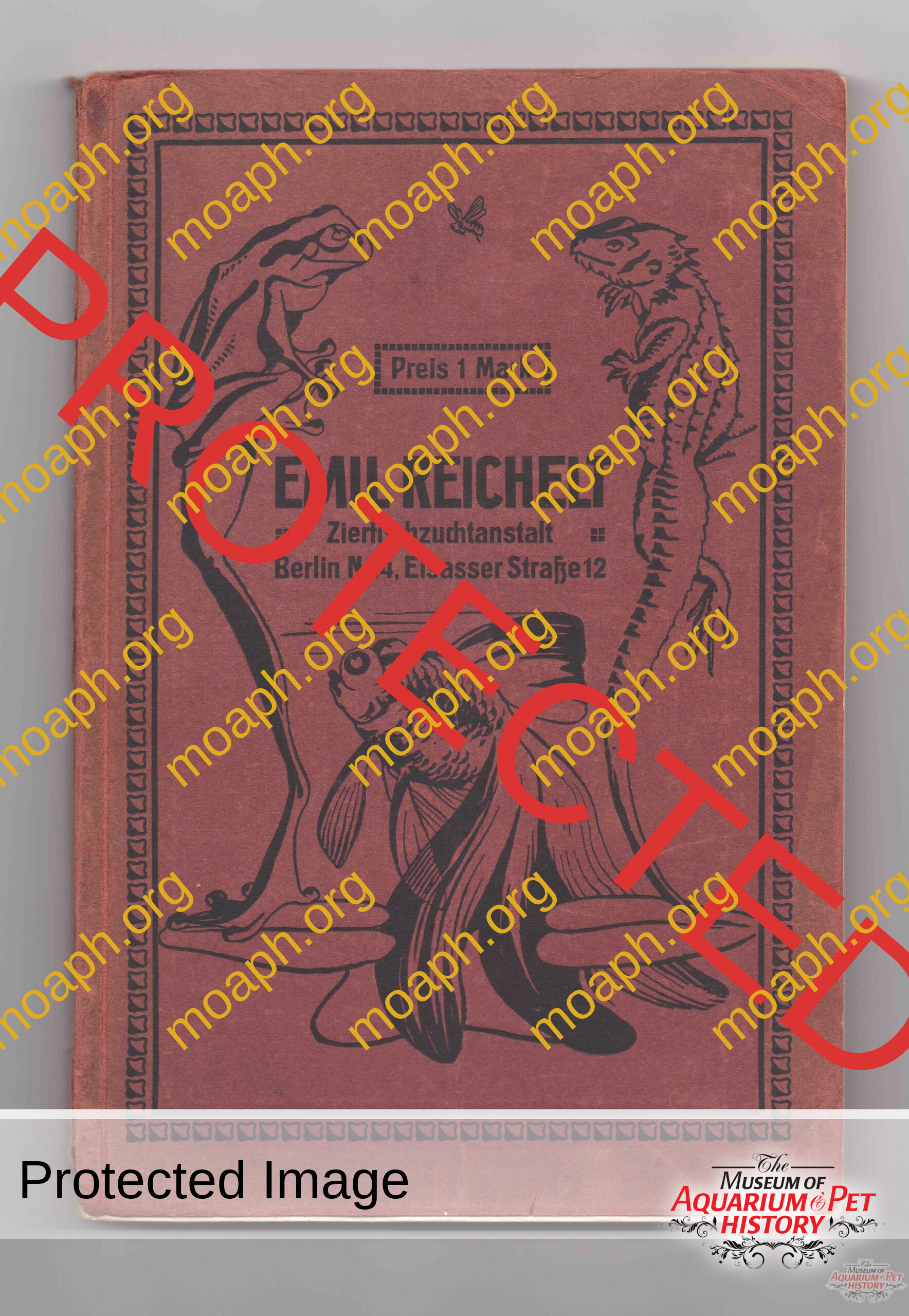
Emil Reichelt catalog, season 1909-1910.
American beauties & classics
Back to United States, I can’t forget to mention the Jewel Aquarium Company and Grassyfork Fisheries, as their gorgeous catalogs featured some of the finest aquariums ever produced.
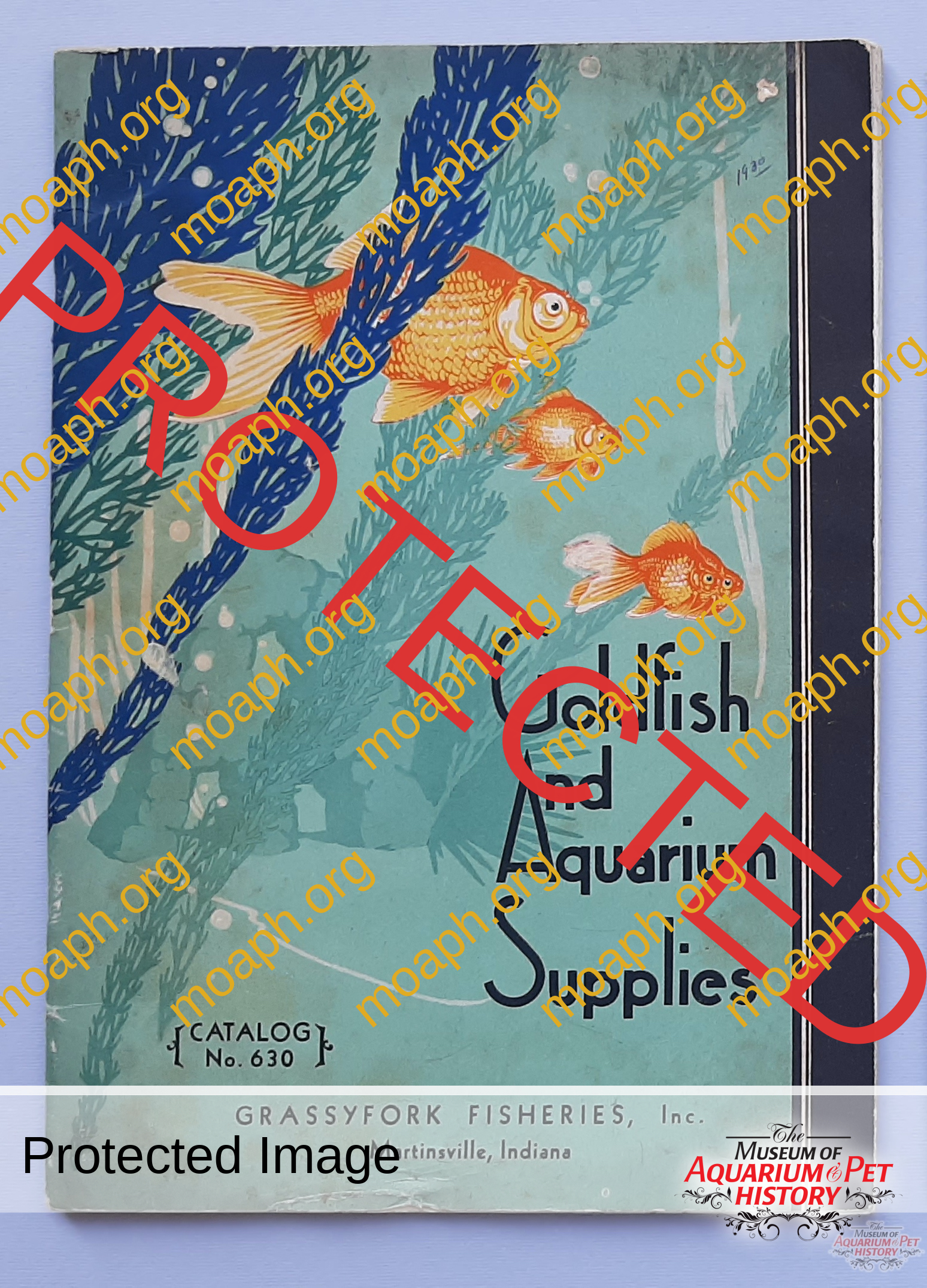
During the 1920-30s, Grassyfork Fisheries issued outstanding catalogs full of color illustrations of bucolic design aquariums and fishbowls.
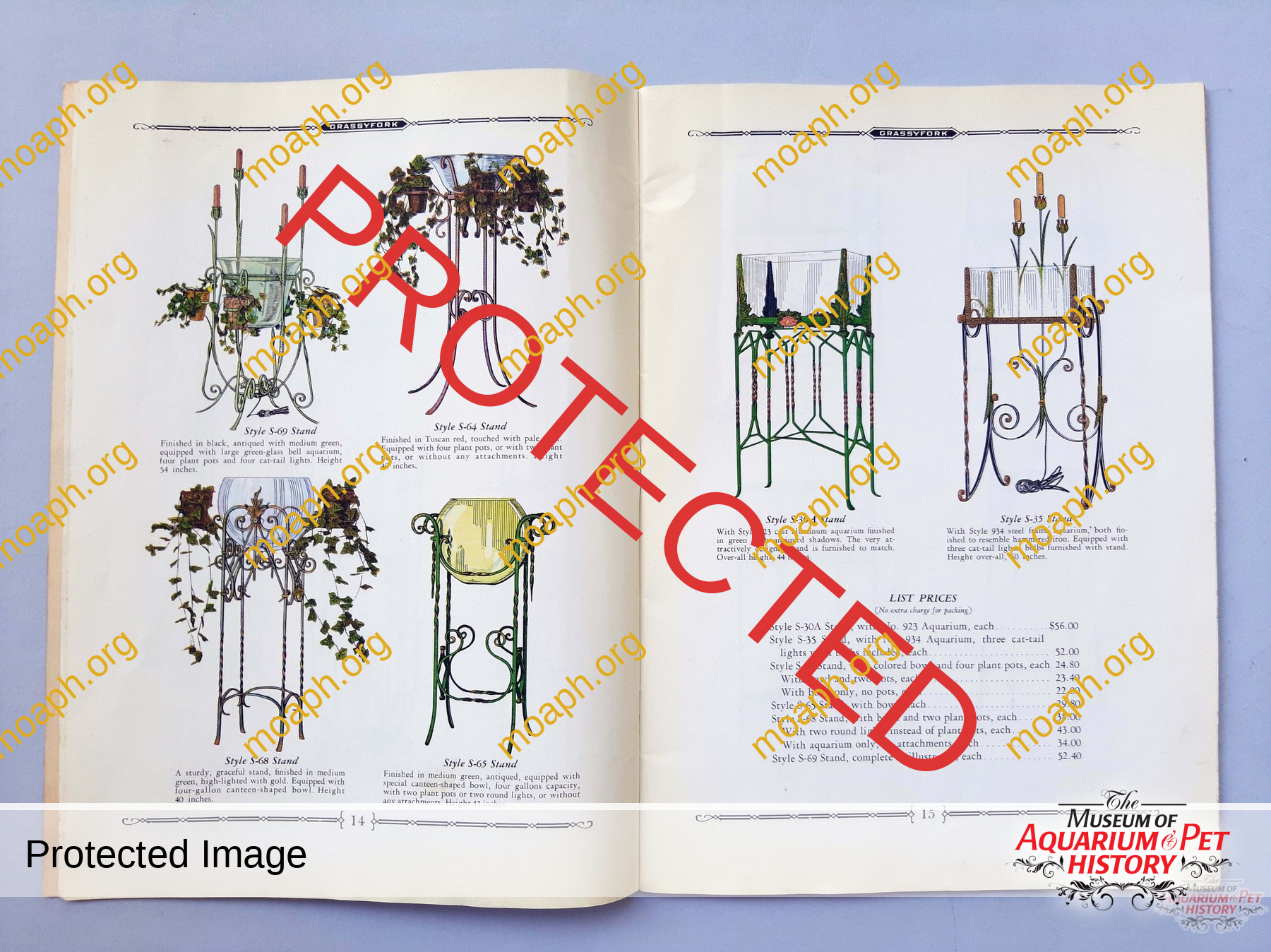
Other examples of fishbowls and aquariums promoted by Grassyfork. All these treasures are exceedingly rare in today’s market.
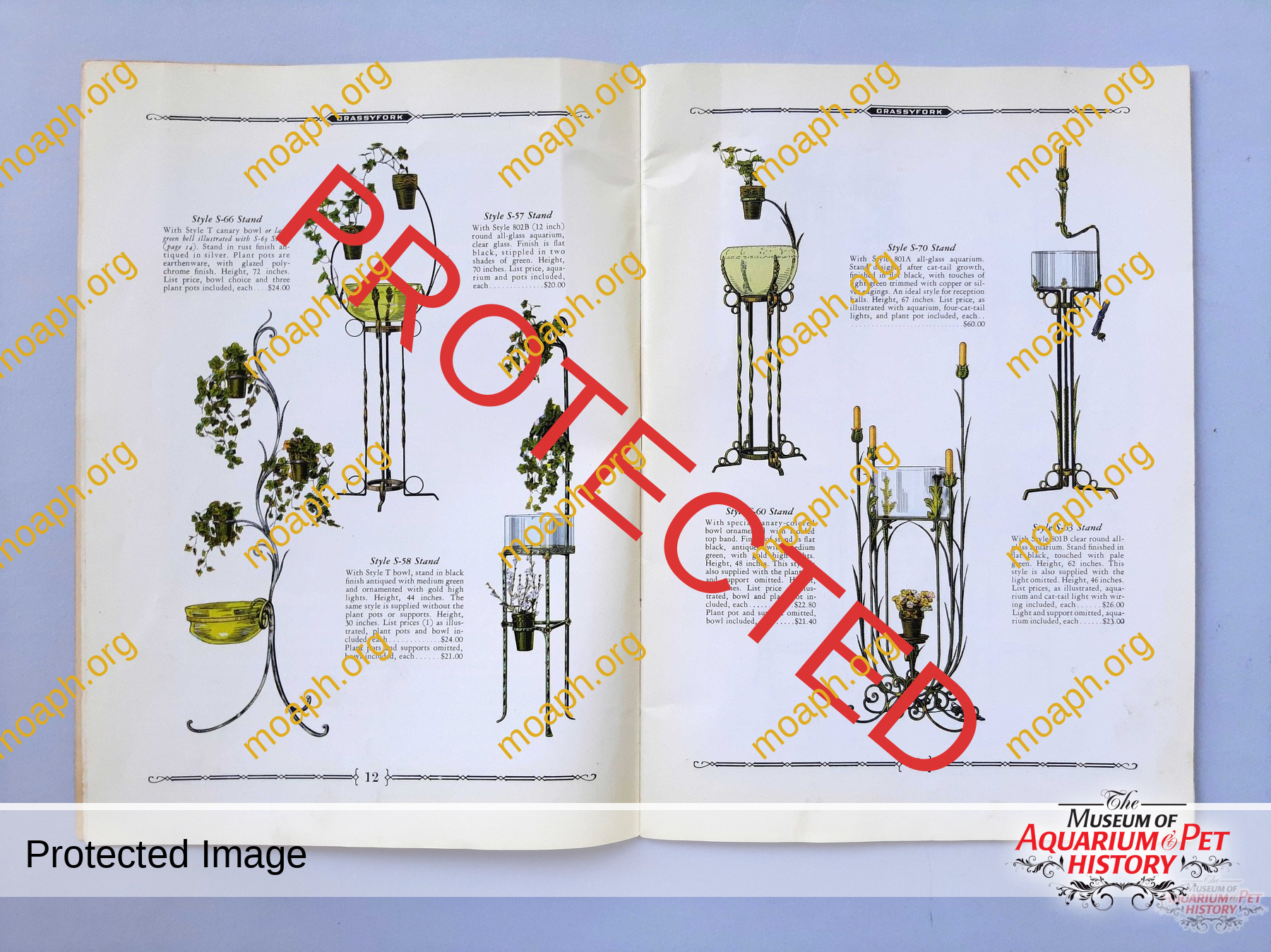
“Grassyfork style” fishbowls and aquariums.
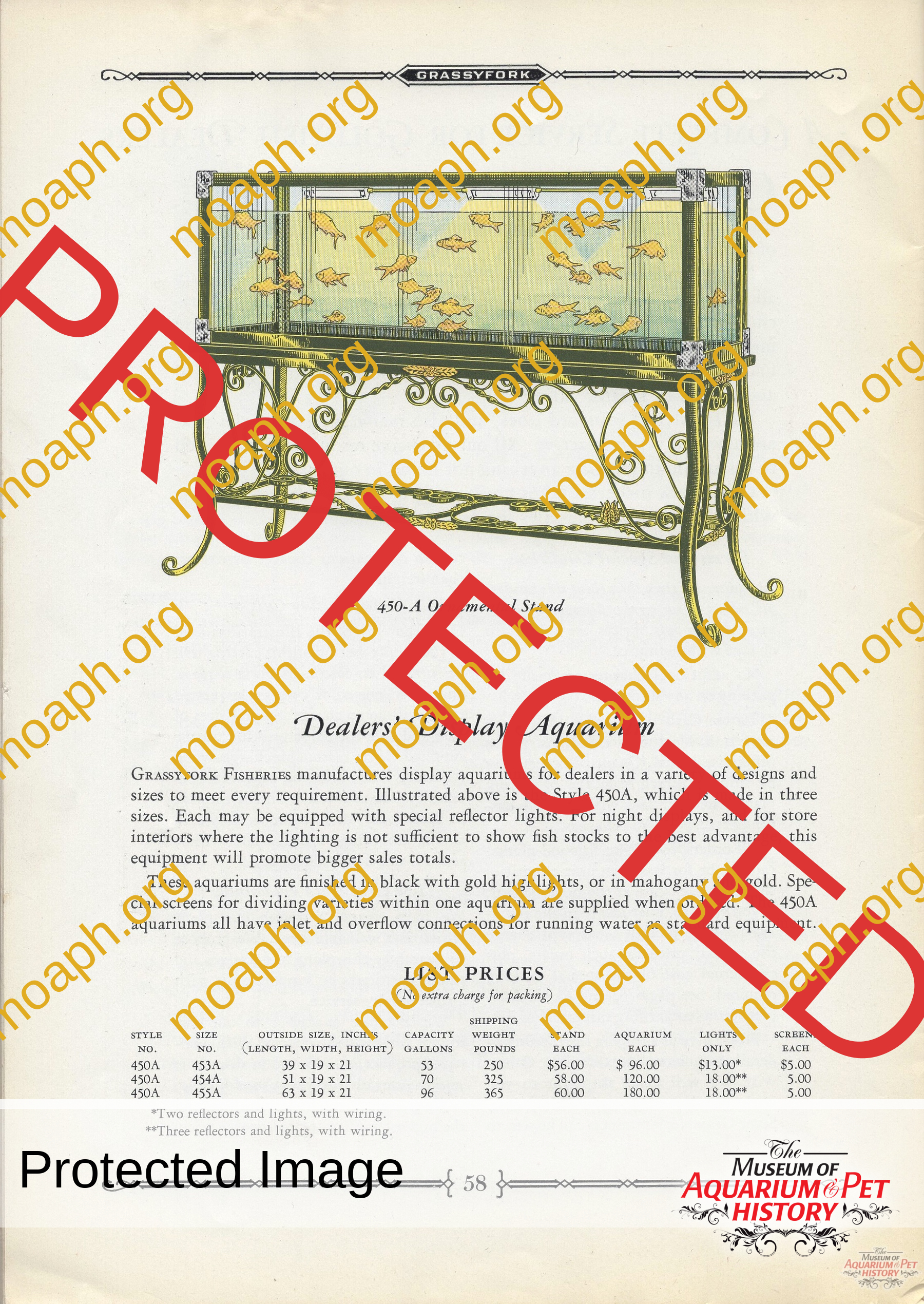
Grassyfork “Style 450”, an elegant, large aquarium for dealers.
Founded by Hans Jensen, a metalworker and aquarist from Chicago, the Jewel Aquarium Company, became the prominent manufacturer of art deco and other unique style fish tanks during the deco era of the 1920-30s. The “dolphin tank with seahorse legs”, the “modern aquarium” with its modernistic stand, the “crane aquarium”, the “bungalow aquarium”, and the super rare “art aquarium” (the only aquarium in Jewel catalogs that was customizable) left an indelible mark on the history of aquarium design.
From the same era come some of the most beautiful catalogs issued by Grassyfork Fisheries, a company established in 1899 by Eugene Shireman in Martinsville, Indiana. Although Grassyfork produced many editions and probably distributed a very large number of copies of its catalogs for dealers (at its peak it was the largest goldfish hatchery in the world), nowadays they seem to be scarce and seldom come up for sale. I believe that many of them survived, but they are such an exquisite triumph of colors that today’s owners are never ready to let them go!
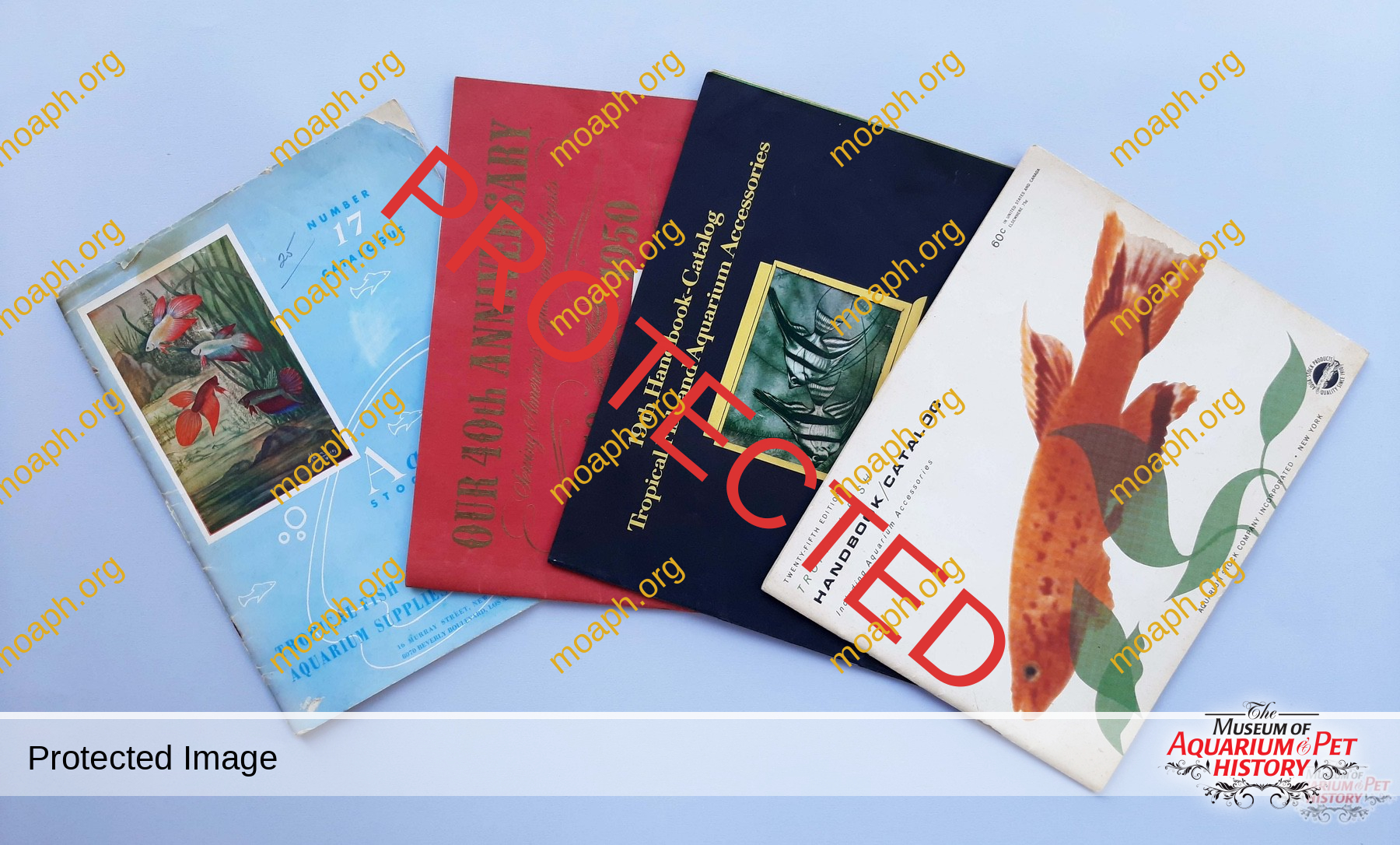
Aquarium Stock Company catalogs, 1948-1965.
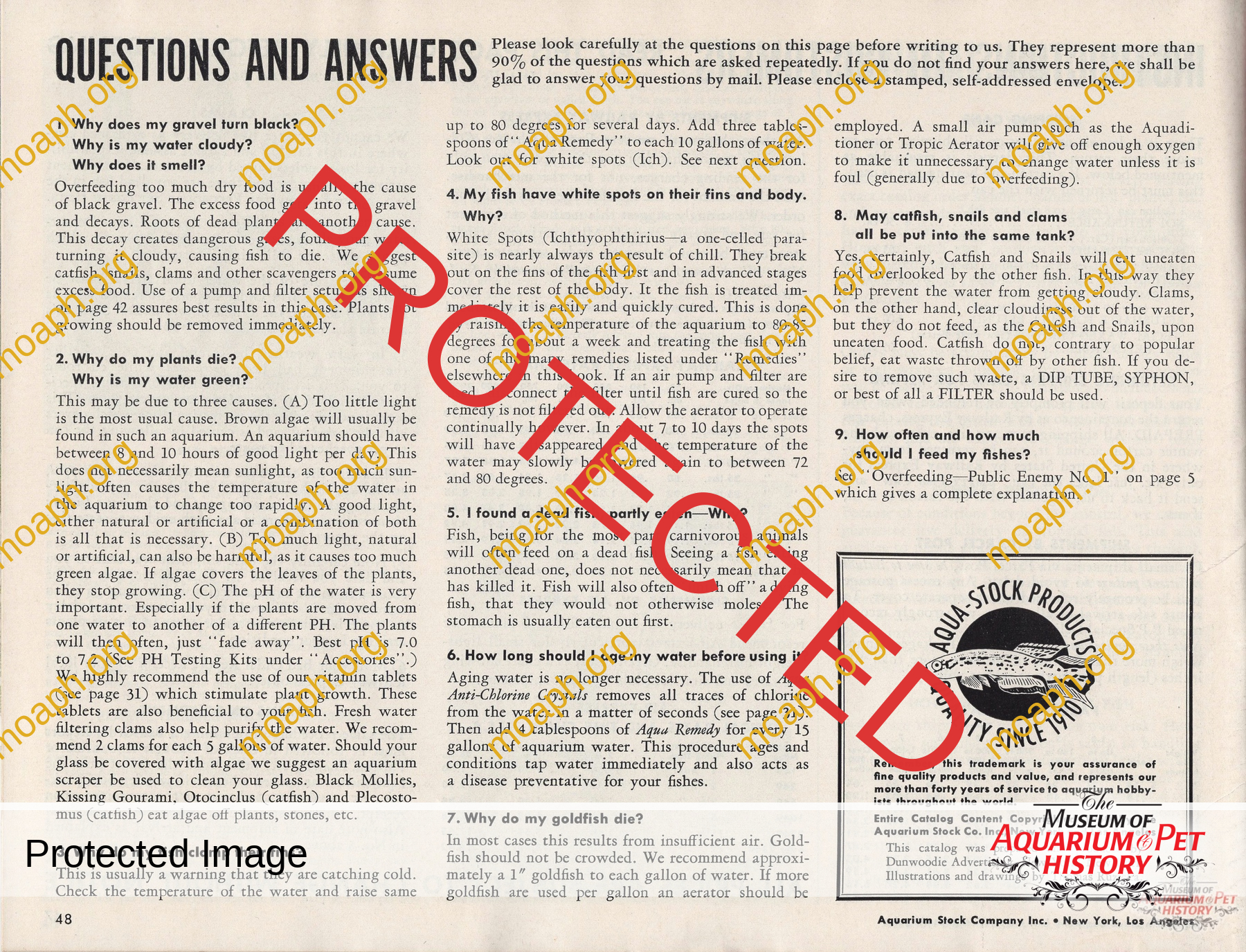
Many vintage catalogs had a “Questions and Answers” page.
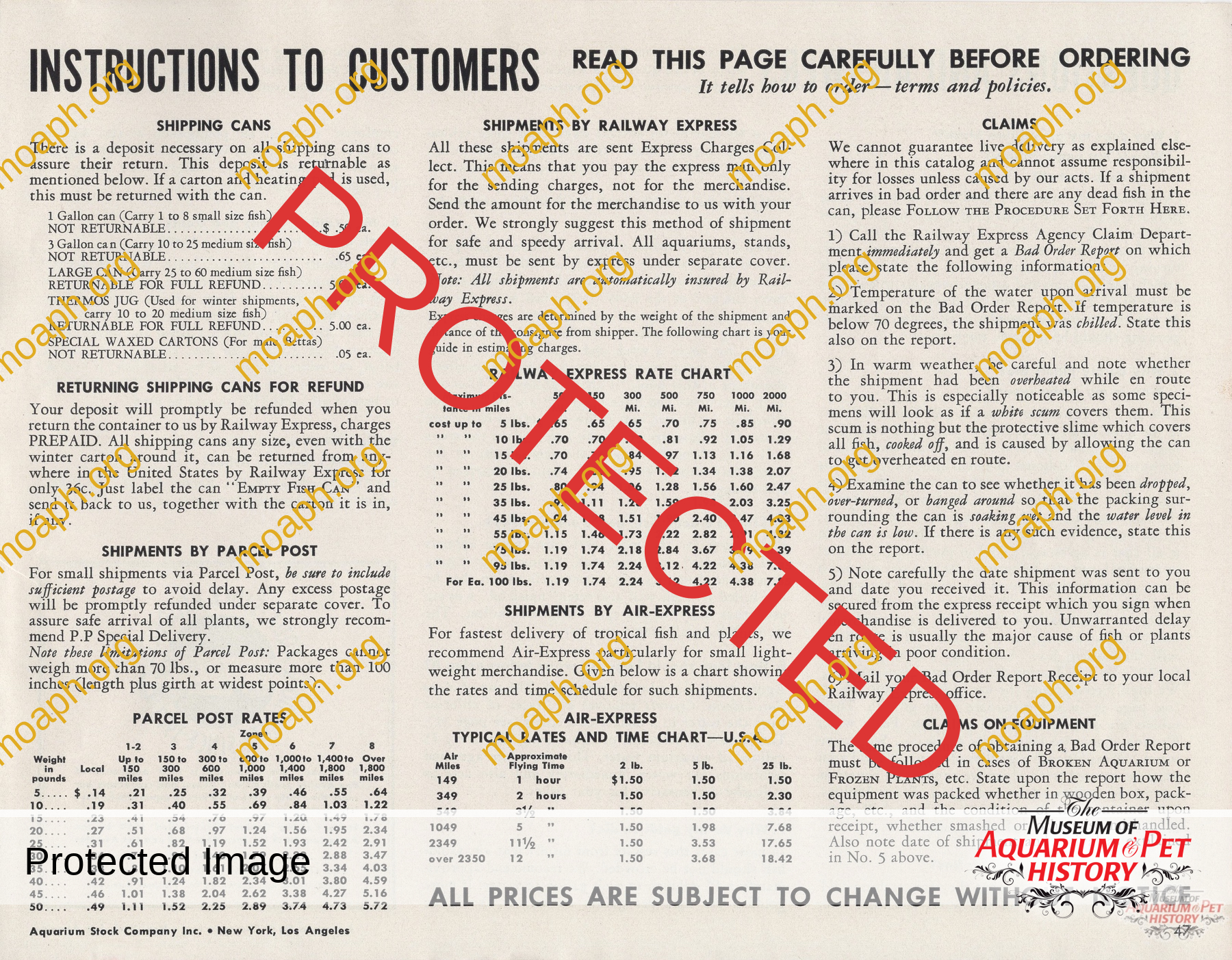
“Instructions to Customers” from the Aquarium Stock Company, 1950.
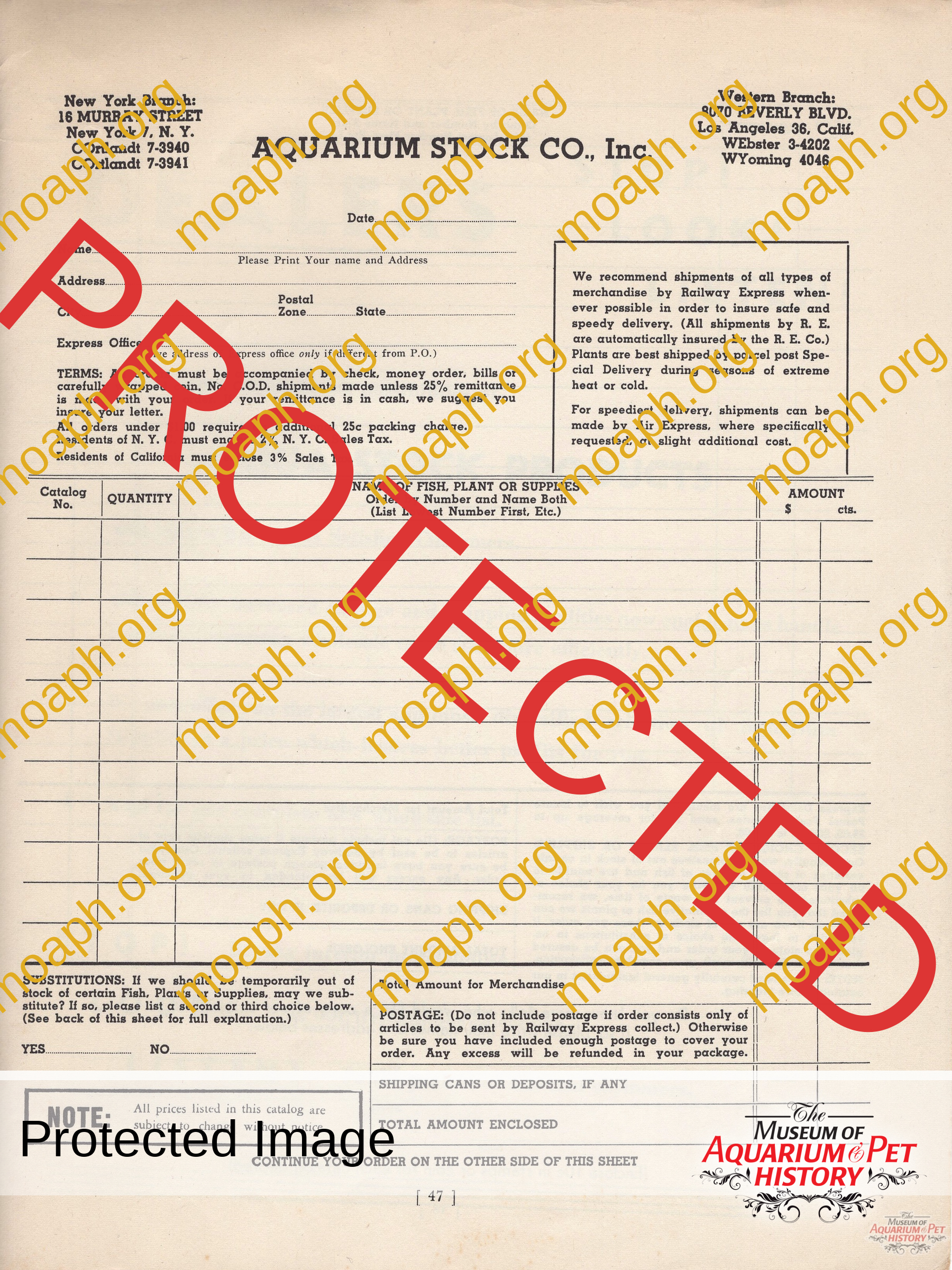
Aquarium Stock Company purchase order form, 1948.
Aquarium Stock Company, Beldt’s Aquarium, Metaframe, Wardley’s, these are only some of the many other American firms which left a mark on the 20th century aquarium industry. Their catalogs, back in the day distributed in massive numbers, are very collectible and quite easy to find. Except for the early editions, prices usually start as low as $10 and go up to $80. Most of the time, however, I prefer not to buy them on eBay auctions, the typical hunting territory for nostalgic buyers looking for something reminding them of the good times, and for completist collectors trying to grab the missing puzzle piece. Both these categories of buyers are usually ready to spend much more than the correct market value. My first option with these kinds of vintage catalogs is to buy them in bulk from specialized booksellers and other collectors.
About most of the catalogs by Beldt’s Aquarium, I want to mention a simple but crucial detail that makes me love them. I’m referring to the publication date that saves the collectors a lot of research work and headaches! Many catalogs of yesteryear, in fact, are undated, and sometimes it’s quite hard to give them a reliable publication date, especially when you don’t have other catalogs from the same company to compare.
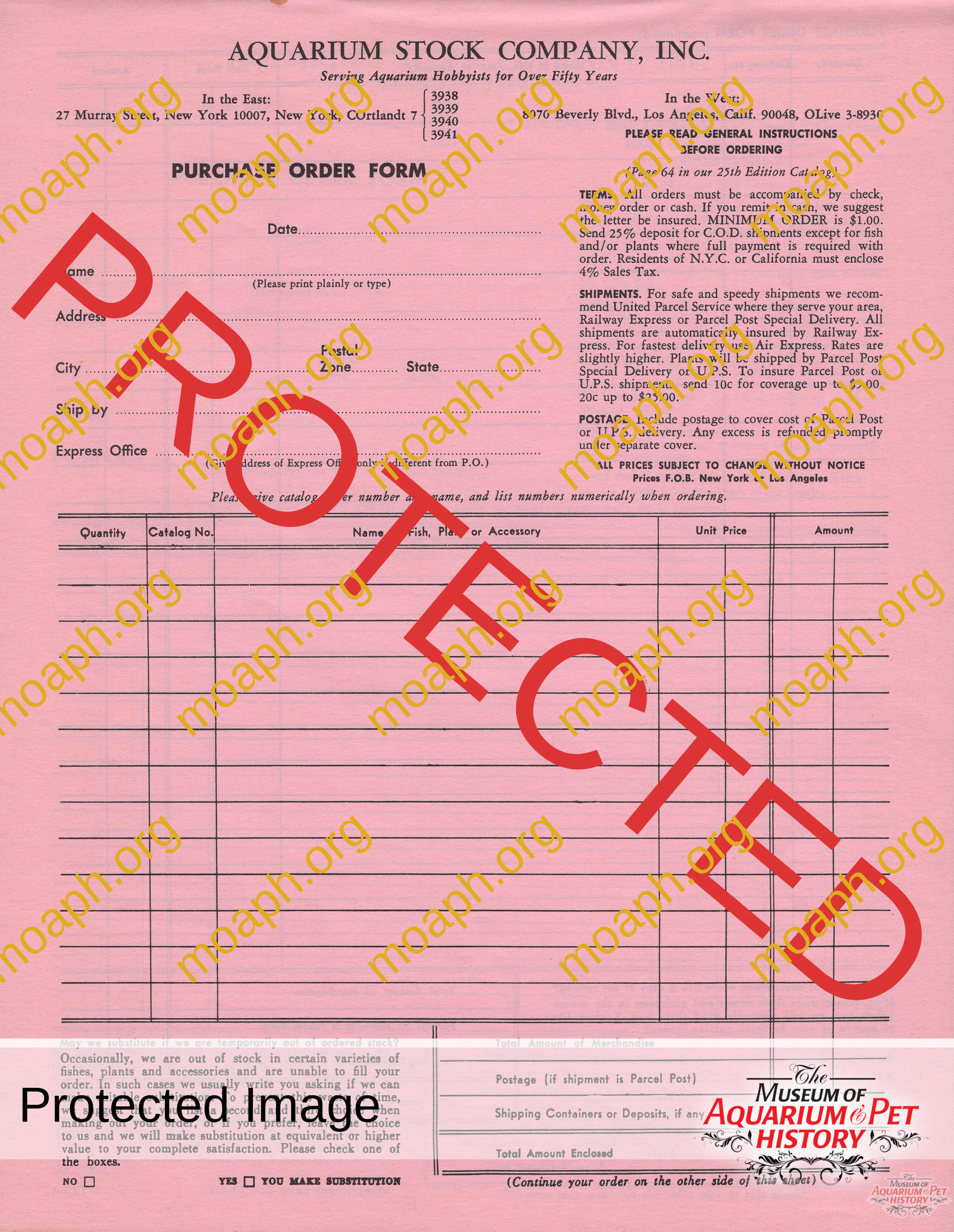
Aquarium Stock Company purchase order form, 1965.
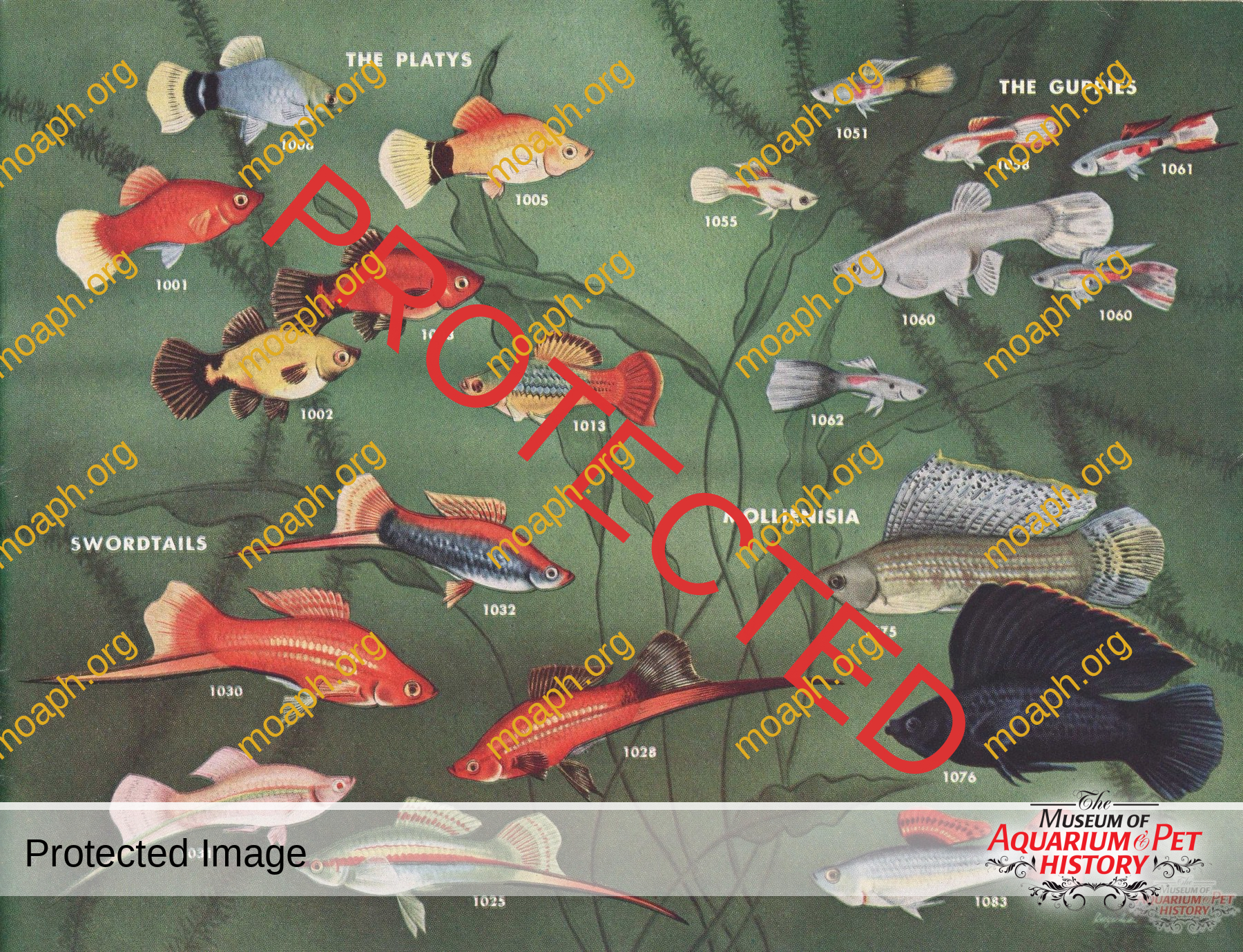
Color plate by Thomas Ruzicka. Aquarium Stock Company catalog, 1950.
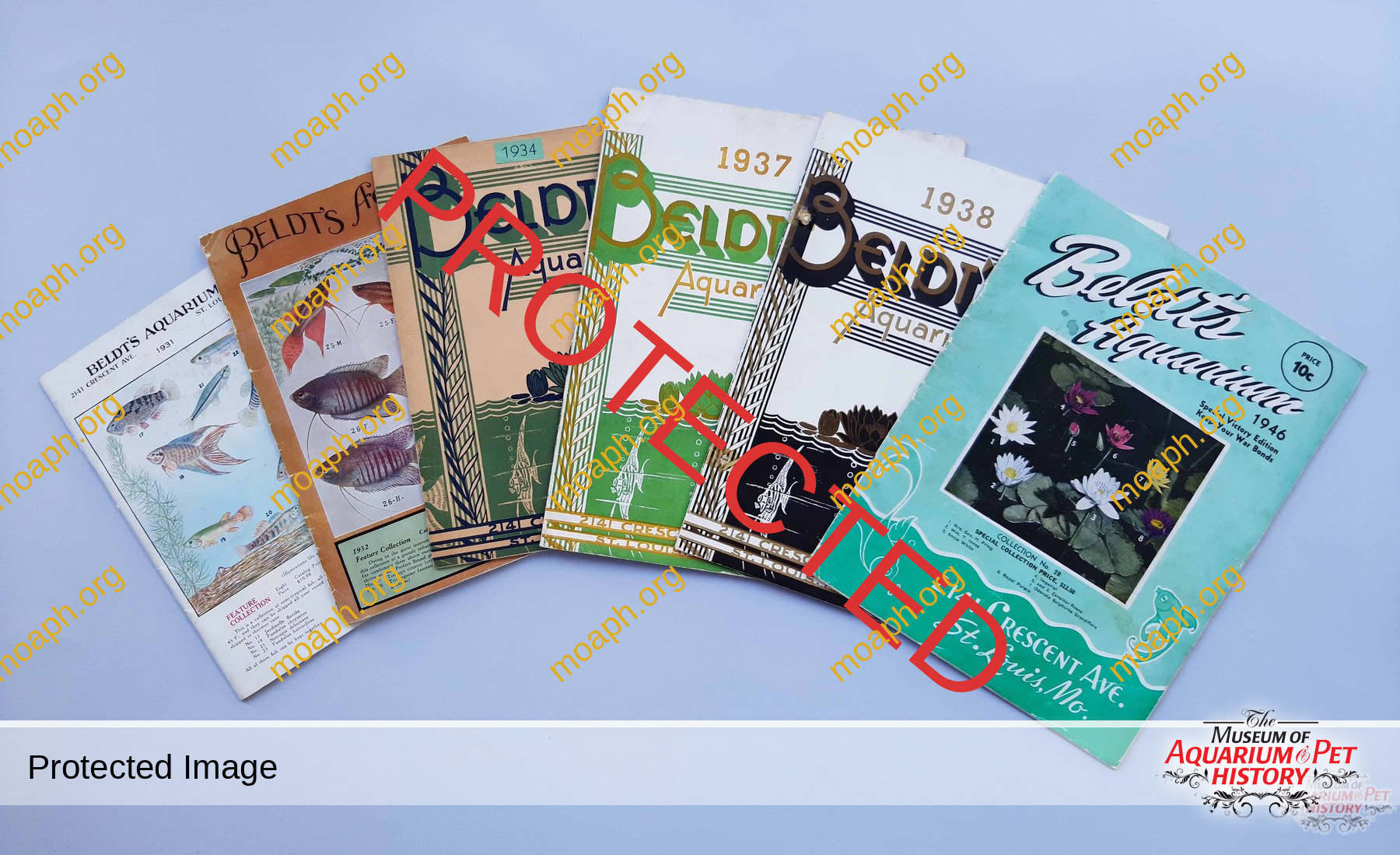
Beldt’s Aquarium catalogs, 1931-1946.
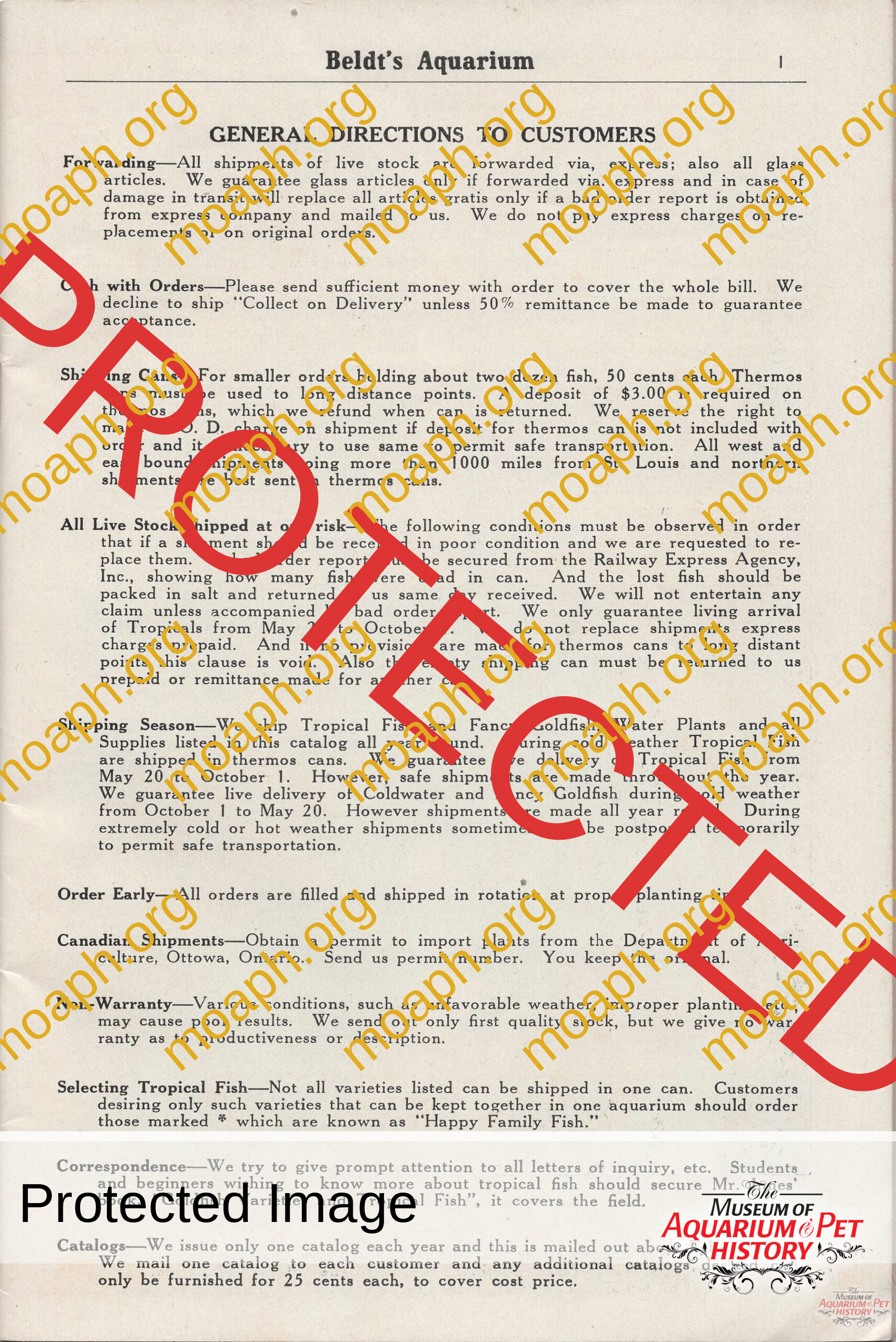
“General Directions to Customers” from Beldt’s Aquarium, 1931.
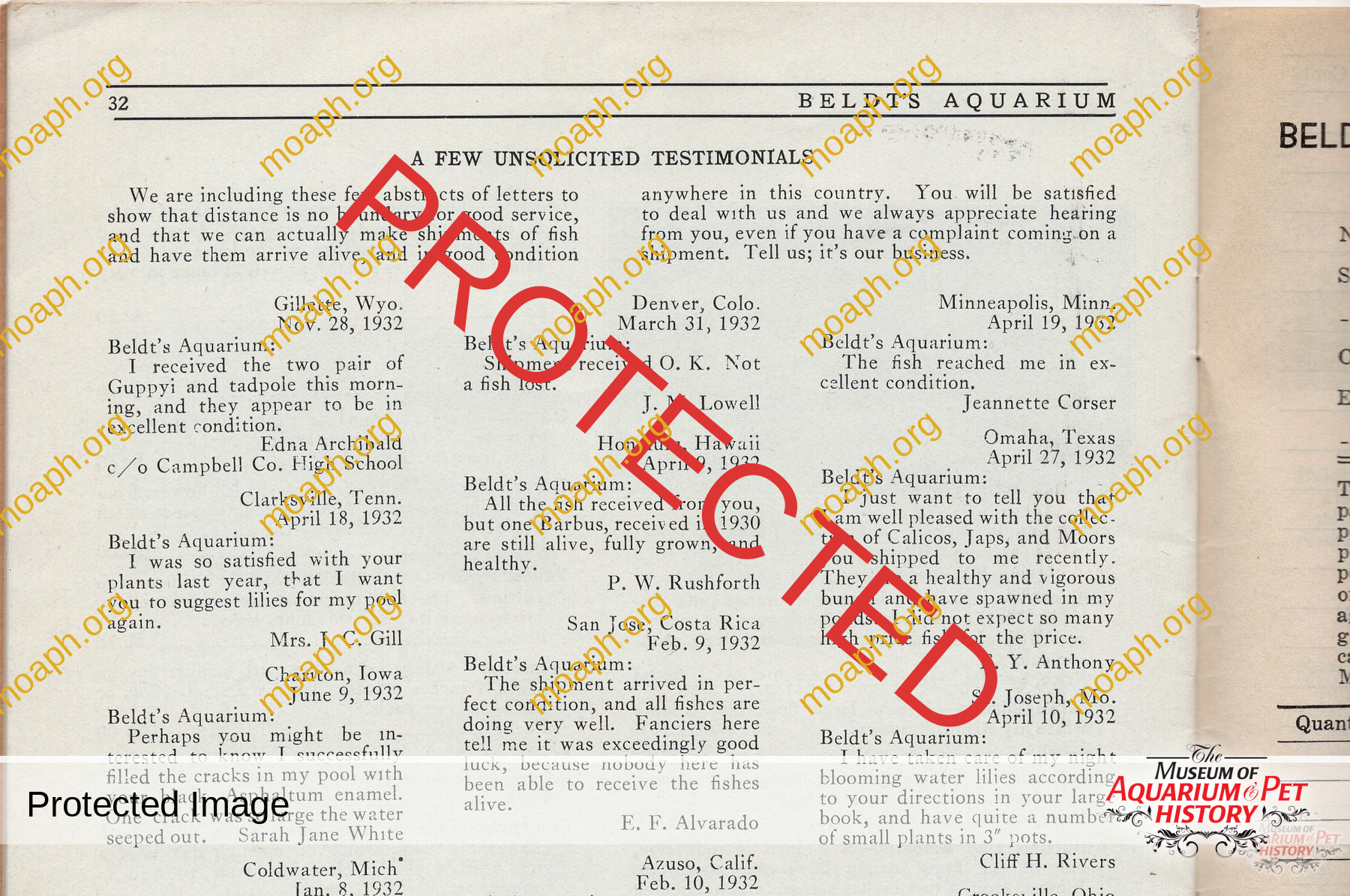
Testimonials for Beldt’s Aquarium, 1934.
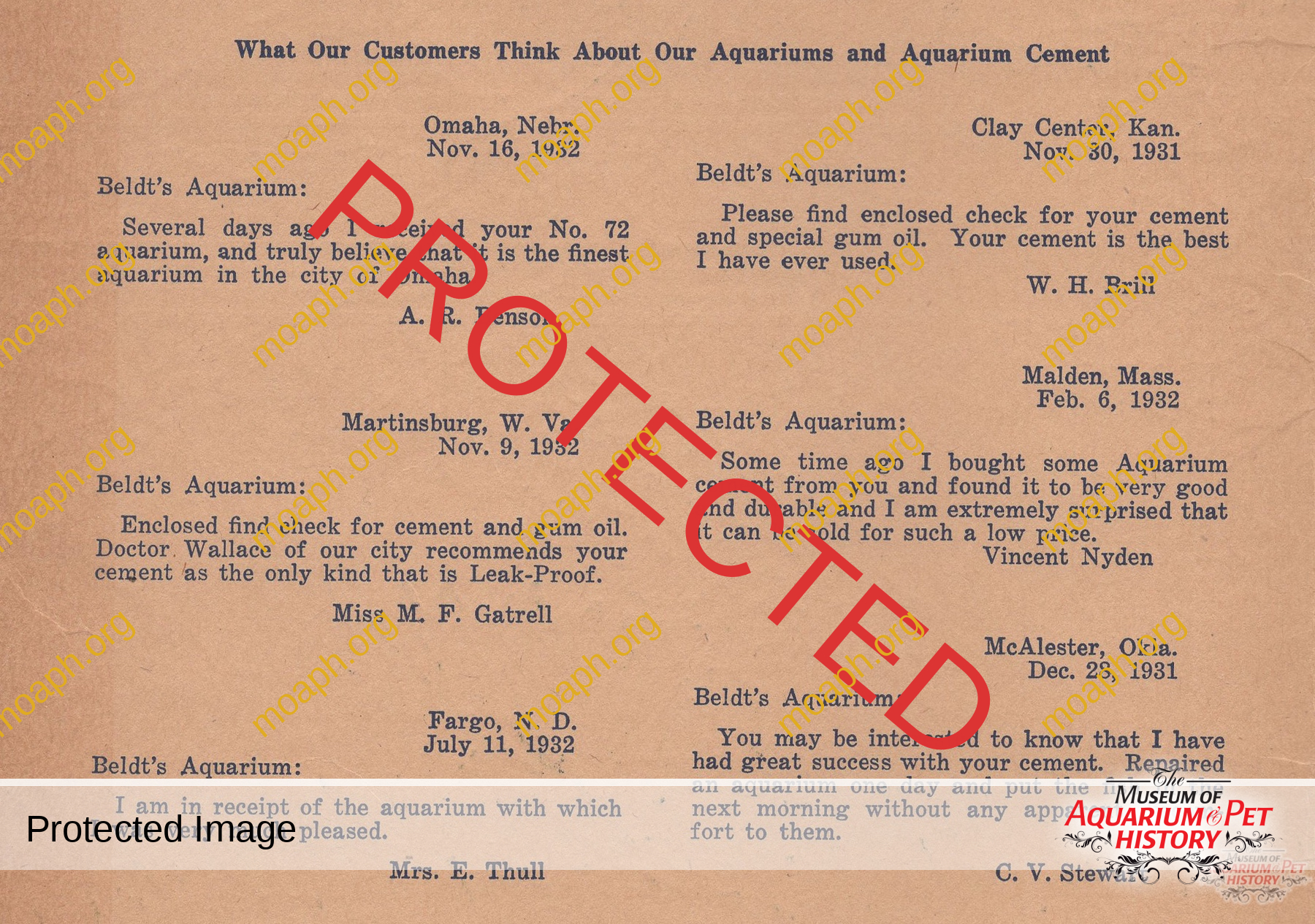
Feedbacks from customers! Beld’t Aquarium catalog, 1934.
Nothing very old from Italy
In Italy, the hobby of fishkeeping in its modern meaning (tropical fish instead of just goldfish and native fish) developed after WWII. One of the early tropical fish stores, started as a secondary business during the 1930s inside a stationery shop, was “Acquario Tropicale De Santis” in Rome, a place where dreams came true for many Italian enthusiasts.
Unfortunately, only a few traces of this business have remained, and the same goes for its owner, Giovanni “Nino” De Santis. An undated general catalog probably from the early 1950s is what we have today, together with a few other documents I collected from Italian old-timers.
Besides standard shape fish tanks, the catalog promoted unusual lantern aquariums and picture frame aquariums including the “Rosamaria” model, a wall fish tank named after De Santis’ beloved daughter.
One of the early suppliers of this shop was the well-known Aquarium Stock Company. Since times were tough in Italy after the war, De Santis on some occasions paid the company in New York with money, but other times sending them lots of ceramic aquarium ornaments manufactured by Italian craftsmen.
De Santis was a pioneer whose great enthusiasm inspired the early generations of Italian aquarists. Among his followers, there was a young Werther Paccagnella, who regularly visited the shop in the early 1940s. Paccagnella remained so fascinated by the potential of this hobby that he decided to start his own business, “Acquario di Bologna” (the company later changed its name to “Euraquarium”), the most important firm in the history of the hobby here in Italy up to the 1980s.
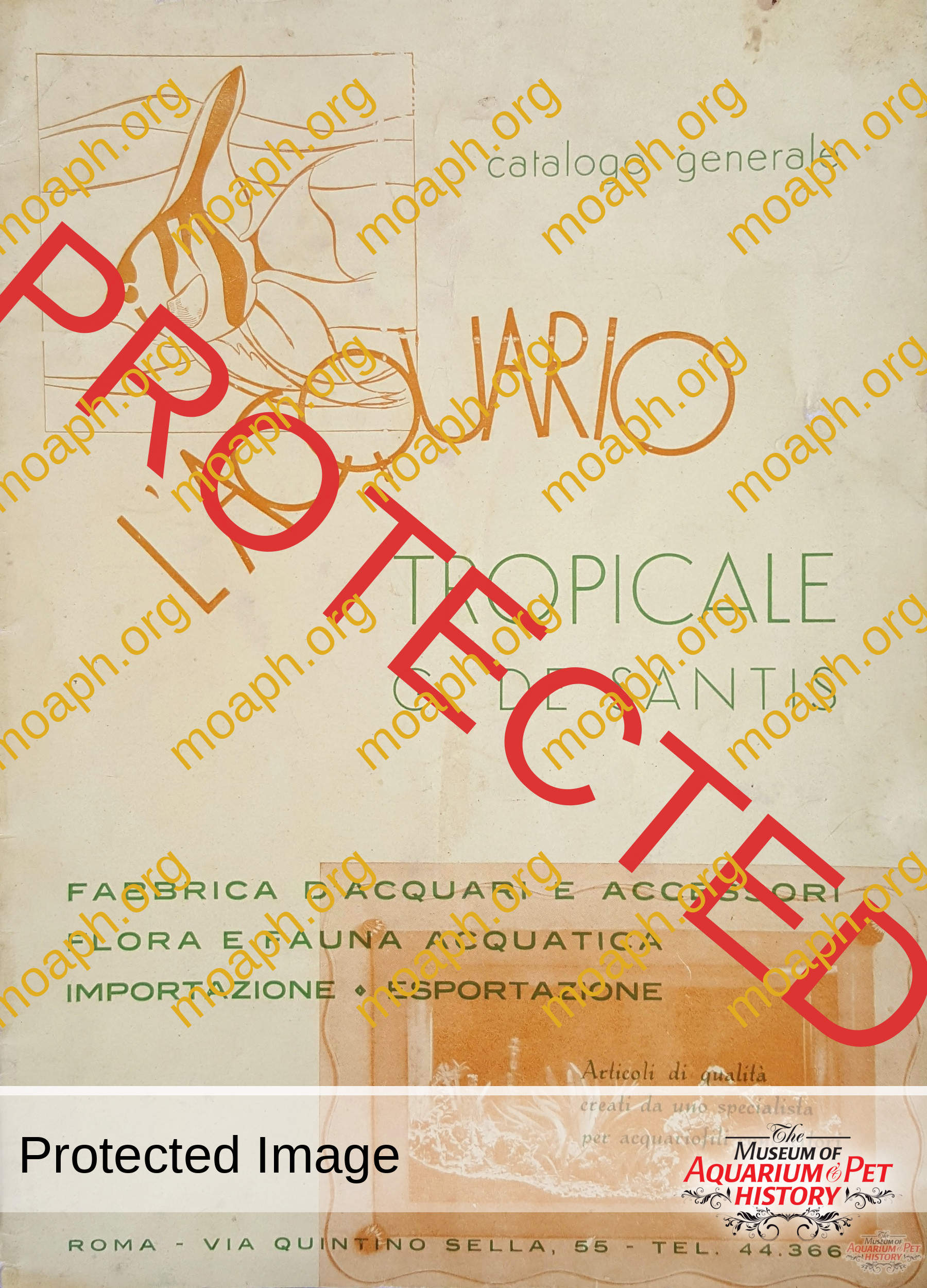
Acquario Tropicale De Santis general catalog, early 1950s.
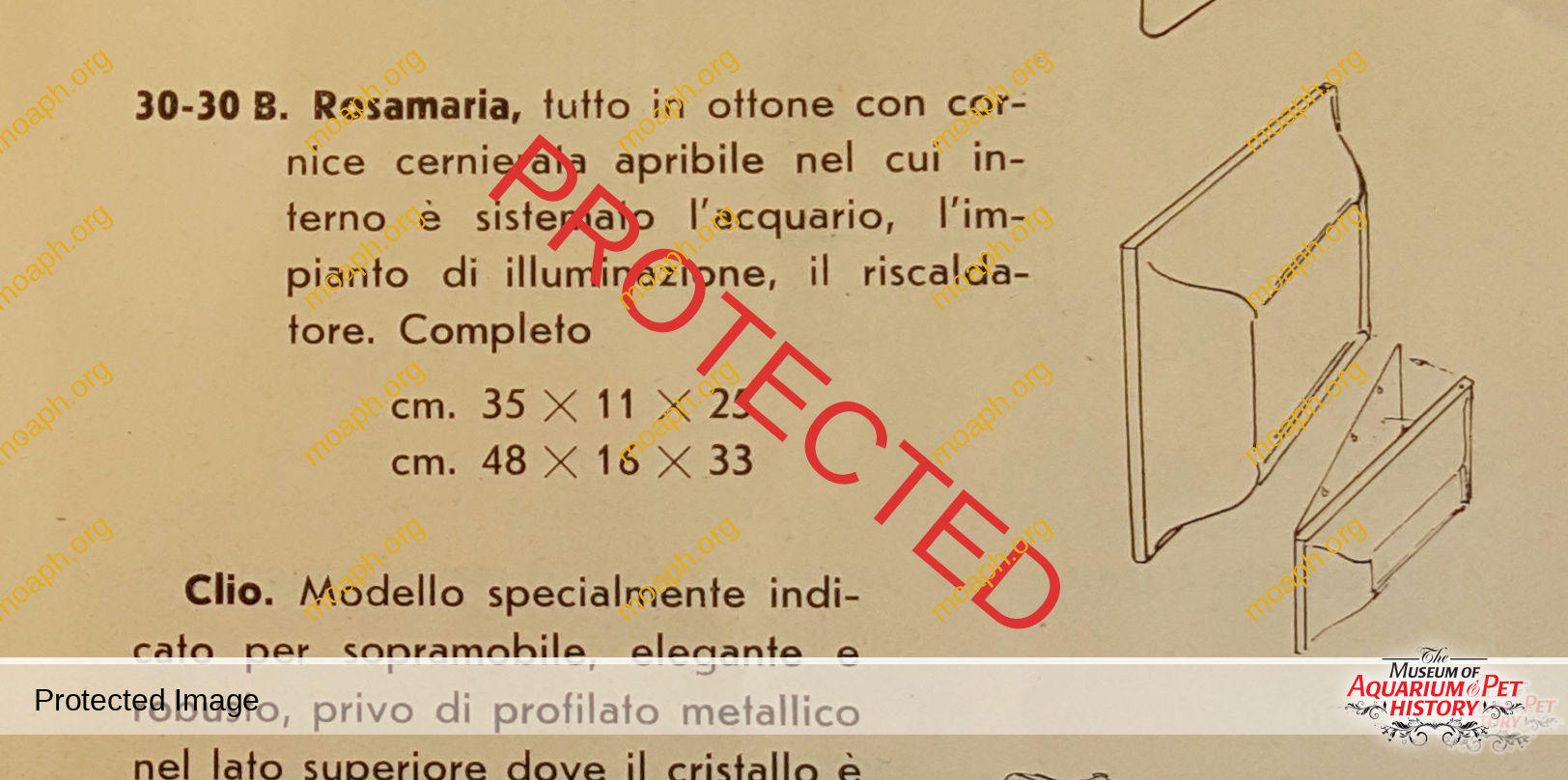
Wall aquarium model “Rosamaria” by De Santis.
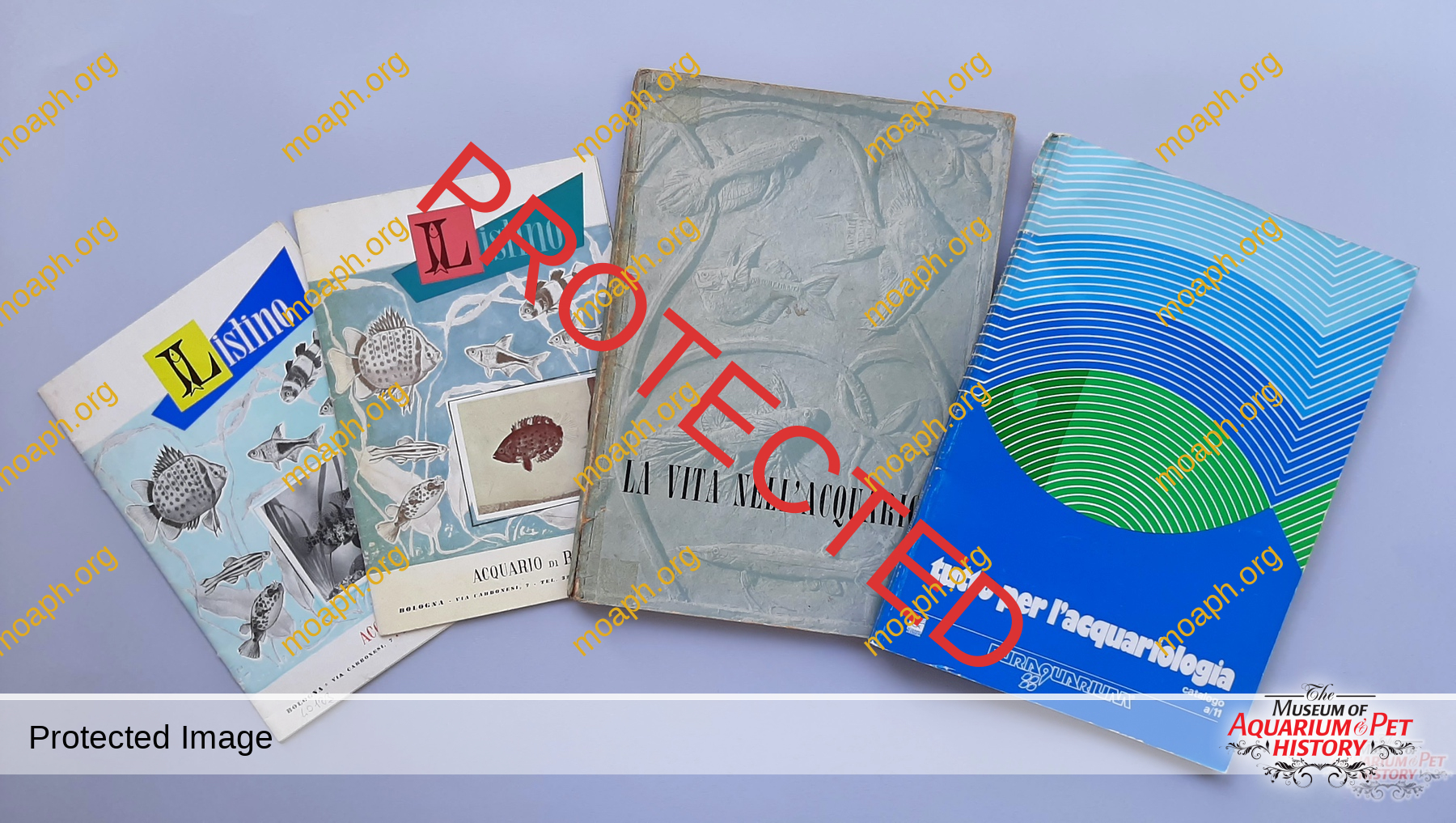
Acquario di Bologna and Euraquarium catalogs, 1950s-1980s.
All the catalogs and price lists issued by this company are the classic starting point for Italian collectors. The earliest Acquario di Bologna price list from my collection is dated 1954. One of my favorite catalogs, quite easy to find, is the “a/11”, as inside it you can find the funny “Hermes 65 SM”, an aquarium sold as… a construction kit!
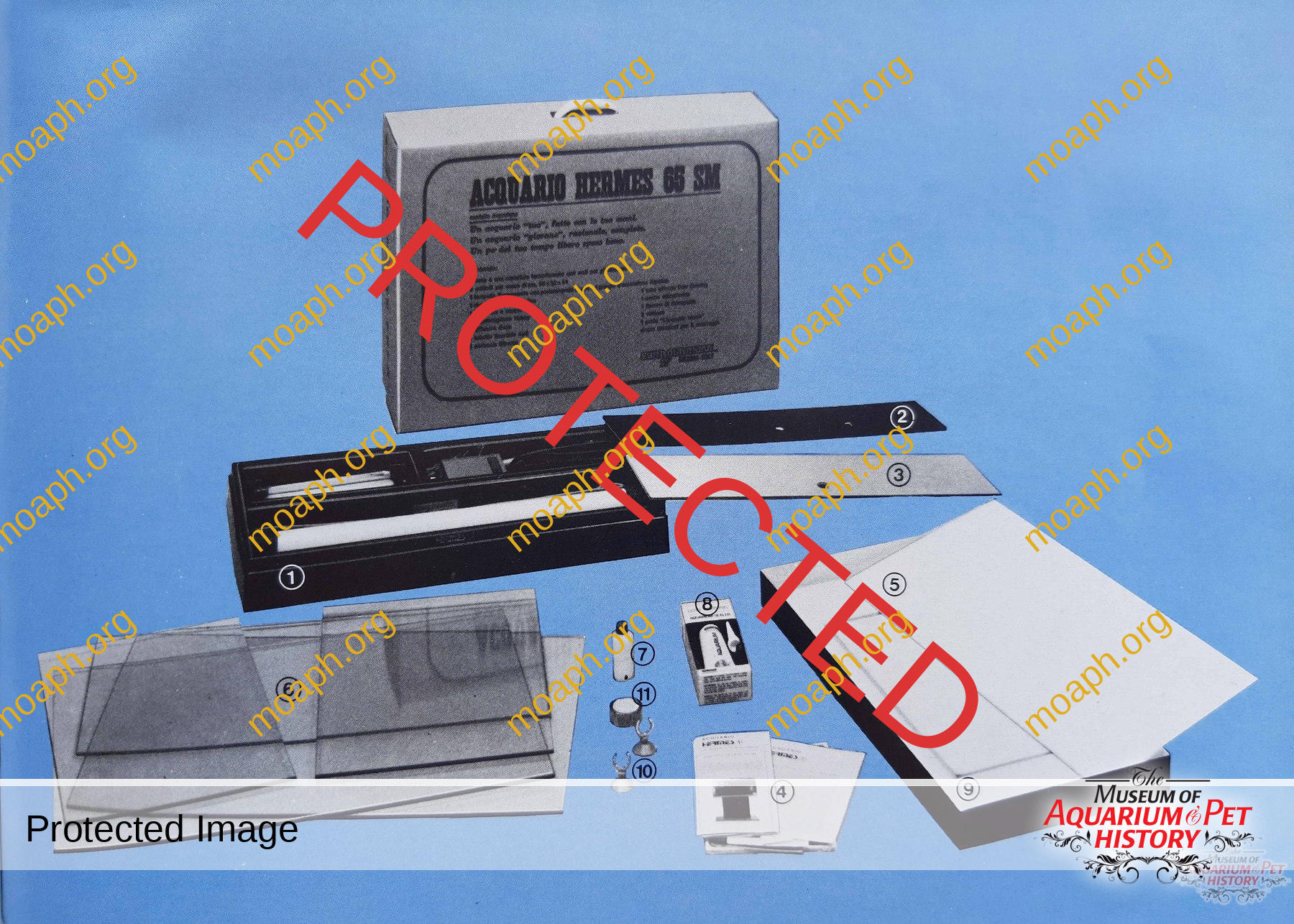
Construction kit aquarium by Euraquarium.
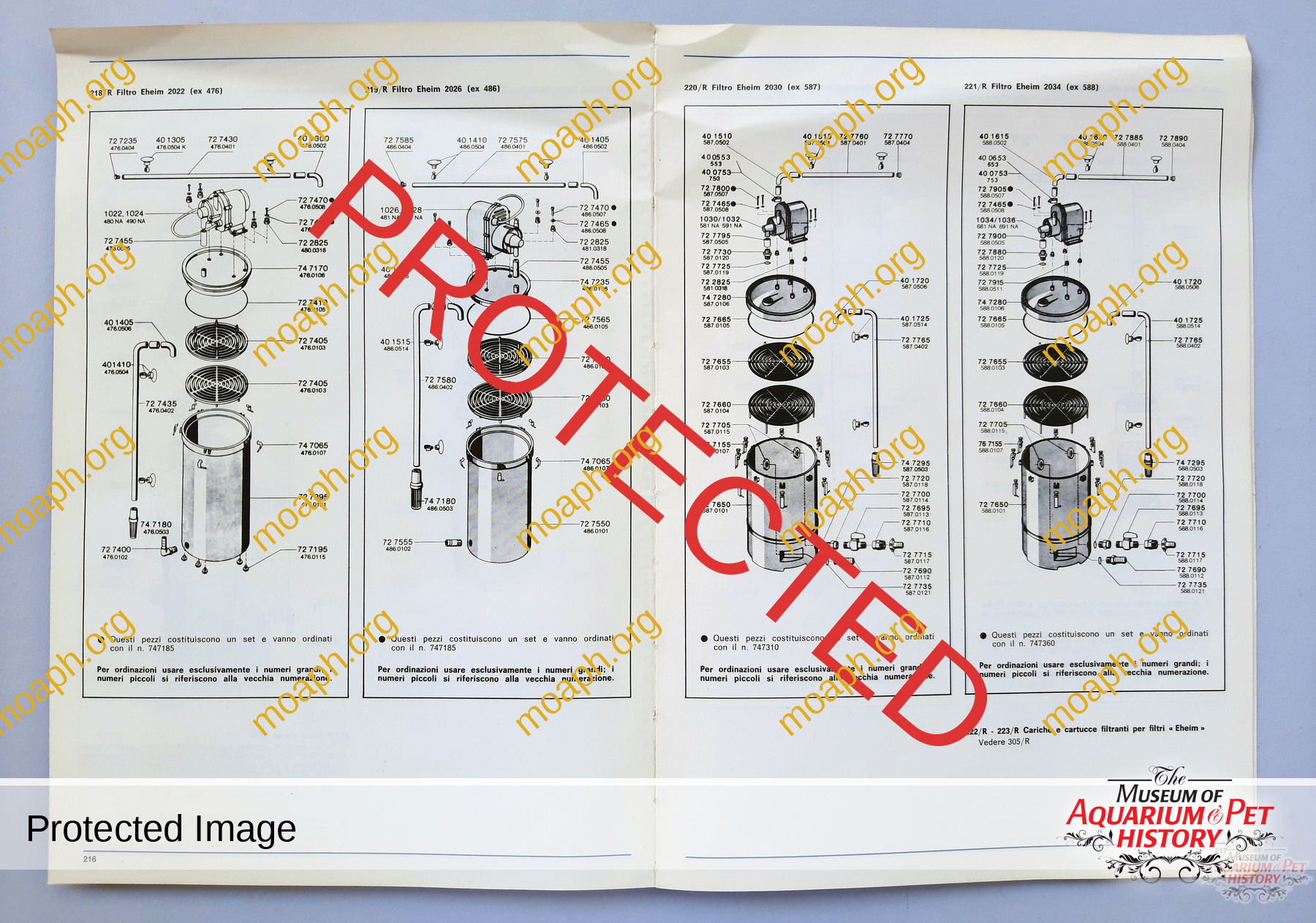
Euraquarium catalog, spareparts section.
“Zen catalogs”
The graphically dazzling catalogs issued by the Japanese company ADA (Aqua Design Amano) are well-known to aquascapers and collectors for their innovative layouts and for the gorgeous photographs. They are among the few modern catalogs I collect.
Takashi Amano, ADA founder, opened his first Japanese shop in 1984, and started to sell his own aquarium products a year later. The first ADA catalog was distributed in 1986, and it was a leaflet printed in black and white, far from the impressive later editions. As often happens with “the very first of everything,” today this exceedingly rare catalog has become a much sought-after collectible.
Another two valuable targets for collectors are both the ADA general catalog from 1994, popular as “the catalog with a frog on the cover,” and the ADA 2001 catalog, also known as the “leaf catalog” or “the green one”! Pages 72 and 73, notably, make the leaf catalog very special as they depict Amano’s collection of antique Japanese fishbowls, and the enigmatic “Cube Garden Excellent” (this is the translation I had from a Japanese friend of mine). The story behind this small fish tank (L25x- W20xH20 cm – L9.8”xW7.9”xH7.9”), which never went into a regular production, is almost a legend. At the end of the 1990s, Amano decided to produce the perfect aquarium using the clearest glass ever manufactured for the aquarium industry, a minimalist museum piece ready to go on the Guinness World Record book. In 2001, the publication date of the leaf catalog, the price for this small treasure averaged around $9,900 (¥ 1,200,000).
As far as I know, only one or two specimens were manufactured by hand before the project failed for technical reasons. Currently, a Cube Garden Excellent is in Italy.
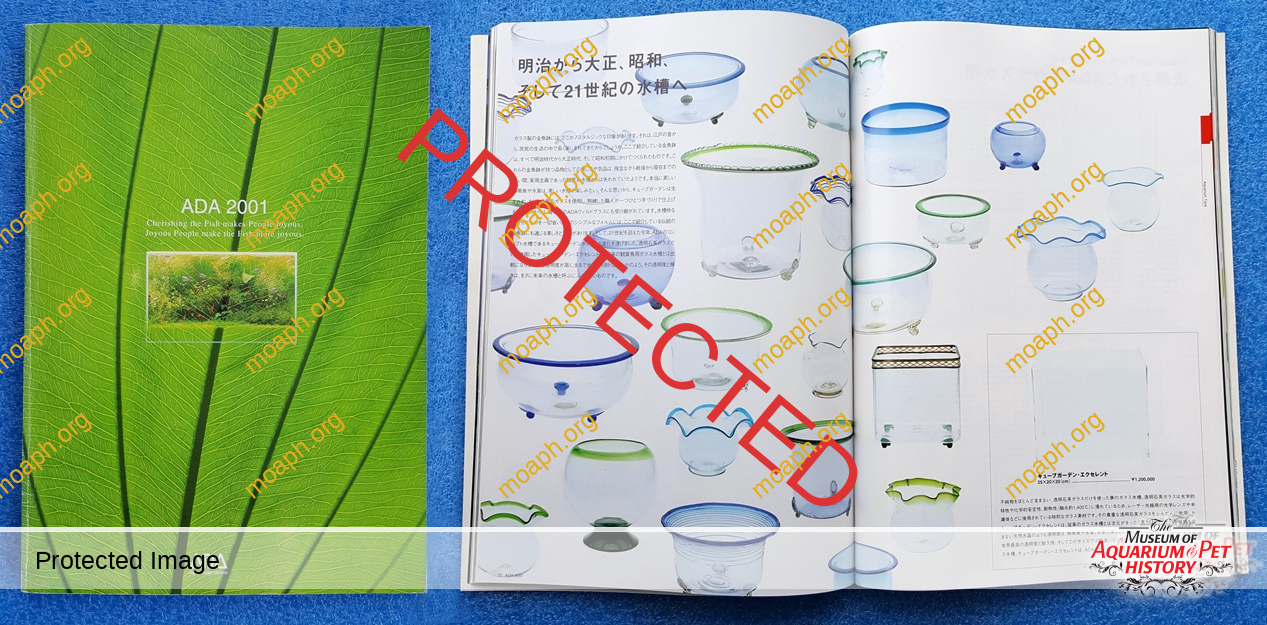
Aqua Design Amano “leaf catalog”, 2001.
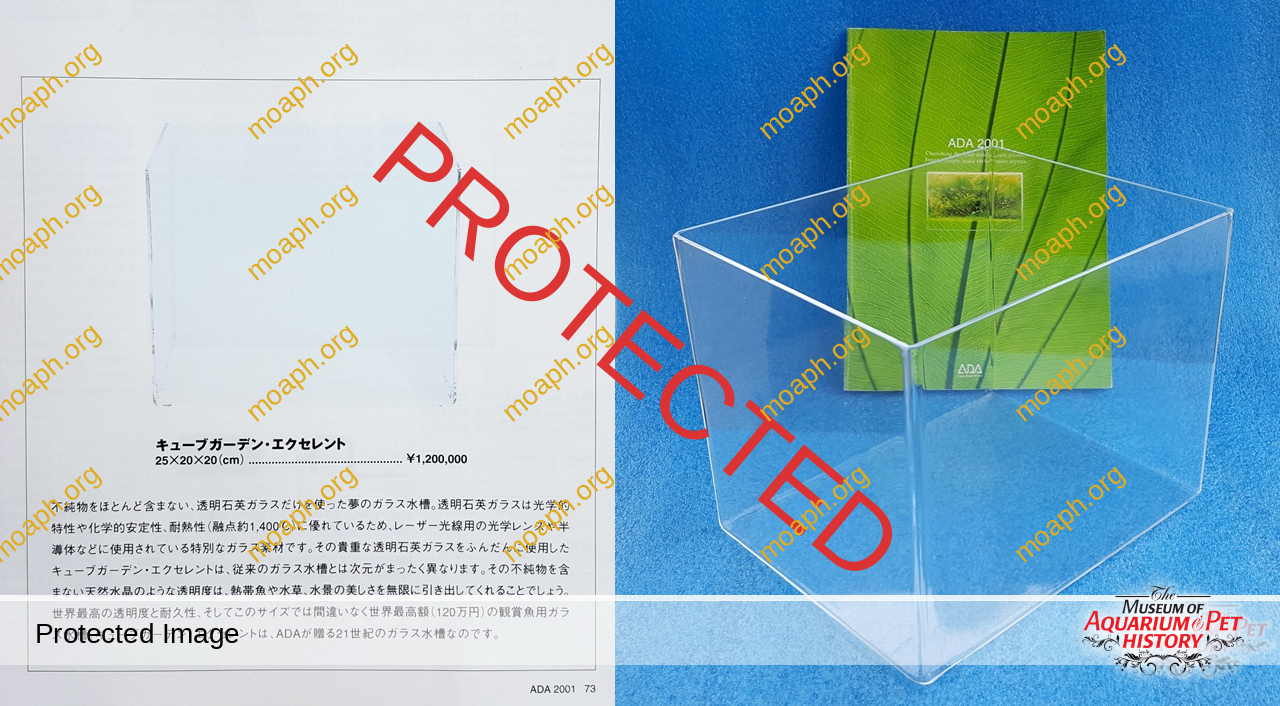
ADA Cube Garden Excellent.
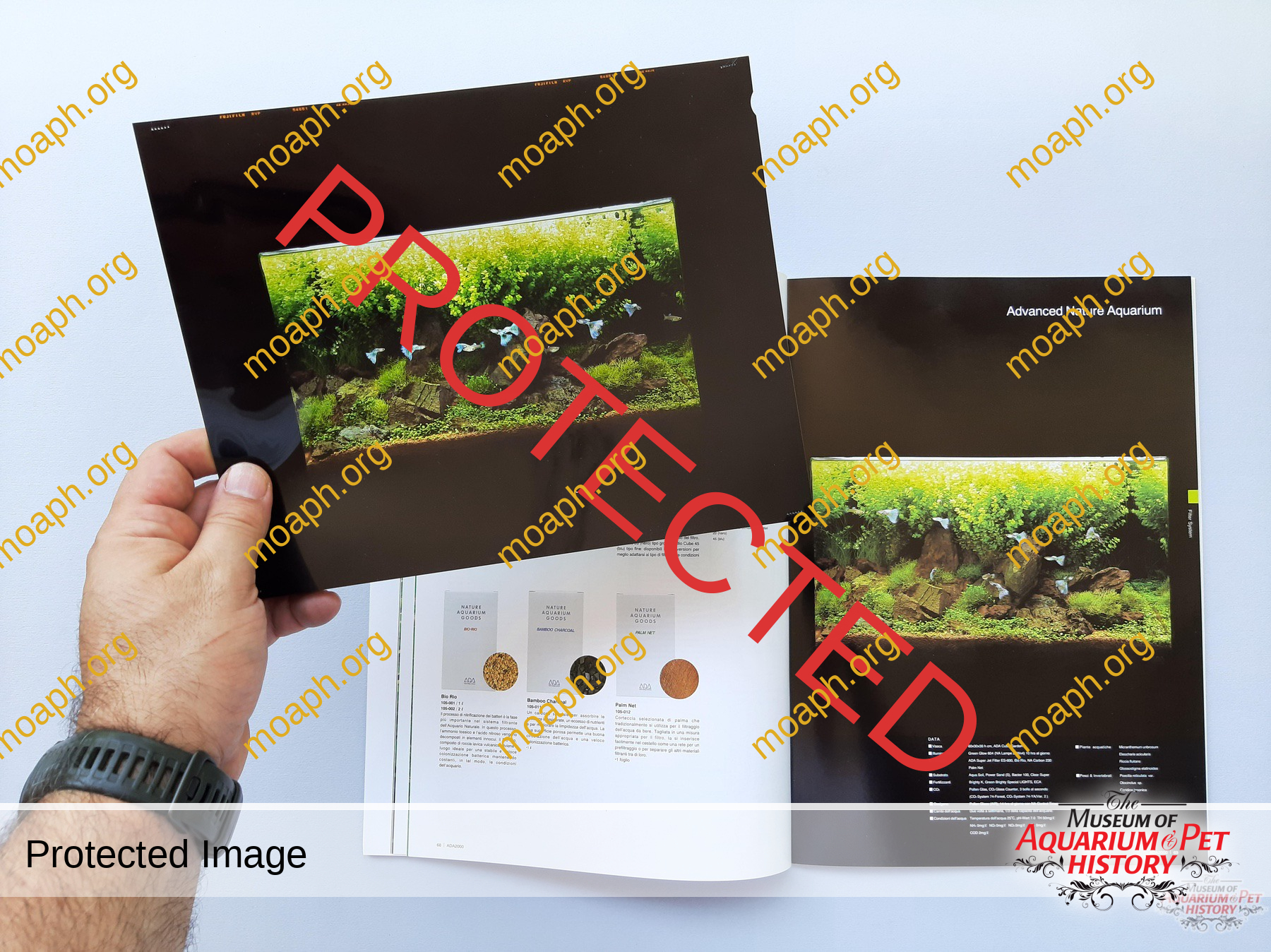
The author always looks for Fujifilm large format slides by Amano, focusing his attention on the ones used in ADA books, leaflets, and catalogs. Here a slide showing the same aquarium with Guppies pictured in the ADA product catalog from 2000.
Auction and booksellers’ catalogs as reference works
Auction catalogs are inventories of items to be sold at auctions. They can be of great interest for collectors, museums, and dealers since they usually include detailed descriptions and helpful information on the objects: provenance, estimated price, reserve price, historical significance, photographs, comparative analyses, and descriptive essays by experts. These catalogues are also key documentation for rare items coming from huge private collections.
In the past, and sometimes still today especially in the field of antiques, auction houses used to send printed catalogs to their best and regular customers before the auction date. Booksellers have always been present in the recipient lists, and they usually asked for extra copies to sell after the auction. Thanks to their historical significance, some of these catalogs end up for sale in books auctions as well.
At the end of the whole process, auction houses generally provided and still provide the hammer prices list, a bare listing of lot numbers and final sale prices. Before the purchase of an auction catalog, I always ask the seller if the hammer prices list is available as it is a precious tool to trace the worth of many items in time.

An auction catalog (left), and a classic example of modern catalog regularly issued by an antiquarian bookseller (right).
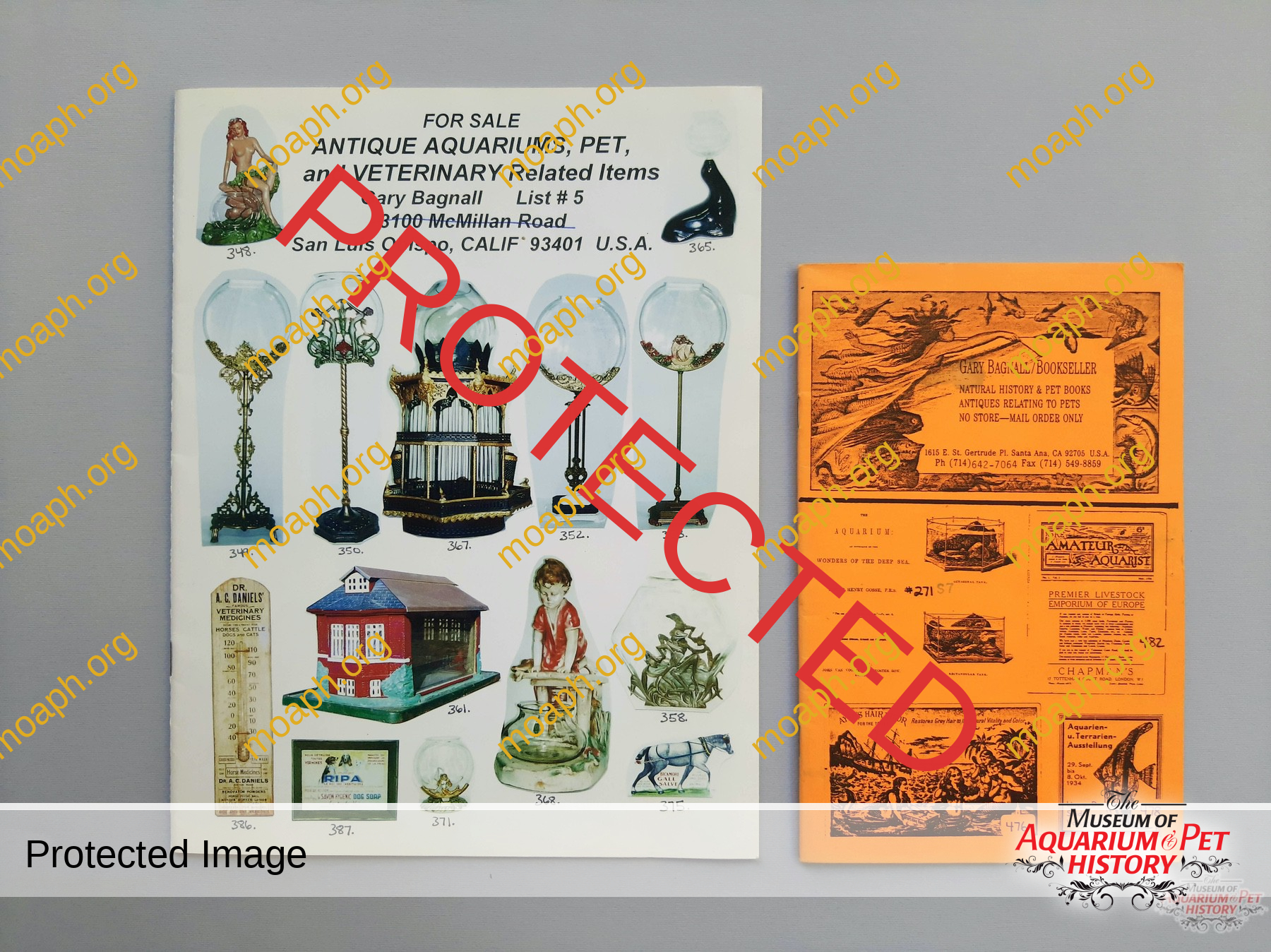
Gary Bagnall’s vintage catalogs, 1980s.
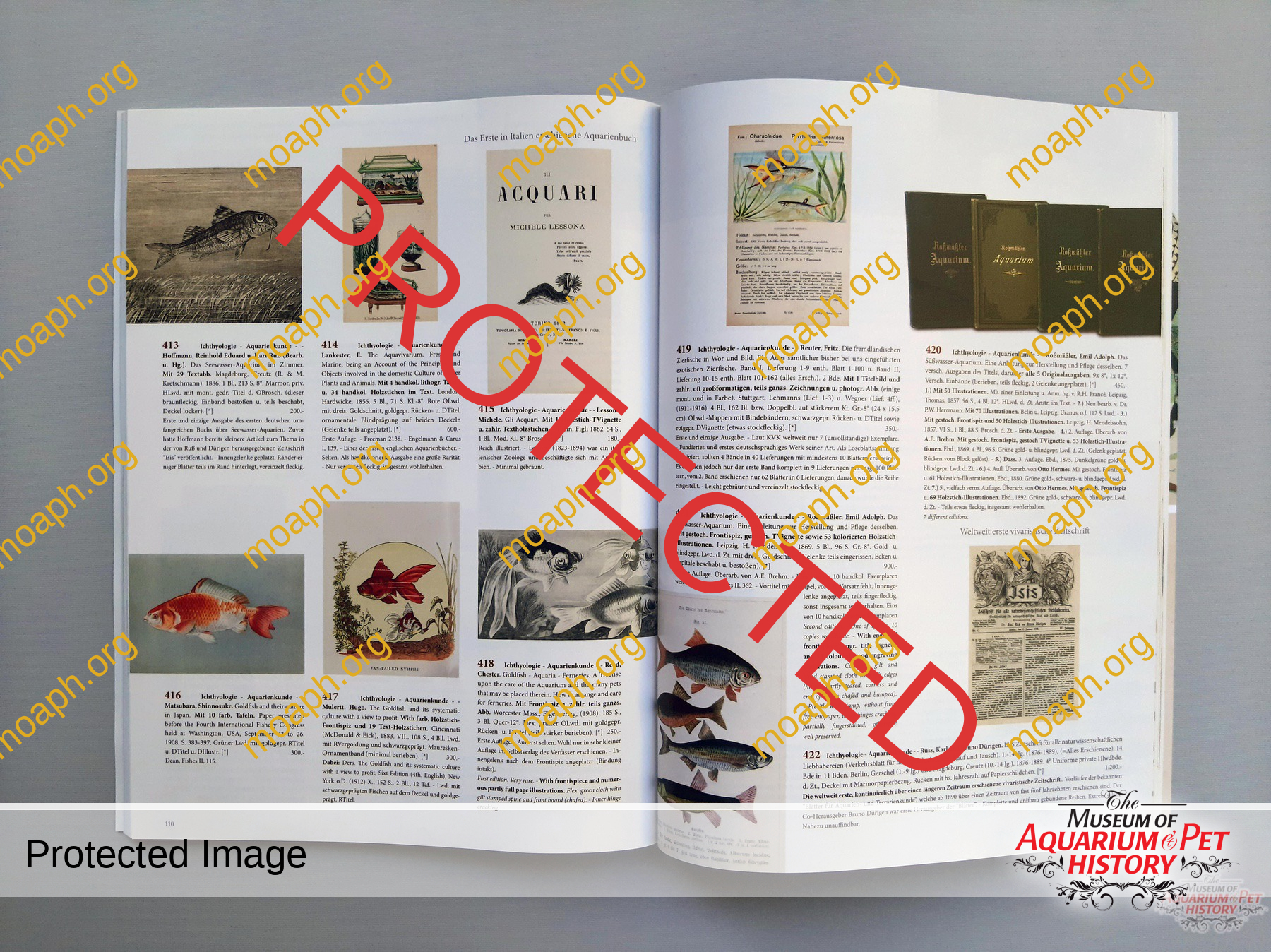
In 2017, Frank Wolter’s huge collection of old fish books and related literature went on auction sale in Germany. The catalog issued for this auction is already a collectible.
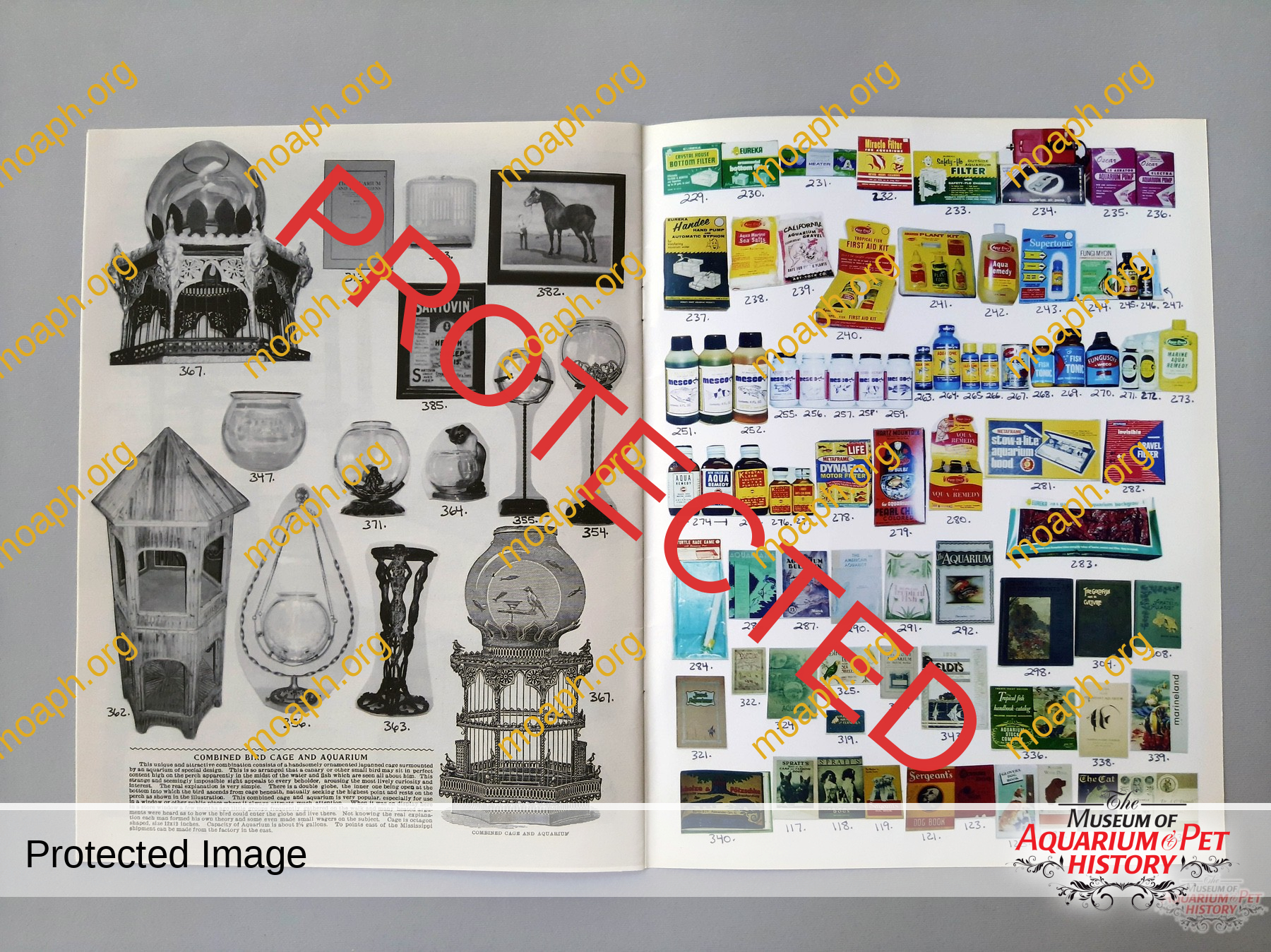
Aquarium treasures from Gary’s vintage catalog.
Antiquarian booksellers’ catalogs are very similar to auction catalogs and equally of great interest. Surfing on eBay I came across two special, old-school catalogs issued in the 1980s by Gary Bagnall, the founder of the MOAPH. They both contain a funny, exciting mix of books, mags and catalogs, but also aquariums, fishbowls, fish food tins and other old stuff for the pre-web collectors of that time. I have never seen other catalogs with this variety of aquarium treasures. About their graphic layout, I prefer to say “no comment Gary”!
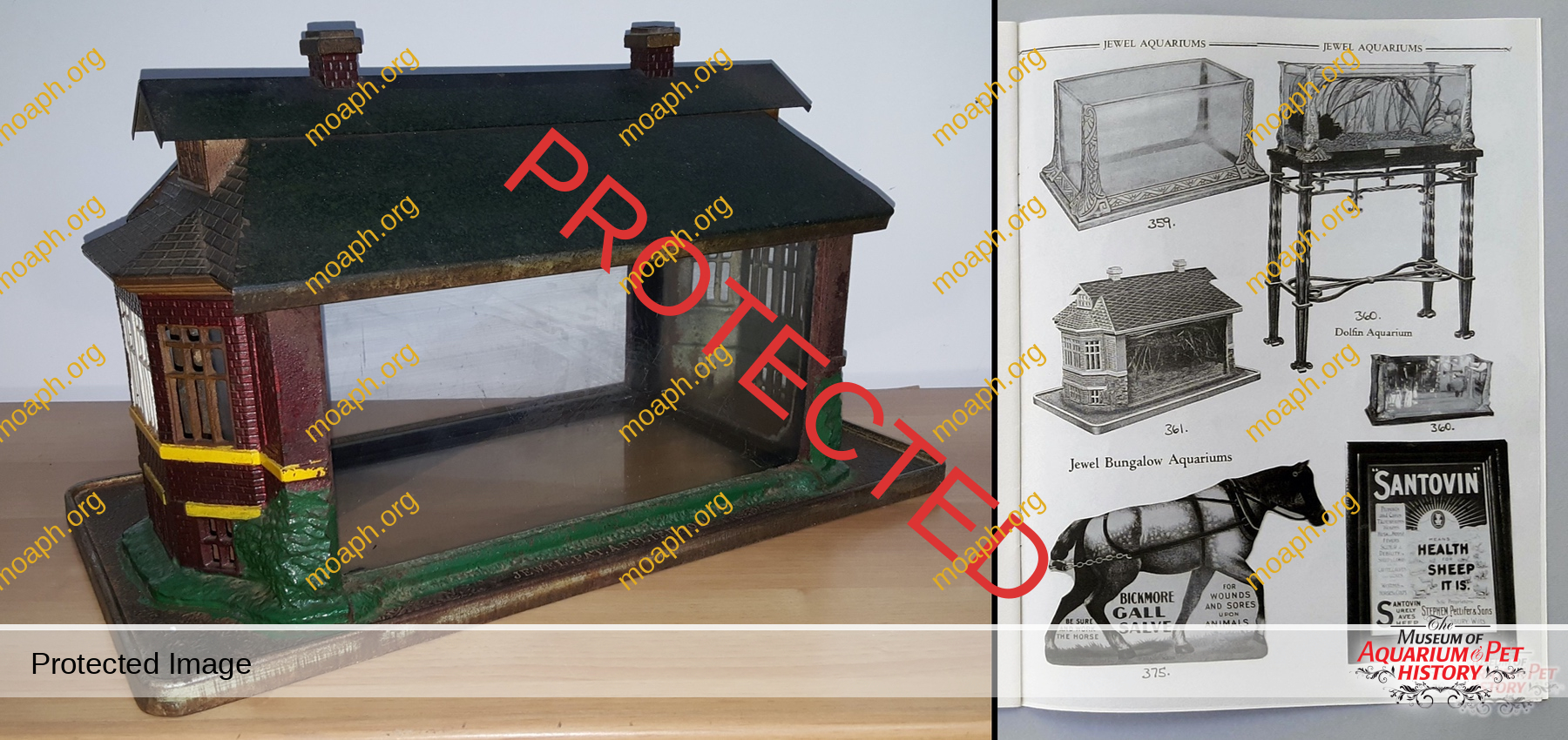
The Jewel aquariums section in Gary’s vintage catalog.