Capern’s Collectibles (Bird Seed/Wedgewood Pottery)
Birdkeepers today take clean bird seed and an expanding range of carefully formulated bird foods for granted, but this was not always the case. The trend towards improved nutrition started in 1879 with a pharmacist called Francis Capern. A bird keeper himself, Capern realized that the seed available at that stage was often very dirty, and it was harming birds’ health as a result. He therefore set out to produce clean seed and started to sell it locally from his shop at Weston-super-Mare in Somerset, in the south-west of England. Before long, demand had grown to such an extent that he decided to concentrate on the seed business, and moved to larger premises in nearby Bristol.
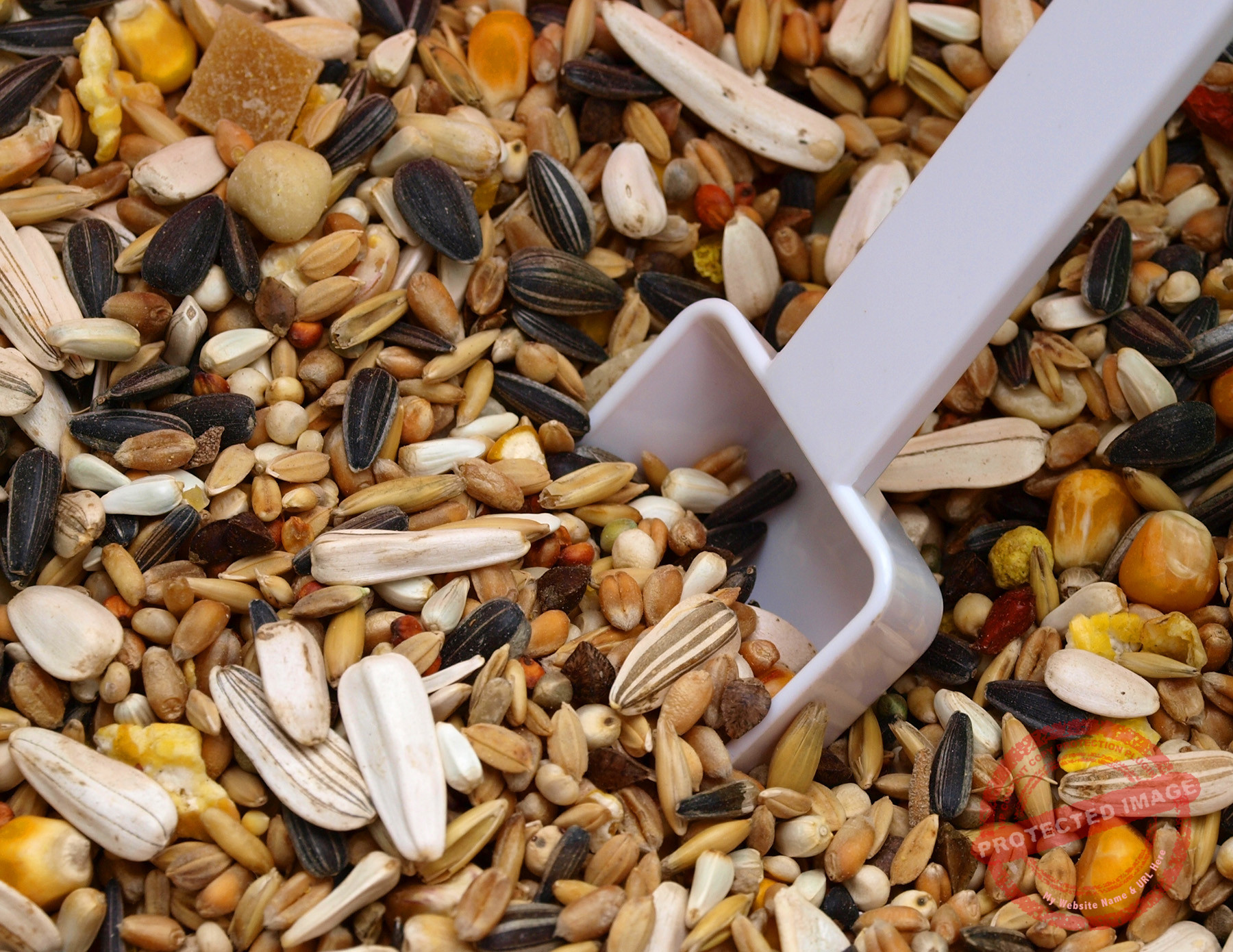
A quest for clean bird seed underpinned the development of the Capern’s brand, initially in England. Photo courtesy Stefan von Amein/www.shutterstock.com
Aside from seed, the company soon pioneered the development of softfood, offering specialist diets such as “Capern’s Seed & Fruit Mixture with Egg-flakes”, and others for blackbirds, thrushes and larks. Capern also used his knowledge as a pharmacist to create some early avian remedies too, and at its peak, the company was offering approximately fifty different bird-keeping products to customers, for birds ranging from native British species and canaries to budgerigars and parrots, as well as pigeons.
Expansion
During the 1920s, the Capern’s Bird Food Company started to promote itself in a very dynamic way, releasing various coloured postcards featuring popular aviary birds, and even produced special glass feeders embossed with their company’s name. Capern’s began to expand into the U.S. market at this stage too, becoming a truly international bird food business.
By the start of the 1930s, however, money was in short supply because of the Great Depression. So the company conceived a new promotion whose origins and appeal were rooted in the early days of the bird shows during the nineteenth century. Back then, the cost of a good canary could easily exceed a working man’s weekly wage. As a result, show societies had begun a tradition of providing valuable prizes such as dinner and tea sets for the home – as a means of reassuring wives that money spent wisely on stock was not being wasted! In this way, they could share directly in their husband’s success in his hobby.
Capern’s decided to commission the famous pottery firm of Josiah Wedgwood & Sons Ltd to produce a highly desirable and unique tea service in their famous blue jasperware style, which could be awarded to the owners of winning birds. This featured the silhouettes of three of the most popular canary breeds of the time, in the guise of Yorkshire Fancy, Lizard and Norwich Fancy canaries, each of which were fortuitously recognizable by their distinctive outlines.
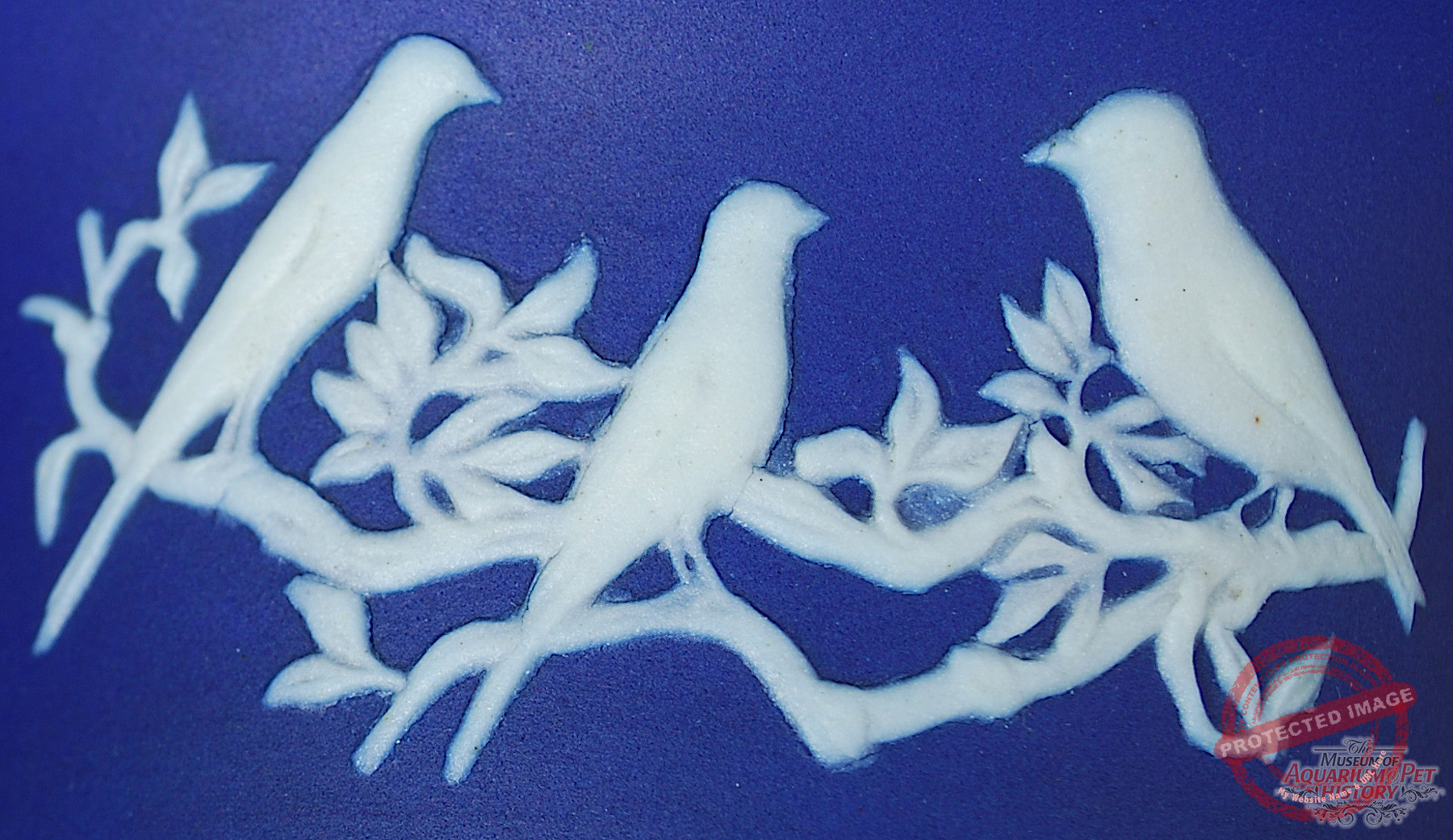
Imagery of Yorkshire Fancy, Lizard and Norwich Fancy canaries (left to right) decorated the canary items in the range.
Most but not all of these pieces are stamped with “Caperns Ltd Bristol” on their base, and were manufactured by Wedgwood between 1930 and 1934, at their Etruria factory in Staffordshire, although it is believed the earliest examples may date back to 1925. There is some variation in the depth of blue glaze on these pieces, with the majority being typically dark in colour.
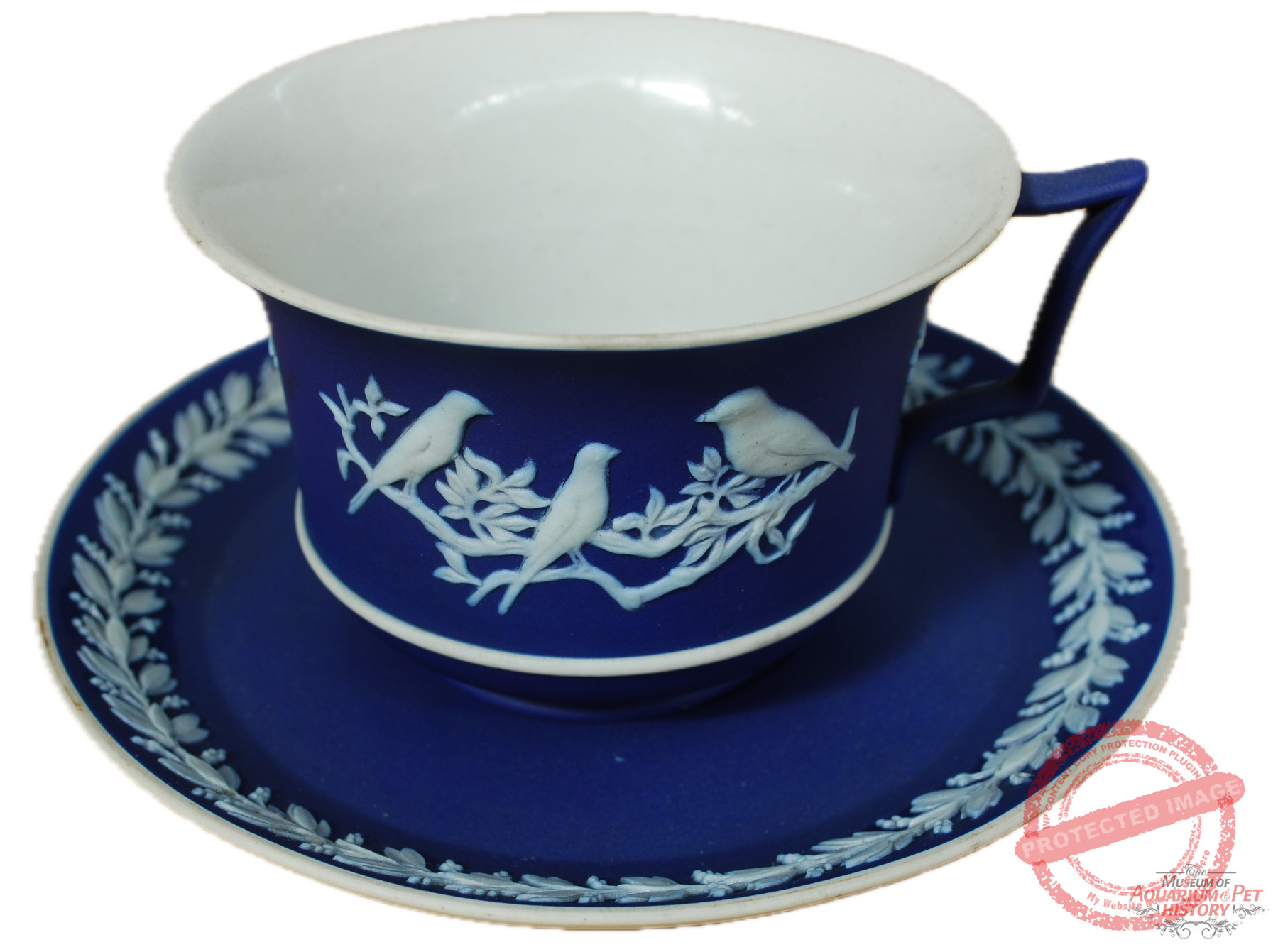
Wedgood/Capern’s cup and saucer
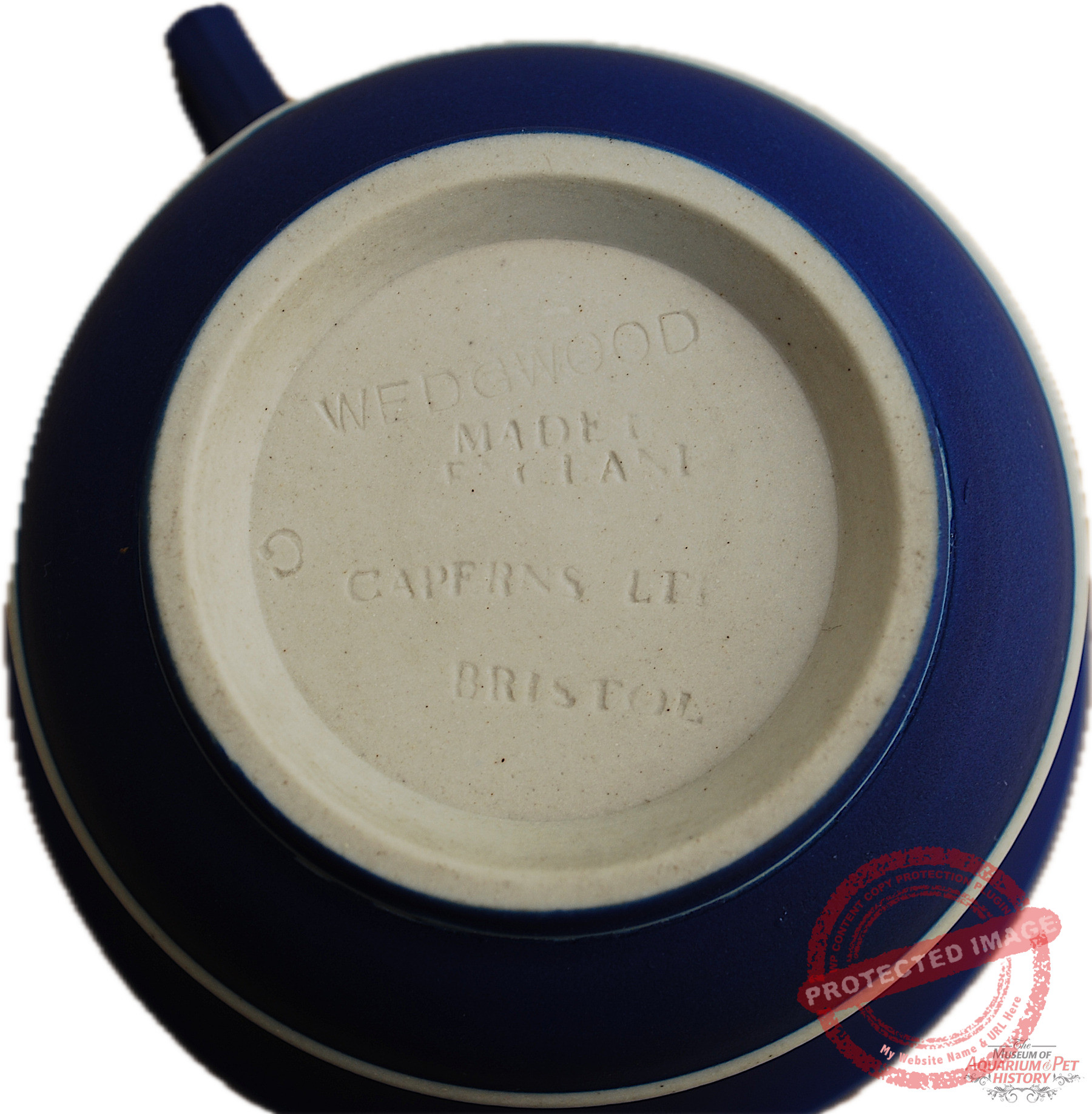
Wedgood/Capern’s stamps
Unfortunately though, there is virtually no information today about these items, let alone details about who designed them, and there are no surviving records of how many pieces were produced for Capern’s, according to Lynn Miller, the Wedgwood Museum’s information officer. What is apparent is that there were cups, saucers and plates, bearing the characteristic canary design, as well as small trays, plus matching teapots, biscuit barrels, sugar bowls and cream jugs. There was also a water pitcher too, which closely resembles the coffee pot in shape, but lacks the metal lid.
While these pieces are all in the well-known blue jasperware finish with which Wedgwood is closely associated, there is one aspect in which this range is unique, aside from its decoration The tray in this series has been described as being the only so-called “roll tray” which has been produced in jasperware throughout Wedgwood’s long history, which dates back over four hundred years. It is relatively small in size, measuring just 11 inches long by 7.5 inches (28 x 19cm) in width.
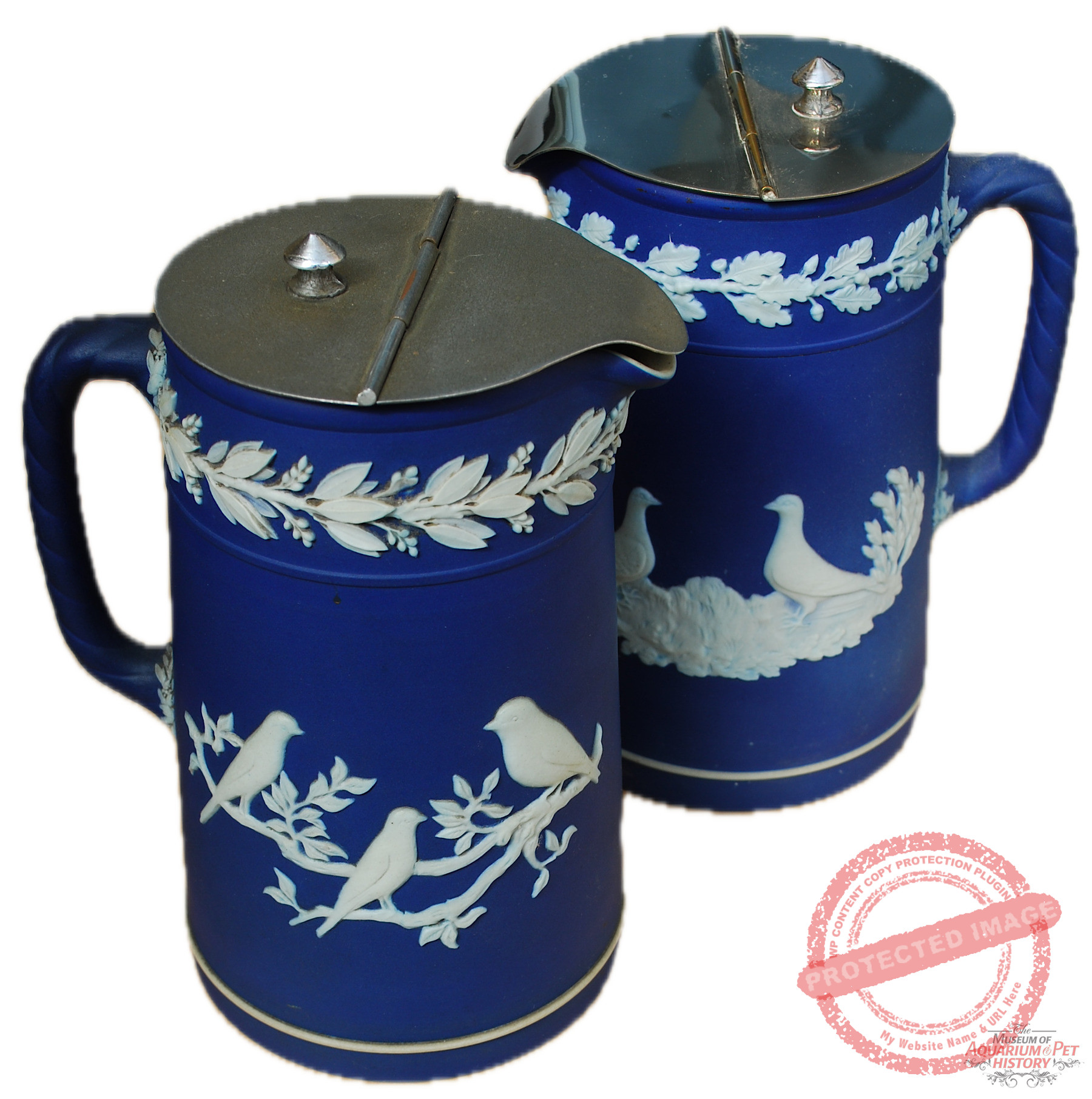
Wedgwood/Capern’s coffee pots
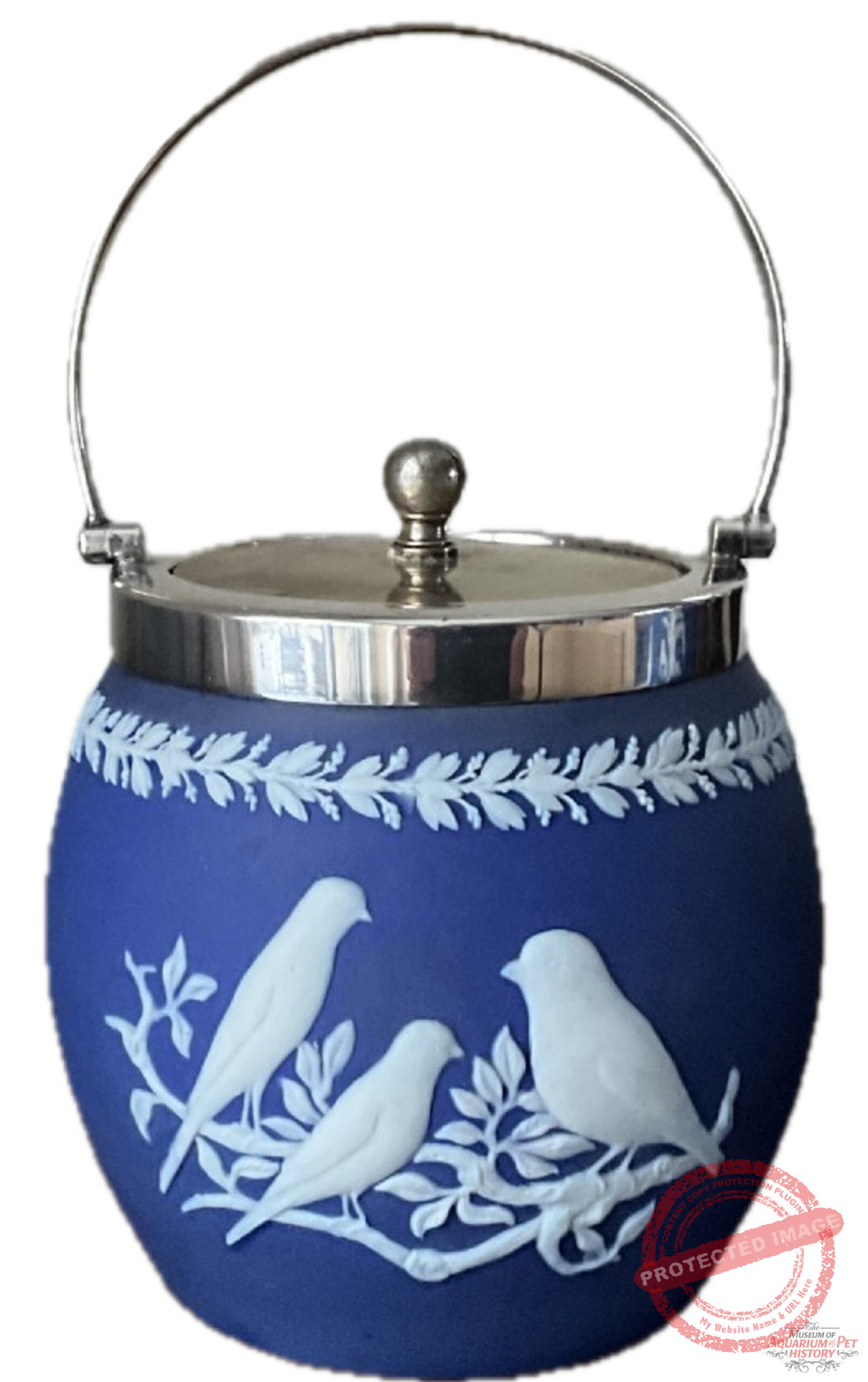
Wedgood/Capern’s biscuit barrel
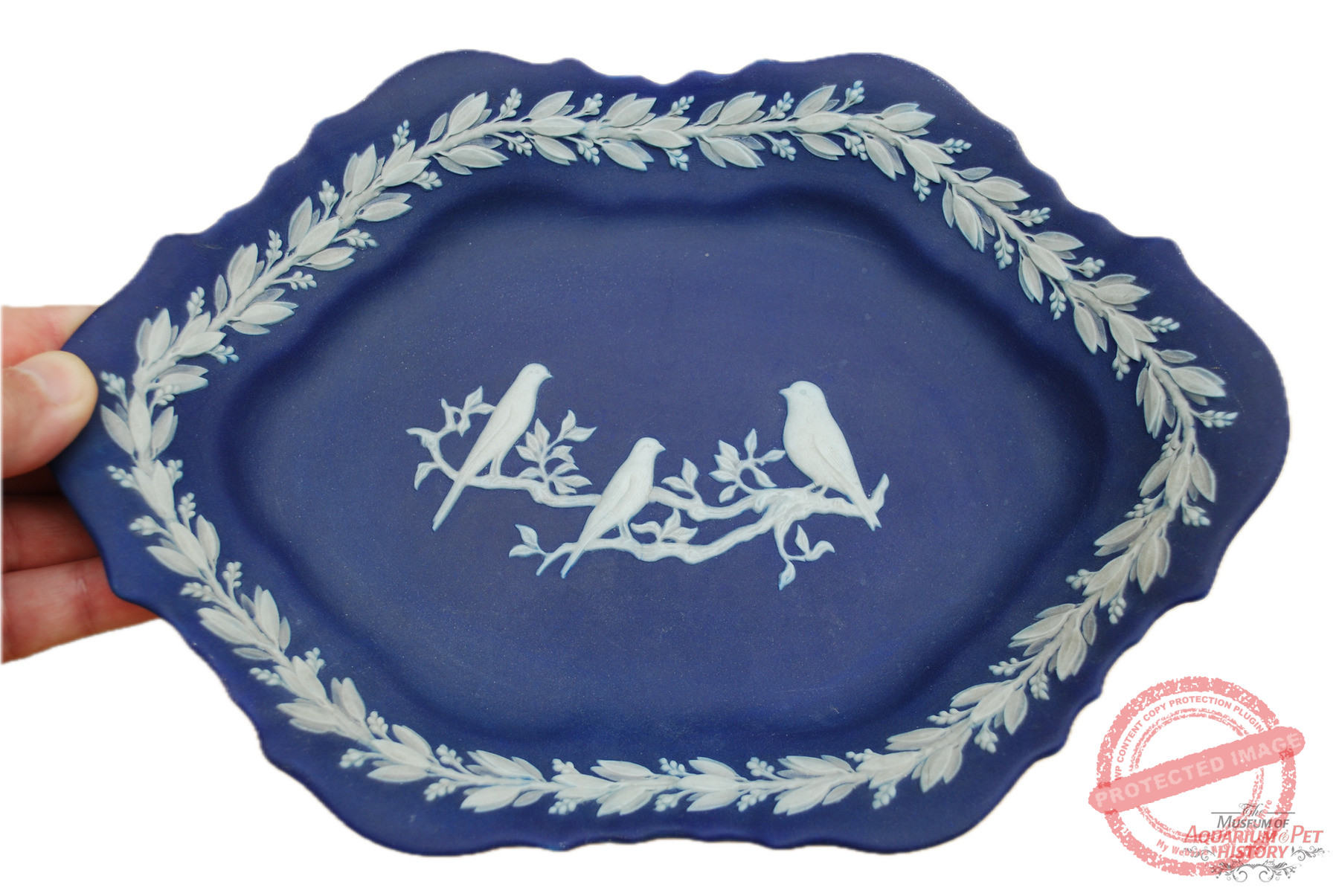
Wedgood/Capern’s tray
It seems certain that a number of these pieces were also exported to the U.S. as well, being distributed via Capern’s network here, where they still turn up for sale on occasion today. Virtually nothing appears to be documented in the avicultural literature about these items either, but it seems that they were not awarded as sets. One of the largest collections to come on to the market, during 2022, in the UK was won by Joe Johnston, who was a leading breeder, exhibitor and judge in the Border Canary Fancy prior to the Second World War. His winnings from shows across the U.K. were comprised of a teapot, a water jug (pitcher), a sugar bowl, a cream jug, a cake plate, three cups and saucers, plus three tea plates.
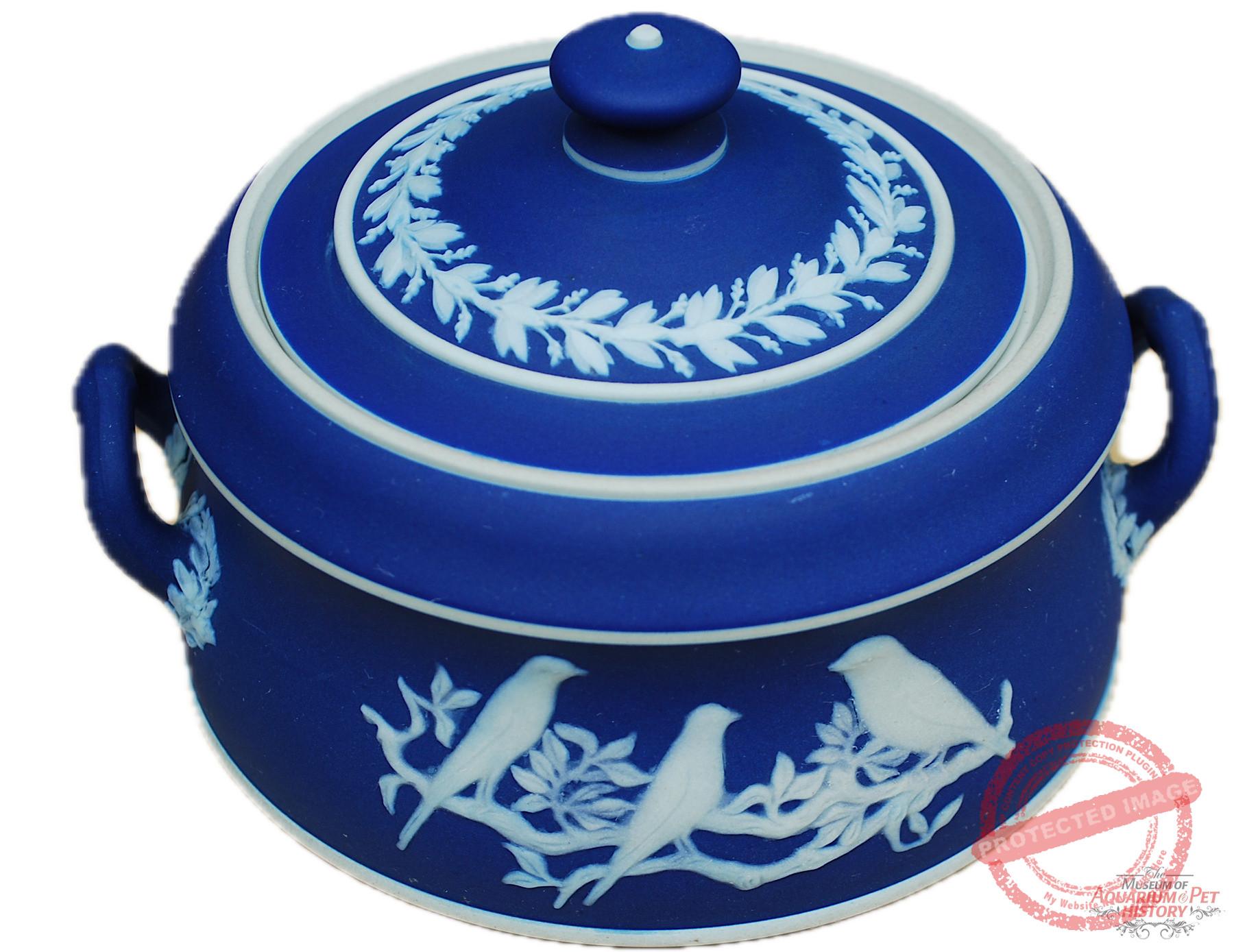
Wedgood/Capern’s sugar bowl
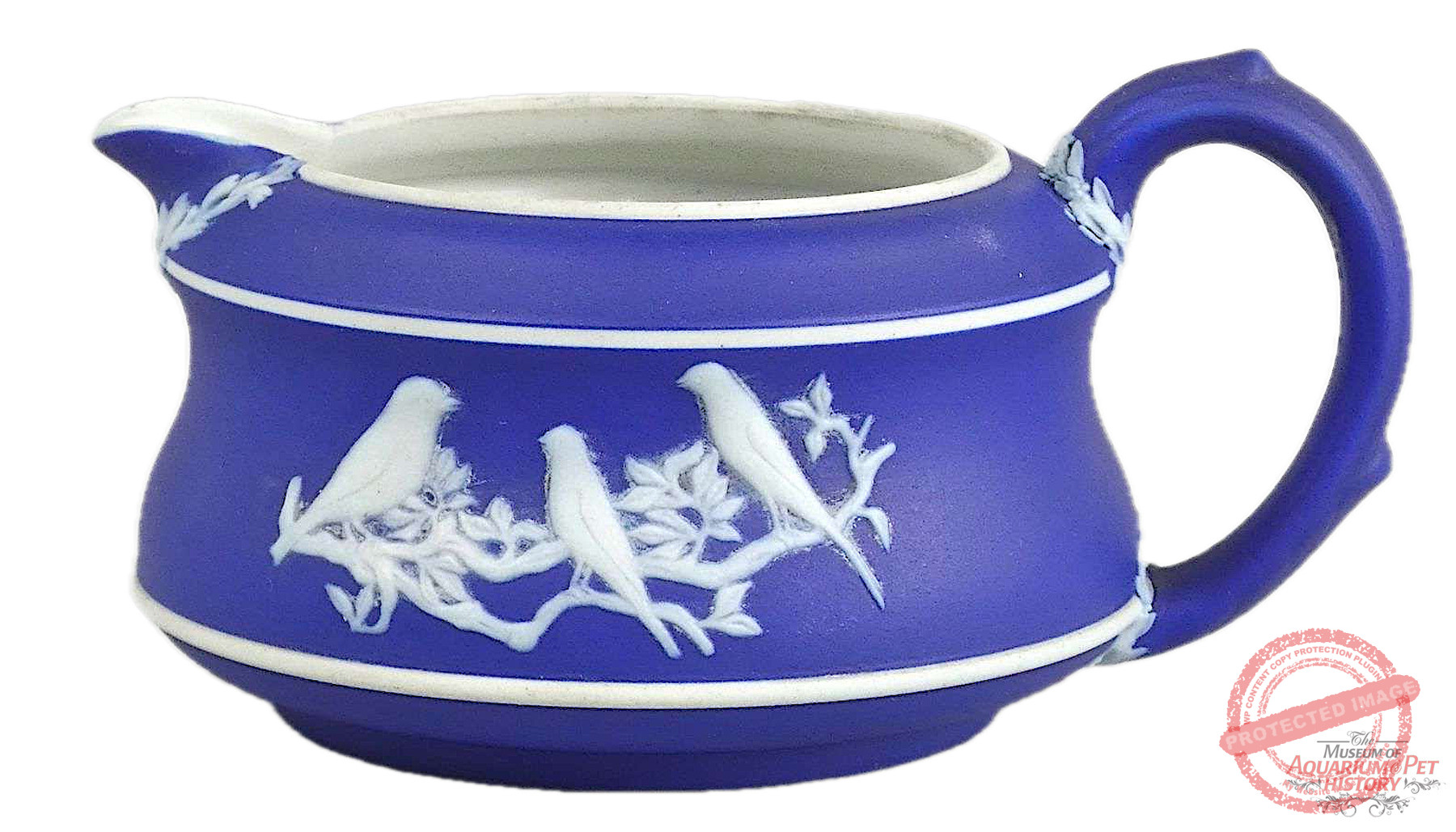
Wedgood/Capern’s milk/cream jug
Pigeon pieces
Even less is known about the equivalent pigeon range which Capern’s also commissioned from Wedgwood. The birds in this case are clearly not recognizable as breeds: the imagery in this case could represent either racing or fancy varieties, with a pair being shown in relief, often with acorn and oak leaf borders on the piece. It appears that there was one significant addition in this case, in the form of a planter, although overall, it seems that this range was more limited than in the case of its canary counterpart. Only the larger pieces such as teapots and coffee pots were seemingly made with pigeons on them, rather than plates or cups and saucers.
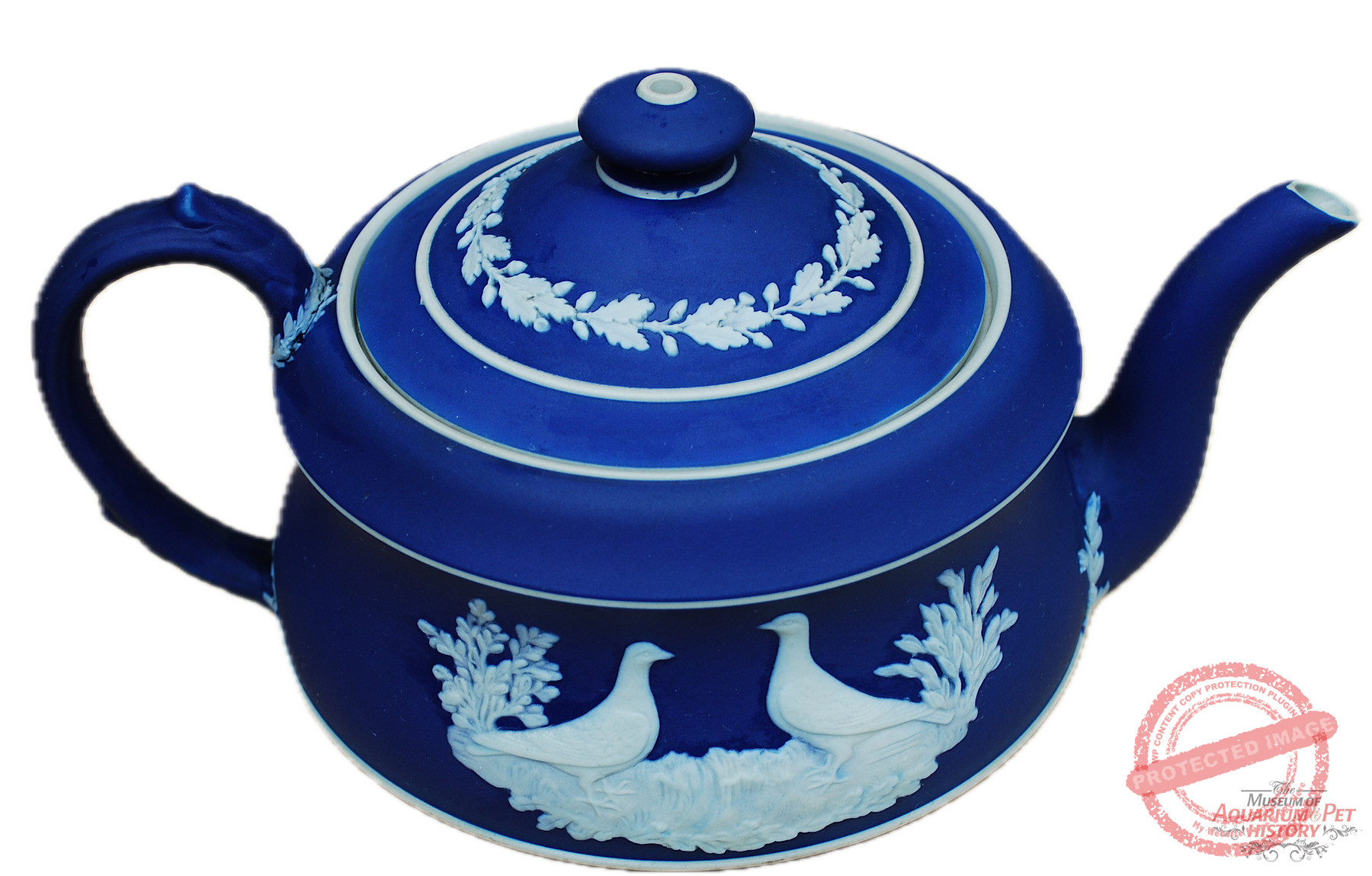
Wedgood/Capern’s tea pot
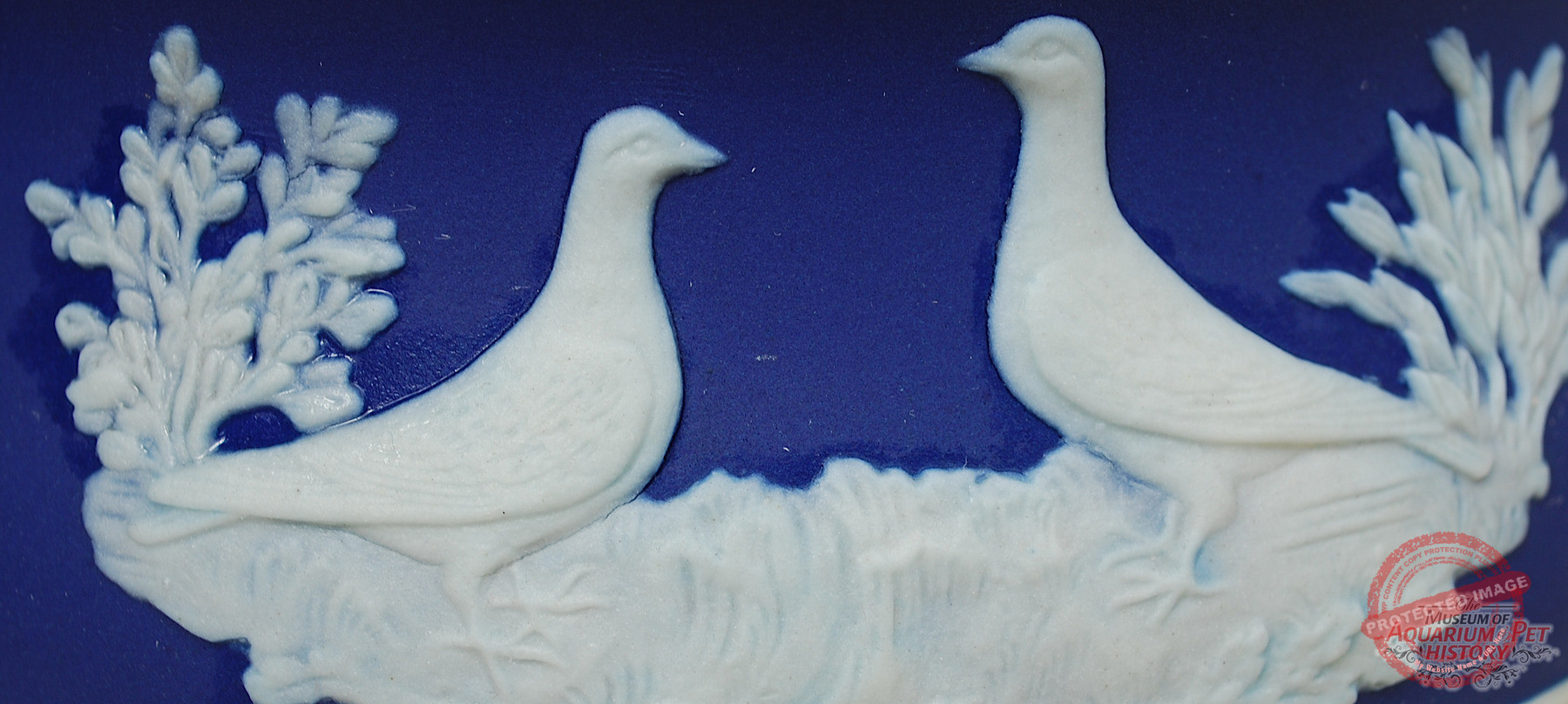
Wedgood/Capern’s pigeon detail
The Capern’s story continues
The headquarters of the House of Capern’s, as the firm became known, was a large former sugar warehouse in Lewin’s Mead, in the historic centre of Bristol. Capern’s remained there right up until 1956, after which it moved to nearby Yatton, although the business itself had been sold to dog food producers Spratt’s in 1934, which may explain the end of the connection with Wedgwood then.
But if you live in Bristol or visit there, you can still see Capern’s lasting impact on the architecture in the city. His former premises were transformed at the turn of the millennium, after years of dereliction, into the Hotel du Vin. Above the main doorway, there is still the very distinctive hood that Francis Capern added in 1922, seeking to upgrade his premises from the appearance of a humble warehouse.
Meanwhile, the Capern’s brand today is owned by another well-known business in the annals of the British pet care industry – Bob Martin. This company was set up in 1892, and still carries the name of its founder as well.
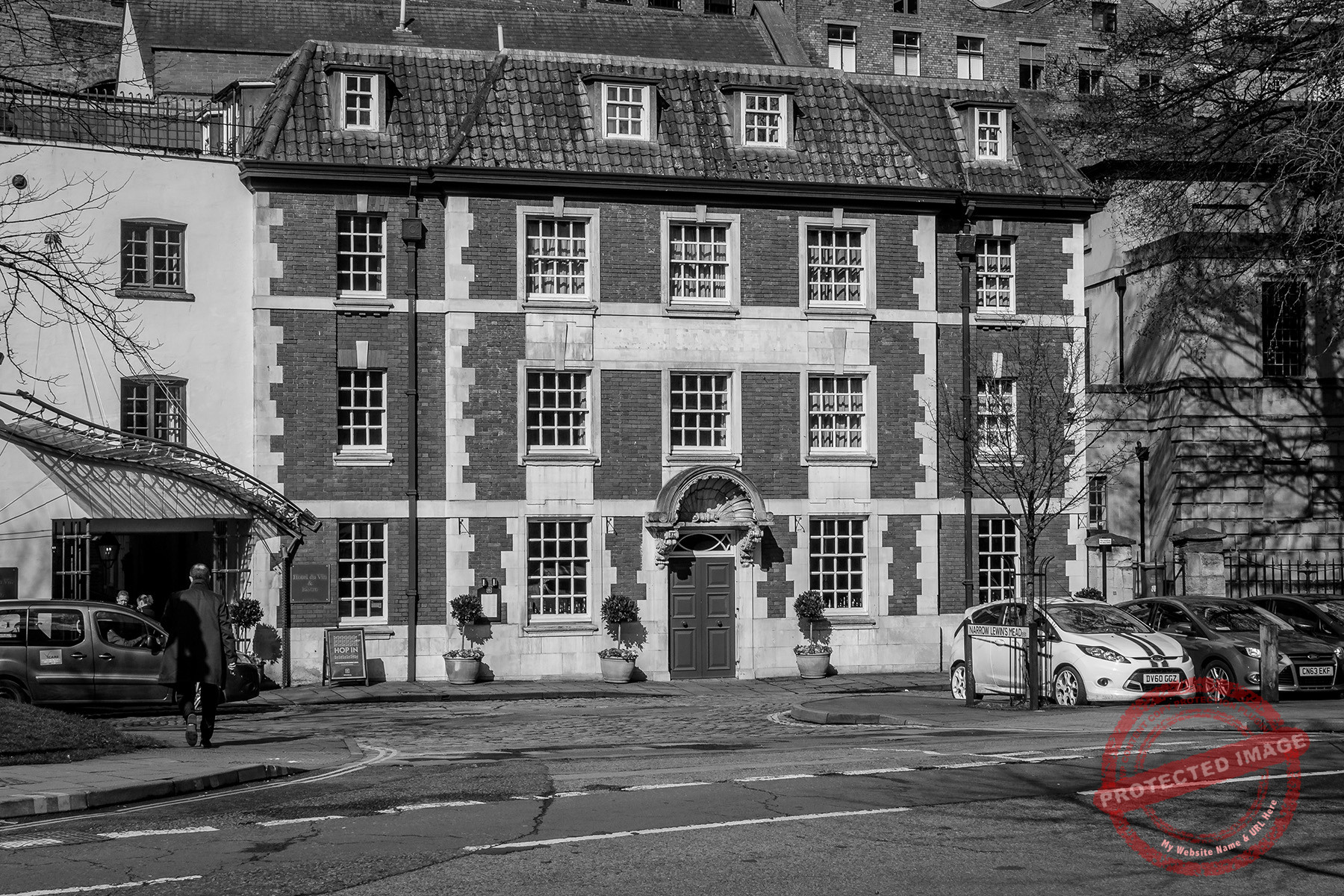
The former premises of Capern’s in Bristol, showing the decorative hood placed above the building’s main entrance in 1922. Photo courtesy Jacek Wojnarowski/www.shutterstock.com
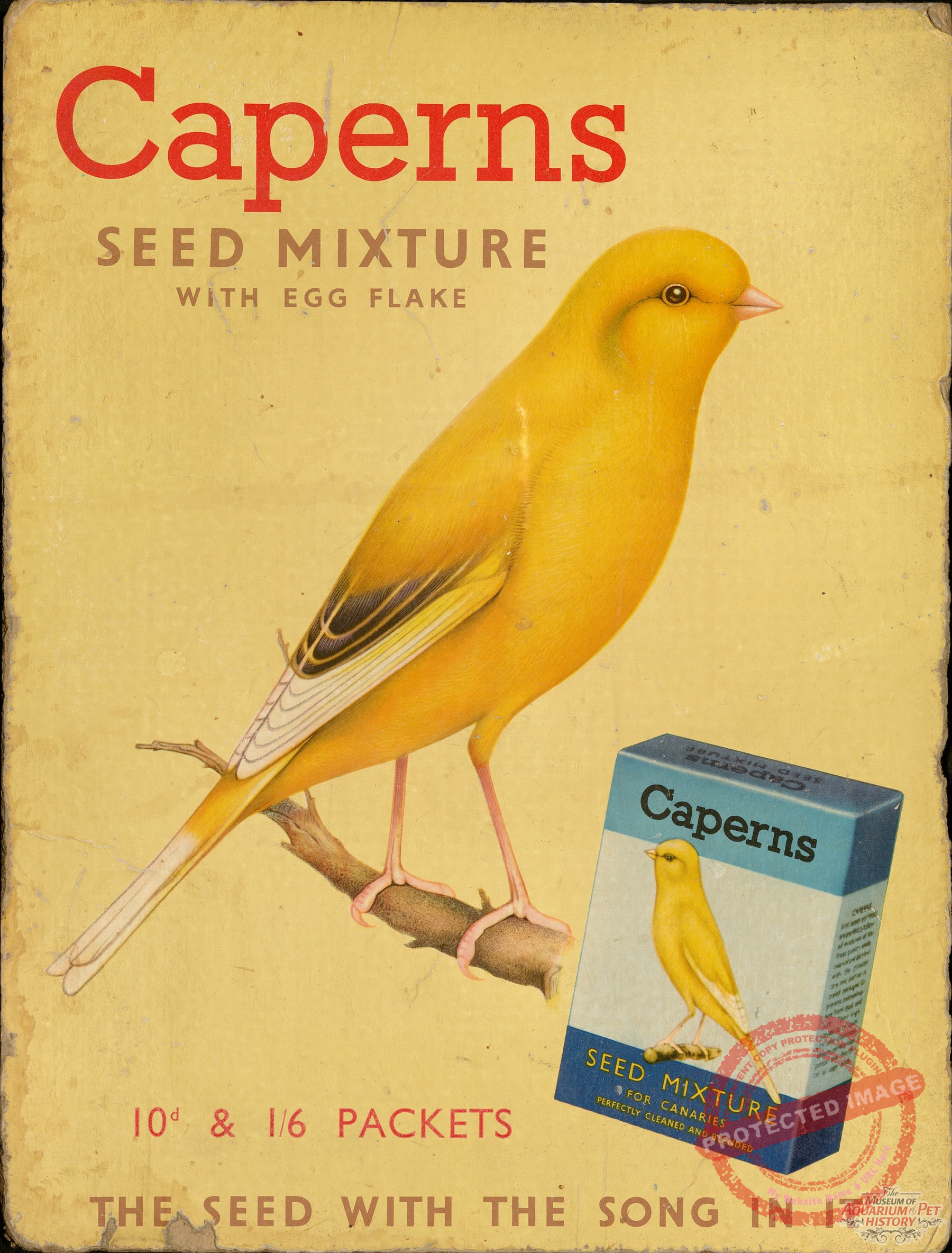
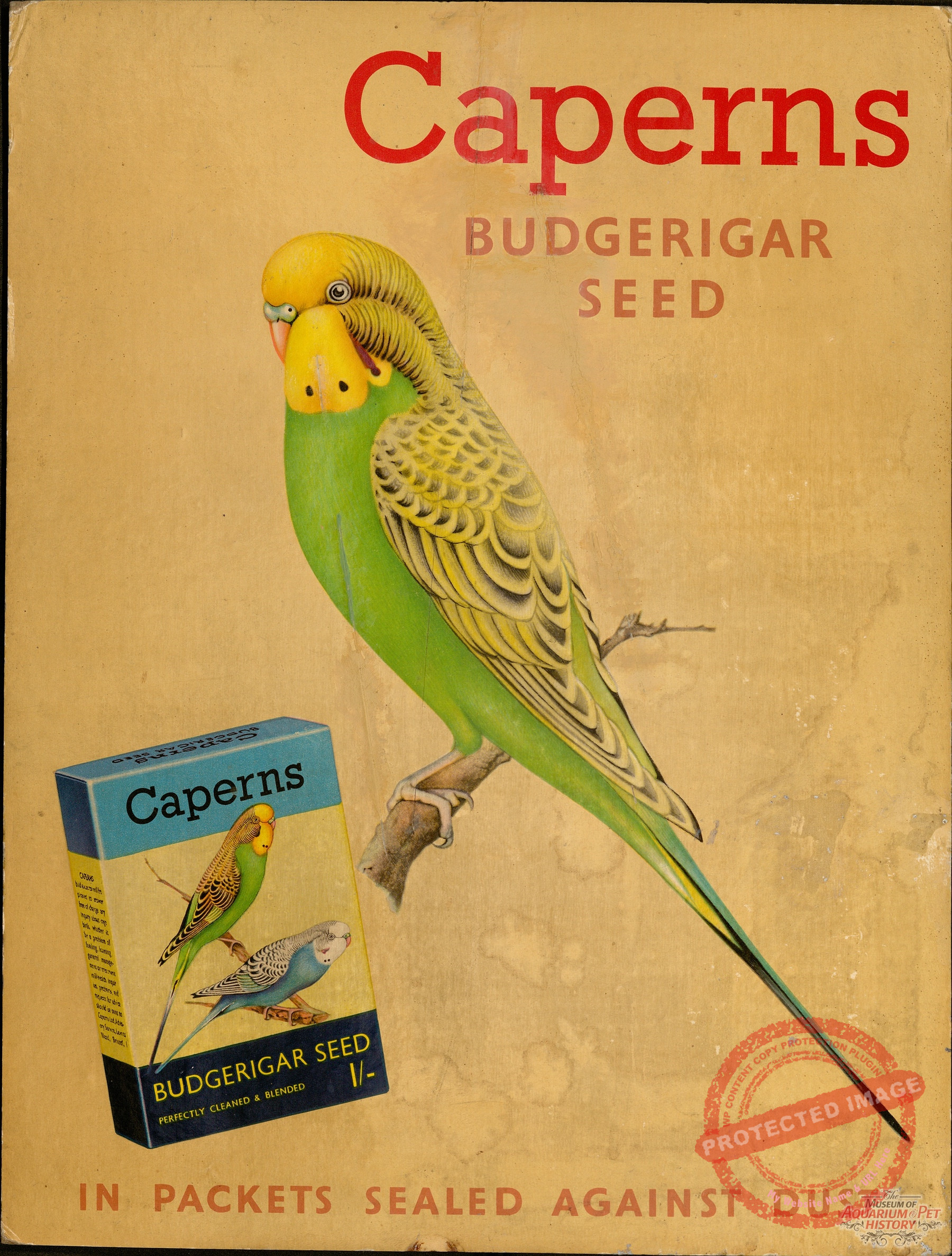
Capern’s ad from the MOAPH collection.