Chapter 19: Adventures in Bangkok – Wilde Tiere Frei Haus (Wild Animals/Free Delivery)
Translated by Alex Haro
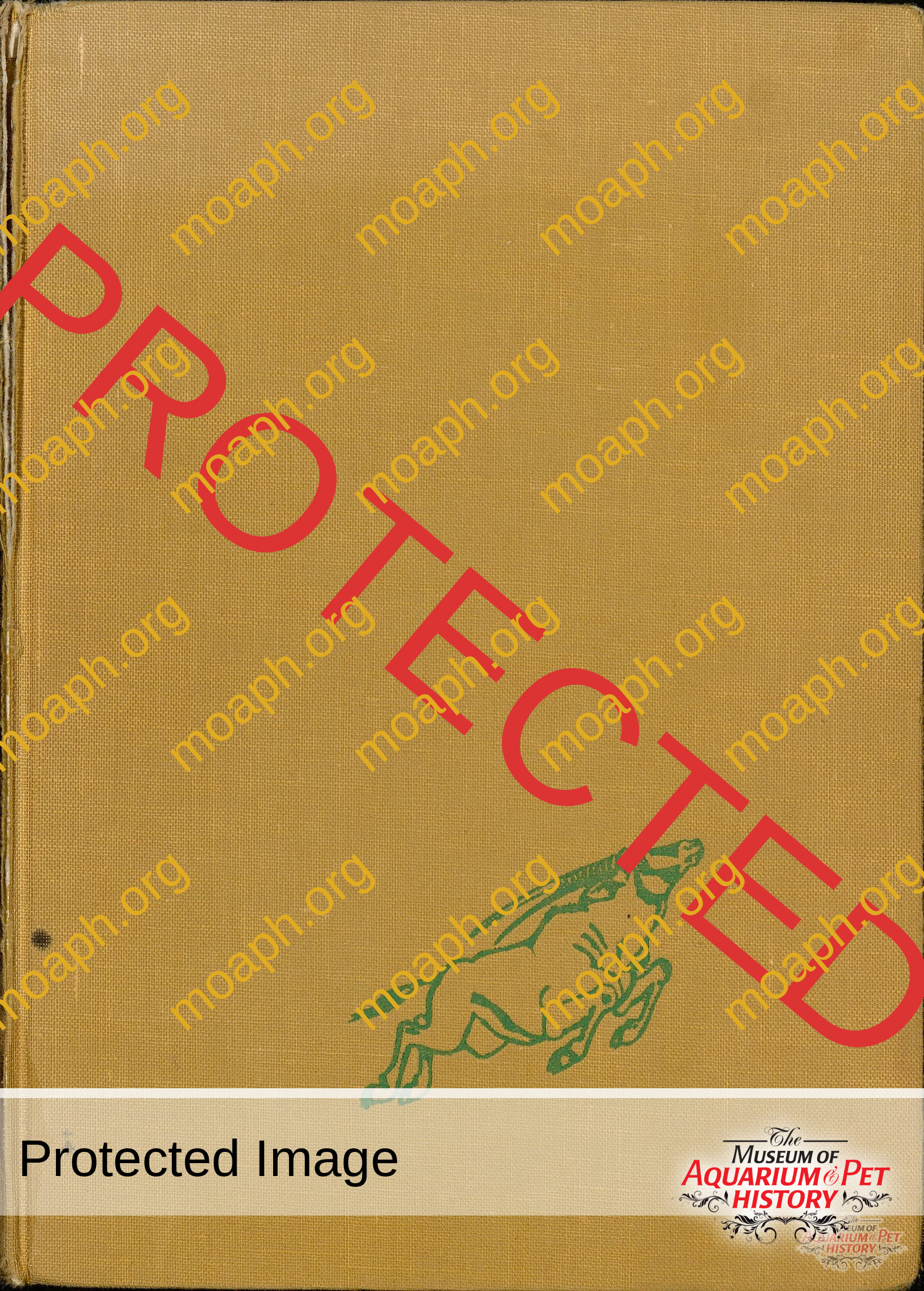
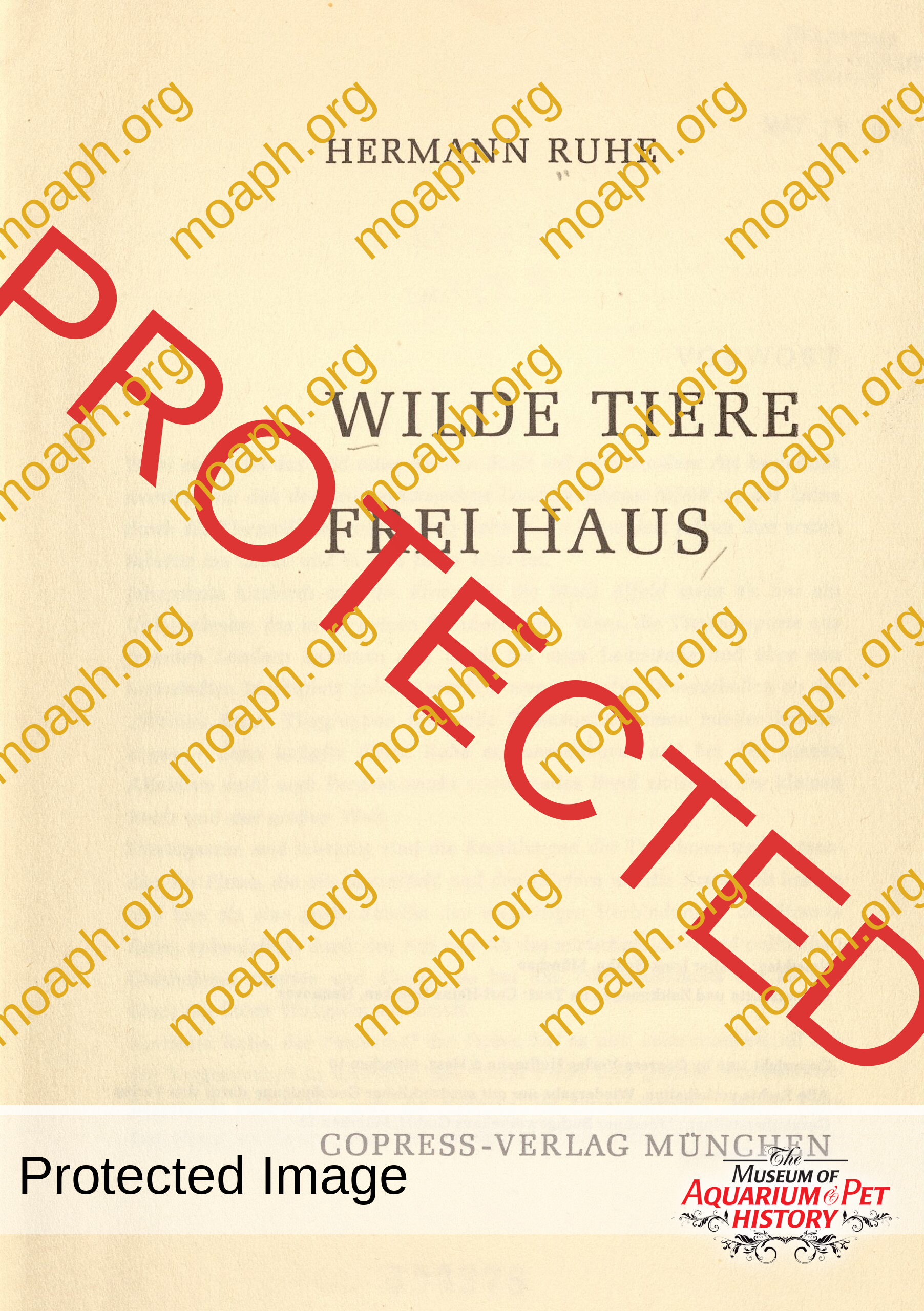
Starting in September 2024, the Museum of Aquarium and Pet History (MOAPH) started releasing a chapter a month on the translated autobiography Wilde Tiere Frei Haus (Wild Animals Free Delivery) by Hermann Ruhe.
Firma Ruhe (the Ruhe Company) was the name of an animal trading company based in Alfeld, Germany from 1860 until its official closure in 1993. During this time, they were world renowned for their importation and exportation of exotic animals and birds from all across the globe, even supplying many zoos as well as circuses. Having survived both world wars, Firma Ruhe continued to dominate the world of animal trading until the mid-20th century and is a testament to true determination and leadership.
Wilde Tiere Frei Haus (Wild Animals Free Delivery) also documents the plethora of adventures, failures and successes endured by all those a part of Firma Ruhe. Through Hermann Ruhe’s great storytelling, we are able to visualize and understand the world from the perspective of animal collectors navigating through some of the most difficult situations, often not knowing whether or not they would ever return home. His recollections provide a vivid portrayal of the challenges and triumphs faced by the company, and give readers a glimpse into the world of animal trading.
Proper reconstruction had now also begun in Hannover. I had already invested over half a million Reichsmarks of my own funds into the work. After the currency reform, the city was finally able to contribute financially again, and the rebuilding efforts—especially on the large predator house—began. The antelope house was rebuilt, and the once-popular and completely destroyed restaurant was modernized and nicely furnished.
Mr. Waldvogel, who had fully relocated to Hannover, worked tirelessly to manage the countless tasks that come up daily in running an animal trading business with two zoos. I hardly had to worry about the paperwork; it ran like clockwork under him without much effort.
The paperwork was already significant again, with regulations to be followed, foreign exchange matters, passport issues, transport papers, travel expenses, and construction invoices to be handled. Mr. Waldvogel simply took care of everything.
The export of canaries to America continued to run smoothly.
Circus directors visited, all with the same request: “Can you help us, Mr. Ruhe? We urgently need animal acts!”
But I still had nothing, even though the animal trade beyond Germany’s borders was starting to boom. A whole number of new and wild dealers were trying to break into the business because Hagenbeck and Ruhe, the two largest animal trading companies in the world, were simultaneously out of commission. They had free rein, while we were still battling countless obstacles.
What happened due to the improper treatment of animals by the inexperienced new dealers and their caretakers or transport companions defies description!
An old acquaintance appeared in Alfeld; I couldn’t believe my eyes: Willy Hagenbeck! As he told me, he hadn’t been doing well for some time.
“The training hall is empty; how about if I put together some animal acts again?” he asked.
After some back and forth about the terms, we came to an agreement, and he stayed.
Willy Hagenbeck began training. I had a few young bears and a number of dogs suitable for him. He took on these unfamiliar animals and put together a proper dog soccer team! As on a regular soccer field, the ‘players’—each team consisted of five dogs—had to score goals, with the ball hanging from a wire above the field.
The act was curious enough to promise great success with the audience.
Willy Hagenbeck also worked on two acts with three brown bears each, and two mixed groups:
two polar bears, two spectacled bears, and two brown bears. The last bear act was then performed at the Gelsenkirchen Zoo under the title Training School, much to the delight of the audience.
I finally managed to obtain some lions from Cairo, which I handed over to Circus Benneweis.
After things in Gelsenkirchen and Hannover were running smoothly, I resumed traveling and made new attempts to purchase animals from European zoos. The reception I received was improving, and in some cases, it had already regained its former warmth.
I was even able to obtain animals from the Zoo of Halle an der Saale: a number of lions.
Mr. Hagenbeck, now in his sixties, put together another act and went along as the trainer when I rented out the animal group to various circuses, which expected good publicity from the name Willy Hagenbeck.
Gradually, the difficult situation for circuses improved, and one day, Willy Hagenbeck himself was ready to start his own small circus again, which slowly grew and is now considered one of the best companies in Germany.
In 1951, I met a Swiss private individual who had initially lived in Bangkok after the war. The Zurich Zoo had referred him to me by letter. We met in Bern.
“Mr. Ruhe,” he said after a brief introduction, “if you need animals from Siam1 I can help you. I have contacts there.”
MOAPH1: Known today as Thailand.
As he explained, he was involved in all sorts of things, from trading pig intestines to leopard skins and crocodile hides, which he also wanted to use to generate larger sums of money for animal purchases.
He came with concrete proposals. The idea was interesting, but—I was clear about this—it was an experiment. So, I gave him a trial order.
When our first trial order arrived the conditions of the animals were different from what we were used to in the past. Back in the good old days we relied on our careful handling and experienced acclimatization methods, but with some care, they were soon nursed back to health and brought into good shape. The shipment included tigers, black panthers, and golden cats.
The Swiss man returned for further discussions. Since my capital was tied up in the substantial animal stocks of the two zoos in Hannover and Gelsenkirchen, I saw few possibilities to restore the old company L. Ruhe-Alfeld to its former international prominence on my own financial strength.
Out of necessity, I therefore founded a company with a Swiss man called Hermann Ruhe Overseas Trading A.G., which was not to be connected with our old company.
New animals, sent by my partner’s friends, again arrived in poor condition: elephants so emaciated that we felt sorry for them. It took quite a bit of work to bring them back to good physical health.
“This can’t continue like this!” I said to my partner.
Unfortunately, he didn’t understand anything about animals. He looked at me blankly: “If it’s so important that the animals also look good, then next time send someone over to inspect them before they’re accepted.”
I immediately agreed to this.
It was the most sensible decision to send Mr. Meems, my most experienced expert on India.
To support him, and because he should thoroughly get to know the world anyway, my eldest son Hermann flew with him.
Meems was Dutch and had no difficulties, but Hermann was one of the first Germans to travel to these distant regions after the war. Finally, he had all the necessary visas.
Mr. Meems and Hermann flew via Baghdad, Karachi, and Calcutta to Bangkok. There, they met with the Swiss man’s trusted agent, a Greek, to purchase nine elephants and hopefully some other animals as well.
However, in Bangkok, the animals that were supposedly ready for purchase were nowhere to be found. No elephants, no tigers, no other animals.
The Greek arranged for Meems and Hermann to stay at a hotel and then disappeared completely for a few days. He had a Chinese secretary who couldn’t answer any of the questions Meems or Hermann asked—or he pretended not to know.
Another hotel guest had some monkeys, and in the hotel’s basement, there were some snakes for sale. The man who had these animals knew someone else who dealt in pheasants—and so Meems and Hermann slowly worked their way towards people who apparently could really supply animals. Waiting for the Greek and his mythical animals had become too uncertain for them over the days.
They encountered an export trader who dealt in various goods but also engaged in the animal trade as a private hobby. With this man, they experienced a big surprise. First, he had three well-fed, healthy elephants for sale, as well as a number of beautiful gibbons. The second surprise was the unexpected encounter with a former animal traveler from my company, who was now working for a competitor and had temporarily ‘gotten stuck’ here.
The export trader had no idea how to care for animals and employed completely untrained staff. As a result, one of his beautiful tigers had its tooth knocked out.
This former employee of ours had stayed for a few weeks because he couldn’t bear to watch this and had been training the animal care staff. This seemed to have been successful because the three elephants were in excellent condition—exactly what we needed!
Finally, after days, the Greek reappeared to meet with Hermann and Meems.
“So, tell me,” Meems asked, “what’s actually going on? Where are our elephants? When we left Germany, your telegram had already arrived saying that the animals were ready. And now what?”
“Yes,” said the Greek, “the elephants are indeed here! But everything costs so much money here, which is why they’re still in the bush. We chained them to trees there, and their feeding costs nothing; there are plenty of leaves and branches. As soon as your ship arrives and it’s time to go, I’ll bring them in right away. It’s not far—only 200 miles.”
“No,” said Albert Meems, “if they arrive like the last ones you sent us, this deal is off. We want to see the animals first. After all, that’s why we’re here!”
A few days later, the Greek came to the hotel in the morning, beaming, and reported that three elephants had already arrived! They were now in the so-called Bangkok Zoo, a small, poorly equipped zoo with cages that were far too small for animals.
The elephants stood knee-deep in mud. They were so skinny that they could only be described as pitiful creatures. One had only half an ear, and the other had a stubby tail that looked like that of a boxer dog.
“No,” said Meems, “these aren’t elephants! They’re going to die on the way!”
“I don’t know what you’re complaining about,” said the Greek indignantly. “These are beautiful elephants! That little thing with the ear just happened last week. A tiger in the bush jumped on him and tore it off.”
“Aha,” said Hermann, “and I suppose a snake bit off the other one’s tail, right? Now, get them out of the mud first. Something’s wrong with their feet! Why else would they be standing knee-deep in dirt?”
“What are you thinking, Mr. Ruhe?” said the Greek, offended. “The animals are in perfect condition.”
“Well, then that’s great,” said Hermann dryly, “then you can calmly get them out of the mud so we can take a look at their legs.”
There was no getting around it now. Hermann was right; it had been a deception. The toenails of two elephants were torn off; the third had such badly affected and filthy foot soles that they were half rotted.
“Well, there we have it,” said Hermann, and Meems, who had been used to only honest dealings in the past, could only shake his head.
“With all due respect, sir,” said Meems in his calm manner, “ this is impossible. We will not accept these animals.”
The Greek interrupted Meems: “The animals have been accepted by my middleman, who is in Germany with you! You’re only here to pick them up.”
“Wrong,” said Hermann angrily, “we’re here to either accept or reject them—in other words, to inspect them! If we say ‘good’—then they go. If we say ‘no’—then they don’t go! By the way, we’ve seen three beautiful elephants. We want those. They are in perfect condition.”
“Oh?” said the Greek, disinterested.
Meems didn’t back down and mentioned the three elephants at the export trader’s place.
“No, no,” the Greek dismissed, “that’s out of the question. We’re not going to buy elephants from strangers when we have our own beautiful animals!”
And so it went back and forth for a while. When asked where the other six elephants were, he said they would arrive soon.
But they never did!
Eventually, even Mr. Meems lost his patience. He and Hermann decided to issue a kind of ultimatum. They booked space on a cargo ship that would arrive in about four days. Then they informed the Greek that he now had his last chance to deliver the nine good elephants as ordered. They insisted on taking the ones from the export trader.
I had built in a safety factor. A bank letter of credit was in place in Bangkok, which could only be unlocked by presenting the shipping documents for the specified number of animals.
But we hadn’t accounted for everything.
Hermann had sent me an airmail letter: “It’s a disaster; the animals aren’t worth a penny.”
That still didn’t give me a reason to get upset. I was sure they would just find other animals.
On the morning of the third-to-last day, the Greek appeared at the hotel where my two travelers were staying in Bangkok.
“The animals have all arrived. Would you like to see them right away? But it might be best if we go to the police first and get your passports processed—the authorities here are a little slow.”
“And we still have to go to the shipping line to get everything ready, otherwise it could happen that the animals leave without you, hahaha.”
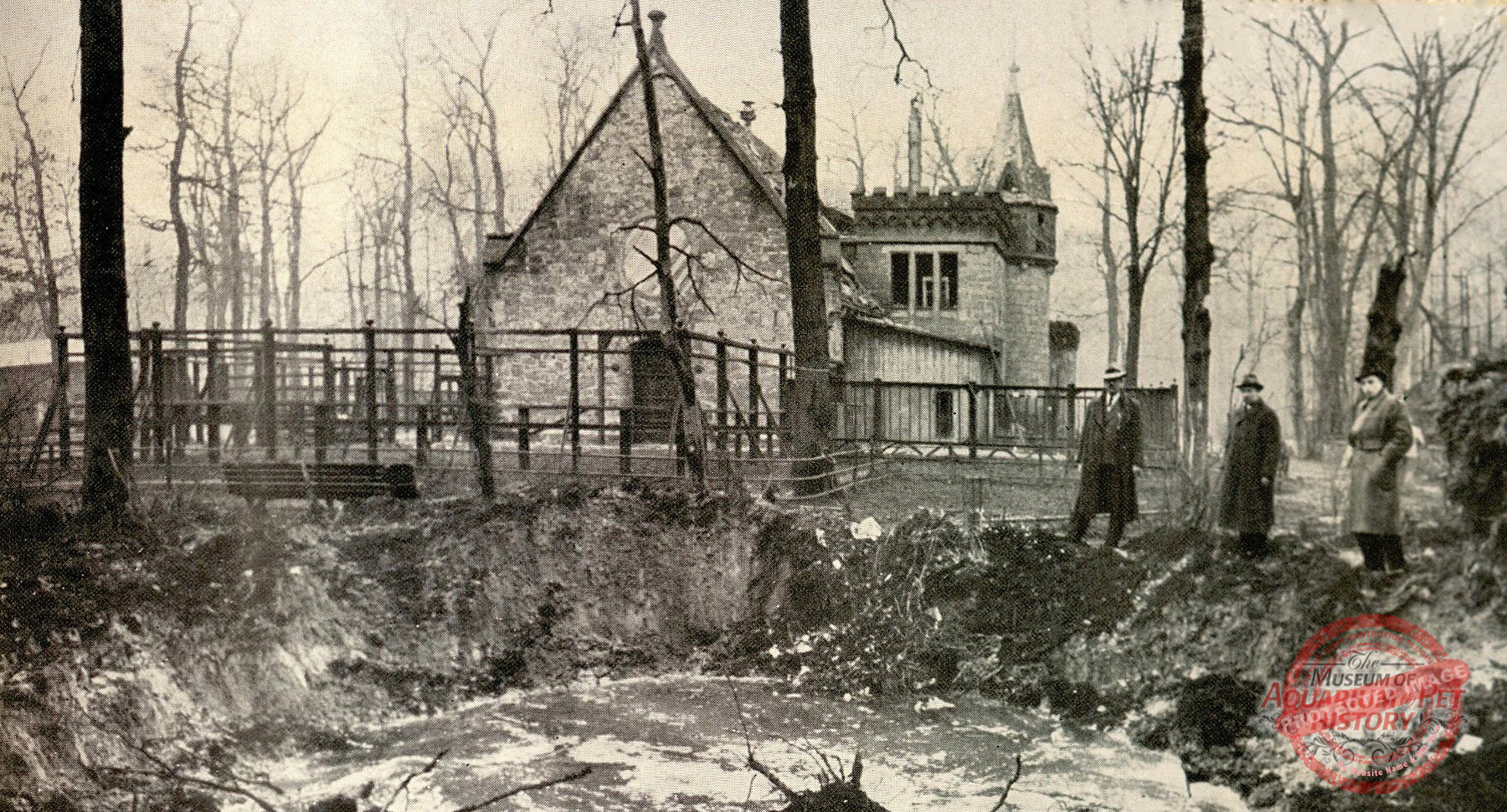
In 1945. Things look bad in the Hannover Zoo! Inspector Eiffert, head gardener Bruns, and his son observe the damage. In the background, the destroyed elephant house.
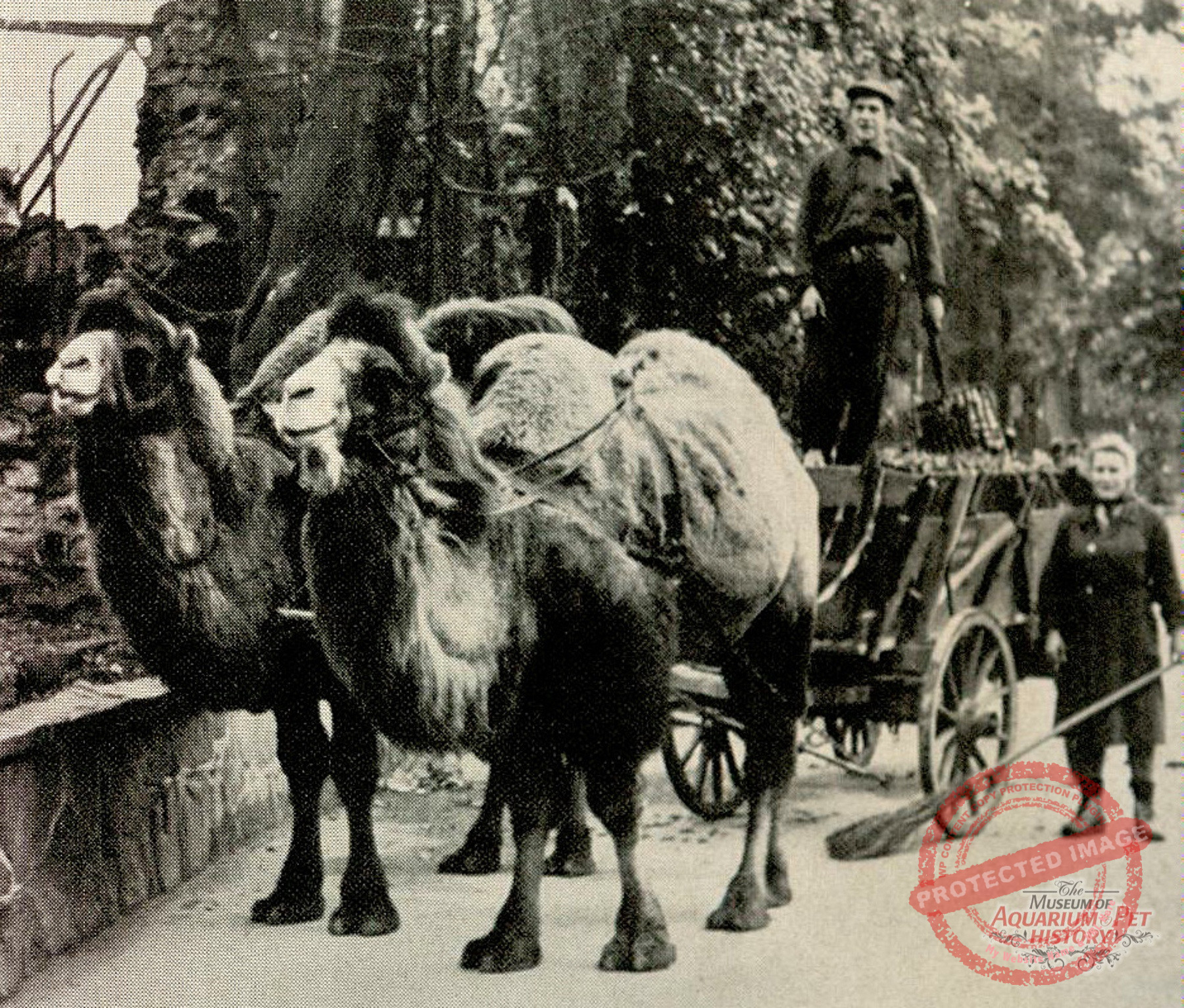
Belarusian refugees, who stayed on as animal caretakers at the Hannover Zoo, brought their work camels, which walked alongside the yoke and took over the transport of feed.
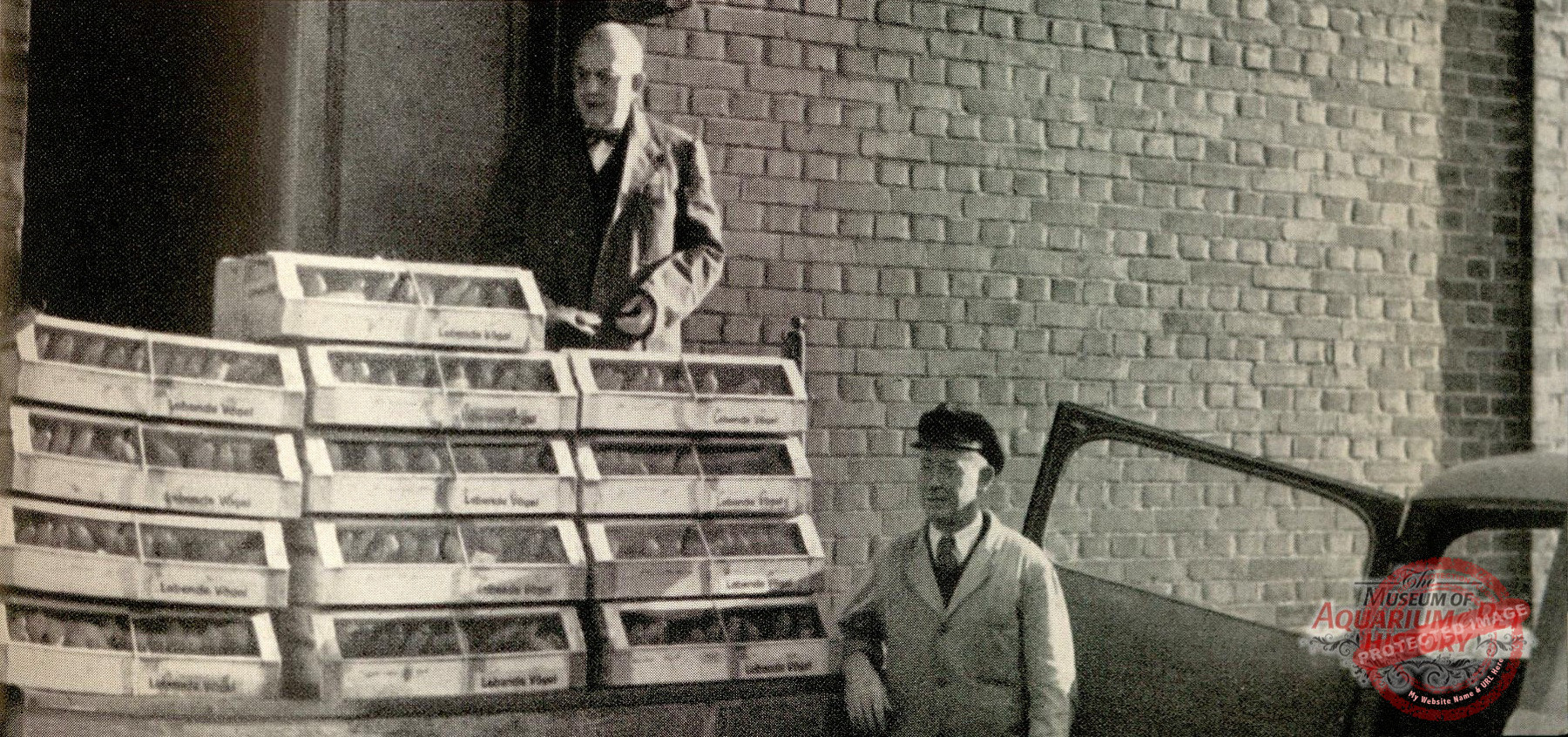
As after the First World War, after the Second World War, the export of canaries also began again. Buyer Matje (on the ramp) and driver Rinne loading canary hens for New York.
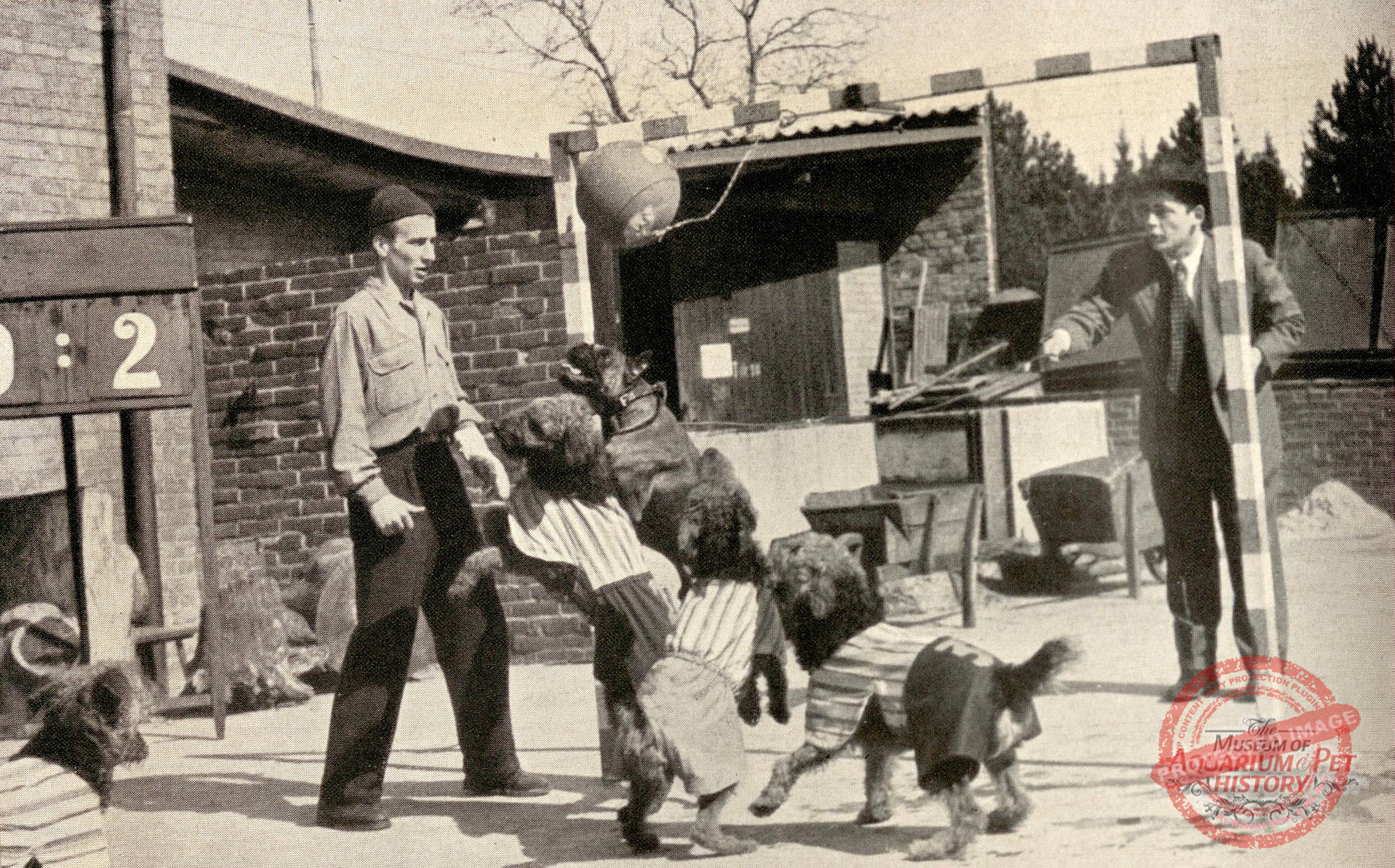
Hermann Ruhe Junior (right), himself an amateur goalkeeper, supervises the performance of Willy Hagenbeck’s trained act “Dog Football,” in which the boxer plays the goalkeeper and ensures that the ball, hanging from a wire, disappears from the penalty area. On the left, animal caretaker Lohrengel.
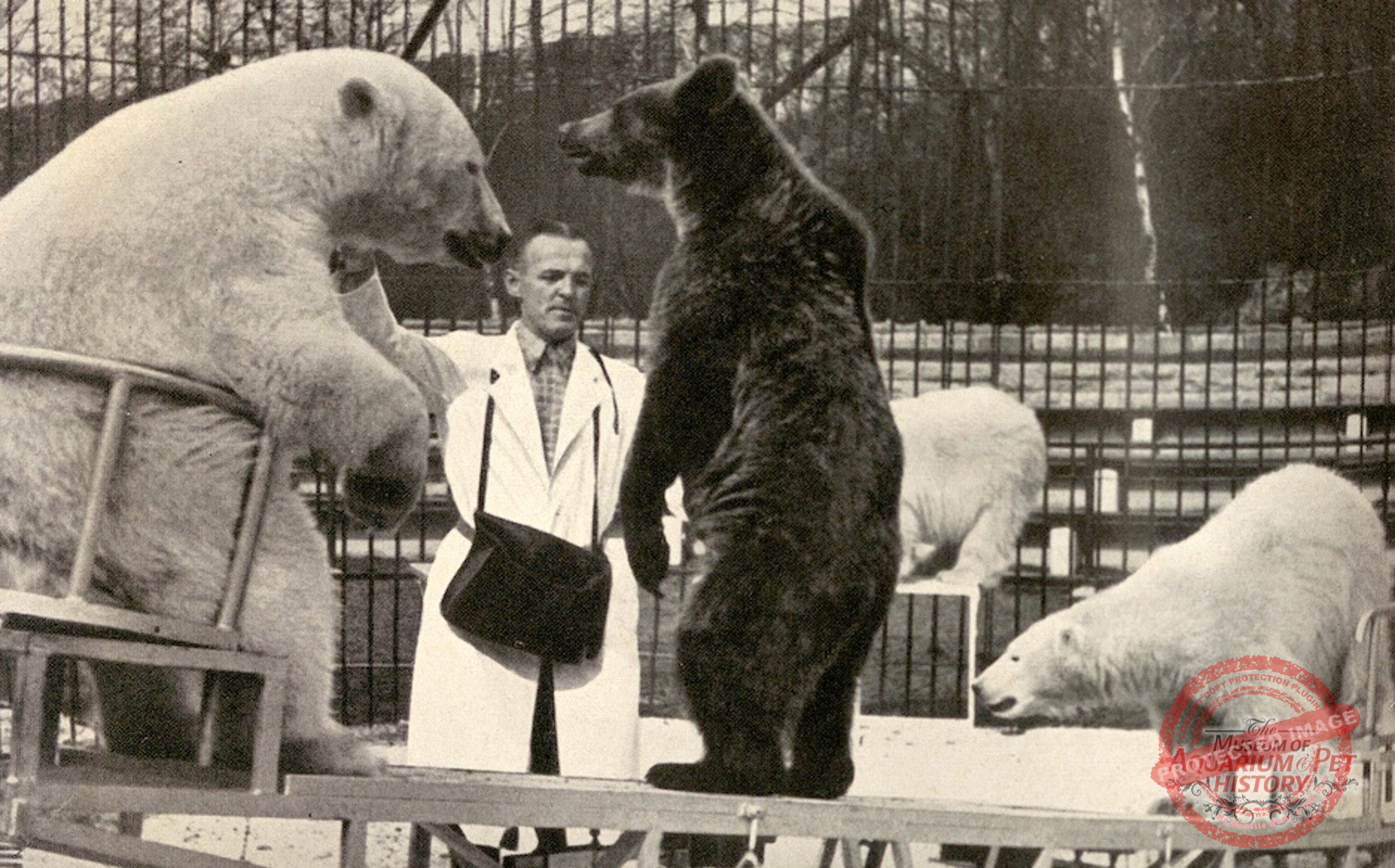
Animal trainer Kraml at the ‘Ruhr Zoo’ in Gelsenkirchen working with a mixed group of bears as part of the training school accessible to the public.
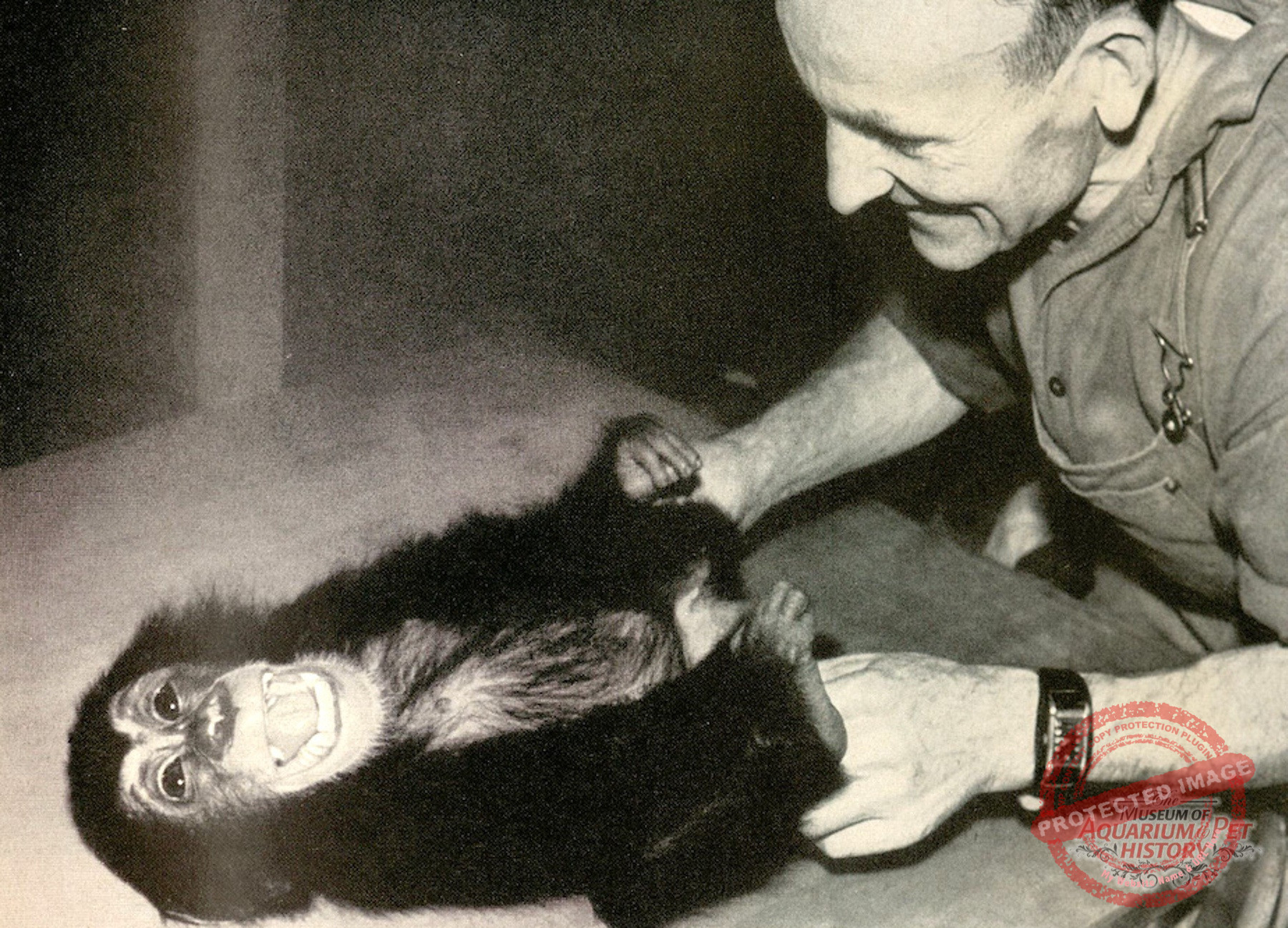
Someone might say that monkeys can’t laugh! Monkey keeper Karl Funke from the Hannover Zoo plays with a young chimpanzee lying on the table.
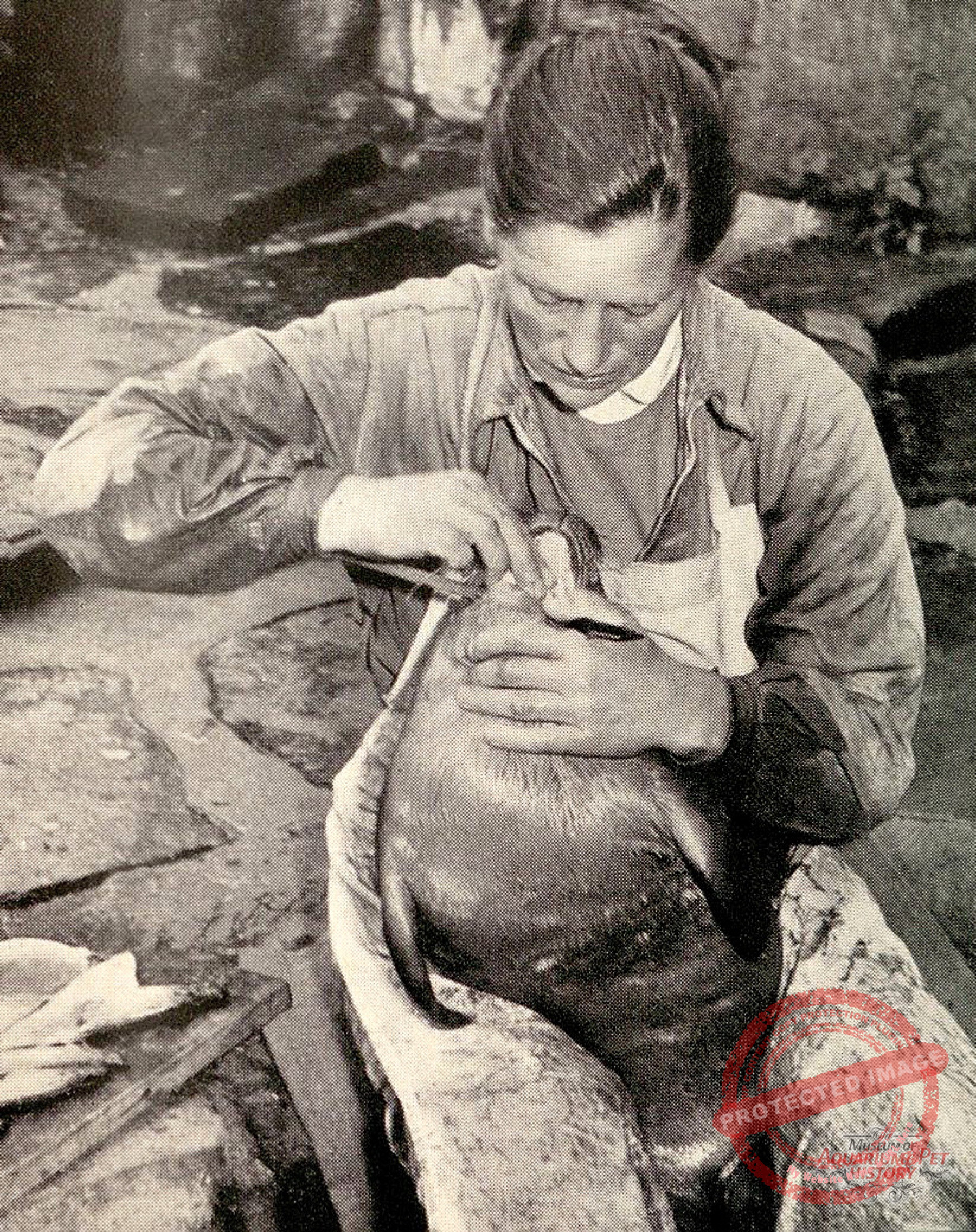
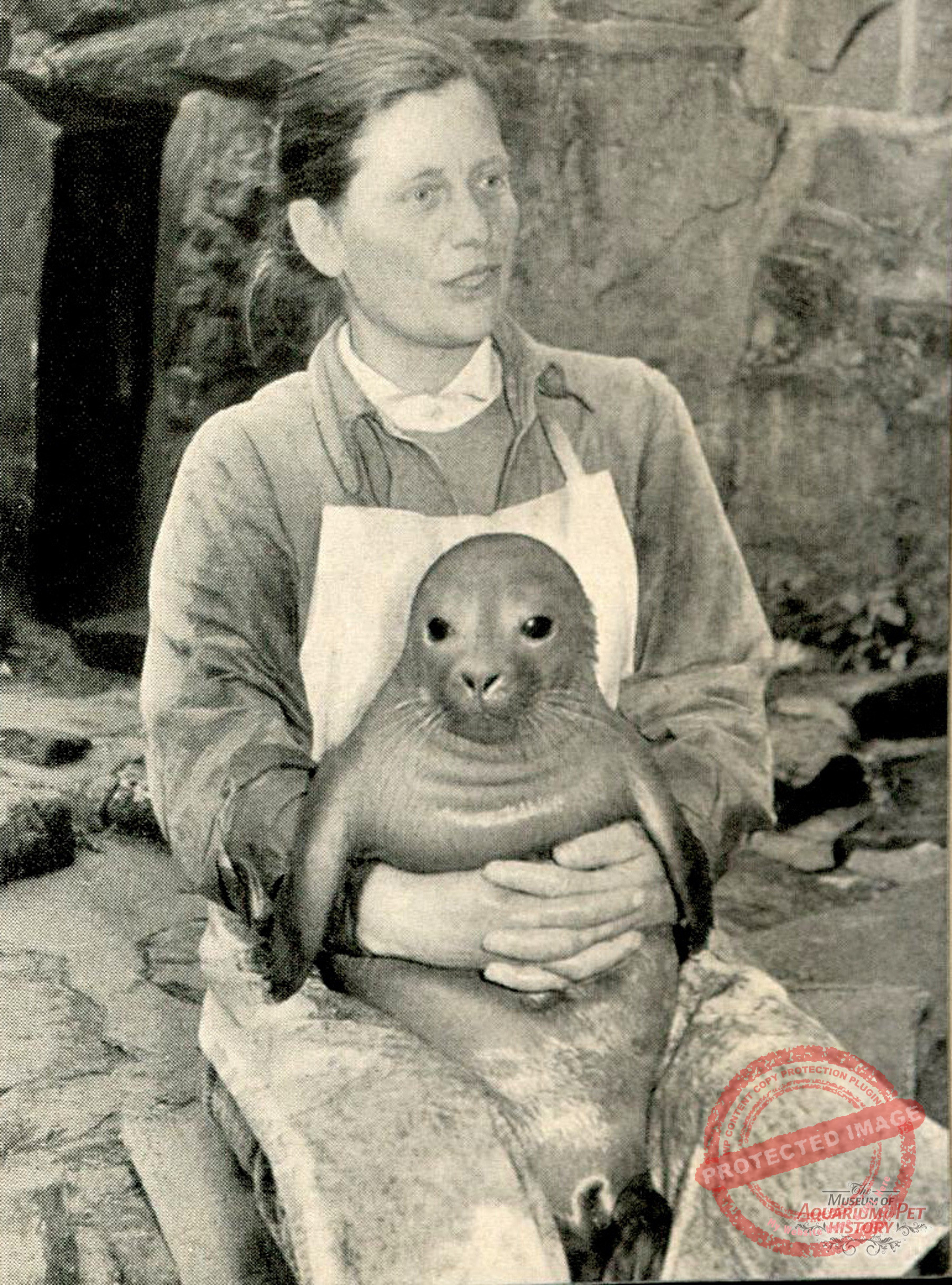
Here, an animal trader feeds the little seal with sardines (bottom left), after which he, along with his caretakers, looks around visibly content.
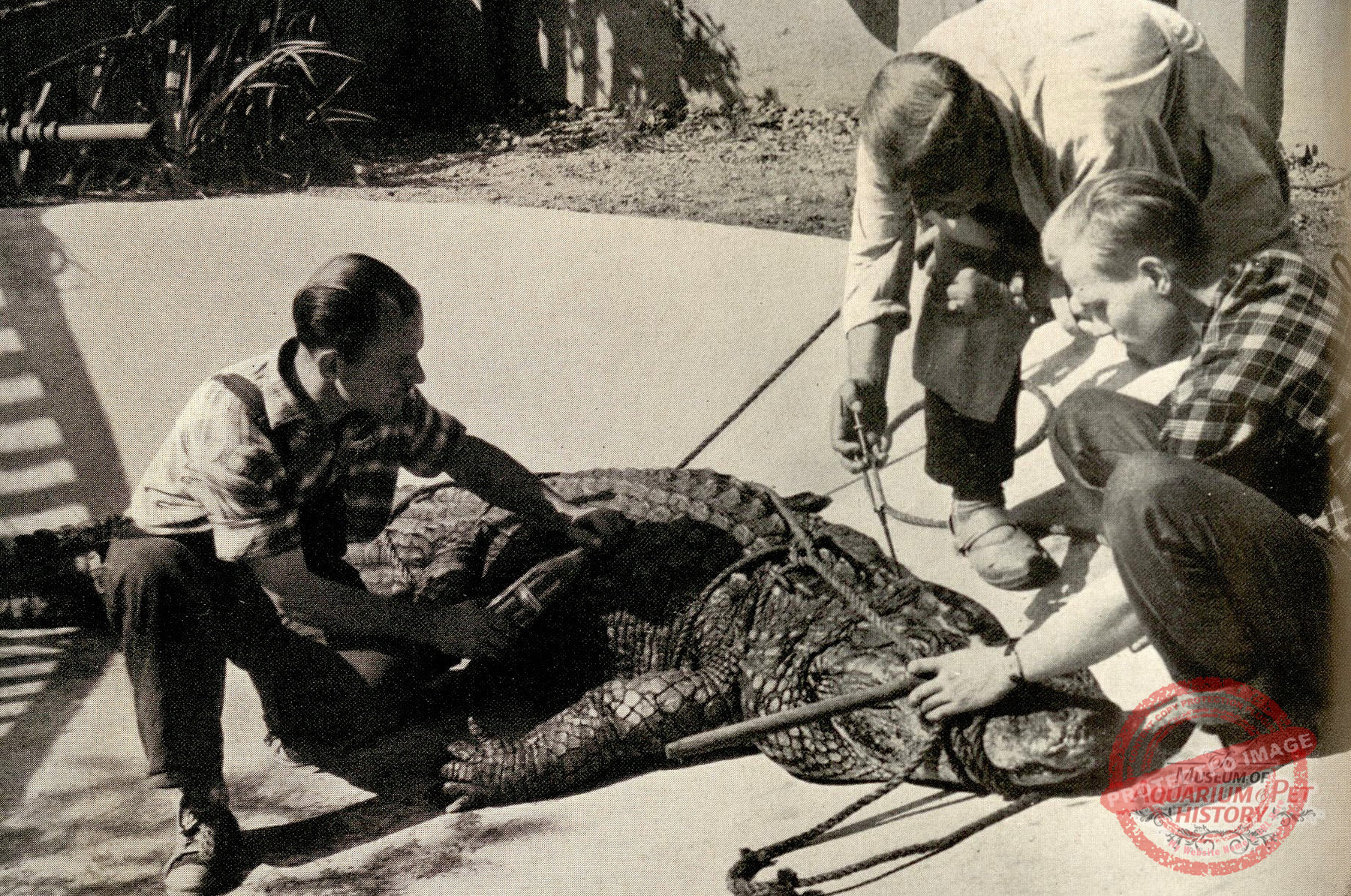
This 3.40-meter-long Mississippi alligator at the Gelsenkirchen ‘Ruhr Zoo’ has an abscess and is being treated by the veterinarian: he is receiving an injection, all very modern and hygienic!
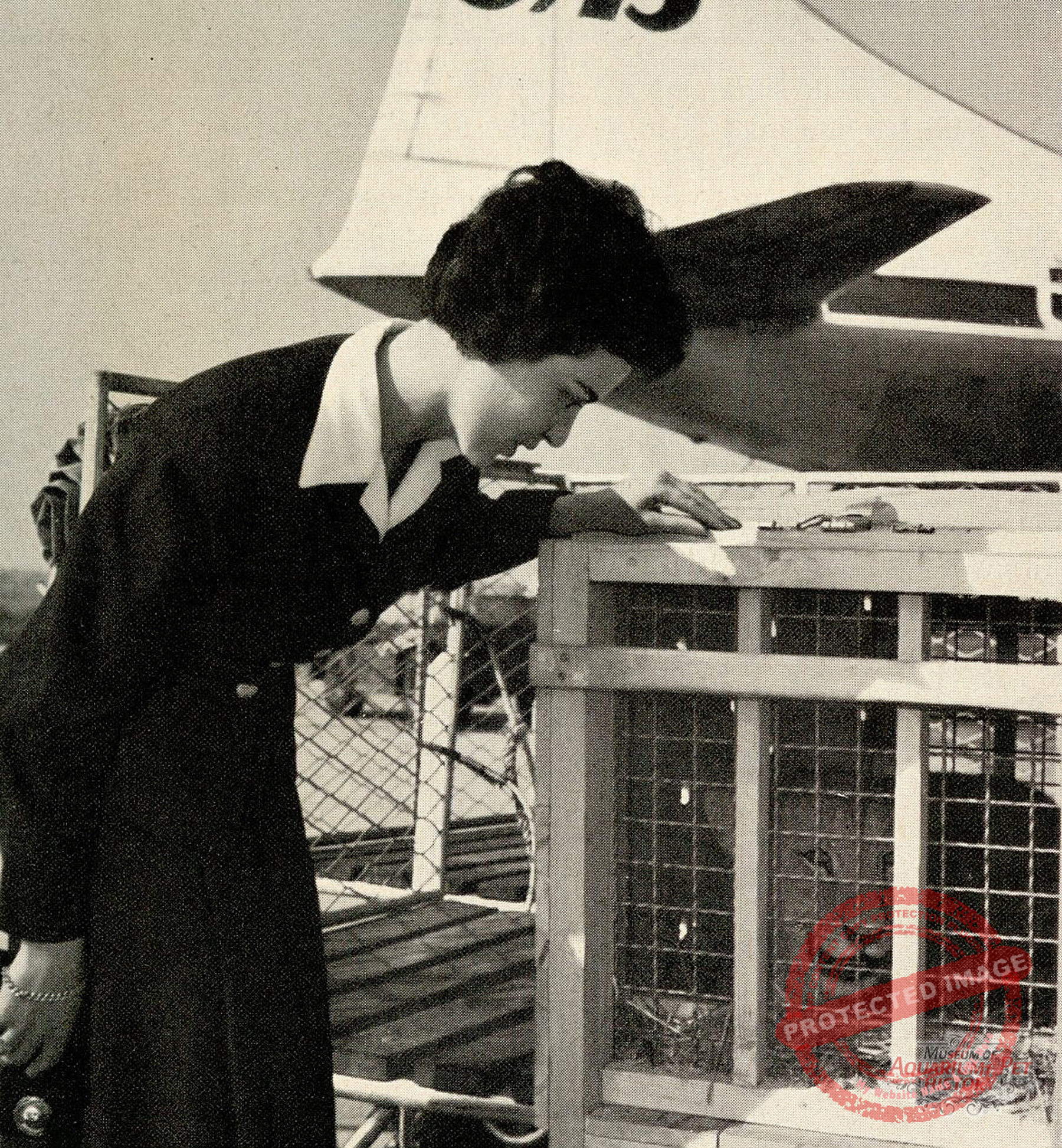
The modern era has begun. Urgent animal transports are now carried out by airplane. A young lion is being unloaded at an airfield with a stewardess showing interest in the four-legged passenger flying in the cargo hold.
He seemed to find it very amusing. Still, it was an argument, and Mr. Meems and Hermann went with the Greek to the relevant authority. They handed over their passports to be stamped and sat in the waiting room. The Greek excused himself—he would be back in a few minutes.
Those few minutes turned into two hours. But the Greek didn’t return. Instead, two military policemen appeared and simply escorted Mr. Meems and Hermann away. The two found themselves in a jail cell, which they shared with several thieves, two murderers, and various drunkards.
When Hermann later described this story to me, he did so in his humorous way. However, I believe he wasn’t feeling so lighthearted at first in the Bangkok prison.
“What a lovely prison,” he said. “The guards are playing a sort of Badminton game in the yard.”
But soon, he wasn’t so pleased with his spot behind bars. The cell inmates were standing ankle-deep in something that couldn’t even be called dirt anymore. Meems must have made an indescribable face. He was already in his early sixties and, despite his small stature, weighed about 250 pounds.
“It didn’t take long for him to start talking again; the smell was too strong,” Hermann said. “He started cursing like a sailor, banging on the door, and demanding the Dutch consul.”
At the mention of Dutch, the guards outside took notice. One of them promised to arrange for the consul to be brought in. But until then—it took two hours—Meems had to endure it.
The consul, an extremely kind person, as my son assured me, promised to help with Hermann’s case as well. Unfortunately, he could only get Mr. Meems out first. He regretted that there was no German representation in Bangkok that he could contact.
In short, the Dutch consul managed to free my eldest son from the cell the next morning as well. He was taken to the hotel under guard.
“The night in the Bangkok jail was a delight,” Hermann said. “Rats running around the size of rabbits— and the mosquitoes!”
When he returned to the hotel, he found that Mr. Meems was still under guard. What the two of them were being accused of—even the Dutch consul couldn’t figure out! They remained under guard and were not allowed to leave their room. Their meals were brought to them. They couldn’t find out anything about their future fate.
The next afternoon—on the day before the ship was due to depart—the two travelers, along with their luggage, were packed into a car and taken to the port. There, a small boat was waiting to take them on a long journey downriver (since Bangkok is not directly by the sea).
They reached their ship and were even escorted on board! On the ship stood nine elephants—exactly the ones with the half-ear, torn-off toenails, and missing tail.
“Man,” Hermann said to Meems, “now I understand everything.”
In his anger, Hermann had a confrontation with his guard, who also demanded a huge ‘bakshish’ (tip) as his rightful due. He threatened not to hand over Hermann’s passport unless he was paid. He claimed he had to sleep outside the hotel room door instead of with his wife and had to eat hotel food, even though he preferred the food at home. For all of this, he demanded around 300 marks in ‘bakshish’!
“Stop, Hermann,” Meems had called out when Hermann was about to attack the man. “Don’t be foolish! We’re in a foreign country and have to comply as foreigners. The man could easily take us off the ship again. Do you think anyone will believe us? Be smart—just pay him!”
So Hermann reluctantly paid, and with a friendly grin and a deep bow, the guard handed over his passport.
When the small boat pulled away from the ship, Hermann ran straight to the captain to urge him to hurry. But every ship takes time before it can cross the famous three-mile zone. Only beyond that point can international radio communications be resumed.
By the time Hermann’s cable reached me in Hannover, saying: BLOCK LETTER OF CREDIT, it was too late.
I sent a telegram to block the payment, but the money had already been paid to the Greek, who was cleverer than he was honest, as I learned upon receiving a response telegram with the message:
ALREADY PAID.
He had completed the shipping documents and presented them to the bank himself.
We had to come to terms with the situation. Fortunately, the three elephants that Meems and Hermann had selected from the export trader were also on board, and since the other animals had been relatively inexpensive, the loss was at least somewhat manageable. Five of the elephants—including the three from the mud—died during the journey; they couldn’t be saved.
A sixth, a small one just about 1.20 meters tall, had a nasty experience. In one of the ports they stopped at, some mischievous boys who had sneaked onto the ship fed the baby elephant an entire sack of sweet potatoes! By the time Hermann, who had gone to eat with Meems, returned, it had already happened.
The baby elephant stood there: bloated like a balloon, with a rock-hard belly. No laxative could help. The only solution was a rigorous and not exactly painless treatment. Hermann inserted a hose into the elephant’s rectum and turned the valve fully open.
Seconds later, both the hose and the elephant’s intestinal contents came flying out. The animal was saved, as its intestines had been so clogged from overeating that it would no longer have been able to pass anything.
From then on, Hermann and Meems took turns with a crew member, keeping watch at the ports day and night to prevent such incidents. The little elephant soon recovered; he was lively and in good spirits. Most of the time, Meems would sit on the sack of feed he was guarding to prevent the food from being stolen. Despite this, one sack of oats was still stolen right from under him. Such is the skill of the boys who hang around the ports.
In February 1943, a veterinary import regulation was enacted, which is still in effect today:
a. Predators, pachyderms, rodents, monkeys, marsupials, seals, reptiles, birds of prey, wading birds, ostriches, wild birds, and exotic birds are exempt from quarantine requirements.
b. Deer, antelopes, ornamental birds, park, and waterfowl are subject to a fourteen-day quarantine (usually conducted in Alfeld).
c. Equids, cattle, camels, sheep, goats, and pigs are subject to a four- to eight-week quarantine, during which blood samples must also be taken.
Before importing the animals listed under a) to c), a veterinary import permit must be obtained.
If Lower Saxony is not the border state of entry, we must also apply for permission for transit through the border state of entry. This sounds more complicated than it is once you’re familiar with it.
For example, if animals are imported from Basel (a city in Switzerland), transit permits through Baden-Württemberg and Hesse (depending on the area passed through) must be obtained, as well as the import permit for Lower Saxony.
Since the Second World War, the rules for import or transit have been handled differently in each federal state. There are variations in the regulations that must be known to properly prepare everything.
With the founding of Hermann Ruhe Overseas Trading AG, we set up our own quarantine station in the free port of Hamburg for simplicity’s sake.
This proved beneficial. We brought all animals destined for the USA directly to the new station in the free port, saving the round-trip transport to and from Alfeld—and time. The direct import of animals subject to quarantine between Africa and the USA is completely prohibited due to the risk of epidemics.
Germany is one of the few countries whose quarantine is recognized by the USA. Thus, certain animals stayed in Hamburg for eight weeks and only needed to go through an additional 14-day quarantine period in the USA before they could be imported. By that time, the animals had usually acclimatized in Hamburg, so they typically arrived in the USA in excellent condition.
During the 60 days, animals in a quarantine station are not allowed to come into contact with other animals. Additionally, after the quarantine period is over, they cannot be transported through German areas where foot-and-mouth disease is present. By setting up our facility in the free port of Hamburg, we eliminated this risk, which would have existed if the quarantine had been conducted in Alfeld.
The 60-day quarantine is overseen by the Hamburg veterinary authority. Above all, no new animals can be added during this period, as this would invalidate the quarantine days already completed by the existing animals, and the quarantine would have to start again from day one for all of them.
In other words: 60 days of quarantine is a very strict and closely monitored process! Even the caretaker must practically have no contact with outsiders during this period. Feed and bedding must be transported into the station before the quarantine begins.
Manure and all other waste, including crates, must be burned on-site at the end of the quarantine.
We intended to use the Hamburg quarantine station only for the animals that were to be forwarded to America. The quarantine of all other animals was to continue to be carried out in Alfeld, as long as we had space.
During this time, I corresponded with a Dutchman living near Arusha on Mount Meru in Tanganyika, who was staying with a Boer family named de Beer. The Dutchman, who was looking to buy a cheap farm, was temporarily involved in trading animals.
Willy de Beer, an experienced animal trapper, caught animals and sold them to his partner, who had already acquired a considerable stock of animals and now wanted to sell them at a good price.
I sent Mr. Meems to East Africa to inspect everything. He wrote to me by airmail, saying that the animals were indeed first-class, but the prices were very high. Having become cautious, I asked him to accompany the transport on its way to Europe—but to make no firm commitments, only to assure that I would come to Genoa and make my decision there.
Peters, the Dutchman, set off, and Mr. Meems accompanied him. I went to Genoa to await the ship.
Indeed, the animals were without any defects! A shipment that made my heart sing. Giraffes, elephants, rhinos, zebras, beautiful antelopes, ostriches—everything was there.
However, when the Dutchman told me his prices, that was the end of it.
“I must have misheard?” I asked. “Sorry—that’s too expensive for me.”
“Then I’ll just sell the animals in Holland,” said Peters, unoffended.
“Just like that?” I asked doubtfully. “Well, I wish you the best of luck with that. Maybe we’ll do business together some other time.”
It was a shame, but it really wasn’t feasible. The prices he was asking were ones I hadn’t been able to achieve even in the best of times—let alone pay as purchase prices.
Fourteen days after my return, an express letter from the Dutchman arrived in Alfeld. He was utterly desperate!
All he managed to sell were two giraffes, a few ostriches, and a rhinoceros. Might I still be interested after all…?
A week later, he called me: Would I be willing to take the animals to Alfeld and pay him for them gradually as I sold them? We would agree on the prices as we went.
Well, indeed, we did reach an agreement after he lowered his prices to a reasonable, marketable level!
Peters, who had invested his entire fortune in the animals, as I only found out now, was almost at the end of his rope.
“This is a hellish business!” he said. “I just wanted to earn enough to buy a larger farm than I would have been able to afford with my capital…!”
“You’re still earning quite well from it,” I said. “Be glad you haven’t lost anything. Others sometimes lose everything, risking life and limb.”
So, I finally received a substantial African animal transport for the first time since the war. We were so happy that, when the animals arrived, we practically wanted to hug the giraffes to welcome them.
It felt like life was finally starting again. It felt like the war was truly over!
Some time later, I received a long letter from Mr. Peters in Africa. He now had a beautiful farm and had even obtained a license to trap animals himself! He asked if I would be interested in visiting and setting up a proper trapping station with him on a 50:50 basis.
I postponed the offer. I really couldn’t leave at that moment. There was too much to do to get things going again, just as they were picking up steam.
I sent Mr. Meems on another trip, this time to India, to negotiate a trade deal with the Zoo of Mysore and attend an elephant auction. Once again, my eldest son accompanied him for support.
Hermann helped Mr. Meems secure the animals and transport them to the ship. Then Meems returned with the transport, while my son flew from Bombay to East Africa.
I had instructed him to inspect Mr. Peters’ farm. A few days later, I received an airmail letter from my son, in which he wrote that Mr. Peters didn’t have a farm as we had imagined—aside from the land itself. The farm consisted of a makeshift mud hut, and that was all so far. He hadn’t yet seen Peters’ trapping license—and that was exactly what I was interested in!
I heard that Mr. Peters was obtaining animals from various trappers, and at that time, anyone with time and no money was catching animals. It was a bidding war, undercutting one another—a real spectacle!
I instructed Hermann to purchase a number of animals and bring them back. We would discuss everything else after his return.
He bought giraffes, zebras, oryx antelopes, crowned cranes, and some cheetahs from Mr. Peters, who didn’t seem to be using his trapping license himself. Why would he? He was buying the animals at a third of the price we eventually paid him!
On the ship carrying the transport, there was a second shipment for another European trading company.
During the journey, Hermann noticed that our feed supply was shrinking. My son got along well with the crew, as he occasionally offered them a crate of beer and cigarettes. He relied heavily on their help with all the work, and they were happy to assist, bringing him feed from the hold and saving him a lot of effort, which they weren’t obligated to do.
When Hermann realized that the feed the crew brought him daily from the hold was disappearing suspiciously quickly, he confronted the transport handler from the competing company:
“Did you perhaps, by mistake…?”
“No, no, how could you think such a thing of me!”
But the feed continued to disappear. Every now and then, Hermann had to sleep for a few hours,
and whenever he returned, something was always missing. So, he decided on a rigorous treatment. He prepared a pile of hay and soaked it with seawater, which, of course, soon evaporated in the heat.
The next morning, half of the hay was gone. Hermann acted as if he hadn’t noticed anything.
That afternoon, the other man came to him: “Mr. Ruhe, my giraffes aren’t eating. Just look—the hay is still there. Could they be sick?”
“I don’t think so,” said Hermann, “where did you get the hay from? Could it be bad?”
“The same as always,” said the man.
“Or did you perhaps mistakenly take it from my hay pile over there, next to the hatch?”
“No, of course not! How could you think that?”
“Well, the hay wasn’t good,” my son said, “because some seawater got on it.”
“Good heavens,” the other man stuttered, “could I really have made such a mistake…?”
“Make sure you keep your hands off it in the future,” said Hermann, and left him standing there.
For the rest of the trip, not a single strand of our feed went missing.
In our animal transport, there was also a tamed baboon named Adonis, who Hermann usually kept on a thin chain. Sometimes, he let him roam freely; the baboon would follow him everywhere anyway.
One afternoon, Adonis disappeared. Gone! All searching was in vain. Since the ship was at sea, the baboon could only have fallen overboard.
“I was feeding the animals, then sat down by the hatch, smoked a cigarette, and was still thinking about my baboon,” Hermann told me.
“Suddenly, I saw two fingers on the railing. I looked… A whole hand appeared, followed by a face— smeared green-brown-yellow—with pudding, salad, potato bits, and pea puree all over its cheeks: my Adonis! He must have gone on a climbing adventure along the railing and discovered that the cook had hung out the kitchen garbage chute… “
It’s a half-round slide designed to prevent the ship’s side from getting covered in food scraps. The chute is hung up when needed, and the waste slides down into the sea.
The baboon must have found some tasty things among the scraps and climbed down to the chute.
But once he got there, his troubles began: it was so slippery that he could barely hold on, and each time the cook dumped a new load, it landed on his head, causing him to lose his grip and slide down again.
“And that’s exactly how Adonis looked. He had half of the day’s lunch on his face. I grabbed him, dunked him in a tub, and scrubbed him clean,” my son said.
“But that wasn’t the end of what Adonis got up to.”
The ship entered the Mediterranean, and the crew began painting everything fresh. Naturally, the baboon climbed up the freshly painted, still wet smokestack, leaving the imprints of his fingers everywhere.
A few days later, it was time for the crew to receive their weekly supplies from the ship’s store: toothpaste, shaving soap, razor blades, chocolate, cigarettes, and so on. The sailors lined up, each carrying their supplies from the paymaster back to their bunks, holding everything in both hands in front of them.
Suddenly, a sailor returned to the paymaster:
“I’m missing my toothpaste!”
Another complained: “I didn’t get any cigarettes!”
A third grumbled: “Where are my razor blades?”
“You’ve all conspired, haven’t you?” the paymaster asked angrily.
This strange occurrence eventually reached my son’s ears. Adonis!—was his first thought.
The baboon had built himself a fortress on the hatch out of thick ropes that were coiled up there. With angry screeching, the baboon abandoned his house when he was finally discovered. He had created a real storage room: razor blades, chocolate, toothpaste—everything was there. The sailors had to pass by his fortress to reach their quarters. The monkey had cleverly snatched items from the pile each sailor carried. Monkeys are incredibly skilled and can match any pickpocket.
The crew laughed, but the captain found it less amusing and ordered Adonis to be confined to his transport cage. All the protesting didn’t help the baboon; he remained locked up until they reached their home port.
Up to that point, my son’s stories had been quite amusing. Less amusing, however, was his account of his stay in Arusha.
“I wasn’t taken anywhere,” he said.
“Mr. Peters tried to prevent me from meeting people on my own. However, he didn’t succeed; in the end, I still managed to speak with a few people, including a South African animal trapper, Willy de Beer, who has been capturing animals in Tanganyika for about 40 years. His farm is also near Arusha. But that didn’t get me much further. I had hoped to perhaps set up something similar with Mr. Peters and his trapping license, like the Alfeldia Camp in the good old days in Abyssinia. I had to shelve that idea and wait to see how the whole situation would develop. So far, Mr. Peters’ farm was not suitable as a camp for us.”