Collecting Marine Life for a 19th-Century Public Aquarium
January 26, 1874. On the ground floor of the Zoological Station at Naples, a revolutionary research center on marine biology located in southern Italy, the Naples aquarium opened to the public. The zoologist Anton Dohrn, founder and first director of the Zoological Station, built it to finance the facilities operating on the upper floors. Dohrn also believed that such a novelty could create a meaningful connection between the Zoological Station and the citizens of Naples, and that the observation of living animals could help researchers to have a more realistic perspective of marine life.
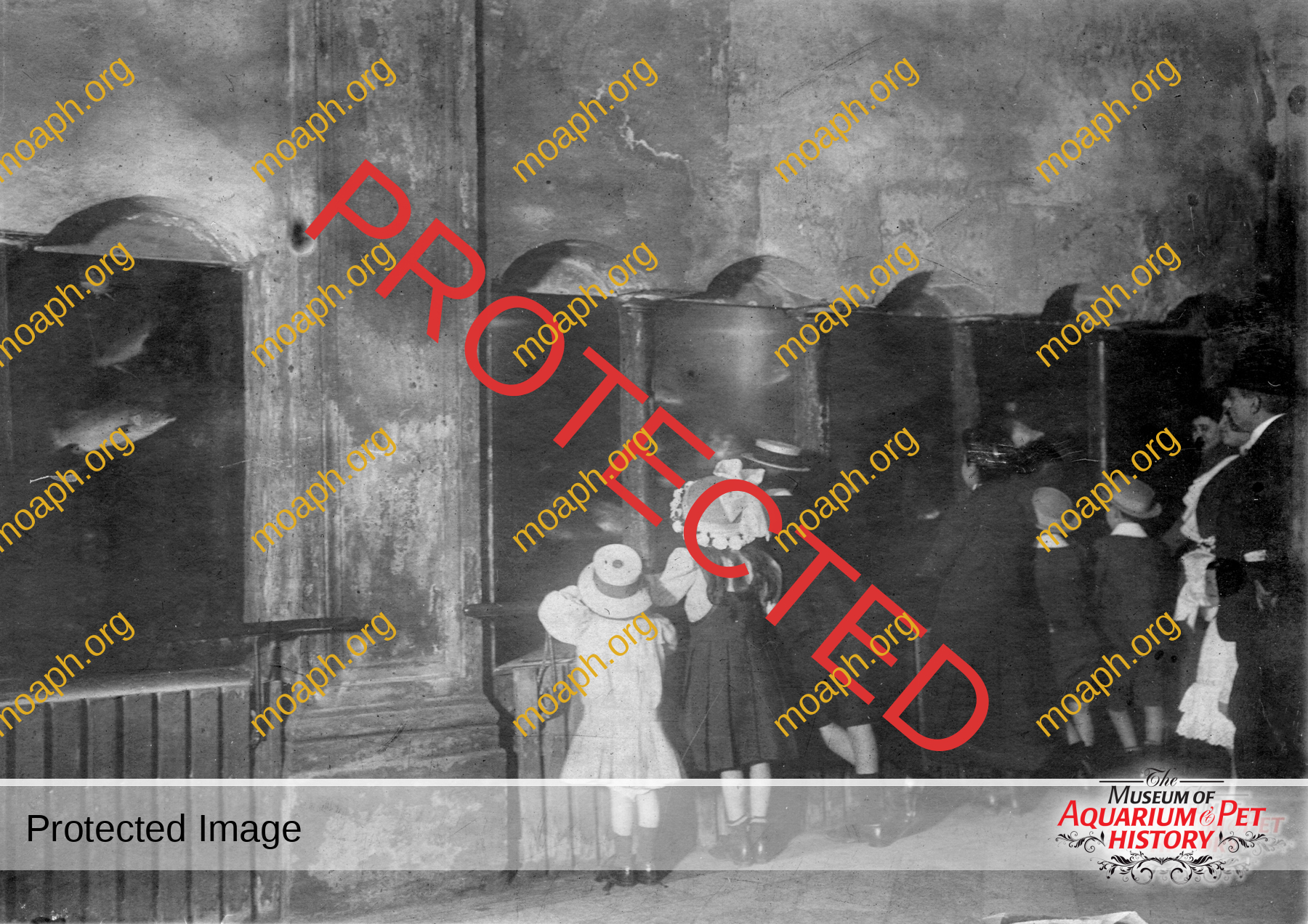
Children at the Naples Aquarium. ©Stazione Zoologica Anton Dohrn, Archivio Storico (ASZN, A 1910.R.).
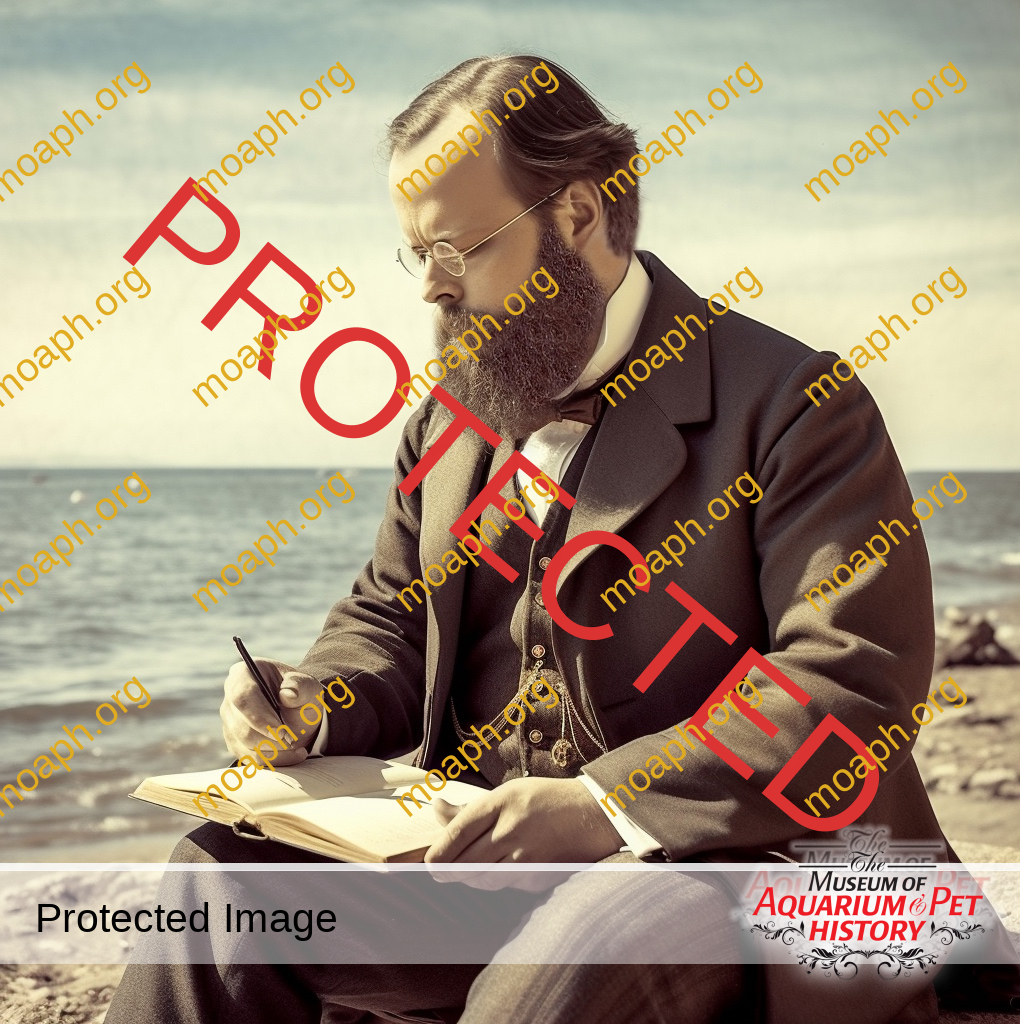
Color image of Anton Dohrn generated by the author through the artificial intelligence program “Midjourney”.
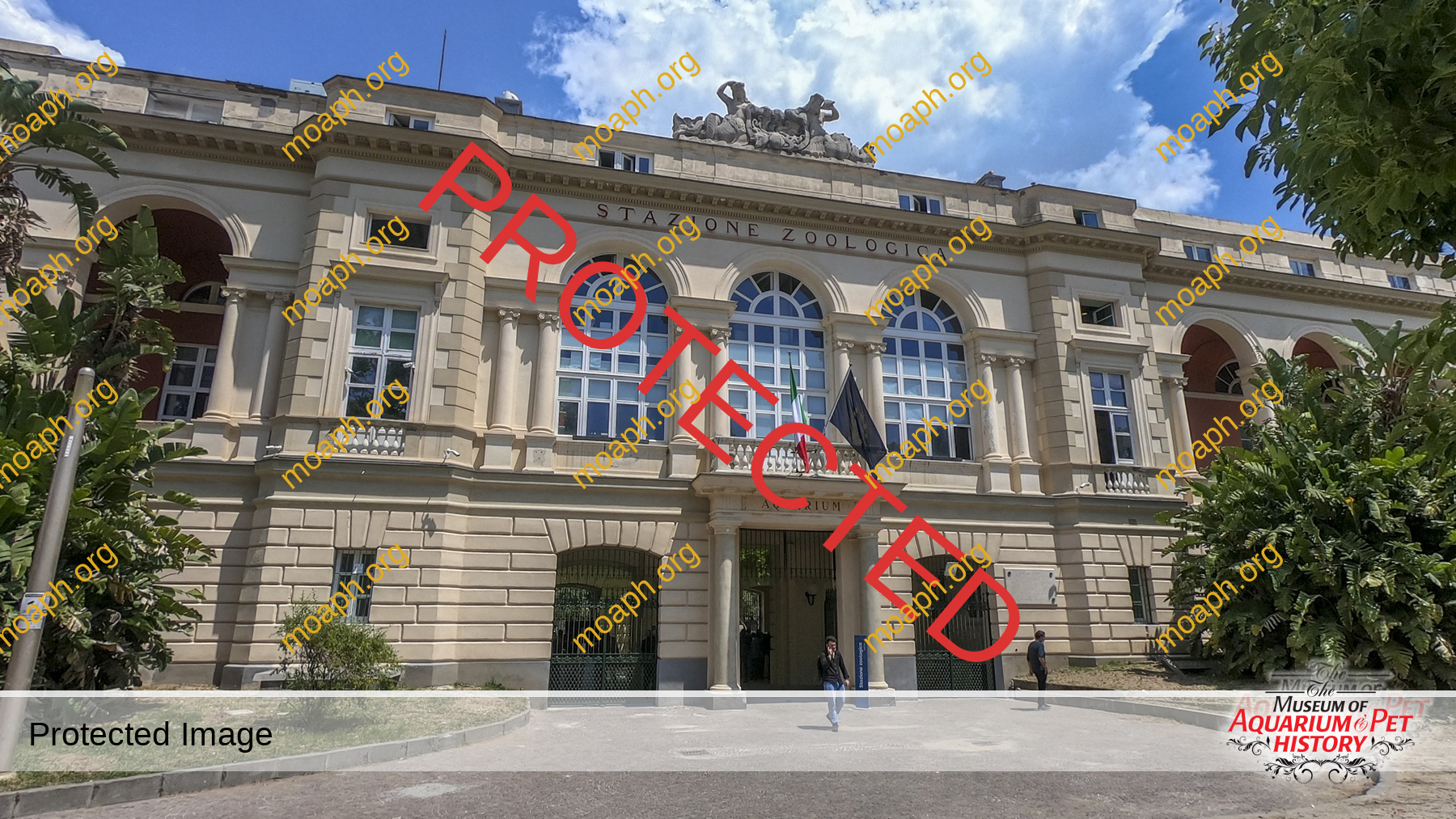
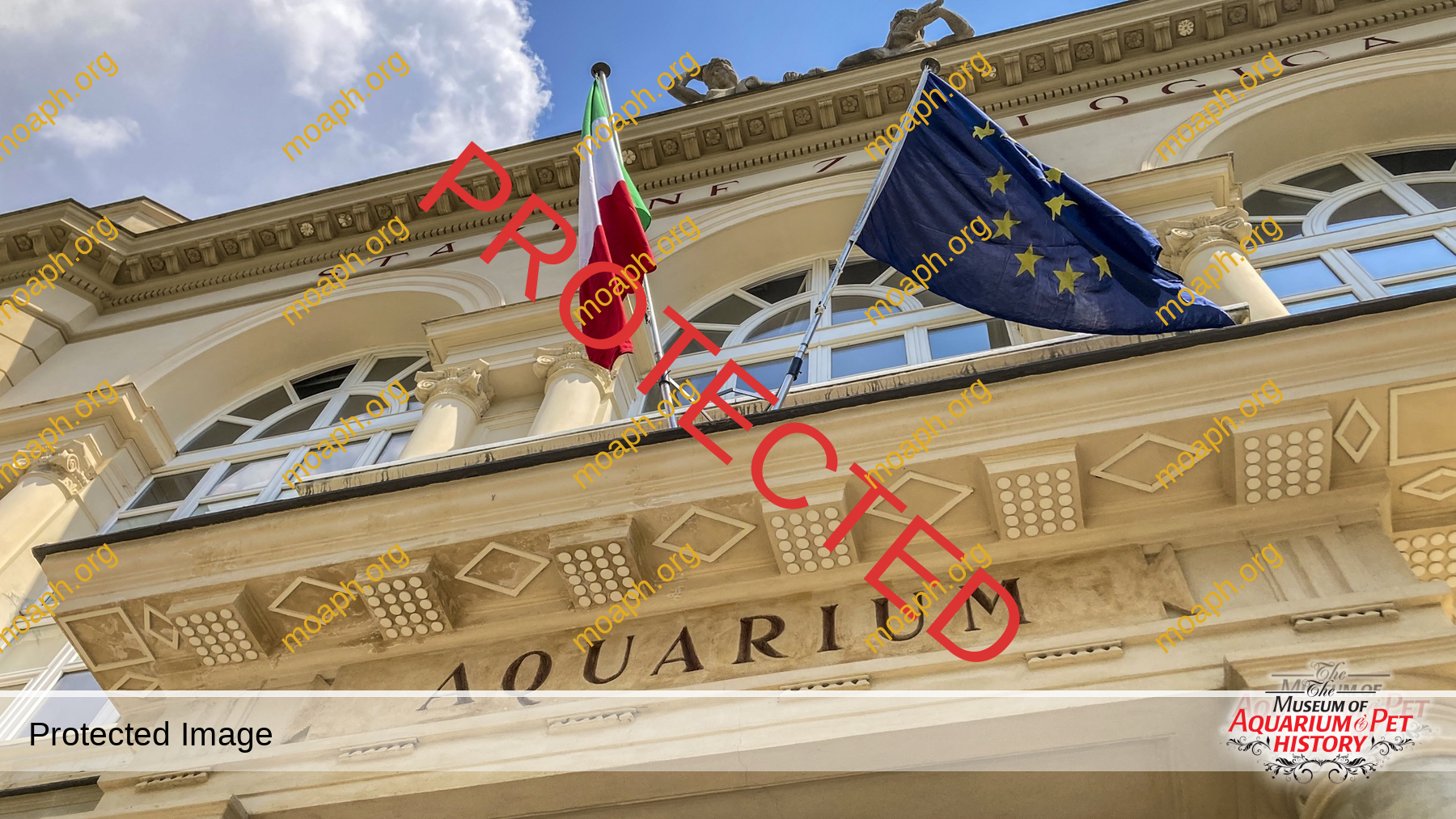
The Zoological Station. The exterior appearance of the main entrance has remained almost unchanged. The dual purpose of the building, namely public aquarium and research center, was clearly visible since the early days. Above the main entrance, in fact, the word “Aquarium” could be read, while under the roof the inscription “Zoological Station” dominated the upper section of the facade. Photo by Marco Gargiulo. ©Stazione Zoologica Anton Dohrn.
The show tanks were 26 in number, for a total amount of 66,000 gallons of seawater. We are speaking of significant numbers for those years, just consider for example that the 50 display tanks of the famous Berlin aquarium had a total capacity of 26,400 gallons.
The design and the construction of this coastal Aquarium, which is still in operation today, initially were entrusted to the architect Gustav Kelterborn, who had been the construction manager of the Berlin Aquarium a few years earlier. In October 1871, Kelterborn moved to Naples, but due to health problems he soon had to leave the city and give up his commitment. At this point, Dohrn sought the cooperation of the great William Alford Lloyd, who immediately accepted the job. Despite the fact that he never visited the Zoological Station, Lloyd played a fundamental role as the corresponding supervisor. Furthermore, he sent the trusted technician Mr. Digan to Naples, who managed several technical and practical matters even though he didn’t speak a single word of Italian.
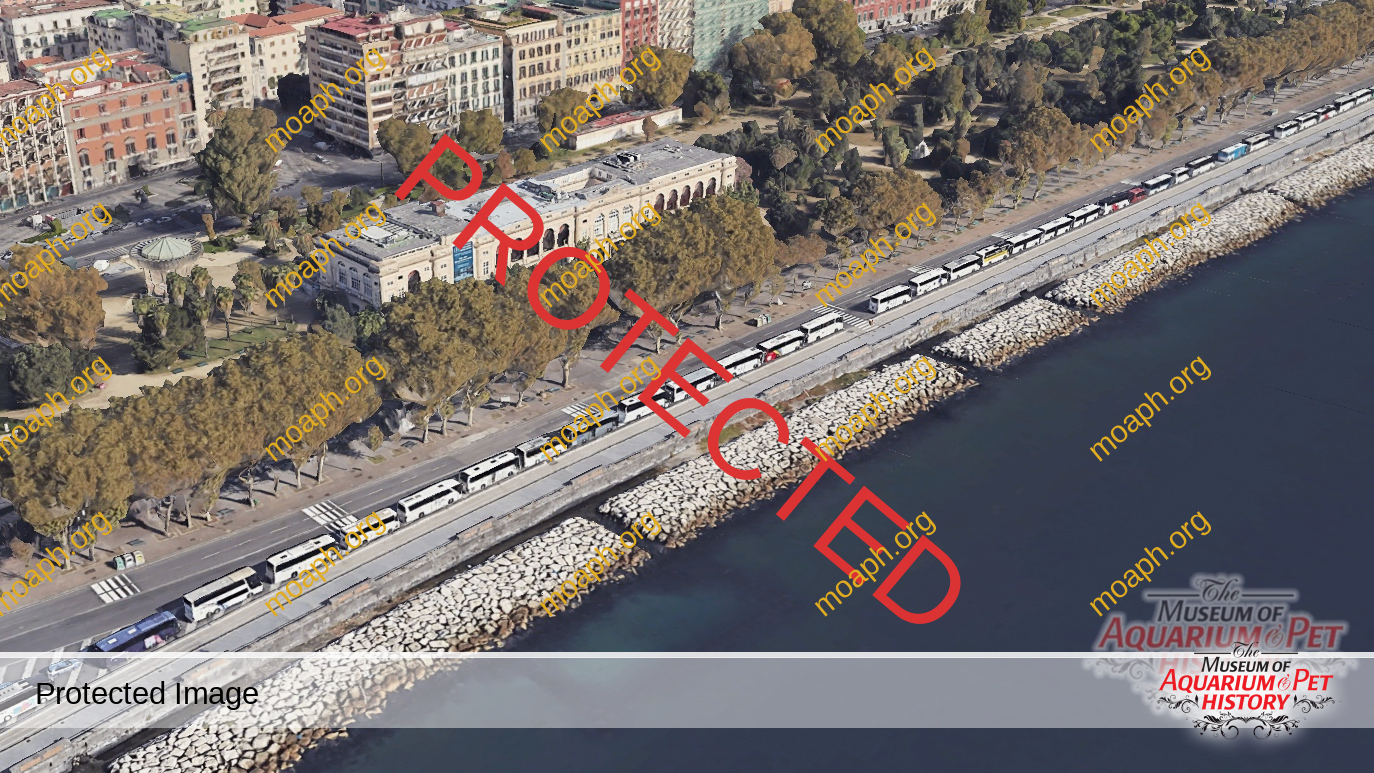
The Naples aquarium is a classic example of “coastal Aquarium”. Image source: Google Earth.
An extension of the sea
Lloyd persuaded Dohrn to order steam engines, hydraulic pumps, boilers, vulcanite pipes, and the large glass panels for the tanks from strictly English suppliers. Additionally, taking advantage of the proximity of the sea, he designed a semi-open circulation system in which the seawater:
- was drawn offshore from the Gulf of Naples.
- was left to decant in a large container.
- flowed into underground cisterns.
- was pumped from these cisterns into the show tanks.
- flowed back down and was discharged into the sea.
The absence of true filters wasn’t a problem, and the system worked successfully for decades. One could say that the Aquarium was almost an indoor extension of the nearby sea.
The Naples aquarium adopted the gallery layout for all its tanks. Lloyd, in fact, was against non-functional art forms, such as the “grotto architecture” of the interior of the Berlin aquarium. The lighting system was simply… the sunlight, which passed through the skylights on the roof.
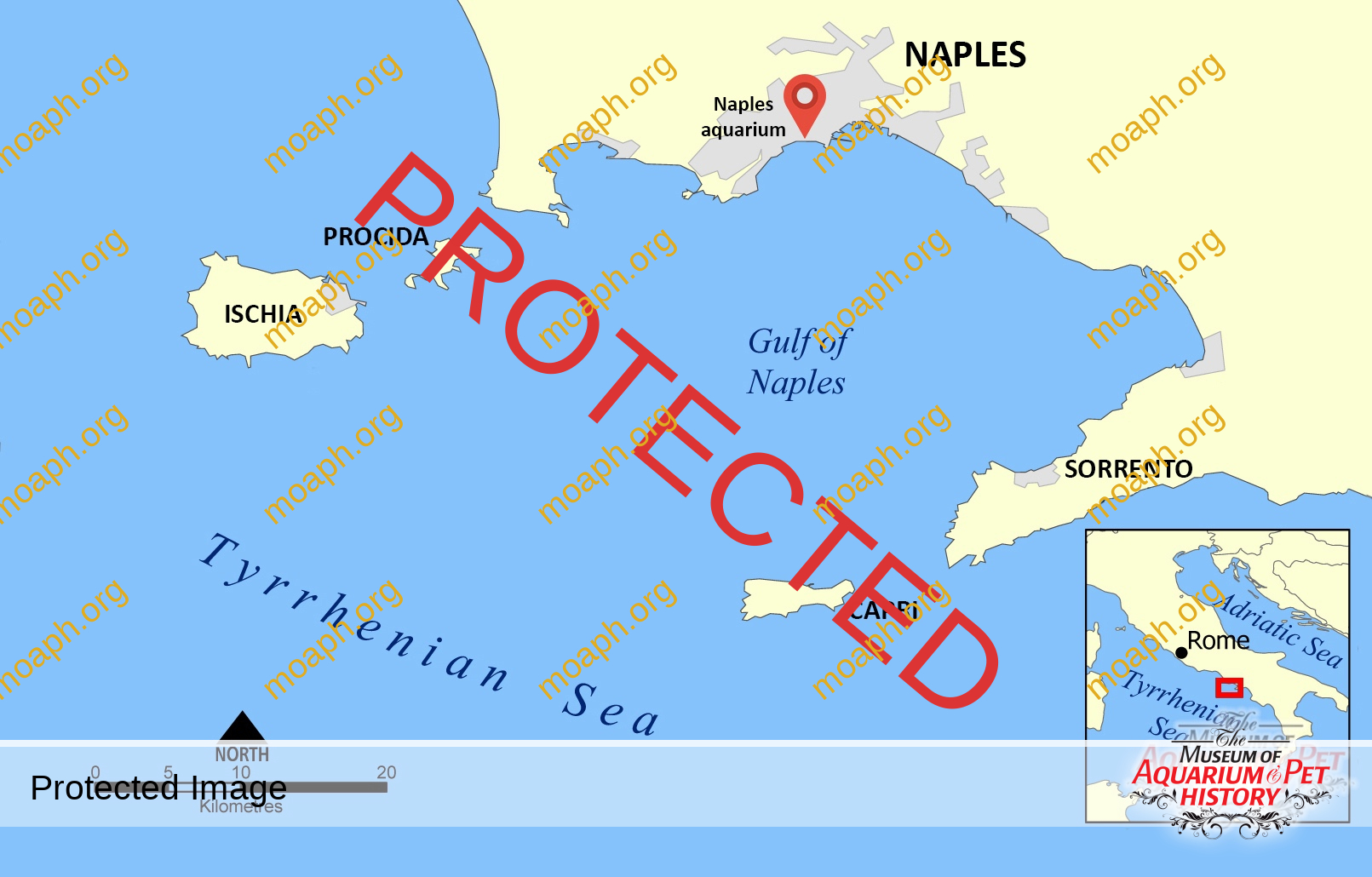
The Gulf of Naples was an area of the Tyrrhenian Sea with a stunning biodiversity.
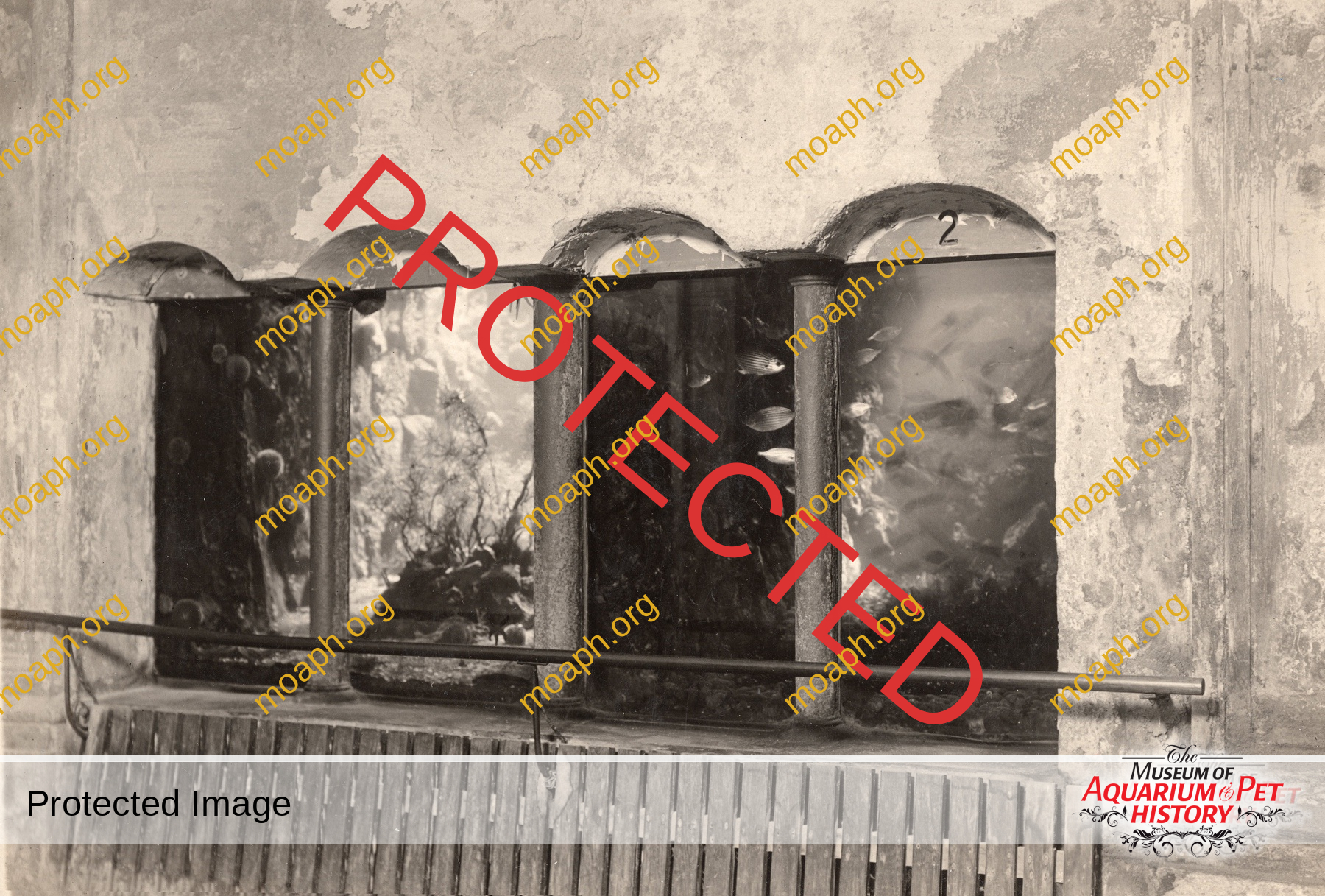
Tanks No. 1 and 2. Notice the sunlight coming in from the skylights on the roof. ©Stazione Zoologica Anton Dohrn, Archivio Storico (ASZN, Lb. 6. 1. 22.).
The aquariums were set up with natural materials thanks to the eccentric physician, amateur philosopher, and medical doctor Ignazio Cerio from Capri, who in 1873 supplied stalactites, corals, and various types of rocks from his beautiful island. As a substrate, Cerio suggested fragments of marble!
A rough start before the success
The first aquatic animals, more than a thousand, were collected from the military harbor of Naples. The tanks were literally overflowing with marine life. Nevertheless, the visitor turnout in the early months was disappointing. On the inauguration day, there were only 25 entrances, then 100 the following day, stabilizing in the first period at around 60-70 per day. The absence of an advertising campaign was felt. The Gulf of Naples, however, was one of the most renowned tourist destinations in Europe. Moreover, Naples was a huge city that had twice the population of Rome. It didn’t take long for this amazing Aquarium, therefore, to achieve the well-deserved success.
Dohrn learned soon from his mistake of underestimating the importance of advertising, thus in the same year of the inauguration he managed to put the Aquarium in the Baedeker, the most prestigious tourist guide of the time, which of course gave a great help. In 1880, he started to issue the guide of the Aquarium, printing it in four languages (Italian, English, French, and German). The first edition had no illustrations, possibly due to budget constraints, and probably was a little bit boring, prolix, and too much scientific for the average reader of the time, especially because there was no organization of the contents based on the inhabitants of every single tank. With the following editions, the guide gradually improved and became more user-friendly, and more suitable to accompany visitors during the aquarium tour also thanks to the several ink drawings by the talented artist Comingio Merculiano. Over the years, postcards, collectible photo albums, and posters were put on sale at the entrance as well.
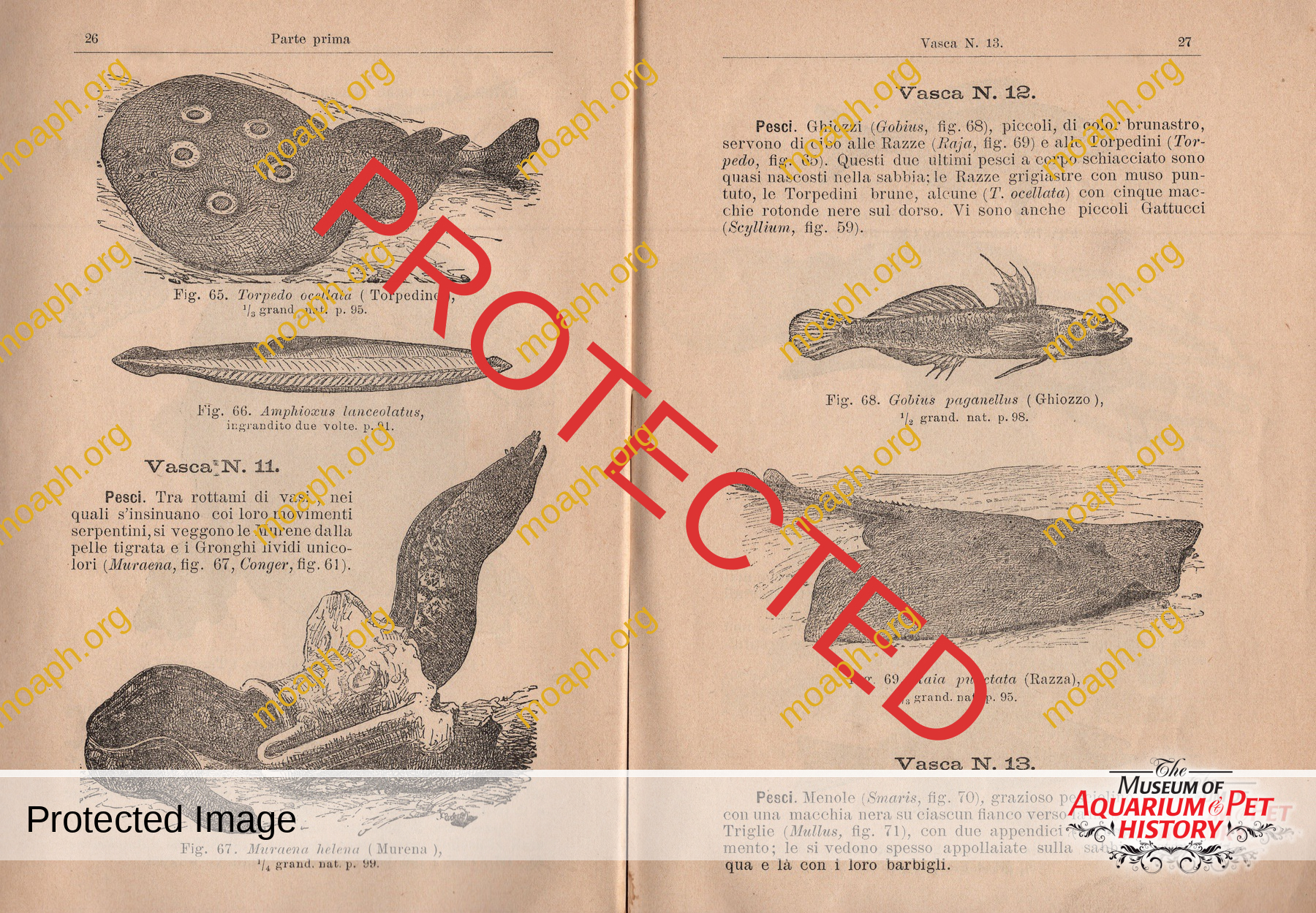
Guide to the Aquarium of the Zoological Station at Naples.
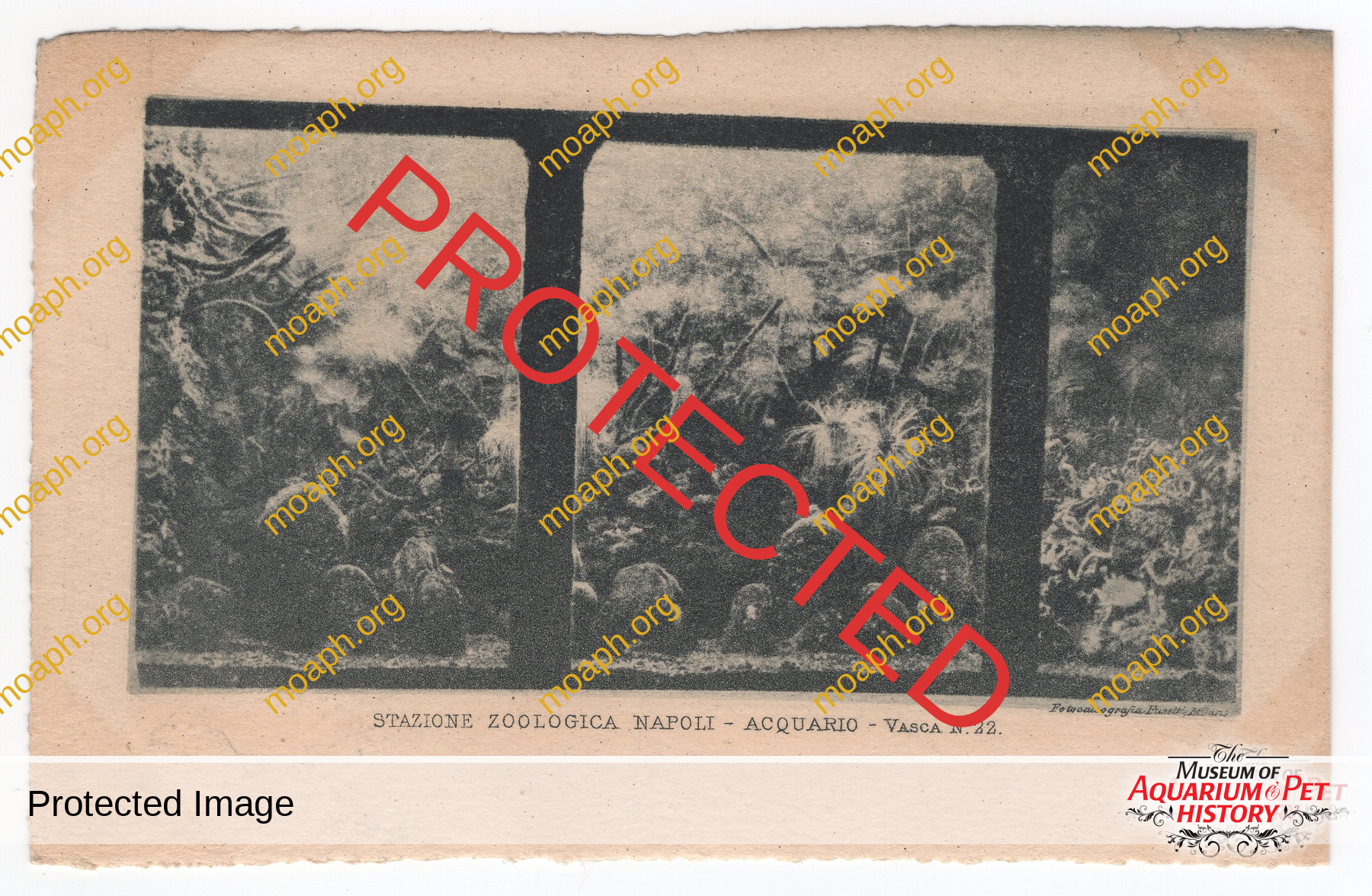
Late 1800s postcard.
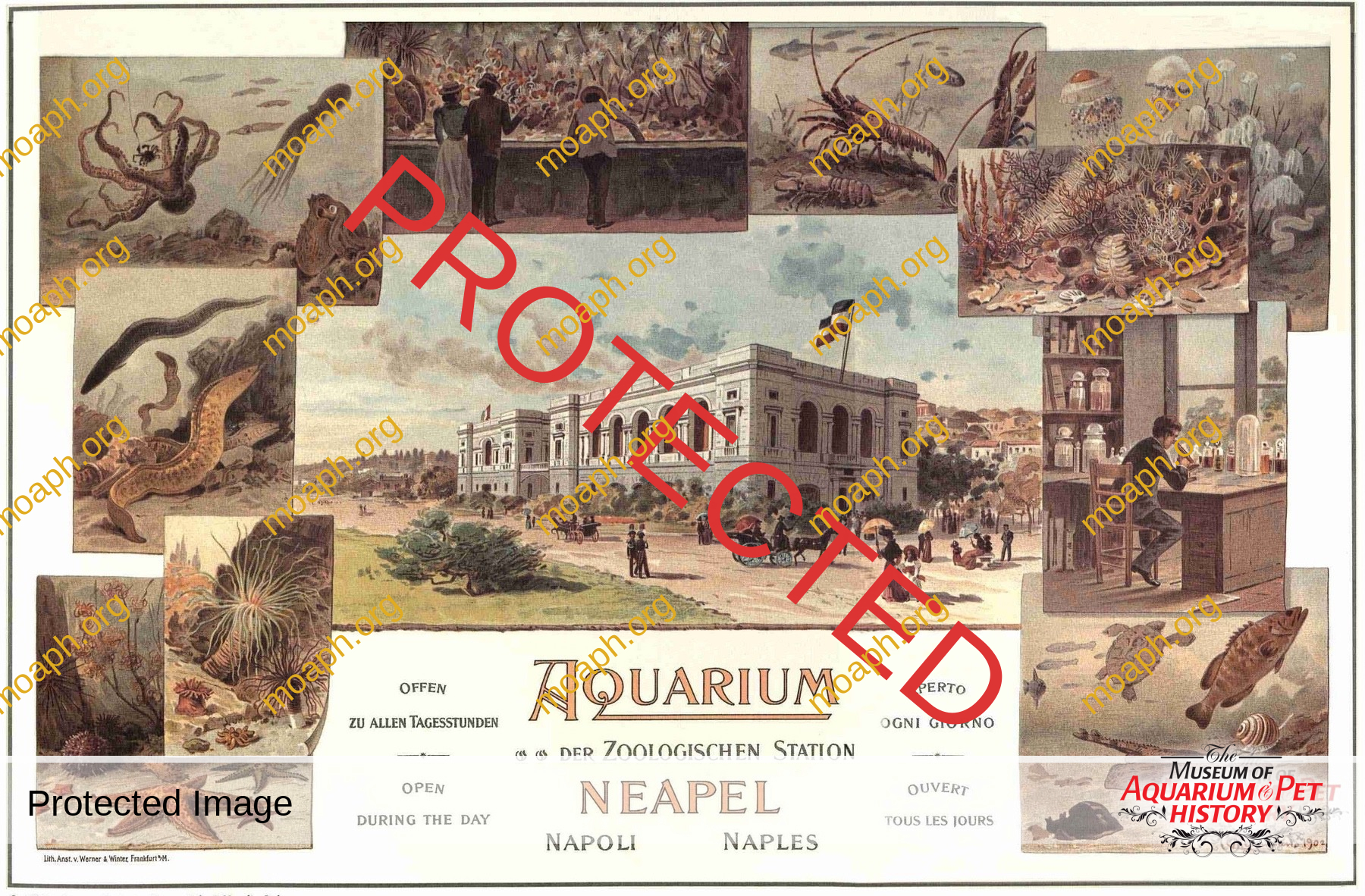
Advertising poster by Comingio Merculiano. ©Stazione Zoologica Anton Dohrn, Archivio Storico.
High level of organization in collecting marine life
The Naples aquarium housed back then only fauna and flora from the Tyrrhenian Sea (part of the Mediterranean Sea off the western coast of Italy), and mostly from the Gulf of Naples.
Right from the beginning, Dohrn and his staff showed effective organizational skills in collecting the needed aquatic species, which actually were sought-after for three main purposes:
- the public aquarium
- the research activities which took place in the laboratories
- the business of providing preserved marine animals for museums, universities, and private collectors from all over the world (the export department opened in 1877).
Without fear of contradiction, we can assert that no other Victorian-era public aquarium achieved the level of live species procurement that the Naples aquarium had.
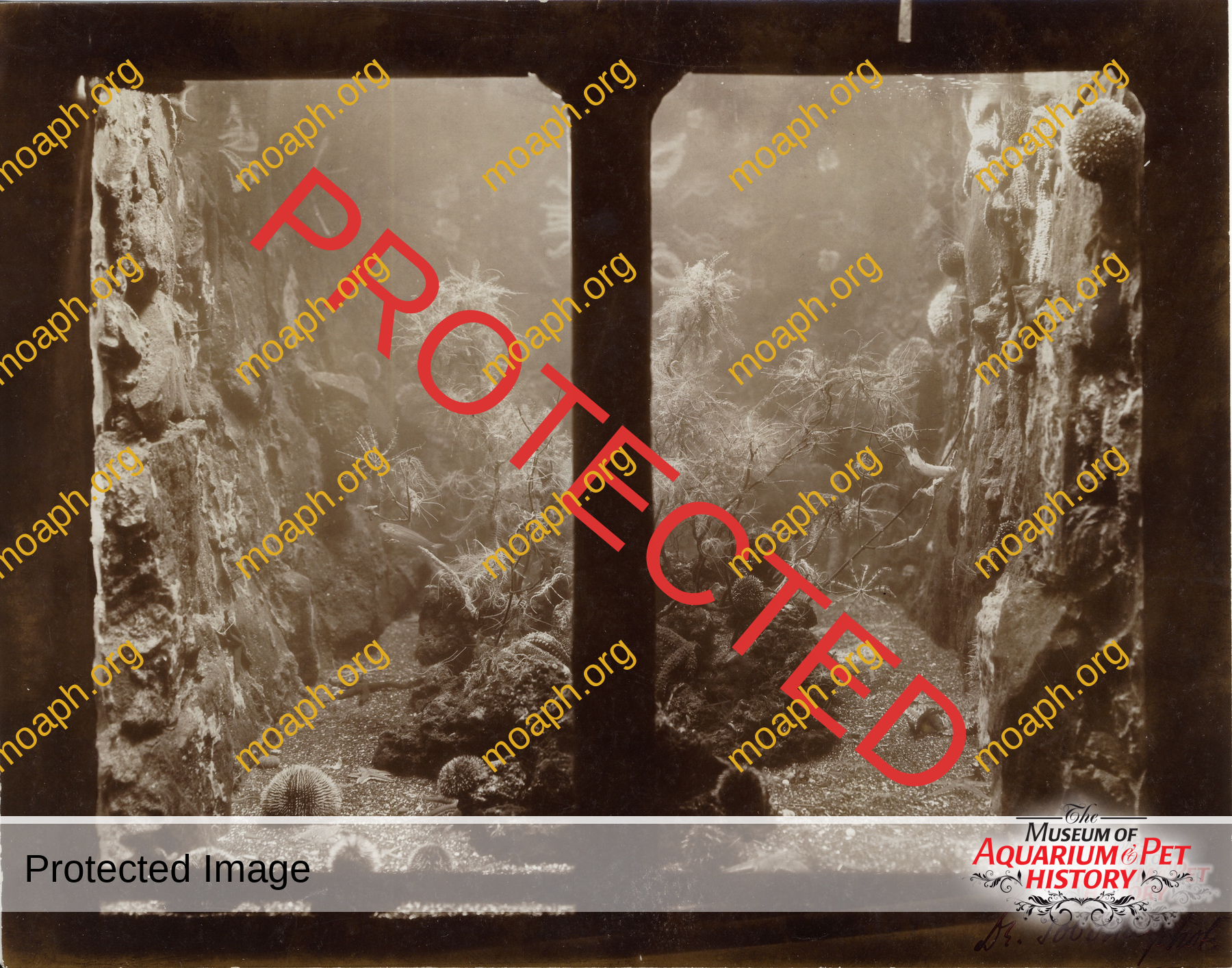
Tank No. 1, the realm of echinoderms. Photo by Johannes Sobotta, 1898. ©Stazione Zoologica Anton Dohrn, Archivio Storico (ASZN, G IV.135.10.).
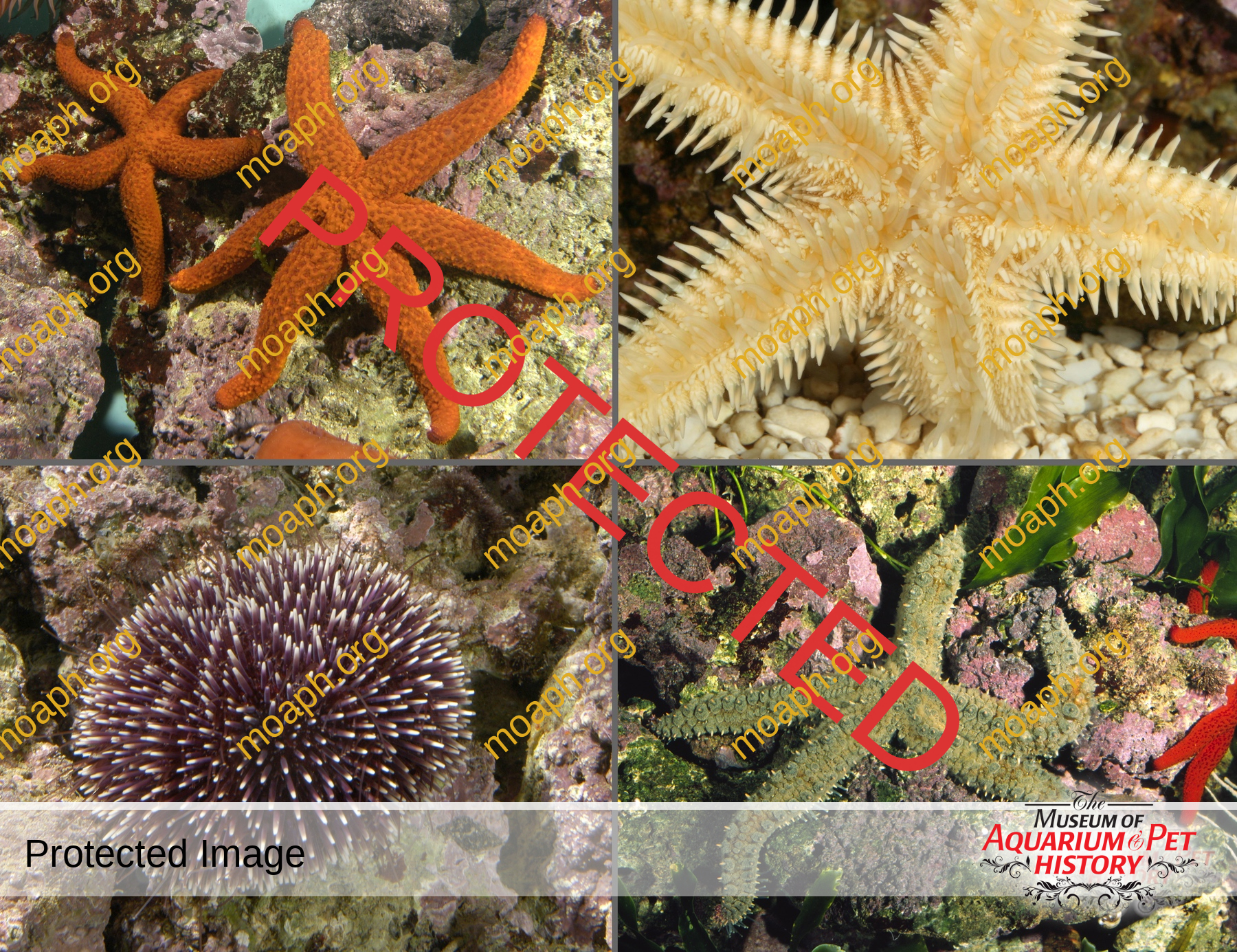
Some of the species housed in tank No. 1: Echinaster sepositus (upper left), Astropecten sp. (upper right), Sphaerechinus granularis (lower left), and Marthasterias glacialis (lower right).
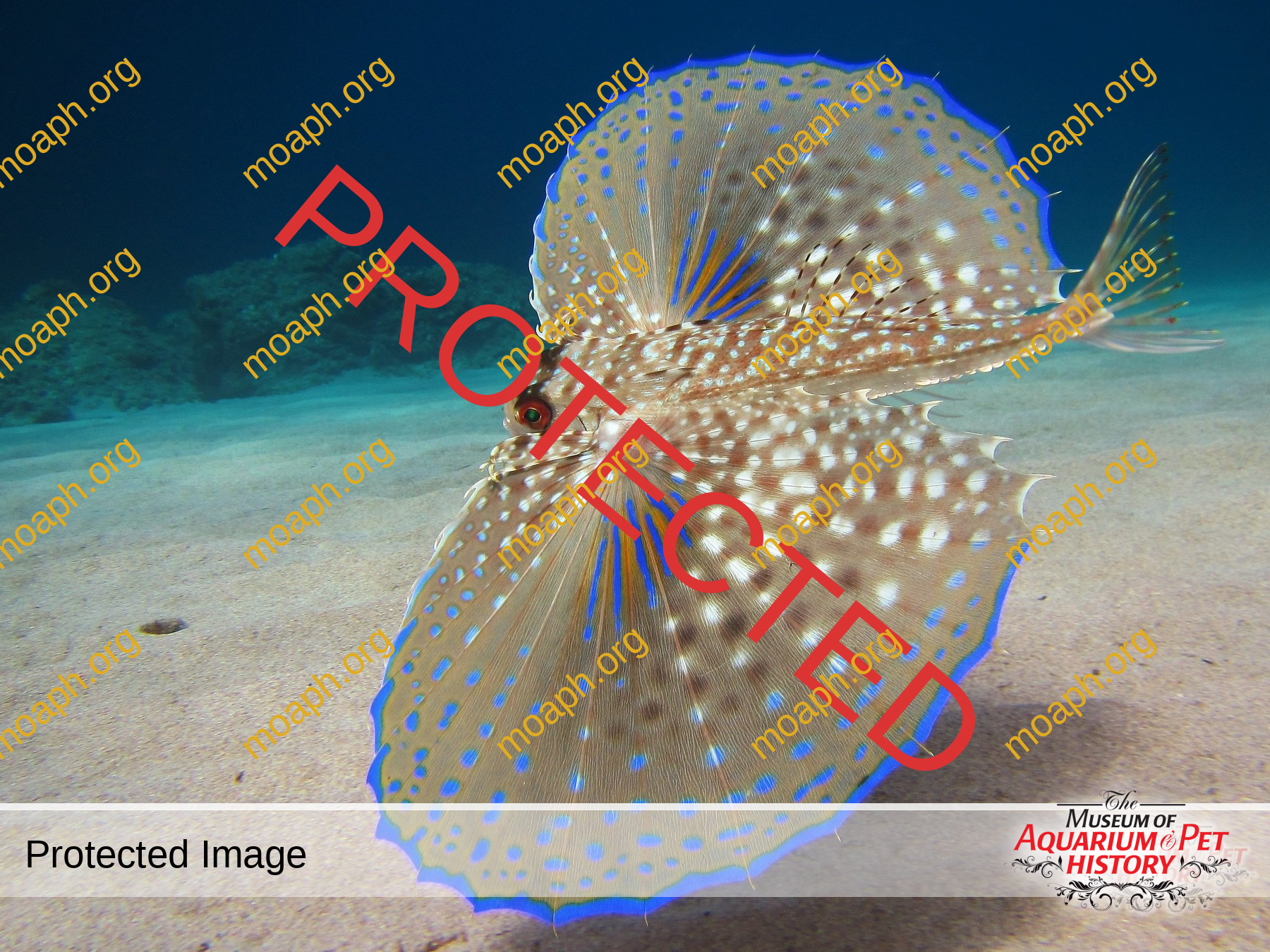
Dactylopterus volitans, a “star animal” at the Naples aquarium.
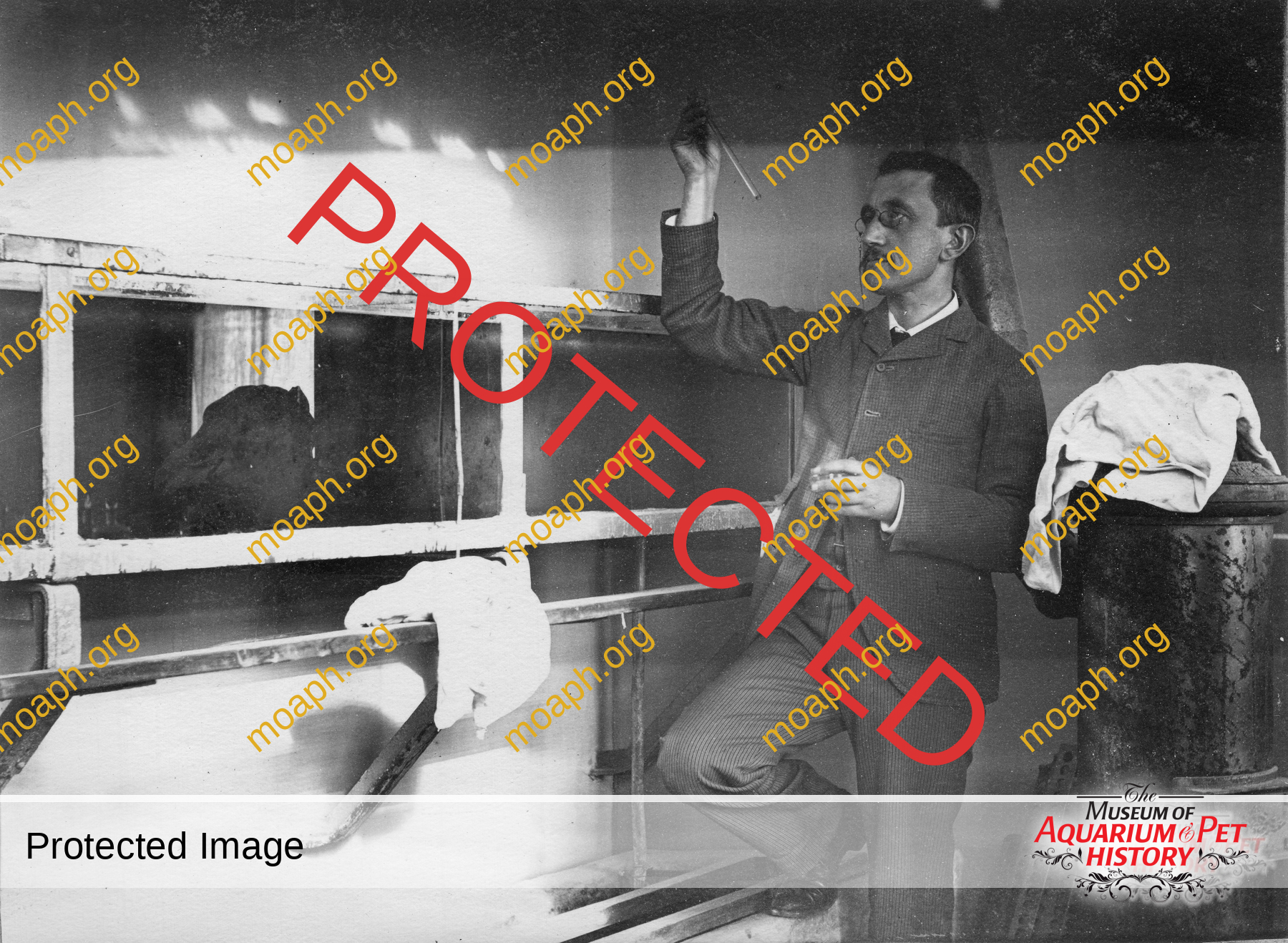
Some of the aquariums located in the laboratories. Photo by W. Giesbrecht, 1889. ©Stazione Zoologica Anton Dohrn, Archivio Storico (ASZN, La.464.).
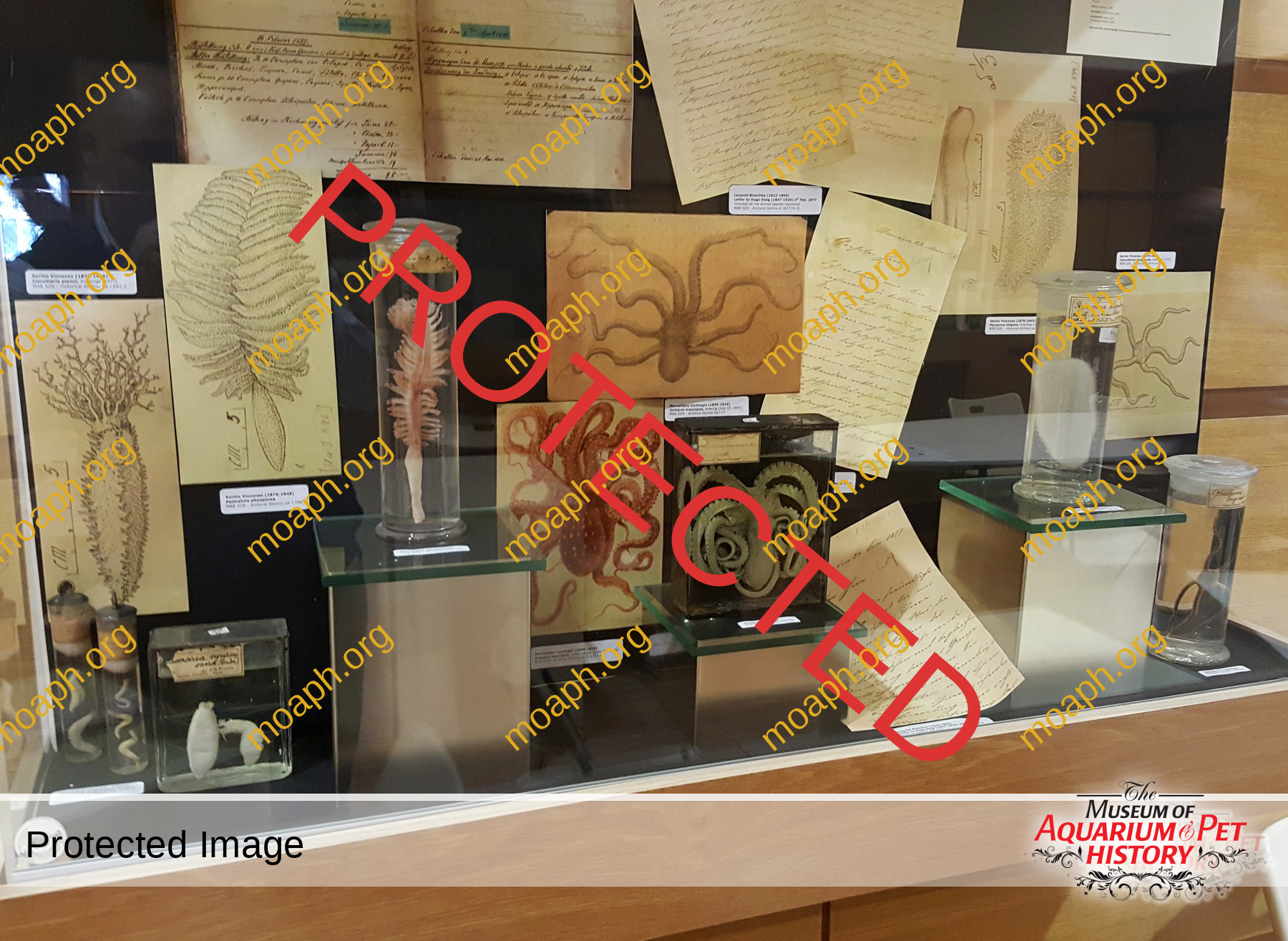
A few examples of preserved animals from the Tyrrhenian Sea.
Dohrn, for starters, hired a few local fishermen on a permanent basis. Like other employees of the Zoological Station and the Aquarium, they gained access to social benefits and, if deserving, they could also receive promotions based on age and years of service, as happened for example with Aniello Fontanarosa, a humble fisherman who rose through the ranks to become the head of the Zoological Station’s fleet.
These men forged by sea and sun knew exactly where to find the most sought-after species for food purposes, but they needed basic scientific and technical training to learn how to catch other marine animals that, until then, they hadn’t been seen as a source of profit. Dohrn himself trained them, and they remained in his service for decades. The German zoologist showed once more his remarkable ability to talk effectively both to distinguished men of science, politicians, nobles, artists, influential businessmen, and common people.
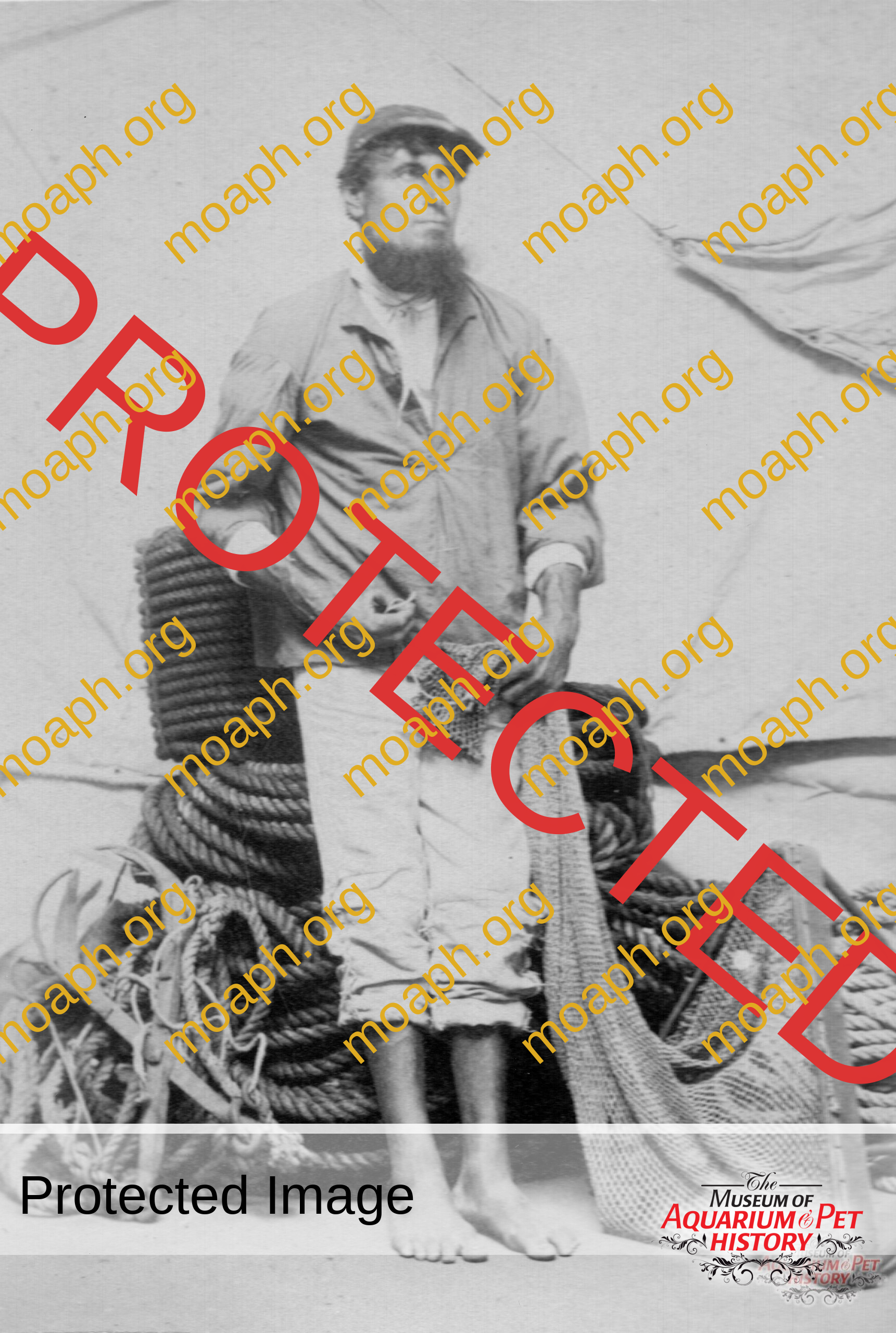
Aniello Fontanarosa with a fishing dredge in the 1880s. ©Stazione Zoologica Anton Dohrn, Archivio Storico (ASZN, La.129.10.).
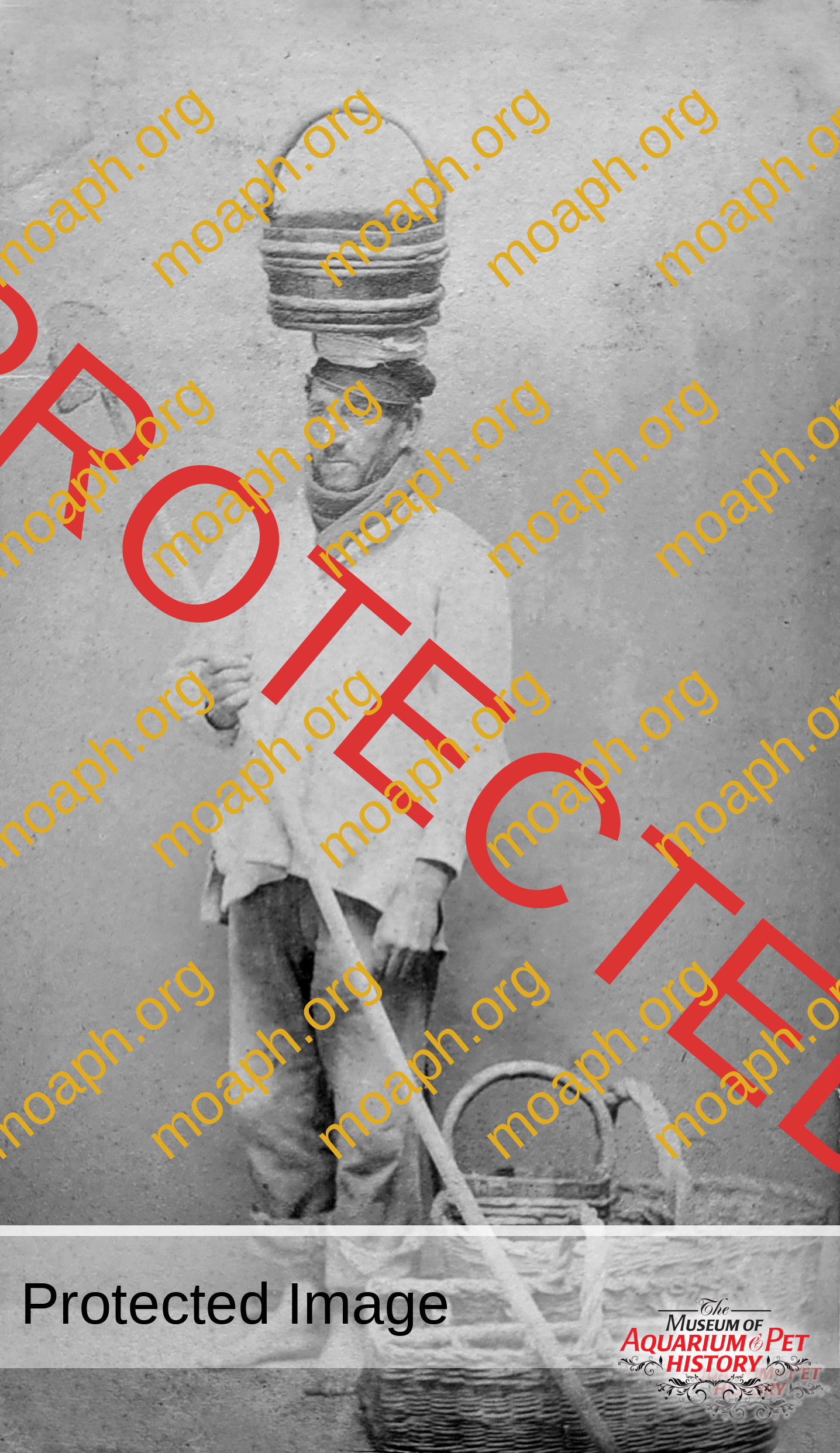
The fisherman Giovanni. ©Stazione Zoologica Anton Dohrn, Archivio Storico (ASZN, ADD, armadio 38, album 24.38.).
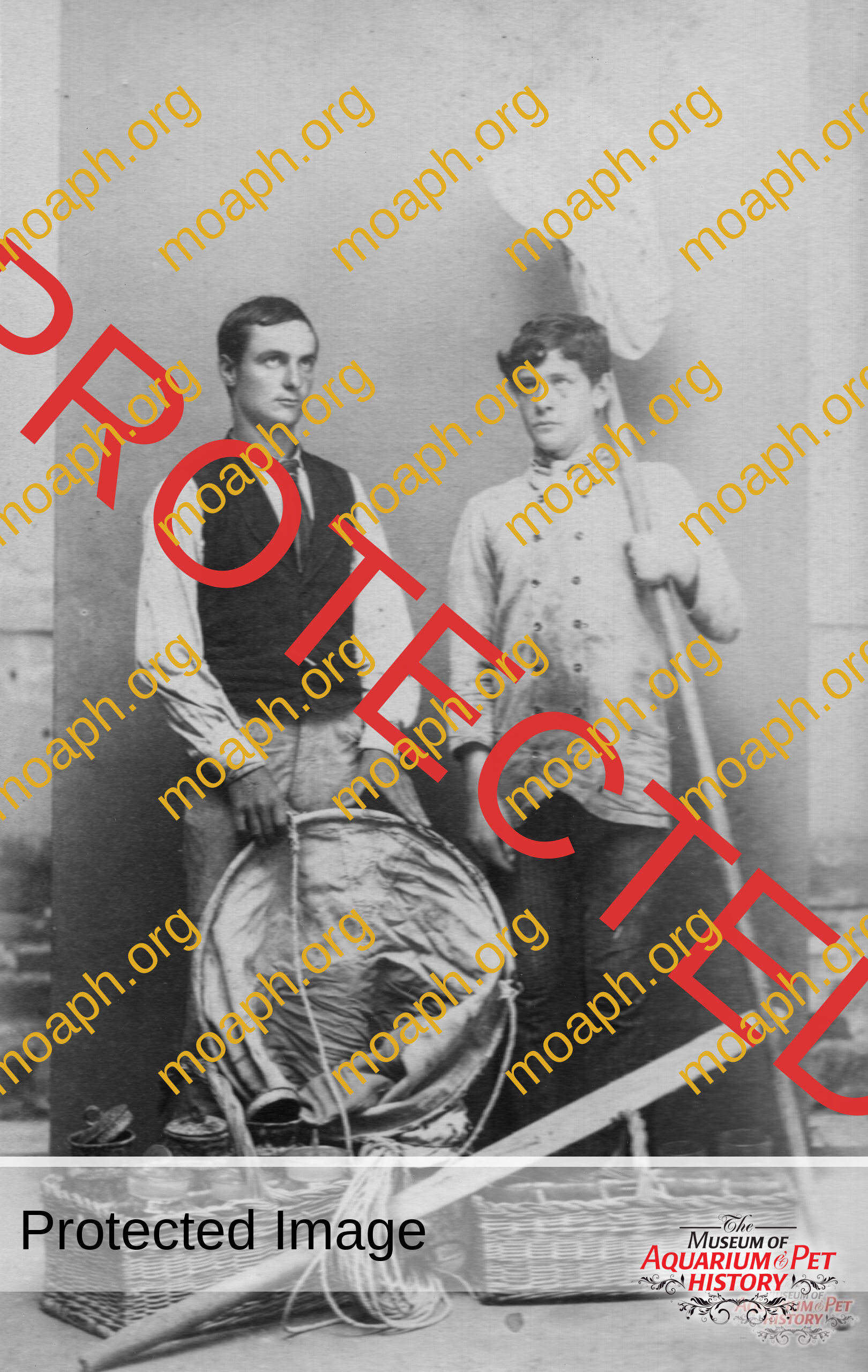
Fishermen with plankton nets photographed in the 1880s. ©Stazione Zoologica Anton Dohrn, Archivio Storico (ASZN, La.129.11.).
Boats
At the beginning of his venture, Dohrn owned a small sailing boat and four rowing boats. The Tyrrhenian Sea, however, was a wide world yet to be explored, these boats were unsuitable for carrying out the ambitious “scientific fishing” program he had in mind. His crew needed a steamer to be independent of the wind, to have the necessary propulsion to tow the fishing dredges, and to arrange long distance trips. In order to offset the expense, he planned to occasionally rent it out to guests and researchers of the Zoological Station for weekly cruises, daily excursions and social outings.
Dohrn wrote about his need for a steamer to the German physiologist Emil Du Bois-Reymond in a letter dated June 23, 1873. It’s interesting to notice that, in the same document, he also mentioned a railway carriage equipped with aquariums to ship live marine animals to other public aquariums and universities. This second project, however, was never carried out.
The long-awaited steamer arrived in 1877. It was a gift from the Berlin Academy of Sciences and the Ministry of Public Education of Prussia. It was built by the British firm John I. Thornycroft & Company Limited, and named “Johannes Müller” in honor of this great physiologist and pioneer of marine biology.
In 1882, it was joined by the steam launch “Frank Balfour”, named after the British embryologist Francis Maitland Balfour, a staunch supporter of Dohrn since the early days of his Neapolitan venture.
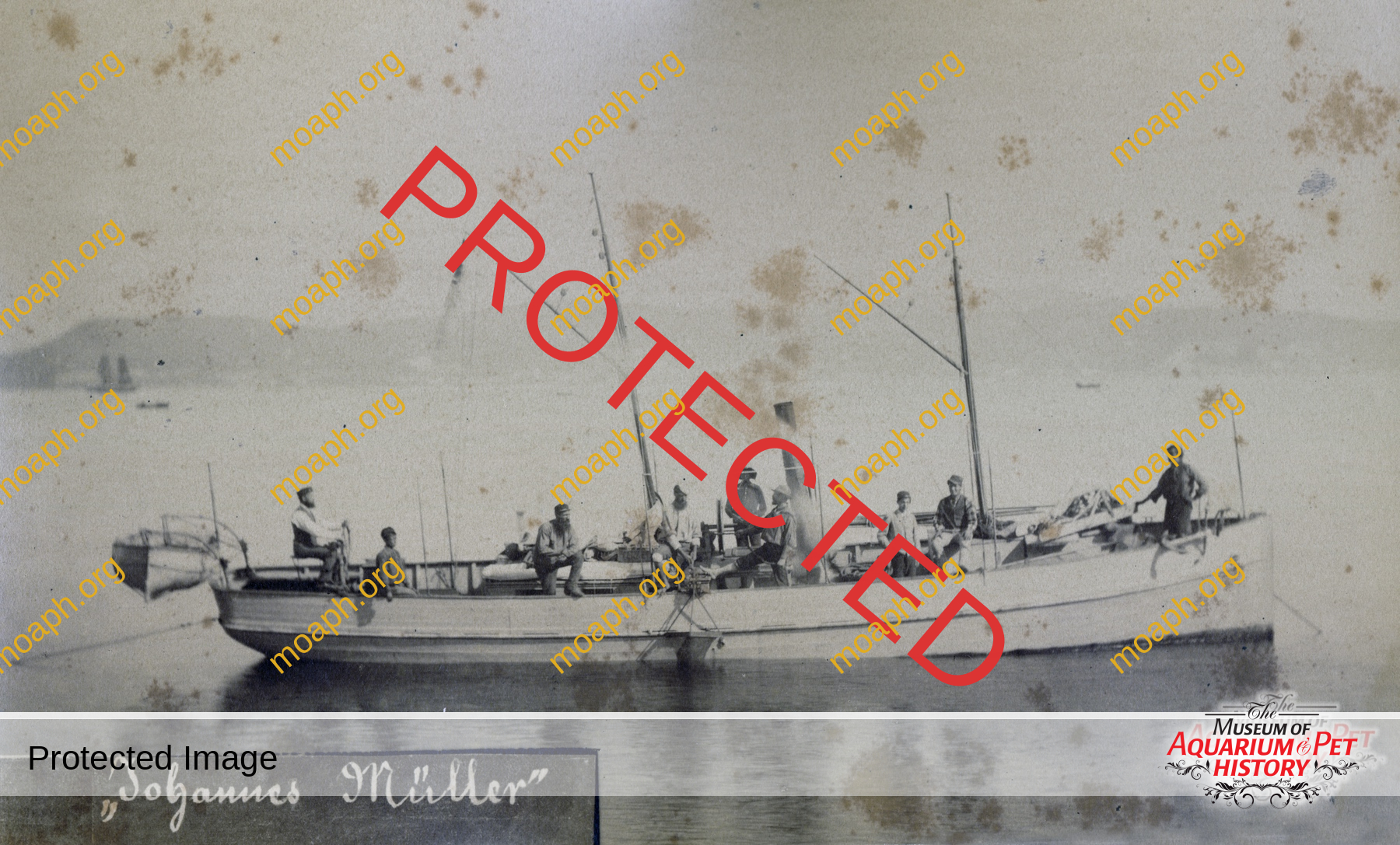
The steamer Johannes Müller in 1877. ©Stazione Zoologica Anton Dohrn, Archivio Storico (ASZN, La.125.12.).
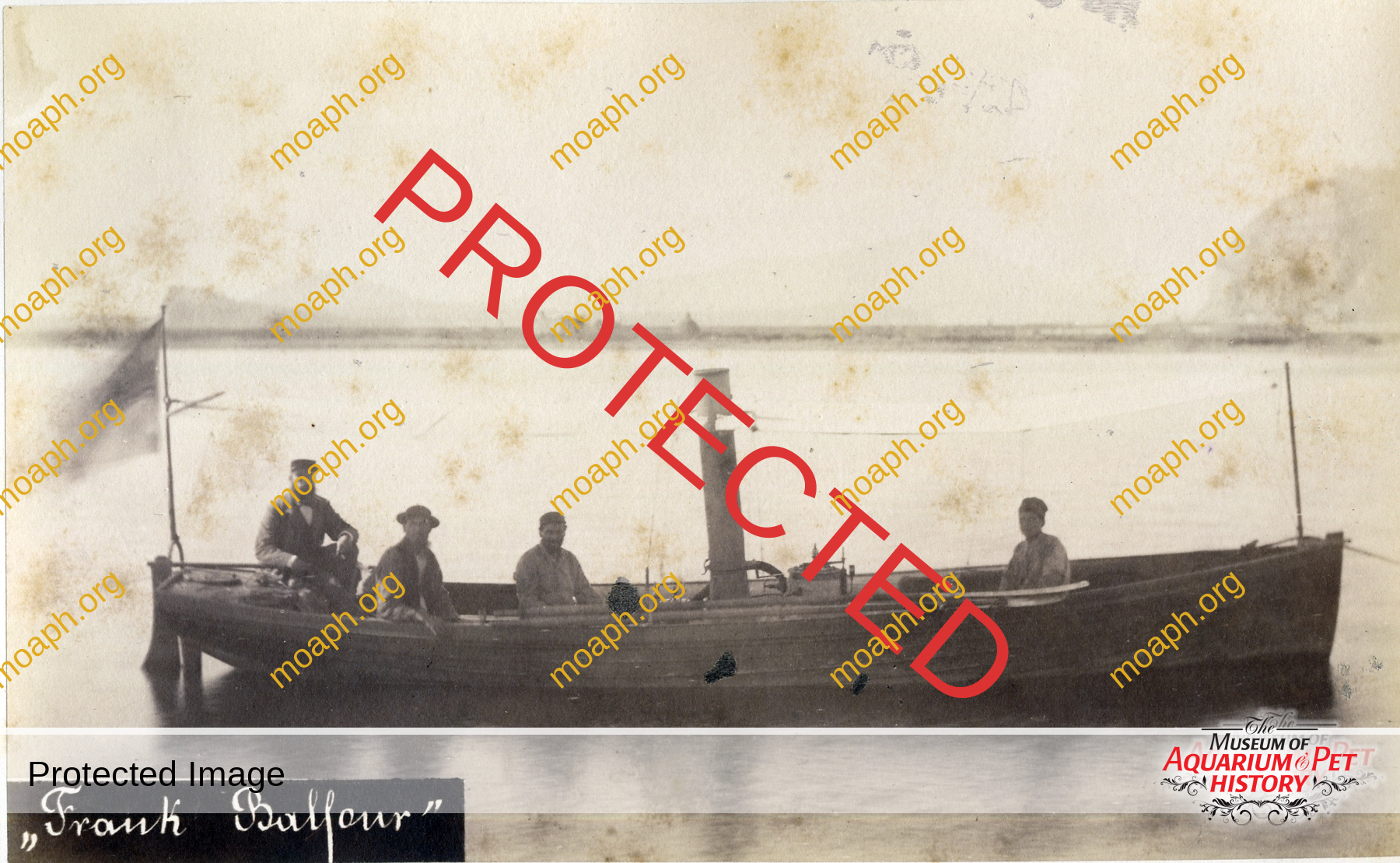
The steam launch Frank Balfour in 1883. ©Stazione Zoologica Anton Dohrn, Archivio Storico (ASZN, La.125.14.).
Underwater walks
The “floating personnel” of the Zoological Station used the fishing dredge very frequently, along with nets and fishing pots. However, it wasn’t a selective instrument and often damaged the catch, sometimes irreparably. A deep sea diving suit was necessary, even to observe the underwater landscapes and subsequently provide a faithful description of them to the world of science.
Dohrn had the chance to test personally a deep sea diving suit in the Bay of Kiel (Baltic Sea). The entire equipment weighed over 100 pounds, walking on the seafloor in those years must have been a truly dangerous experience, but at the same time incredibly thrilling. Once back in Italy, he got a diving dress, together with its manual air pump, from the Italian Royal Navy, making that equipment available also to the researchers working at the Zoological Station.
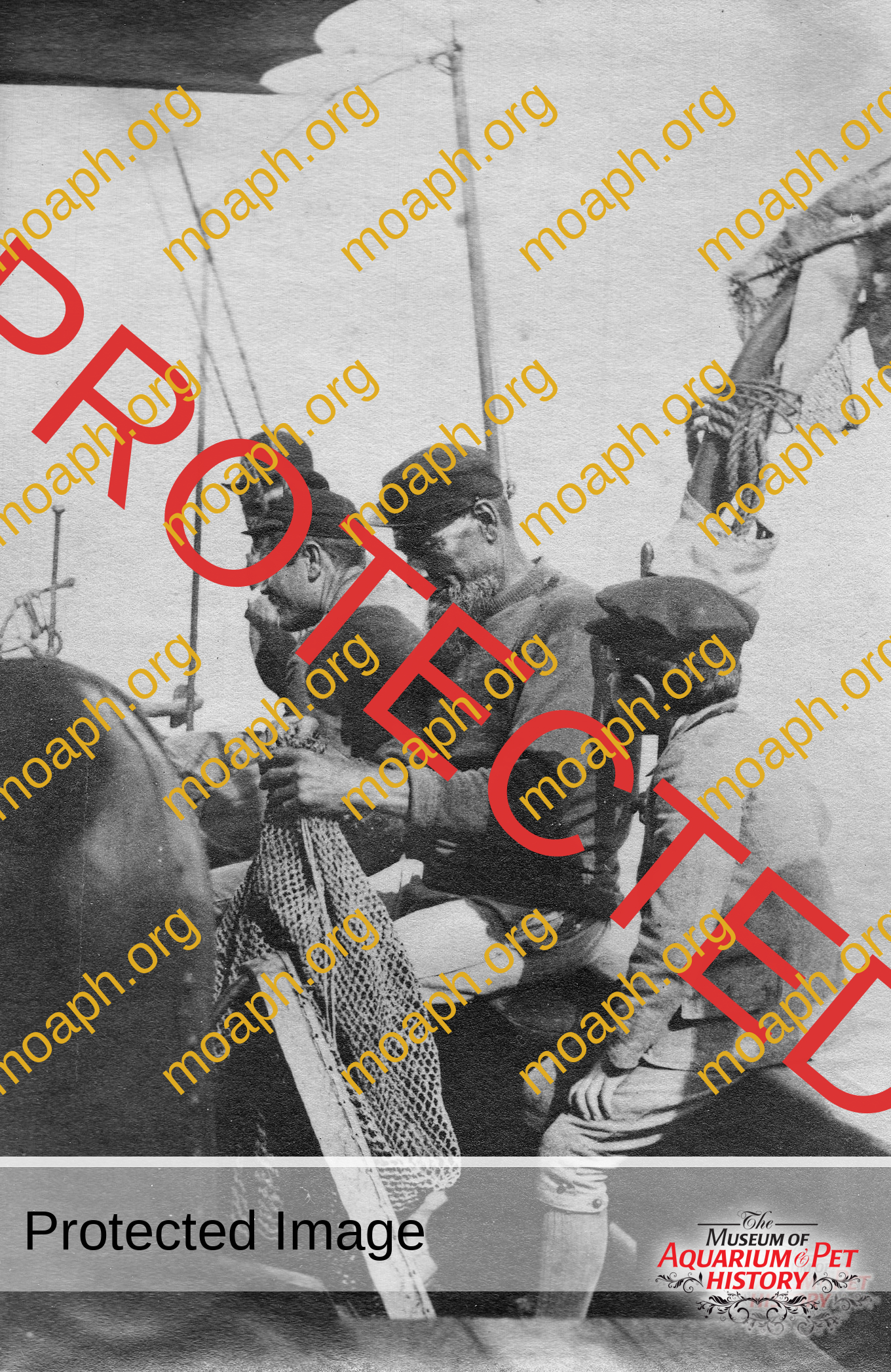
Aniello Fontanarosa handling a triangular fishing dredge. He had a fundamental role in Dohrn’s “scientific fishing” program. Photo by W. Giesbrecht, 1891. ©Stazione Zoologica Anton Dohrn, Archivio Storico (ASZN, La.119.469.).
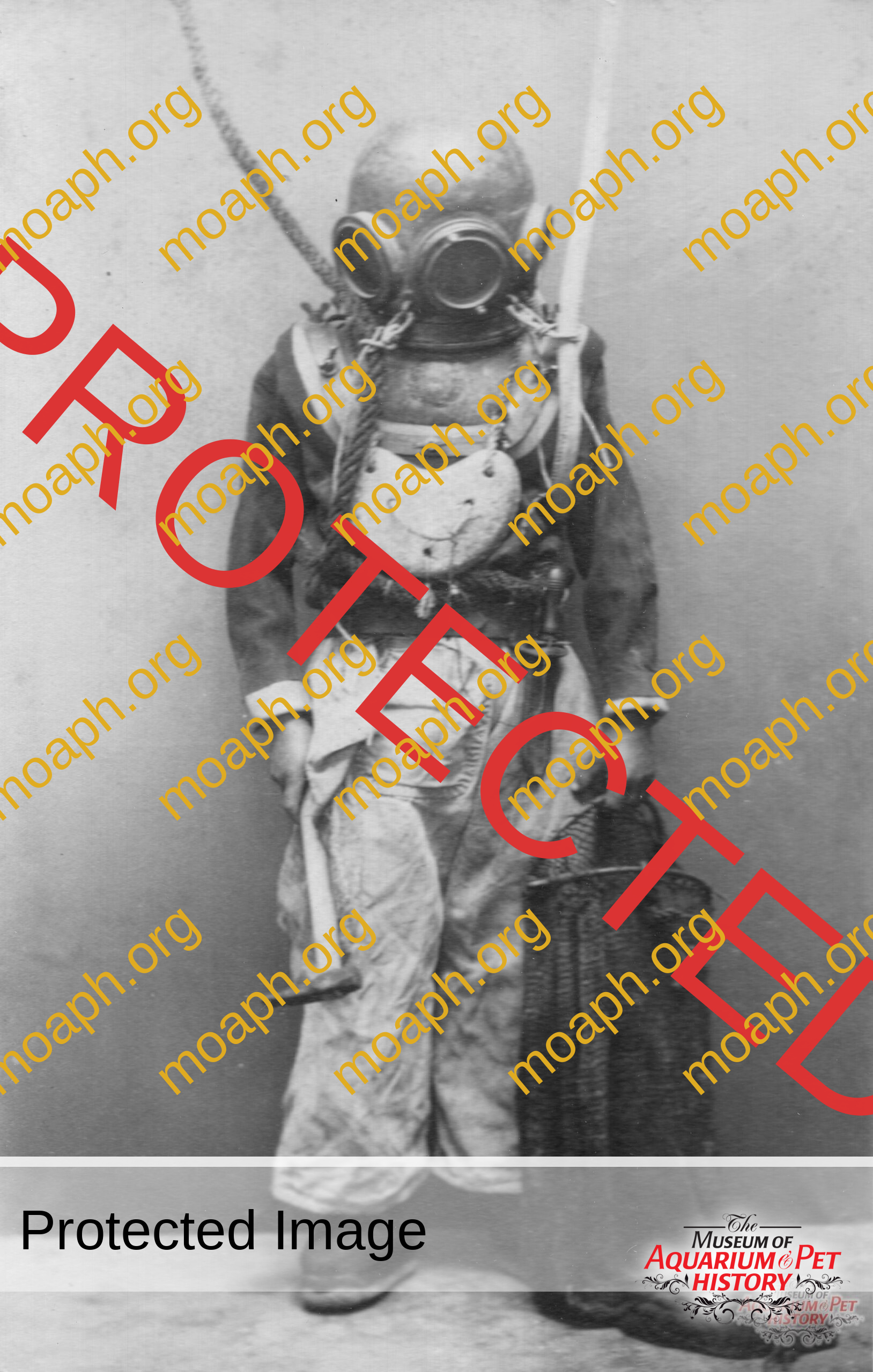
The diver with rock hammer and net. Photo by E. von Petersen, 1880s. ©Stazione Zoologica Anton Dohrn, Archivio Storico (ASZN, La.129.9.).
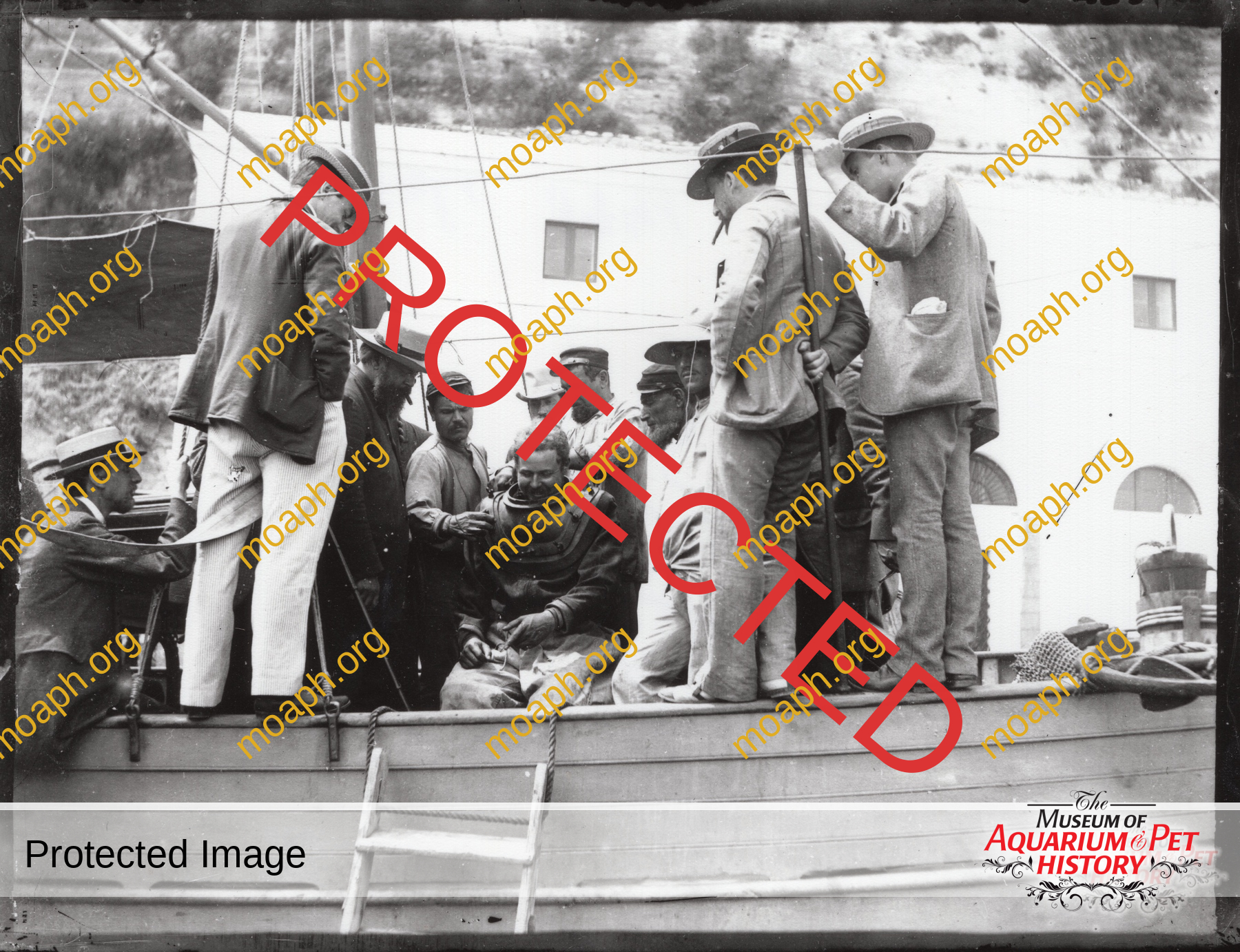
The diver H.L. Russell during the long dressing process, July 1891. ©Stazione Zoologica Anton Dohrn, Archivio Storico (ASZN, La.121.p.86.287_13.).
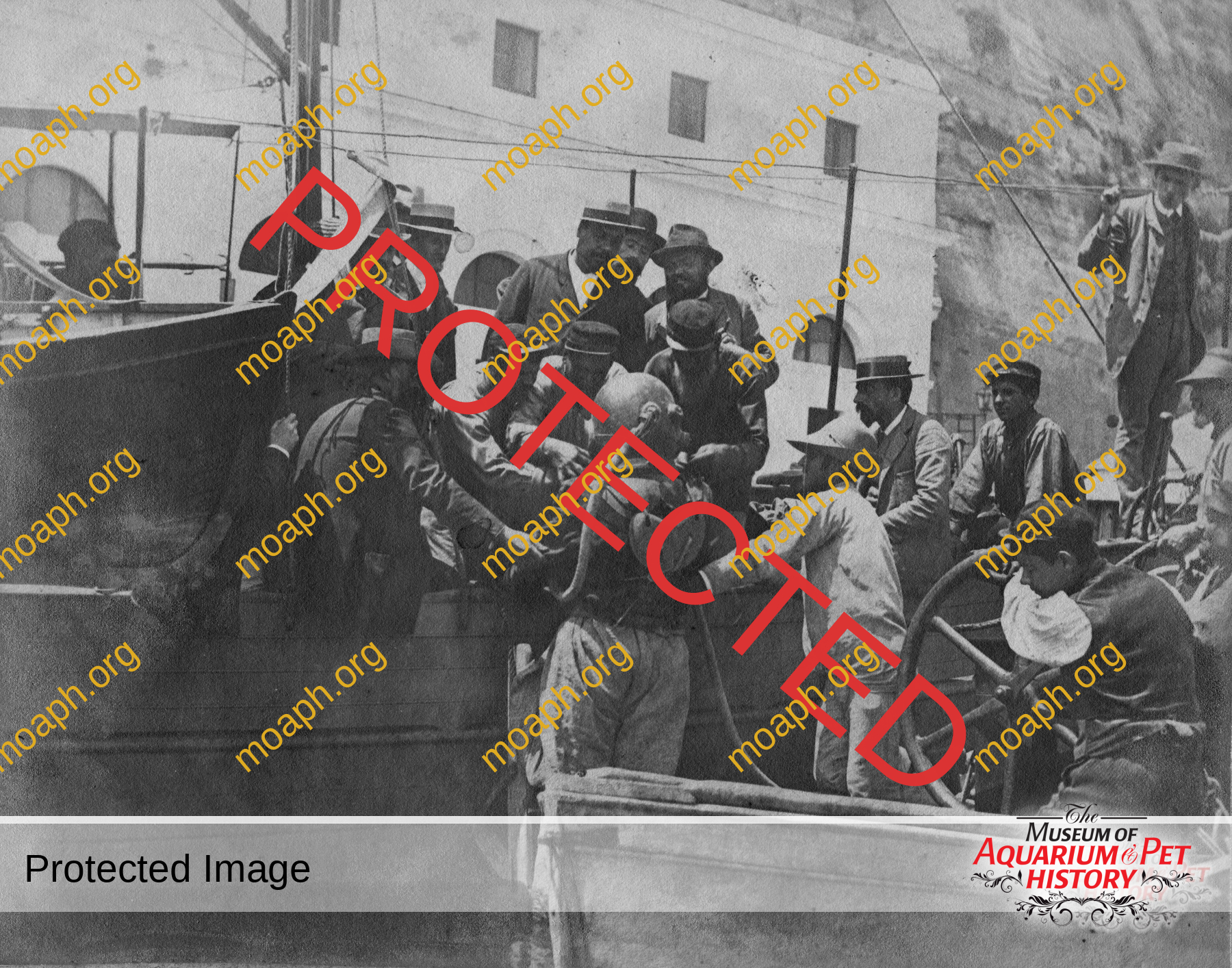
The diver H.L. Russell goes into the water near the island of Nisida in July 1891. ©Stazione Zoologica Anton Dohrn, Archivio Storico (ASZN, La.128.15.).
The diving dress allowed one to explore shallows, grottos, and many other underwater environments. The divers brought to the surface multiple sessile and benthic animals, some of which were particularly suitable for the Aquarium thanks to their vibrant colors. The proximity of the Naples aquarium to most of the collecting points reduced the mortality rate, and all the typical transport issues that the “inland Aquariums” had to face.
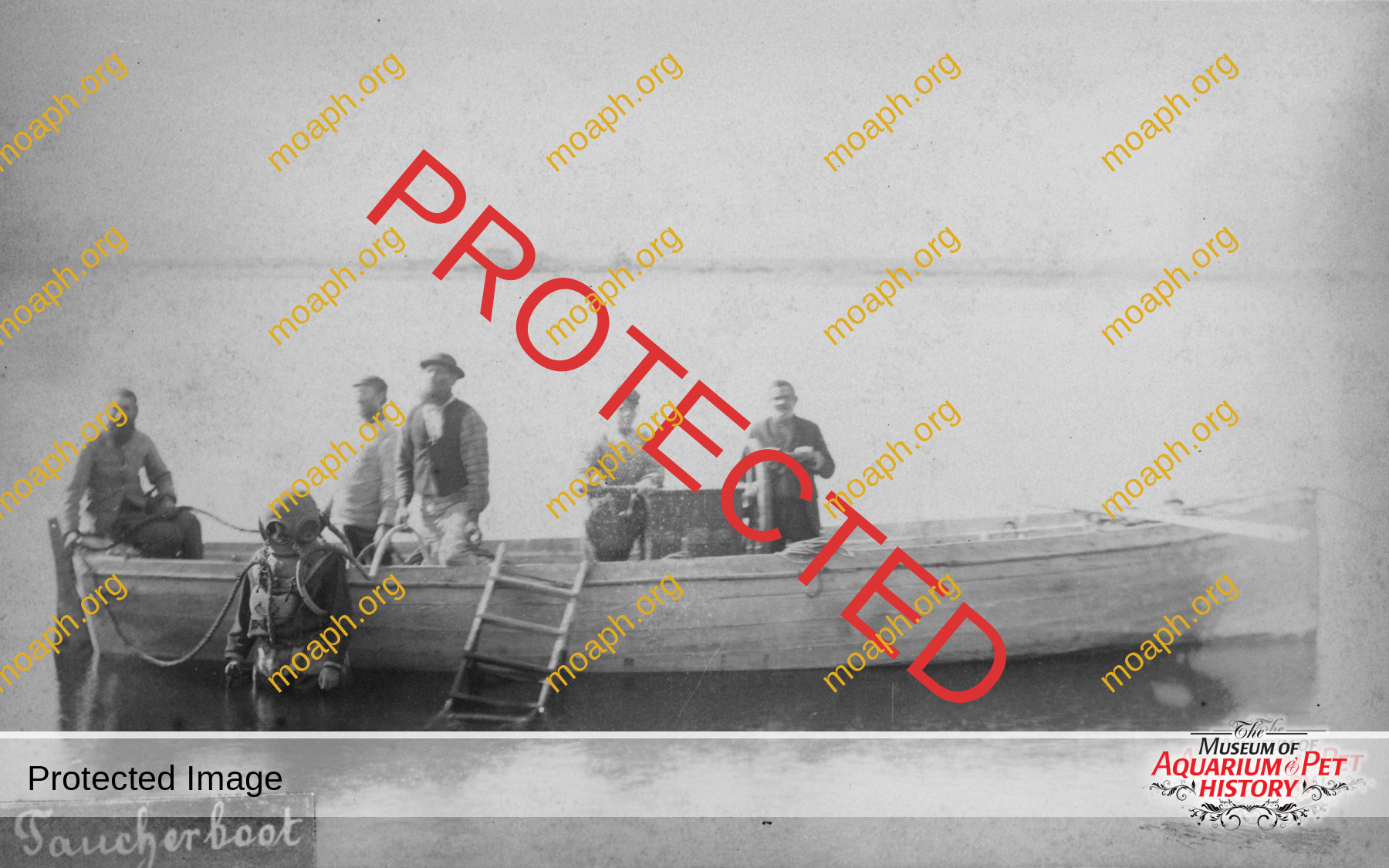
The diver in shallow water, 1890. Notice the bulky manual air pump on the boat. ©Stazione Zoologica Anton Dohrn, Archivio Storico (ASZN, La 126.14.).
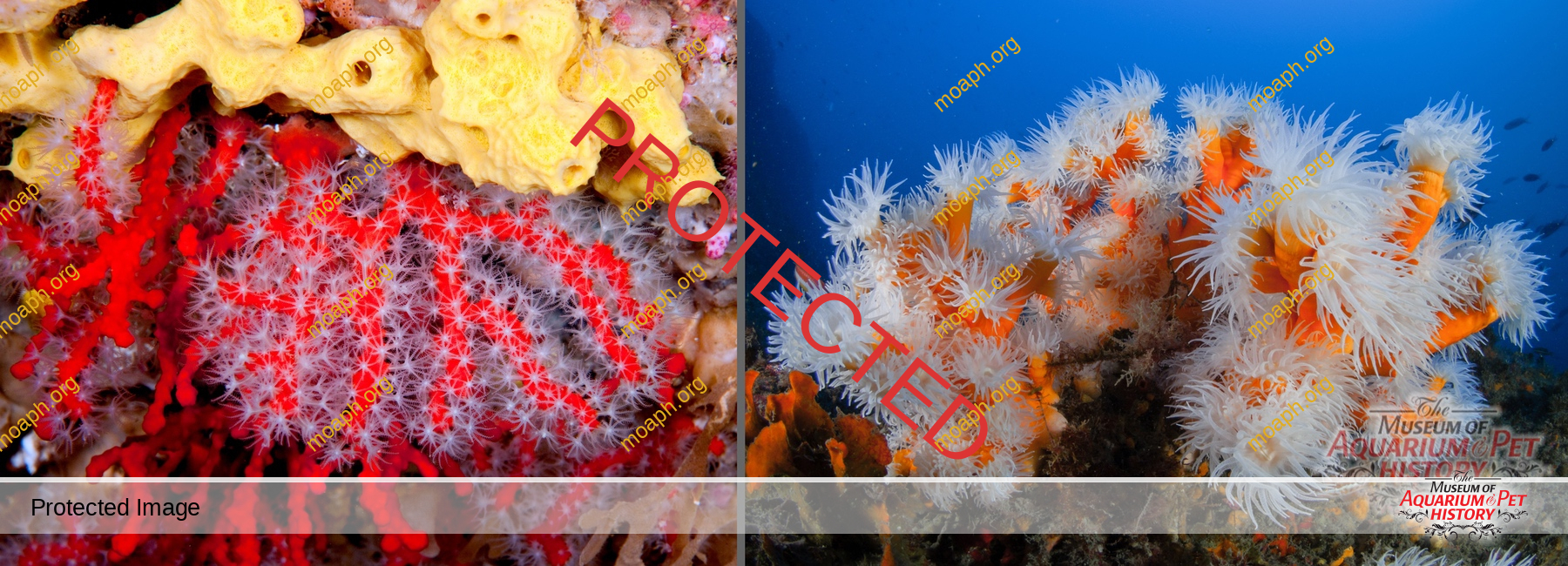
Thanks to the diving equipment, the Aquarium got colorful sponges, and wonderful sessile corals in perfect condition, such as Corallium rubrum (left) and Dendrophyllia ramea.
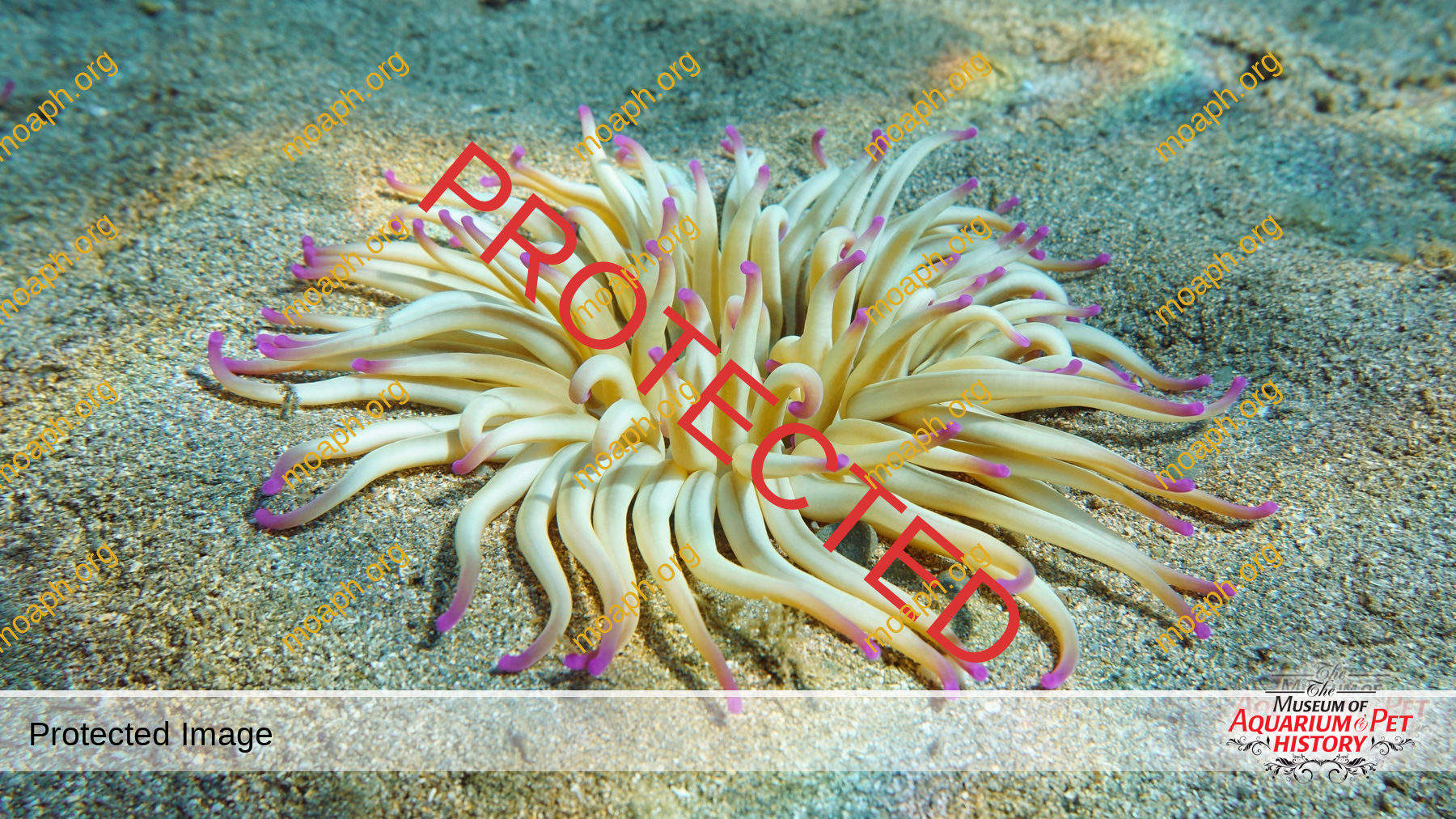
Condylactis aurantiaca, commonly known as the golden anemone, has been a regular guest of the Aquarium.
A colorful and noisy market
The first fishermen hired by Dohrn also played an important role in dealing with many other local fishermen, starting from the most experienced ones from Ischia, Mergellina, Procida, and Santa Lucia, who were encouraged to offer to the Zoological Station the secondary products of their work. Thus, every day around Dohrn’s facility, a colorful and noisy market of bycatch species developed. Common people joined it as well, often bringing what they were able to fish or collect in shallow water simply using fishing poles, hammers, chisels, and other basic tools. The Historical Archive of the Zoological Station still preserves the accounting records on what was purchased and the related price, another example of how meticulous Dohrn was in documenting everything.
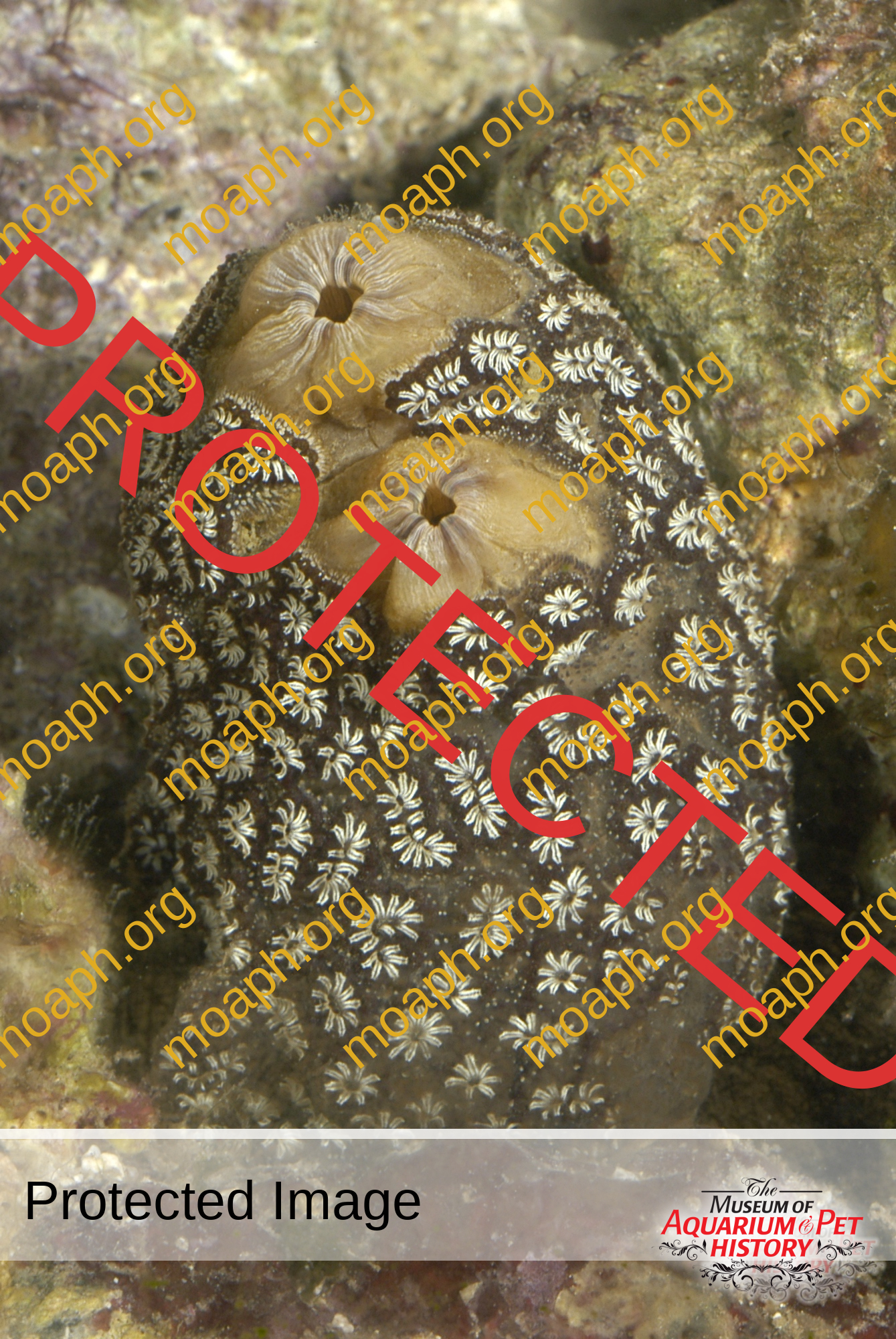
Botryllus schlosseri is a colonial ascidian commonly known as the star tunicate. At the Naples aquarium, this species infested the walls of several tanks. Here a small colony covering a specimen of Styela plicata.
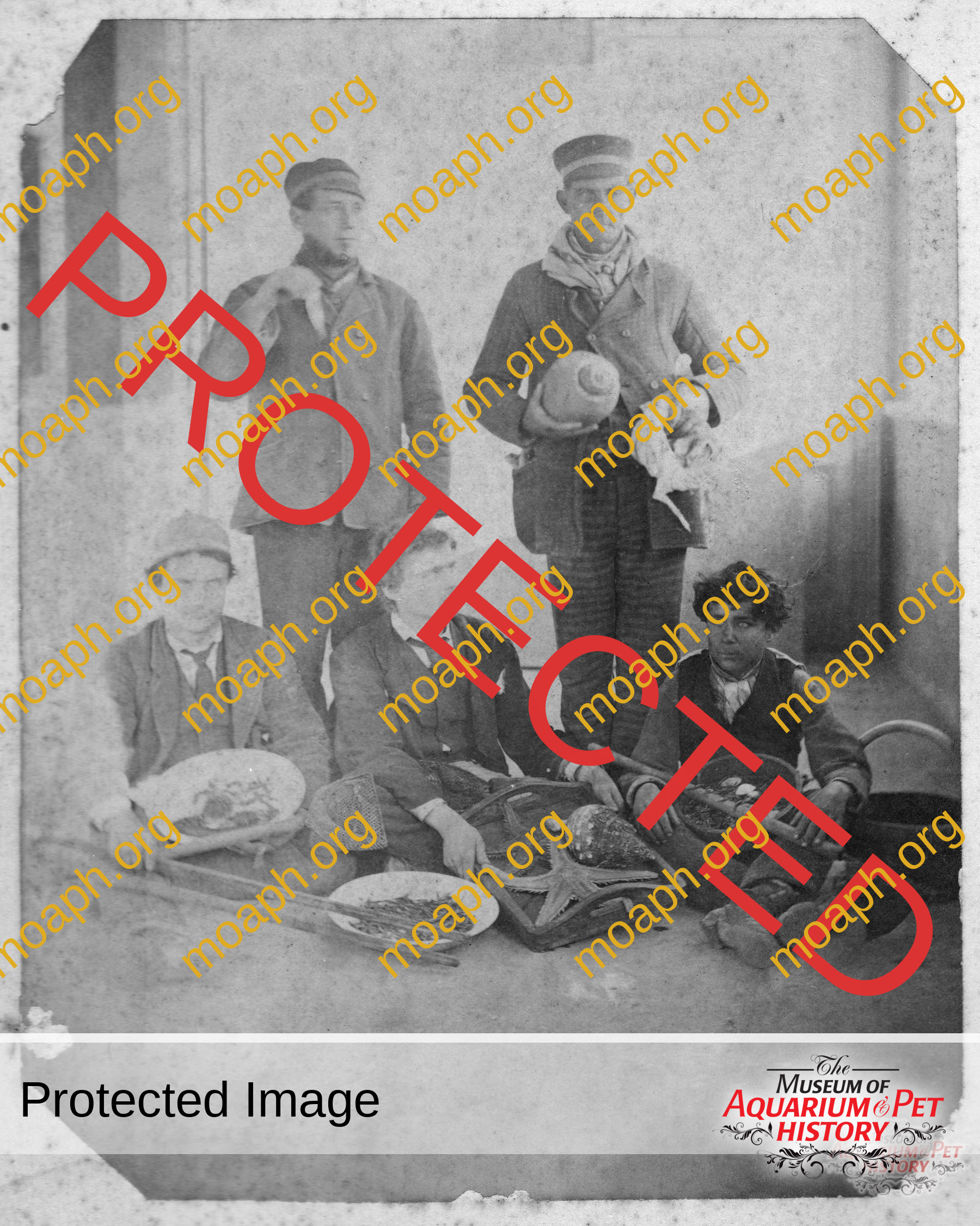
Dohrn’s fishermen showing the daily catch in 1896. ©Stazione Zoologica Anton Dohrn, Archivio Storico (ASZN, ADD, armadio 38, album 24.97.).
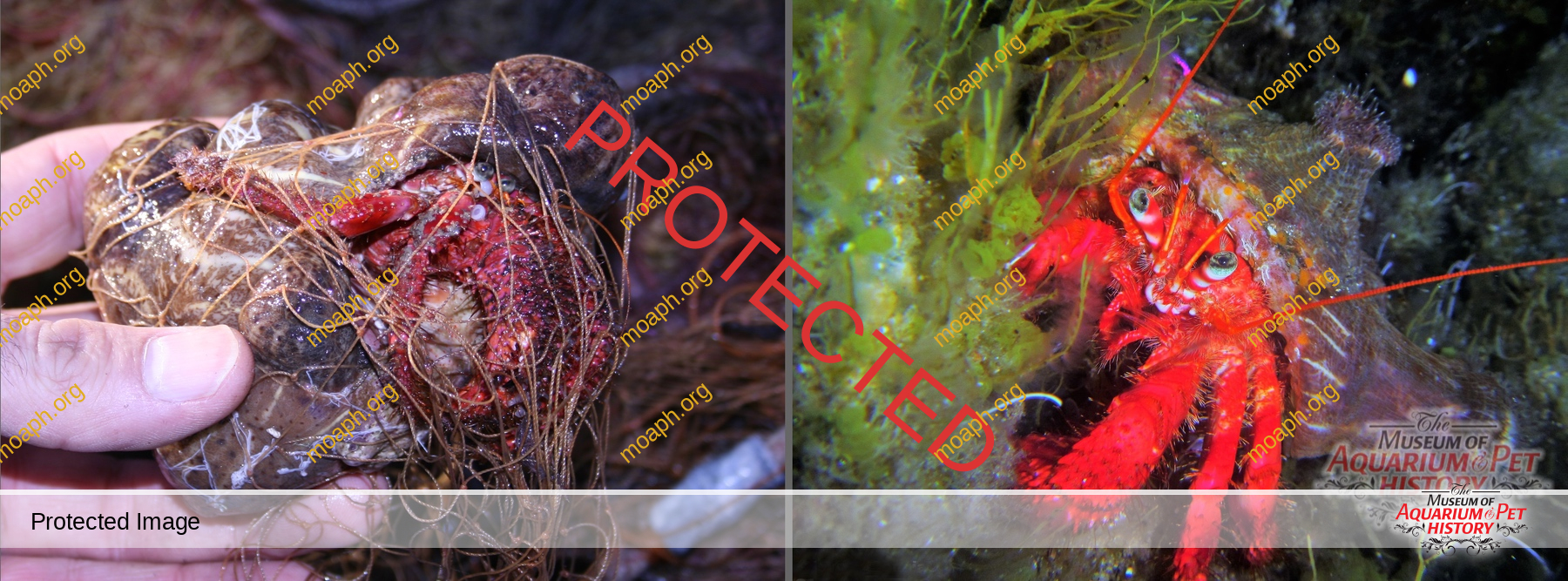
Dardanus arrosor, the Mediterranean hermit crab, was a classic example of bycatch much appreciated by the Aquarium.
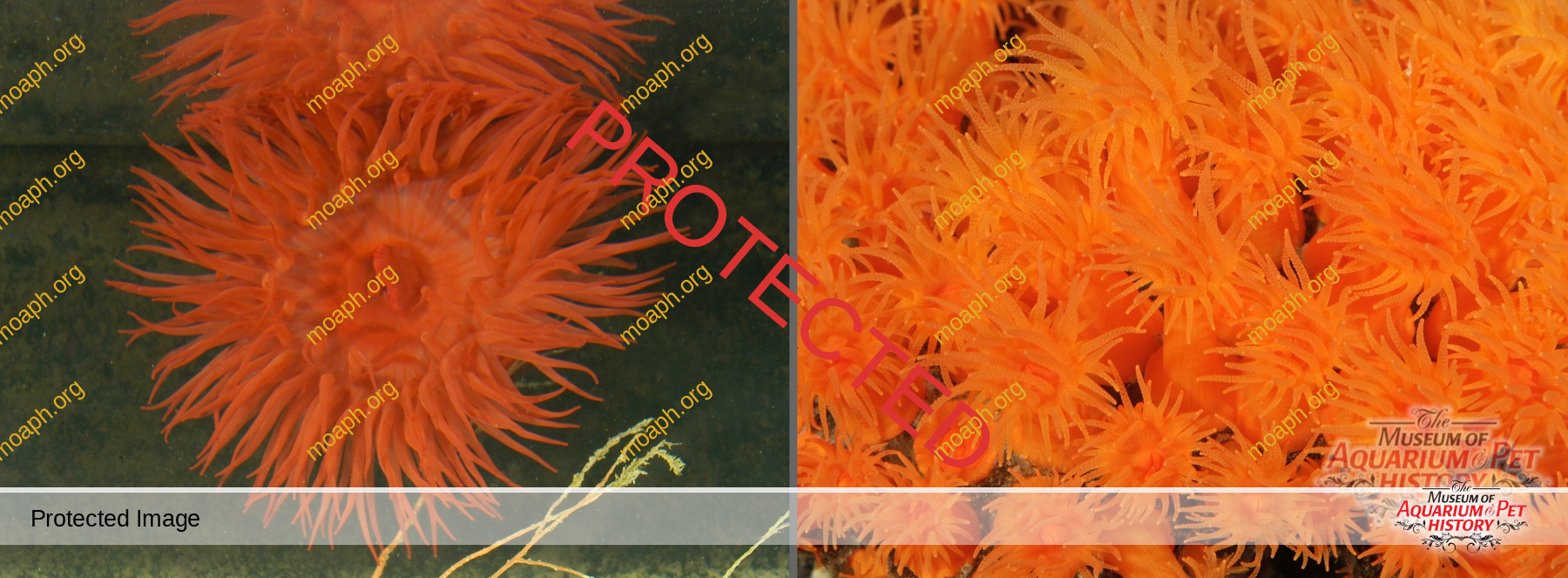
Back then, taking advantage from the low tide, Actinia equina (left) and Astroides calycularis were easily collected in the intertidal zone.
Inside the Zoological Station, the catch of the day usually passed through the “sorting room”. Here, Salvatore Lo Bianco selected the different species, and send them either to the Aquarium, or to the laboratories, or to the conservation department where he had developed innovative preservation methods remained secret for many years.
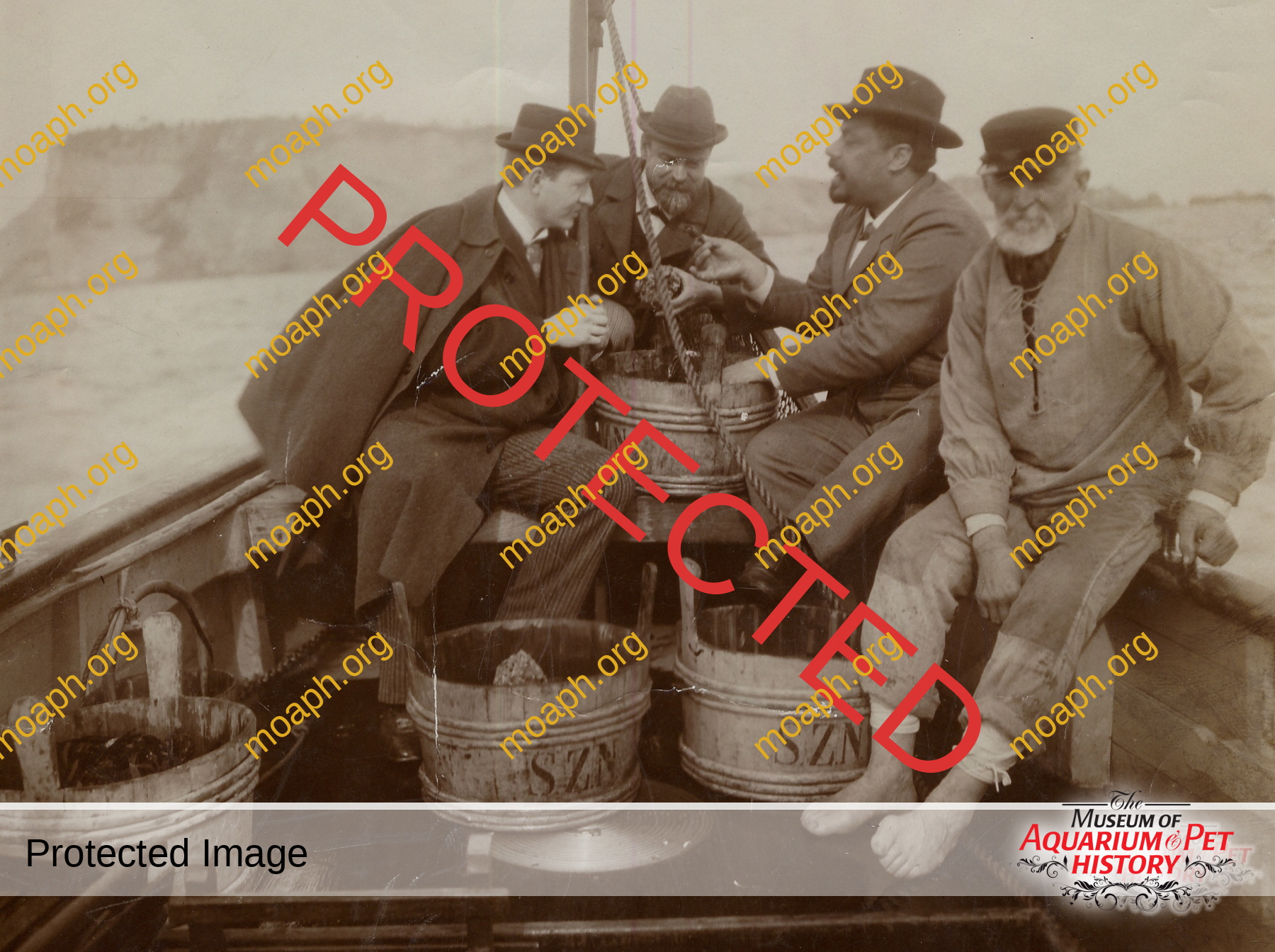
Salvatore Lo Bianco (the second from right), a crew member, and two researchers on board of the Johannes Müller, looking at some specimens of benthic invertebrates. Dohrn coined the term “scientific fishing” in 1881. He did it in the second part of the Reichsberichte (“government reports”), a series of documents that the administration of the Zoological Station provided every year to the German Government, which was the main financier at that time.©Stazione Zoologica Anton Dohrn, Archivio Storico (ASZN, Lb.6.7.8.).
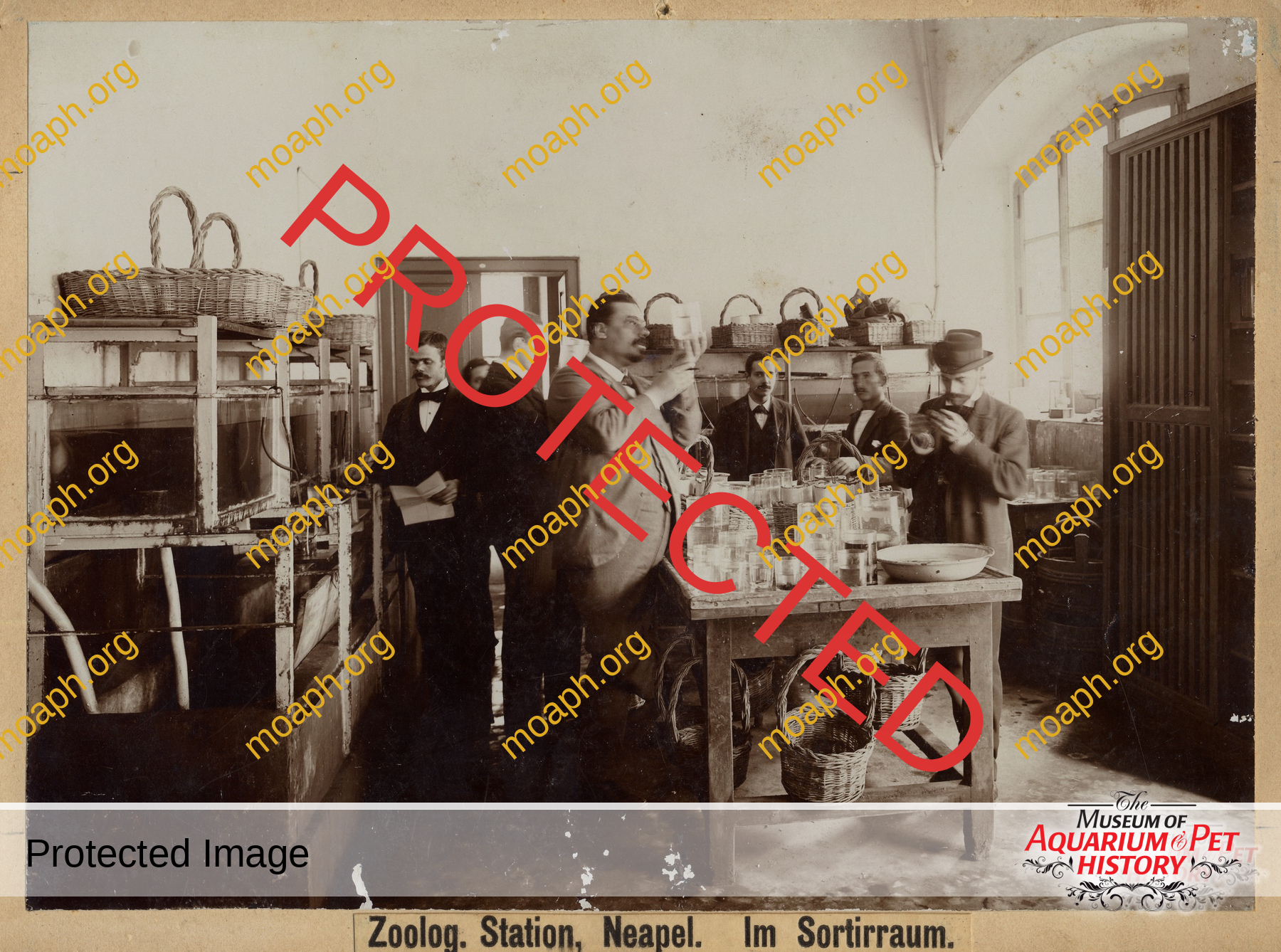
The sorting room in 1890, with Salvatore Lo Bianco in the foreground. He had started his career with Dohrn at the age of 14, and six years later was nominated head of the department of preservation. ©Stazione Zoologica Anton Dohrn, Archivio Storico (ASZN, Lb.6.10.02).
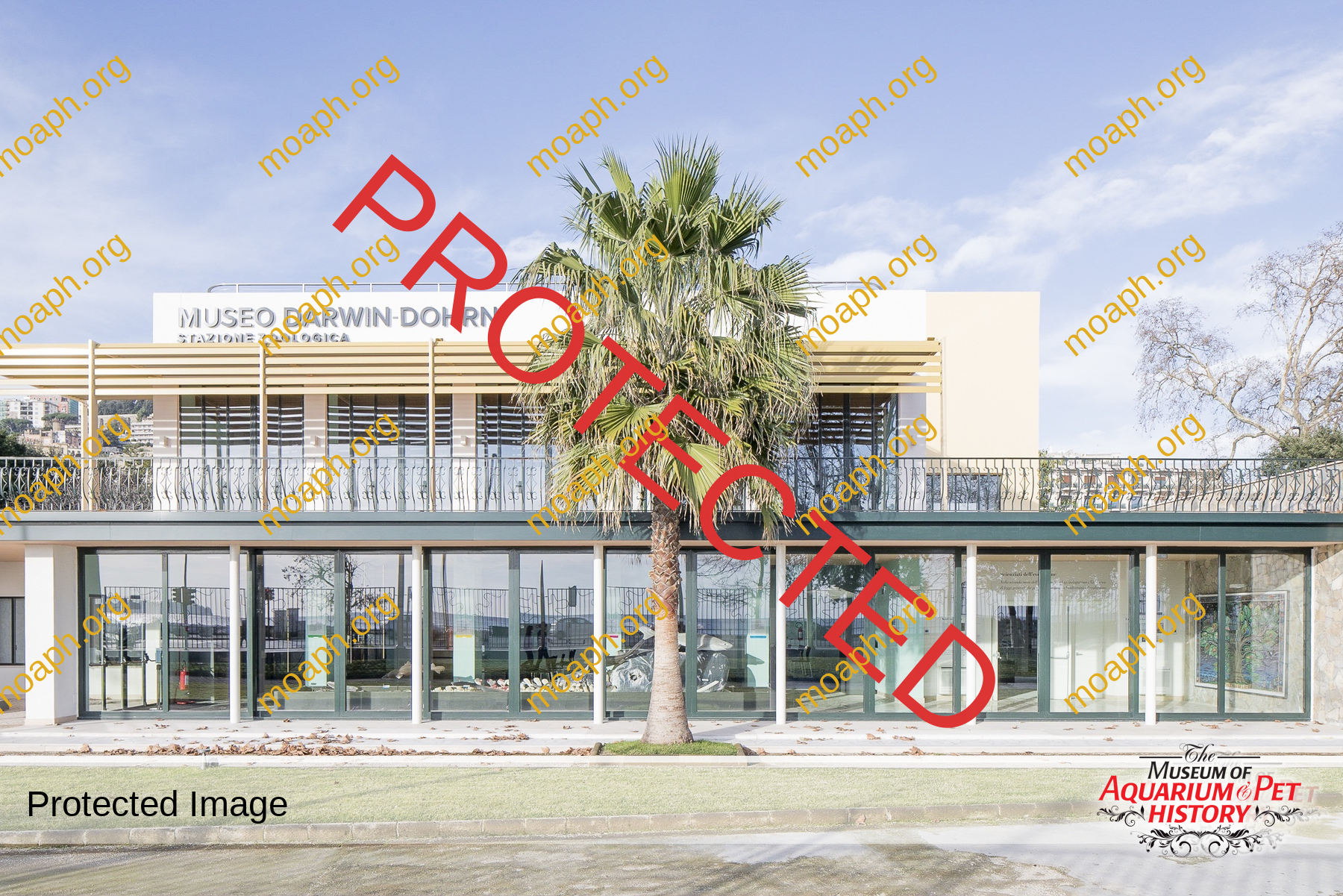
Inaugurated on December 9, 2021, the Darwin-Dohrn Museum houses a part of the huge collection of preserved animals put together by the Zoological Station during its history. Photo by Lorenzo Leone. ©Stazione Zoologica Anton Dohrn.
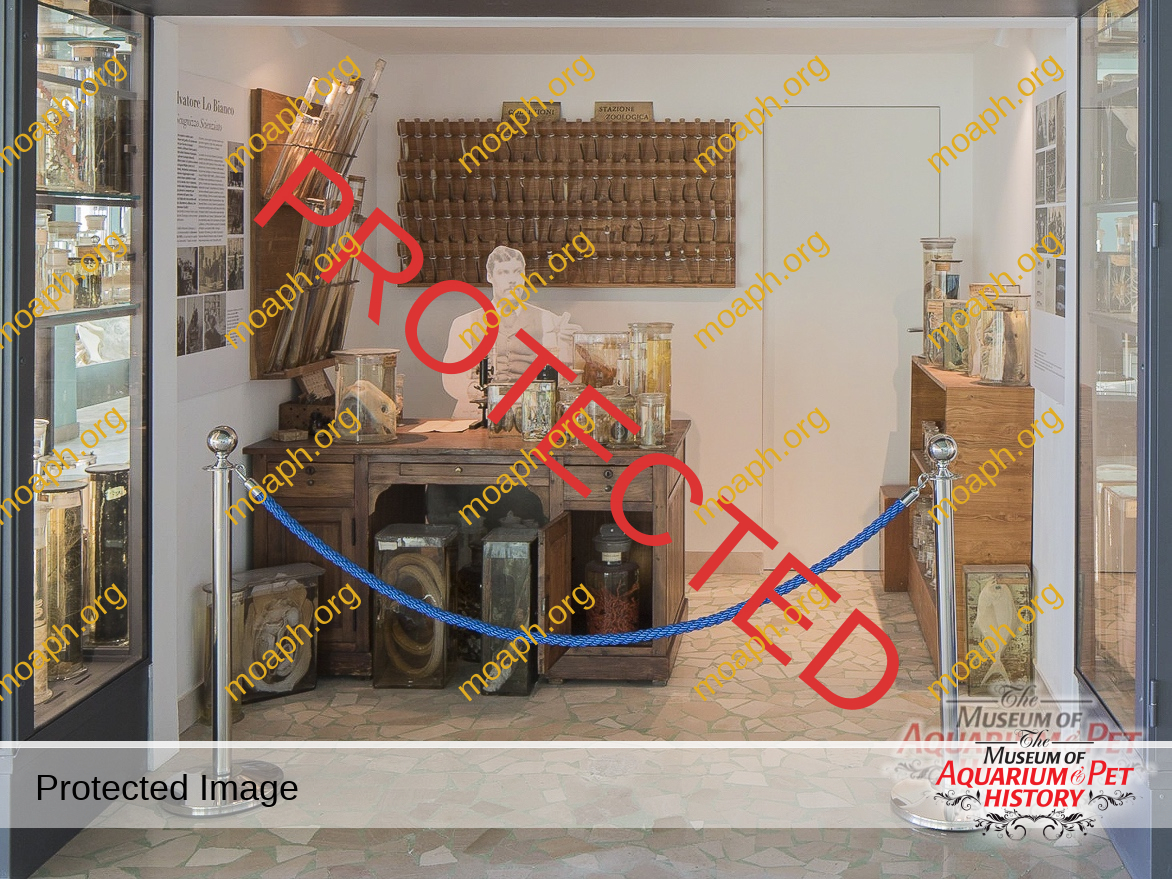
Reconstruction of Salvatore Lo Bianco’s workstation at Darwin-Dohrn Museum. Photo by Lorenzo Leone. ©Stazione Zoologica Anton Dohrn.
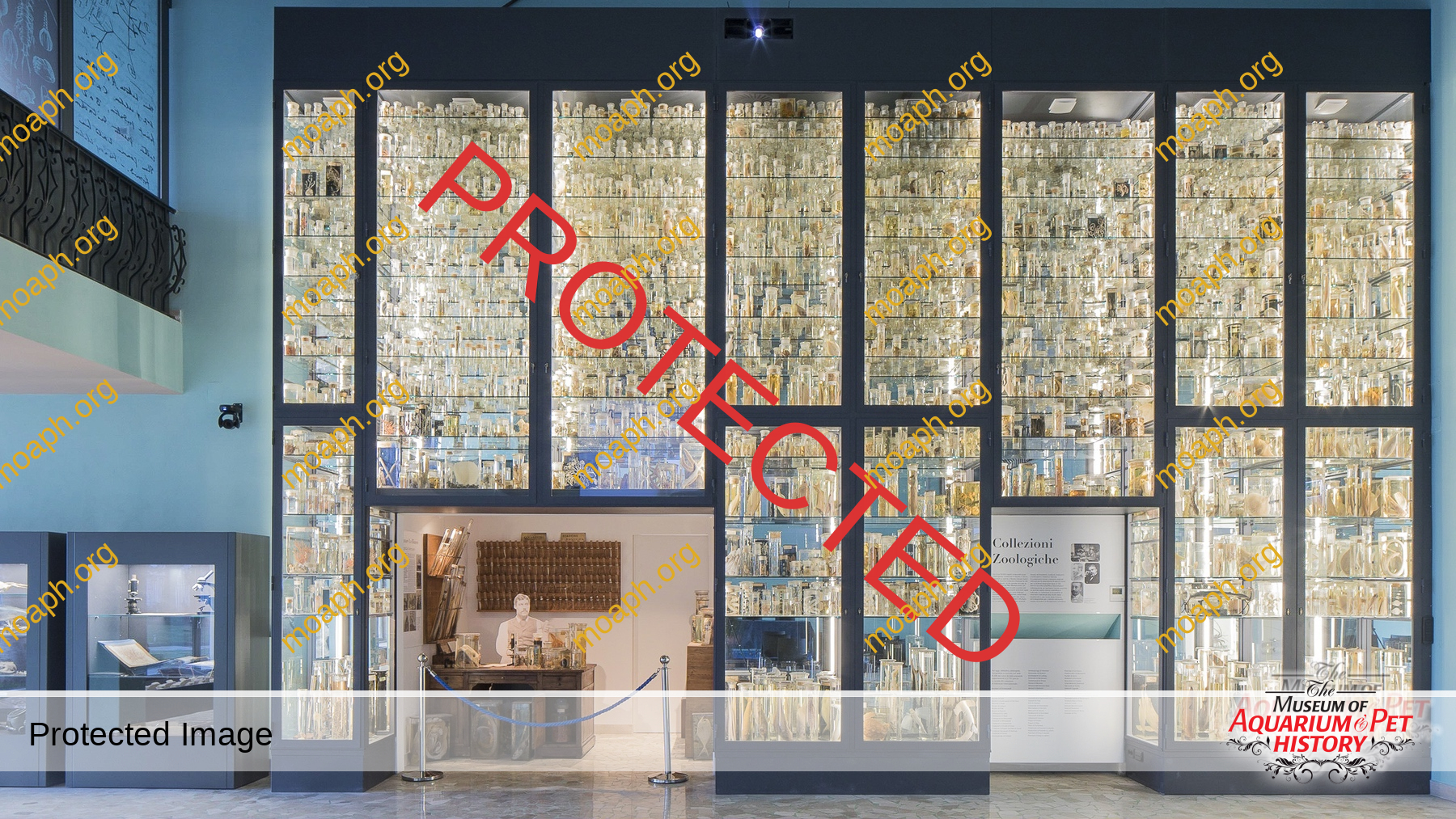
A part of the whole Zoological Collection, which hosts about 3,500 specimens belonging to at least 2,000 different species. Photo by Lorenzo Leone. ©Stazione Zoologica Anton Dohrn.
Looking at the 1898 iconic series of photographs taken in the Naples aquarium by the German anatomist Johannes Sobotta, you are immediately amazed by the stunning biodiversity of the livestock. Some tanks were literally overflowing with marine life, something that the public certainly appreciated. This richness of fauna and flora, combined with the choice of showcasing only species from the nearby sea, was undoubtedly the distinctive feature of this large public aquarium on the European scene.
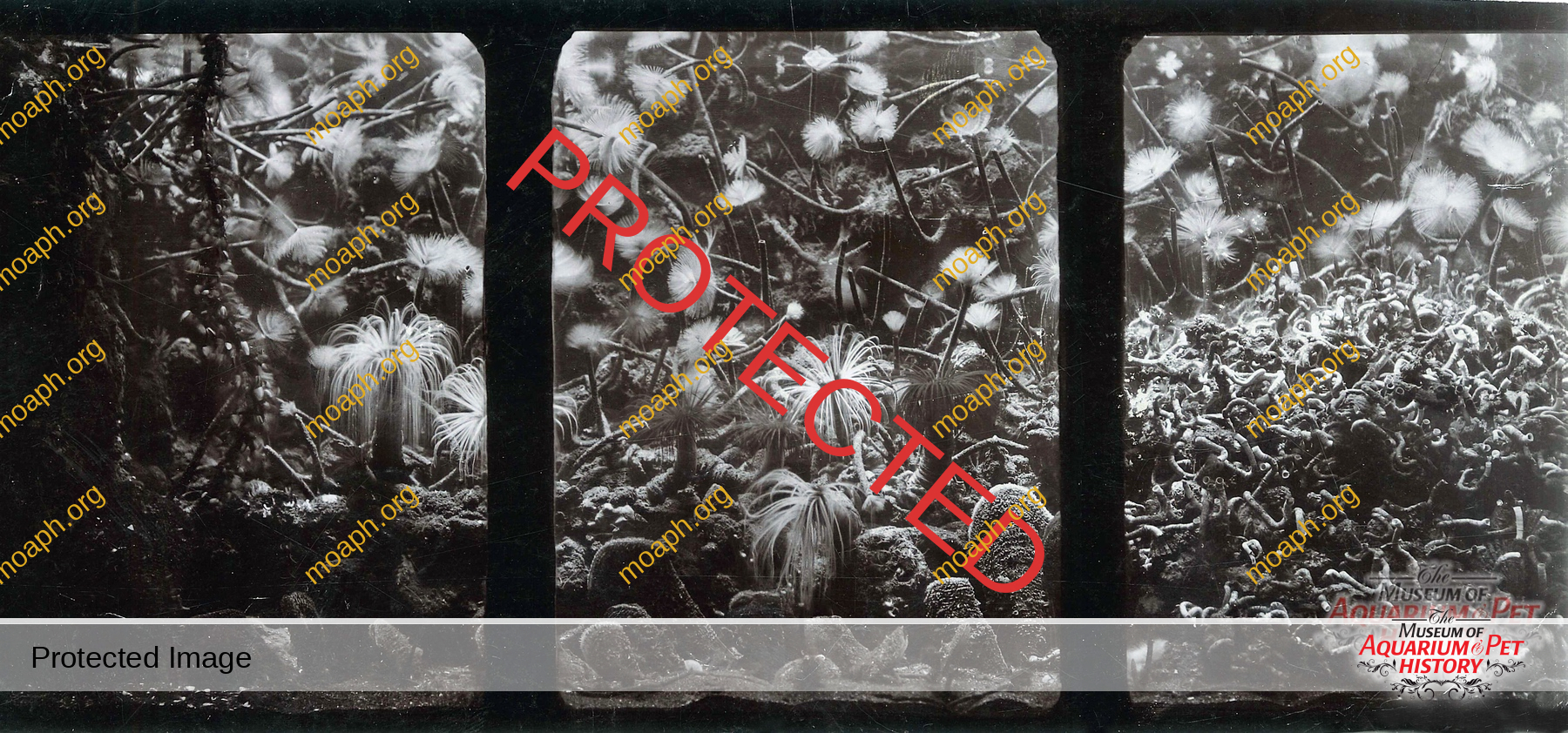
Tank n. 22 in 1898. Photo by Johannes Sobotta. ©Stazione Zoologica Anton Dohrn, Archivio Storico (ASZN, Lb.6.1.24.).
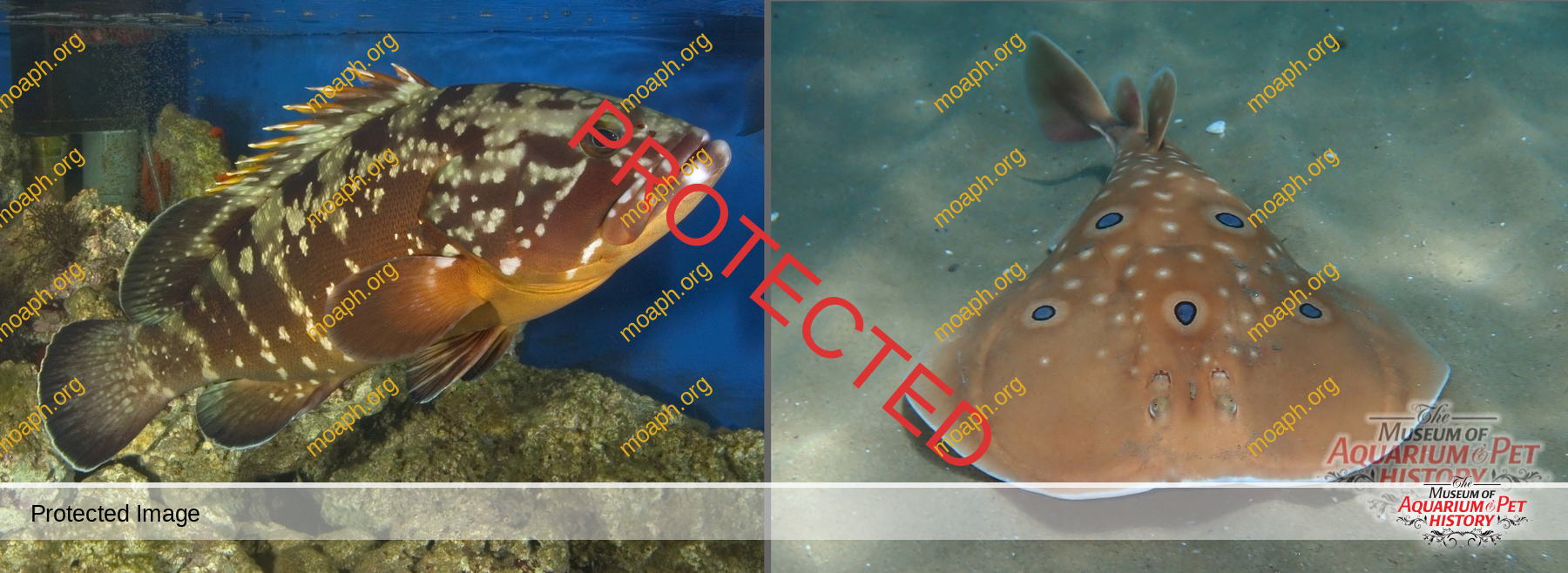
Two regular inhabitants of the Aquarium: the yellowbelly grouper Epinephelus marginatus (left), and the eyed electric ray Torpedo torpedo.
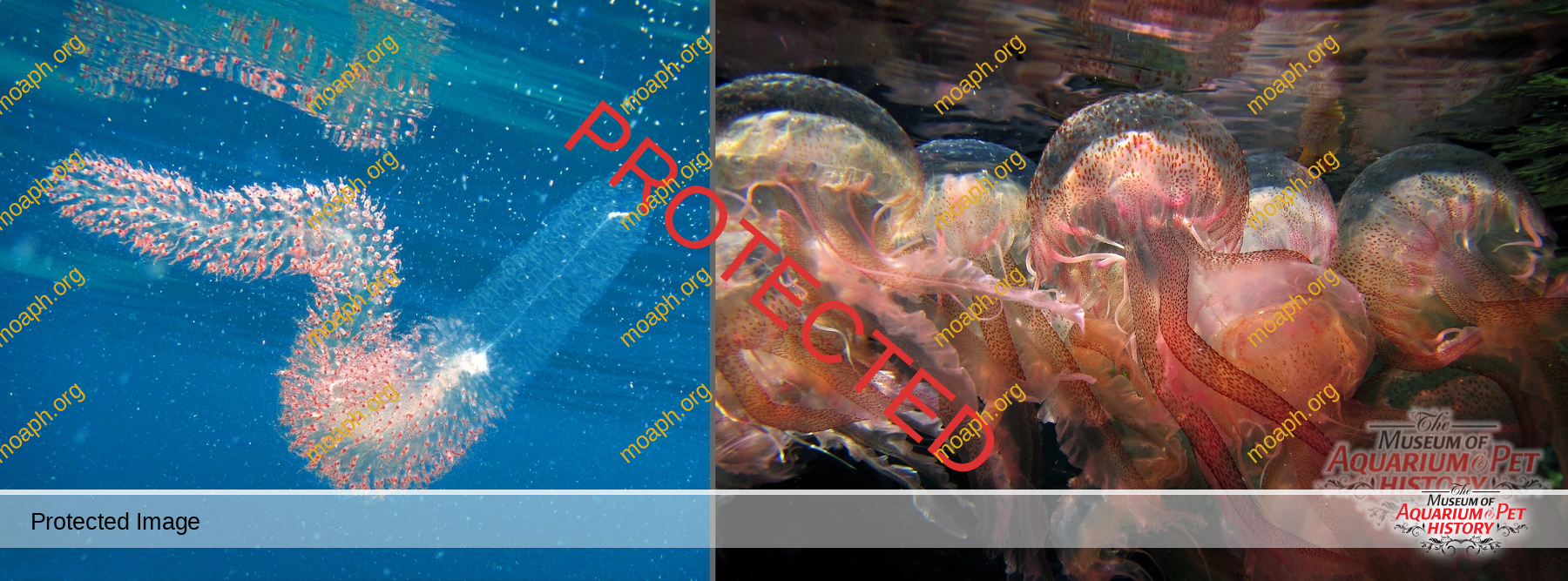
Two species which likely were common in the tank of pelagic animals: the siphonophore Forskalia edwardsii (left), and the luminous jellyfish Pelagia noctiluca.
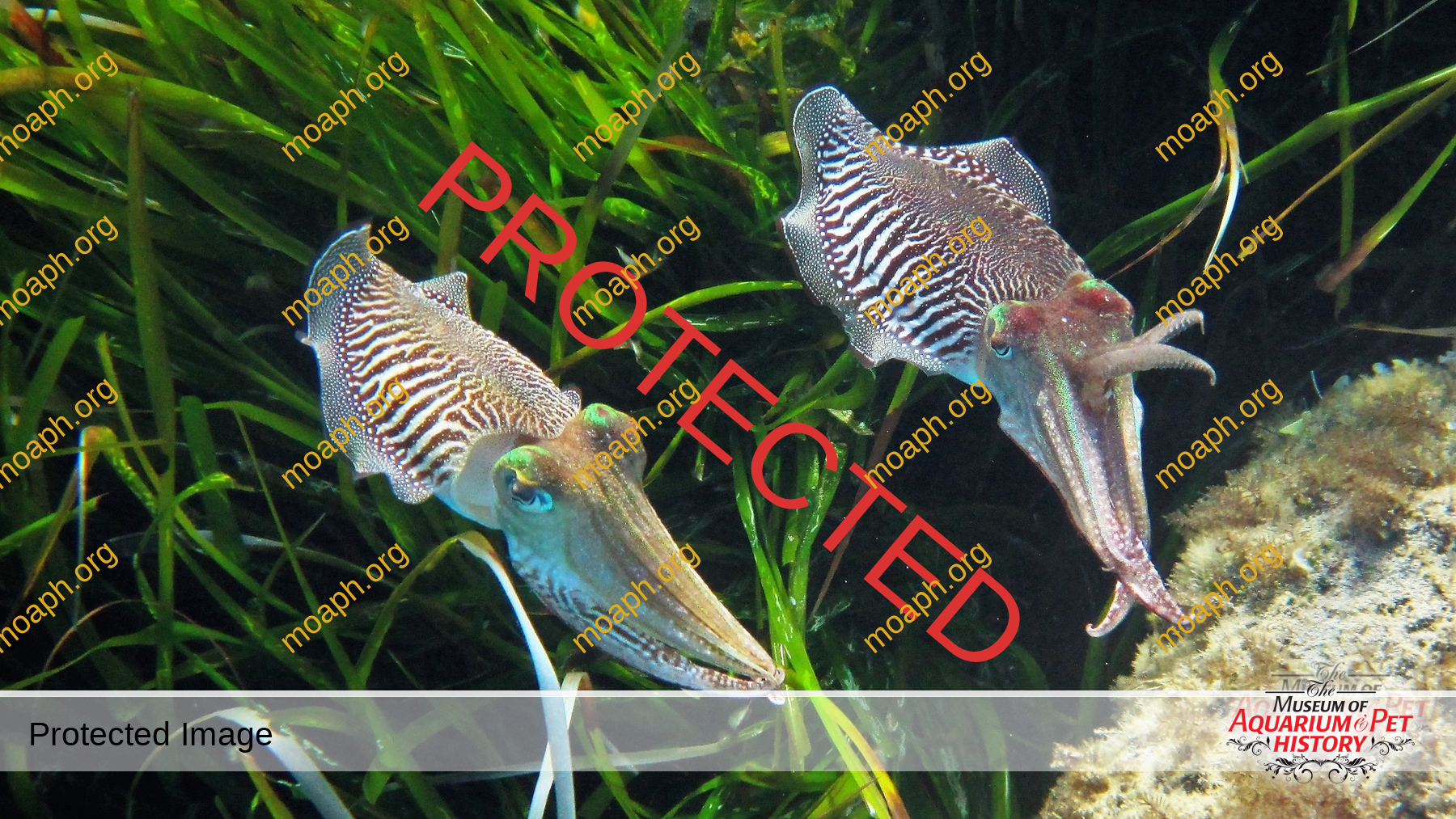
The Victorian public loved cephalopods such as the cuttlefish Sepia officinalis.
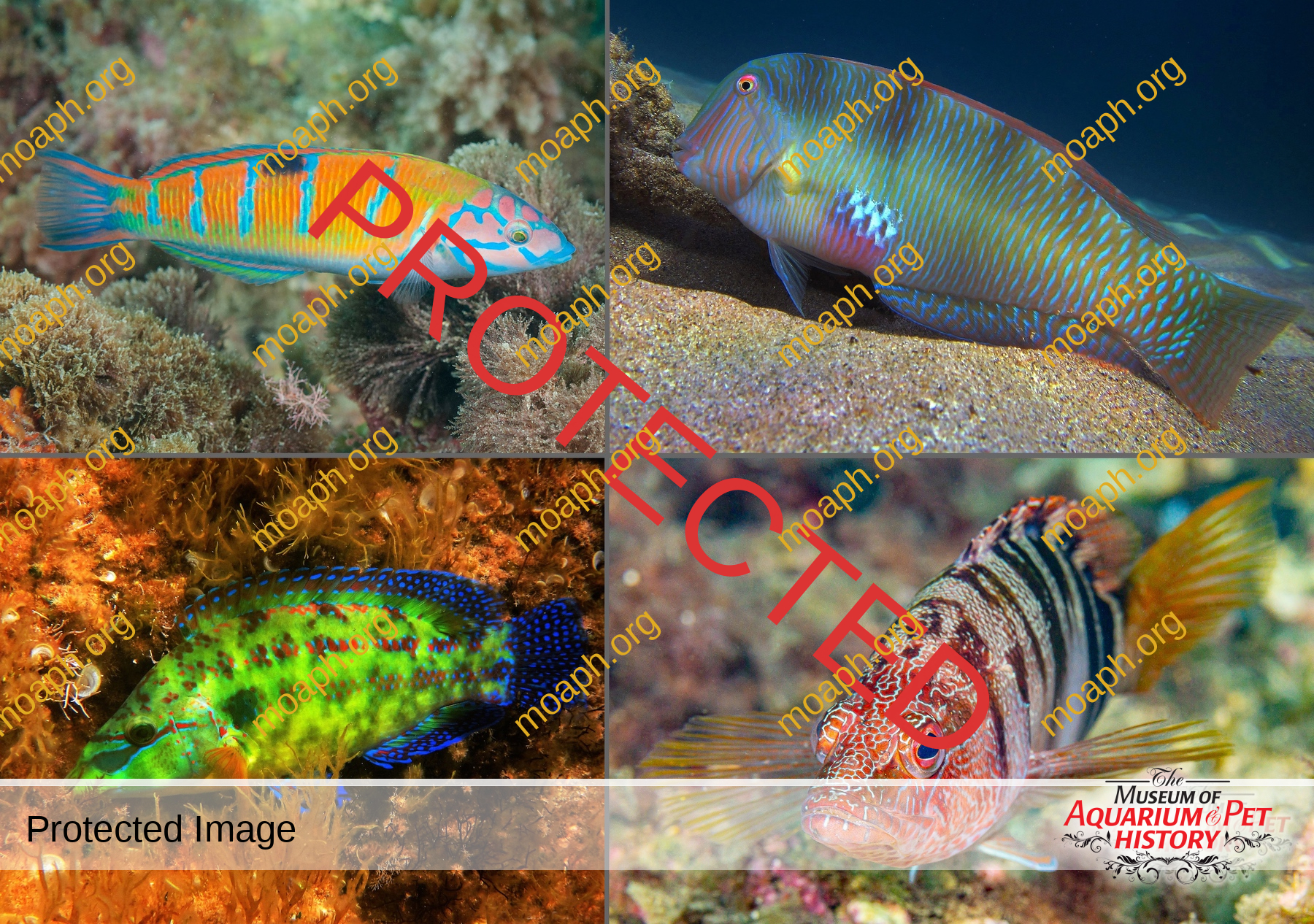
Four colorful species hosted at the Aquarium back then: the ornate wrasse Thalassoma pavo (upper left), the pearly razorfish Xyrichtys novacula (upper right), the peacock wrasse Symphodus tinca (lower left), and the painted comber Serranus scriba (lower right).
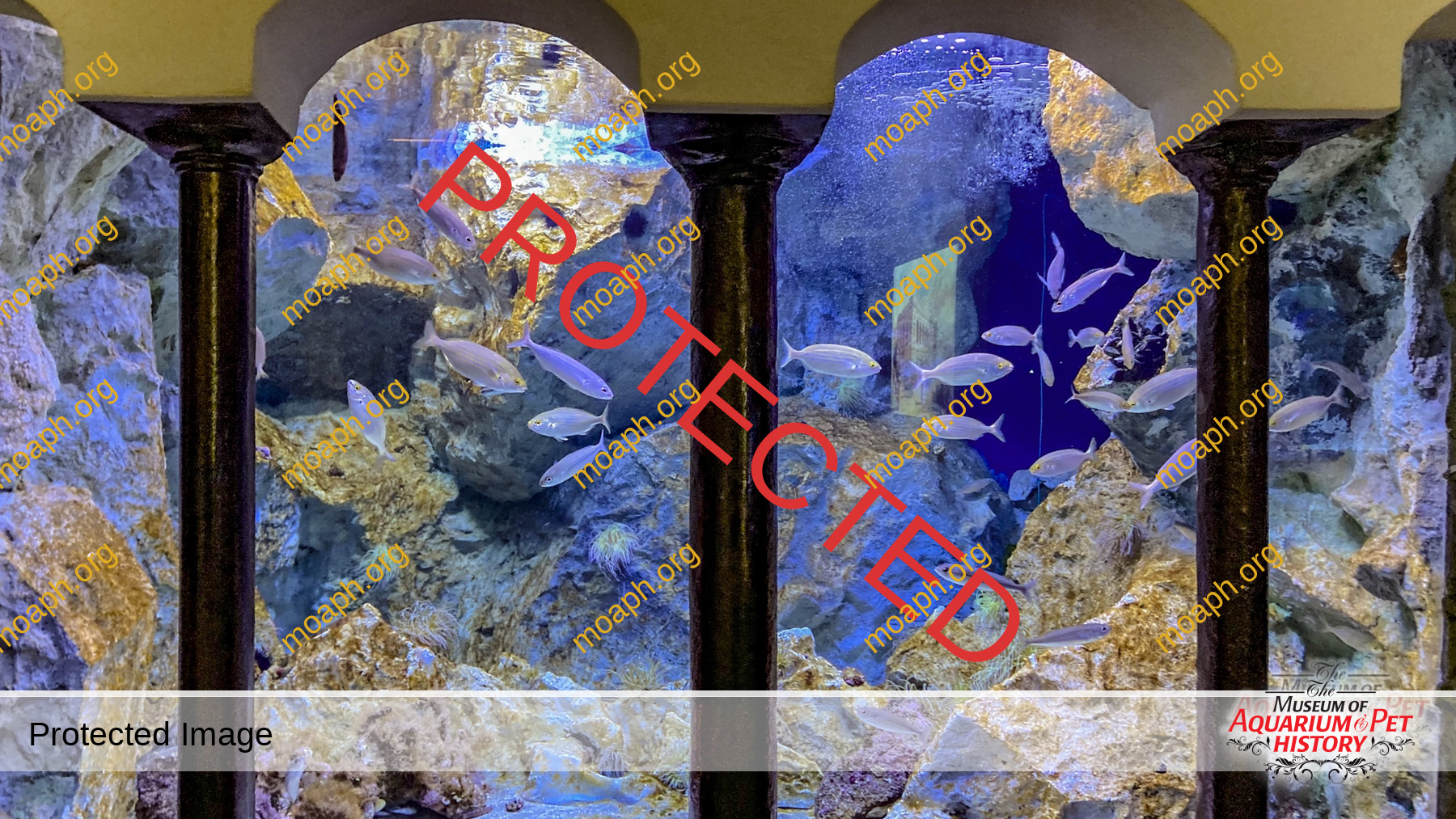
A group of Sarpa salpa on display at the Naples aquarium. Photo by Marco Gargiulo. ©Stazione Zoologica Anton Dohrn.
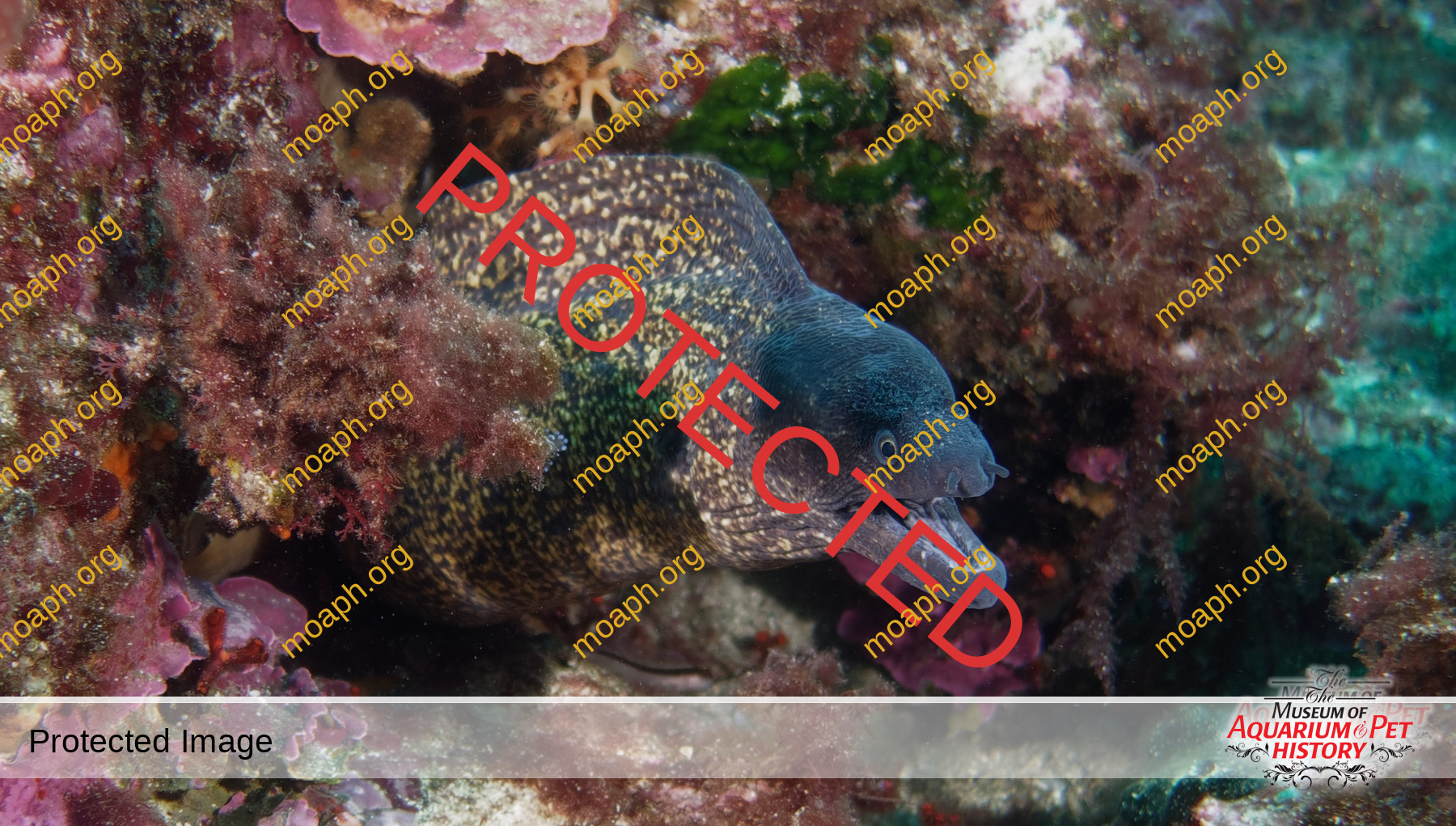
Muraena helena, another iconic species from the Mediterranean Sea.
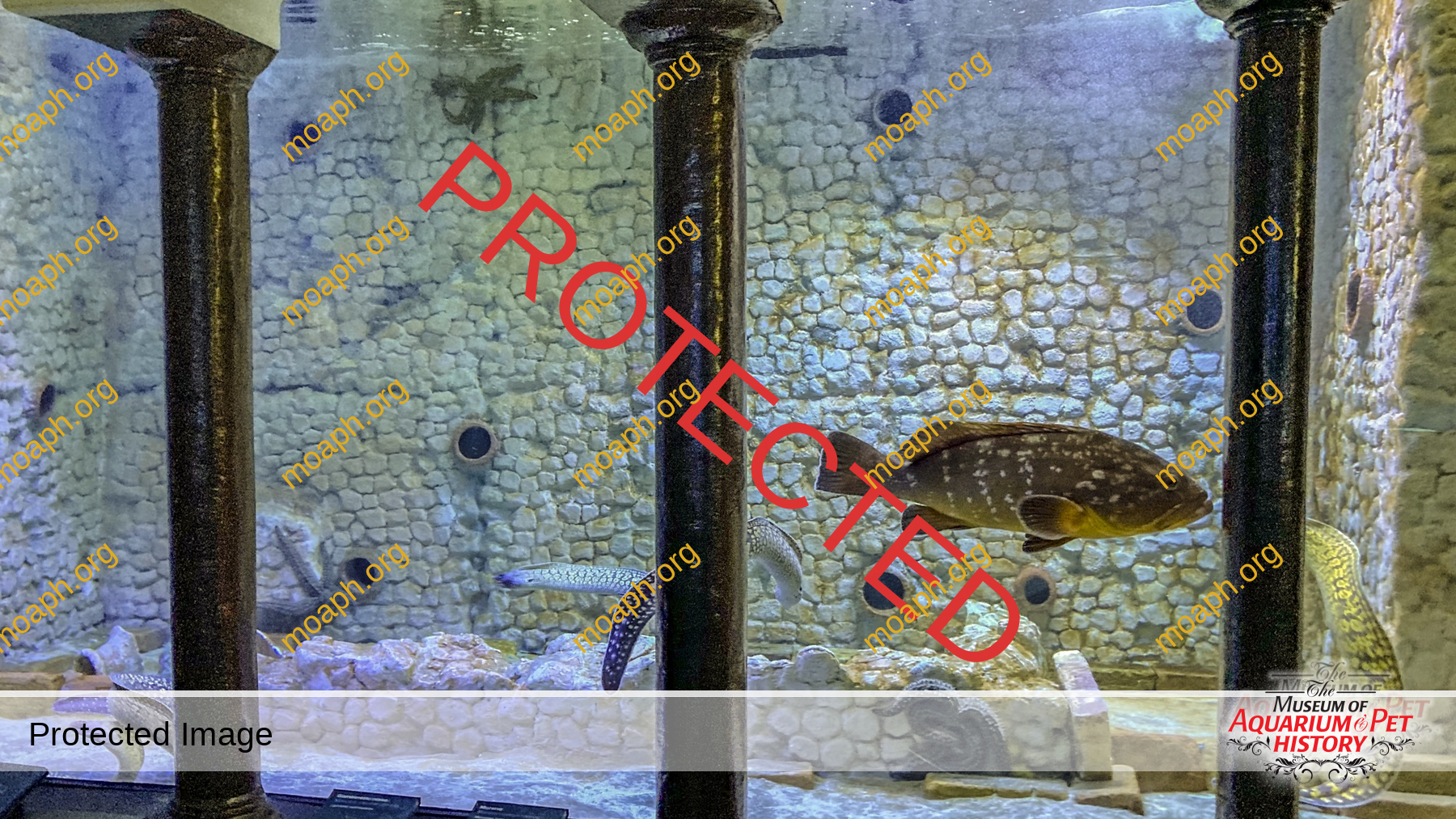
Today, the Naples aquarium still honors its own history hosting many popular species from the nearby sea, such as Muraena helena and Epinephelus marginatus. Photo by Marco Gargiulo. ©Stazione Zoologica Anton Dohrn.
Living the creative atmosphere, the pioneering adventures, and the enthusiasm that characterized those first glorious years of the Zoological Station and its Aquarium must have been awesome. Every day, small pieces of the complex underwater puzzle created by Mother Nature were brought to the surface, and many of these were housed in the Naples aquarium for the joy and the wonder of its visitors.