
The History of the Budgerigar in Captivity
The wild budgerigar has a very long history, though confined to the one continent of Australia. It is a small grass parakeet that is found widely throughout the country though it is rarely resident in some parts including the island of Tasmania. Fossil remains suggest that it is an ancient species that has had the time to adapt perfectly to its environment.
There is some conjecture regarding the origin of the name. Being widespread throughout the country, different aboriginal tribes tagged it with different names, but it is generally held that the best translation for the various names is: ‘good food’. However, though the bird (including eggs and young) clearly has been used as a source of protein by the native peoples, there is also the suggestion that, by following a flock of budgerigars, you would inevitably be led to a source of open water which would also have attracted other game.
It is known for its population fluctuations, based almost entirely upon the amount of rainfall. With the onset of rains, the breeding season begins and in a wet summer, when seeding grasses (porcupine grass and salt-bush in particular), become abundant, the budgerigar breeds in large numbers. It is in such years in particular that the bird becomes noticed for its ‘murmurations’, that is, closely flying huge flocks which can amount to several thousand in number.
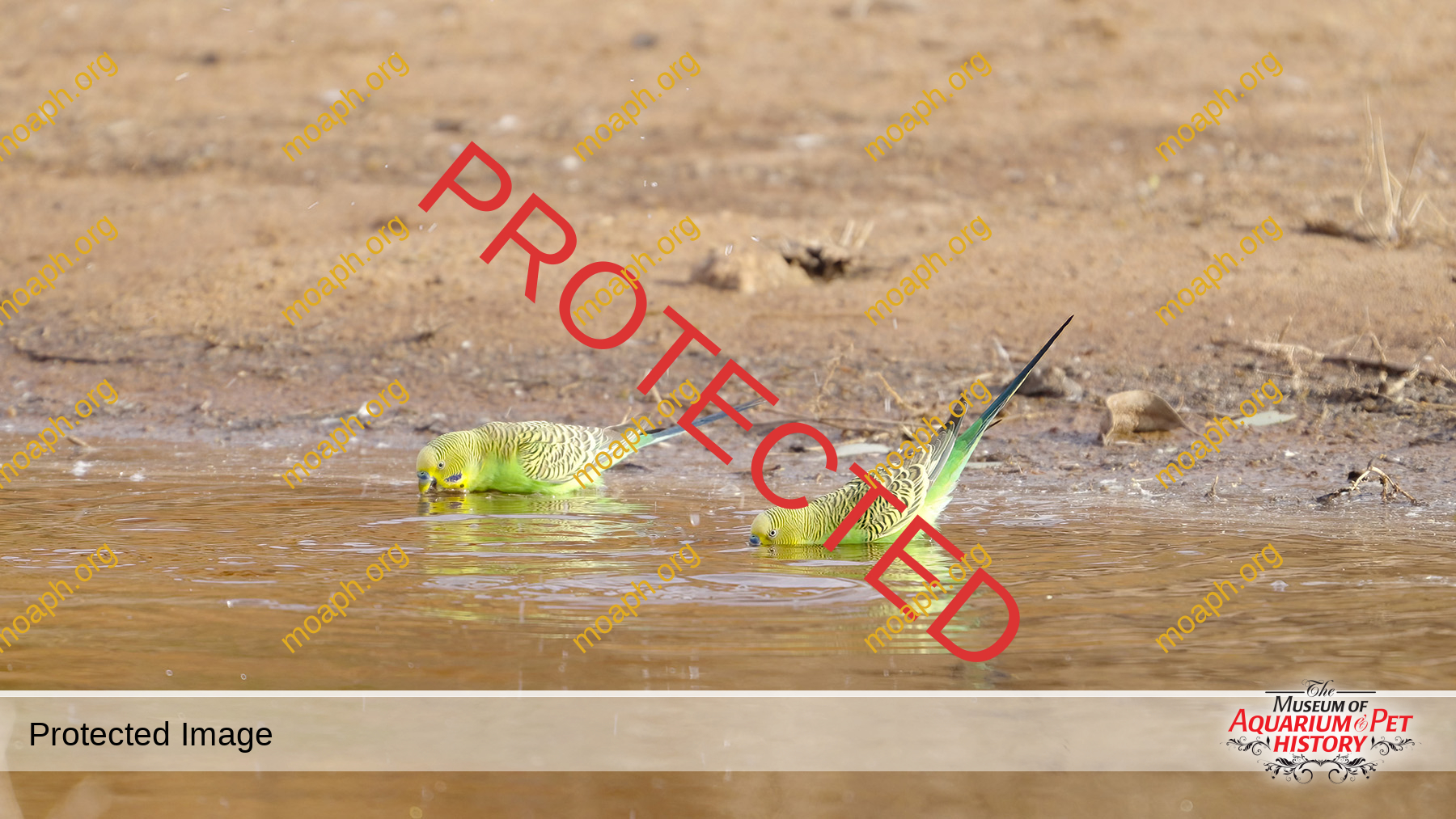
Wild budgerigars at a watering hole.
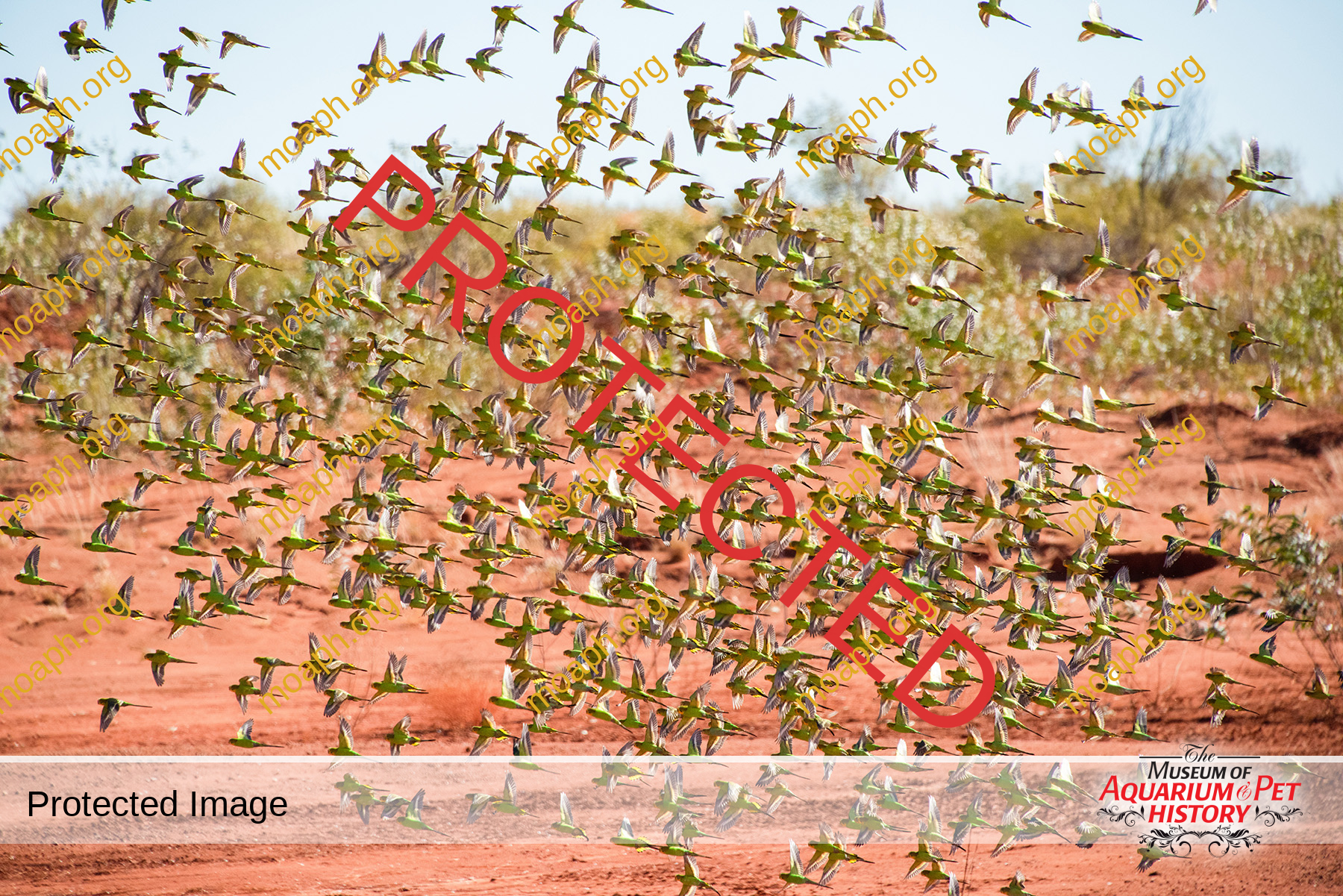
Wild budgerigar flock.
As far as we know, the bird first became known to people outside of Australia when four live birds were brought back to the UK by the eminent ornithologist, John Gould. That was in the year 1840. Most of the birds and mammals that Gould brought back from his expedition failed to survive as anything other than stuffed specimens, but the budgerigar proved to be resilient.
There is a saying in Economics: ‘Supply creates its own demand’. With the budgerigar, supply was not an issue as can be seen by the records of the many thousands of birds that were captured to be exported over the succeeding years. Such was the appeal of the little bird that the individuals who survived the sea journey (and many failed to do so), were soon taken up by eager buyers, first in the UK and then on the continent of Europe.
Not only does the budgerigar have an endearing nature (regarding human companions at any rate), but it soon proved to be a prolific breeder, even so far from its native environment. Given the demand for the bird as a pet, there were plenty of people eager to acquire some breeding stock, sensing that there was a profit to be made. The popularity of the bird was enhanced by news spreading that it was a bird kept by the aristocracy, indeed, even by the British royal family. Free flying (homing) budgerigars had been established and many people wished to emulate this in a much smaller setting (usually the living room).
The wild bird is essentially green in colour with some yellow and blue on the tail feathers. However, it was soon noted that colour mutations, including blue bodied birds did occur amongst wild flocks and it was not long before these began to emerge in captive bred birds. It is not clear whether the first captive bred blue budgerigars occurred in France or Belgium, but some were soon exported to the UK where they fetched a substantial premium for the sellers.
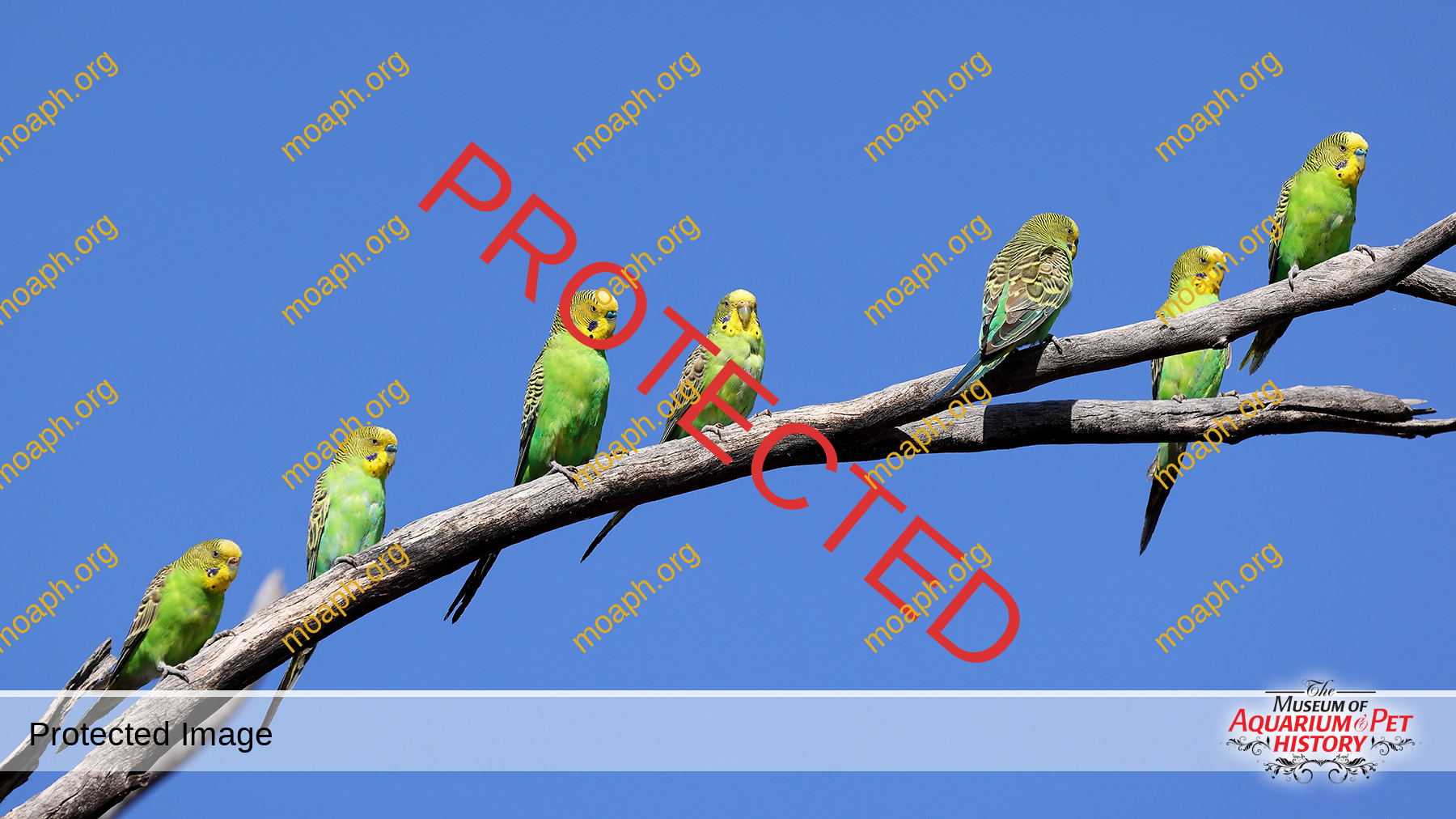
Wild budgerigars.
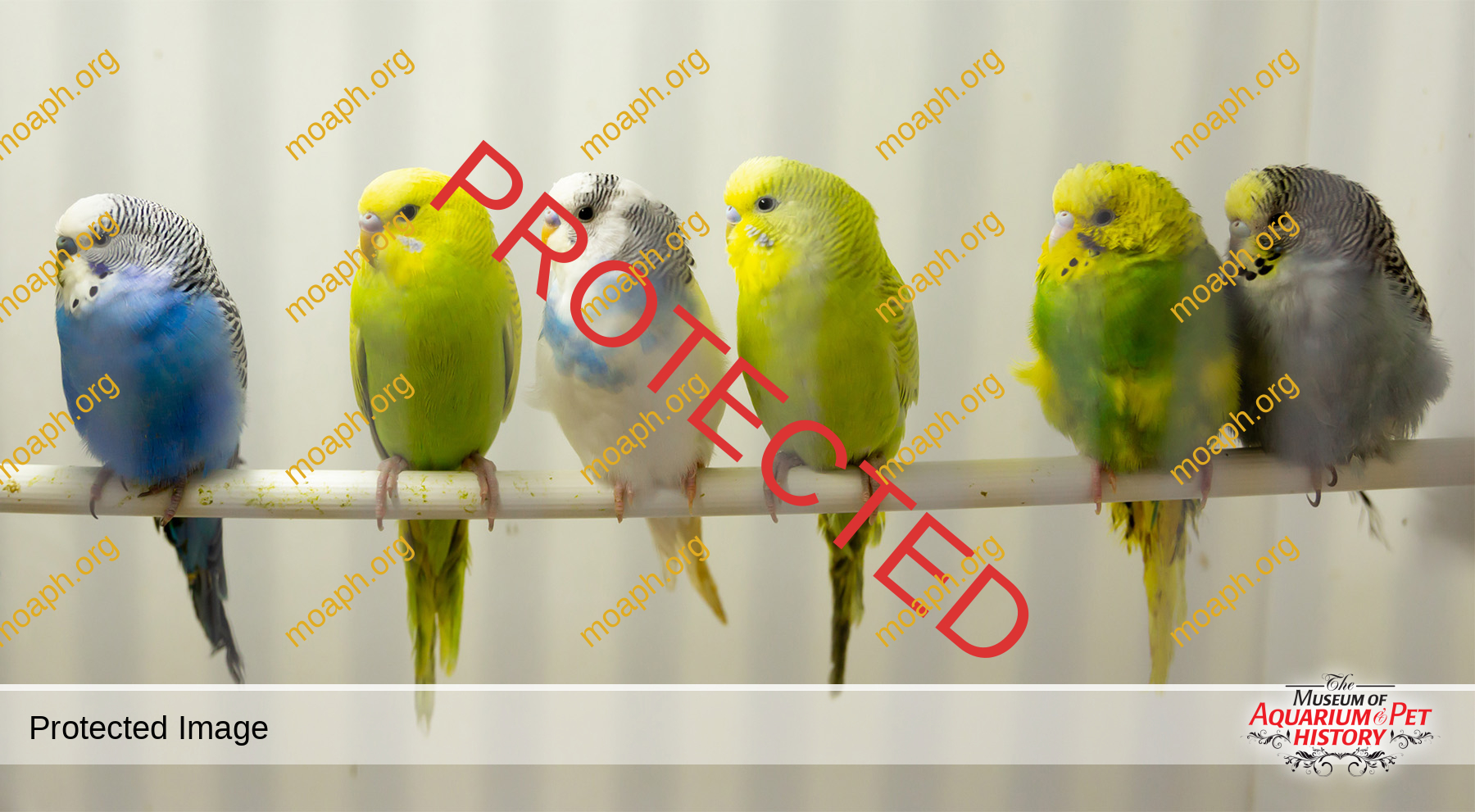
Variety of captive budgerigars.
Initially kept as pets or in garden aviaries, or as commercial breeding stock, it did not however take long before the birds began to appear on the show bench. But there were no specific classes for these particular birds and so they were entered in the Foreign Bird section of shows. Over the years their popularity was enhanced by the publicity machinery of the early budgerigar enthusiasts who utilised the services of famous people to introduce the bird to a wider public. I recall from childhood, my own family owning more than one budgerigar which would be allowed to fly around the living room on occasion and I can still, many years later, have a sense of what it felt like when one landed on your head.
But the urge to compete, soon meant that the budgie would become more than simply a pet bird. Soon specific classes were introduced to shows and as different colour mutations emerged, breeders sought to propagate these with the aim of winning at shows and making money from their sale.
A model of excellence however was needed if competition was to thrive and it was soon decided that the form (shape) of the bird and not just its colour and condition should be taken into account. As early as 1925 the Budgerigar Club was formed, and many of the inaugural members were highly ranked in the general society of the day. They organised their first show the following year and began to offer patronage to other show organisers with the proviso that they offer at least two classes. Contrast that with the current show schedule which has over seven hundred classes and you get a glimpse of how the budgerigar has developed over the years. At modern day national shows, there is an expectation of an entry of over two thousand birds. The club has been run for some years almost as a business, making money other than from its membership fees, by selling rings which must be attached to the young birds legs if they are to be allowed to be shown at shows with the Club patronage.
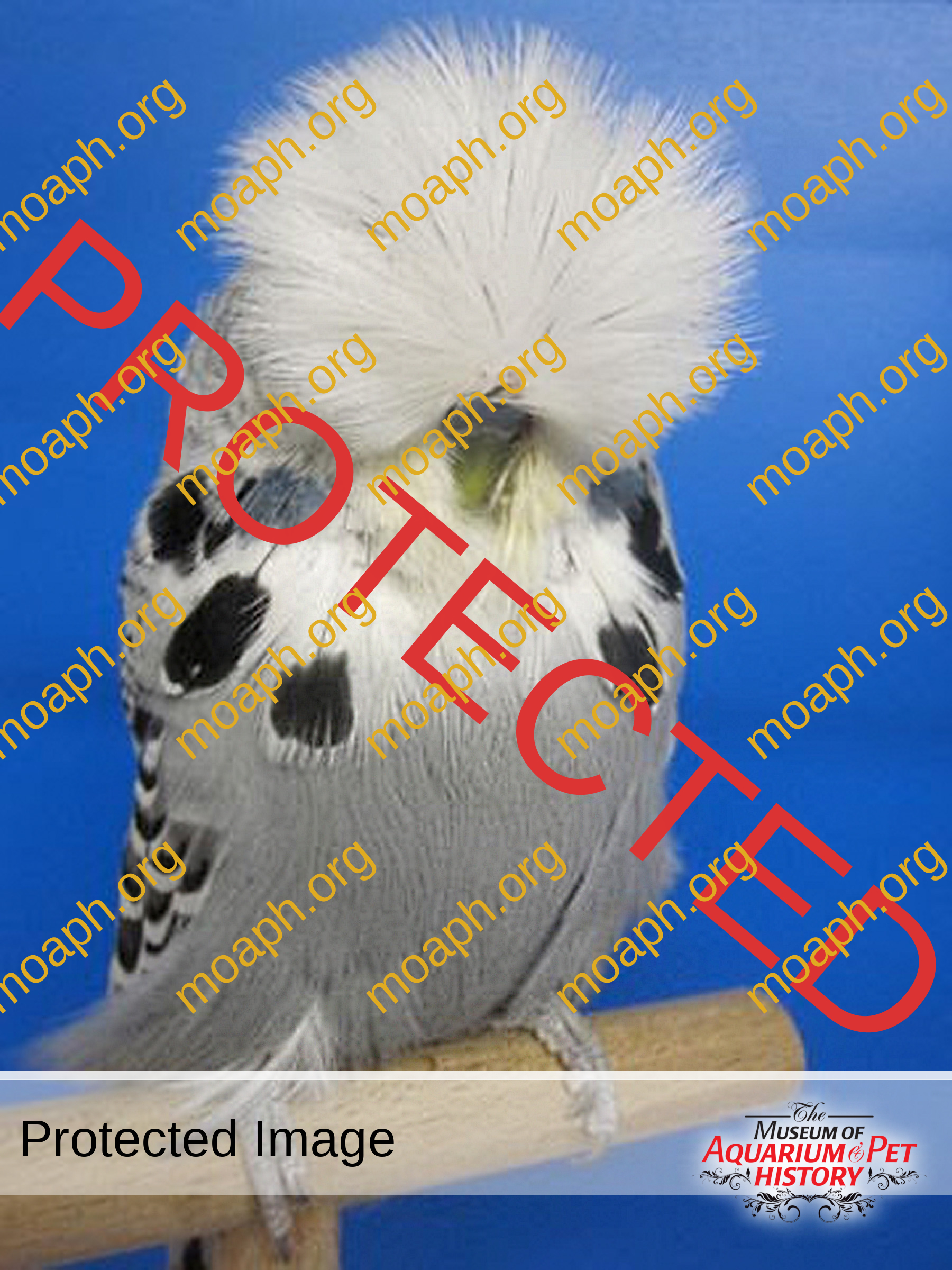
Exhibition budgie
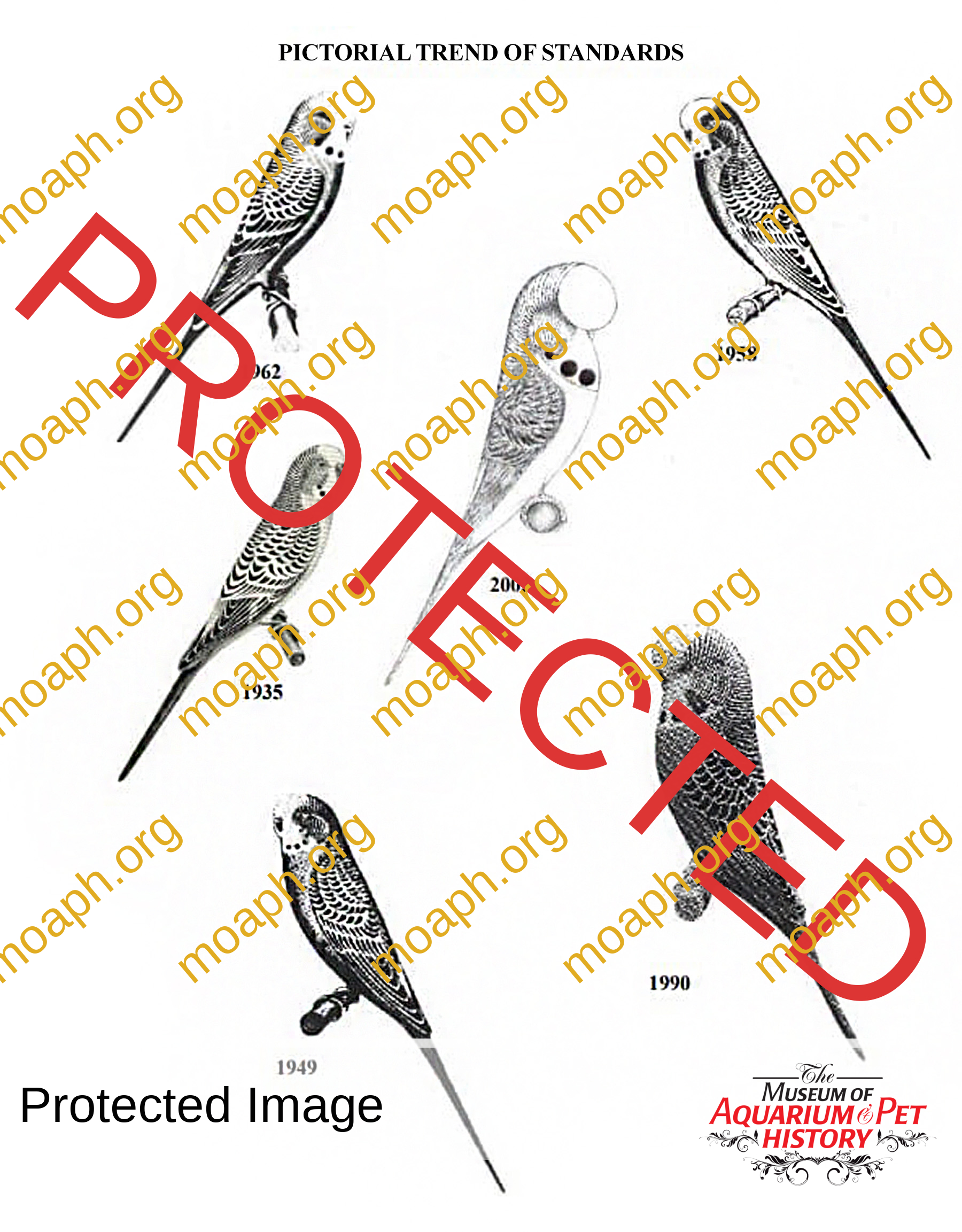
Pictorial trend of standards
The show bird of today is far removed from the wild type budgerigar (with some exceptions, as I shall later explain). As with many cage birds bred for showing, it is much larger, with heavier feathering and this development has led to some problems. Besides the reduction in fertility, there are now instances of birds being bred that have a difficulty in flying. In recent years, the feathers around the head have become such that some birds have difficulty in seeing beyond their feathering. The urge to control the shape of the birds and to develop different variations on the original shape has, in my opinion, been taken to the extreme in the modern show budgerigar. But there are indications that things are going full circle with an increasing interest in what are sometimes being referred to as ‘colour’ budgies, or ‘miniatures’, when in fact what is being now bred and shown are ‘wild type’, budgerigars.
The business of breeding show standard budgerigars has become an international affair, with birds being moved around the world, the exception being back to their native Australia which has imposed a ban on the importation of all birds. Relatively huge sums are paid for show quality birds and some breeders are able to make a living out of breeding such birds. This current situation is, in some respects comparable to some of the early breeders of budgerigars who treated it as more of a business than a hobby.