The Third and Fourth Gotha Aquarium Societies, Founded in 1922 and 1927
They wanted a society of their own—the workers and the less well-funded former members of the association “Nymphaea.” It is always problematic when affluent, and no doubt better educated, individuals seek to patronize others. And in Germany, since 1918 and the founding of the Weimar Republic, people had been allowed to breathe in the scent of freedom and genuine democracy. They were no longer too timid or fearful to act with confidence. And so they resolved to establish, independently, a new aquarium and terrarium society. After endless discussions within the association “Nymphaea,” discussions that were truly not always conducted in a democratic spirit, those lovers of vivaristics could endure it no longer—people who not only wished to venture into new territory but who, out of the necessity of their own existence, also hoped to earn a little extra through their hobby. And so, on August 19, 1922, the association “Danio” was brought into being.
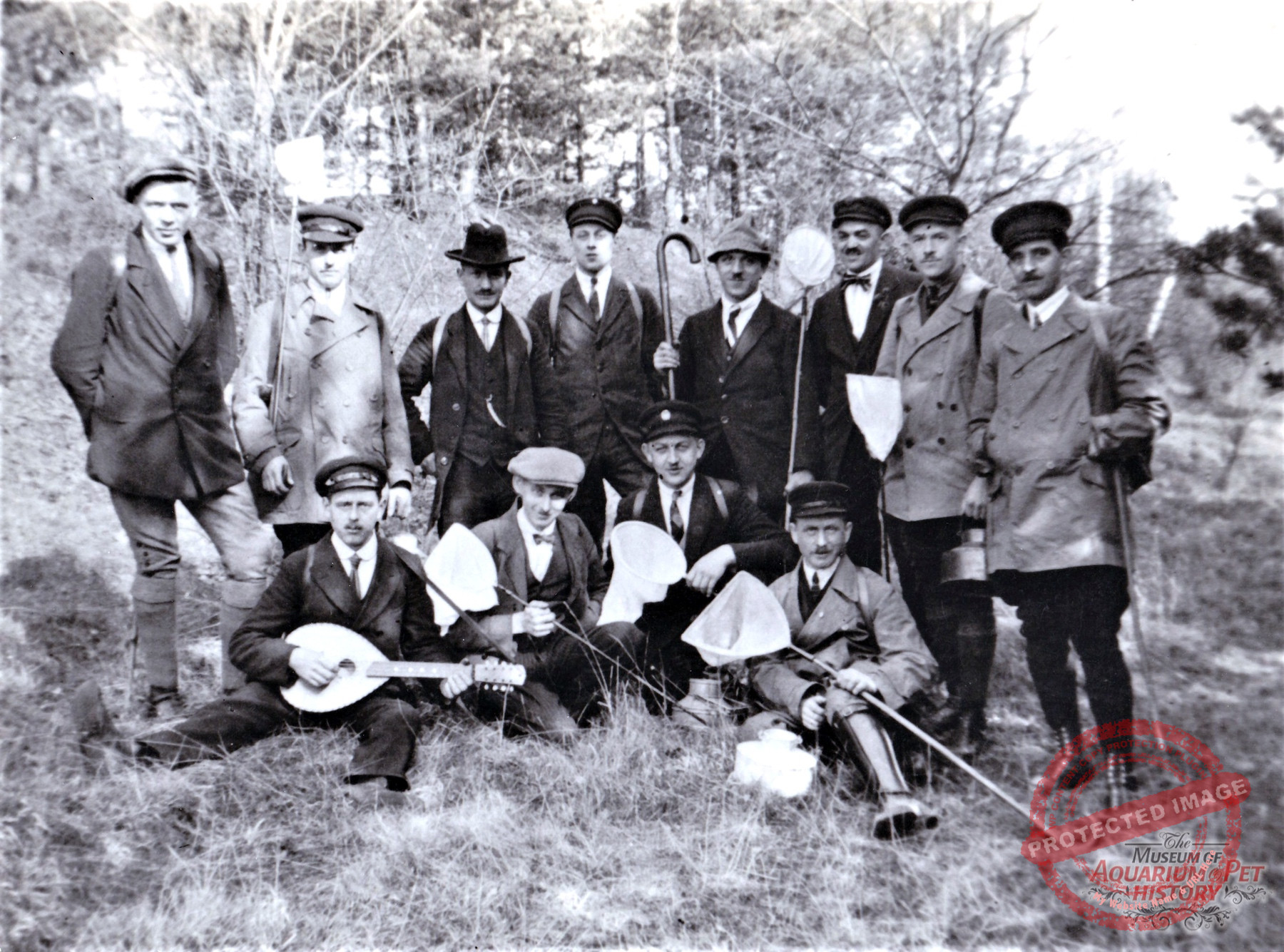
Group of aquarists from the Danio society during a group hike to pond-collecting at the Großer Seeberg near Gotha
The renowned Wochenschrift für Aquarien- und Terrarienkunde honored the founding of the new Gotha society with a detailed notice: “Gotha. ‘Danio’ (K. Wagner, Jentzstrasse 10). On 8/19 a second society was founded here under the above name; its aim is the promotion of aquarium and terrarium keeping—meetings every Saturday, precisely 8 p.m.—guests welcome—club premises ‘Gambrinus,’ Gartenstrasse 16.” The founders of the Danio society were without exception former Nymphaea members, namely those whose voices had not been taken seriously or accepted by the rather aloof executive committee there. This fact ensured that the new, parallel society in Gotha opened up genuine competition. Every activity was compared—first breeding successes, exhibitions, outdoor installations. Even then, both societies stirred up publicity in the form of articles, notices, and reviews in the German vivaristic journals, which were becoming more numerous by the year. It is true: competition leads to positive developments and new trends, for both societies measuring themselves against one another.
From the founding of the Danio society onward, Kurt Koch served as chairman. He always took the initiative in all activities. Koch was a businessman and an enthusiast in equal measure. His private fish breeding had already taken on a professional character at that time. From then until the 1970s he lived at Roseggerstraße 6, where, in the courtyard of his residence, he operated a low building with concrete water basins—a large and modern breeding facility for aquarium fish by the standards of the era. While fry were raised in the concrete basins holding several hundred liters, breeding pairs and many other fish were housed in aquariums of varying sizes on metal racks lining the walls of the building. As a student I visited Kurt Koch in 1972—but more on that later, when the subject turns to aquaristics in the GDR period.
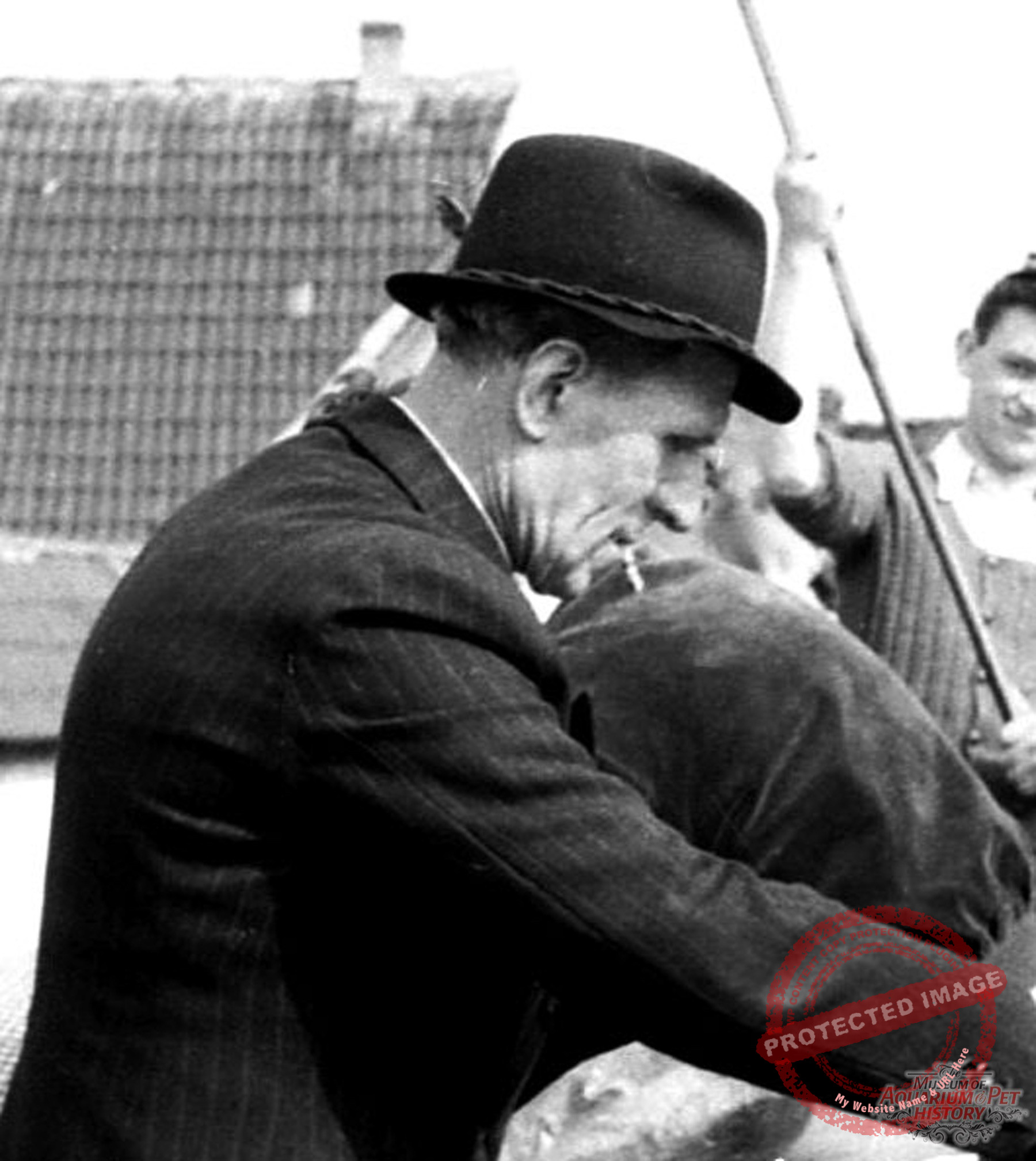
Kurt Koch, founder of the Danio society
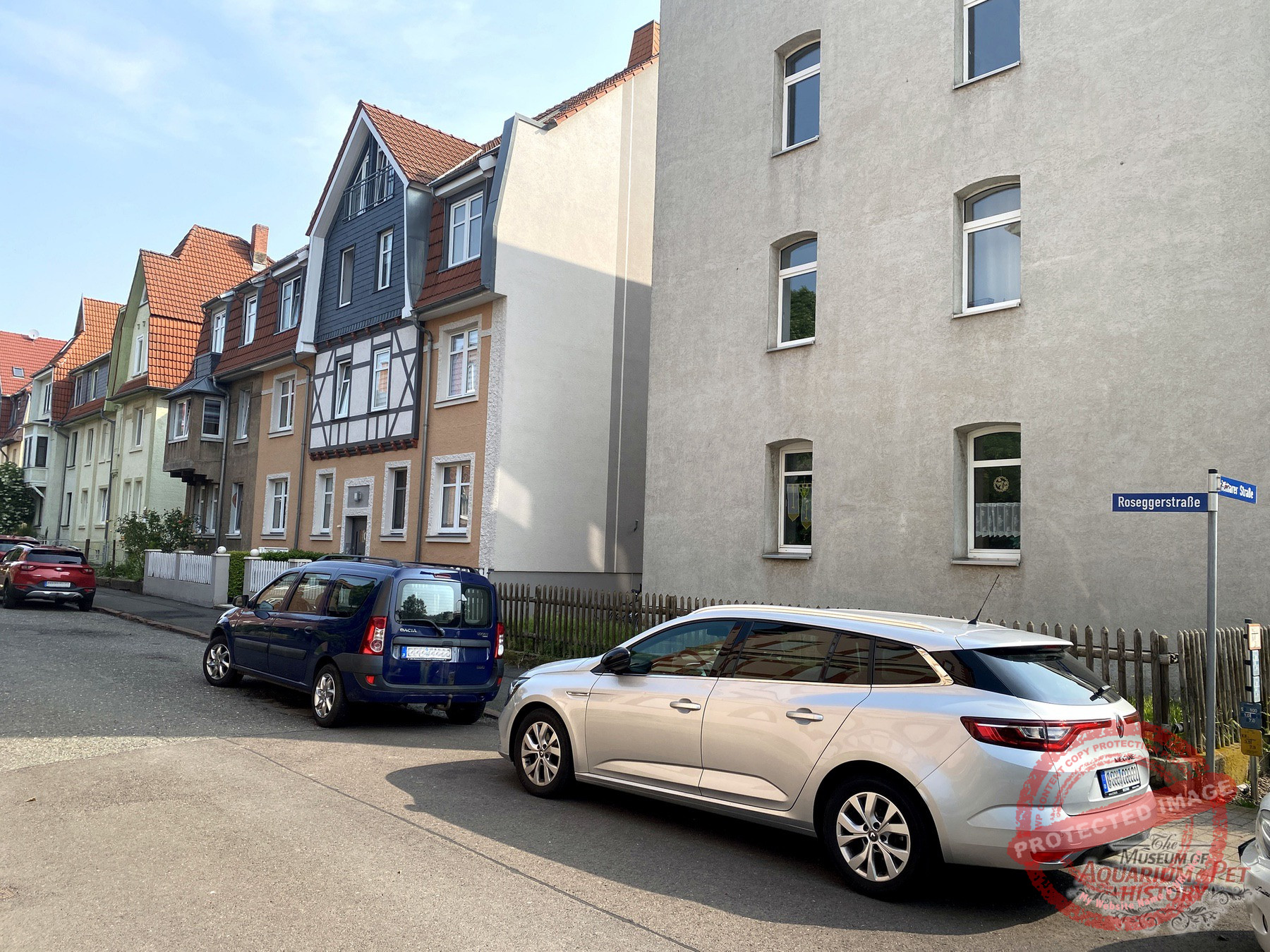
Kurt Koch’s house at Roseggerstraße 6 in its present-day condition
It was also Koch’s idea to organize a major vivaristic exhibition in 1925 in one of the famous classical buildings of the Gotha Orangerie. The preparations were immense. With enormous effort, aquariums, terrariums, tropical plants in tubs, specimens, and all manner of decorations were assembled. The members of the Danio society displayed not only their own charges in the exhibition tanks but also those of their friends from other cities and societies—just not those of the Nymphaea members, which went without saying given the rivalry. For this exhibition was meant to propel the Danio society into the lead, to overtake Nymphaea. And so, with great fanfare in the press, the “Naturwissenschaftliche Ausstellung veranstaltet vom Verein der Aquarien- und Terrarienfreunde ‘Danio’ Gotha” was ceremoniously opened on July 8, 1925. It ran until July 19 and was visited by thousands of people, foremost among them school classes. The high professional standard was fully met. Under Kurt Koch, the Danio members were able to prove to the elite Nymphaea members—who until then had tended to look down their noses at their former colleagues—what impressive achievements they were capable of. And the fact that precisely their clientele—students and the educated middle class of Gotha—flocked to the exhibition could not leave them unmoved.
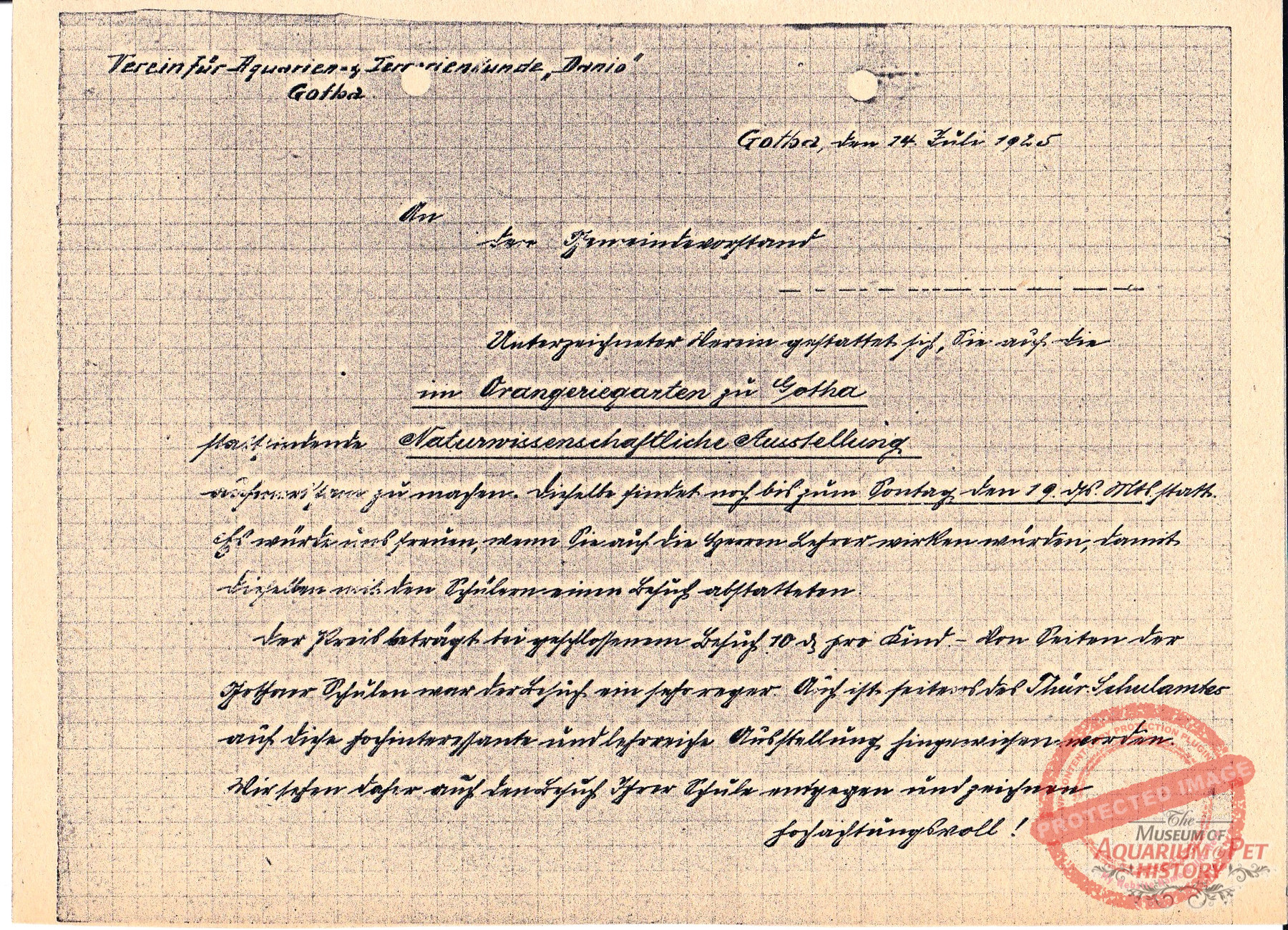
Letter from the Danio society to the Gotha authorities concerning the exhibition
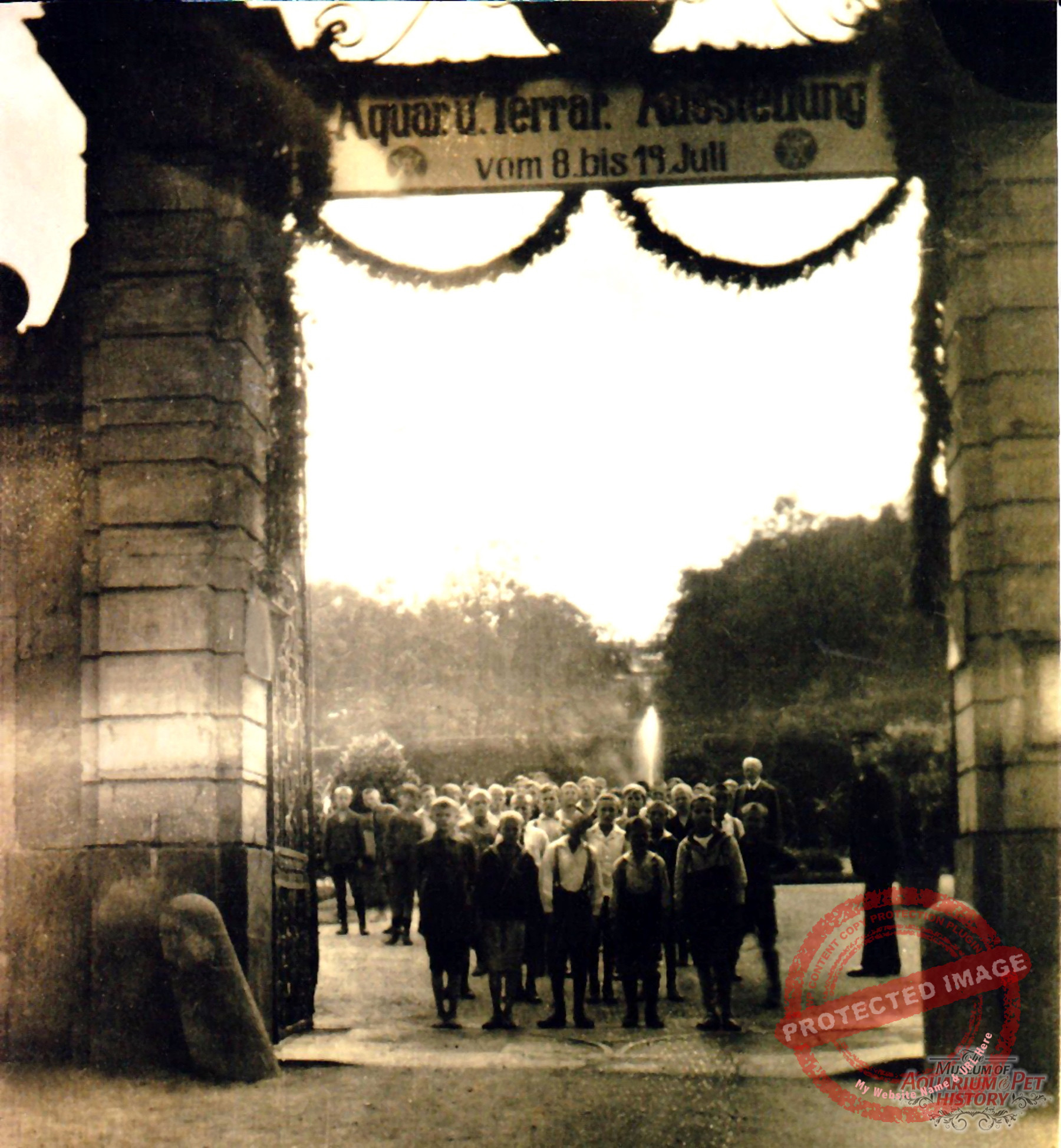
Entrance to the Gotha Orangerie with signage for the Danio exhibition
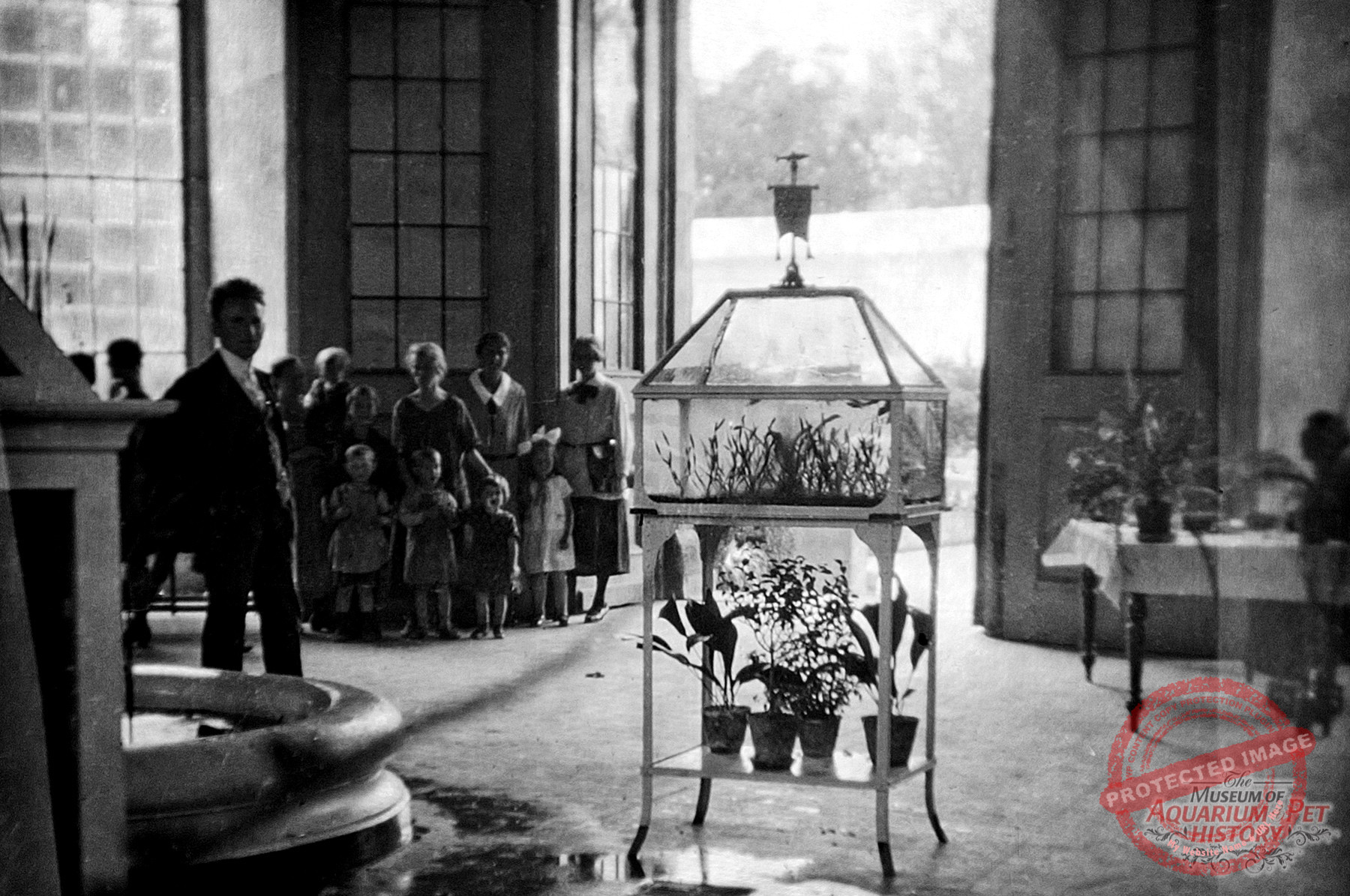
Entrance hall of the southern building of the Orangerie with aquariums and terrariums
The exhibition guide documents the scope of the display, especially the tropical aquarium fish already available at the time and successfully bred in Gotha. But it also explains the purpose of the vivaristic hobby in its introductory text: “Only those who connect themselves closely with nature and engage with it are able to appreciate its inexhaustible richness. Since sufficient opportunity for this in the wild is denied to most people owing to professional and domestic obligations, one must create a fragment of nature in one’s own home. What could be more natural than a biologically arranged aquarium or terrarium?” One further point is mentioned publicly for the first time in the exhibition catalog: the Danio society was a member of the already active VDA (Verband deutscher Aquarien- und Terrarienvereine), which to this day remains the umbrella organization for the German-speaking world.
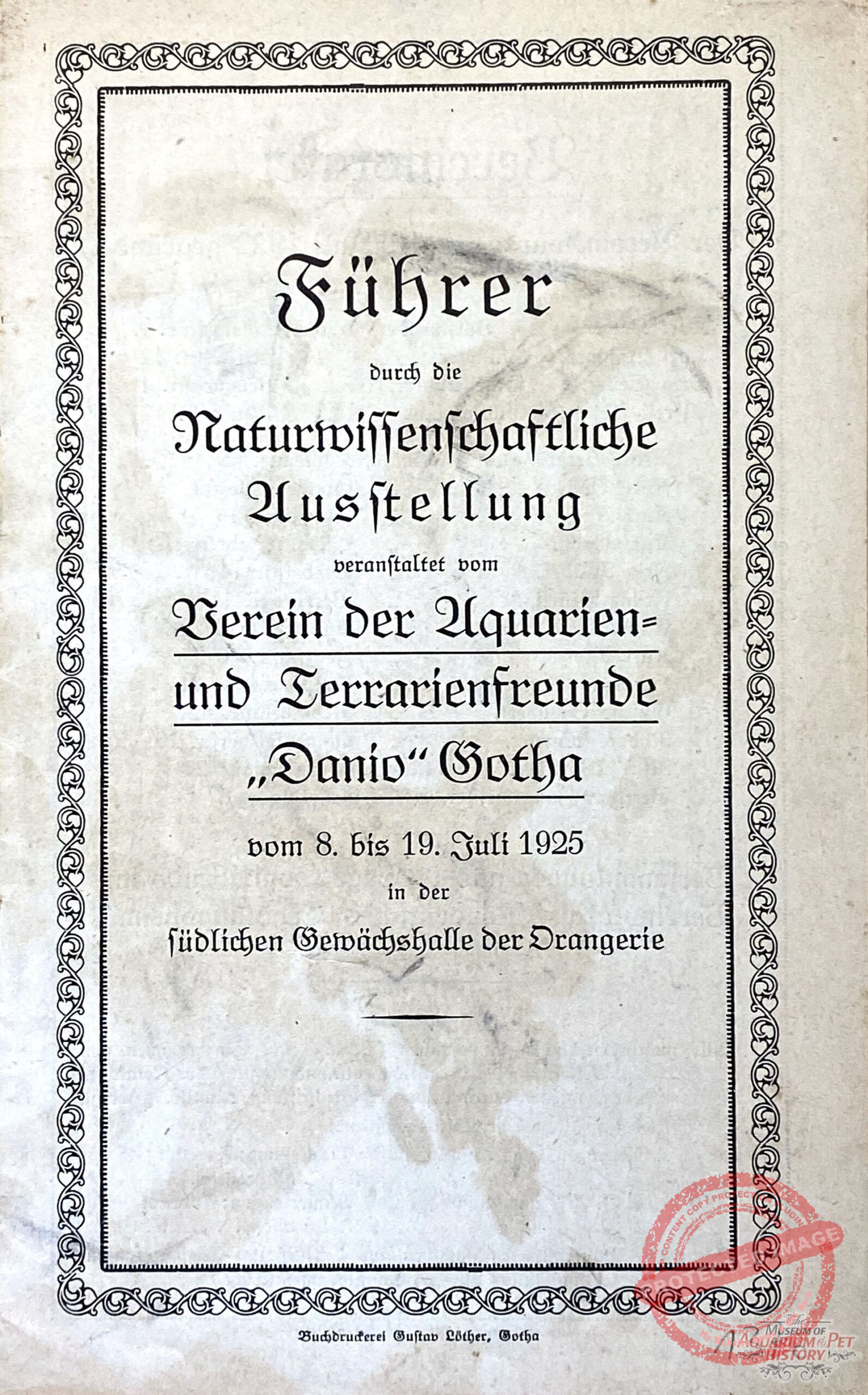
Guide to the Natural Science Exhibition organized by the Society of Aquarium and Terrarium Enthusiasts “Danio” Gotha
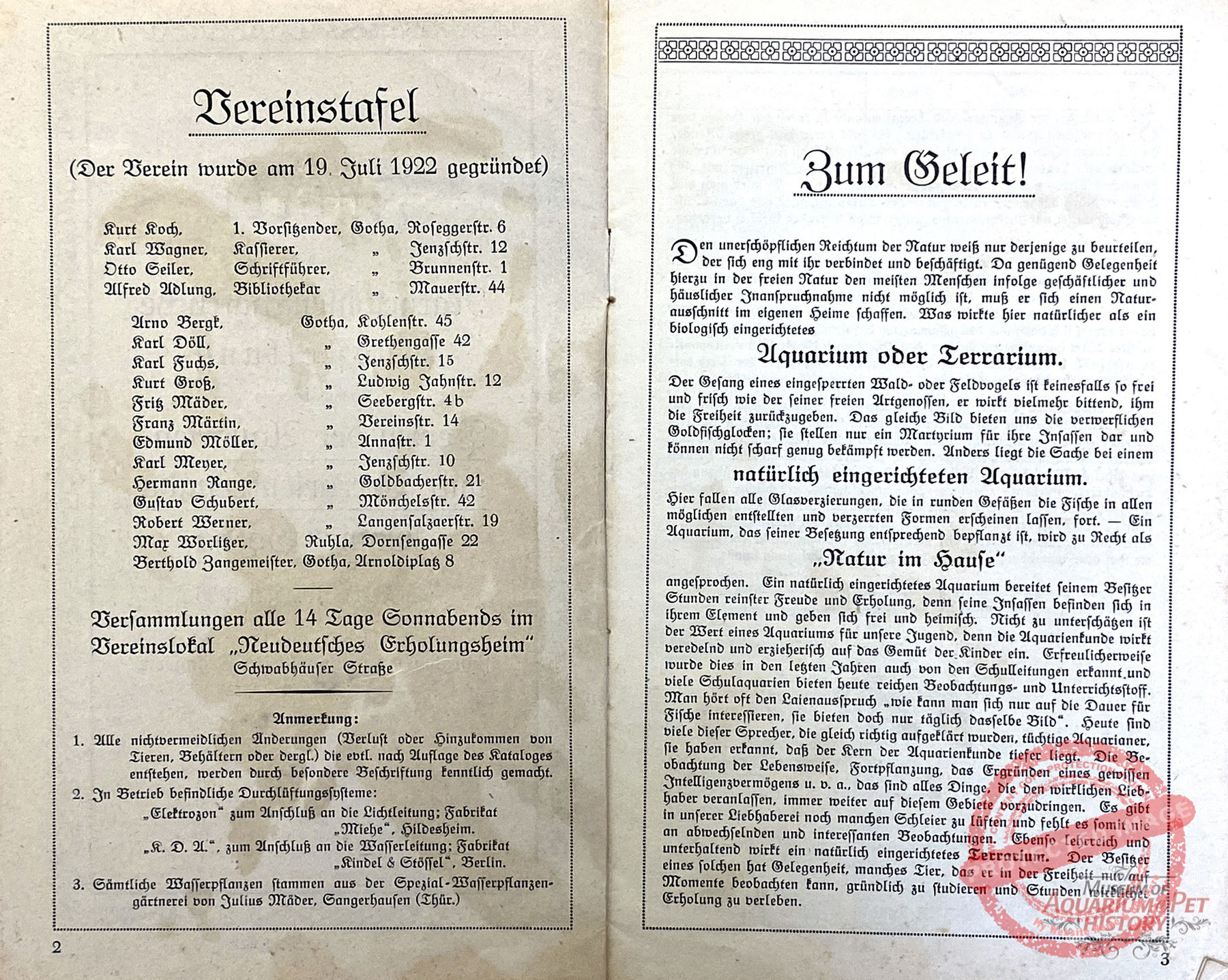
Pages 2–3: Society board and foreword
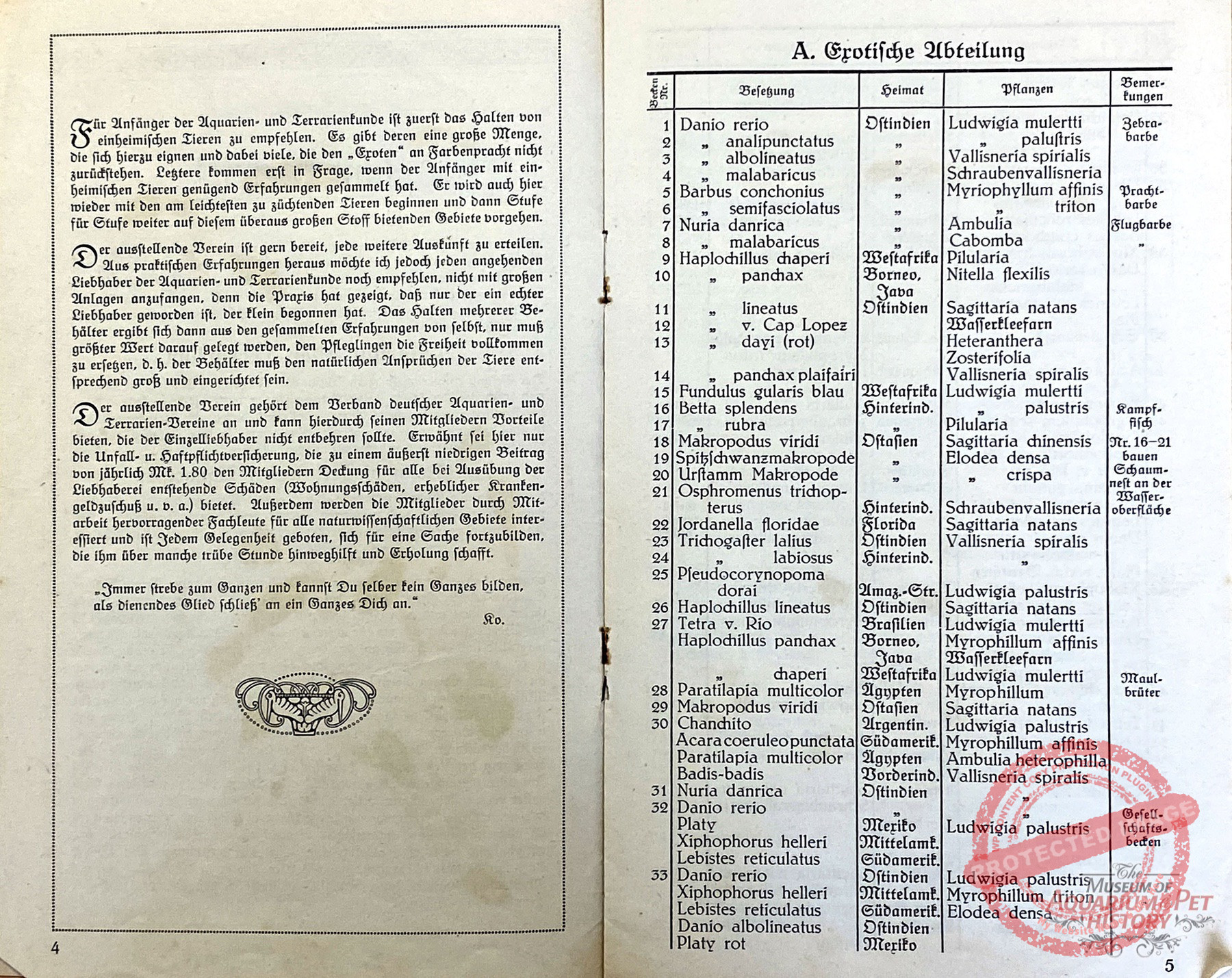
Pages 4–5: Foreword and list of freshwater aquariums
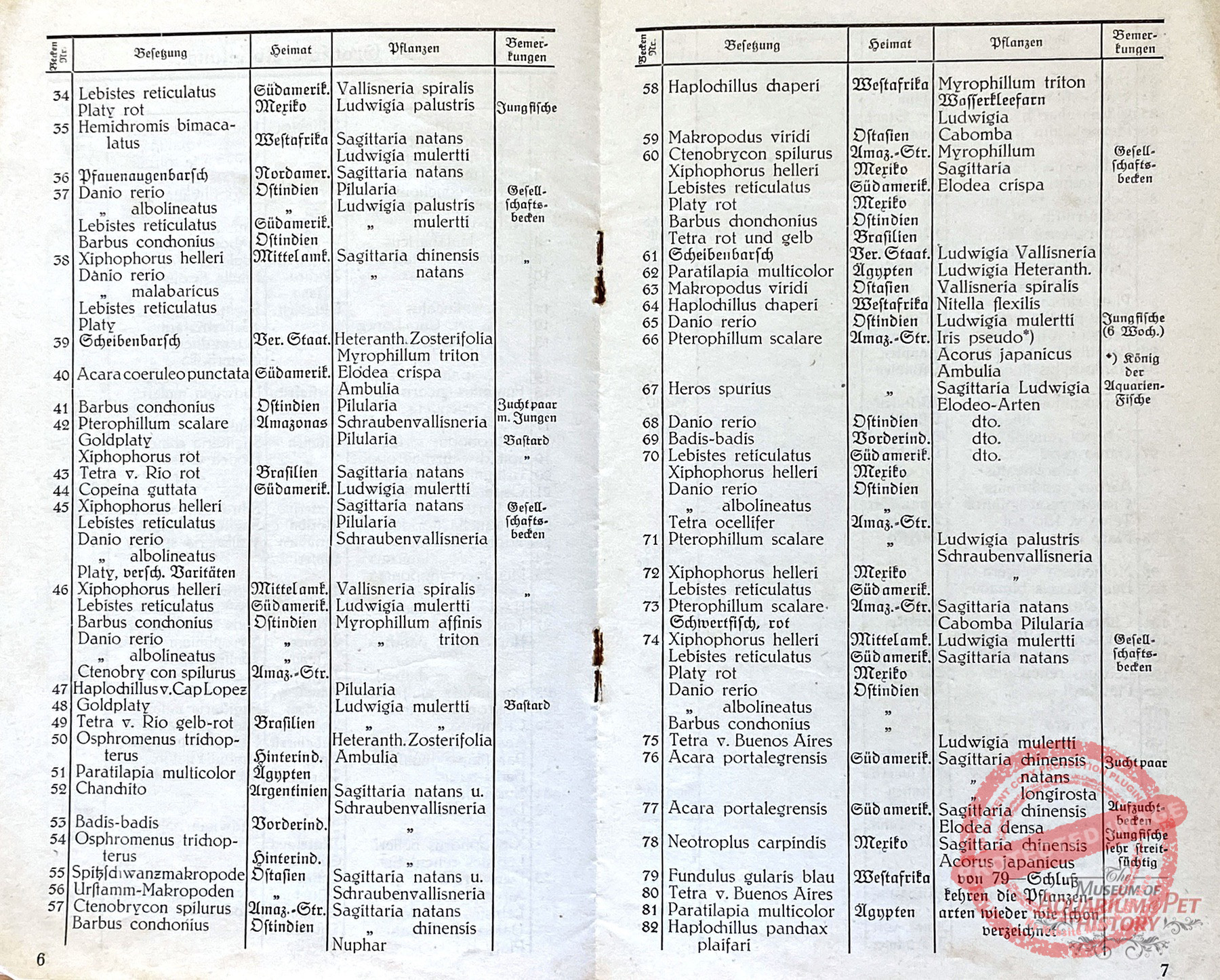
Pages 6–7: List of freshwater aquariums
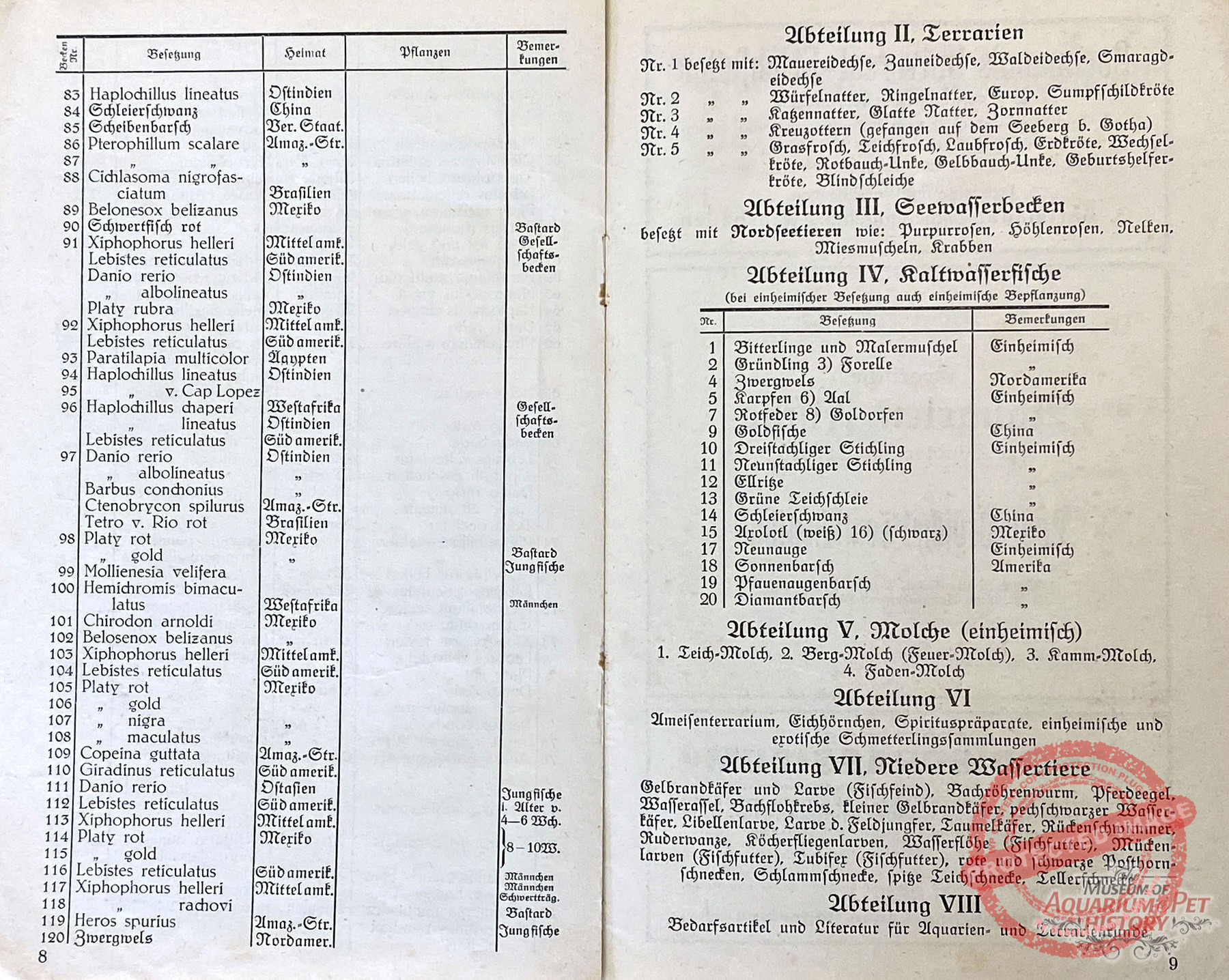
Pages 8–9: List of freshwater aquariums and additional sections
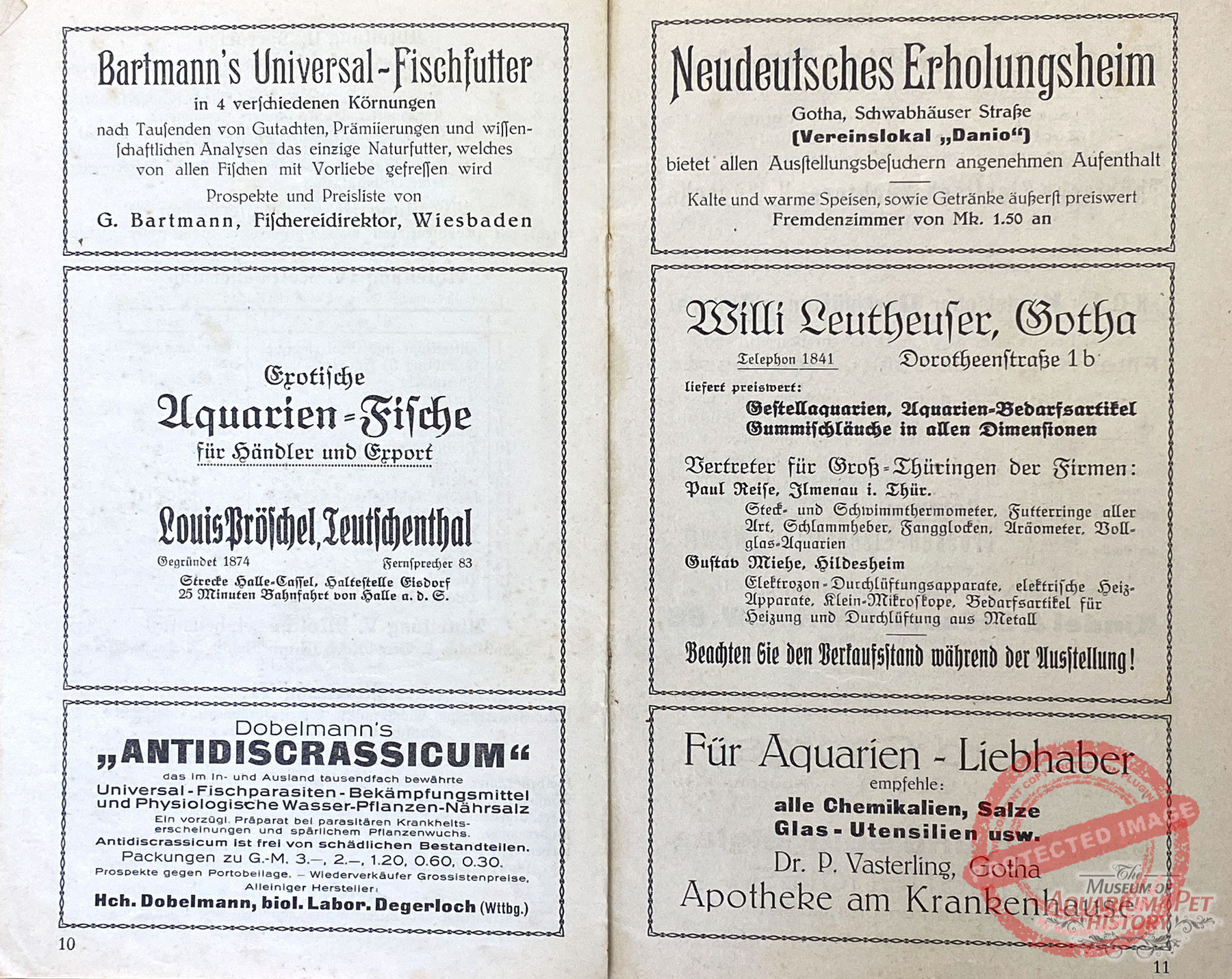
Pages 10–11: Advertisements by a fish food manufacturer, aquarium fish breeders, a fish medicine manufacturer, the Neudeutsches Erholungsheim (at the time the Danio society’s meeting place), a Gotha aquarium builder and technical supplier, and a Gotha pharmacy with a special range of chemicals for aquarists
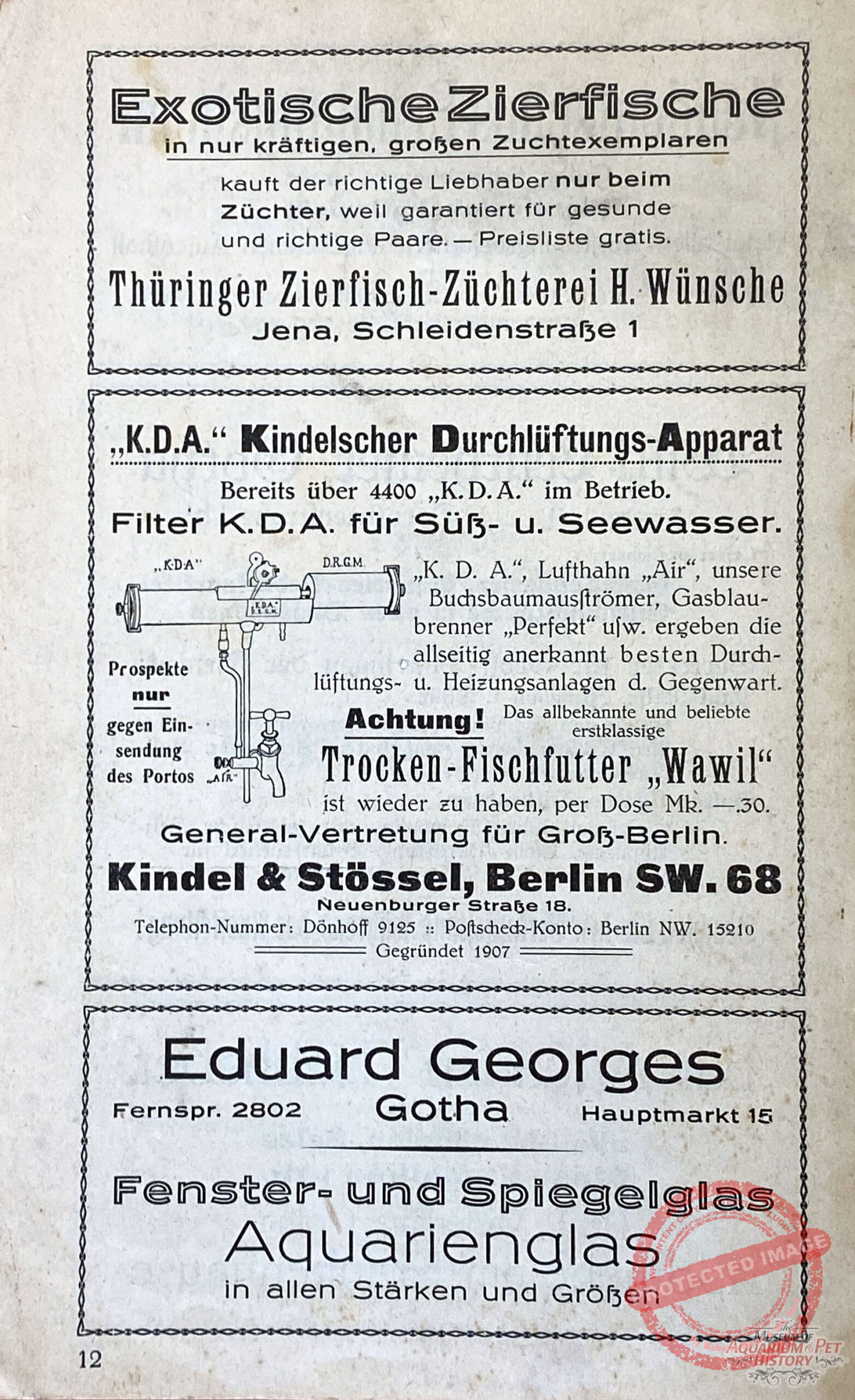
Page 12: Advertisements by an aquarium fish breeder from Jena, Kindler & Stössel for their aeration apparatus, and the Gotha aquarium glass supplier Eduard Georges
The largest section of the exhibition consisted of 120 freshwater aquariums containing an impressive diversity of tropical fish species. In the section of five terrariums, native amphibians and reptiles predominated. There were also marine tanks with animals from the North Sea. A section with 20 aquariums for cold-water fish presented native, Asian, and North American species. Newts were given a section of their own; in another, a mix of animals was displayed, from squirrels to an ant colony, along with various taxidermy specimens. Lower aquatic animals from local waters occupied yet another section, and finally there was one devoted to supplies and literature. The exhibition felt like an invitation to the hobby—and accordingly, the influx of new members to the Danio society was strong.
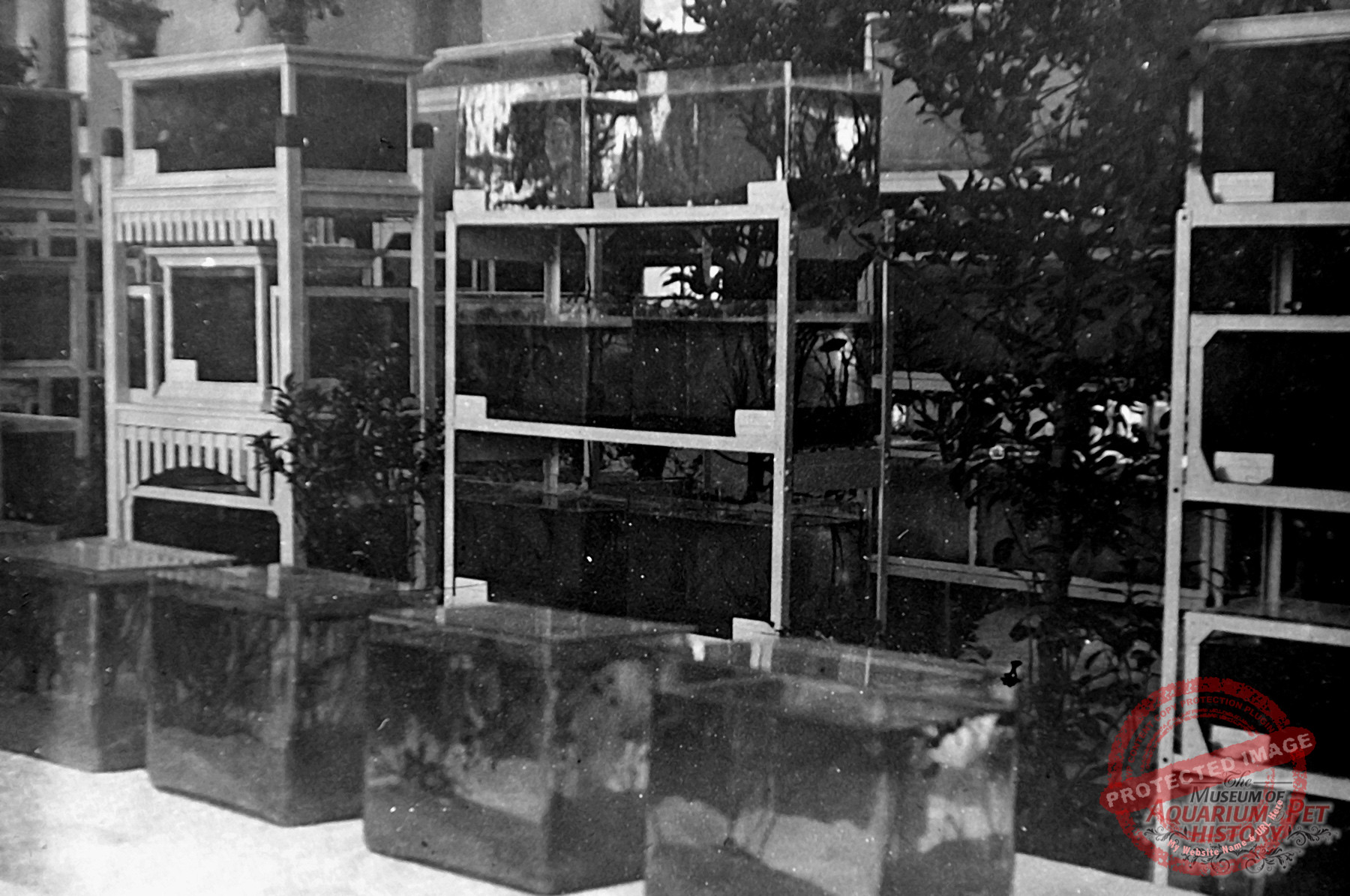
Freshwater aquariums in the exhibition
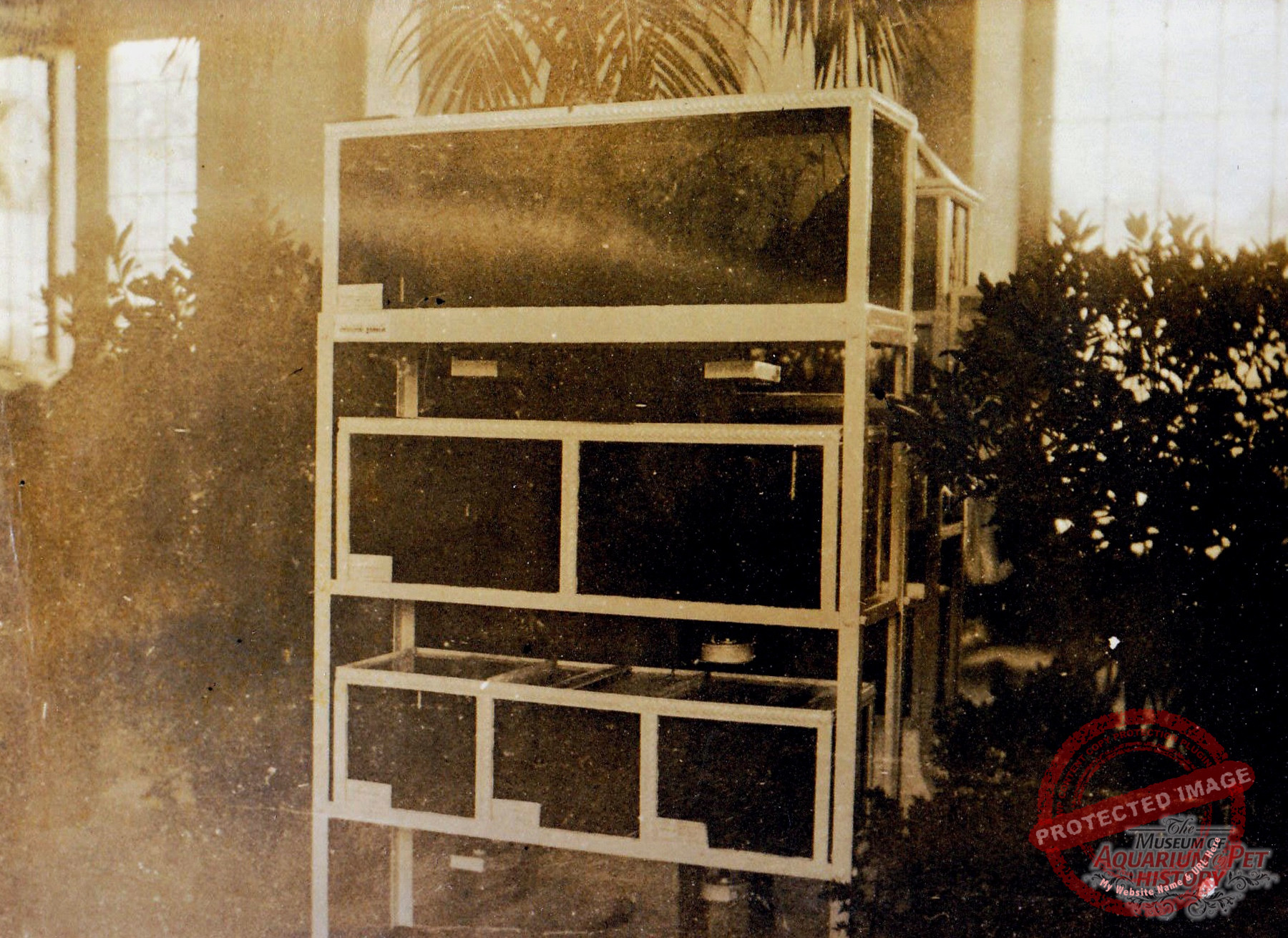
Aquariums, among others, for invertebrates
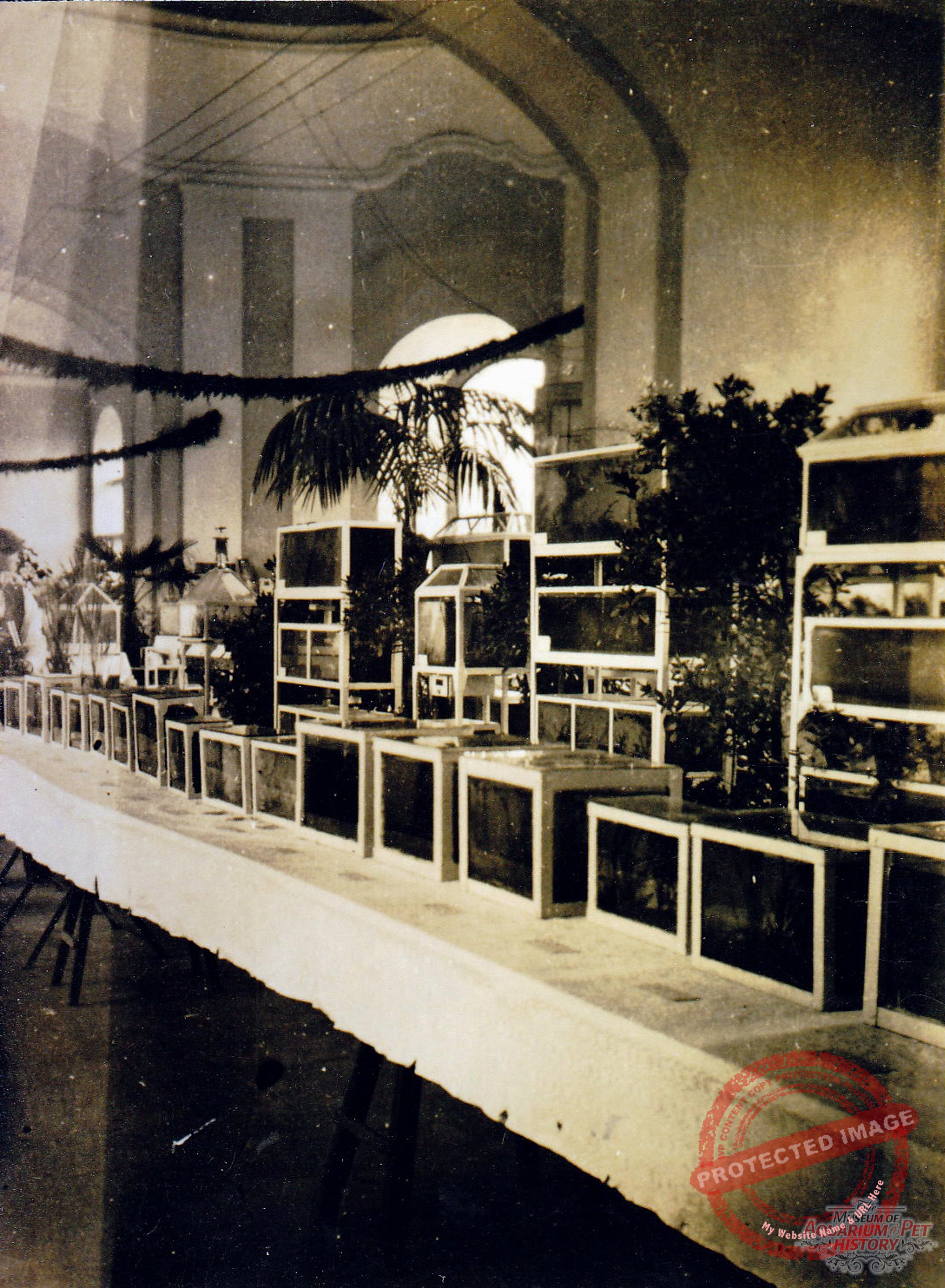
Small freshwater tanks in the exhibition
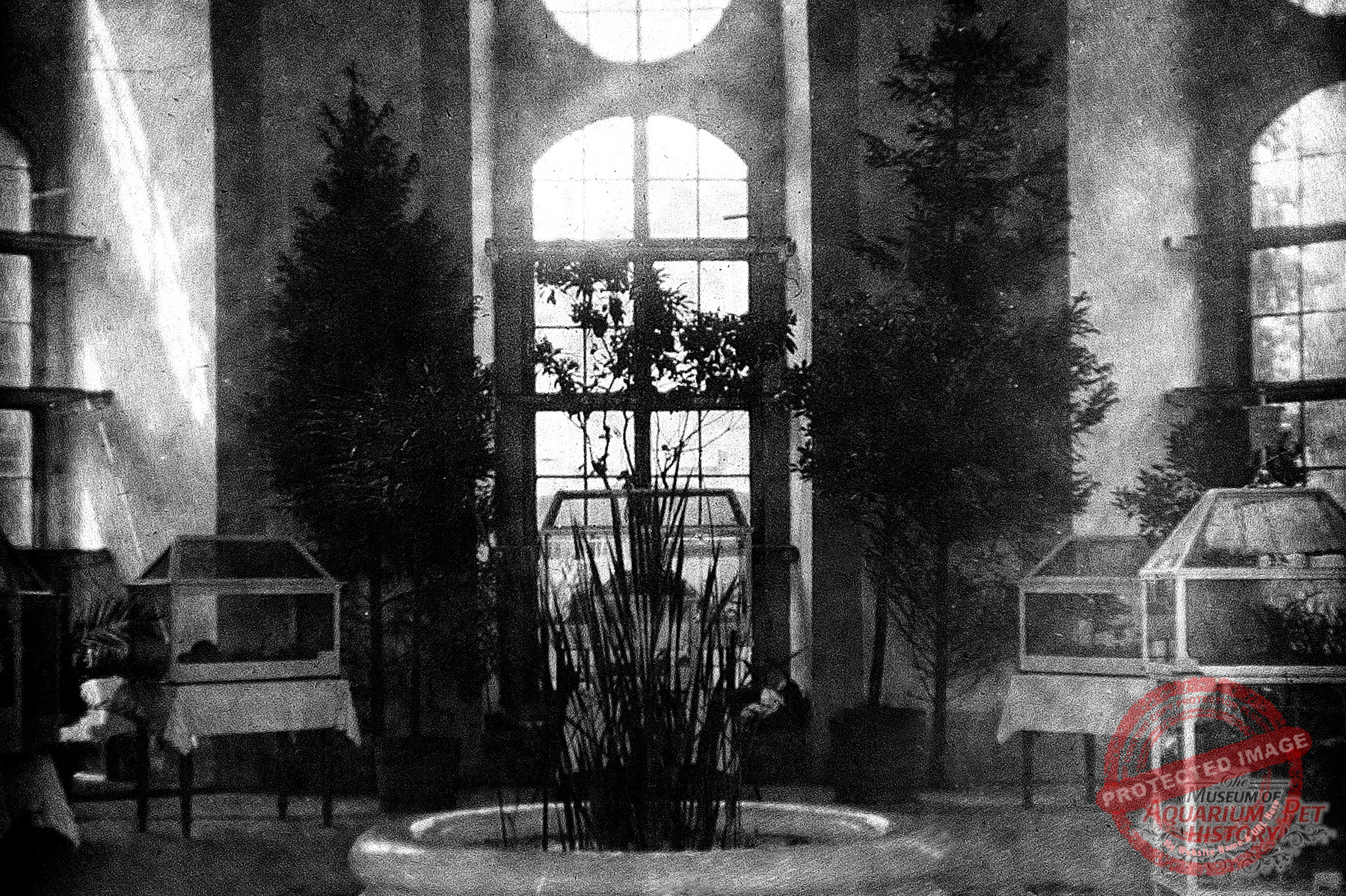
Terrariums in the exhibition
The freshwater aquariums were thematically arranged. There was a genuine attempt to combine animal and plant species in a way that was consistent from a biogeographical perspective. The number of Danio species already bred at that time was enormous (and of course they were especially honored as the eponymous genus of the society): Danio rerio, Danio analipunctatus (by which Danio nigrofasciatus was meant), Danio albolineatus, and Danio malabaricus (today Devario). With the barbs Barbus conchionius and Barbus semifasciolatus (both today Puntius), two classics were represented. Brood-caring characins such as Copeina guttata were already swimming in the aquariums. Various labyrinth fishes (Betta splendens, Macropodus opercularis, Trichogaster trichopterus, Colisa lalia, Colisa labiosa) and their close relatives (Badis badis) were already being kept. Countless killifish enriched the exhibition, including Aphyosemion australe, Jordanella floridae, and Aplocheilus panchax. Among the African cichlids, Pseudocrenilabrus multicolor had made its appearance under the genus name Paratilapia. Even then, guppies, platys, and swordtails could be seen in many different color forms. Relatively soon after the first importation of these livebearers, aquarists had succeeded—through selective breeding—in rapidly producing and establishing beautiful strains. Finally, there was the angelfish, then hailed as the king of aquarium fish, whose appearance seemed sensational. The old Gotha aquarists of the time—Kurt Koch, Charly Fuchs, or Hans Kehl—continued to call angelfish kings even much later, when discus fish were traded as such. And one should not overlook the astonishing diversity of aquatic plants. Here the Gotha tradition of refined aquatic plant culture becomes evident, combined with a sense for attractively planted aquariums suited to their animal inhabitants. All of this can be gleaned impressively from the exhibition guide.
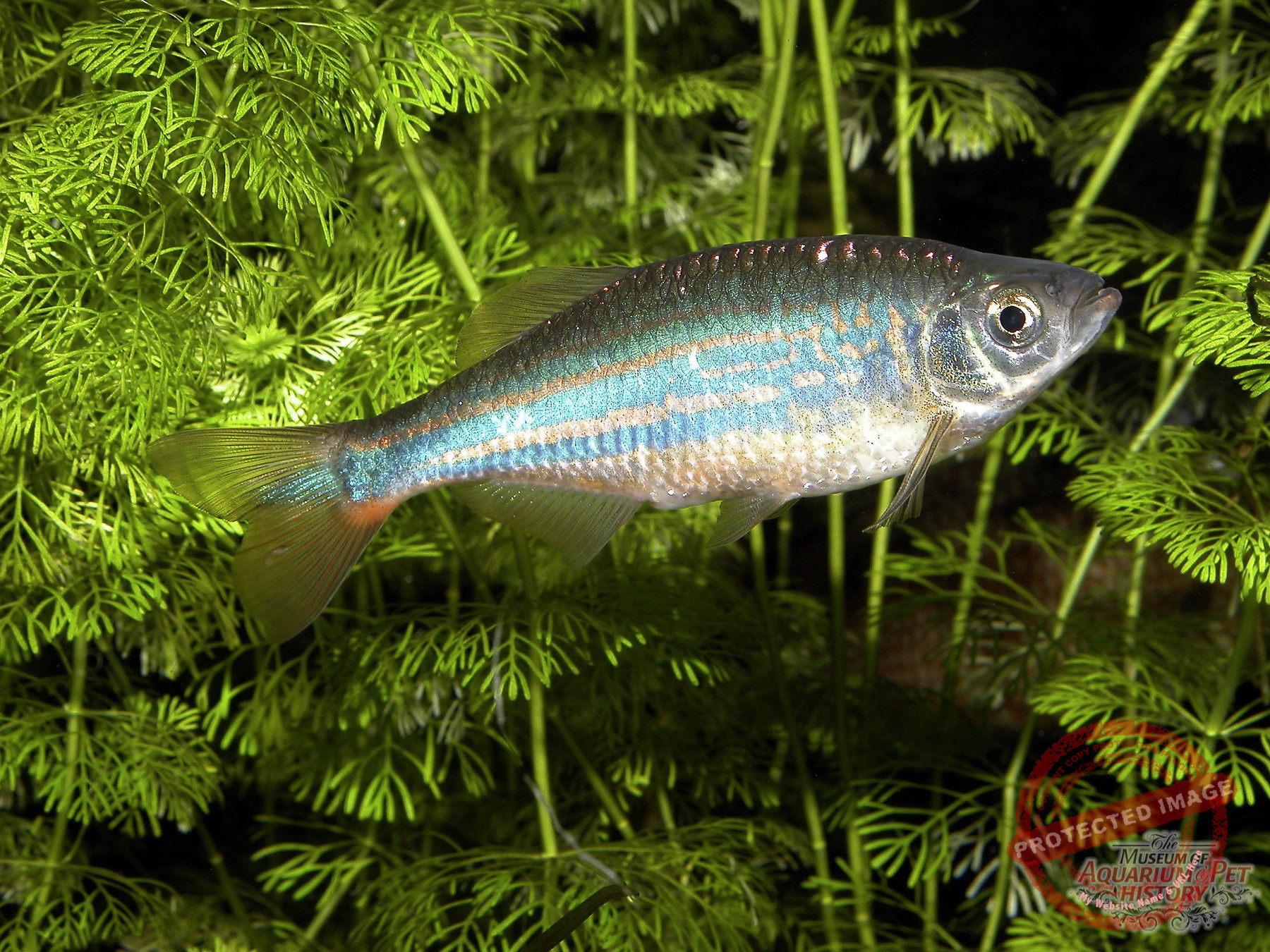
Danio malabaricus
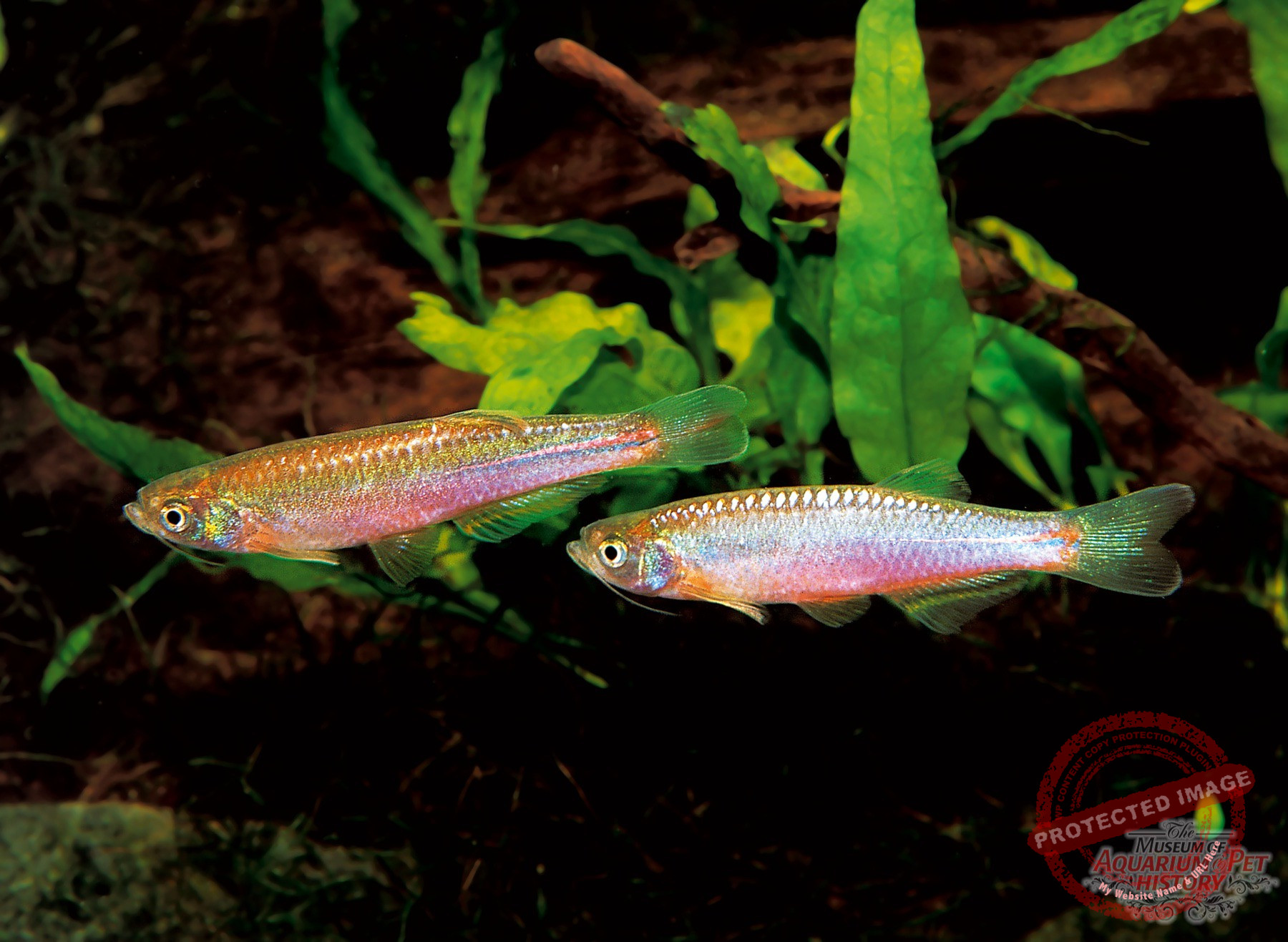
Danio albolineatus
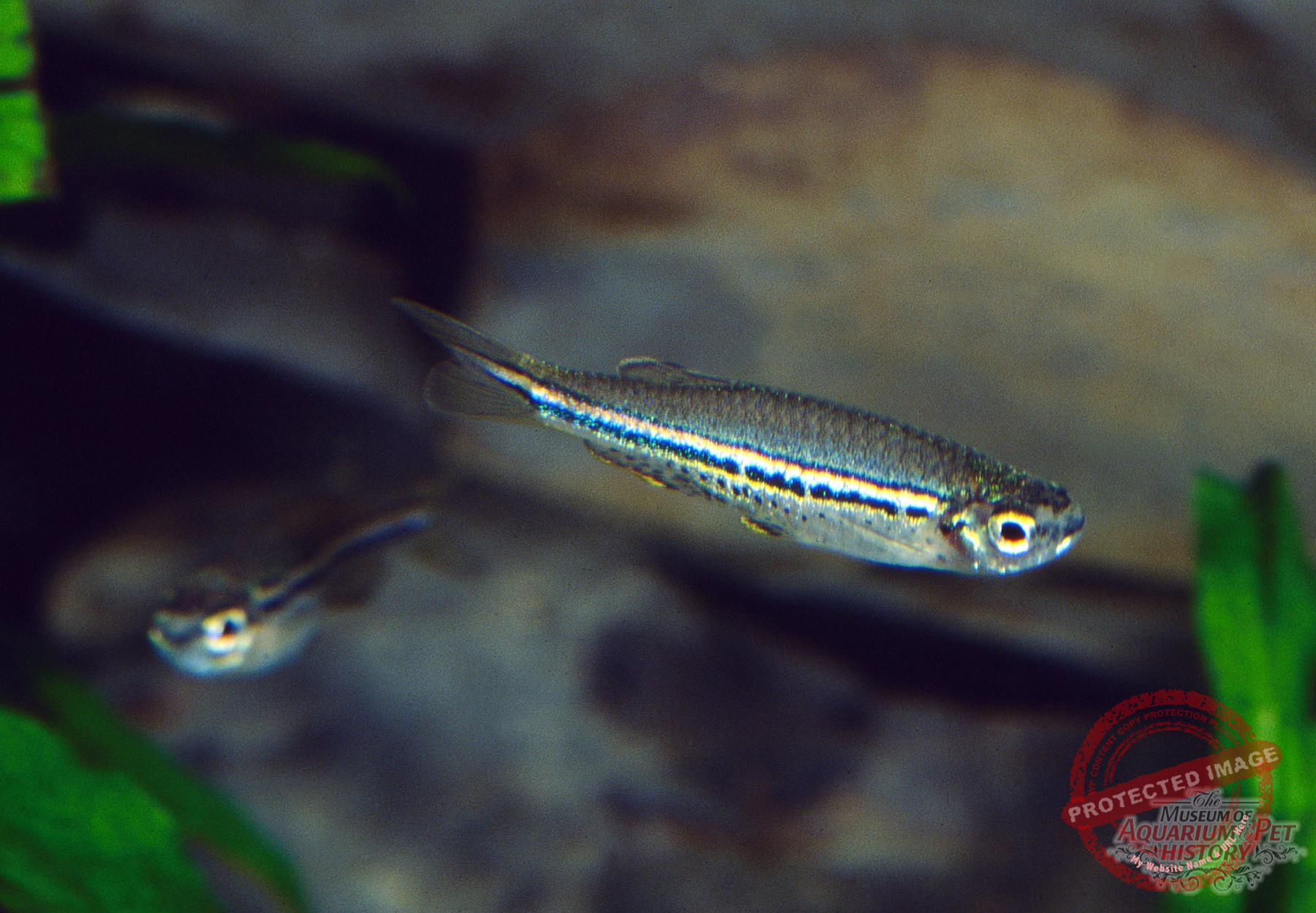
Danio nigrofasciatus
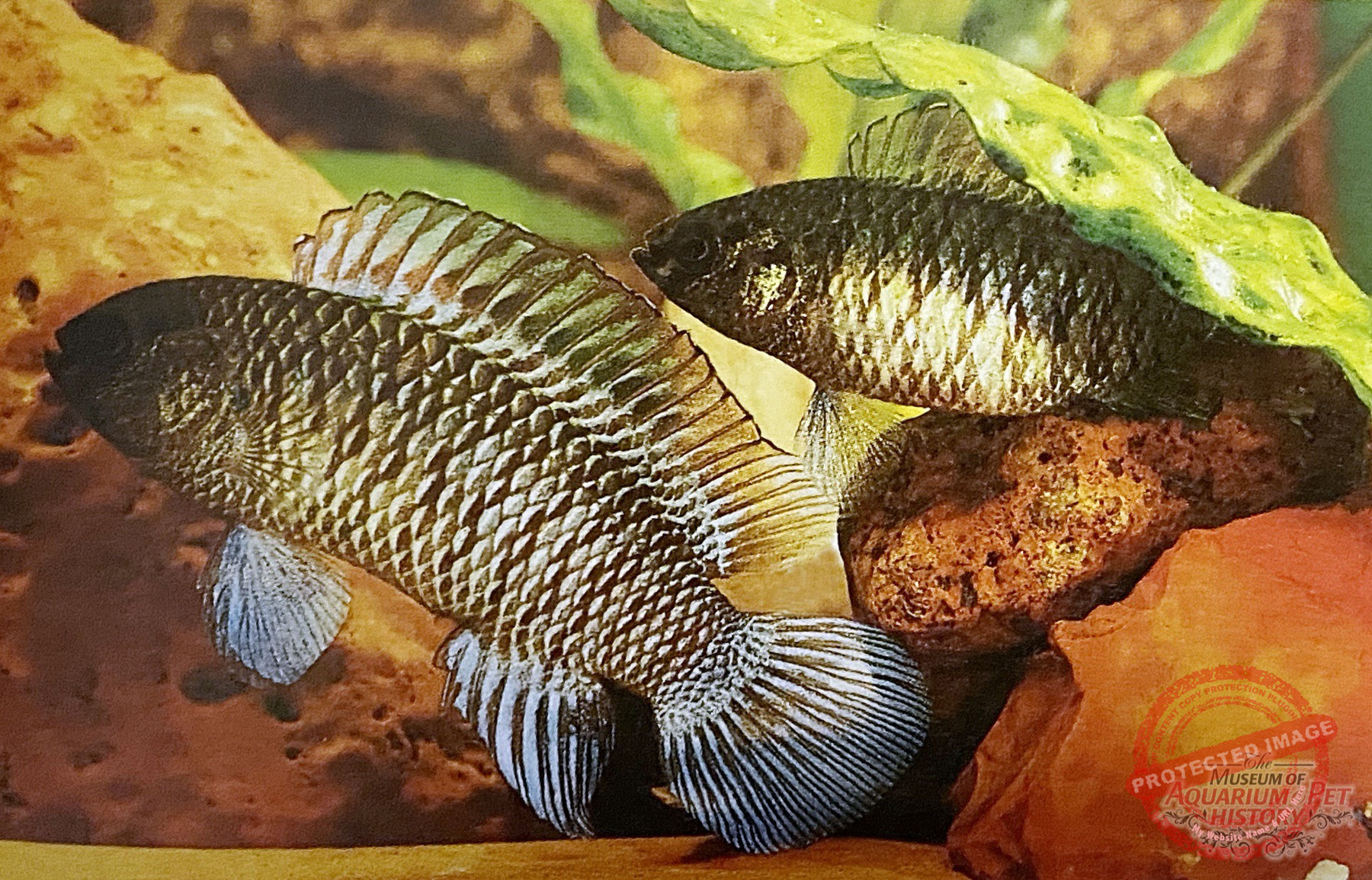
Badis badis
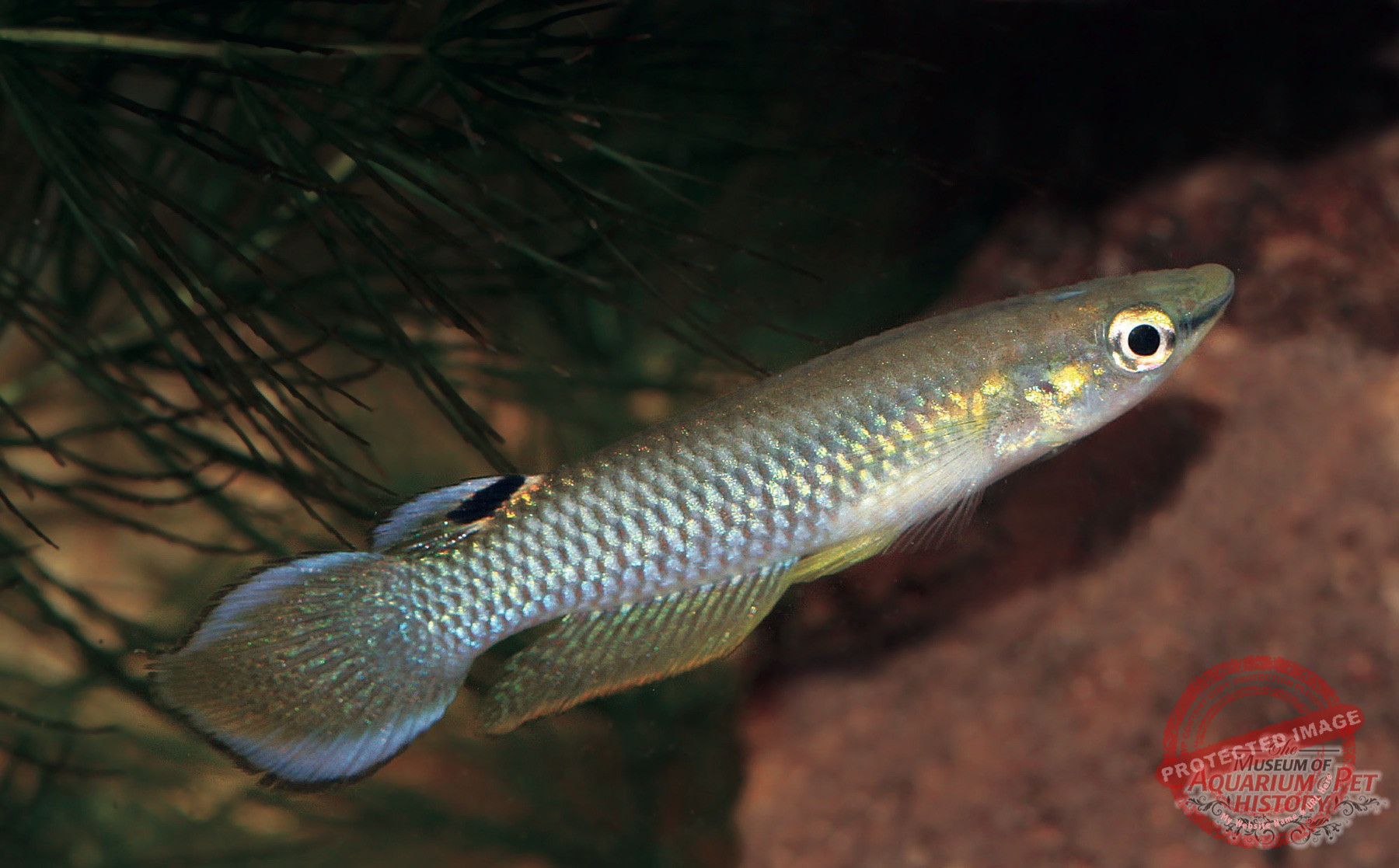
Aplocheilus panchax
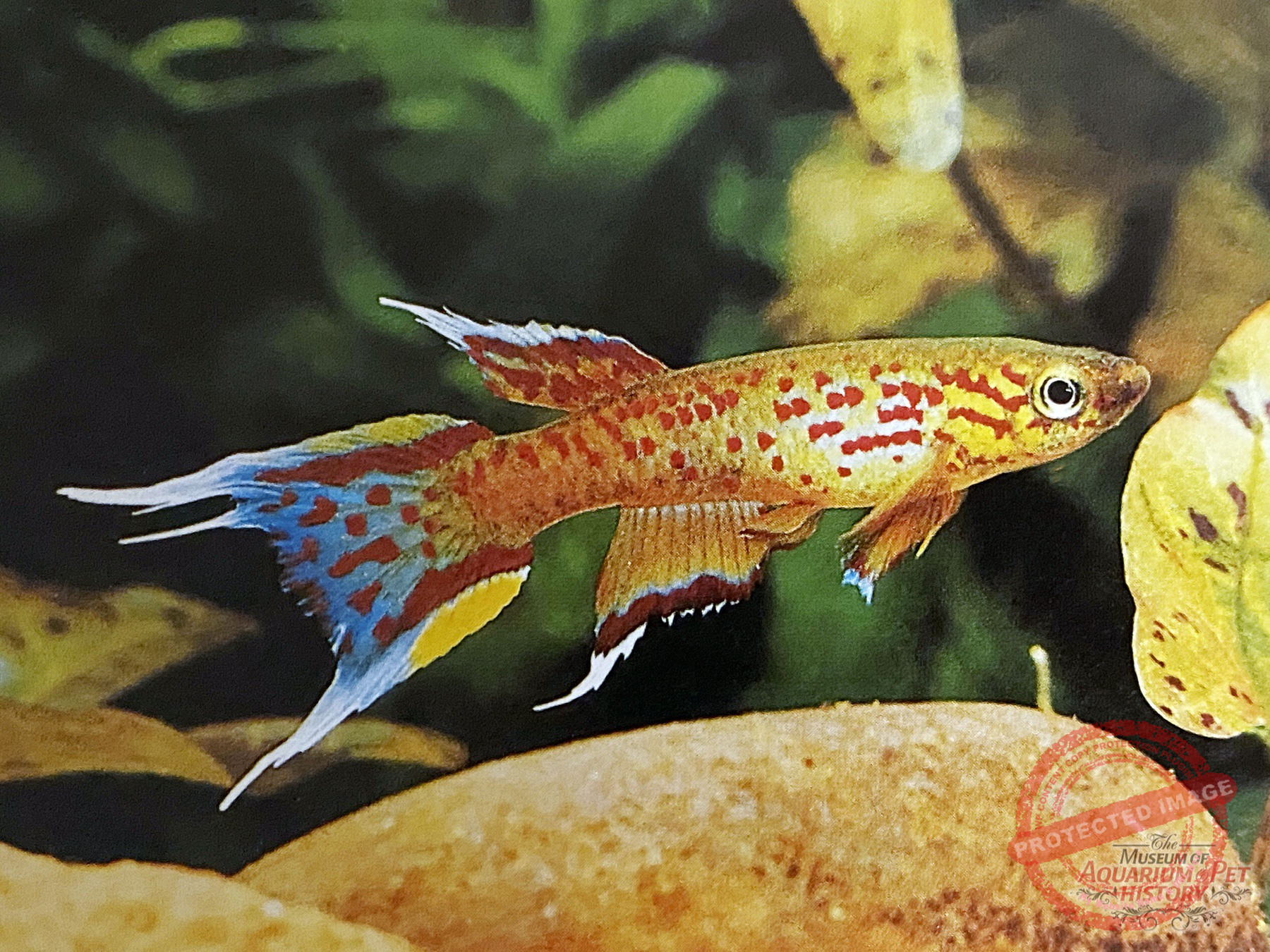
Aphyosemion australe
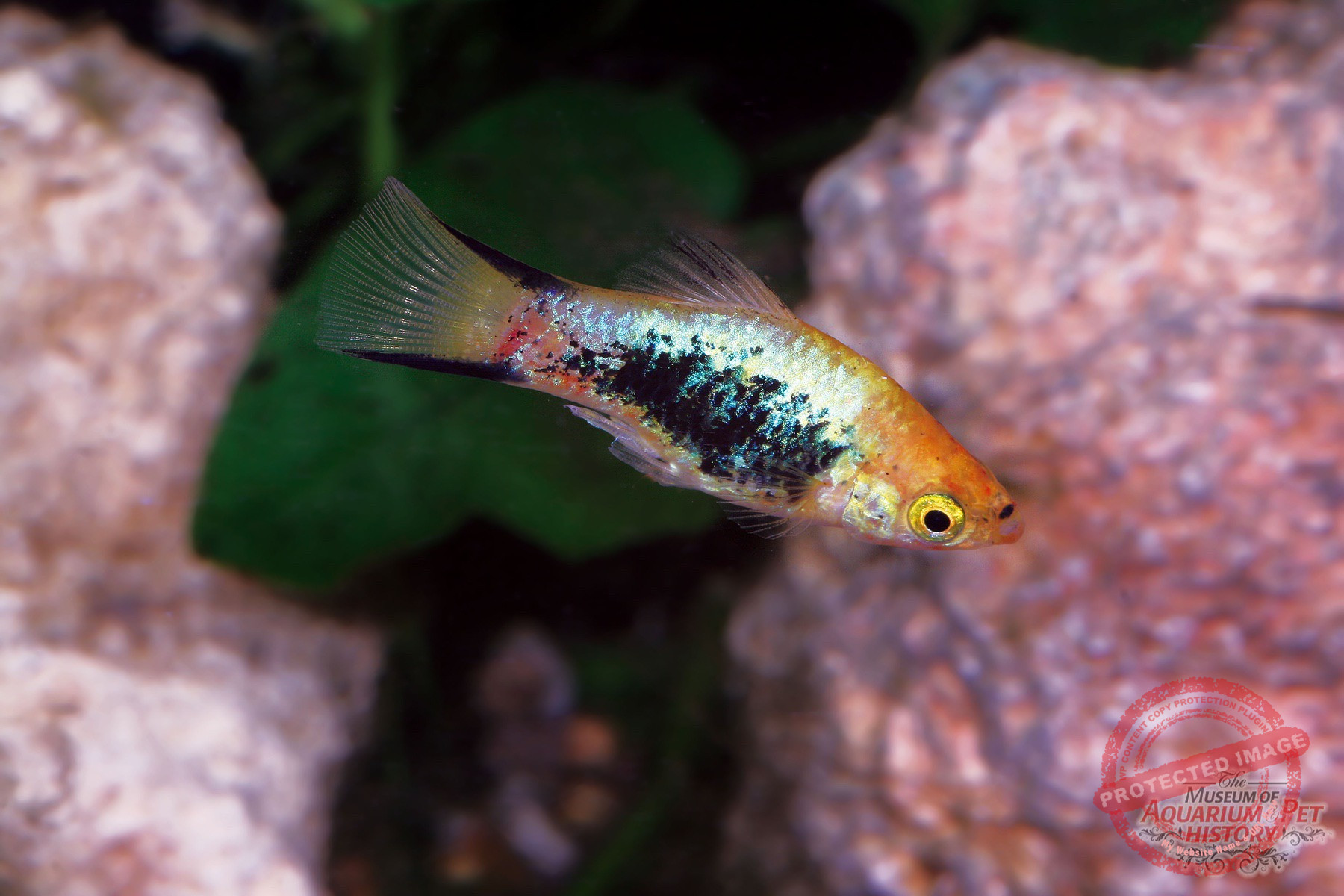
Tuxedo Platy
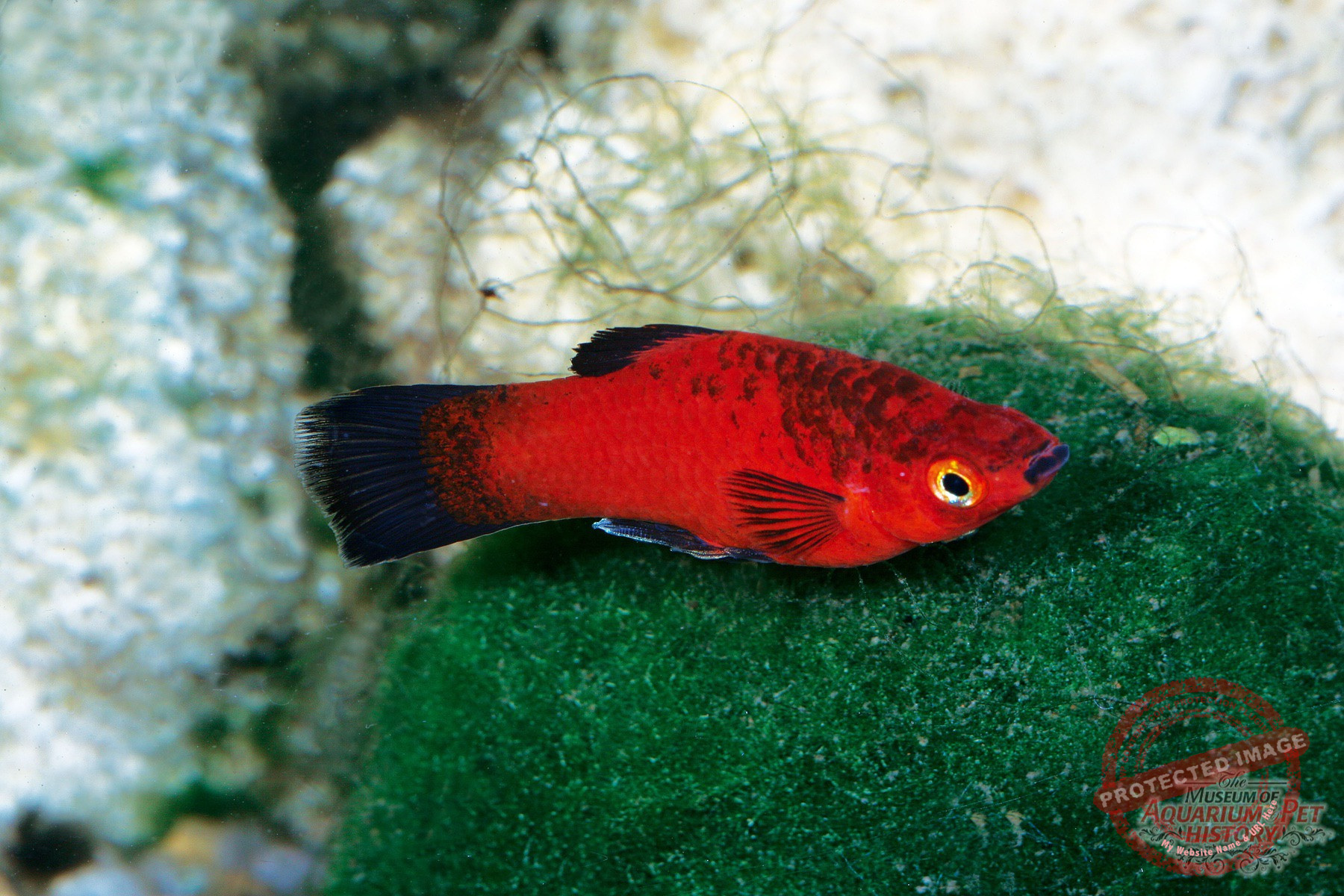
Red wagtail platy – all already selectively bred strains at that time
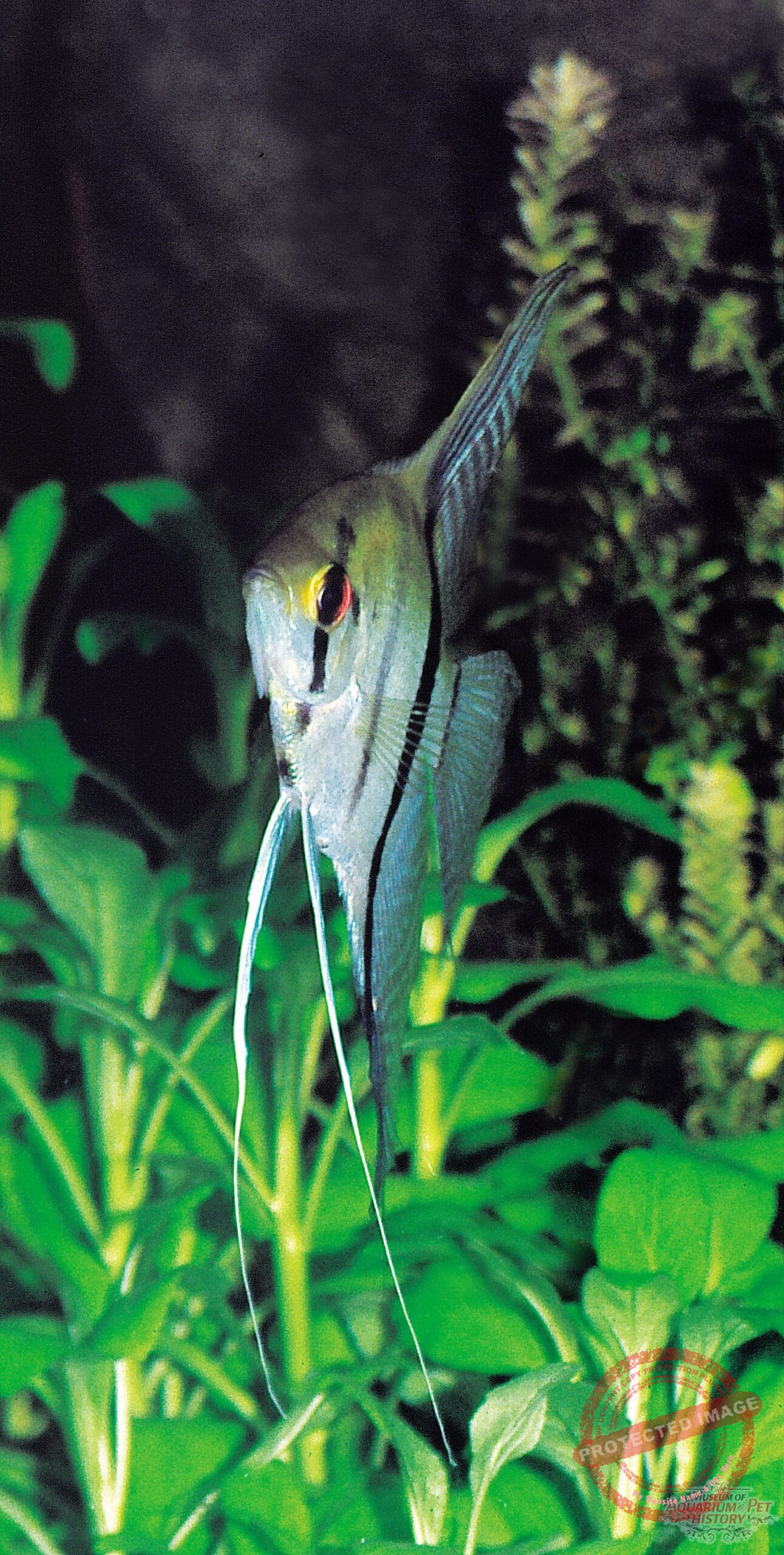
The angelfish, Pterophyllum scalare, regarded at the time as the king of aquarium fish
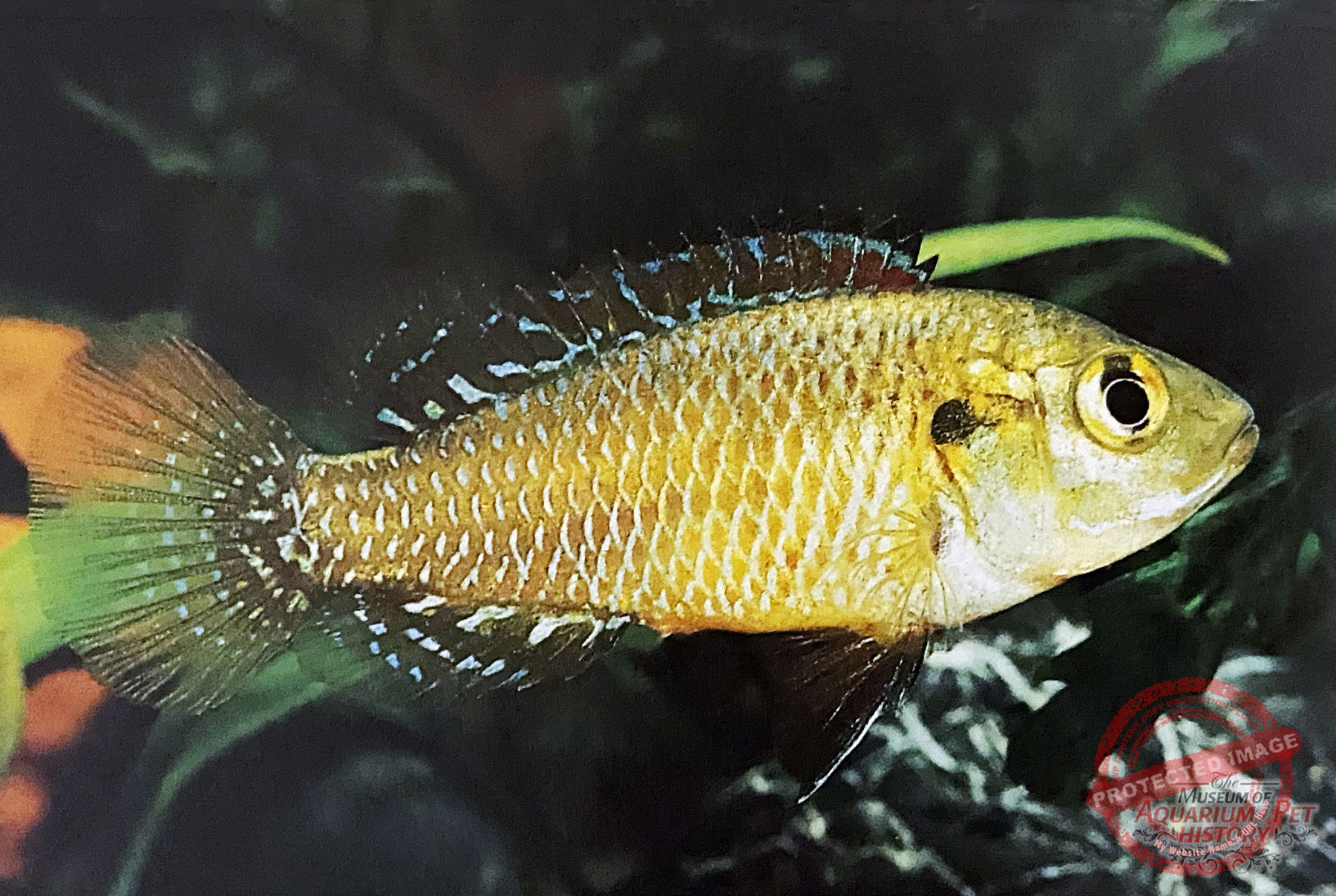
Pseudocrenilabrus multicolor
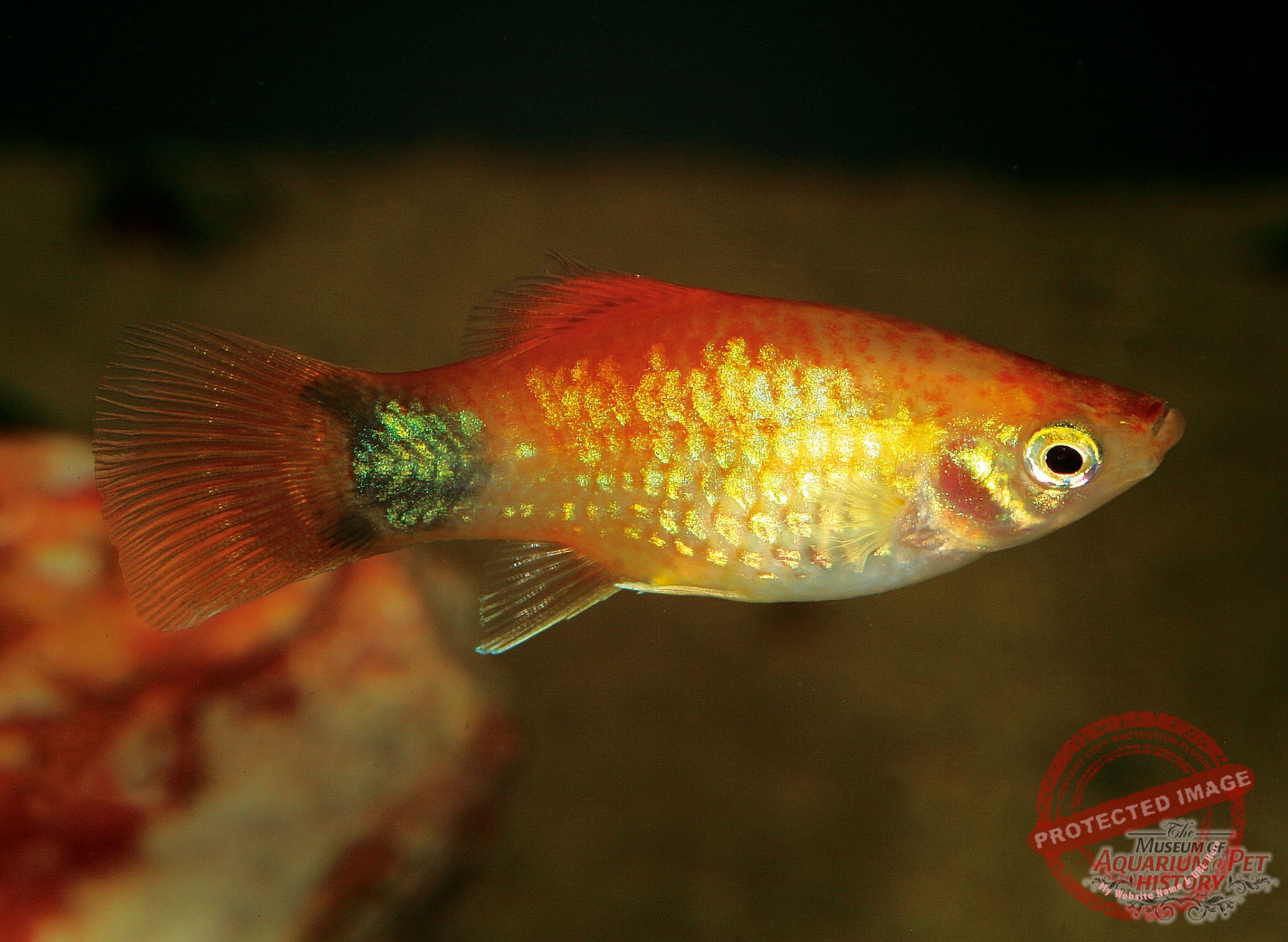
Moonshine platy
The Wochenschrift für Aquarien- und Terrarienkunde described the exhibition as follows: “From the moment one entered the hall, it was apparent from the visitors’ reactions that the society had struck the right note with the overall design. Magnificent palms and tastefully arranged groups of various exotic plants gave the ‘Exotic Section’ its true character. … Including school groups, the exhibition was visited by over 2,000 people. Considering that the society counts only 17 members, not all of whom were exhibitors, the success of the exhibition is largely attributable to the fact that everyone contributed their best and all work was carried out with united effort.” Kurt Koch and his people had achieved a considerable feat. The admission revenues were so good that the Danio society was able, on April 1, 1926, to lease a plot of land and create a pond garden there. I will report on this—and on the equivalent project of the Nymphaea society—in the next installment of this series, as these outdoor installations were of particular historical significance.
As already noted, however, competition invigorates the activities of all involved. The Nymphaea leadership could not let it stand that only the others were capable of such an exhibition. Under the leadership and initiative of my great-uncle Charly Fuchs, who as a young man brought fresh air into the society, the Nymphaea members also planned an exhibition. In the meantime, some of their members had defected to the Danio society. Something had to be done to remain on equal footing. The leadership style became less elitist, and there was a significant rejuvenation of the governing ranks. As will be described in the next article, both rival societies directed their activities for several years toward new outdoor aquaristic installations. This absorbed a great deal of energy and time. Nevertheless, the Nymphaea members succeeded in presenting an equally impressive exhibition from August 4 to 18, 1929, at the same location as that of the Danio society—in the south hall of the Gotha Orangerie.
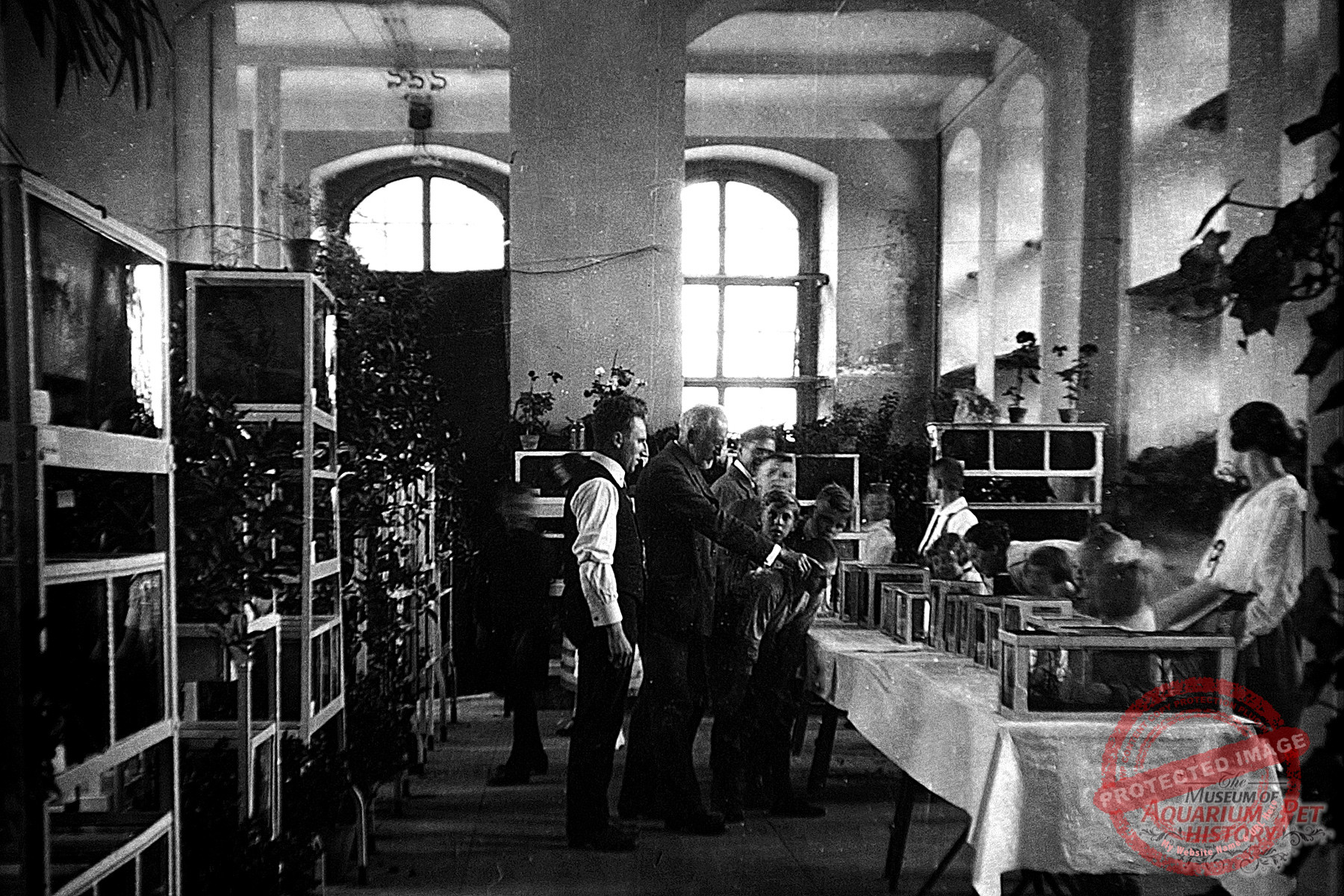
Charly Fuchs (left in the picture) with other society members at the Nymphaea exhibition
The very cover of the exhibition guide already reveals the stronger integration of the Nymphaea people into Gotha society. In keeping with their status, Mayor Dr. Schmidt assumed the patronage. The Nymphaea society used the exhibition guide for self-promotion, naming the restaurant “Stadt Gotha” as their meeting place, where members gathered every two weeks for lectures; they also maintained a society library, whose foundations had been inherited from the first association. The Nymphaea society, too, was already a member of the VDA at that time. And it is interesting that the Gotha exhibition guide also beat the drum for this umbrella organization. For then as now, VDA membership offered a variety of advantages: it included, for example, liability and accident insurance (highly significant in the event of burst aquariums). There was an identification service for vivaristically relevant animals and plants, diagnostic centers for fish diseases, exchange services for various specimens, a photographic and press office, and an advisory service for legal and inheritance-theoretical matters. Even black and white lists intended to protect against unscrupulous dealers and breeders were maintained by the umbrella organization even then.
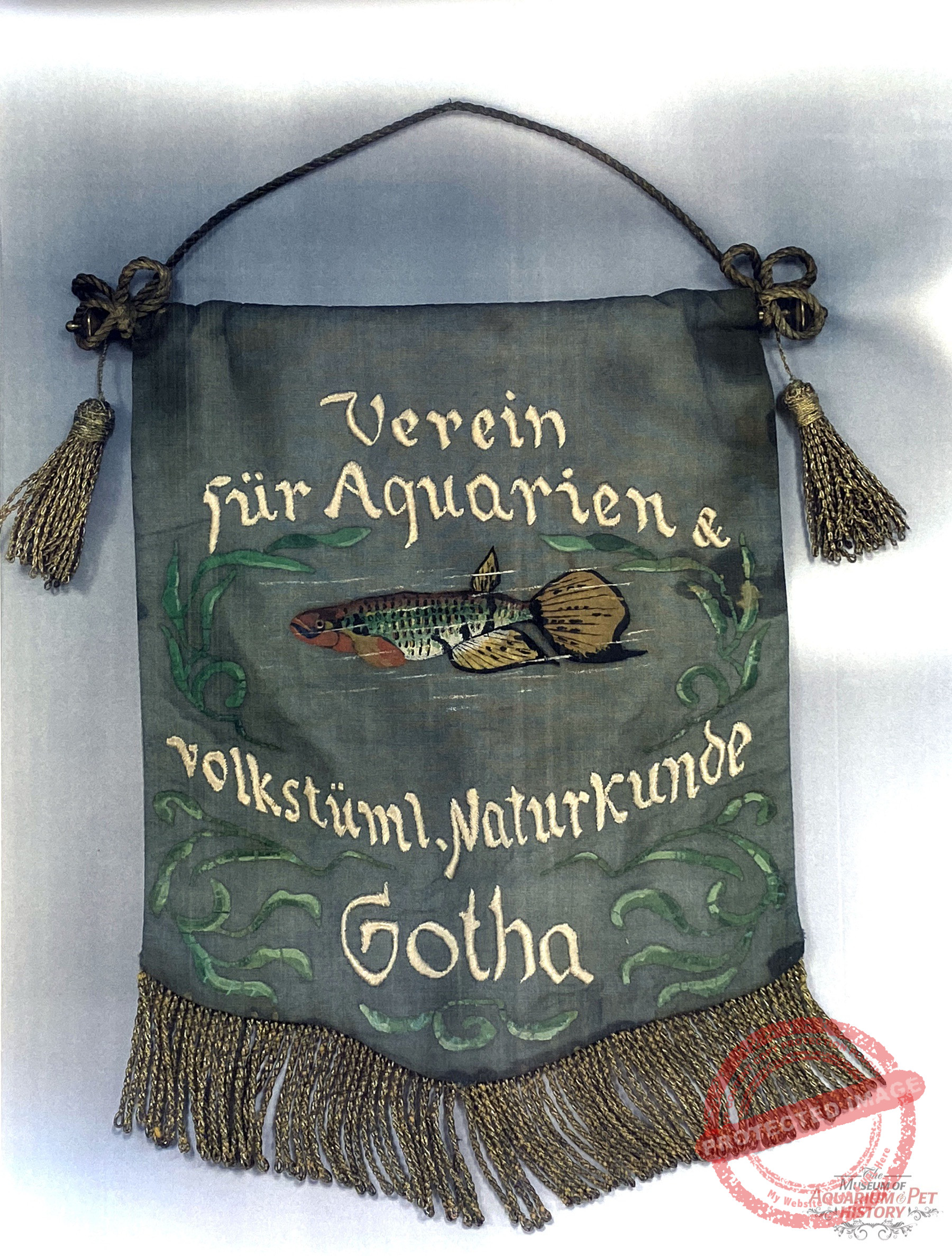
The VDA pennant from that era for the Gotha societies, preserved to this day
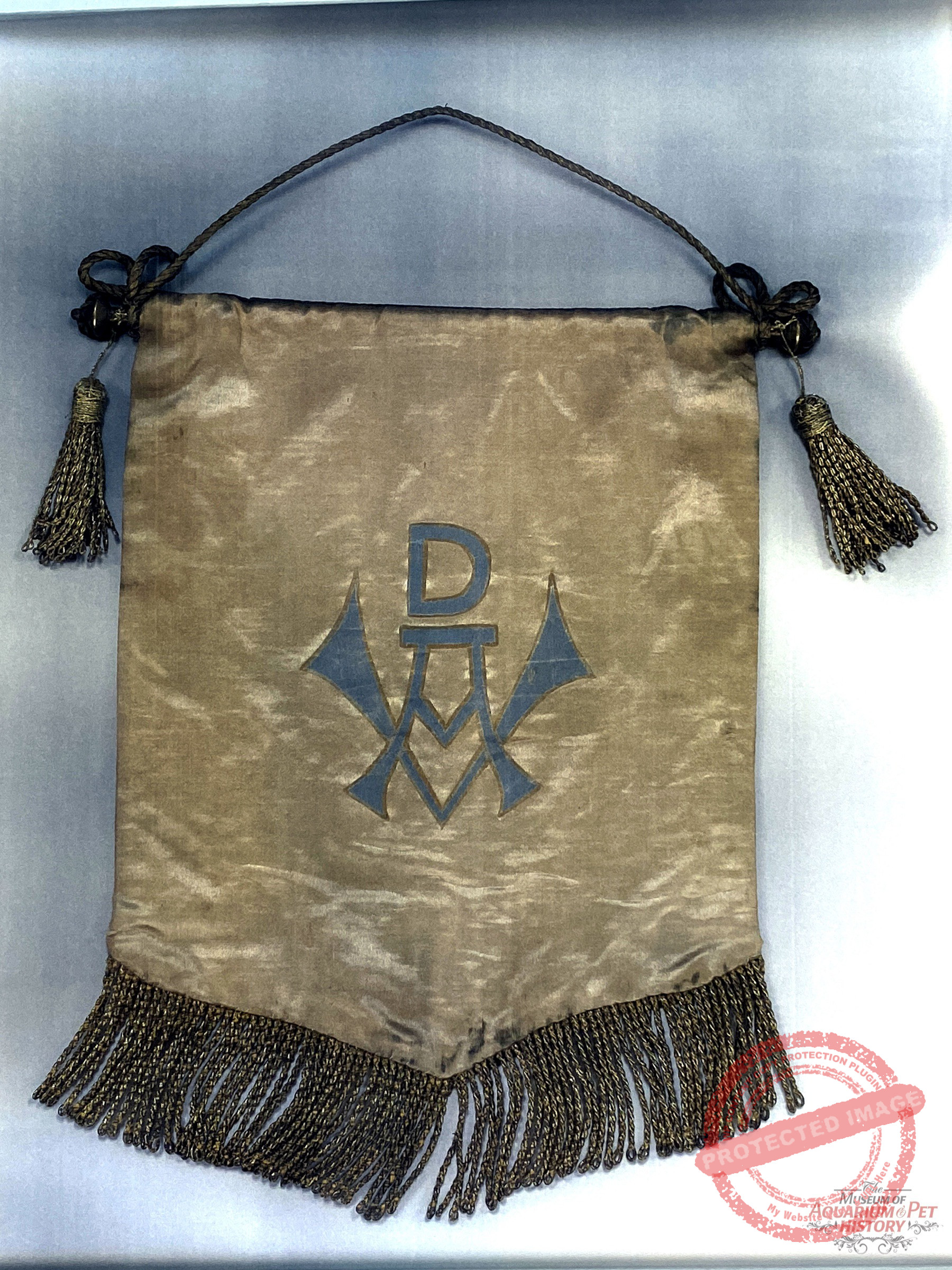
The reverse side of this pennant

First VDA stamp from the early 1920s
The freshwater section of the Nymphaea exhibition was smaller than that of the Danio society (the Danio members actively bred fish, often as pioneers, and could exhibit their own first breedings—a typical phenomenon under conditions of scarcity and limited means, as would later reappear in GDR aquaristics; the financially better-equipped aquarists of the Nymphaea society, and later similarly those in the Federal Republic of Germany, tended instead to purchase their animals and were often too reluctant to undertake the labor-intensive breeding). Nevertheless, it presented several newly introduced species, such as Copella arnoldi, Hemigrammus caudovittatus (today Psalidodon anisitsi), Hemigrammus ocellifer, Aequidens portalegrensis (today Cichlasoma), Aequidens curviceps (today Laetacara), Cichlasoma severum (today Heros), and with Melanotaenia nigrans even the first rainbowfish species kept and bred in aquariums. There were, however, significantly more marine tanks than in the Danio exhibition, featuring sea anemones, wax roses, starfish, shore crabs, hermit crabs, various shrimp, and many fish species from the North Sea and the Mediterranean. Comparatively extensive was the terrarium section. The star attraction was an alligator, but various turtles, six species of snakes, European vipers, a desert terrarium, and several humid terrariums with amphibians also captivated visitors. Remarkably, tropical invertebrates were already represented, including dung beetles, bird spiders, tarantulas, Nephila, stick insects, leaf insects, and praying mantises. Additional aquariums were devoted to native aquatic invertebrates and fish. Finally, there was an extensive section of taxidermy animals. A community aquarium was shown as an example of what could be set up and maintained in a living space. Even exotic birds were displayed, provided by the Gotha pet shop Johann Böhle on Gutenbergstraße 6 (later taken over by Wolfgang Kästner, but more on that in a later article). This exhibition was paired with a cactus show from the long-established Erfurt cactus tradition of the Taenzer company. The sources of the displayed specialist literature and specimens are noted as coming from the collections of senior teachers at the Oberrealschule. The plants were provided by the Gotha court gardening establishment. Everything made possible by money and upper-class connections—not assembled through endless effort and painstaking labor as in the case of the Danio society.
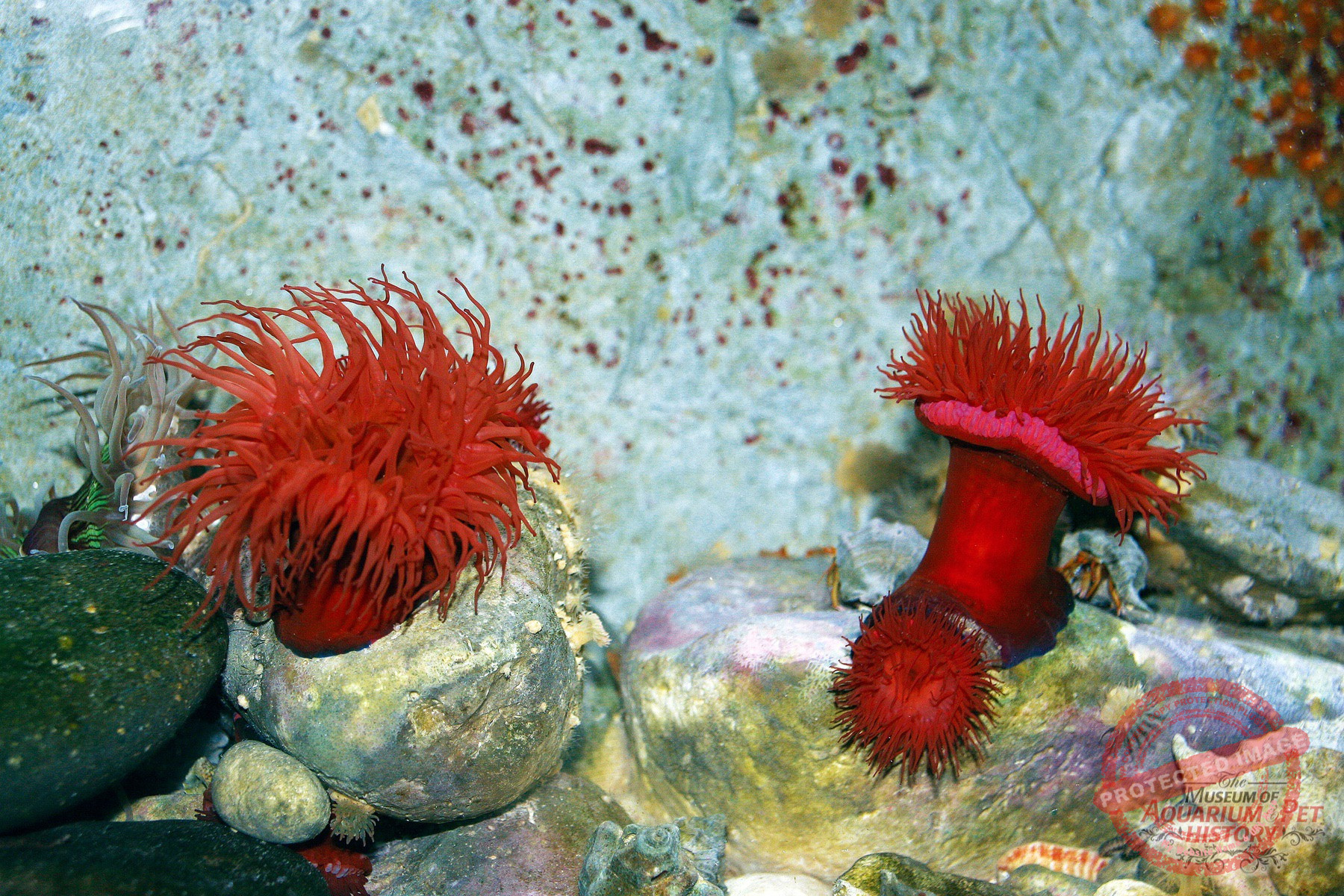
Sea anemones from the Mediterranean
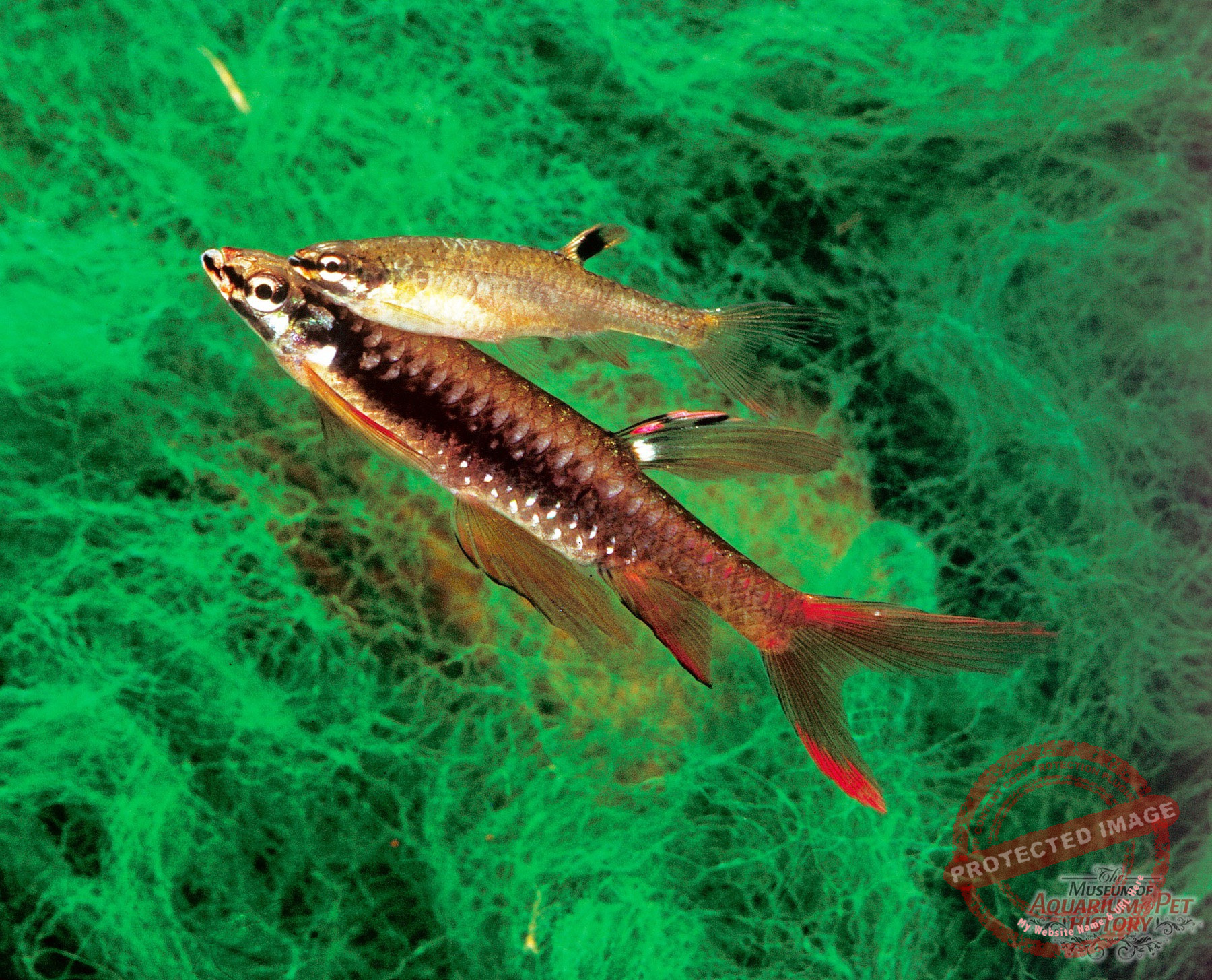
Copella arnoldi
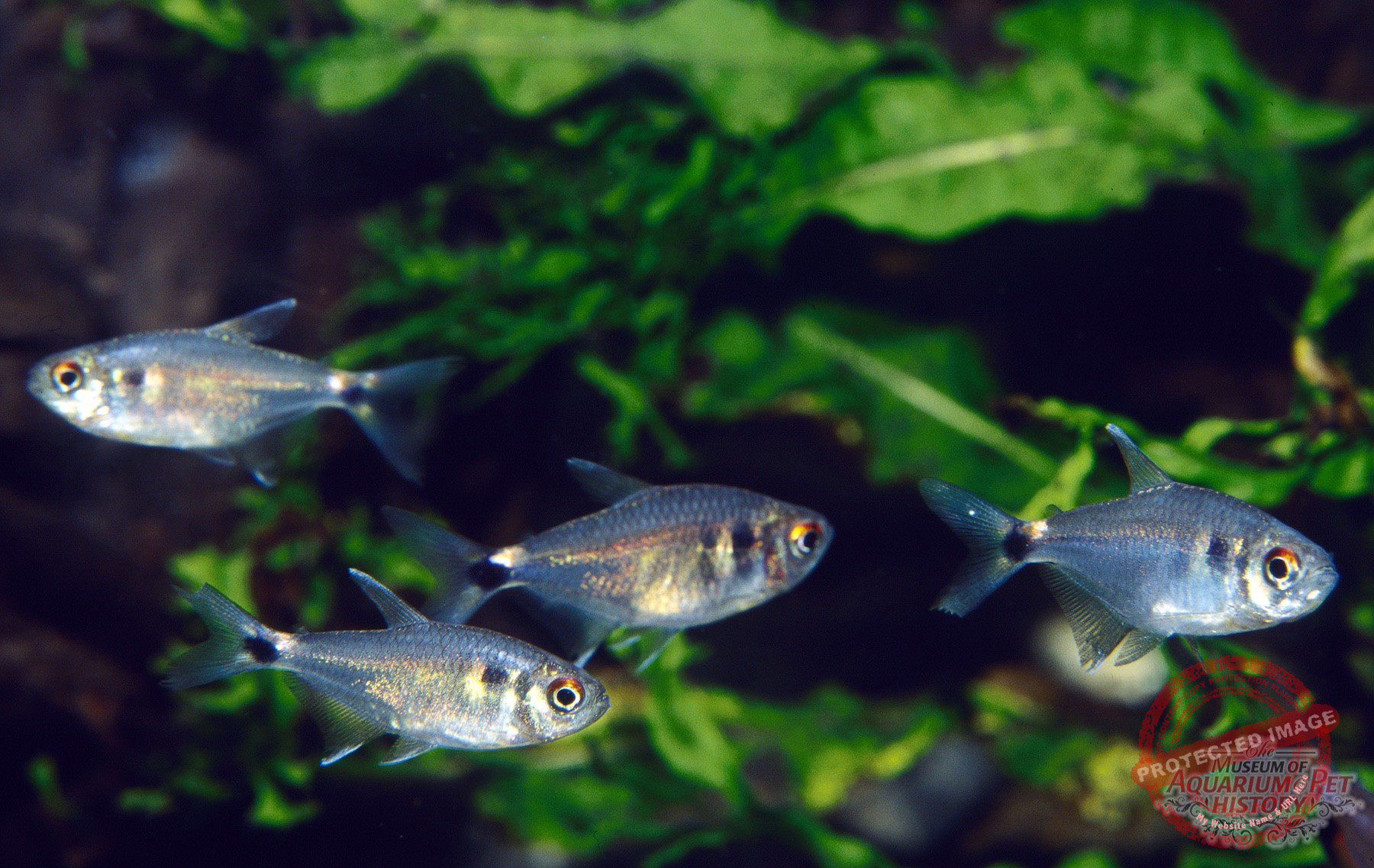
Hemigrammus ocellifer
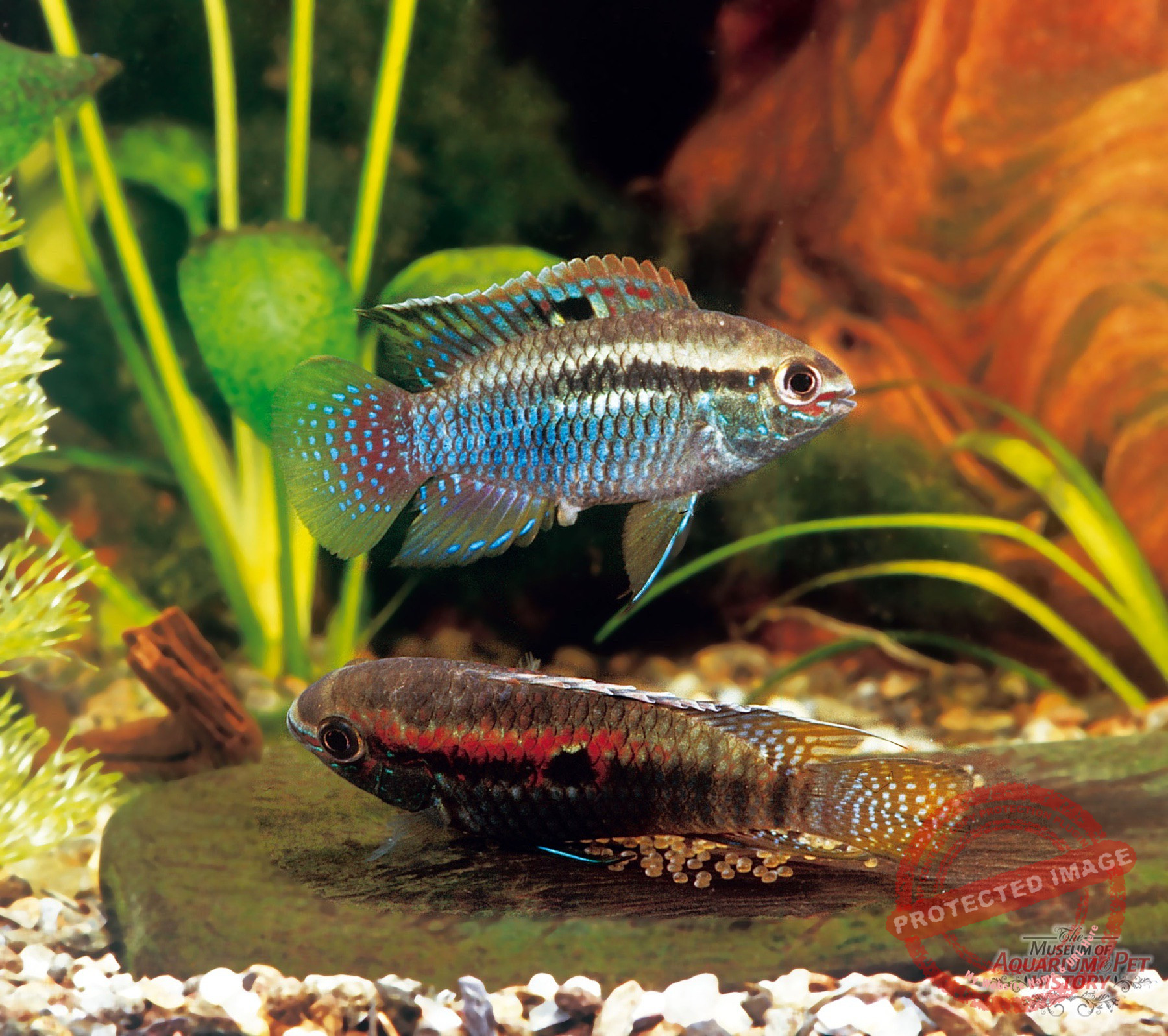
Laetacara curviceps
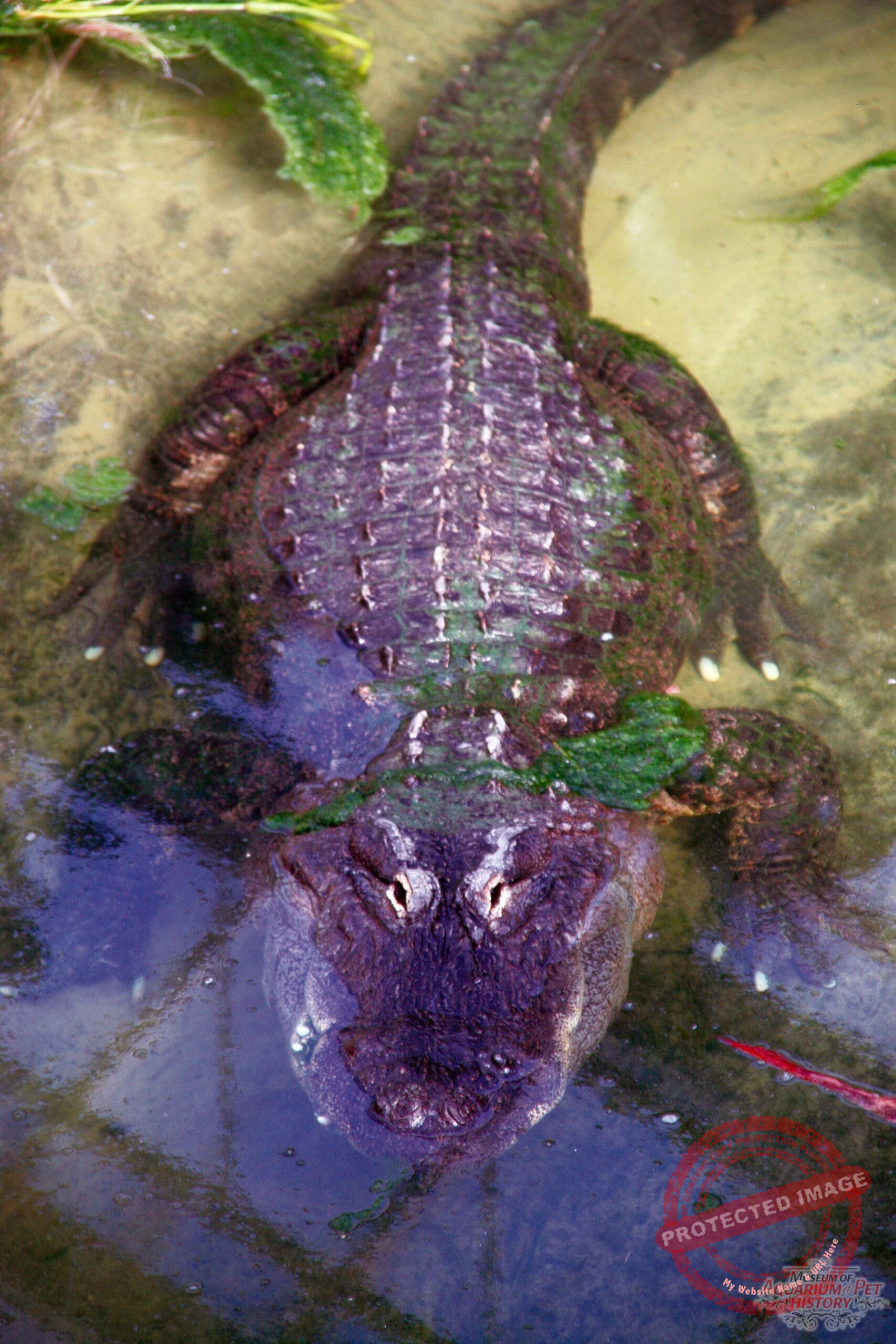
Alligator mississippiensis
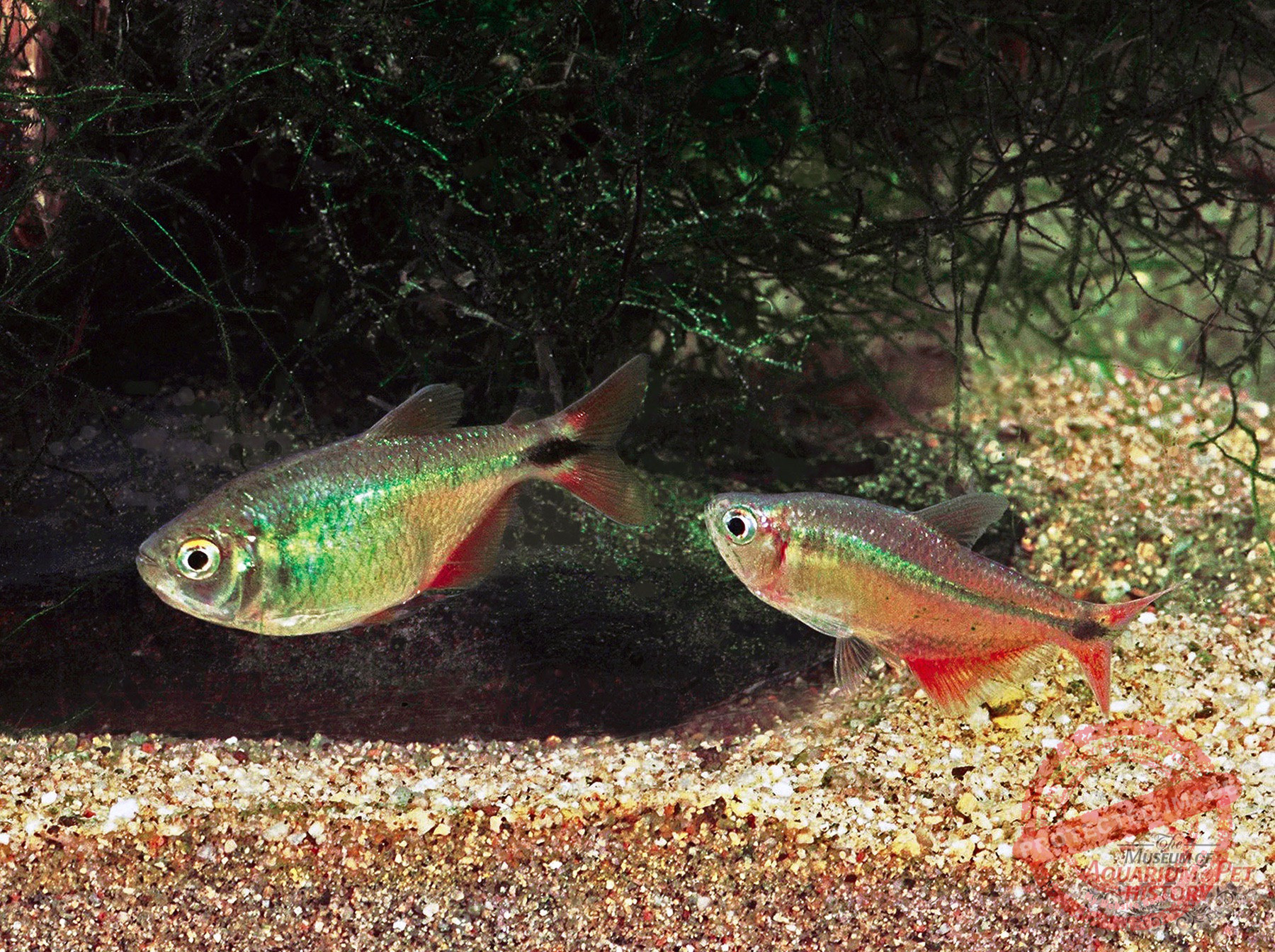
Psalidodon anisitsi
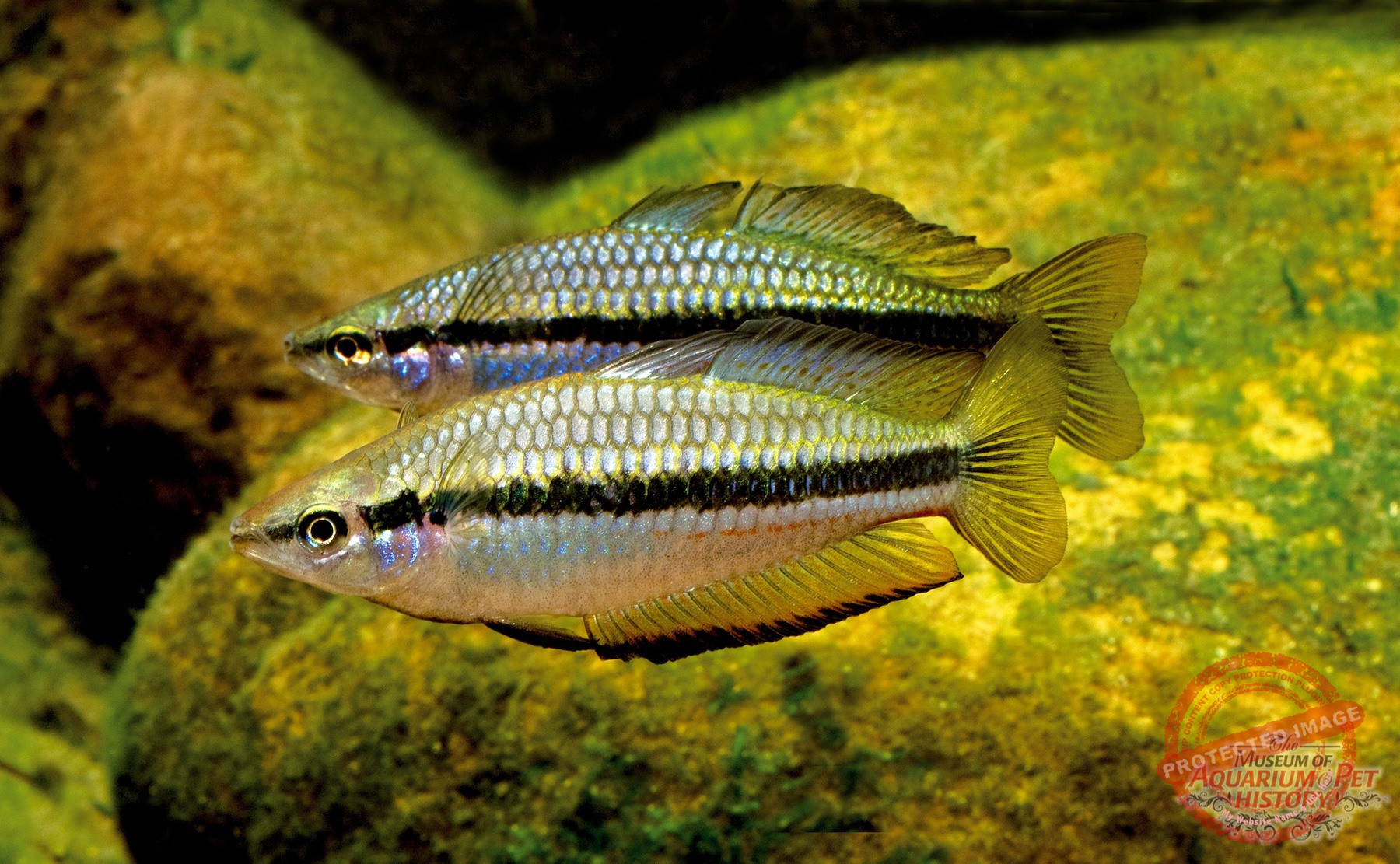
Melanotaenia nigrans
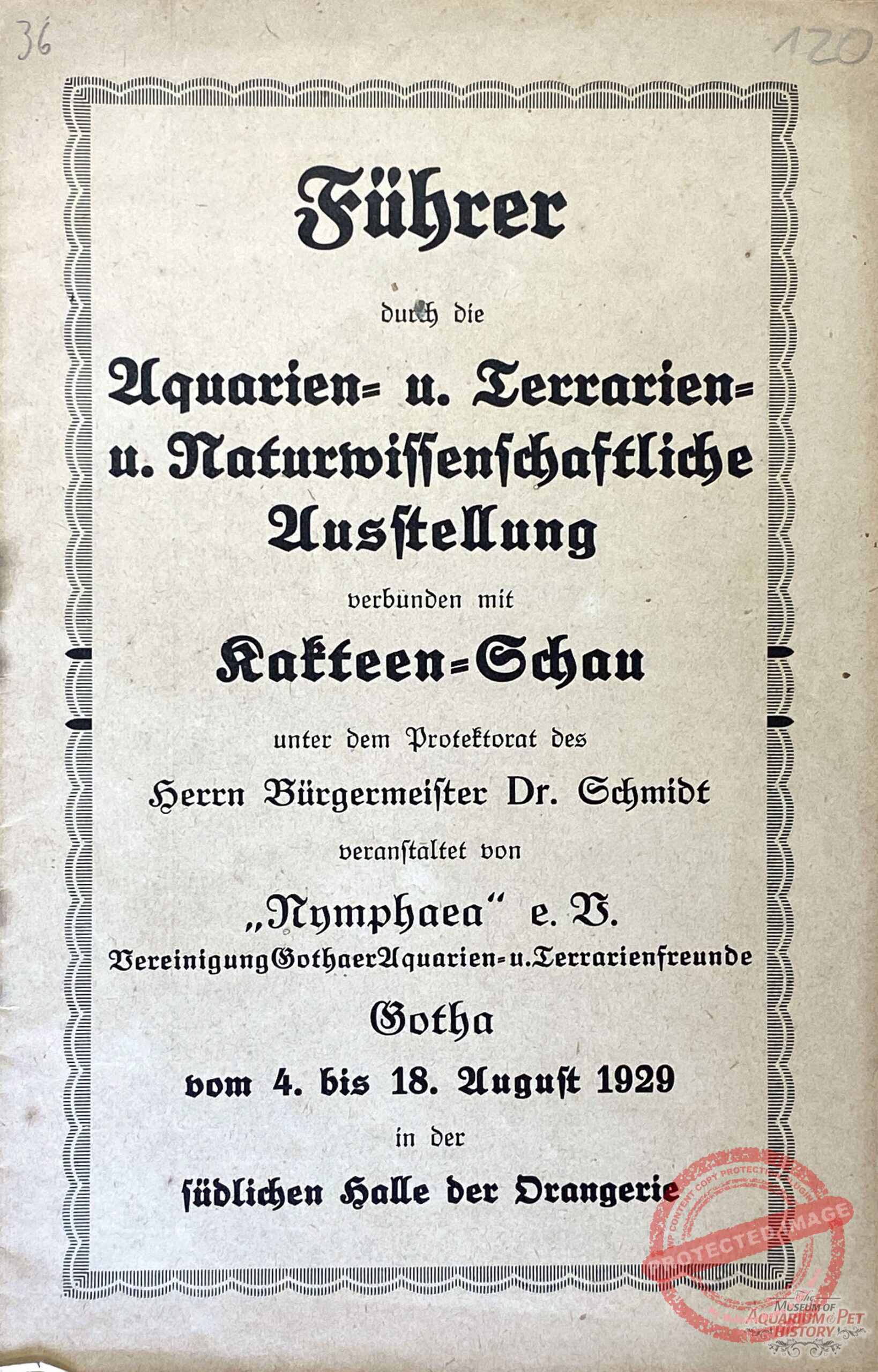
Guide to the Aquarium, Terrarium, and Natural Science Exhibition in conjunction with a Cactus Show under the patronage of Mayor Dr. Schmidt, organized by “Nymphaea” e.V., Association of Gotha Aquarium and Terrarium Enthusiasts
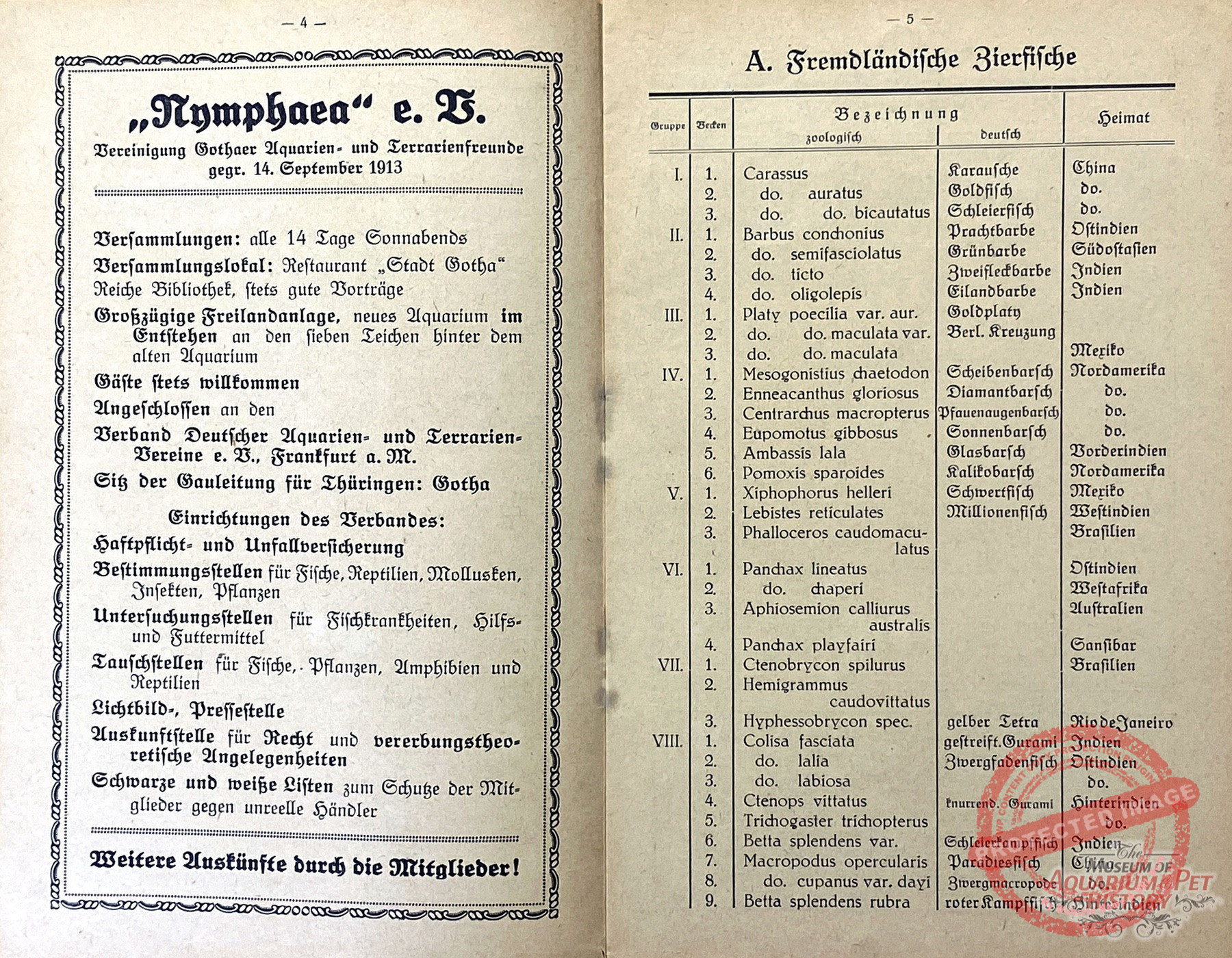
Pages 2–3: Advertisement for the VDA and list of freshwater aquariums
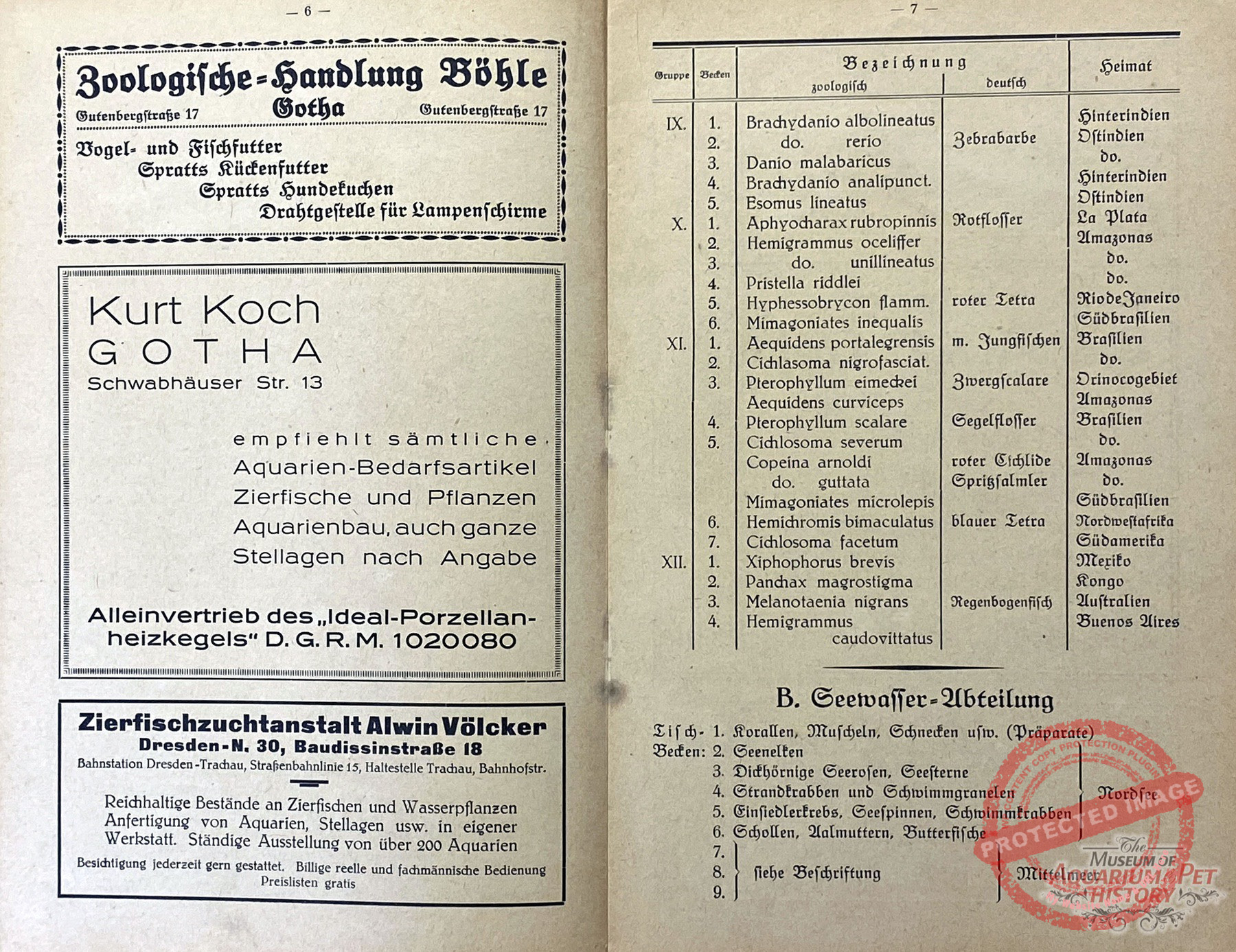
Pages 4–5: Advertisements by the Gotha pet shop Böhle, the company for aquarium supplies run by Kurt Koch (notably, the chairman of the rival Danio society advertising his private business here), and the ornamental fish breeding facility Alwin Völcker in Dresden; also a list of freshwater and marine aquariums
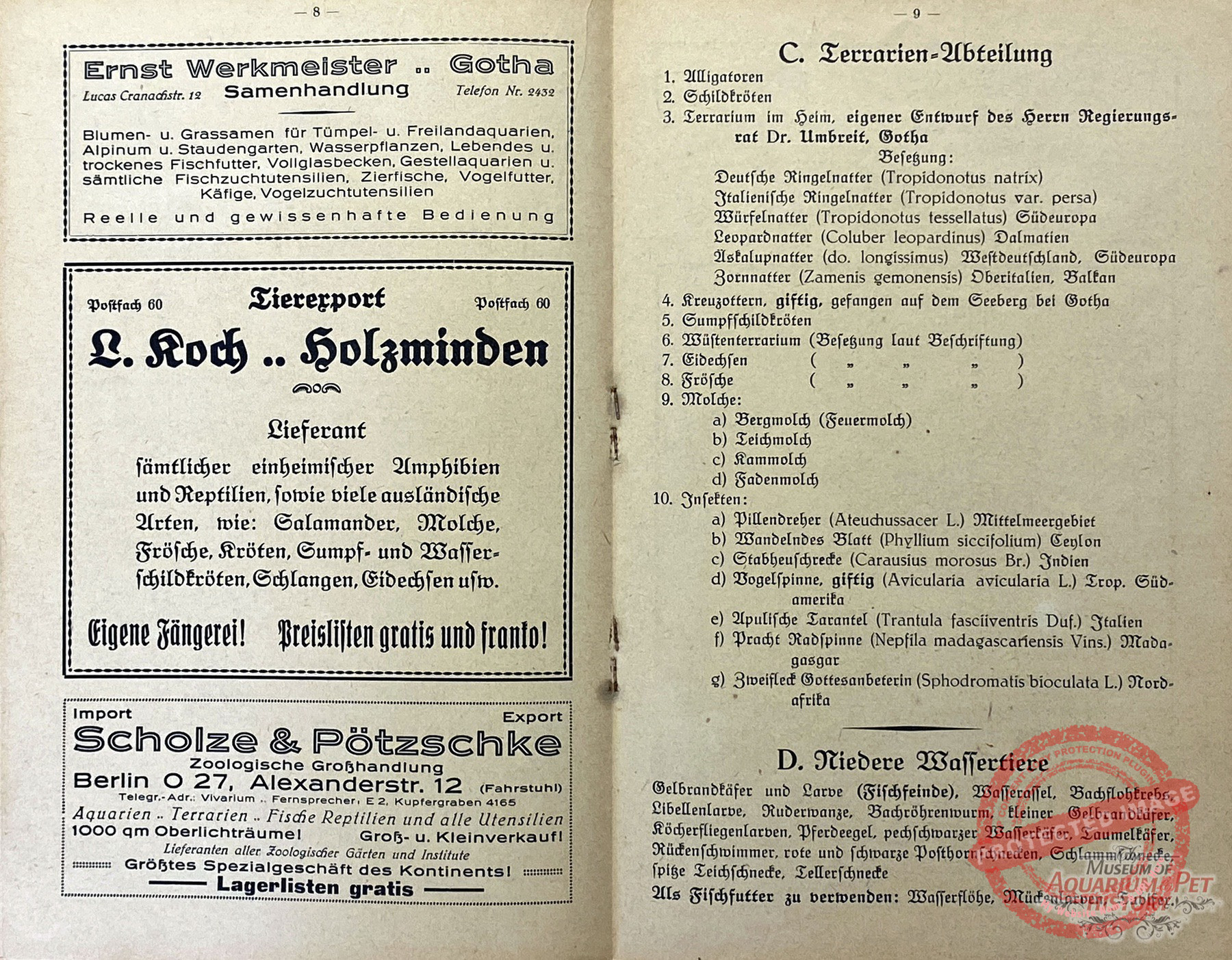
Pages 6–7: Advertisements by the Gotha seed merchant Werkmeister, which also sold fish food, aquatic plants, and aquariums; by the animal exporter Koch from Holzminden, who dealt in terrarium animals; and by the famous Berlin wholesale firm Scholze & Pötzschke; also a list of terrarium animals and lower aquatic animals
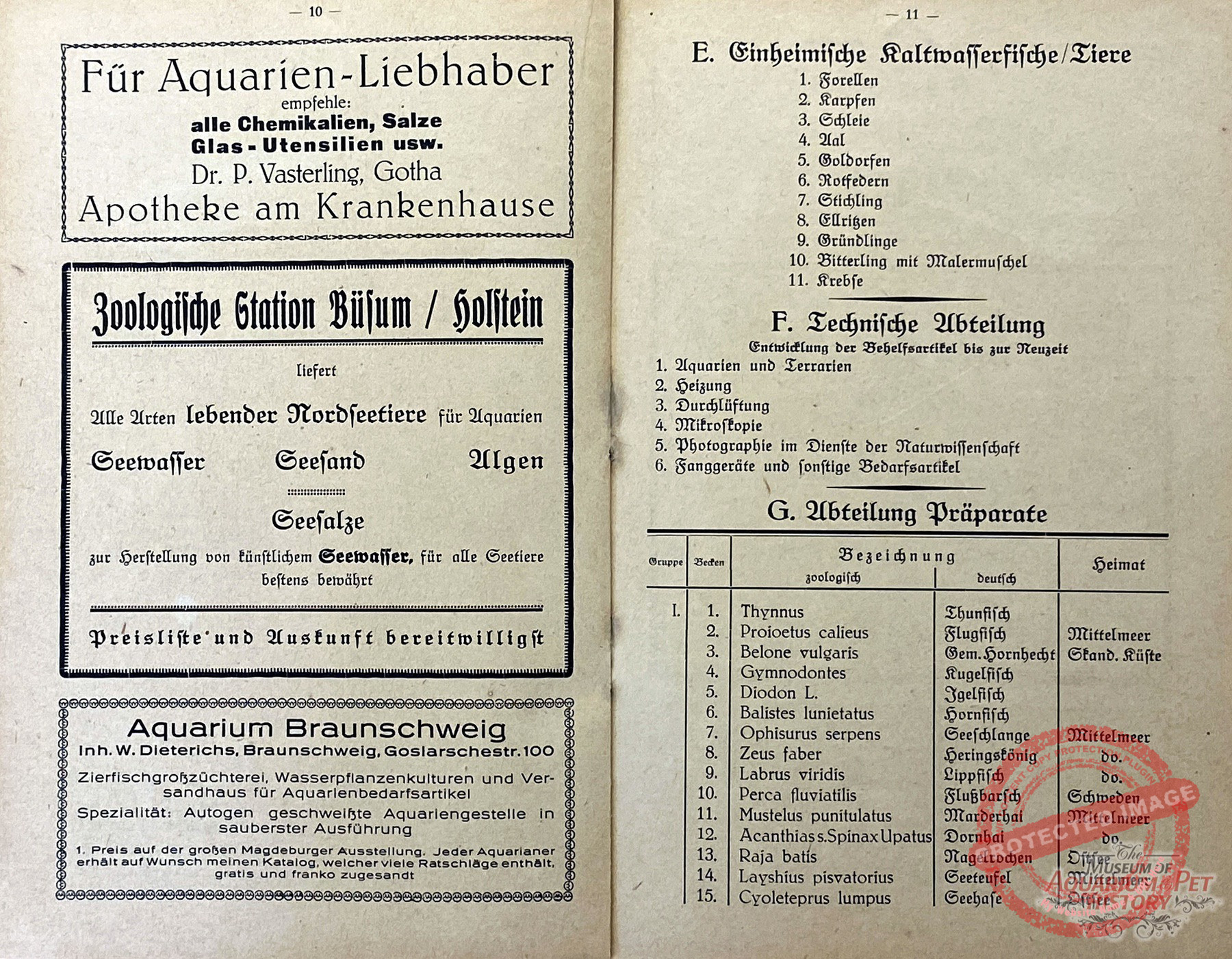
Pages 8–9: Advertisements by the Gotha pharmacy Vasterling, which offered chemicals and glass utensils for the hobby; by the Zoological Station Büsum on the North Sea, which supplied seawater, sea sand, seaweed, and sea salt; and by the large-scale ornamental fish breeder Aquarium Braunschweig, whose successor still exists today; also a list of cold-water fish, equipment, and specimens
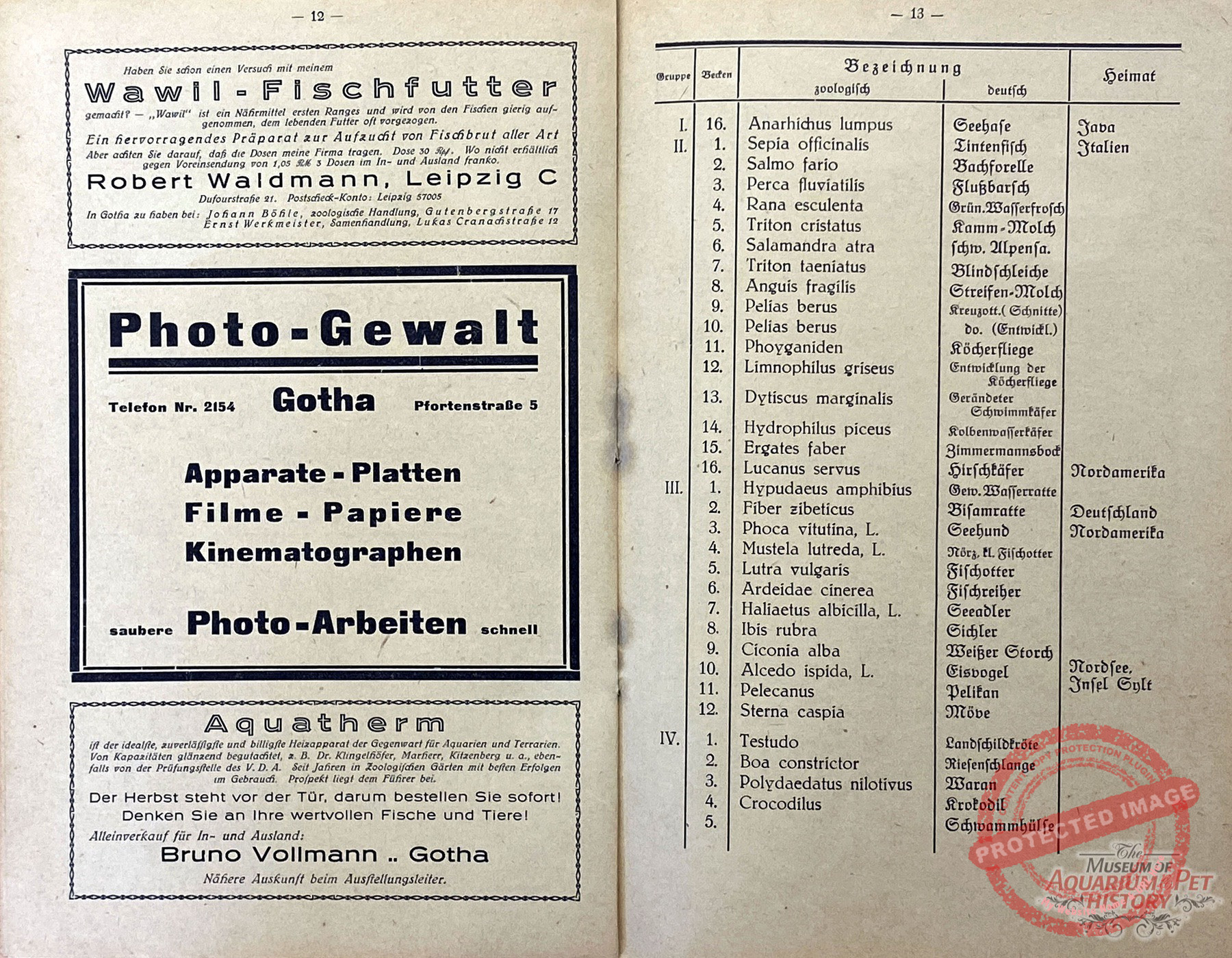
Pages 10–11: Advertisements for Waldmann fish food, the Photo-Gewalt drugstore—where I had my animal photography films developed well into the 1980s—and for the Aquatherm heating apparatus; also a list of specimens
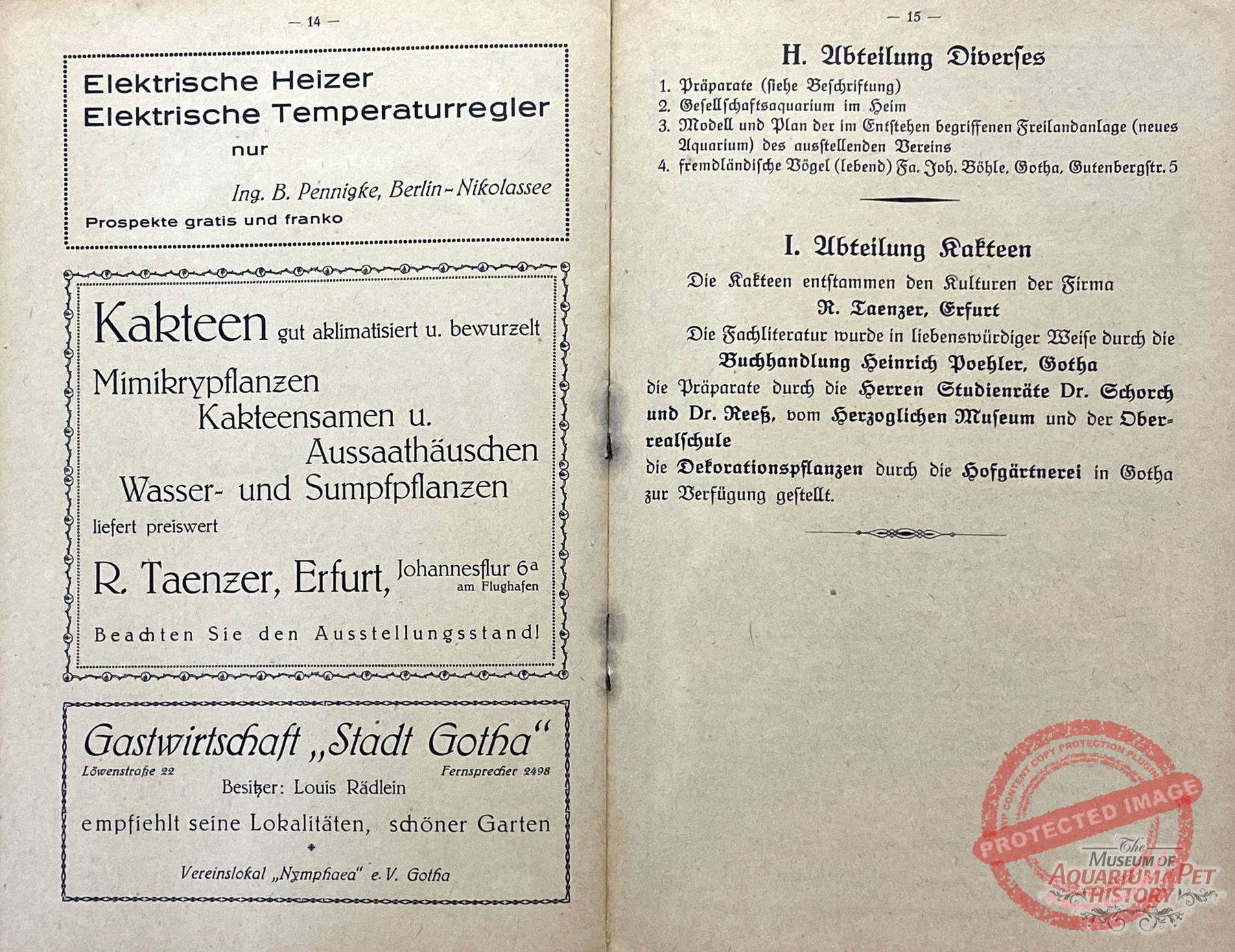
Pages 12–13: Advertisements for electric heaters and temperature regulators, the exhibiting Erfurt cactus nursery Taenzer, and the inn “Stadt Gotha,” where the Nymphaea society met regularly; also a miscellaneous section and the cactus show
Meanwhile, tensions were simmering within the Danio society. The lively, extraordinarily active Kurt Koch, endlessly generating new ideas, wanted more than his fellow members were prepared to shoulder—above all, they did not share his increasing focus on the newly acquired outdoor grounds, which will be discussed later. A rift developed, and so Koch promptly founded another Gotha society on February 12, 1927—the fourth in chronological order, but in temporal terms the third to exist alongside Danio and Nymphaea. He named it “Verein für Aquarien und volkstümliche Naturkunde – Zierfischfreunde.” Kurt Koch’s particular strength lay in his organizational talent, coupled with highly practice-oriented expertise. Neither the Danio nor the Nymphaea society could offer a lecture program as extensive and demanding as that of Koch’s newly founded association. In addition, he energetically promoted it through flyers and publications. In 1931 the society had 18 members, a library of 39 volumes, 24 meetings per year with 13 lectures. Members kept 51 fish species and 13 aquatic plant species in a total of 76 rack aquariums, as well as many small all-glass tanks. Kurt Koch delivered most of the lectures himself; here are the topics from 1931:
- Fish Mortality (Koch)
- Labyrinth Fishes (Koch)
- Sealing Aquariums (Schiebold)
- Spring Work and the Setup of Breeding Tanks (Koch)
- Native Fishes (Groß)
- Breeding of Pristella riddlae (Mäder) (today Pristella maxillaris)
- Breeding of the Cape Lopez (Koch) (meaning Aphyosemion australe)
- Sticklebacks (Groß)
- Thuringian Fisheries Law (Jünger)
- North American Perches (Koch)
- Barbs—Breeding and Care (Mäder)
- The Plant World of the Aquarium (Groß)
- Mosquitoes and Their Larvae (Döll)
- Autumn and Winter Work (Koch)
- Setting Up and Operating an Enchytraeus Culture (Koch)
- Heating Systems (Mäder)
- Fertilization Processes in Ornamental Fish (Koch)
- Hot-Water and Steam Heating (Kehl)
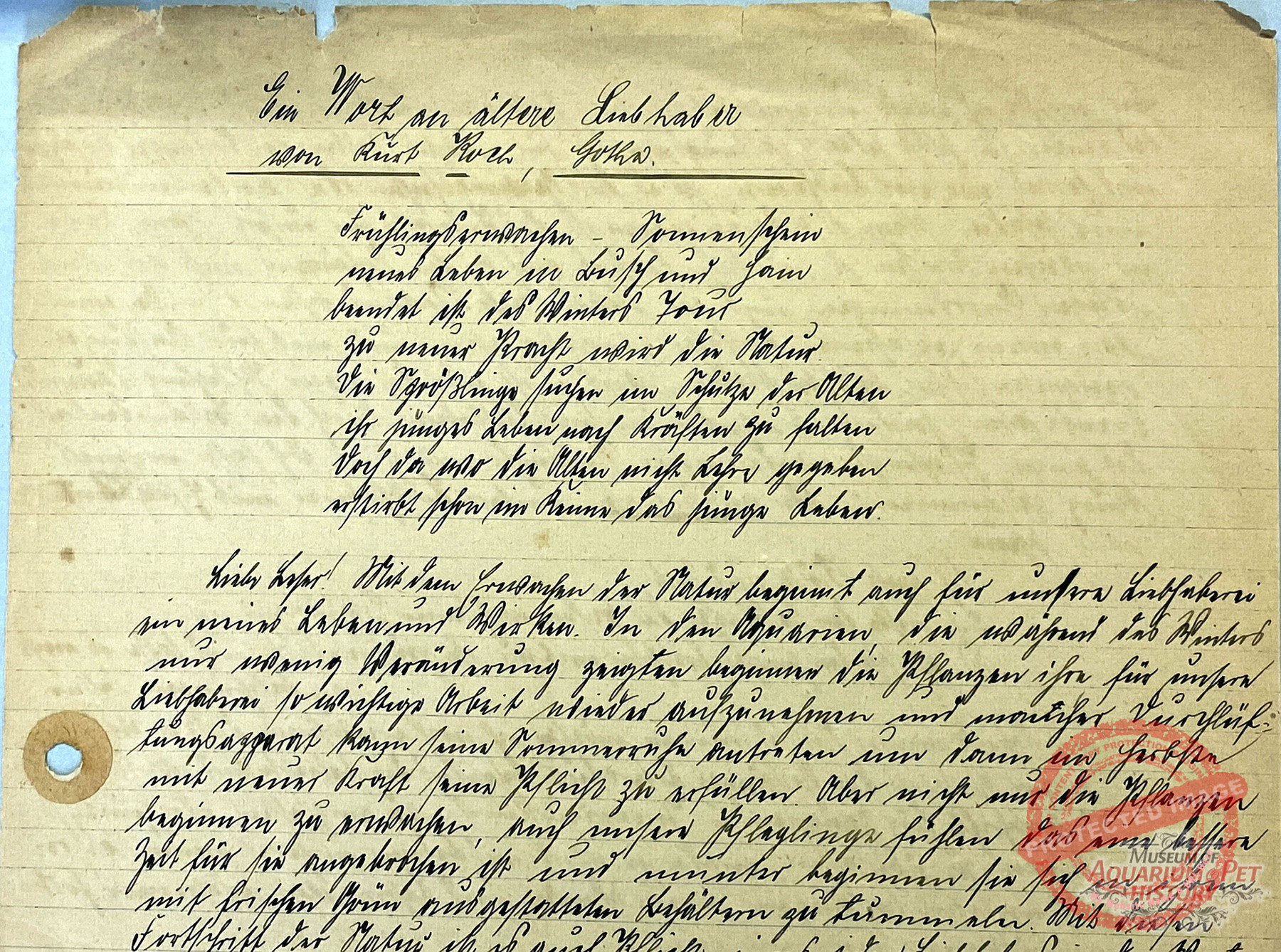
An open letter by Kurt Koch addressed to older enthusiasts, written in Sütterlin script
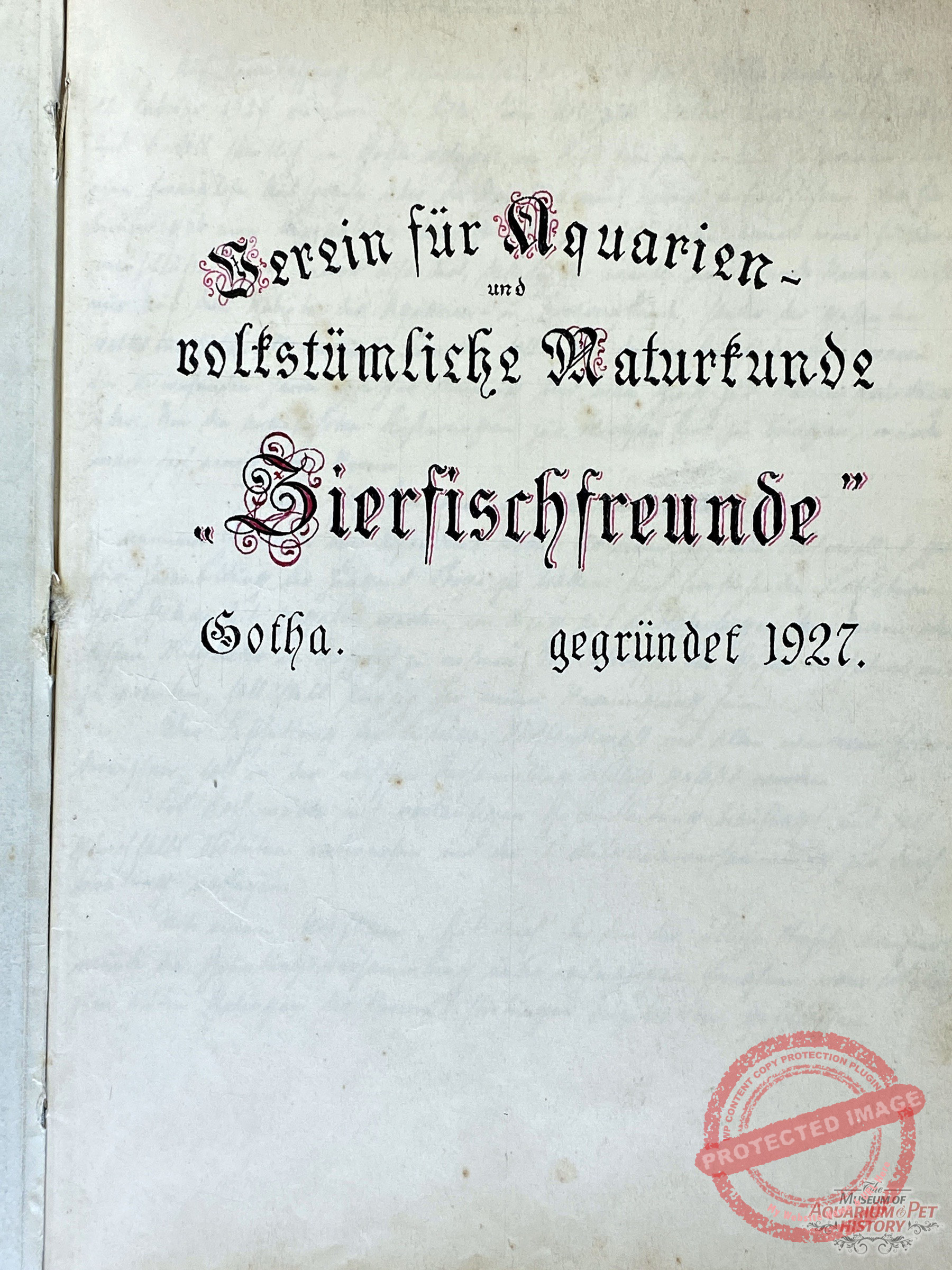
Society book of this association
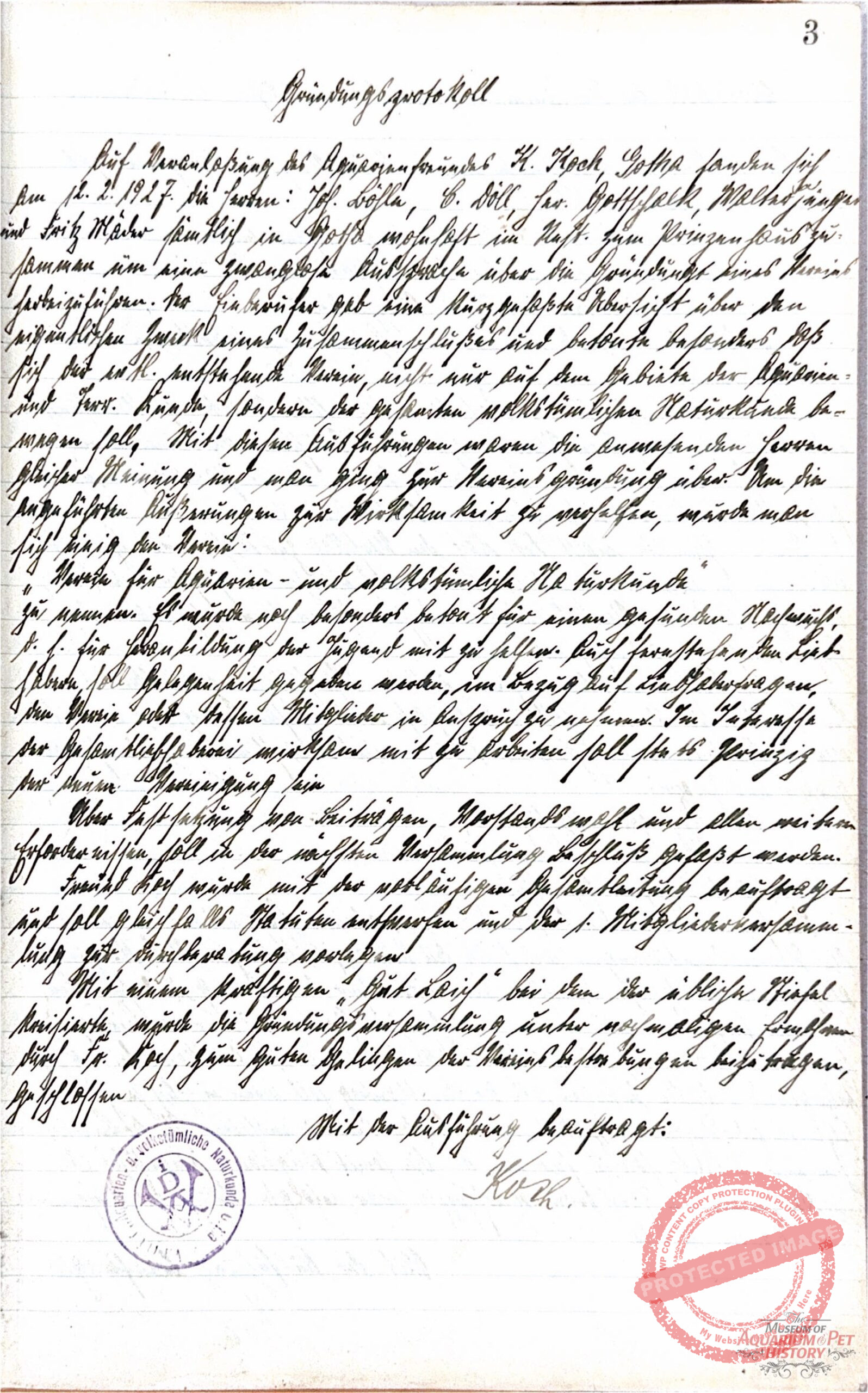
Kurt Koch’s founding protocol for the “Verein für Aquarien und volkstümliche Naturkunde – Zierfischfreunde”
The latter lecturer was a neighbor of our house in Gotha on Schäferstraße. Hans Kehl owned a heating installation company and heated his aquariums using such a room system based on warm water-carrying pipes. When I frequently visited Hans Kehl in the 1960s to admire his aquariums and often to accept fish he generously gave me, I saw this rack of pipes and aquariums situated in a kind of winter garden. I was deeply impressed at the time by the open-topped tanks, from which lush aquatic plants grew emersed above the waterline. This was possible because of the warm, humid microclimate created by the heating.
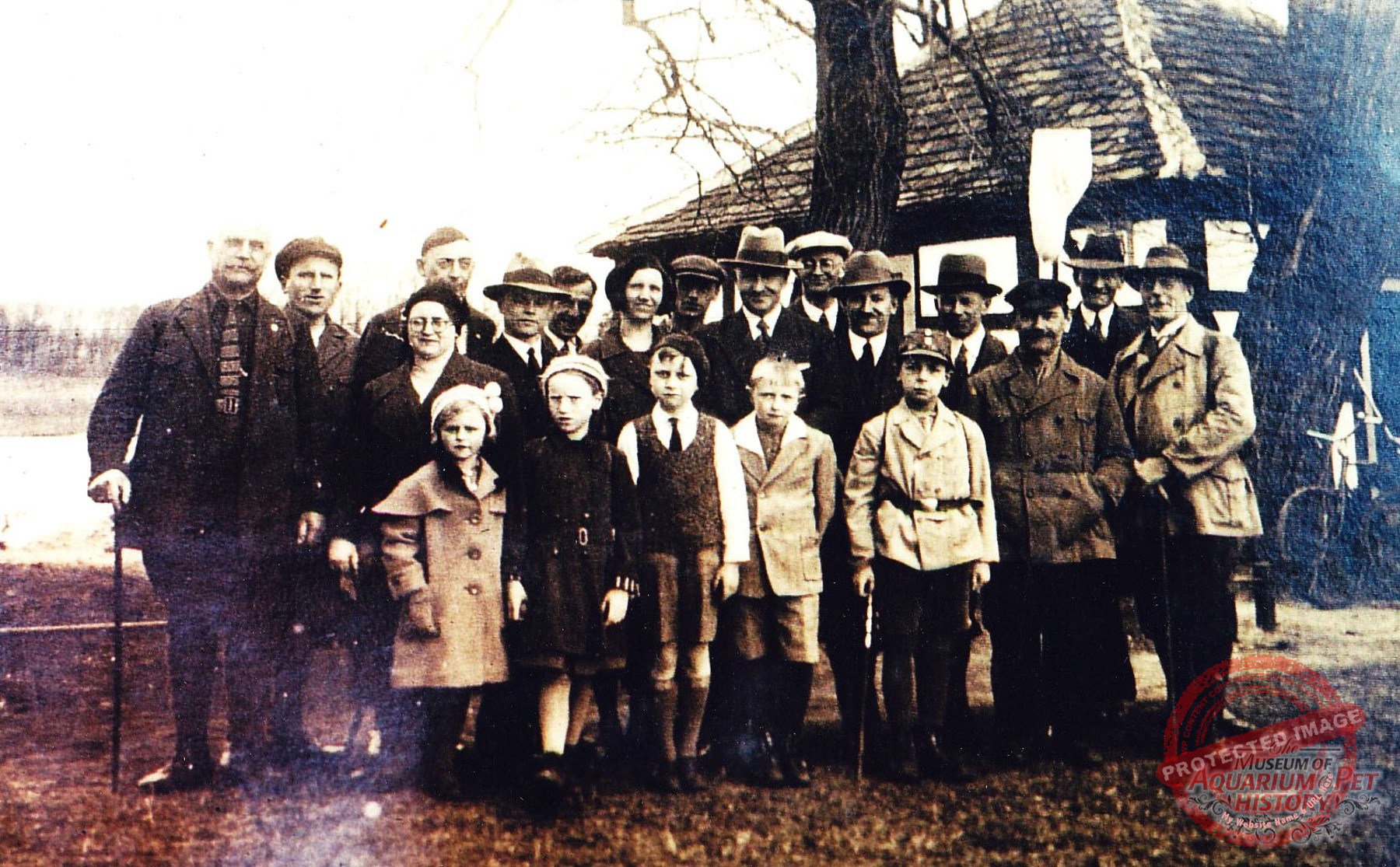
Group of progressively minded members of the Nymphaea society, including Charly Fuchs and Hans Kehl
In a protocol book entitled “Zierfischfreunde,” the many insights discussed by society members were recorded. It is a treasure trove of breeding techniques adapted to Gotha’s water conditions and at the same time a chronicle of the many first successful breedings of newly imported fish species achieved in Gotha. Knowledge was shared openly; nothing was kept secret, and in this way the success of all was promoted. This was also necessary, for since 1929 the global economic crisis had entered every household. Some people quite literally stayed afloat through their home-bred fish during periods of unemployment. But the society treasuries were also empty, so only cautious steps could be taken. For this reason, in 1932 the two societies—Danio and the Verein für Aquarien und volkstümliche Naturkunde – Zierfischfreunde—attempted to merge, but the effort failed due to the divergent views of their respective leaders. Kurt Koch in particular, like many highly active and creative individuals, was considered difficult. His high standards lay far beyond what many others could comprehend or accept.
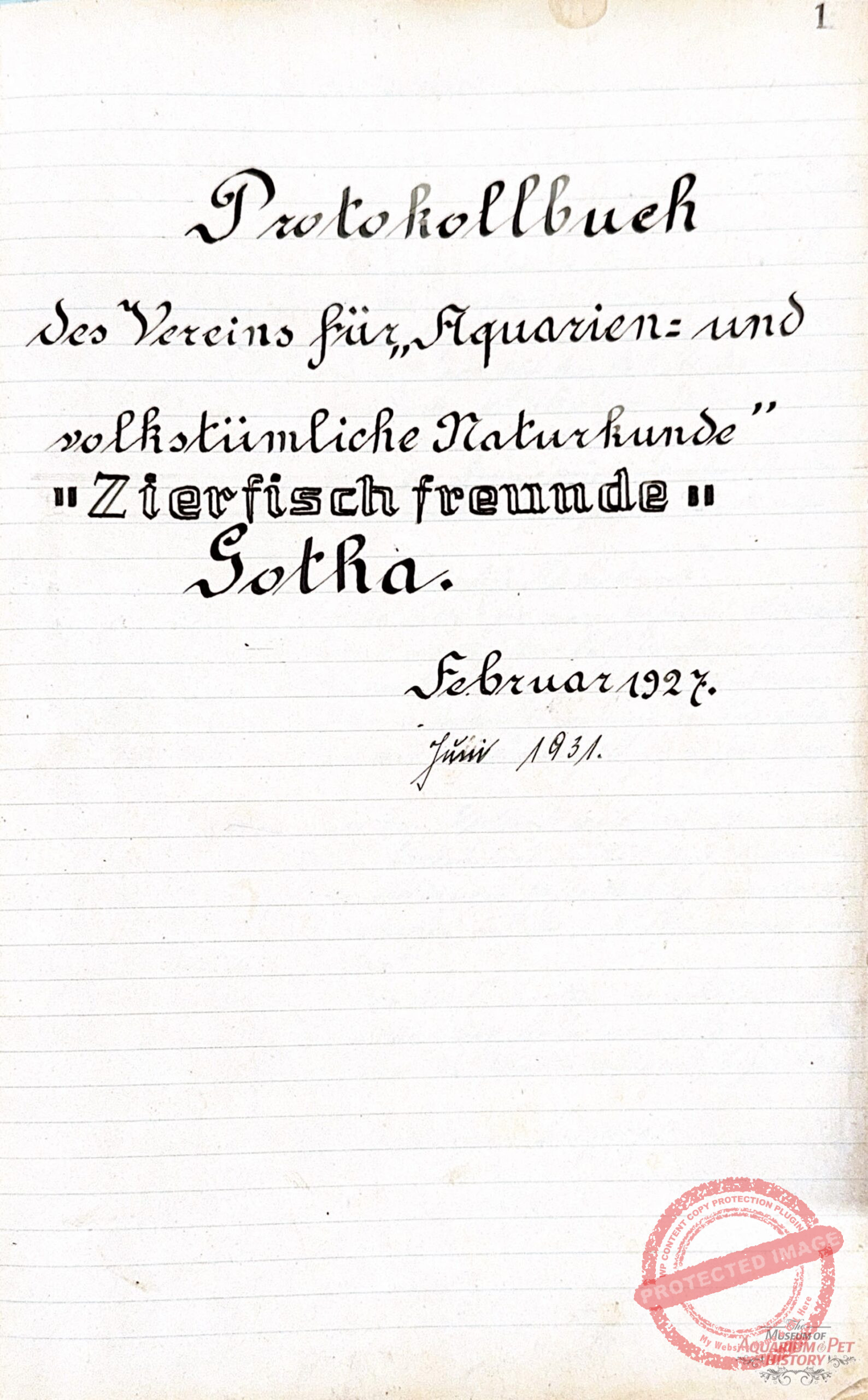
Protocol book of the Verein für Aquarien und volkstümliche Naturkunde – Zierfischfreunde
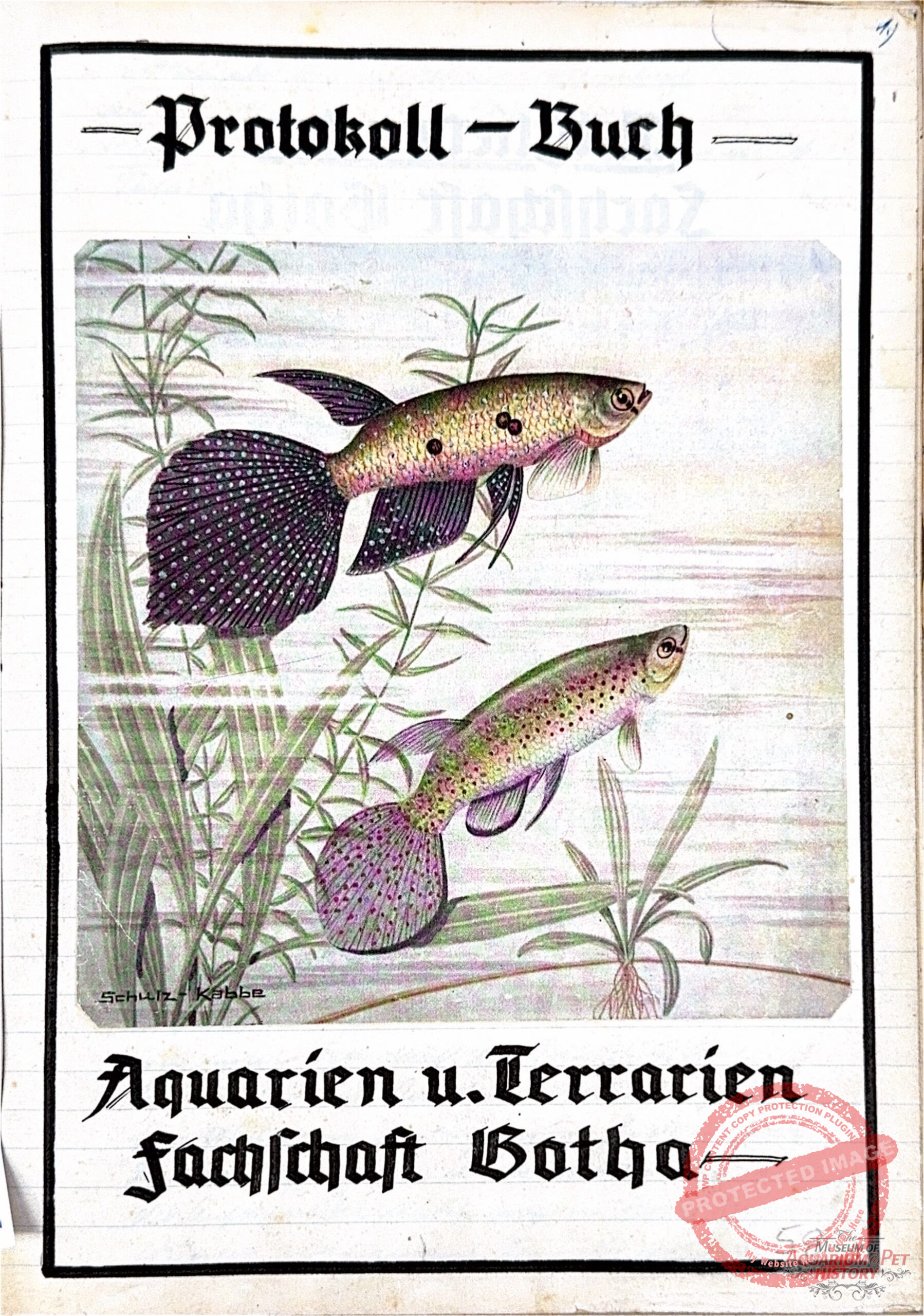
Protocol book of the Aquarium and Terrarium Section Gotha
An entirely separate story is that of the outdoor installations of the Gotha societies. After all, in the first half of the last century there were in this city three truly remarkable open-air aquariums, unmatched anywhere in the world. It was apparently a peculiarity tied to Gotha’s circumstances that aquarists pursued their hobby not only in their living-room aquariums but also outdoors, in the open air. For this they were admired and praised by many other German vivaristic societies. Within the VDA, the Gotha groups played a leading role for a long time. And for several decades, Gotha also provided the leadership of the Thuringian aquarium and terrarium societies.
Acknowledgments: I would like to thank my family members (Charly Fuchs), friends, and colleagues in Gotha—especially Uwe Heustock, the current chairman of the Gotha Aquarium Society—as well as the staff of the Gotha City Archive, Dr. Julia Beez and Dorett Sagner, for granting me access to their documents, allowing me to scan and photograph them, and for sharing numerous photographs, pieces of information, and surviving original objects.