The Forgotten Aquarium of Rome – Part 2
If you missed part 1 of this article, read it at the link below.
Set into the walls, the display tanks looked like living pictures. It was a unique experience for all the visitors. The size of their front glass was 79”x59”, while we can suppose a depth of 59”-71”.
The first challenge the Acquario Romano had to face was, of course, a technological challenge. Sustaining a healthy “inland Aquarium” with both freshwater and saltwater tanks with the limited technology of the time was, in fact, quite hard. According to the information taken from different newspapers printed between 1887-1888, the facility used the electricity to illuminate its interior and exterior since the early years. The hydraulic pumps for the management of the aquariums, however, were almost certainly driven by gaseous fuel engines or steam engines.
Maintenance activities took place in a rear technical corridor lighted by twenty windows which projected the sunlight into the tanks as well. The saltwater was stocked in three underground basins placed in the basement together with a large concrete tank for its filtration. We can assume that two continuous circulation systems, one for each type of water, served the display tanks through yards of pipework. Besides, it is fair to imagine that the aquariums had an overflow system.
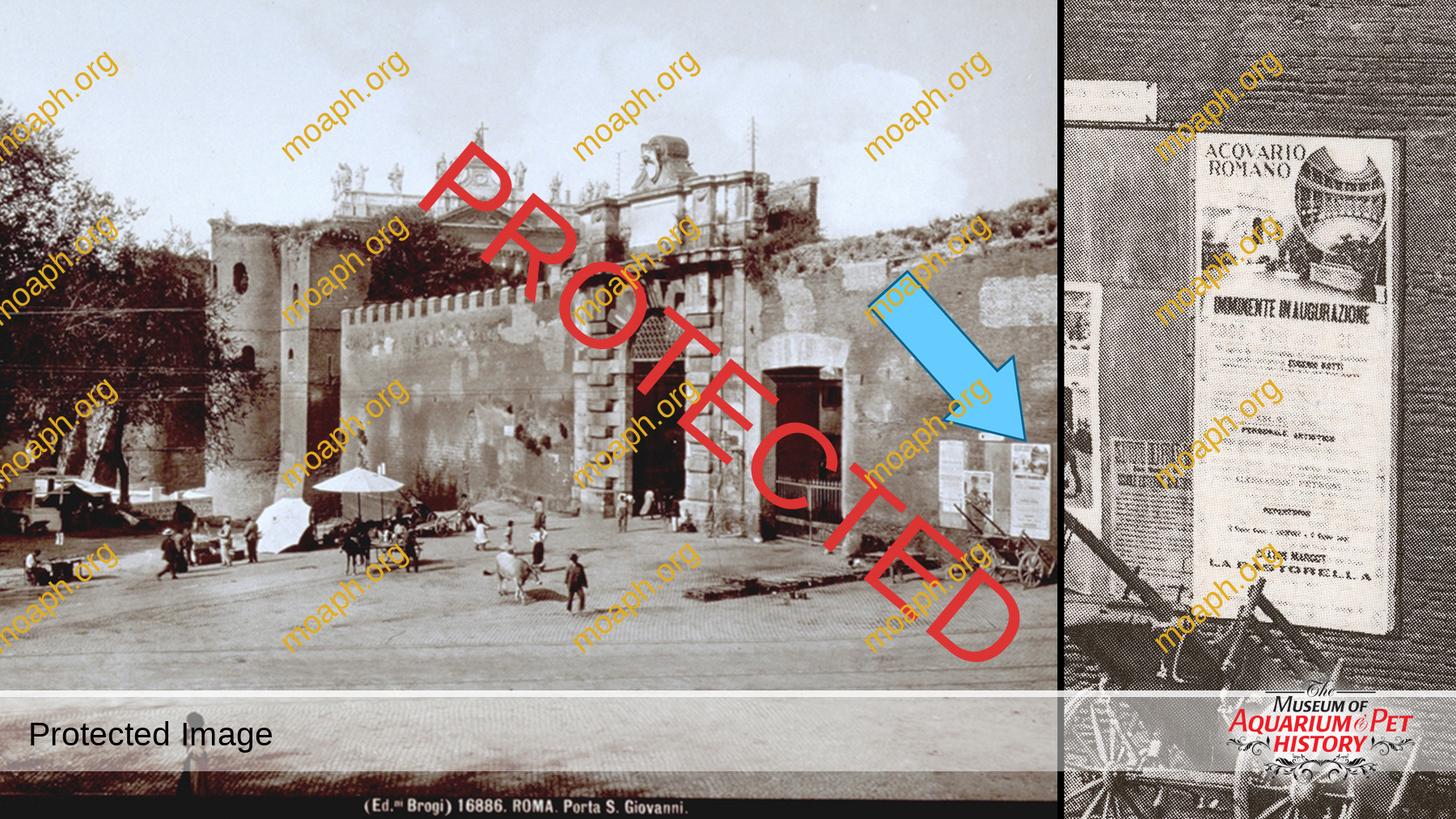
There is a small but important detail in this old photograph of the San Giovanni Gate in Rome: a poster announcing the Acquario Romano inauguration! Photo credit: Archivi Alinari, Firenze (Italy).
The freshwater provisioning wasn’t a concern for the Acquario Romano, as it received enormous quantities of running water from the ancient “Acqua Marcia” Roman aqueduct, which had its outlet right in proximity to Manfredo Fanti Square. The properties of this water, so praised by the Romans, were well known also to Pietro Carganico, who in 1881 wrote: “As far as I have studied the waters of Rome, only the one provided by the Acqua Marcia, thanks to its low temperature, is highly indicated for the birth of healthy, strong fish, and mainly for the precious family of trout and salmon.”
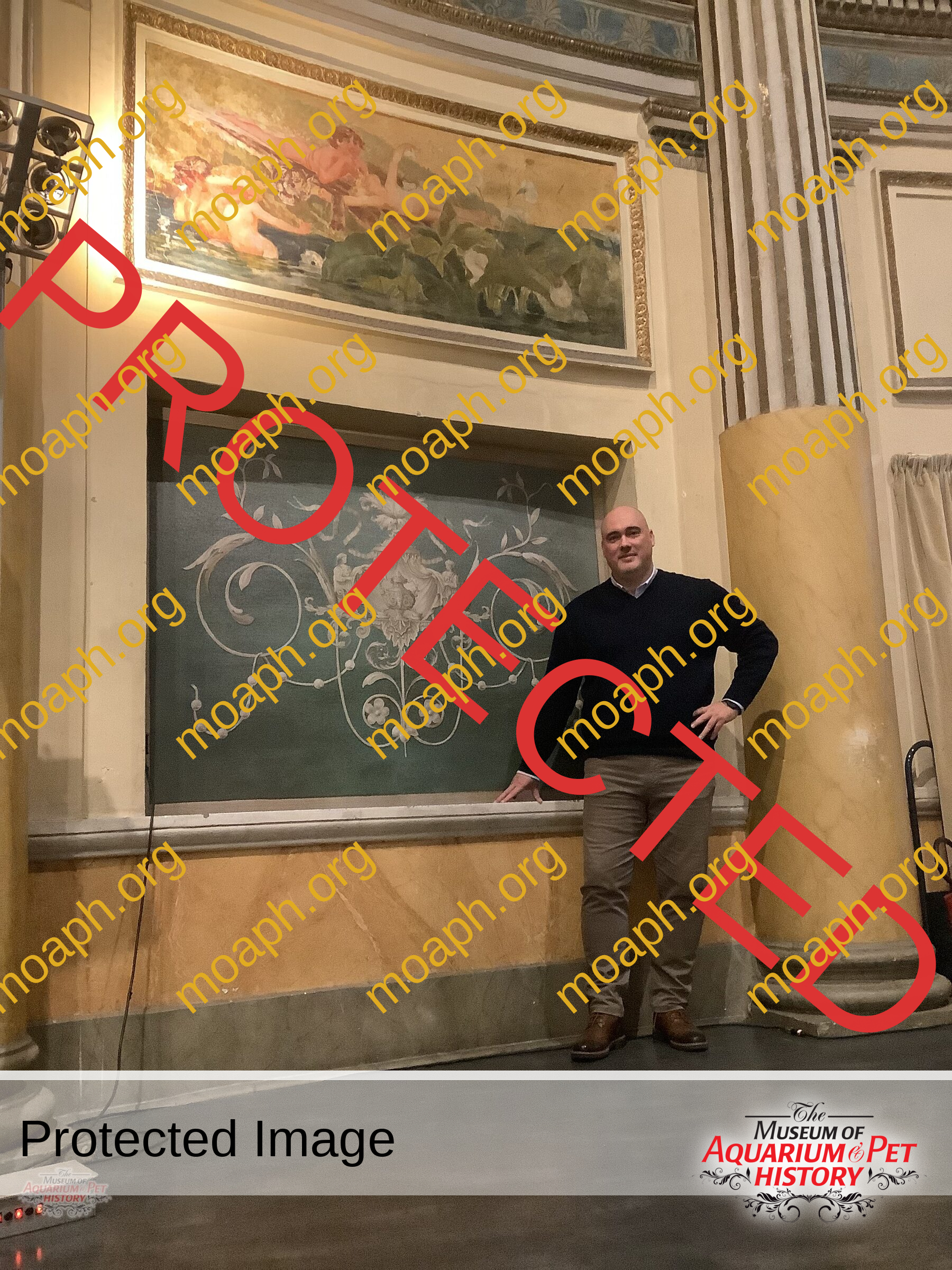
What sadly remains of the fish tanks. The niches, today, measure 71”x51”.
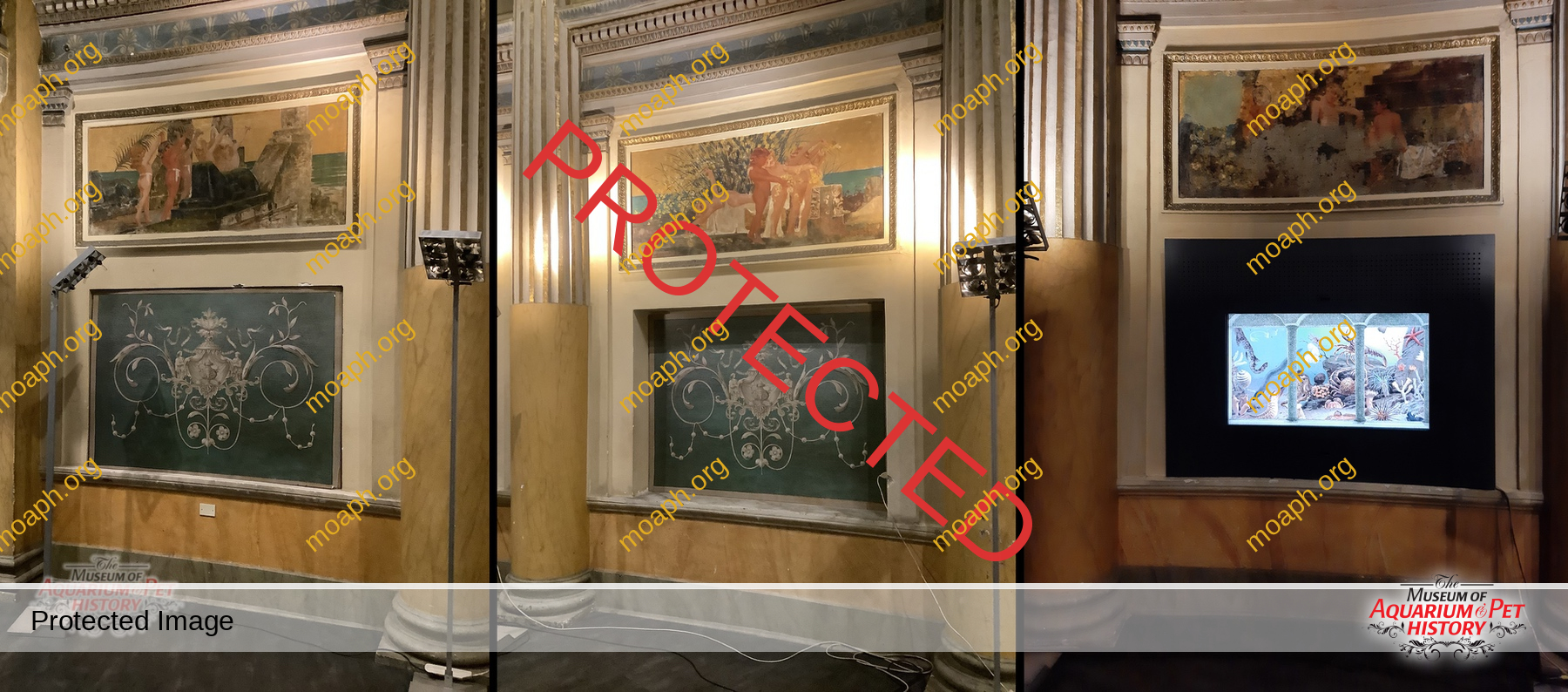
Each aquarium had above the front glass a beautiful wall painting by the talented artist Silvestro Silvestri.
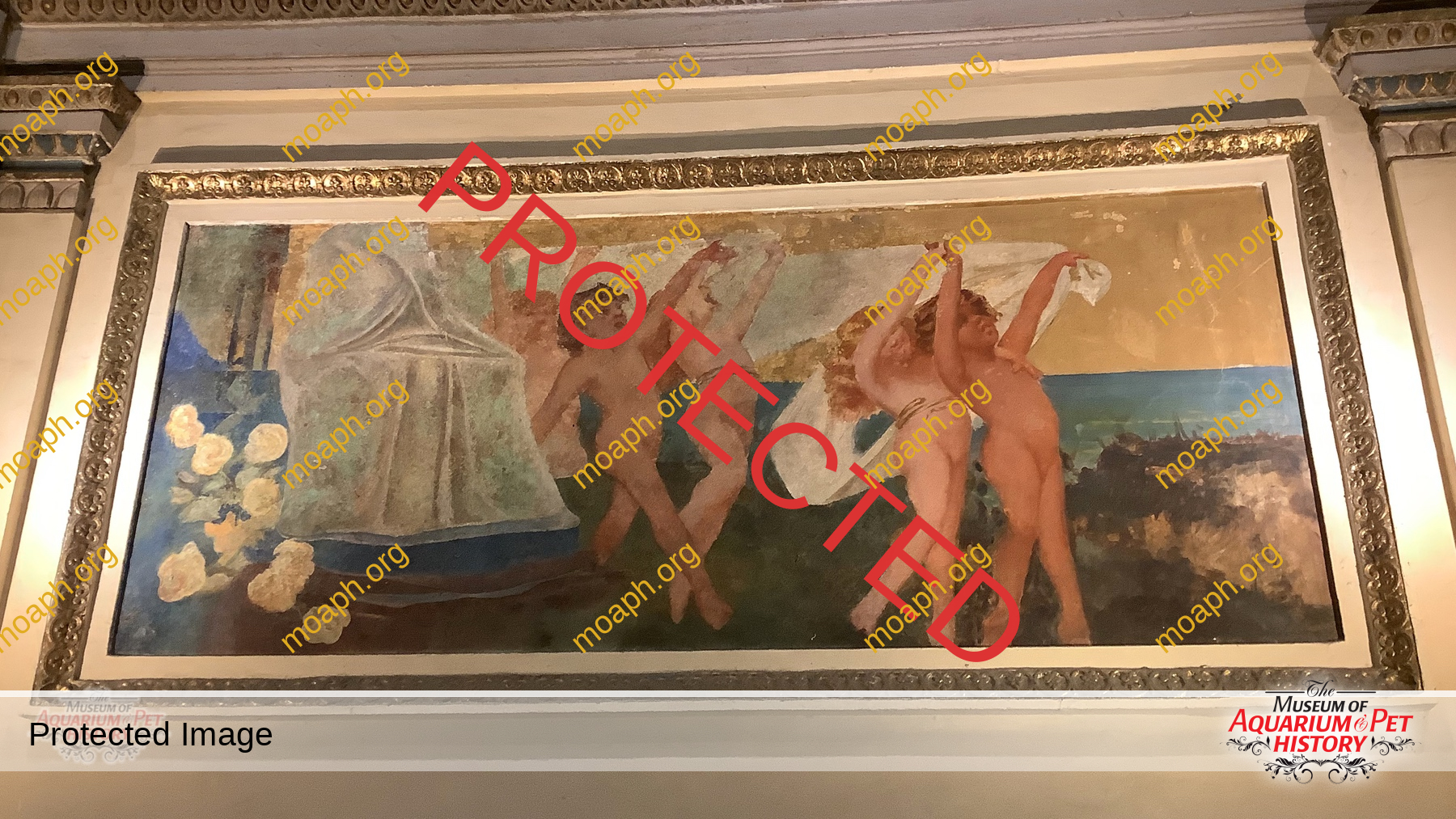
Silvestro Silvestri’s wall painting.
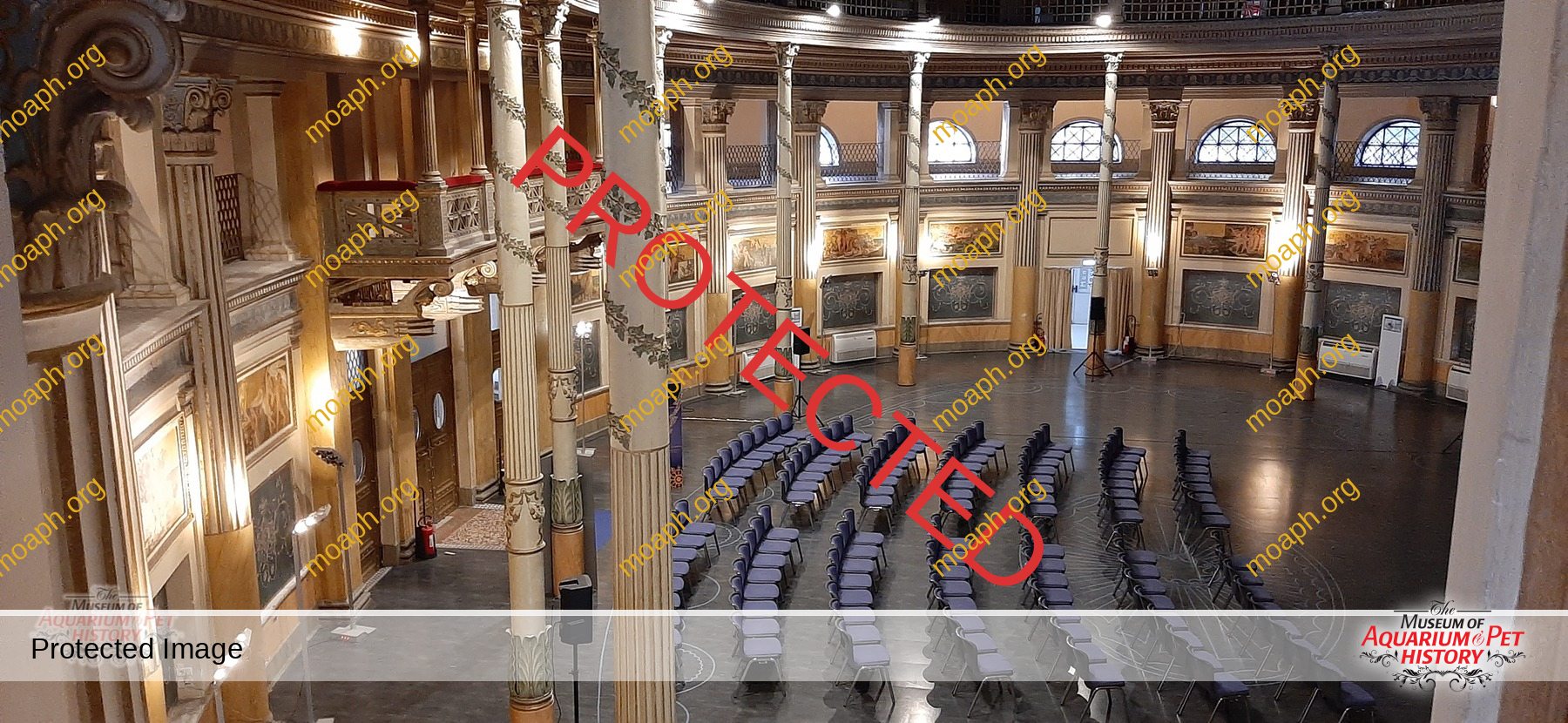
The building shows a skillful mix of classical, Pompeian and Renaissance decorations. The internal structure of fourteen Corinthian cast-iron columns, and the central skylight, make the Acquario Romano one of the most relevant examples of the integral application of iron in Rome’s construction industry under the government of king Umberto I.
Financial sustainability
The second challenge was about the financial sustainability. In this business model, the ability of the proprietors to provide constantly new attractions was a crucial point. The variety of the collection was very important in every public aquarium and zoo of yesteryear (as a matter of fact, even today), therefore if you wanted to change an occasional visitor into a patron, you always had to guarantee new “star animals” to see.
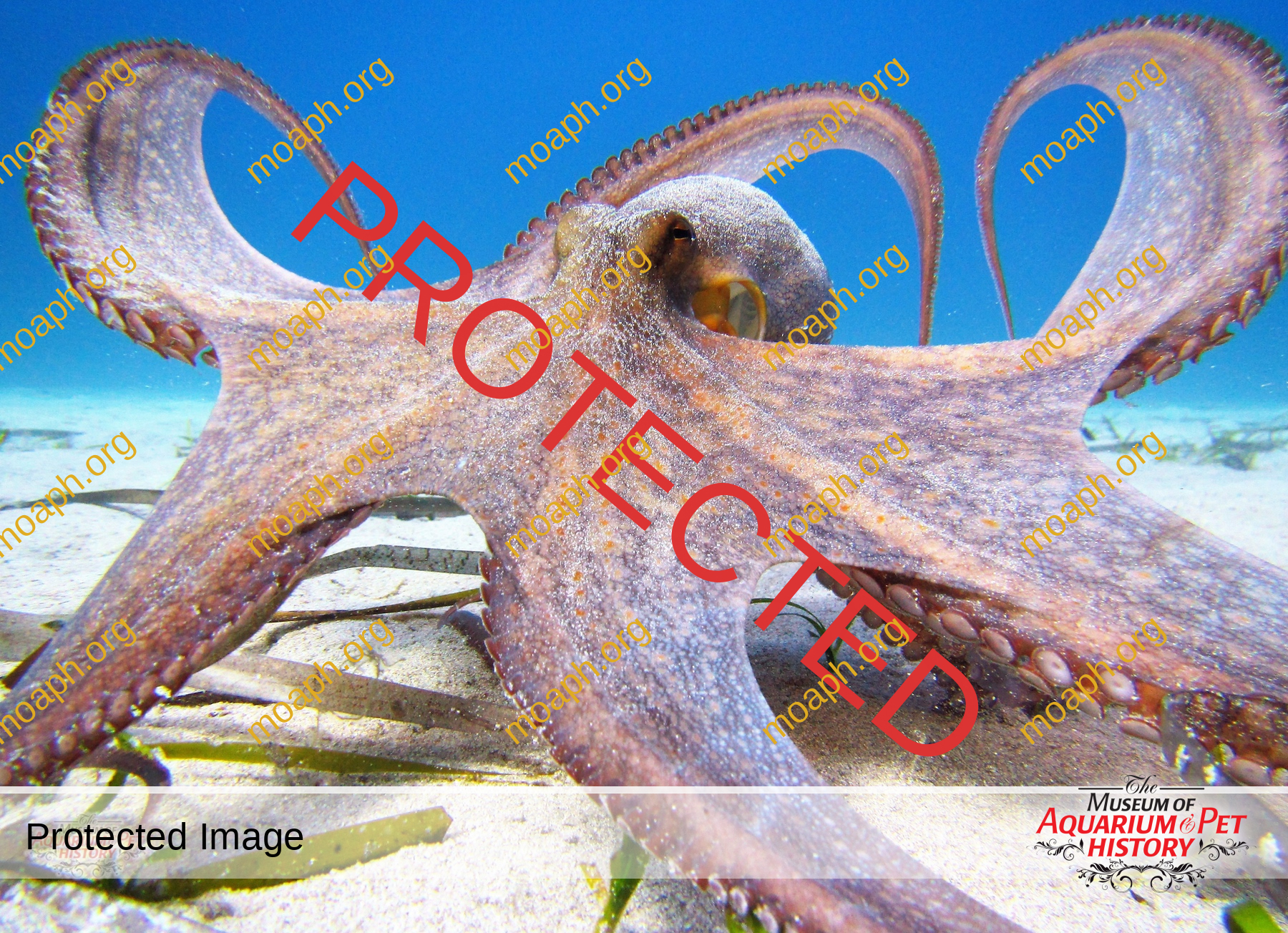
The octopus was one of the “star animals” of the Acquario Romano.
The Acquario Romano was open every day. The admission prices were quite affordable: on Thursday, Sunday and public holidays, the ticket cost 1 lira (the standard unit of money in Italy before the euro), while on the other days it was 2 lire.
Right after the inauguration, the newspapers reported on the imminent opening of a restaurant in the building, and on social events and concerts scheduled by the Aquarium management.
Offering different forms of entertainment had been a common business strategy, for example, for the long-term financial sustainability of several public aquaria built in England starting from the 1870s, during the boom driven by two large institutions: the Crystal Palace Aquarium and the Brighton Aquarium.
The Acquario Romano, which was actually quite close to the English model of public aquarium as part of a larger entertainment complex, had of course the facilities to do it. Carganico himself, in order to attract a wider public and to increase earnings, was in favour of the idea of exploiting the facility as a location for exhibitions, concerts, flower fairs, and other events.
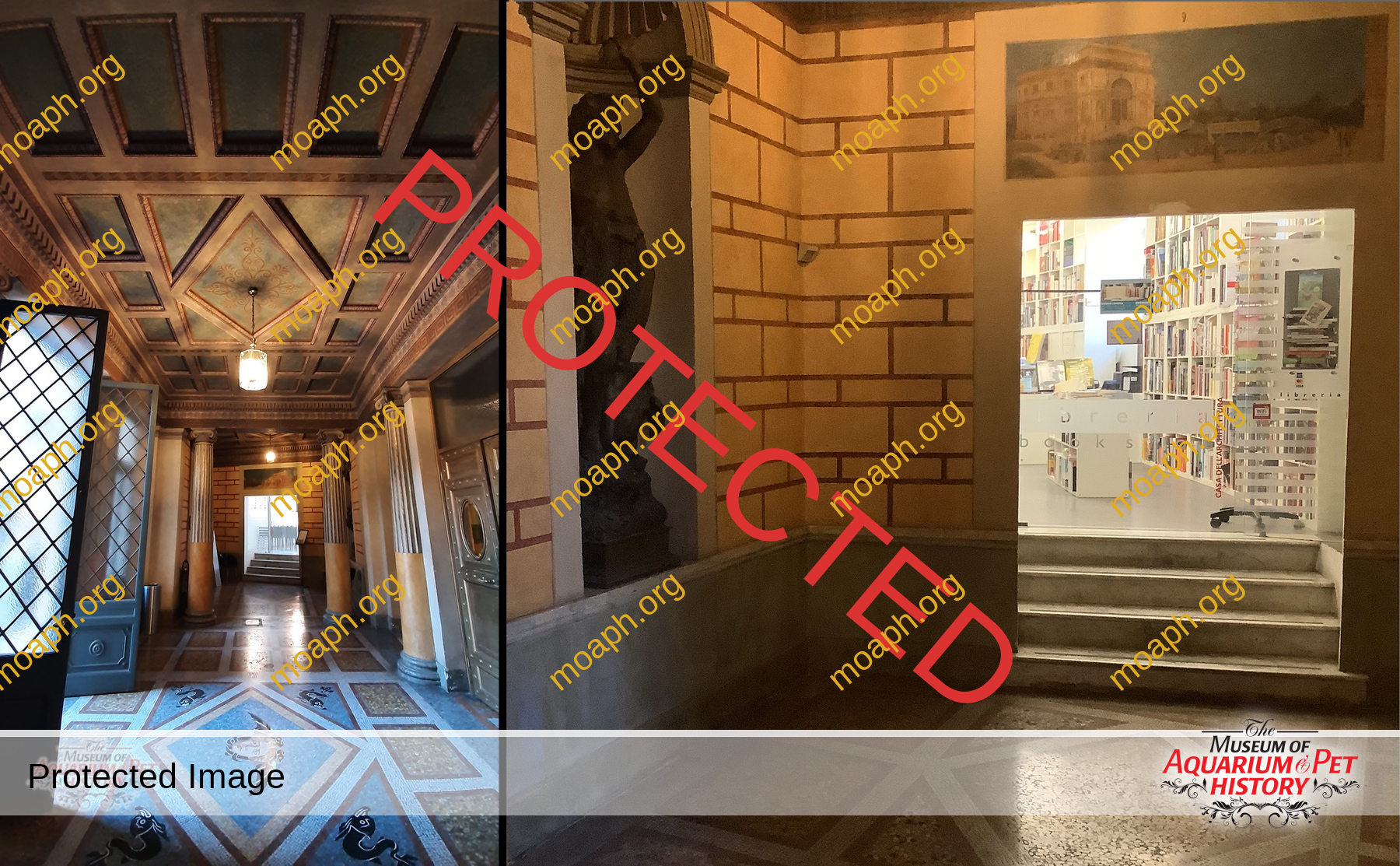
The entrance hall (left), and the right side access to the former technical corridor of the main floor.
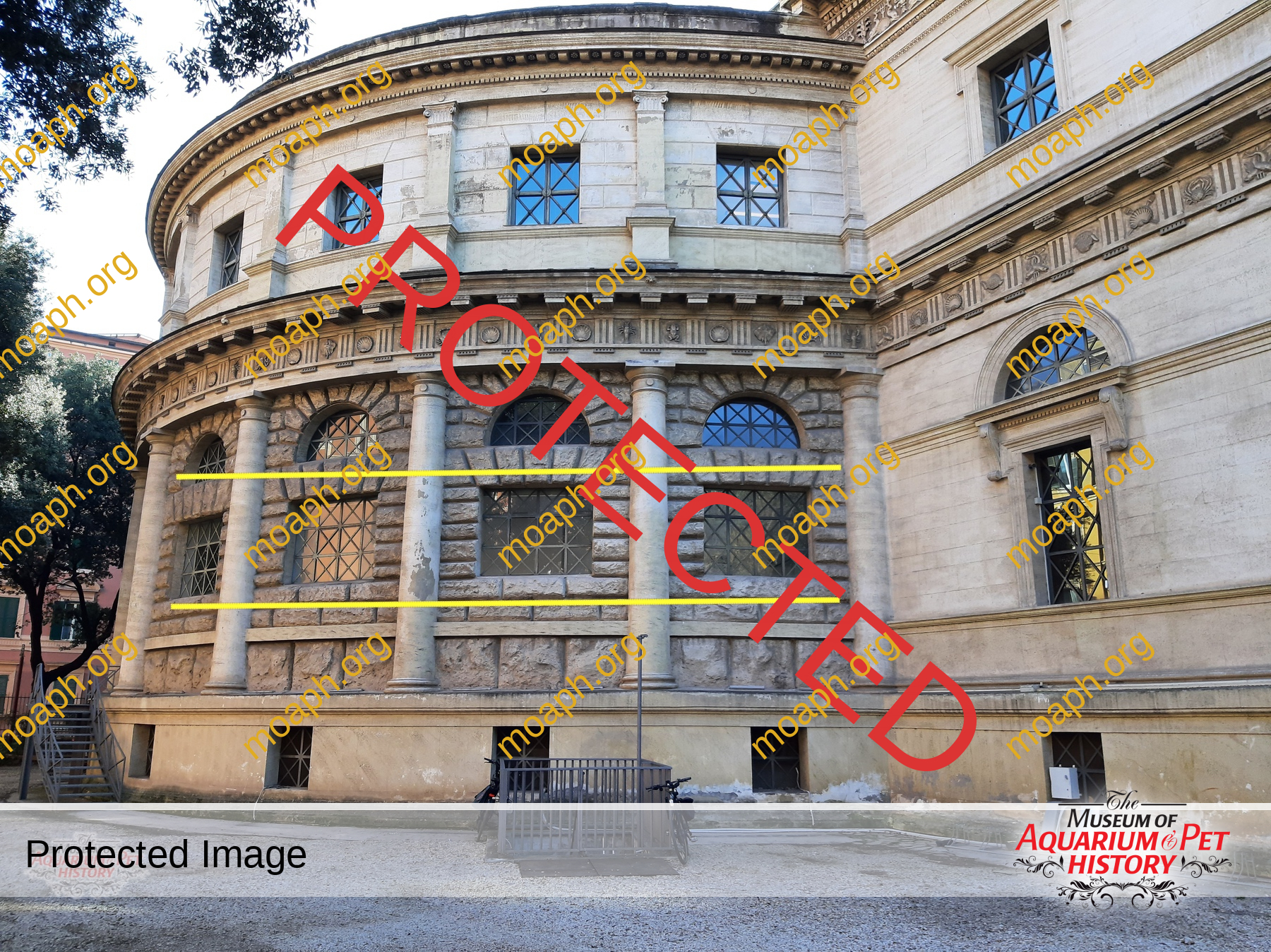
Some of the twenty windows of the former technical corridor. Back then, they were the lighting system of the tanks!
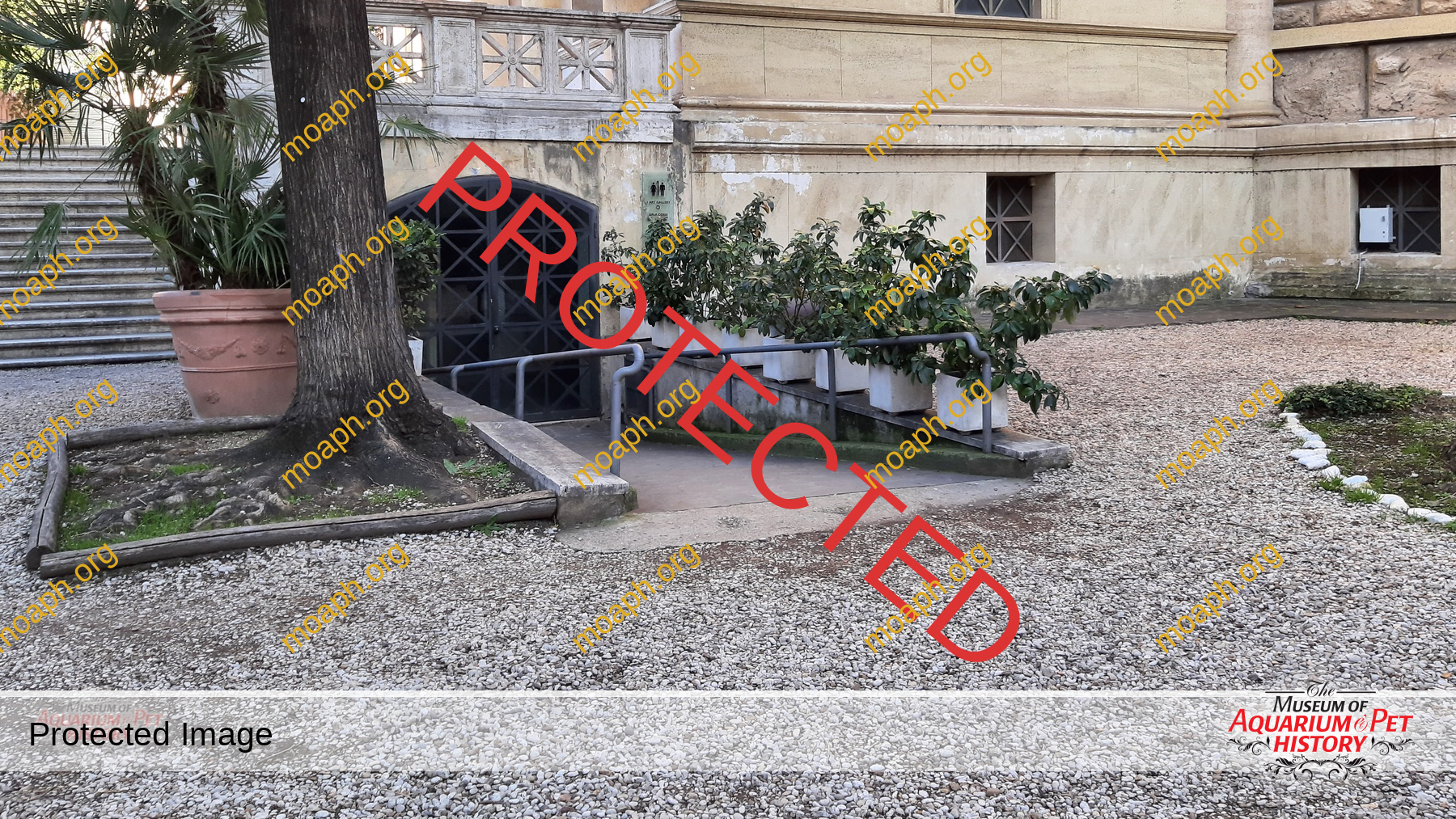
One of the entrances to the basement.
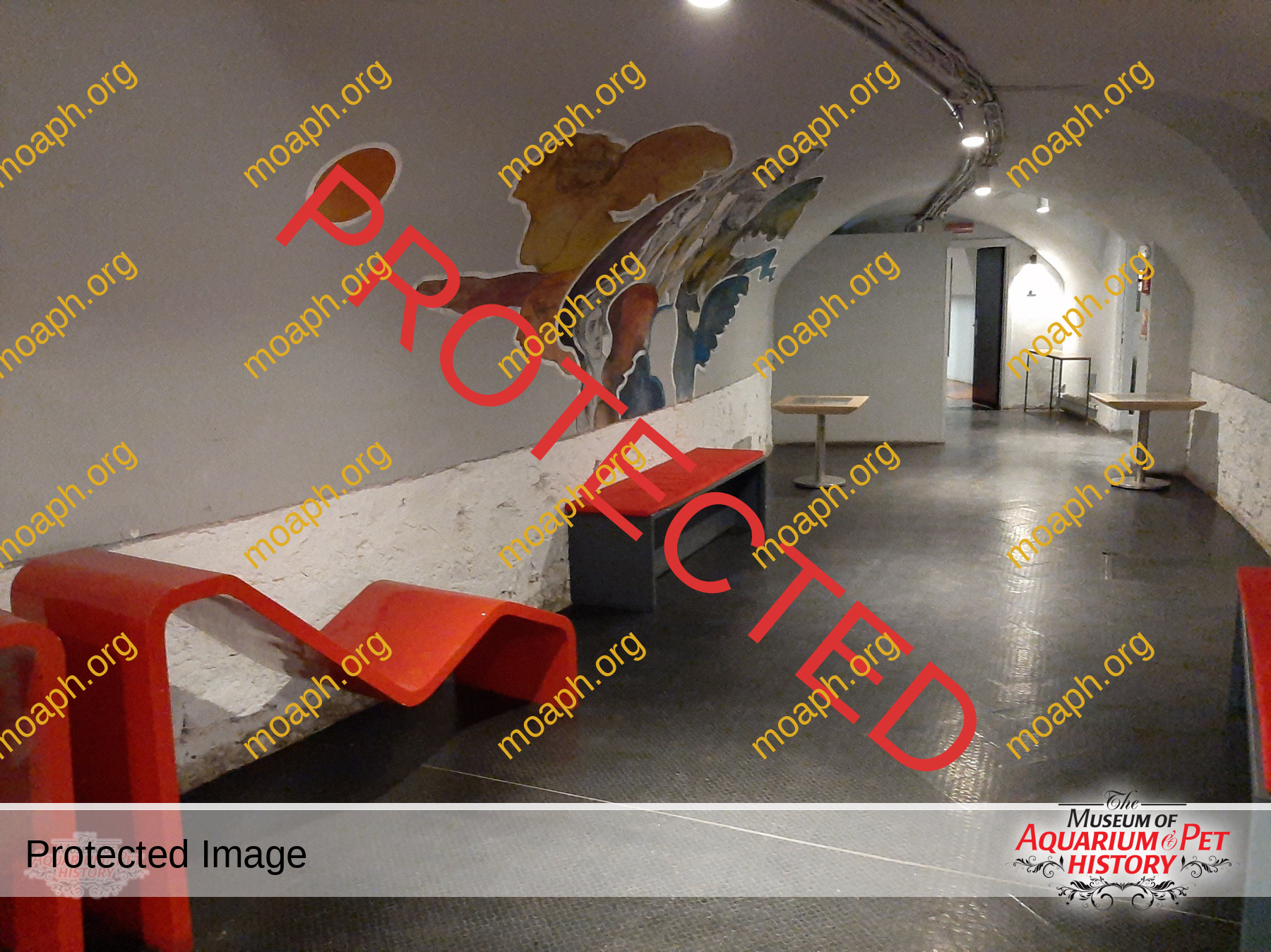
The circular corridor in the basement.
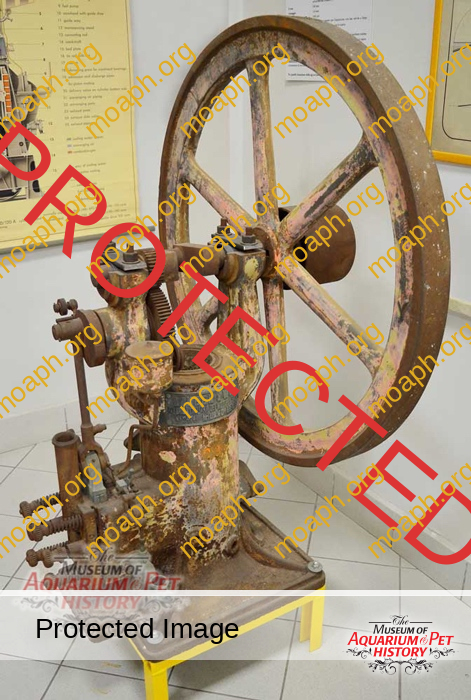
An example of gaseous fuel engine from the late 1800s (Langen & Wolf Gasmotorenfabrik, Wien). Courtesy of Museum of Engines and Mechanisms, University of Palermo (Italy).
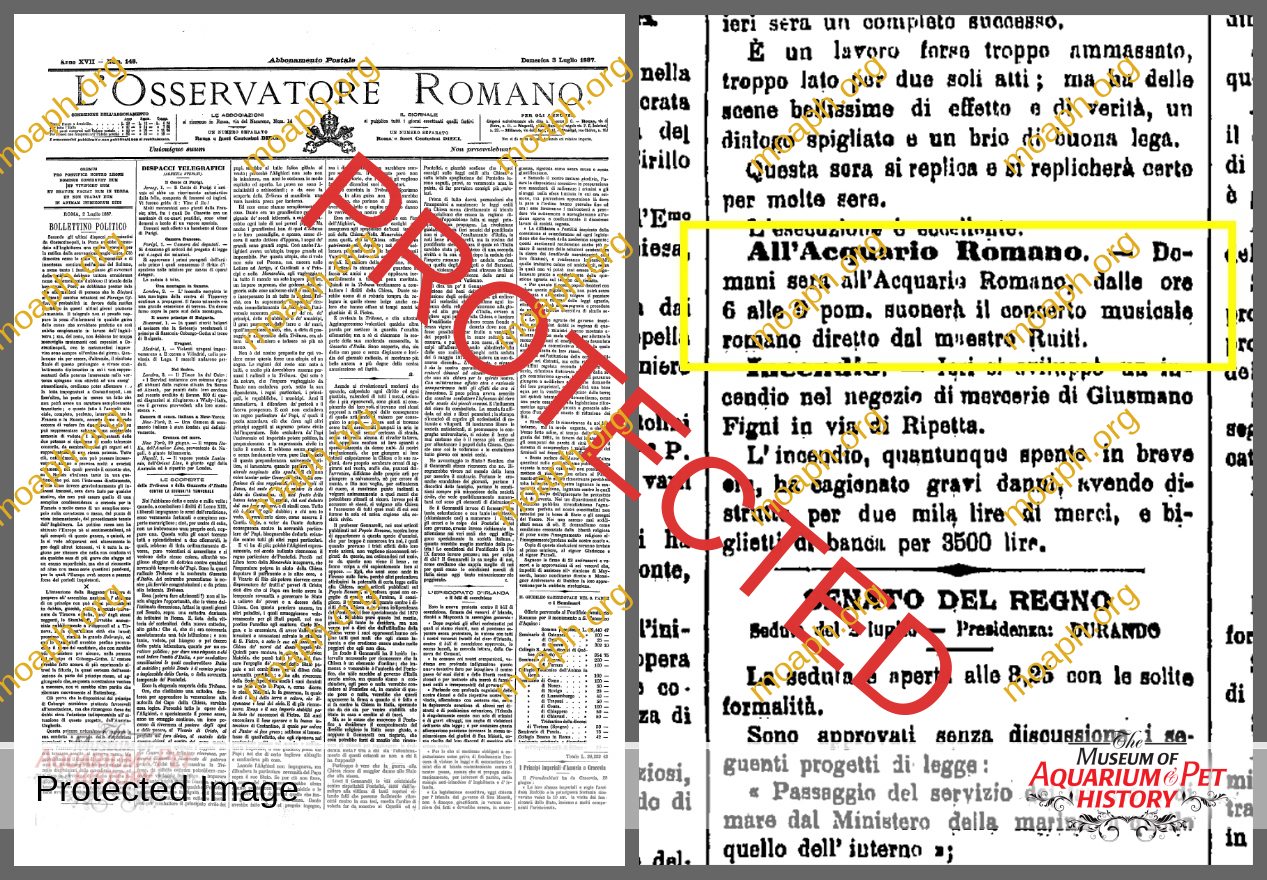
The Acquario Romano started to offer different forms of entertainment just a few weeks after the opening. In the issue of July 3, 1887 (vol. XVII, No. 148), the newspaper L’Osservatore Romano announced, for instance, an evening concert for the day after. Courtesy of L’Osservatore Romano, Archivio Editoriale Multimediale – Dicastero per la Comunicazione, Vatican City.
For the Acquario Romano, however, organizing such activities became immediately a priority probably connected to the worryingly low revenue coming from the Aquarium and the fish farm, the first sign that things was taking a serious turn for the worse. Asking the shareholders for a cash injection wasn’t on the other hand a feasible option for solving the financial problems, as they were almost certainly facing the effects of a devastating building crisis that hit the city like a powerful earthquake. The huge building speculation in the new capital of Italy was based for years, in fact, on a dangerous financial bubble, and when this eventually burst in 1887 several construction companies and banks declared bankruptcy. More than 180 construction sites were abandoned, and thousands of people lost their jobs and left the city.
Towards the untimely collapse of the business
Within two years from the opening, the fish farm was no longer operational and the display aquariums had serious problems. The press mercilessly wrote about the tangible risk that the Acquario Romano could become a “swamp full of frogs.” There was no longer a qualified technical staff, although I wonder if any true aquarium experts ever worked in this magnificent place.
In the meanwhile, the building was rented out for masquerade parties, dances, skating competitions, and agricultural exhibitions. Ettore Bernich himself was among the promoters of such events. It didn’t take long before the Municipality of Rome realized the failure of the original project, and the improper, not officially planned use of the complex.
In May 1889, it authorized the mayor to sue the company Società Anonima dell’Acquario Romano to regain possession of the area, as it had lost the purpose for which it had been granted.
In 1890, Decio Vinciguerra was no longer listed as the director of the Aquarium, and the company that supplied water to the entire establishment literally… closed the taps. In October of the following year, the Municipality of Rome became the new owner of the Acquario Romano.
From 1893 to 1900, the building and its garden hosted food and artistic exhibitions, and other social events. It also became a temporary gym for the schools of the neighborhood. In 1895, the municipal administration even thought of turning the Acquario Romano into public baths equipped with showers, a true humiliation for such a spectacular place.
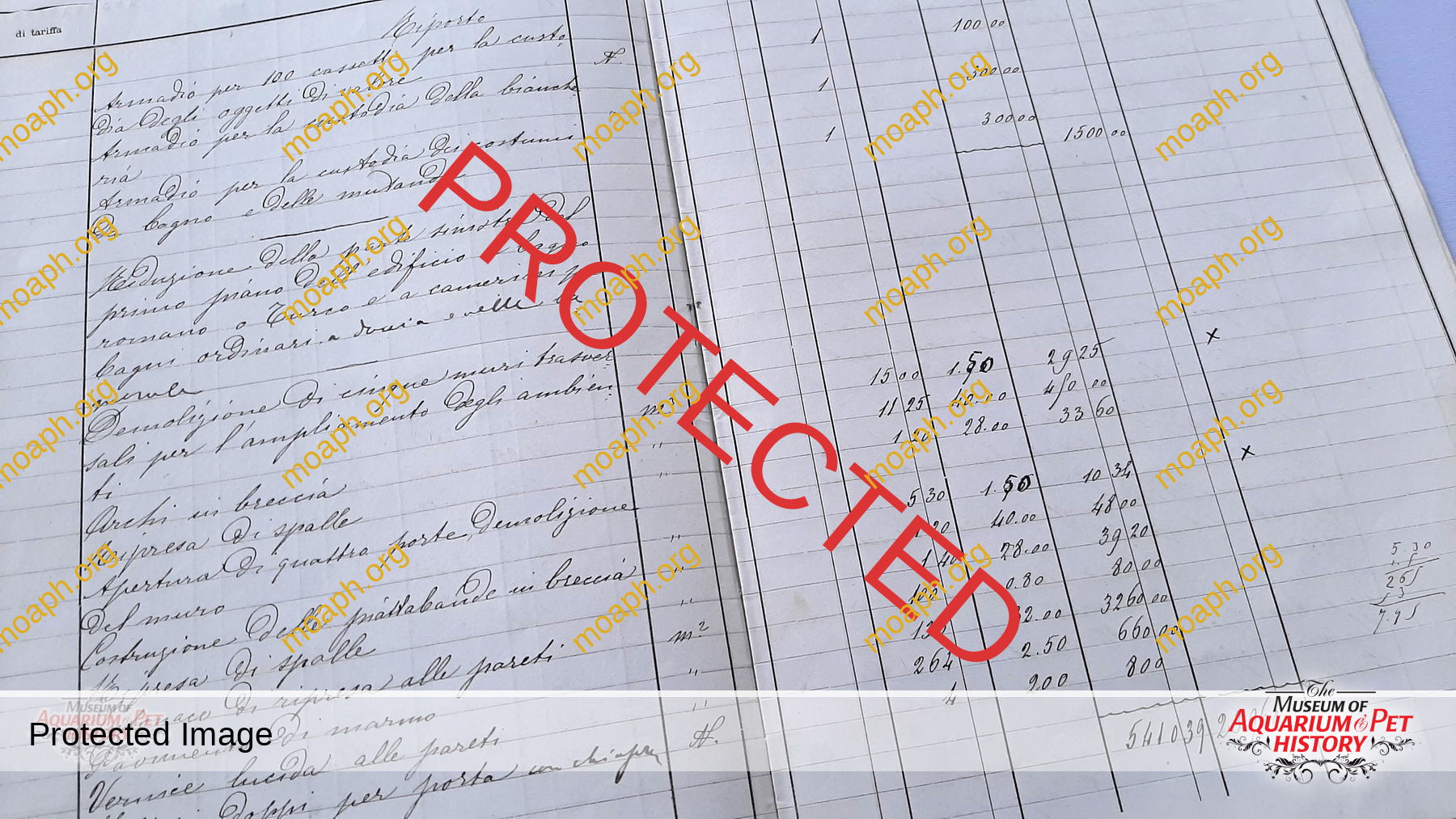
One of the original estimates on the work needed to turn the building into public baths with showers.
Second chance
A glimmer of hope seemed to come at the beginning of the 1900s, when the Municipality of Rome, in agreement with the Ministry of Agriculture, Industry, and Commerce, entrusted the facility to the Zoology Museum of the University of Rome with a nine-year permit. The plan was to restart both the public aquarium and the fish farm for educational purposes, establishing a museum of fishing as well. Decio Vinciguerra became again its director, and the Acquario Romano took the second name “Regia Stazione di Piscicoltura” (Royal Fish Farming Station).
Little is known about what happened in the nine years of this new concession. Anyway, the project failed again and the Aquarium never restarted.
In the meantime, a new Italian public aquarium was inaugurated in the city of Milan during the World Exposition held in 1906. It still exists today and houses many interesting display tanks.
Two years after the Milan Aquarium opening, the Acquario Romano was back to being exploited as a location for theatrical performances, musicals, comedies, dances and equestrian circuses. Starting in the 1930s, it sadly became a dusty warehouse for sets, costumes, and equipment of the Rome Opera House. The exceedingly rare photos of the time show that the aquariums in the main hall no longer existed. The niches were walled up, and the beautiful wall paintings by Silvestro Silvestri placed above each of them were covered by a clear paint. The concrete tanks were removed in those years, or possibly before, to gain useful extra space in the former technical corridor. Since the fixed costs of the Acquario Romano remained high, the Municipality of Rome even considered selling it to a large bank which showed interest, or turning it into a station for buses heading out of town.
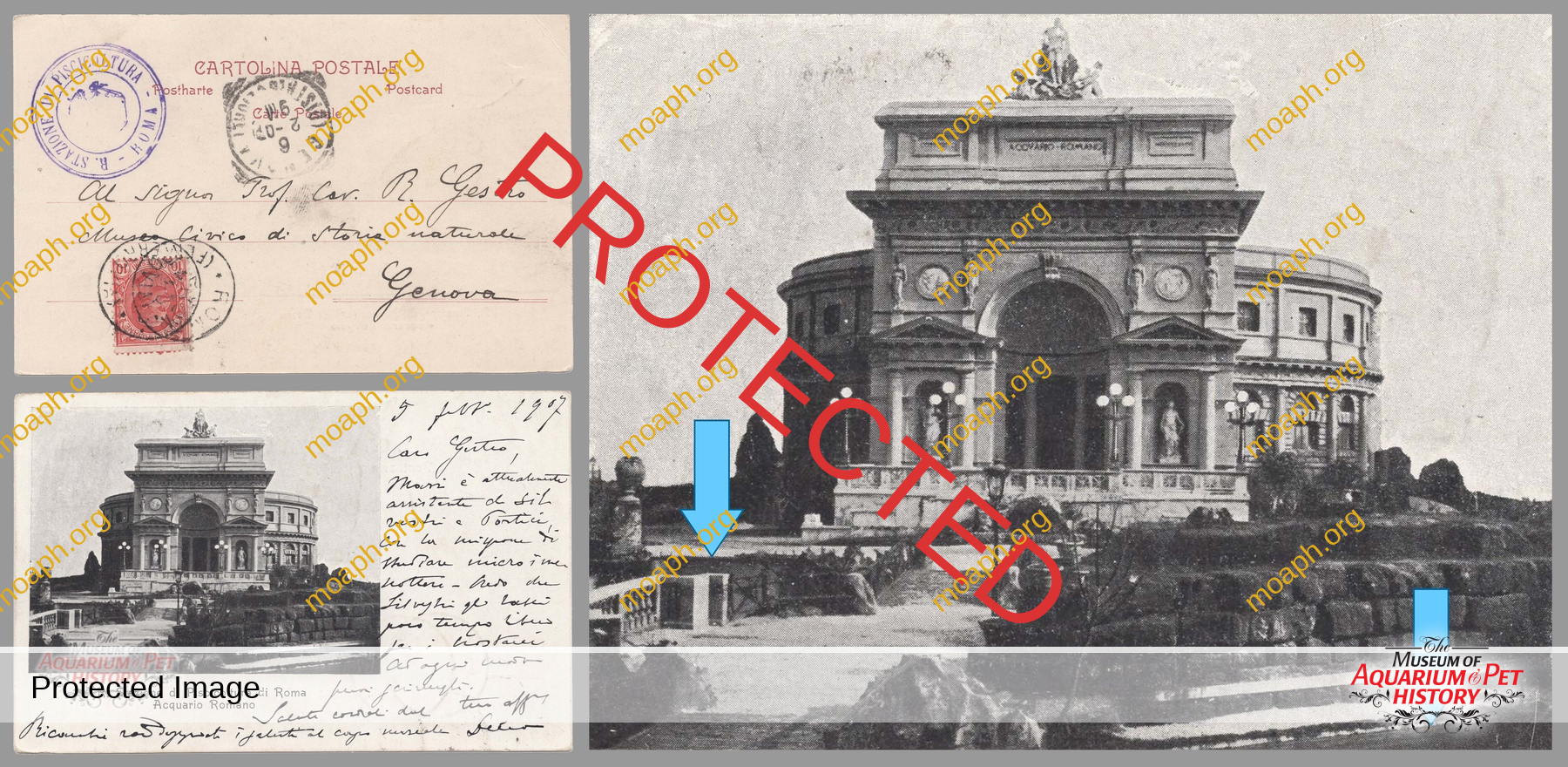
The photograph printed on this postcard from the early 1900s shows two sections of the pond. Decio Vinciguerra, during his second term as director of the Acquario Romano, sent several postcards with the same image to his friend Raffaello Gestro, deputy director of the Museum of Natural History of Genoa. Unfortunately, all the known examples that survived to the present day, like the one here, do not contain information on the Aquarium situation.

Left to right, Decio Vinciguerra, Giacomo Doria and Raffaello Gestro. Courtesy of Civic Museum of Natural History “Giacomo Doria”, Genoa (Italy).
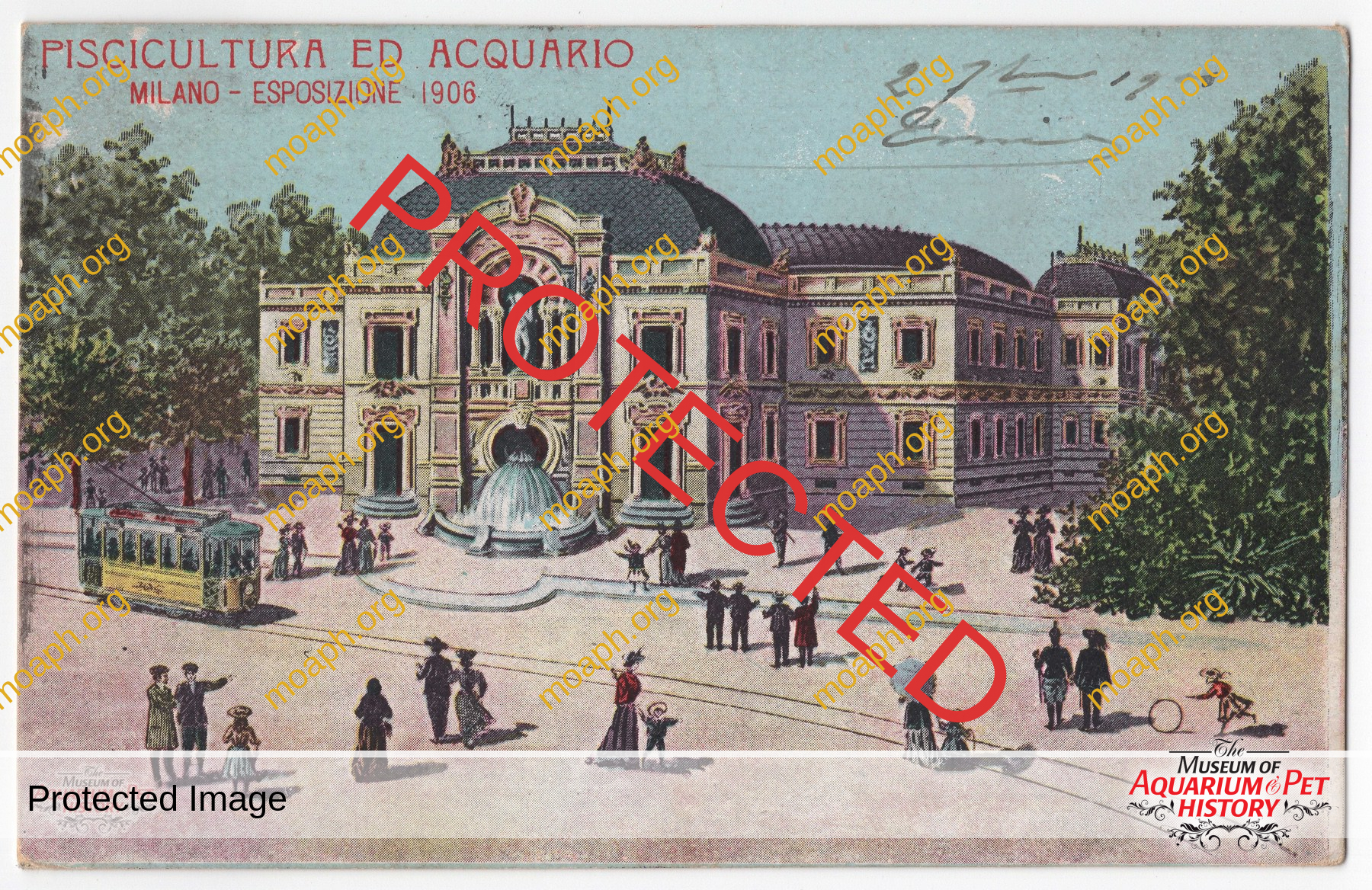
The antique Civic Aquarium of Milan (Italy).
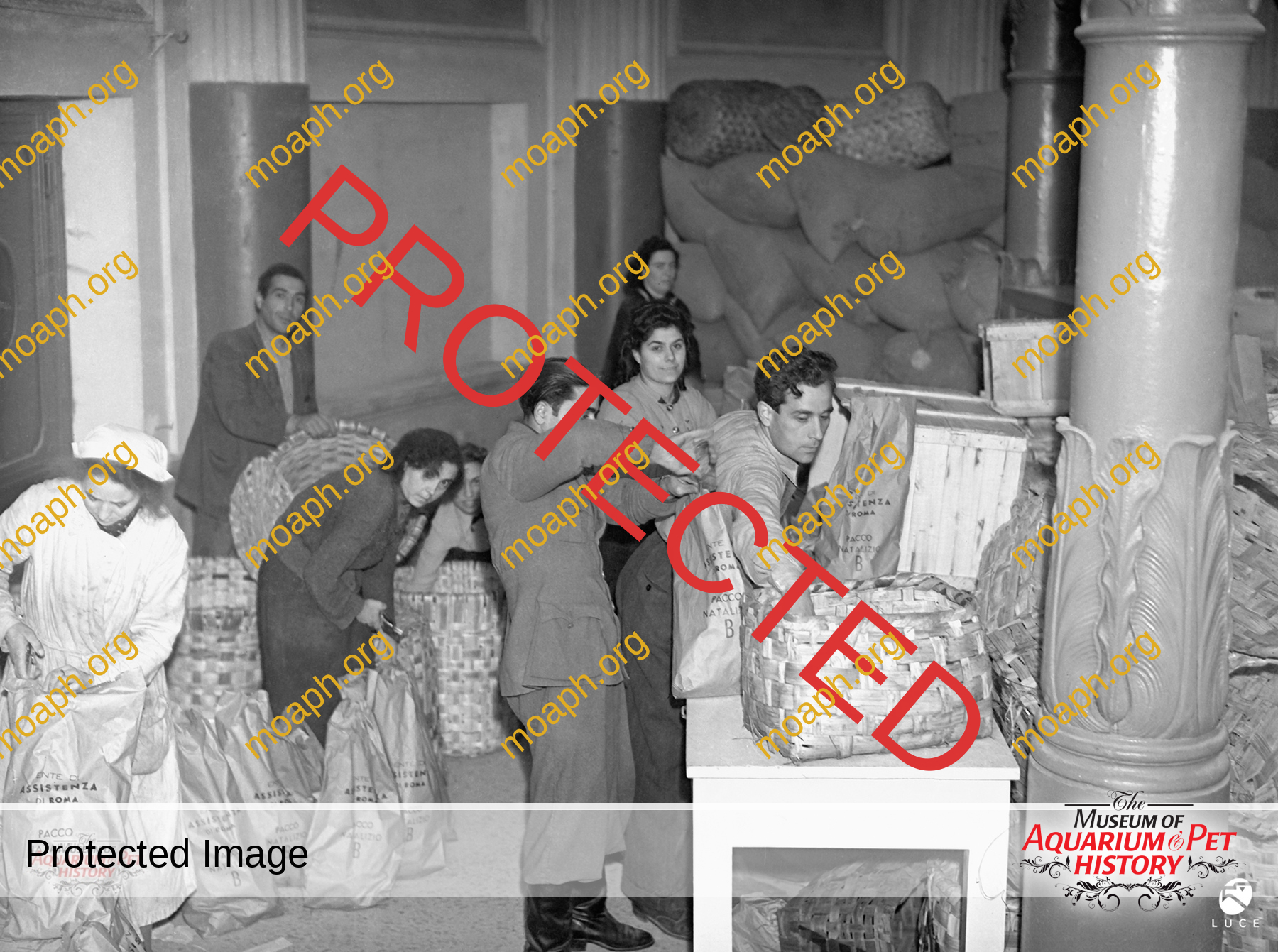
Christmas 1938. Men and women in the Acquario Romano, packing food for poor and needy citizens of the city. Photo Credit: Archivio Storico Istituto Luce.
Meanwhile, the citizens of Rome who wanted to see a public aquarium in those years, before the outbreak of WWII, could visit the Aquarium built inside the Rome Zoological Garden.
Towards the end of the 1930s, the Acquario Romano was used as offices and a warehouse for the management, storage, and distribution of food destined for poor and needy citizens. Interviewing a few aged persons who have always lived in Manfredo Fanti Square, I also discovered that many citizens found refuge in the basement of the facility during the bombing of 1943.
Post WWII events
A few years after the end of WWII, the facility went back to being a warehouse for the Rome Opera House and, on some occasions, a location for movies. Meanwhile, the general conditions of both the building and the garden worsened year by year.
In the early 1960s, just in the proximity of Manfredo Fanti Square, a new fish show opened. A popular entrepreneur in the field of wild animals an pets, Angelo Lombardi a.k.a. “the friend of animals”, started this permanent exhibition of fish and reptiles in the basement of Roma Termini, the main railway station of the city. Even this business venture, however, had a premature end. On June 29, 1967, a huge fire swept through the station and burned everything, including Lombardi’s animals. The exhibition was rebuilt and opened again, but did not last long.
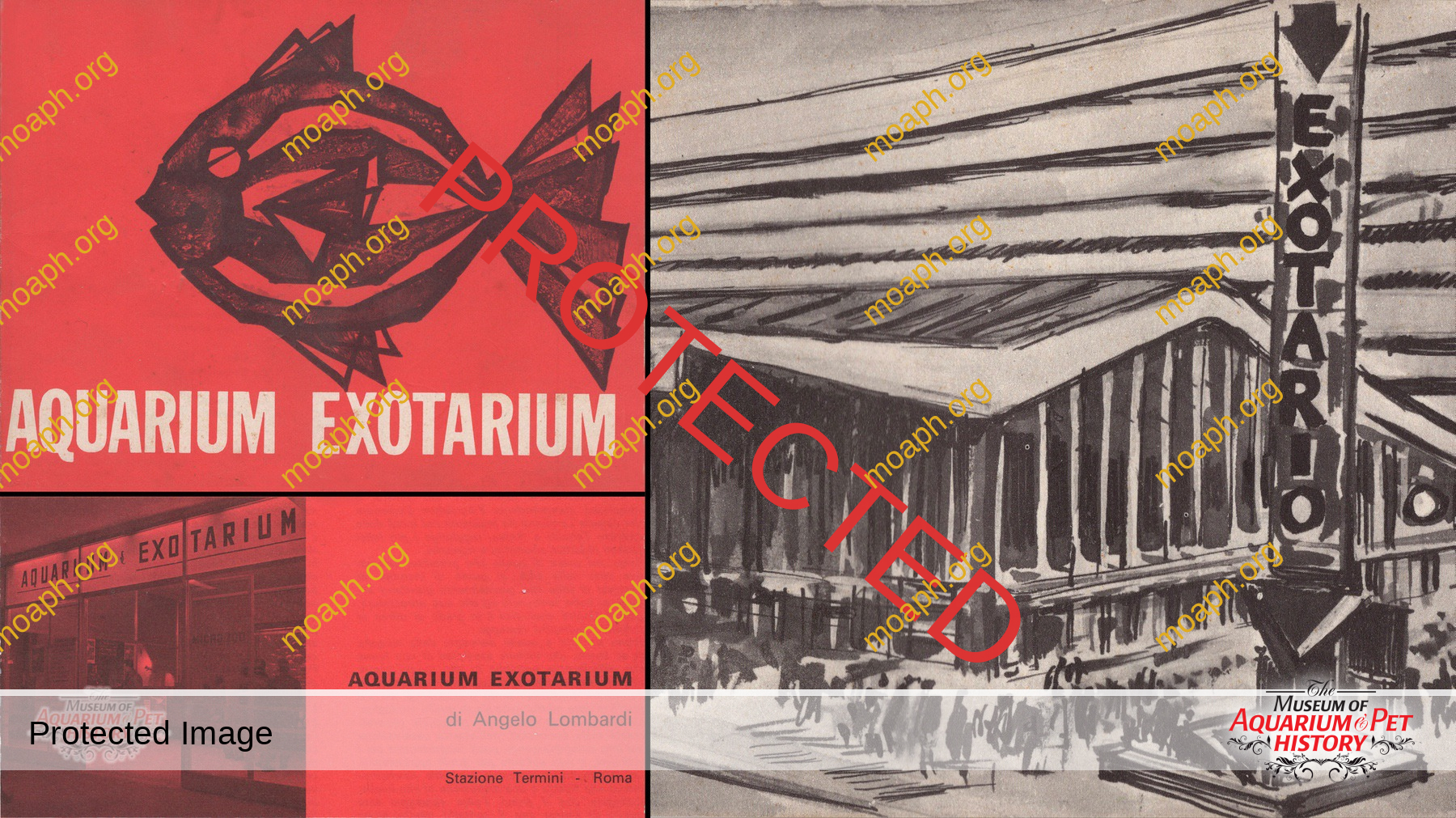
1966 booklet published by the entrepreneur Angelo Lombardi to advertise his “Aquarium Exotarium”, a fish and reptile exhibition located in the basement of Roma Termini.
In 1976, the Municipality of Rome allocated significant funds for a revitalization project of the historic center, including the Esquilino district. Thanks to pressure from local committees, tired of seeing the Aquarium garden fall into disrepair and becoming a gathering place for homeless people, the facility was completely renovated. The restoration project, which began in 1986 and was completed in 1990, finally gave back to the Acquario Romano its lost beauty, although it never again hosted live animals.
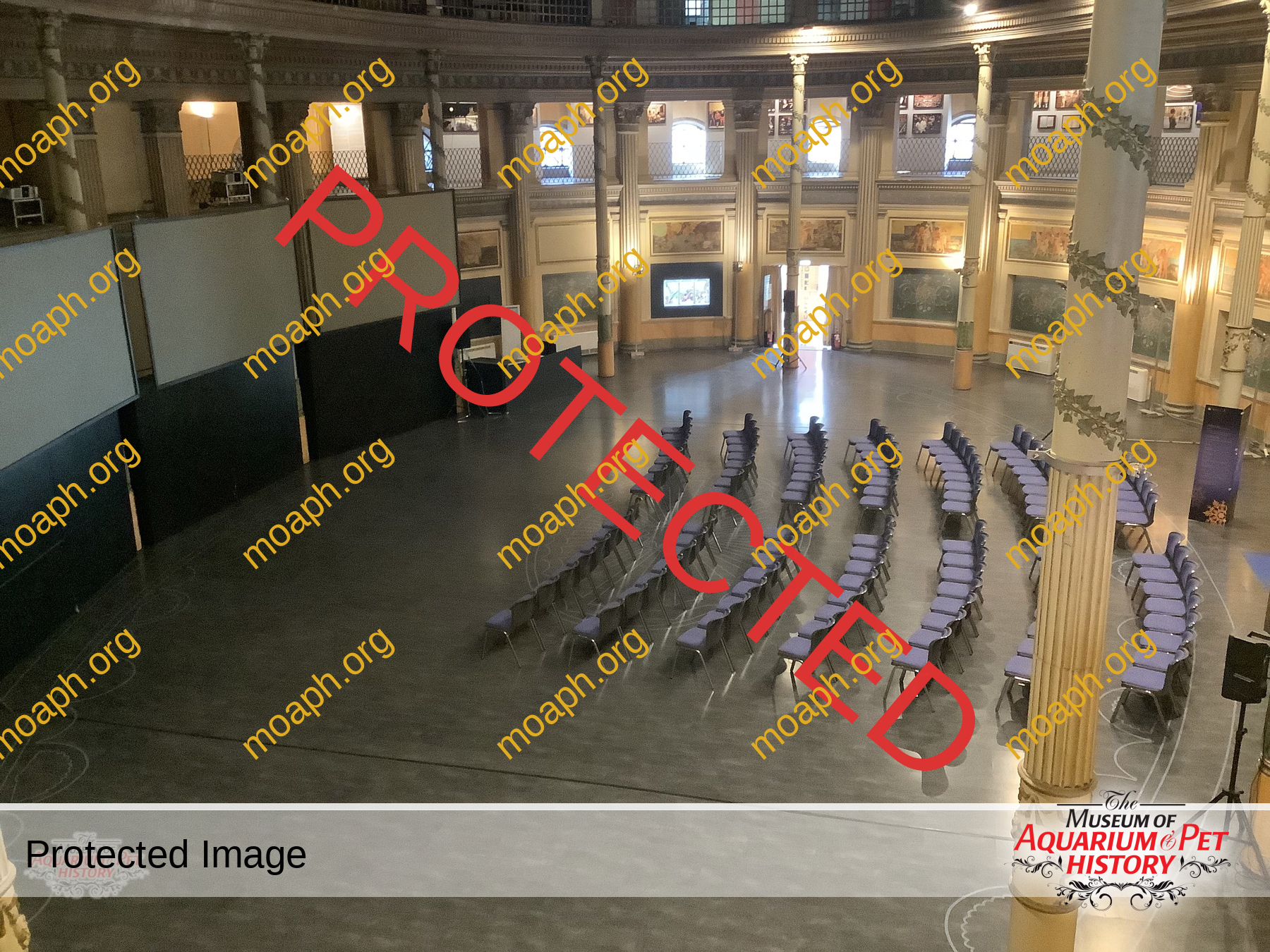
View of the 105x69x59 feet main hall.
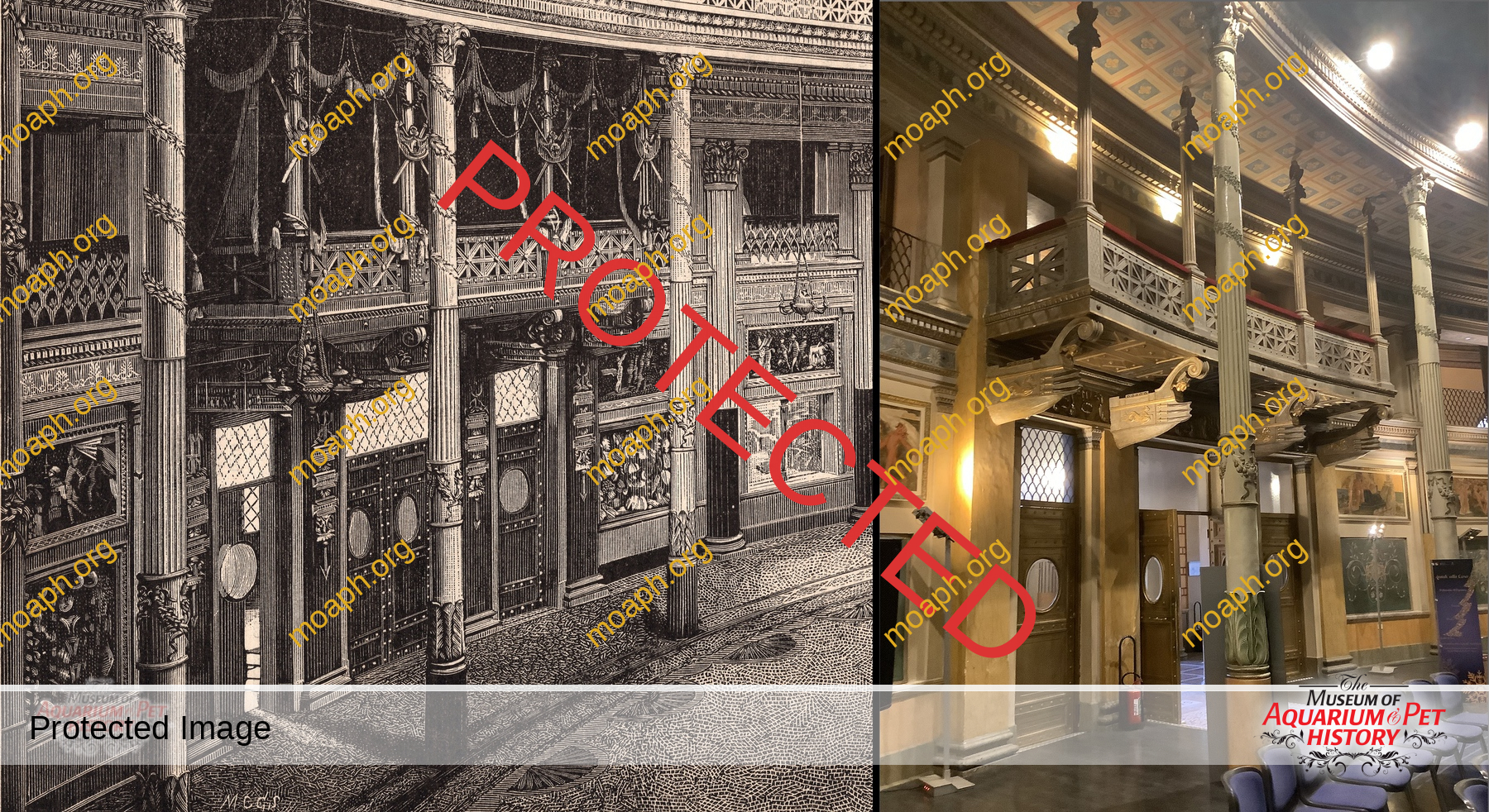
The wooden royal box.
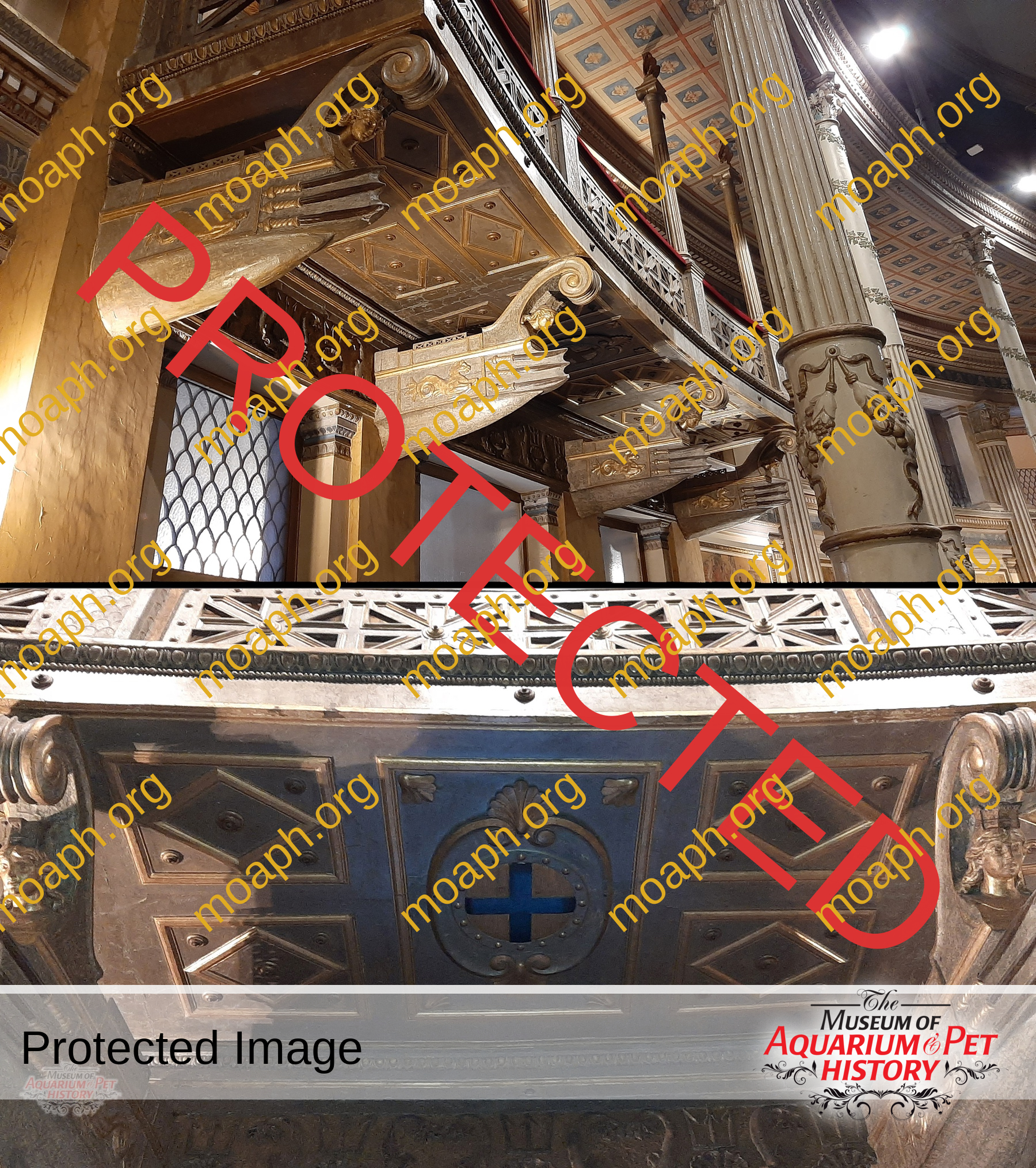
Details of the royal box.
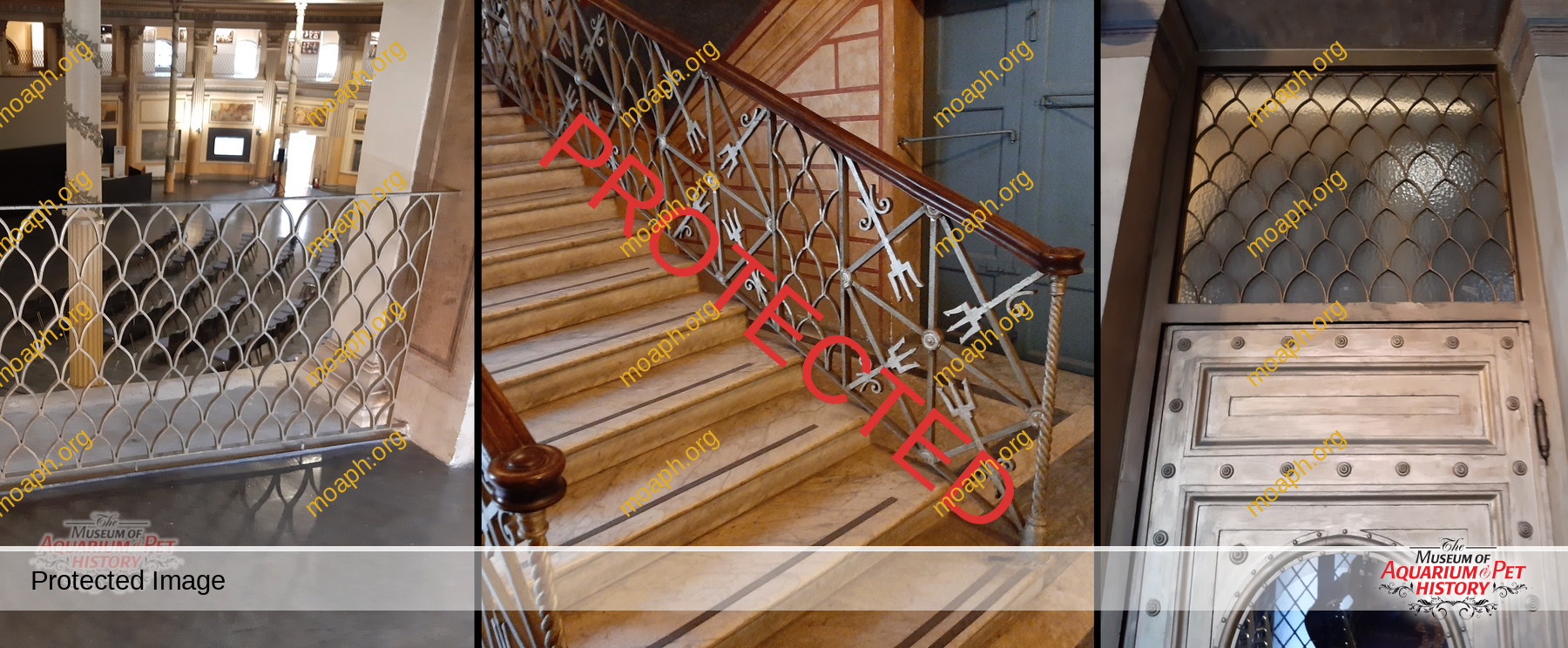
The building is embellished by several decorations and more or less hidden details recalling the sea and the aquatic animals, like for example Neptune’s tridents, and fish scales.
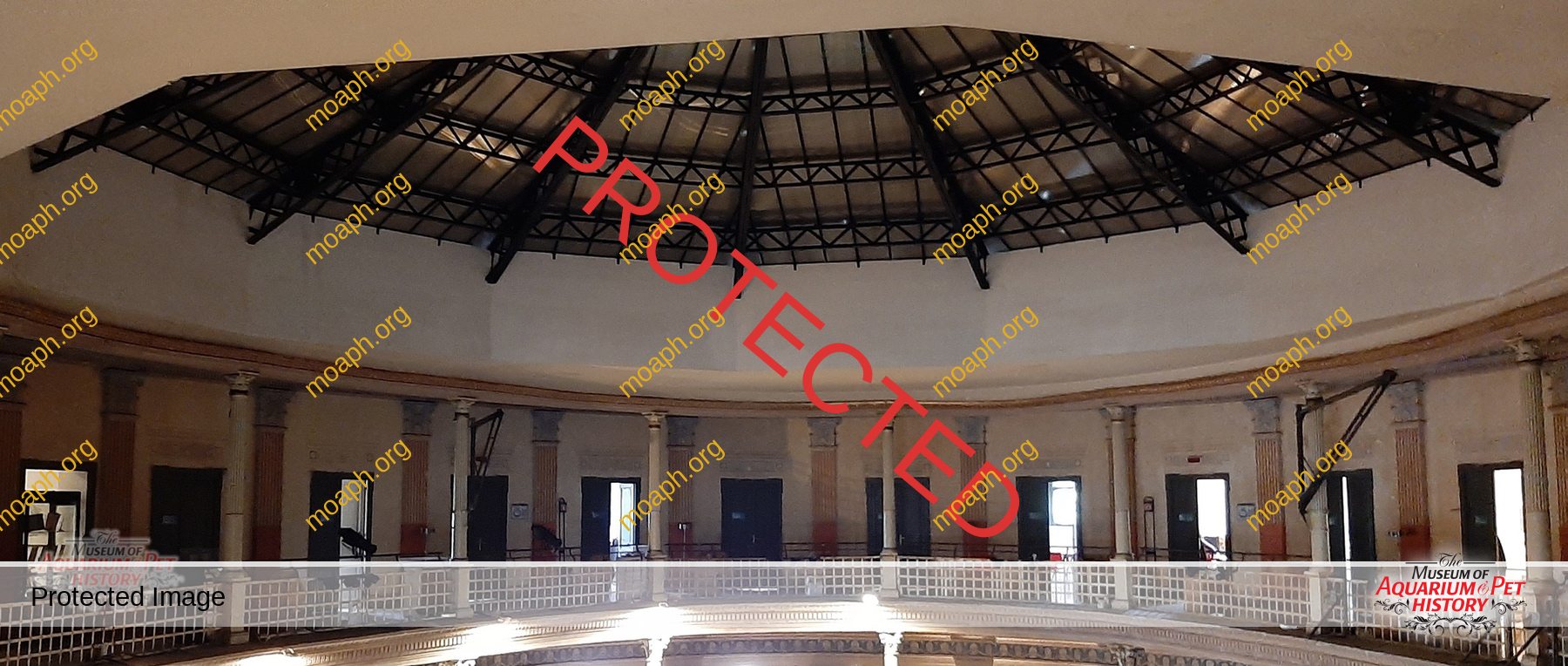
The upper level, the skylight, and the false ceiling which in the 1930s took the place of the spectacular vault painted by Giuseppe Toeschi.
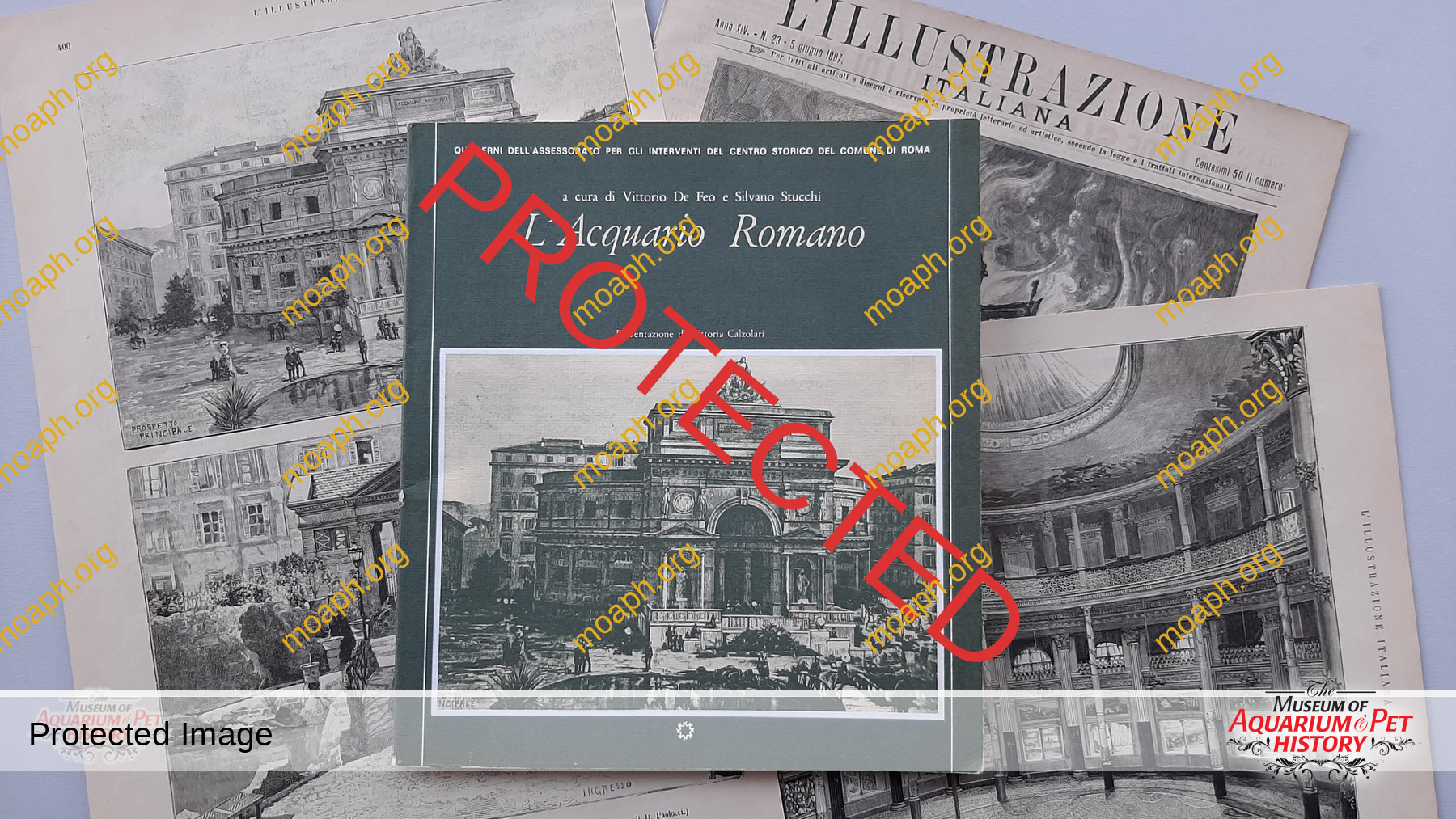
The 107-page book L’Acquario Romano, by Vittorio De Feo and Silvano Stucchi (Edizioni Kappa,1983).
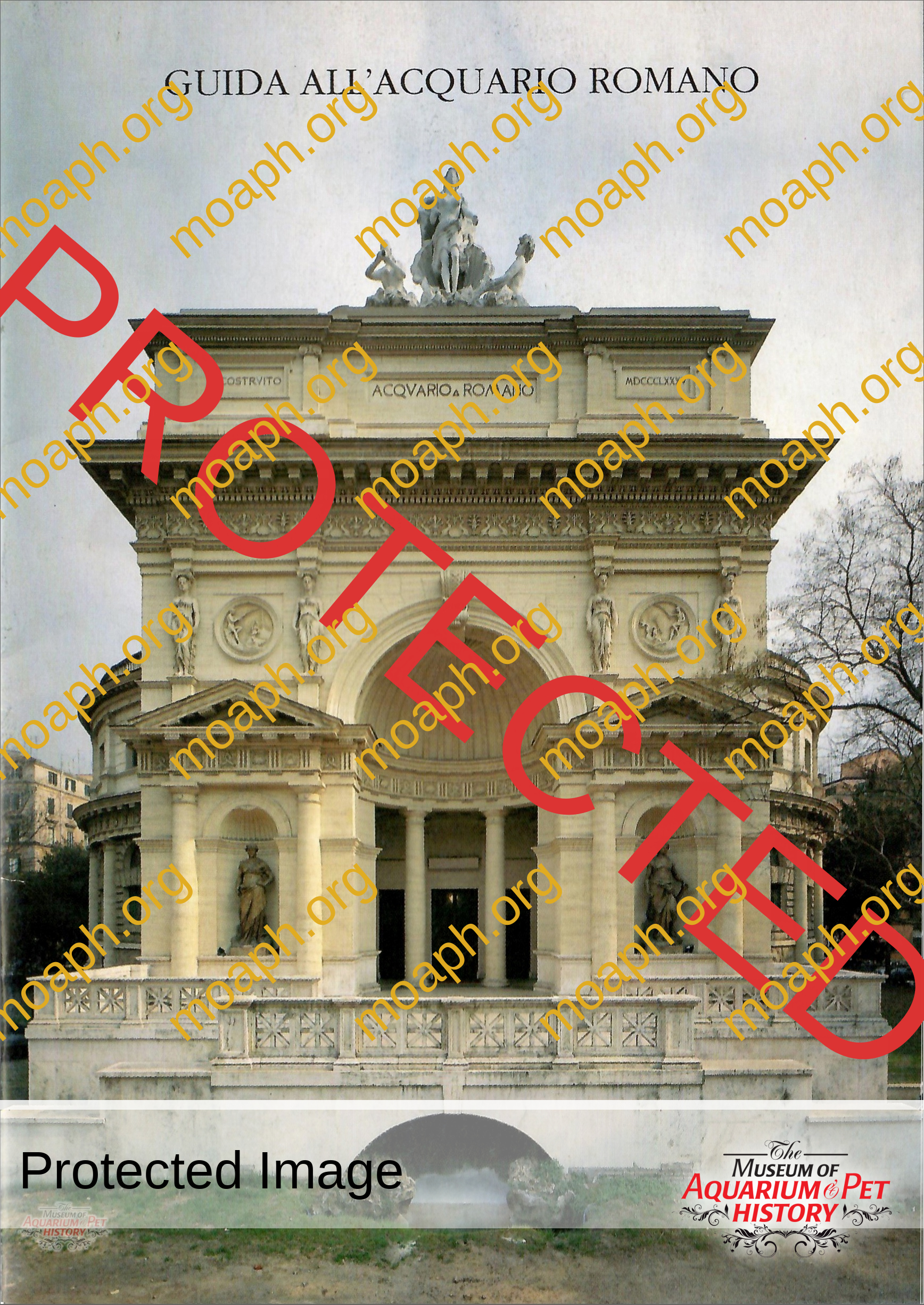
Guida all’Acquario Romano, by Nicoletta Cardano (Edizioni Quasar, 2001).
A new life
Three years later, it became a perfect place for cultural events and educational activities, until in 2003 it was entrusted to the Order of Architects of Rome, which named the facility “Casa dell’Architettura” (House of Architecture) and established its offices there, beginning to manage it as meeting center, exhibition hall and location for elegant social events.
Currently, Rome is still bereft of an important public aquarium. In 2008, ironically just under the windows of my office, the British company Merlin officially started the construction of a “Sea Life” Aquarium. This modern entertainment complex, however, never opened.
I must admit, the Eternal City has a truly bad relationship with public aquariums.
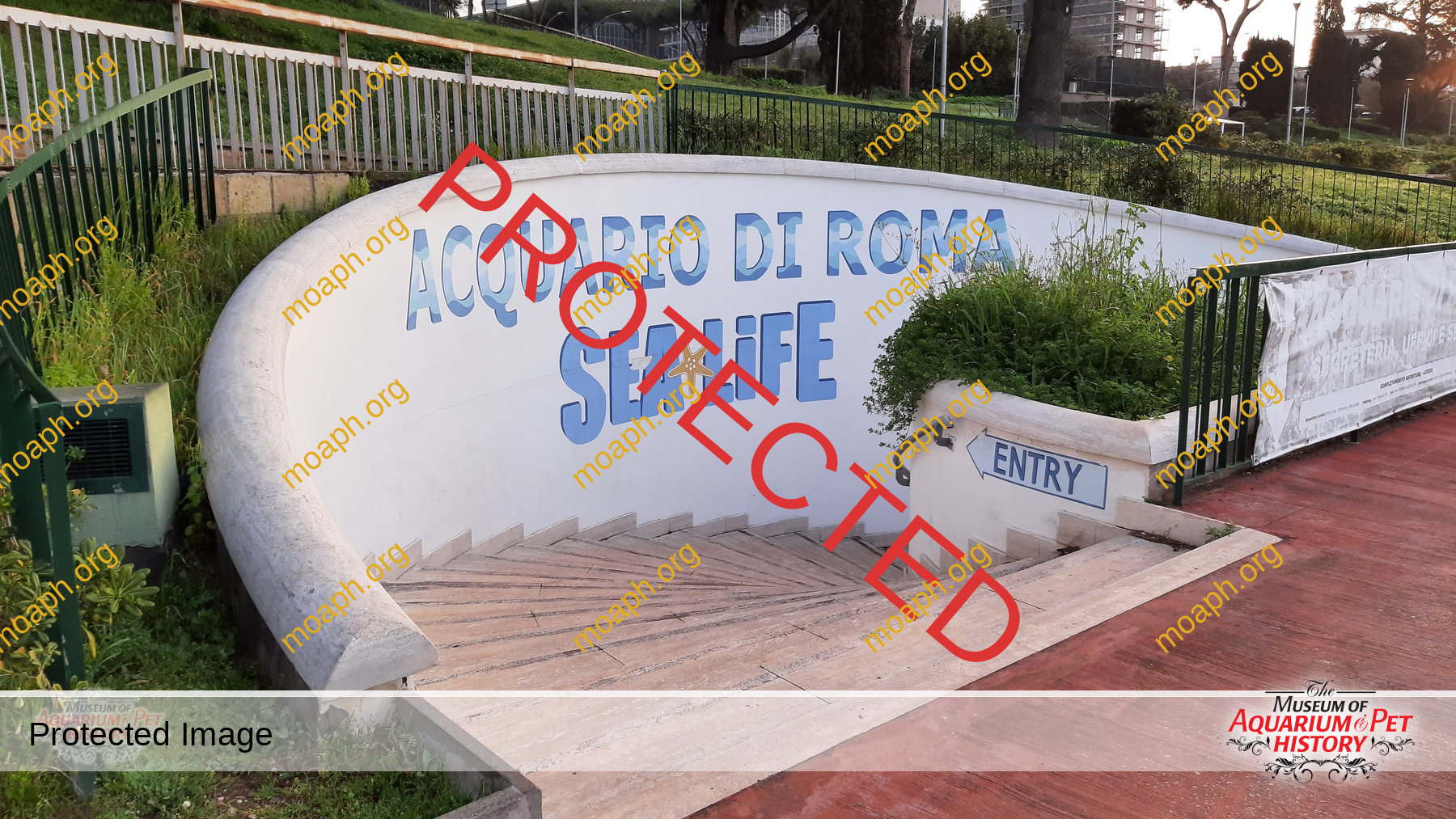
Sea Life Rome (Merlin Entertainments). The facility never opened.