Gotha Aquarists from the 80th to the 100th Anniversary of the Aquarium Society
If a behavioral researcher were to report that two alpha males in a group could share leadership on equal terms, his colleagues would likely scoff and dismiss it as a misinterpretation. Yet behavioral biology must concede an exception: the example of the Gotha Aquarium Society during the period when its members were preparing for their 80th anniversary. The two highly active and equally capable club activists, Kurt Koch and Charly Fuchs—who had always competed with one another for the leading role—now worked together in harmony to organize the 80th anniversary of the world’s oldest aquarium society, along with its outdoor aquarium.
The Danio grounds had been rebuilt in exemplary fashion and developed into a kind of local wildlife park. However, the political leadership of the city of Gotha placed this splendid result of the society’s efforts under its party-controlled authority. The Gotha aquarists needed a new field of activity. And what could have been more natural than to reclaim their oldest one—the outdoor aquarium at the Uelleber Ried?
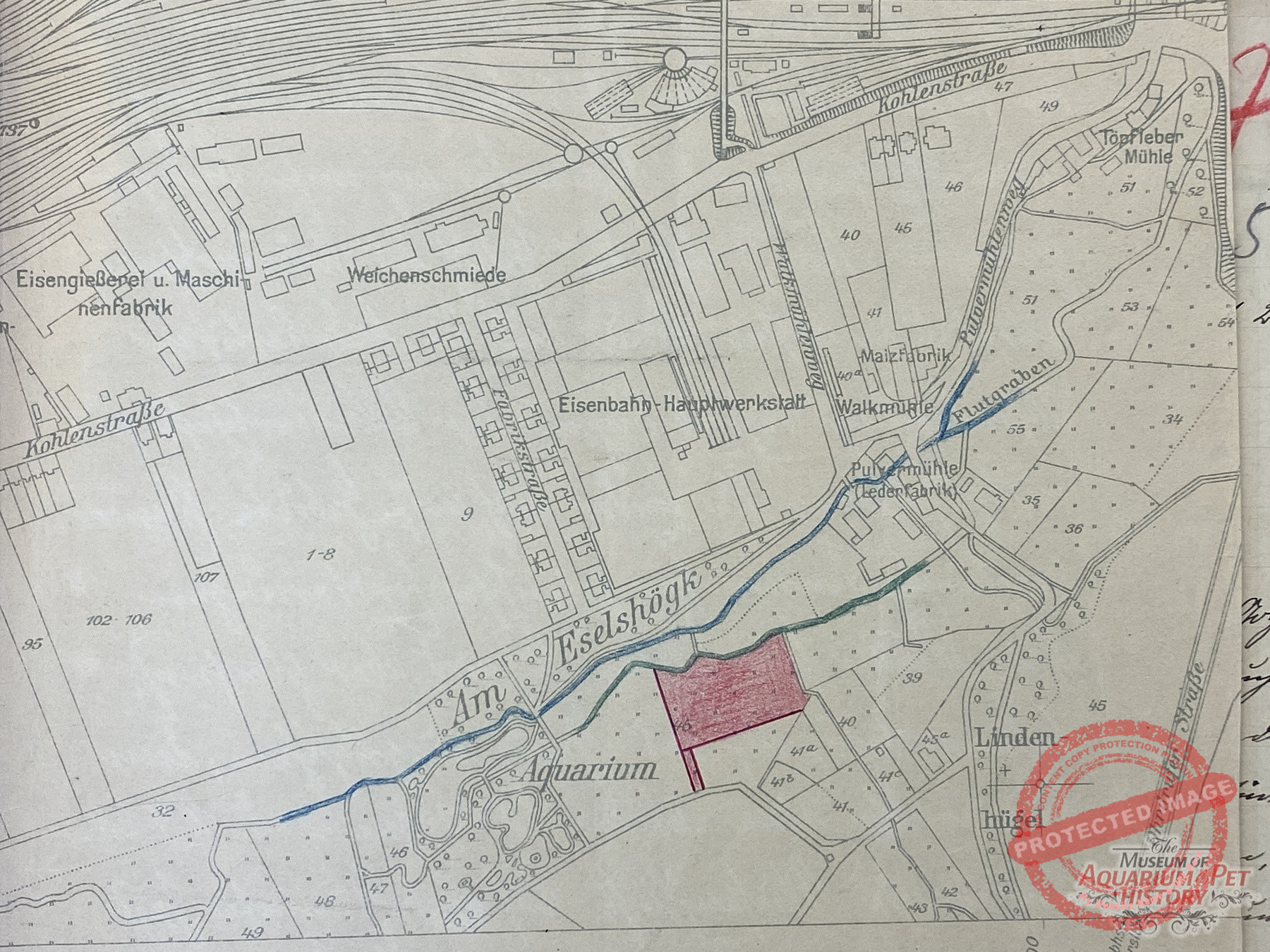
Map of the grounds of the old outdoor aquarium at Uelleber Ried.
How had it come about that there were no longer any thoughts of separation, as there once had been, nor any jockeying for the chairmanship of the society? Most certainly because lived history had made both men wise. The dreadful Nazi dictatorship had not only made all hobby work difficult but had also brought death and impoverishment. The lean postwar years in the eastern half of Germany were marked by a struggle for survival, and a new communist dictatorship once again prescribed much and demanded the uniformity of thought. The pragmatic and perceptive Koch and Fuchs understood that they could achieve anything only by pooling their strength to carry out what they had set their minds to.
And what they envisioned was a magnificent 80th anniversary celebration in 1962, worthy of the worldwide significance of the oldest aquarium society and its outdoor aquarium. The members of the Gotha Aquarium Society—now all organized within the Kulturbund (Cultural Association)—wanted to reactivate their beloved old aquarium at the Uelleber Ried. The site with the seven ponds, however, which—like all other outdoor aquariums—had been destroyed by bombs, was no longer an option. It had largely turned into wasteland. Children and teenagers used it as an adventure playground; shrubs overgrew the area, and the ponds gradually silted up. Later, it would be leveled and repurposed as building land.
The old aquarium did not look especially promising either—the trees had been thinned (firewood had been needed after the war)—but the ponds and their water supply were still relatively intact. Even the warm spring of the Röhrenteich continued to bubble.
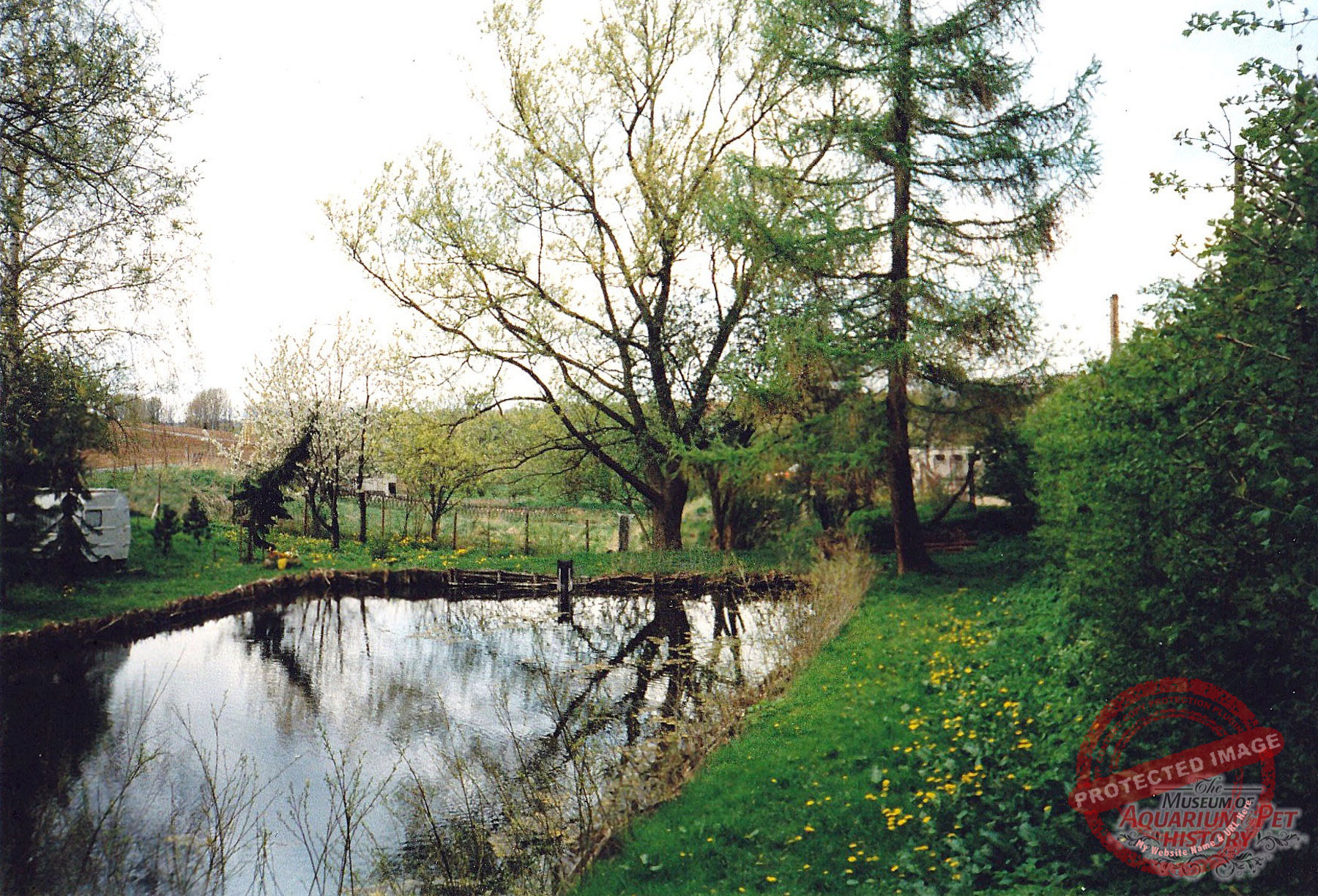
The grounds of the former Nymphaea outdoor facility had largely fallen into disrepair in the years following World War II.
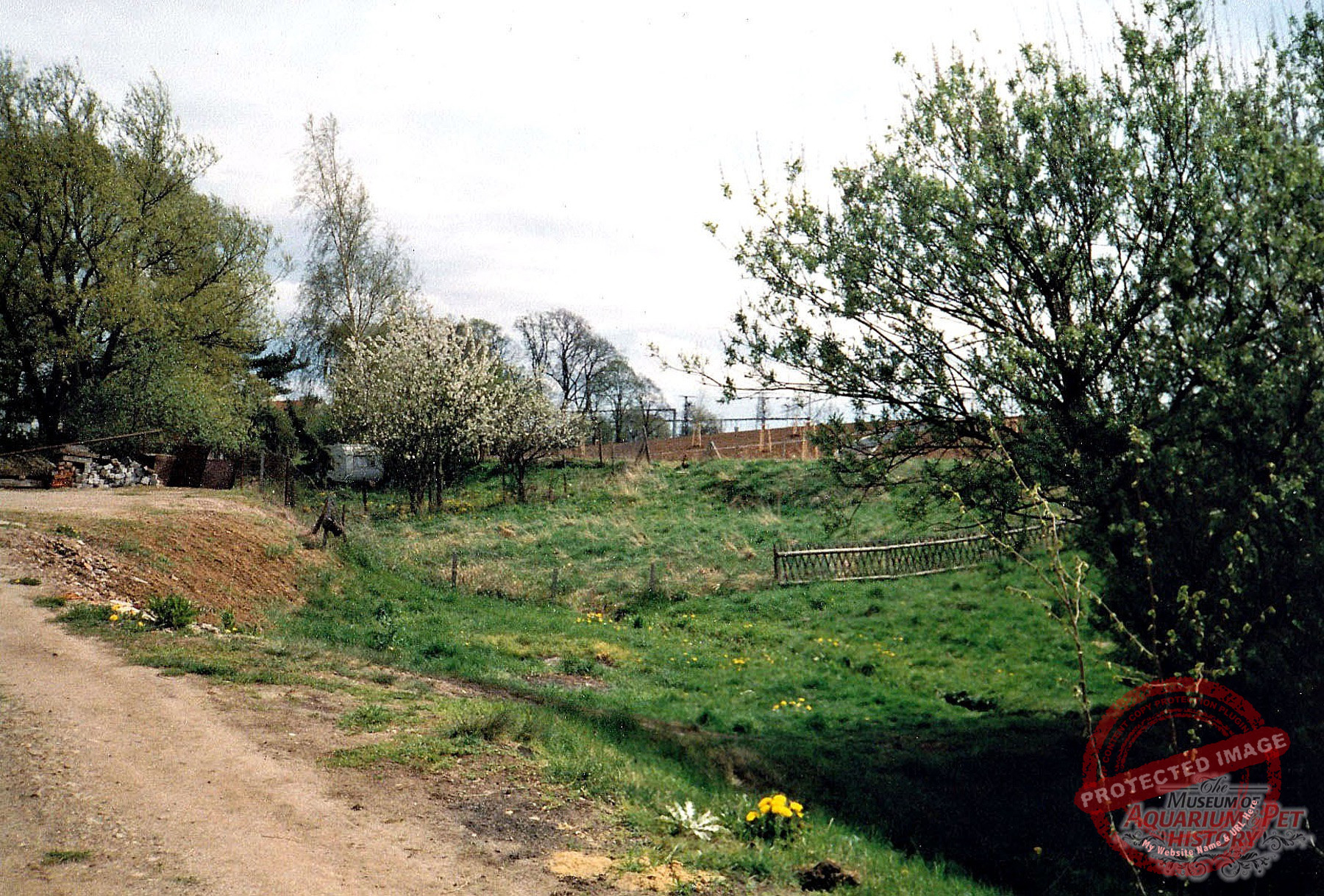
By the 1980s, it resembled more of a wasteland.
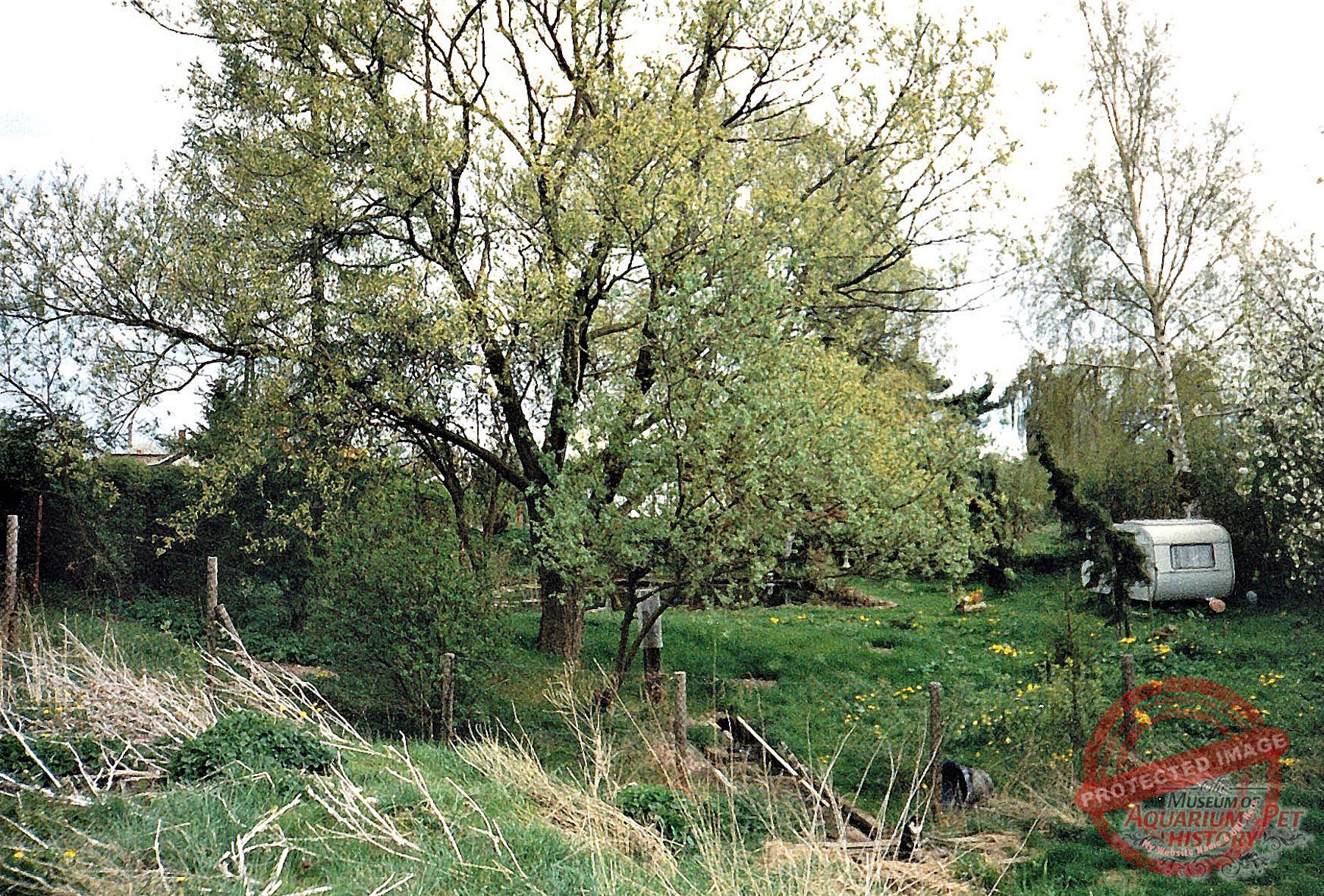
Many of the pond basins had been filled in.
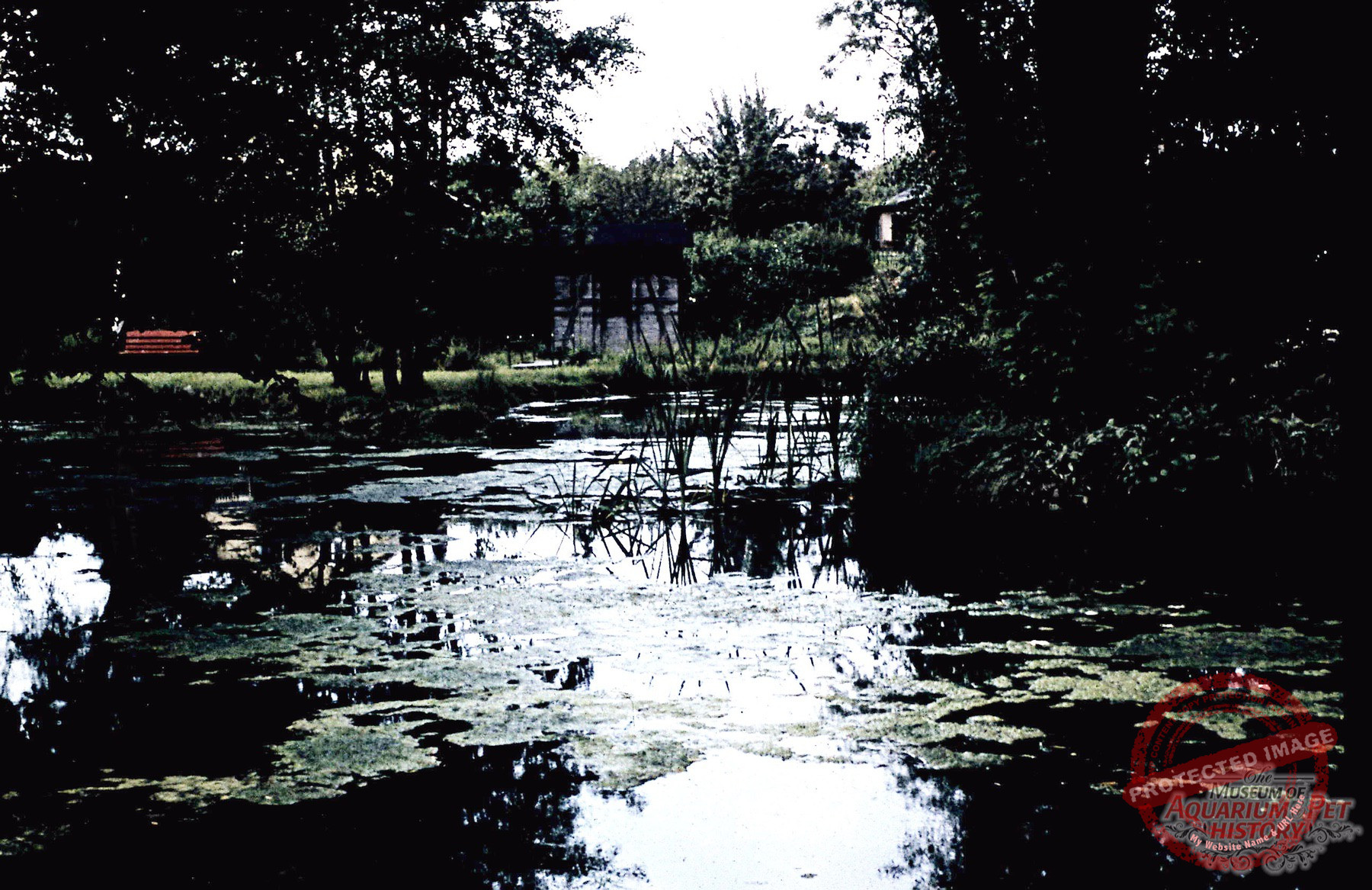
The old aquarium at Uelleber Ried still retained all its ponds after the war.
At the end of the war, Charly Fuchs suffered not only the general hardships of the time but also a severe personal loss. In February 1945, before the war had ended, his first wife, Minna, died. In 1948 he remarried, taking Toska Hellma as his second wife. Now he regained his vigor and was full of energy. He lived not far from the aquarium and still maintained his aquarium cellar in his house, the Fuchsbau (Fox’s Den). From there, he would go almost daily to one of the ponds in the outdoor aquarium to catch food for his fish. The miserable condition of the grounds angered him deeply.
On July 7, 1960, he therefore submitted a proposal to the society to restore the outdoor aquarium grounds through many hours of voluntary labor. The goal was clear: the 80th anniversary of the aquarium society. His proposal was accepted.
Dense undergrowth and wild thickets had to be cleared, broken branches removed, paths redefined, and walkways and bridges repaired. Even Schäffer’s small cottage on the island in the Röhrenteich still stood. It looked rather dilapidated, yet it was a relic of the beginnings. Ultimately, however, its wooden planks were too rotten for long-term preservation. Charly Fuchs was always present when members, after work or on weekends, gathered in small groups and, once again using the simplest means, restored the old beauty of the site. After two years of steady, painstaking work, they had succeeded in creating a landscaped park with horticultural elements that was more beautiful than ever before.
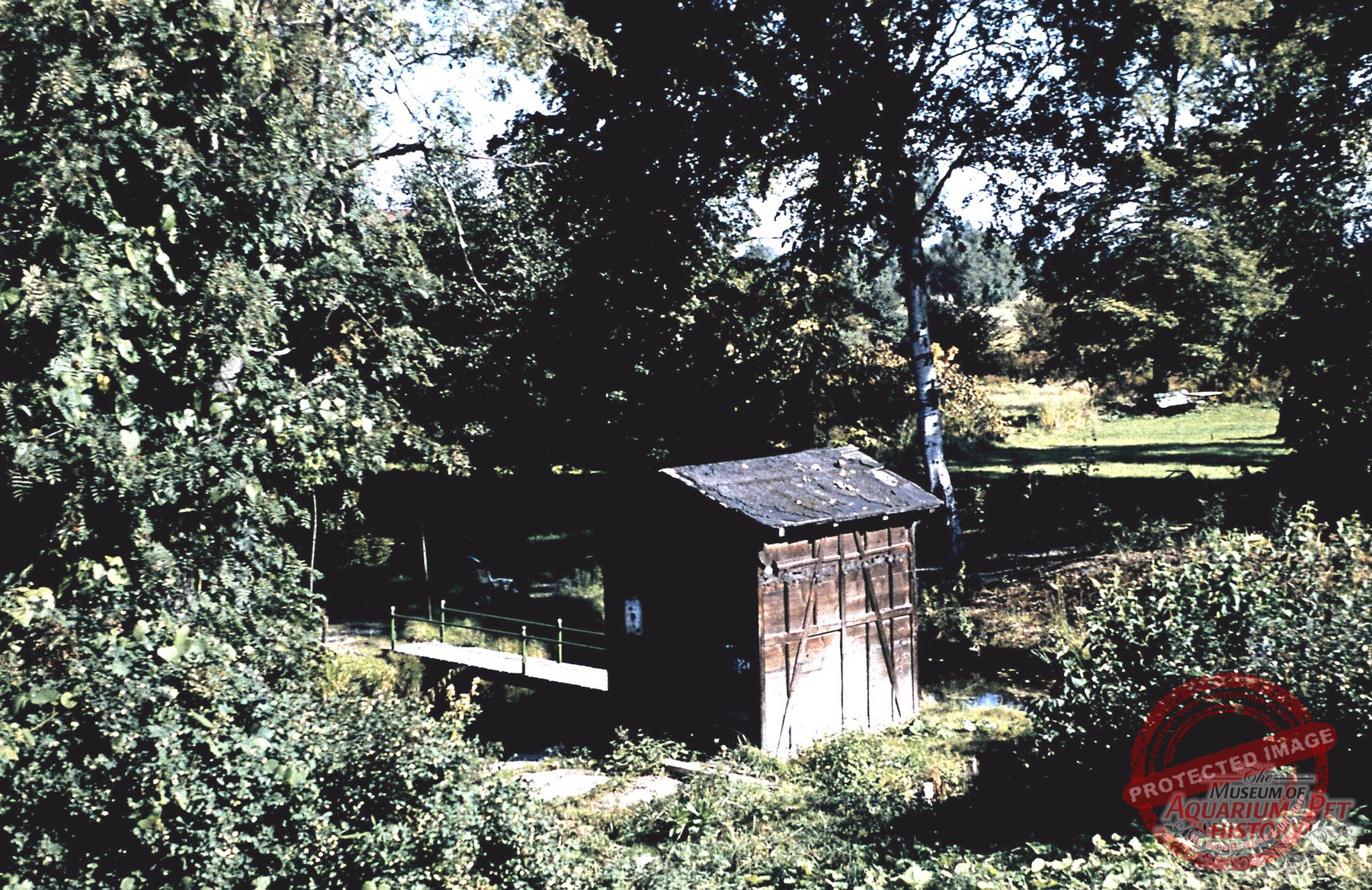
In the early 1960s, the primary task was therefore to thin out the shrubs and fill in bomb craters with soil.
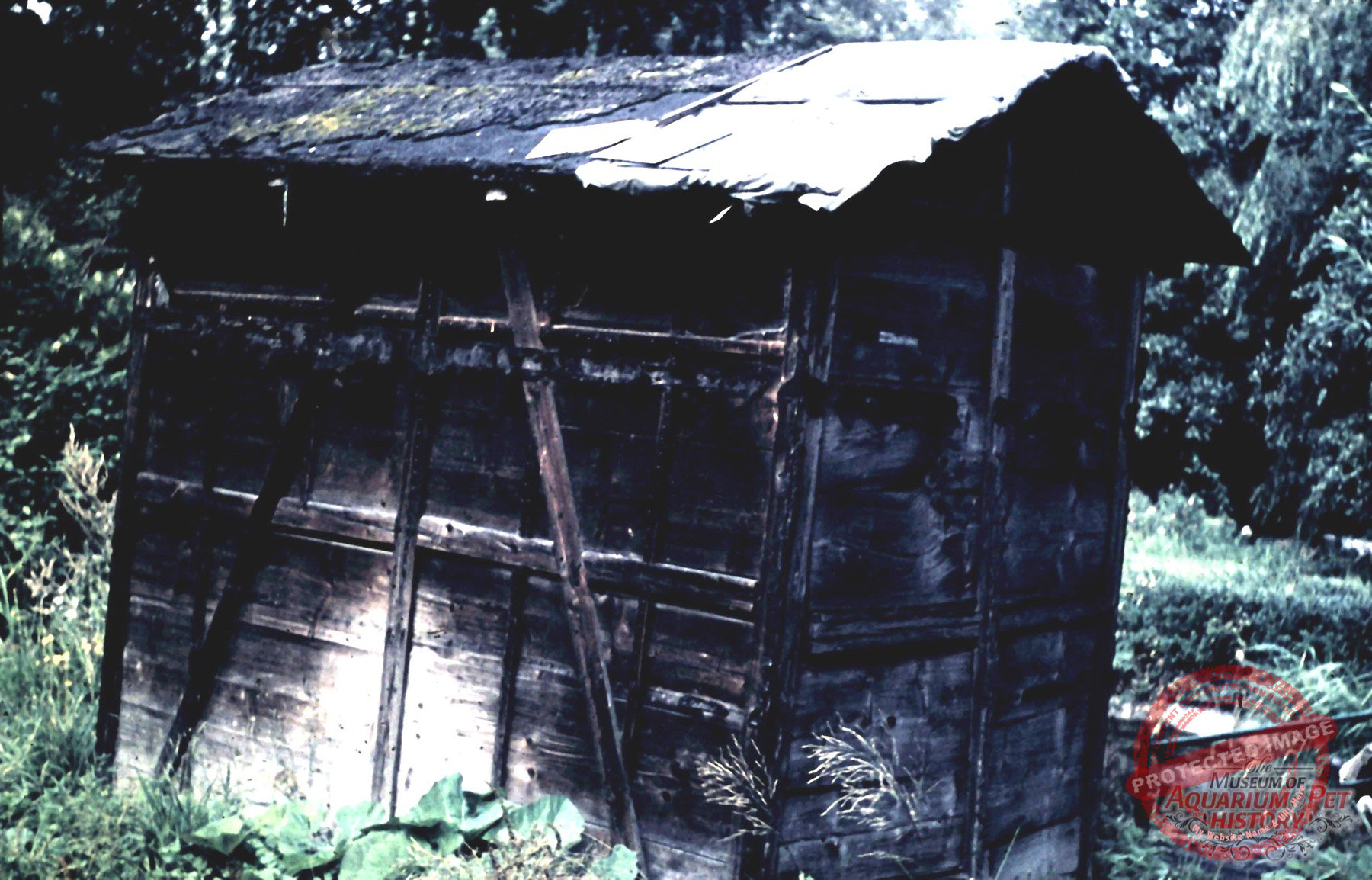
Schaeffer’s old wooden hut from 1890 on the island in the Röhrenteich initially still stood.
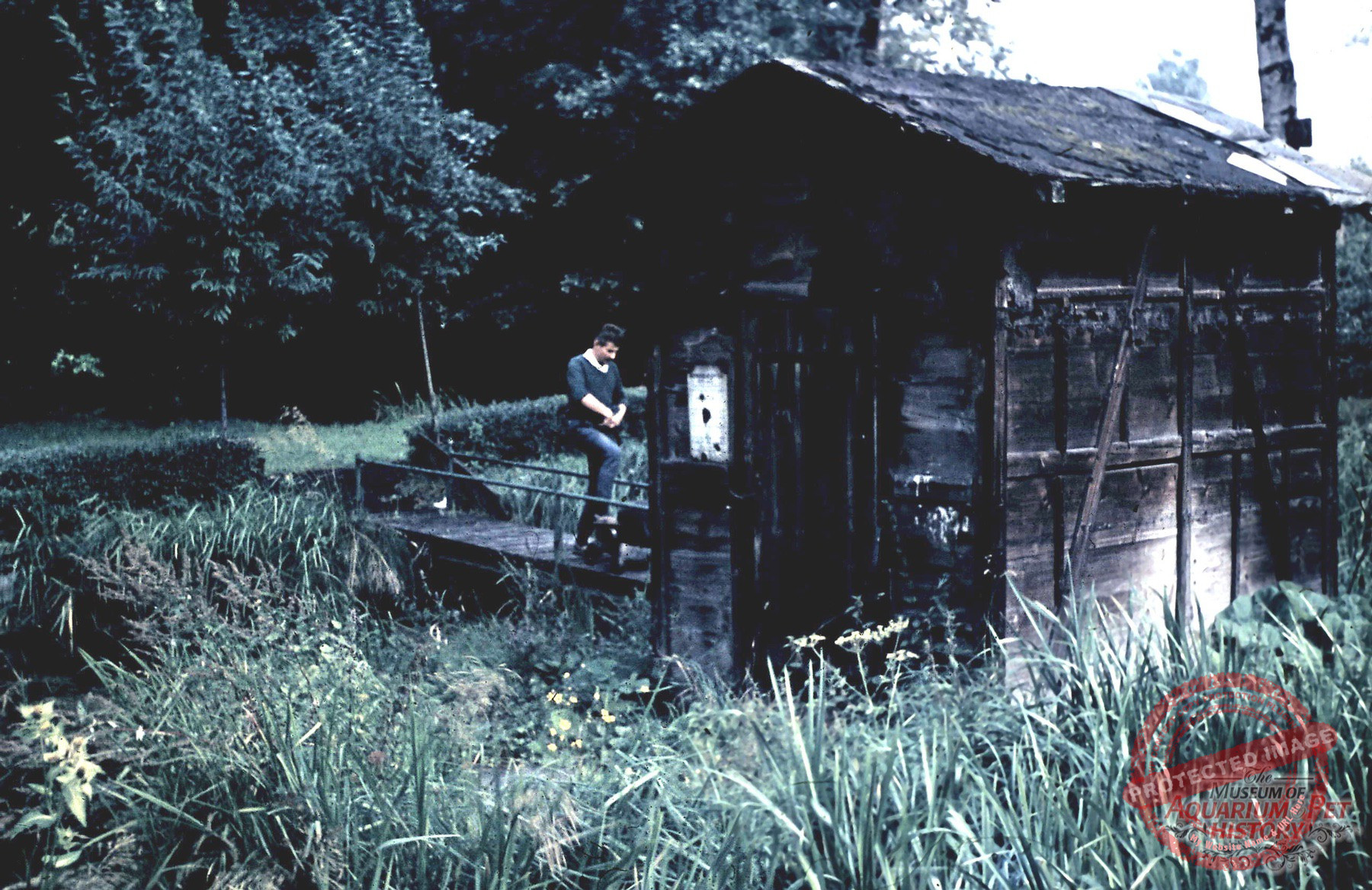
Even the footbridge to the island remained intact.
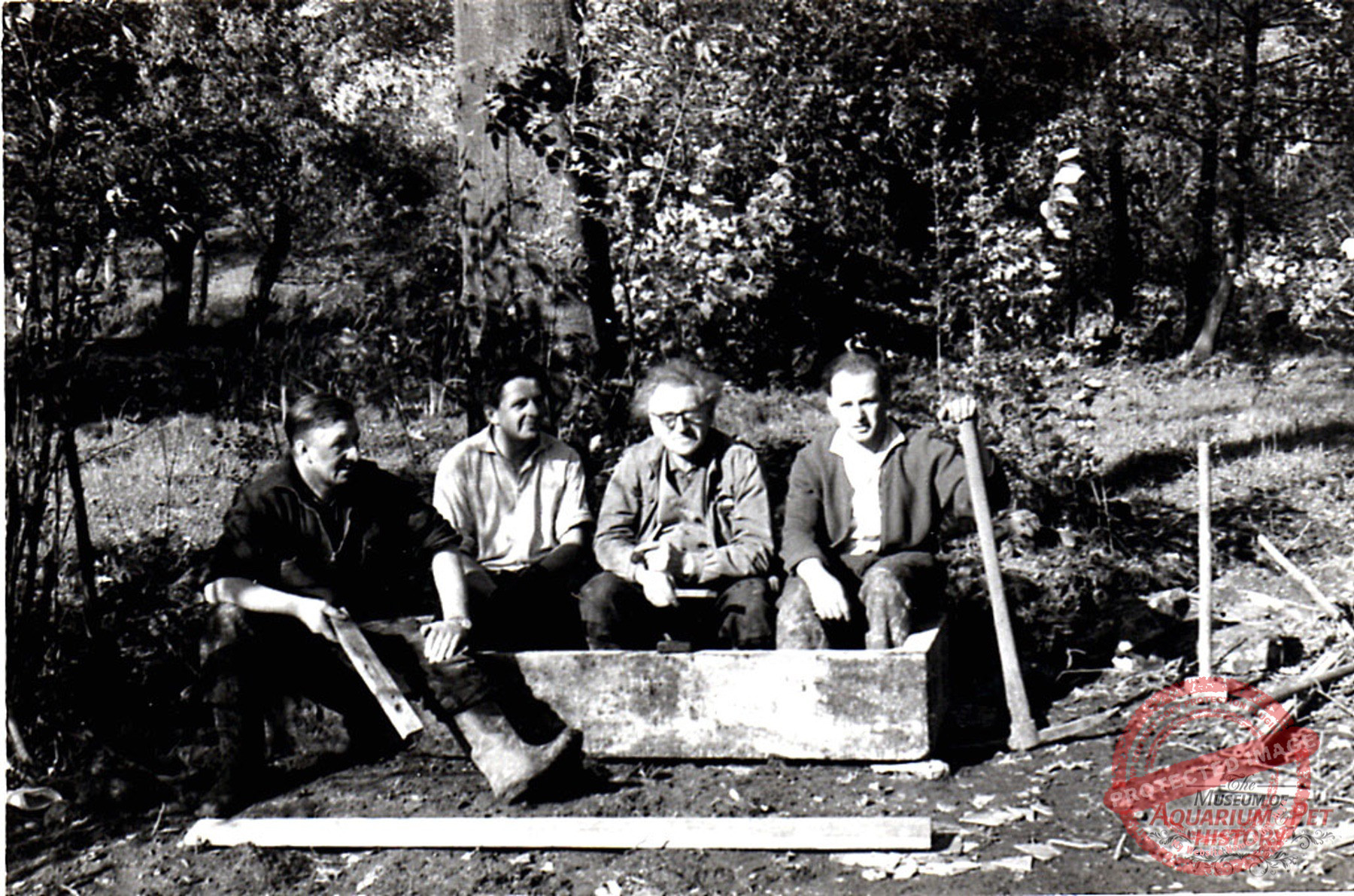
Charly Fuchs (second from the right) initiated the reactivation of the old outdoor aquarium for the Gotha Aquarium Society.
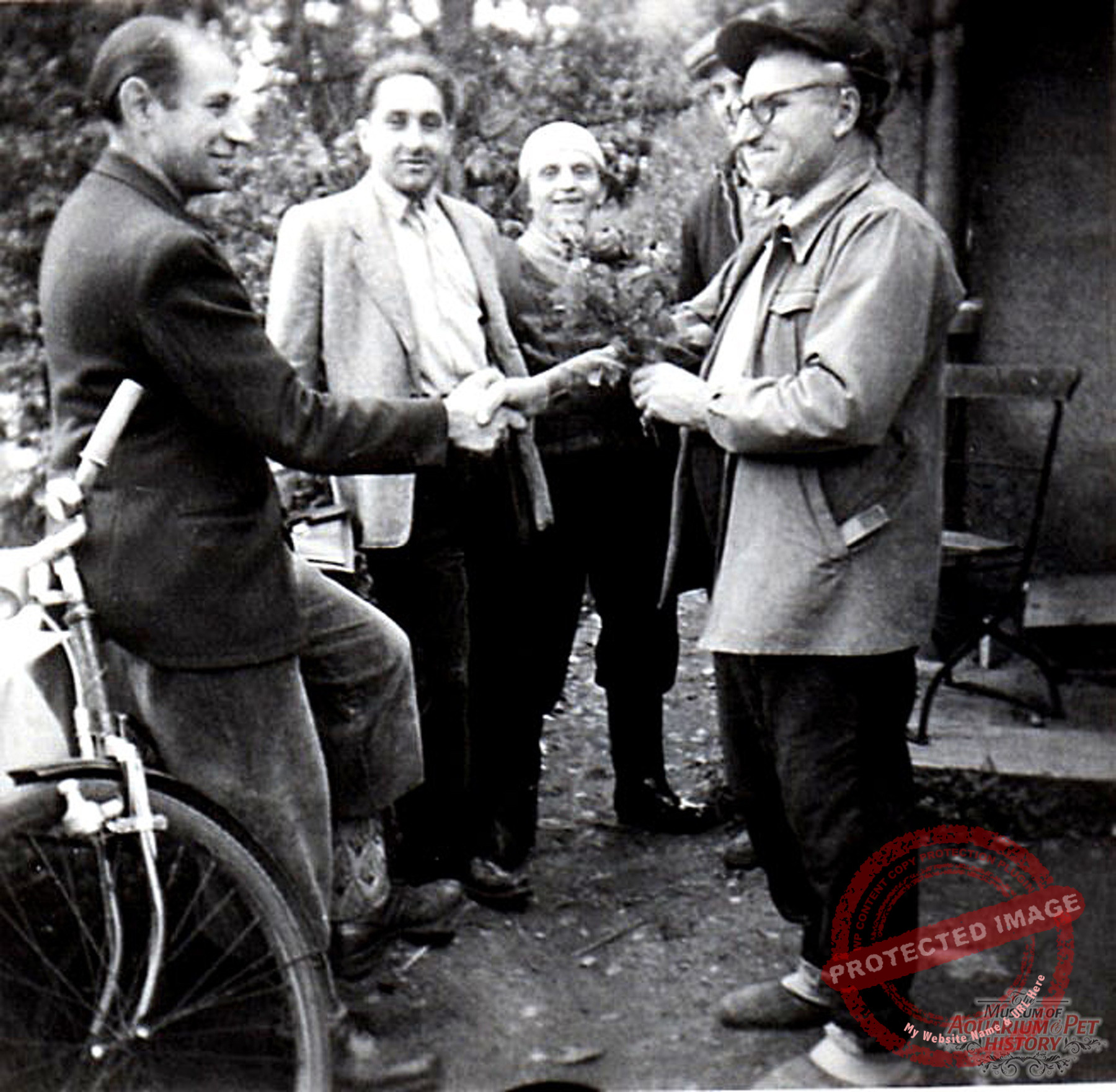
Expression of thanks to the diligent helpers from the society for beautifying the aquarium; Charly Fuchs on the left.
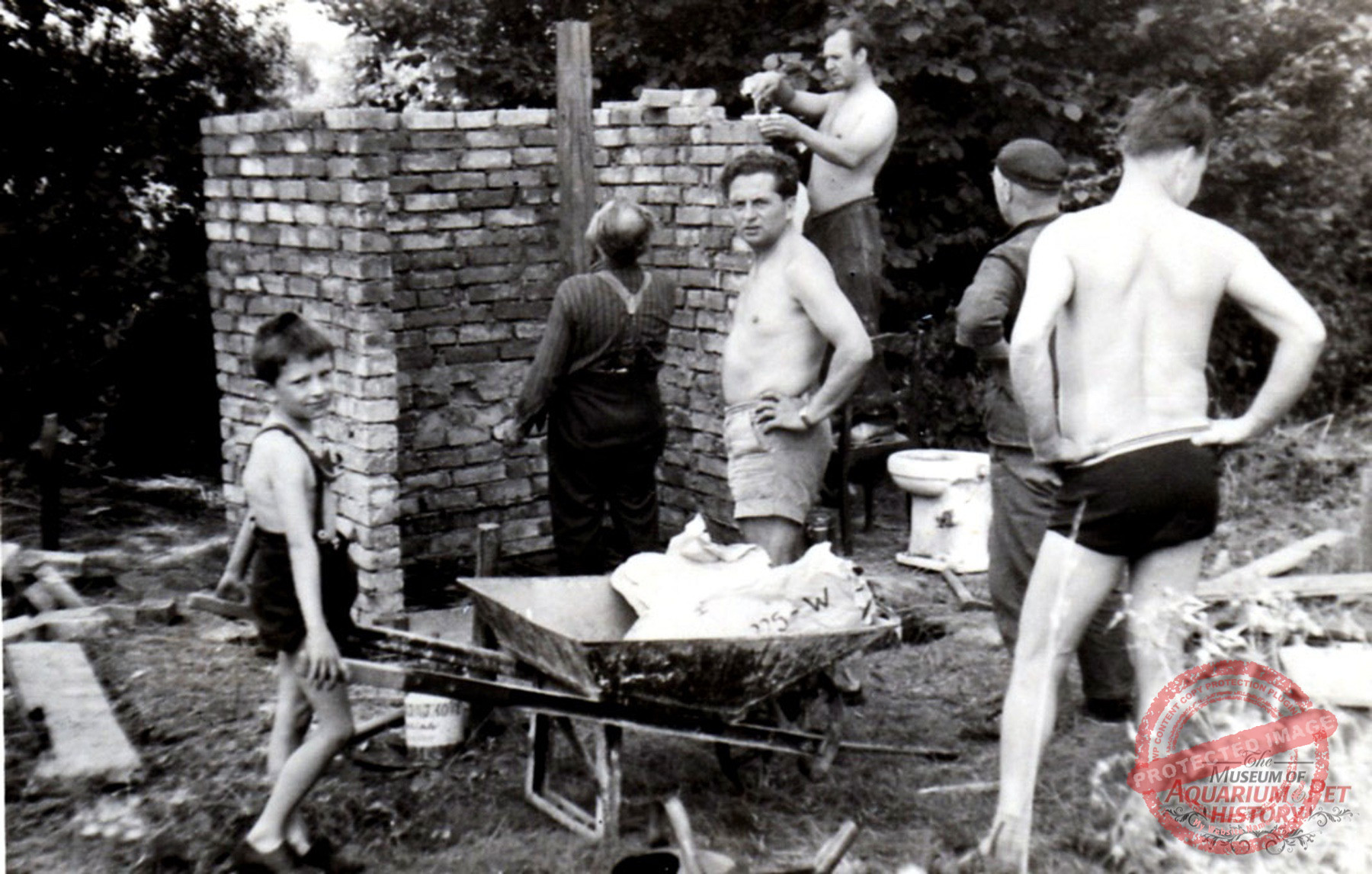
All trades were carried out through voluntary labor; visible here doing masonry work is Friedhelm Amberger, later owner of an aquarium and pet shop in Gotha.
At the entrance, colorful flowerbeds were planted. The fact that Gotha’s new cemetery director, Gustav Herbig, was an aquarist and had joined the society proved advantageous: the aquarium received an impressive commemorative stone to adorn the floral display. It bore the inscription: In Memory of the Gotha Aquarium and Terrarium Societies, 1882–1962. Herbig had “procured” the former gravestone—a term used in East Germany when something from so-called public property was diverted for special purposes. Officially, of course, it was not.
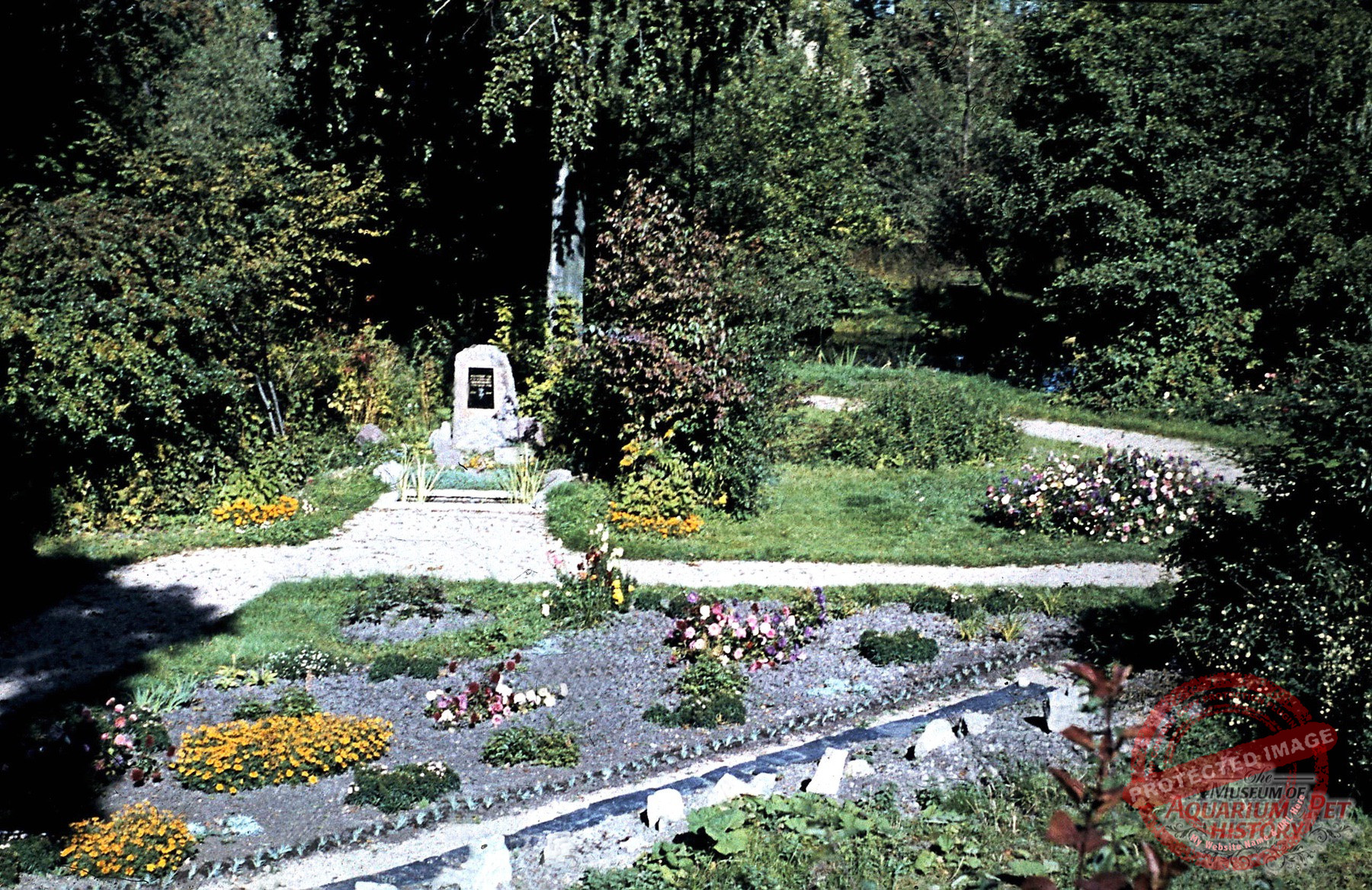
The newly designed entrance area of the aquarium looked magnificent, with the commemorative stone and flowerbeds.
In front of the stone, a rectangular concrete basin was constructed and planted with sweet flag. And since many German aquarium societies adorned themselves with names or symbols borrowed from objects of aquarists’ desire, the Gotha members apparently considered choosing newts—also breeding in the aquarium ponds—as their emblem, as can be seen on the plaque. But since “Triton” and “Salamander” were already in use in other cities, the symbol remained on the tablet rather than appearing on the society’s letterhead.
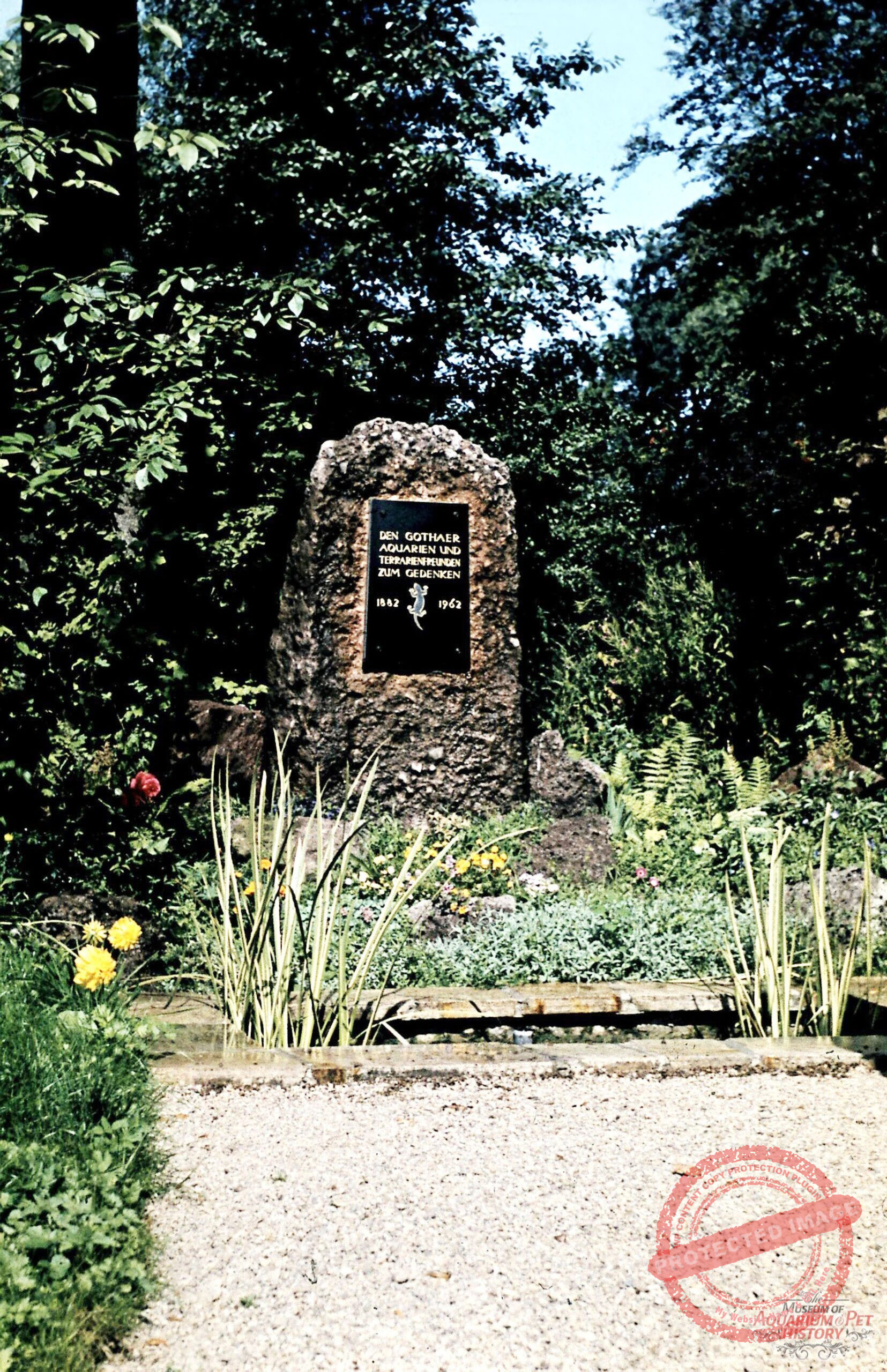
In front of the commemorative stone stood a concrete basin planted with sweet flag.
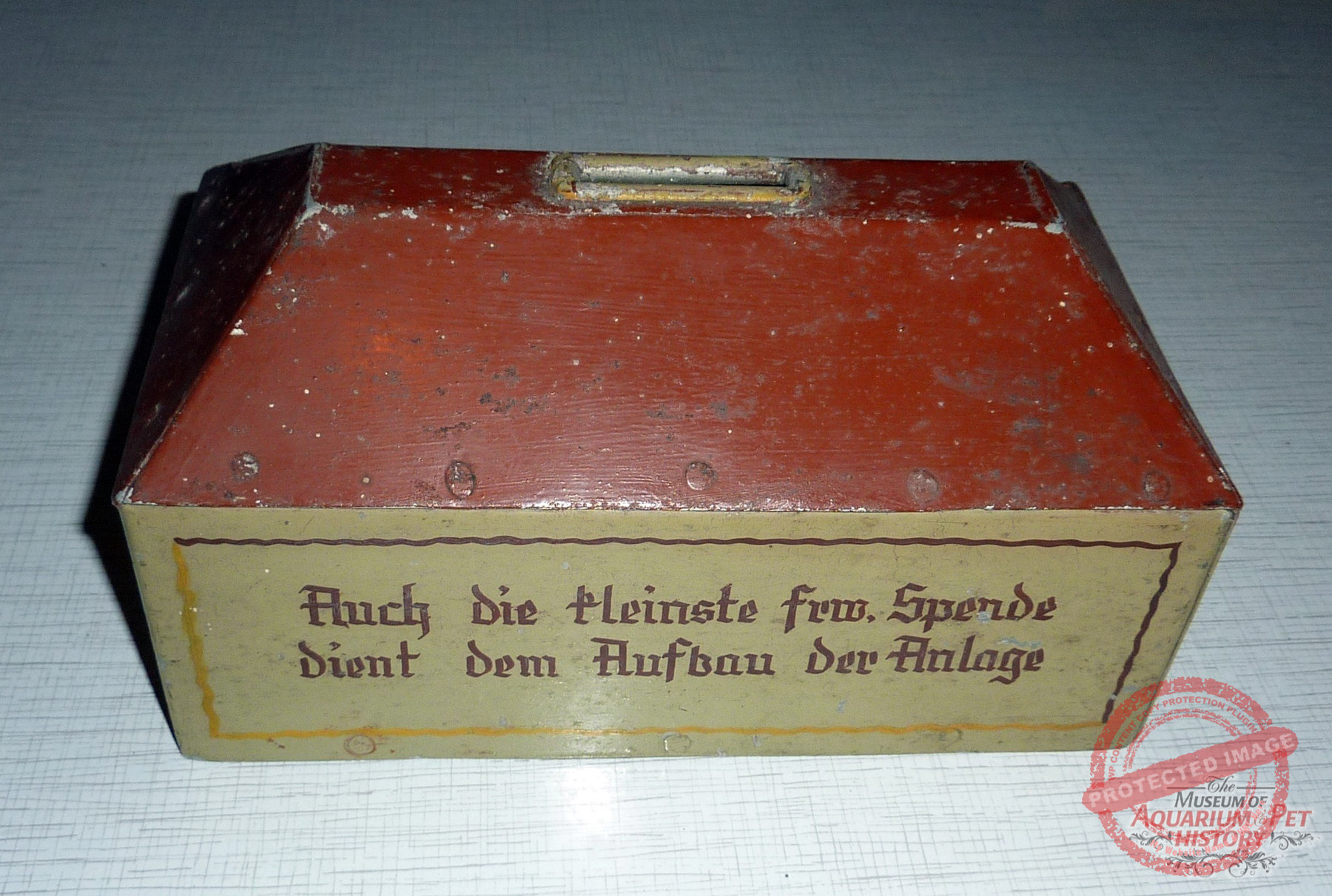
Visitors were not required to pay admission, but this box invited donations: “Even the smallest voluntary contribution serves the development of the facility.”
The Gotha Aquarium Society celebrated its 80th anniversary with a festive event from June 23 to 24, 1962, including lectures and an exhibition of aquarium technology in the hall of the Gotha Oil and Fat Works. During these festivities, the commemorative stone was unveiled at the old aquarium, and the restored grounds were reopened to the public. Aquarists demonstrated that they did more than carry duckweed on their shirt sleeves—they also possessed considerable cultural talents. There was singing and recitation.
It was at this event that the only photograph was taken showing Kurt Koch—who delivered the keynote address—and Charly Fuchs together. Guests from the city of Gotha and members of neighboring Thuringian societies attended. Koch used the anniversary as an opportunity to pass the chairmanship into younger hands—those of Kurt Leyhe.
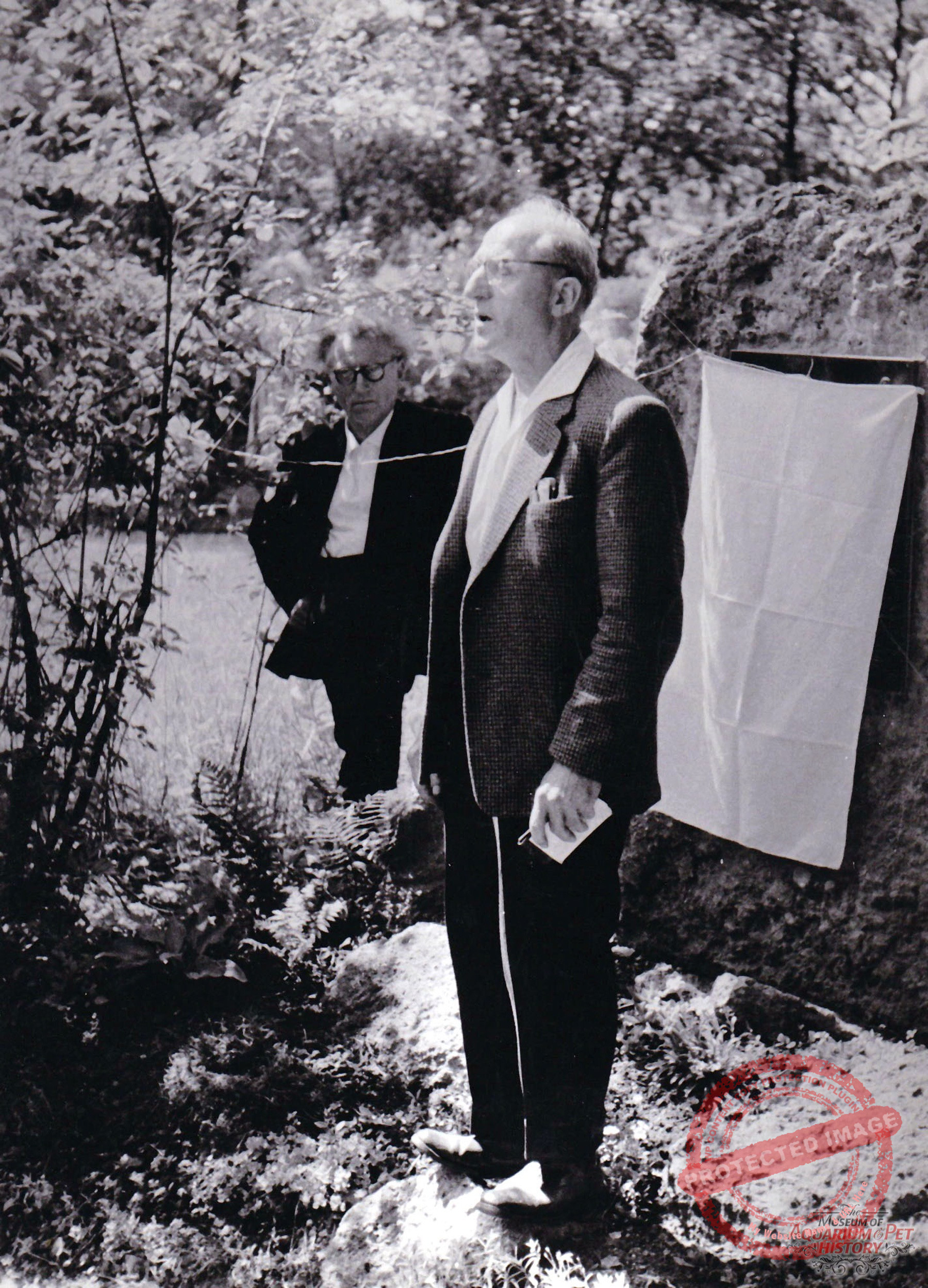
The only photograph showing Charly Fuchs and Kurt Koch— who delivered the dedication speech for the still-covered commemorative plaque—together.
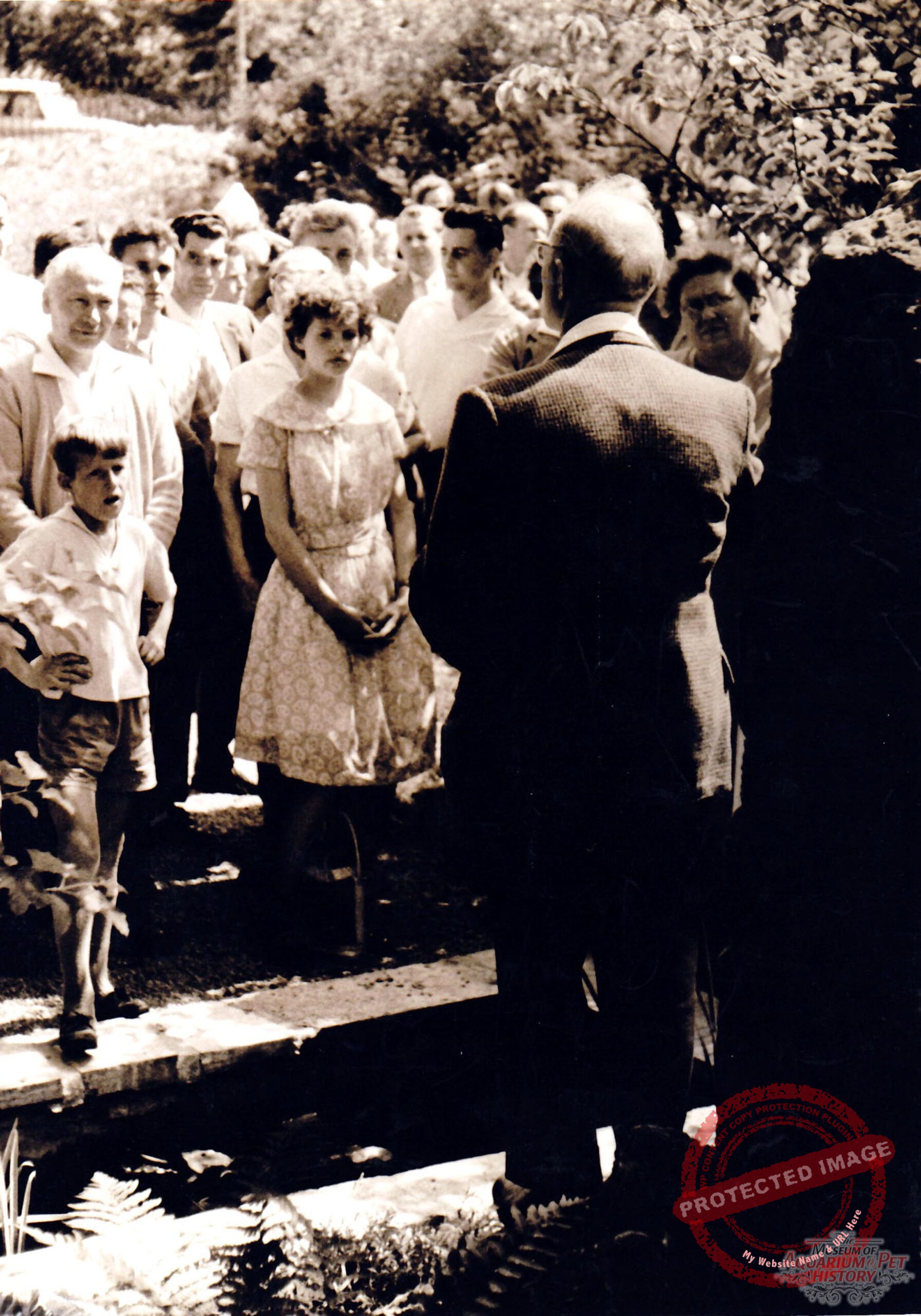
Kurt Koch addressing his audience at the dedication ceremony for the 80th anniversary.
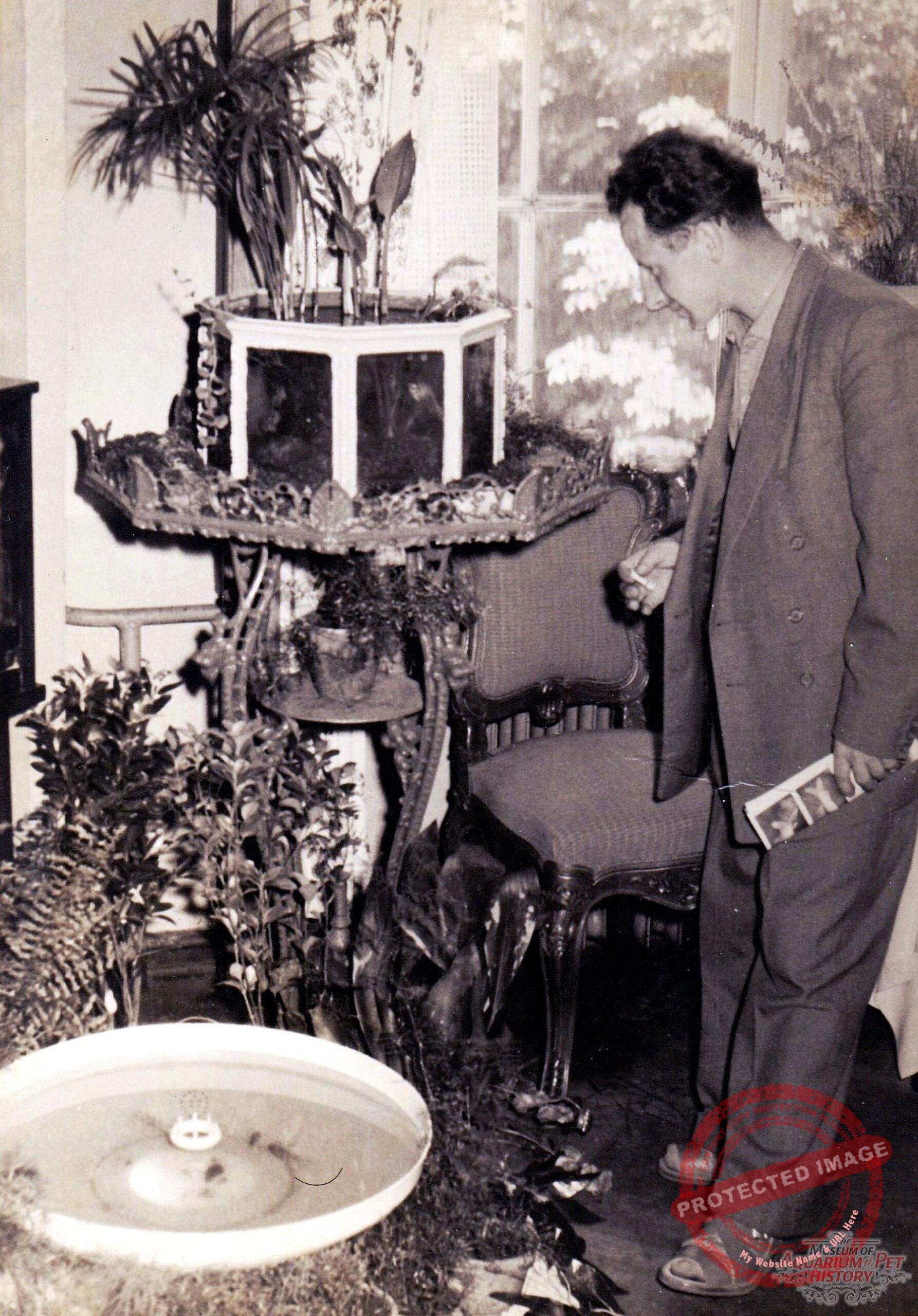
In addition to the anniversary celebration in 1962, aquariums belonging to society members were also exhibited.
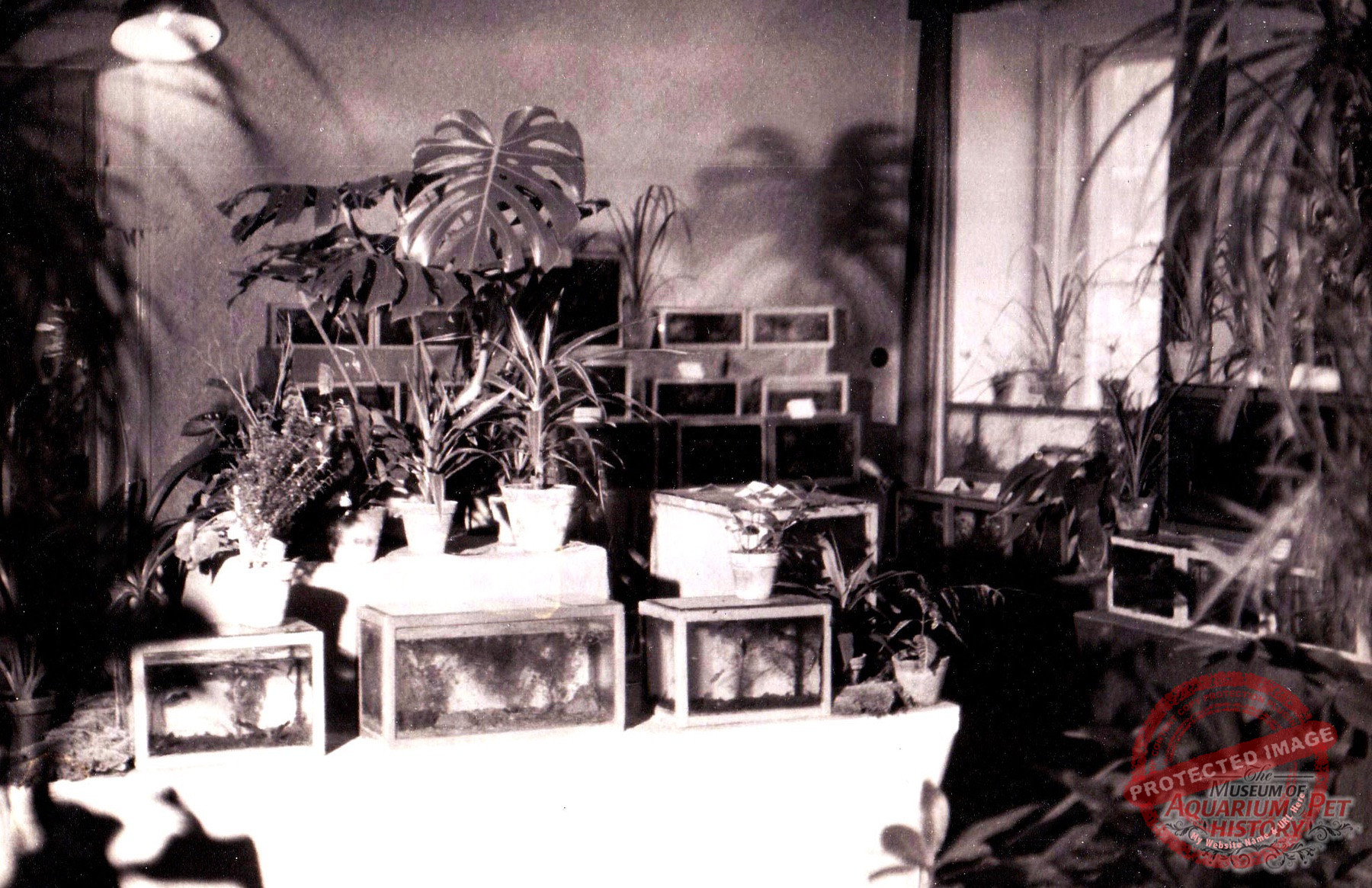
Fish were displayed in the iron-framed tanks typical of the time.
After the celebrations, the members were highly motivated. Recognition from experts and appreciation of their society’s historic significance filled them with pride. Each year, a summer festival was held with numerous activities for members and their families. Hundreds of guests came, picnicking on the wooden benches and tables provided. Charly Fuchs, who had a wonderful rapport with children, would lead them in a line through the grounds, walking ahead while playing his harmonica, followed by a member carrying a water-lily flag. The children were delighted—potential new members of the aquarium society.
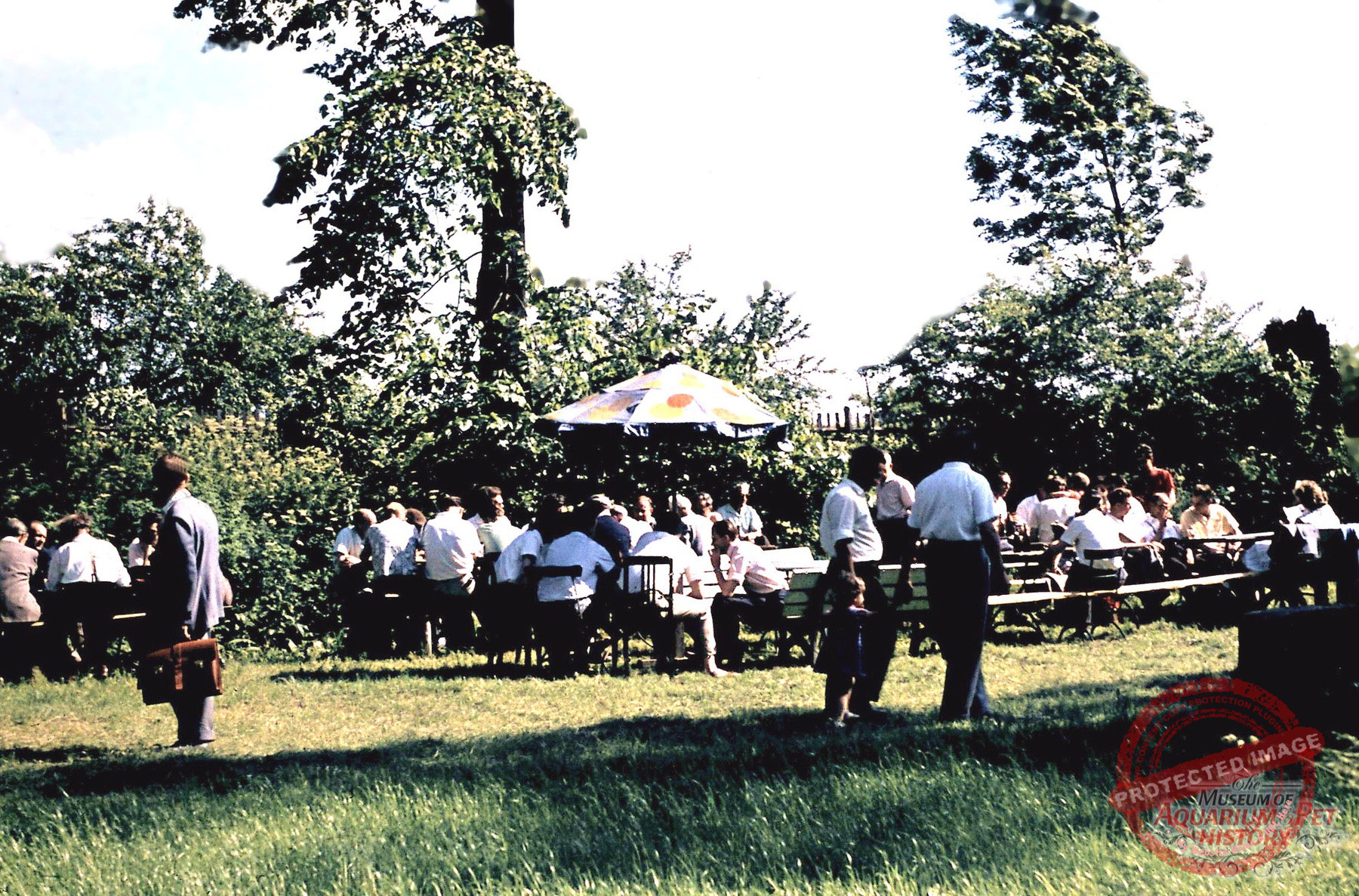
From then on, an annual summer festival of the aquarium society was held at the outdoor aquarium.
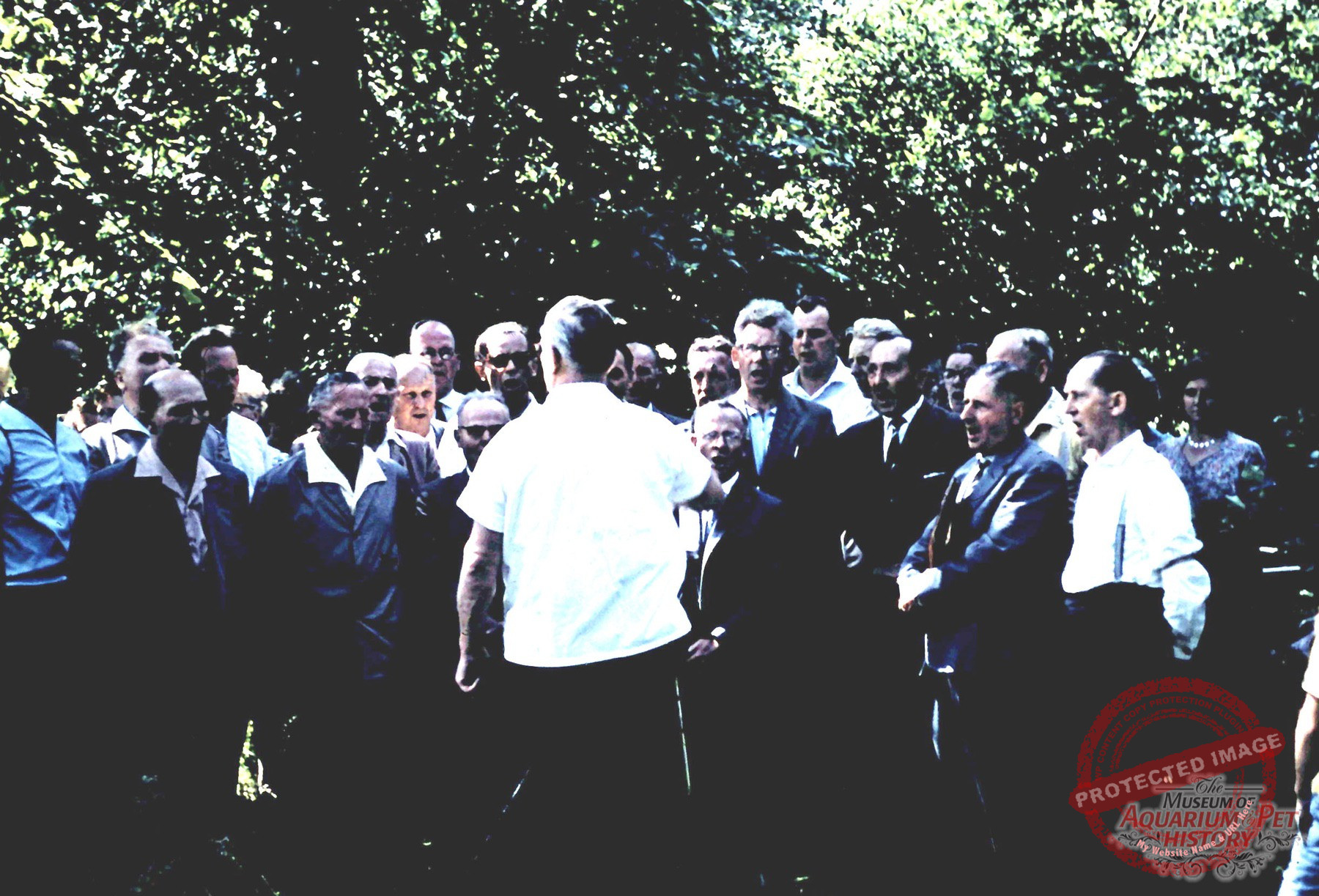
The aquarists loved to sing in chorus.
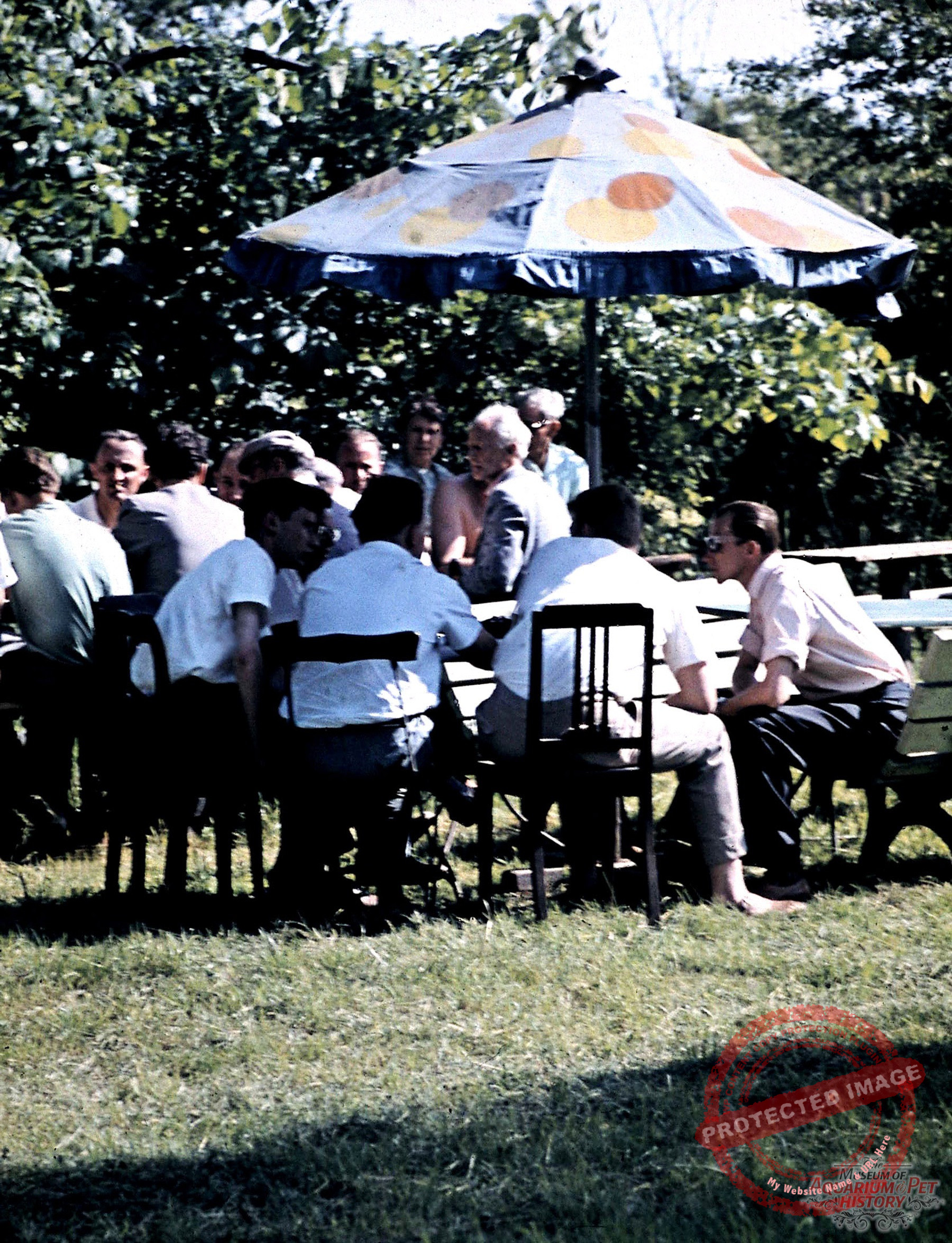
Food and drinks were brought along, much like at a picnic.
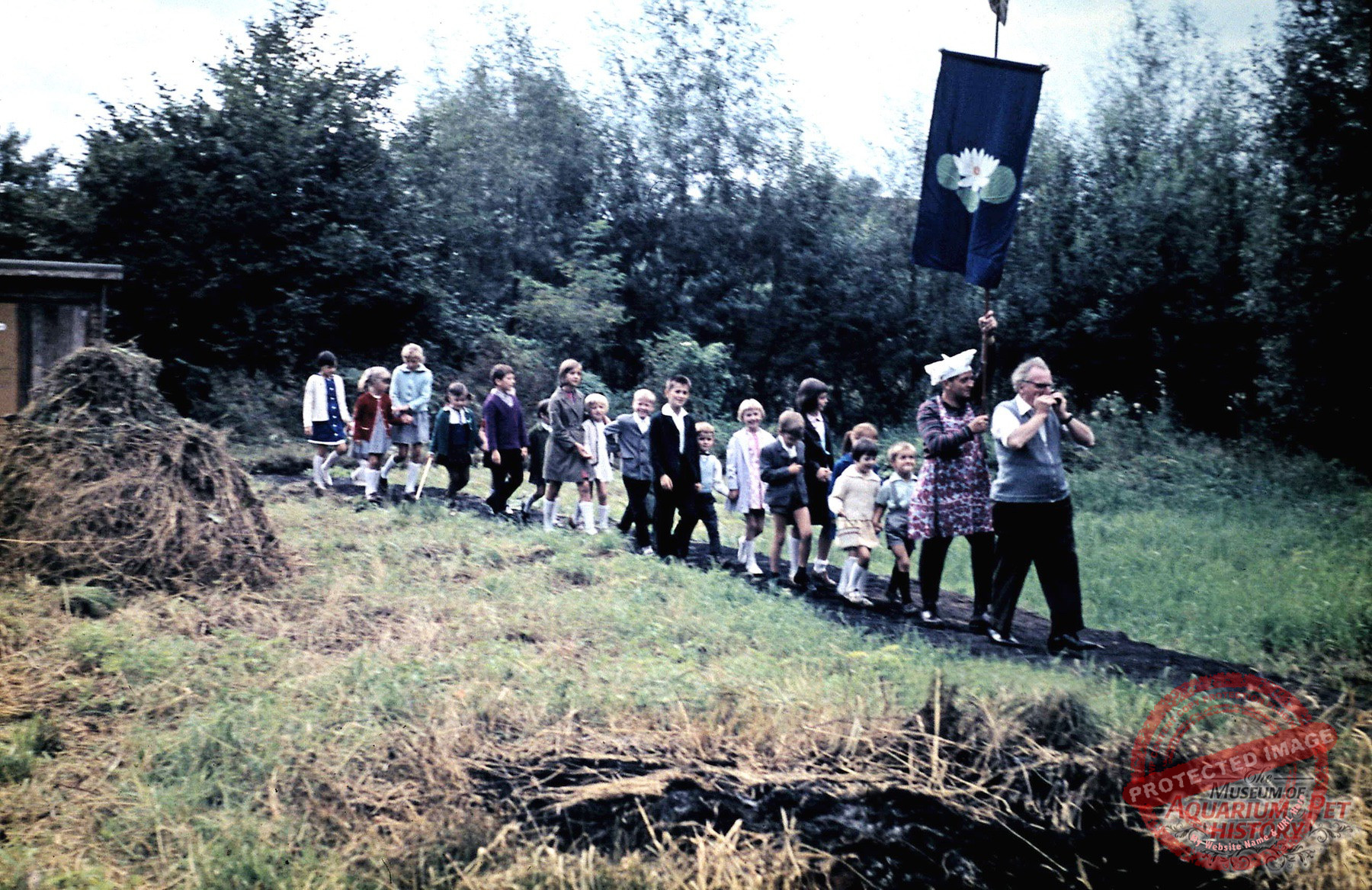
Charly Fuchs played the harmonica and gathered the members’ children behind him, guiding them through the grounds and introducing them to the plants and animals.
Within the Kulturbund of the GDR, specialized interest groups were organized into Zentrale Arbeitsgruppen (Central Working Groups) coordinated by the Zentraler Fachausschuss (Central Expert Committee) for Aquaristics and Terrarium Science, led at the time by the highly competent Hans-Albert Pederzani. He was also editor of the GDR journal “Aquarien Terrarien“. In this way, he could publicize the activities of the individual groups, attract new enthusiasts, and provide experts with a platform. The level of expertise was remarkably high.
Among many such groups was the Zentrale Arbeitsgruppe (Central Working Group) for livebearing toothcarps, bringing together enthusiasts of guppies and their breeding forms, as well as those of mollies and Xiphos (swordtails and platies). While guppy breeders had long established standards for their strains, such standards did not yet exist for mollies and Xiphos. Pederzani was not only an excellent organizer but deeply immersed in ornamental fish breeding. In 1963–64, he developed such standards; today they are internationally recognized guidelines for exhibitions and competitions and form the basis of nomenclature in specialist literature.
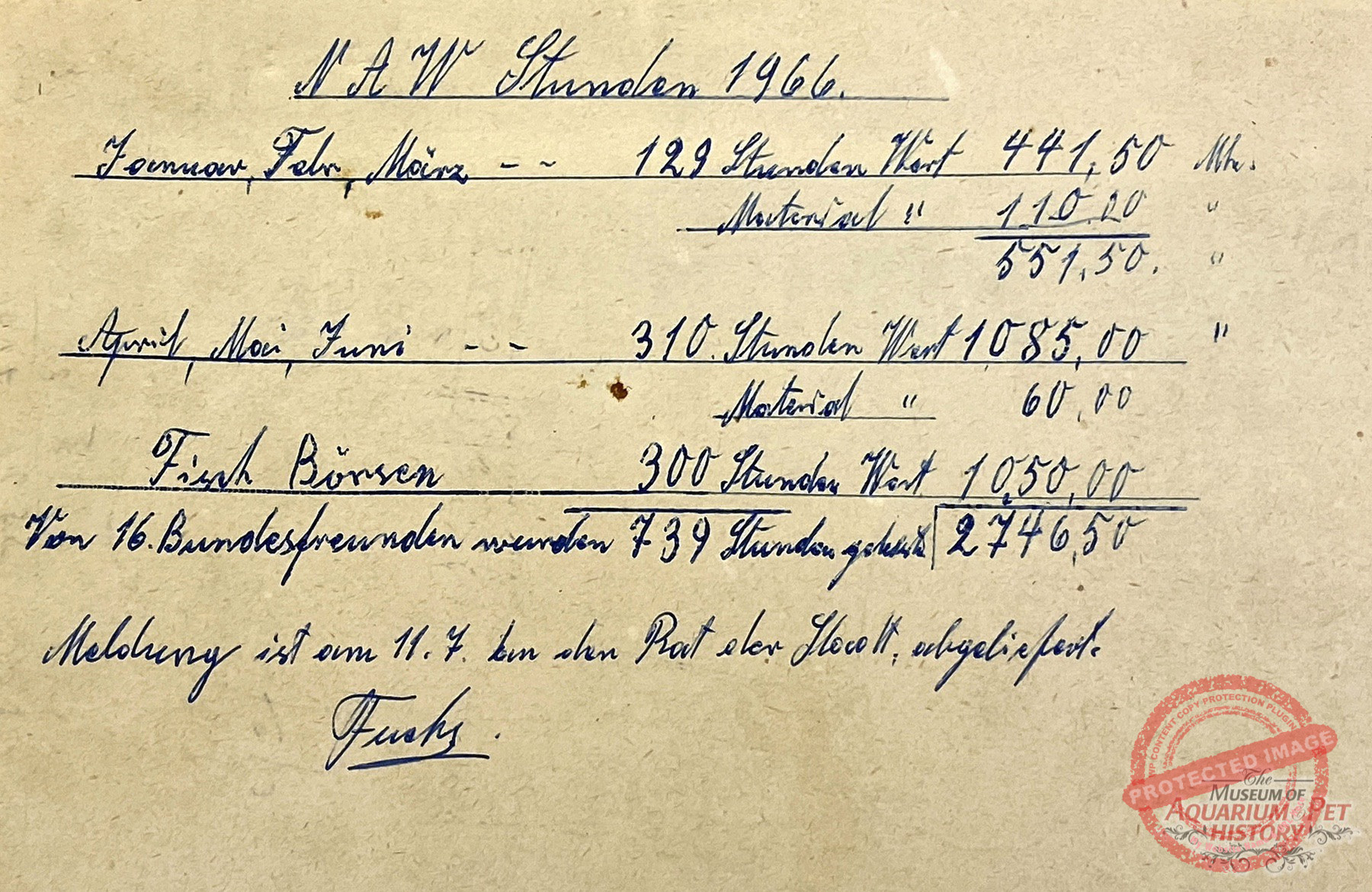
Each year, many hundreds of hours of voluntary labor were carried out at the outdoor aquarium and reported by Charly Fuchs to the Gotha city council.
It was no coincidence that Pederzani chose Gotha for the premiere—and effectively the test—of these standards. There were highly skilled breeders and capable organizers there, ideal for hosting the first exhibition and competition of mollies and Xiphos. This exhibition took place in Gotha on July 20–21, 1965. Leading figures in aquaristics attended, foremost among them the intellectual father of the standards. Together with other experts on Mollinesia and Xiphophorus, he served on the jury evaluating the exhibited fish. The event’s prestige is attested by a Kulturbund certificate, and the diversity of breeding forms is evident in the breeders’ lists.
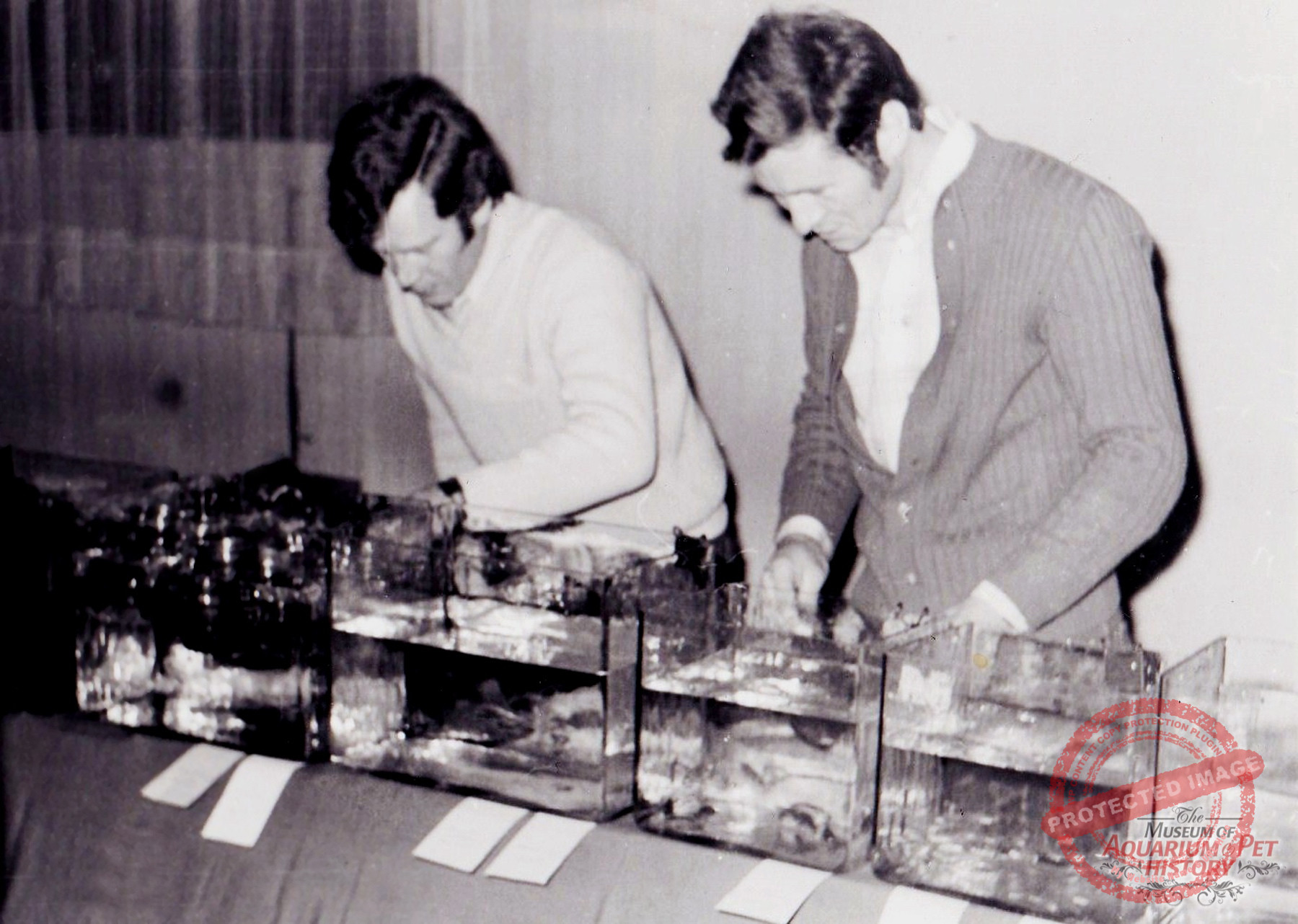
The Gotha aquarists not only organized the exhibition itself but also held an ornamental fish market alongside it.
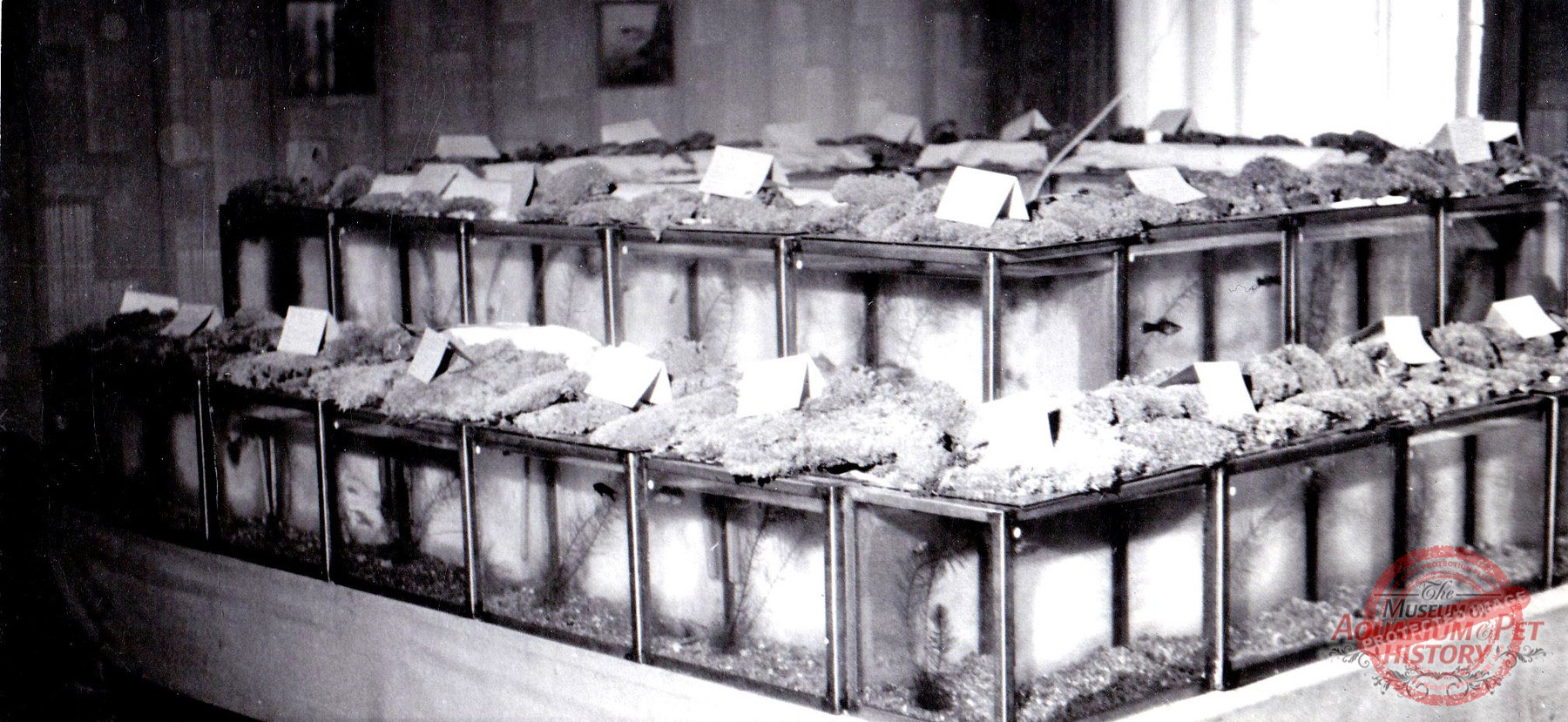
Exhibition tanks containing the fish to be judged.
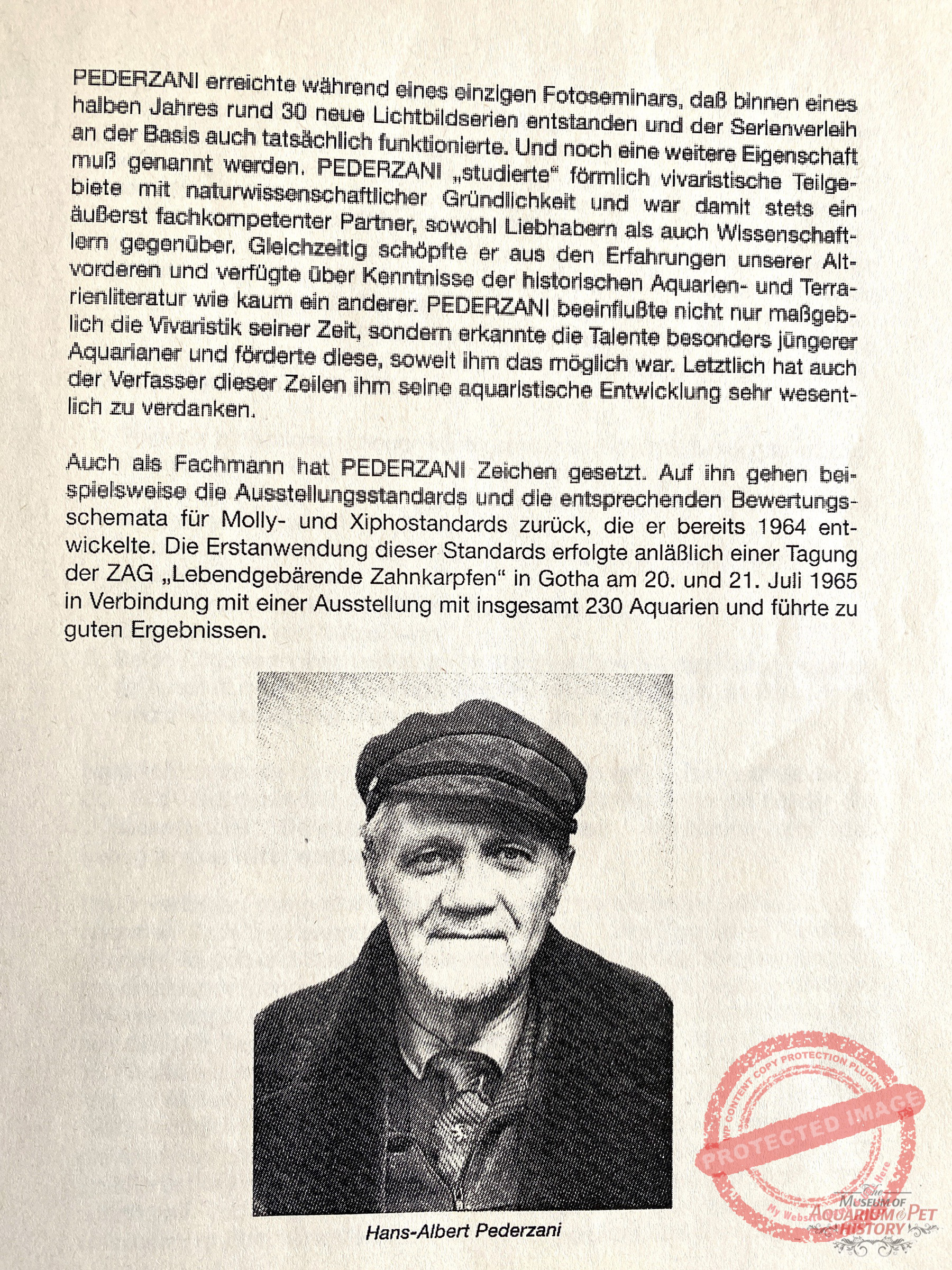
In the chronicle of the Pederzani era within the GDR Cultural Association, Gotha is mentioned as the venue of the first Xiphophorus and Mollinesia exhibition.
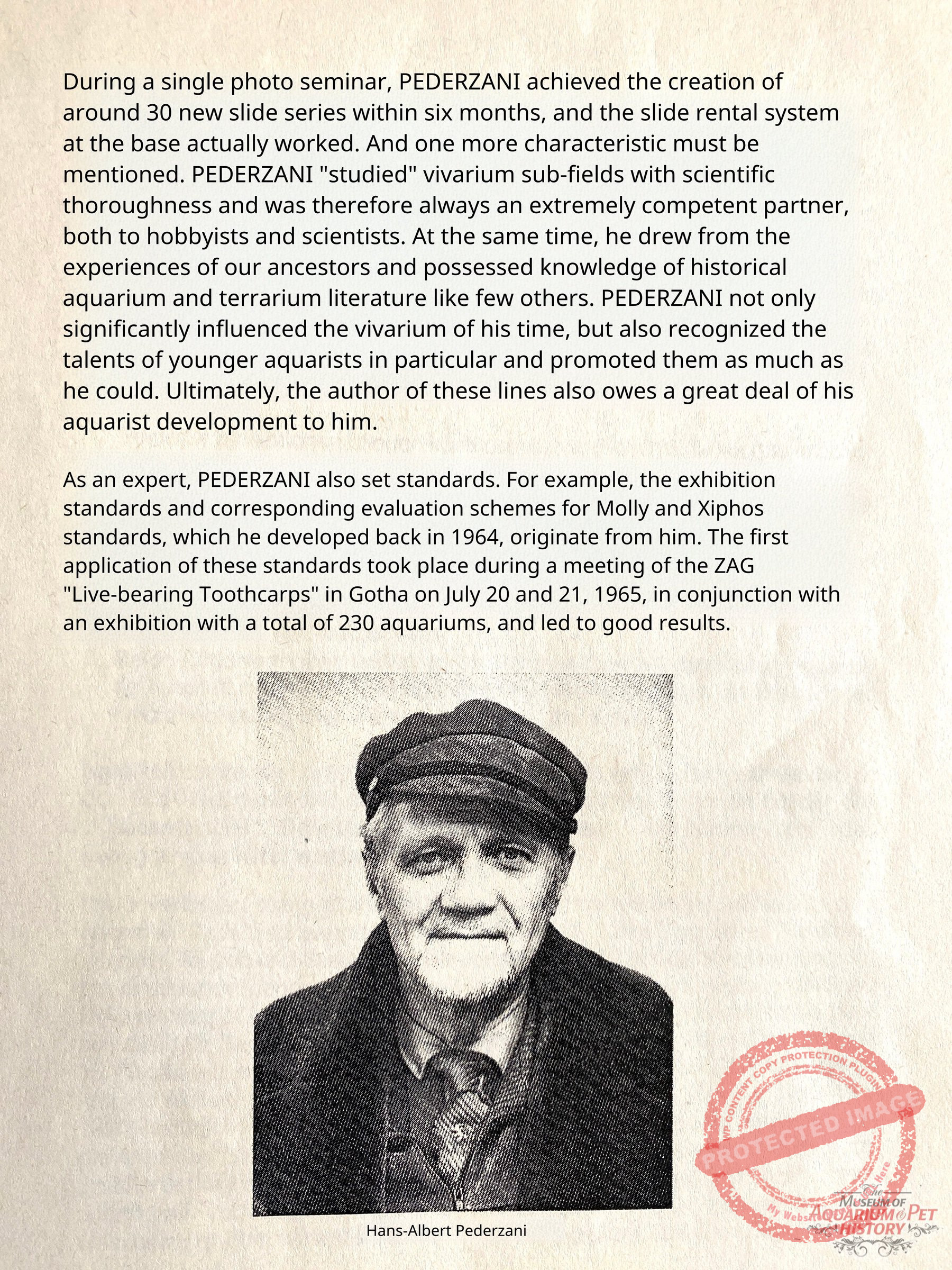
Chronicle of the Pederzani era translated using notegpt.io
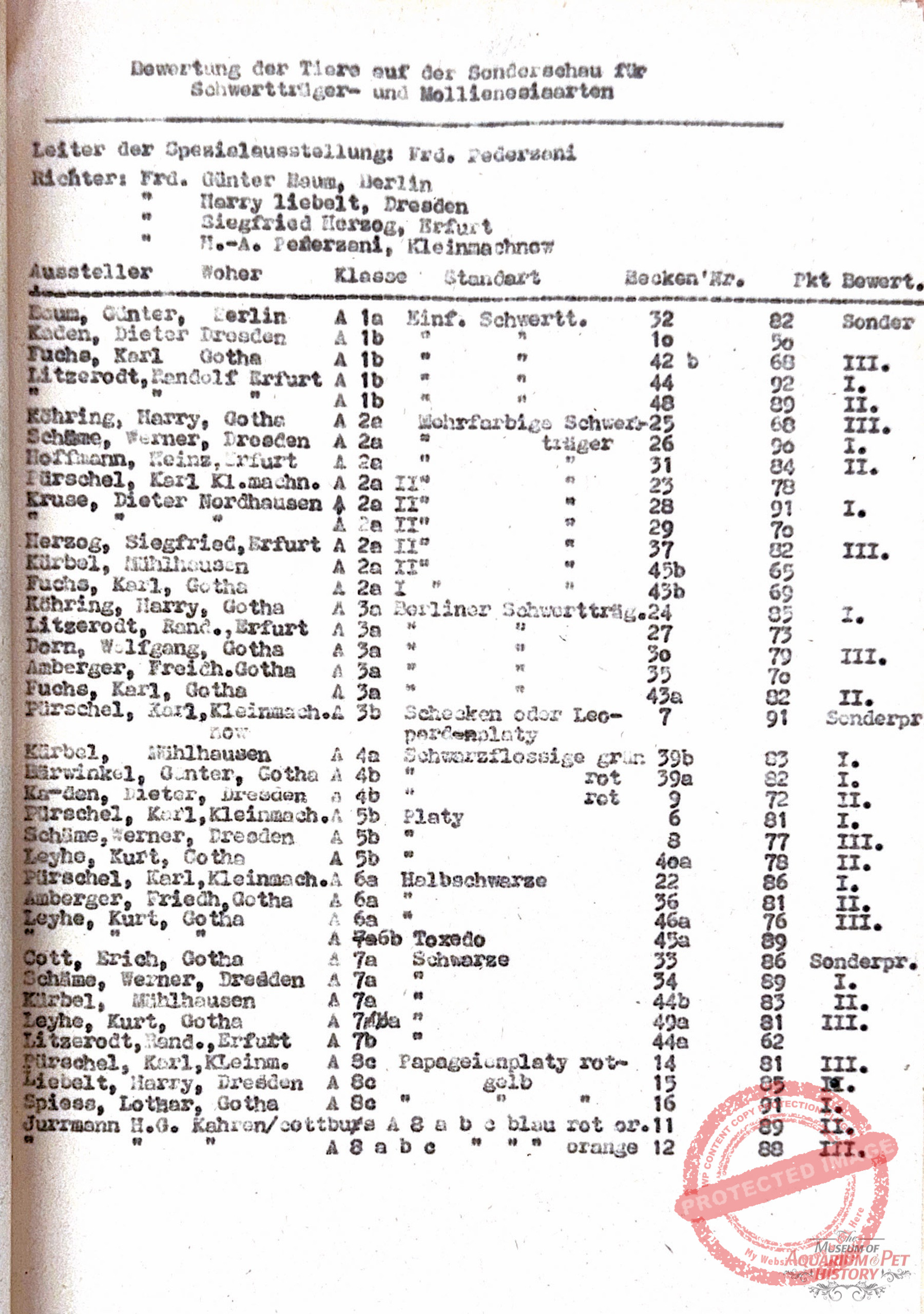
Evaluation list of the exhibited fish; judges included Hans-Albert Pederzani, Berlin Cultural Association official Günter Baum, Dresden’s Harry Liebelt, and Siegfried Herzog, head of the Erfurt Aquarium.
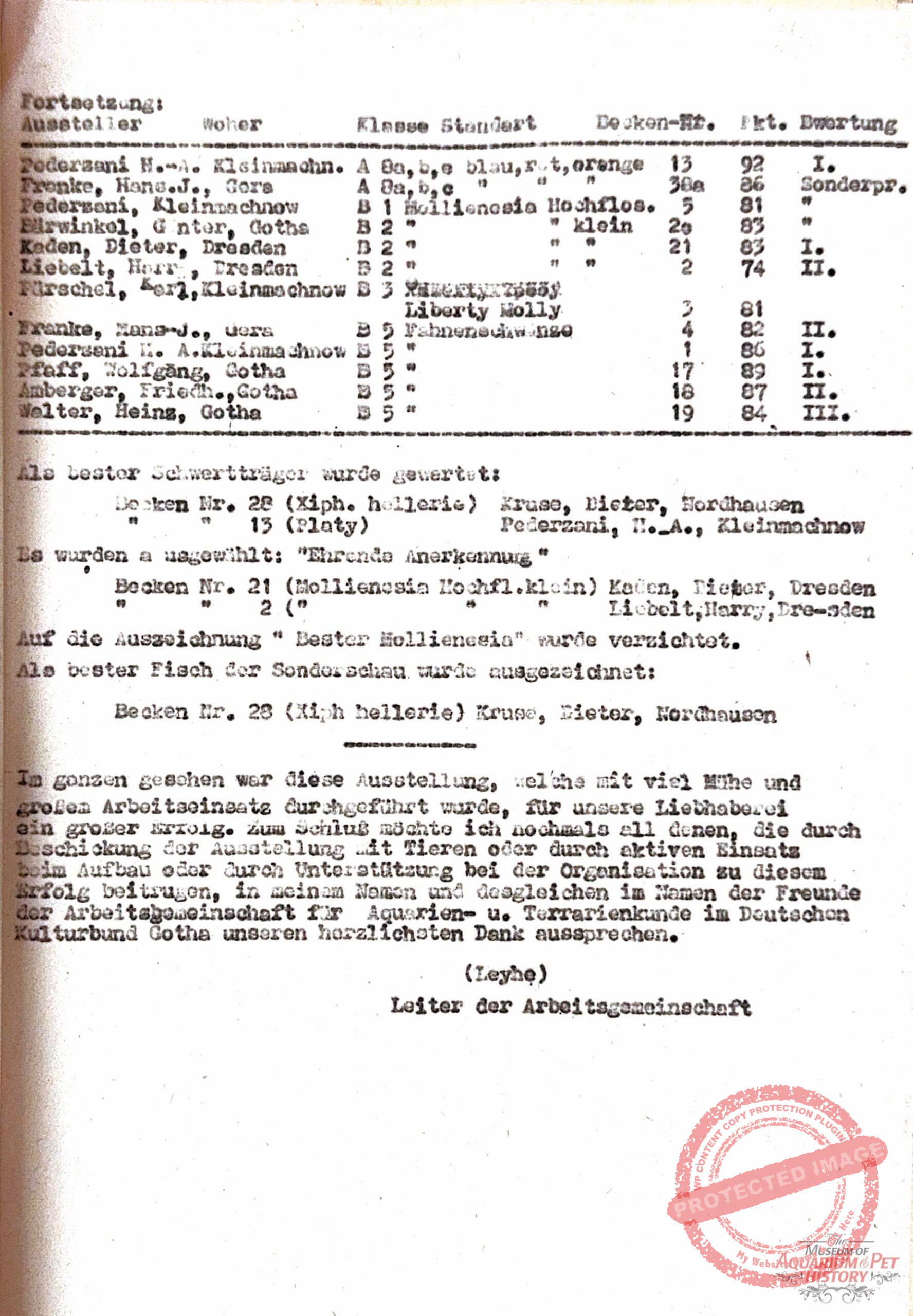
Words of thanks to the organizers of this groundbreaking exhibition, at which the new breeding standards were applied for the first time—standards that are now recognized worldwide.
The closing text translates to “This exhibition, which was carried out with great effort and hard work, was a great success for our hobbyists. Finally, I would like to express our heartfelt thanks once again to all those who contributed to this success by sending animals to the exhibition, by actively participating in the setup, or by supporting the organization, in my name and also in the name of the Friends of the Working Group for Aquarium and Terrarium Science in the German Cultural Association Gotha.
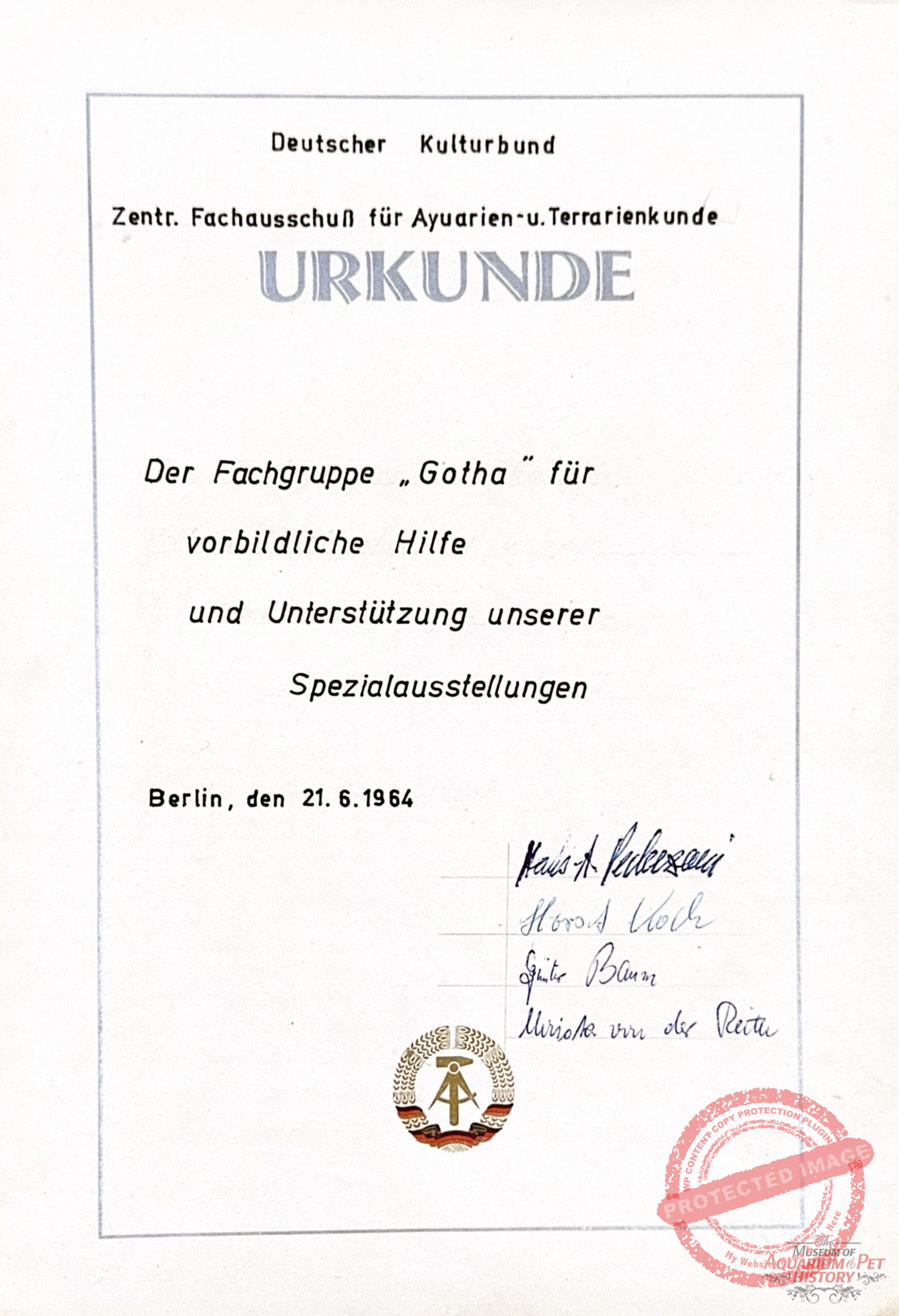
Certificate from the Central Expert Committee for Aquaristics and Terrarium Science awarded to the Gotha group, first signed by Hans-Albert Pederzani.
The Gotha aquarists, like many other interest groups, found a home in the Kulturbund clubhouse “Hermann Haack.” It became a second living room for intellectuals and enthusiasts who did not necessarily align themselves politically with the ruling party. In the 1960s, events were diverse, intellectually balanced, and of high caliber, as evidenced by the annual programs.
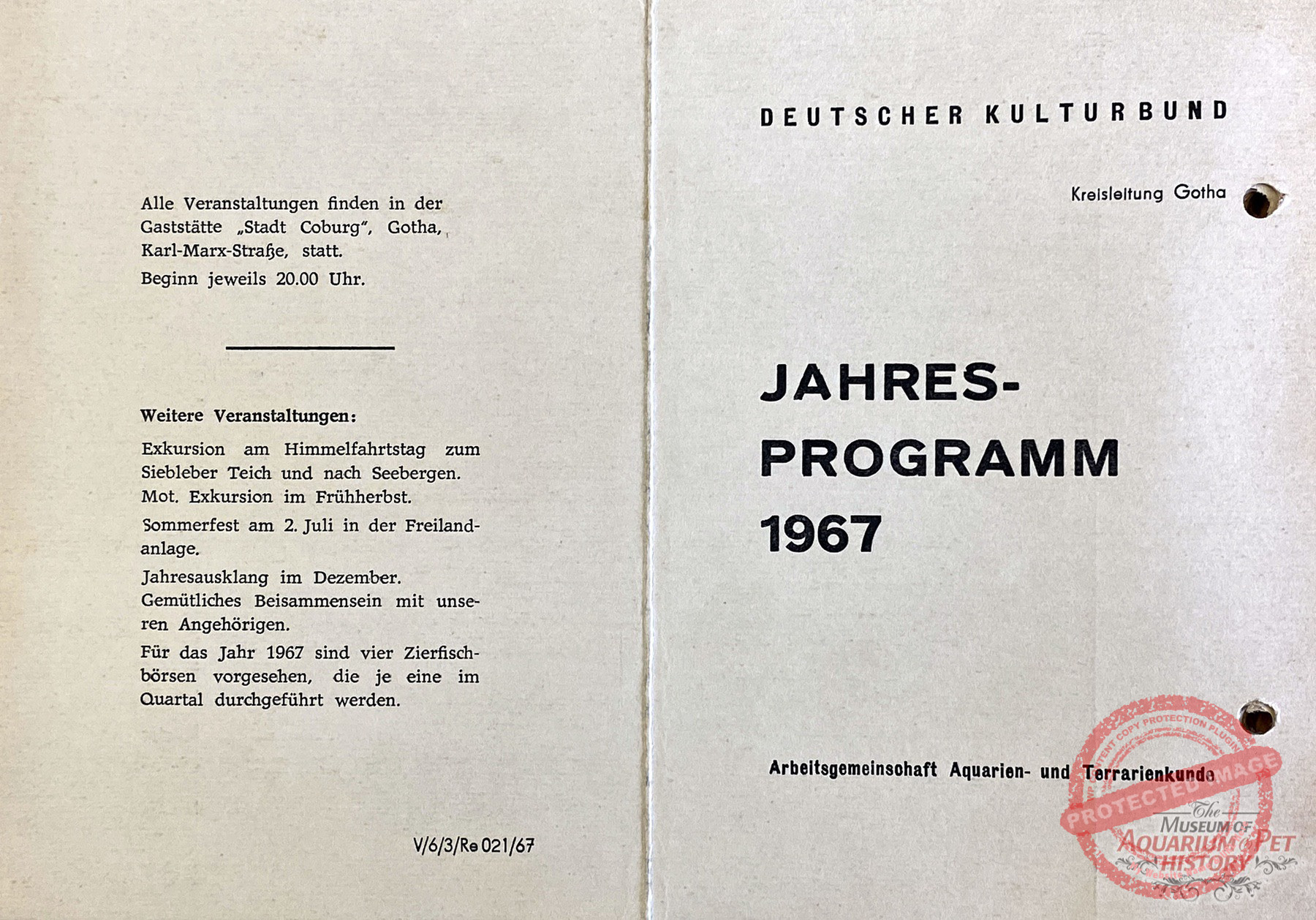
From then on, the annual programs of the Gotha aquarists were printed as brochures and distributed free of charge.
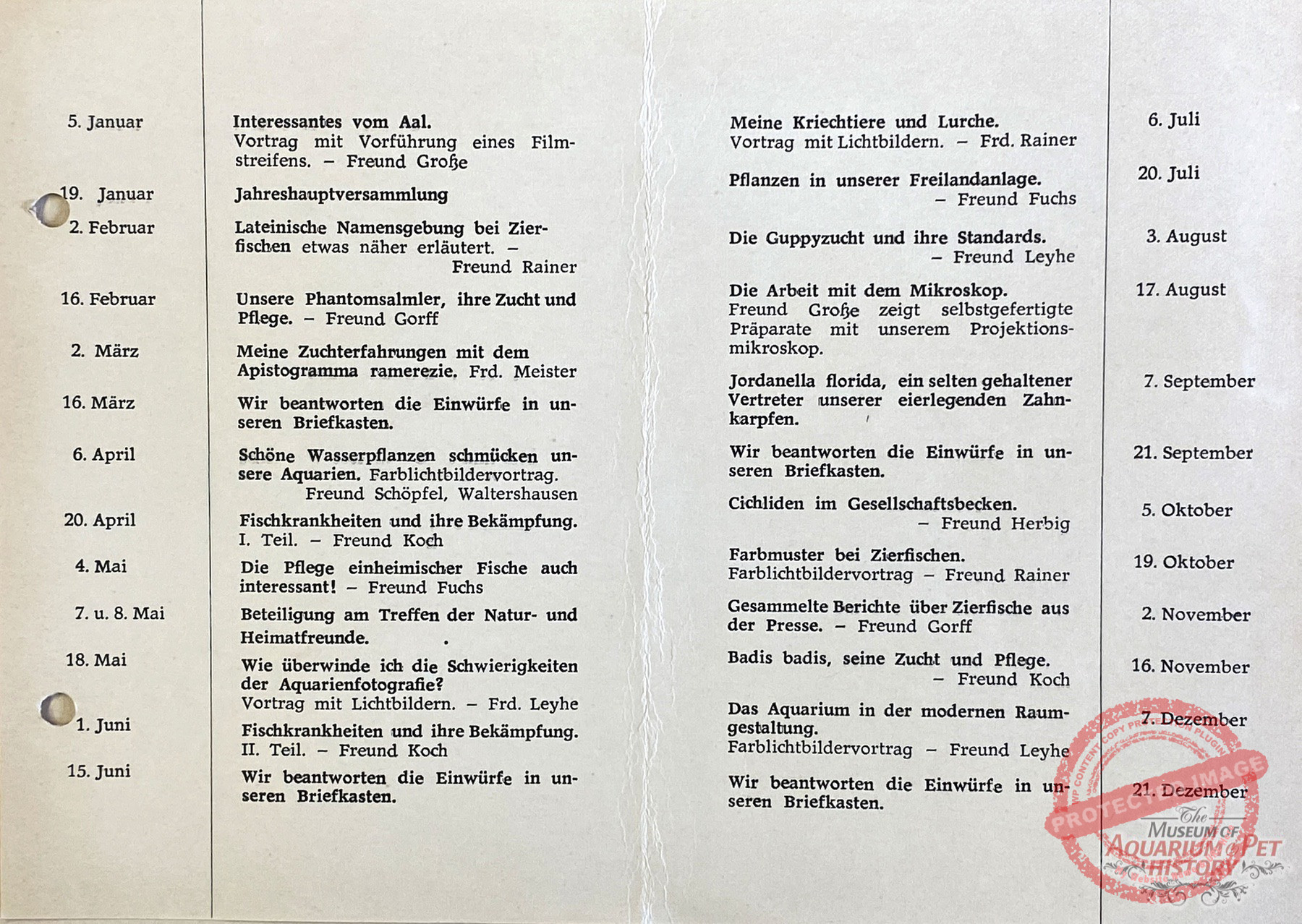
Contents of the 1967 annual program.
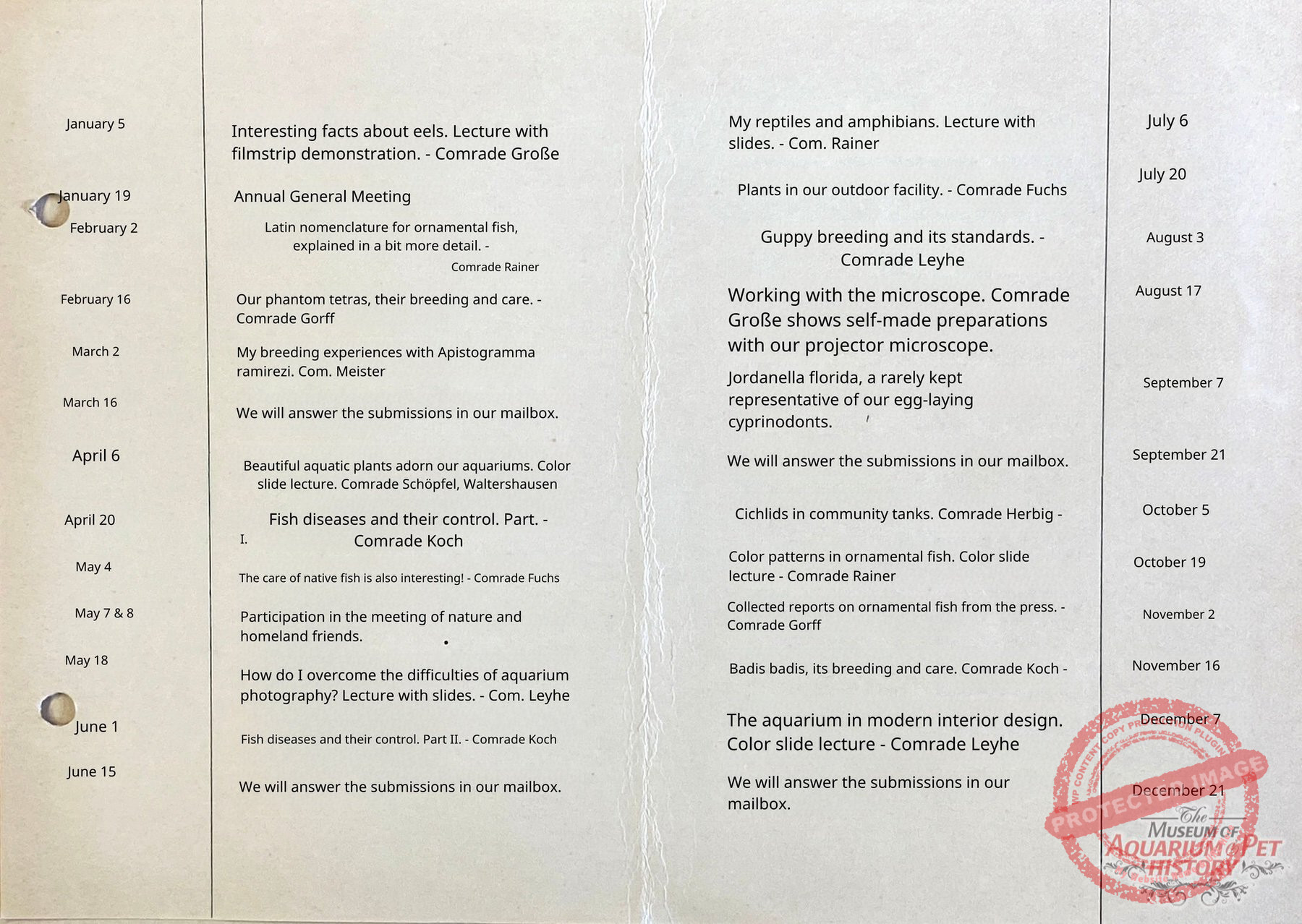
Contents of the 1967 annual program translated using notegpt.io.
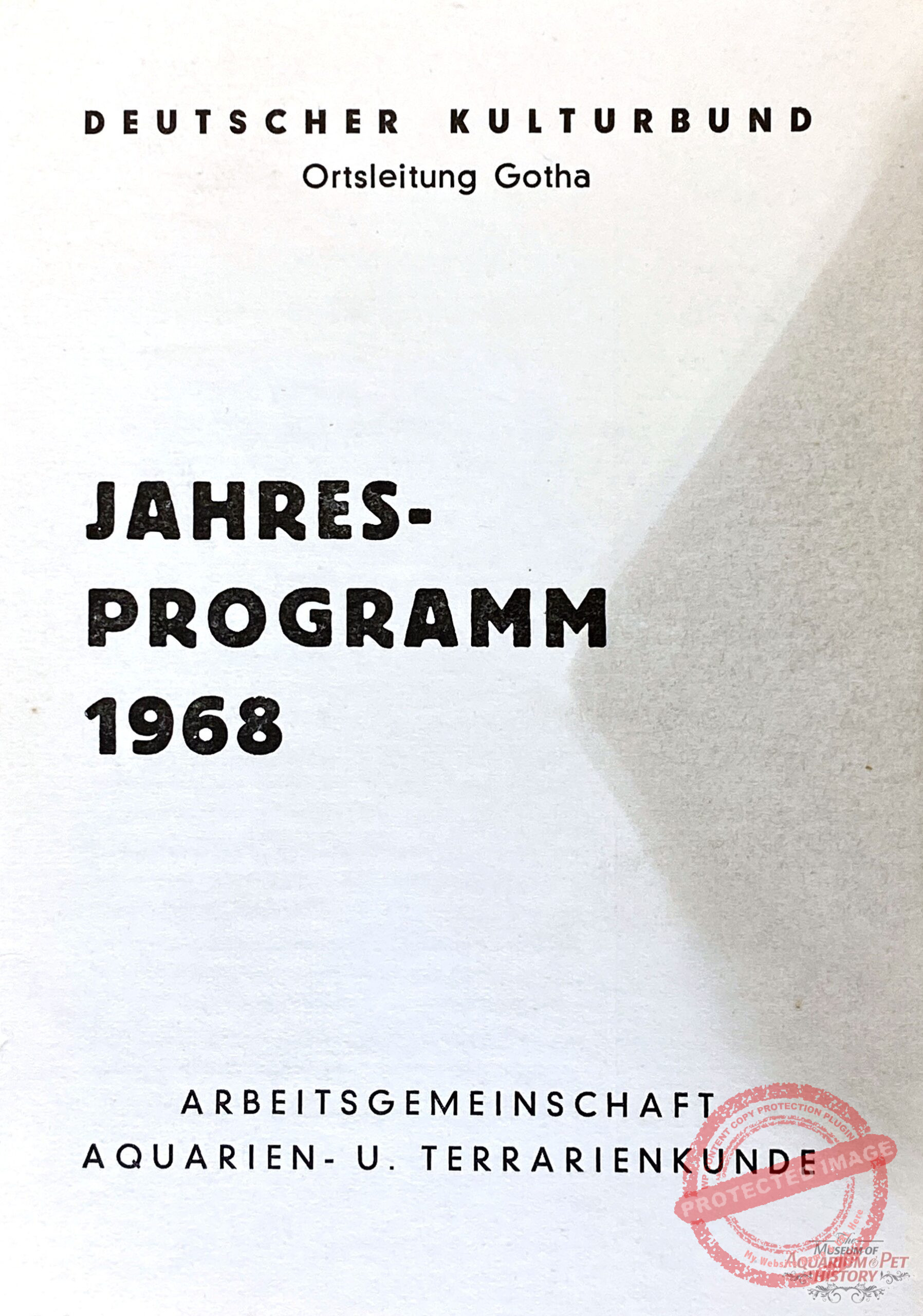
Cover page of the 1968 annual program.
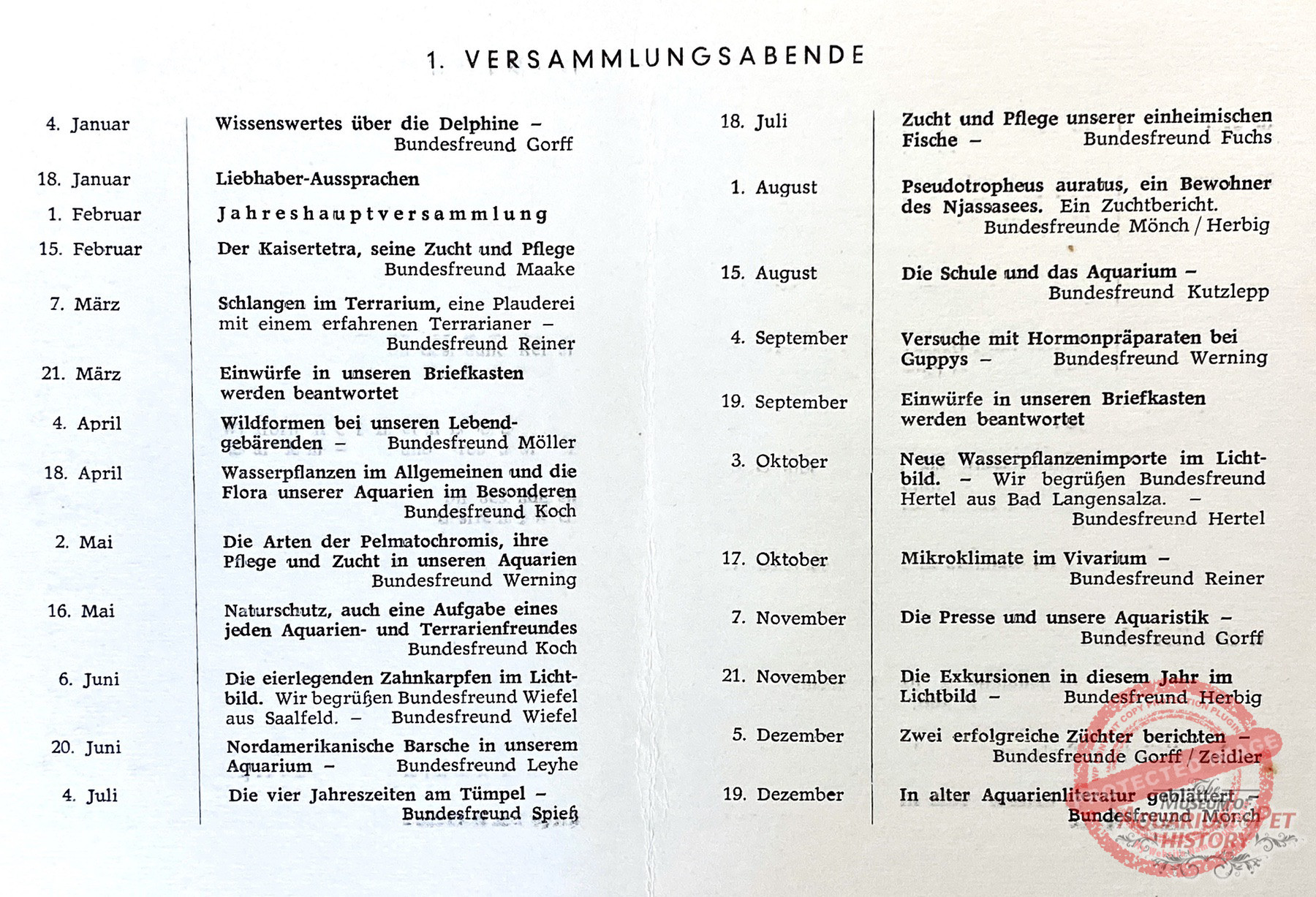
Contents of the 1968 annual program.
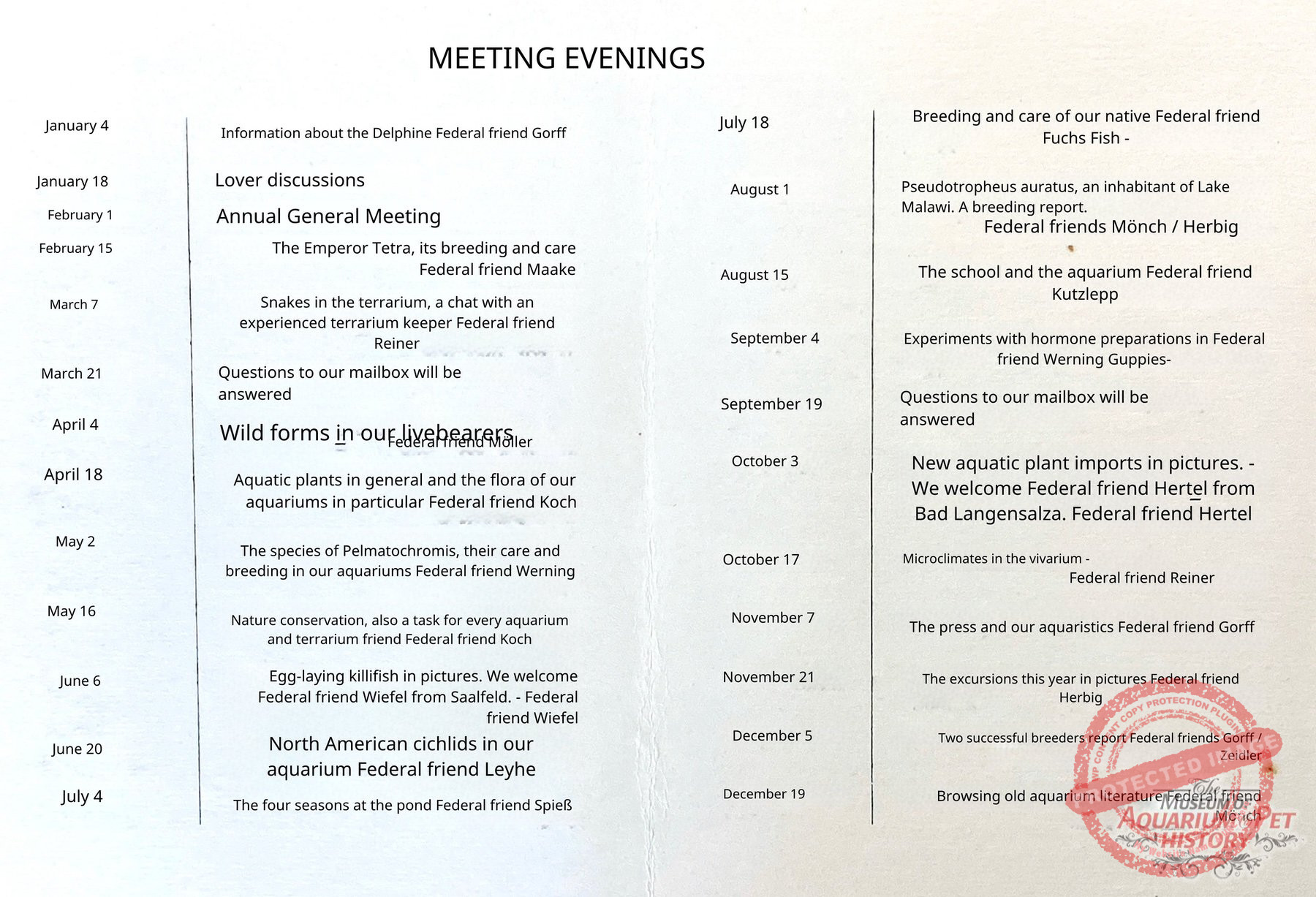
Contents of the 1968 annual program translated using notegpt.io.
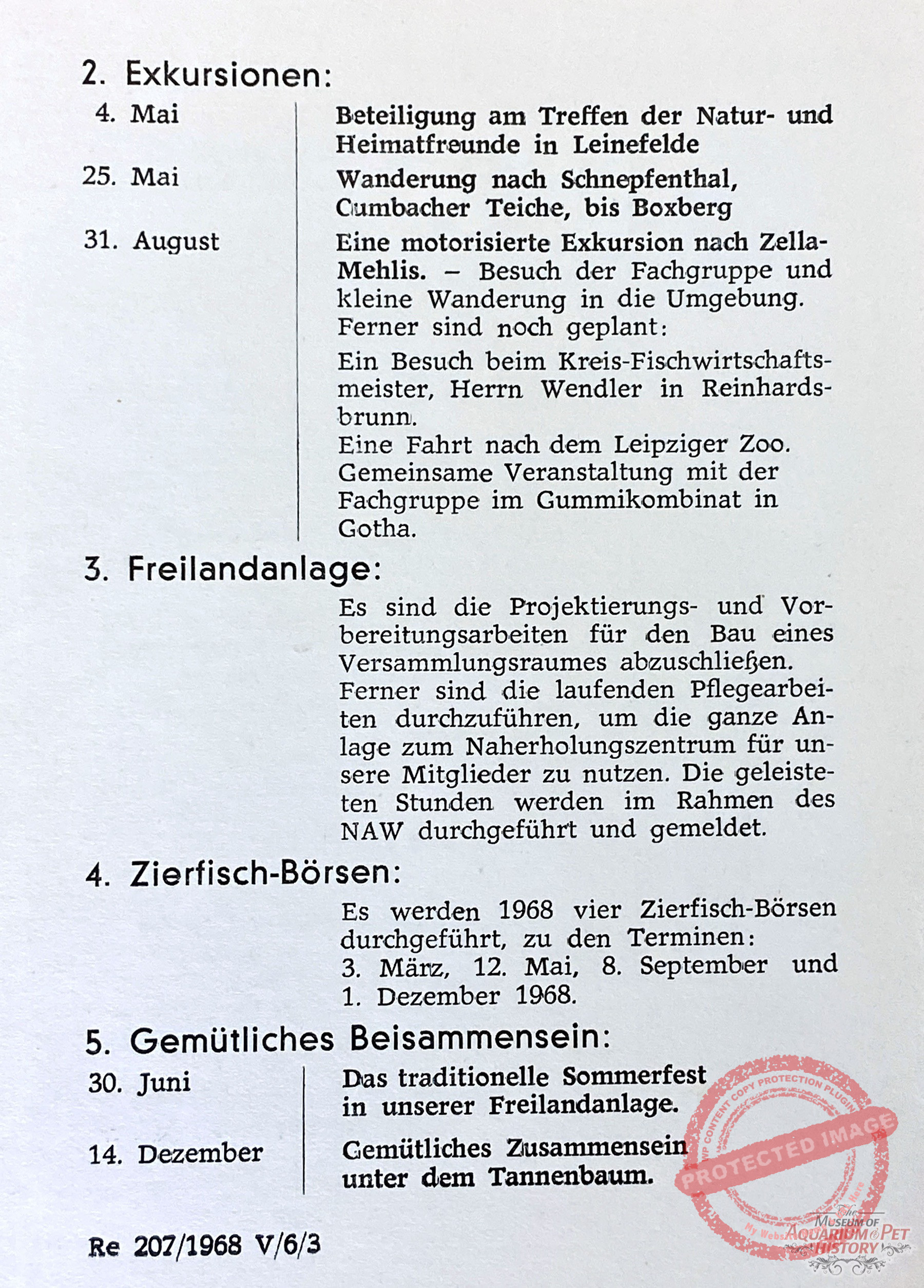
Back page of the 1968 annual program; under “3. Outdoor Facility,” the construction of a pavilion for a meeting room at the outdoor aquarium is announced.
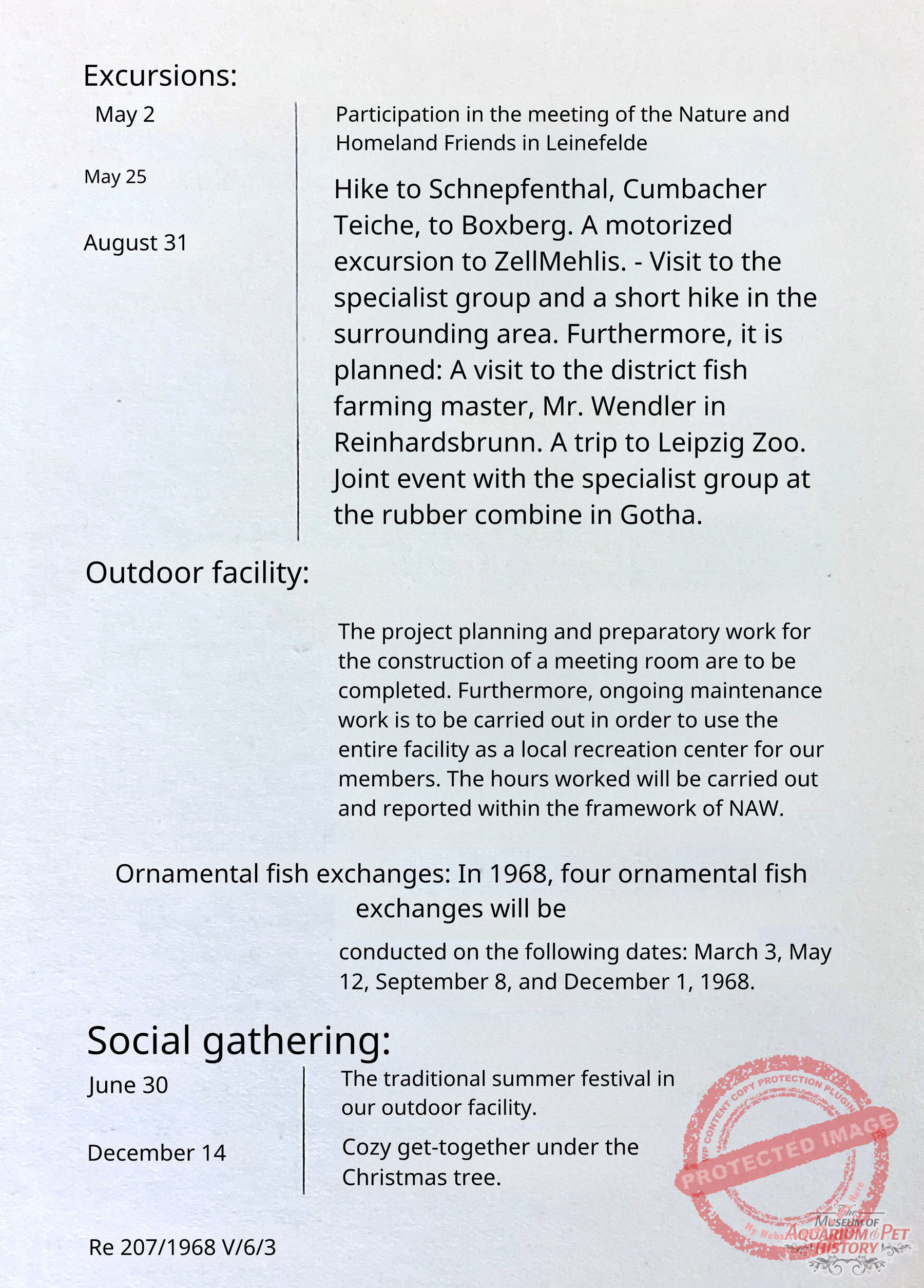
Back page translated using notegpt.io.
The society’s chairman, Kurt Leyhe, was a modest man but could rely on the experience of the still-active Kurt Koch and Charly Fuchs. Among the speakers’ names increasingly appeared that of a biology teacher from nearby Waltershausen: Heinz Schöpfel, who developed into a renowned specialist in aquatic plants, whose numerous publications remain exemplary to this day.
Aquariums in the GDR up into the 1980s were predominantly all-glass tanks for smaller sizes and steel-framed tanks for larger ones. Aquarium furniture reflected this—often homemade or cleverly adapted from existing furnishings. Today, much of it may seem primitive or kitschy, but for people at the time, these aquariums embodied the joy and happiness of everyday life.
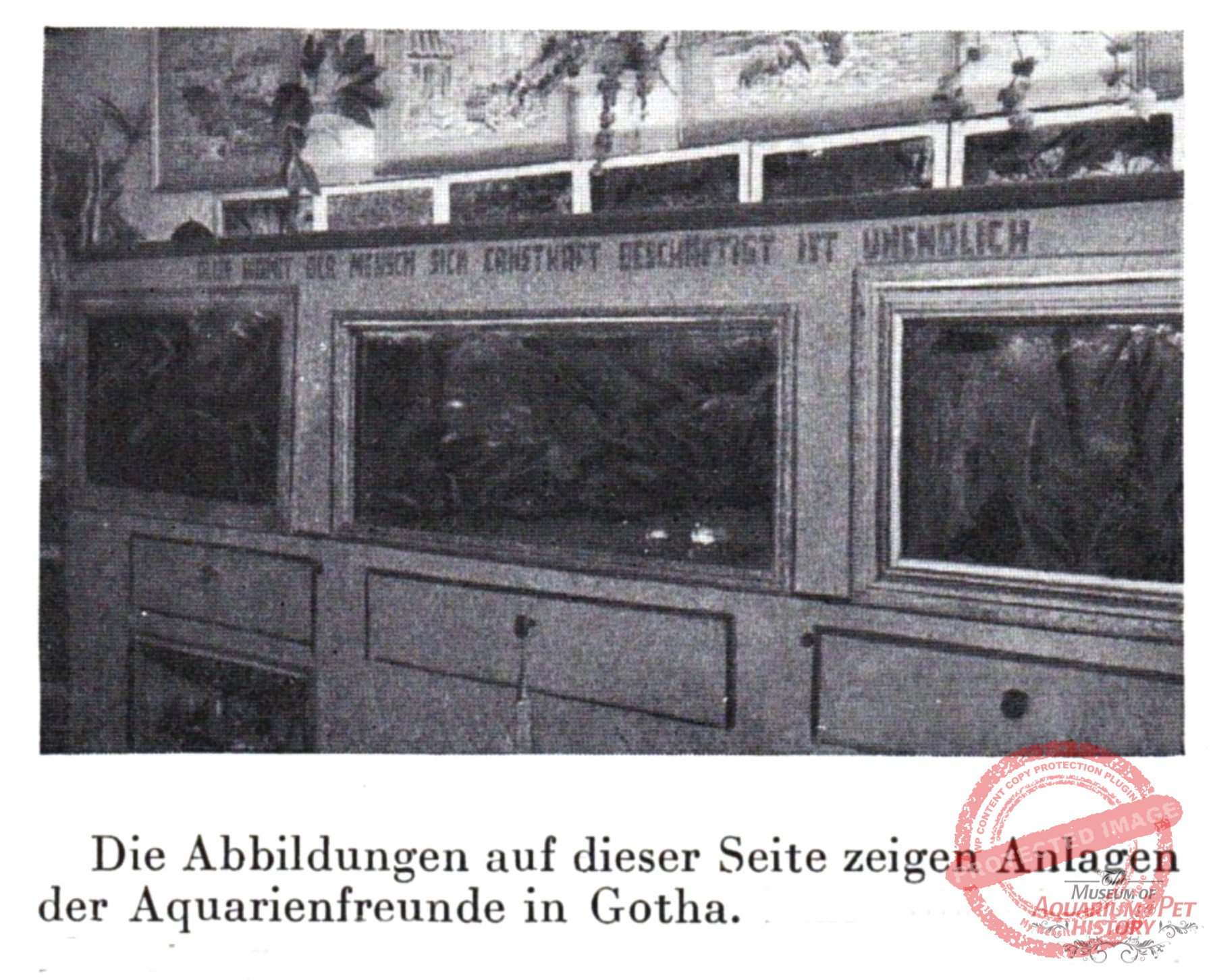
Aquariums belonging to Gotha society members.
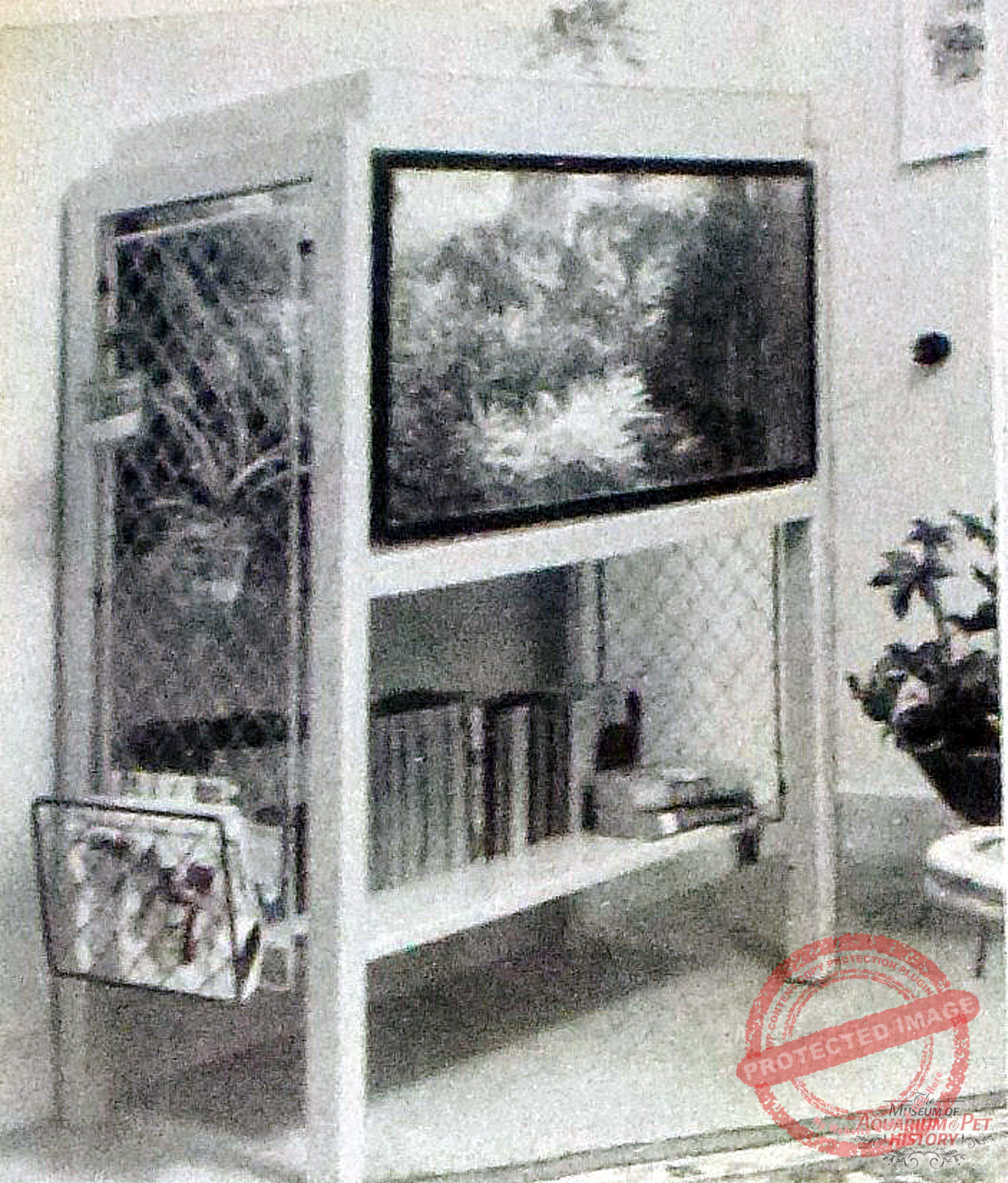
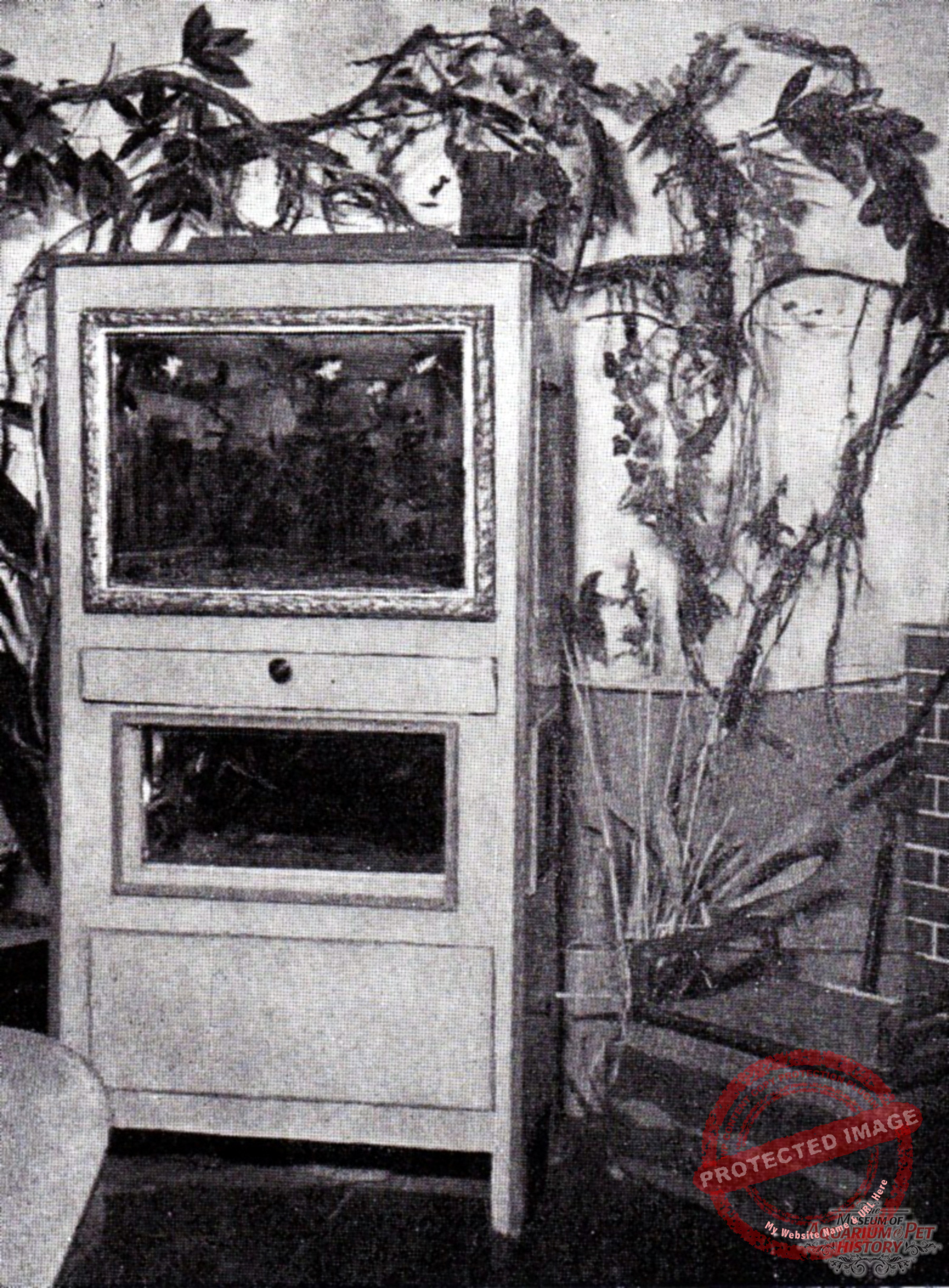
Aquariums belonging to Gotha society members.
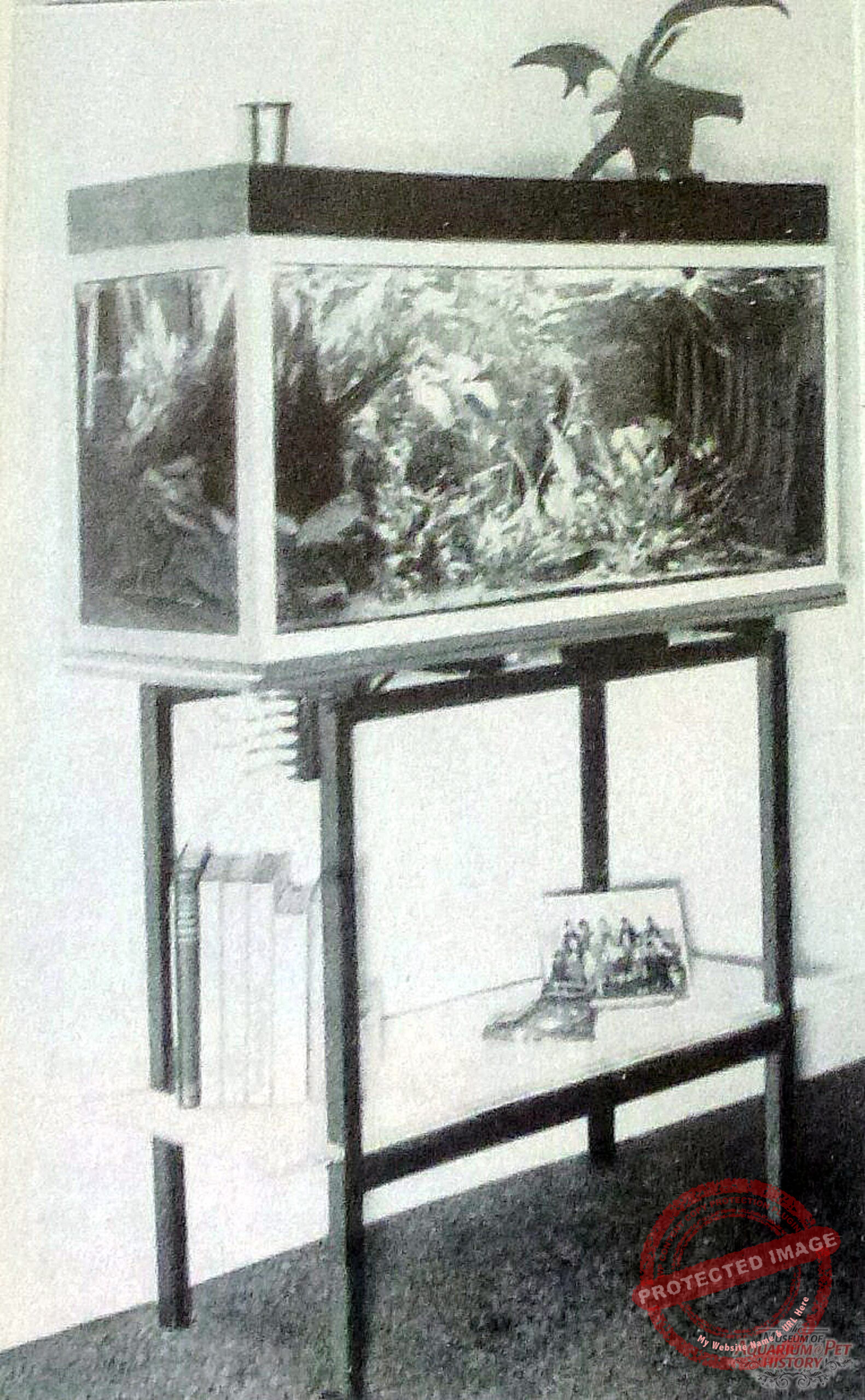
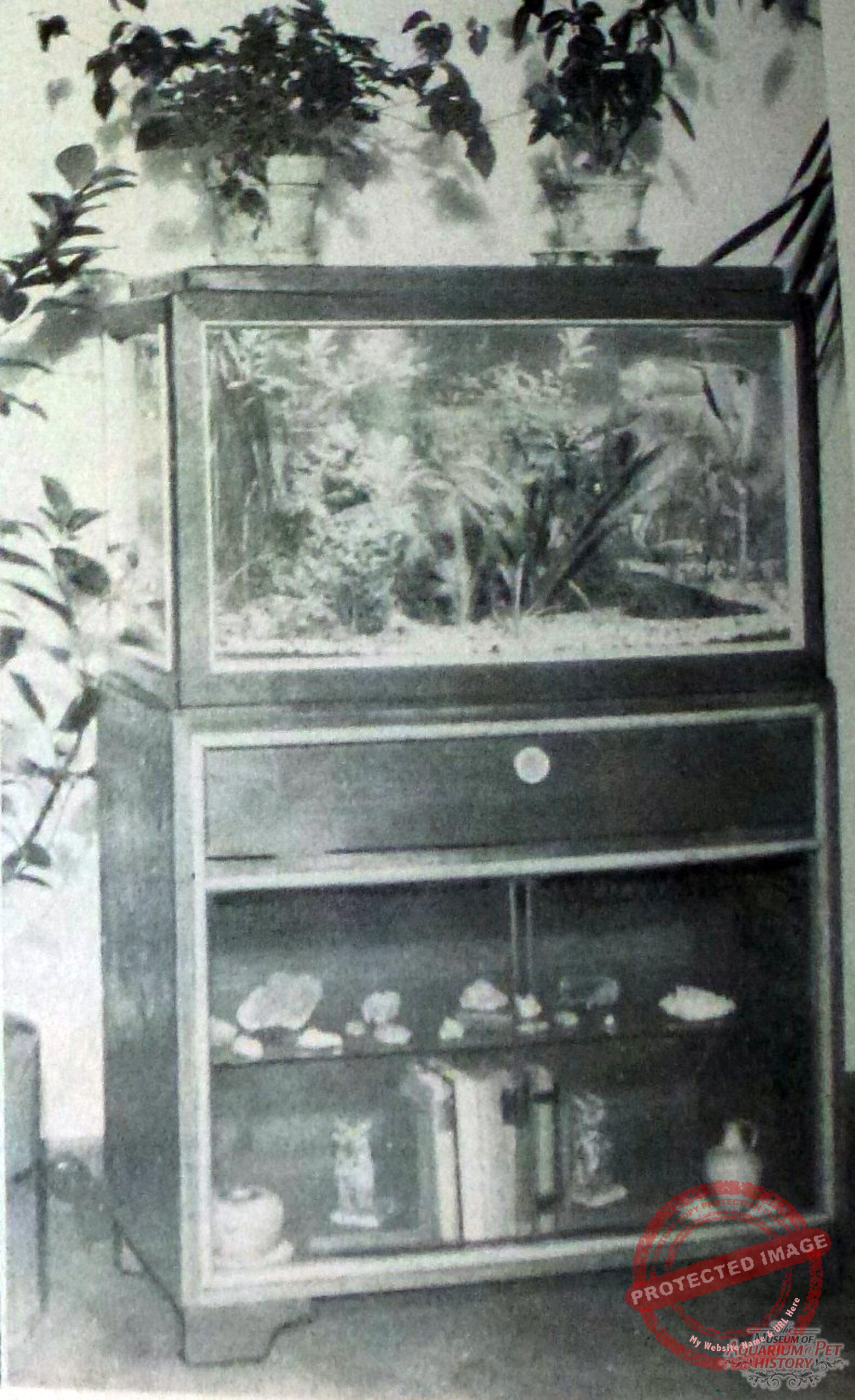
Aquariums belonging to Gotha society members.
Usually once a month, on a Sunday morning, a fish market was held at the “Hermann Haack” clubhouse. Members sold their captive-bred fish at moderate prices, primarily to fellow members but also to anyone interested. Sometimes long lines formed at the entrance, as aquaristics was highly popular, and breeders would also offer advice on fish care—something that took time.
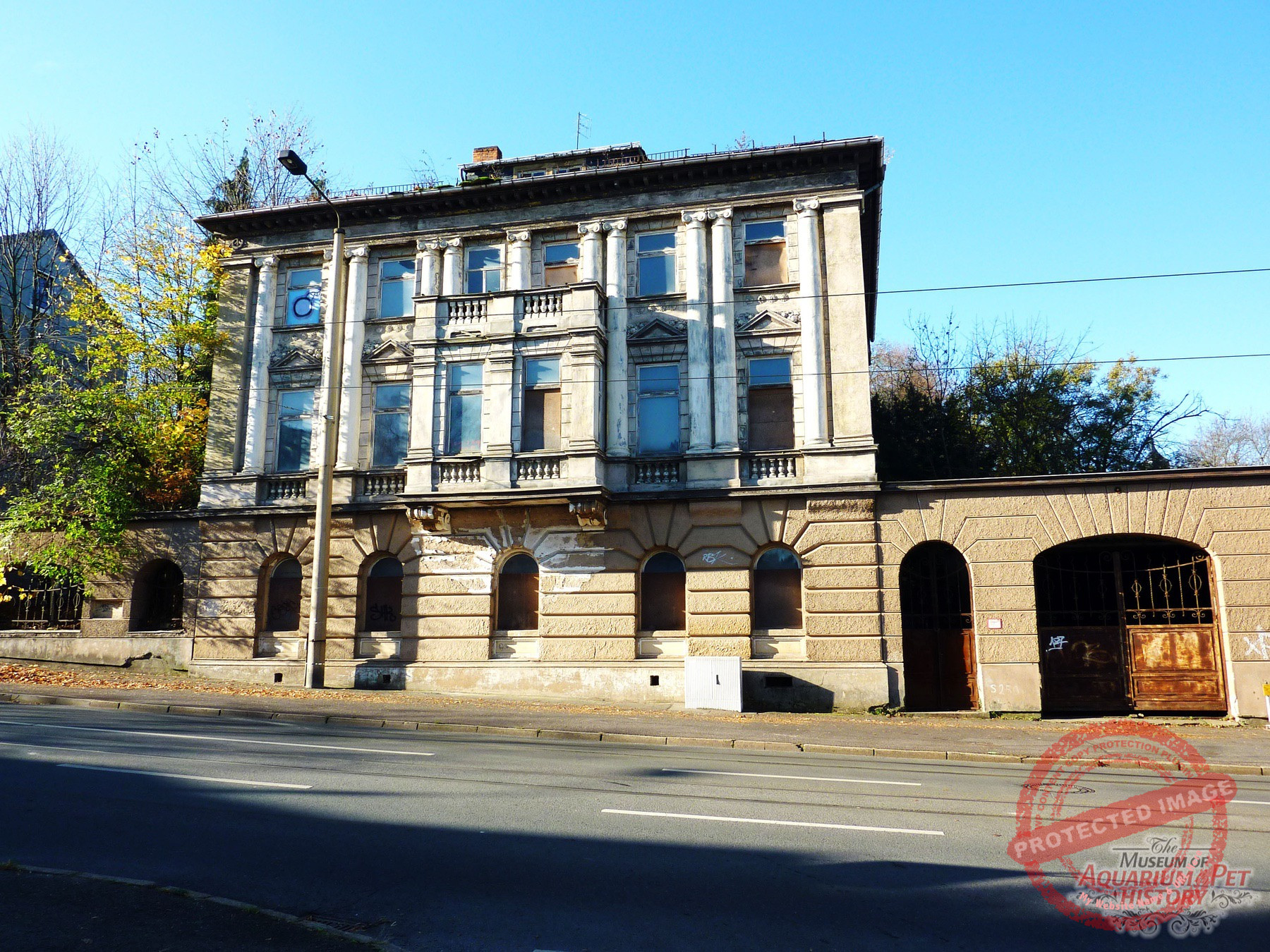
Building of the Kulturbund clubhouse “Hermann Haack” in Gotha.
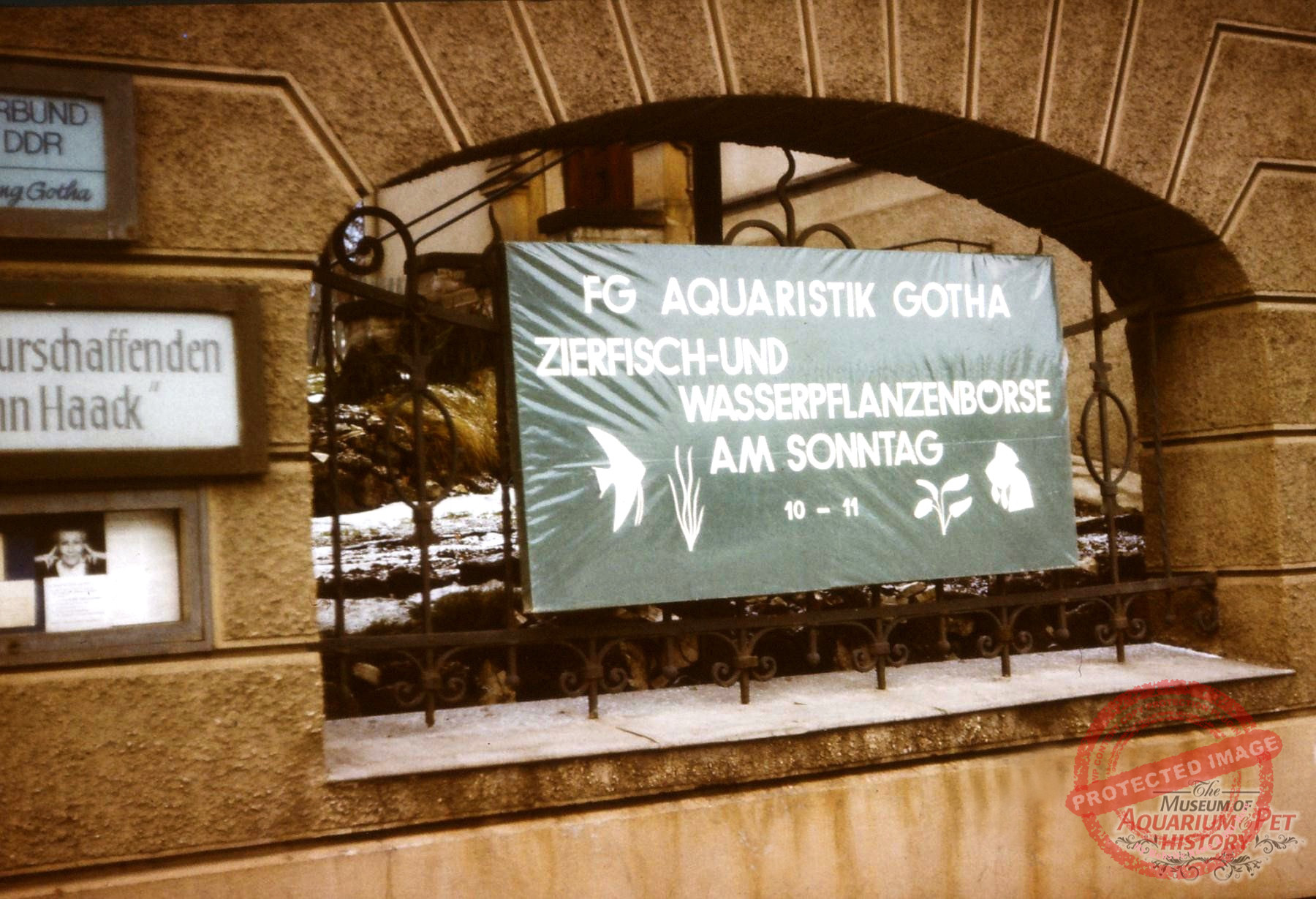
Poster announcing the next ornamental fish market of the aquarium society at this clubhouse.
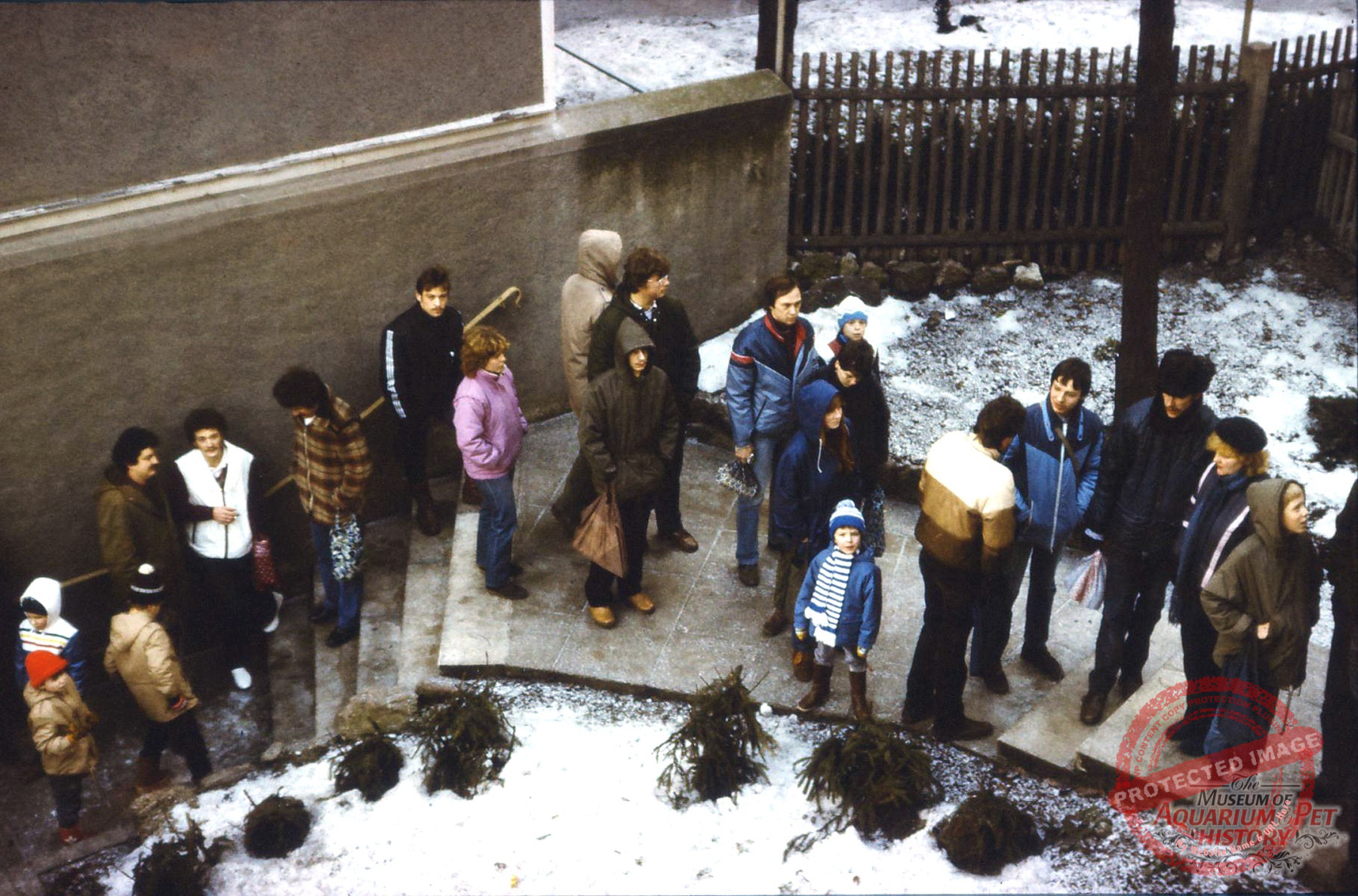
Queue in the courtyard of the clubhouse; many people interested in the society’s captive-bred fish.
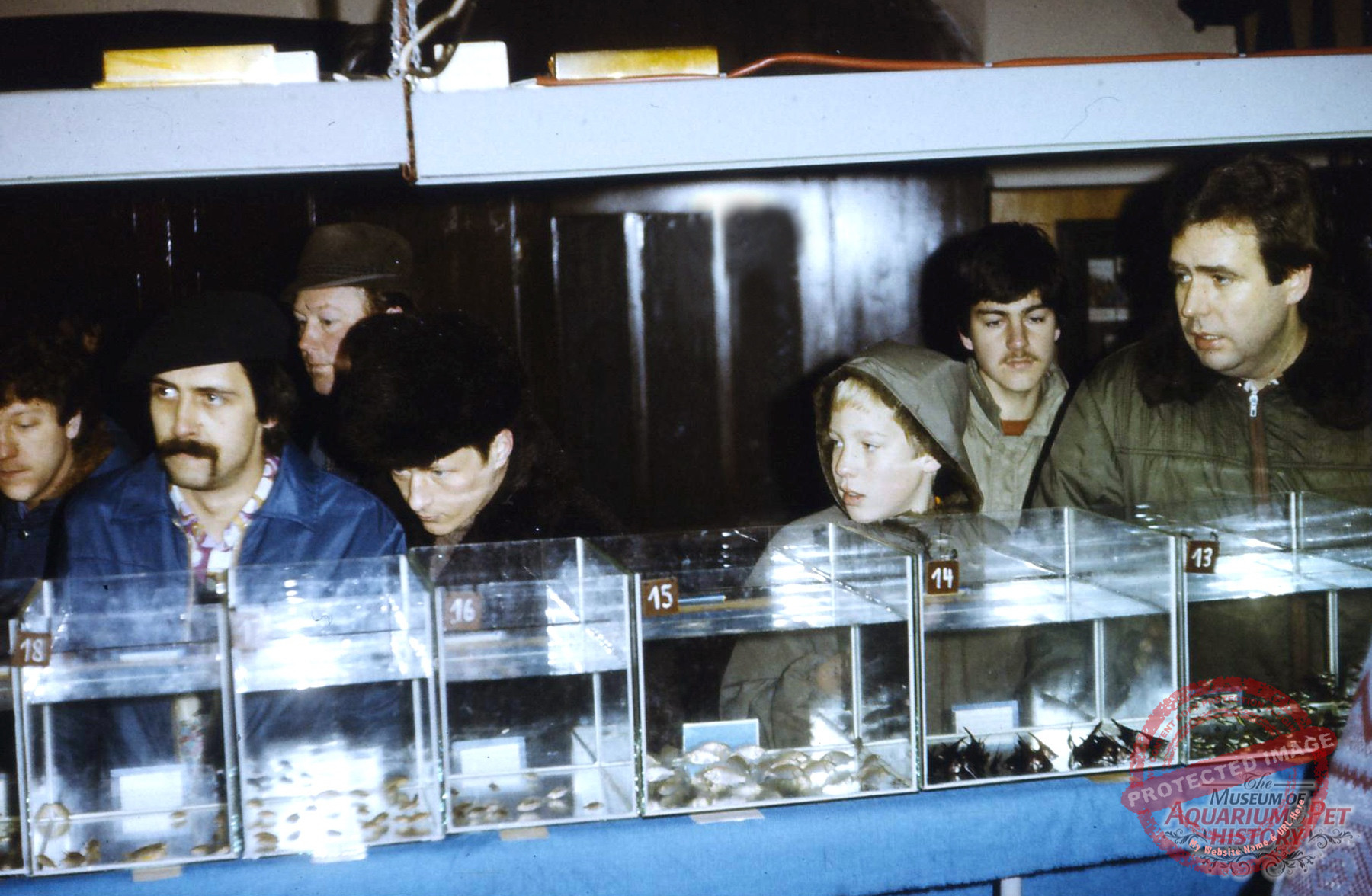
Fish were offered in such small tanks; buyers and interested visitors stand in front of them.
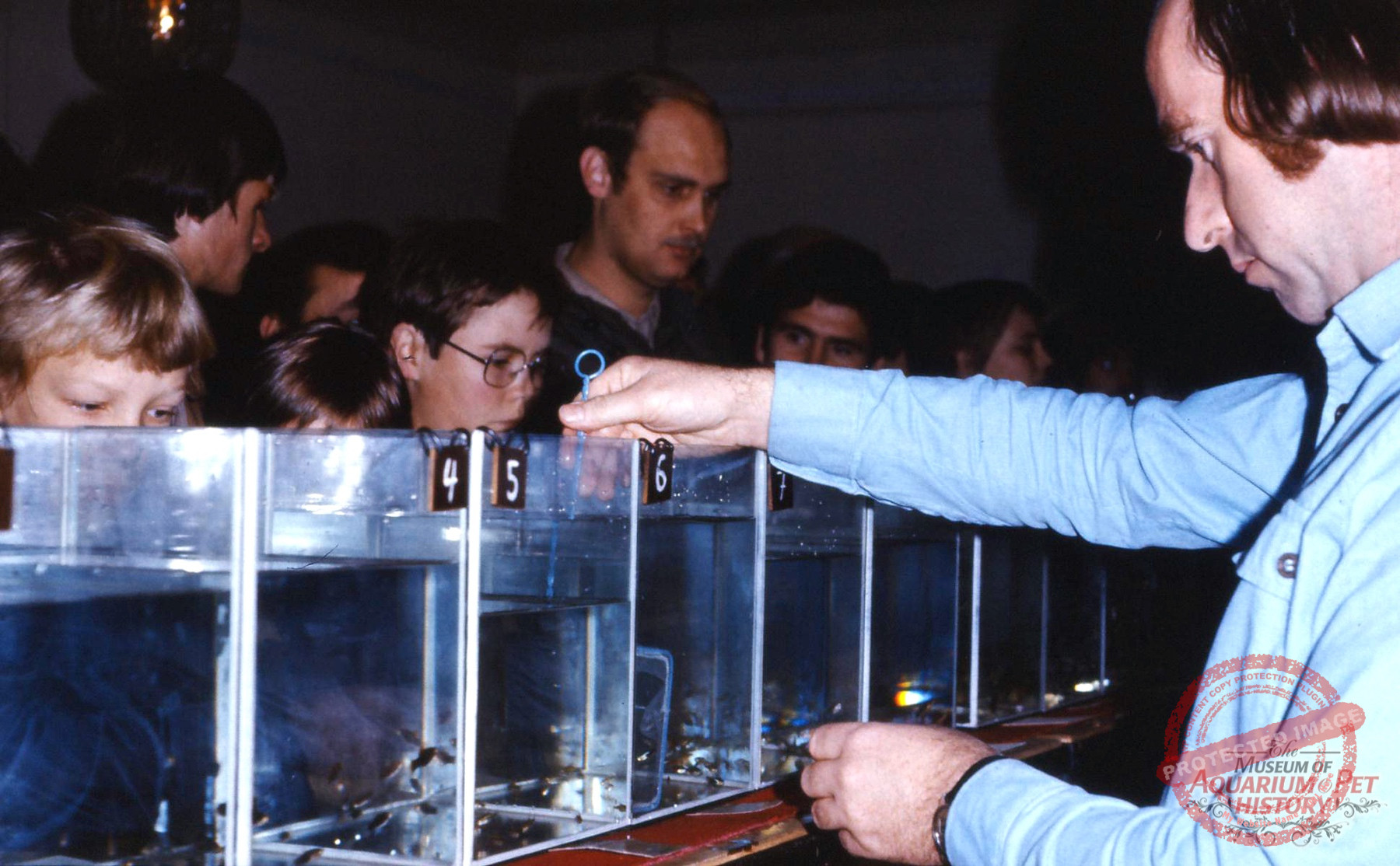
The breeders themselves net the purchased fish and offer useful advice on their care.
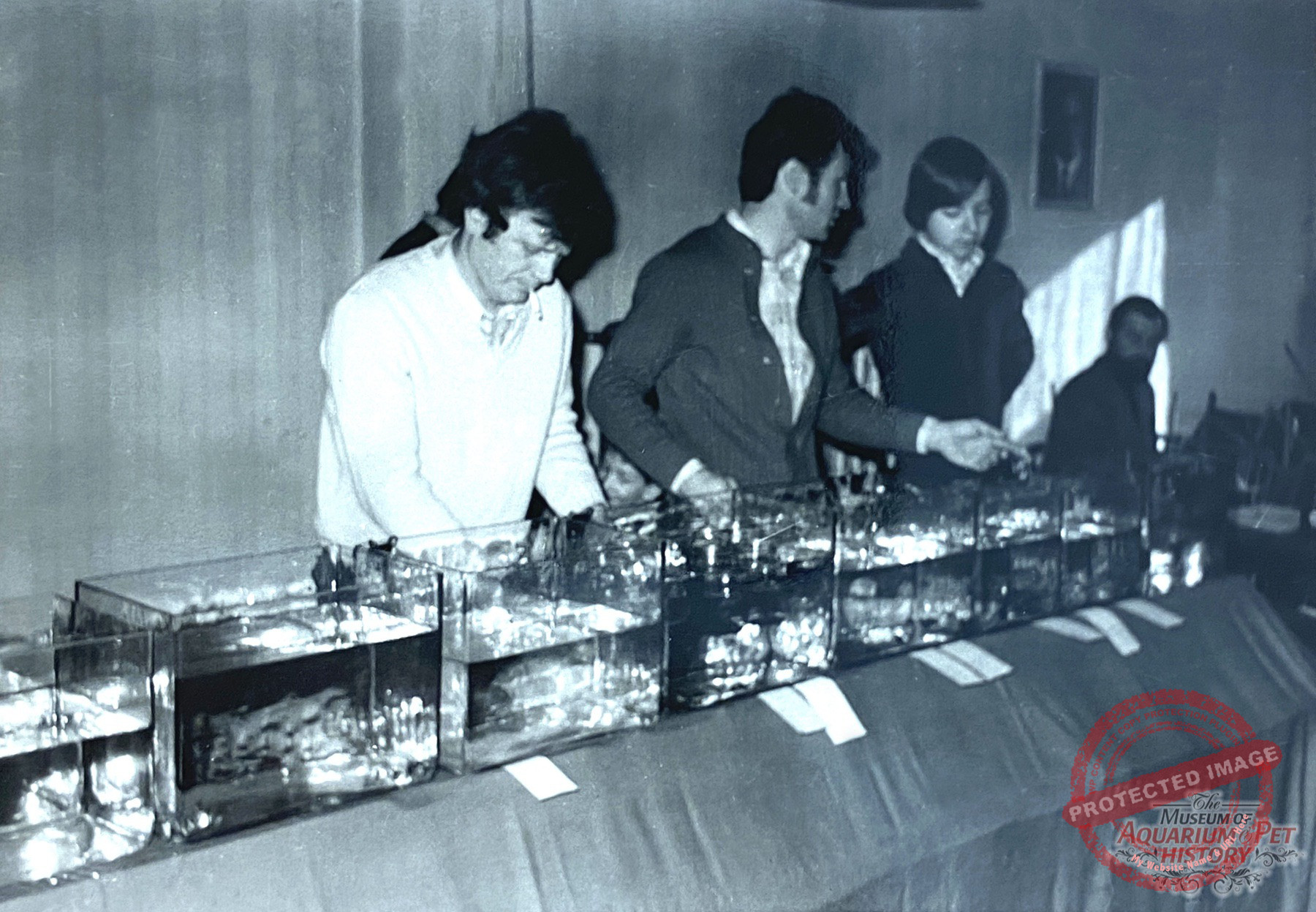
Each time, different fish are available depending on recent breeding successes.
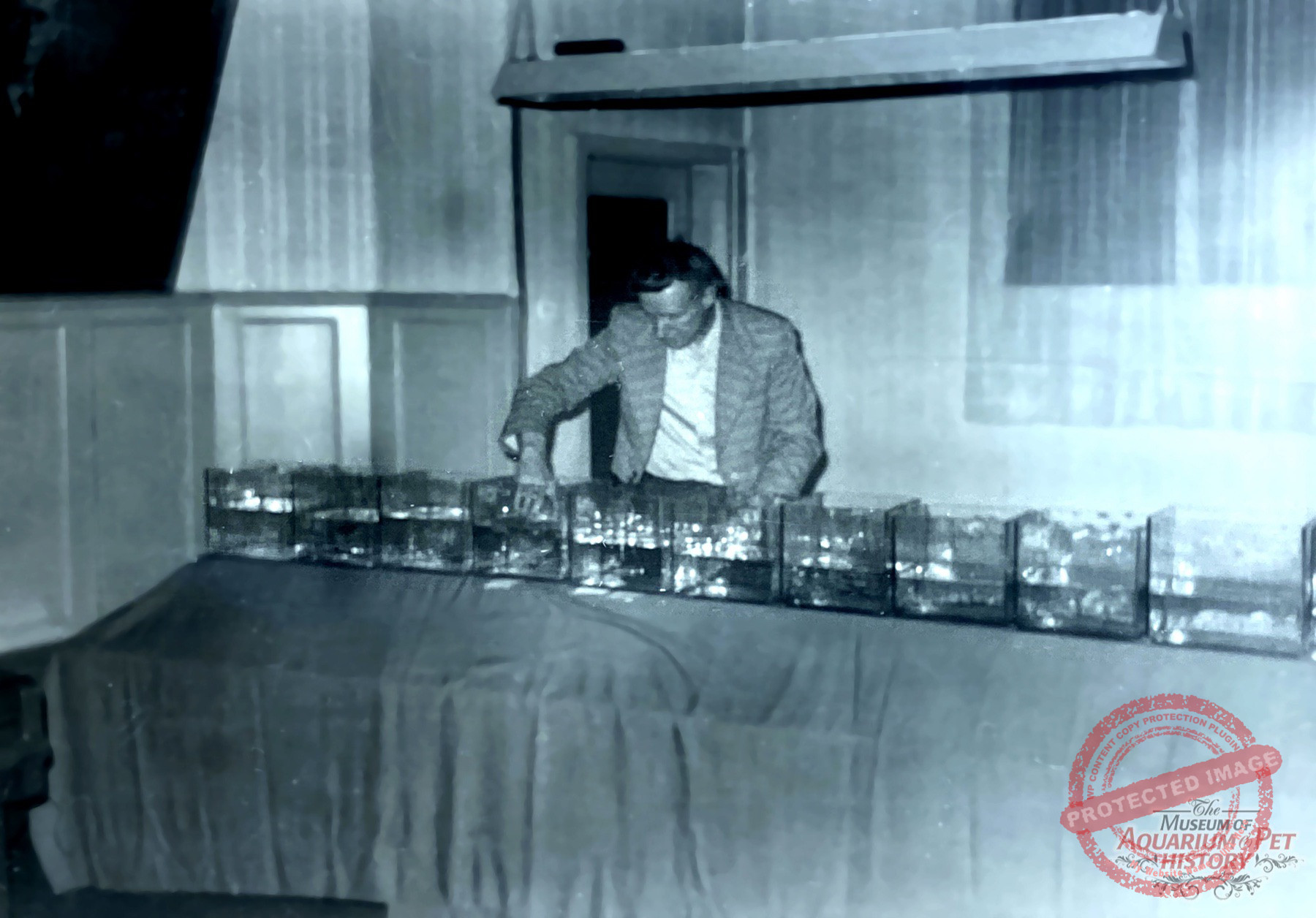
Some breeders offered an impressive number of species.
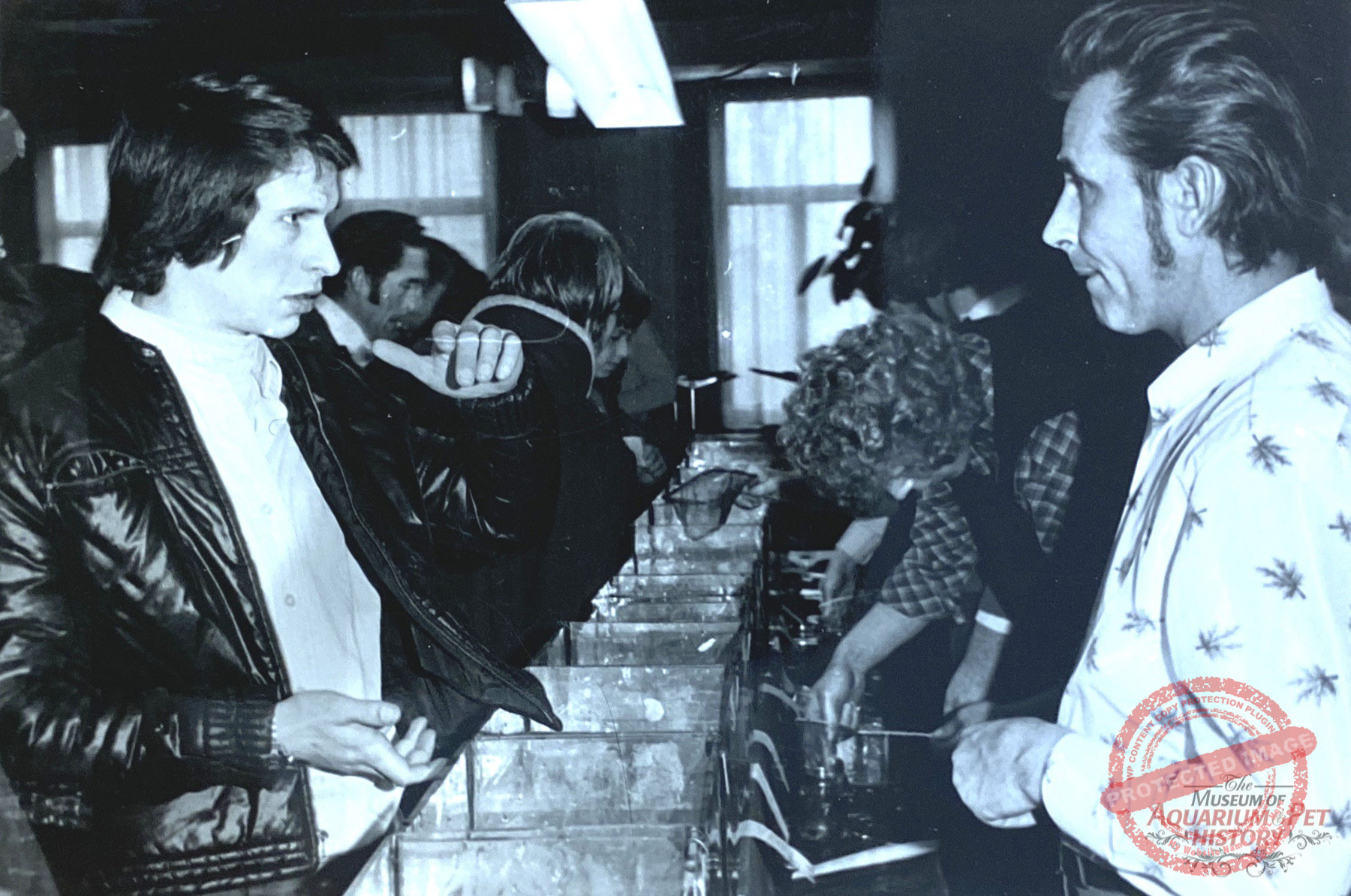
Technical discussions repeatedly arose during the purchase of ornamental fish.
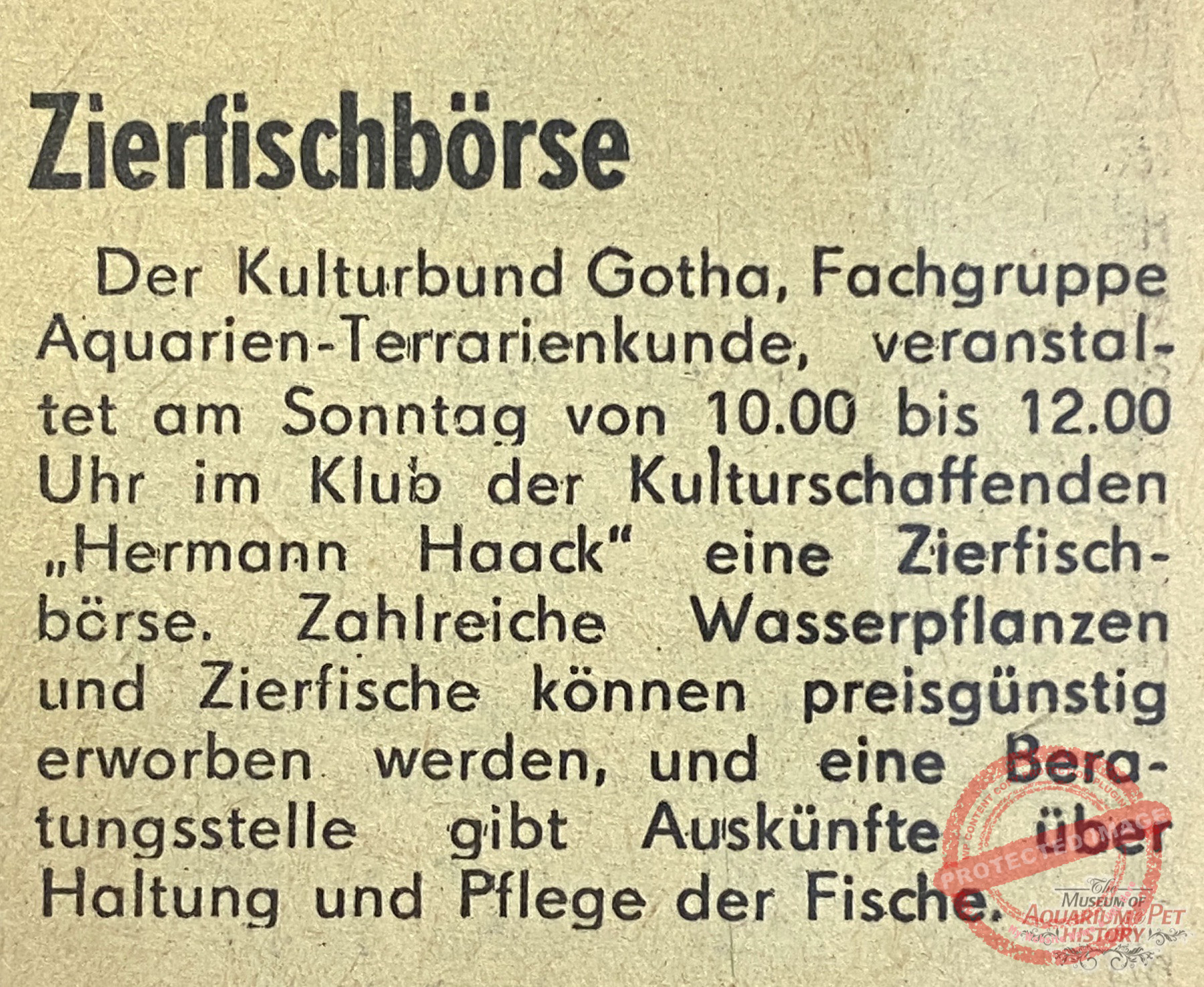
This is how the fish markets were announced in the Gotha pages of the Thuringian newspaper “Das Volk“.
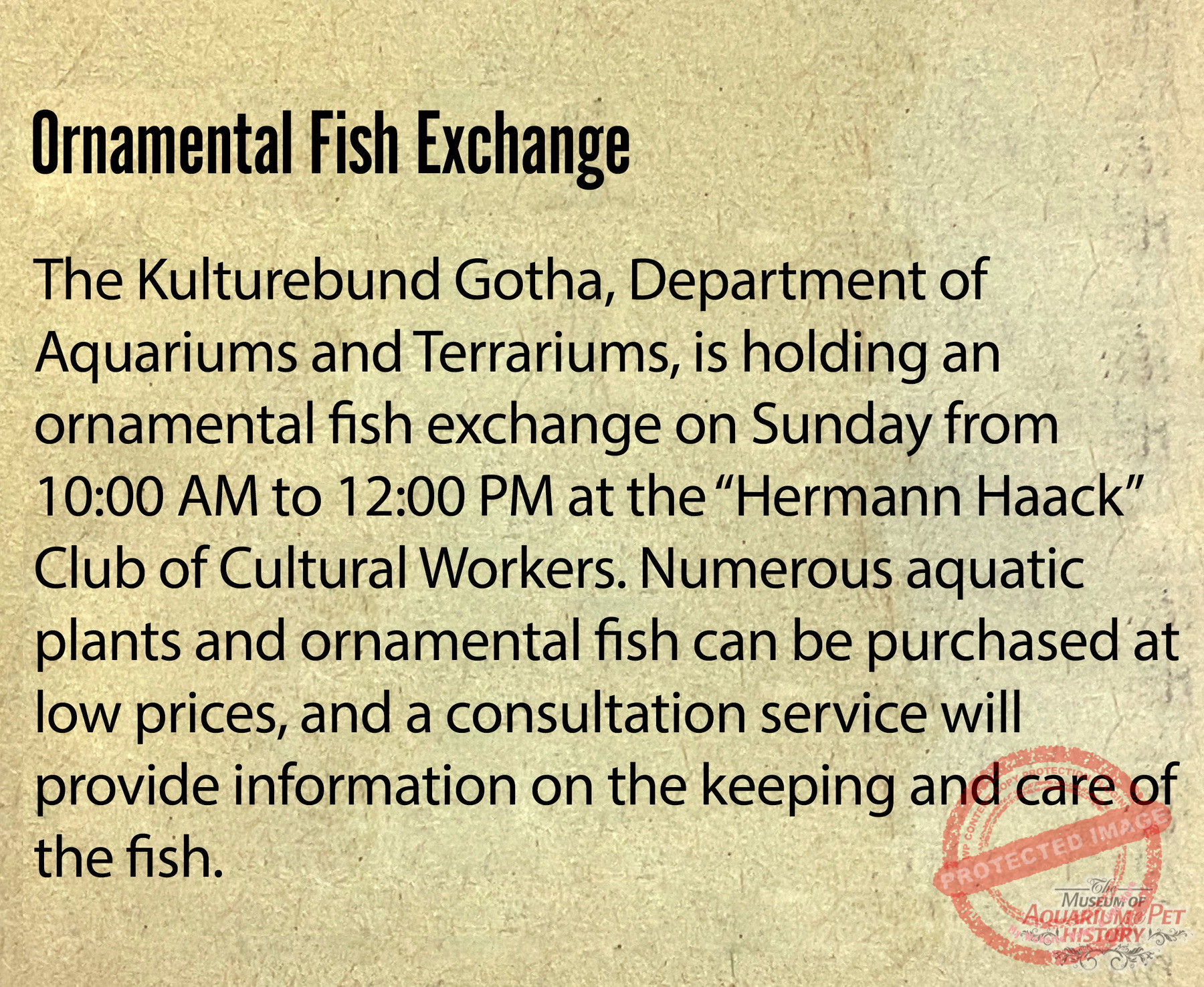
Fish market announcement translated using notegpt.io
Occasionally disputes arose between groups with similar interests. Anglers claimed that aquarists were depriving fish of food when they netted water fleas or mosquito larvae. This assertion was, of course, entirely unfounded: the tiny amount of pond plankton collected with a small net amounts to less than 0.01 percent of the total. To settle the dispute, anyone wishing to collect live food was issued a permit card. Once again, mediation came from Hans-Albert Pederzani, who was both an angler and an aquarist.
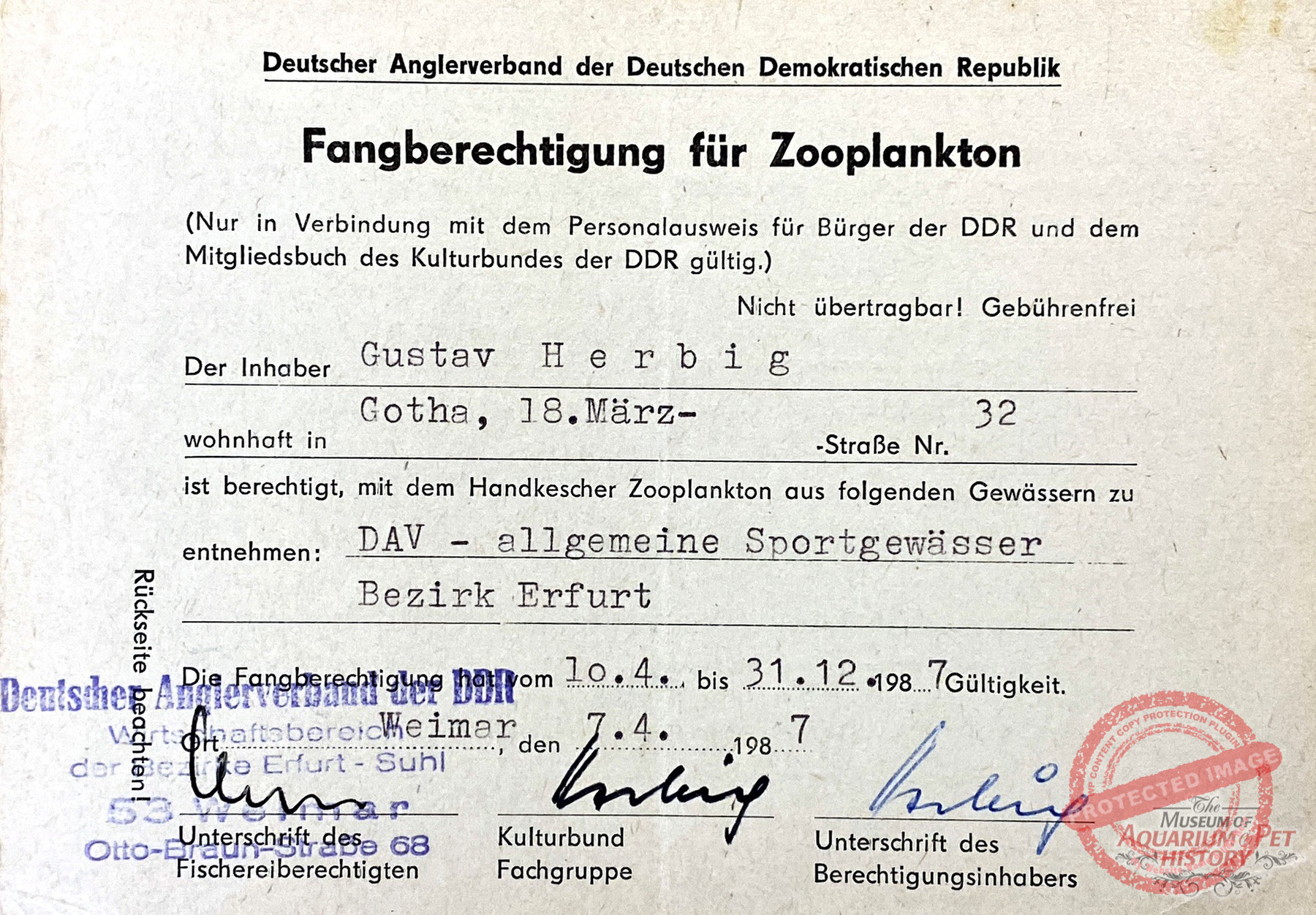
To prevent disputes between anglers and aquarists, each member was issued permits for collecting zooplankton.
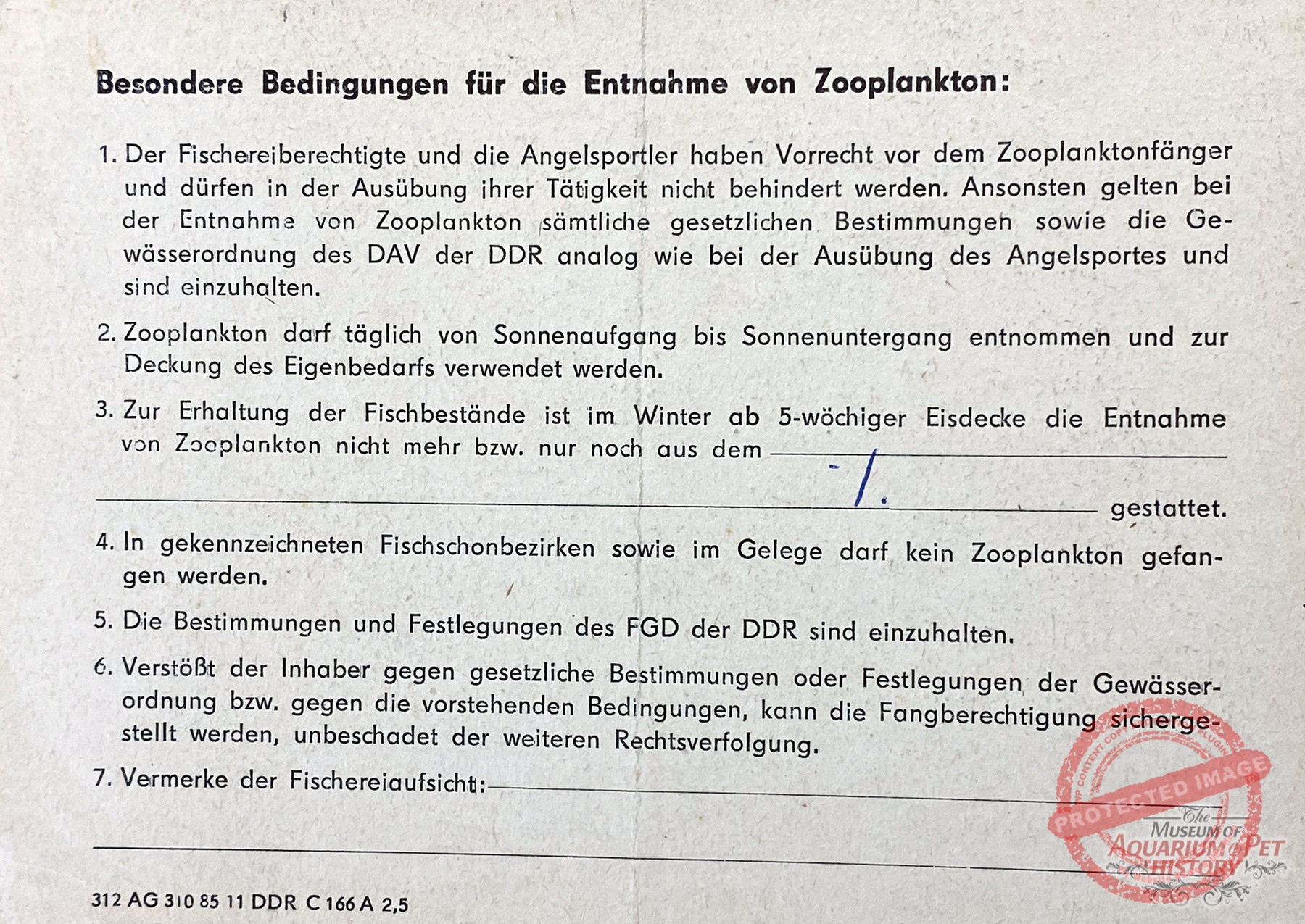
Reverse side of such a permit card.
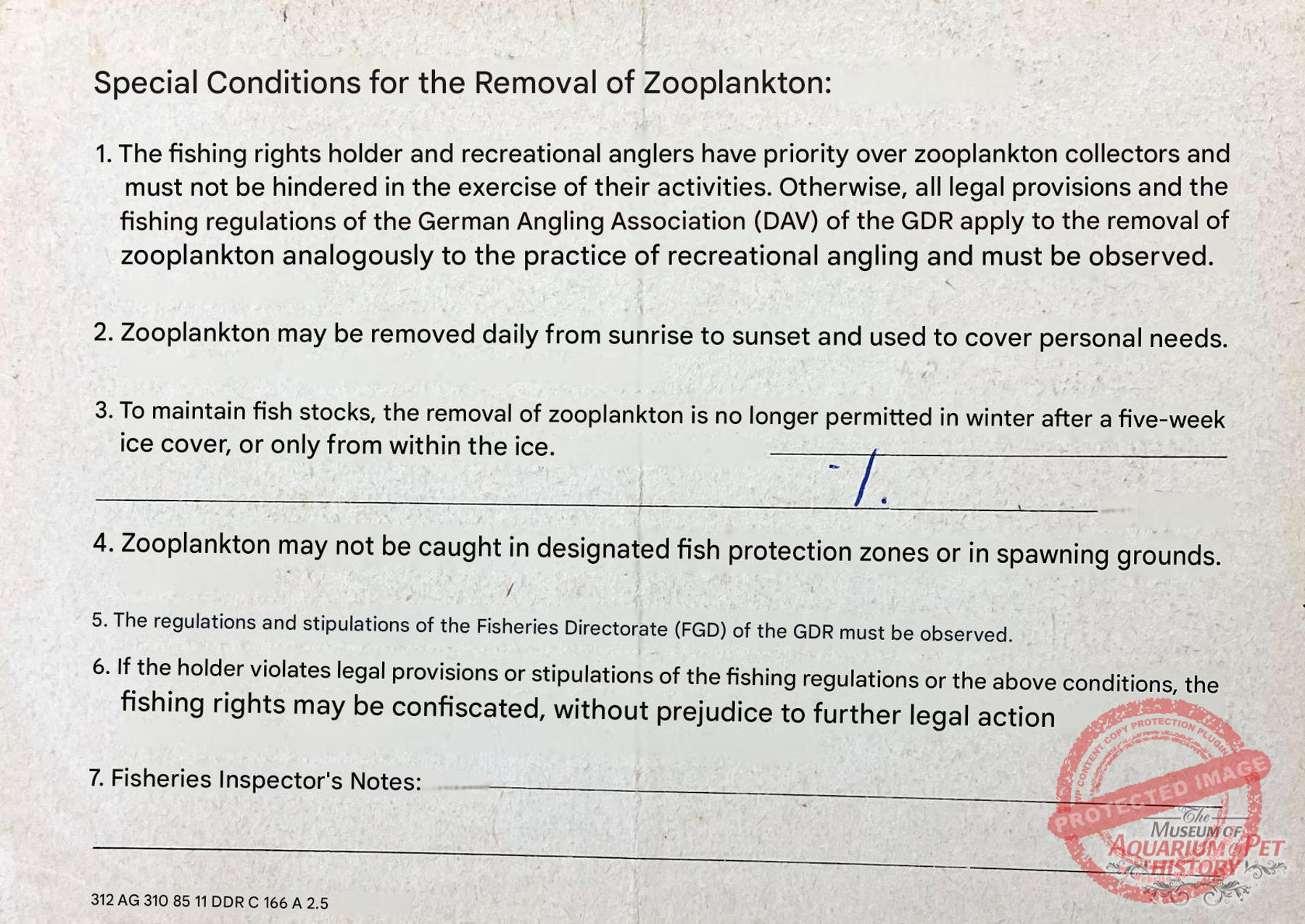
Backside of permit card translated using notegpt.io
The members of the Gotha Aquarium Society continued to contribute many hours of voluntary labor. In the GDR, such efforts were never materially compensated—not even symbolically—but only acknowledged with certificates and a handshake from some local party official. This continued when Gustav Herbig replaced Kurt Leyhe as chairman. However, problems increasingly arose.
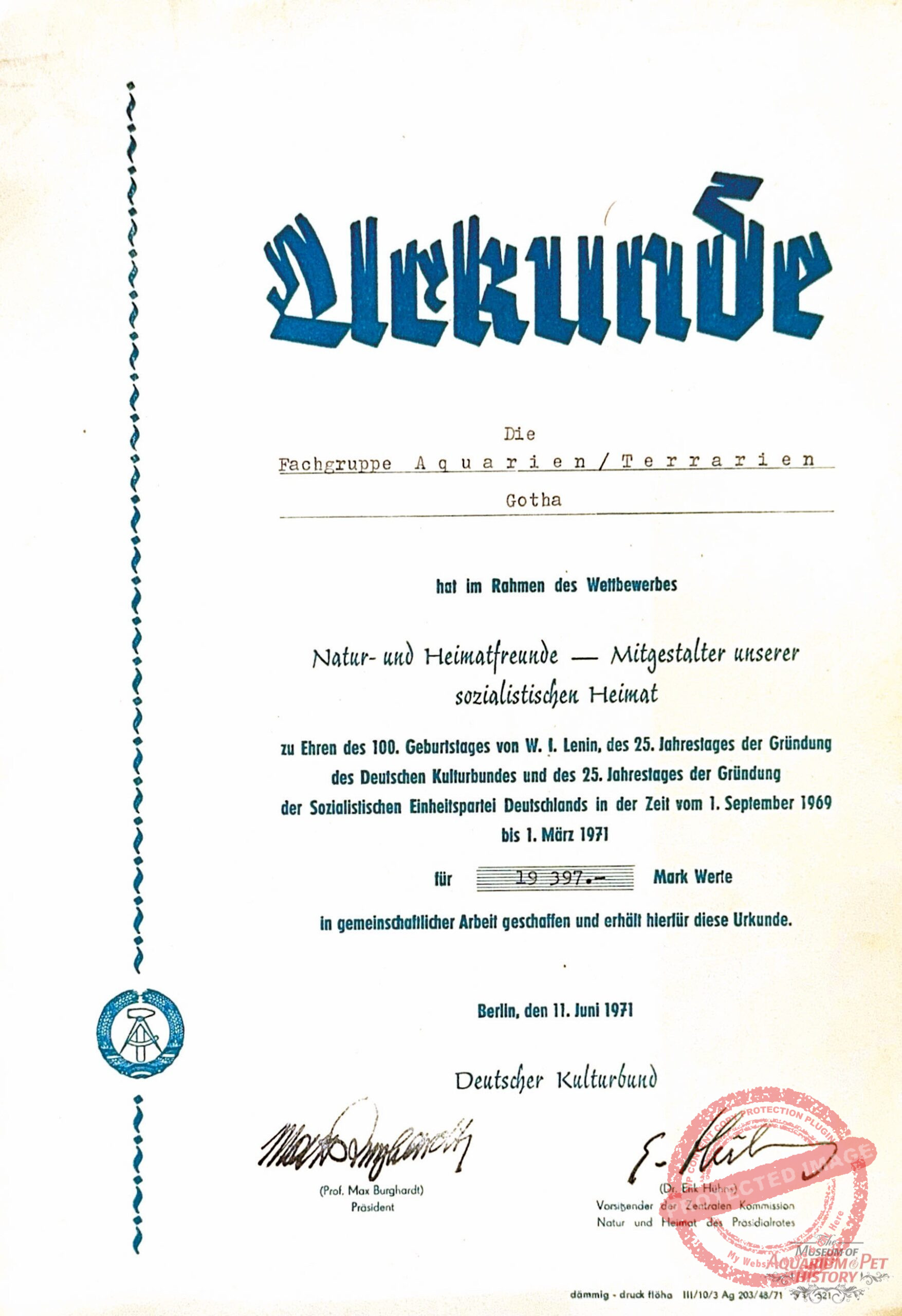
Attempts were made to assign a monetary value in East German marks to the intangible achievements of the aquarium society—interpreted by the Party in line with its goals; no one needed such worthless certificates as this one from 1971.
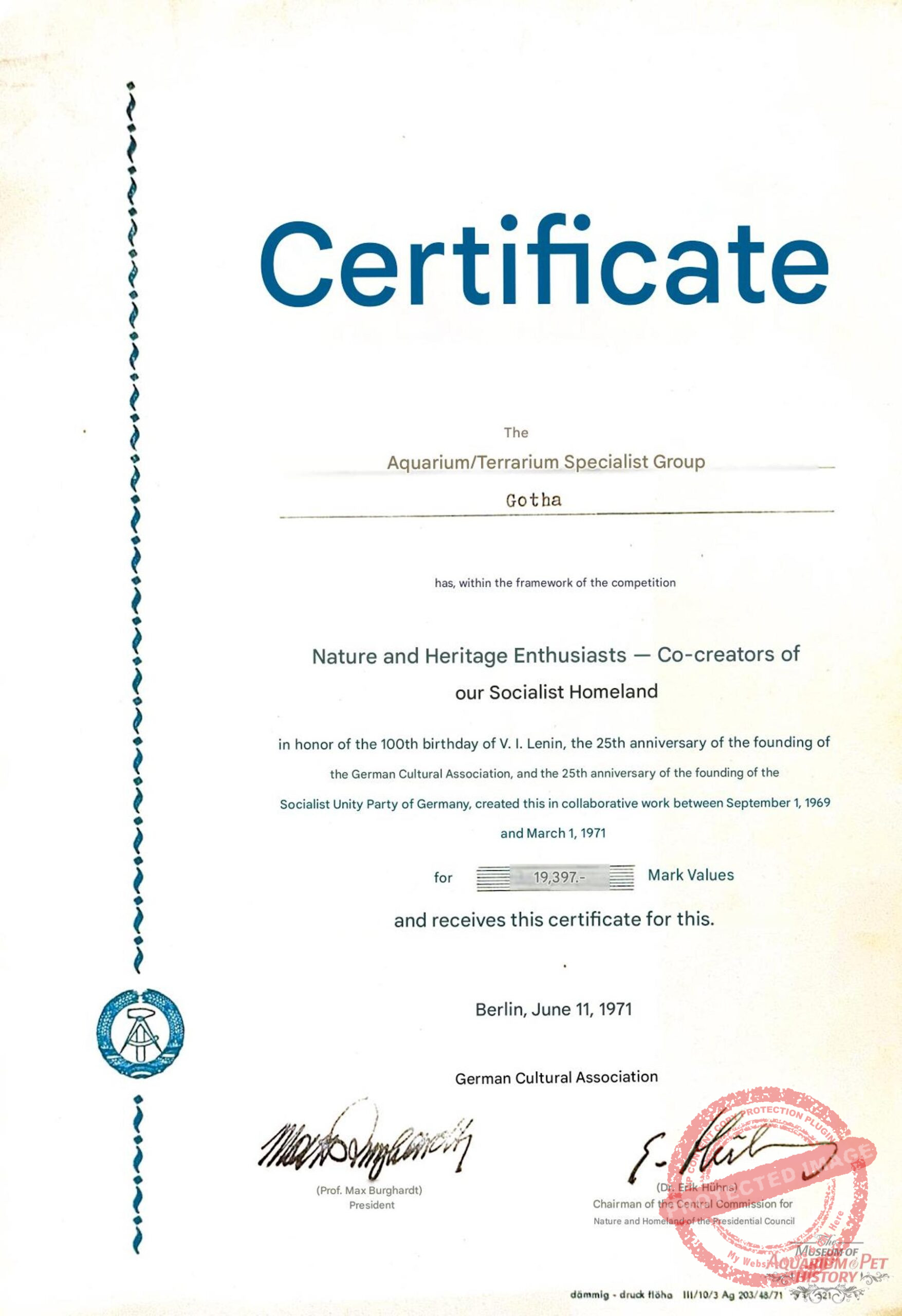
Certificate translated using notegpt.io.
Charly Fuchs, nearly blinded in old age by cataracts, remained passionately devoted to the outdoor aquarium. He succeeded in persuading the city of Gotha to provide prefabricated components for a barrack-like building to serve as a clubhouse on the grounds. Once again, factory workers, teachers, office clerks, and shop assistants took on roles as carpenters, masons, and roofers. A charming clubhouse was built directly on Aquarium Street, within the park grounds. Fuchs reported these developments in two touching letters to his prominent friend Hans-Albert Pederzani.
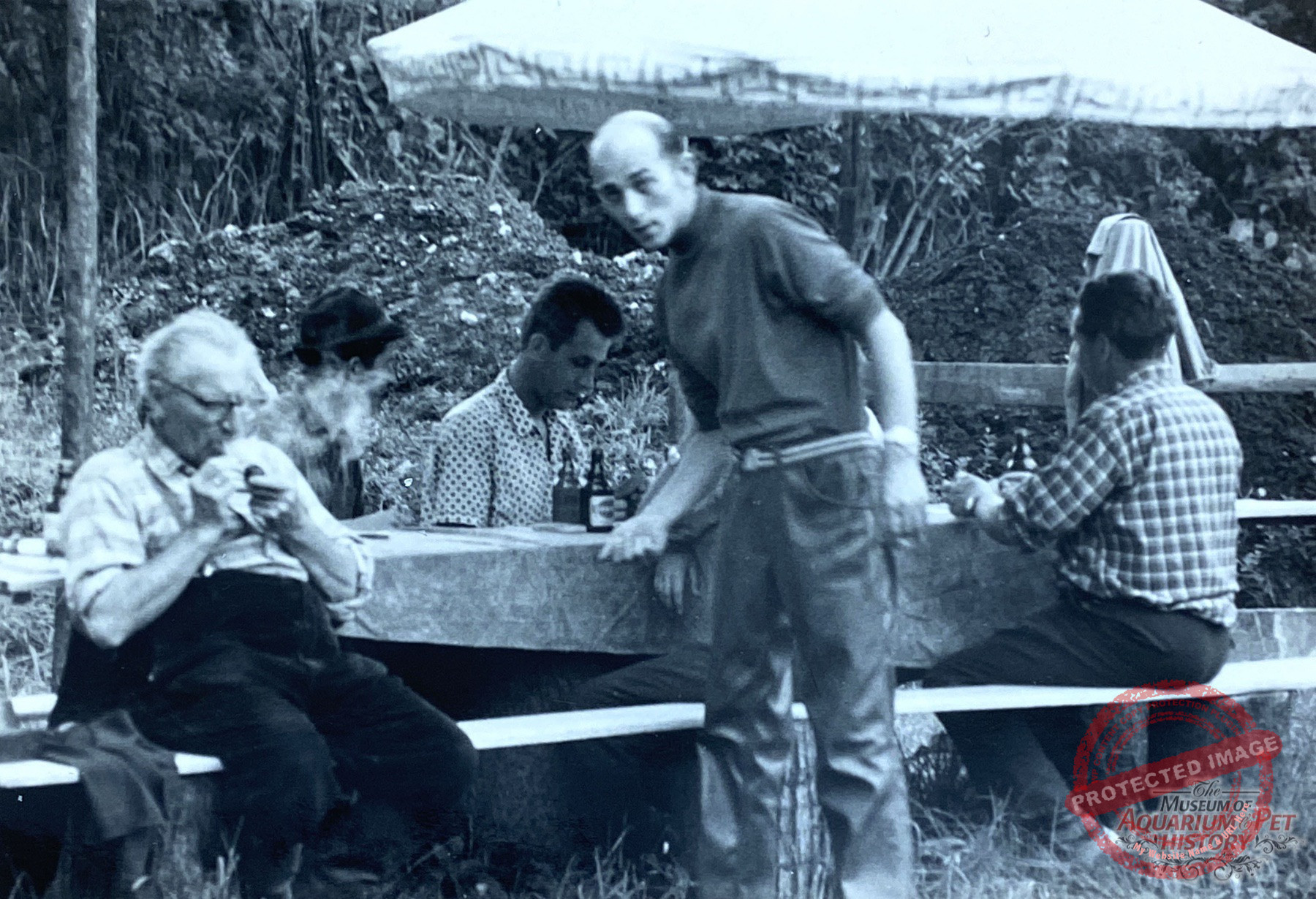
As long as Charly Fuchs (left, with pipe) was able to care for the outdoor aquarium, it remained well maintained.
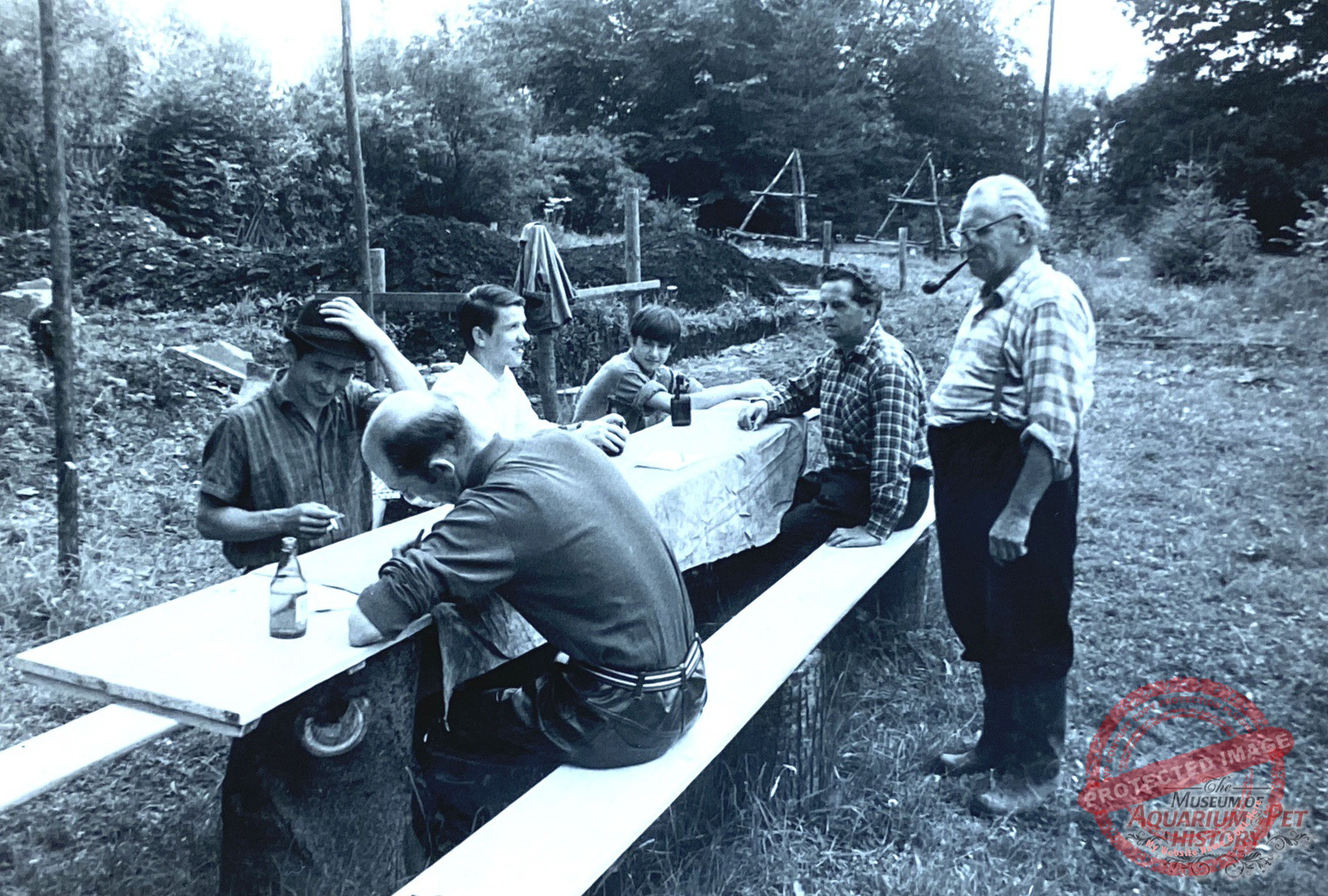
Here, under the direction of Charly Fuchs (right), the foundation for the new barrack-style building is being laid.
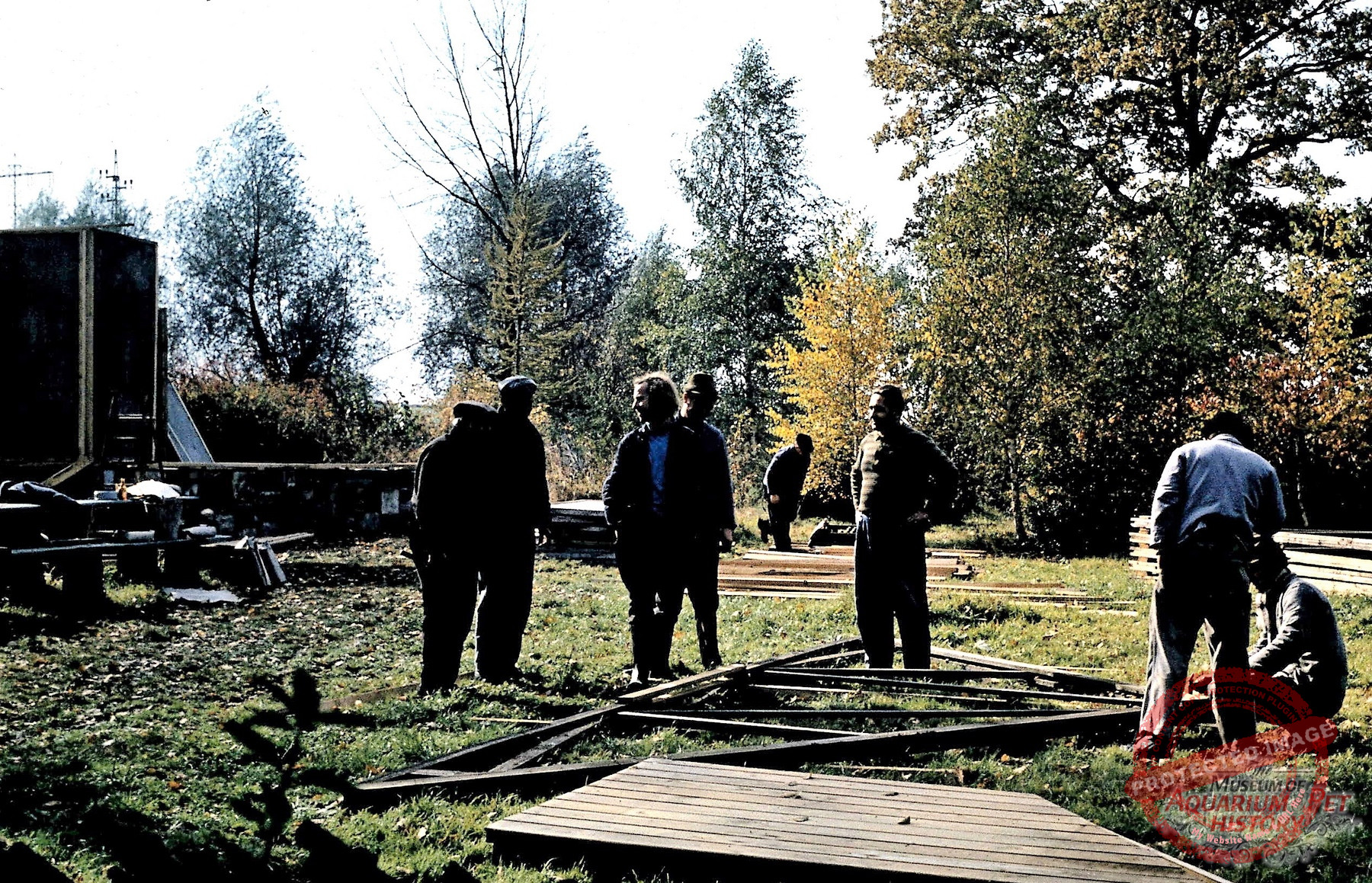
Prefabricated parts are assembled to create the barrack-like structure intended as the future clubhouse.
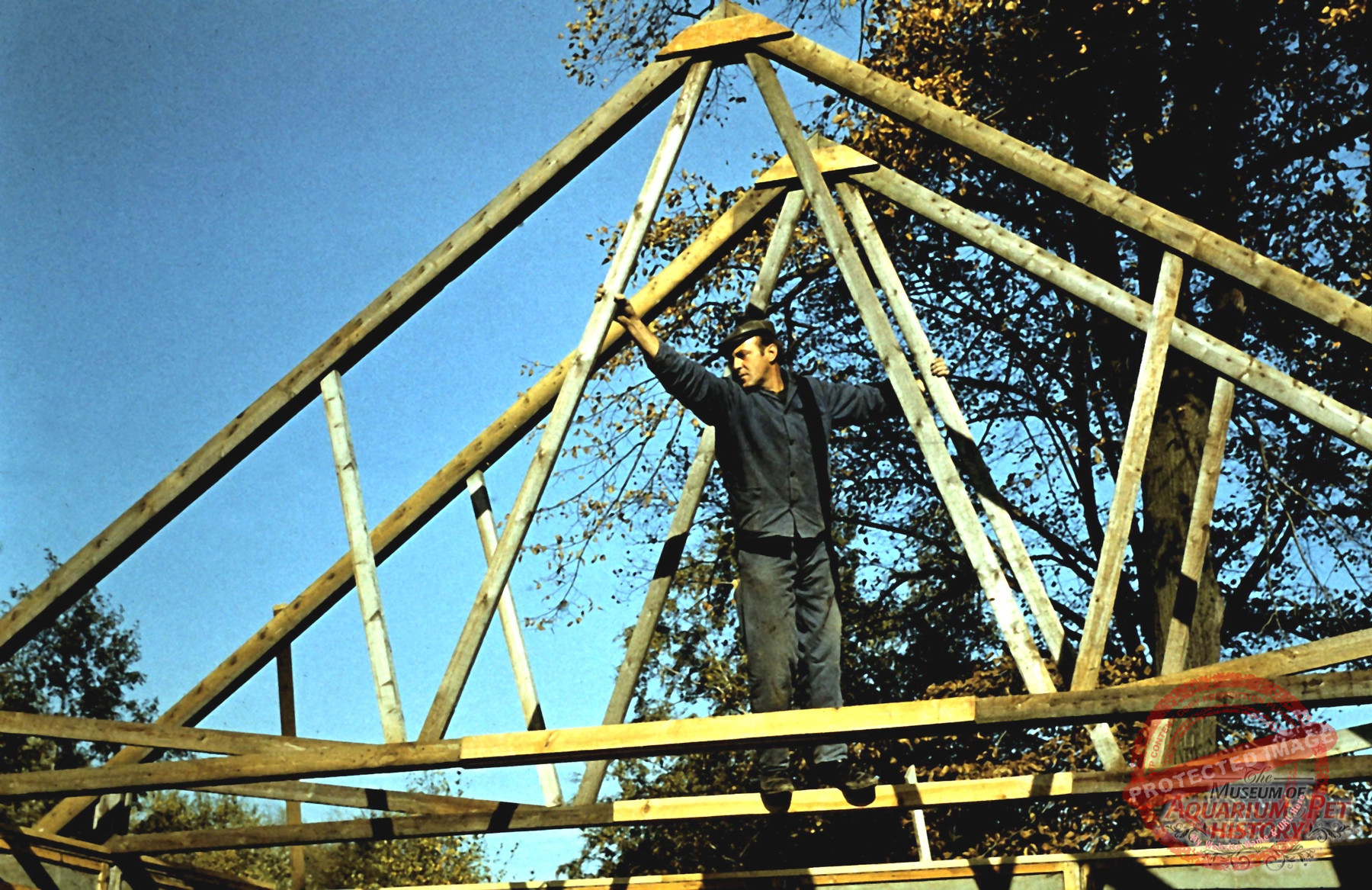
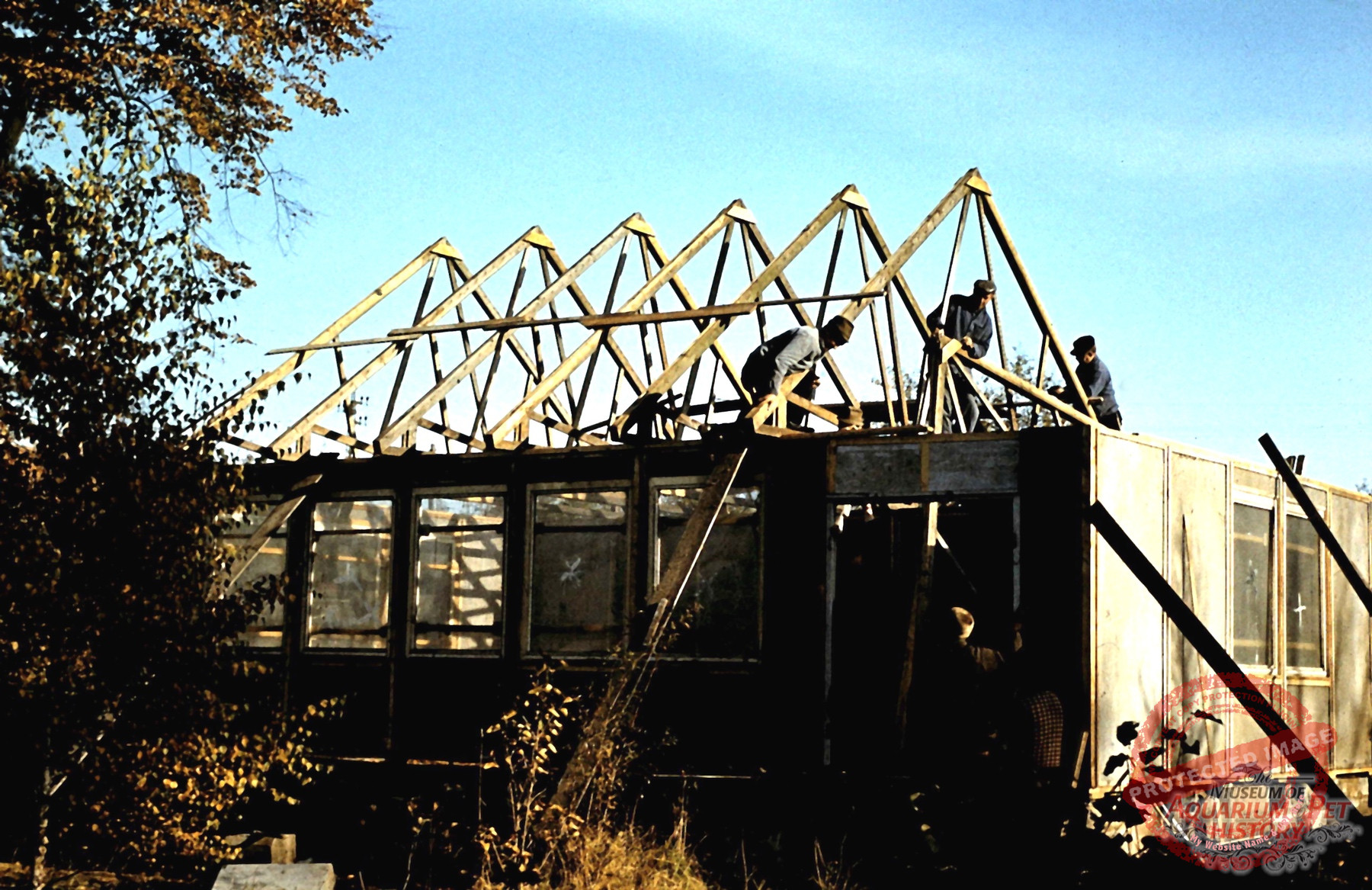
Prefabricated parts are assembled to create the barrack-like structure intended as the future clubhouse.
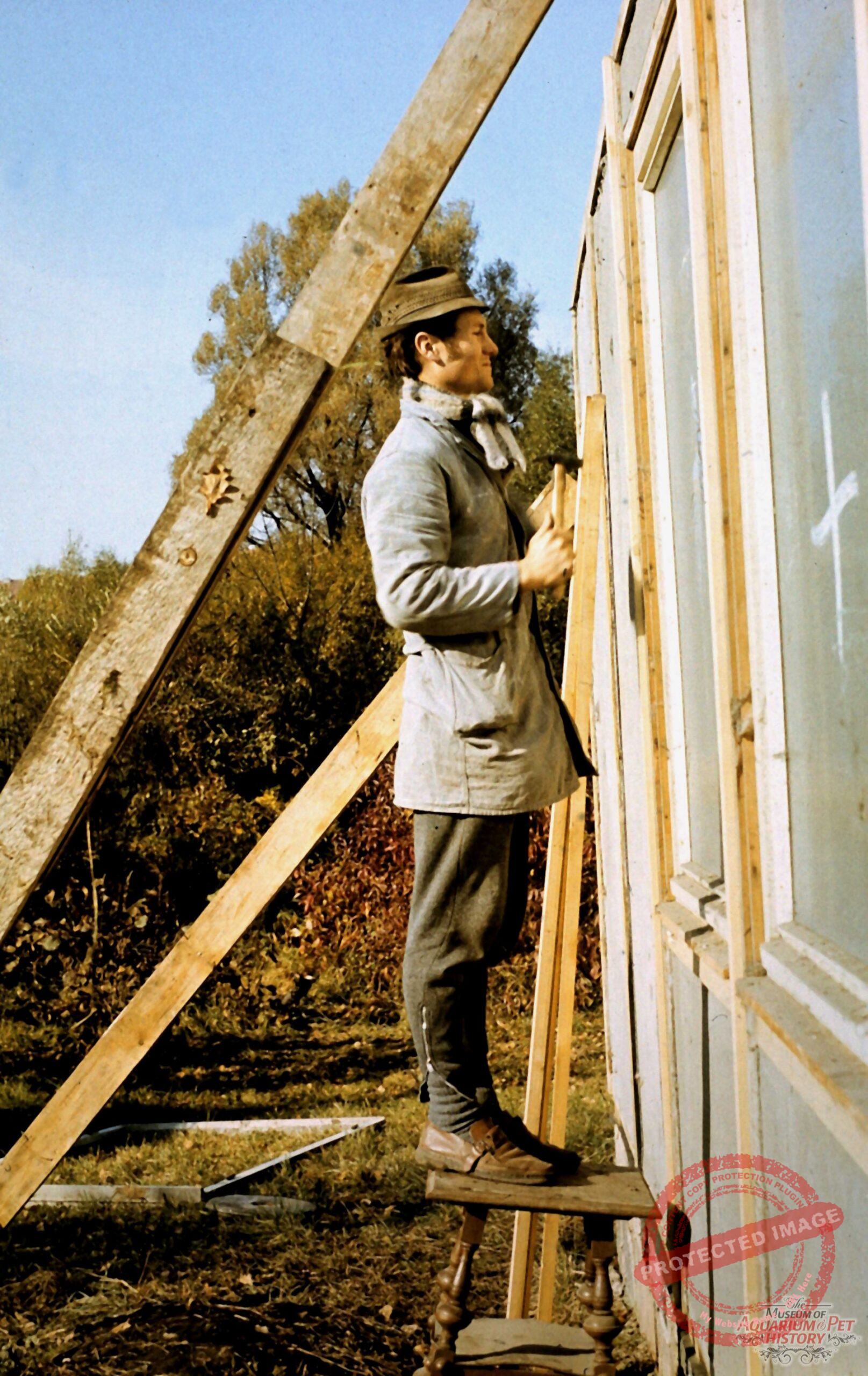
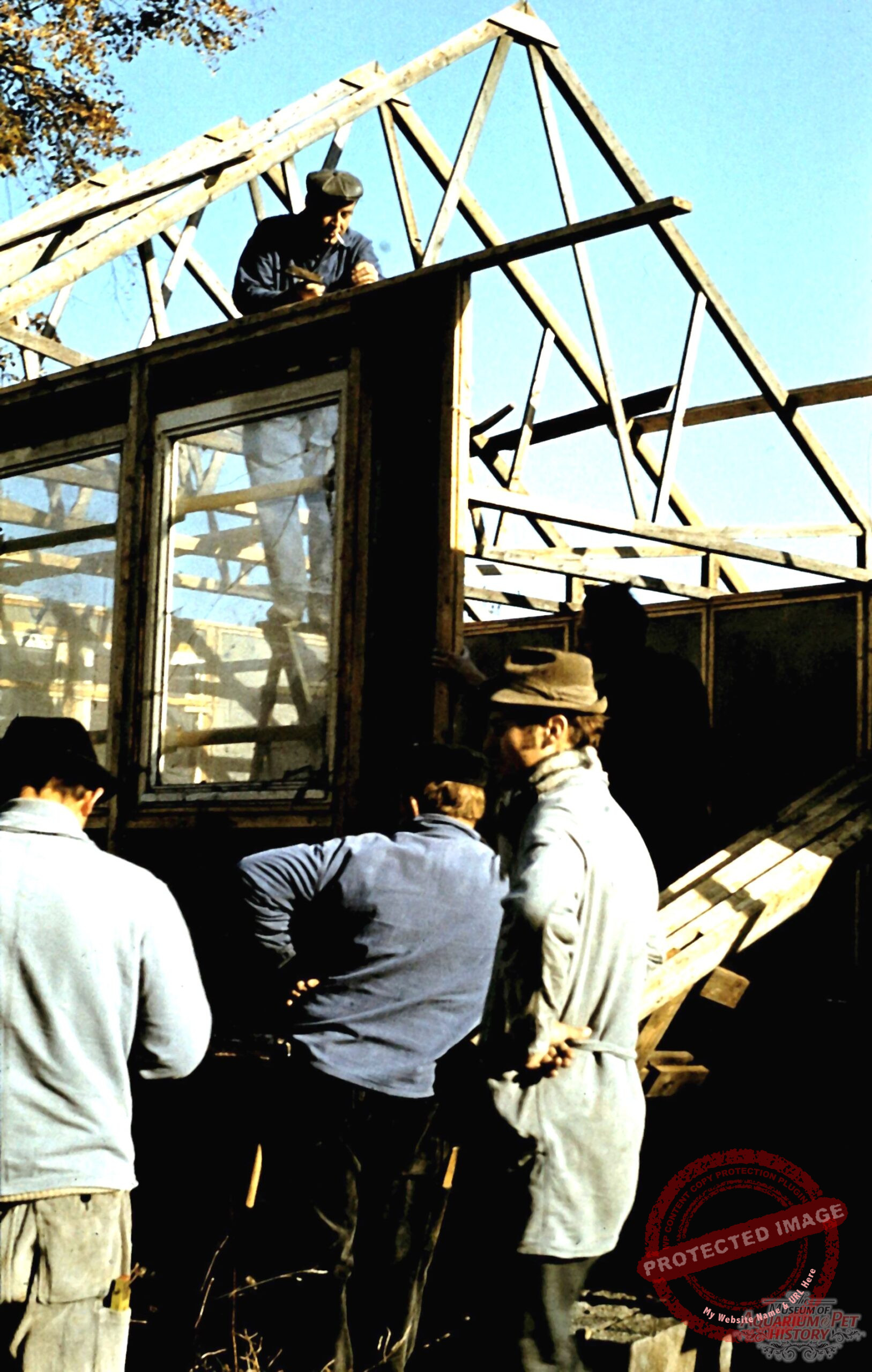
Prefabricated parts are assembled to create the barrack-like structure intended as the future clubhouse.
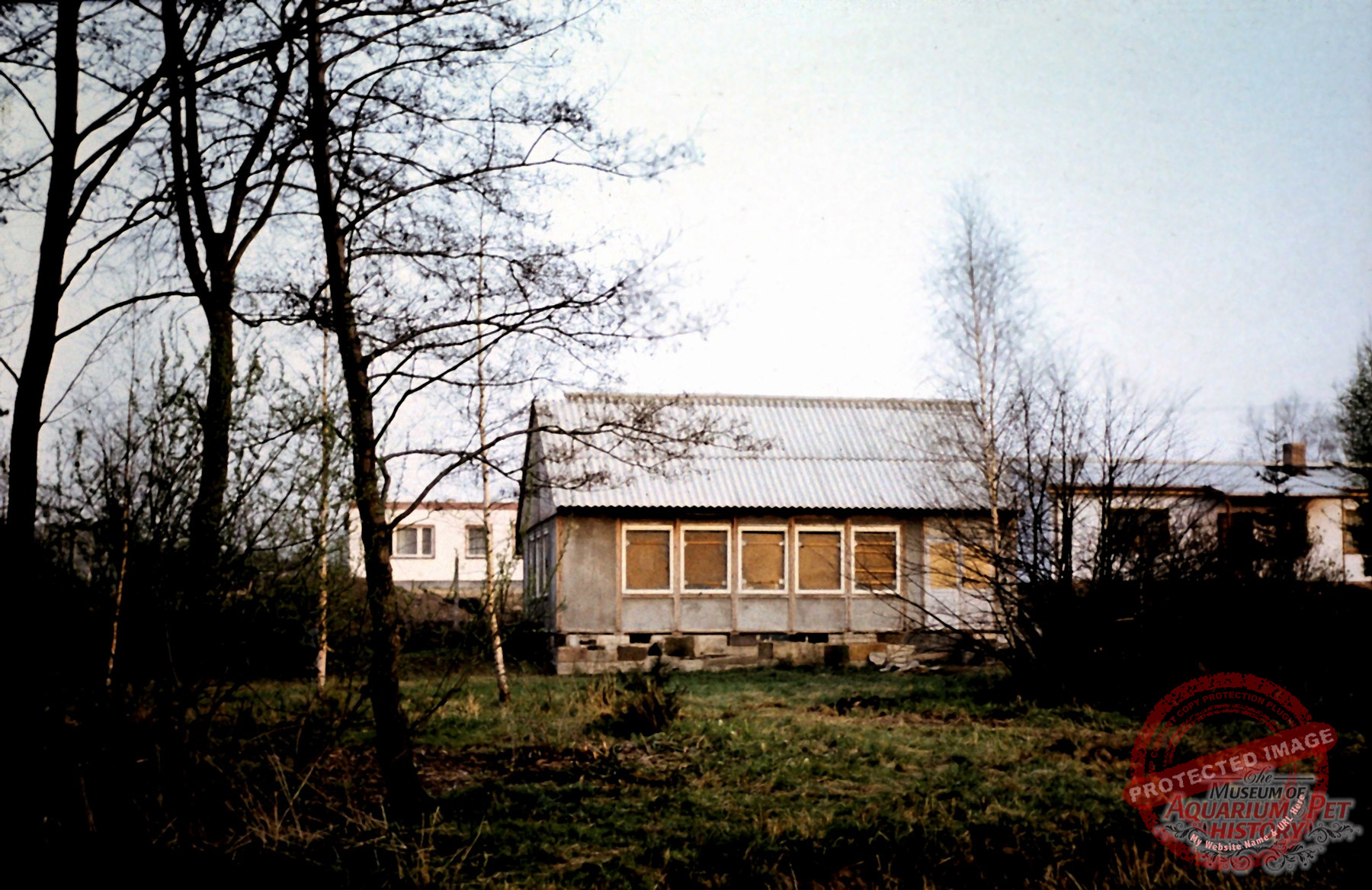
The shell construction is complete.
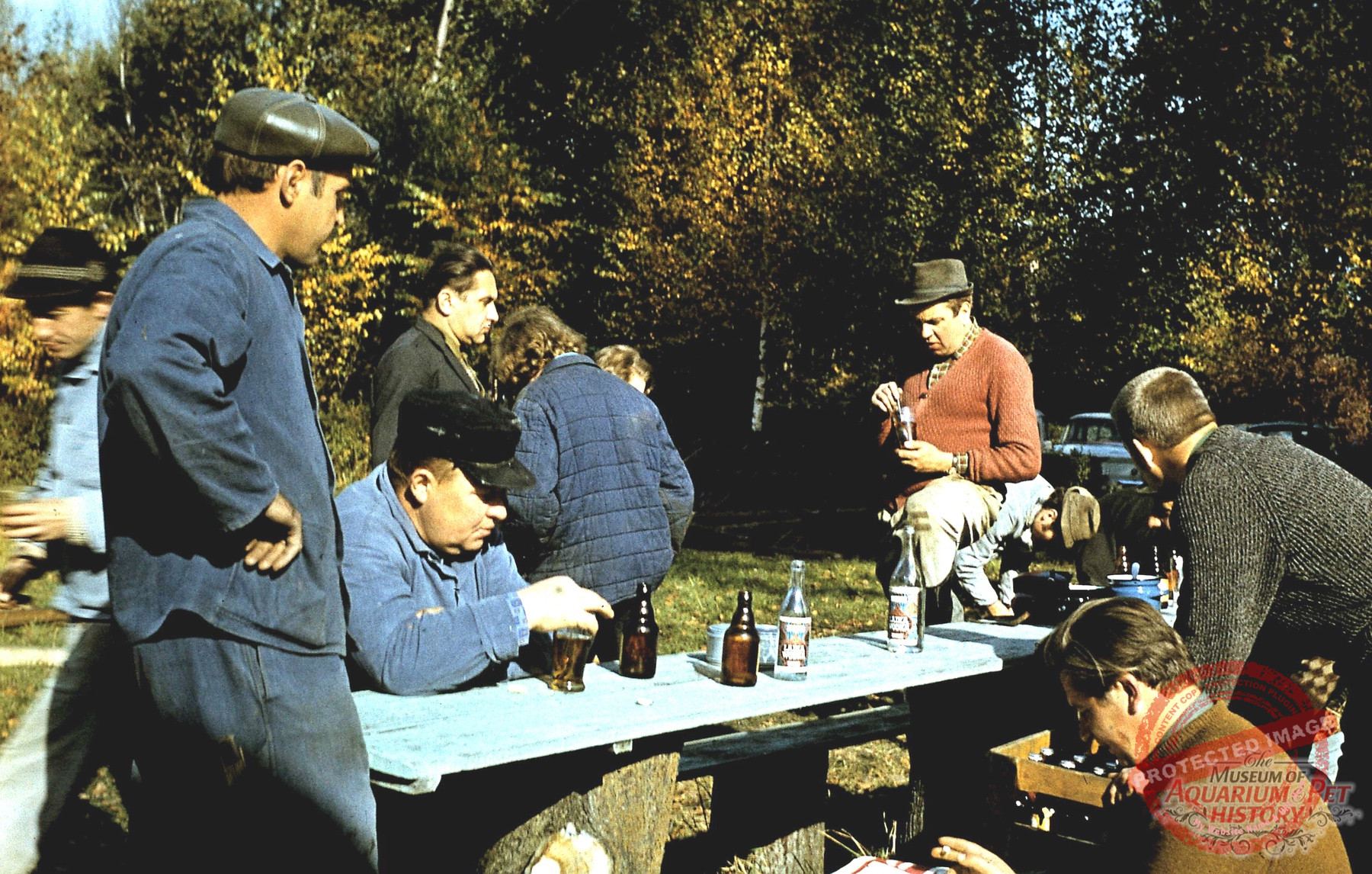
The families of society members often came along, providing food and drinks to those working at the aquarium.
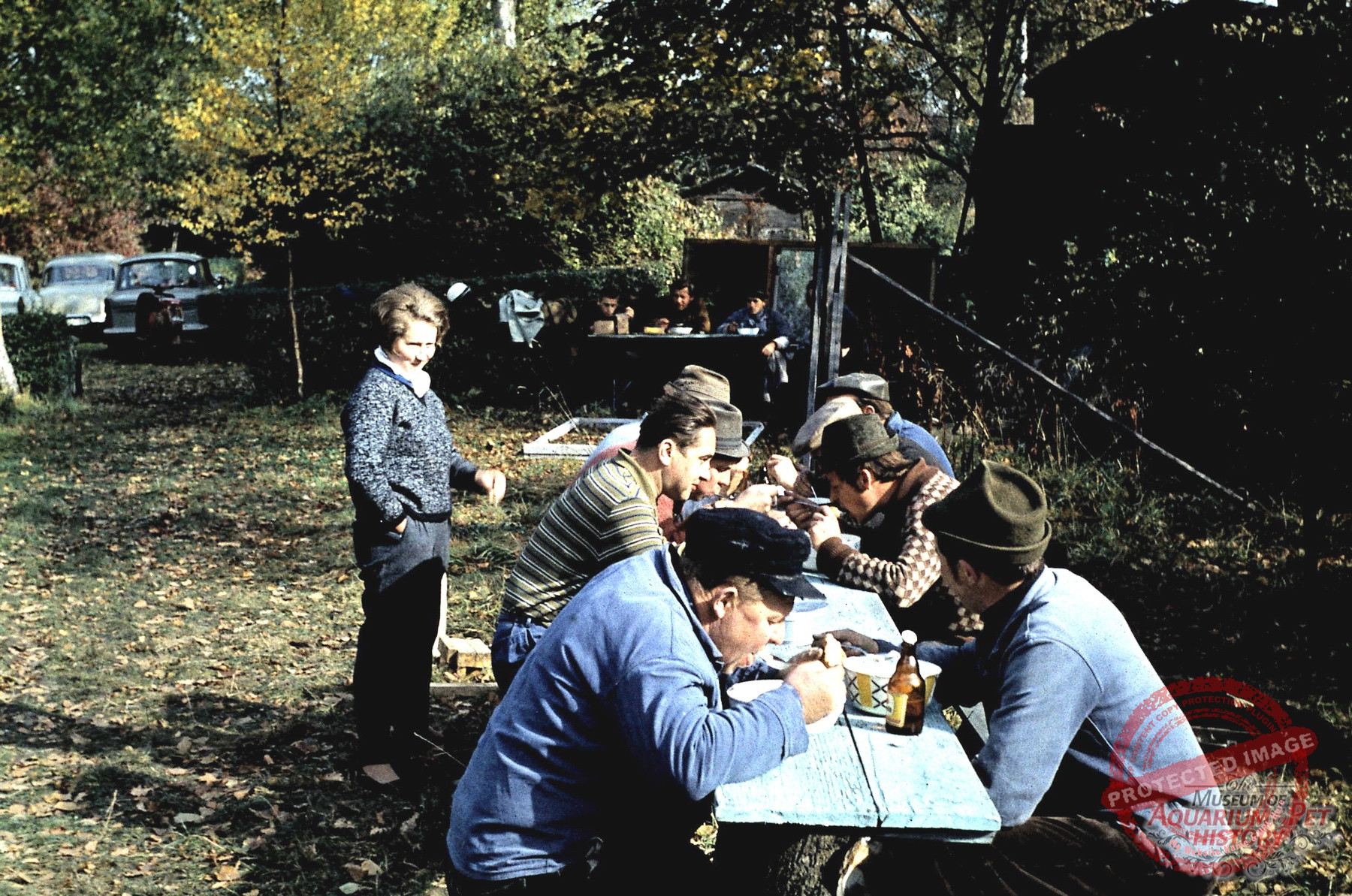
The families of society members often came along, providing food and drinks to those working at the aquarium.
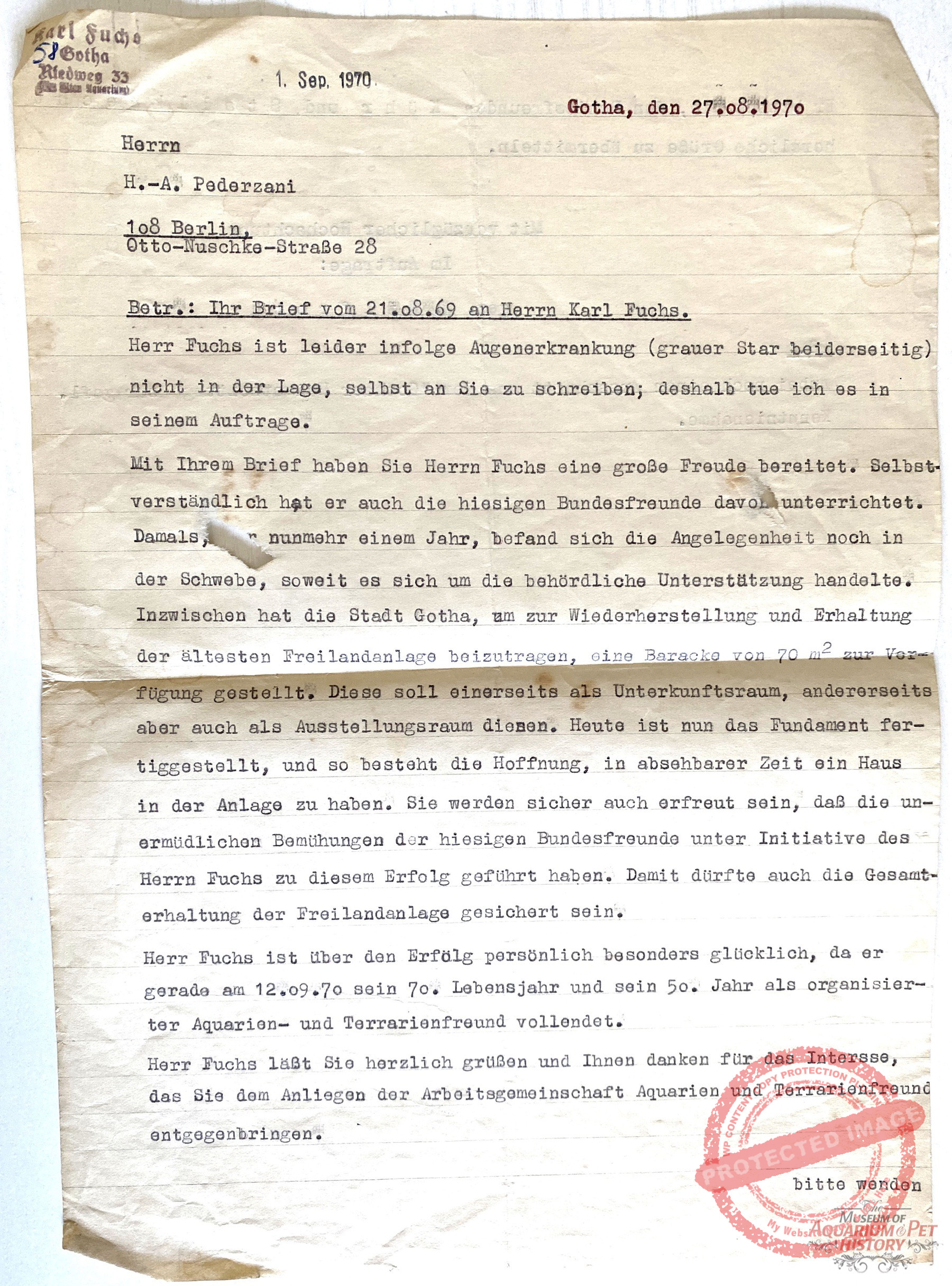
Because Charly Fuchs was nearly blind from cataracts in 1970, his friend Wilfroth wrote this letter to the already renowned Hans-Albert Pederzani.
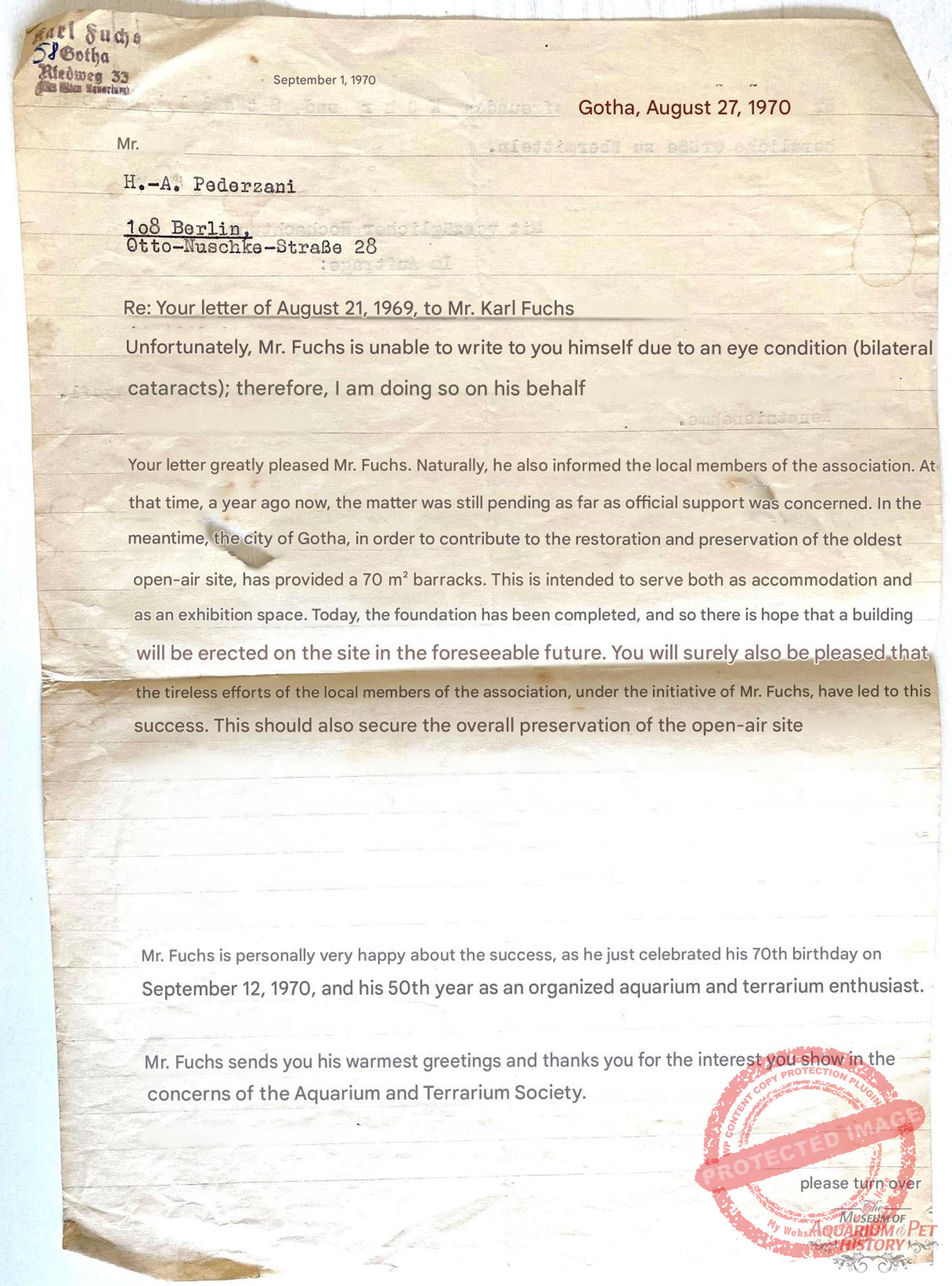
Wilfroth’s letter translated using notegpt.io
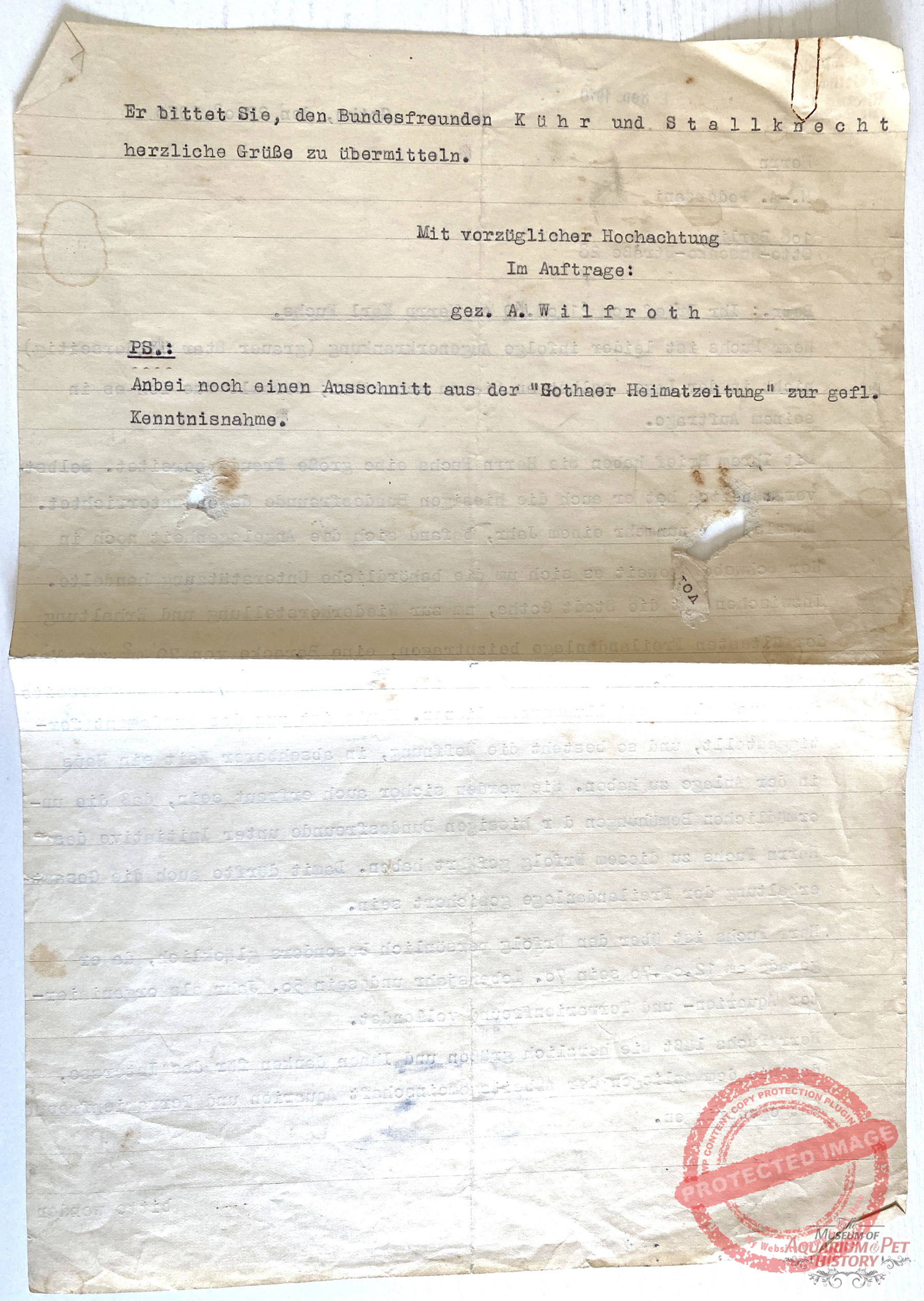
Second page of this letter.
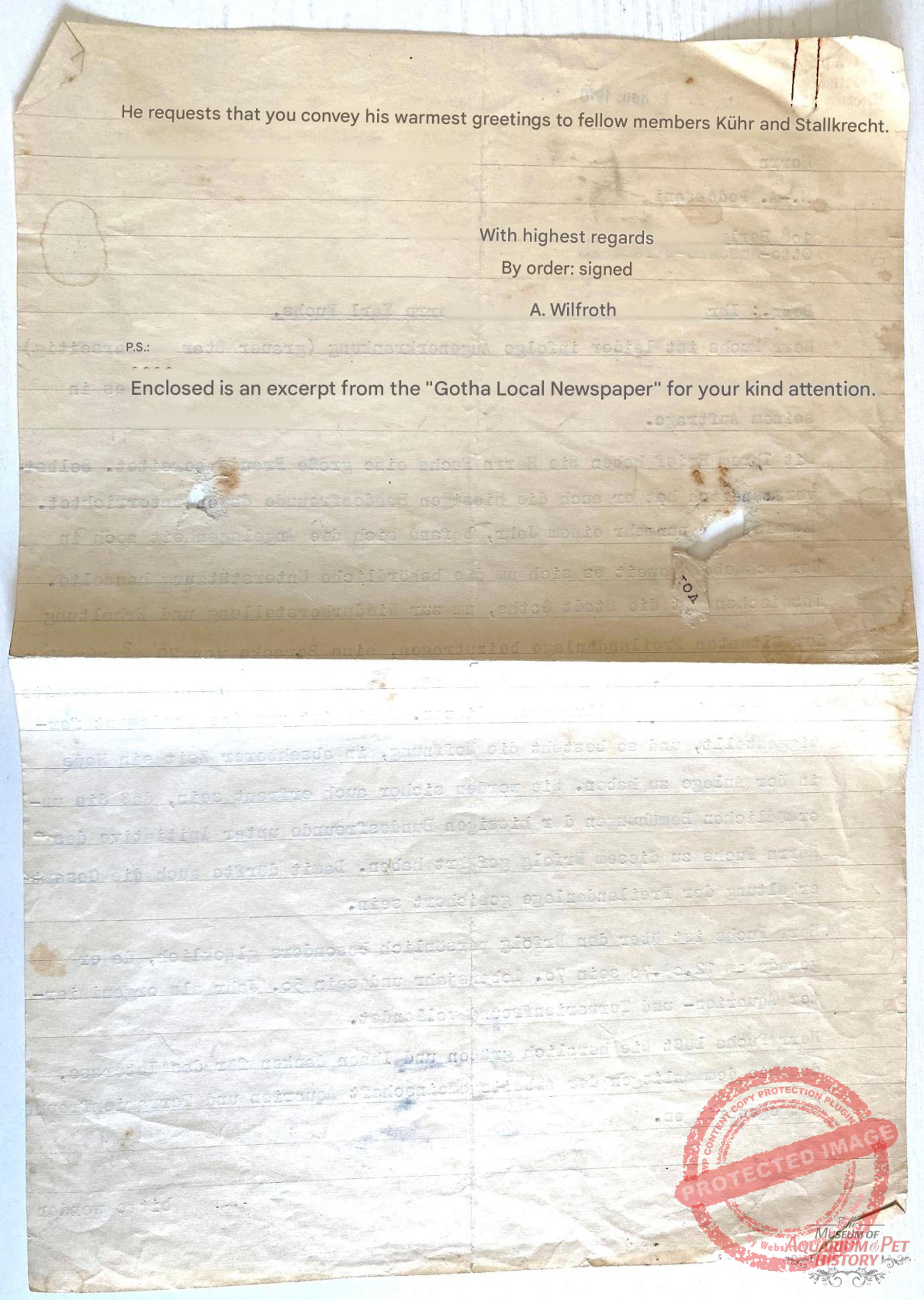
Second page of this letter translated using notegpt.io.
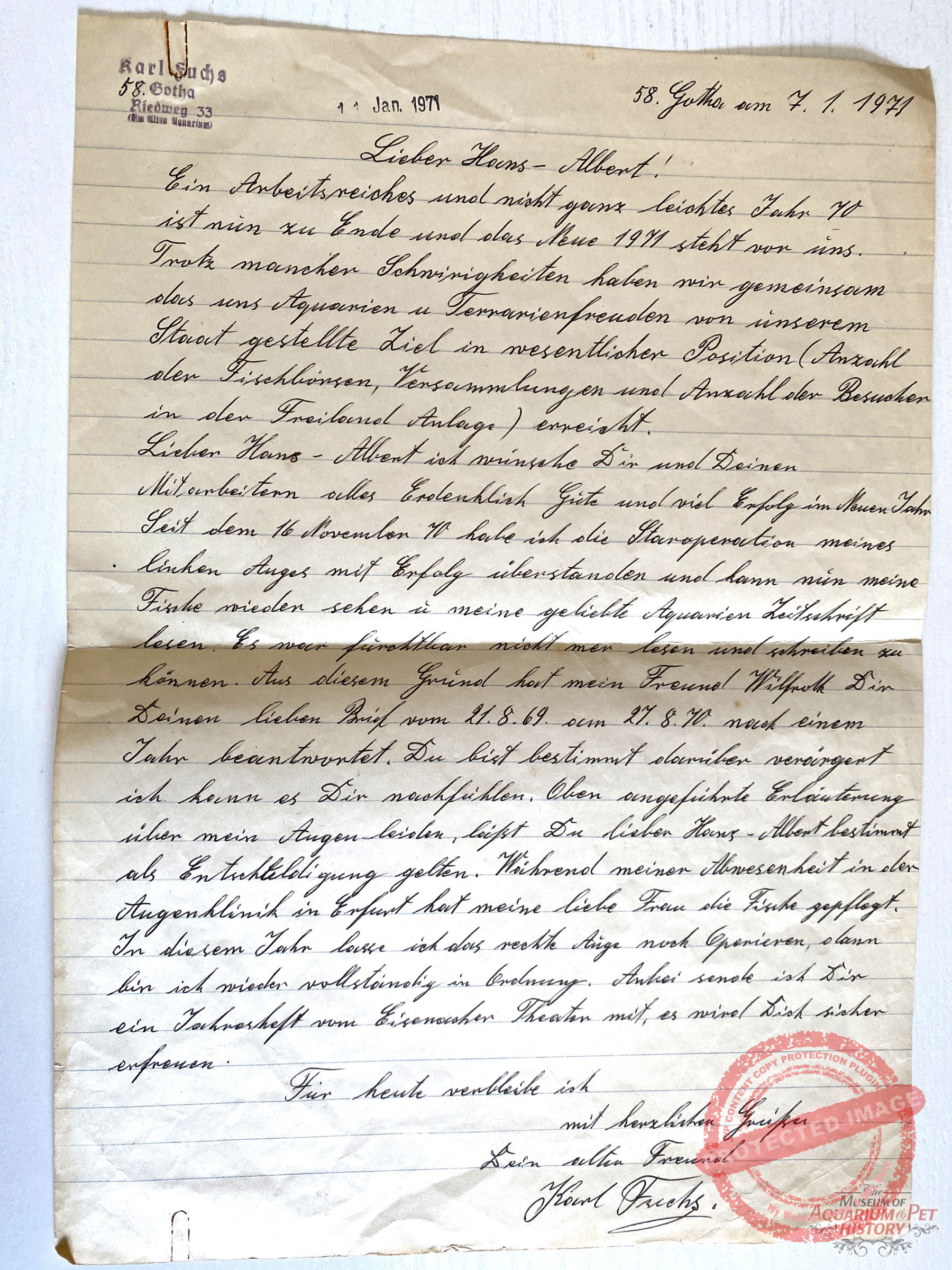
After a successful eye operation in 1971, Charly Fuchs was able to write again to Hans-Albert Pederzani himself.
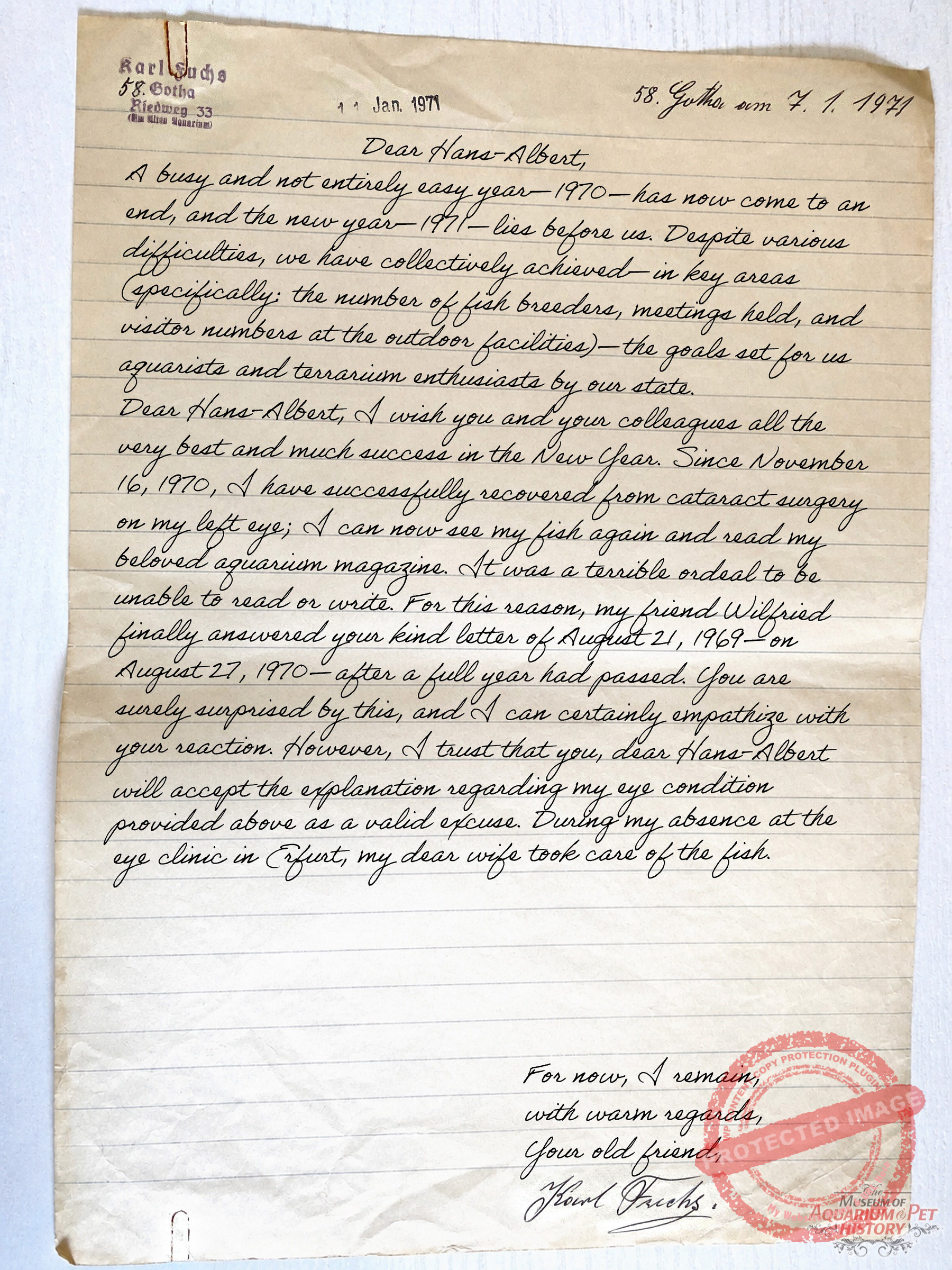
Charly Fuch’s letter translated using notegpt.io.
In his final years, however, Fuchs could no longer care for the outdoor aquarium as before. A typical phenomenon in the GDR of the early 1980s was acts of vandalism by youths venting ideological frustration. The seemingly abandoned clubhouse, once protected by Fuchs, became a target. It remained for a long time a damaged, unusable building. The party-led city administration showed little regard for past contributions and simply leased the grounds to the ornamental poultry and exotic birds section of the Association of Allotment Gardeners and Small Animal Breeders. Once again, the aquarists lost the outdoor aquarium they had built and maintained with such dedication.
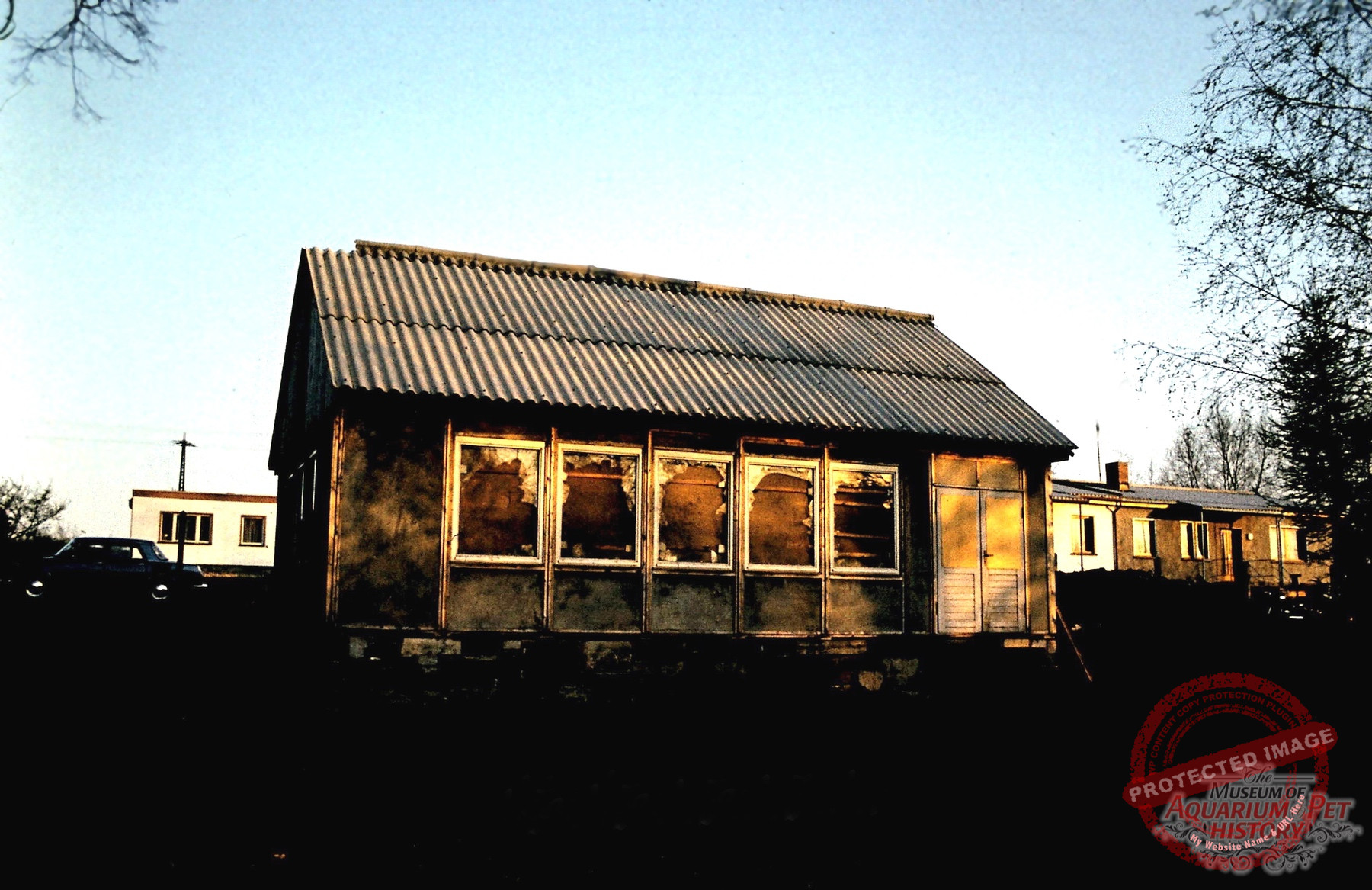
The clubhouse was heavily damaged by vandalism in the 1970s.
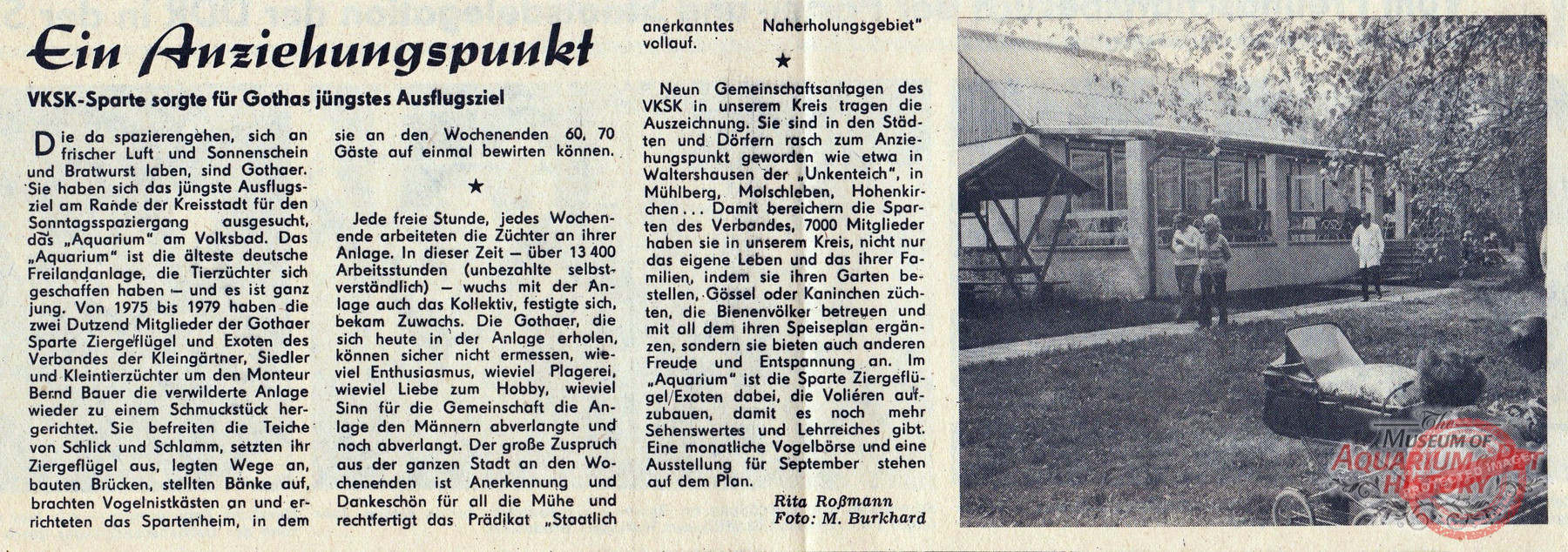
Article in a Gotha newspaper about the new use of the outdoor aquarium by ornamental poultry breeders.
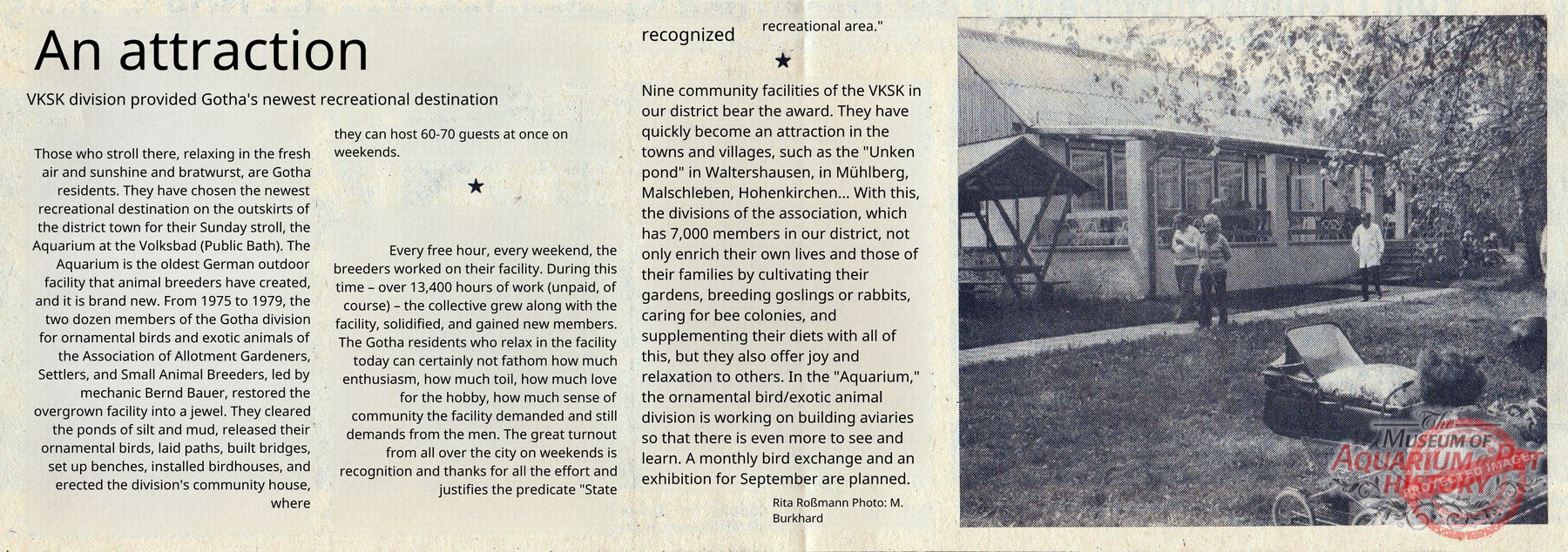
Gotha newspaper article translated using notegpt.io.
Gustav Herbig, as chairman, was not as active as Koch and Fuchs had been. His predecessor Kurt Leyhe, though respected and regularly present, had also focused more on his private aquarium. The society’s activities now drifted along like water from a filter outlet pipe.
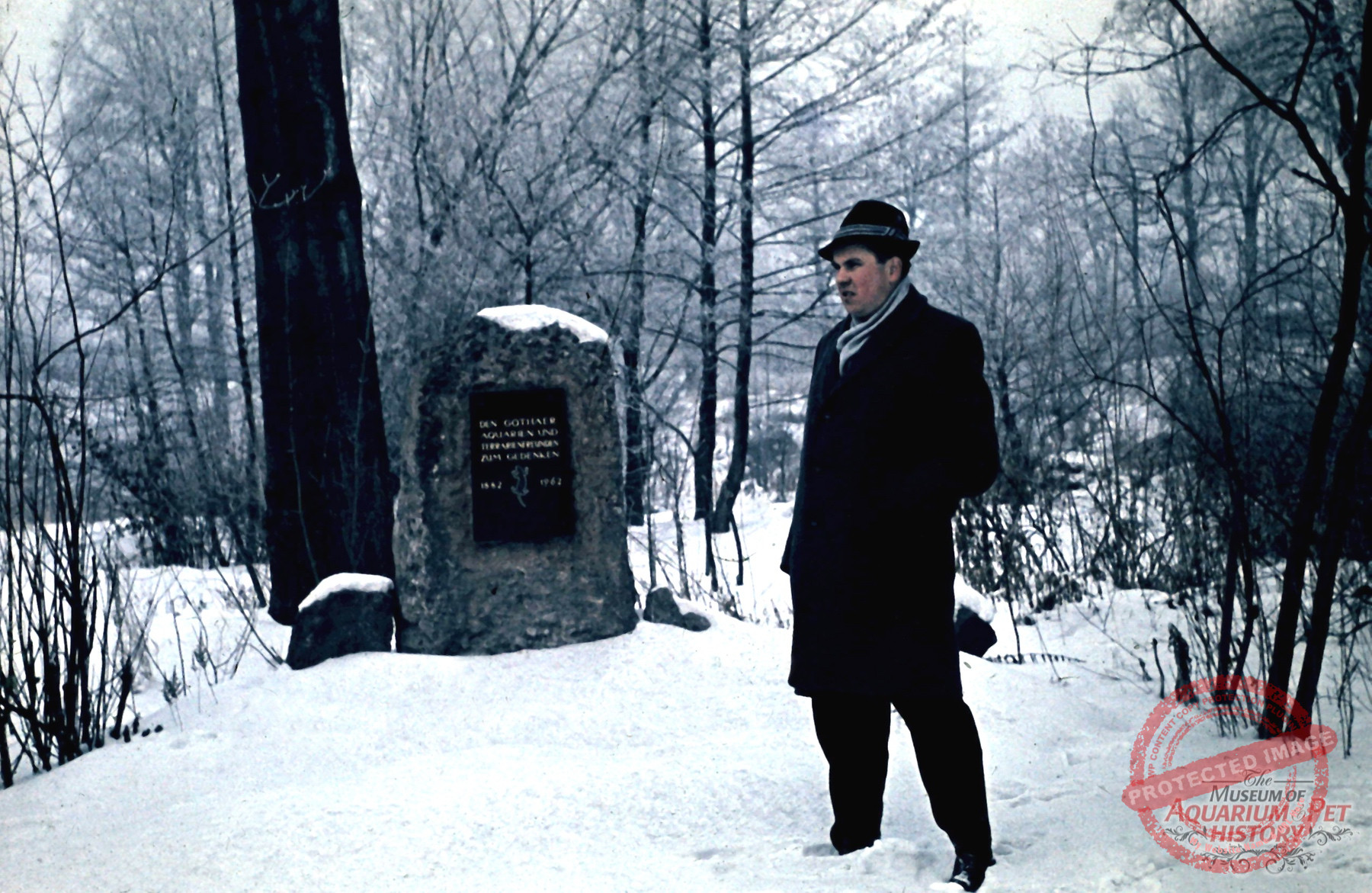
Gustav Herbig served as chairman until the end of the GDR; he had procured the stone for the commemorative plaque in the aquarium from the Gotha cemetery he directed.
Yet in 1982, a special anniversary approached: the centennial of the world’s oldest aquarium society. At the time, I was a biology student at the University of Greifswald and already a regular contributor to Aquarien Terrarien. Hans-Albert Pederzani had handed editorial responsibility to the well-known author Helmut Stallknecht, whom I visited regularly in Berlin. In the summer of 1982, I brought him my short piece “When I Got My First Aquarium…,” in which I drew attention to the Gotha anniversary.
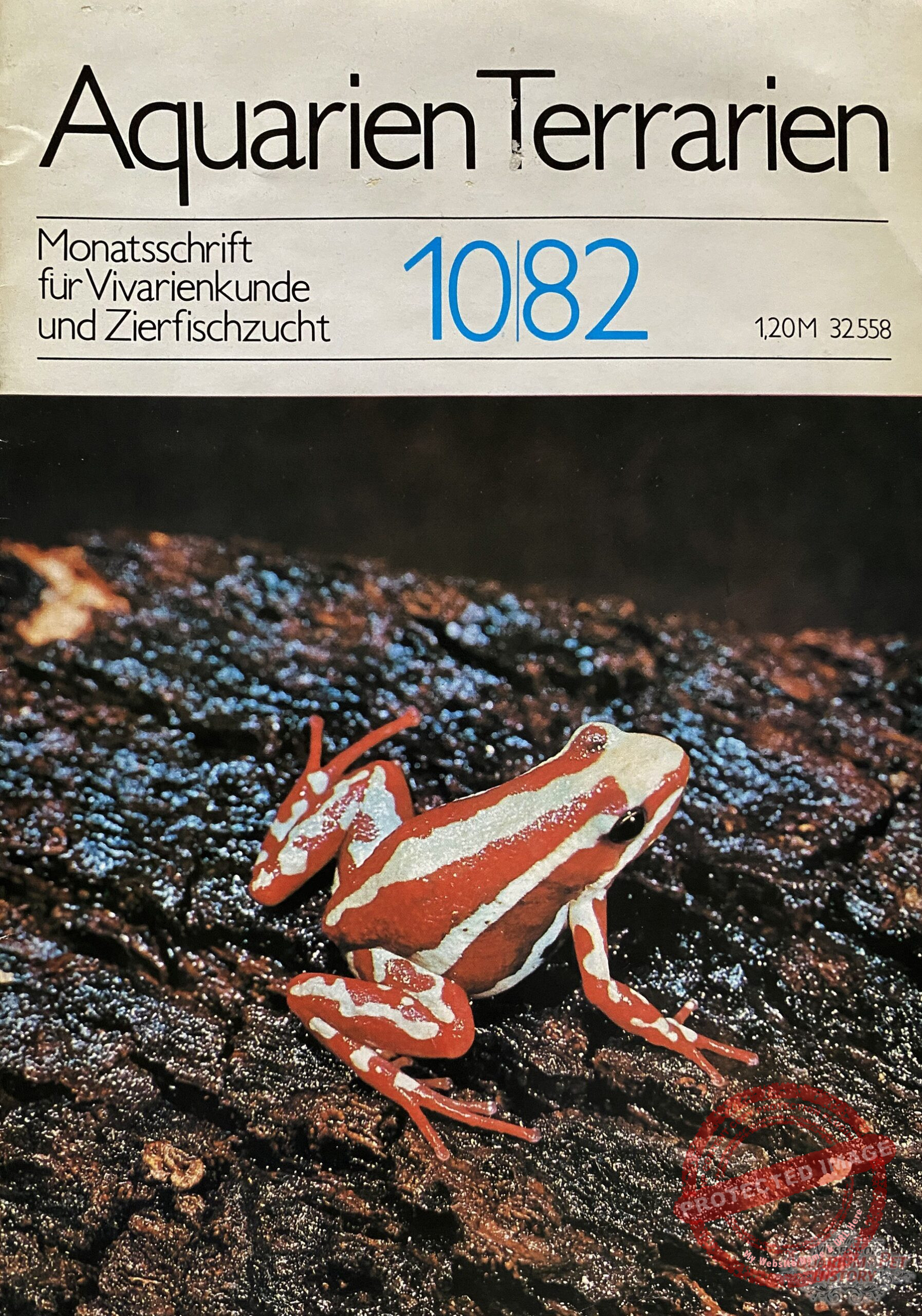
Cover of the GDR journal Aquarien Terrarien featuring many articles by Gotha aquarists on the occasion of the 100th anniversary.
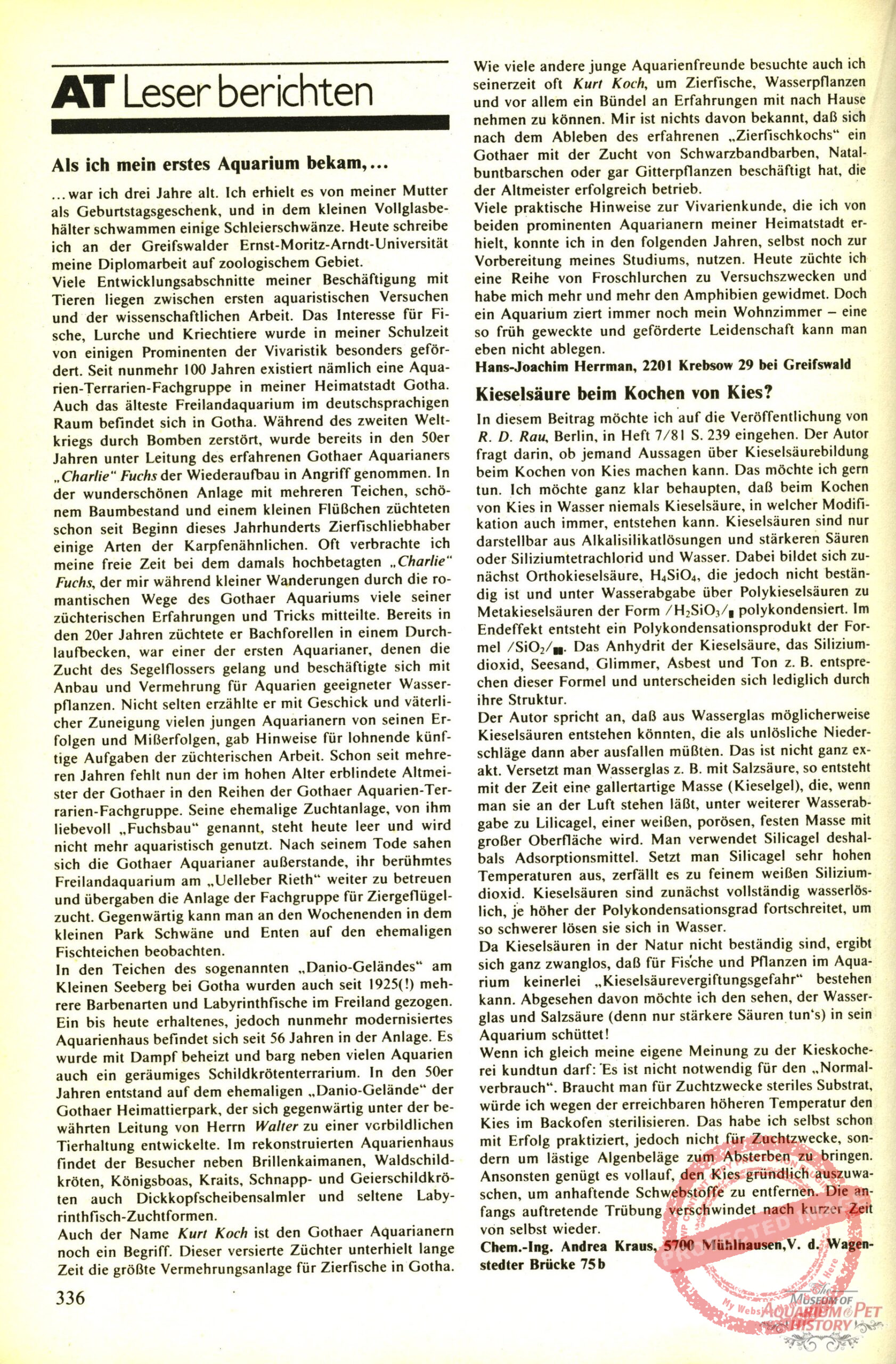
My brief contribution in this issue.
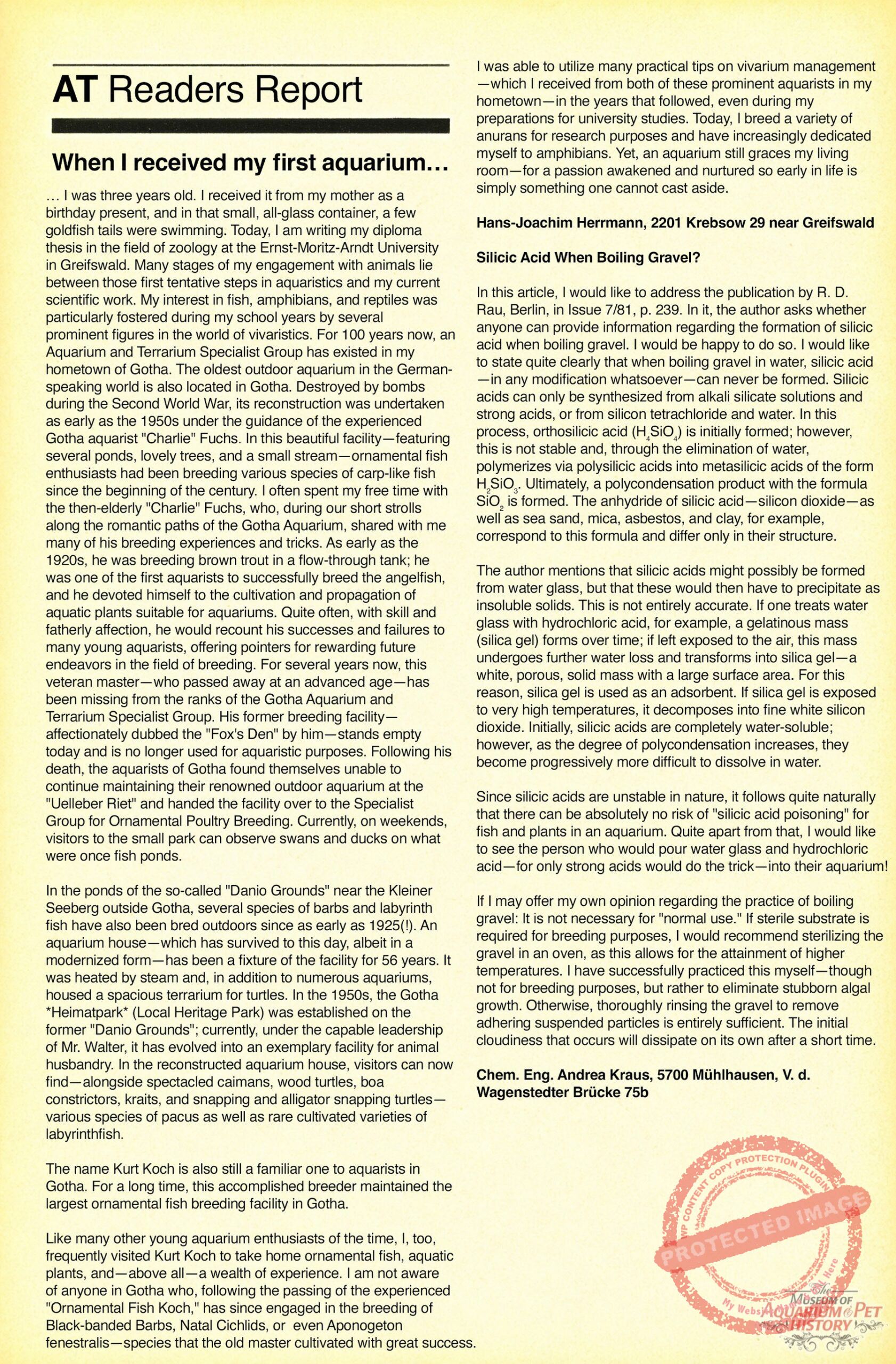
Hajo’s contribution translated using notegpt.io.
This prompted Stallknecht to contact the Gotha Aquarium Society to ensure proper coverage of the significant milestone. It was Kurt Leyhe, the doyen of Gotha aquarists, who wrote a historical overview for the journal. Other contributors included the current chairman Uwe Heustock, who wrote on native aquatic plants—an homage to the society’s origins. And other Gotha aquarists wrote for this edition, which in this way became a testament to the aquaristic competence in Gotha, such as the ornamental fish breeder Lothar Gorff, the tetra specialist Gernot Sommer, the cichlid aquarist Ralph Deußfeld and Rolf Liebau, who deals with native fish.
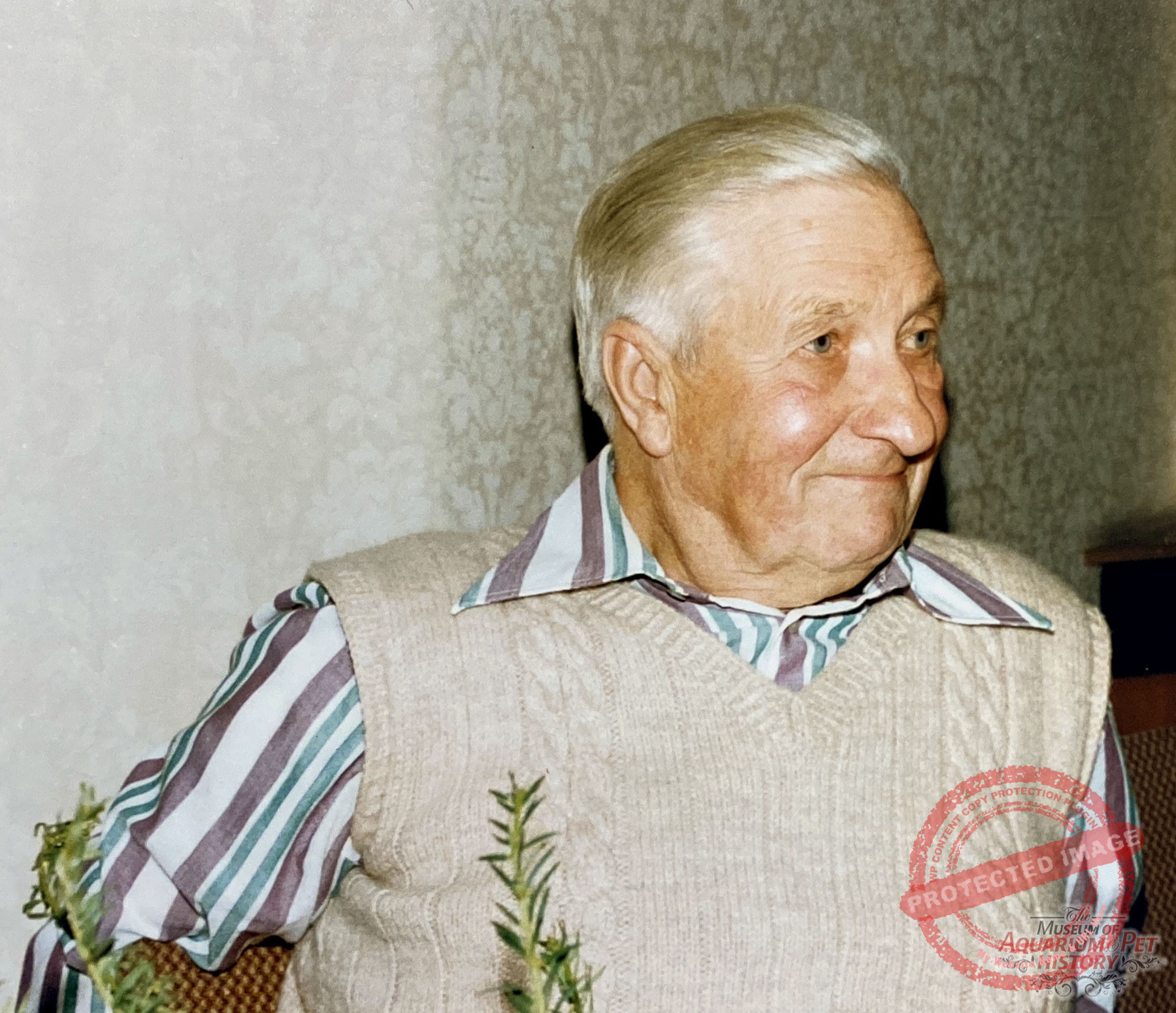
The widely respected Kurt Leyhe, following the deaths of the two veteran activists Kurt Koch and Charly Fuchs (who died on June 27, 1974), became the doyen of Gotha aquarists.
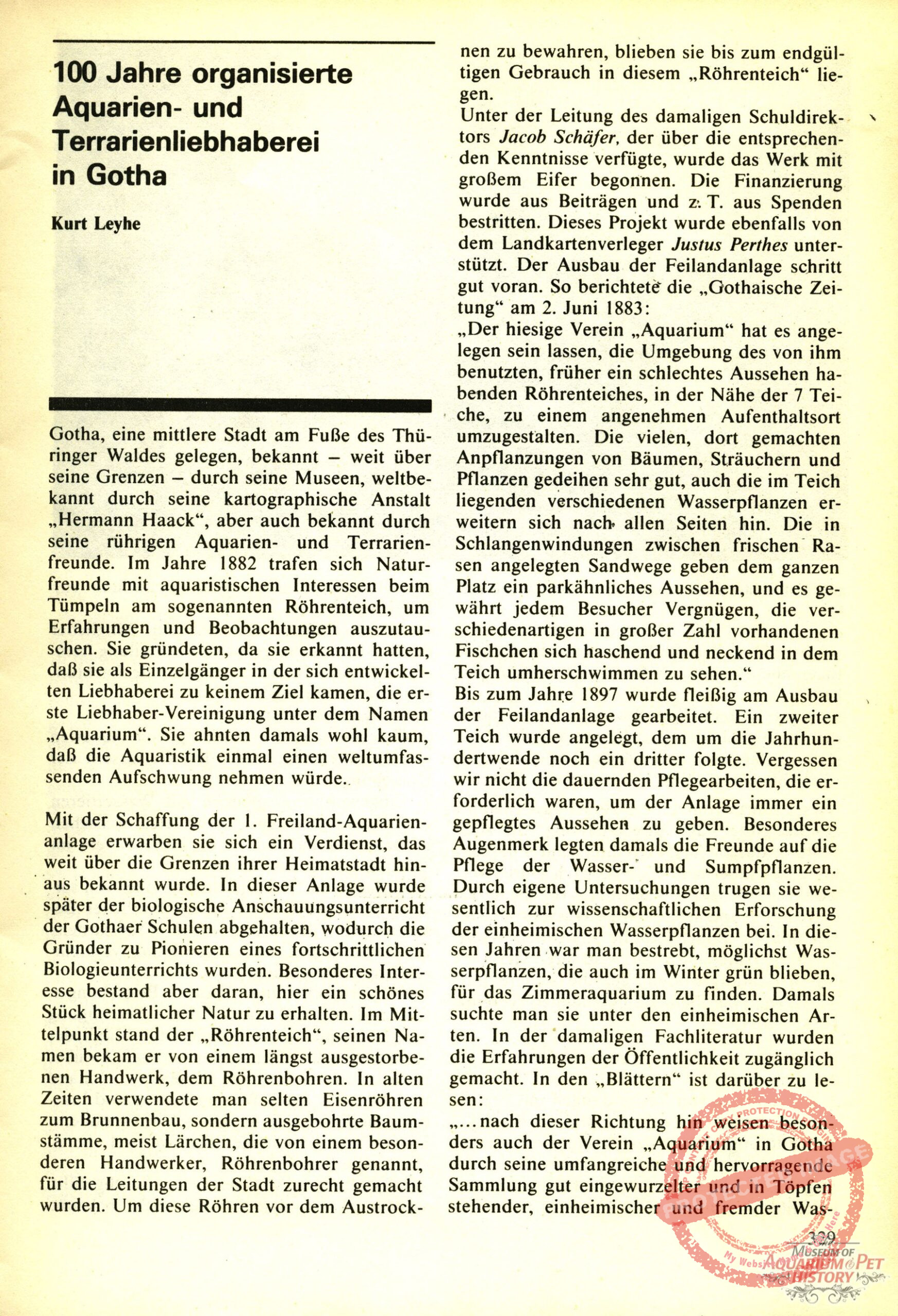
Kurt Leyhe is listed as the author of the historical overview.
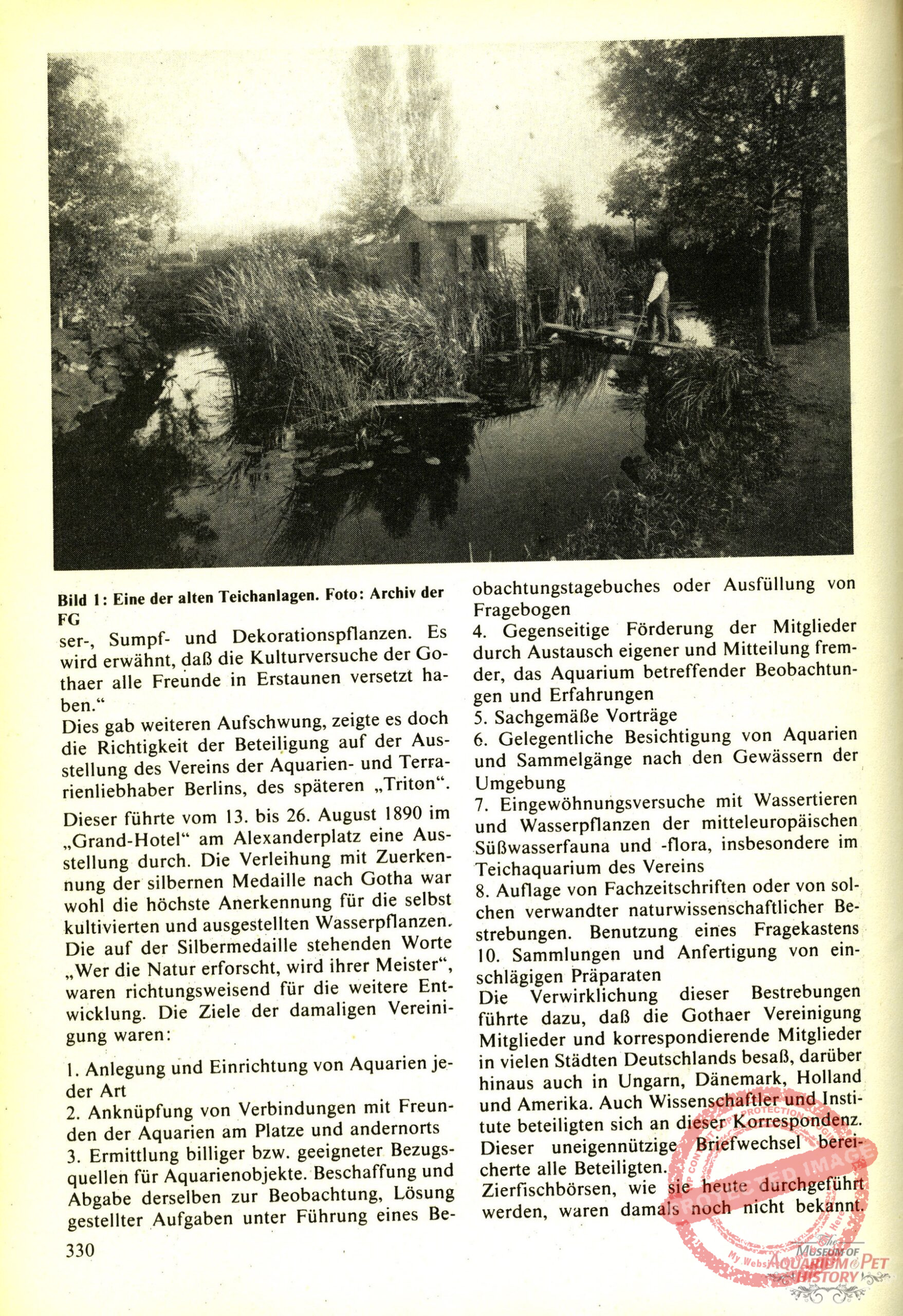
Page 2 of this article.
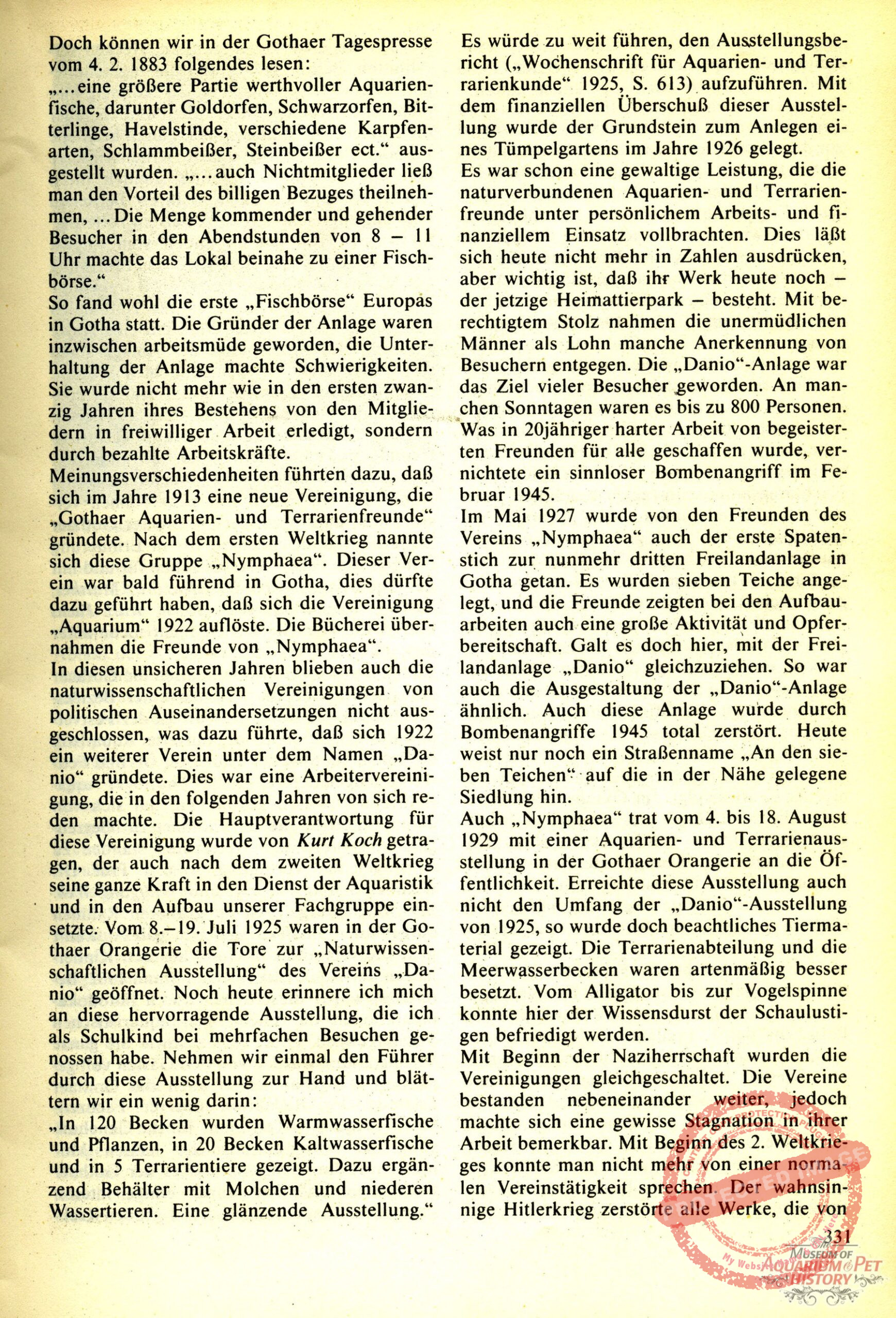
Page 3 of this article.
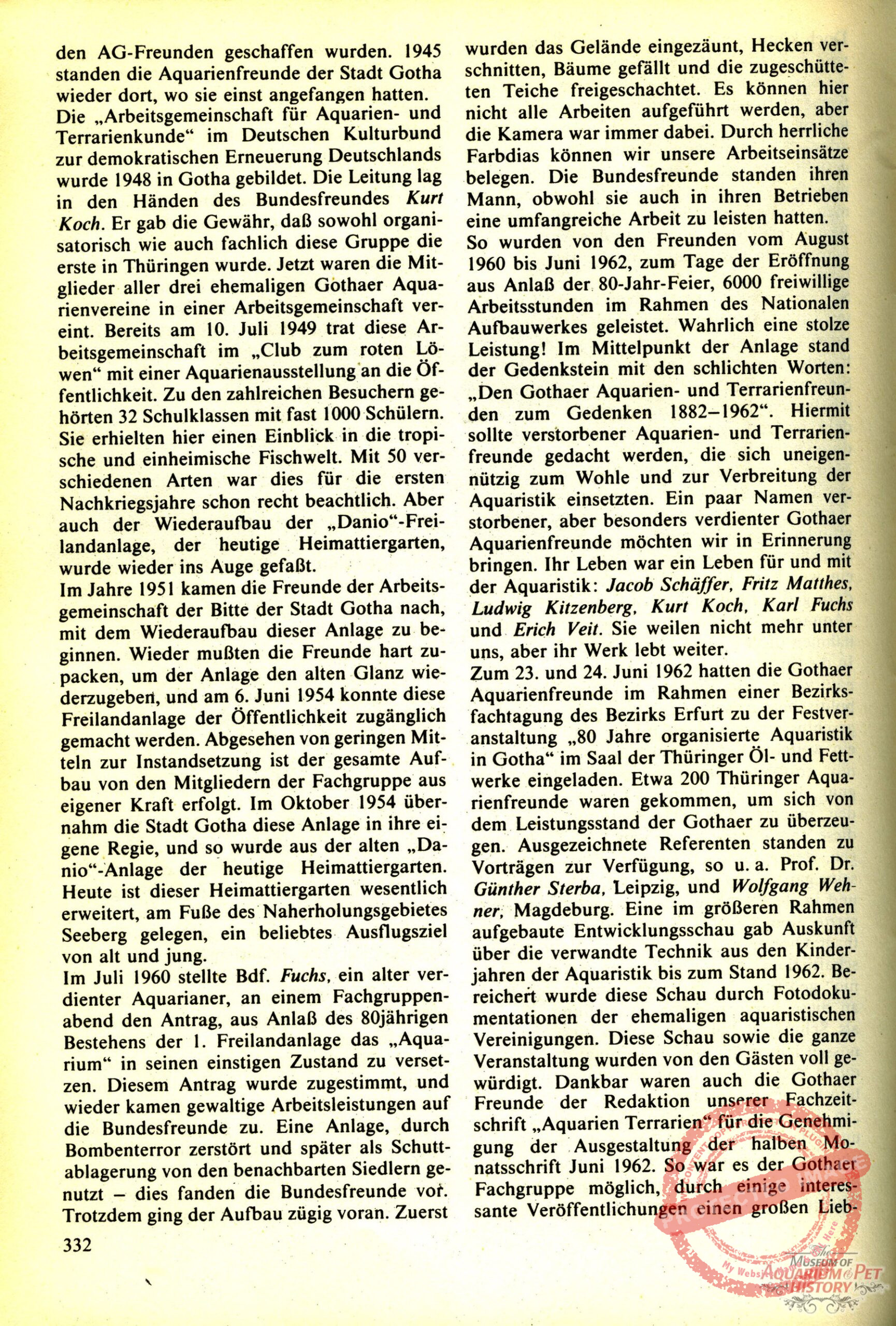
Page 4 of this article.
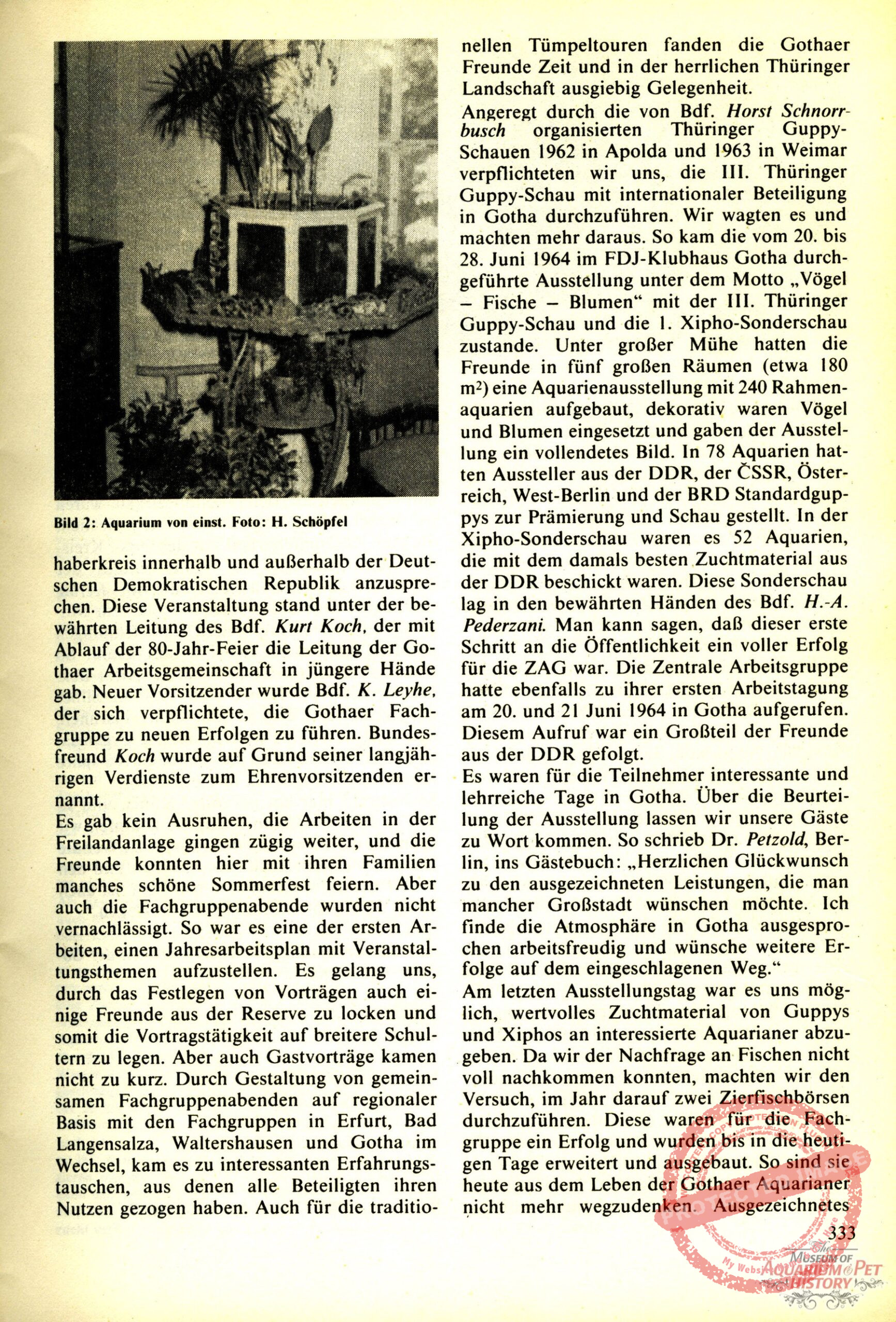
Page 5 of this article.
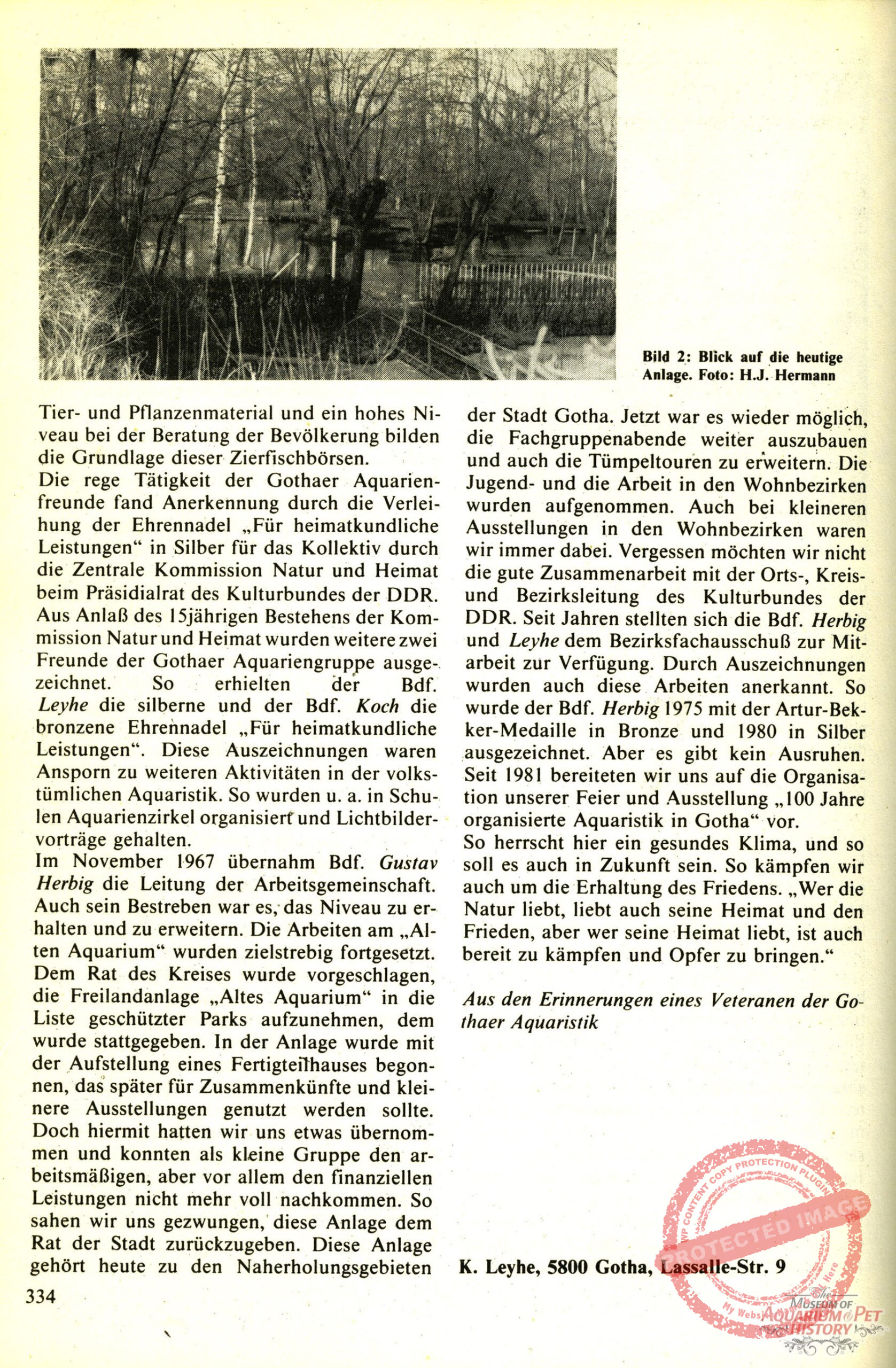
Page 6 of this article.
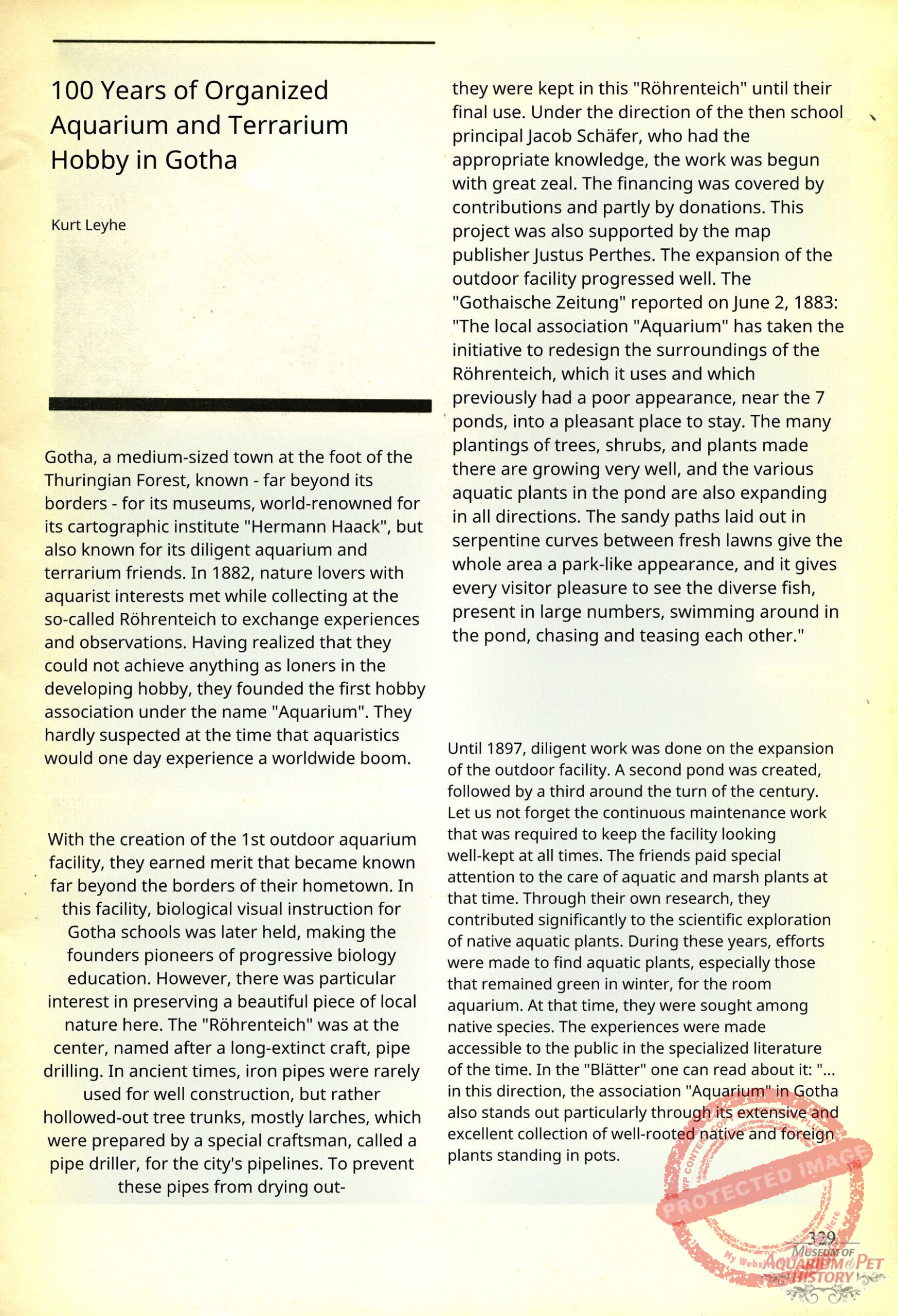
Page 1 of Kurt Leyhe’s article translated using notegpt.io.
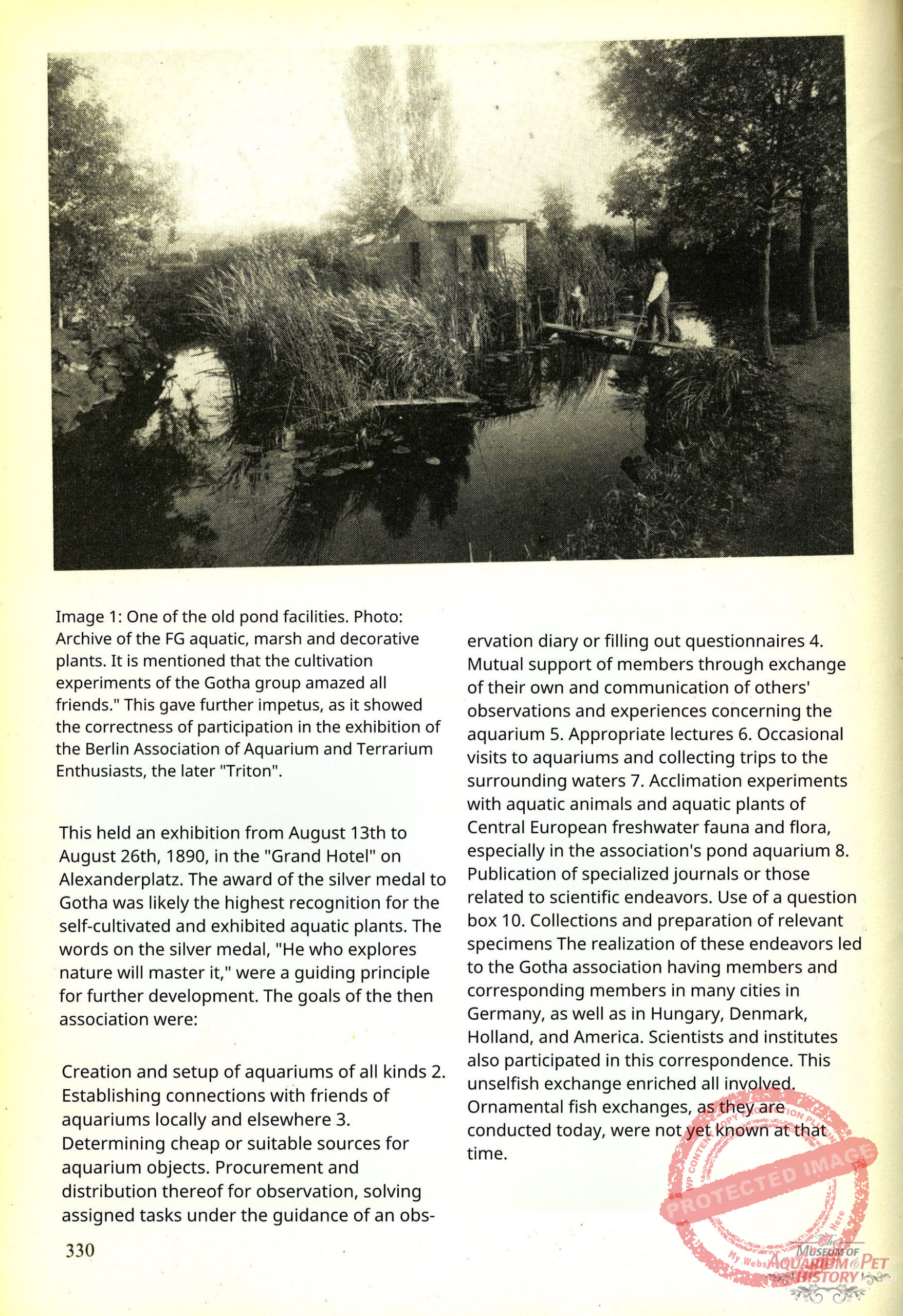
Page 2 of Kurt Leyhe’s article translated using notegpt.io.
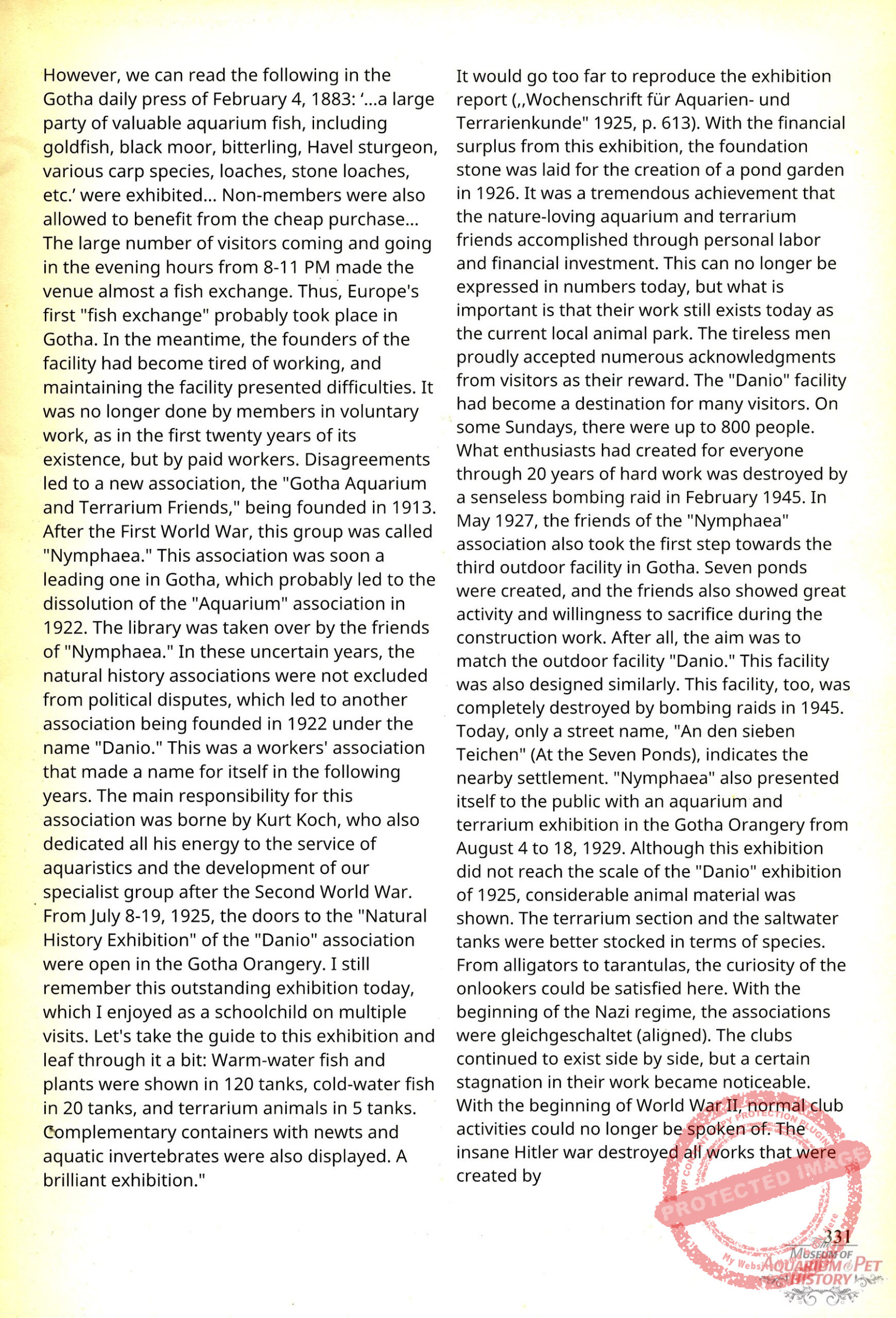
Page 3 of Kurt Leyhe’s article translated using notegpt.io.
Page 4 of Kurt Leyhe’s article translated using notegpt.io.
Page 5 of Kurt Leyhe’s article translated using notegpt.io.
Page 6 of Kurt Leyhe’s article translated using notegpt.io.
The Gotha aquarists rose to the occasion. Their old pride reemerged. With the support of the Kulturbund, they organized the exhibition “100 Years of Organized Aquaristics in Gotha” from October 23 to 30, 1982. The festivities began on October 22 with a program and lectures at the “Hermann Haack” clubhouse. Many prominent aquarists attended, including Helmut Stallknecht and Dr. Hanns-Joachim Franke, one of the doctor students of Prof. Sterba. Numerous societies sent congratulations, recalling the beginnings of aquaristics. Regional newspapers reported on and honored the Gotha aquarists.
Brochure marking the 100th anniversary of the Gotha Aquarium Society.
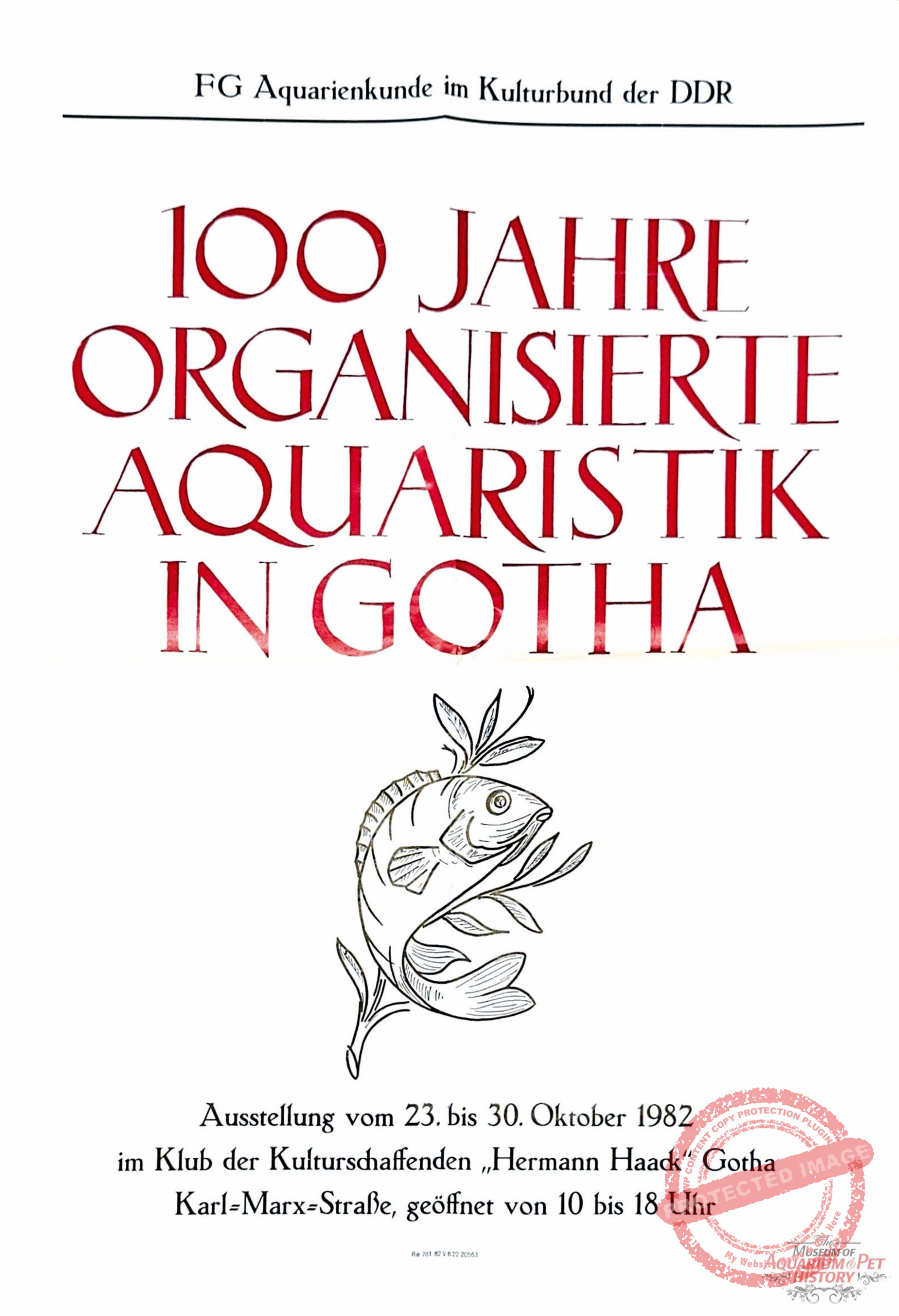
Poster for the exhibition “100 Years of Organized Aquaristics in Gotha.”
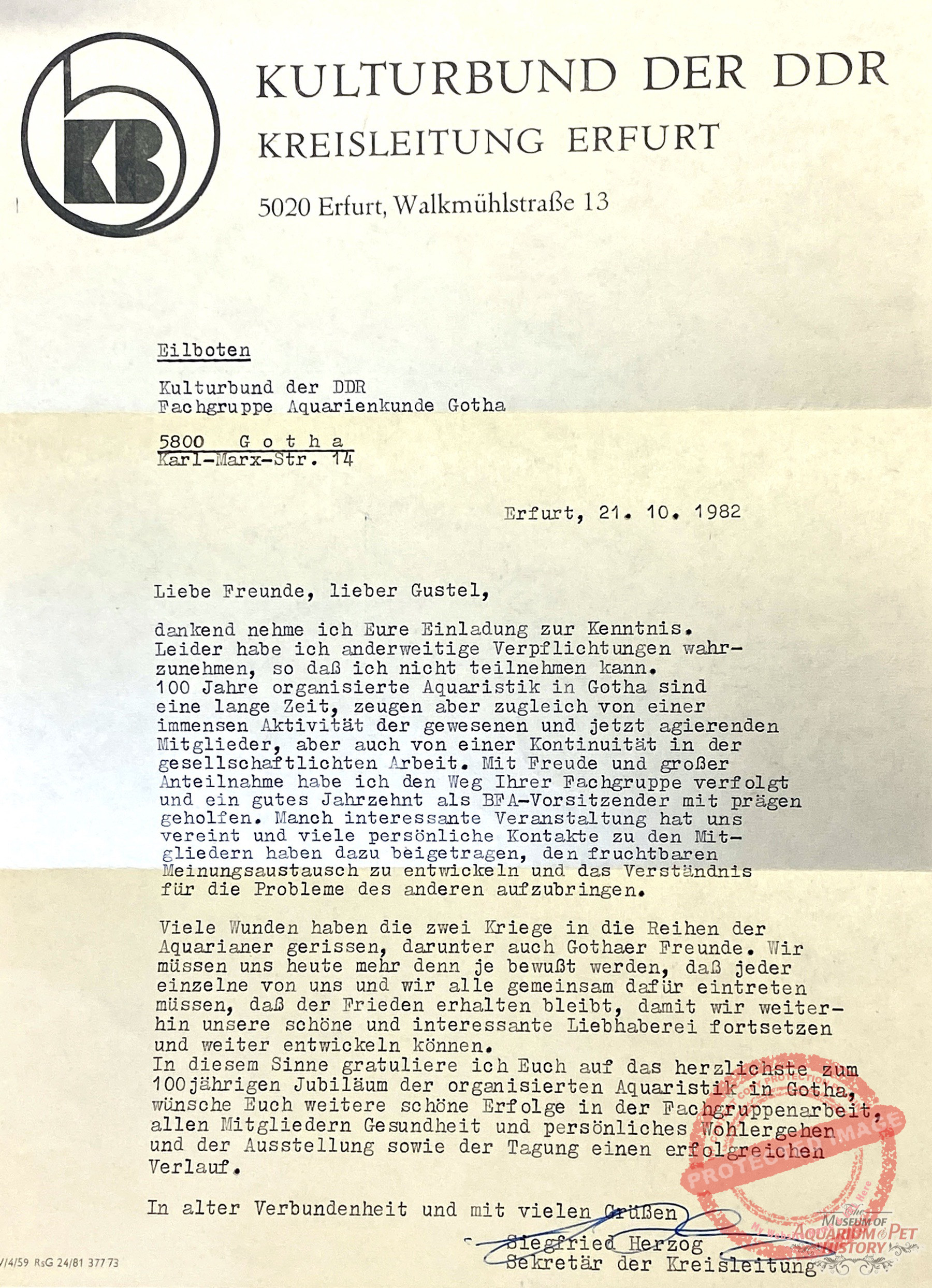
Letter of congratulations to the chairman of the Gotha society, Gustav Herbig, from the Erfurt district leadership of the Cultural Association.
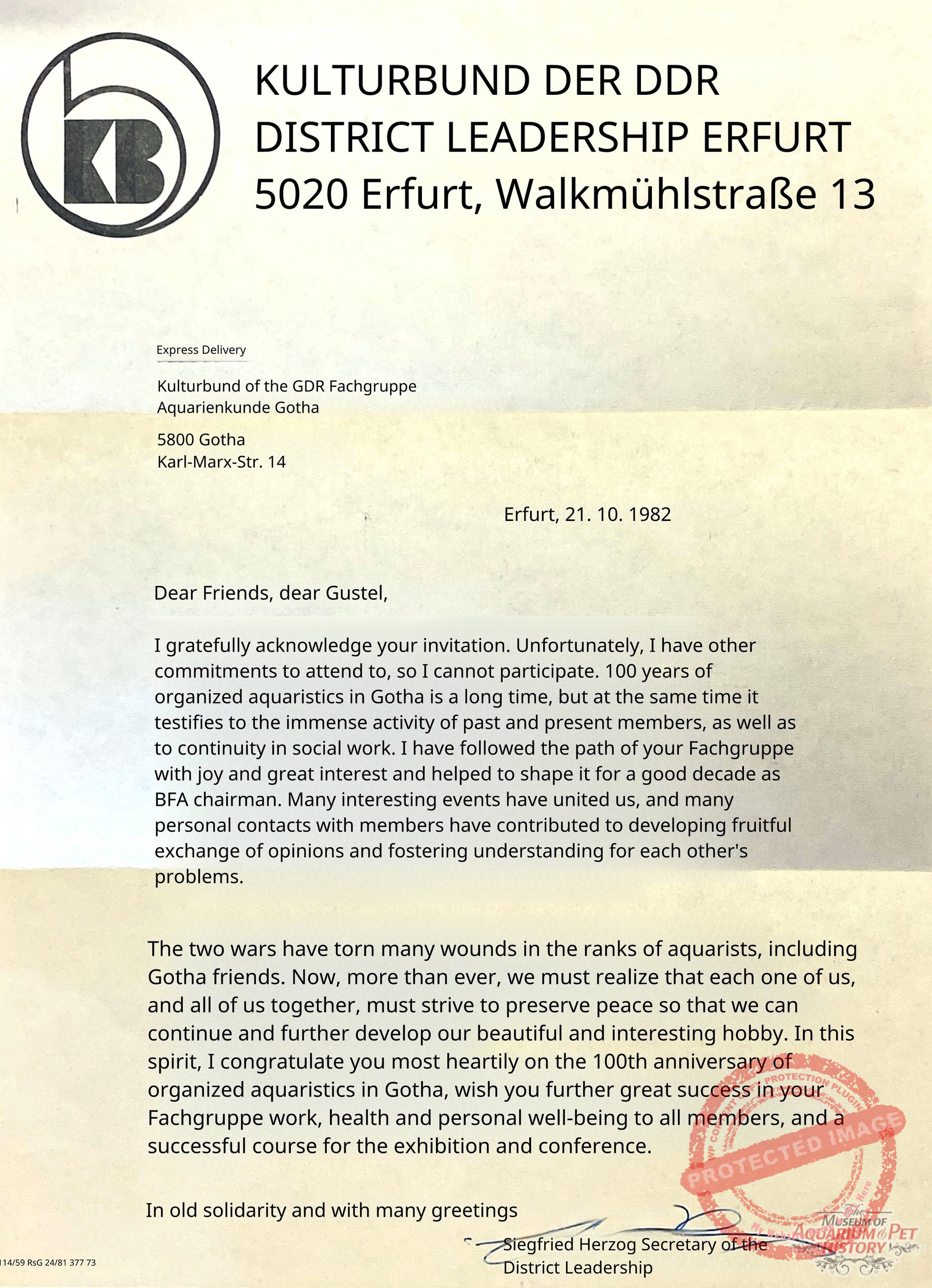
Letter translated using notegpt.io.
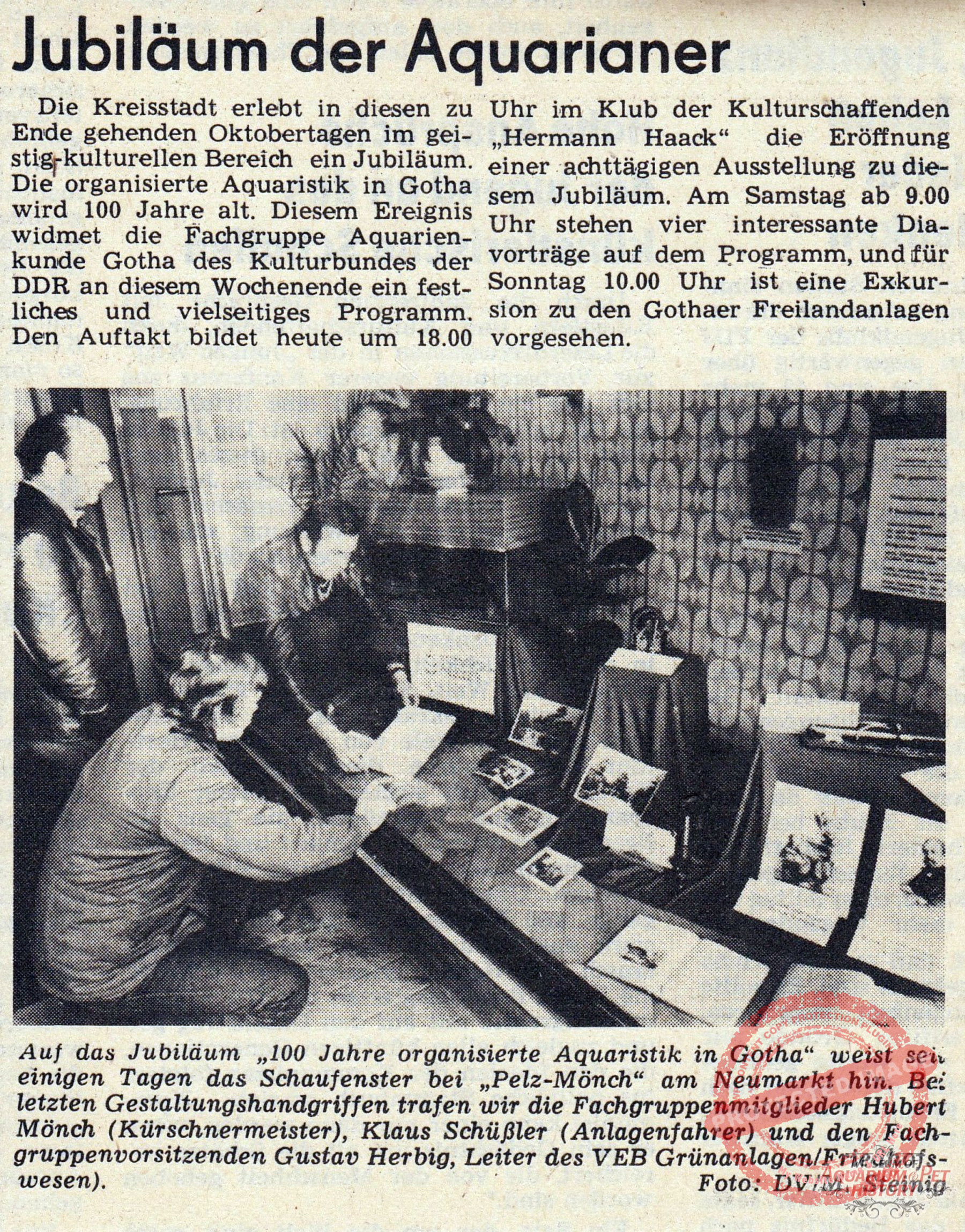
Report in the Gotha edition of the Thuringian newspaper “Das Volk“ on the anniversary exhibition.
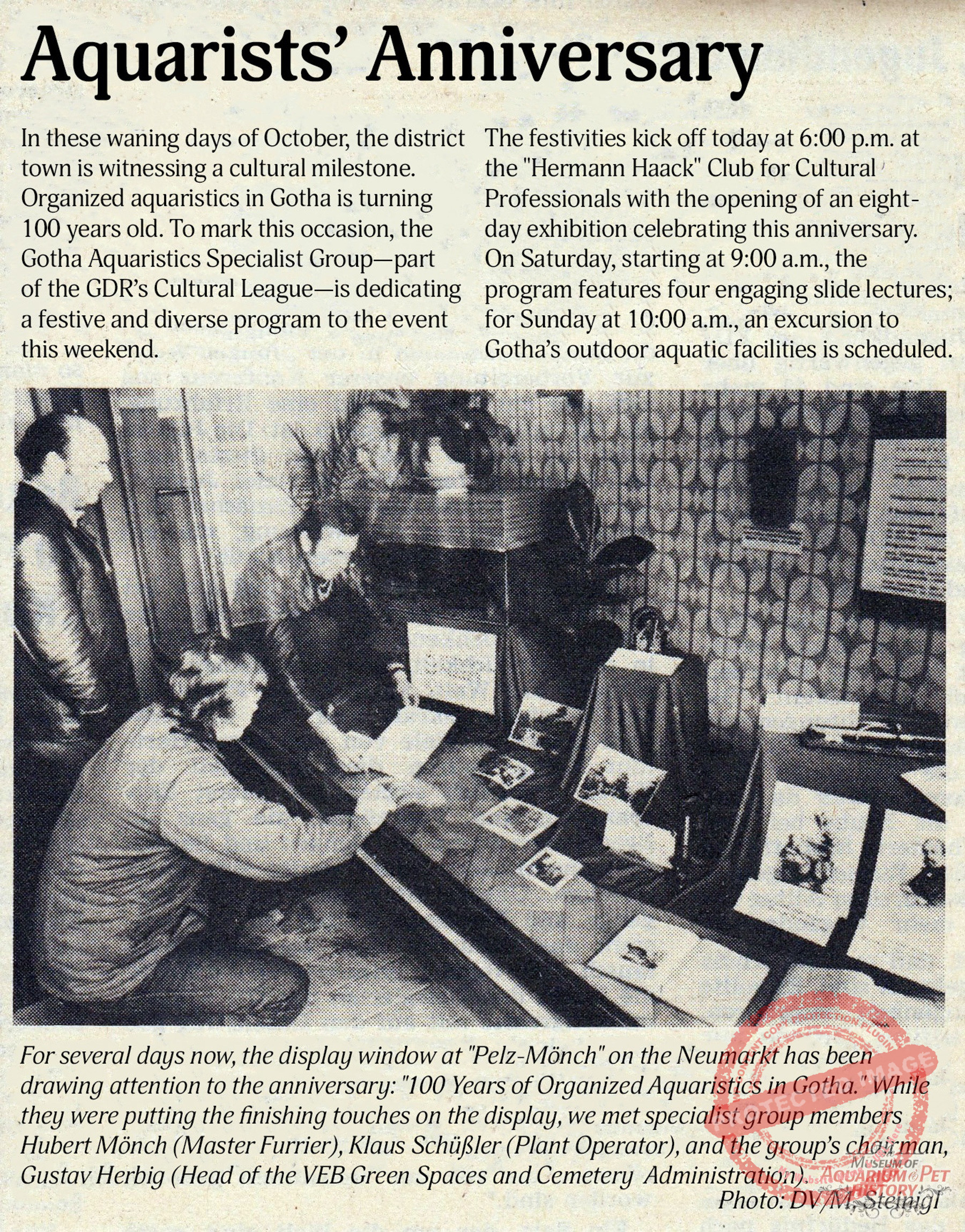
Report translated using notegpt.io.
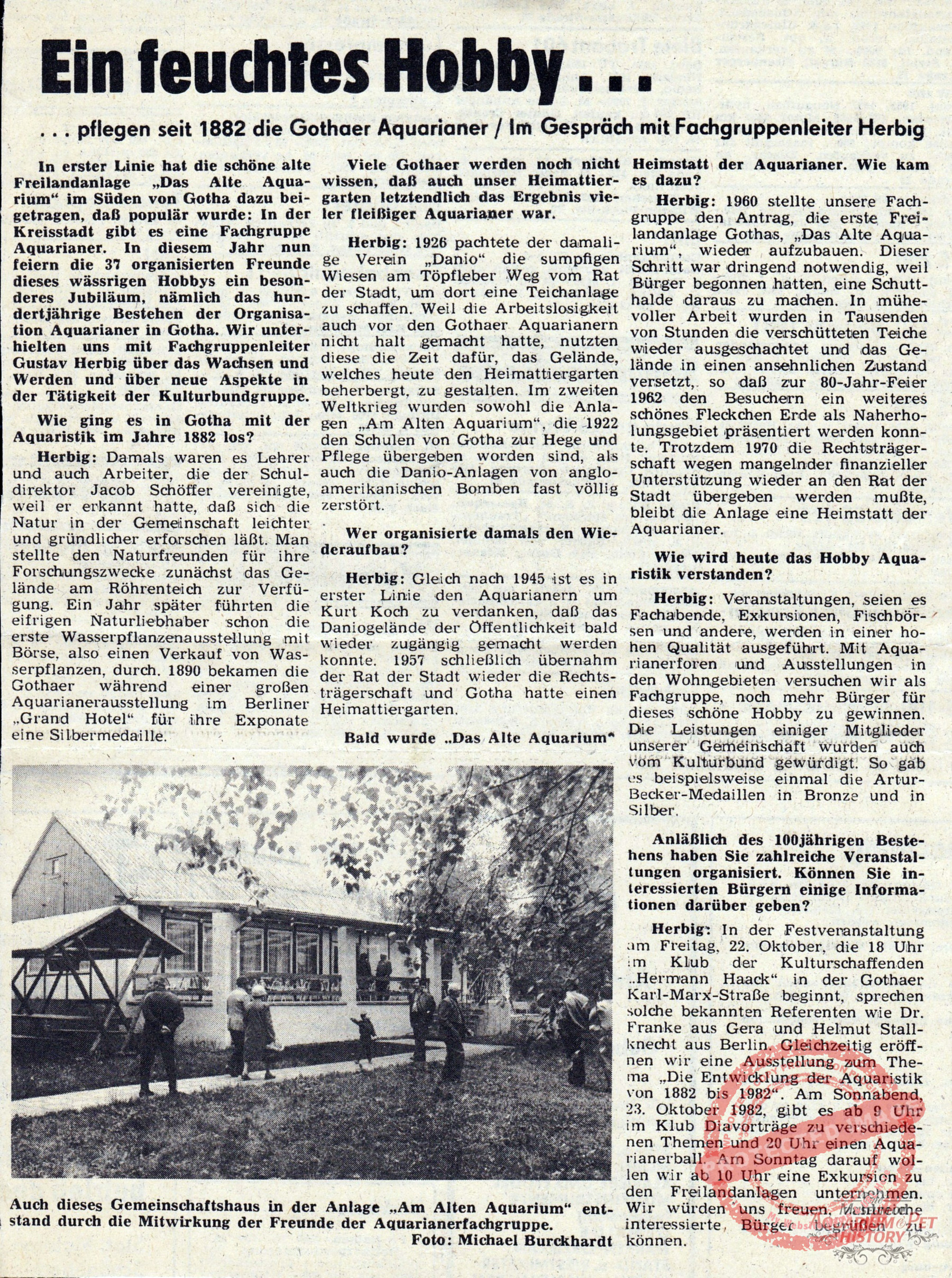
Chairman Gustav Herbig gave this newspaper interview on the occasion of the society’s anniversary.
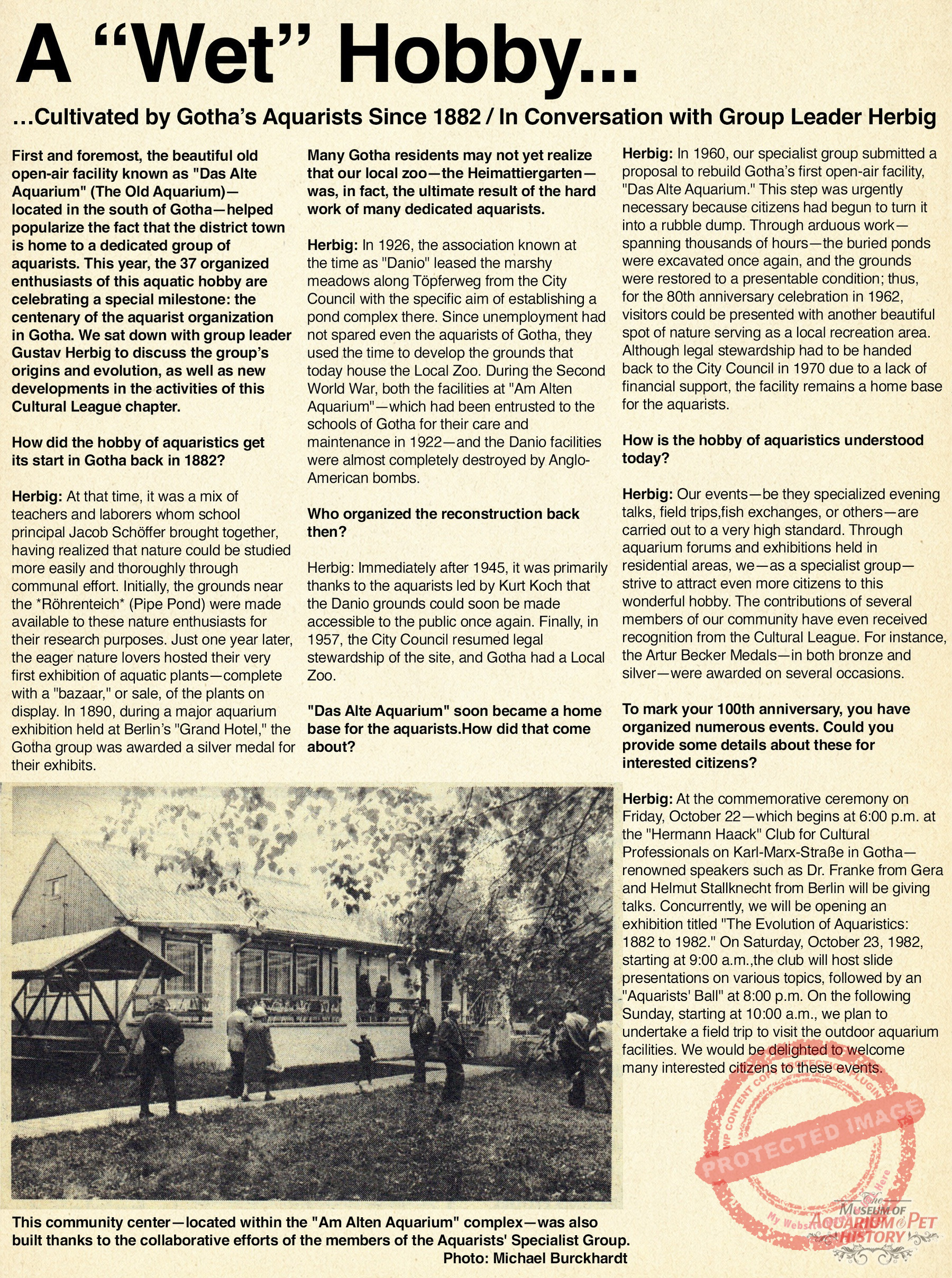
Chairman Gustav Herbig’s interview translated using notegpt.io.
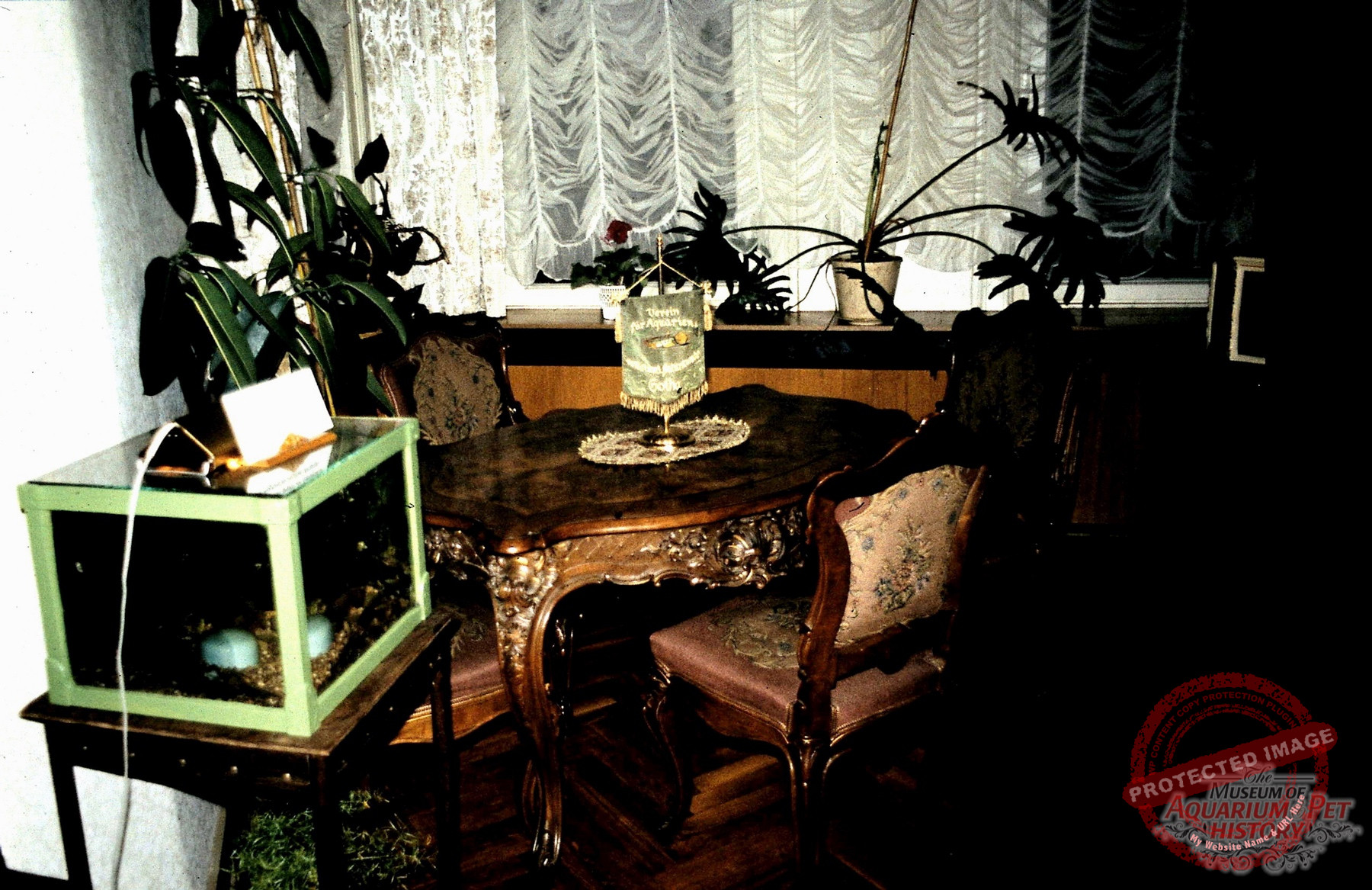
The exhibition itself was modest in size but featured preserved symbols of the early years: the VDA pennant, old parlor aquariums, iron-framed tanks with period furniture, and handmade technical devices—about which I will report in detail in the next part of this series. There were, of course, also silicone-sealed aquariums, now available in the GDR. Members displayed their most interesting and valuable specimens to visitors.
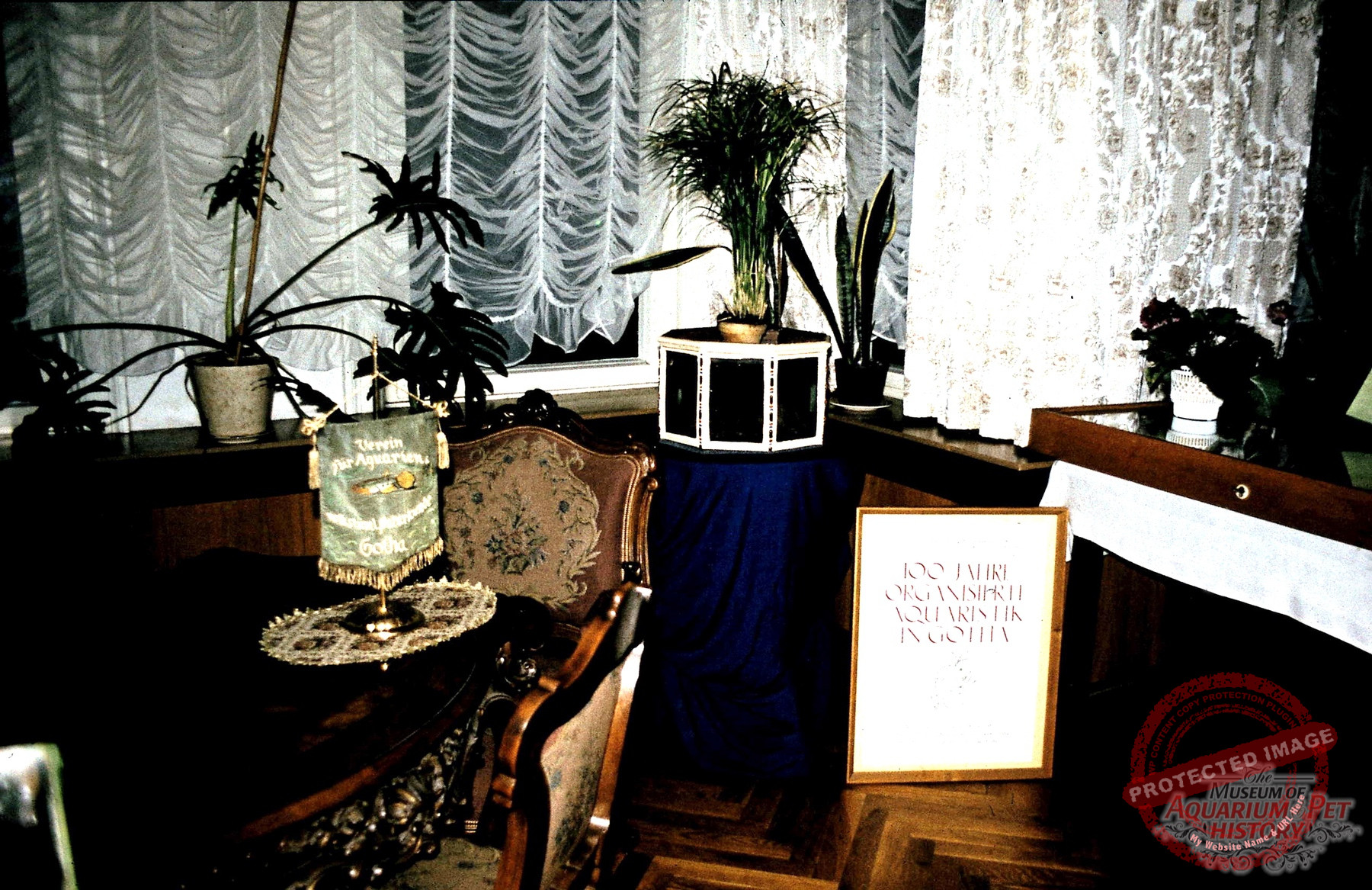
Historical aquariums from the Gotha society and the historic VDA pennant from the early years adorned the anniversary exhibition at the “Hermann Haack” clubhouse.
The typical framed tanks with homemade aquarium technology were also on display.
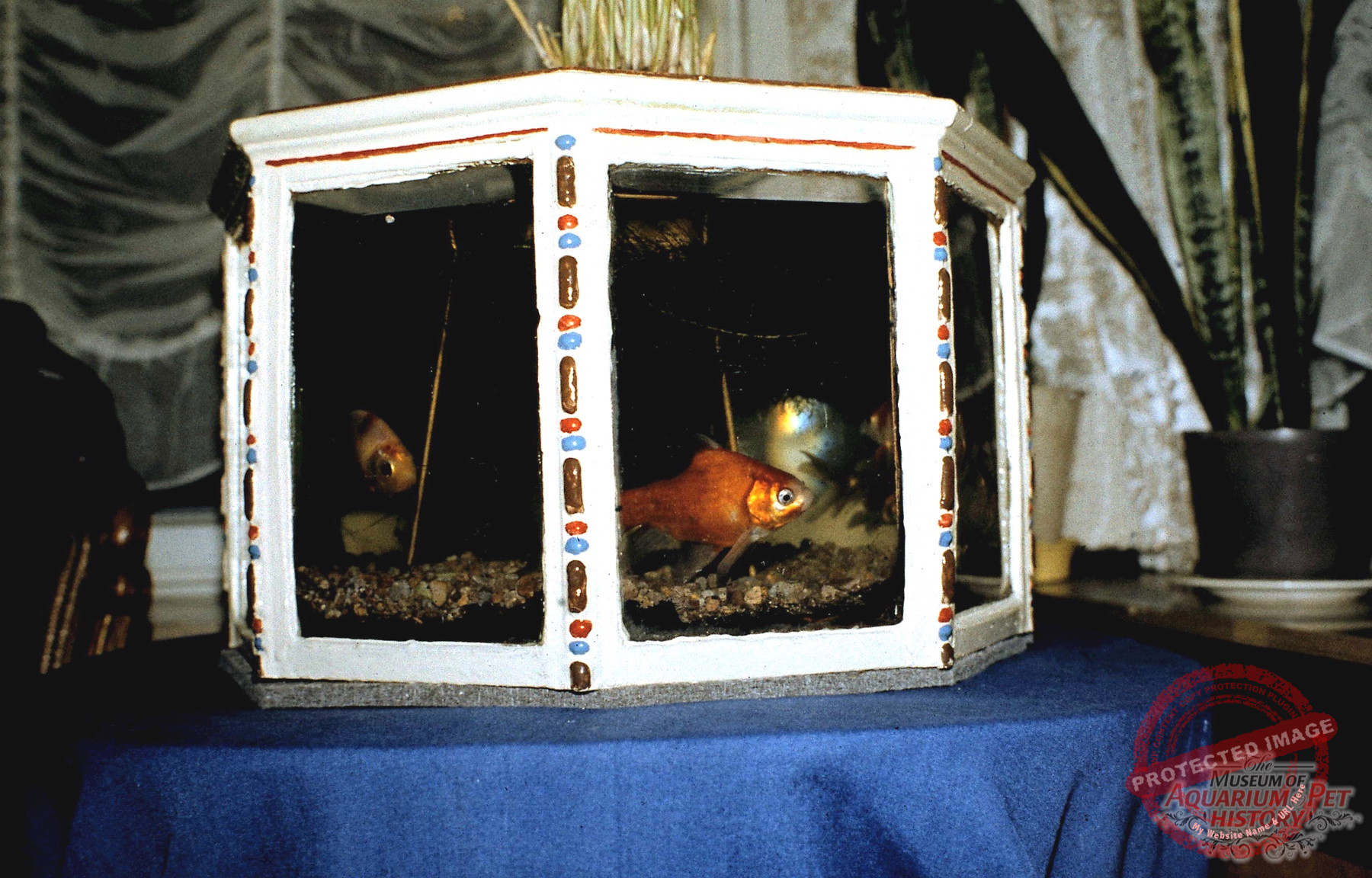
Historic goldfish aquarium.
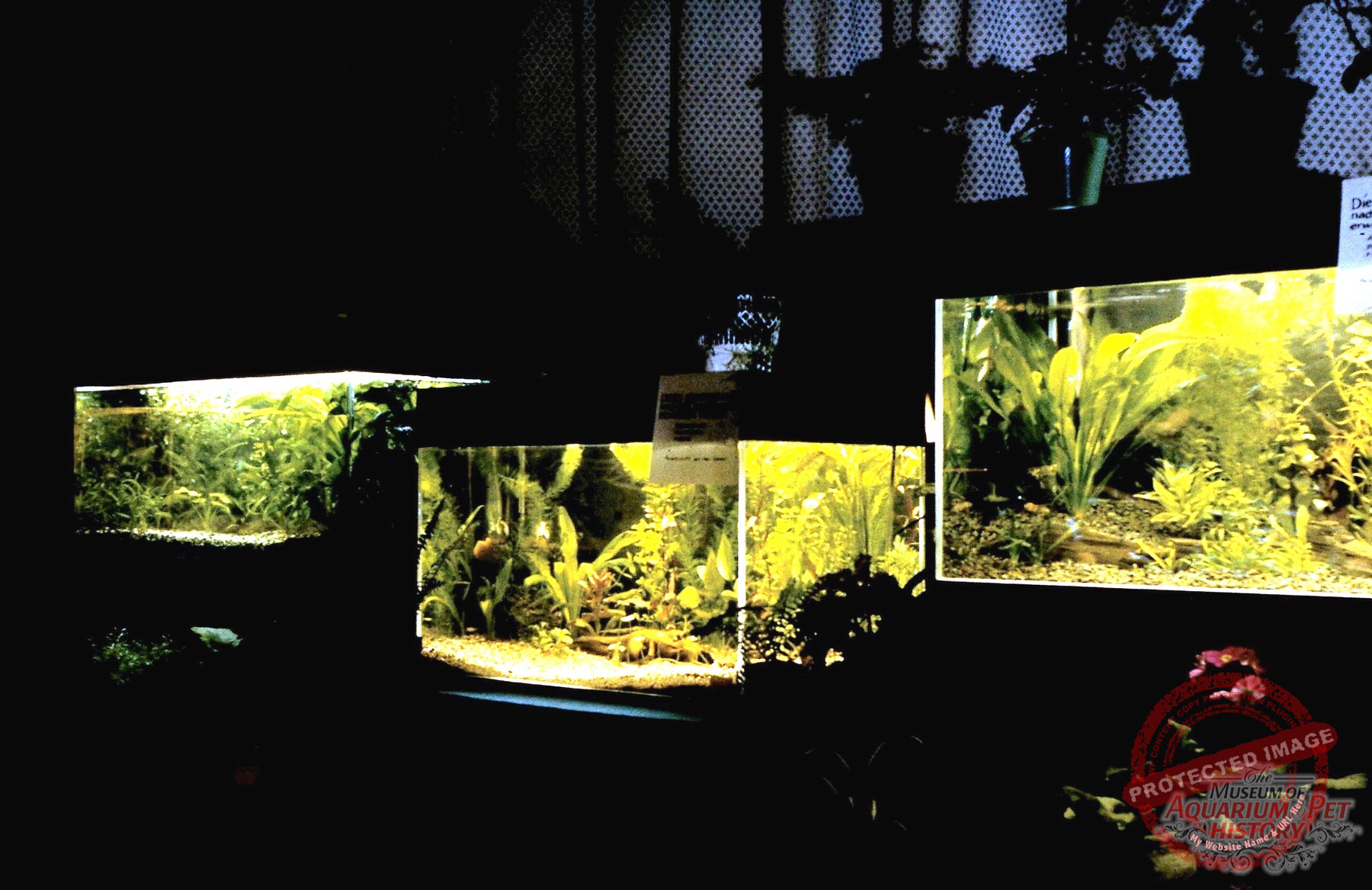
Aquariums bonded with silicone—highly modern for their time.
Acknowledgments: I would like to thank my family members (Charly Fuchs), friends, and colleagues in Gotha—especially Uwe Heustock, the current chairman of the Gotha Aquarium Society—as well as the staff of the Gotha City Archive, Dr. Julia Beez and Dorett Sagner, for granting me access to documents, allowing me to scan and photograph them, and for providing numerous photographs, information, and preserved original objects. Finally, I thank my friend Barbara Pederzani, who entrusted me with valuable materials from her husband’s estate.