Portrait of a Herpetologist as an Older Man – Part 7: The Galápagos Islands
Introduction
The late Ray Ashton worked for an ecotourism company some years ago and asked me to lead some trips. One such opportunity involved two visits to the Galápagos Islands. Usefully, on the first trip the passenger seated next to me on the plane from Quito to the Archipelago was a British scientist who was studying marine iguanas. He explained that the population was plummeting, especially among juveniles and hatchlings, due to loss of marine algae — owing to El Niño effects— upon which the lizards feed.
The El Niño Southern Oscillation (ENSO) is one of the most important climatic phenomena on Earth. El Niño and La Niña are opposite extremes of the ENSO, which refers to cyclical environmental conditions that occur across the Equatorial Pacific Ocean. These changes are due to natural interactions between the ocean and atmosphere. Sea surface temperature, rainfall, air pressure, atmospheric and ocean circulation all influence each other. An El Niño condition occurs when surface water in the equatorial Pacific becomes warmer than average and east winds blow weaker than normal. El Niños typically occur every 3 to 5 years. The opposite condition is called La Niña. During that phase of ENSO, the water is cooler than normal and the east winds are stronger.
There are several main sea currents in the Archipelago that have an influence on its wildlife and plant communities. Perhaps the most important is the Humboldt Current. This is a cold South Equatorial Current which comes into the Galápagos waters from the west. This current runs up the whole coast of South America, heading north from the cooler waters of Antarctica, and when it gets to the Equator it heads west. The second current with an influence is the Panama Current. This comes in from the north and brings warmer waters to the Galapagos Islands. Finally, the Cromwell Current is a deep-sea current, and it runs from the west. This drives nutrients up from the lowest levels to the surface.
On my first trip, the naturalist overseeing the tour turned out to formerly have been the top sports medical doctor in Belgium. He spoke English, German, French, Spanish, and his native tongue, Flemish. One evening, I asked how he ended up in the New World so far from his home; the tale he told was amazing and totally unexpected.
The game of soccer in Europe is highly competitive; there have been a number of times where the attendees were so highly charged with emotion that riots occurred, resulting in deaths and serious injuries. In his case, he was expected to be on site for all sporting events in Belgium, to address emergencies.
One day in 1985, two rival teams were so competitive that there were a number of fights between players and fans (see Figure 1). The vociferous crowd was so inflamed that fans ran onto the field and began pummeling their opponents with such vigor that many were injured and 41 persons died. All available police and medical workers (doctors, nurses, ambulances etc.) were called and an emergency room was set up in the basement so doctors could amputate limbs and perform life-saving surgery.
RIOT: 41 Killed, Hundreds Hurt at Soccer Game
41 Killed as British, Italian Soccer Fans Riot
MAY 30, 1985 12 AM PT
ASSOCIATED PRESS
BRUSSELS — Forty-one people were killed and hundreds were injured in a riot Wednesday night between fans of British and Italian teams about to play the Super Bowl of European soccer. Most of the victims were trampled to death or crushed under a wall that collapsed, said Louis Wouters, president of the Belgian Soccer Federation, who reported the death toll. Officials said the riot started in the crowd of more than 50,000 when British fans broke into an Italian section. Television crews set up for the game broadcast it to millions of fans watching worldwide. A brick wall collapsed as the clash began, and mangled bodies piled on top of one other. Broken metal crowd-control barriers were used as stretchers to carry the victims out of Heysel Stadium.
Figure 1. Headline and first few paragraphs of an article that appeared in the Los Angeles Times in 1985.
The scene was so traumatic that it was remindful of a battlefield in war. After the chaos, the naturalist did not return home to be with his wife and two sons, but rather went immediately to the airport and caught a flight to Ecuador. Since he was a polyglot1 and medical doctor, he easily found employment as a naturalist on the Galápagos Islands.
MOAPH1: A polyglot is a person who knows many languages.
He was a mentor to me. After adapting to the cool waters, we dove to collect spiny lobsters for dinner. He taught me how to position myself in the water to watch flightless cormorants and Galápagos penguins pass by searching for fish prey. Surprisingly, there are internet and newspaper reports of cormorants aggressively attacking divers. He took me to spots where the surf was calm enough to watch marine iguanas feeding underwater on sargassum algae. The poor condition of these lizards was unmistakable — ribs visible, hind limbs smaller than normal, bony pelvis, sunken tails, and overall starved appearance. Recruitment was nonexistent — I saw only one subadult and no neonates — and I thought back to what my seatmate had said about El Nino.
The Galápagos Hawk (Buteo galapagoensis) is a large, rare raptor endemic to the islands. This beautiful bird is known for its fearlessness towards humans. The males are smaller than the females, as with many birds of prey. Their young appear different from adults because they are darker and have camouflage which aids them in remaining protected from potential predators until they are fully grown.
I saw several perched on large rocks but never witnessed a predatory event. The diet includes insects such as locusts, and giant centipedes, as well as lava lizards, snakes, rodents and carrion. They will also take marine and land iguanas, sea turtles and tortoise hatchlings. These predators steal birds’ eggs as well as their young.
Grapsus grapsus is one of the most beautiful crabs along the western coast of the Americas. It is known as the red rock crab, or, along with crabs such as Percnon gibbesi, as the Sally Lightfoot crab. It is common where it feeds on algae and carrion.
The Galápagos mockingbird (Mimus parvulus) is a species of bird in the family Mimidae. Mimus p. parvulus is found on Santa Cruz, North Seymour, Daphne Major, Isabela and Fernandina. When we stopped to have a drink of bottled water, these birds mobbed all of us to get a sip. One landed on my head, clung to my hair with its claws, and bent down to join me as I was sipping. The naturalist cautioned us to prevent the birds from drinking as it was interfering with normal behavior.
I was disappointed that I saw no snakes on either trip to the islands. The Galápagos snakes are among the most beautiful reptiles of the archipelago. The latest taxonomy recognizes nine species endemic to the Galápagos, all in the genus Pseudalsophis (Zaher et al., 2018; Arteaga et al., 2019). All inhabit the dry zones of the islands; however they are not found on all of the islands. Commonly these snakes are known as “racers” as they can move very rapidly. I have seen videos of these snakes in a group chasing newly hatched marine iguanas and they are often successful in capturing them. Galápagos snakes are quite small, only measuring 2–3 feet long. They are brown with yellowish longitudinal stripes. The snakes are presumed to have arrived on the islands by vegetation rafts. Galápagos snakes can be slightly venomous to humans and may use venom to kill their prey. They first catch the prey with their mouths and mainly kill by constriction.
The naturalist took me to several colonies of magnificent frigatebirds (Fregata magnificens). With body length 89–114 cm (35–45 in), it is the largest species of frigate and has the longest bill. The adult male is all black with a scarlet throat pouch that can be inflated like a balloon in the breeding season. We watched them chase terns, blue-footed boobies and other seabirds until their food was dropped. The frigatebird is sometimes called the “man-o-war bird” because it harasses other birds until they regurgitate recently captured food, which the frigatebird usually snatches in midair.
The Galápagos sea lion (Zalophus wollebaeki) is a species that breeds on the Galápagos Islands and, in smaller numbers, on Isla de la Plata (Ecuador). They are the smallest sea lion species. Being fairly social, they are often spotted sun-bathing on sandy shores or rock groups or gliding gracefully through the surf and they are popular with visitors to the islands. He showed me how to help our clients get close enough to photograph seal lion colonies without being attacked by the highly aggressive male beach masters. Dozens of lava lizards crawled over their bodies snapping up flies. In one instance, an adult female in prime condition had her rear fins entirely removed, probably by a shark, and yet was able to maneuver in the sea.
Lava lizards (Microlophus spp.) are the most abundant reptiles on the islands. Lava lizards have a relative lack of fear of humans and can be observed quite closely. Several times, these lizards climbed up my body to snatch insects. Lava lizards can grow up to a foot in length, but are usually about 5–6 inches long. Colors vary and some can be quite beautiful, from mottled gray to speckled copper or black with gold stripes. The male lava lizard looks quite different from the female; it is larger in size and more brightly colored. The male’s throat is black and yellow and the female’s throat is mostly red. There are ten different species of lava lizard on the islands. On an island where only one species of lava lizard is present, individuals may be a grayish yellow color on the beach, but further up among the black lava rocks, the same species may be much darker. Lava lizards play an important role in controlling populations of insects such as the painted locust. They are predators of invertebrates and will quite often eat each other (cannibalism). Lava lizards also eat vegetable matter, particularly during dry spells.
The naturalist spent much time pointing out Darwin’s finches and describing the varied beak morphology and feeding differences among the 13 taxa. Darwin’s finches, named due to their role in Charles Darwin’s theories on evolution, are ostensibly the most renowned land birds of the Galápagos. Fascinated with diversity found among the 13 species and the speed with which they evolved from a common ancestor to adapt to the varied supply of food available on individual islands, Darwin discovered that these adaptations mainly showed up in the shape and size of beaks. They are not very remarkable looking. Endemic and typically easy for visitors to spot, it takes an expertly trained eye to differentiate the 13 species that scientists believe descended from a shared ancestor. The differences in distribution, plumage, feeding habits, body size, beak size and shape helped inform Darwin’s theories.
The naturalist owned a horse-breeding farm on Santa Cruz Island, where the horses munched grass along with tortoises (probably Chelonoidis donfaustoi); it was a peculiar picture. He had a large garden where he had planted a suite of native plants from most islands; he used it to collect seeds for global botanical institutions without cost and as a hedge against volcanic eruptions. He was particularly upset by the illegal collection of marine sea cucumbers and other protected fauna by collectors and alerted authorities surreptitiously whenever he encountered them; he was a true conservationist.
As a special treat, he took the group to the Charles Darwin Research Station where herpetologist and director Linda Cayot took us behind the scenes to photograph Lonesome George, a male Pinta Island tortoise (Chelonoidis abingdonii) and the last known individual of the species.
As we traveled between islands, I was surprised by the large number of sharks and dolphins that followed our boat, possibly expecting a meal with table scraps thrown overboard. The naturalist expressed concern about the large number of giant cruise vessels, disgorging dozens of passengers on this fragile ecosystem, and large amounts of trash attracting these creatures.
Humans and Tortoises
“Pitiable seems the condition of this poor embarassed reptile: to be cased in a suit of ponderous armour, which he cannot lay aside; to be imprisoned, as it were, within his own shell, must preclude, we should suppose, all activity and disposition for enterprize…The motives that impel him to undertake these rambles seem to be of the amorous kind: his fancy then becomes intent on sexual attachments, which transport him beyond his usual gravity, and induce him to forget for a time his ordinary solemn deportment.”
Gilbert White (1789) Discussing His Pet Greek Tortoise, Timothy
The history of giant tortoises (and other species as well) is interesting and sometimes saddening (Figures 2–6). Feral island invasives introduced by humans include dogs, cats, pigs, donkeys, goats, black rats, and blackberries. As an aside, cats were impossible to eliminate on the rocky islands in New Zealand supporting tuataras and other endemics. Everything was tried to trap them — nothing worked until one of the wildlife biologists suggested baiting the traps with sandboxes — every cat was caught!
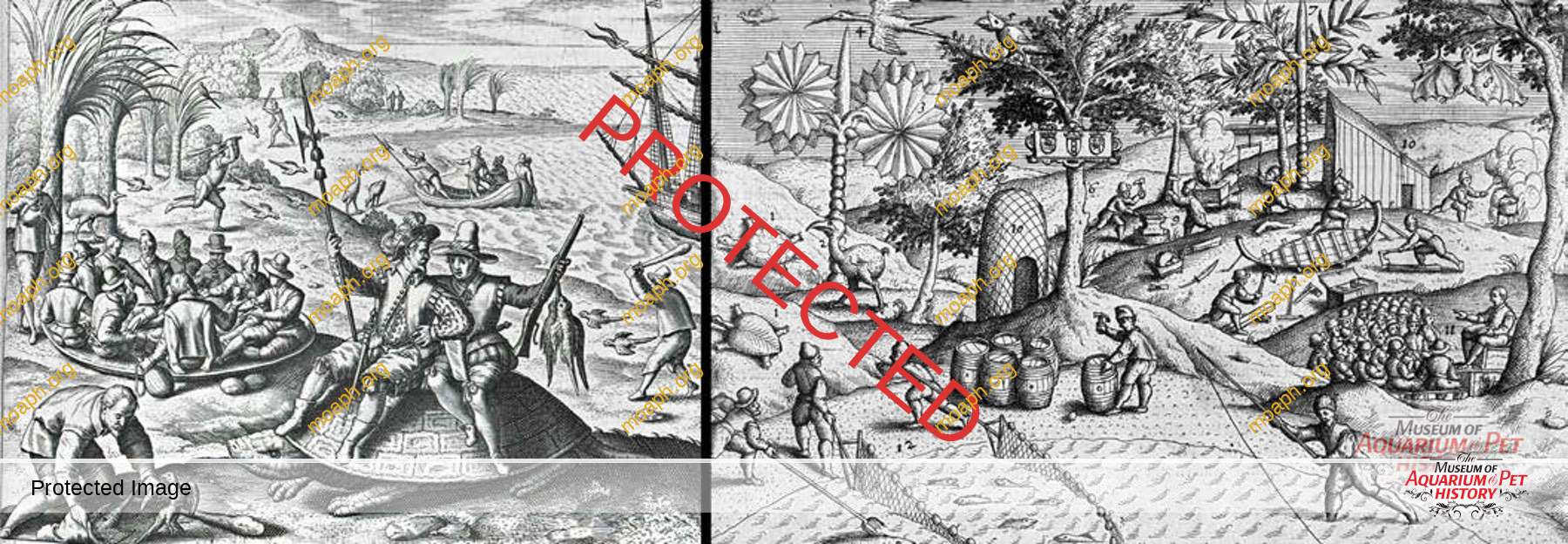
Figure 2. Woe to the poor turtle. Etchings by Johann Theodor & Johann Israel de Bry depicting the plight of giant tortoises, dodos, parrots and other creatures at a Dutch colony on the shore of the island of Mauritius in the Indian Ocean, circa 1595.
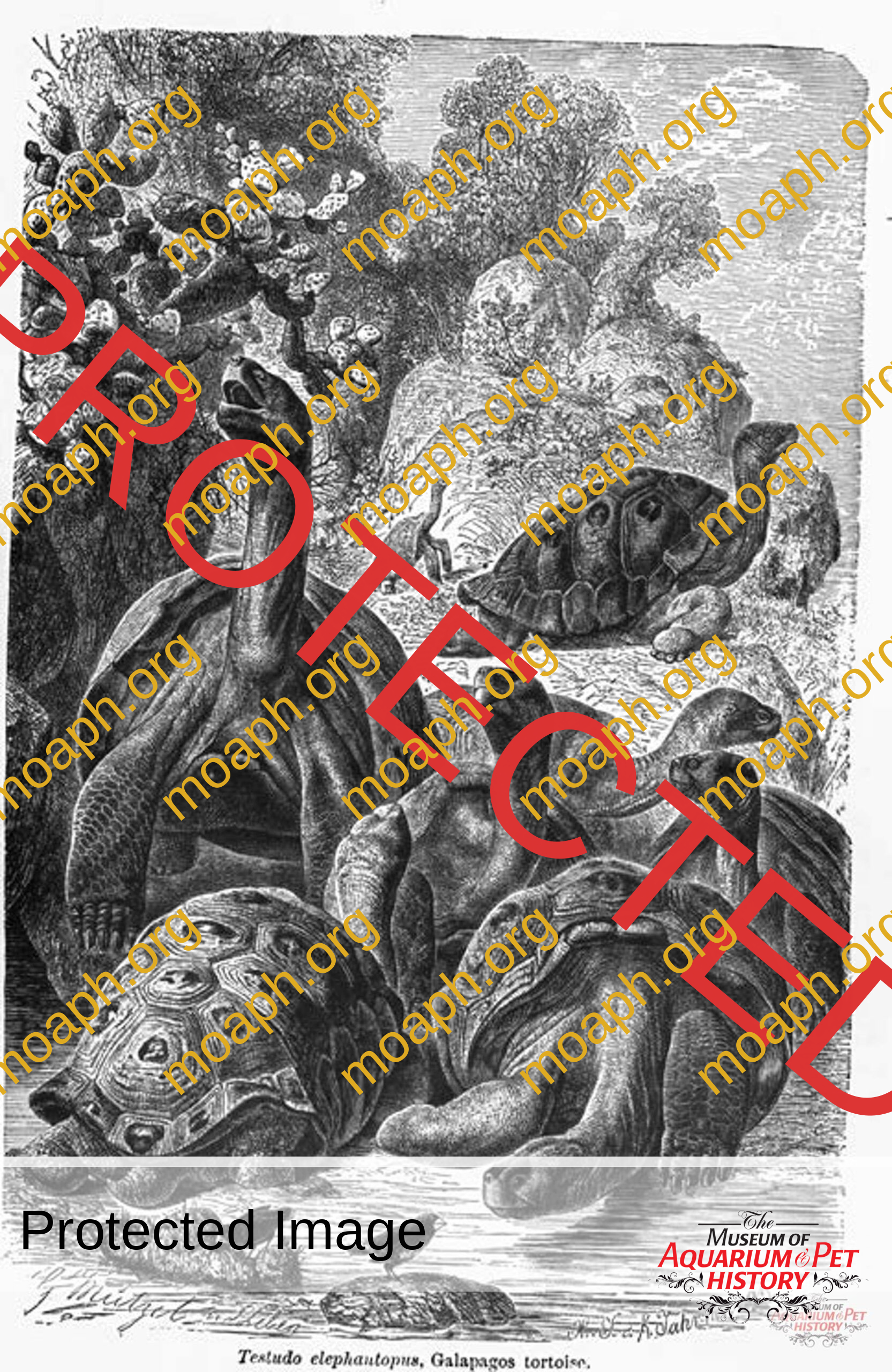
Figure 3. From The Riverside Natural History. Volume III. Lower Vertebrates in 1888 by Alfred Brehm.
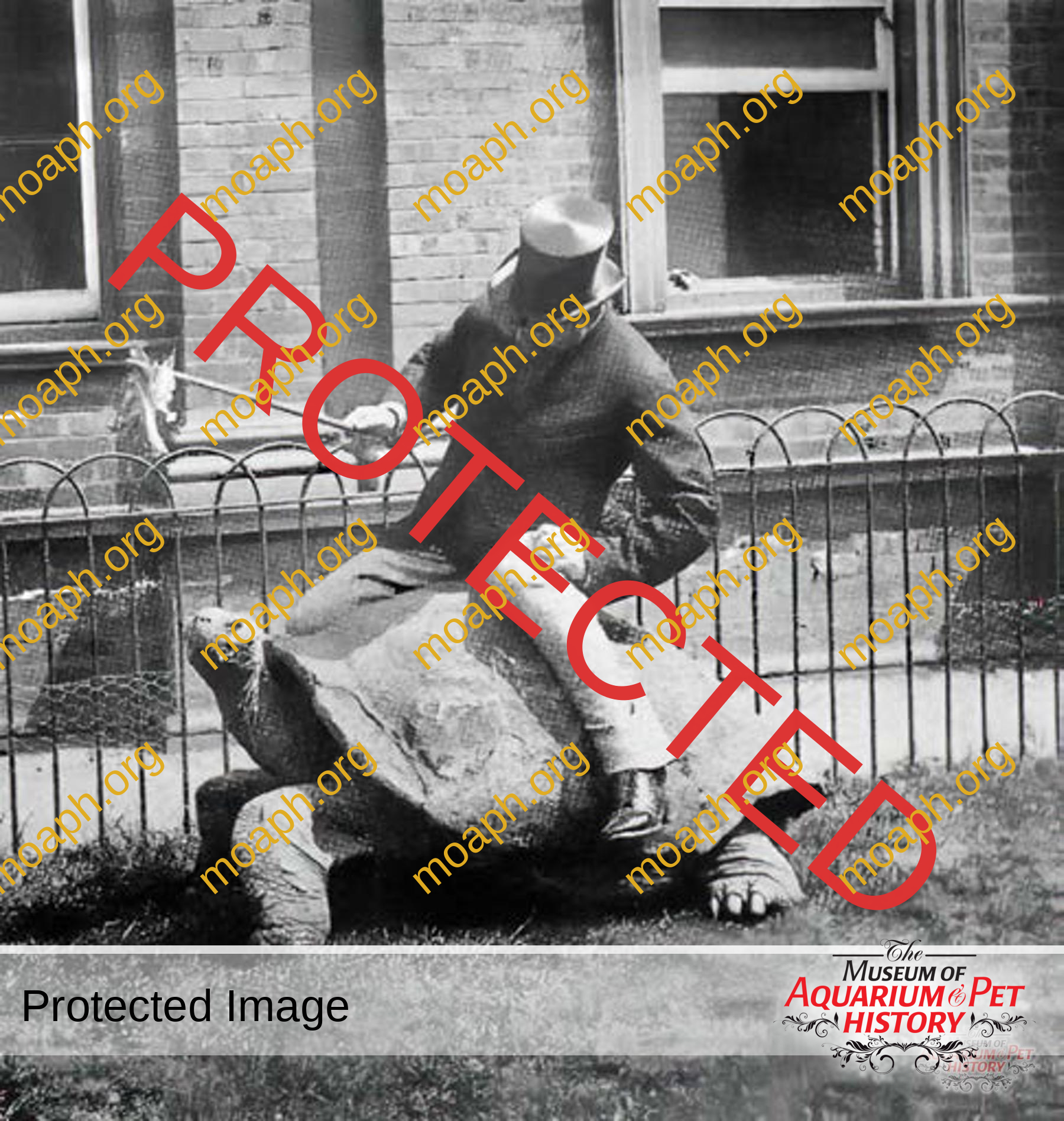
Figure 4. The Honorable Walter (later 2nd Baron) Rothschild riding his giant tortoise Rotumah in front of London Zoo reptile house circa 1898. He was certainly well dressed. Notice the food extended on a stick to entice the animal to move forward. He developed a private zoological museum called Walter Rothschild Zoological Museum in Tring, which opened to the public in 1892. The collection was transferred to the nation in 1937 and is overseen by the Natural History Museum in London. The name was changed in 2007 to Natural History Museum at Tring. Courtesy of John Edwards.
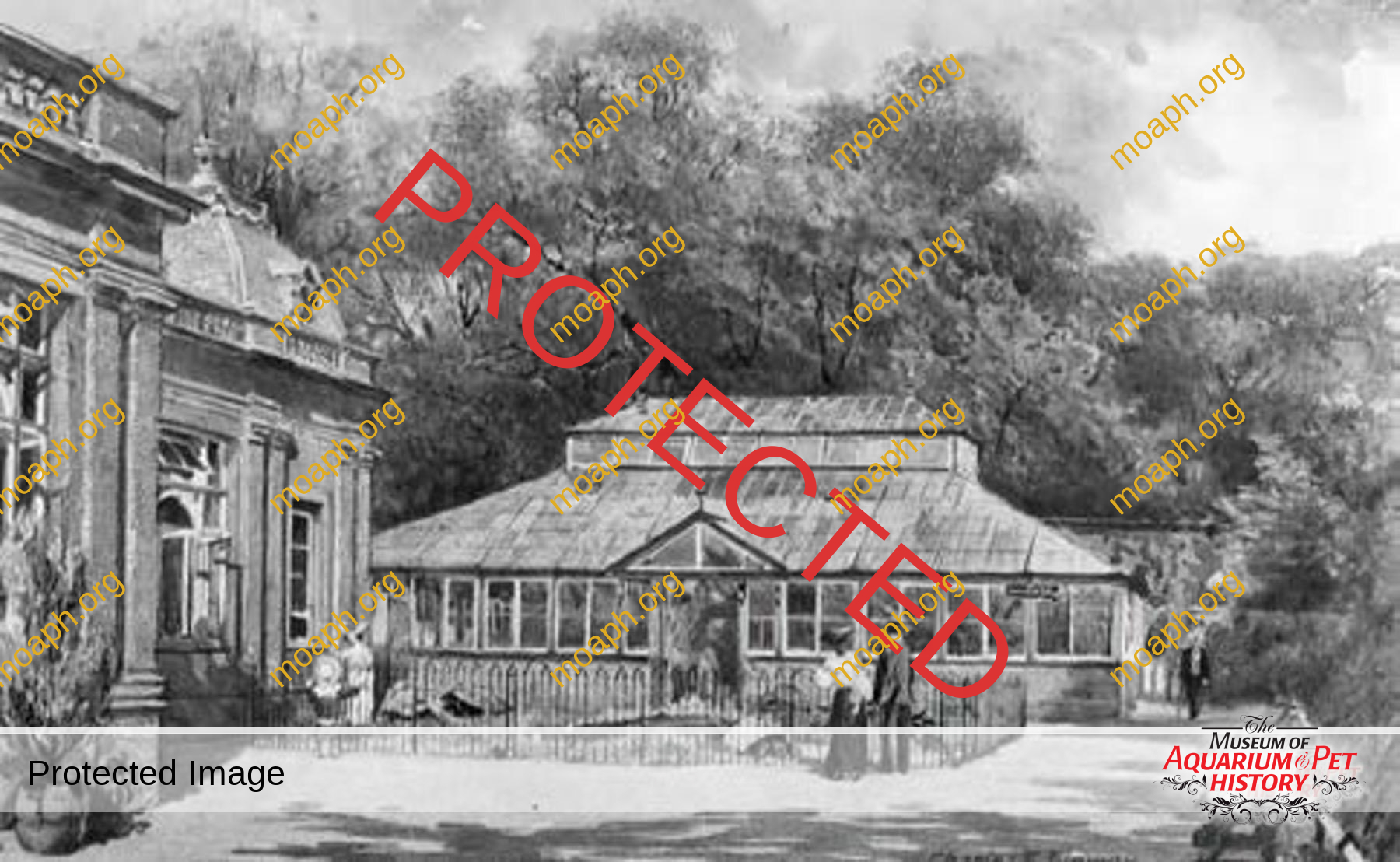
Figure 5. Tortoise House at London Zoo circa 1900. The structure was constructed three years earlier for a cost of approximately £465, later became a Tropical House and was demolished in 1985. Image from H. Schrerren’s The Zoological Society of London in 1905. Courtesy of Smithsonian Institution Libraries, Washington, D.C.
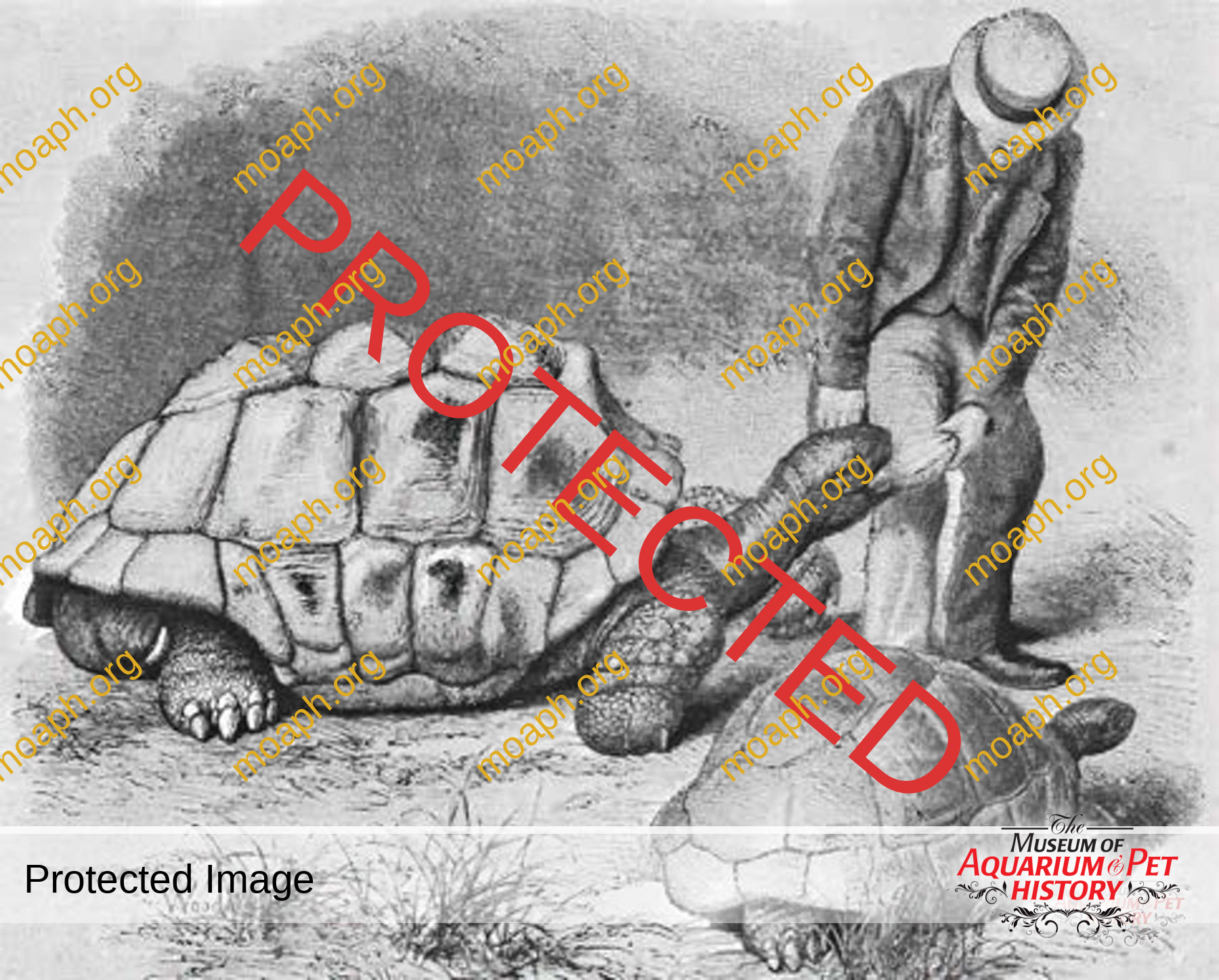
Figure 6. Giant tortoises at Regent’s Park. The Field, 4 September 1875. Courtesy of Smithsonian Institution Libraries, Washington, D.C.
Between 1831 and 1868, whalers traveled by sea to the Galápagos Islands to collect tortoises for food and oil. Charles Haskins Townsend, director of the New York Aquarium, examined 79 logbooks and discovered that 151 ships made 189 visits, leading to a conservative estimate of 13,013 tortoises removed (Townsend, 1925) “What a contribution could be made to the world’s food supply if the otherwise unimportant islands where, unknown to primitive man, the tortoises reached such an amazing development, could be cleared of the pests introduced by civilized man and the original conditions restored! This is now unfortunately impossible on the Galapagos. The only remaining hope for the race is the establishment of survivors elsewhere.”
In 1928, Townsend himself collected almost 200 mostly juvenile tortoises from Albemarle Island, which he distributed to zoos to develop captive breeding programs (Figure 7). Pritchard (1996) describes the fates of some of Townsend’s tortoises; a figure on page 24 shows a large male that was exhibited at Houston Zoo. Pritchard (op. cit.) also covers successful captive reproduction: “Some individuals from the original 1928 collection still survive in US institutions, and in recent years there has been excellent captive reproduction, e.g., at the Gladys Porter Zoo in Brownsville, Texas, and at Life Fellowship Facility in Seffner, Florida (where 85 hatchlings were produced in 1988S 89, with some females nesting five times in a season).”

Figure 7. Galapagos tortoise being weighed at Bronx Zoo in 1946. In 1928 Charles Haskins Townsend, director of the New York Aquarium, was so concerned about the future of these tortoises, he collected over 200 from Albemarle Island to develop assurance colonies at zoos. Photograph provided by John Behler, courtesy of Wildlife Conservation Society, headquartered at Bronx Zoo.

Figure 8. Charles Island (now Floreana) Tortoise (Chelonoidis niger). Official Zoological Society of London postcard from series in 1904. Photo by W. P. Dando. This reptile is believed to have become extinct in the wild in the mid-1800s. Courtesy of John Edwards.
In 1928, Townsend published a paper that told of finding the remains of numerous giant tortoises that had died after being trapped in a cave on Charles Island (now Isla Floreana). Broom (1929) described those remains and estimated that the Charles Island species (see Figure 8) had disappeared by 1850. In 1931 and 1937, Townsend published two papers on growth and age in zoo tortoises, generated from eight institutions in Florida, Texas, California, Louisiana, Hawaii, Arizona and Sydney, Australia. Grant (1947) described Townsend’s life and scientific contributions, and included a bibliography of his publications and a list of herpetological taxa named in his honor.
A female Galápagos Tortoise named Harriet lived at the Queensland Reptile Park, now the Australia Zoo, until her death on 23 June 2006. This tortoise was said to have been collected by Charles Darwin on 17 August 1835 on James Island (Isla San Salvador or Isla Santiago), and taken back to England in 1836 on the H.M.S. Beagle (Coote, 2001). A detailed history of this tortoise, speculated to have lived more than one-and-a-half centuries, is beyond the scope of this article but see Coote (2001), Thomson et al. (1998), Powell and Caccone (2006), and Bauer and McCarthy (2010).
The most famous tortoise was “Lonesome George,” discovered on Pinta Island in 1971. The Wikipedia entry on George is extensive and includes several photographs. The taxon Chelonoidis abingdonii was thought to have gone extinct around 1920, but this last representative was brought to the Charles Darwin Research Station in the Santa Cruz Island for captive breeding (see Cayot et al. [1994] for a history of the station). The tortoise lived up to its name, rejecting even closely related females until its passing on 24 June 2012. George had great press coverage with a whole book written about his life (Nicholls, 2006). His remains are mounted for display at American Museum of Natural History (Sachs, 2014). A photograph from the London Zoo in 1914 depicts another specimen from Pinta (Figure 9).
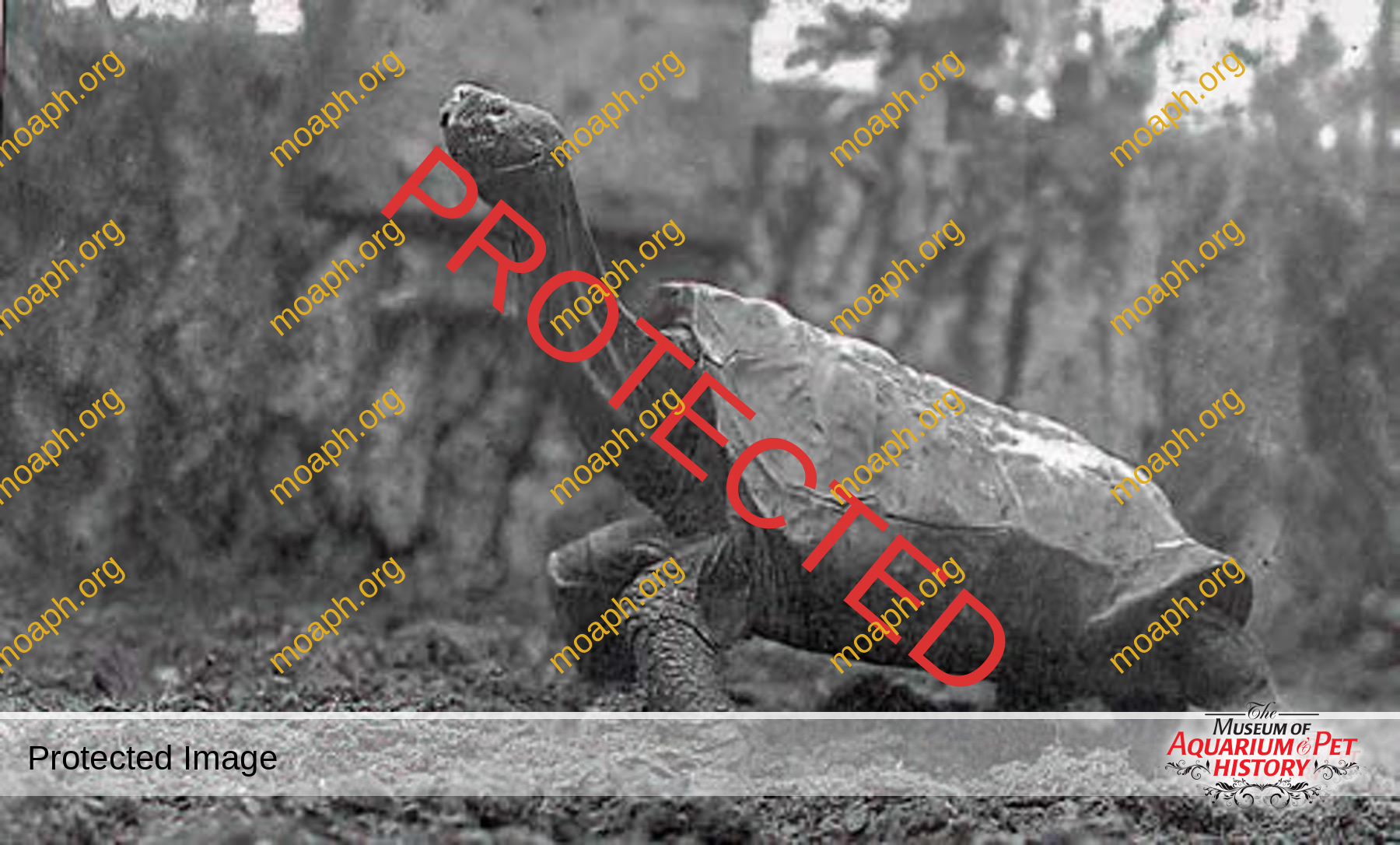
Figure 9. Abingdon (Pinta) Island Tortoise (Chelonoidis abingdonii), photographed by F. W. Bond on 20 January 1914 at London Zoo. This male was purchased on 12 January 1914. This species is now extinct after the death of Lonesome George on 24 June 2012. Courtesy of John Edwards.
“The taxonomy of giant Galapagos tortoises (Chelonoidis spp.) is currently based primarily on morphological characters and island of origin. Over the last decade, compelling genetic evidence has accumulated for multiple independent evolutionary lineages, spurring the need for taxonomic revision” (Poulakakis et al., 2015).
There have been attempts to reconstruct lineages in captive Galápagos Islands tortoises worldwide using DNA analyses: Claudio Ciofi (pers. comm.), Burns et al. (2003), Milinkovitch et al. (2004), Russello et al. (2007), Poulakakis et al. (2008), Ciofi et al. (2009), Russello et al. (2010), Benavides et al. (2012) and Edwards et al. (2013).
Two zoos have returned their rarest tortoises to the Islands— an adult female Duncan Island Tortoise in Bronx Zoo in 1972 [collected by Townsend in 1928] and an adult male Hood Island Tortoise, which lived at San Diego Zoo for over 40 years, in 1977 (Prithcard, 1996).
Pritchard (1996) provides a sobering overview of the pressures faced by these tortoises: “But the spread of mankind over the face of the globe, more than any other factor, has plunged the giants into ignominious retreat. The opportunistic, ingenious new predator, literally as omnivorous as a pig and much more dangerous, proved too much for tortoises beyond a certain size.”
Iguanas betwixt land and sea
“People often ask, ‘what good are lizards?’ to which we respond with ‘what good are people?’. Such anthropocentrism is abhorrent. Lizards have as much of a place on the planet as any living creature, including humans. Indeed, they have successfully inhabited Earth for much longer than humans have – lizards will undoubtedly persist long after humans and most other mammals have gone extinct. Lizards are spectacular products of natural selection and have diversified to fill an amazing variety of ecological niches. They are extremely good ‘model’ organisms for study, and understanding their ecology and diversity can be exceedingly informative. What we have learned about lizards is applicable to nearly every conceptual area in modern biology; indeed, in many cases development of entire fields of biology had their origins in the study of lizards. Because many lizards are quite beautiful, they are very popular as pets among herpetoculturists around the world, and some people make their living by breeding many species of lizards in captivity for resale.
Pianka and Vitt (2003)
C. B. “Si” Perkins, curator of reptiles at San Diego Zoo, and G. Allan Hancock, mounted trips in 1932 and 1933 to the Galápagos Islands to study and collect animals for the zoo. Hancock’s ship was the state-of-the-art Velero III, nearly 200 feet in length. He was a bit of a prig, insisting that his fellow passengers— a group of scientists including Perkins— dress for dinner and moreover, cease smoking and drinking. For those of us who are not focused on the latest in apparel and enjoy a bit of whiskey and strong cigarettes in the evening, this trip would have been unendurable. The notation “No cocktails tonight.” appeared daily in the Perkins diaries (Campbell, 1978)
During the first trip, Hancock and Perkins decided to move 40 Galápagos land iguanas (Conolophus subcristatus) (Figure 10) from Baltra Island (known also as South Seymour Island) to North Seymour Island which contained no iguanas. As Perkins wrote in his diaries, their reason: “. . . in a few years come down and see if anything has happened. A good idea, I believe” (Campbell, 1978). Twenty more iguanas were translocated on the second trip.
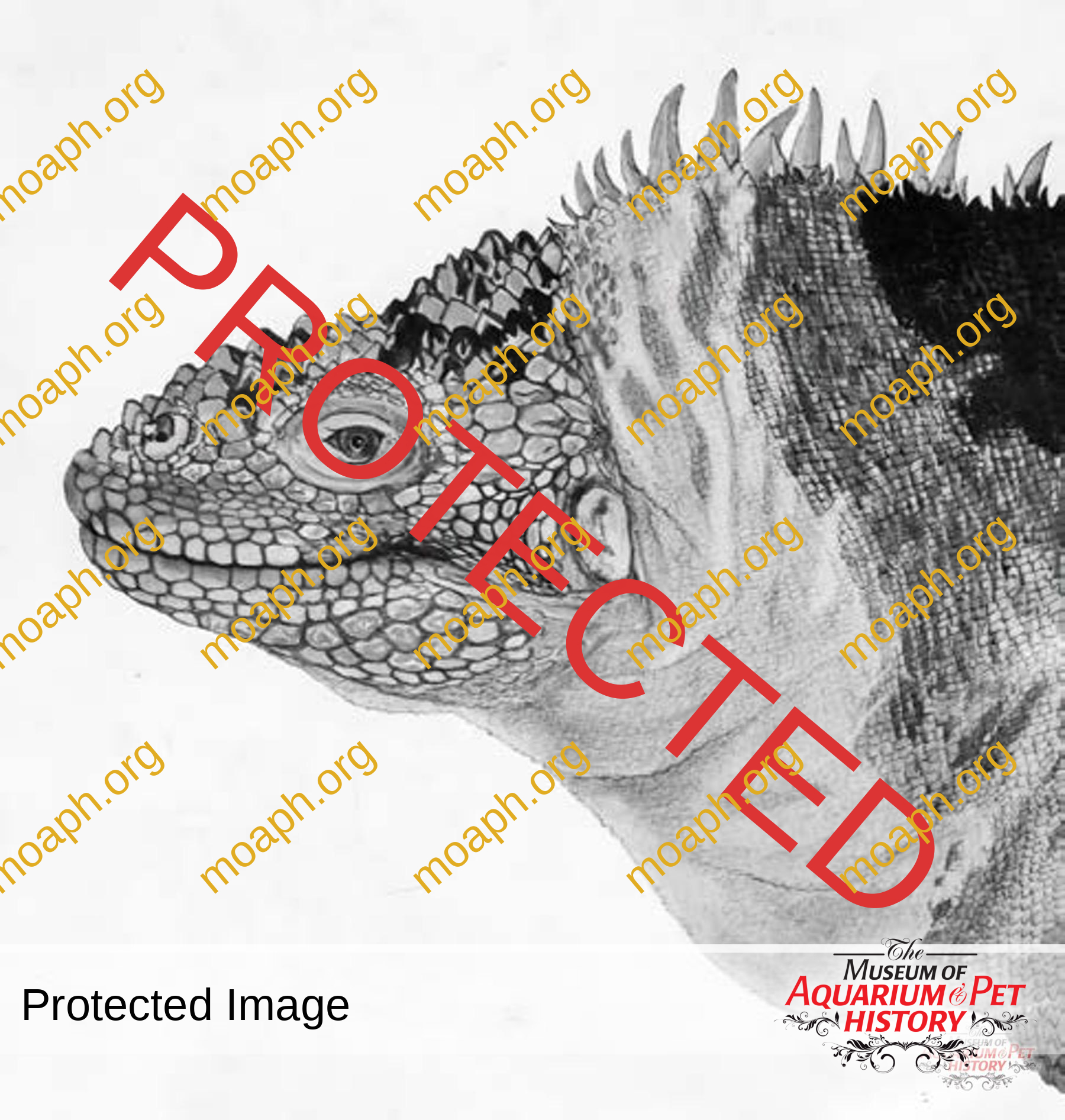
Figure 10. Curator Si Perkins from San Diego Zoo moved 60 Galápagos Land Iguanas (Conolophus subcristatus) from Baltra Island (known also as South Seymour Island) to North Seymour Island, which contained no iguanas in the 1940s. Had this not been done, this species would now be extinct, thanks to human activities. Image from Beebe (1924).

Figure 11. Marine Iguanas (Amblyrhynchus cristatus). This species was successfully kept at Brookfield Zoo in Chicago. Image from Steindacher (1876).
Baltra became an American airbase during World War II in 1940s and several thousand military and support personnel were stationed there, in part to guard the Panama Canal. Several factors contributed to the disappearance of these lizards — habitat destruction, introduction of feral animals, and using the lizards for target practice.
There appeared to be virtually no successful reproduction or recruitment on North Seymour for the subsequent 47 years, so a pair of adults was brought to the Charles Darwin Research Center on Santa Cruz Island to begin a captive colony; additional iguanas were included in this potential breeding group later from Baltra (Cayot et al., 1994). These iguanas reproduced and survived, particularly because feral cats and dogs had been reduced on Baltra. In June 1991, 35 five-year-old iguanas were repatriated to Baltra and 24 were released the next year. This head-starting program was truly an accomplishment deserving praise, thanks to Perkins and Hancock.
A new species, the Galápagos Pink Land Iguana (Conolophus marthae), was described in 2009 from Isla Isabela. The taxonomy of Galápagos land iguanas is incomplete and this may represent a further threat to the persistence of all species in the group (Gentile et al.; 2009).
Ray Pawley (1965, 1966, 1969, 1971) from Chicago Zoological Park (Brookfield Zoo) described a self-sustaining colony of Marine Iguanas (Amblyrhynchus cristatus) (Figure 11) in a large exhibit in the reptile building. I visited the zoo on a number of occasions and was impressed by the overall health and activity of these lizards. This species is challenging to maintain successfully in captivity and one of his saurians lived for over six years.
My Second Trip
On my second trip to the Galápagos our guide had been born in Quito and became a guide in the Archipelago in his teens. He was very competent. One day, he asked the clientele if any wanted to do some underwater viewing of flora and fauna; most jumped at the chance. One older woman, who had never been underwater, purchased a complete set of equipment — fins, wetsuit, goggles, air tank, weight belt, and so on; she was very excited. As she flipped backwards over the side of the boat, she sank like a stone; we hadn’t noticed that she was wearing her weight belt. Our guide immediately saw what had transpired and pulled her to the surface, coughing, stuttering and terrified. That was her first and last experience.
Volcanic islands may have deep sinkholes, and tortoises can accidentally fall to the bottom and die. George Zug (pers. comm.) told me that many of the islands have such lethal traps, littered with tortoise remains. The guide asked if any in the group would like to rappel down the side 40 feet on a rope to see the pile of skeletons. Only one person did and he was in his late 80s in age; I was worried that this experience would be far too strenuous and dangerous for him. He said that he had dealt with far worse; in WWII he had been a paratrooper.
The guide tied two ropes together but the knot did not seem secure; I was told not to worry so I tied the rope under the arms of the old gentleman and began lowering him. About half-way down the knot loosened and he fell the floor and remained immobile with arms and legs akimbo. I was sure that he was dead so I rapelled down the now 20-foot rope, bloodying my fingers on the rough wall as I continued the descent; he was just beginning to stir as I hit bottom. This time we checked the rope and hauled him up to the edge of the hole. I called the tourism company and told them about the incident— the client did not sue as he said that we had warned him about the danger and he had insisted on going anyway.
We saw a significant number of male Green Sea Turtles (Chelonia mydas) circling what I assumed to be females but since the Humboldt Current is quite cool, I did not dive into the sea to see male penises for a positive identification. Other sea turtles observed in smaller numbers included Hawksbill (Eretmochelys imbricata) and Olive Ridley (Lepidochelys olivacea). Leatherbacks (Dermochelys coriacea) were not seen.
Acknowledgements
I thank Kraig Adler, Judith Block, Bill Lamar, and George Zug for various courtesies.
Literature Cited
Arteaga, A., L. Bustamante, J. Vieira, W. Tapia and J. M. Guayasamin. 2019. Reptiles of the Galápagos: Life on the Enchanted Islands. Quito: Tropical Herping.
Bacon, J. P. 1980. Some observations on the captive management of Galapagos tortoises. Pp. 97-113. In: J. B. Murphy and J. T. Collins, editors, Reproductive biology and diseases of captive reptiles. Society for the Study of Amphibians and Reptiles. Contributions to Herpetology Number 1.
Baer, D. J. 1994. The nutrition of herbivorous reptiles. Pp. 83-90. In: J. B. Murphy, K. Adler and J. T. Collins, editors, Captive management and conservation of amphibians and reptiles. Society for the Study of Amphibians and Reptiles. Contributions to Herpetology, Volume 11.
Banning, G. H. 1933. Hancock Expedition of 1933 to the Galapagós Islands: General report. Bulletin of the Zoological Society of San Diego, Number 10.
Bauer, A. M., and C. J. McCarthy. 2010. Darwin’s pet Galápagos Tortoise, Chelonoidis darwini, rediscovered. Chelonian Conservation and Biology 9(2):270-276.
Beebe, W. 1924. Galapagos: World’s end. New York and London: G. P. Putnam’s Sons.
Benavides, E., M. Russello, D. Boyer, R. J. Wiese, B. Kajdacsi, L. Marquez, R. Garrick and A. Caccone. 2012. Lineage identification and genealogical relationships among captive Galápagos tortoises. Zoo Biology 31(1):107-120.
Broom, R. 1929. On the extinct Galapagos tortoise that inhabited Charles Island. Zoologica 9(8):313-320.
Burchfield, P. M., C. S. Hairston and S. L. Huntress. 1987. Management of Galapagos tortoises (Geochelone elephantopus) at the Gladys Porter Zoo. AAZPA Annual Conference Proceedings 1987:151-157.
Burke, R. L. 1990. Conservation of the world’s rarest tortoise. Conservation Biology 4(2):122-124.
Burns, C. E., C. Ciofi, L. B. Beheregaray, T. H. Fritts, J. P. Gibbs, C. Márquez, M. C. Milinkovitch, J. R. Powell and A. Caccone. 2003. The origin of captive Galápagos tortoises based on DNA analysis: Implications for the management of natural populations. Animal Conservation 6(4):329-337.
Campbell, H. W., and S. D. Busack. 1989. Laboratory maintenance. Pp. 109-125. In: M. Harless and H. Morlock, editors Turtles: Perspectives and research. Malabar, Florida: Krieger Publishing Company. [reprint edition of the 1979 original]
Campbell, S. 1978. Lifeboats to Ararat. New York: Times Books.
Carey, M. 1973. Some notable longevity records for captive iguanas. International Zoo Yearbook 13:154-155.
Casares, M. 1995. Untersuchungen zum Fortpflanzungsgeschehen bei Riesenschildkröten (Geochelone elephantopus und G. gigantea) und Landschildkröten (Testudo graeca und T. hermanni) anhand von Ultraschalldiagnostik und Steroidanalysen im Kot [Investigations concerning the reproductive process in giant tortoises (Geochelone elephantopus and G. gigantea) and tortoises (Testudo graeca and T. hermanni) based on ultrasound diagnostic methods and steroid analyses in the Kot Zoological Garden]. Der Zoologische Garten 65(1):50-76.
Casares, M., R. E. Honegger and A. Rübel. 1995. Management of giant tortoises Geochelone elephantopus and Geochelone gigantea at Zurich Zoological Gardens. International Zoo Yearbook 34:135-143.
Casares, M., A. Rübel, M. Döbeli, R. E. Honegger and E. Isenbügel. 1994. Non-invasive assessment of reproductive patterns in tortoises. Pp. 81-87. In: Proceedings of the 36th International Symposium on Diseases of Zoo and Wild Animals.
Cayot, L. J., H. L. Snell, W. Llerena and H. M. Snell. 1994. Conservation biology of Galápagos reptiles: Twenty-five years of successful research and management. Pp. 297-305. In: J. B. Murphy, K. Adler and J. T. Collins, editors, Captive management and conservation of amphibians and reptiles. Society for the Study of Amphibians and Reptiles. Contributions to Herpetology, Volume 11.
Chambers, P. 2006. A sheltered life: The unexpected history of the giant tortoise. New York: Oxford University Press.
Chitty, J., and A. Raftery. 2013. Essentials of tortoise management and surgery. London: Wiley-Blackwell.
Ciofi, C., A. Caccone, L. B. Beheregaray, M. C. Milinkovitch, M. Russello and J. R. Powell. 2009. Genetics and conservation on islands: The Galapagos giant tortoise as a case study. Pp. 269-293. In: G. Bertorelle, M. Bruford, H. Hauffe, A. Rizzoli and C. Vernesi, editors, Population genetics for animal conservation (Conservation Biology 17).
Conway, W. 1988. Can technology aid species preservation? Pp. 263-268. In: E. O. Wilson and F. M. Peter, editors, Biodiversity. National Academie Press, Washington, D.C.
Coote, J. 2002. History of Western herpetoculture before the 20th Century. Pp. 19-47. In: W. E. Becker, editor, Proceedings of the 25th International Herpetological Symposium on Captive Propagation and Husbandry. International Herpetological Symposium, Inc.
Ebersbach, K. 2001. Zur Biologie und Haltung der Aldabra-Riesenschildkröte (Geochelone gigantea) und der Galapagos- Riesenschildkröte (Geochelone elephantopus) in menschlicher Obhut unter besonderer Berücksichtigung der Fortpflanzung [Biology and keeping of the Aldabra giant tortoise (Geochelone gigantea) and the Galapagos giant tortoise (Geochelone elephantopus) in captivity with special reference to reproduction]. Ph.D. Dissertation, Tierärztliche Hochschule, Hannover, Germany.
Edwards, D. L., E. Benavides, R. C. Garrick, J. P. Gibbs, M. A. Russello, K. B. Dion, C. Hyseni, J. P. Flanagan, W. Tapia and A. Caccone. 2013. The genetic legacy of Lonesome George survives: Giant tortoises with Pinta Island ancestry identified in Galápagos. Biological Conservation 157:225-228.
Edwards, J. 1996. London Zoo from old photographs 1852–1914. London: Privately published.
Evans, L. T., and J. V. Quaranta. 1951. A study of the social behavior of a captive herd of giant tortoises. Zoologica 36(Part 3)(12):171-181.
Flower, S. S. 1925. Contributions to our knowledge of the duration of life in vertebrate animals. — III. Reptiles. Proceedings of the Zoological Society of London 95(3):911-981.
Fournié G, S. J. Goodman, M. Cruz, V. Cedeño, A. Vélez, L. Patiño, C. Millins, L. M. Gibbons, M. T. Fox and A. A. Cunningham. 2015. Biogeography of parasitic nematode communities in the Galápagos giant tortoise: Implications for conservation management. PLoS ONE 10(9):e0135684. <https://doi.org/10.1371/journal.pone.0135684>.
Furrer, S. C., J.-M. Hatt, H. Snell, C. Marquez, R. E. Honegger and A. Rübel. 2004. Comparative study on the growth of juvenile Galapagos giant tortoises (Geochelone nigra) at the Charles Darwin Research Station (Galapagos Islands, Ecuador) and Zoo Zurich (Zurich, Switzerland). Zoo Biology 23(2):177-183.
Gentile, G., A. Fabiani, C. Marquez, H. L. Snell, H. M. Snell, W. Tapia and V. Sbordoni. 2009. An overlooked pink species of land iguana in the Galápagos. Proceedings of the National Academy of Sciences of the United States of America 106(2):507-511. <https://doi.org/ 10.1073/pnas.0806339106>
Georg, L. K., W. M. Williamson, E. B. Tilden and R. E. Getty. 1963. Mycotic pulmonary disease of captive giant tortoises due to Beauvaria bassiana and Paecilomyces fumoso-roseus. Sabouraudia: Journal of Medical and Veterinary Mycology 2(2):80-86.
Grant, C. 1947. Dr. Charles Haskins Townsend. Herpetologica 4(1):38-40.
Guillery, P. 1993. The buildings of the London Zoo. London: Royal Commission on the Historical Monuments.
Hairston, C., and P. M. Burchfield. 1989. Management and reproduction of the Galapagos tortoise Geochelone elephantopus at the Gladys Porter Zoo. International Zoo Yearbook 28:70-77.
Hatt, J.-M., and R. E. Honegger. 1997. Erfahrungen und Beobachtungen bei der Aufzucht von Galapagos Riesenschildkröten Geochelone (elephantopus) nigra im Zoo Zürich [Experiences and observations in raising Galapagos giant tortoises Geochelone (elephantopus) nigra in the Zürich Zoo]. Verhandlungsbericht: Erkrankungen der Zootiere 38:131-135.
Hirsch, U. 1980. Riesenschildkröten (Testudo [Geochelone] elephantopus) auf Galapagos [Giant tortoises (Testudo {Geochelone} elephantopus) on Galapagos]. Zeitschrift des Kölner Zoo 23(4):111-117.
Honegger, R. E., and A. Rübel. 1991. Aufzucht und Erkrankungen der ersten in Europa nachgezogenen Galapagos Schildkröten (Geochelone elephantopus) [Rearing and illnesses of the first Galapagos tortoises bred in Europe (Geochelone elephantopus)]. Pp. 225-243. In: K. Gabrisch, B. Schildger and P. Zwart, editors, Proceedings of the 4th International Colloquium on Pathology and Medicine of Reptiles and Amphibians, Deutsche Veterinärmedizinische Gesellschaft [German Veterinary Medicine Society], Bad Nauheim, Germany.
Liesegang, A., J.-M. Hatt, J. Nijboer, R. Forrer, M. Wanner and E. Isenbügel. 2001. Influence of different dietary calcium levels on the digestibility of Ca, Mg, and P in captive-born juvenile Galapagos giant tortoises (Geochelone nigra). Zoo Biology 20(5):367-374.
Macfarland, C. G., J. Villa and B. Toro. 1974. The Galápagos giant tortoises (Geochelone elephantopus) Part II: Conservation methods. Biological Conservation 6(3):198-212.
Milinkovitch, M. C., D. Monteyne, J. P. Gibbs, T. H. Fritts, W. Tapia, H. L. Snell, R. Tiedemann, A. Caccone and J. R. Powell. 2004. Genetic analysis of a successful repatriation programme: Giant Galapagos tortoises. Proceedings of the Royal Society B: Biological Sciences 271(1537):341-345.
Murphy, J. B. 2016. Feasting on Green Sea Turtle soup in the Victorian Era. Herpetological Review 47(1):162-164.
Nicholls, H. 2006. Lonesome George, The life and loves of a conservation icon. New York: Macmillan.
Pawley, R. 1965. In the Chicago Zoological Park: Housekeeping for marine iguanas. Animal Kingdom 68:146-150.
——–. 1966. Observations on the care and nutrition of a captive group of marine iguanas Amblyrhynchos cristatus. International Zoo Yearbook 6:107-115.
——–. 1969. Further notes on a captive colony of marine iguanas Amblyrhynchos cristatus at Brookfield Zoo, Chicago. International Zoo Yearbook 9:41-44.
——–. 1971. Longevity of marine iguanas. International Zoo News 18:39.
Pianka, E. R., and L. J. Vitt. 2003. Lizards: Windows to the evolution of diversity. Berkeley: University of California Press.
Poulakakis, N., D. L. Edwards, Y. Chiari, R. C. Garrick, M. A. Russello, E. Benavides, G. J. Watkins-Colwell, S. Glaberman, W. Tapia, J. P. Gibbs, L. J. Cayot and A. Caccone. 2015. Description of a new Galapagos giant tortoise species (Chelonoidis; Testudines: Testudinidae) from Cerro Fatal on Santa Cruz Island. PLoS One 10(10):e0138779 <https://doi.org/10.1371/journal.pone.0138779>
Poulakakis, N., S. Glaberman, M. Russello, L. Beheregaray, C. Ciofi, J. Powell and A. Caccone. 2008. Historical DNA analysis reveals living descendants of an extinct species of Galápagos tortoise. Proceedings of the National Academy of Sciences of the United States of America 105(40):15464-15469. <https://doi.org/10.1073/pnas.0805340105>
Powell, J., and A. Caccone. 2006. Giant tortoises. Current Biology 16(5):R144-R145.
Pritchard, P. C. H. 1996. The Galápagos tortoises: Nomenclatural and survival status. Chelonian Research Monographs Number 1. Lunenburg, Massachusetts: Chelonian Research Foundation.
Raphael, B. L. 1980. Sand impaction in a Galapagos tortoise. P. 67. In: Annual Proceedings, American Association of Zoo Veterinarians.
Robeck, T. R., D. C. Rostal, P. M. Burchfield, D. W. Owens and D. C. Kraemer. 1990. Ultrasound imaging of reproductive organs and eggs in Galapagos tortoises, Geochelone elephantopus spp. Zoo Biology 9(5):349-359.
Rostal, D. C., T. R. Robeck, J. S. Grumbles, P. M. Burchfield and D. W. Owens. 1998. Seasonal reproductive cycle of the Galápagos tortoise (Geochelone nigra) in captivity. Zoo Biology 17(6):505-517.
Russello, M. A., C. Hyseni, J. P. Gibbs, S. Cruz, C. Marquez, W. Tapia, P. Velensky, J. R. Powell and A. Caccone. 2007. Lineage identification of Galápagos tortoises in captivity worldwide. Animal Conservation 10(3):304-311.
Russello, M. A., N. Poulakakis, J. P. Gibbs, W. Tapia, E. Benavides, J. R. Powell and A. Caccone. 2010. DNA from the past informs ex situ conservation for the future: an “extinct” species of Galápagos tortoise identified in captivity. PLoS One 5(1):e8683. <https:// doi.org/10.1371/journal.pone.0008683>
Ryder, O. A., L. G. Chemnick, S. F. Schafer and A. L. Shima. 1989. Individual DNA fingerprints from Galapagos tortoises Geochelone elephantopus. International Zoo Yearbook 28:84-87.
Sachs, T. 2014. Lonesome George: Icon of extinction. The Tortoise 1(3):174-179.
Schafer, S. F., and C. O’Neill Krekorian. 1983. Agonistic behavior of the Galapagos tortoise, Geochelone elephantopus, with emphasis on its relationship to saddle-backed shell shape. Herpetologica 39(4):448-456.
Schramm, B. G., M. Casares and V. A. Lance. 1999. Steroid levels and reproductive cycle of the Galápagos tortoise, Geochelone nigra, living under seminatural conditions on Santa Cruz Island (Galápagos). General and Comparative Endocrinology 114(1):108-120.
Schramm, B. G., M. Casares and V. A. Lance. 2000. Ultrasound scanning of ovaries and eggs in Galápagos tortoises, Geochelone nigra, on Santa Cruz Island, Gàlápagos. Chelonian Conservation and Biology 3(4):706-713.
Schramm, B. G., V. A. Lance and M. Casares. 1999. Reproductive cycles of male and female giant tortoises (Geochelone nigra) on the Galápagos Islands by plasma steroid analysis and ultrasound scanning. Linnaeus Fund Research Report. Chelonian Conservation and Biology 3(3):523-528.
Shaw, C. E. 1961. Breeding the Galapagos tortoise, Testudo elephantopus. International Zoo Yearbook 3:102-104.
——–. 1962. Eine neue Generation Galapagos-Riesen [A new generation of Galapagos giants]. Freunde des Kölner Zoo 5(1):18-20.
Steindachner, F. 1876. Die Schlangen und Eidechsen der Galapagos-Inseln. Vienna: K. K. zoologisch-botanischen Gesellschaft.
Thomson, S., S. Irwin and T. Irwin. 1998. Harriet the Galapagos tortoise: Disclosing one and a half centuries of history. Reptilia (English edition), March/April (2):48-51.
Throp, J. L. 1969. Notes on breeding the Galapagos tortoise Testudo elephantopus at Honolulu Zoo. International Zoo Yearbook 9:30-31.
——–. 1975. Note on the management and reproduction of the Galápagos tortoise at the Honolulu Zoo. Pp. 39-42. In: R. D. Martin, editor, Breeding endangered species in captivity. London: Academic Press.
Townsend, C. H. 1925. The Galapagos tortoises in their relation to the whaling industry: A study of old logbooks. Zoologica 4(3):55-135.
——–. 1928. The Galápagos Islands revisited. Bulletin of the New York Zoological Society 31(5):148-169.
——–. 1931. Growth and age in the giant tortoise of the Galápagos. Zoologica 9(13):459-474.
——–. 1937. Growth of Galápagos tortoises, Testudo vicina, from 1928 to 1937. Zoologica 22(Part 3)(19):289-292.
White, G. 1789. The natural history and antiquities of Selbourne. London.
Wright, K. M., B. Toddes and S. Donoghue. 1997. To form the more perfect stool: Feeding trials on the Galápagos tortoise (Geochelone nigra) and Aldabra tortoise (Geochelone gigantea) population at the Philadelphia Zoological Garden. 1997 Proceedings American Association of Zoo Veterinarians:11-15.
Wyneken, J., M. H. Godfrey and V. Bels (editors). 2008. Biology of turtles. Boca Raton, Florida: CRC Press.
Zaher, H., M. H. Yánez-Muñoz, M. T. Rodrigues, R. Graboski, F. A. Machado, M. Altamirano-Benavides, S. L. Bonatto and F. G. Grazziotin. 2018. Origin and hidden diversity within the poorly known Galápagos snake radiation (Serpentes: Dipsadidae). Systematics and Biodiversity 16(7):614-642.
From the Bulletin of the Chicago Herpetological Society