Portrait of a Herpetologist – Part 8: The Past to Now
Introduction
Most of the historical illustrations in this presentation are from the collections of the Smithsonian Institution Libraries (the Joseph F. Cullman 3rd, Library of Natural History and the National Museum of Natural History Library). I have chosen those herpetological folks over time with whom I have interacted with at least one-half century so it seems like the time to thank them for studying these wonderful creatures for so long.
The first group is my zoo colleagues, buddies, and fieldworkers, most appreciated and still contributing to this day in herpetology: Barry Armstrong. Fred Antonio, Lauren Augustine, Dave Barker, Don Boyer, E. Bronikowski, Jonathan Campbell, Kevin de Querioz, Gary Ferguson, Brian Gratwicke, Matt Evans, Richard Hudson, William W. Lamar, William Lamoreaux, Roy McDiarmid, Kyle Miller, Matt Neff, Leslie Overstreet, Dave Roberts, Brian Smith, Robin Saunders, David Schleser, Trooper Walsh, Bèla Demeter, Barbara Watkins, George Zug.
This presentation is also dedicated to those who have left us prematurely― John Behler, David Chiszar, J. T. Collins, Clay Garrett, W. Ron Heyer, and Hobart M. Smith.
All have advanced the idea in their many writings that zoos and aquariums are important places for significant fieldwork. research and artwork.
Two high-school students Kraig Adler and D. M. Dennis started the Ohio Herpetological Society in 1958 which eventually morphed into the largest in the world― SSAR. Make sure you pick up a just-published copy of Amphibians & Reptiles―2024. A New History, 1955. The very reasonably priced work absolutely should be on the bookshelf of every enthusiast.
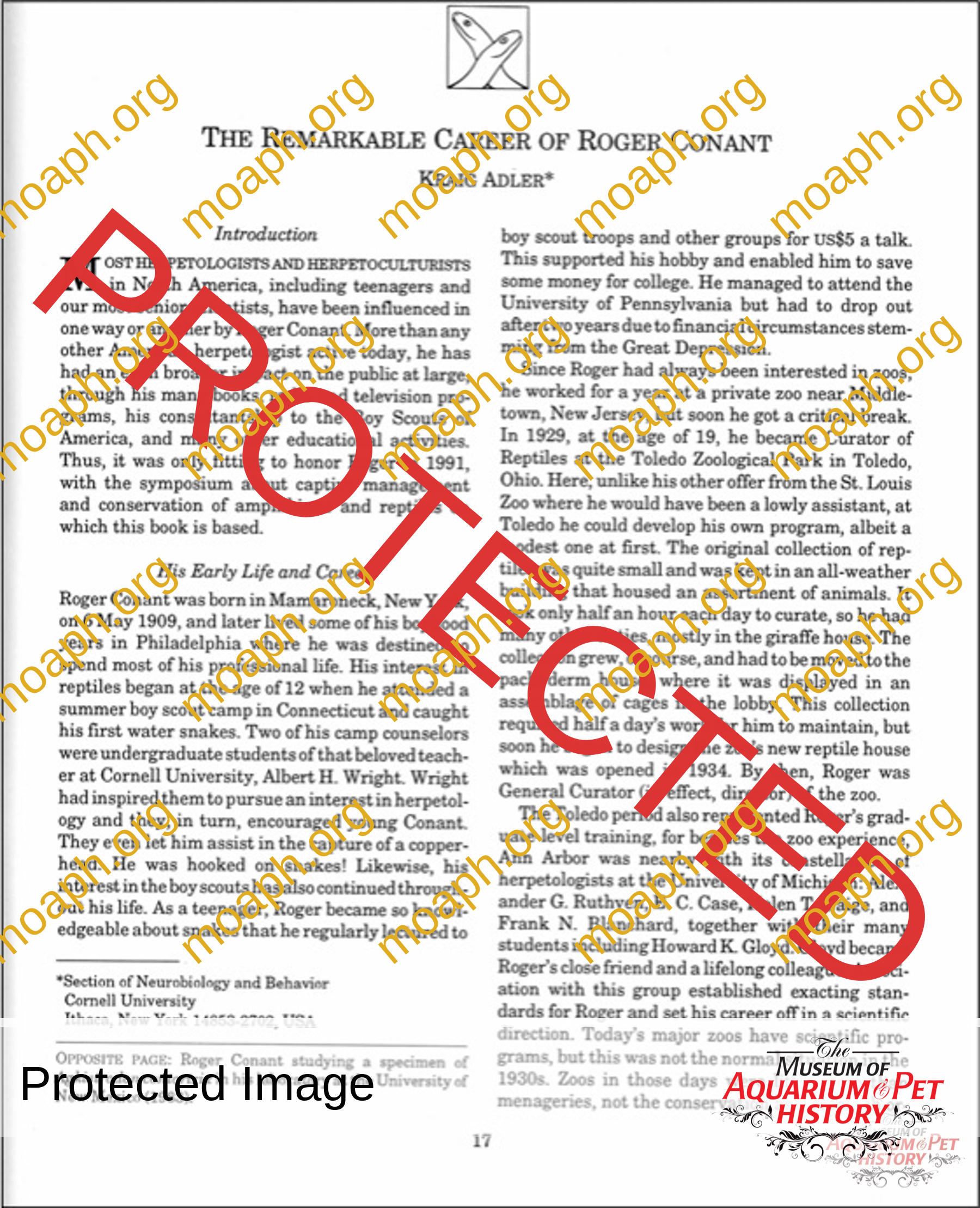
“Most herpetologists and herpetoculturists in North America, including teenagers and our most senior scientists, have been influenced in one way or another by Roger Conant. More than any other American herpetologist active today, he has had an even broader impact on the public at large, through his many books, radio and television programs, his consultantship to the Boy Scouts of America, and many other educational activities.”
-Kraig Adler (1994)
“People who delight in keeping newts or frogs, tortoises, or snakes, are, as a rule, considered eccentric.”
-Hans Gadow (1901

In Memoriam ― Roger Conant (1909-2003)
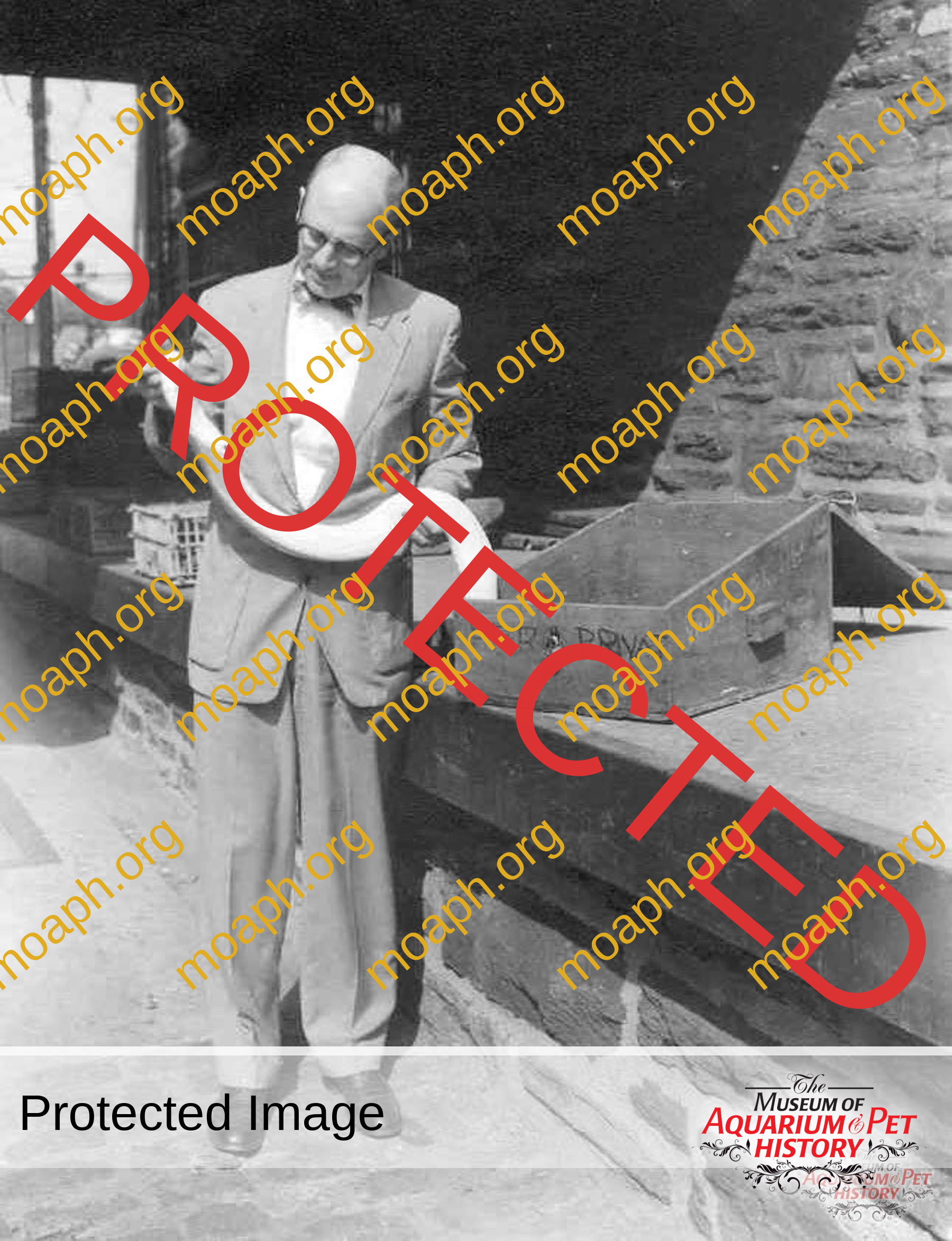
Conant holding albino python on 15 September 1955. Credit: Zoological Society of Philadelphia Archives, provided by Brint Spencer.
Chapter 1. Where We Have Been…
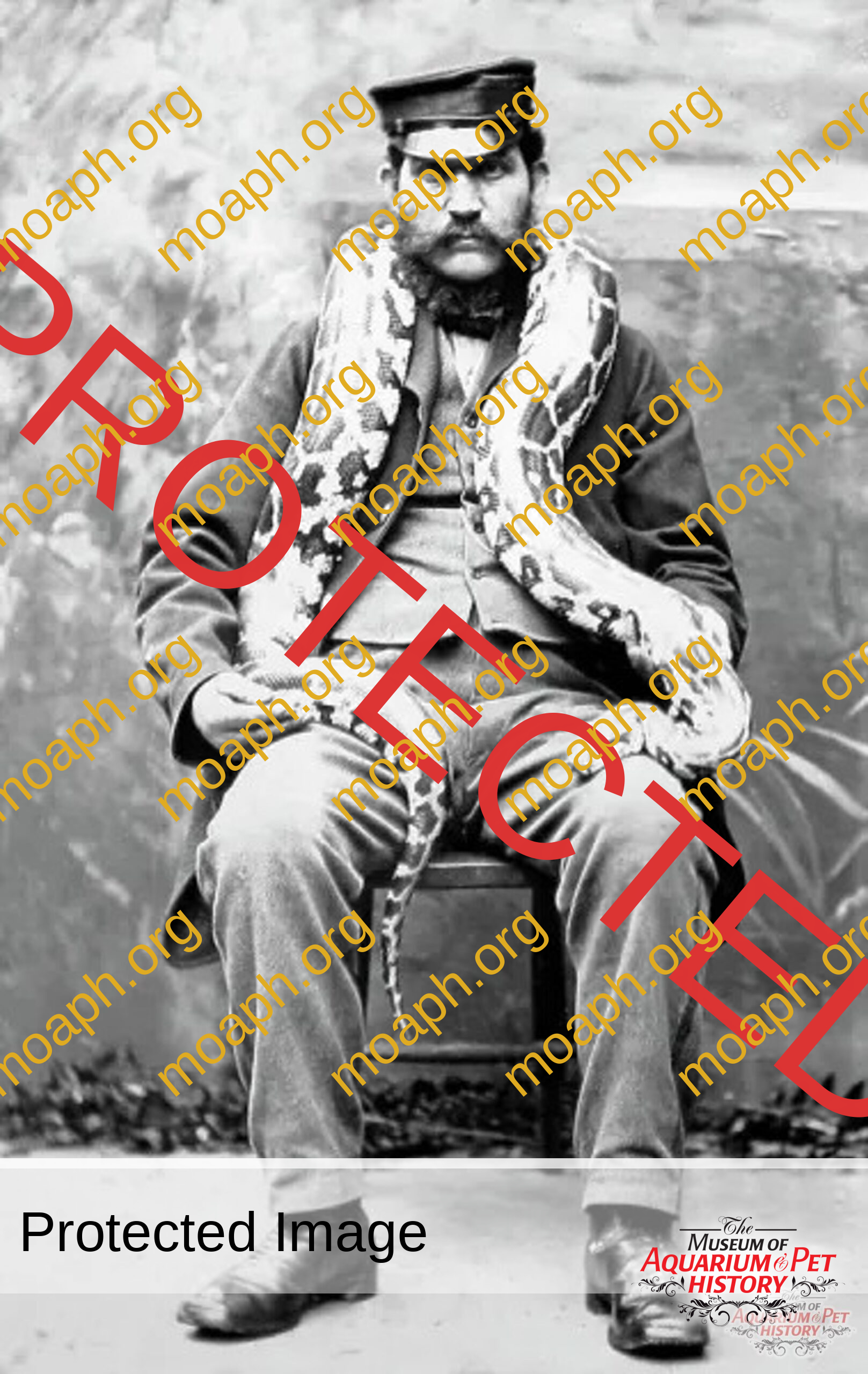
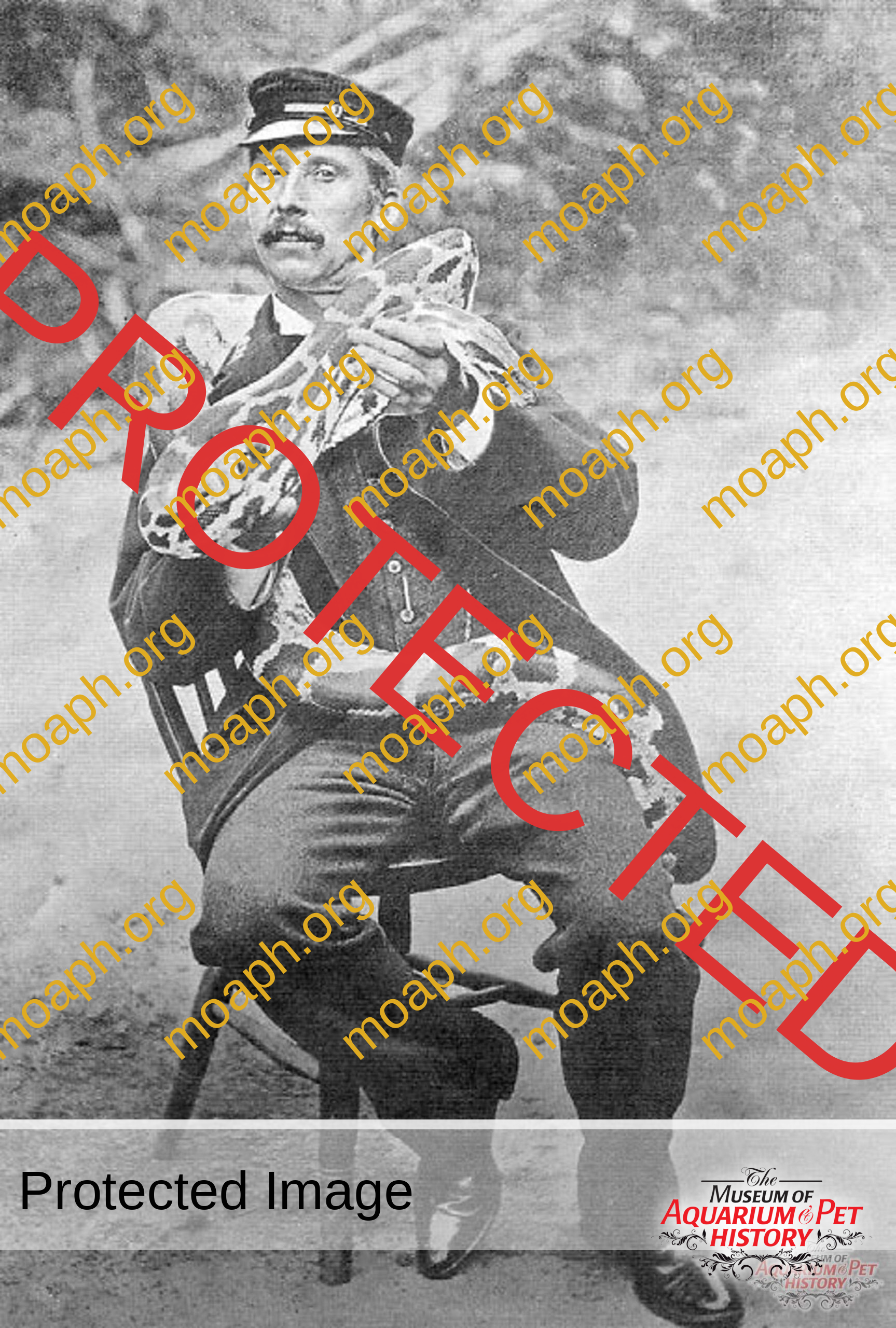
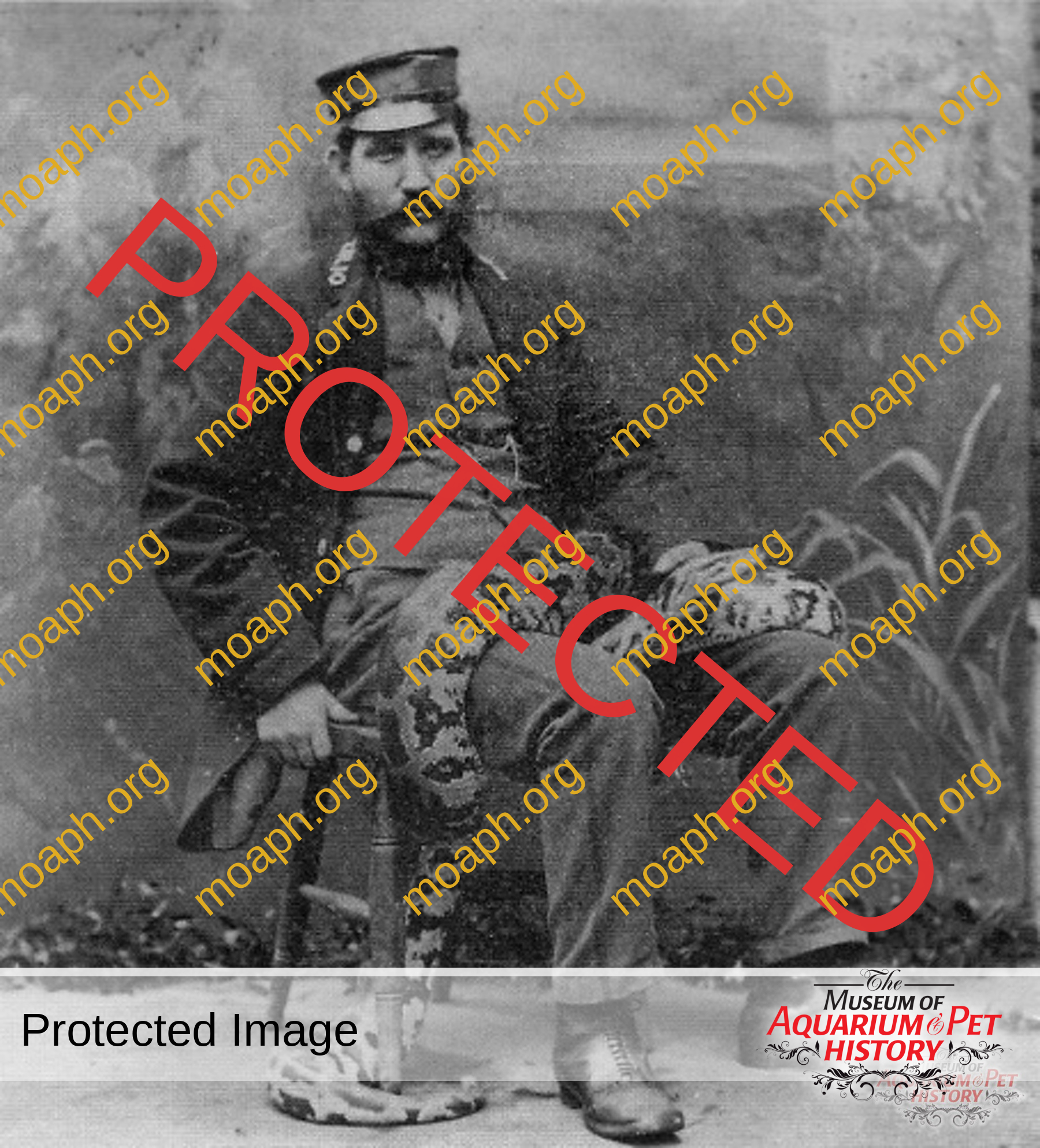
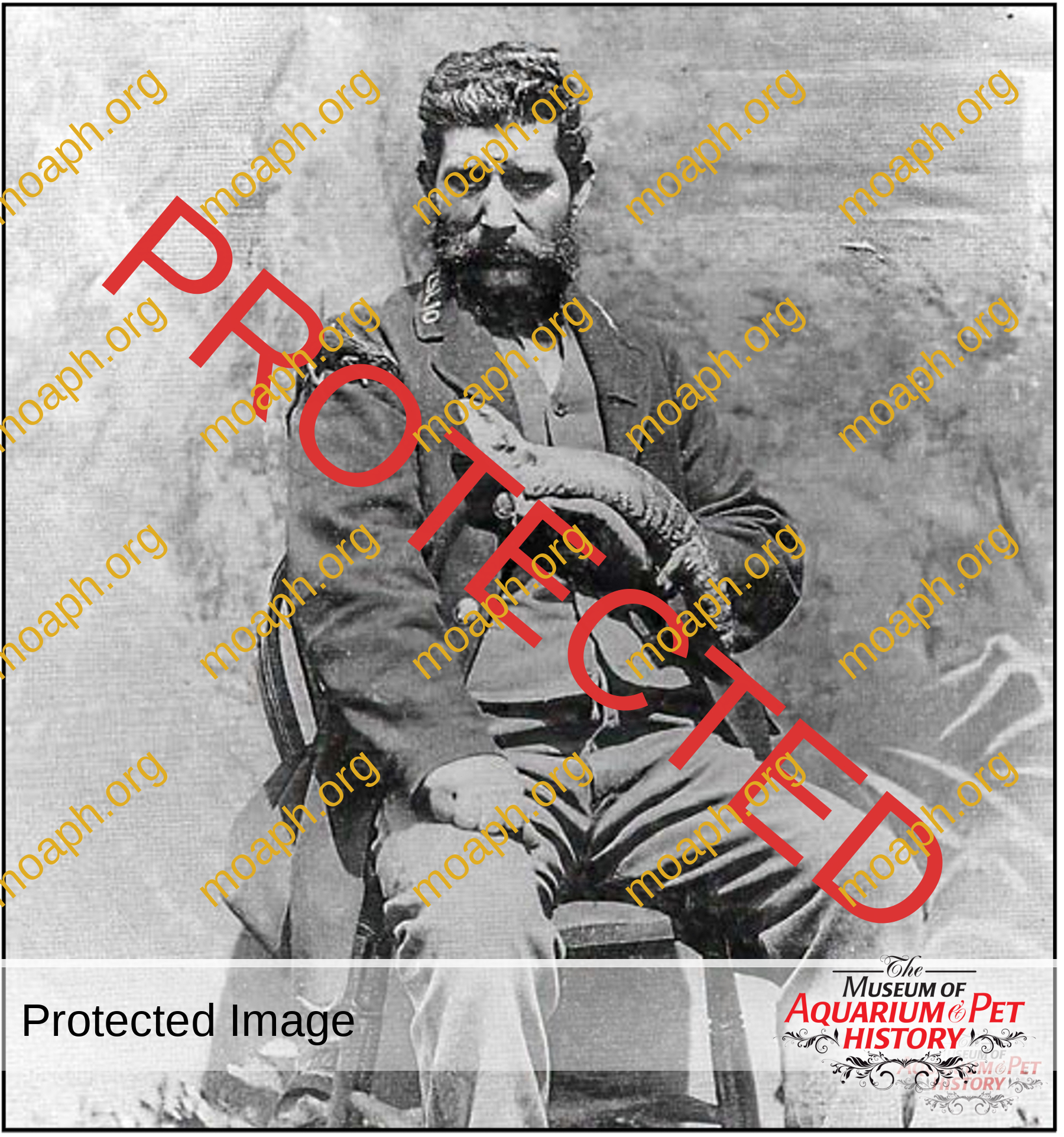
Early zoo herpers look like bikers. London zoo keepers between 1872-1890. Provided by John Edwards.
In many ways, our zoo profession has advanced dramatically with significant improvements in husbandry, exhibition and longevity of our charges.
Today, zoo workers sometimes forget that their predecessors were critically important in this development.
The Challenge is to Maximize the Potential of Our Collections by Designing Research Projects to Investigate the Biology and Improve the Care of our Charges.
Here are some suggestions for Research Projects that can answer interesting questions and can be accomplished in a Zoo Setting.
Reptile Buildings and Aquariums Can Be Beautiful
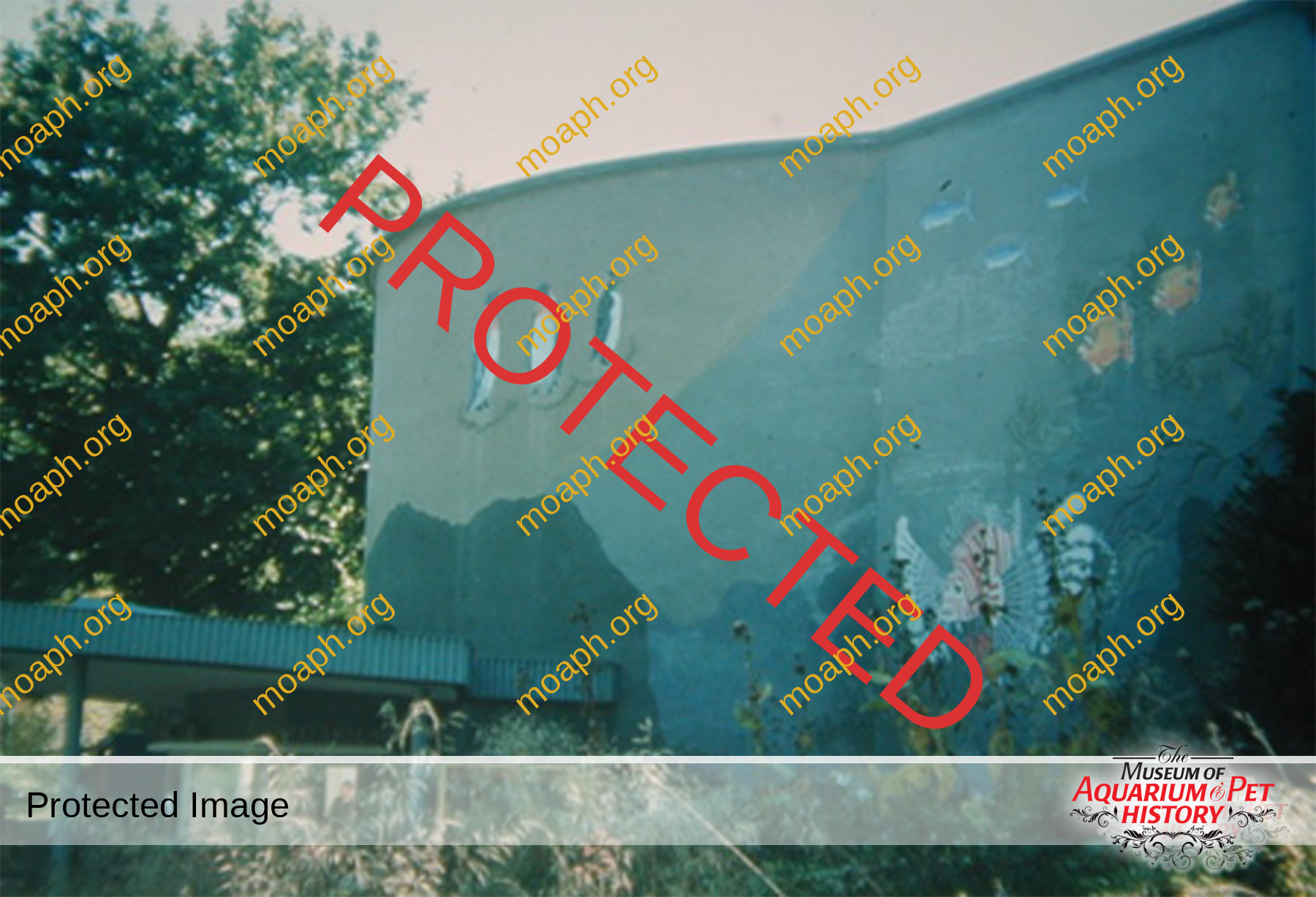
Frankfurt Zoo Exotarium (Aquarium and Terrarium Exhibit)
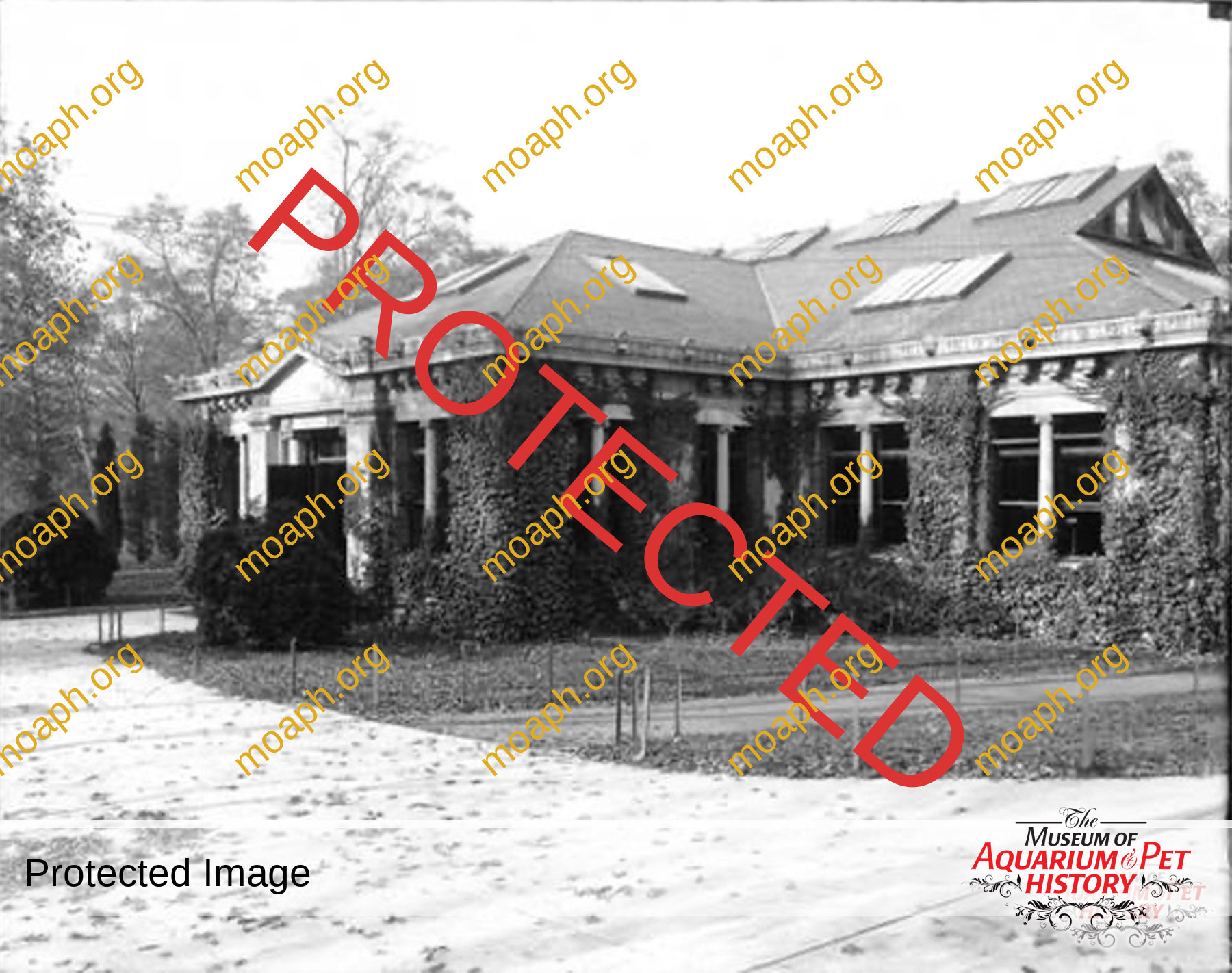
Bronx Zoo Wildlife Conservation Society (photo courtesy of Wildlife Conservation Society)
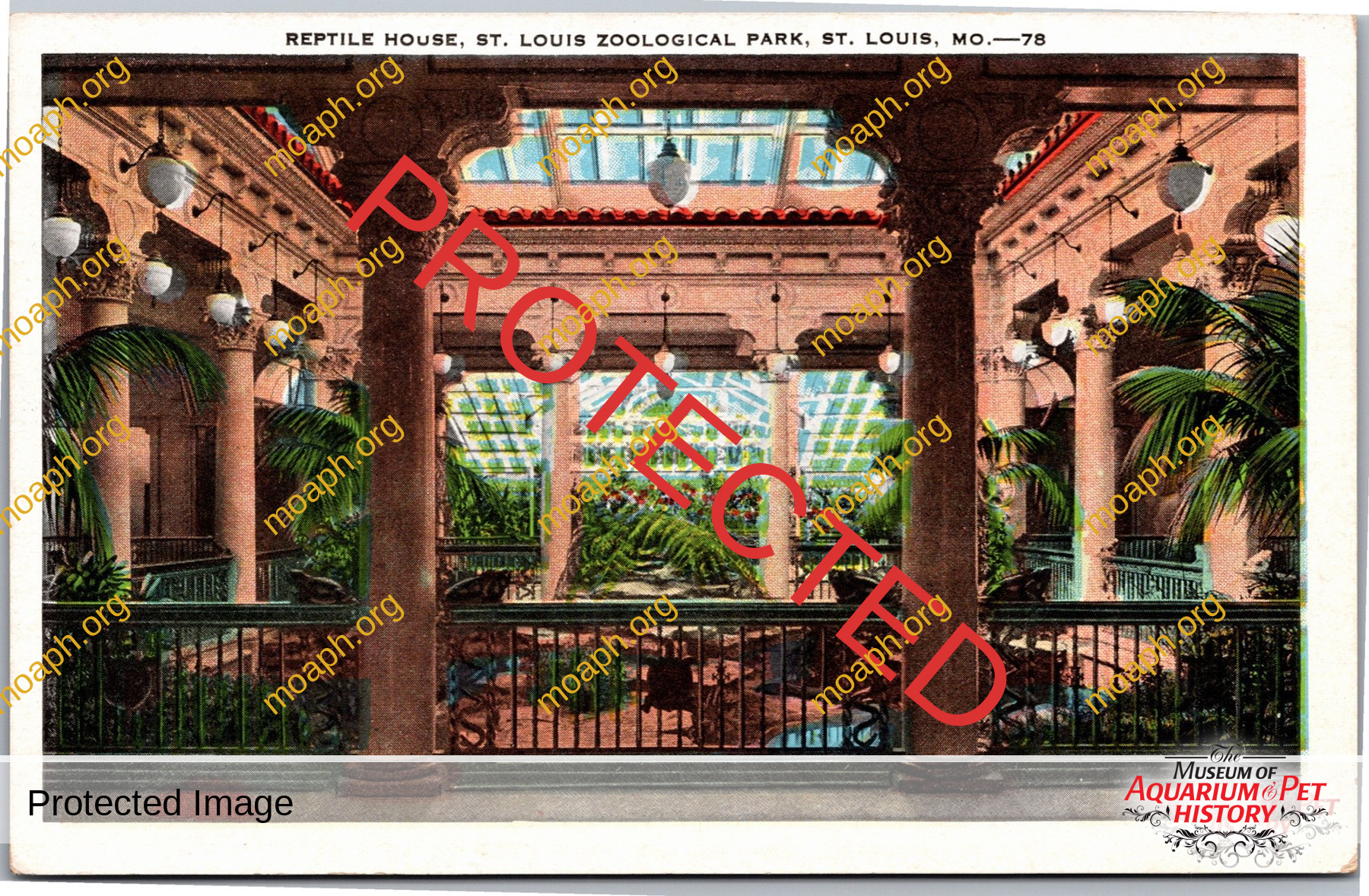
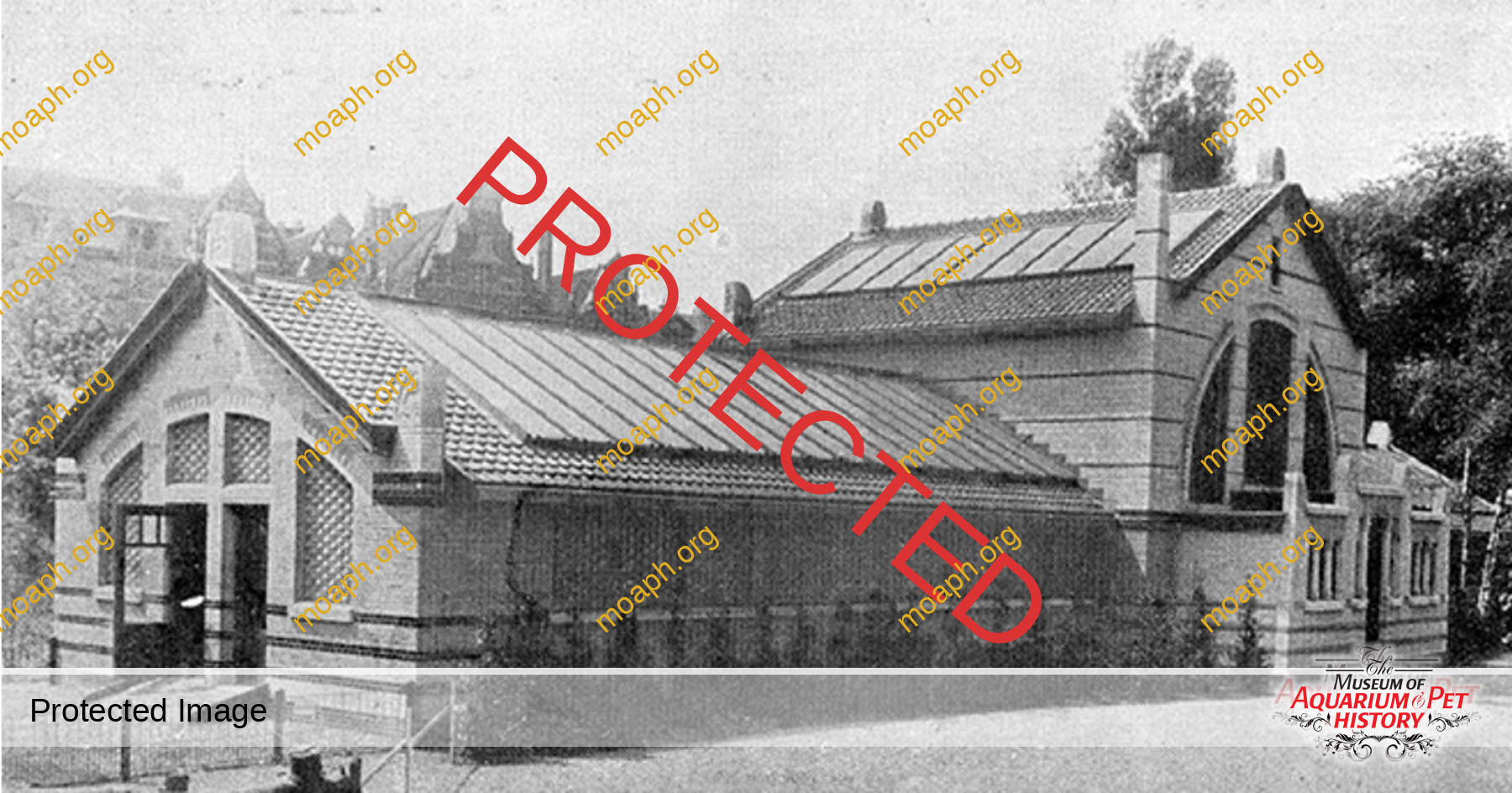
Rotterdam Zoo reptile building in 1911 (photo provided by Gerard Visser)

Tokyo Zoo Vivarium

Smithsonian National Zoo
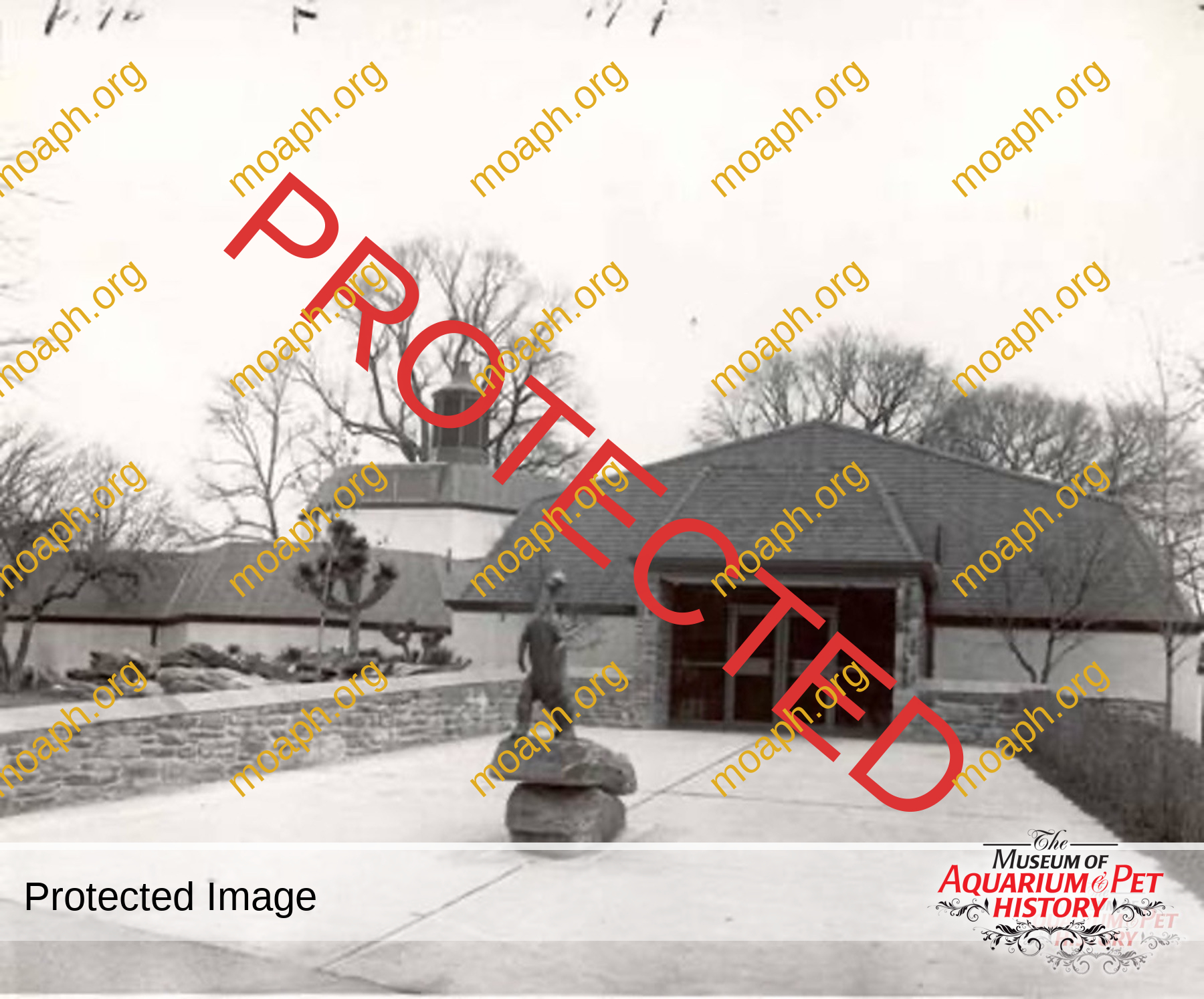
Philadelphia Zoo
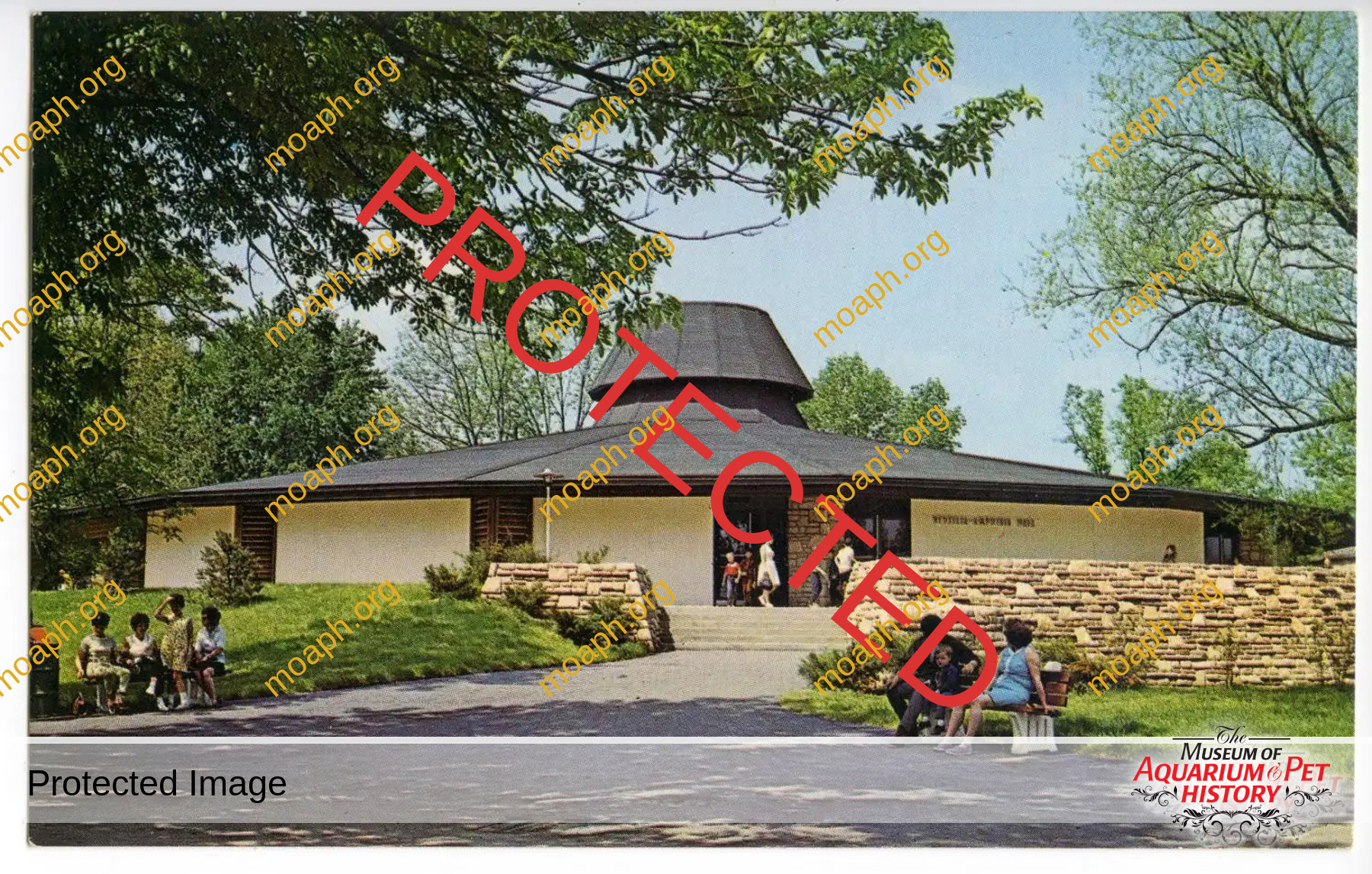
Columbus Zoo in the 1960s
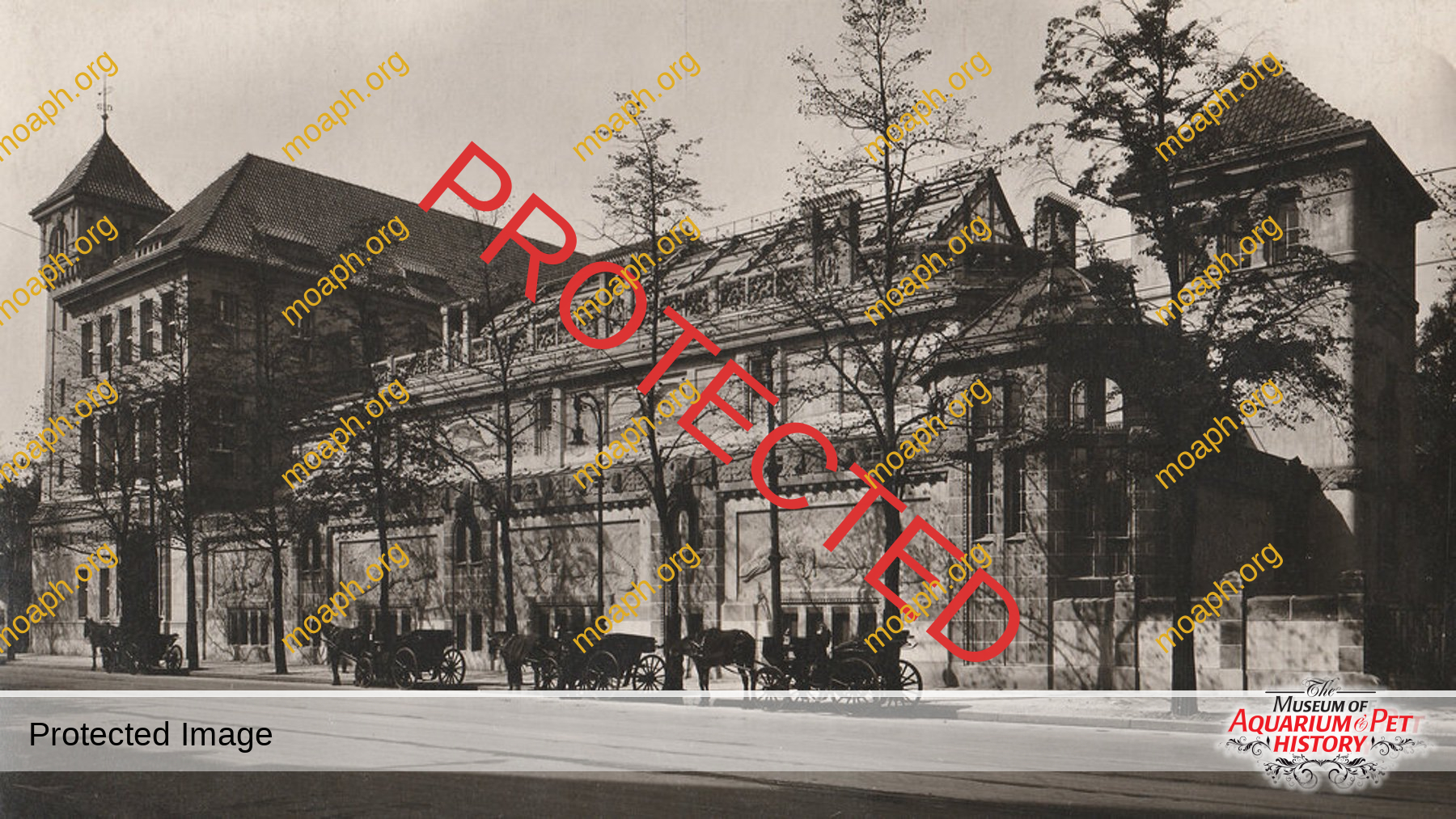
Berlin Aquarium in 1914. Photo courtesy of Jurgen Lange and Christina Unger
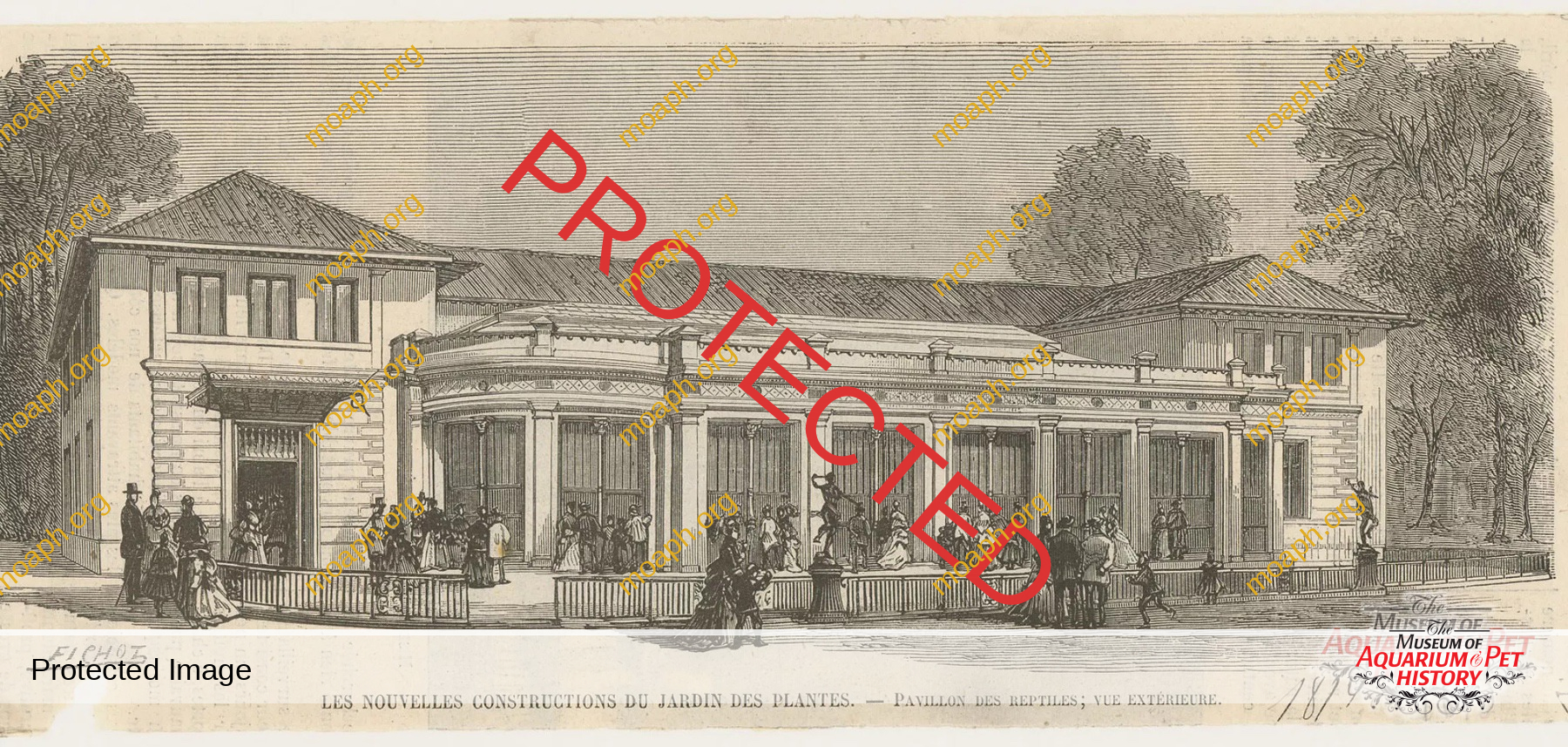
Reptile building at Menagerie Jardin des Plantes in Paris. This reptile building was built in 1870-4.
Exhibits Have Evolved!
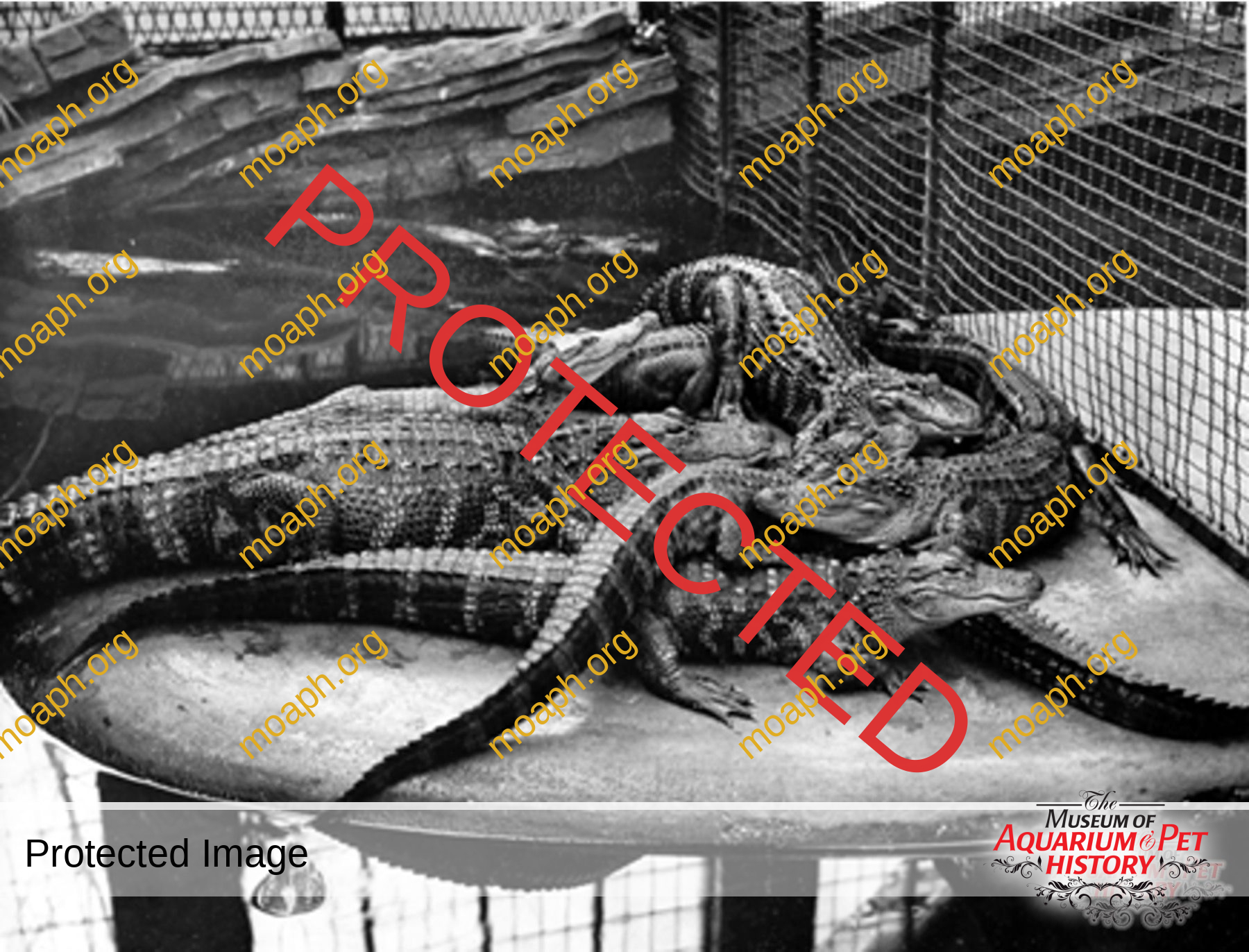
Crocodilians at Rotterdam Zoo between 1911-1937
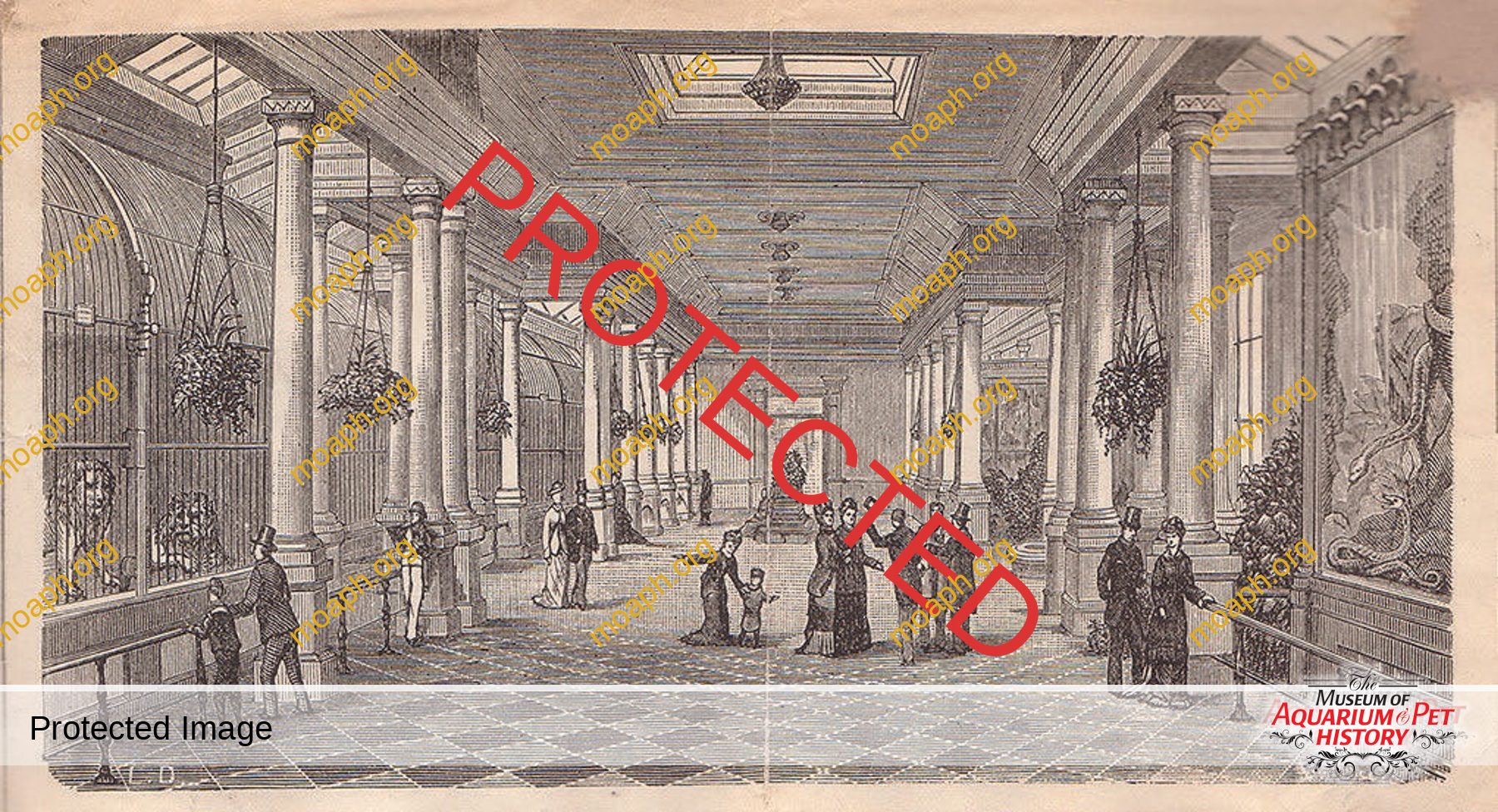
Reptile display at Antwerp Zoo from “Promenade au jardin zoologique d’Anvers par Eugéne Gens” by Eugéne Gens in 1861.
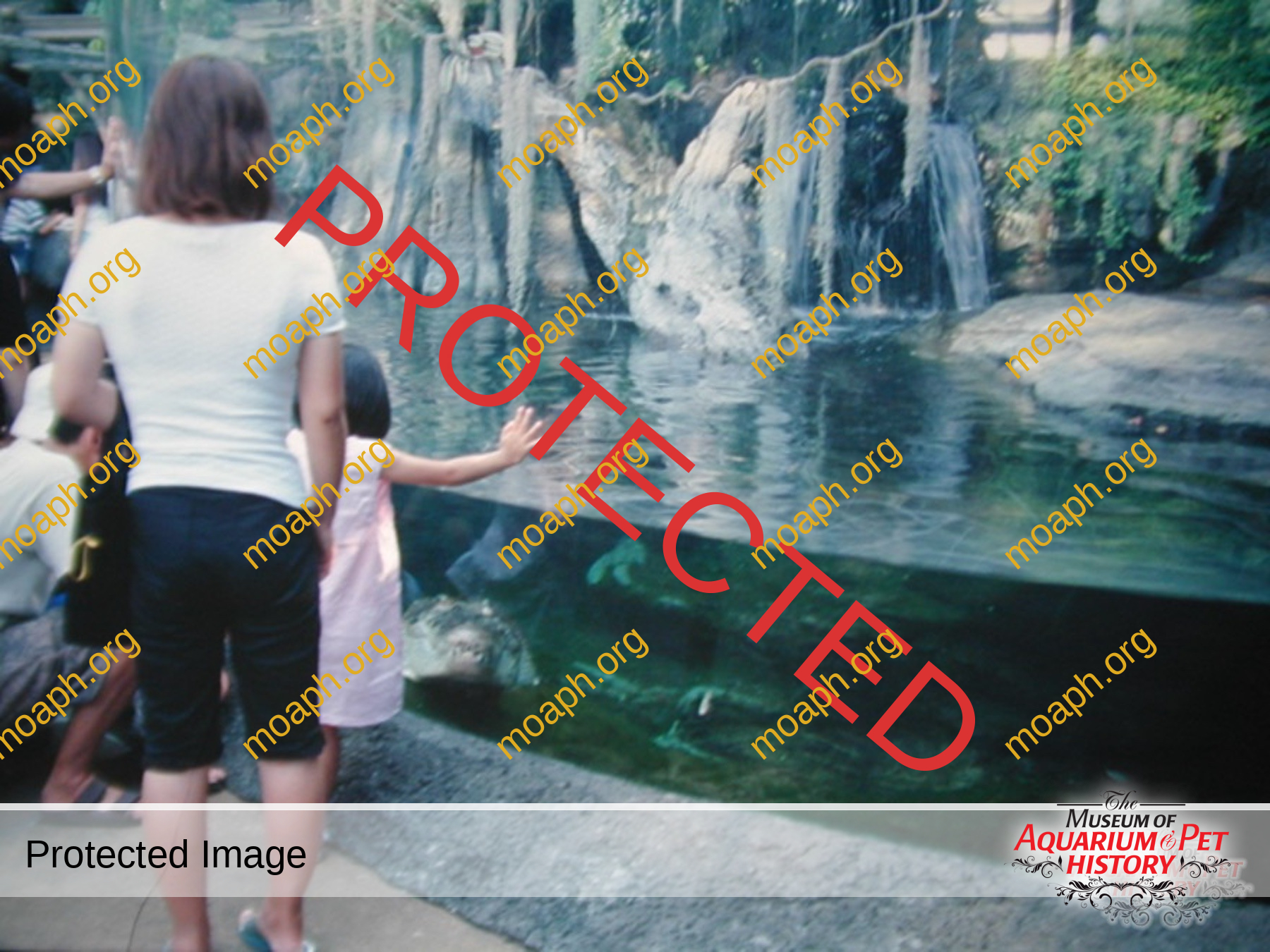
Ueno Zoo Vivarium in Japan
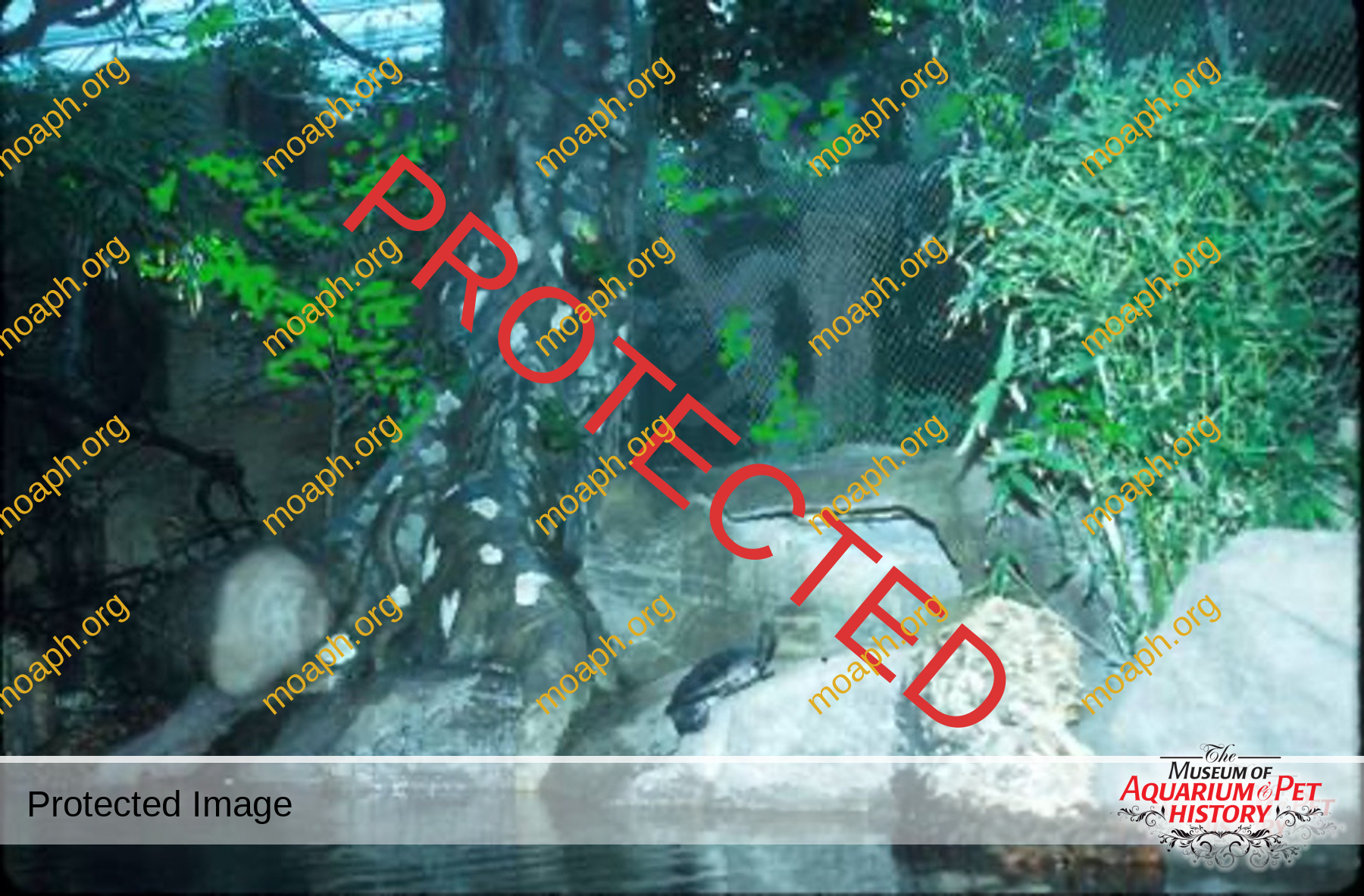
Denver Zoo. Photo by John Edwards/Rick Haeffner
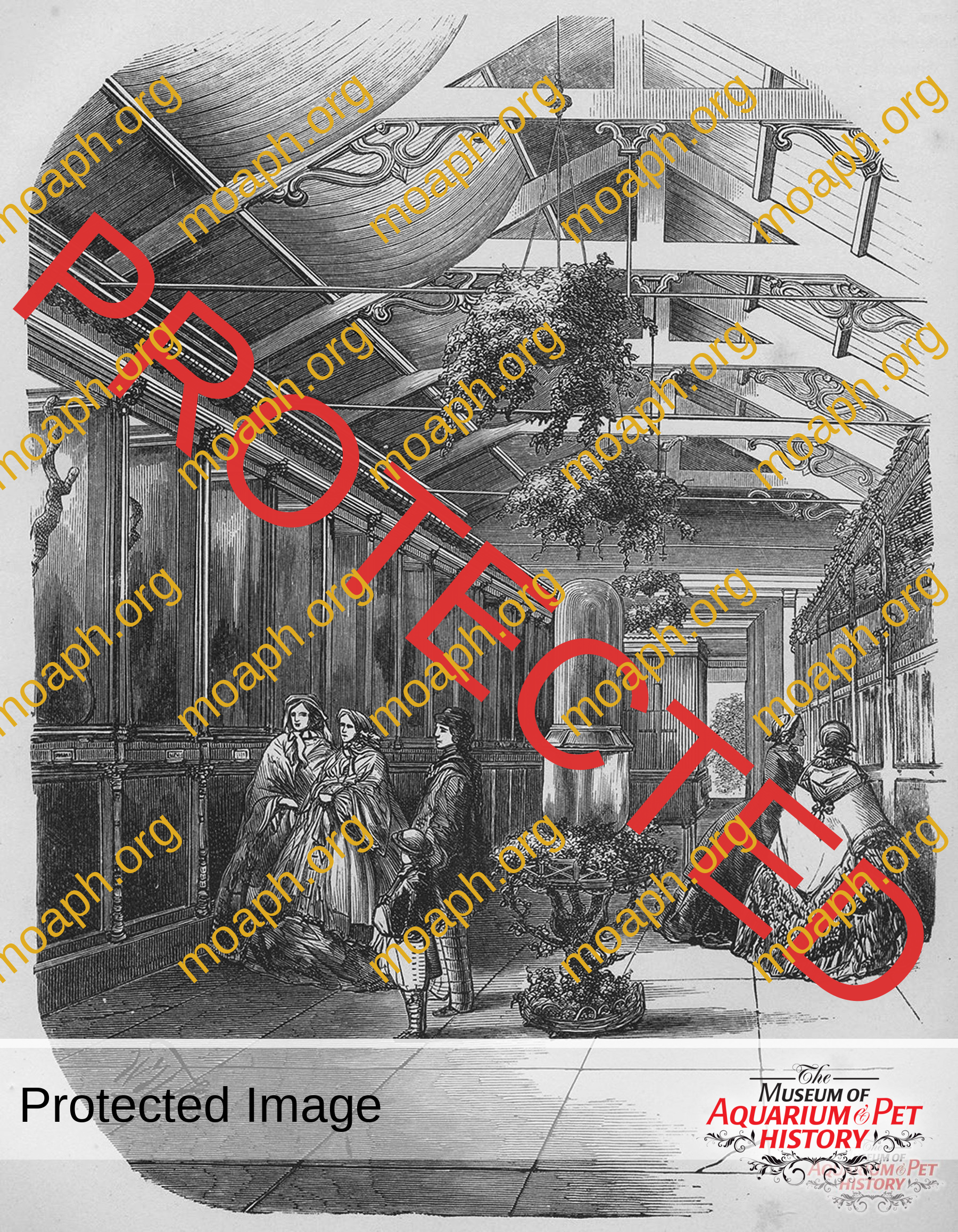
Illustration of snake hall (Schlagen-Zaal) at Natura Artis Magistra in Amsterdam from De Dierentuin van het Koninklijk Zoölogiisch Genootschap te Amsterdam by Hermann Schlegel in 1872.
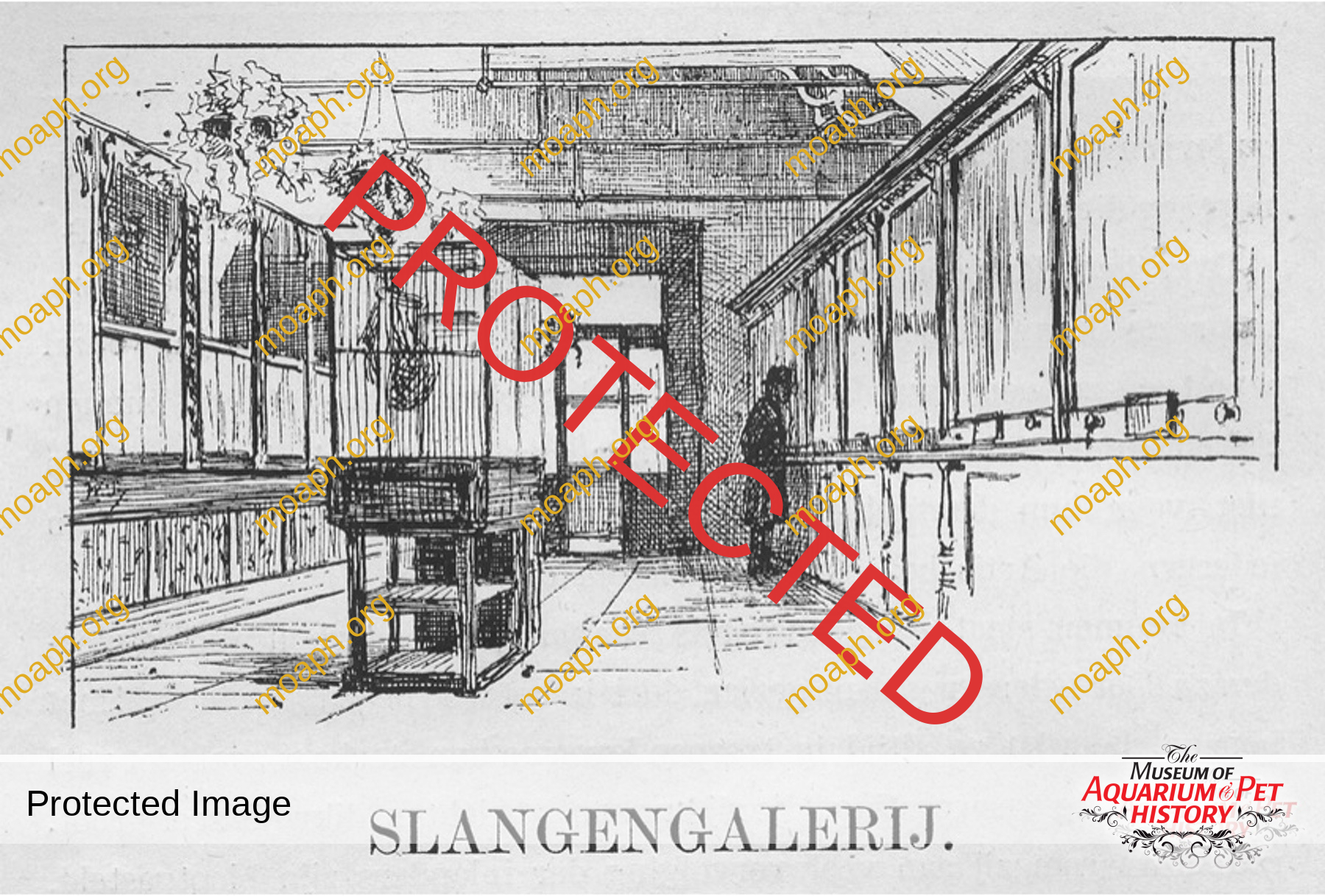
From JE Rombouts, 1888. Artis; kijkjes in den dierentuin
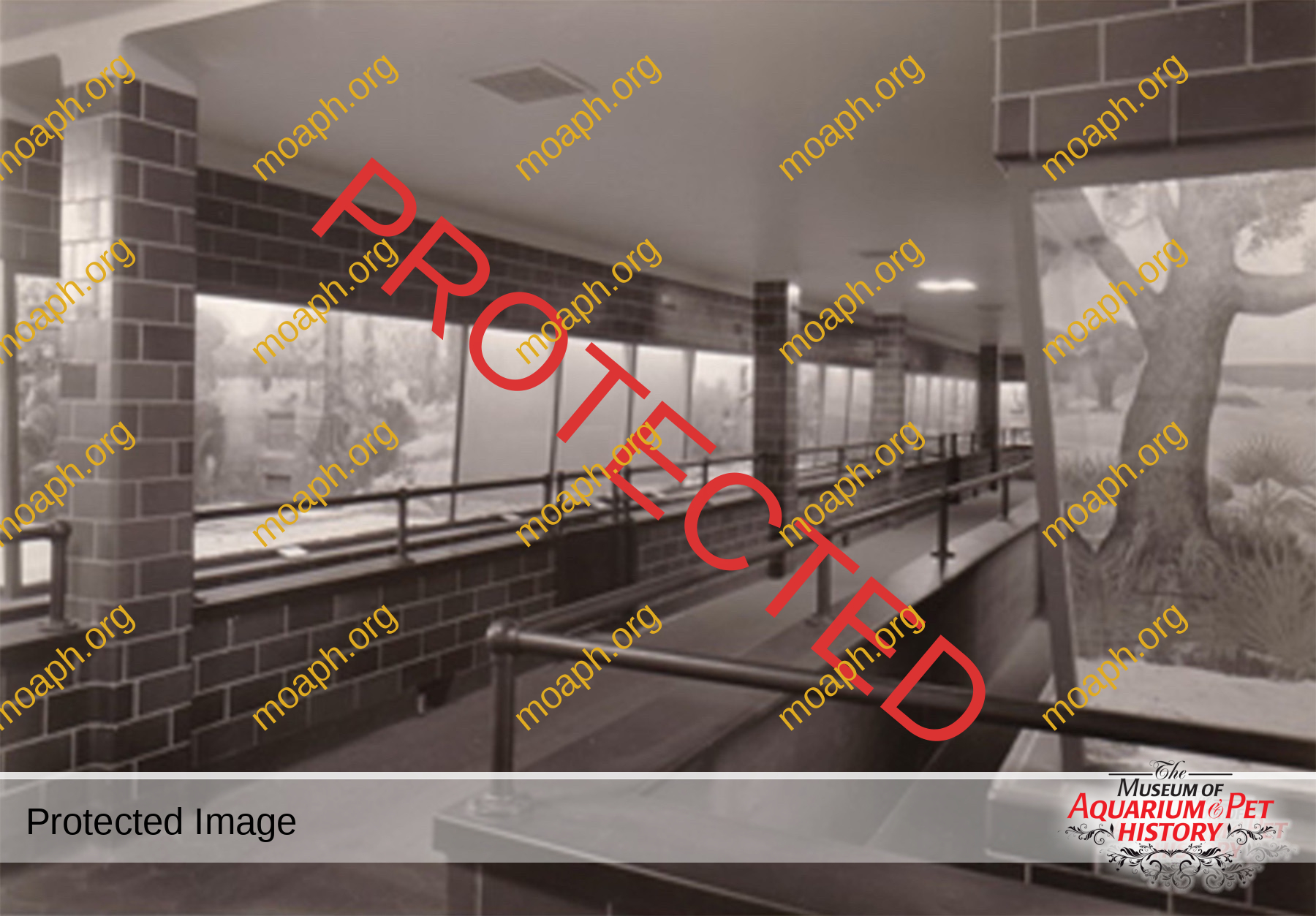
Staten Island Reptile Building. Courtesy of Ken Kawata and Brint Spencer.
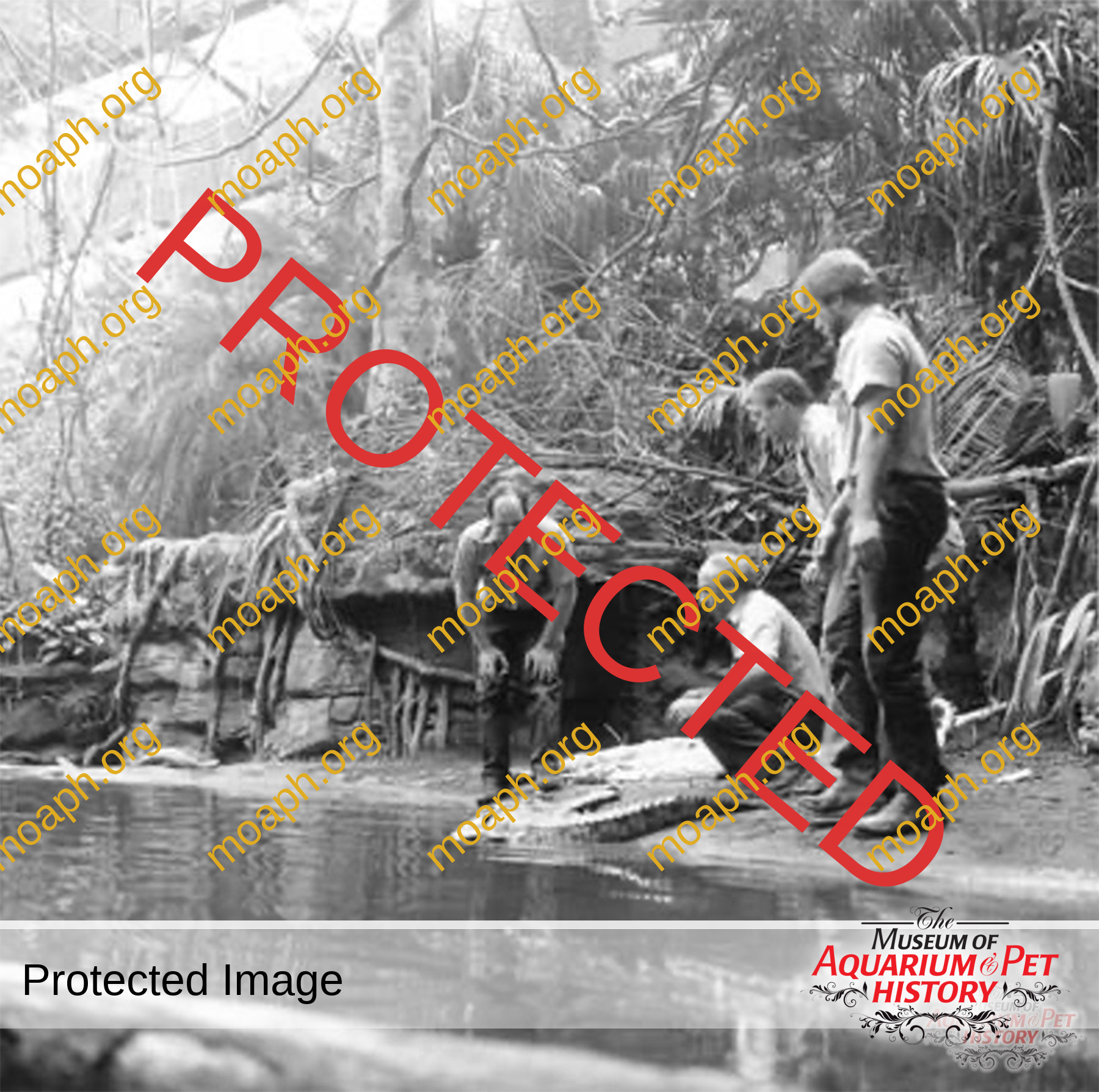
New York Zoological Society

Columbus Zoo in the 1960s. Gaherty Amphibian and Reptile Concervation Centre
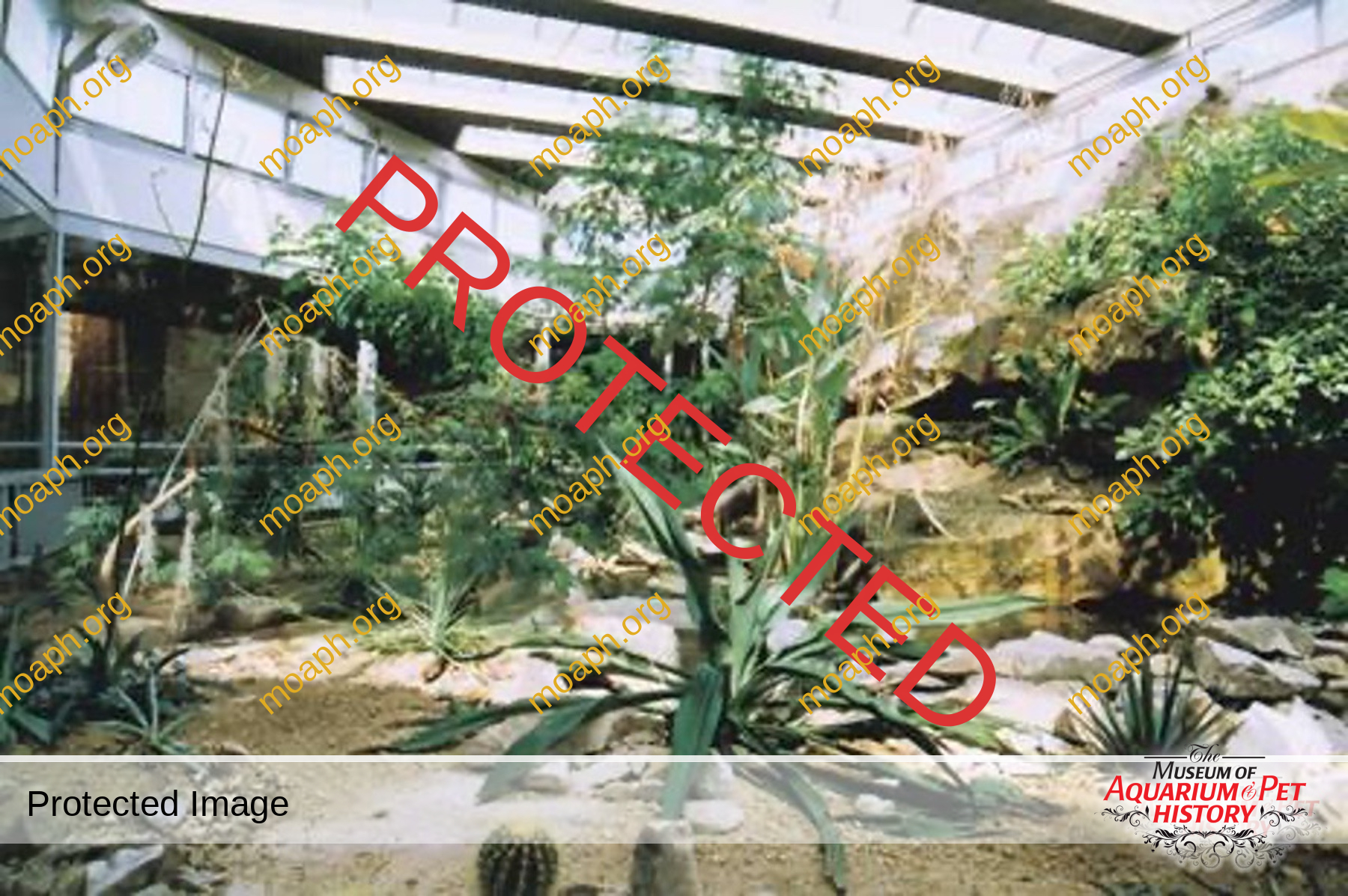
Desert Exhibit at Prague Zoo in Czech Republic. Built in 1995. Photo provided by Ivan Rehák.
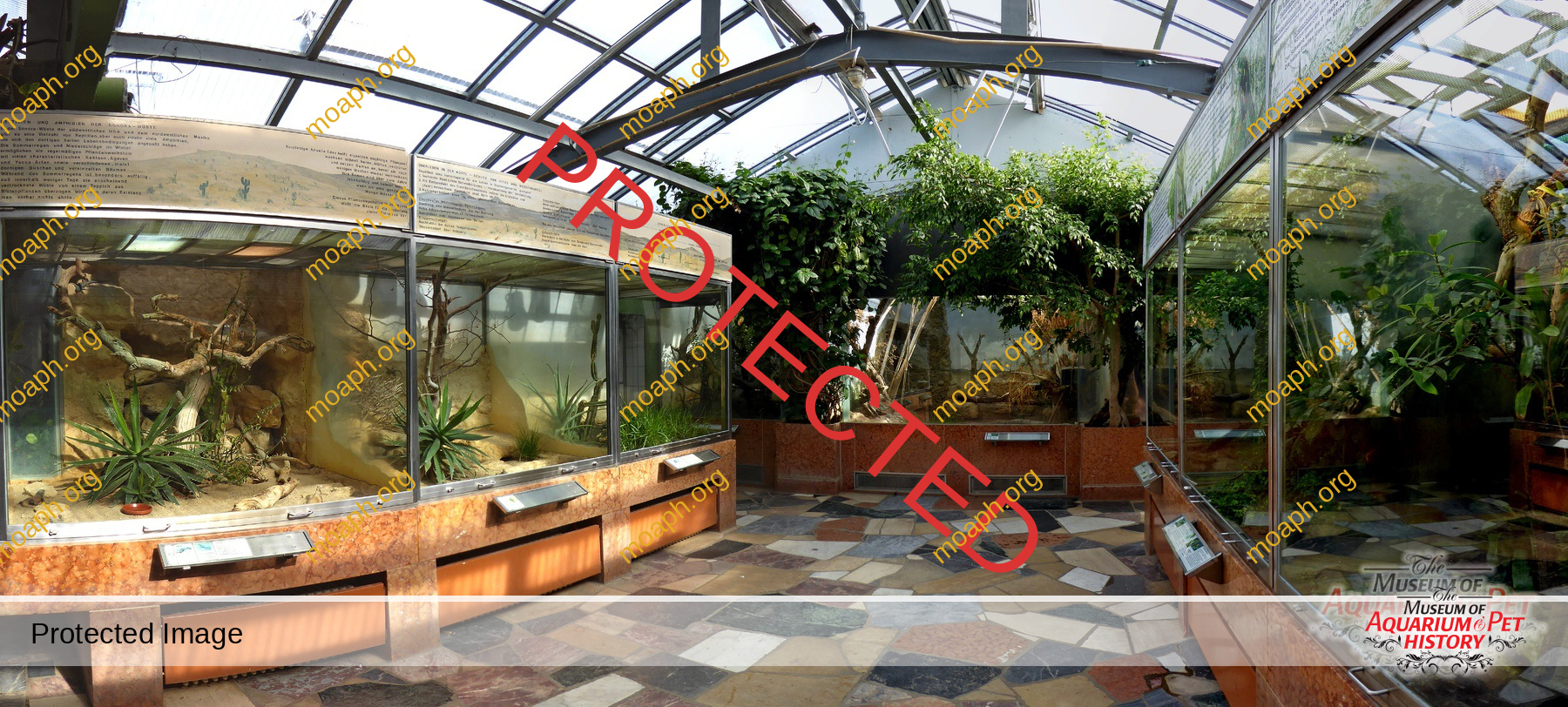
Exotarium – Zoo Frankfurt
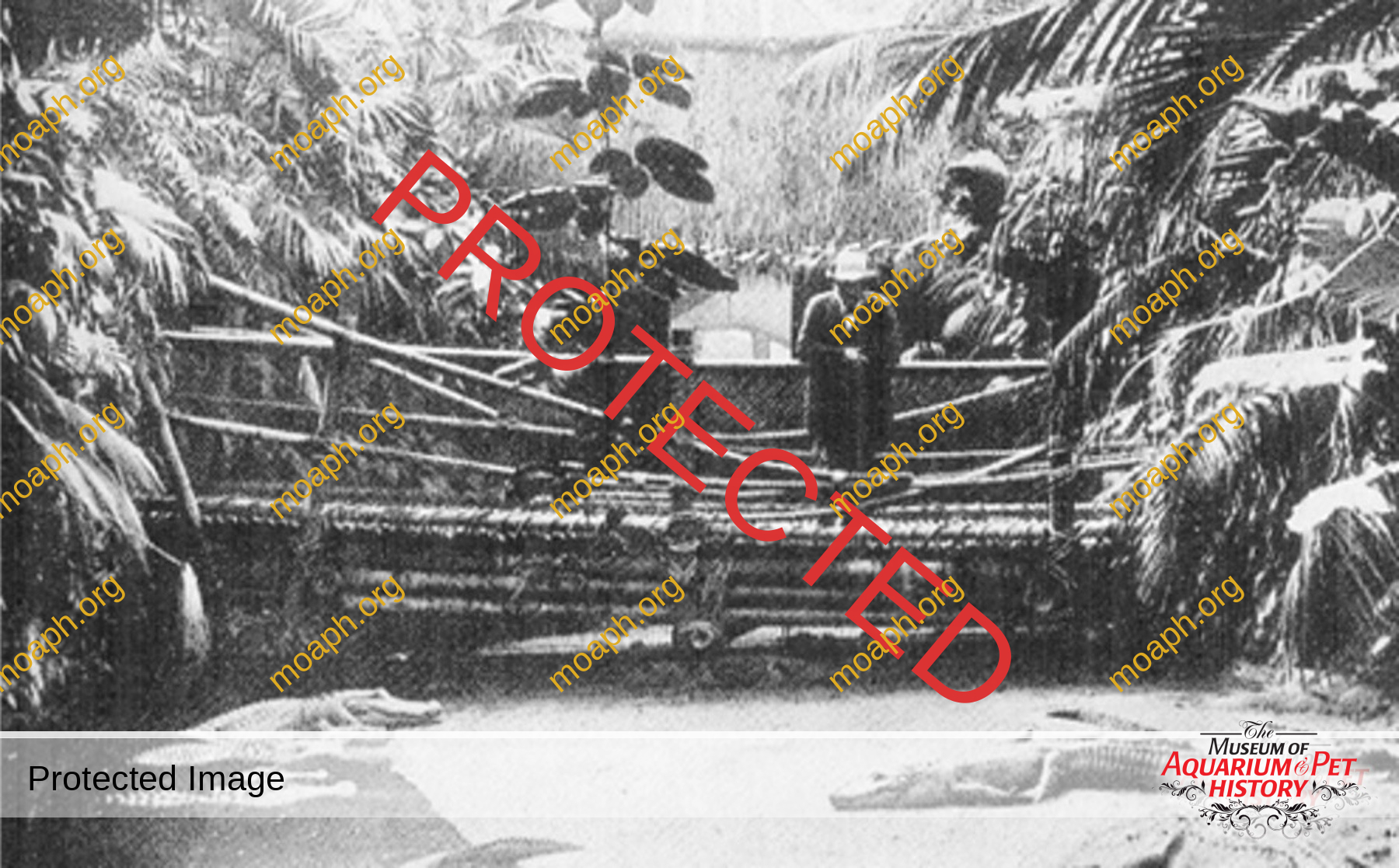
Berlin Aquarium in 1914.
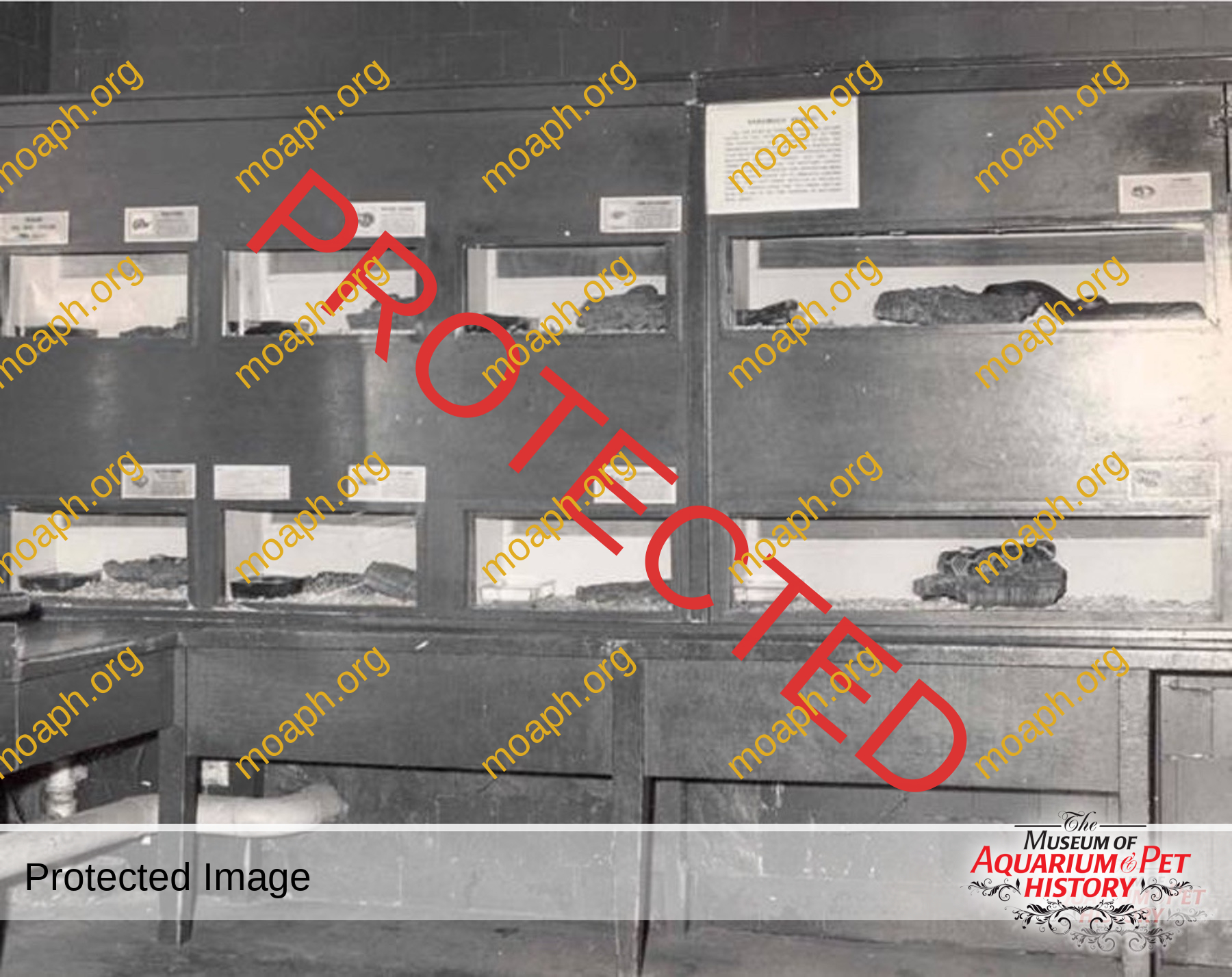
Snake exhibits in old reptile display at Philadelphia Zoo during the 1930s. Photo by Franklin Williamson, courtesy of Zoological Society of Philadelphia provided by Brint Spencer.
World’s First Reptile Building
In May 1849, the London Zoo, opened the first zoo reptile building, a modified carnivorous mammal facility. The dens, now serving as reptile enclosures, could only be serviced from the front. These unwieldy glass fronts were cranked up by means of pulleys and chains, a hazardous undertaking at best when venomous snakes and speedy lizards were the inhabitants.
The next challenge is to maximize the potential of our collections by designing research projects to investigate the biology and improve the care of our charges. Here are some suggestions for research projects that can answer interesting questions and can be accomplished in a zoo setting:
- Do Normal Husbandry Activities Cause Stress in Captive Amphibians and Reptiles?
- Does Handling by Humans represent a surrogate form of Dominance Behavior?
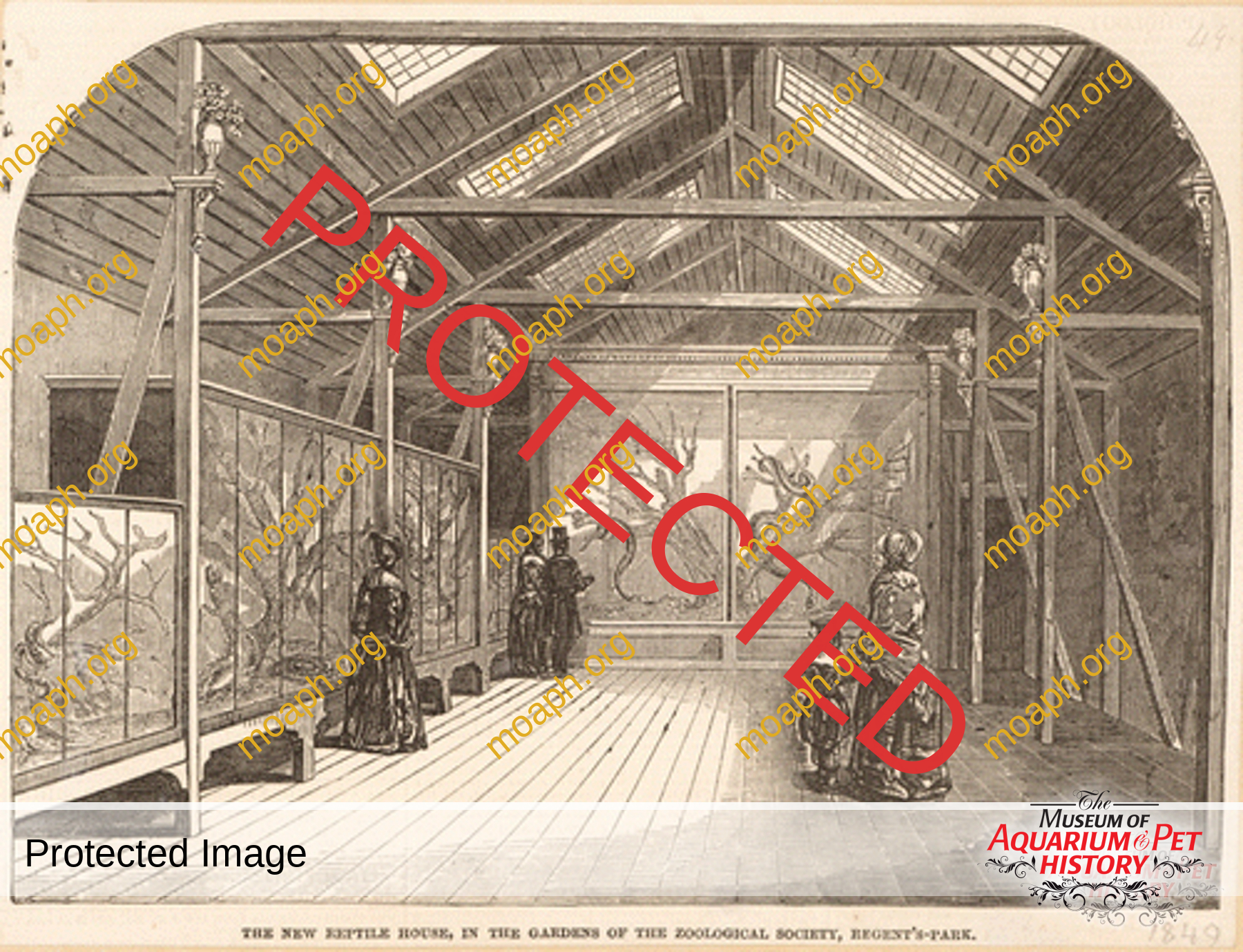
Illustration of London Zoo Reptile Building from The Illustrated London News on June 2, 1849. Provided by John Edwards.
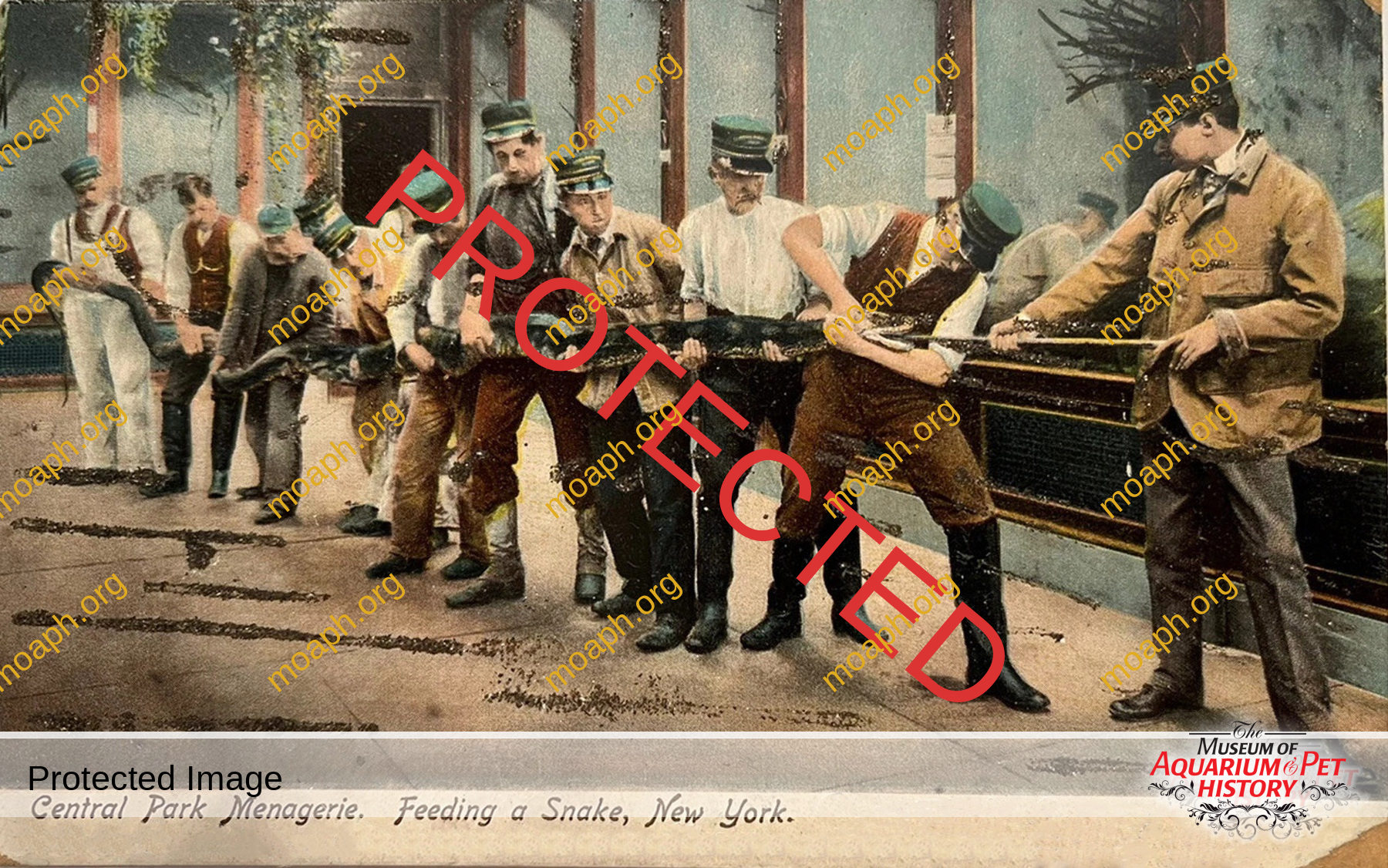
Stress and Handling
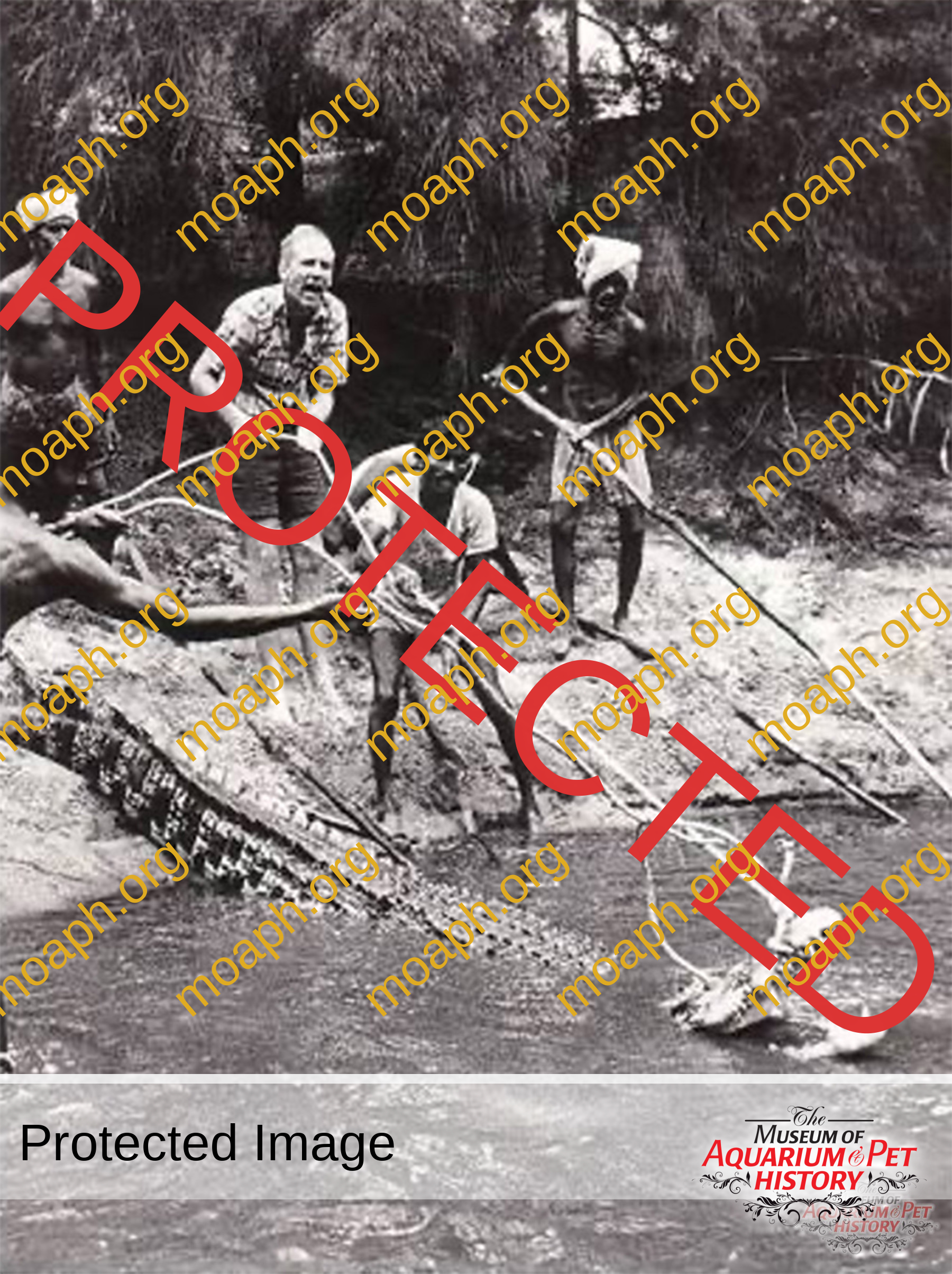
Madras Snake Park and Crocodile Trust in India
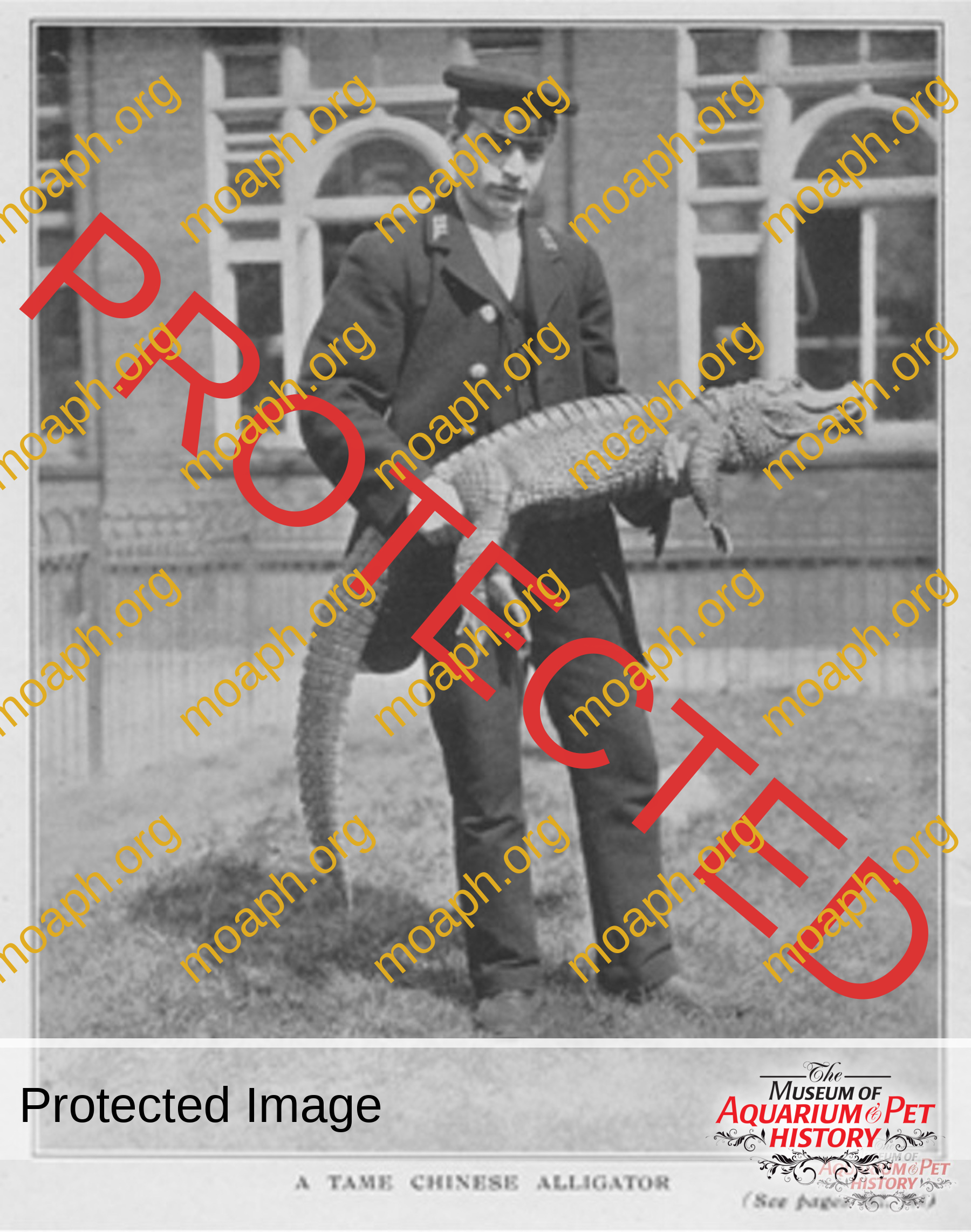
Chinese alligator at London Zoo from W.S. Berridge’s Marvels of Reptile Life, published in 1926.
Observations
- Cabanac and Briese (1993) found that false tegus (Callopistes) responded to handling and thermistor probing by behaviorally elevating body temperature by 6°C for 30 minutes.
- At the Dallas Zoo and Central Michigan University, male western diamondback rattlesnakes (Crotalus atrox) were allowed to engage in combat in the same enclosure with a receptive female. The winner immediately courted the female. The loser refrained from courtship behavior for as long as one week.
- If conspecifics can cause this effect, what are the implications if humans are viewed as dominant?
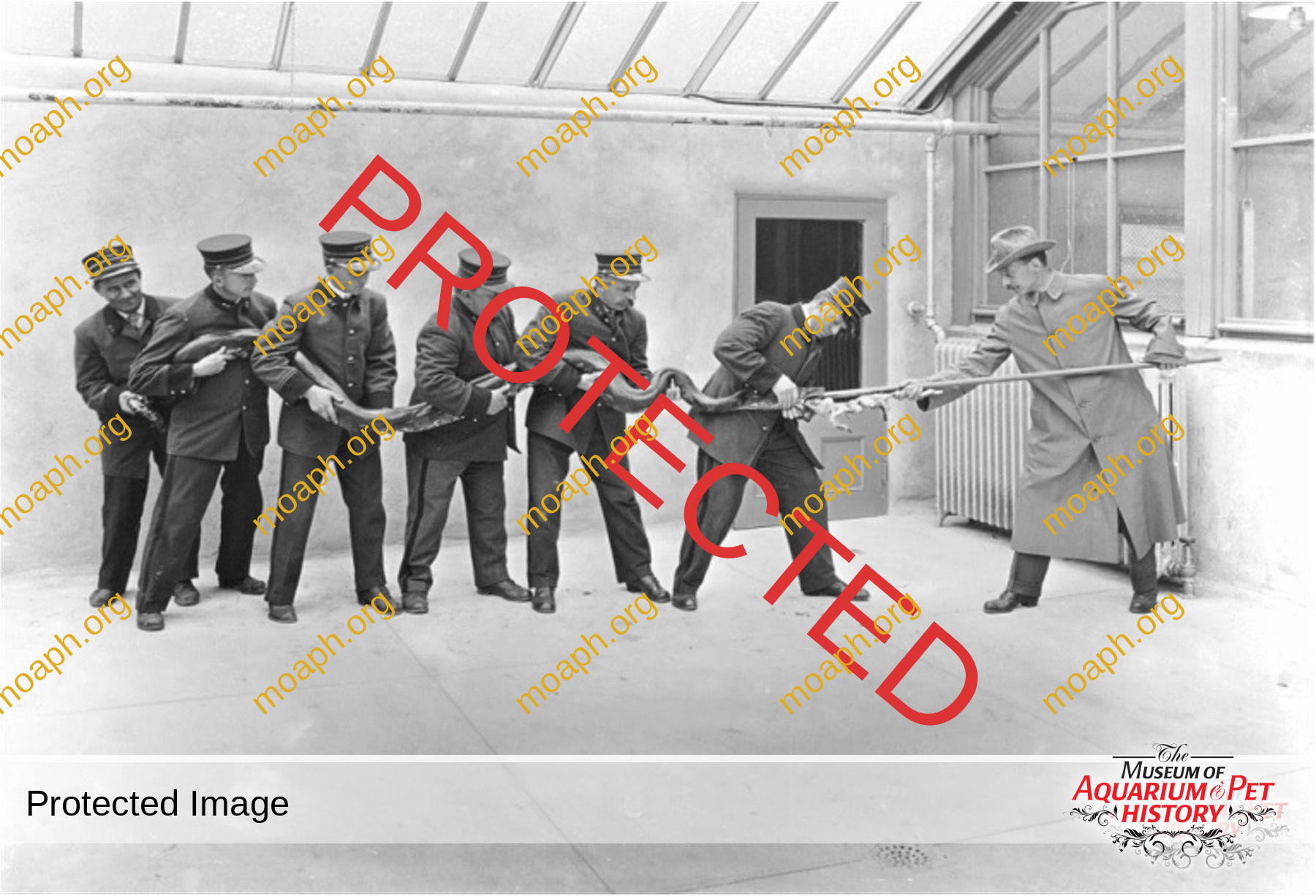
Feeding time at the Bronx Zoo, 1926
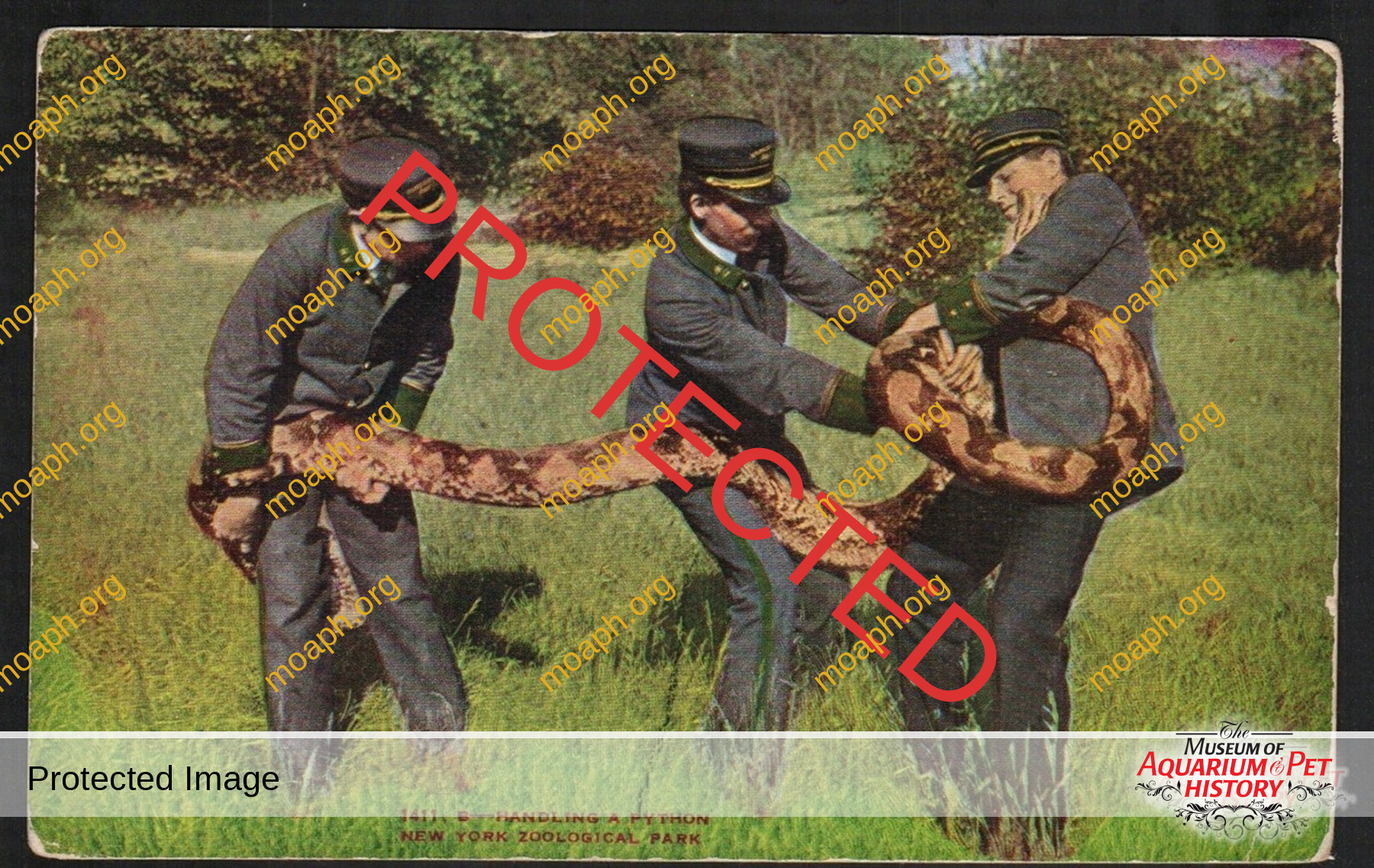
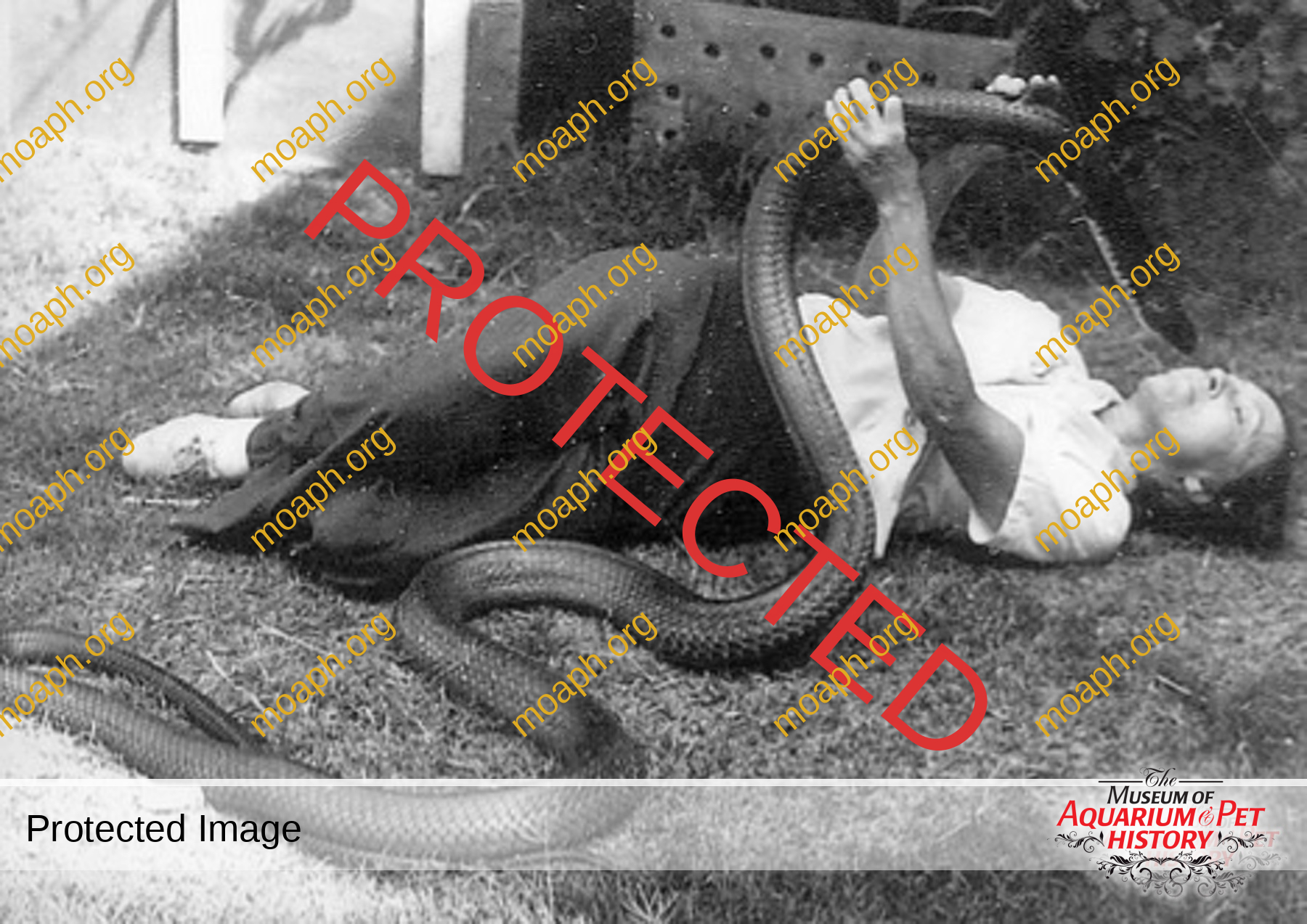

Grace Olive Wiley from the Brookfield Zoo handled her reptiles, including venomous snakes such as this king cobra, and believed that she could tame them. She was fired in 1935!
Is Cage Cleaning Stressful?
- Clean cages elicit elevated tongue flicking in snakes. The Round Island boas at the Dallas Zoo refused to feed in their clean cages.
- Some snakes (Lampropeltis, Crotalus) defecate immediately when placed in a clean cage.
- Exploratory behaviors are instigated by cleaning or altering home cages in at least four families of snakes.
- Conant (1971) recommended placing small soiled objects in home cages.
- Some reptiles can discriminate between their own droppings and those of a conspecific (Chemical Recognition of Self):
- Chiszar et al. (1991)—rattlesnakes
- Graves and Halpern (1991)–skinks (Tiliqua)
- Halpin (1990)—garter snakes
- Robert Jaeger and his associates have done exciting work on red-backed salamanders (Plethodon cinereus) regarding the “Sexy Feces Hypothesis.” Females gain chemical information by squashing fecal pellets of males to assess diets. Gravid females prefer to remain in territories where males are feeding on high-quality prey.
Jaeger discovered that these salamanders can numerically discriminate. When given boxes containing one, two or three fruit flies, these amphibians will choose the box with the highest density. More than three is too much to deal with…”LOTS OF FRUIT FLIES!”
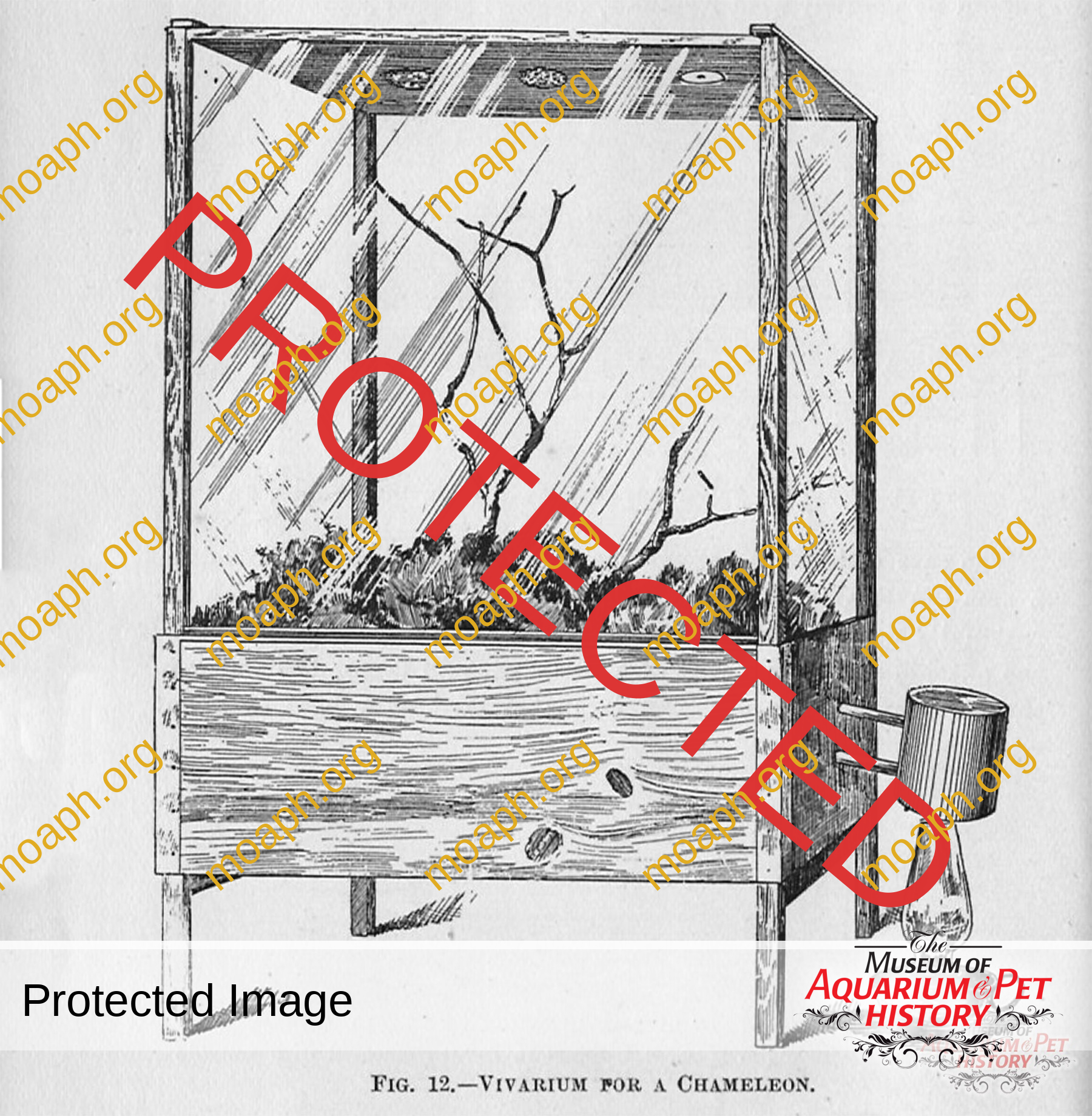
From Reverend Gregory Bateman’s, The Vivarium in 1897.
Exercise and Husbandry
Question: Would Promoting Locomotion in Captive Herps Enhance Health and Longevity?
- “Learned Laziness” – If animals discover that activities do not provide biologically significant outcomes, they may quit trying!
- No Experimental Verification Exists for Herps!
- Predators seek areas where prey density exceeds encounter rate.
- But generally with captive herps, encounter rate equals prey capture rate.
- Could herps be in constant stress by trying to escape to areas with greater prey density?
- Would occasional bursts of prey odor in the enclosure be of value?
- Increase reproductive activity?
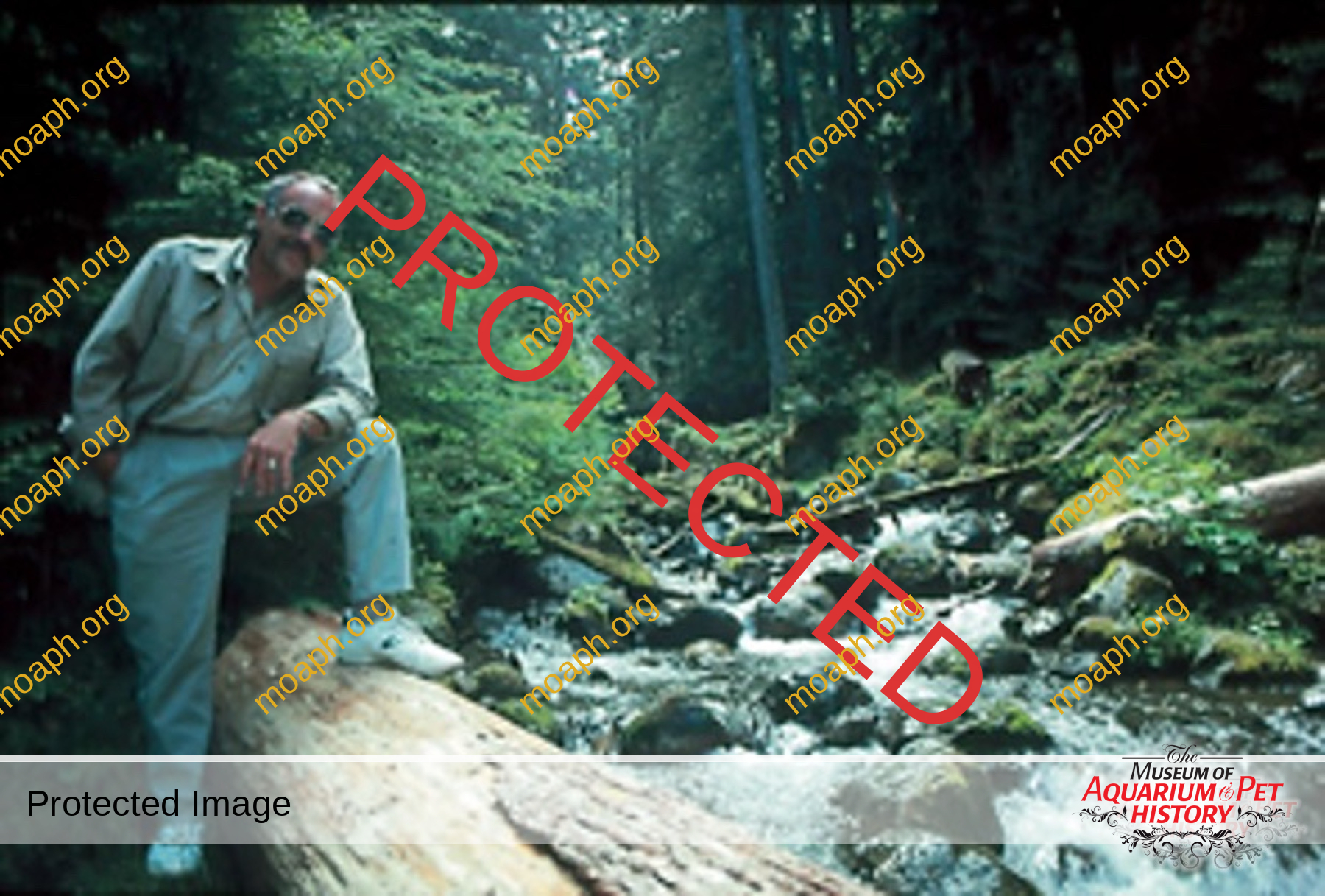
Thomas Huff (1980) noted that rearranging objects, novel environments, or the introduction of different individuals could stimulate reproductive behavior.
Tom’s Point is Profound!
“There appears to be a strong tendency on the part of researchers and reptile breeders to interpret successful propagation efforts as implying the presence of necessary excitatory stimuli. Indeed, the words “stimulus” and “excitation” are frequently used interchangeably. While we certainly do not deny the existence or the importance of excitatory stimulation, we want to point out that some (perhaps many) stimuli act by removing inhibition rather than by generating excitation.”
Chiszar, Smith, and Murphy in 1992
Studies on Feeding Behavior
Zoos are perfect places to study feeding behavior. At the Dallas Zoo, we were able to do these studies without disrupting our normal daily procedures.
Facultative Feeding Behavior
- At the Dallas Zoo, bushmasters (Lachesis muta) evaluated rodent prey biomass. If the prey mass was 10% or less of the snake’s body weight, it was struck and held. If more than 20% of the prey were struck, released, and trailed. If between 10-20%, prey retaliatory behavior determined whether it was held or released.
- We studied the feeding behavior of young Gould’s monitors (Varanus gouldii) and Gila monsters (Heloderma suspectum) to see if these lizards exhibited SICS (Strike-Induced Chemosensory Searching).
- We also examined tail-luring in death adders (Acanthophis antarcticus) in response to lizard and rodent prey.
- Both Studies Required Minimal Space, and were a great deal of fun to do.
Assessment of Competence
How should captive management programs be designed to include assessing the competence of the offspring produced? Although it is assumed that effective coping skills are innate, no body of literature supports this premise. Information is needed on similarities and differences between wild and captive conspecifics, as well as the ontogeny of adaptive behaviors.
Roger Avery found that Podarcis and Lacerta tolerated temperatures far different from wild conspecifics. When blocks of wood were added, lizards began shuttling between warm and cool areas.
What measures should be used to assess competence, since all offspring are raised, even inferior ones? Competence is not an abstract quality that can be studied independently of an environment. Conspicuous mutants (runts, giants) are easy to recognize but how do we identify inferior individuals which appear “NORMAL?”
A Word from Henry Fitch (1980):
“Thus, captivity will result in intensive selection, molding the animal in a manner quite different from that followed in its natural environment. The final product will be an animal much better adapted to live in close association with humans, in the home or laboratory, but less well adapted for life under natural conditions.”
Original Traits of a Species Will Tend to be Altered in Captivity
- Generation time will be shortened.
- Captives will be less exacting in their requirements for mating.
- Fertility will be increased.
- Intervals between clutches or litters will be shortened.
- These are trends well known in domestic animals (Charles Darwin, 1868).
- There is no doubt that we are seeing these trends now in our captive herps!
A Striking Example
- A female Pueblan kingsnake (Lampropeltis triangulum campbelli) laid FIVE clutches of eggs at the Dallas Zoo in one year.
- There is NO conceivable way that this would have happened in Puebla.
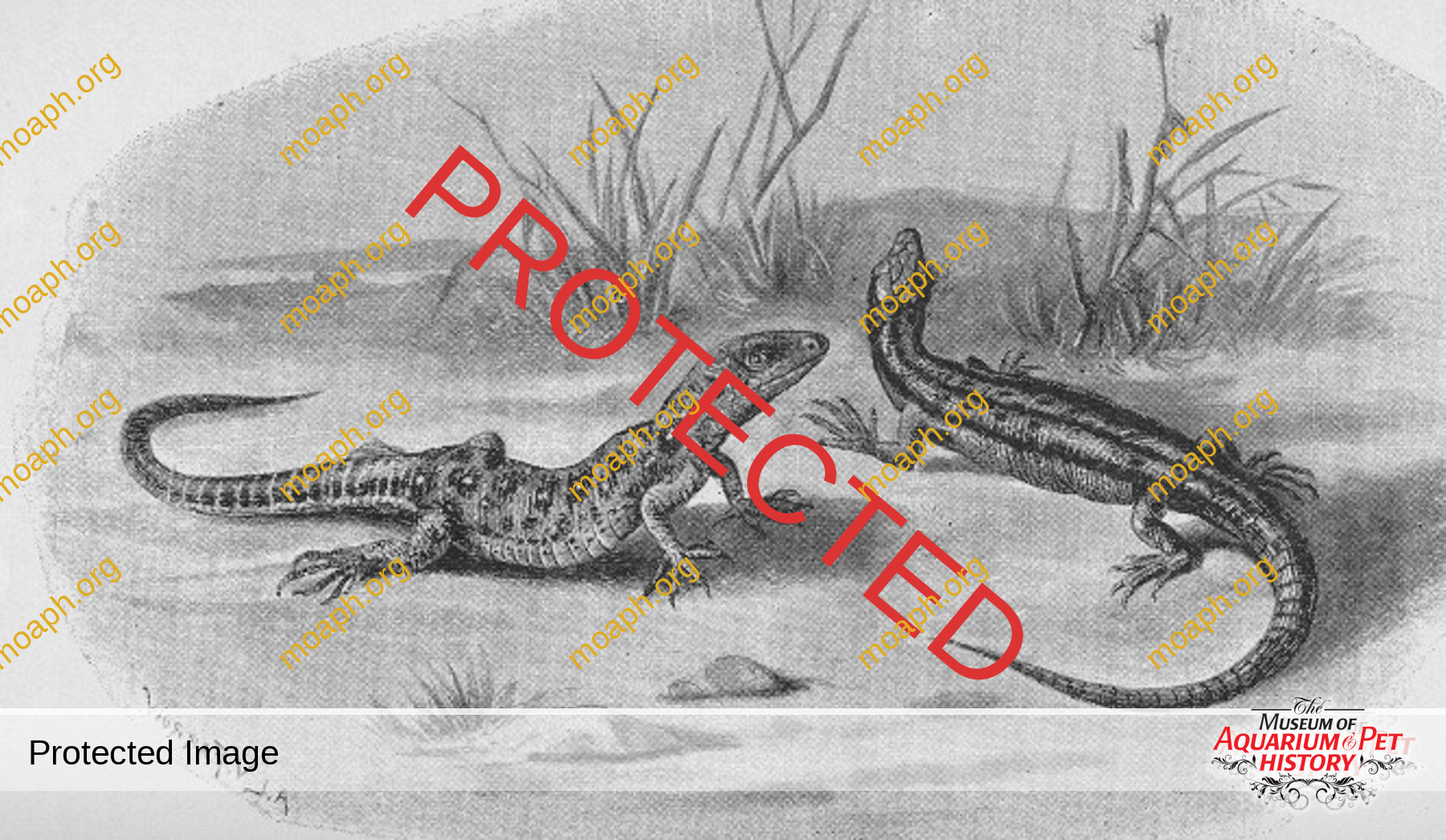
Roger Avery found that Podarcis and Lacerta tolerated temperatures far different from wild conspecifics. When blocks of wood were added, lizards began shuttling between warm and cool areas.
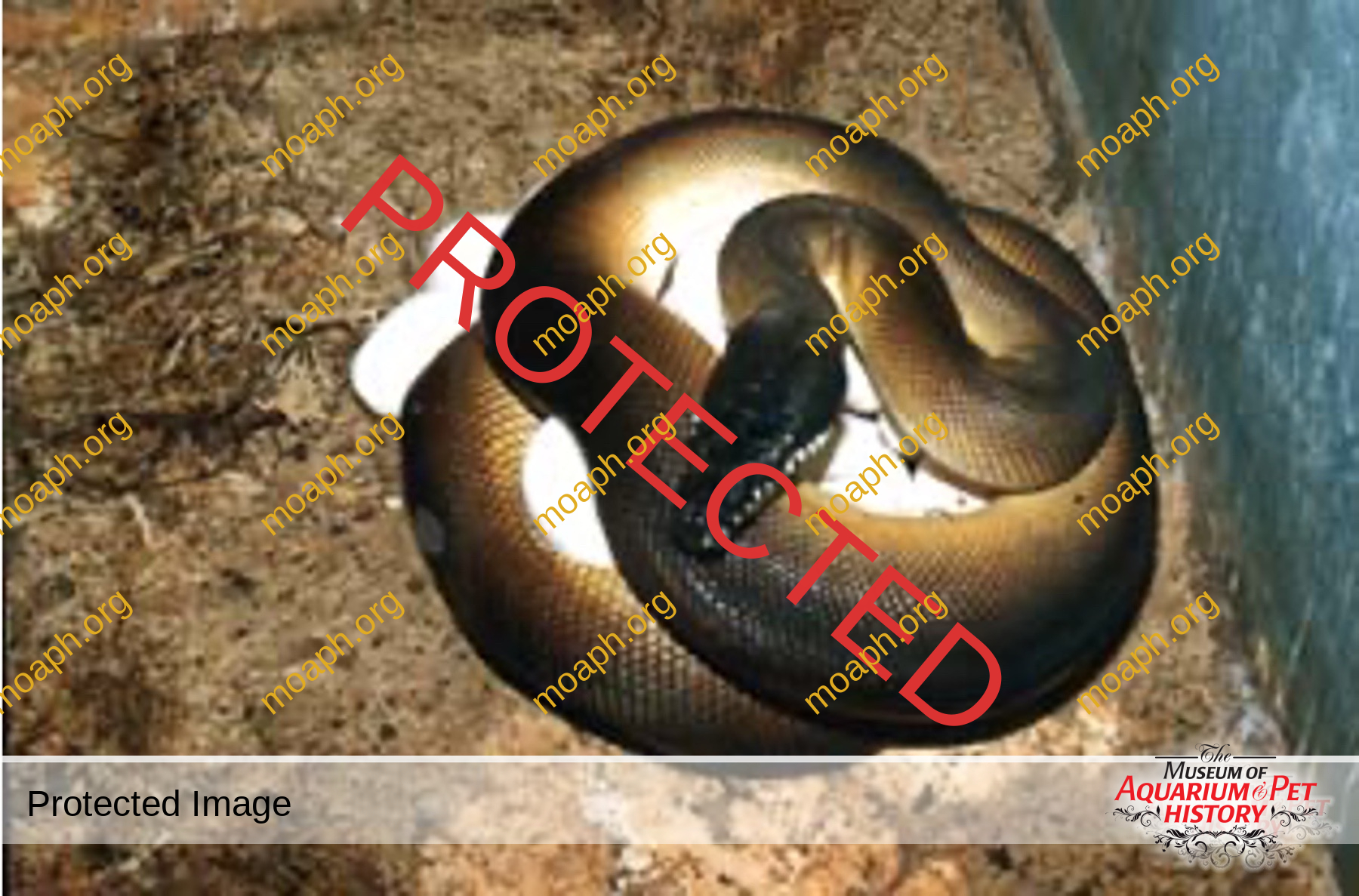
Intervals between clutches could be shortened in captivity. Photo courtesy of Sergei Ryabov.
Some Examples of Teratogenesis
- Poison dart frogs lack toxins
- Large constrictors have abnormally small heads
- Colors and patterns may be abnormal
- Exaggerated head width in alligators
- Long-term captive snakes are rubbery when preserved, suggesting muscle deterioration
Dangers of Inbreeding
- Beginning in the 1980s, a number of major studies and papers on the importance of genetic management of small populations and the role of zoos in captive management were generated by Jonathan Ballou, Benjamin Beck, William Conway, Robert Fleischer, Nate Flesness, Thomas Foose, Michael Hutchins, Devra Kleiman, Robert Lacy, Katherine Ralls, Oliver Ryder, Ulysses Seal and Robert Wiese.
- At the Dallas Zoo, we saw firsthand the potentially damaging effects of inbreeding. We bred related western diamondback rattlesnakes over six generations to produce an amelanotic strain but some neonates from amelanotic and normally colored snakes had reversed body and ventral scales, anomalous head scales, and some individuals had virtually no scales (Murphy et al., 1987; McCrady et al., 1994).
- Competence is a broad concept, with behavioral, morphological, and physiological dimensions.
- Research of this sort is challenging and will require the concentrated efforts of many specialists, many likely from outside the zoo community.
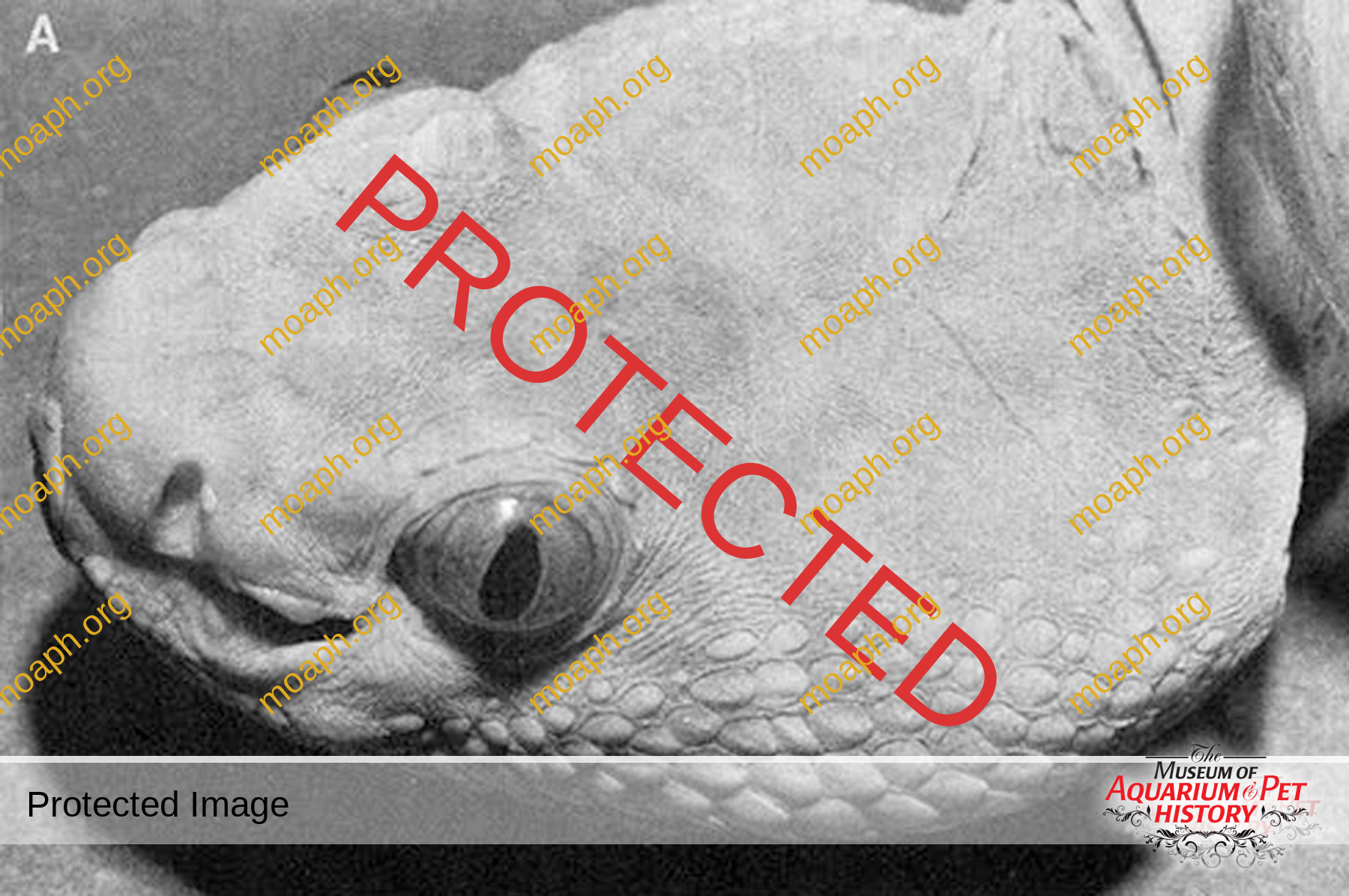
Partially scaled specimen. A) Dorsolateral aspect of head showing reduced scalation and bare temporal region. From McCrady et al. (1994).
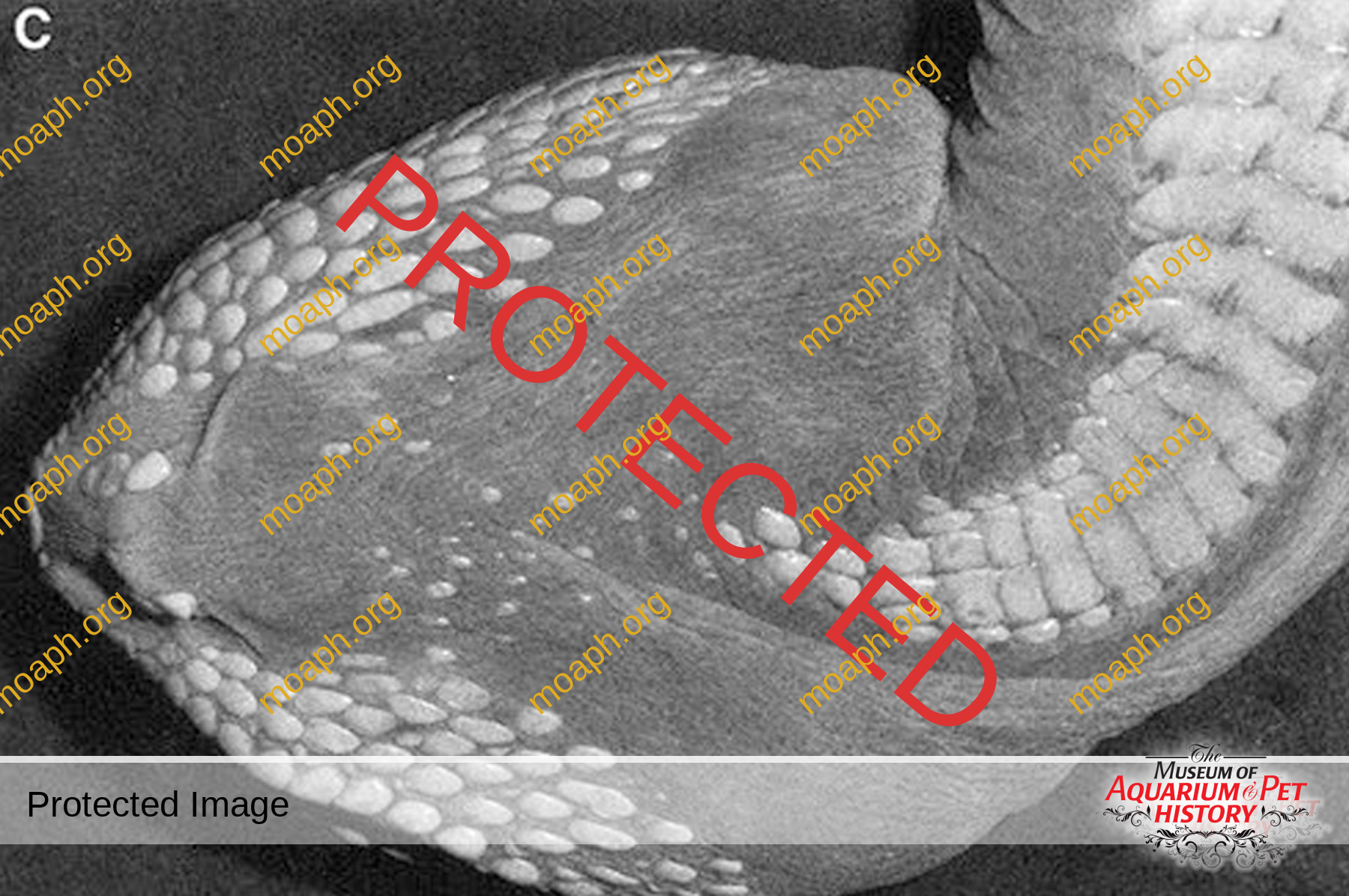
Partially scaled specimen. C) Ventral aspect of head showing bare gular region. From McCrady et al. (1994).
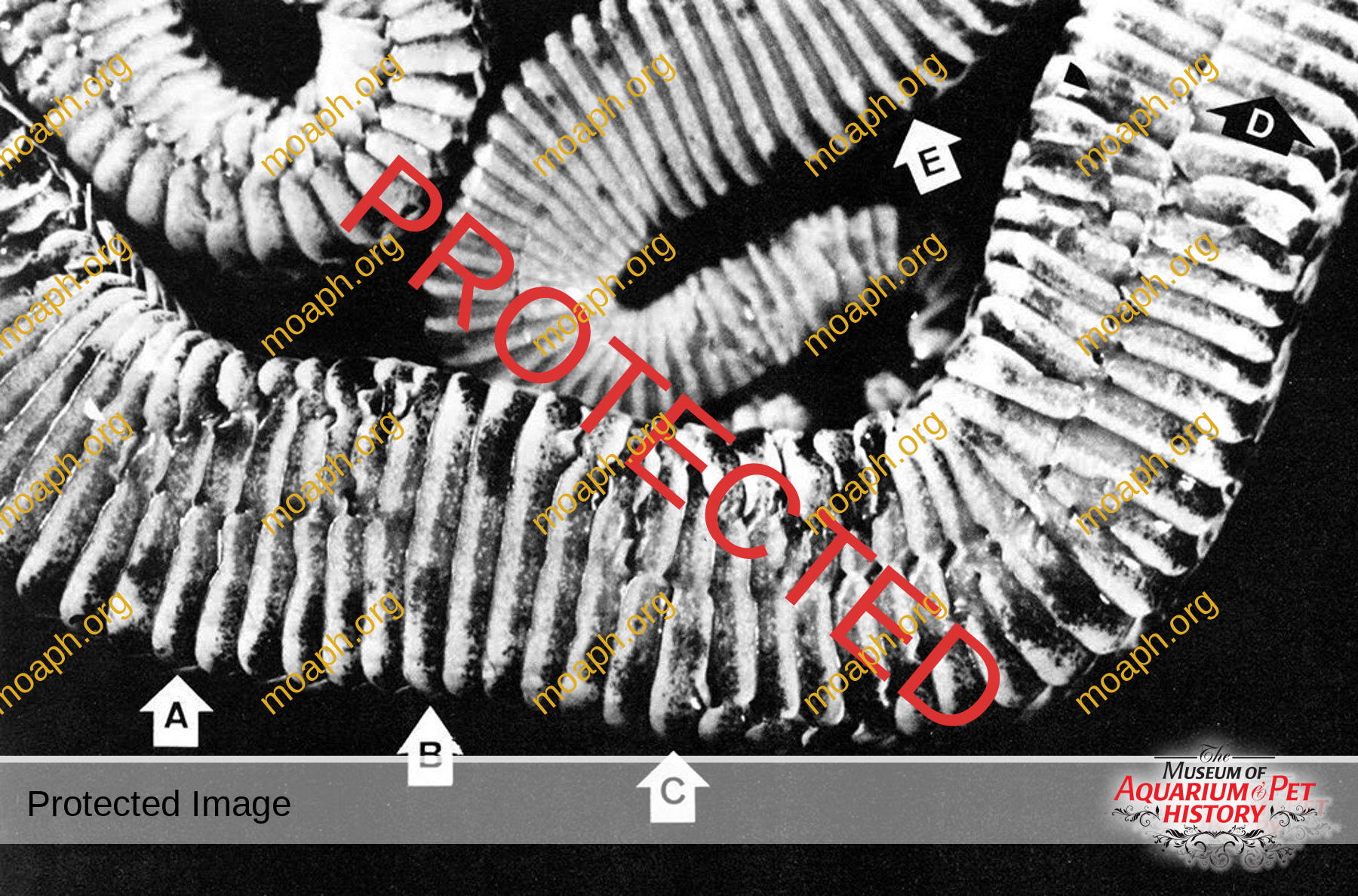
Ventral view of anomalous gastrosteges of wild-type neonate, (A) half-reversed, (B) reversed, (C) normal-resversed single unit, (D) paired, (E) normal. From Murphy et al. (1987)
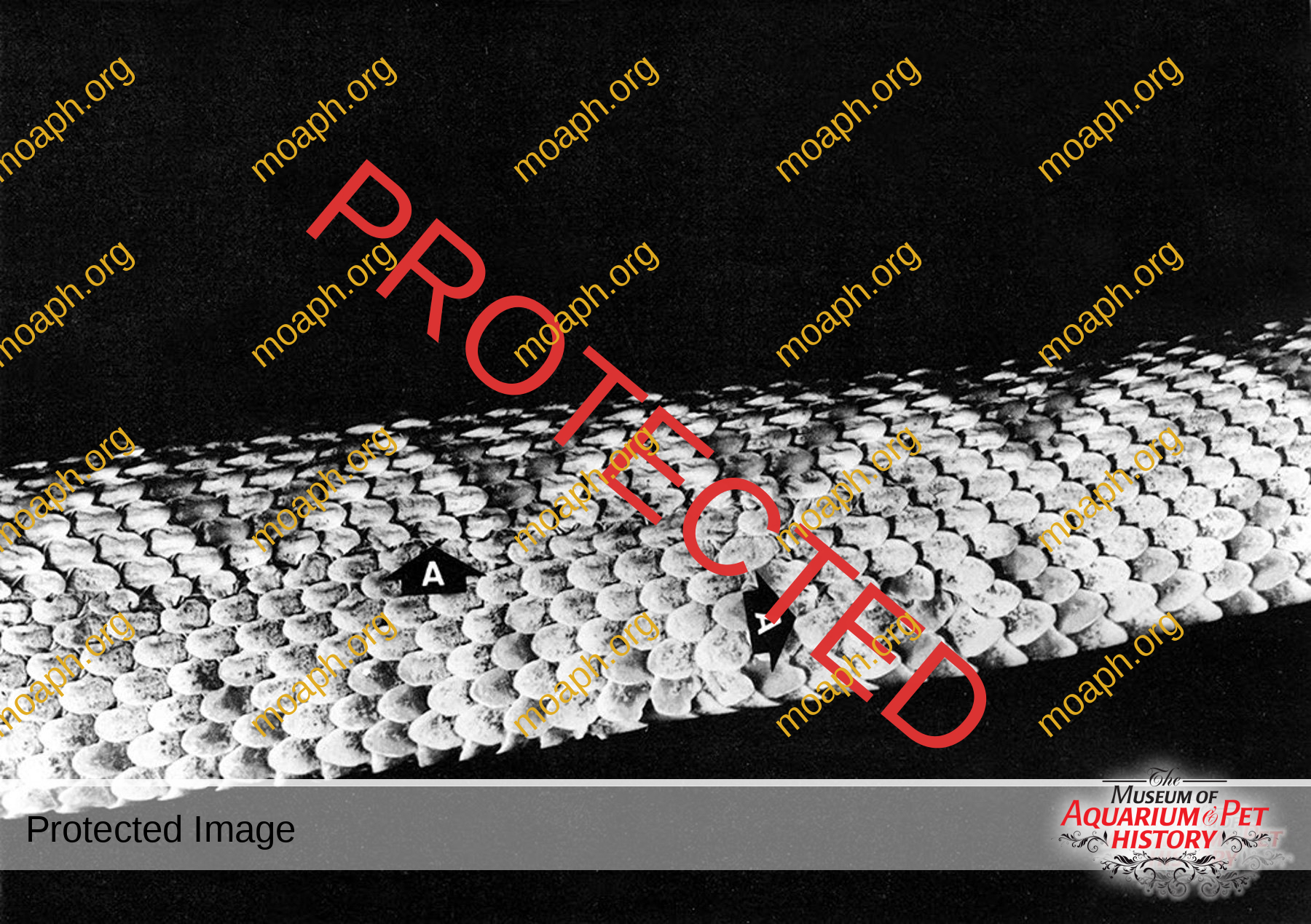
Lateral view of amelanotic neonate. Note reversal of dorsal scales along body axis (A). From Murphy et al. (1987).
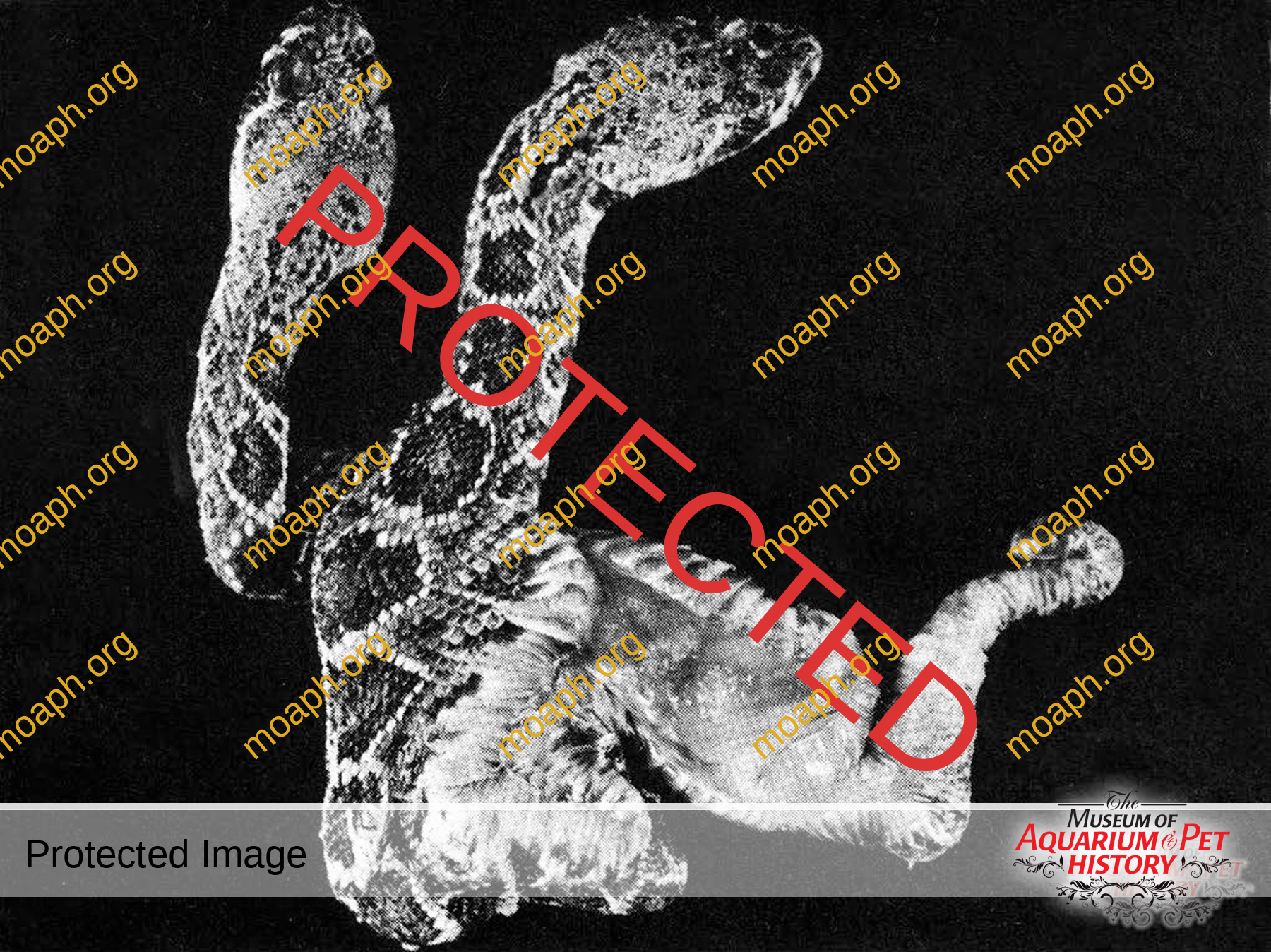
Dorsal view of bicephalic Crotalus adamanteus.
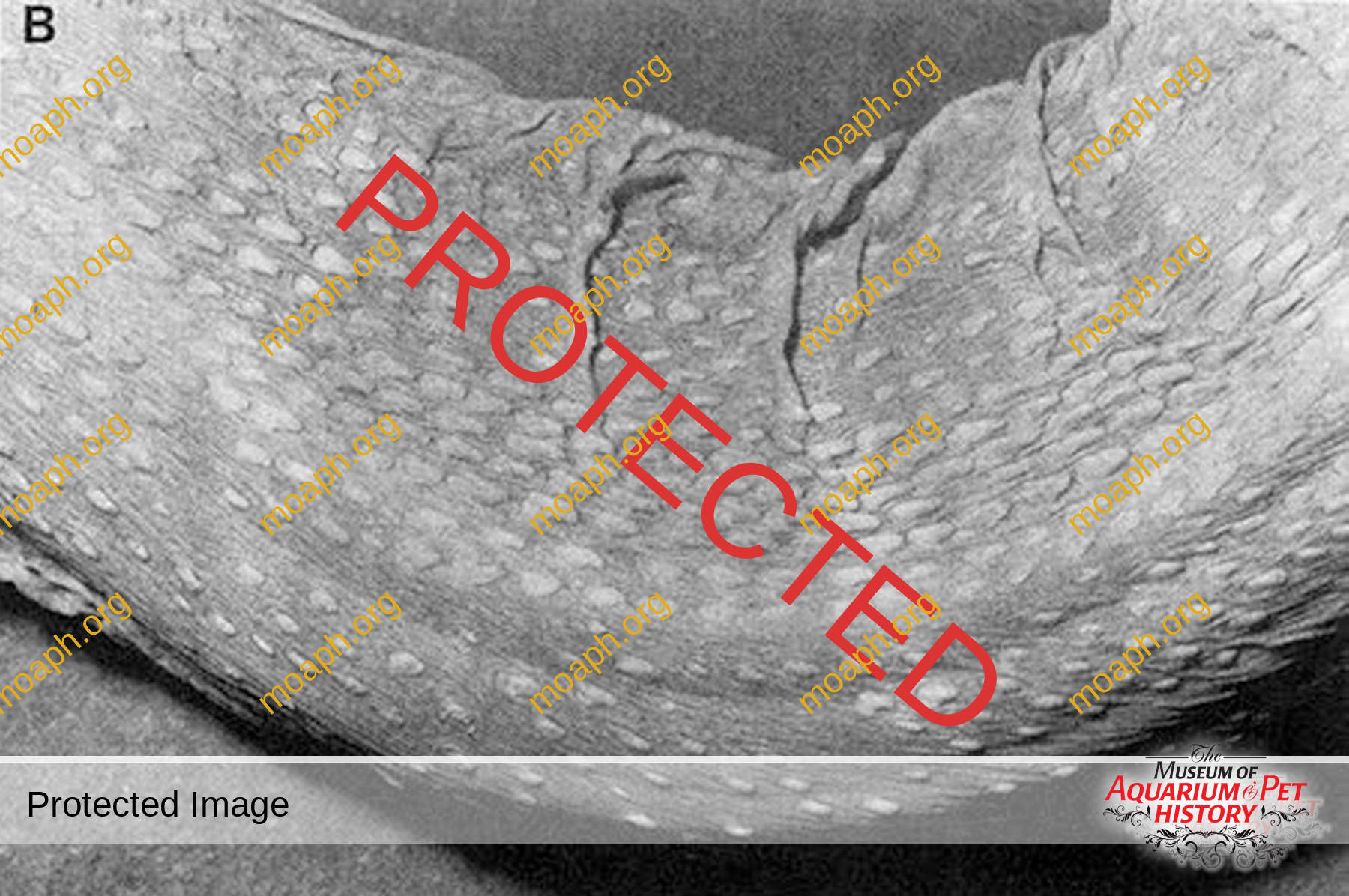
Partially scaled specimen. B) Dorsal aspect of body showing reduced dorsal scales. From McCrady et al. (1994).
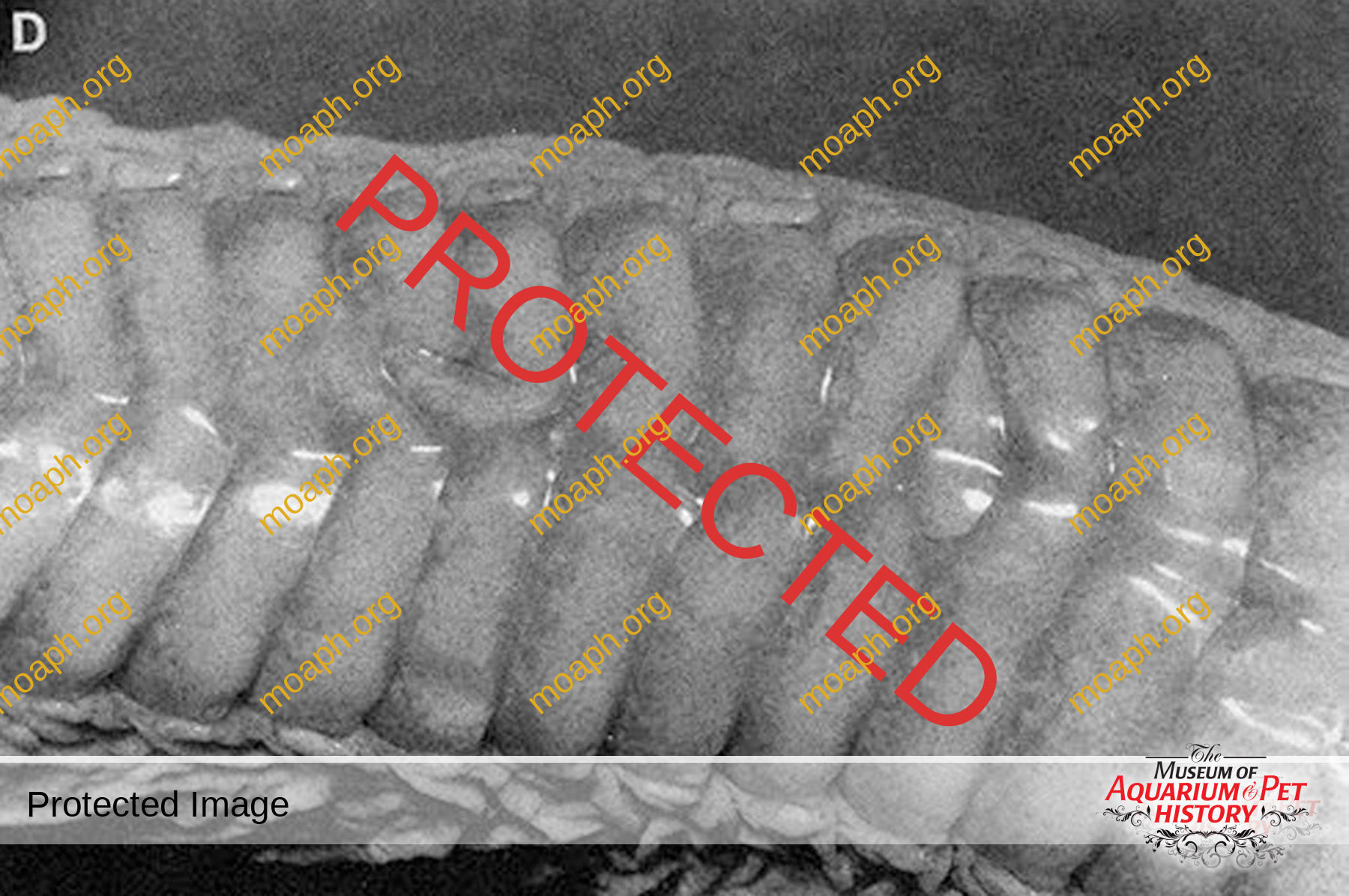
Partially scaled specimen. D) Ventral scales showing midline cleft. From McCrady et al. (1994).
What are the Implications for Headstarting Programs?
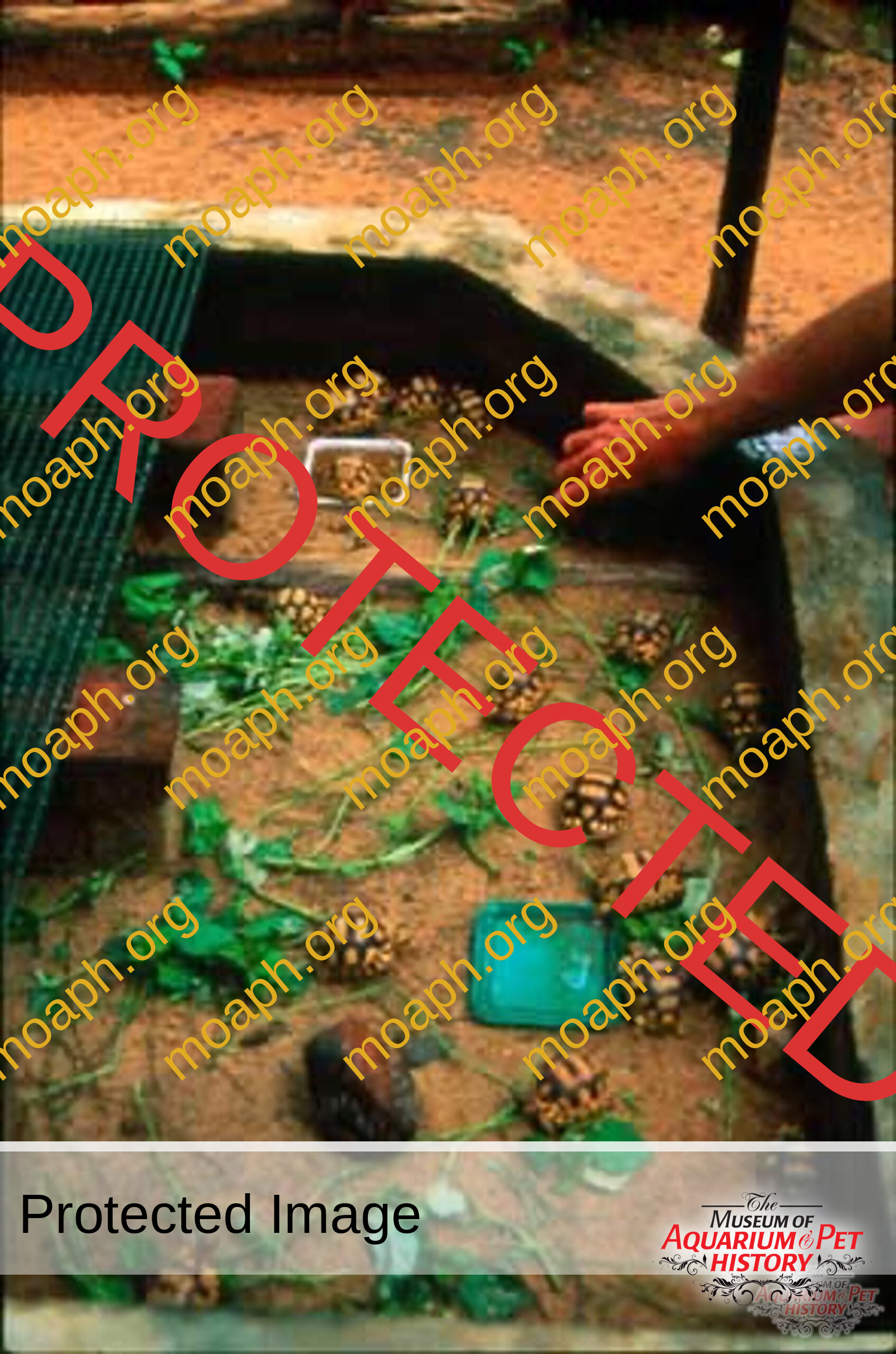
Anganoka tortoises
Biomedical Problems and Husbandry
Question: Can the advances in herpetological nutrition and disease be used as a model for future work?
- Research has included small samples, anecdotal information and case histories, as well as experimental methods.
- There is a bias against studies on captive herps, but good descriptive work constitutes a faithful record whether in captivity or in the field.
- What are the differences?
- Research agendas could be directed to address these issues!

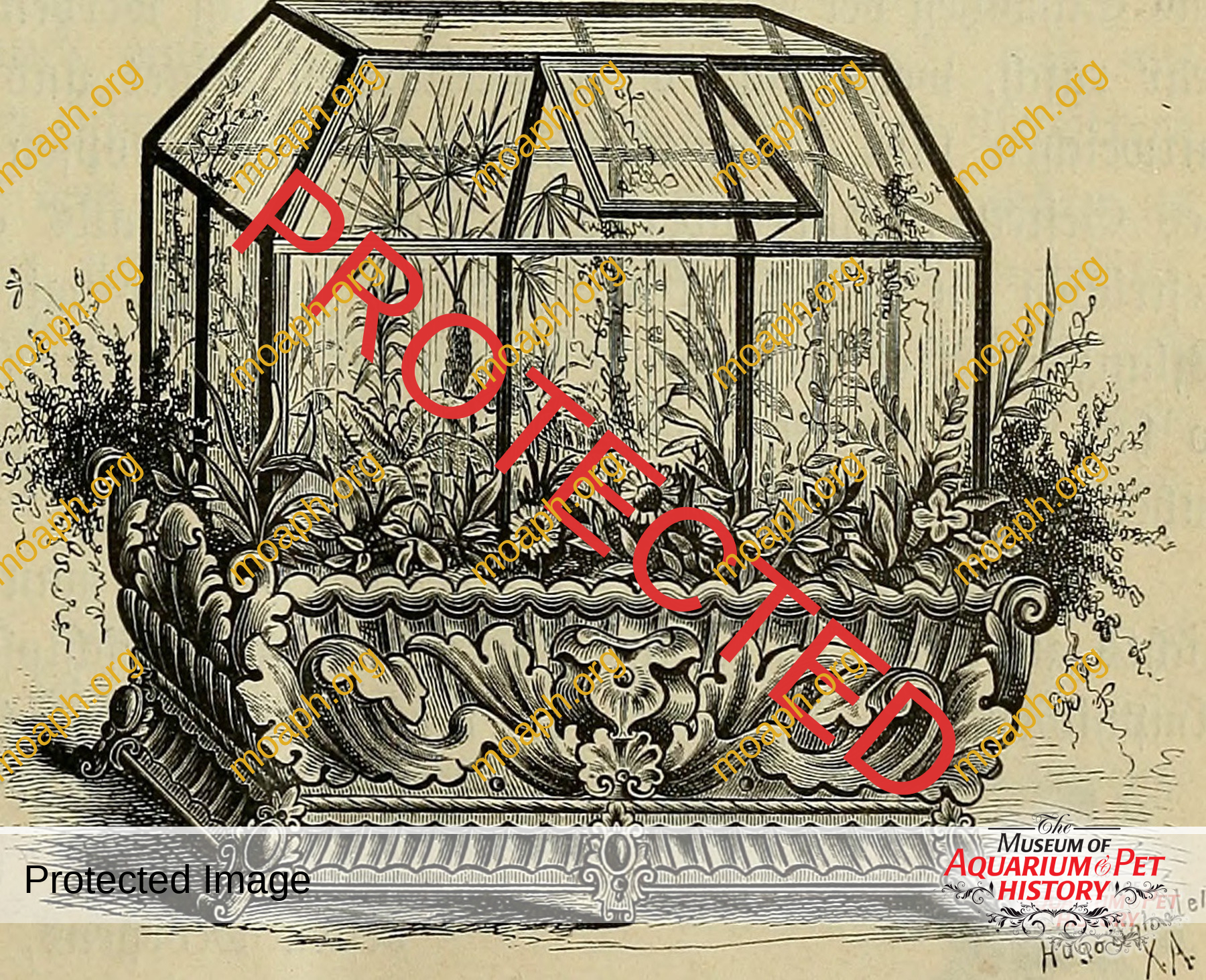
Image from Blätter für Aquarien und Terrarien Kunde (1890)
The term “CAPTIVITY” is not an all-inclusive term!
Comparative endocrinology should become much more important in captive management programs. How do we design captive habitats to encourage normal behavior?
A Challenging Example
Anecdotal records exist for play in Komodo dragons. Monitor lizards are considered to be quite intelligent among lizards.
Example One:
John (Andy) Phillips at the San Diego Zoo discovered that savannah monitors (Varanus albigularis) can actually count up to six by feeding them groups of 4 snails in separate compartments. When the fourth snail was eaten, the lizards were allowed to enter the next compartment. After the lizards were habituated, Andy removed one snail. Lizards searched for the missing snail, even though they could see and get to the next group.
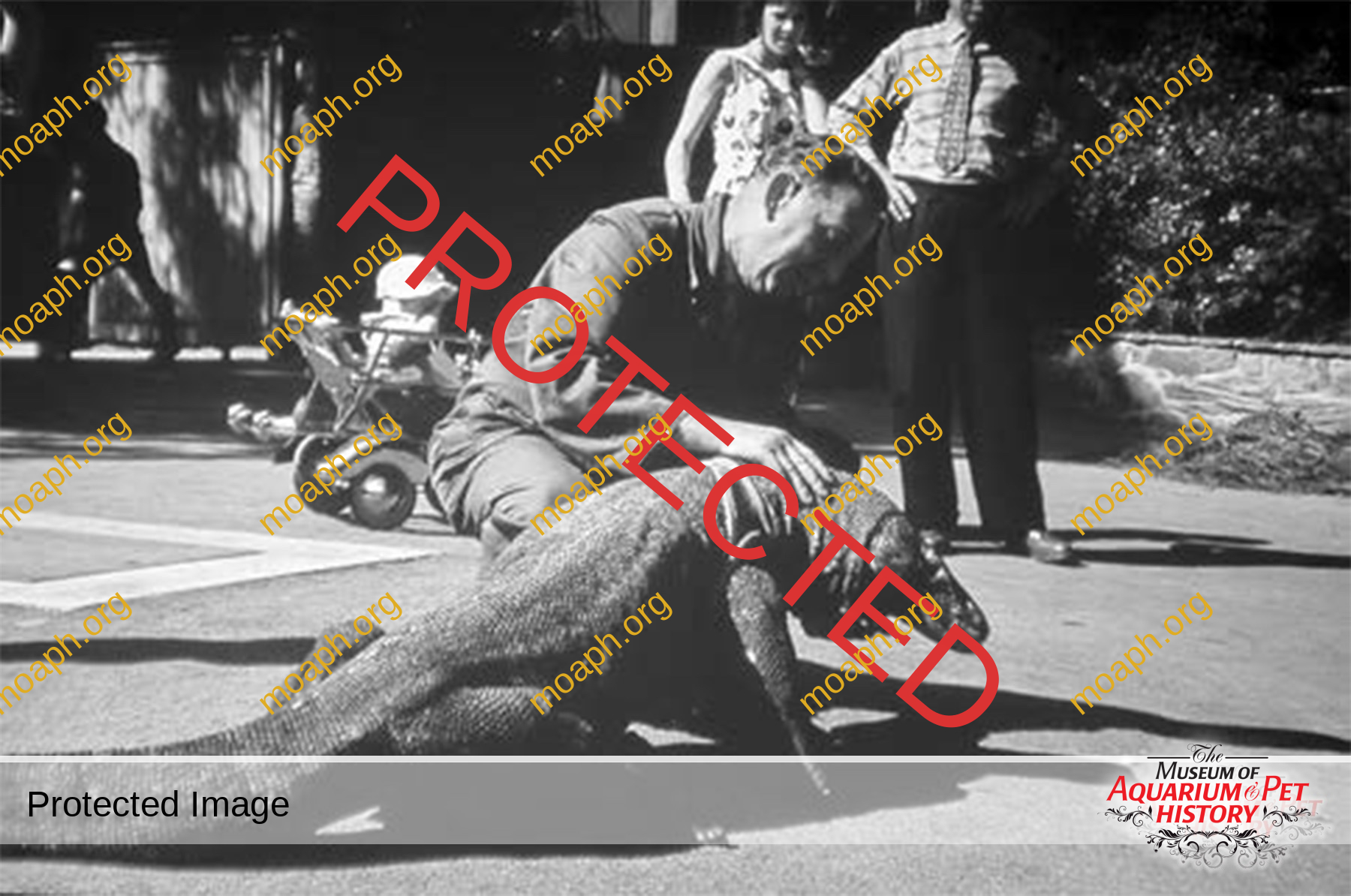
An adult Komodo dragon was allowed to walk the zoo with keeper Albert Schick at the Frankfurt Zoo while visitors were around. The lizard arrived at the zoo in 1958.
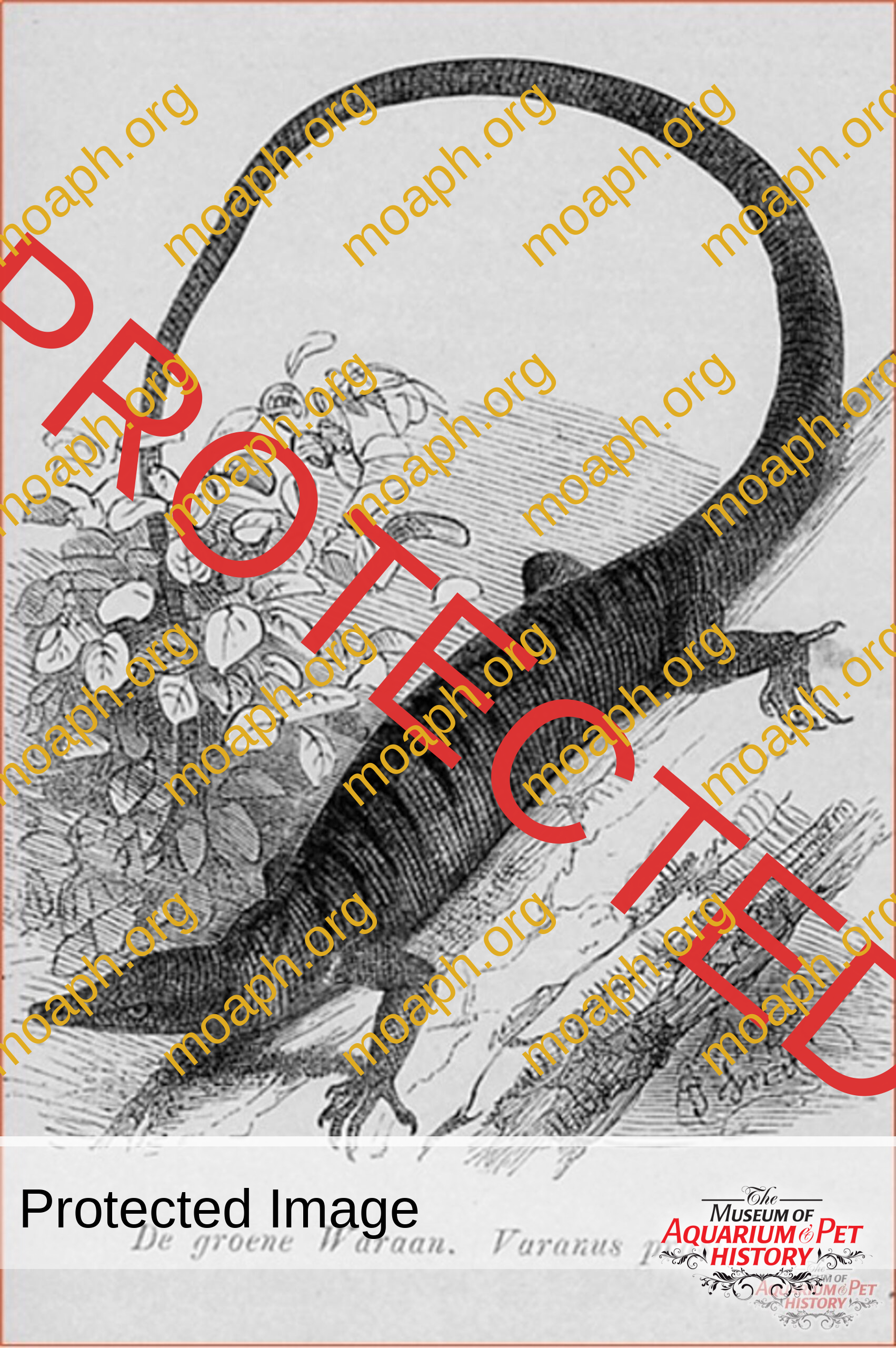
Illustration of green monitor (Varanus prasinus) in Hermann Schlegel’s De Dierentuin van het Koninklijk Zoölogisch Genootschap te Amsterdam in 1872.
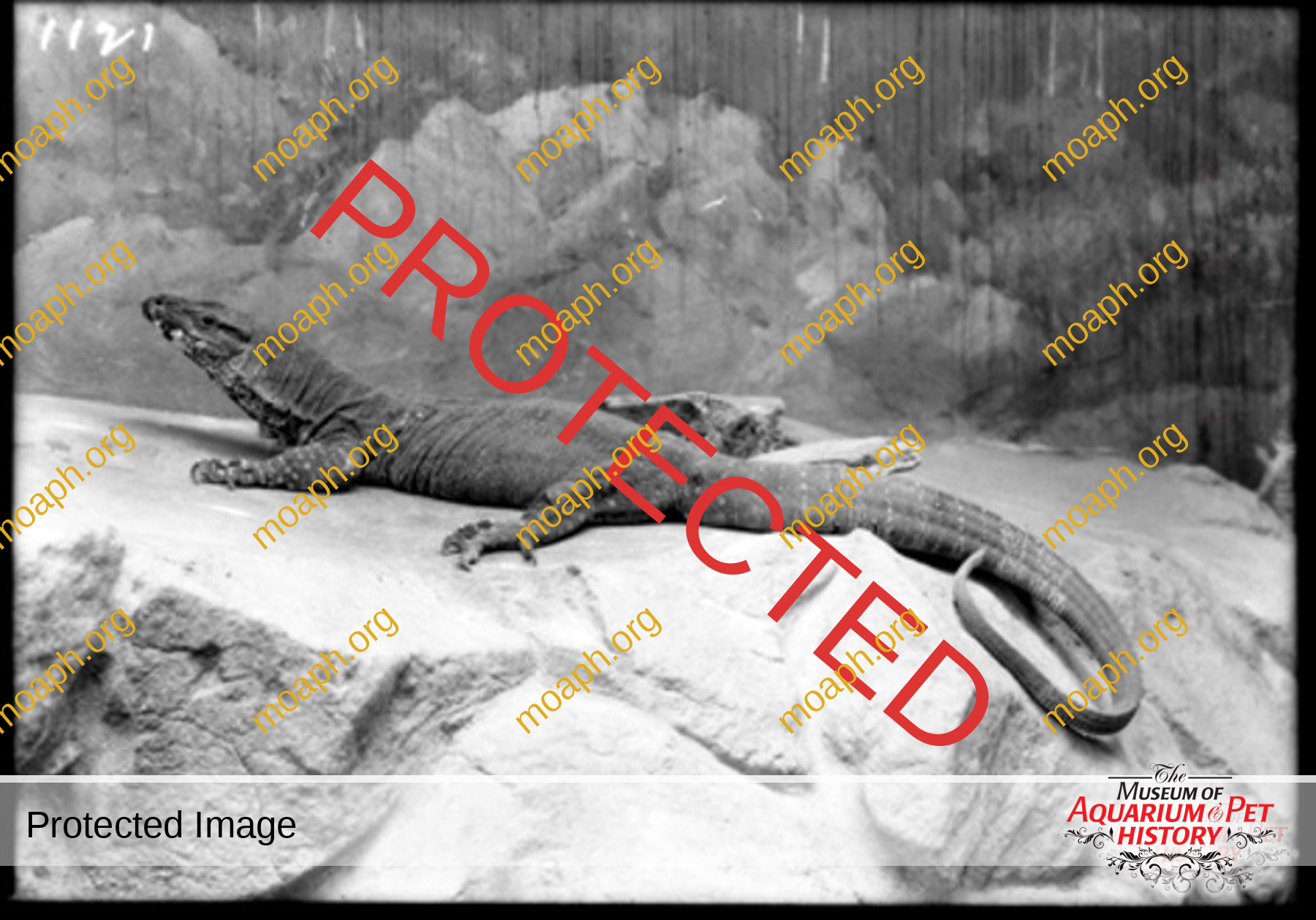
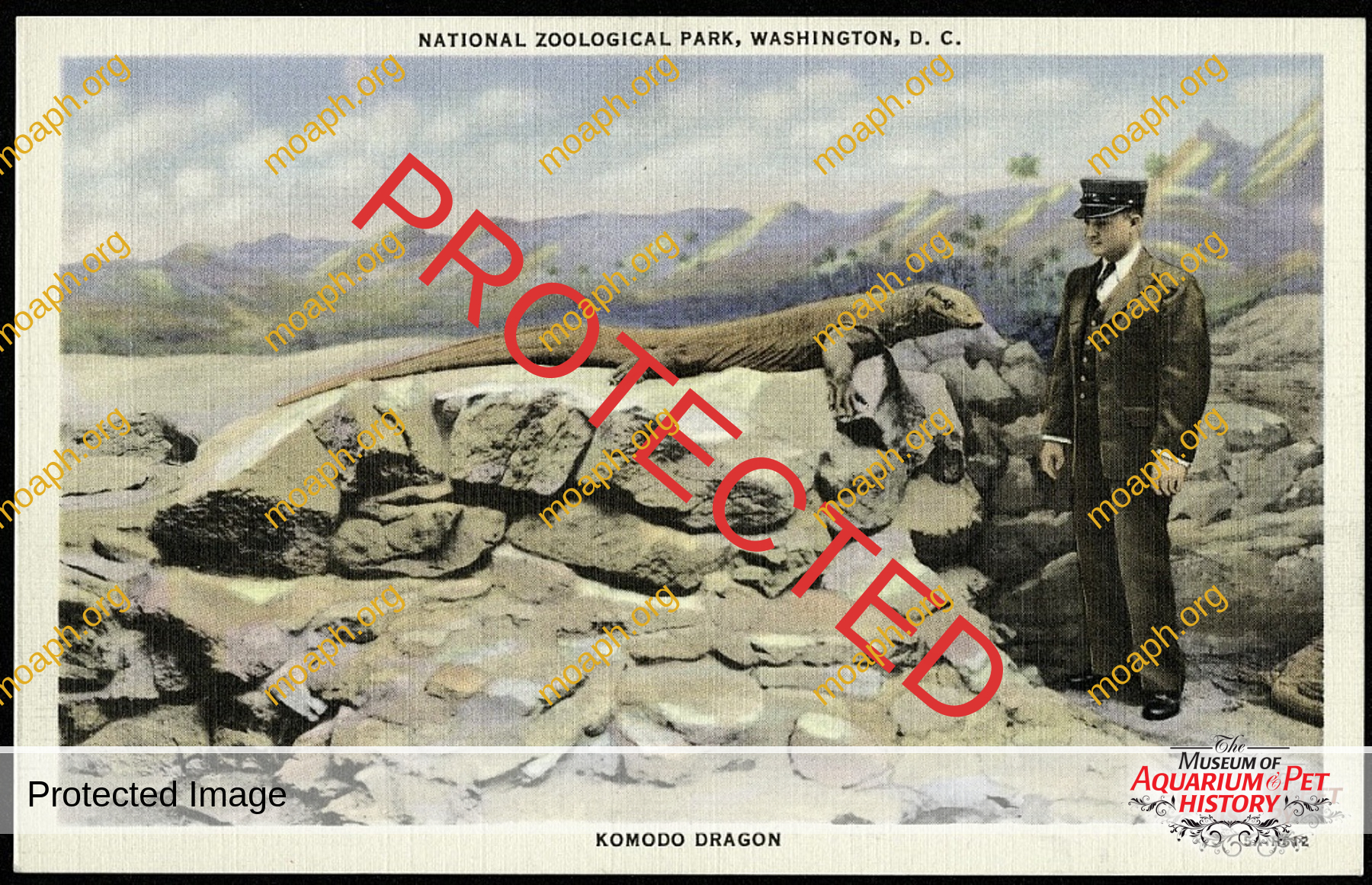
From the National Zoo Archives, 1934.
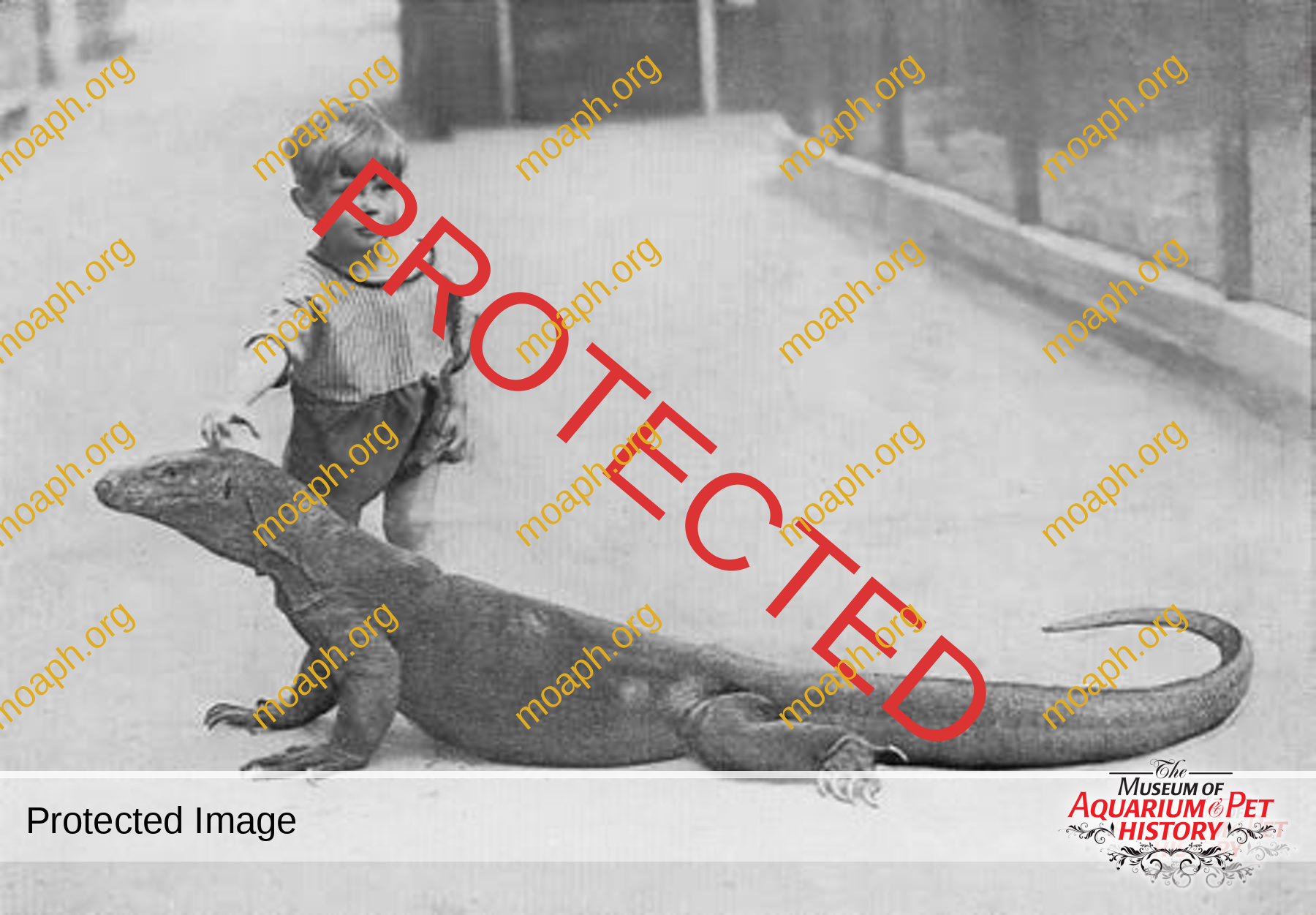
Sumbawa standing next to a two-year-old child. Photograph by F.W. Wood.
Example Two:
Hill (1946) mentioned a Komodo dragon at the London Zoo pushing a shovel over the stones in his cage “…and the more noise he can make with it, the more it seems to please him.”
Example Three:
Procter (1928) discussed the tractability and tameness of adult monitors, which included a photograph of a two-year-old child standing next to Sumbawa, a large dragon at the London Zoo.
Procter decided to test the ferocity of this lizard at a gathering of zoo supporters: “The dragon, whose name is Sumbawa, walked around a very long table, and without paying attention to the audience ate a large fowl, several eggs, and a pigeon from her hand, allowing itself to be scratched and patted even when swallowing the fowl with enormous gulps, treatment which even dogs will not always permit.”
Example Four:
At the Smithsonian National Zoological Park in 1995, a female dragon approximately seven feet in length named Kraken, hatched at the Zoo, usually exhibited play like behavior, such as removing a handkerchief or notebook from a keeper’s pocket, scraping the keeper’s shoes with her forearm, playing tug of war with a soda can, interacting with empty cardboard boxes, as well as pieces of cloth and scarves.
She stood on her hind legs, directed tongue flicks to a keeper’s face, rested her head on a keeper’s shoulder, and closed her eyes. Kraken carried Frisbees, shoes, action figures for children such as the “Terminator,” and other objects around in her mouth but made no attempt to swallow them.
When a keeper whistled, Kraken turned her head toward the source of the sound. She could discriminate between prey and non-prey; she would gently take a rat offered with tongs and never showed an inclination to bite her caretaker.
She stuck her head into a plastic bucket, raised her anterior trunk so that the container covered her head and walked around the exhibit. She placed her snout inside a shoe, lifted it off the substrate and moved throughout the cage.
In fact, Kraken would even “beg” for pizza and never acted aggressively when the pizza slices were offered to her.
For over fifty years, I have worked with living reptiles and have never seen such complex behavior from a so-called “lower animal.”
The results of our study on Kraken’s play behavior were published in 2002.
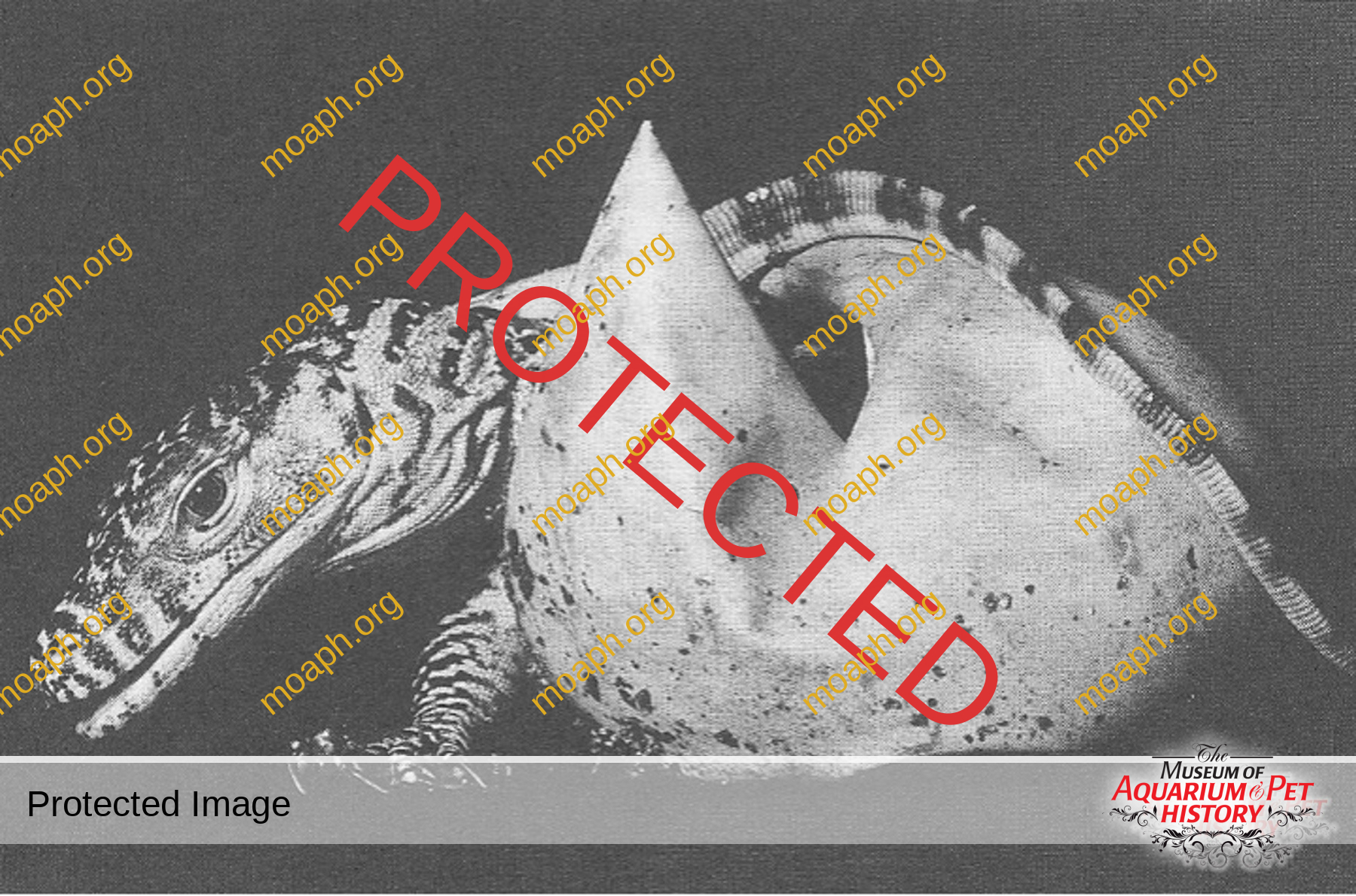
Kraken the Komodo dragon.
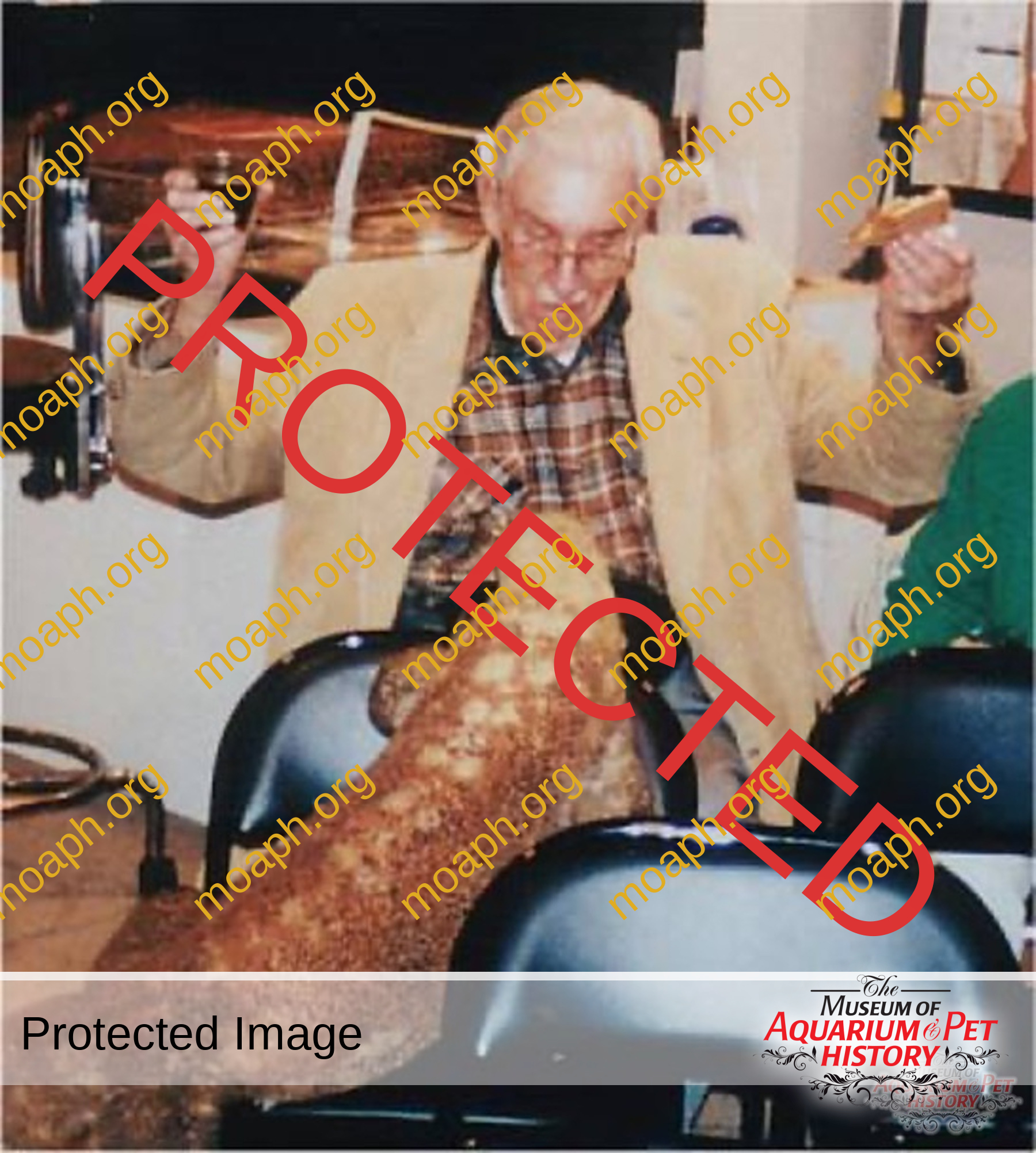
Kraken begs for pizza from a familiar volunteer at Smithsonian National Zoological Park in 1998. Photograph by Trooper Walsh.
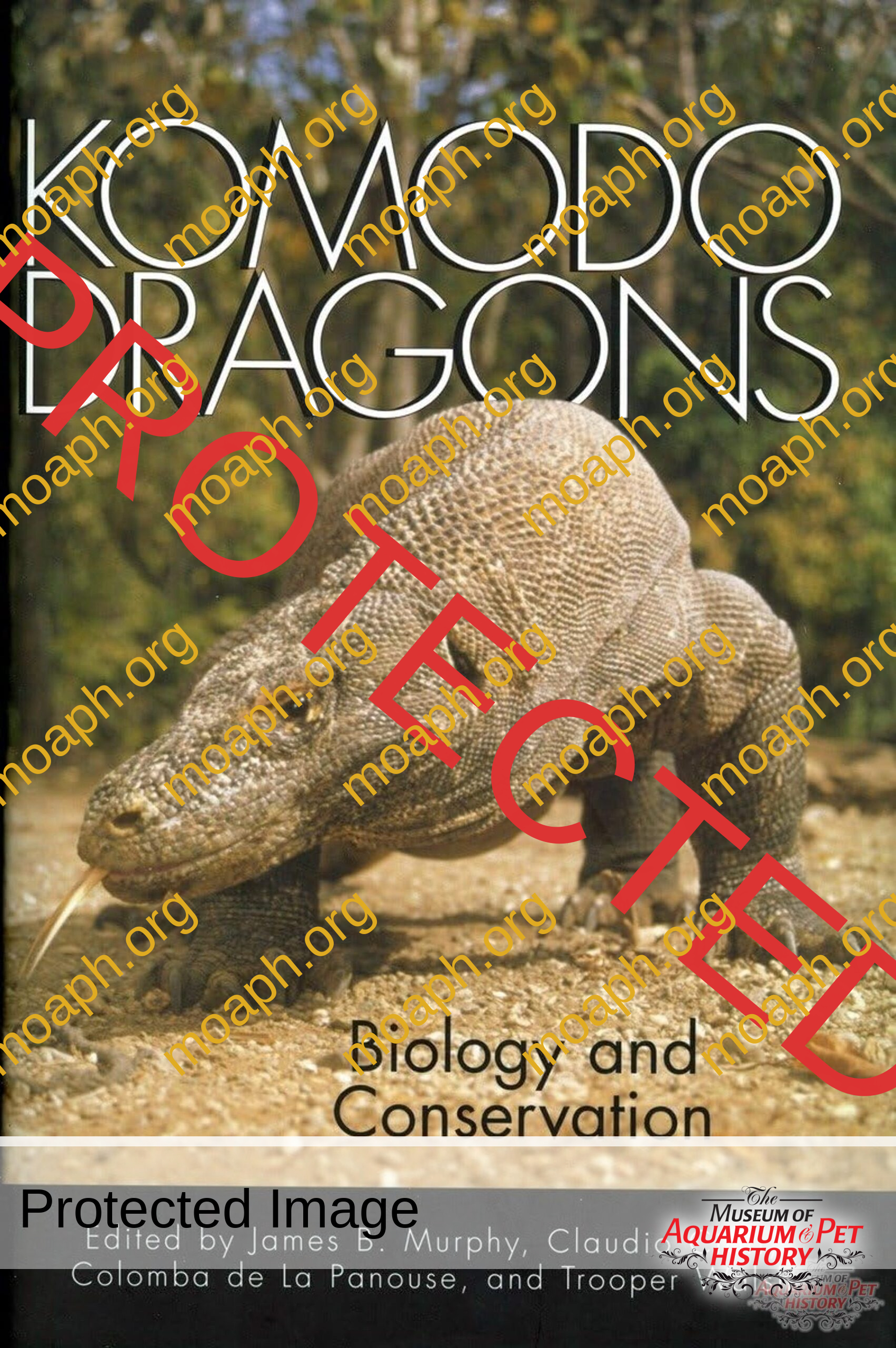
More information about trials with Komodo dragons can be found in this book published in 2002.
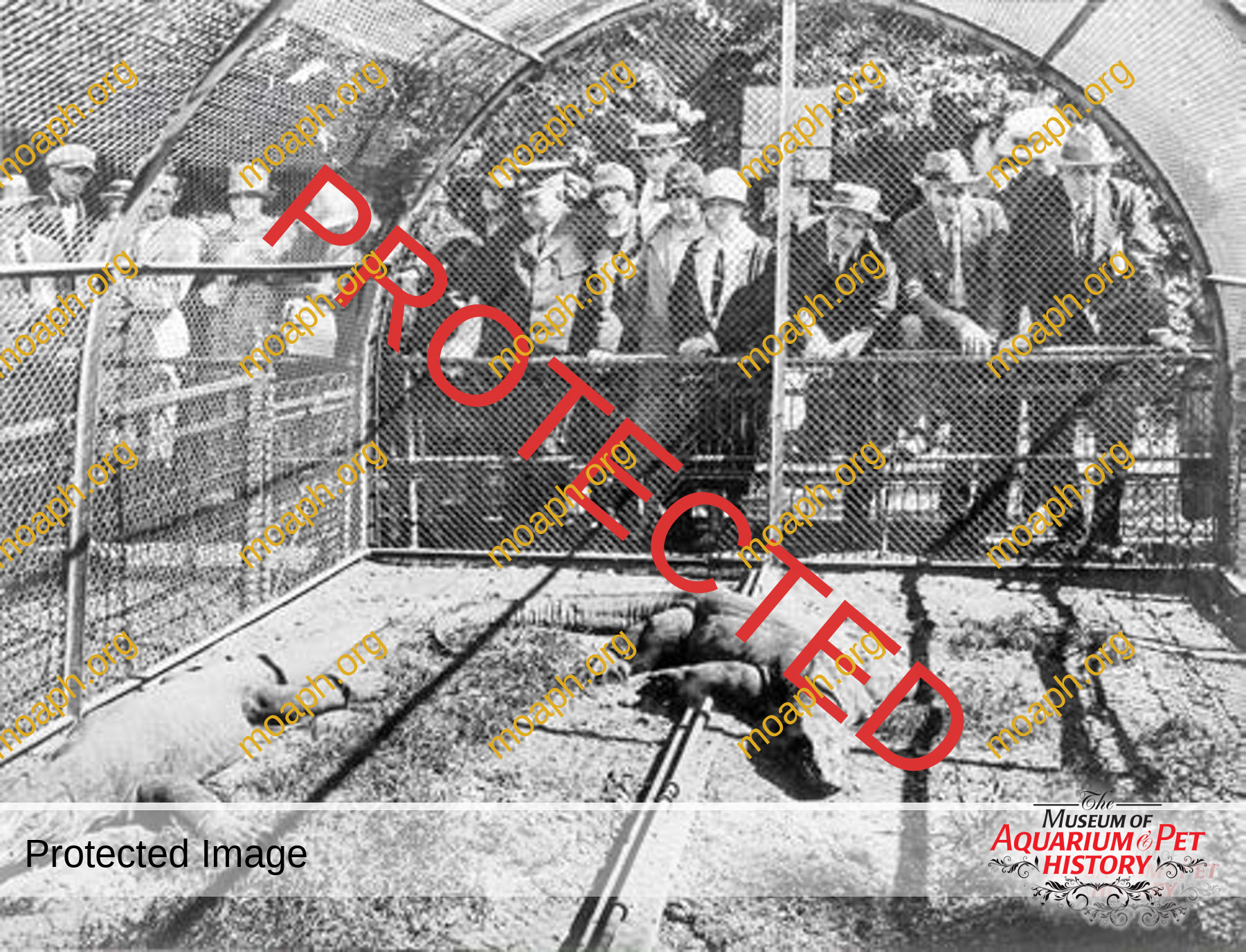
Komodo dragon exhibit at Bronx Zoo in the 1930s. Provisions need to be made to provide them with a stimulating captive environment.
At the National Zoo, captive dragons had significantly lower body temperatures when compared to those of their wild counterparts, even though there was a “Hot Spot” available.
They CHOSE lower temperatures!
There may be two reasons for this difference:
- Dragons are far less active in captivity. Wild dragons have large foraging areas.
- Captive dragons are offered small prey at regular intervals, unlike wild dragons which often feed opportunistically on large mammalian prey. Higher core temperatures are required to digest these large meals.
Would captive dragons, if reintroduced into their original insular habitats, alter their thermoregulatory behavior by increasing their preferred optimum temperatures to correspond to those levels measured in wild lizards? Further, if deficits due to the influence of captivity are identified, can these be remediated? How can this be accomplished? Finally, when these propagules are released, what necessary studies will be in place to assess survivability in the wild?
Some Additional Considerations and Challenges…
a) Limitations of Space and Resources
b) How Things Have Changed
c) Have We Successfully Met the Challenge?
d) Do Our Visitors Understand What We Are Trying to Do as Conservation Biologists?
e) What is the Future of Zoo Herpetology?
f) What is Happening to Herp Collections Today?
g) How do Zoo Herpers Cope with Loss of Biodiversity?
h) Conclusions
a) Limitations of Space and Resources
- Hugh Quinn evaluated holding space in zoos and concluded that there isn’t much!
- In 1986, Vincent Bels and Carl Gans emphasized that vast gaps still exist between the goals of captive-breeding programs and the extent to which these goals have been realized.
- Zoo workers cannot do this captive propagation program alone.
- We need a research effort similar to the recent biotechnology industry.
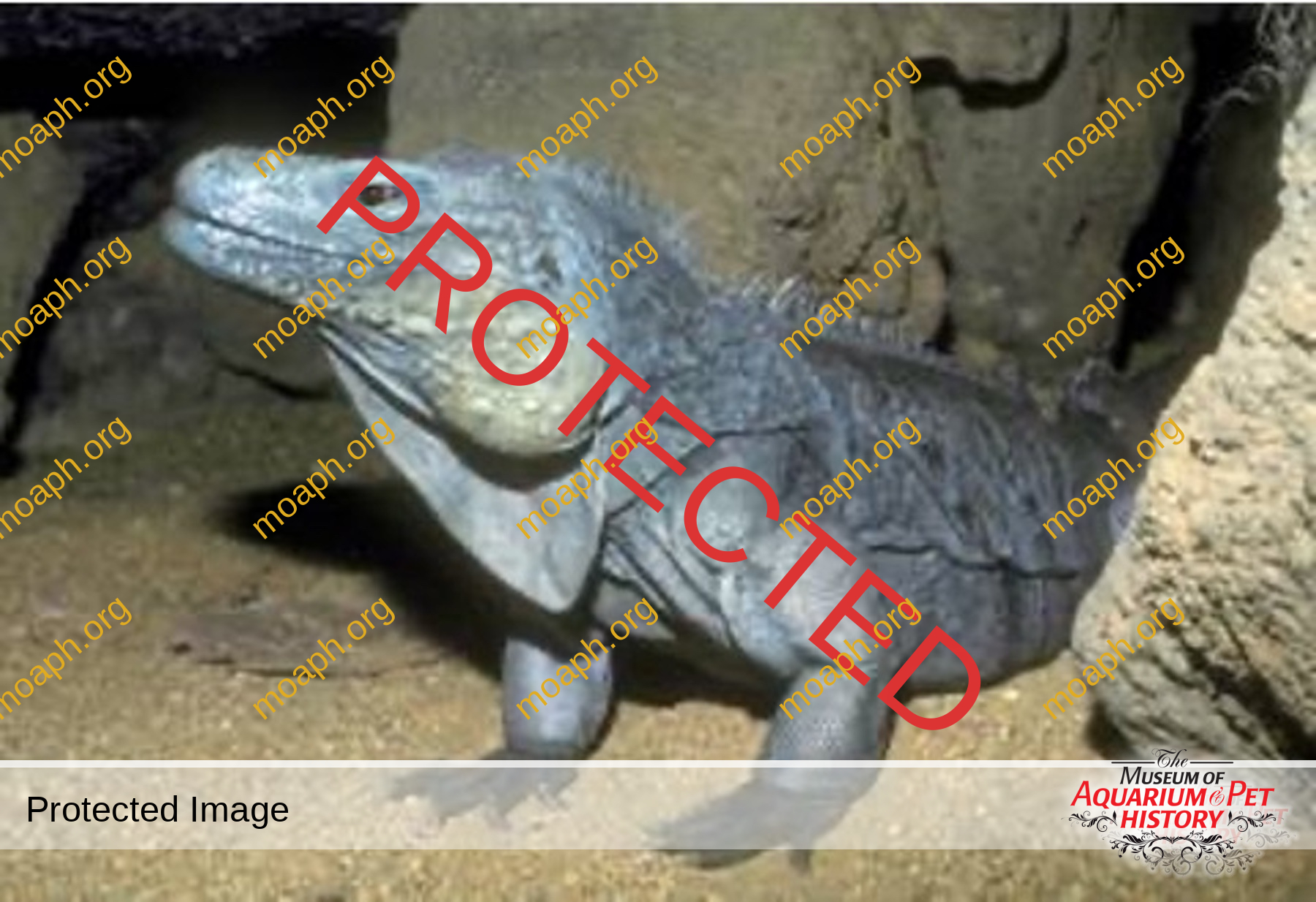
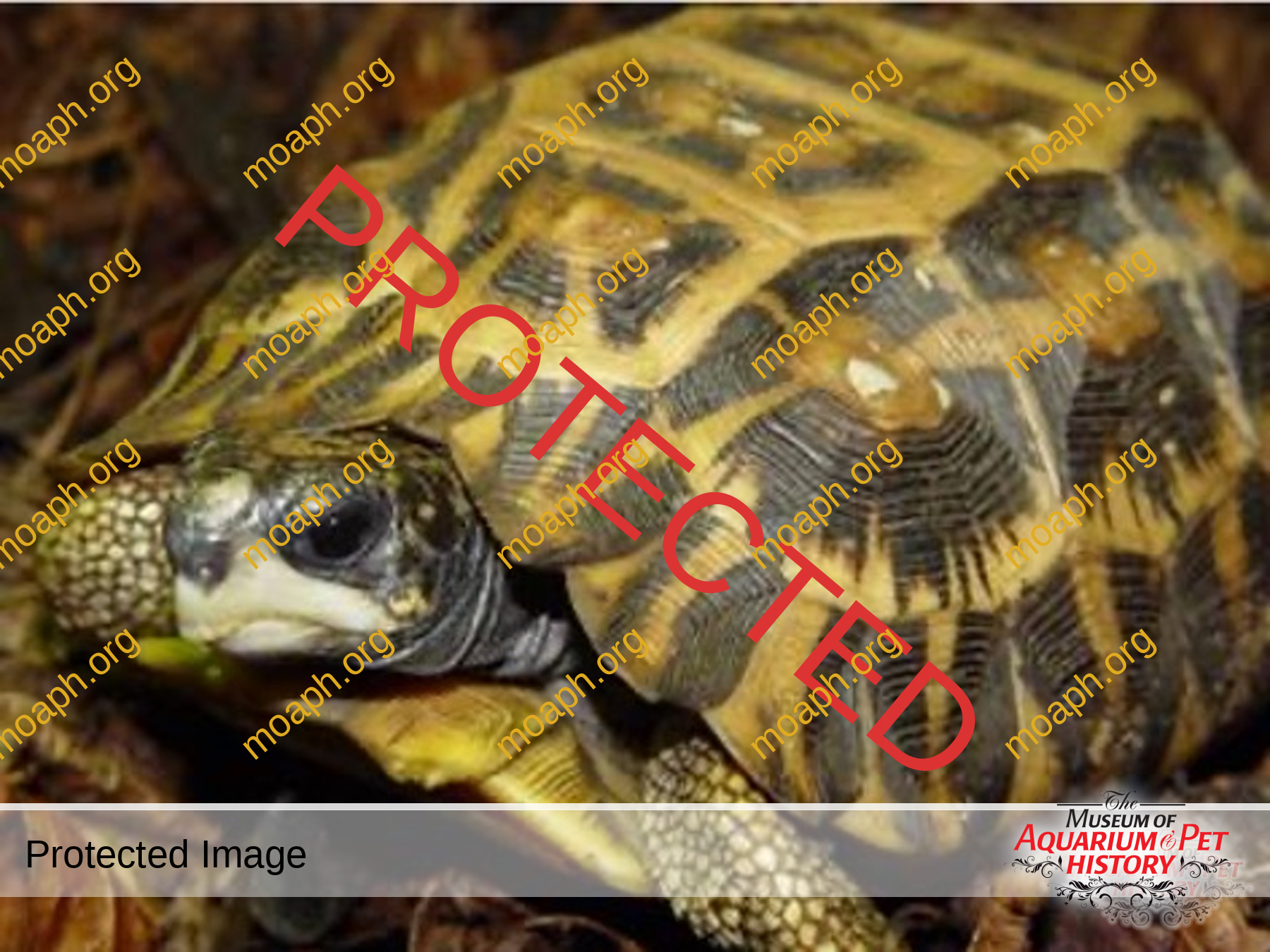
At TAG meetings, zoo herpetologists are faced with daunting decisions! What taxa are most at risk and how should resources be allocated?
b) How Things Have Changed!
- In the early days, amphibians and reptiles were relatively plentiful and available so our efforts were focused on building a diverse collection at a leisurely pace but this is no longer the case.
- The zoo and aquarium community is being asked to respond rapidly to crises such as the recent Asian turtle confiscation and we should be prepared to do so immediately.
- These responses require money and time.
- Where would these turtles go?
- Reintroduction is not an option today in most cases so the only possibility is to accumulate captive colonies, in spite of the attendant problem of limited resources, with the faint hope that these animals can be returned to the wild in the future.
- How many of the four spectacular Malagasy tortoise species should be chosen for our captive colonies?
- Only the rarest one?
- The biggest one?
- The prettiest one?
- As captive managers, we will continually be faced with agonizing decisions. I am not optimistic but it is unconscionable to give up!
c) Have We Successfully Met the Challenge?
- Today, zoo administrators are often enamored of and focused on high-tech solutions to protect threatened and endangered species but less attention is being paid to providing environments for our captive colonies that lead to successful reproduction and stable populations over time.
- These are needed because more conventional approaches have not been fully implemented, that is, providing suitable zoo enclosures and settings so that normal behaviors leading to reproduction are expressed.
- I would hope that future research with zoo herps be directed away from these high-tech manipulations which signal failure and toward understanding the natural behavioral patterns of our captives.
- To know the effects of captivity, careful studies are needed!
- Today, zoo administrators are often enamored of and focused on high-tech solutions to protect threatened and endangered species but less attention is being paid to providing environments for our captive colonies which lead to successful reproduction and stable populations over time.
- There are many examples, mostly with mammals, of these dramatic interventions: artificial insemination, collection and cryo-preservation of gametes or the so-called “frozen zoo,” embryo transfer into surrogate mothers, and “hand-rearing” abandoned young.
- All of these techniques require substantial funding and staff time.
- These are needed because more conventional approaches have not been fully implemented, that is, providing suitable zoo enclosures and settings so that normal behaviors leading to reproduction are expressed.
- I would hope that future research with zoo herps be directed away from these high-tech manipulations which signal failure and toward understanding the natural behavioral patterns of our captives.
- To know the effects of captivity, careful studies are needed!
d) Do Our Visitors Understand What We Are Trying to Do As Conservation Biologists?
- William Conway (1968, 1973) made the cogent case for doing everything needed in a zoo setting to enlighten and educate the visitor by using the common bullfrog as an example; the reality is that bullfrogs do not attract donors or administrators.
- The fact is that the bullfrog could be the perfect example to highlight the decline of amphibian populations worldwide and the danger of introducing alien species.
- Conway’s point is profound: an animal doesn’t have to be rare, large, expensive or endothermic to be interesting!
- ―Or Worth Saving!
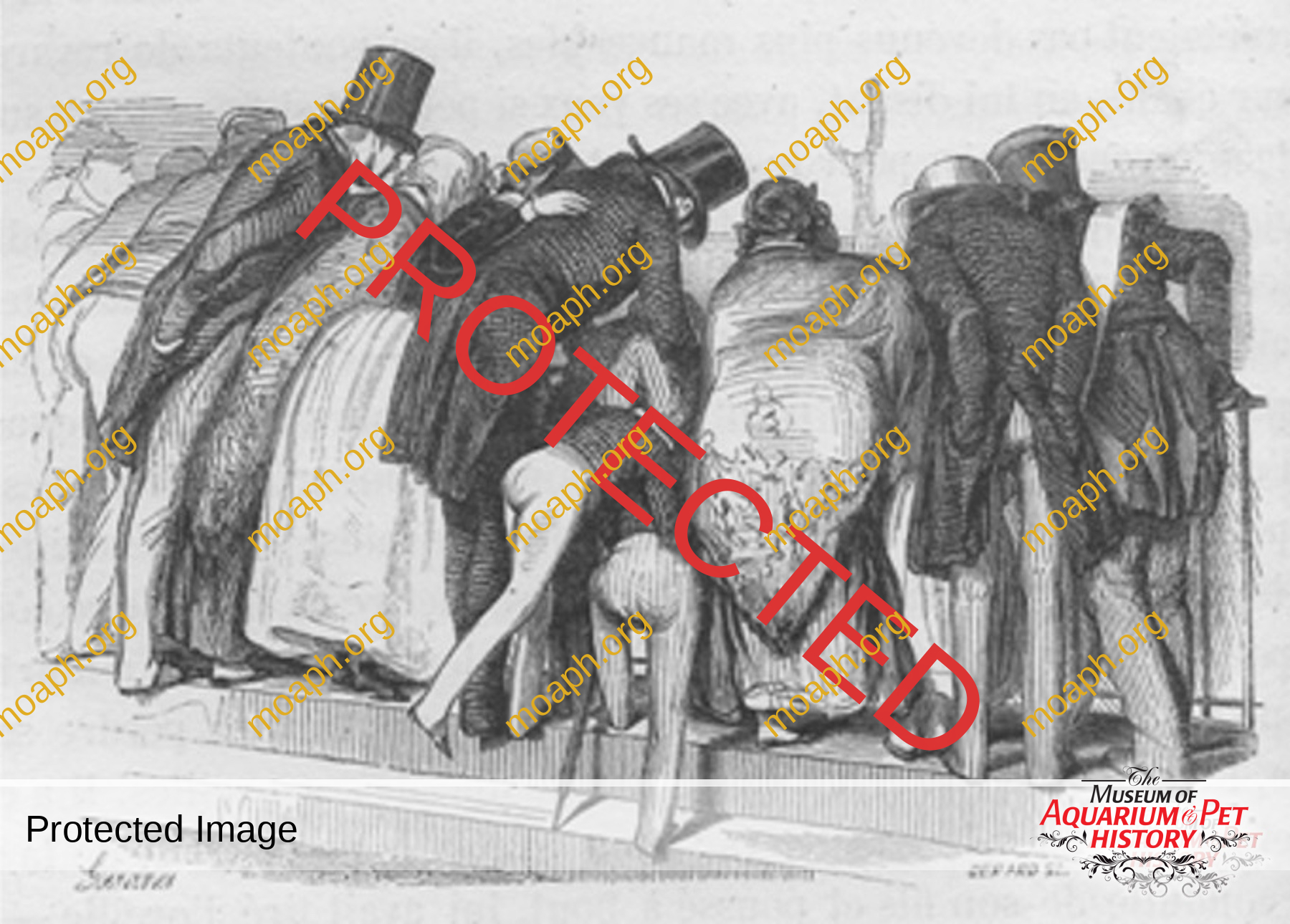
William Conway (1968, 1973) made the cogent case for doing everything needed in a zoo setting to enlighten and educate the visitor by using the common bullfrog as an example; the reality is that bullfrogs do not attract donors or administrators.
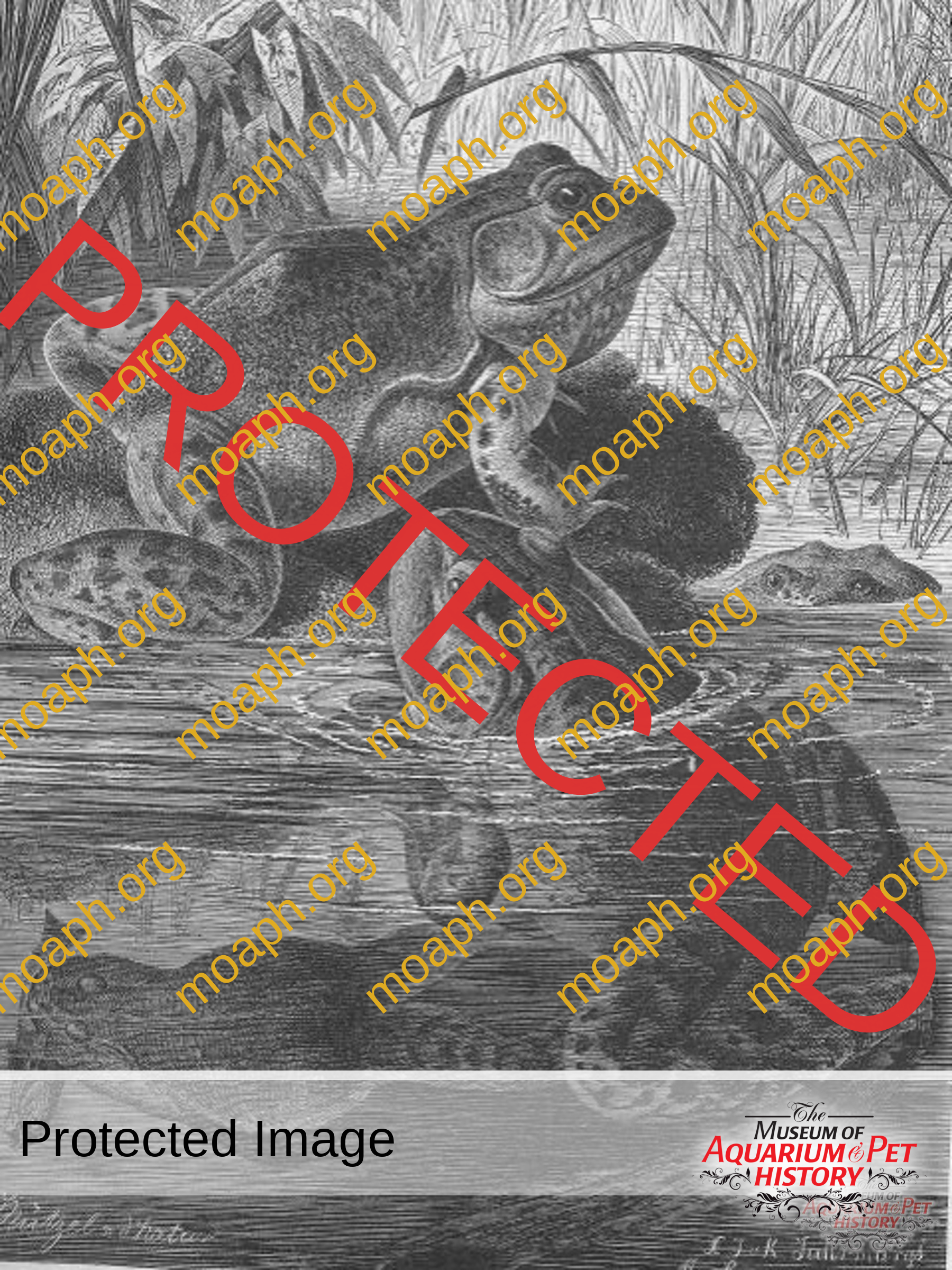
American Bullfrog (Rana catesbeiana) from Alfred Brehm’s Brehms Tierleben (Brehm’s Life of Animals.). Print from 1883.
- Further, zoo workers can explain more effectively their institution’s involvement with meaningful conservation projects and issues, both in situ and ex situ…
- Since 1989, I am proud to say that most of the financial support for the IUCN Declining Amphibian Populations Task Force has come either directly or indirectly from the zoo and aquarium community.
- For example, the Detroit Zoological Institute has supported the publication of FROGLOG1 for years!
MOAPH1: FROGLOG is a newsletter of Declining Amphibian Populations Task Force
e) What is the Future of Zoo Herpetology?
- The discipline is likely to be very different than my earlier experiences with zoo herpetologists, their buildings, animals and programs, accumulated for over fifty years.
- There are a few new facilities being constructed exclusively for herps, so new employees are not introduced to a herpetologically rich environment nor encouraged to become specialists.
- The fabulous National Amphibian Conservation Center at the Detroit Zoological Institute is a dramatic exception and plans are underway for a chelonian conservation center.
- As new facilities are being designed in zoos throughout the world, it seems that amphibians and reptiles are added as an afterthought.
- As a group, we have been relatively ineffective at selling our mission to our bosses.
- Don Boyer has said that resources are allocated phylogenetically in our zoos and aquariums. Mammals get the largest share, then birds, fishes and finally herps.
- A single giant panda costs well over a million dollars annually in rental fees and associated costs. Imagine what a herp department could do with that support…
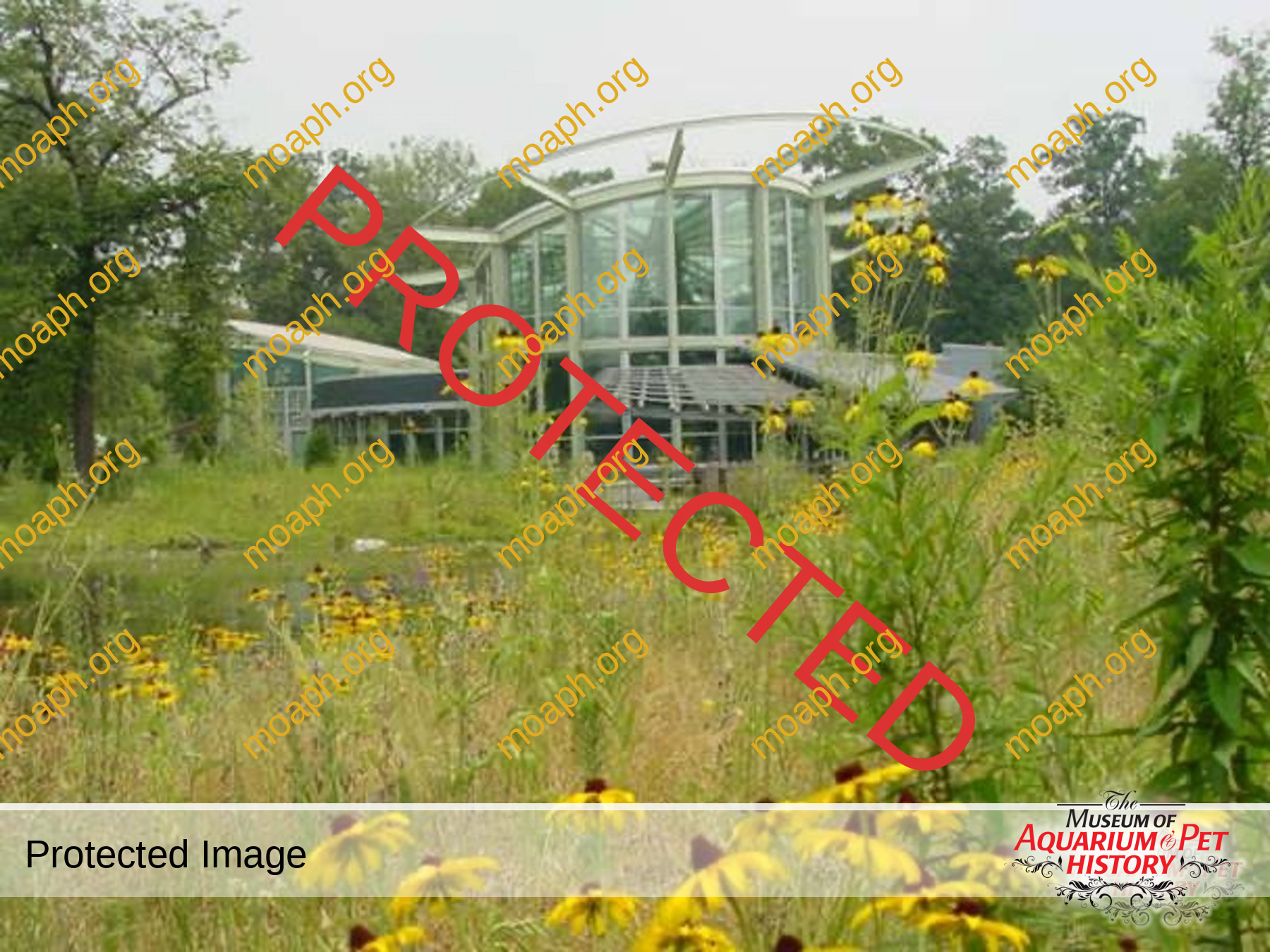
National Amphibian Conservation Center
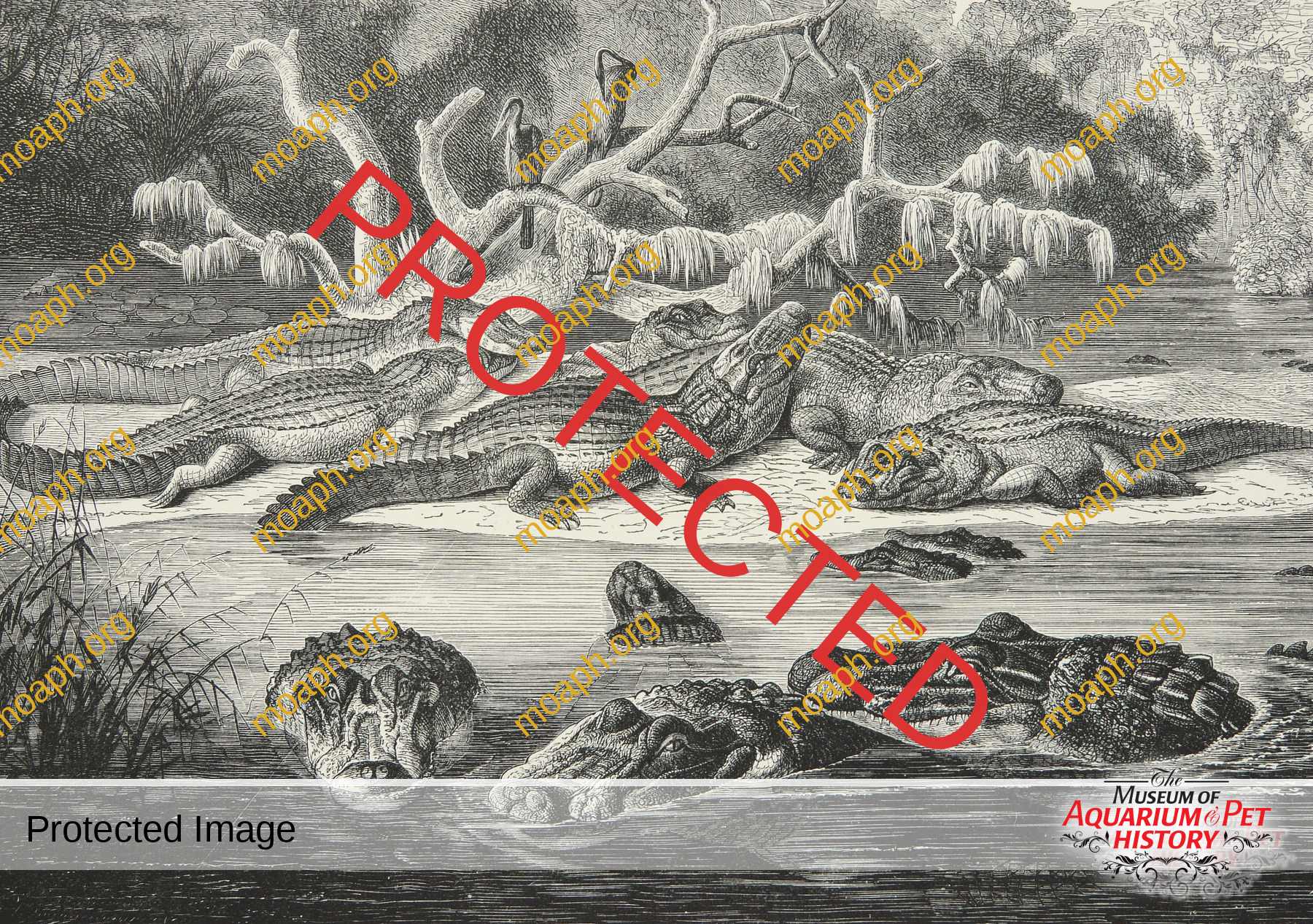
Black caiman from Alfred E. Brehm’s Merveilles de la Nature. Les Reptiles et les Batrachians (Wonders of Nature. Reptiles, Frogs, and Toads) in 1885
f) What is Happening to Herp Collections Today?
- One might argue that all of the cooperative breeding programs in place in zoos do not allow for a diverse collection with many new species.
- Many herp collections are becoming homogenized. Since captive breeding has been successful, the same species are being moved among zoos.
- The downside of these collaborative programs is that I now rarely see something new during my visits and new insights with poorly known taxa are limited.
g) How do Zoo Herpers Cope with Loss of Biodiversity?
- My colleague late Tim Halliday from the Open University in the UK has been a major player in the Declining Amphibian Populations Task Force since the beginning. Tim is the International Director and has been intimately involved with issues of global amphibian disappearance. He told me that he no longer views himself as a “conservation biologist” but rather as an “extinction biologist.”
- Joe Mendelson now calls himself a “forensic herpetologist.”
- Like Tim and Joe, the sad reality is that many zoo herpetologists are concerned but traumatized by the enormity of the problem of disappearing biodiversity. We continue to struggle to find suitable niches, both within our institutions and in the broader conservation and academic community.
- If we are able to do so more effectively, the final beneficiaries will be amphibians and reptiles entrusted to our care.

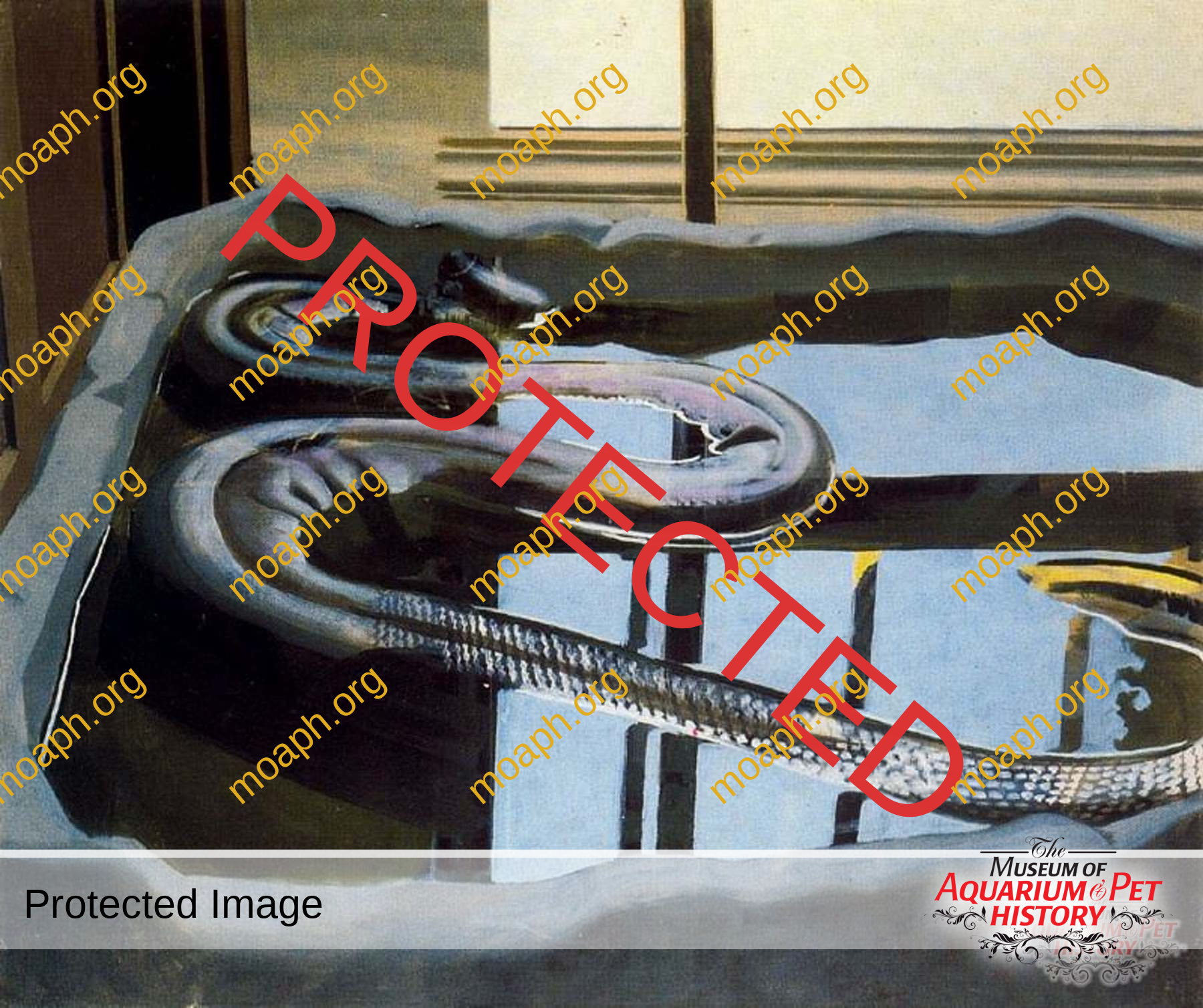
From Pianka and Vitt, Lizards
Conclusions
Evolutionary biology has had a tenacious hold on our value systems. Young herpetologists need to value the issues presented in an applied context.
Herpetologists are occupied with systematics, the construction of phylogenetic scenarios, or field measurement of selective pressures and responses to them. Applied research on captive herps seems less relevant and fulfilling.
Addressing applied problems can give rise to theoretical implications. Harry Greene gives a compelling argument in the defense of natural history and the same applies to captive management.
Conservation efforts require a more holistic approach utilizing the skills of the zoo, private and academic communities.
Time for Increased Collaboration?
To compensate for shrinking financial resources, zoo and aquarium professionals should develop more partnerships with the academic and conservation communities. In my experience, better research occurs when there is a liaison with academic collaborators. What is really gratifying is that sometimes these associations evolve into wonderful friendships.
Acknowledgments
- I am grateful to my zoo and aquarium colleagues who have provided photographs and illustrations. Many of these professionals spent hours, usually with a glass of wine or beer in hand, discussing these issues. These lively sessions helped clarify my views on the role of zoos and aquariums.
- Smithsonian Libraries
- Judith A. Block2
FINIS
MOAPH2: Judith is James Murphy’s wife of 30 years.